

When you're shopping for home theater audio, you'll quickly discover that not all sound systems are created equal. The Hisense HT Saturn and Denon DHT-S517 perfectly illustrate this point—they're both designed to improve your TV's audio, but they take completely different approaches to solving the same problem.
At the time of writing, these products sit in vastly different price categories, with the HT Saturn commanding a premium price point around $1,300, while the DHT-S517 targets budget-conscious buyers at roughly $300. But this isn't simply a case of "expensive versus cheap"—we're looking at two fundamentally different philosophies about how to create immersive home theater sound.
Before diving into these specific products, it's worth understanding what we're trying to achieve with modern home theater audio. When you watch a movie in a real cinema, you're surrounded by dozens of speakers positioned all around the room. Sounds come from behind you, beside you, above you, and in front of you, creating what audio engineers call a "three-dimensional soundfield."
Traditional home theater systems tried to recreate this experience using multiple speakers connected to an AV receiver—a complex central unit that decodes audio signals and sends them to the right speakers. While effective, these systems required running speaker wires throughout your room and extensive setup procedures that intimidated many users.
Modern soundbars attempt to solve this complexity problem, but they face a fundamental challenge: how do you create surround sound from speakers that are all positioned in front of you? Most soundbars use acoustic processing tricks—they bounce sounds off your walls and ceiling, adjust timing between different drivers, and use psychoacoustic principles (how your brain interprets sound) to fool you into thinking sounds are coming from places they're not.
The Hisense HT Saturn, released in 2024, represents a newer approach: wireless multi-speaker systems that give you the authentic surround sound of traditional setups without the wiring complexity. The Denon DHT-S517, from 2022, sticks with the proven soundbar formula but adds some sophisticated features to make it more effective.
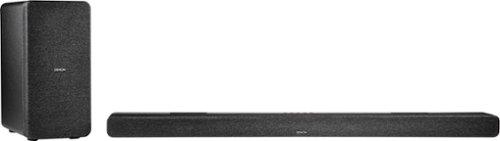
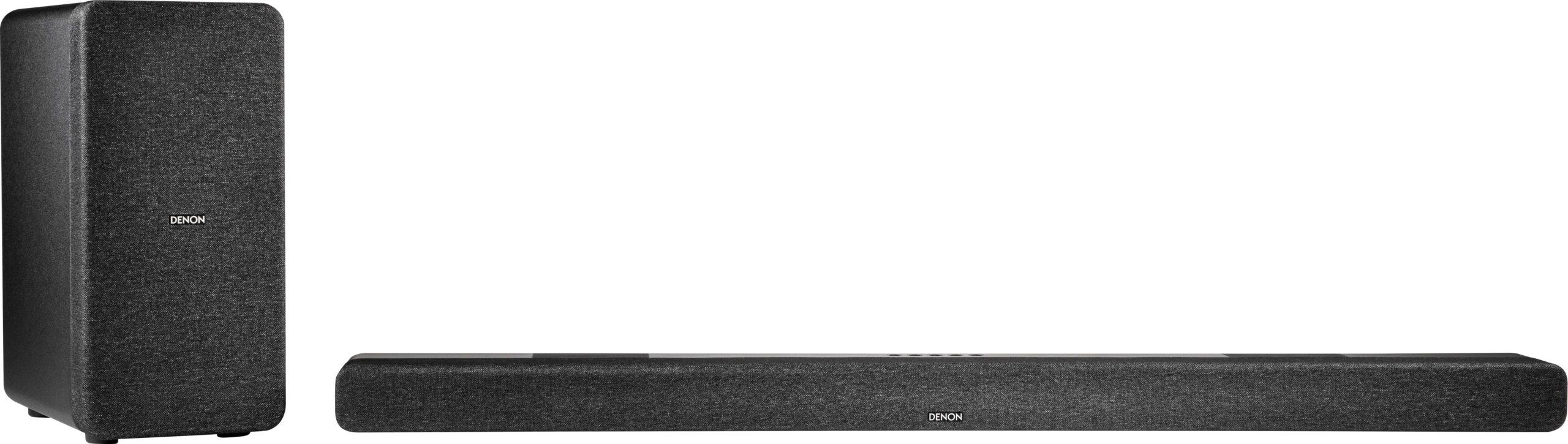
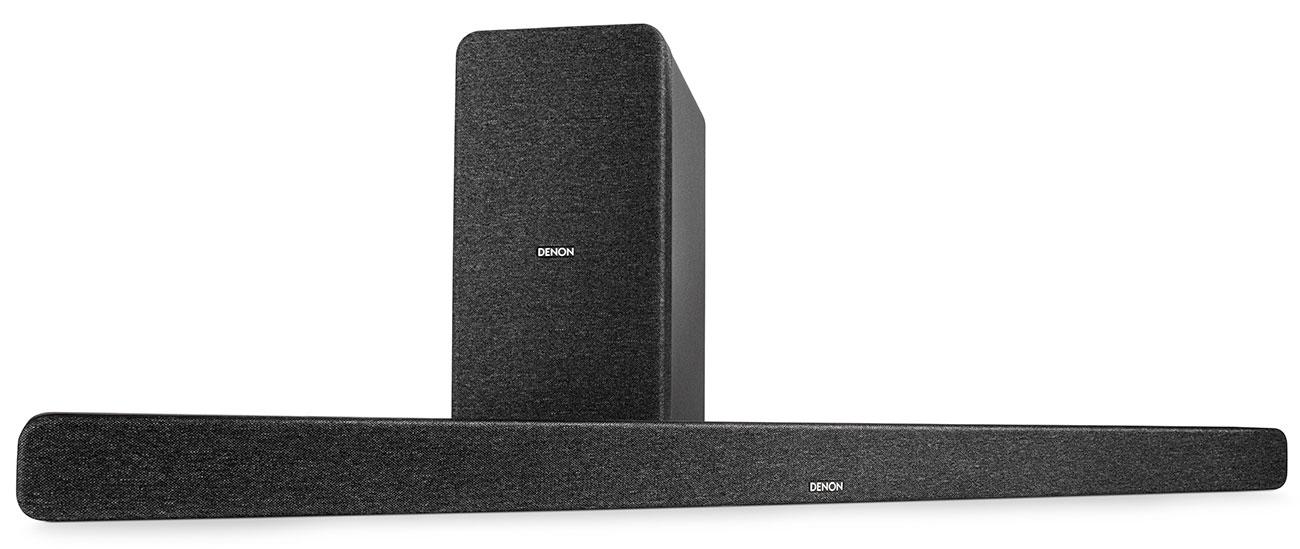
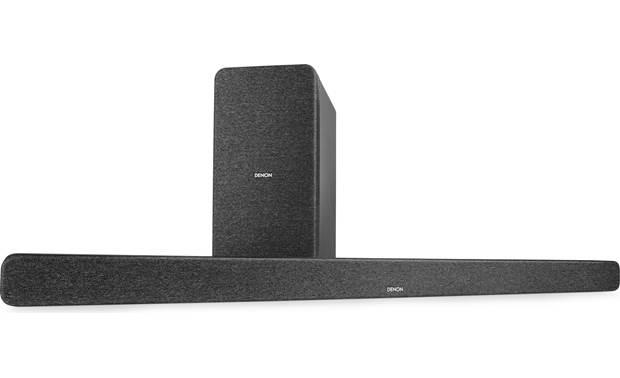
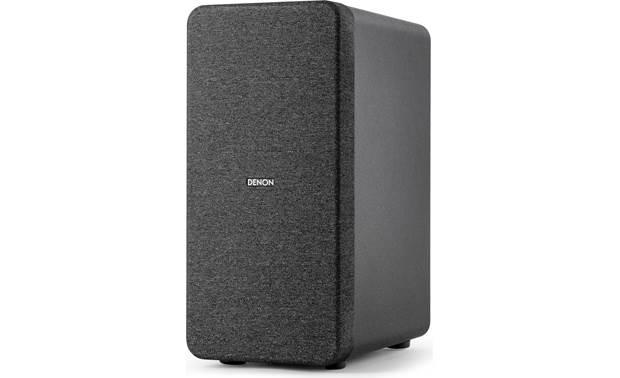
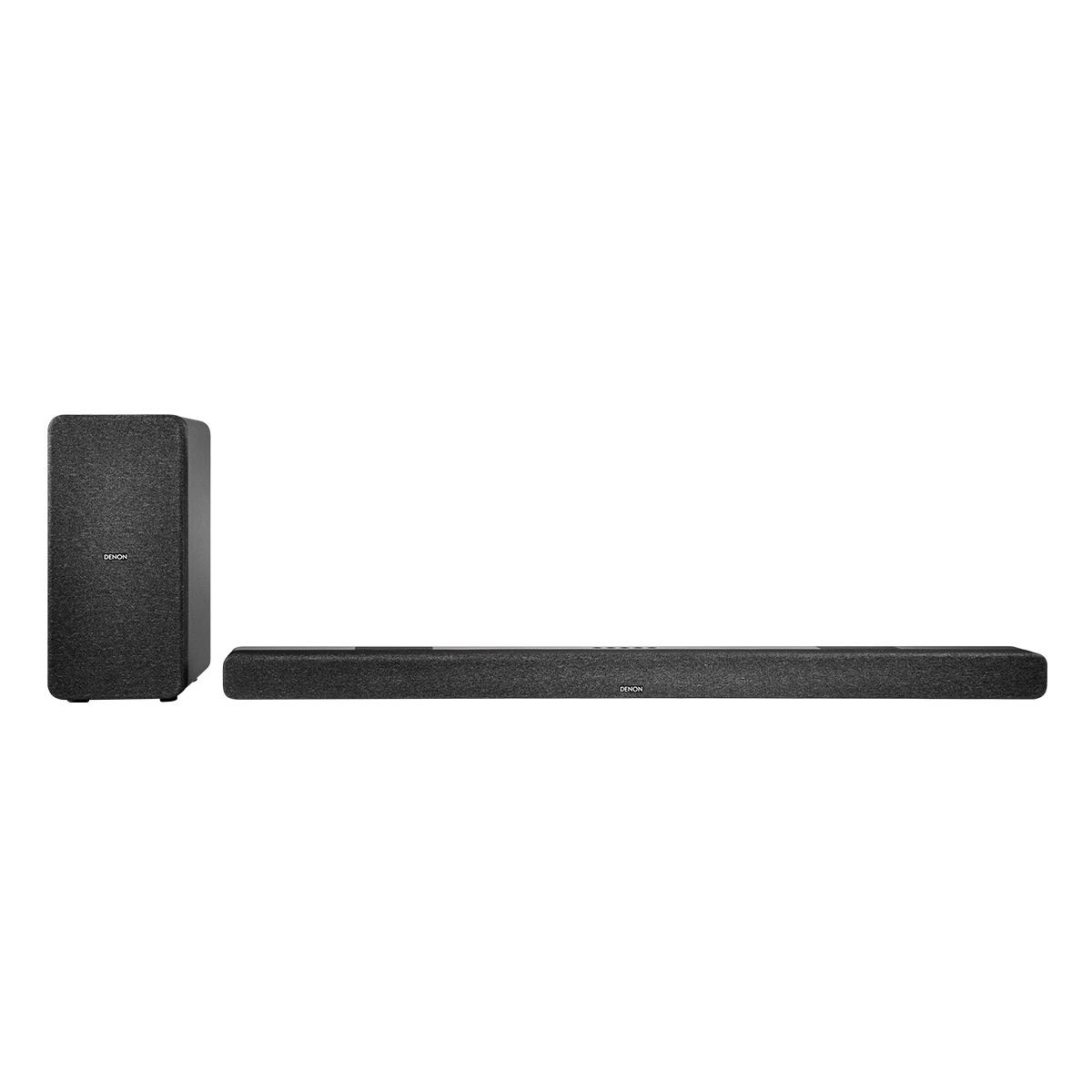
The most important thing to understand about these products is that they're solving the home theater audio problem in completely different ways. The DHT-S517 is what most people picture when they think "soundbar"—a single horizontal speaker that sits below or above your TV, paired with a separate wireless subwoofer (a speaker dedicated to bass frequencies below about 80Hz).
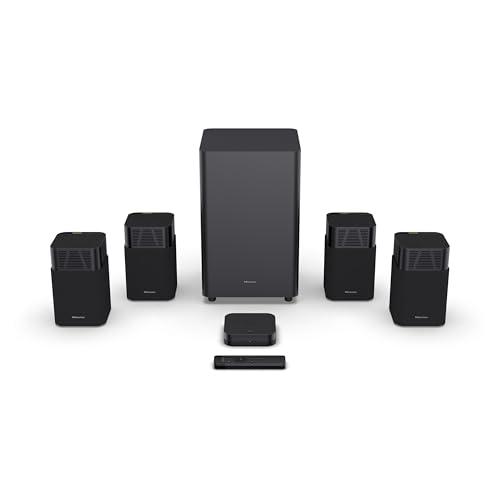
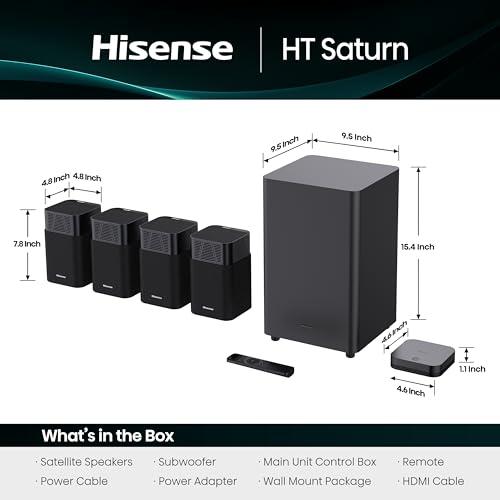
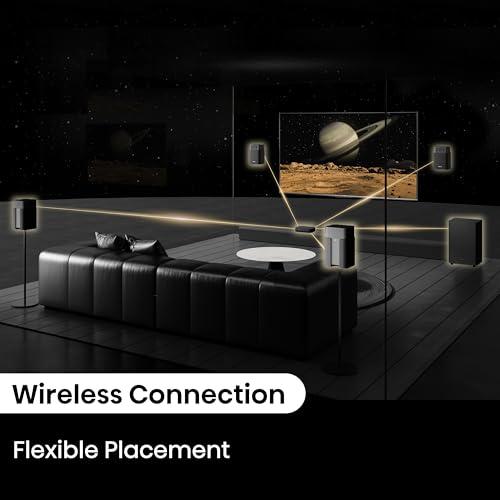
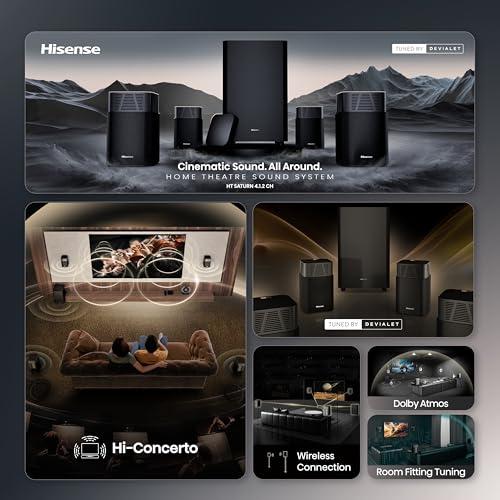
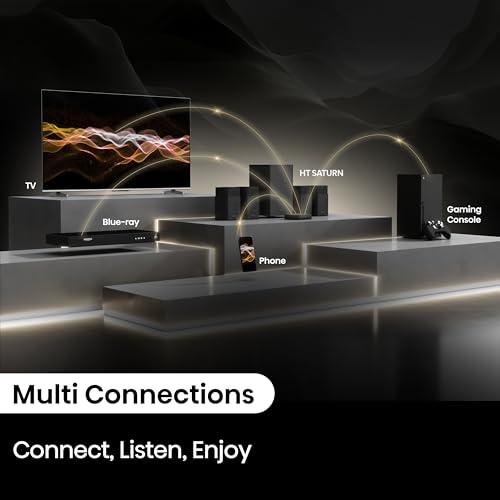
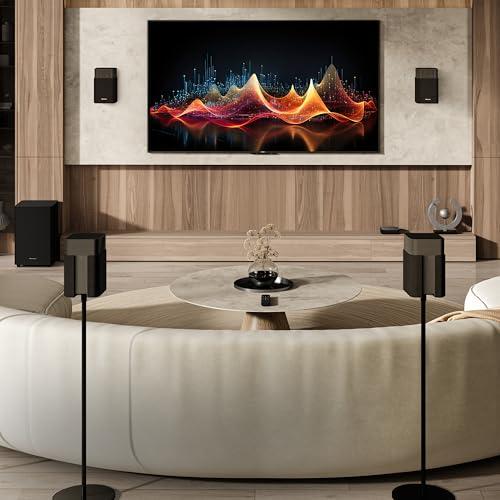
The HT Saturn breaks this mold entirely. Instead of cramming everything into one bar, it uses four separate wireless satellite speakers that you position around your room, plus a wireless subwoofer and a small central control unit. This is essentially a traditional surround sound system that's been modernized with wireless technology.
This architectural difference affects everything else about these products—their sound quality, setup process, and how they'll work in your specific room.
When it comes to creating that immersive, cinema-like experience, the HT Saturn has a significant advantage: its sounds actually originate from the positions where you hear them. When a helicopter flies overhead in a movie, the sound literally comes from speakers positioned around and above you. When dialogue happens on screen, it comes from the front speakers. When an explosion occurs behind the main character, it comes from the rear speakers.
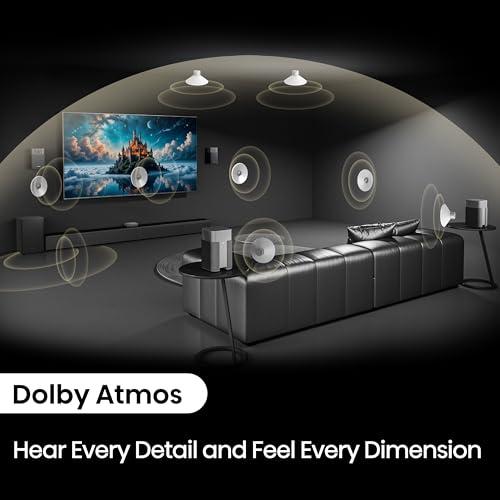
The DHT-S517 has to work much harder to create these effects. It uses upward-firing drivers (speakers that point toward the ceiling) to bounce sound off your ceiling, creating height effects for Dolby Atmos content—audio that includes three-dimensional positioning information. It also uses sophisticated signal processing to create the illusion that sounds are coming from beside and behind you, even though all the speakers are positioned in front.
Based on our research into professional and user reviews, the HT Saturn consistently delivers more convincing surround sound effects. Users describe feeling "enveloped" by the audio, with precise positioning of effects and a genuine sense of sounds moving through three-dimensional space. The DHT-S517, while impressive for a soundbar, still has that characteristic "sounds are being steered toward me from the front" quality that limits its ability to fully disappear and create a convincing illusion.
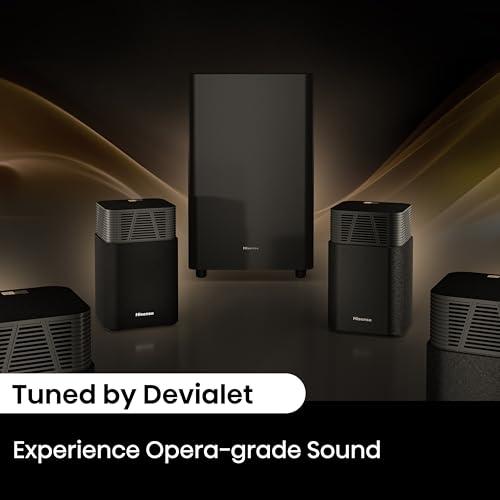
However, the DHT-S517 does have one advantage in a crucial area: dialogue clarity. It includes a dedicated center channel speaker—a driver specifically designed to handle human voices. The HT Saturn uses what's called a "phantom center channel," where dialogue appears to come from between the left and right front speakers through careful signal processing. While Hisense has done impressive work here (aided by tuning from Devialet, a premium French audio company), there's something to be said for having an actual physical speaker dedicated to voices.
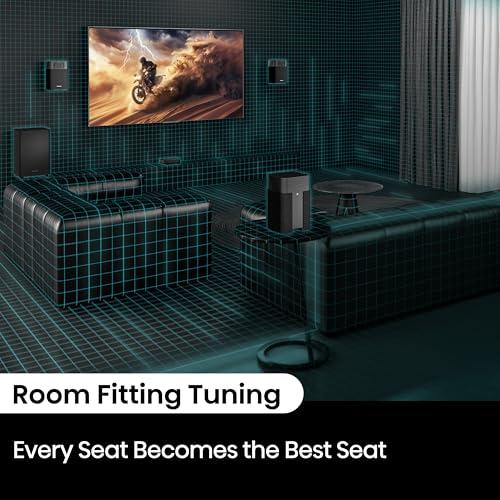
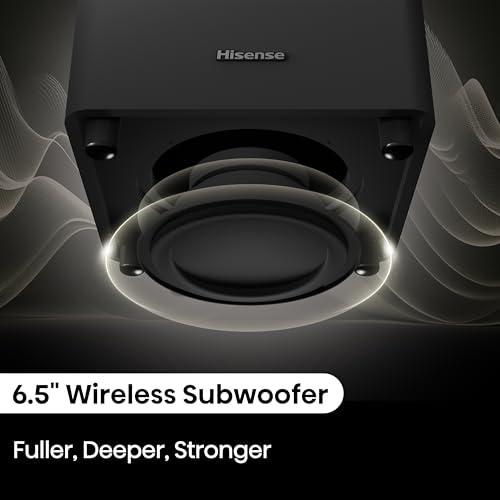
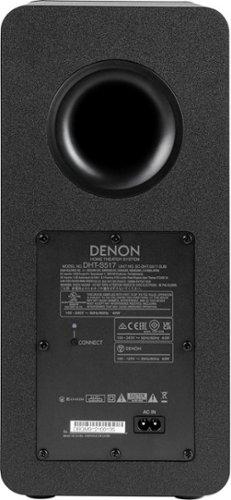
Both systems include wireless subwoofers, but they approach bass reproduction differently. The HT Saturn uses a larger 6.5-inch driver in its subwoofer, compared to the DHT-S517's 5.25-inch unit. More importantly, the HT Saturn includes room calibration technology that automatically adjusts the bass response to work optimally in your specific space.
This matters more than you might think. Subwoofer placement can dramatically affect bass quality—put it in the wrong spot, and you'll get boomy, one-note bass that overwhelms dialogue and muddles music. The HT Saturn's Room Fitting Tuning feature actually measures your room's acoustics and adjusts the system's response accordingly. The DHT-S517 relies on you to find the best position for its subwoofer through trial and error.
User reviews consistently praise the HT Saturn's bass as "well-integrated" and "dynamic," while the DHT-S517 occasionally suffers from what reviewers describe as "boomy" bass, particularly when the subwoofer isn't optimally positioned.
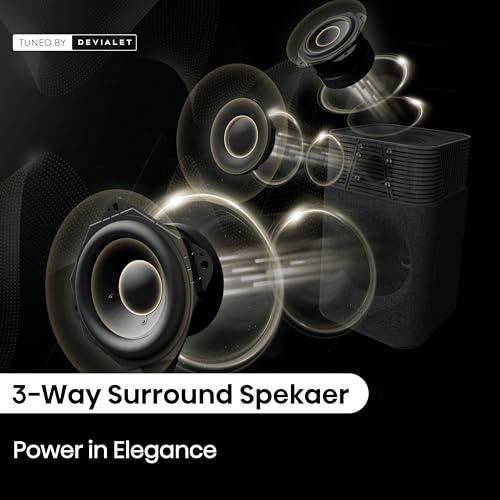
If you plan to use your system for music listening, not just movies and TV, the differences become even more pronounced. The HT Saturn benefits from tuning by Devialet, a company known for high-end audio equipment that costs thousands of dollars. Each of its satellite speakers uses a three-way design—separate drivers handle different frequency ranges (bass, midrange, and treble) rather than asking one driver to handle everything.
This shows in the music performance. Users report that the HT Saturn delivers surprisingly audiophile-grade music reproduction, with clear separation between instruments, accurate tonal balance, and the kind of soundstage width (how spread out instruments sound) typically associated with much more expensive systems.
The DHT-S517 includes a "Pure Mode" that bypasses surround sound processing for music, which helps, but it can't overcome the fundamental limitations of its driver configuration. Professional reviews note that its midrange can sound "soft and hazy," and its overall presentation lacks the refinement of the Hisense system.
The setup experience differs dramatically between these products. The DHT-S517 follows the traditional soundbar playbook: connect it to your TV with an HDMI cable, plug in the wireless subwoofer, and you're mostly done. It's straightforward and familiar.
The HT Saturn requires more thought, but Hisense has worked to minimize complexity. Each satellite speaker only needs to be plugged into power—they connect to the central hub wirelessly using three different frequency bands (2.4GHz, 5.2GHz, and 5.8GHz) to avoid interference issues. The system includes wall mounting hardware, and the speakers are compact enough (under 8 inches tall) to fit on most shelves.
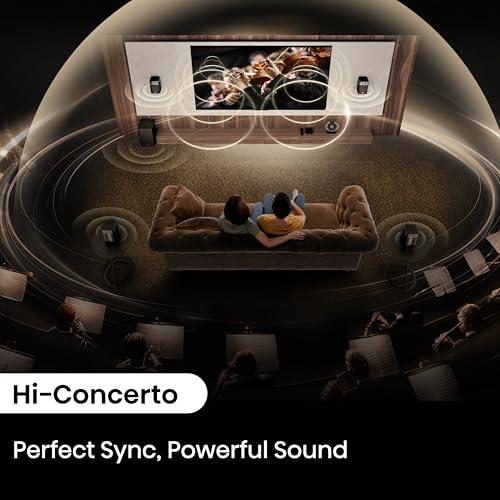
The real advantage of the HT Saturn emerges after setup. Its Room Fitting Tuning automatically optimizes the sound for your specific room, something that would typically require expensive calibration equipment and technical expertise. If you own a compatible Hisense TV, the Hi-Concerto feature can even incorporate your TV's speakers into the mix, effectively giving you additional channels.
Both systems support current audio standards, but with different levels of completeness. The HT Saturn handles both Dolby Atmos and DTS:X—the two competing formats for three-dimensional audio. The DHT-S517 only supports Dolby Atmos natively, though it can simulate DTS content using processing.
This matters because streaming services, Blu-ray discs, and gaming consoles use both formats. While Dolby Atmos is more common currently, DTS:X support provides better future-proofing and compatibility with a wider range of content.
The HT Saturn also includes more modern connectivity, with Bluetooth 5.3 supporting higher-quality wireless audio codecs. The DHT-S517's Bluetooth implementation is more basic, though still functional for streaming music from phones and tablets.
The DHT-S517 makes sense for specific situations. If you're primarily upgrading from TV speakers and want to experience Dolby Atmos content without spending more than a few hundred dollars, it delivers solid value. It's also ideal for smaller rooms where the limitations of soundbar surround sound are less apparent, or for apartments where you need to keep volume levels reasonable (its Night Mode compresses loud sounds to maintain clarity at low volumes).
The system works particularly well for users who primarily watch TV shows and streaming content rather than blockbuster movies. Its dedicated center channel excels at dialogue clarity, which is often the biggest improvement people notice when upgrading from TV speakers.
However, for movie enthusiasts or anyone with a room large enough to accommodate satellite speakers, the HT Saturn operates in a different league entirely. The immersive experience it creates simply isn't achievable with any soundbar, regardless of price. If you've ever experienced a good home theater system and found yourself missing that enveloping sound quality, the HT Saturn delivers that experience with modern convenience.
The HT Saturn also makes sense for users who listen to music seriously. Its Devialet tuning and three-way speaker design produce the kind of refined, detailed sound that works as well for critical music listening as it does for movies. If you find yourself streaming high-quality music or playing vinyl through your system, this difference becomes immediately apparent.
At the time of writing, the price difference between these systems is substantial—roughly $1,000 separates them. But that difference reflects fundamentally different approaches to solving the home theater audio problem, not just premium branding.
The DHT-S517 delivers excellent value within its category. For users who want basic Dolby Atmos capability and improved dialogue clarity without complex installation, it's hard to find better performance per dollar spent. Professional reviewers consistently note its solid build quality and reasonable sound for the price, even while acknowledging its limitations.
The HT Saturn costs more because it's essentially replacing a traditional AV receiver and speaker system that would cost significantly more and require professional installation. When you consider that comparable separate components and installation could easily exceed $2,000, the HT Saturn's pricing becomes more reasonable.
The choice between these systems ultimately comes down to your priorities and room situation. If you want the most immersive possible experience and have the space to position satellite speakers around your seating area, the HT Saturn delivers performance that no soundbar can match. Its wireless design makes it practical for modern homes, while its advanced features like room calibration ensure optimal performance without professional setup.
Choose the DHT-S517 if you're working within a tighter budget, have space constraints that make satellite speakers impractical, or primarily want better dialogue clarity for TV viewing. It's a solid, reliable system that delivers meaningful improvements over TV speakers without the complexity of a full surround sound setup.
The HT Saturn represents where home theater audio is heading—authentic surround sound with modern convenience. The DHT-S517 refines the traditional soundbar approach about as well as physics allows. Both have their place, but they serve different users with different needs and expectations.
For anyone serious about home theater audio who can accommodate its requirements, the HT Saturn delivers an experience that justifies its premium pricing. For users who want good sound without complexity or a large budget, the DHT-S517 provides solid value and proven performance.
| Hisense HT Saturn | Denon DHT-S517 |
|---|---|
| Channel Configuration - Determines surround sound authenticity | |
| 4.1.2 channels with 4 physical satellite speakers | 3.1.2 channels in single soundbar unit |
| Speaker Array - More drivers typically mean better sound quality | |
| 13 total speakers (8 full-range + 4 tweeters + subwoofer) | 7 drivers in soundbar + separate subwoofer |
| Surround Sound Approach - Physical speakers vs acoustic processing | |
| True surround with wireless satellites positioned around room | Virtualized surround from front-facing soundbar |
| Subwoofer Size - Larger drivers produce deeper, more impactful bass | |
| 6.5" wireless subwoofer with room calibration | 5.25" wireless subwoofer, 100W amplifier |
| Audio Format Support - More formats mean better compatibility | |
| Dolby Atmos, DTS:X, Dolby TrueHD, DTS-HD Master | Dolby Atmos only (no DTS:X support) |
| Audio Tuning - Premium engineering improves sound quality | |
| Tuned by Devialet (high-end French audio company) | Standard Denon tuning with Pure Mode |
| Room Optimization - Automatic calibration saves time and improves performance | |
| Room Fitting Tuning with automatic calibration | Manual positioning, no automatic calibration |
| TV Integration - Smart features reduce complexity | |
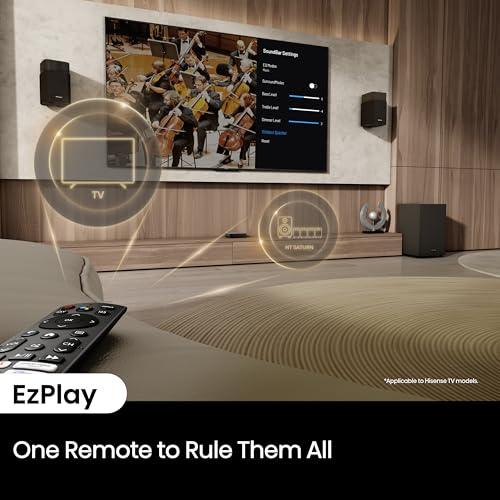
| Hi-Concerto (uses TV speakers as additional channels), EzPlay control | Basic HDMI eARC control only |
| Connectivity Options - More inputs provide better flexibility | |
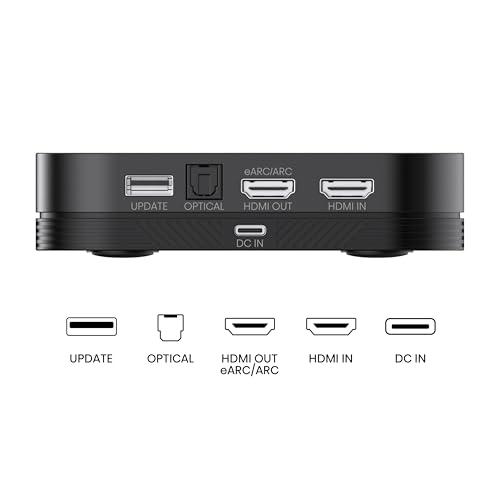
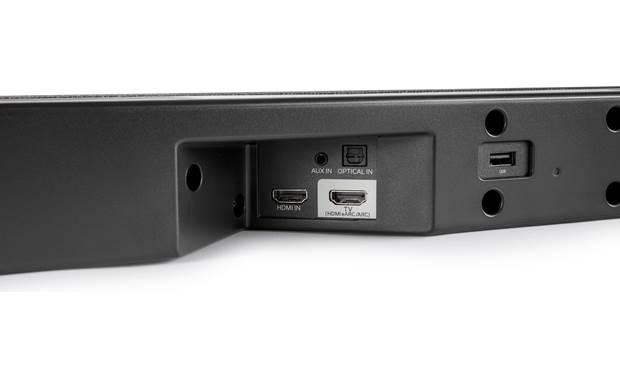
| HDMI eARC, Optical, Bluetooth 5.3, USB (service only) | HDMI eARC, Optical, 3.5mm analog, USB-A |
| Setup Complexity - Consider your comfort with speaker placement | |
| Requires positioning 4 satellite speakers around room | Simple soundbar + subwoofer placement |
| Music Performance - Important if you stream music frequently | |
| Audiophile-grade with 3-way satellite design | Basic music reproduction, "Pure Mode" available |
| Release Year - Newer products often have better features | |
| 2024 (latest wireless home theater technology) | 2022 (established soundbar design) |
| Best For - Who should choose each system | |
| Movie enthusiasts wanting authentic surround sound | Budget-conscious users prioritizing dialogue clarity |
The Hisense HT Saturn is a complete wireless home theater system with four separate satellite speakers that you position around your room, while the Denon DHT-S517 is a traditional soundbar that keeps all speakers in one front-facing unit. This means the HT Saturn creates true surround sound with physical speakers behind you, while the DHT-S517 simulates surround sound using acoustic processing.
The Hisense HT Saturn delivers superior surround sound because it uses actual speakers positioned around your room. Sounds literally come from behind, beside, and above you, creating an authentic cinema-like experience. The Denon DHT-S517 relies on bouncing sound off walls and acoustic tricks to simulate surround effects, which can't match the immersion of physical speaker placement.
Yes, the Hisense HT Saturn requires more initial setup since you need to position four satellite speakers around your room and connect each to power. However, all speakers connect wirelessly and include auto-pairing. The Denon DHT-S517 offers simpler installation with just a soundbar and wireless subwoofer to position.
The Denon DHT-S517 has a slight edge for dialogue clarity because it includes a dedicated center channel speaker specifically designed for voices. The Hisense HT Saturn uses a "phantom center" that creates dialogue between left and right speakers, though it performs surprisingly well thanks to Devialet tuning.
Yes, both the Hisense HT Saturn and Denon DHT-S517 support Dolby Atmos for three-dimensional audio effects. However, the HT Saturn also supports DTS:X format, while the DHT-S517 only handles Dolby Atmos natively, making the Hisense system more compatible with different content sources.
The Hisense HT Saturn excels at music reproduction thanks to Devialet tuning and three-way satellite speakers with dedicated tweeters and midrange drivers. The Denon DHT-S517 includes a "Pure Mode" for music but lacks the refined driver configuration and acoustic engineering of the Hisense system.
The Hisense HT Saturn features a larger 6.5-inch subwoofer with automatic room calibration that optimizes bass for your space. The Denon DHT-S517 uses a 5.25-inch subwoofer with 100W amplification but requires manual positioning and lacks automatic tuning, which can result in less optimal bass integration.
The Hisense HT Saturn provides advanced smart features including Hi-Concerto technology (which uses your TV speakers as additional channels), Room Fitting Tuning for automatic calibration, and EzPlay for TV remote control. The Denon DHT-S517 offers basic HDMI eARC control and dialogue enhancement but lacks the sophisticated integration features.
The Denon DHT-S517 works well in small rooms where soundbar limitations are less noticeable and satellite speaker placement might be challenging. The Hisense HT Saturn can work in smaller spaces but requires room to position four satellite speakers effectively, making it better suited for medium to large rooms.
Value depends on your needs and budget. The Denon DHT-S517 offers excellent value for users wanting basic Dolby Atmos and improved dialogue at a lower price point. The Hisense HT Saturn costs significantly more but delivers authentic surround sound that would typically require expensive separate components and professional installation.
Both systems offer HDMI eARC and optical inputs for TV connection. The Hisense HT Saturn includes modern Bluetooth 5.3 for high-quality wireless streaming, while the Denon DHT-S517 adds a 3.5mm analog input and USB-A port for additional source flexibility.
Choose the Hisense HT Saturn if you want the most immersive movie experience, have space for satellite speakers, and appreciate high-quality music reproduction. Select the Denon DHT-S517 if you're working with a tighter budget, have space constraints, or primarily want better dialogue clarity for TV viewing without complex installation.
We've done our best to create useful and informative comparisons to help you decide what product to buy. Our research uses advanced automated methods to create this comparison and perfection is not possible - please contact us for corrections or questions. These are the sites we've researched in the creation of this article: bestbuy.com - youtube.com - blog.son-video.com - youtube.com - youtube.com - techradar.com - ecoustics.com - jbhifi.com.au - shop.hisense-usa.com - bhphotovideo.com - bestbuy.com - digitalreviews.net - hisense-usa.com - projectorscreenstore.com - valueelectronics.com - dolby.com - giftpack.ai - techradar.com - consumerreports.org - crutchfield.com - bestbuy.com - bestbuy.com - pocket-lint.com - abt.com - manuals.denon.com - connectedmag.com.au - bestbuy.com - forum.flirc.tv - bhphotovideo.com

Privacy Policy
Terms and Conditions - Affiliate Policy
Home Security
© Copyright 2008-2026.
11816 Inwood Rd #1211, Dallas, TX 75244