







The home theater audio landscape shifted dramatically in 2024 and 2025, with manufacturers taking two distinctly different approaches to solving the age-old problem of cinematic sound at home. On one side, we have complete wireless systems that promise theater-quality audio straight out of the box. On the other, expandable soundbars offer a budget-friendly entry point with the flexibility to grow over time.
This fundamental split in philosophy is perfectly illustrated by two standout products: the Hisense HT Saturn HTSATURN, released in early 2025 as part of Hisense's premium audio push, and the Klipsch Flexus Core 100, which debuted in 2024 as Klipsch's answer to affordable Dolby Atmos. These systems represent completely different strategies for achieving great home theater sound, and understanding their approaches will help you decide which path makes sense for your setup.
Before diving into specifics, it's worth understanding what we're really talking about when we discuss modern home theater audio. The goal is simple: recreate the immersive sound experience you get in a movie theater within your living room. This means handling everything from whispered dialogue to explosive action sequences while placing sounds all around you—and increasingly, above you too.
Traditional surround sound required running speaker wires to multiple locations around your room, which most people found impractical. Soundbars emerged as a compromise, using a single bar-shaped speaker to simulate surround effects through audio processing tricks. But the latest generation goes further, with some systems offering true wireless surround speakers and others focusing on incredibly sophisticated virtual processing.
The key considerations haven't changed much: sound quality, ease of setup, room compatibility, and value. What has changed is how dramatically different the solutions have become. You're no longer just choosing between different soundbars—you're choosing between entire philosophies of home audio.
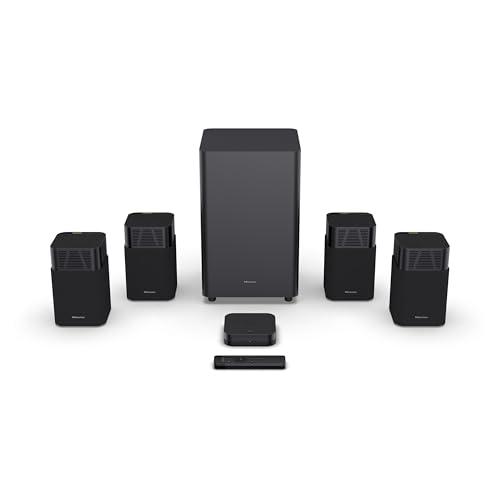
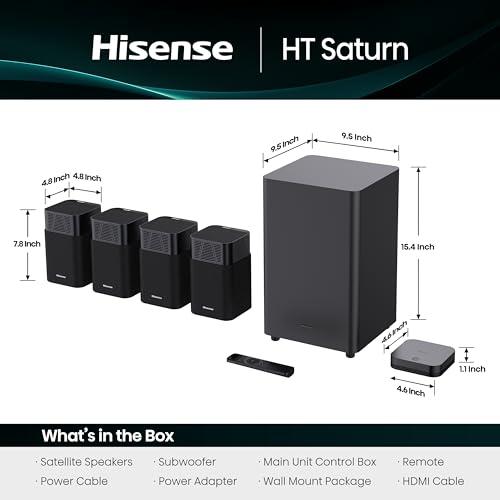
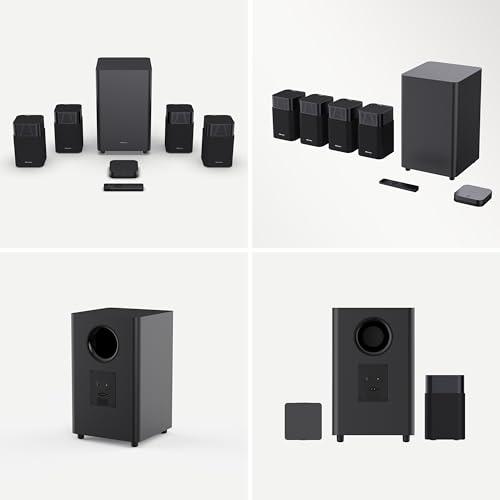
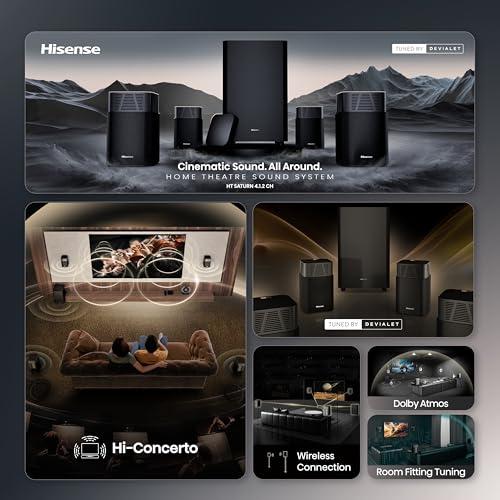
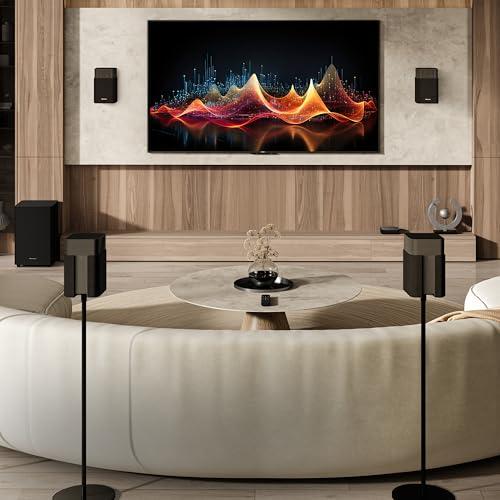
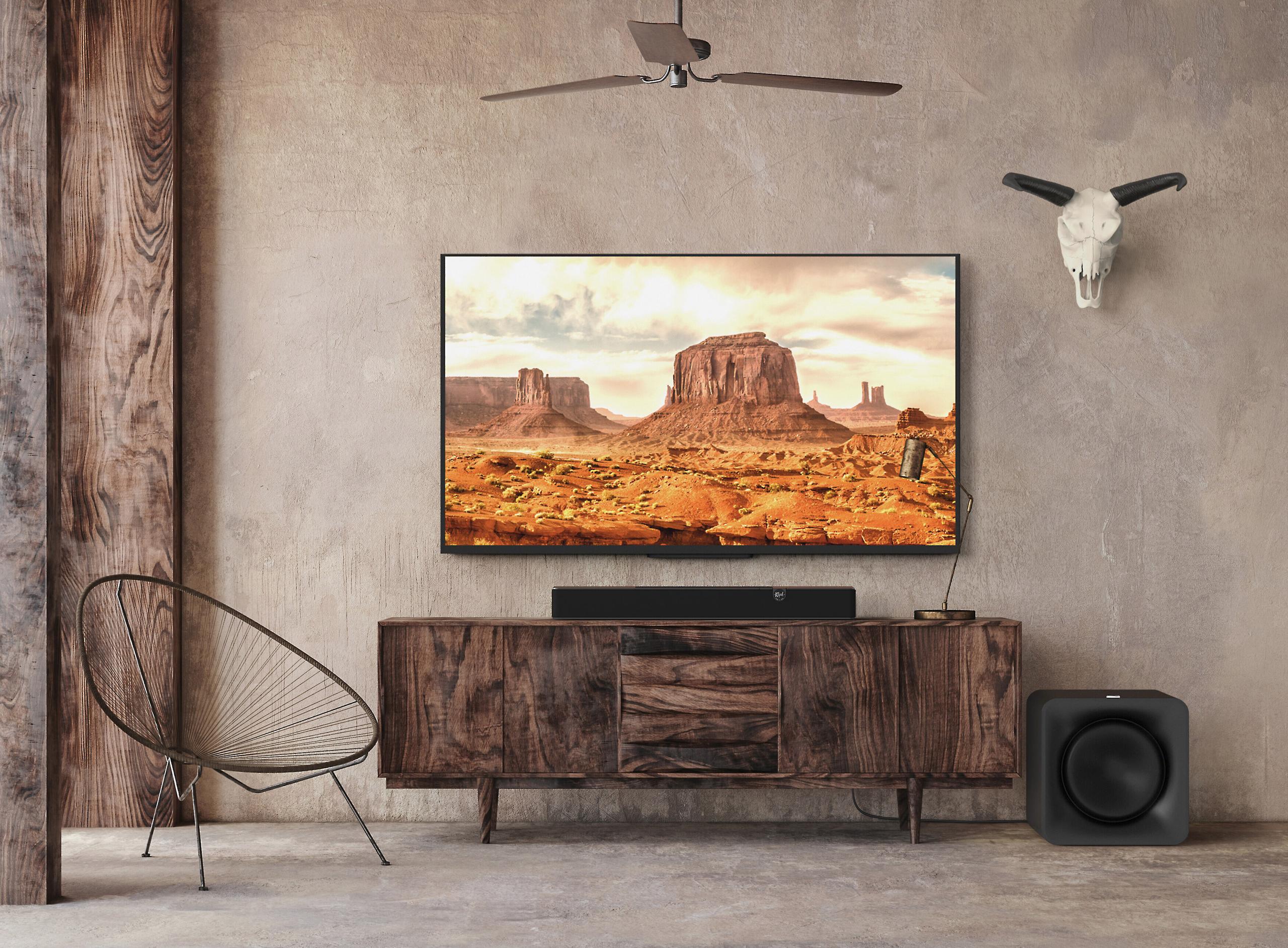
The Hisense HT Saturn represents the "everything included" approach. When you open the box, you get a complete 4.1.2-channel home theater system with 13 individual speakers spread across six separate components. This isn't a soundbar at all in the traditional sense—it's a full wireless surround system that happens to be sold as a package.
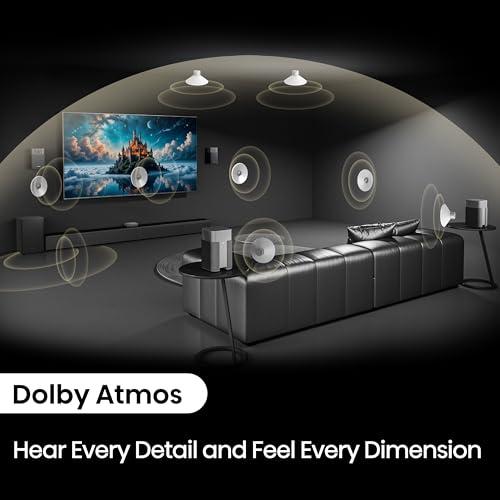
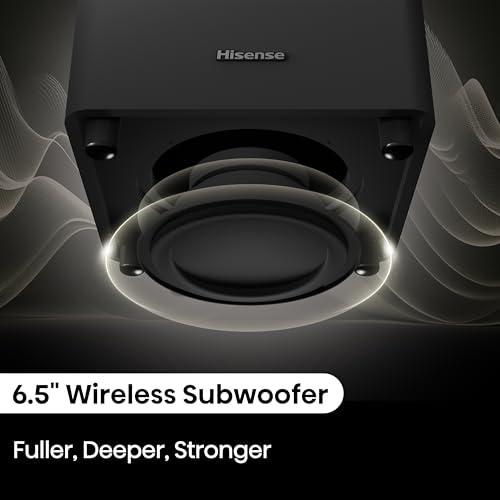
The "4.1.2" designation tells you exactly what you're getting: four main channels (front left, front right, rear left, rear right), one subwoofer channel, and two height channels for Dolby Atmos effects. Each of those four main channels gets its own dedicated wireless speaker cabinet, while the subwoofer is a separate 6.5-inch unit. The height channels are built into the front speakers and fire upward to bounce sound off your ceiling.
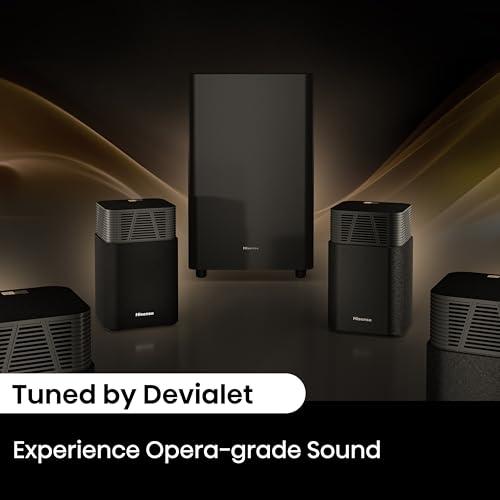
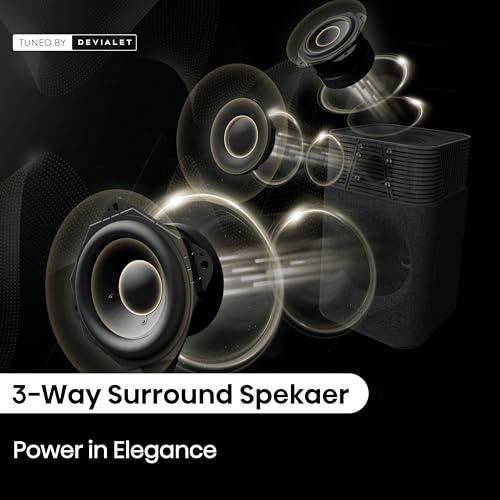
What makes this system unique is its partnership with Devialet, the French audio company known for extremely high-end speakers. Devialet's acoustic engineers tuned the HT Saturn to deliver what they call "opera-grade" sound quality, focusing on clarity and tonal balance across all frequencies.
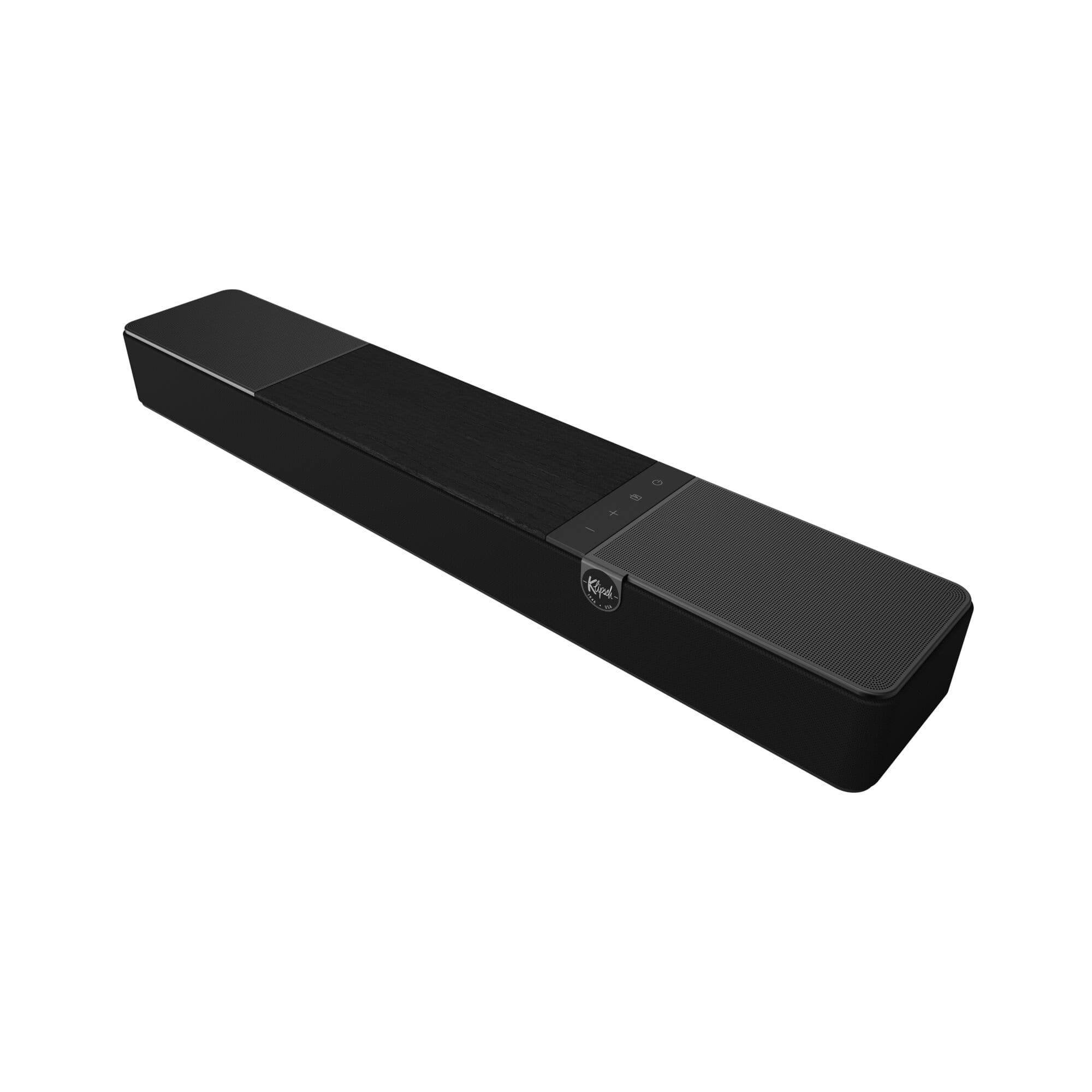
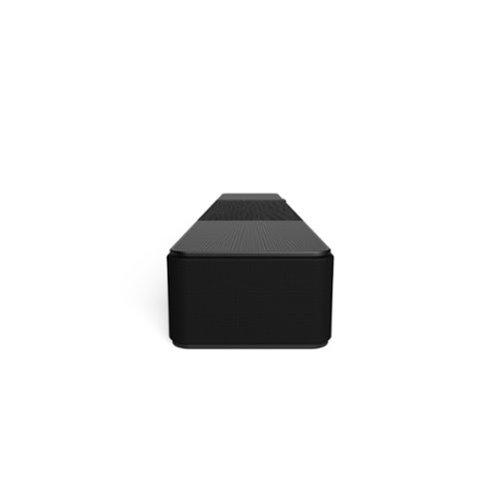
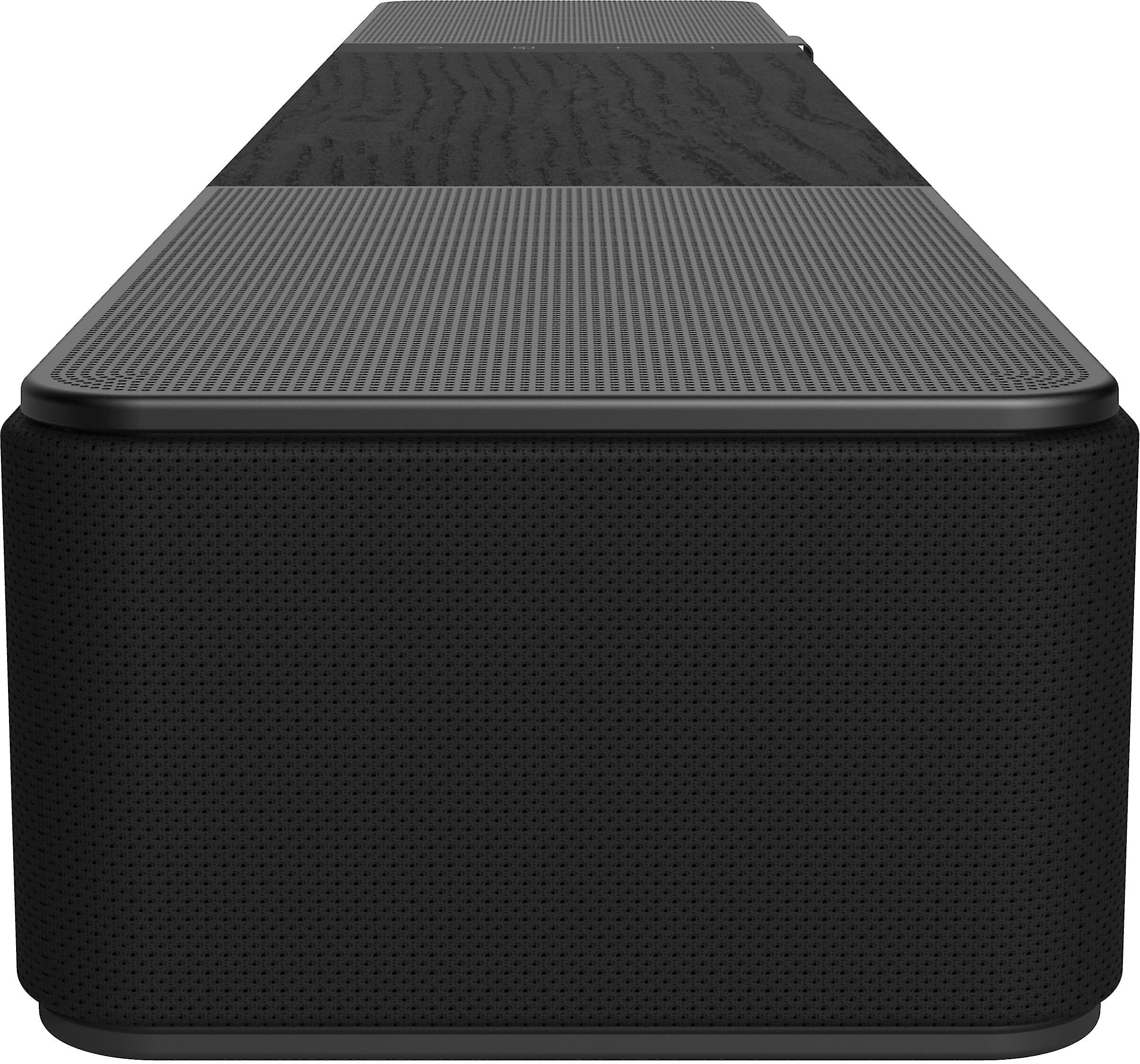
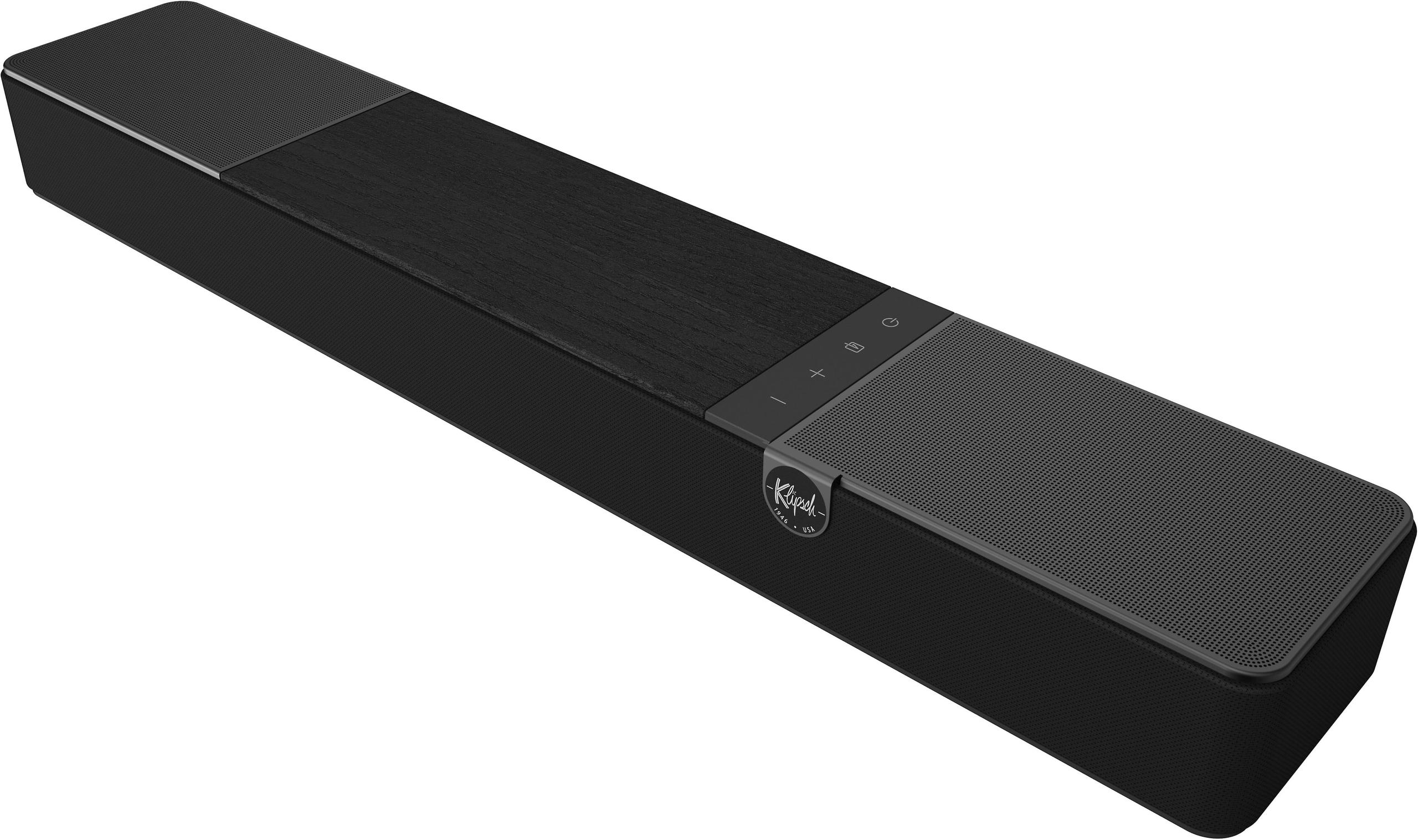
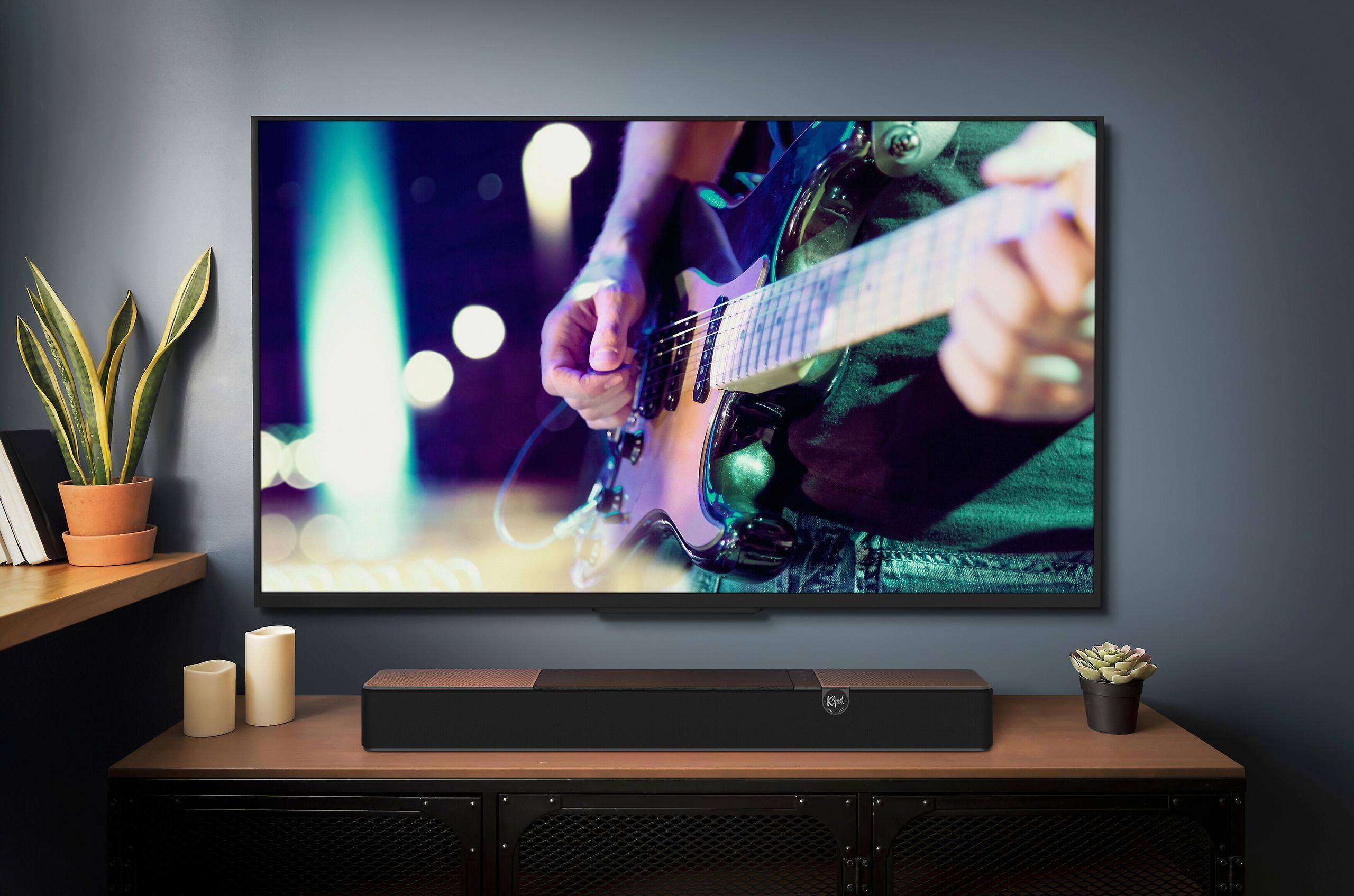
The Klipsch Flexus Core 100, meanwhile, takes the traditional soundbar approach but adds modern expandability. At its core, it's a 2.1-channel system—meaning two main channels plus built-in subwoofers—contained within a single 28-inch bar. But Klipsch designed it as the foundation of a system you can build over time.
The "Core 100" name reflects this philosophy. It's literally the core of a potential surround system, with options to add wireless rear speakers and an external subwoofer when your budget allows. This gives you immediate improvement over TV speakers while keeping the door open for future upgrades.
Klipsch brought serious audio pedigree to this design. The company has been making speakers since 1946, and they're particularly known for their horn-loaded tweeters that deliver exceptionally clear and dynamic sound. The Flexus Core 100 includes dual 4-inch subwoofers built right into the soundbar, which is unusual for systems in this price range.
This is where the fundamental differences become crystal clear. The Hisense HT Saturn delivers true surround sound because it has actual speakers positioned around your room. When a helicopter flies from front to back in a movie, you hear it moving between physically separate speakers. The system processes Dolby Atmos and DTS:X content exactly as intended, with dedicated channels for each audio element.
Our research into professional reviews consistently highlights how the HT Saturn's phantom center channel—created by carefully balancing the left and right front speakers—delivers surprisingly stable dialogue positioning. This is impressive because most surround systems struggle without a dedicated center speaker, yet reviewers found voices remained clearly centered even during complex action scenes.
The Klipsch Flexus Core 100, by contrast, relies on psychoacoustic processing to create virtual surround effects. This means it uses timing delays, phase adjustments, and frequency filtering to trick your brain into perceiving sounds as coming from different directions. While this technology has improved dramatically, it can't fully replicate the experience of having actual rear speakers.
However, the Flexus Core 100 does excel in one area: its built-in dual 4-inch subwoofers deliver surprisingly robust bass for a single-unit design. Many competing soundbars require a separate subwoofer to achieve similar low-frequency impact, so Klipsch deserves credit for integrating meaningful bass extension into such a compact package.
The power difference is substantial and audible. The HT Saturn delivers 720 watts total across all its components, with each satellite speaker and the subwoofer receiving dedicated amplification. This distributed power approach means each component can operate at its optimal level without competing for amplifier resources.
The Flexus Core 100 delivers 100 watts RMS, which sounds modest in comparison but needs context. Since it's driving fewer speakers in a single enclosure, that power is more concentrated. For smaller rooms, 100 watts can absolutely deliver satisfying volume levels and decent dynamics.
But here's where room size becomes critical. Our evaluation of user feedback shows the HT Saturn maintains its composure and clarity even at high volumes in large spaces, while the Flexus Core 100 begins to show strain in rooms larger than about 200 square feet. The distributed speaker approach simply has more headroom for demanding content.
This represents one of the most significant technical differences between these systems. The HT Saturn supports both Dolby Atmos and DTS:X, which are competing object-based audio formats that place sounds in three-dimensional space rather than fixed channels.
More importantly, the HT Saturn can decode these formats properly because it has the physical speakers to reproduce them. When a movie soundtrack places a sound directly above your listening position, the system's up-firing height speakers can actually put sound there.
The Flexus Core 100 processes Dolby Atmos but cannot decode DTS:X at all. This is a significant limitation since many Blu-ray movies and streaming services use DTS formats. Additionally, its Atmos processing is virtual—it creates the illusion of height effects through clever audio processing rather than actual overhead sound placement.
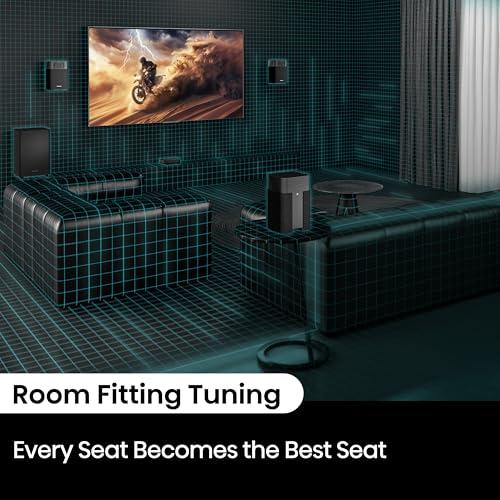
Room acoustics dramatically affect audio performance, and this is where the HT Saturn shows its premium positioning. The system includes Room Fitting Tuning, which automatically measures your room's acoustic characteristics and adjusts speaker timing, levels, and frequency response accordingly.
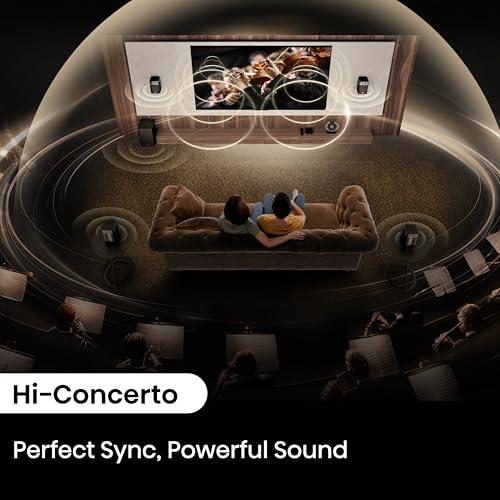
When paired with a Hisense TV, the system can even utilize Hi-Concerto technology, which synchronizes the TV's built-in speakers with the HT Saturn to create an expanded soundstage. This kind of integration between components shows the level of engineering sophistication Hisense built into the system.
The Flexus Core 100 offers manual EQ adjustment through Klipsch's smartphone app, but it lacks automatic room correction. You can tune the sound to your preferences, but the system won't adapt to your room's unique acoustic challenges without manual intervention.
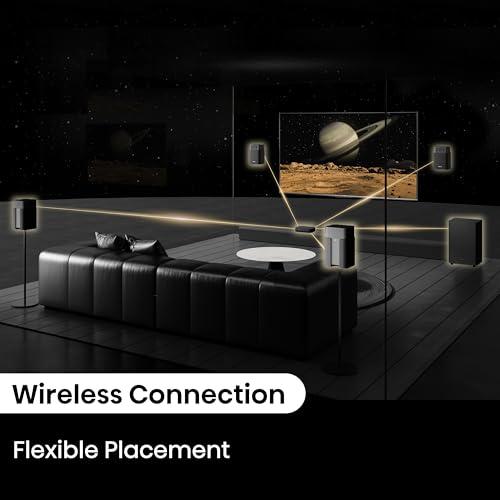
The HT Saturn's complete wireless approach creates both advantages and challenges. Yes, you need to find space for six separate components, but since only power cables are required at each location, placement flexibility is excellent. The satellite speakers are compact at roughly 5×8×5 inches each and can be wall-mounted using included brackets.
However, this system really needs a medium to large room to shine. Hisense specifically designed it for use with 85-inch TVs and larger, which gives you a sense of the scale they had in mind. In a small apartment, having speakers scattered around the room might feel overwhelming.
The Flexus Core 100 could hardly be more different in its space requirements. The single soundbar sits under your TV like any traditional audio component, measuring 28 inches wide and weighing just 10 pounds. For apartment dwellers or anyone with limited space, this simplicity is genuinely valuable.
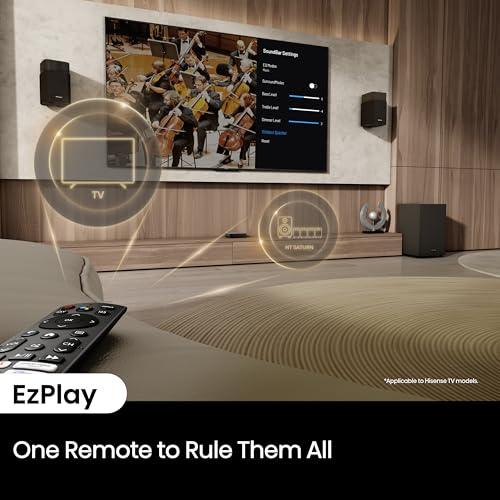
Despite having more components, the HT Saturn actually offers a smoother setup experience once you've positioned everything. The wireless speakers auto-pair when powered on, with LED indicators showing connection status. The system's EzPlay technology allows control through your TV's remote, assuming you have a compatible Hisense display.
Our research into user experiences shows that the initial setup takes about 30 minutes, but then you're done. The Room Fitting Tuning runs automatically, and the distributed wireless design means no complex wiring or manual level adjustments.
The Flexus Core 100 gets you up and running in minutes—literally plug it in, connect one HDMI cable, and start listening. However, getting optimal performance requires spending time with the Klipsch Connect Plus app, adjusting EQ settings and experimenting with different sound modes.
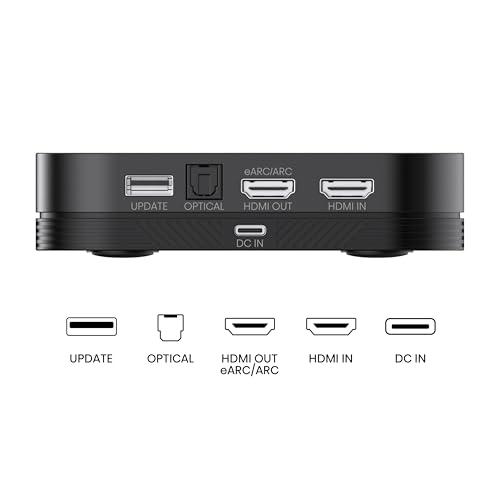
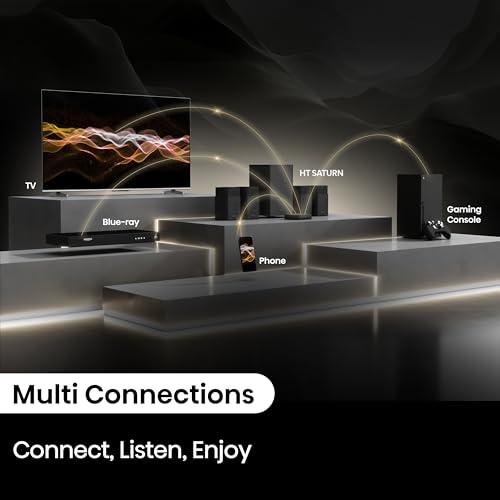
Both systems handle modern connectivity well, with HDMI eARC support for lossless audio transmission and 4K video pass-through. However, the HT Saturn includes Bluetooth 5.3 versus the Flexus Core 100's Bluetooth 5.0, which provides better range and connection stability for wireless music streaming.
The HT Saturn's deeper TV integration really sets it apart if you're in the Hisense ecosystem. Hi-Concerto technology essentially turns your TV and soundbar into a unified audio system, with all speakers working together rather than competing. This kind of cross-product integration is rare in the audio world.
The Flexus Core 100 offers broader compatibility with its USB-C input and RCA subwoofer output, making it easier to integrate with existing equipment or add custom components later.
At the time of writing, the HT Saturn commands a premium price—roughly five times more than the Flexus Core 100 base system. But this comparison isn't entirely fair because you're getting a complete 4.1.2 surround system versus a 2.1 soundbar.
To build a comparable system from Klipsch components, you'd need to add their wireless subwoofer and surround speakers, bringing the total cost to within a few hundred dollars of the HT Saturn. At that point, the Hisense system's superior wireless integration and room calibration technology represent genuine added value.
However, the modular approach has its own advantages. You can start with the Flexus Core 100 and immediately enjoy better sound than TV speakers, then add components as your budget allows. This spreading of costs over time makes premium audio more accessible to many buyers.
The HT Saturn represents a complete solution that can't be expanded further—what you buy is what you get. For most users, this isn't a limitation because the system already delivers reference-quality performance. But if you're someone who likes to tinker and upgrade, the fixed configuration might feel restrictive.
The Flexus Core 100 offers more flexibility for future changes. You can add different subwoofers, integrate existing speakers, or even use the RCA output to connect to a separate amplifier. This modularity appeals to audio enthusiasts who enjoy building and modifying their systems over time.
The Hisense HT Saturn makes sense when you want the best possible audio experience without complexity. If you have a medium to large room, watch lots of movies, and want authentic Dolby Atmos immersion, this system delivers performance that would cost significantly more from traditional audio brands.
The wireless convenience factor cannot be overstated. Having true surround sound without running speaker wires around your room is genuinely liberating, especially for renters or anyone who doesn't want to deal with home wiring projects.
Our evaluation suggests the HT Saturn particularly excels for serious movie watching and gaming. The combination of true surround positioning, powerful bass extension, and sophisticated room calibration creates an engaging experience that pulls you into the content rather than just making it louder.
The Klipsch Flexus Core 100 works best as exactly what Klipsch intended—a foundation you can build upon. If you have a smaller room, mixed content consumption habits, or budget constraints that require phased purchasing, this approach offers real advantages.
The built-in bass performance is genuinely impressive for a single-unit design, making the base system more satisfying than many competitors. Combined with Klipsch's reputation for clear, dynamic sound, you get meaningful improvement over TV speakers without requiring additional components.
For apartment dwellers, college students, or anyone who moves frequently, the single-unit simplicity of the Flexus Core 100 provides real practical value that goes beyond pure audio performance.
Start by honestly assessing your room size and primary use case. If you're working with less than 200 square feet or primarily watch TV shows and casual content, the Flexus Core 100 probably makes more sense. For larger rooms and serious movie watching, the HT Saturn delivers proportionally better results.
Consider your timeline for audio investment. If you can make a significant upfront investment and want immediate premium results, the HT Saturn provides better long-term value. If you need to spread costs over time or aren't sure about your long-term audio needs, the modular Flexus Core 100 approach offers more flexibility.
Think about your tolerance for complexity. The HT Saturn requires more initial setup and space planning but then largely takes care of itself. The Flexus Core 100 gets you started immediately but may require more ongoing adjustment and expansion planning to reach its full potential.
Finally, consider your existing ecosystem. If you have or plan to buy a Hisense TV, the HT Saturn offers integration advantages that extend beyond pure audio performance. For everyone else, both systems work well with any modern TV or streaming device.
The audio world has given us two genuinely different but compelling approaches to home theater sound. The Hisense HT Saturn delivers premium performance for those ready to invest in a complete solution, while the Klipsch Flexus Core 100 offers flexibility and accessibility for budget-conscious buyers who want room to grow. Understanding which philosophy matches your needs and situation is the key to making the right choice for your home theater setup.
| Hisense HT Saturn HTSATURN 4.1.2Ch Sound Bar System | Klipsch Flexus Core 100 Soundbar |
|---|---|
| Channel Configuration - Determines surround sound authenticity | |
| True 4.1.2 channels with physical satellite speakers | 2.1 channels with virtual surround processing |
| Total Speaker Count - More drivers typically mean better sound separation | |
| 13 speakers across 6 wireless components | 6 speakers in single soundbar unit |
| Power Output - Higher power handles loud scenes without distortion | |
| 720W total system power | 100W RMS |
| Subwoofer Configuration - Critical for movie bass impact | |
| Dedicated wireless 6.5" subwoofer | Dual 4" woofers built into soundbar |
| Audio Format Support - Affects compatibility with streaming and Blu-ray content | |
| Dolby Atmos, DTS:X, Dolby TrueHD, DTS-HD | Dolby Atmos (virtual), Dolby TrueHD, no DTS:X |
| Room Calibration - Automatic tuning saves time and improves performance | |
| Room Fitting Tuning with compatible Hisense TVs | Manual EQ via smartphone app only |
| Physical Setup Requirements - Consider your available space | |
| 6 separate wireless components requiring room placement | Single 28" soundbar under TV |
| Expandability - Future upgrade potential | |
| Complete system, no expansion options | Modular design accepts wireless surrounds and subwoofer |
| Frequency Response - Lower numbers mean deeper bass extension | |
| 40Hz - 20kHz | 45Hz - 20kHz |
| Connectivity Options - More inputs provide greater device flexibility | |
| HDMI eARC, Optical, Bluetooth 5.3 | HDMI eARC, Optical, USB-C, Bluetooth 5.0 |
| TV Integration Features - Enhanced functionality with compatible TVs | |
| Hi-Concerto and EzPlay with Hisense HT Saturn TVs | Works with any TV, Klipsch Connect Plus app control |
| Ideal Room Size - Performance optimization for space | |
| Medium to large rooms (300+ sq ft) | Small to medium rooms (under 200 sq ft) |
The Hisense HT Saturn HTSATURN 4.1.2Ch Sound Bar System is a complete wireless home theater system with separate satellite speakers and a subwoofer, while the Klipsch Flexus Core 100 Soundbar is a traditional single-bar design with built-in speakers. The Hisense HT Saturn delivers true surround sound with physical speakers around your room, whereas the Klipsch Flexus Core 100 uses virtual processing to simulate surround effects.
The Klipsch Flexus Core 100 Soundbar is better suited for small rooms under 200 square feet. Its compact 28-inch design fits easily under most TVs without requiring additional speaker placement. The Hisense HT Saturn HTSATURN 4.1.2Ch Sound Bar System needs space for six separate wireless components and performs best in medium to large rooms.
Yes, both support Dolby Atmos, but differently. The Hisense HT Saturn provides true Dolby Atmos with dedicated up-firing speakers that bounce sound off your ceiling for authentic overhead effects. The Klipsch Flexus Core 100 uses virtual Dolby Atmos processing to simulate height effects without physical overhead speakers.
The Hisense HT Saturn HTSATURN 4.1.2Ch Sound Bar System requires more initial setup since you need to position and power six separate wireless components around your room. The Klipsch Flexus Core 100 Soundbar offers simpler installation with just one unit to place under your TV and connect via HDMI.
The Klipsch Flexus Core 100 is designed for expansion with optional wireless surround speakers and a separate subwoofer available as add-ons. The Hisense HT Saturn is a complete system that cannot be expanded further, as it already includes all necessary components for full surround sound.
The Hisense HT Saturn HTSATURN 4.1.2Ch Sound Bar System delivers superior bass with its dedicated wireless 6.5-inch subwoofer that extends down to 40Hz. The Klipsch Flexus Core 100 includes dual 4-inch woofers built into the soundbar, which provide decent bass for a single-unit design but can't match a dedicated subwoofer's impact.
Both the Klipsch Flexus Core 100 Soundbar and Hisense HT Saturn work with any modern TV through HDMI eARC or optical connections. However, the Hisense HT Saturn HTSATURN 4.1.2Ch Sound Bar System offers enhanced features like Hi-Concerto technology and automatic room calibration when paired with compatible Hisense TVs.
The Hisense HT Saturn provides a more immersive gaming experience with true 4.1.2 surround sound that accurately positions game audio around you. Its support for both Dolby Atmos and DTS:X ensures compatibility with the latest gaming content. The Klipsch Flexus Core 100 offers good gaming performance but relies on virtual surround effects.
The Hisense HT Saturn HTSATURN 4.1.2Ch Sound Bar System delivers 720 watts total across all its wireless components, providing ample power for large rooms and dynamic content. The Klipsch Flexus Core 100 Soundbar outputs 100 watts RMS, which is sufficient for smaller spaces but may struggle in larger rooms at high volumes.
Value depends on your needs and budget. The Klipsch Flexus Core 100 offers excellent entry-level value with room to expand over time. The Hisense HT Saturn costs significantly more upfront but provides a complete premium home theater experience without requiring additional purchases.
Both systems handle music well. The Hisense HT Saturn HTSATURN 4.1.2Ch Sound Bar System excels with music thanks to Devialet tuning and multiple dedicated speakers providing wide soundstage and detail. The Klipsch Flexus Core 100 Soundbar delivers Klipsch's signature dynamic sound with clear highs and integrated bass, making it excellent for music in smaller spaces.
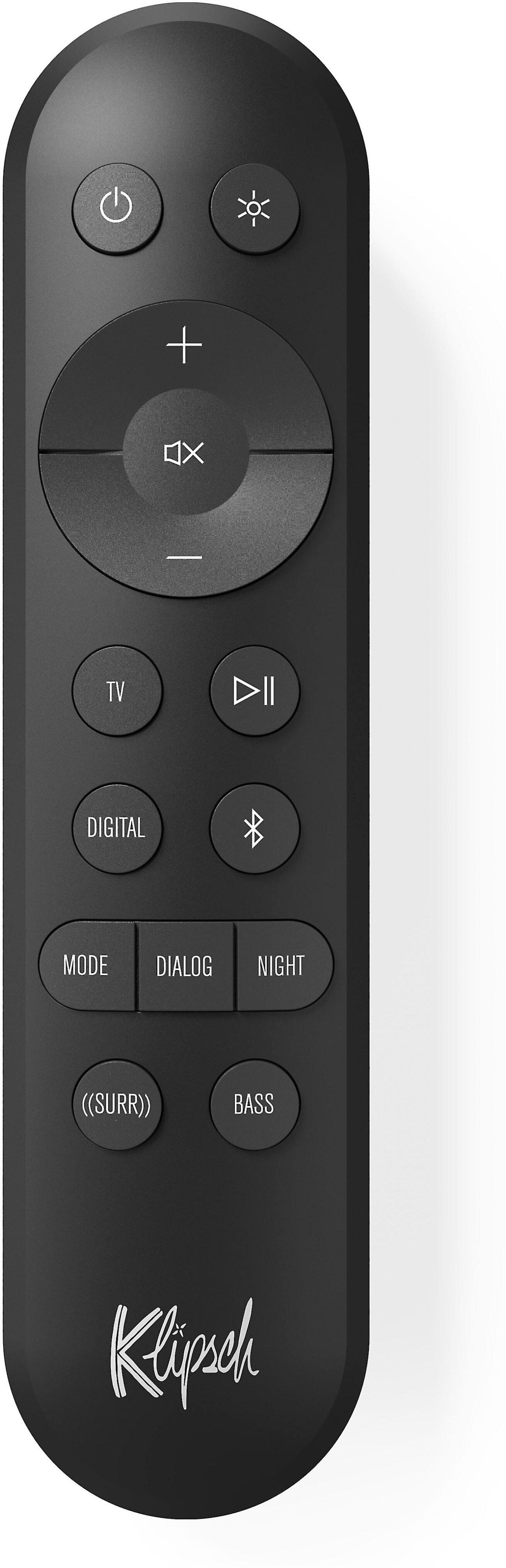
The Klipsch Flexus Core 100 offers straightforward operation with its included remote and smartphone app for EQ adjustments. The Hisense HT Saturn provides multiple control options including its own remote, TV remote integration through EzPlay technology, and automatic room calibration that reduces the need for manual adjustments once properly set up.
We've done our best to create useful and informative comparisons to help you decide what product to buy. Our research uses advanced automated methods to create this comparison and perfection is not possible - please contact us for corrections or questions. These are the sites we've researched in the creation of this article: bestbuy.com - youtube.com - blog.son-video.com - youtube.com - youtube.com - techradar.com - ecoustics.com - jbhifi.com.au - shop.hisense-usa.com - bhphotovideo.com - bestbuy.com - digitalreviews.net - hisense-usa.com - projectorscreenstore.com - valueelectronics.com - dolby.com - giftpack.ai - cnet.com - klipsch.com - klipsch.com - bestbuy.com - sweetwater.com - assets.onkyo-av.com - youtube.com - worldwidestereo.com - avnirvana.com - target.com

Privacy Policy
Terms and Conditions - Affiliate Policy
Home Security
© Copyright 2008-2026.
11816 Inwood Rd #1211, Dallas, TX 75244