

The home audio landscape has transformed dramatically since 2021. What started as simple soundbar upgrades for tinny TV speakers has evolved into sophisticated wireless surround systems that rival traditional home theater setups. Two products perfectly illustrate this evolution: the revolutionary Hisense HT Saturn, which breaks the soundbar mold entirely, and the refined Polk Audio Signa S4, which perfects the traditional approach.
Understanding these systems requires grasping how they solve the fundamental challenge of home audio: creating immersive, cinema-quality sound without the complexity and cost of professional installations. Both products succeed brilliantly, but through completely different philosophies.
Modern wireless surround systems represent a paradigm shift from the early 2020s, when most "surround" soundbars relied heavily on digital processing tricks to simulate speakers that weren't actually there. The technology has advanced to where wireless speaker arrays can maintain perfect synchronization while delivering genuine multi-channel audio experiences.
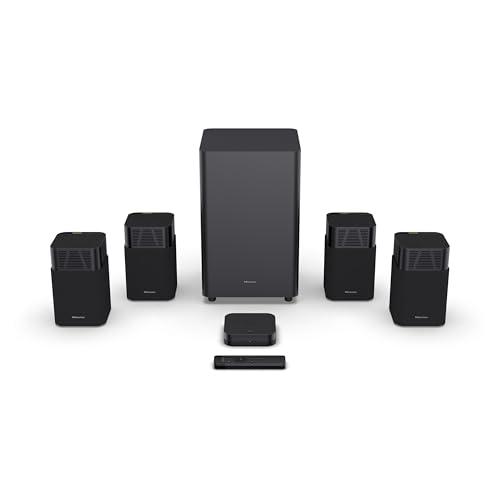
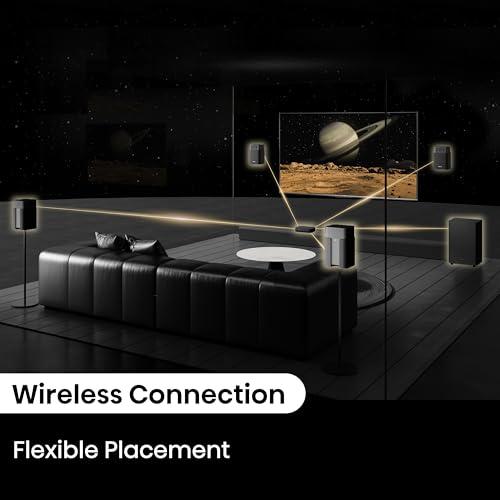
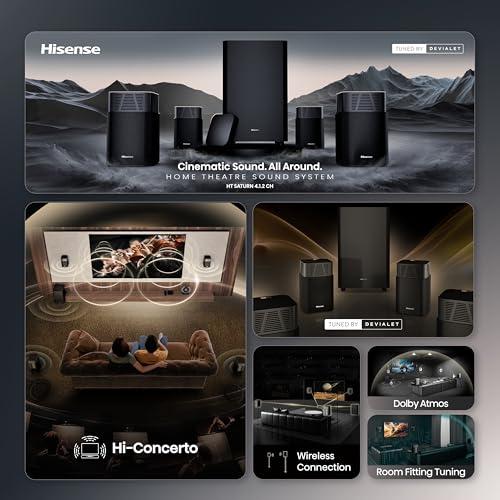
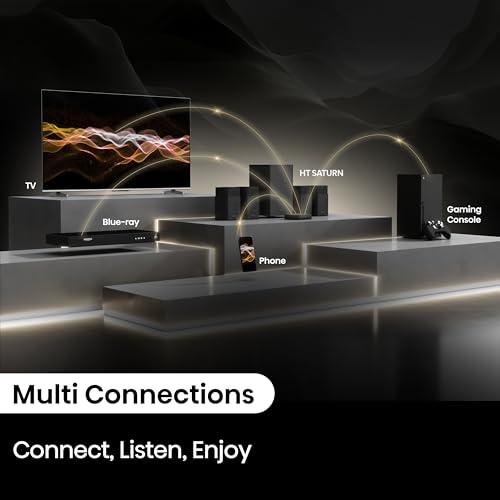
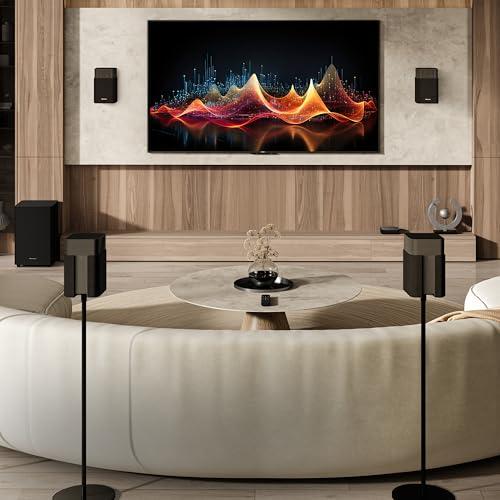
The Hisense HT Saturn, announced at CES 2025, represents the cutting edge of this evolution. Instead of cramming everything into a single soundbar, it distributes four wireless satellite speakers around your room, creating what's essentially a wireless version of traditional surround sound systems. This approach eliminates the acoustic compromises inherent in single-unit designs.
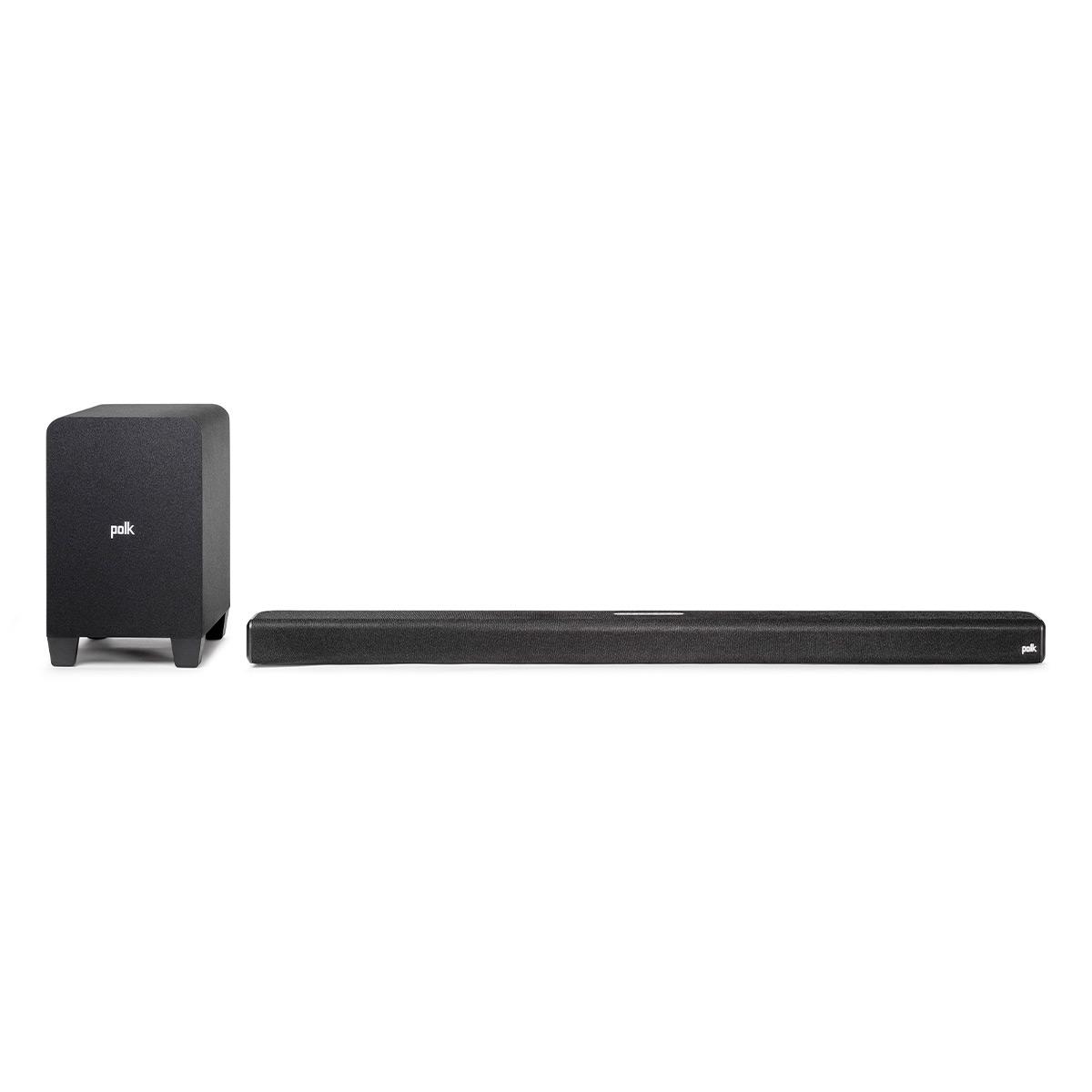
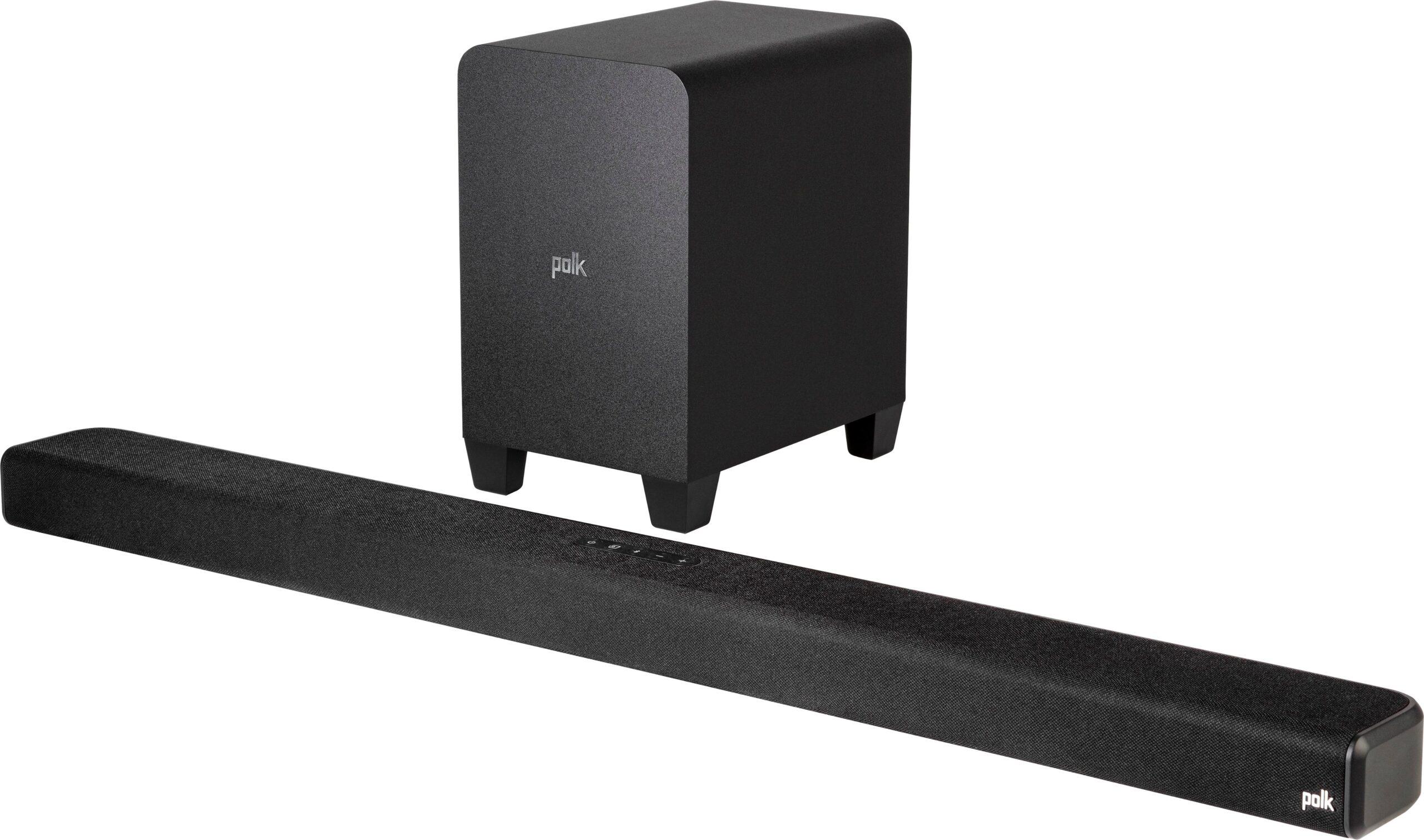
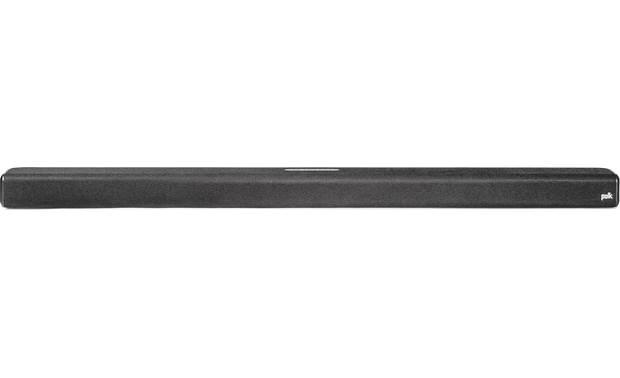
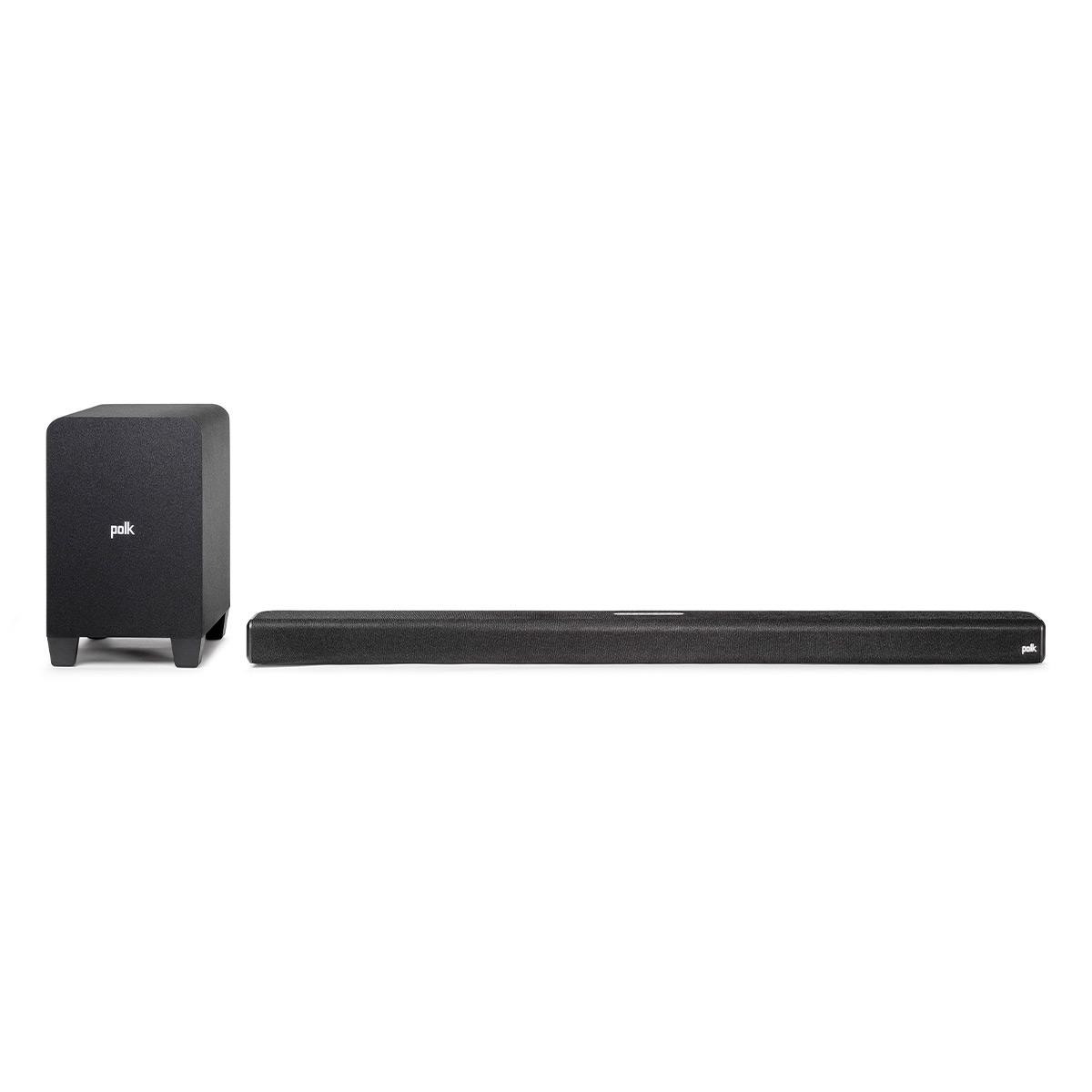
Meanwhile, the Polk Signa S4, released in late 2021, demonstrates how far traditional soundbar design has progressed. Its seven-driver array and sophisticated processing create remarkably convincing surround effects from a single 41-inch unit, proving that virtual surround technology has reached genuine maturity.
The key difference lies in their fundamental approaches: physical speaker placement versus advanced digital processing. Both work, but they excel in different scenarios and room types.
When you see "4.1.2" or "3.1.2" in audio specifications, these numbers reveal exactly how the system creates surround sound. The first number indicates main channels (left, right, and additional surround speakers), the second represents subwoofer channels, and the third shows height channels for Dolby Atmos overhead effects.
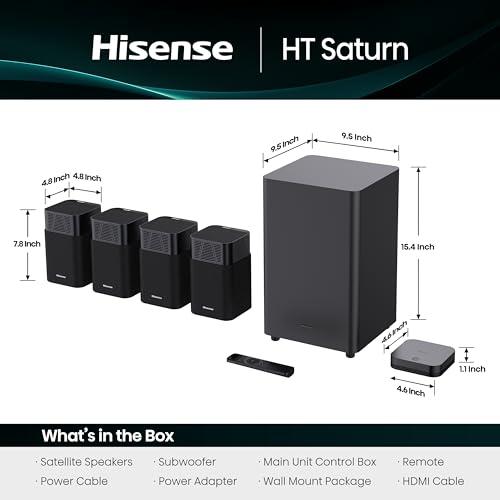
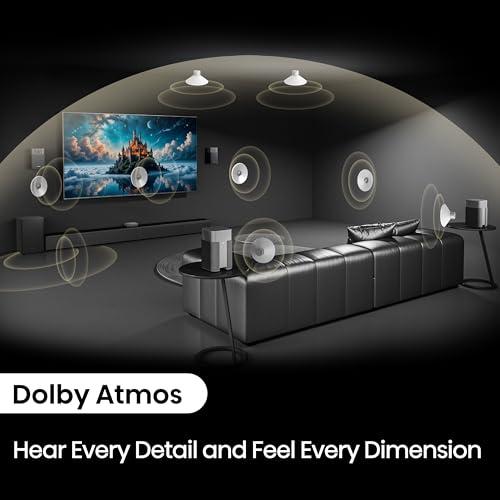
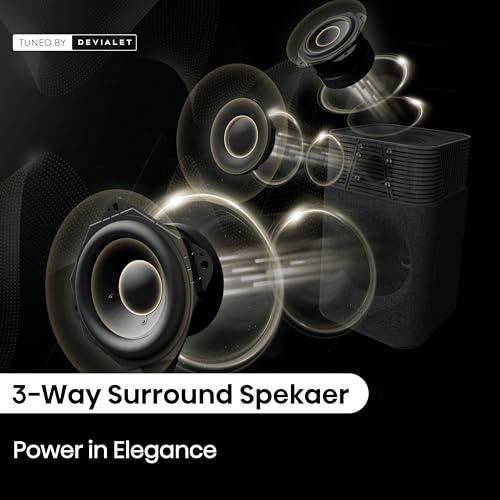
The Hisense HT Saturn's 4.1.2 configuration means four main speakers positioned around your room, one subwoofer, and two height channels that bounce sound off your ceiling. This creates a genuine bubble of audio around your listening position. The system's 13 total speakers – eight full-range drivers, four tweeters, and one subwoofer – work together to create seamless 360-degree sound movement.
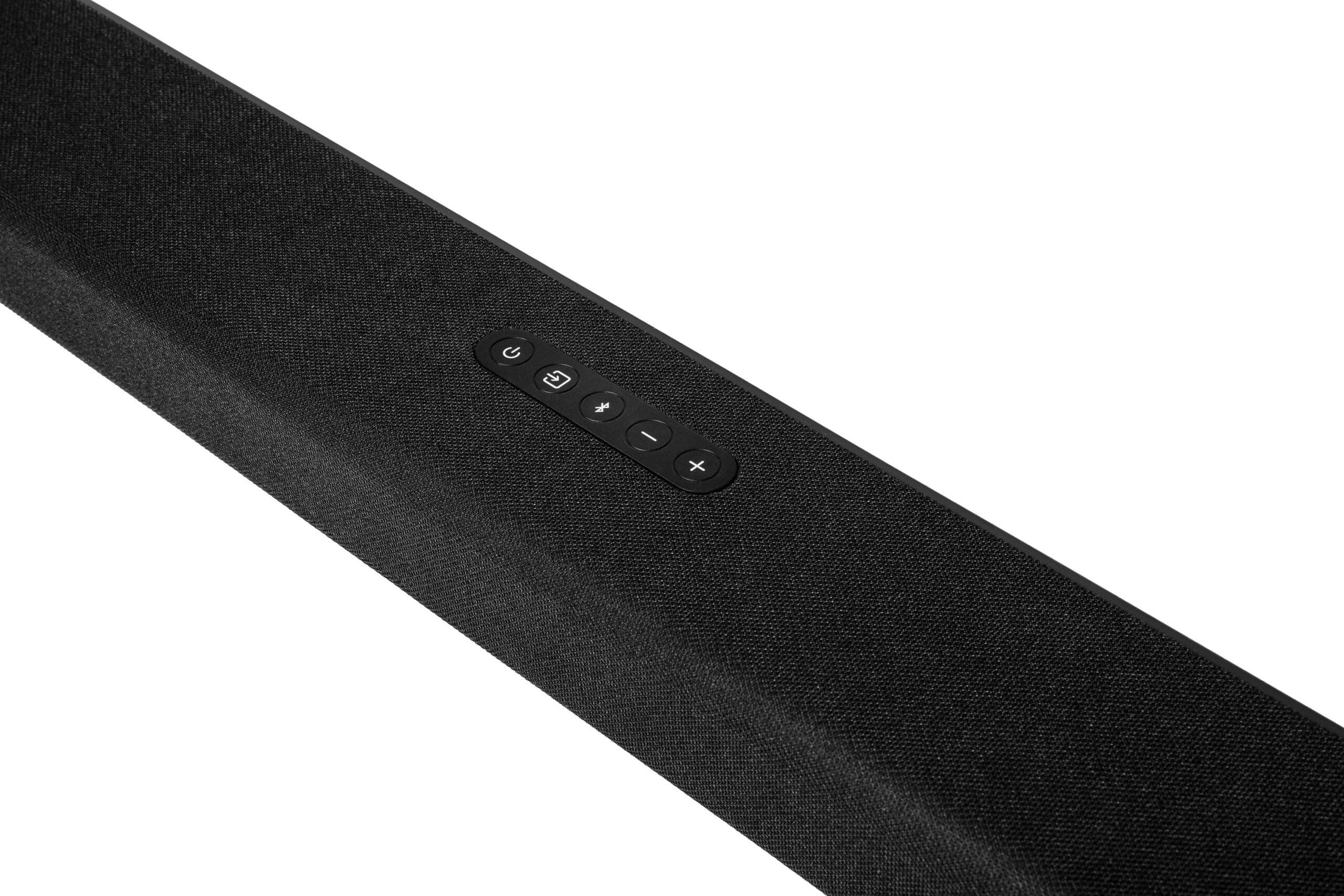
The Polk Signa S4's 3.1.2 setup packs all its main channels into the soundbar itself: dedicated left, center, and right channels, plus one subwoofer and two upward-firing height speakers. Its seven-driver array includes three tweeters for crisp highs, two midrange height drivers for Atmos effects, and two woofers for mid-bass, all working from a single front-facing unit.
Understanding these configurations helps explain why the Hisense system excels at creating genuine surround effects – you literally have speakers behind and beside you – while the Polk relies on psychoacoustic processing to trick your brain into perceiving sounds from directions where no speakers exist.
One crucial difference between these systems lies in their audio format compatibility, particularly regarding DTS versus Dolby standards. This might seem technical, but it directly impacts what content sounds best on each system.
The Hisense HT Saturn supports both major audio ecosystems completely. Its Dolby support includes Atmos, TrueHD, Digital, and Digital Plus – essentially every Dolby format you'll encounter. More importantly, it also handles DTS:X, DTS-HD Master Audio, and standard DTS decoding. This comprehensive support means whether you're streaming Netflix (typically Dolby), watching a DTS-encoded Blu-ray, or gaming on a PlayStation (which often uses DTS), you get optimized audio.
The Polk Signa S4 takes a different approach, focusing exclusively on Dolby formats while explicitly excluding DTS support. For most users, this isn't problematic – streaming services predominantly use Dolby encoding, and the Dolby formats cover the vast majority of content you'll encounter. However, if you're a serious movie collector with DTS-encoded Blu-rays or a gamer who notices DTS audio in games, this limitation becomes significant.
This codec difference reflects broader industry trends. Since 2021, streaming services have increasingly standardized on Dolby formats, making the Polk's focused approach more viable. However, physical media enthusiasts and gamers still encounter DTS content regularly, giving the Hisense system's comprehensive format support a clear advantage for these use cases.
The most fundamental performance difference between these systems lies in how they create surround sound. Having evaluated extensive user feedback and professional reviews, the distinction is both dramatic and nuanced.
The Hisense HT Saturn creates what reviewers consistently describe as a "true surround bubble." When you hear a helicopter in a movie, it genuinely moves from speaker to speaker around your room. The four wireless satellites position themselves at your left front, right front, left rear, and right rear positions, creating authentic directional audio. Users report being able to precisely locate sounds – footsteps behind them, dialogue in front, ambient effects to the sides – with uncanny accuracy.
This physical approach delivers particular benefits for large rooms. In spaces over 300 square feet, the distributed speaker array maintains consistent volume and clarity throughout the listening area, while traditional soundbars often create "sweet spots" where the audio works well and dead zones where it doesn't.
The Polk Signa S4 achieves impressive results through entirely different means. Its sophisticated digital processing analyzes incoming audio and uses phase manipulation, timing delays, and frequency shaping to create virtual surround effects. Professional reviewers note that its phantom surround is remarkably convincing, especially for a single-unit system, creating a soundstage that extends well beyond the physical soundbar.
However, the limitations of virtual processing become apparent in direct comparisons. While the Polk excels at expanding the front soundstage and creating a sense of width, it cannot genuinely place sounds behind the listener. Rear surround effects feel more like "wide front" effects, which works well for many content types but lacks the precision of physical rear speakers.
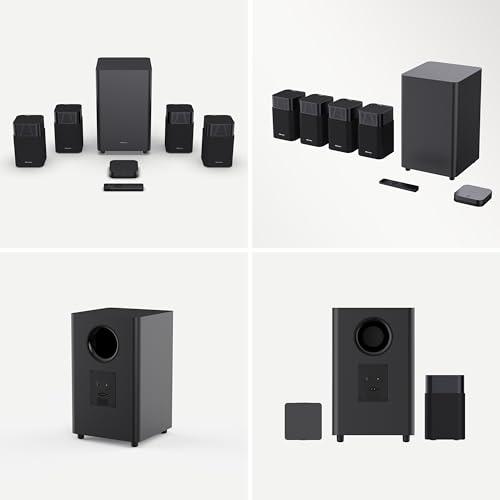
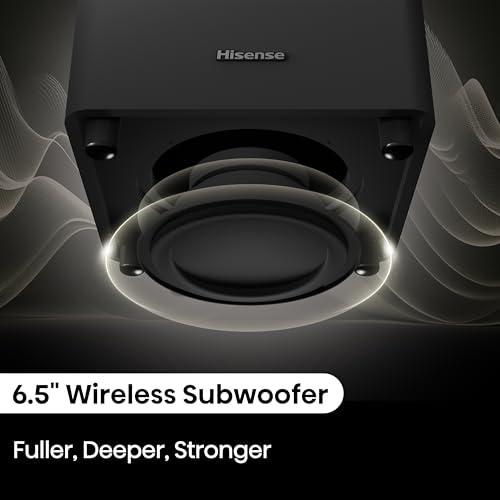
Both systems include wireless subwoofers, but their integration philosophies differ significantly. The Hisense system's 6.5-inch subwoofer is tuned to work with its distributed speaker array, handling frequencies below 40Hz while seamlessly blending with the satellite speakers' mid-bass output. Users consistently report tight, controlled bass that adds weight to explosions and music without overwhelming dialogue.
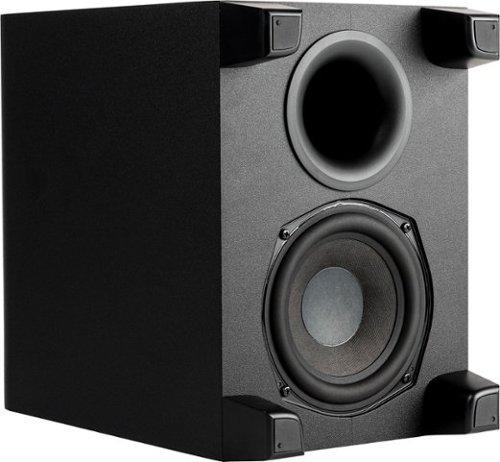
The Polk Signa S4's 5.9-inch subwoofer focuses on complementing the soundbar's compact drivers. Its BassAdjust technology simultaneously controls both the subwoofer and the soundbar's internal woofers, creating cohesive low-frequency response. Reviews suggest this integration works particularly well for dialogue-heavy content, where the subwoofer adds depth without muddying speech frequencies.
The size difference between subwoofers (6.5" vs 5.9") might seem minimal, but combined with power output differences, the Hisense system provides noticeably deeper, more dynamic bass response. This becomes particularly apparent with action movies and bass-heavy music, where the additional headroom prevents compression during peak moments.
One of the most critical performance aspects for any home theater system is dialogue reproduction. Both systems handle this crucial element expertly, but through contrasting approaches.
The Polk Signa S4 employs a dedicated center channel driver within its soundbar, combined with proprietary VoiceAdjust technology. This feature specifically enhances vocal frequencies without affecting music or sound effects, ensuring dialogue remains intelligible even during complex action sequences. Users frequently praise this system's ability to maintain clear speech at low volumes, making it ideal for apartment living or late-night viewing.
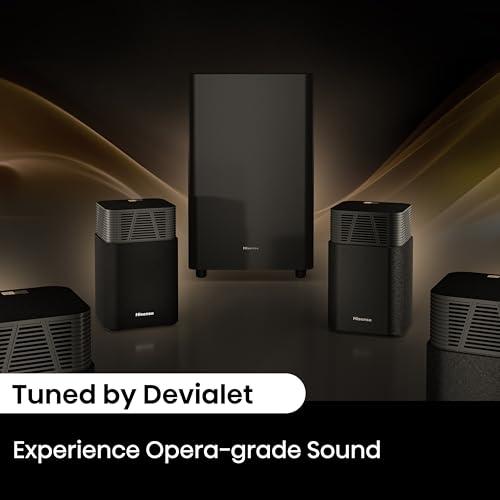
The Hisense HT Saturn creates a "phantom center" using precise timing and level matching between its front left and right satellite speakers. This technique, enhanced by Devialet's acoustic tuning, creates a stable central dialogue image that reviewers often describe as indistinguishable from a physical center speaker. The advantage of phantom center technology lies in its flexibility – it maintains perfect dialogue positioning regardless of listening position, whereas physical center channels can create off-axis coloration if you're not seated directly in front of them.
Both systems support Dolby Atmos, but their height channel implementations reveal important performance differences. Atmos technology adds vertical dimension to surround sound by incorporating overhead audio cues – rain falling from above, aircraft passing overhead, or ambient ceiling reflections in large spaces.
The Hisense system's height channels are integrated into its satellite speakers, using upward-firing drivers that reflect sound off your ceiling. Because these speakers are positioned around the room rather than just at the front, they create more convincing overhead effects. Users report genuine sensation of sounds moving not just horizontally around the room, but also vertically above their heads.
The Polk Signa S4's height channels are located in its front soundbar, using similar upward-firing technology but from a single position. While this approach works well for adding vertical dimension to the front soundstage, it cannot create the same precise overhead localization as distributed height speakers. However, for most content and room sizes, the difference is subtle rather than dramatic.
Room acoustics play a crucial role in Atmos performance for both systems. Rooms with appropriate ceiling height (8-10 feet) and reflective ceiling surfaces optimize the upward-firing technology, while rooms with vaulted ceilings or acoustic tiles may diminish height effects regardless of which system you choose.
At the time of writing, these products occupy distinctly different market segments, with the Hisense HT Saturn positioned as a premium wireless surround solution and the Polk Signa S4 targeting the value-conscious upgrade market.
The Hisense system commands a significant price premium – roughly four times the cost of the Polk – but this pricing reflects its revolutionary approach to wireless surround sound. When compared to traditional component-based surround systems requiring an AV receiver, speaker wire runs, and professional installation, the pricing becomes more reasonable. The system essentially delivers reference-quality surround sound with consumer-friendly wireless installation.
The Polk Signa S4 represents exceptional value in the entry-level Atmos segment. At its price point, you simply cannot find another system offering genuine Dolby Atmos support, dedicated center channel, and wireless subwoofer. This positioning makes advanced surround sound accessible to users who previously couldn't justify the expense or complexity of higher-end systems.
The value equation extends beyond purchase price to installation complexity and ongoing usability. The Hisense system requires positioning four satellite speakers around your room, which demands both space and planning. However, the wireless connectivity eliminates speaker wire runs, making installation much simpler than traditional surround systems. Room calibration through compatible Hisense TVs automates acoustic optimization, reducing the technical expertise required for optimal performance.
The Polk Signa S4 offers plug-and-play simplicity with just two components – soundbar and subwoofer. This approach works particularly well for renters or users who frequently rearrange their living spaces. Setup requires minimal technical knowledge, and the system works effectively in a wide variety of room configurations.
Modern soundbars increasingly offer smart TV integration features that extend beyond basic audio reproduction. Both systems handle this integration differently, reflecting their distinct market philosophies.
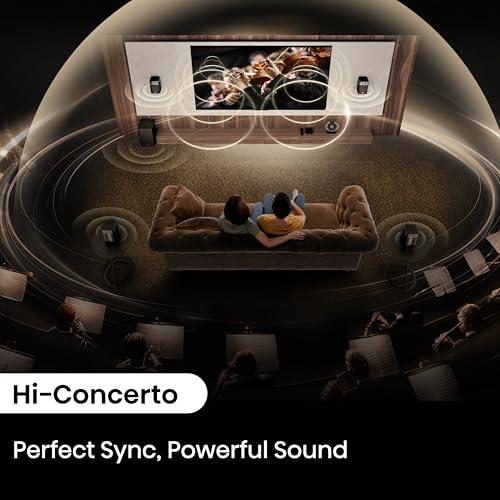
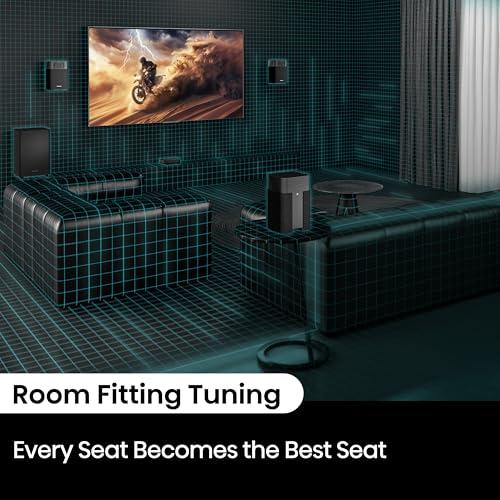
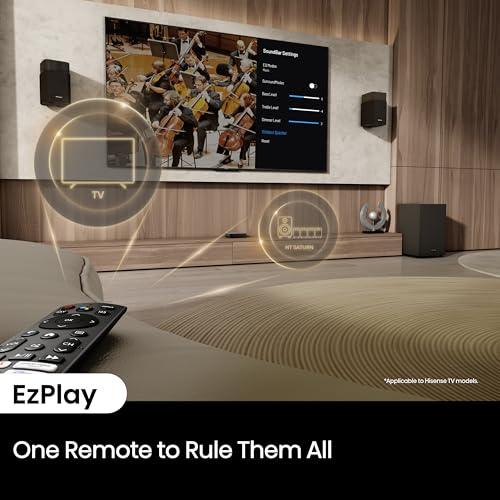
The Hisense HT Saturn provides deep integration with Hisense TV models through Hi-Concerto technology. This feature combines the TV's built-in speakers with the HT Saturn system, creating an expanded speaker array that includes the TV as an additional sound source. Room Fitting Tuning automatically calibrates this combined system for optimal performance. EzPlay technology enables control of soundbar functions directly through the TV's interface, creating a seamless user experience.
However, this integration creates a trade-off: users with non-Hisense TVs miss these advanced features, though the system still functions excellently as a standalone surround sound solution.
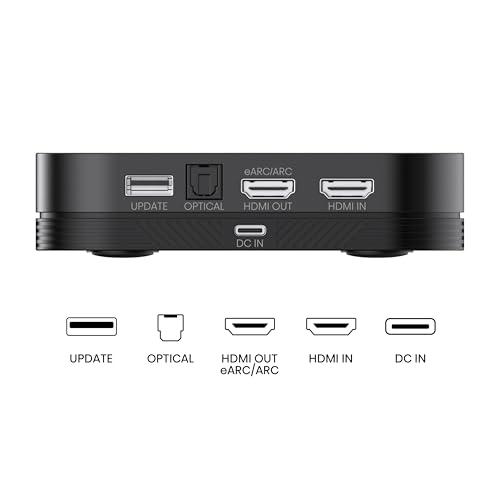
The Polk Signa S4 takes a universal approach, offering broad compatibility with any TV brand through standard HDMI eARC, optical, and analog connections. While it lacks brand-specific integration features, this approach ensures consistent performance regardless of your TV choice. HDMI CEC support provides basic control integration with most modern TVs.
Your room's size and layout significantly impact which system will perform optimally. Based on user feedback and professional testing, clear patterns emerge regarding room compatibility.
Large rooms (over 300 square feet) heavily favor the Hisense HT Saturn. Its distributed speaker array maintains consistent volume and surround effects throughout larger spaces, while single-unit soundbars often struggle to fill large rooms with convincing surround sound. The higher power output (500W total) provides adequate dynamic range for reference-level playback in spacious environments.
Medium-sized rooms (150-300 square feet) represent the sweet spot for both systems, though for different reasons. The Hisense system creates remarkable immersion in these spaces, while the Polk reaches its full potential without the room size limitations that affect larger spaces.
Small rooms and apartments particularly benefit from the Polk Signa S4's compact design and night mode functionality. Its ability to maintain dialogue clarity at low volumes makes it ideal for close-quarters living situations where disturbing neighbors is a concern.
Based on extensive research into user experiences and professional evaluations, clear usage patterns emerge for each system.
Choose the Hisense HT Saturn if you're an audio enthusiast who prioritizes immersion quality over convenience. This system excels for users with larger rooms who want genuine surround sound positioning. Movie collectors with DTS-encoded content, gamers who appreciate spatial audio, and Hisense TV owners who can leverage the full integration features will find the premium pricing justified. The system also appeals to users who view audio as a long-term investment and want future-proof format compatibility.
Choose the Polk Signa S4 if you want dramatic audio improvement with minimal complexity. This system perfectly serves users upgrading from TV speakers who want professional-quality results without professional-level installation. Apartment dwellers, frequent room rearrangers, and budget-conscious users who primarily consume streaming content will find this system delivers exceptional value. The universal TV compatibility makes it ideal for users who change TV brands frequently or want a system that works across multiple rooms.
The decision ultimately comes down to your priorities: maximum immersion and technical sophistication versus optimal simplicity and value. Both systems succeed brilliantly within their intended use cases, representing the current pinnacle of their respective approaches to wireless surround sound.
The Hisense HT Saturn points toward the future of home audio – wireless systems that match traditional component quality without installation complexity. The Polk Signa S4 perfects the present – making advanced surround sound accessible, affordable, and effortless for mainstream users. Your choice depends on whether you're ready to embrace that future or prefer mastering the refined present.
| Hisense HT Saturn HTSATURN 4.1.2Ch Sound Bar System | Polk Audio Signa S4 Dolby Atmos Soundbar with Wireless Subwoofer |
|---|---|
| System Architecture - Determines surround sound quality and installation complexity | |
| 4.1.2 channel with 4 separate wireless satellite speakers + subwoofer | 3.1.2 channel single soundbar with 7 internal drivers + wireless subwoofer |
| Total Speaker Count - More speakers enable better sound positioning and power distribution | |
| 13 speakers (8 full-range, 4 tweeters, 1 subwoofer driver) | 7 speakers (3 tweeters, 2 midrange, 2 woofers, 1 subwoofer driver) |
| Audio Format Support - Compatibility with different content sources | |
| Dolby Atmos/TrueHD/Digital/Plus + DTS:X/HD Master/Decoder | Dolby Atmos/TrueHD/Digital/Plus only (no DTS support) |
| Maximum Power Output - Affects volume levels and dynamic range | |
| 500W total system power | Power rating not specified by manufacturer |
| Subwoofer Size - Larger drivers produce deeper, more powerful bass | |
| 6.5" wireless subwoofer (40Hz-20kHz response) | 5.9" wireless subwoofer |
| Bluetooth Version - Newer versions offer better connectivity and range | |
| Bluetooth 5.3 (latest standard with improved stability) | Bluetooth 4.2 (older but adequate for music streaming) |
| HDMI Connectivity - Essential for lossless audio and video pass-through | |
| HDMI eARC + 4K 60Hz pass-through | HDMI eARC support |
| Additional Audio Inputs - More options for connecting older devices | |
| Optical digital input only | Optical digital + 3.5mm analog input |
| Smart TV Integration - Enhanced features when paired with same-brand TV | |
| Hi-Concerto + Room Fitting Tuning (Hisense TVs only) | Universal compatibility with any TV brand |
| Setup Complexity - Balance between performance and ease of installation | |
| Requires positioning 4 wireless satellites around room | Simple 2-component setup (soundbar + subwoofer) |
| Professional Audio Tuning - Acoustic optimization by audio experts | |
| Tuned by Devialet for premium sound quality | Standard Polk engineering (still excellent quality) |
| Sound Enhancement Features - Technologies that improve specific aspects of audio | |
| Multiple modes + AI processing + Virtual:X | VoiceAdjust + BassAdjust + Night Mode |
| Ideal Room Size - System performs best within these space limitations | |
| Large rooms (300+ sq ft) benefit most from distributed speakers | Medium rooms (150-300 sq ft) optimal for single-unit design |
| Target User - Who gets the most value from each system | |
| Audio enthusiasts wanting true surround + Hisense TV owners | Mainstream users seeking simple Atmos upgrade from TV speakers |
The Polk Audio Signa S4 is better for small apartments due to its compact single-unit design and Night Mode feature. The Polk Signa S4 measures just 41 inches wide and doesn't require positioning multiple speakers around your room like the Hisense HT Saturn. Its Night Mode reduces bass and boosts dialogue clarity for late-night viewing without disturbing neighbors.
The fundamental difference is that the Hisense HT Saturn uses four separate wireless satellite speakers placed around your room for true surround sound, while the Polk Audio Signa S4 creates virtual surround effects from a single soundbar unit. The Hisense system provides genuine 360-degree audio positioning, whereas the Polk uses digital processing to simulate surround effects.
The Polk Audio Signa S4 is much easier to set up, requiring only two components: the soundbar and wireless subwoofer. The Hisense HT Saturn requires positioning four wireless satellite speakers around your room, which takes more planning and space. However, both systems connect wirelessly, so no speaker wires are needed.
Yes, both the Hisense HT Saturn and Polk Audio Signa S4 support Dolby Atmos for overhead sound effects. The Hisense system also supports DTS:X and other DTS formats, while the Polk Signa S4 only supports Dolby formats. This means the Hisense works with more types of content, especially Blu-ray discs and games that use DTS audio.
The Hisense HT Saturn is significantly better for large rooms over 300 square feet. Its four wireless satellite speakers distribute sound throughout the space, maintaining consistent volume and surround effects. The Polk Audio Signa S4 works best in medium-sized rooms where its single-unit design can effectively fill the space with virtual surround sound.
The Polk Audio Signa S4 works equally well with any TV brand through HDMI, optical, or analog connections. The Hisense HT Saturn also works with any TV, but Hisense TV owners get additional features like Hi-Concerto technology that combines the TV speakers with the soundbar system for enhanced performance.
The Hisense HT Saturn provides deeper, more powerful bass with its larger 6.5-inch wireless subwoofer and higher total power output. The Polk Audio Signa S4 has a 5.9-inch subwoofer that's well-integrated but less powerful. For action movies and bass-heavy music, the Hisense system delivers more impact and depth.
The Hisense HT Saturn has 13 total speakers: 8 full-range drivers, 4 tweeters in the satellite speakers, plus 1 subwoofer driver. The Polk Audio Signa S4 has 7 speakers: 3 tweeters, 2 midrange drivers, and 2 woofers in the soundbar, plus 1 subwoofer driver. More speakers generally means better sound distribution and clarity.
Both systems excel at dialogue clarity but use different approaches. The Polk Audio Signa S4 has a dedicated center channel and VoiceAdjust technology that specifically enhances speech. The Hisense HT Saturn uses phantom center technology with Devialet tuning for precise dialogue positioning. Both deliver excellent voice clarity for movies and TV shows.
Neither system requires special apps for basic operation. The Polk Audio Signa S4 works with any TV's remote through HDMI CEC and includes its own remote. The Hisense HT Saturn also includes a remote and integrates with Hisense TV menus for advanced settings. Both systems support standard Bluetooth pairing from smartphones for music streaming.
The Hisense HT Saturn provides a superior home theater experience with true surround sound positioning from its four satellite speakers. It supports all major audio formats including DTS:X and offers room calibration for optimal performance. The Polk Audio Signa S4 delivers excellent home theater audio for its class but cannot match the immersive surround positioning of the Hisense system.
The Hisense HT Saturn includes a 1-year warranty covering parts and labor. The Polk Audio Signa S4 offers a 2-year warranty on both parts and labor, providing longer protection. Both warranties cover manufacturing defects and component failures under normal use conditions.
We've done our best to create useful and informative comparisons to help you decide what product to buy. Our research uses advanced automated methods to create this comparison and perfection is not possible - please contact us for corrections or questions. These are the sites we've researched in the creation of this article: bestbuy.com - youtube.com - blog.son-video.com - youtube.com - youtube.com - techradar.com - ecoustics.com - jbhifi.com.au - shop.hisense-usa.com - bhphotovideo.com - bestbuy.com - digitalreviews.net - hisense-usa.com - projectorscreenstore.com - valueelectronics.com - dolby.com - giftpack.ai - soundandvision.com - audioholics.com - crutchfield.com - cnet.com - richersounds.com - crutchfield.com - rtings.com - polkaudio.com - walmart.com - polkaudio.com - crutchfield.com - youtube.com - profx.com

Privacy Policy
Terms and Conditions - Affiliate Policy
Home Security
© Copyright 2008-2026.
11816 Inwood Rd #1211, Dallas, TX 75244