




When you're tired of straining to hear dialogue over explosions or constantly adjusting the volume between whispers and action scenes, upgrading from your TV's built-in speakers becomes a priority. But the soundbar market has evolved dramatically over the past few years, creating two distinct approaches to better home audio. Understanding these different philosophies can save you from buyer's remorse and help you choose the right system for your space and needs.
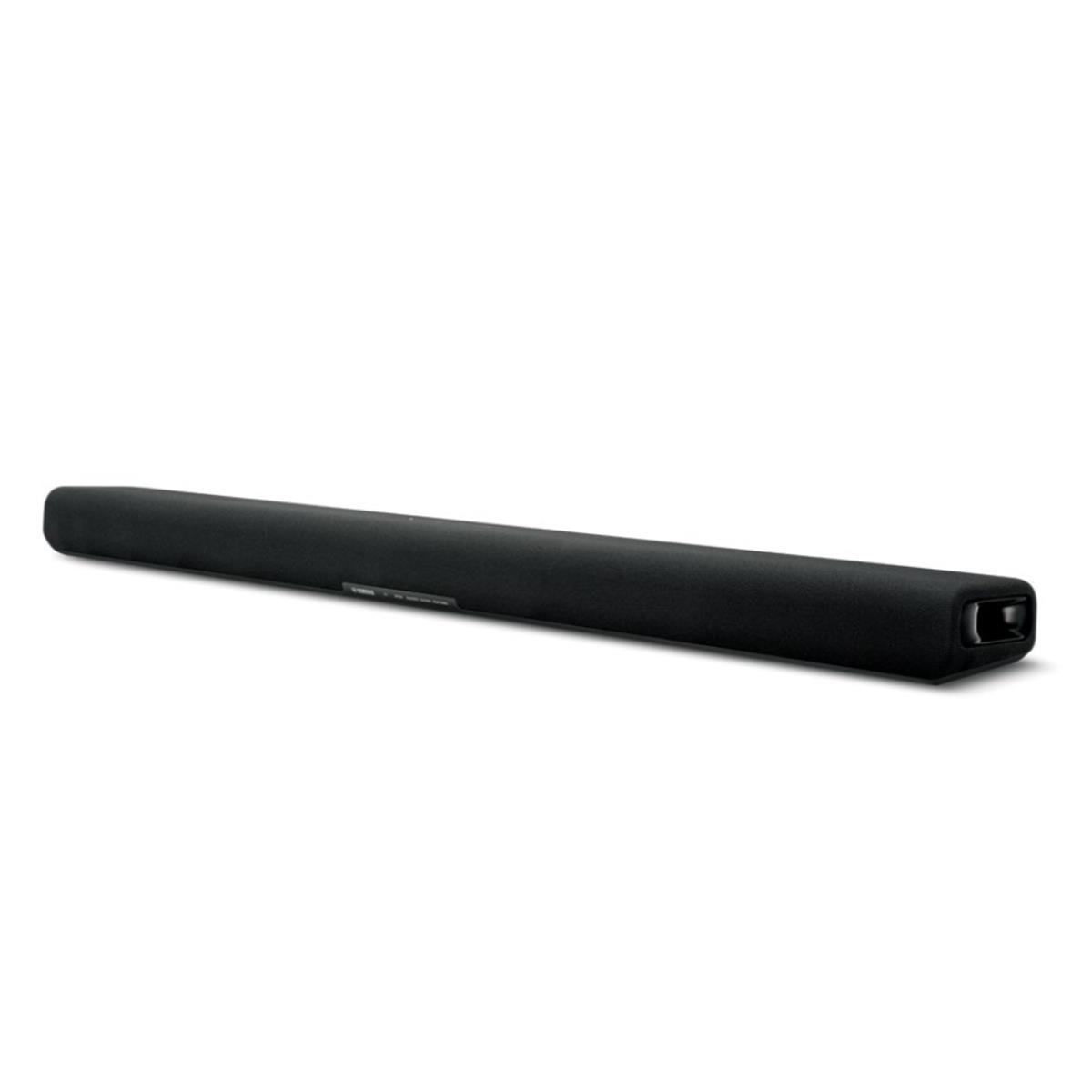
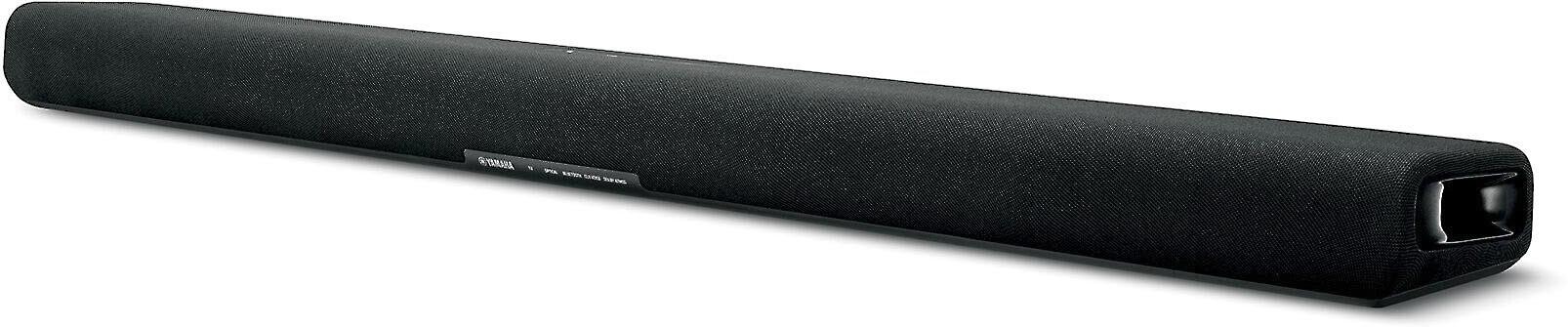
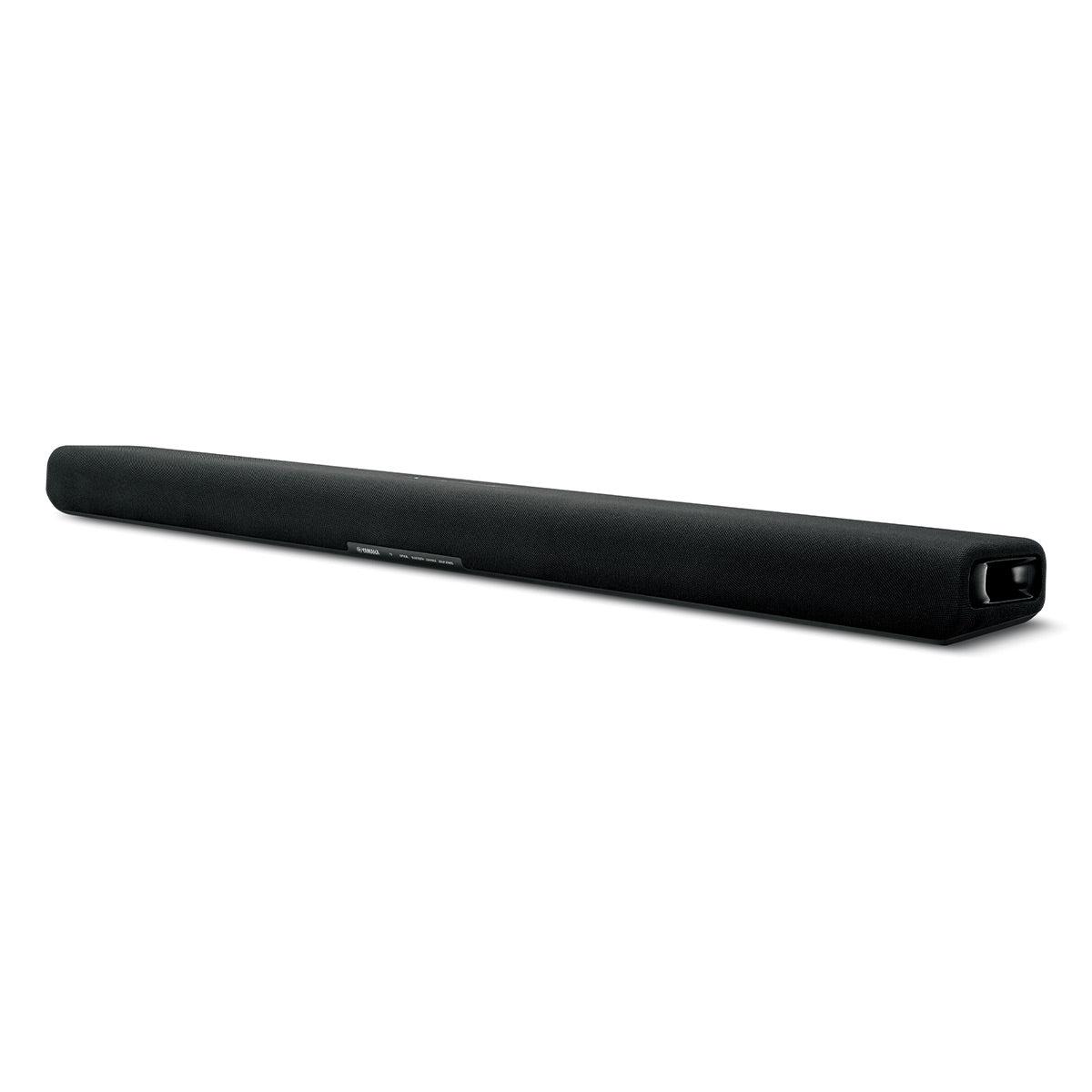
The traditional soundbar approach puts all the speakers in a single unit that sits near your TV. Think of the Yamaha SR-B30A, released in 2022, which packs everything into a sleek 36-inch bar. The newer approach, exemplified by systems like the Hisense HT Saturn launched in 2023, breaks away from the single-unit limitation entirely, distributing speakers throughout your room to create genuine surround sound.
At the time of writing, these systems represent dramatically different price points and performance levels, with the Hisense HT Saturn costing roughly six times more than the Yamaha SR-B30A. But that price difference reflects a fundamental architectural choice that affects every aspect of your listening experience.
Here's the thing about sound: it travels in straight lines from speakers to your ears. When movie soundtracks place a helicopter flying overhead or footsteps sneaking up behind you, those effects need to actually come from above or behind you to feel convincing. This is where most soundbars hit a wall—literally.
The Yamaha SR-B30A exemplifies the traditional single-unit approach. It uses psychoacoustic processing (basically audio tricks that fool your brain) combined with Dolby Atmos virtual processing to simulate surround sound from speakers that are all positioned in front of you. While this works reasonably well for enhancing the width of your soundstage—making voices and effects seem to spread beyond the physical width of the bar—it cannot overcome the fundamental limitation that all sound is still coming from one direction.
Consumer Reports testing revealed this limitation clearly, noting that while the Yamaha SR-B30A can extend sound "somewhat above and a bit to the sides of the speaker array," it "lacks depth" and produces a sound field that feels flat compared to true surround systems. This isn't a criticism of Yamaha's engineering—it's simply physics. You cannot create convincing behind-you effects from speakers positioned in front of you, no matter how sophisticated the processing.
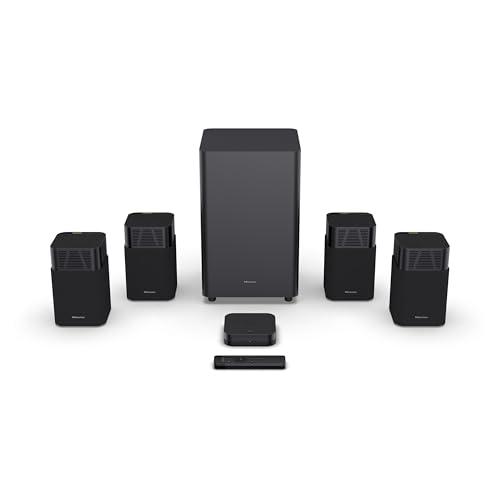
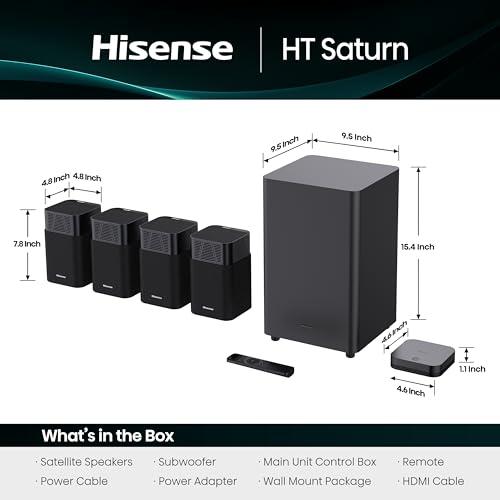
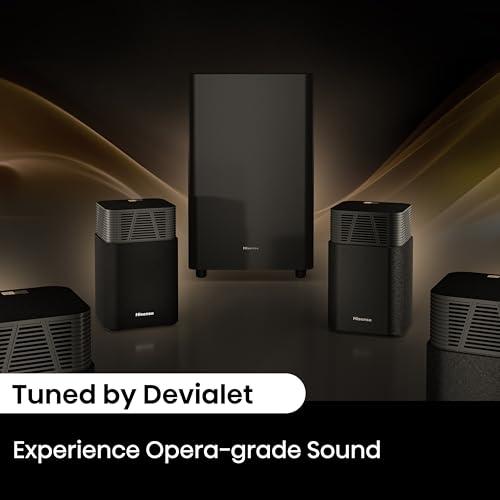
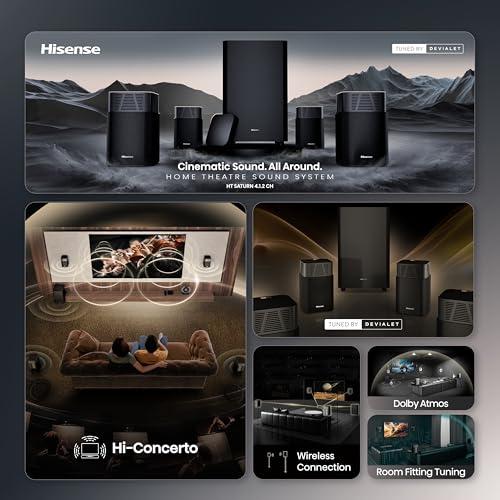
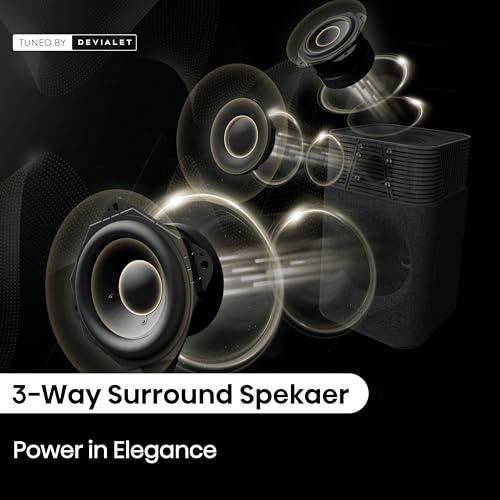
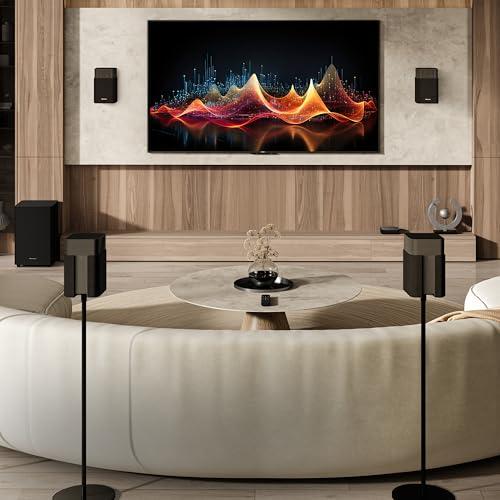
The Hisense HT Saturn takes a completely different approach. Instead of trying to simulate surround sound, it creates actual surround sound using four satellite speakers positioned around your room, plus a wireless subwoofer. Each satellite contains three separate drivers: a front-firing full-range driver for main audio, a precision tweeter for crisp highs, and an up-firing driver that bounces sound off your ceiling to create height effects.
This architectural difference explains why reviewers consistently describe the Hisense HT Saturn as creating a "genuine 360-degree sound field" and "theater-like experience," while noting that traditional soundbars like the Yamaha SR-B30A provide enhanced stereo rather than true surround sound.
The difference between these approaches becomes even more apparent when we examine how they handle modern audio formats like Dolby Atmos and DTS:X. These aren't just marketing buzzwords—they represent fundamentally different ways of encoding and playing back surround sound.
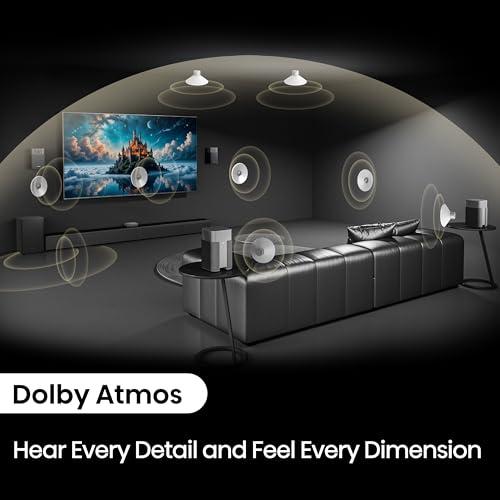
Dolby Atmos treats sounds as "objects" in three-dimensional space rather than fixed channels. Instead of saying "play this helicopter sound from the rear left speaker," Atmos says "play this helicopter sound from a position 6 feet above and 3 feet behind the listener." The system then calculates which speakers should play what to recreate that positioning.
The Hisense HT Saturn can natively decode these object-based formats because it has physical speakers positioned throughout your room. When a movie soundtrack places rain above you, the up-firing drivers in the front satellites actually bounce sound off your ceiling to create that overhead sensation. When an explosion happens behind you, the rear satellites are physically behind you to reproduce it.
The Yamaha SR-B30A, despite claiming Dolby Atmos support, can only process these formats virtually. It takes the positioning information and tries to simulate the effects using psychoacoustic processing from its front-facing drivers. This can create some sense of height and width, but it cannot replicate the precise positioning and movement that makes Atmos content truly immersive.
Moreover, the Hisense HT Saturn supports both Dolby Atmos and DTS:X, plus lossless formats like Dolby TrueHD and DTS-HD Master Audio. The Yamaha SR-B30A is limited to Dolby formats only, meaning you'll miss out on DTS:X content entirely.
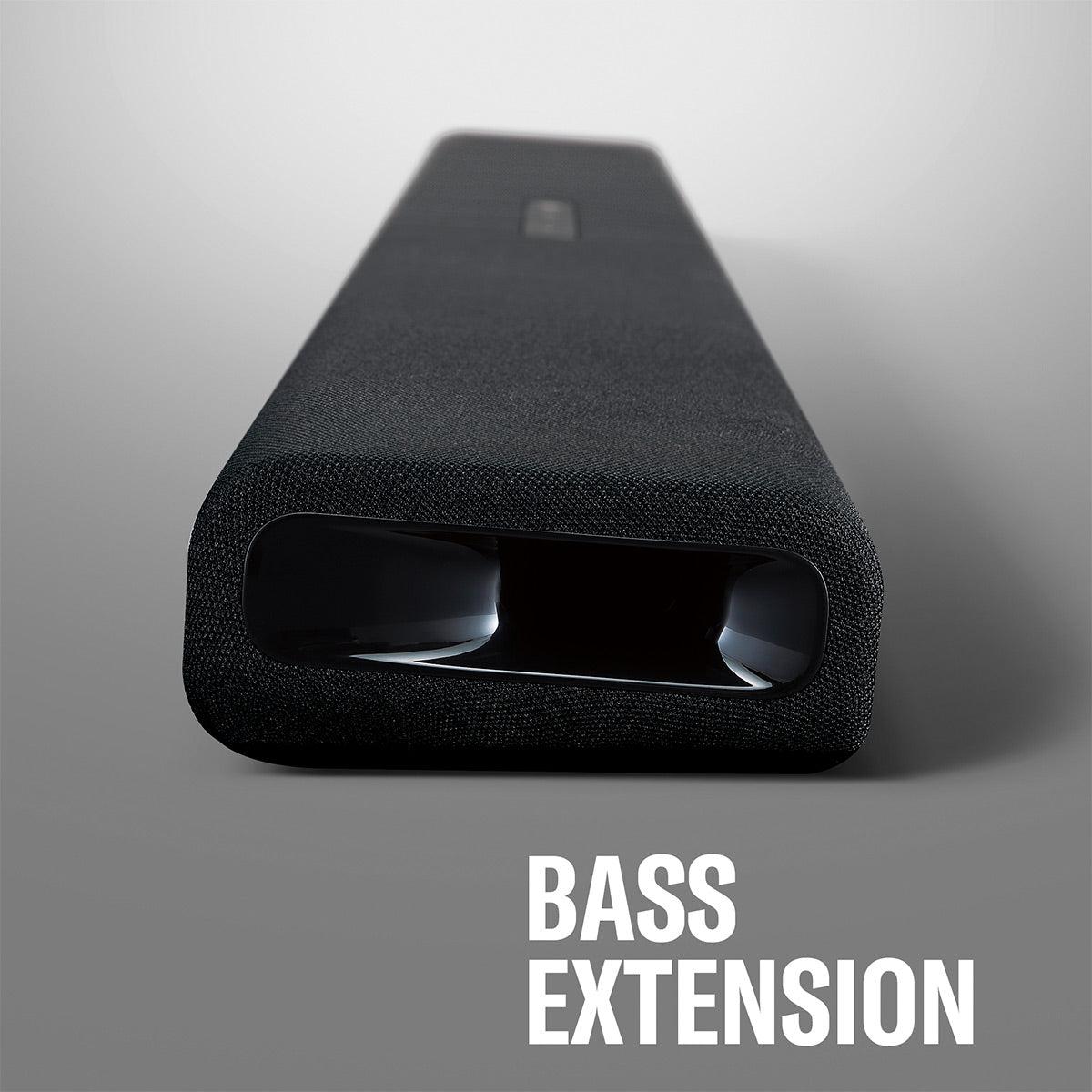
Bass is where the physical limitations of single-unit soundbars become most apparent. Low-frequency sound requires moving a lot of air, which typically means larger drivers and more power. The Yamaha SR-B30A attempts to solve this with two built-in 3-inch subwoofer drivers, but physics imposes hard limits on what small drivers can accomplish.
User reviews consistently note that the Yamaha SR-B30A's built-in subwoofers "aren't powerful enough for explosions and gunshots in action movies." Consumer Reports testing found the bass to be "somewhat boomy" and "a bit prominent," suggesting that while present, it lacks the control and extension needed for convincing movie sound effects.
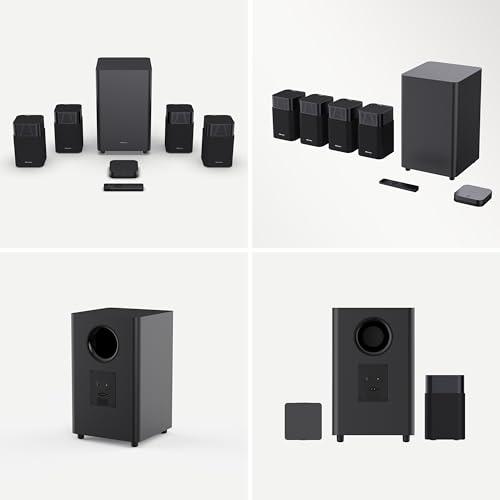
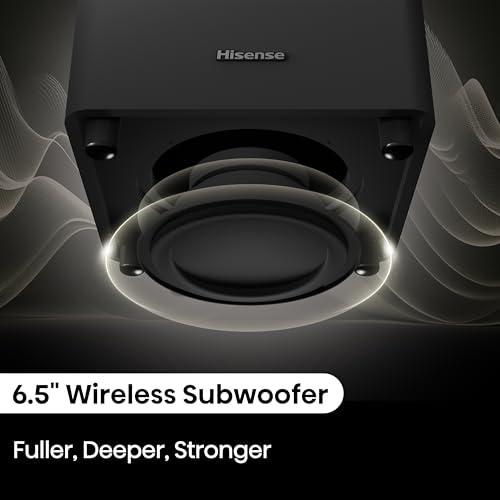
The Hisense HT Saturn includes a dedicated 6.5-inch wireless subwoofer that can be positioned anywhere in your room for optimal bass response. This isn't just about size—placement flexibility is crucial for bass performance. Bass frequencies interact heavily with room boundaries, and the ability to position the subwoofer in a corner or along a wall where it couples best with your room's acoustics makes a dramatic difference in both impact and smoothness.
Reviewers consistently praise the Hisense HT Saturn's bass as "generous" and "well-integrated," with sufficient depth and impact for action movies without becoming overwhelming during dialogue scenes. The frequency response extends down to 40Hz, which covers the fundamental frequencies of most movie sound effects and musical content.
One of the most intriguing aspects of the Hisense HT Saturn is its collaboration with Devialet, the French audio company known for premium speakers that can cost tens of thousands of dollars. This isn't just marketing—Devialet's involvement represents a genuine technical collaboration that affects the system's sound quality.
Devialet's expertise lies in creating speakers with extremely low distortion and precise tonal balance. For the Hisense HT Saturn, this means careful calibration of the three-way satellite speakers so that bass, midrange, and treble integrate seamlessly. The crossover points (where different drivers hand off frequencies to each other) are precisely tuned to avoid the congestion and harshness that plague many compact multi-driver systems.
This tuning is particularly evident in the system's dialogue reproduction. Despite having no dedicated center channel speaker, reviewers consistently note that the Hisense HT Saturn creates a stable, focused dialogue image that "rivals systems with a dedicated center speaker." This phantom center effect requires precise level matching and signal processing between the left and right front channels—exactly the kind of acoustic engineering that Devialet specializes in.
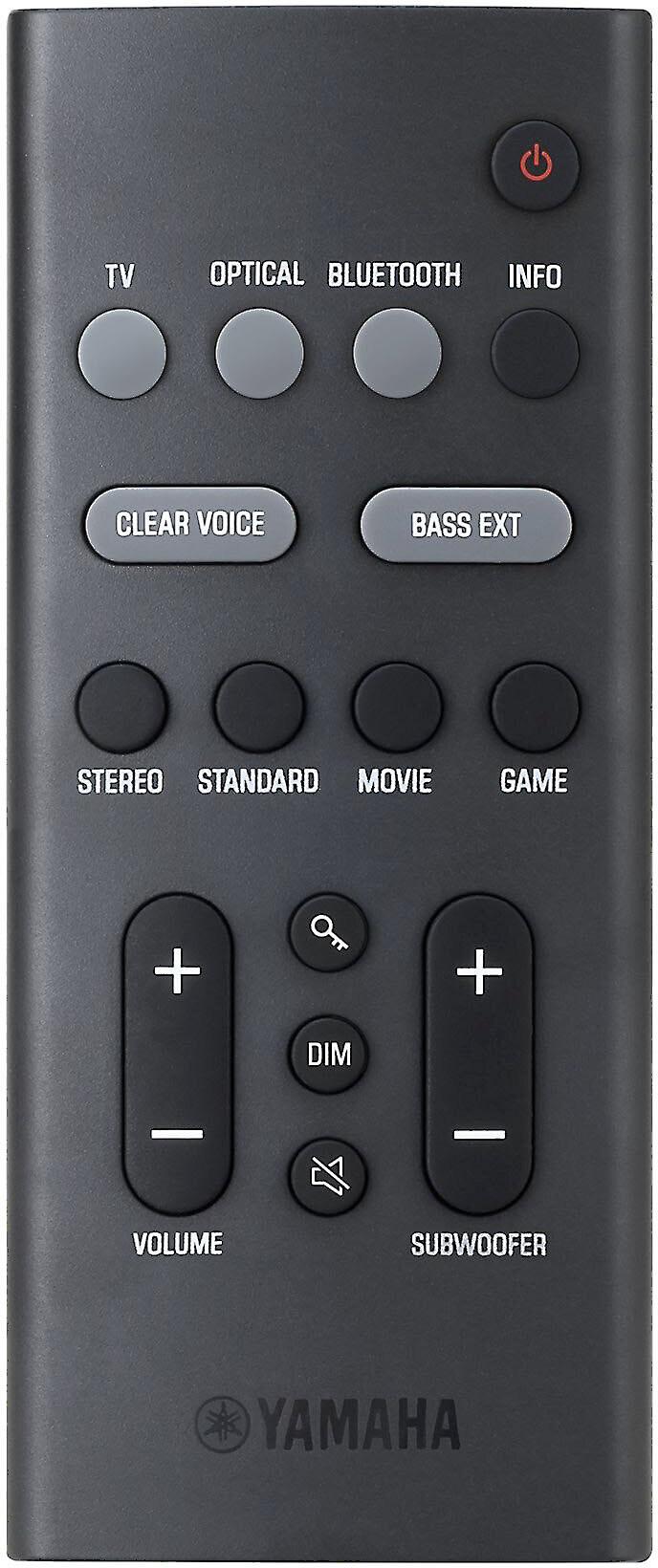
The Yamaha SR-B30A takes a different approach with its Clear Voice technology, which enhances dialogue frequencies through digital signal processing. While effective for making voices more intelligible, this is more of a band-aid solution compared to the fundamental acoustic engineering that creates naturally clear dialogue reproduction.
Modern soundbars increasingly include features designed to adapt their performance to your specific room and setup. This is where the two systems diverge significantly in their approaches to customization and integration.
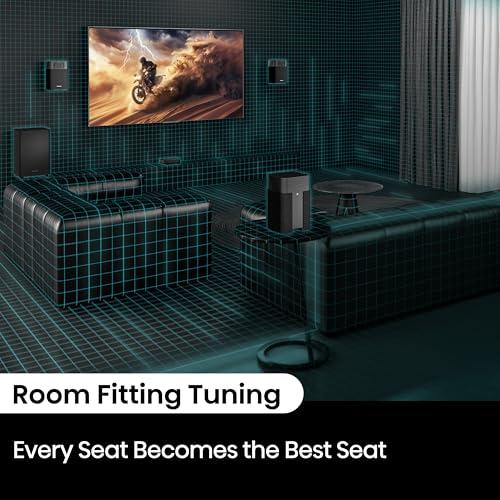
The Hisense HT Saturn includes Room Fitting Tuning, which measures your room's acoustic response and automatically adjusts channel levels, timing, and equalization. This is particularly important for a multi-speaker system because proper calibration ensures that all the satellite speakers work together coherently rather than fighting each other.
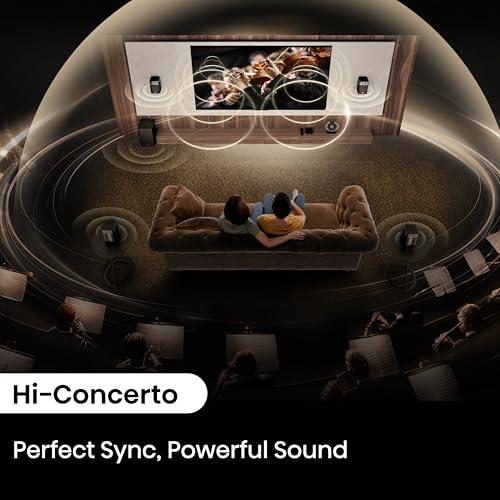
The system also features Hi-Concerto technology when paired with Hisense TVs. This allows the TV's built-in speakers to work in concert with the Hisense HT Saturn, effectively adding more drivers to the front soundstage. While this might seem like a gimmick, it can actually improve dialogue anchoring and front-stage width when properly implemented.
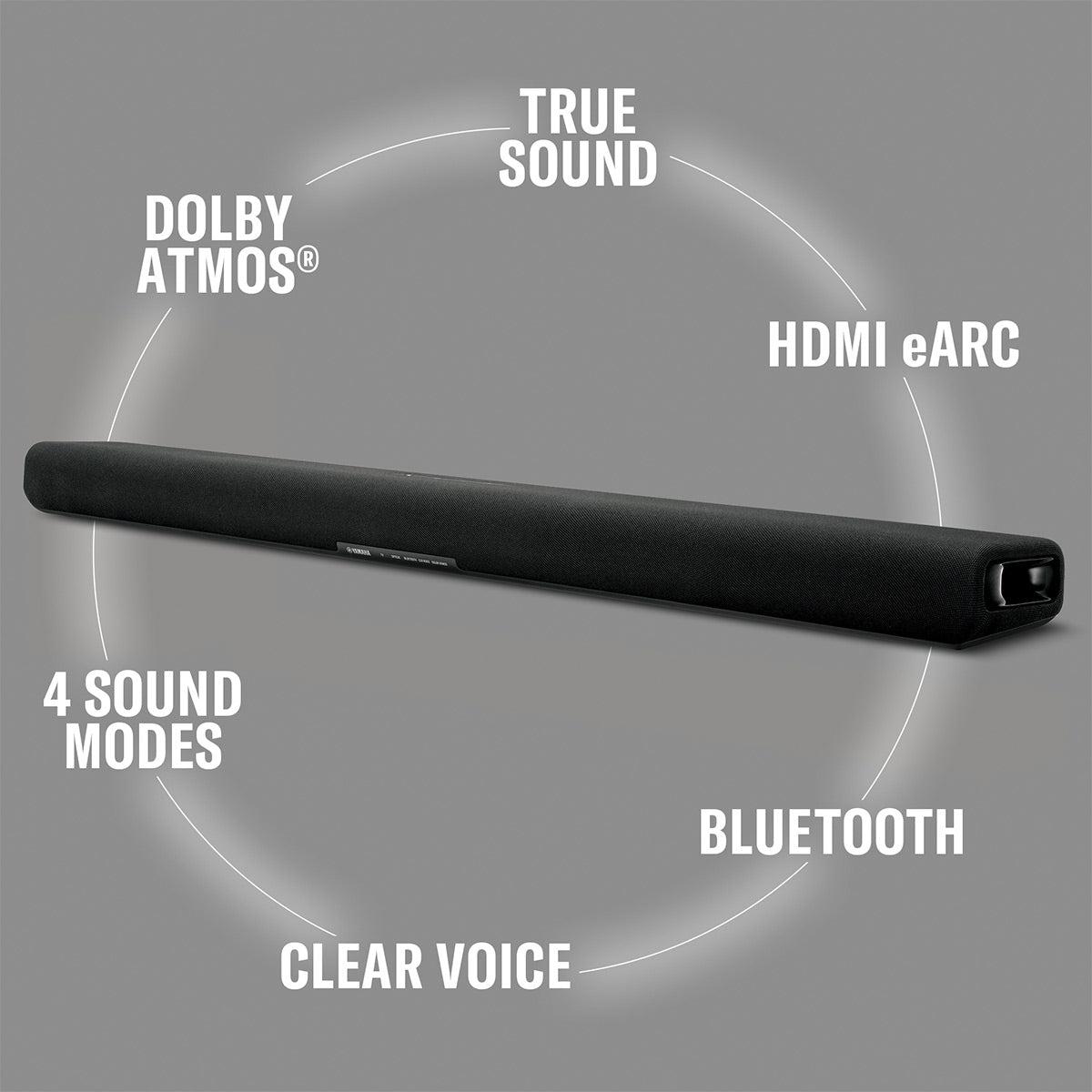
The Yamaha SR-B30A offers a more traditional approach with four preset sound modes (Stereo, Standard, Game, Movie) and a companion app that provides detailed equalization control. The Stereo mode is particularly noteworthy—reviewers consistently note that the Yamaha SR-B30A "shines in stereo mode, where it produces a more natural and authentic sound with minimal processing." This suggests that the system's strength lies in music reproduction rather than movie surround effects.
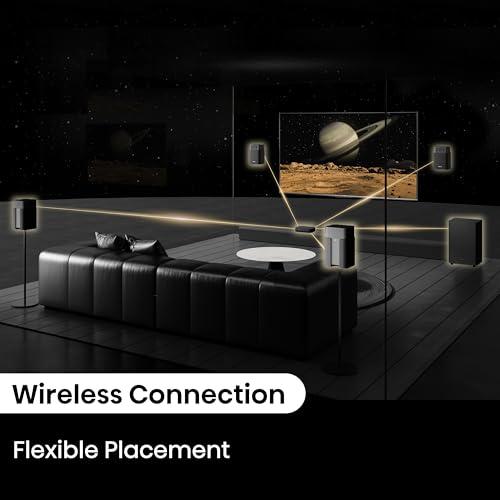
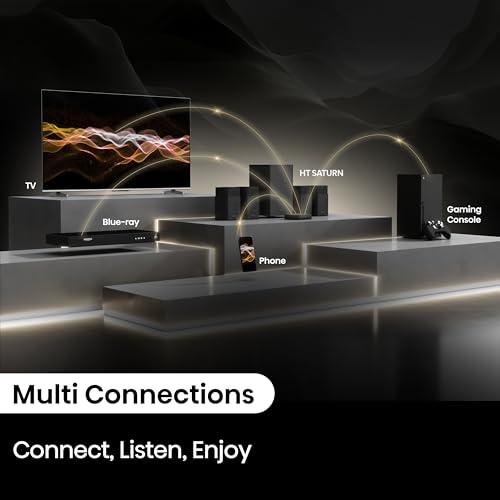
Both systems offer modern connectivity options, but with different focuses. The Hisense HT Saturn uses a tri-band wireless system (2.4GHz, 5.2GHz, and 5.8GHz) to maintain stable, low-latency connections between all its components. This multi-band approach helps avoid interference from Wi-Fi networks and other wireless devices—a real concern when you have five separate components that need to stay perfectly synchronized.
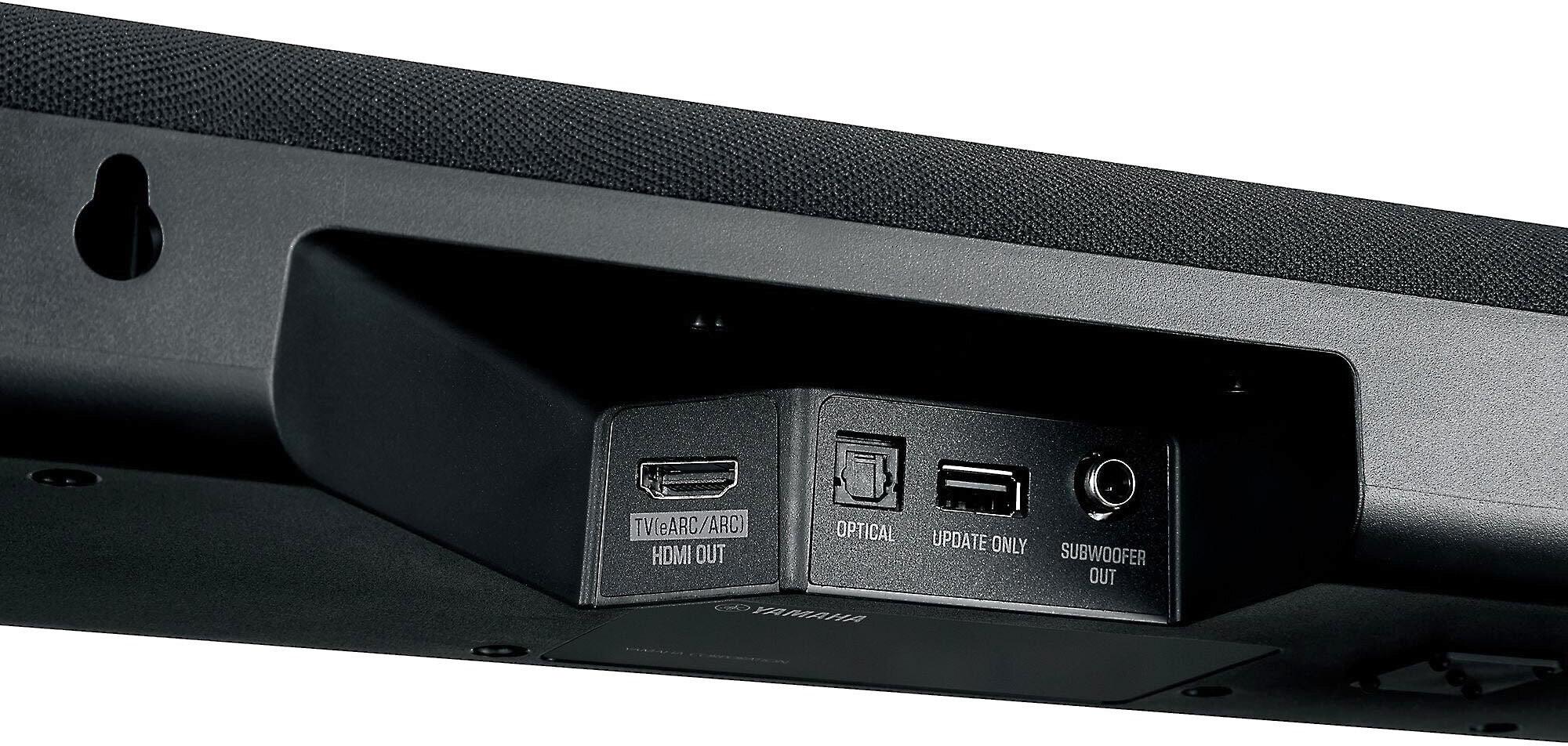
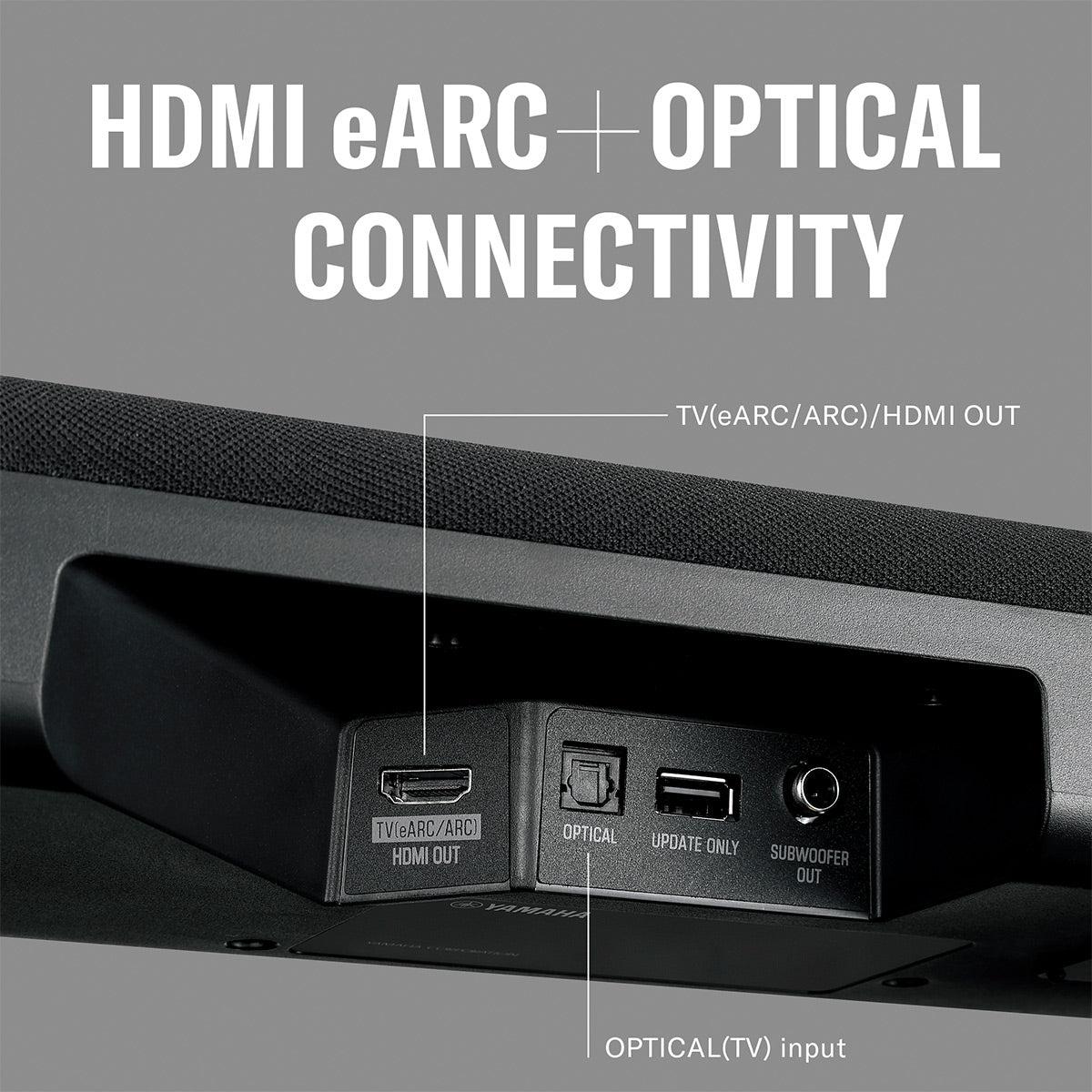
The Yamaha SR-B30A includes Bluetooth 5.1 for wireless music streaming and HDMI eARC for connecting to your TV. The system supports both HDMI and optical connections, making it compatible with both new and older TVs.
Both systems support HDMI eARC (enhanced Audio Return Channel), which is crucial for getting the highest quality audio from streaming services and Blu-ray players. However, the Hisense HT Saturn's support for lossless formats means it can take full advantage of eARC's bandwidth, while the Yamaha SR-B30A is more limited in the formats it can process.
This is where the fundamental trade-off between these systems becomes most apparent. The Yamaha SR-B30A offers genuine plug-and-play convenience—connect one cable to your TV, plug in the power, and you're done. For many users, this simplicity is worth more than ultimate performance.
The Hisense HT Saturn requires significantly more effort. You need to position four satellite speakers around your room, find locations for the subwoofer and control unit, and ensure all components have power outlets nearby. While the wireless connections eliminate speaker wire runs, you're still dealing with five separate components that need placement consideration.
However, this complexity pays dividends in performance flexibility. Each satellite can be positioned for optimal coverage of your seating area, the subwoofer can be placed for smoothest bass response, and the up-firing drivers have the ceiling clearance they need for effective Atmos effects.
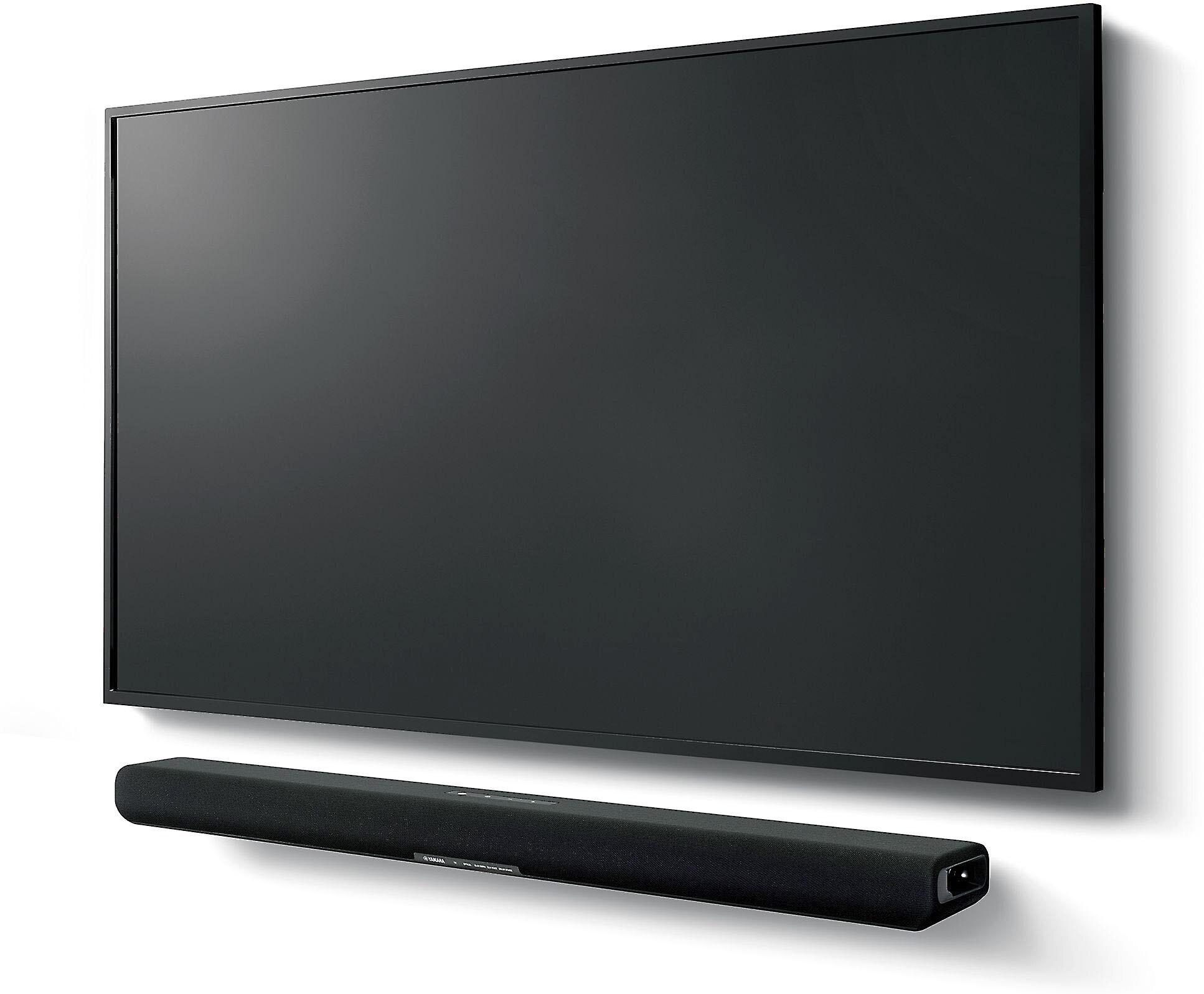
The Yamaha SR-B30A has no such flexibility—it performs exactly the same regardless of whether it's on a TV stand or wall-mounted, in a small bedroom or large living room.
Despite the limitations of single-unit soundbars, there are scenarios where systems like the Yamaha SR-B30A make perfect sense. For smaller rooms, nearfield listening situations, or primarily stereo content like music and TV shows, the convenience and cost savings can outweigh the performance limitations.
The Yamaha SR-B30A excels with music, where its focus on tonal balance and stereo imaging creates a more natural presentation than many competing soundbars that over-process the signal in pursuit of surround effects. For streaming TV shows, news, and other dialogue-heavy content, the Clear Voice technology provides meaningful improvements over TV speakers without the complexity of room setup.
However, for movie enthusiasts who want to experience modern Atmos and DTS:X soundtracks as intended, virtual processing hits a ceiling that no amount of clever engineering can overcome. Action movies, sci-fi films, and immersive gaming simply require physical speakers positioned around you to deliver their full impact.
The Yamaha SR-B30A makes sense for users who primarily watch TV shows, stream music, and want a significant but affordable upgrade from TV speakers. At the time of writing, it represents excellent value in the compact soundbar category and delivers on its promise of enhanced dialogue clarity and wider stereo imaging. It's perfect for apartments, bedrooms, or living rooms where multiple speakers aren't practical.
The Hisense HT Saturn is for users who prioritize authentic surround sound and have both the budget and space to accommodate a multi-speaker system. If your primary use case involves movies, gaming, or music genres that benefit from immersive surround effects, the price premium pays dividends in performance. It's also future-proofed for emerging audio formats and content that increasingly relies on spatial audio effects.
The key insight is that despite both being marketed as "soundbars," these products serve fundamentally different purposes. The Yamaha SR-B30A competes with other compact soundbars and represents the best performance possible from a single-unit design. The Hisense HT Saturn competes with traditional AV receiver-based home theater systems and delivers comparable performance with significantly less complexity.
At the time of writing, the substantial price difference reflects this architectural distinction. You're not just paying more for the Hisense HT Saturn—you're buying a fundamentally different approach to home audio that delivers capabilities the Yamaha SR-B30A simply cannot match due to physical limitations.
For most users, the decision comes down to priorities: convenience and value versus performance and immersion. Both products deliver on their intended promises, but they're solving different problems for different users. Understanding this distinction is crucial for making the right choice for your specific needs and avoiding the disappointment of expecting cinema-level immersion from a system designed for enhanced stereo playback.
| Hisense HT Saturn HTSATURN 4.1.2Ch Sound Bar System | Yamaha SR-B30A Sound Bar with Built-In Subwoofers |
|---|---|
| System Architecture - Determines whether you get true surround vs enhanced stereo | |
| 4.1.2 channel wireless system with 4 satellite speakers + subwoofer | Single 36-inch soundbar with built-in drivers |
| Total Speaker Count - More drivers enable better sound separation and staging | |
| 13 speakers total (8 full-range, 4 tweeters, 1 subwoofer) across 5 components | 8 drivers (4 full-range, 2 tweeters, 2 subwoofers) in one unit |
| Power Output - Higher wattage provides more dynamic range for movies | |
| 720W total across distributed speakers | 120W total (30W×2 front, 60W subwoofer) |
| Audio Format Support - Modern formats deliver more immersive experiences | |
| Dolby Atmos, DTS:X, Dolby TrueHD, DTS-HD Master (native decoding) | Dolby Atmos only (virtual processing, no DTS:X) |
| Bass Performance - Critical for action movies and music impact | |
| Dedicated wireless 6.5" subwoofer, 40Hz-20kHz response | Dual built-in 3" subwoofers with limited extension |
| Height Effects - Overhead audio creates 3D immersion for Atmos content | |
| Physical up-firing drivers in satellites for ceiling reflections | Virtual height processing from front-facing drivers only |
| Setup Complexity - Balance between performance and convenience | |
| Multi-room placement required for 4 satellites + subwoofer | Single-unit plug-and-play installation |
| Room Calibration - Optimizes sound for your specific space | |
| Room Fitting Tuning with automatic acoustic measurement | 4 preset modes with app-based EQ control |
| Wireless Technology - Affects reliability and audio quality | |
| Tri-band (2.4/5.2/5.8GHz) for interference-resistant connections | Bluetooth 5.1 for music streaming only |
| Special Features - Brand-specific technologies that enhance performance | |
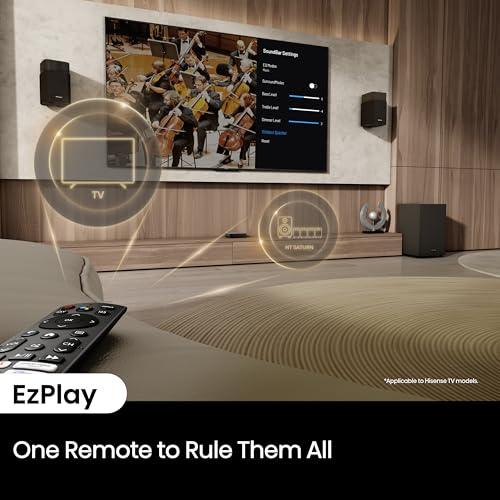
| Devialet tuning, Hi-Concerto TV integration, EZPlay control | Clear Voice dialogue enhancement, Bass Extension mode |
| Physical Footprint - Important for room aesthetics and placement | |
| Requires 5 separate component locations around room | Single 35.9" × 2.6" × 5.2" unit weighing 8.6 lbs |
| Connectivity Options - Determines compatibility with your devices | |
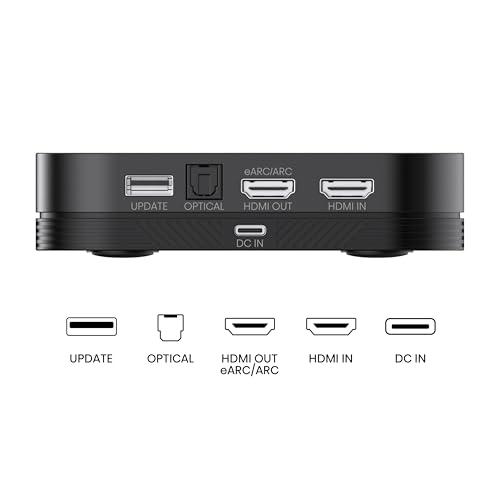
| HDMI eARC, Optical, Bluetooth 5.3, USB (service) | HDMI eARC, Optical, Bluetooth 5.1 |
| Best Use Case - Who each system serves best | |
| Movie enthusiasts wanting true surround in dedicated spaces | TV viewing and music in space-constrained environments |
The Hisense HT Saturn is a complete 4.1.2-channel wireless home theater system with four satellite speakers and a separate subwoofer that you place around your room. The Yamaha SR-B30A is a traditional single-unit soundbar with built-in subwoofers that sits near your TV. The Hisense HT Saturn creates true surround sound, while the Yamaha SR-B30A uses virtual processing to simulate surround effects.
The Yamaha SR-B30A is ideal for small rooms because it's a single 36-inch unit that doesn't require multiple speaker placements. It provides a significant upgrade from TV speakers without taking up additional space. The Hisense HT Saturn needs room for four satellites plus a subwoofer, making it better suited for larger spaces where you can properly position all components.
The Hisense HT Saturn includes a dedicated 6.5-inch wireless subwoofer that provides deep, impactful bass for movies and music. The Yamaha SR-B30A has two built-in 3-inch subwoofers, so no separate subwoofer is needed, but the bass performance is more limited due to the smaller drivers and single-unit design.
The Hisense HT Saturn supports both Dolby Atmos and DTS:X, plus lossless formats like Dolby TrueHD and DTS-HD Master Audio. The Yamaha SR-B30A only supports Dolby Atmos and standard Dolby formats, with no DTS:X compatibility. For maximum format support, the Hisense HT Saturn is the clear winner.
The Yamaha SR-B30A offers simple plug-and-play setup - just connect one cable to your TV and plug in power. The Hisense HT Saturn requires positioning four satellite speakers around your room plus the subwoofer, though all connections are wireless. Setup complexity is much higher with the Hisense HT Saturn, but the performance benefits are substantial.
The Hisense HT Saturn is significantly better for movies and home theater use because it creates genuine surround sound with physical speakers positioned around your room. It delivers true Dolby Atmos height effects and precise sound localization that the Yamaha SR-B30A cannot match with virtual processing alone.
Yes, both systems can be wall mounted. The Yamaha SR-B30A mounts like a traditional soundbar with included hardware. The Hisense HT Saturn includes wall mount kits for all four satellite speakers, giving you flexibility to position them optimally around your room for the best surround sound experience.
Both systems prioritize clear dialogue, but through different approaches. The Hisense HT Saturn creates a stable "phantom center" channel through precise acoustic tuning that reviewers say rivals dedicated center speakers. The Yamaha SR-B30A uses Clear Voice technology to digitally enhance dialogue frequencies. Both are effective, with the Hisense HT Saturn providing more natural-sounding dialogue reproduction.
The Hisense HT Saturn delivers 720W total power distributed across its 13 speakers and five components. The Yamaha SR-B30A provides 120W total power (30W per front channel, 60W for the built-in subwoofers). The Hisense HT Saturn has significantly more power and headroom for dynamic movie content.
For music, the Yamaha SR-B30A excels in stereo mode with natural, unprocessed sound that's ideal for acoustic and vocal music. The Hisense HT Saturn also handles music well with its Devialet tuning and wide soundstage, but it's optimized more for surround content. Both are good for music, with different strengths depending on your preferences.
Both the Hisense HT Saturn and Yamaha SR-B30A work with any TV that has HDMI eARC/ARC or optical audio output. However, the Hisense HT Saturn offers additional features like Hi-Concerto integration and enhanced control when paired with Hisense TVs, while the Yamaha SR-B30A works equally well with all TV brands.
The value depends on your needs and budget. The Yamaha SR-B30A offers excellent value for users wanting a significant audio upgrade with minimal complexity and space requirements. The Hisense HT Saturn provides better value for serious movie enthusiasts who want true surround sound and have the space and budget for a complete home theater system. Both deliver on their intended purposes at their respective price points.
We've done our best to create useful and informative comparisons to help you decide what product to buy. Our research uses advanced automated methods to create this comparison and perfection is not possible - please contact us for corrections or questions. These are the sites we've researched in the creation of this article: bestbuy.com - youtube.com - blog.son-video.com - youtube.com - youtube.com - techradar.com - ecoustics.com - jbhifi.com.au - shop.hisense-usa.com - bhphotovideo.com - bestbuy.com - digitalreviews.net - hisense-usa.com - projectorscreenstore.com - valueelectronics.com - dolby.com - giftpack.ai - usa.yamaha.com - worldwidestereo.com - audiolab.com - shop.sg.yamaha.com - consumerreports.org - usa.yamaha.com - vinylsound.ca - bestbuy.com - modernappliancewoodward.com - bluestardist.com - target.com - my.yamaha.com

Privacy Policy
Terms and Conditions - Affiliate Policy
Home Security
© Copyright 2008-2026.
11816 Inwood Rd #1211, Dallas, TX 75244