

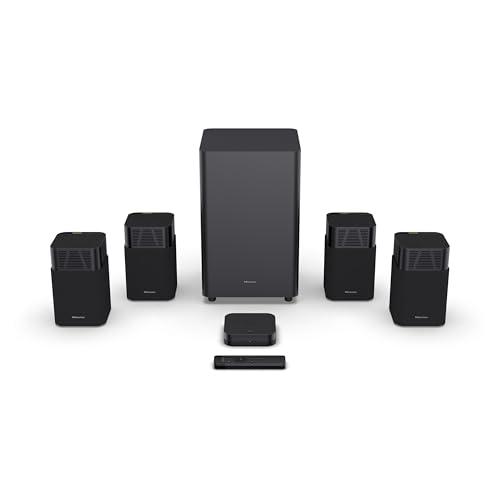
Shopping for a soundbar in 2025 means navigating a market that's split into completely different worlds. On one side, you have premium multi-component systems that rival traditional home theater setups. On the other, simple single-unit soundbars focus on affordability and ease of use. The Hisense HT Saturn HTSATURN and Amazon Fire TV Soundbar perfectly illustrate this divide – they're both called "soundbars" but represent fundamentally different approaches to improving your TV's audio.
Understanding these differences matters because buying the wrong type means either overspending for features you won't use or getting disappointed by performance that doesn't meet your expectations. Let's dive deep into what makes each approach work and who should choose which path.
The soundbar category has exploded in complexity over the past decade. What started as simple stereo speakers designed to replace terrible TV audio has evolved into sophisticated home theater systems that can genuinely compete with traditional surround sound setups.
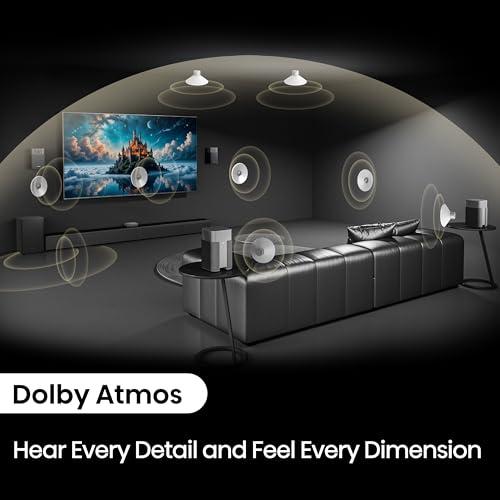
Today's soundbars fall into several distinct categories. Basic stereo soundbars (like the Fire TV Soundbar) focus on improving dialogue clarity and adding some width to your TV's sound. Mid-range soundbars often include a separate subwoofer for better bass. Premium soundbars add rear speakers for true surround sound. At the top end, systems like the HT Saturn incorporate height channels for immersive Dolby Atmos audio – that's the technology that makes sounds appear to come from above you, like helicopters flying overhead or rain falling from the sky.
The key considerations when choosing involve understanding channel configurations (the numbers like 2.1 or 4.1.2), connectivity options, room requirements, and most importantly, your performance expectations versus budget reality.
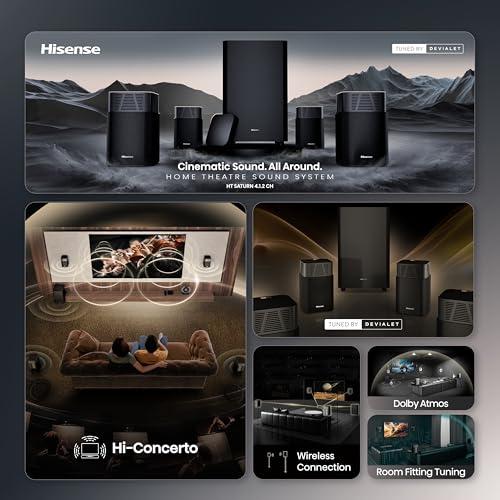
Released in 2025, the Hisense HT Saturn represents the cutting edge of what soundbar technology can achieve. At the time of writing, it commands a premium price that puts it in competition with dedicated home theater receivers and speaker packages. This isn't just a soundbar – it's a complete wireless home theater system that happens to market itself as a soundbar.
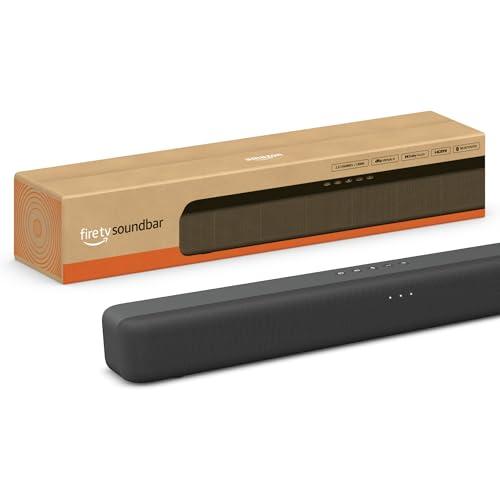
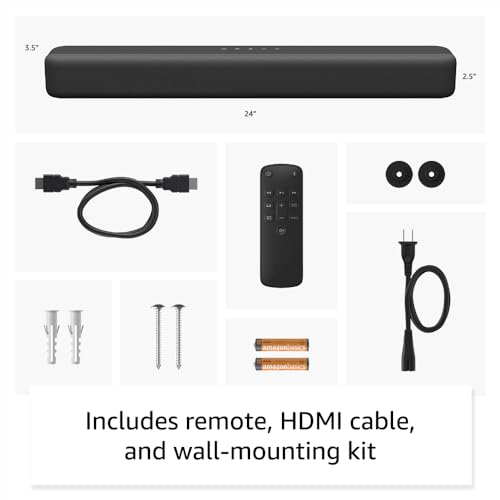
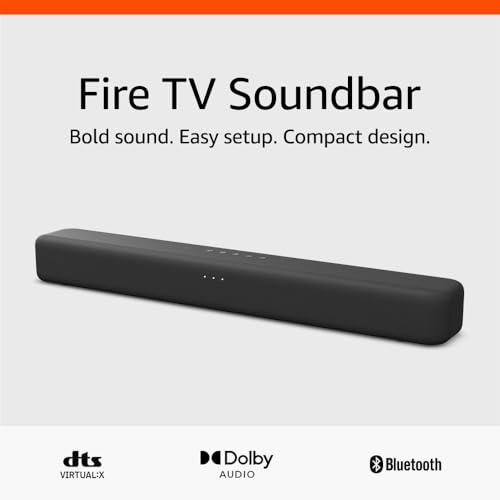
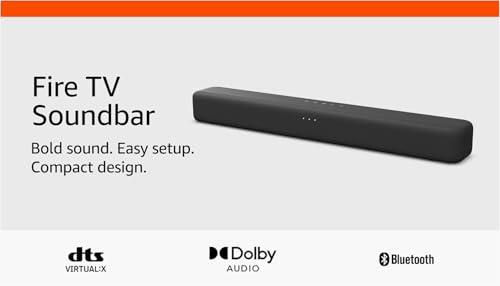
The Amazon Fire TV Soundbar, originally released in 2019, takes the opposite approach. It's designed to be the most affordable way to meaningfully improve your TV's built-in speakers while integrating seamlessly with Amazon's Fire TV ecosystem. The price difference between these products – roughly fifteen times higher for the Hisense at the time of writing – reflects their completely different target markets and capabilities.
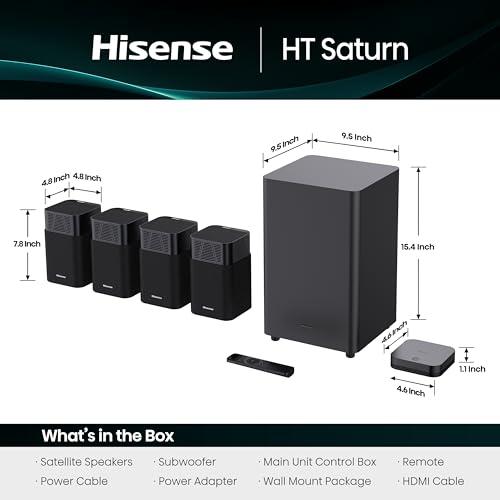
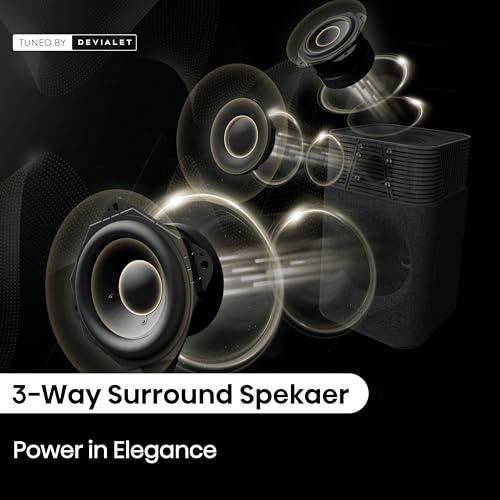
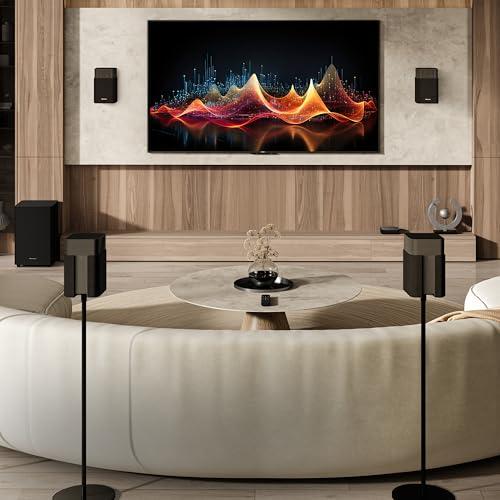
The most fundamental difference between these systems lies in their channel configurations. The HT Saturn uses a true 4.1.2 setup, which means four main speakers (front left, front right, rear left, rear right), one subwoofer (the .1), and two height channels (the .2) for Dolby Atmos effects. This isn't virtual or simulated – it's 13 discrete speakers positioned around your room creating a genuine three-dimensional sound field.
The Fire TV Soundbar operates as a 2.0 system – just left and right channels with no subwoofer. It uses digital signal processing to simulate surround effects, but you're fundamentally getting enhanced stereo sound. The difference in immersion is like comparing a flat photograph to a 3D movie.
When watching action movies, this distinction becomes immediately apparent. The HT Saturn can place a helicopter's rotor wash above your head while its engine rumbles through the subwoofer and dialogue remains anchored to the screen. The Fire TV Soundbar makes the same scene sound clearer and wider than TV speakers, but everything still comes from the front of the room.
Modern home theater relies heavily on advanced audio formats. Dolby Atmos and DTS:X are object-based audio formats – instead of mixing sound into specific channels, they include metadata about where sounds should appear in three-dimensional space. A properly equipped system can then place those sounds precisely around the listener.
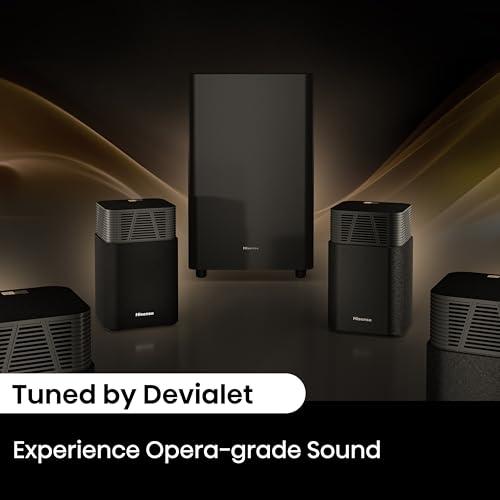
The HT Saturn includes full hardware decoding for these formats, plus it's been acoustically tuned by Devialet, a French company known for extremely high-end audio equipment. This tuning process involves carefully calibrating how all the speakers work together to minimize distortion and optimize frequency response. It's similar to how luxury car manufacturers tune their engines – the hardware might be capable, but professional calibration unlocks its potential.
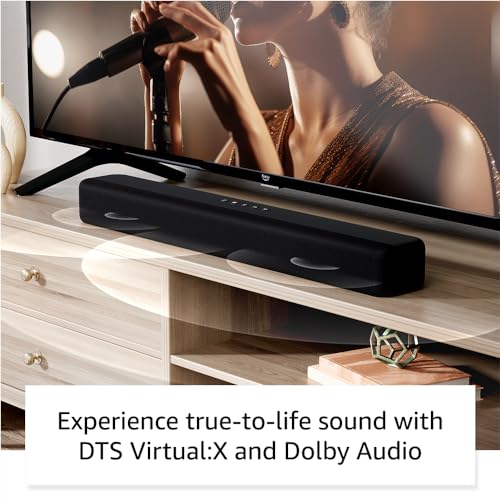
The Fire TV Soundbar supports Dolby Audio (a simpler format) and uses DTS Virtual:X processing to simulate height effects from its two front-facing speakers. Virtual:X is clever technology that uses psychoacoustic principles – basically tricks your brain uses to locate sounds – to create the impression of surround effects. It works, but it's like the difference between a real orchestra and a really good recording played through headphones.
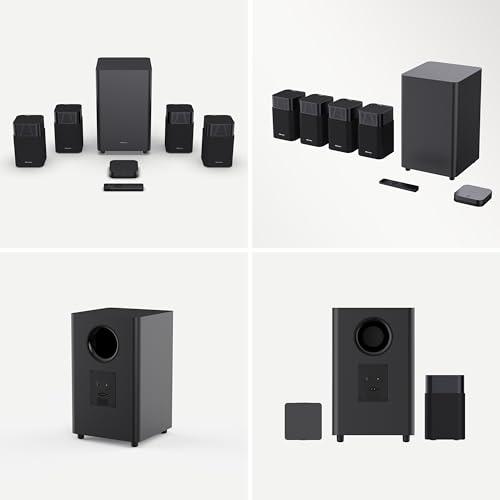
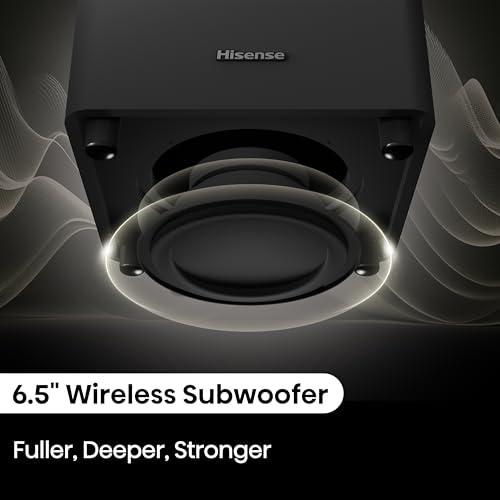
Bass is where the physical limitations of these different approaches become most obvious. The HT Saturn includes a dedicated 6.5-inch wireless subwoofer that extends frequency response down to 40Hz. For context, that's low enough to reproduce the fundamental frequencies of most movie sound effects and music content. The rumble of an explosion, the thump of a car door slamming, the resonance of a pipe organ – these all live in that low-frequency range.
Without a subwoofer, the Fire TV Soundbar simply cannot reproduce these frequencies effectively. The laws of physics dictate that you need a certain amount of air movement to create low-frequency sound waves, and a compact soundbar's small drivers just can't move enough air. This doesn't mean it sounds bad – dialogue will be clearer and music will have more body than TV speakers – but you'll miss the physical impact that makes movies feel cinematic.
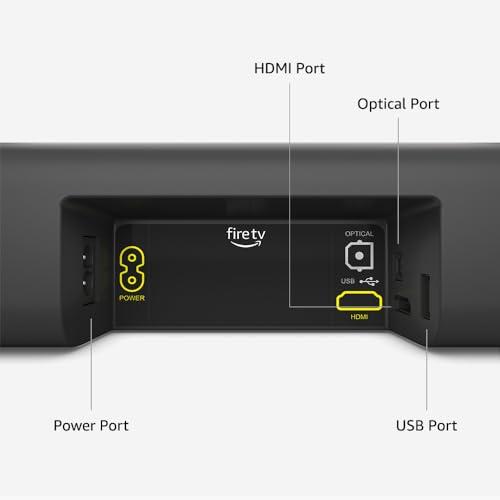
The setup experience reveals another fundamental divide between these products. The Fire TV Soundbar embodies the plug-and-play philosophy that made soundbars popular in the first place. Connect one HDMI cable (or optical cable for older TVs), plug in power, and you're done. It works in any room, requires no special placement, and delivers immediate improvement over TV speakers.
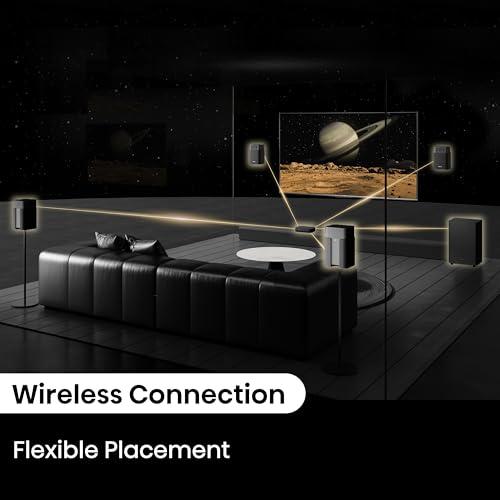
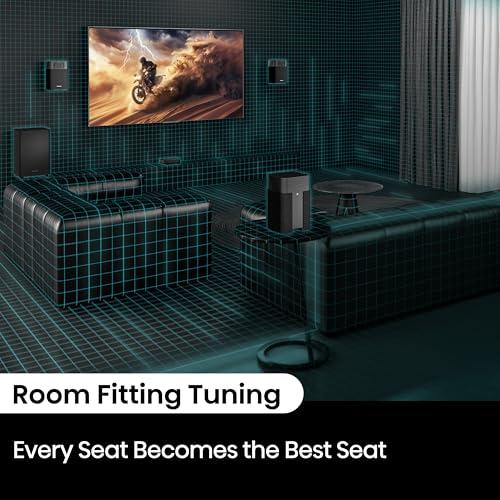
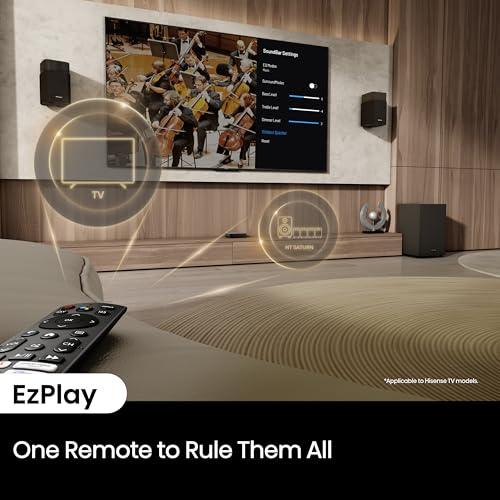
The HT Saturn requires considerably more thought and effort. You'll need to position four satellite speakers around your room – ideally with the rear speakers behind your listening position and adequate ceiling clearance for the height effects to reflect properly. Each speaker needs a power outlet, though the wireless connection eliminates the need for speaker wire runs. The system includes room calibration technology that optimizes performance for your specific space, but this requires a compatible Hisense TV to access.
This setup complexity isn't necessarily a negative – it's the price of achieving genuine surround sound. Traditional home theater systems require even more complexity with receiver programming and speaker wire management. The HT Saturn simplifies the process considerably while still delivering true multi-channel performance.
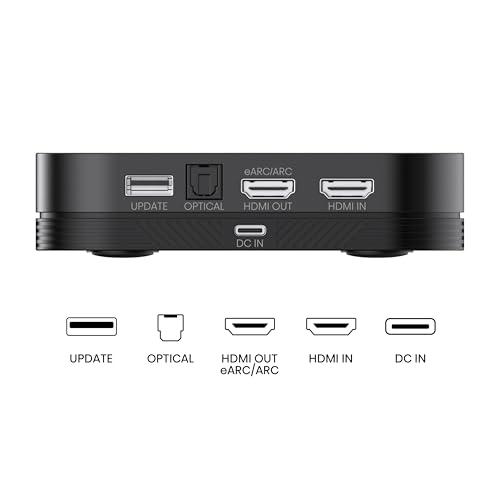
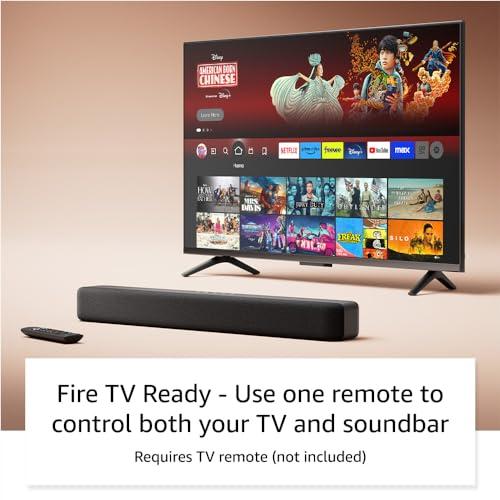
Both systems support HDMI eARC (enhanced Audio Return Channel), which has become the standard for connecting soundbars to modern TVs. eARC allows the TV to send high-quality audio back to the soundbar while also enabling the TV remote to control soundbar volume and power. However, the implementation differs significantly between these products.
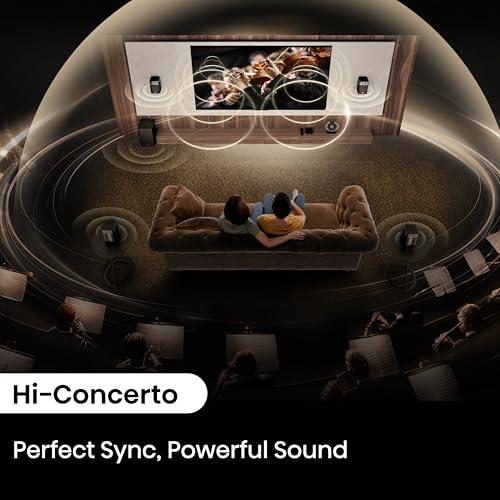
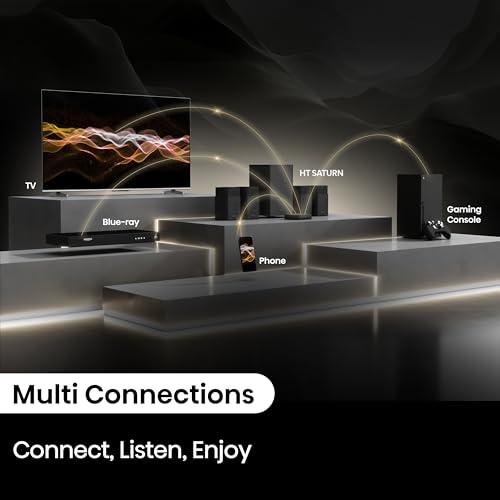
The HT Saturn supports full HDMI 2.1 specifications with 4K/120Hz pass-through – important for modern gaming consoles and high-refresh-rate content. Its Bluetooth 5.3 connection offers improved range and stability for music streaming. The system also includes Hi-Concerto technology, which allows compatible Hisense TVs to use their built-in speakers alongside the soundbar system, effectively creating an even wider sound field.
The Fire TV Soundbar focuses on ecosystem integration rather than technical specifications. Its deep Fire TV integration means it appears as an audio device within the Fire TV interface, and Alexa voice control can adjust volume and basic settings. For users heavily invested in Amazon's ecosystem, this integration adds significant convenience value.
Based on extensive analysis of professional reviews and user feedback, the performance gap between these systems is exactly what you'd expect given their different approaches and price points.
The HT Saturn consistently receives praise for delivering genuine home theater immersion that rivals much more expensive traditional systems. Reviewers note that the Devialet tuning is immediately apparent – dialogue remains clear even during complex action sequences, and the system maintains composure at high volumes. The wireless subwoofer integrates seamlessly with the satellite speakers, avoiding the disconnected feeling that plagues some multi-component systems.
However, the HT Saturn isn't perfect. Some reviews note that the height effects require proper room acoustics to work optimally – rooms with very high ceilings or unusual layouts may not get the full Atmos experience. The system also requires adequate space between satellites to create proper imaging, making it less suitable for very small rooms.
The Fire TV Soundbar excels within its limitations. Reviews consistently mention that it delivers balanced sound with surprising width for such a compact unit. The DTS Virtual:X processing creates a convincing sense of expanded soundstage, even though it's not true surround sound. For TV shows, news, and casual movie watching, it provides meaningful improvement over TV speakers without any complexity.
The Fire TV Soundbar's main limitations involve content that demands more dynamic range or bass impact. Action movies, gaming, and music with substantial low-frequency content reveal the constraints of a compact, subwoofer-free design. It's not that it sounds bad – it just can't deliver the visceral impact that makes entertainment feel immersive.
At the time of writing, these products serve completely different value propositions. The Fire TV Soundbar represents exceptional value for users seeking maximum improvement per dollar spent. If your goal is making TV dialogue clearer and adding some richness to casual viewing, it delivers meaningful results at a budget-friendly price point.
The HT Saturn targets users who want genuine home theater performance without the complexity of traditional component systems. Its premium pricing reflects the inclusion of multiple high-quality speakers, sophisticated processing, and professional acoustic tuning. When compared to building an equivalent system with separate receivers and speakers, it actually represents reasonable value – but only if you need and will use its advanced capabilities.
For dedicated home theater use, the choice becomes clearer. The HT Saturn can genuinely replace a traditional 5.1 or 7.1 receiver-based system for most users. Its ability to decode modern audio formats, position effects accurately in three-dimensional space, and deliver adequate bass response means you get a true cinematic experience.
The system's wireless design offers significant advantages over traditional home theater setups. No speaker wire runs, no complex receiver programming, and automatic room calibration (with compatible TVs) simplify installation while maintaining performance. For users who want theater-quality audio but don't want to become home theater hobbyists, this approach makes sense.
The Fire TV Soundbar isn't designed for serious home theater use, and that's perfectly fine. It's engineered to solve a specific problem – poor TV audio – in the simplest, most affordable way possible. For bedrooms, small apartments, or secondary viewing areas where convenience trumps performance, this approach works well.
The HT Saturn makes sense for users with medium to large rooms who regularly watch movies, play games, or listen to music where surround sound and bass impact enhance the experience. If you have the budget and space for proper satellite placement, and especially if you own a Hisense TV that can unlock the system's advanced integration features, it delivers performance that justifies its premium cost.
The Fire TV Soundbar is ideal for users who want better TV audio without complexity or significant investment. Small apartments, bedrooms, or situations where a multi-speaker system isn't practical make this the sensible choice. Heavy Fire TV users get additional value from the ecosystem integration that other budget soundbars can't match.
Since the Fire TV Soundbar's 2019 release, soundbar technology has advanced considerably. Virtual surround processing has improved, more products include wireless subwoofers as standard, and premium systems like the HT Saturn now offer capabilities that were impossible just a few years ago.
This evolution means the Fire TV Soundbar represents older technology, but older technology that's been refined and proven reliable. Sometimes the mature, simple solution is exactly what you need. The HT Saturn showcases cutting-edge capabilities, but with the complexity and cost that cutting-edge technology typically brings.
The decision between these products shouldn't be difficult once you understand your priorities. If you want the best possible audio performance and have the room and budget to support it, the HT Saturn delivers genuine home theater capabilities in a relatively simple package. If you want better TV audio without complexity or significant cost, the Fire TV Soundbar provides meaningful improvement with minimal effort.
The key is being honest about your needs, room constraints, and how much complexity you're willing to accept for better performance. Both products excel at their intended purposes – they just happen to have very different purposes despite sharing the "soundbar" label.
| Hisense HT Saturn HTSATURN | Amazon Fire TV Soundbar |
|---|---|
| Channel Configuration - Determines surround sound capability and immersion level | |
| True 4.1.2 channel system with 13 discrete speakers (4 satellites + subwoofer + height channels) | 2.0 stereo system with virtual surround processing |
| Speaker Setup - Affects installation complexity and room requirements | |
| Multi-component wireless system (4 satellites + subwoofer + control hub) | Single soundbar unit only |
| Audio Formats - Support for modern immersive audio standards | |
| Dolby Atmos, DTS:X, Dolby TrueHD, DTS-HD Master Audio with hardware decoding | Dolby Audio, DTS Virtual:X (simulated surround only) |
| Bass Performance - Critical for movie impact and music enjoyment | |
| Dedicated wireless 6.5" subwoofer extending to 40Hz | No subwoofer, limited low-frequency response from compact drivers |
| Professional Tuning - Affects overall sound quality and balance | |
| Devialet acoustic tuning with room calibration technology | Basic audio processing without professional calibration |
| Power Output - Influences volume capability and dynamic range | |
| 500W total system power across all components | Approximately 40W total power (2x20W channels) |
| Connectivity Features - Modern compatibility and convenience | |
| HDMI 2.1/eARC with 4K/120Hz pass-through, Bluetooth 5.3, Hi-Concerto TV integration | HDMI eARC, Bluetooth 5.0, Fire TV ecosystem integration with Alexa |
| Room Requirements - Space needed for optimal performance | |
| Medium to large rooms (300+ sq ft) with proper satellite positioning | Any room size, works well in small spaces and apartments |
| Setup Complexity - Time and effort required for installation | |
| Multi-speaker positioning, wireless pairing, room calibration recommended | Plug-and-play single cable connection |
| Target Price Range - Value positioning in the market | |
| Premium pricing competing with high-end home theater systems | Budget-friendly entry-level soundbar pricing |
| Best Use Cases - Scenarios where each product excels | |
| Dedicated home theaters, movie enthusiasts, gaming, large rooms | TV audio upgrade, small spaces, casual viewing, Fire TV users |
The Hisense HT Saturn is a complete wireless home theater system with four satellite speakers, a subwoofer, and true 4.1.2 surround sound. The Amazon Fire TV Soundbar is a simple single-unit soundbar that provides stereo sound enhancement. The HT Saturn delivers genuine surround sound immersion, while the Fire TV Soundbar focuses on improving TV dialogue and basic audio quality.
The Amazon Fire TV Soundbar is ideal for small spaces because it's a compact single unit that doesn't require additional speaker placement. The Hisense HT Saturn needs room for four satellite speakers positioned around the listening area, making it better suited for medium to large rooms where you can properly space the components.
Yes, the Hisense HT Saturn supports full Dolby Atmos with hardware decoding and dedicated height channels for overhead sound effects. The Amazon Fire TV Soundbar does not support Dolby Atmos but uses DTS Virtual:X to simulate surround effects from its front-facing speakers.
The Hisense HT Saturn includes a dedicated wireless 6.5-inch subwoofer that delivers deep bass down to 40Hz, providing substantial impact for movies and music. The Amazon Fire TV Soundbar has no subwoofer and relies on small built-in drivers, resulting in limited bass response compared to the HT Saturn.
The Amazon Fire TV Soundbar offers plug-and-play setup with just one HDMI or optical cable connection. The Hisense HT Saturn requires positioning four wireless satellite speakers around your room and connecting power to each component, though the wireless design eliminates speaker wire runs.
The Hisense HT Saturn is designed specifically for home theater use with true surround sound, Dolby Atmos support, and cinema-quality audio processing. The Amazon Fire TV Soundbar improves TV audio but cannot deliver the immersive surround sound experience that makes movies feel cinematic like the HT Saturn can.
Both soundbars work with any TV that has HDMI ARC/eARC or optical audio output. However, the Hisense HT Saturn offers enhanced integration features like Hi-Concerto and room calibration when paired with compatible Hisense TVs. The Amazon Fire TV Soundbar provides the best integration with Fire TV devices but works universally.
This depends on your needs and budget. The Amazon Fire TV Soundbar offers excellent value for basic TV audio improvement at a budget-friendly price. The Hisense HT Saturn provides premium home theater performance that justifies its higher cost if you want true surround sound and have the space for proper setup.
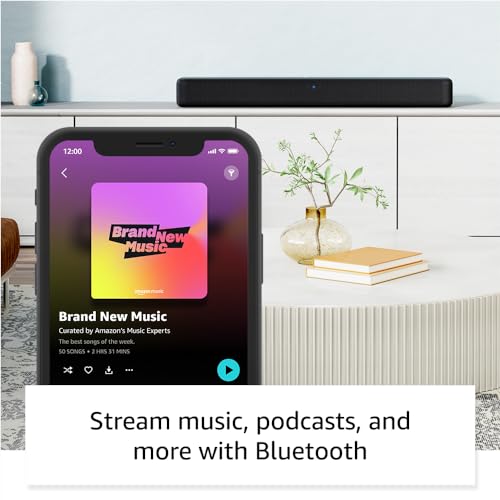
Both soundbars support Bluetooth music streaming from phones and other devices. The Hisense HT Saturn delivers superior music performance with its multi-speaker array and dedicated subwoofer. The Amazon Fire TV Soundbar provides decent music playback but with limited bass and stereo-only sound compared to the HT Saturn.
The Hisense HT Saturn excels for gaming with its true surround sound positioning, low-latency HDMI 2.1 support, and immersive audio that helps locate in-game sounds. The Amazon Fire TV Soundbar improves game audio over TV speakers but cannot provide the directional audio cues and bass impact that enhance gaming like the HT Saturn.
Both soundbars use standard household power outlets. The Amazon Fire TV Soundbar requires just one power connection. The Hisense HT Saturn needs power outlets for each of its five components (four satellites plus subwoofer) but doesn't require any special electrical work beyond having enough available outlets.
The Amazon Fire TV Soundbar is the clear choice for users who want simplicity, offering immediate improvement with minimal setup and no technical configuration. The Hisense HT Saturn requires more technical setup and room planning, making the Fire TV Soundbar better for users who prioritize convenience over advanced features.
We've done our best to create useful and informative comparisons to help you decide what product to buy. Our research uses advanced automated methods to create this comparison and perfection is not possible - please contact us for corrections or questions. These are the sites we've researched in the creation of this article: bestbuy.com - youtube.com - blog.son-video.com - youtube.com - youtube.com - techradar.com - ecoustics.com - jbhifi.com.au - shop.hisense-usa.com - bhphotovideo.com - bestbuy.com - digitalreviews.net - hisense-usa.com - projectorscreenstore.com - valueelectronics.com - dolby.com - giftpack.ai - rtings.com - developer.amazon.com - stereoguide.com - developer.amazon.com - techradar.com - hometechnologyreview.com - whathifi.com - youtube.com - whathifi.com - wirelessplace.com - hometechnologyreview.com - dolby.com - aboutamazon.com - developer.amazon.com - community.anker.com - youtube.com - cordbusters.co.uk

Privacy Policy
Terms and Conditions - Affiliate Policy
Home Security
© Copyright 2008-2026.
11816 Inwood Rd #1211, Dallas, TX 75244