



The world of home theater audio has split into two camps, and choosing between them can make or break your movie nights. On one side, we have traditional single-unit soundbars that use clever processing to fake surround sound. On the other, there's a newer breed of systems that scatter actual speakers around your room to create genuine surround effects.
The Hisense HT Saturn and Sennheiser AMBEO Soundbar Plus represent these two philosophies perfectly. Both promise to transform your living room into a cinema, but they take completely different paths to get there. Understanding these differences will help you pick the system that matches your space, budget, and what you actually want from your audio setup.
Before diving into specifics, it's worth understanding what these systems are trying to accomplish. Traditional home theater setups require five or more speakers positioned around your room, plus a subwoofer for bass. That's a lot of wires, drilling, and furniture rearranging that most people want to avoid.
Soundbars emerged as the simple solution—one sleek unit under your TV that handles everything. But there's a catch: physics. Real surround sound requires speakers behind and beside you, not just in front. So manufacturers got creative.
Some, like Sennheiser with the AMBEO Plus, doubled down on advanced processing. They use psychoacoustics—basically tricking your brain into hearing sounds that aren't really there—combined with speakers that fire sound in different directions to create virtual surround effects.
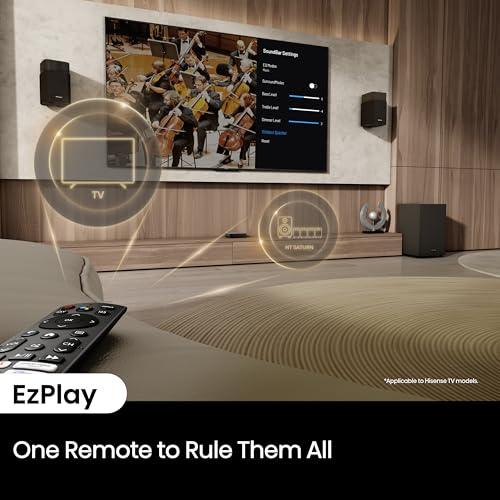
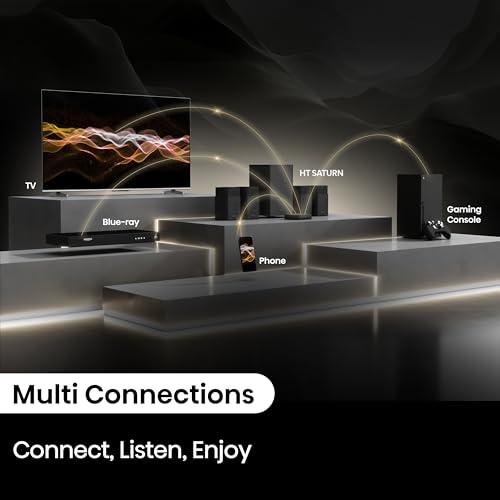
Others, like Hisense with the HT Saturn, said "why fake it?" and created wireless systems that actually put speakers around your room without the wiring headache.
Both approaches have merit, but they excel in different situations.
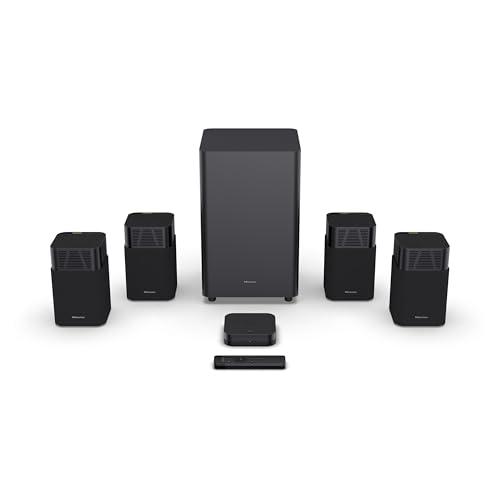
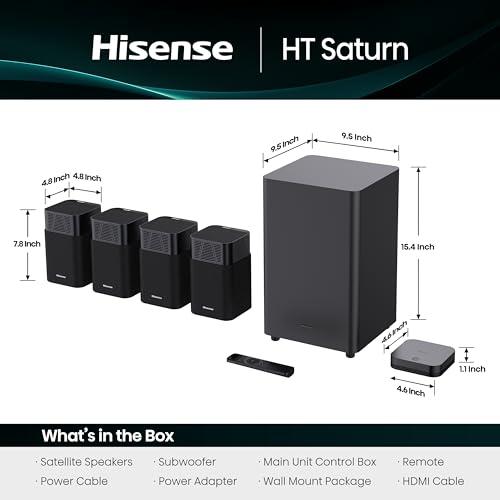
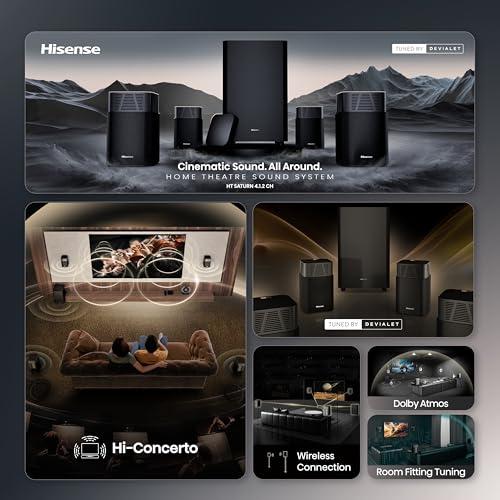
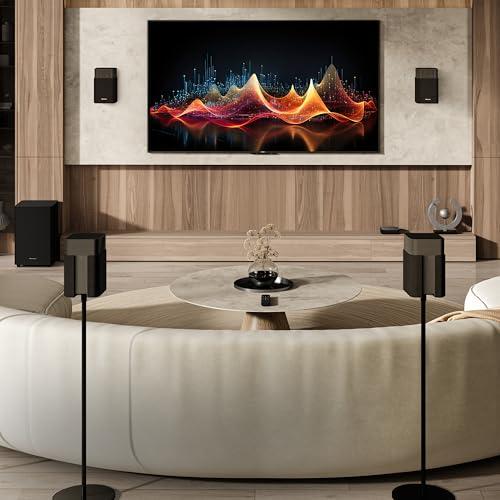
Released in 2025, the Hisense HT Saturn is essentially a traditional 5.1 surround system that went wireless. You get a central control hub plus four satellite speakers and a subwoofer, all connecting wirelessly. That's 13 total speakers spread across six components.
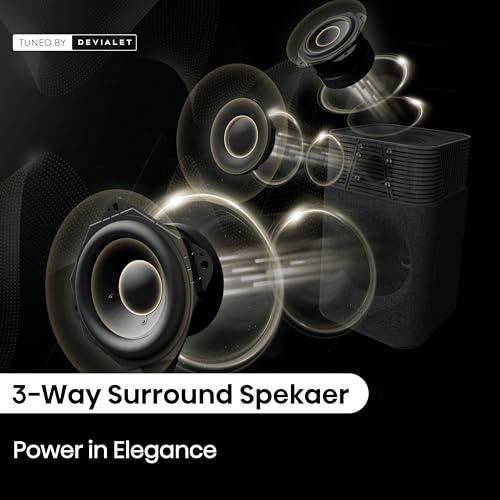
Each satellite speaker is surprisingly sophisticated—it's a three-way design with multiple drivers and a tweeter. The "three-way" part means each speaker handles different frequency ranges (bass, midrange, treble) with dedicated drivers, rather than trying to make one speaker do everything. This typically results in clearer, more detailed sound.
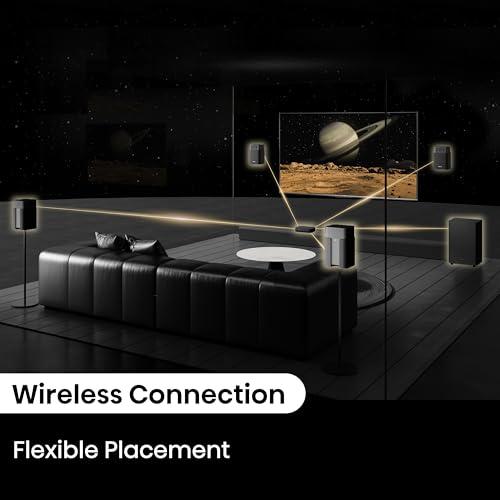
The magic happens in the setup. Instead of running speaker wire to each corner of your room, you just plug each satellite into a wall outlet. The wireless connection handles the audio signal, using multiple frequency bands (2.4GHz, 5.2GHz, and 5.8GHz) to avoid interference from your WiFi and other devices.
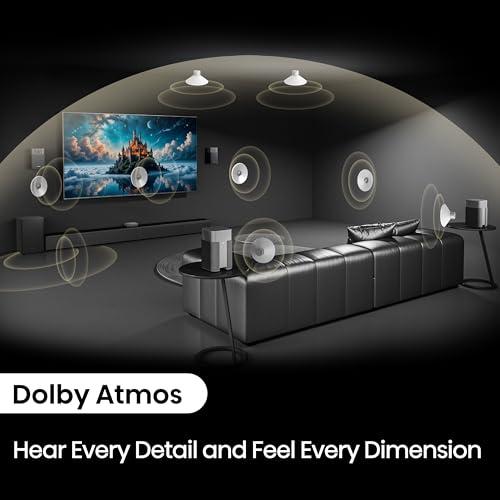
What makes this particularly clever is the 4.1.2 configuration. That means four main speakers, one subwoofer, and two height channels that fire sound upward to bounce off your ceiling. This creates those overhead effects you hear in Dolby Atmos movies—helicopters flying over, rain falling from above, or debris falling around you.
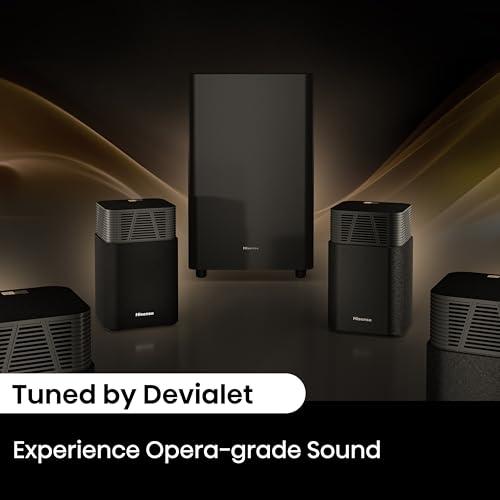
The HT Saturn was also tuned by Devialet, a French audio company known for extremely high-end speakers. Think of this like having a master chef adjust the seasoning on a home recipe—it elevates the entire experience.
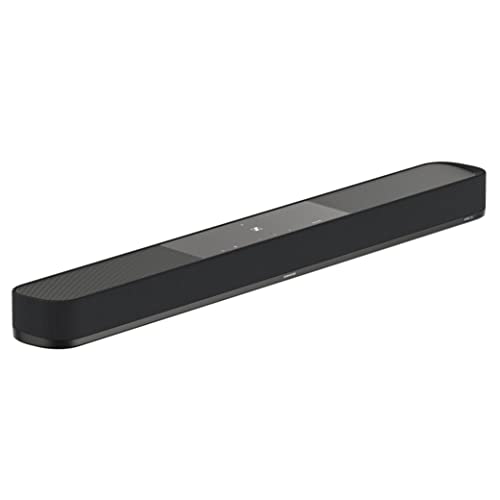
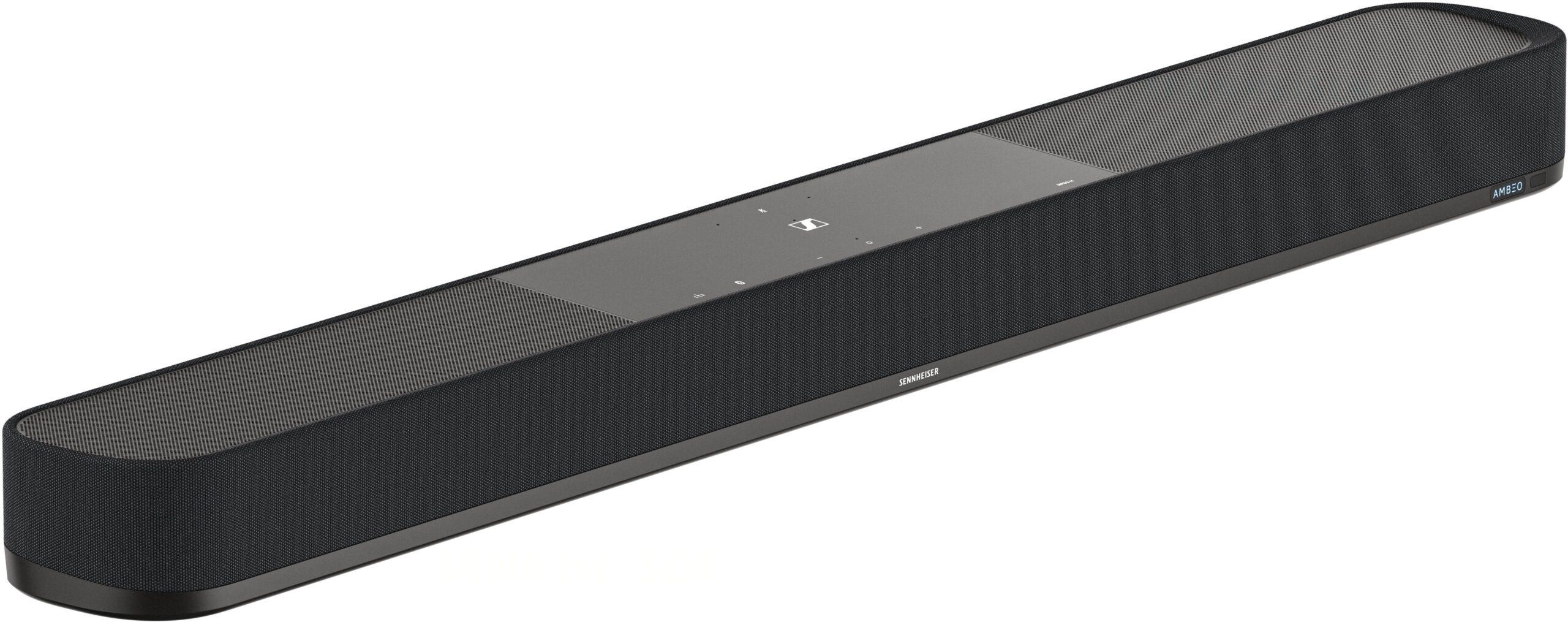
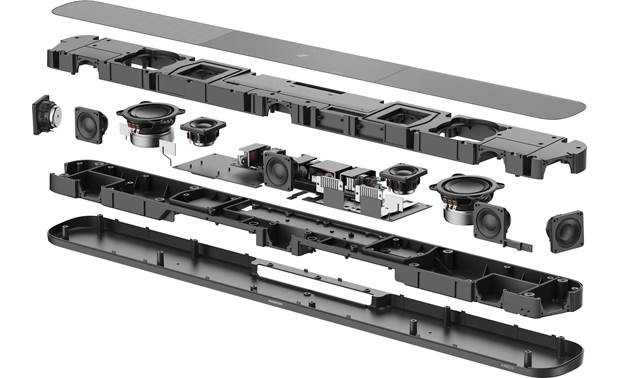
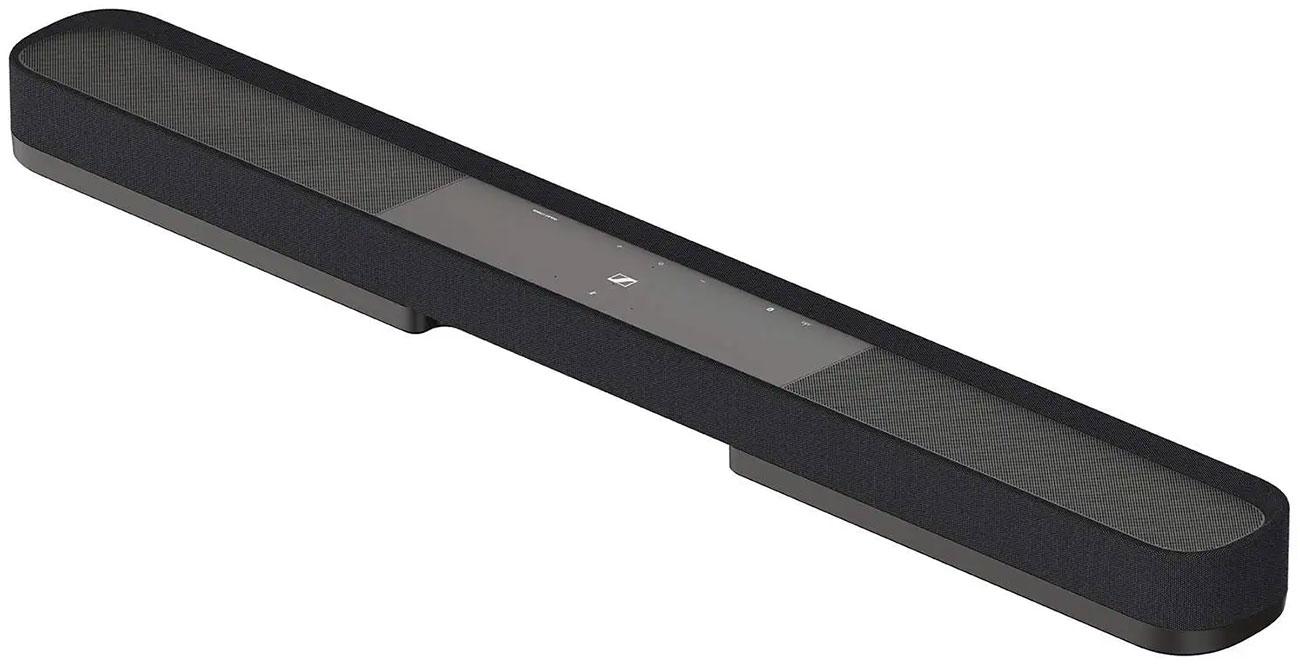
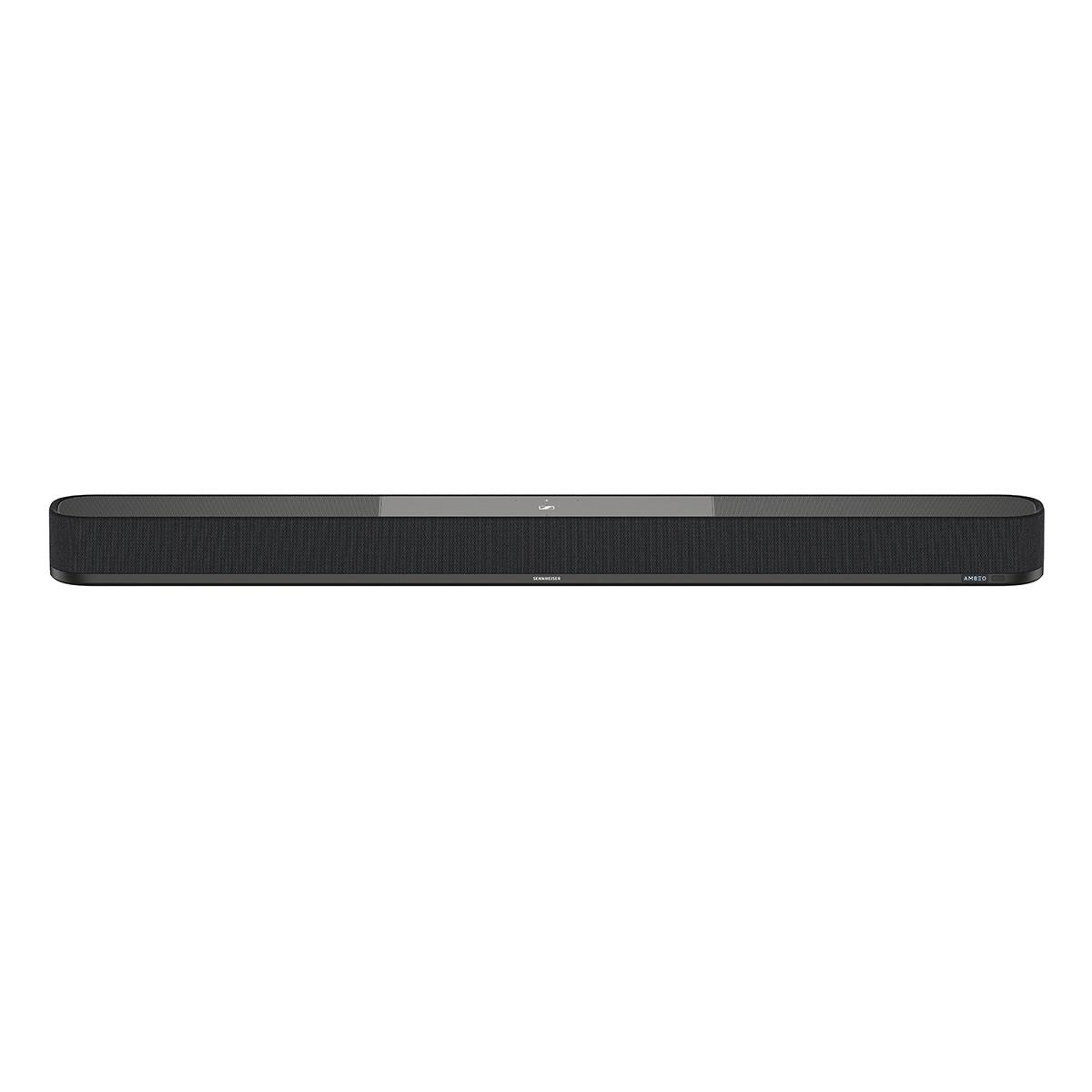
The AMBEO Soundbar Plus, released in 2022, takes the opposite approach. Everything happens in one 43-inch soundbar containing nine speakers and some seriously advanced processing power.
The AMBEO (which stands for Ambisonics—a way of recording and playing back 3D audio) uses virtualization technology to create the illusion of surround sound. Four microphones built into the soundbar measure your room's acoustics during setup, then the onboard processor—a quad-core chip similar to what you'd find in a smartphone—calculates how to bounce sound off your walls to create surround effects.
This isn't just simple stereo widening. The AMBEO Plus can take a regular stereo music track and process it to sound like it's coming from a 7.1.4 system—that's seven main speakers, one subwoofer, and four height channels, all virtually created from those nine physical speakers.
The processing includes support for object-based audio formats like Dolby Atmos and DTS:X. Unlike older surround formats that sent specific audio to specific speakers, these newer formats tell your system "this helicopter sound should move from front-left to rear-right while gaining altitude." The AMBEO then figures out how to create that movement using its available speakers.
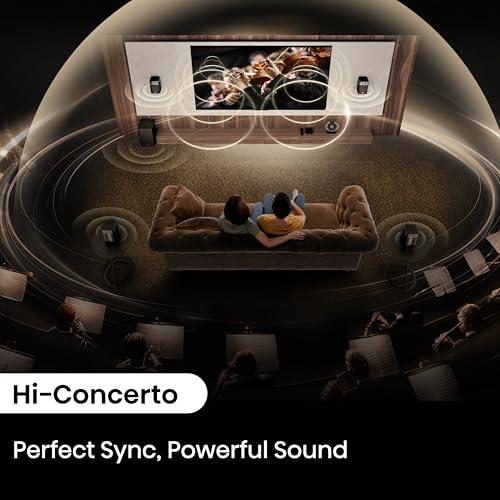
This is where the fundamental difference becomes clear. The Hisense HT Saturn creates surround sound the old-fashioned way—by actually putting speakers around you. When a car drives from left to right in a movie, you're hearing that sound from actual speakers positioned left and right of your seating area.
The AMBEO Plus relies on your room's acoustics to create these effects. In ideal conditions—a rectangular room with good wall surfaces for reflection—it can be remarkably convincing. But in challenging spaces (open floor plans, irregular shapes, lots of soft furniture that absorbs sound), the illusion breaks down.
Our research into user reviews consistently shows this divide. People with well-suited rooms rave about the AMBEO's "impossibly wide" soundstage and convincing surround effects. Those with challenging acoustics often report that effects sound "processed" or fail to create a convincing surround bubble.
The HT Saturn, by contrast, works regardless of your room's shape or furnishing. Poor acoustics might affect the overall sound quality, but you'll still get genuine left-rear and right-rear audio channels because there are actual speakers in those positions.
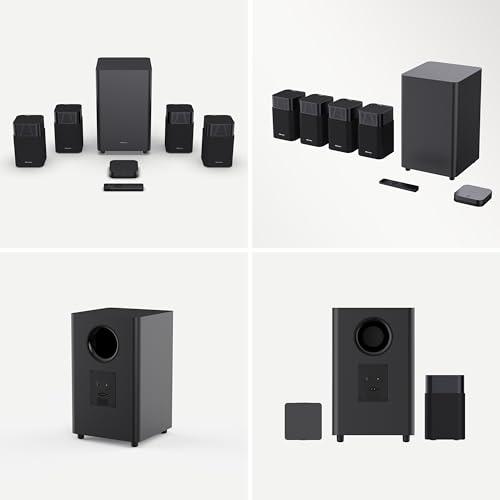
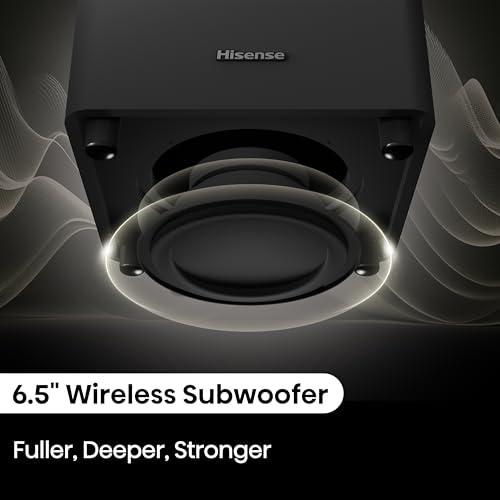
Here's where things get interesting from a value perspective. The Hisense system includes a dedicated 6.5-inch wireless subwoofer that extends down to 40Hz. That covers the deep rumbles in action movies and the fundamental frequencies that make explosions feel physical rather than just loud.
The AMBEO Plus has dual 4-inch woofers built in, which is unusually generous for a soundbar. But multiple reviews note that bass response is limited without adding Sennheiser's optional subwoofer. When you factor in that additional cost—which at the time of writing roughly doubles the system price—the value equation shifts significantly.
This matters more than you might think. In home theater, bass isn't just about loud explosions. Proper low-frequency response gives weight and presence to everything from movie scores to dialogue. Without it, even expensive systems can sound thin or disconnected from the action.
Both systems handle dialogue well, but through different methods. The HT Saturn creates a phantom center channel—a technique where left and right speakers work together to make dialogue appear to come from your TV screen. Despite having no physical center speaker, reviews consistently praise the system's dialogue positioning and clarity.
The AMBEO Plus has dedicated dialogue enhancement modes that can isolate and boost speech frequencies. Its room calibration also optimizes voice clarity based on your specific listening position. For users who struggle with dialogue in movies—a common issue as soundtracks get more complex—this targeted approach can be particularly valuable.
This reveals another interesting divide between the systems. The Hisense HT Saturn, with its Devialet tuning and multiple discrete speakers, excels at pure audio quality. The distributed speaker arrangement creates an unusually wide stereo image for music, and the careful acoustic tuning shows in the natural tonal balance.
The AMBEO Plus takes a different approach, offering extensive streaming options (AirPlay, Spotify Connect, TIDAL Connect) and detailed EQ controls through its smartphone app. While the built-in audio quality is excellent, the convenience factor for music listening is significantly higher.
The AMBEO Plus includes sophisticated room calibration that uses built-in microphones to measure your space and automatically adjust the sound accordingly. This process analyzes everything from room size to furniture placement to ceiling height, then optimizes the virtualization algorithms for your specific environment.
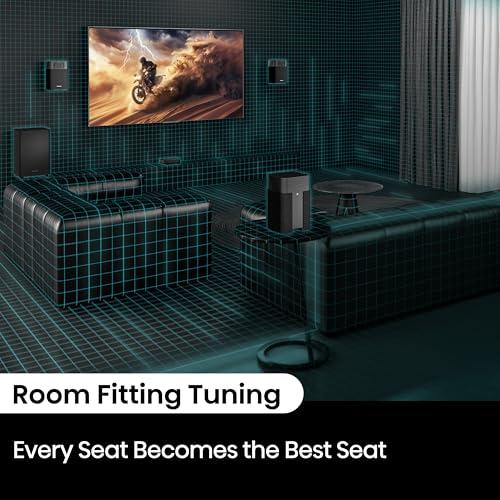
The HT Saturn approaches this differently through its "Room Fitting Tuning" feature, which works when paired with compatible Hisense TVs. Rather than using microphones, it adjusts the system's output characteristics based on room size and speaker positioning information you provide.
Both approaches work, but the AMBEO's automated process is more thorough and works with any TV brand. However, it's also more dependent on ideal results—if the calibration doesn't work well in your space, you're somewhat stuck with the results.
This is where the AMBEO Plus clearly leads. Released in 2022, it includes modern conveniences like WiFi 6, multiple streaming services built-in, and voice assistant compatibility. You can ask Alexa to play music, adjust volume, or even control other smart home devices.
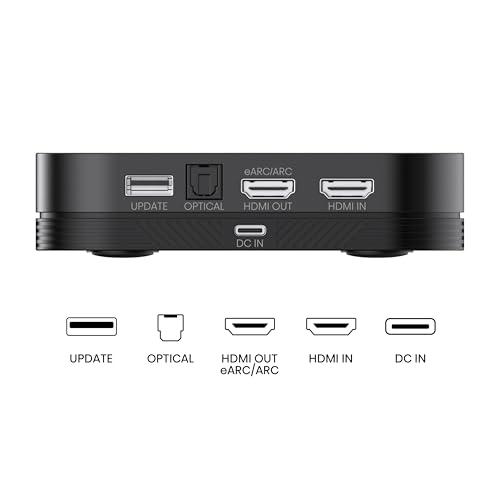
The HT Saturn, being newer (2025), includes updated Bluetooth 5.3 but focuses more on core audio performance than smart features. It has the basics covered—HDMI eARC for lossless audio from your TV, optical input for older devices—but don't expect the streaming convenience of the Sennheiser.
For some users, this difference is decisive. If you regularly stream music from your phone or want voice control integration, the AMBEO is clearly superior. If you primarily watch TV and movies through your existing devices, the HT Saturn's simpler approach might actually be preferable.
The AMBEO Plus wins hands-down for simplicity. Mount one soundbar under your TV, run through the automated calibration, and you're done. The single-unit design also maintains clean aesthetics that many users prefer.
The HT Saturn requires positioning six components around your room. While they only need power connections (no audio cables), you're still dealing with multiple devices that need placement, power outlets, and consideration for room layout. The satellites are relatively small and can be wall-mounted, but it's undeniably more complex.
However, this complexity enables better performance. You can optimize each speaker's position for your specific room and seating arrangement, something impossible with a single-unit design.
Want authentic surround sound and don't mind the setup complexity. This system excels in medium to large rooms (300+ square feet) where the satellites have space to breathe and create a proper surround bubble. The included subwoofer and Devialet tuning make it particularly appealing for movie enthusiasts who prioritize audio quality over convenience.
It's also the better choice if you have an oddly shaped room or open floor plan where traditional soundbar virtualization struggles. The physical speakers will create surround effects regardless of your room's acoustic properties.
Prioritize simplicity and smart features, especially in smaller to medium-sized rooms with good acoustics for virtualization. The single-unit design and extensive streaming options make it ideal for users who want high-quality audio without the complexity of multiple components.
However, budget for the additional subwoofer if you want optimal performance. At the time of writing, this roughly doubles the total system cost but delivers bass performance comparable to the HT Saturn's included subwoofer.
When comparing these systems, consider the total cost of ownership. The Hisense HT Saturn includes everything you need for complete performance—no additional purchases required. The AMBEO Plus starts at a lower price point but typically needs the optional subwoofer for comparable bass performance.
From a pure performance-per-dollar perspective, the HT Saturn delivers more complete home theater sound for less total investment. But the AMBEO Plus offers superior convenience, streaming features, and aesthetic simplicity that many users will find worth the premium.
The choice between these systems ultimately comes down to your priorities. If authentic surround sound and maximum movie immersion matter most, and you don't mind positioning multiple speakers, the Hisense HT Saturn delivers better performance for the money.
If you want excellent sound with minimal setup complexity, extensive streaming options, and modern smart features, the AMBEO Plus is worth the investment—just budget for the subwoofer.
Both represent excellent approaches to home theater audio, but they serve different users with different needs. Consider your room size, setup tolerance, and primary use cases to make the choice that will serve you best for years to come.
| Hisense HT Saturn | Sennheiser AMBEO Soundbar Plus |
|---|---|
| System Architecture - Determines authenticity of surround sound | |
| True 4.1.2 channel with 4 wireless satellites + subwoofer | Single soundbar with 7.1.4 virtualization technology |
| Total Speakers - More drivers typically mean better sound separation | |
| 13 speakers across 6 components (8 full-range, 4 tweeters, 1 sub) | 9 speakers in single unit (7 full-range, 2 woofers) |
| Power Output - Higher wattage enables louder, cleaner sound | |
| 720W RMS total system power | 400W RMS through Class D amplifiers |
| Bass Solution - Critical for movie impact and music fullness | |
| Dedicated wireless 6.5" subwoofer included | Dual 4" built-in woofers (optional sub recommended) |
| Frequency Response - Lower Hz = deeper bass, higher Hz = crisper highs | |
| 40Hz - 20kHz (excellent low-end extension) | 38Hz - 20kHz (slightly better bass spec, limited without sub) |
| Audio Tuning - Professional calibration affects overall sound quality | |
| Tuned by Devialet for "opera-grade" sound | AMBEO 3D virtualization with room calibration |
| Dolby Atmos Implementation - Height effects quality varies significantly | |
| Physical up-firing channels in multiple locations | Virtual height channels from front-firing position |
| Setup Complexity - Balance between performance and convenience | |
| 6 components requiring power outlets around room | Single soundbar with automated calibration |
| Streaming Features - Modern convenience for music listening | |
| Basic Bluetooth 5.3 only | Wi-Fi 6, AirPlay 2, Spotify Connect, TIDAL Connect |
| HDMI Connectivity - Essential for modern TV integration | |
| 1 input, 1 output with eARC (4K 60Hz passthrough) | 2 inputs, 1 output with eARC (HDMI 2.1 support) |
| Room Calibration - Optimizes sound for your specific space | |
| Room Fitting Tuning via compatible Hisense TVs | Automated 4-microphone room analysis for any TV |
| Voice Control - Smart home integration capability | |
| None (traditional remote only) | Alexa and Google Assistant built-in |
| Expandability - Future upgrade options | |
| Fixed system (no add-on options) | Optional AMBEO subwoofer for enhanced bass |
| Release Timeline - Affects feature set and technology | |
| 2025 (newest wireless surround approach) | 2022 (mature virtualization technology) |
The Hisense HT Saturn provides authentic surround sound with four physical wireless satellite speakers positioned around your room, creating genuine 360-degree audio. The Sennheiser AMBEO Soundbar Plus uses advanced virtualization technology to simulate surround sound from a single unit. For true surround sound authenticity, the HT Saturn is superior, while the AMBEO Plus excels in rooms with good acoustics for virtualization.
The Hisense HT Saturn includes a dedicated wireless 6.5-inch subwoofer in the package, providing complete bass performance out of the box. The Sennheiser AMBEO Soundbar Plus has dual built-in 4-inch woofers but most users find the bass inadequate without adding the optional AMBEO subwoofer for optimal performance.
The Sennheiser AMBEO Soundbar Plus is significantly easier to install, requiring only mounting one soundbar unit under your TV and running automated room calibration. The Hisense HT Saturn requires positioning six components (four satellites, subwoofer, and hub) around your room, though all connections are wireless and only need power outlets.
Both systems support Dolby Atmos, but differently. The Hisense HT Saturn uses physical up-firing channels in multiple satellite speakers to create authentic height effects. The Sennheiser AMBEO Plus creates virtual height channels using advanced processing from its front-firing position. The HT Saturn typically provides more convincing overhead effects due to its distributed speaker arrangement.
The Hisense HT Saturn offers superior pure audio quality with Devialet tuning and wider stereo imaging from distributed speakers. However, the Sennheiser AMBEO Soundbar Plus provides better convenience for music with built-in Wi-Fi streaming, AirPlay 2, Spotify Connect, and detailed app-based EQ controls. Choose the HT Saturn for audio quality, the AMBEO Plus for streaming convenience.
The Hisense HT Saturn delivers 720W RMS total power across its 13 speakers distributed in six components. The Sennheiser AMBEO Soundbar Plus provides 400W RMS through nine Class D amplifiers in a single unit. The HT Saturn offers higher total power output, though power distribution differs significantly between the architectures.
The Sennheiser AMBEO Soundbar Plus clearly leads in smart features with Wi-Fi 6, multiple streaming services, voice assistant support (Alexa/Google), and comprehensive app control. The Hisense HT Saturn focuses on core audio performance with basic Bluetooth 5.3 connectivity and traditional remote control. Choose the AMBEO Plus for modern smart home integration.
The Hisense HT Saturn performs well in medium to large rooms (300+ sq ft) where physical satellites can create proper surround effects regardless of room acoustics. The Sennheiser AMBEO Soundbar Plus works best in small to medium rooms with good wall surfaces for sound reflection, as virtualization depends on room acoustics for effectiveness.
The Hisense HT Saturn provides complete home theater performance including subwoofer in one package, offering better value for authentic surround sound. The Sennheiser AMBEO Soundbar Plus starts at a lower price but typically requires additional subwoofer investment for comparable bass performance. Consider total system cost when comparing these options.
The Sennheiser AMBEO Soundbar Plus can be wall-mounted under your TV like a traditional soundbar. The Hisense HT Saturn satellites can be wall-mounted using included hardware, but you'll need to mount four separate speakers around your room plus position the wireless subwoofer, making installation more complex but offering better placement flexibility.
Both systems excel for gaming but differently. The Hisense HT Saturn provides authentic positional audio with physical surround speakers, making it excellent for competitive gaming where directional audio matters. The Sennheiser AMBEO Plus offers lower latency and game-specific sound modes through its app. Choose the HT Saturn for immersive single-player games, the AMBEO Plus for convenience and versatility.
The Hisense HT Saturn typically includes standard manufacturer warranty coverage for all six system components. The Sennheiser AMBEO Soundbar Plus comes with Sennheiser's premium support and typically longer warranty periods, reflecting the brand's premium positioning. Both offer adequate support, but Sennheiser generally provides more comprehensive customer service and longer-term reliability backing.
We've done our best to create useful and informative comparisons to help you decide what product to buy. Our research uses advanced automated methods to create this comparison and perfection is not possible - please contact us for corrections or questions. These are the sites we've researched in the creation of this article: bestbuy.com - youtube.com - blog.son-video.com - youtube.com - youtube.com - techradar.com - ecoustics.com - jbhifi.com.au - shop.hisense-usa.com - bhphotovideo.com - bestbuy.com - digitalreviews.net - hisense-usa.com - projectorscreenstore.com - valueelectronics.com - dolby.com - giftpack.ai - techradar.com - pocket-lint.com - moon-audio.com - stereonet.com - rtings.com - abt.com - projectorscreen.com - youtube.com - videoandaudiocenter.com - crutchfield.com - sennheiser-hearing.com - newsroom.sennheiser.com

Privacy Policy
Terms and Conditions - Affiliate Policy
Home Security
© Copyright 2008-2026.
11816 Inwood Rd #1211, Dallas, TX 75244