





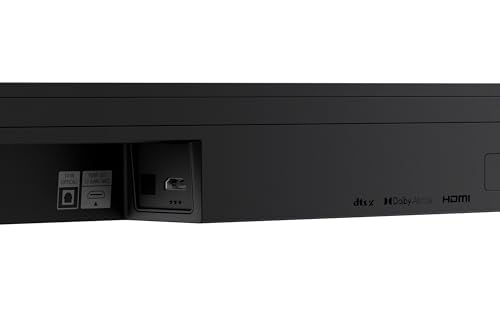
When your TV's built-in speakers sound like they're coming from inside a cardboard box, it's time for a soundbar upgrade. But walking into the soundbar market can feel overwhelming—do you need 3.1 channels or 11.1.4? What's the difference between virtual and real surround sound? And most importantly, how much should you spend to get audio that actually enhances your movie nights instead of just making them louder?
I've spent considerable time researching these questions, and today we're comparing two soundbars that represent very different philosophies: the premium Samsung HW-Q990F flagship and the more accessible Sony BRAVIA Theater Bar 6. One costs significantly more but promises cinema-quality immersion, while the other focuses on delivering solid performance at a reasonable price point. Let's dig into what makes each approach work and help you figure out which fits your needs and budget.
Before we dive into specifics, let's clarify what soundbars are trying to solve. Your TV's speakers face backward or downward, creating thin, directionless audio. Soundbars fix this by pointing speakers at you and adding a subwoofer for bass. But not all soundbars are created equal.
The key specification you'll see everywhere is channel configuration, written like "3.1.2" or "11.1.4." The first number tells you how many main speakers face forward (left, center, right), the middle number indicates subwoofer channels, and the last number shows height channels that fire upward to create overhead effects. More channels generally mean more immersive sound, but the implementation matters as much as the numbers.
Physical vs. virtual surround is the biggest differentiator in soundbar design. Virtual surround uses digital processing to make front-facing speakers sound like they're coming from behind you—it's clever software trickery. Physical surround uses actual rear speakers placed around your room. Virtual costs less and requires no extra placement, but physical surround creates genuinely convincing effects that software simply cannot match.
Both the Samsung Q990F and Sony Theater Bar 6 were released in 2024-2025, representing the latest thinking in their respective price categories. The Samsung incorporates several years of refinements to Samsung's flagship formula, while Sony focused on making their mid-range offering more compelling against increasing competition.
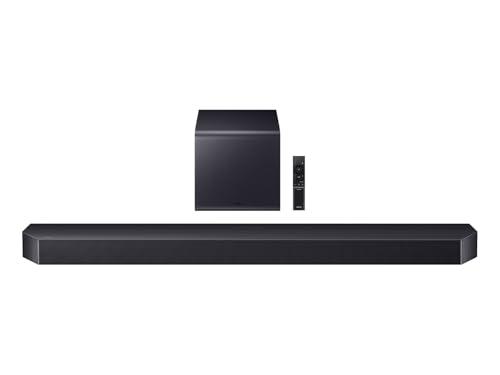
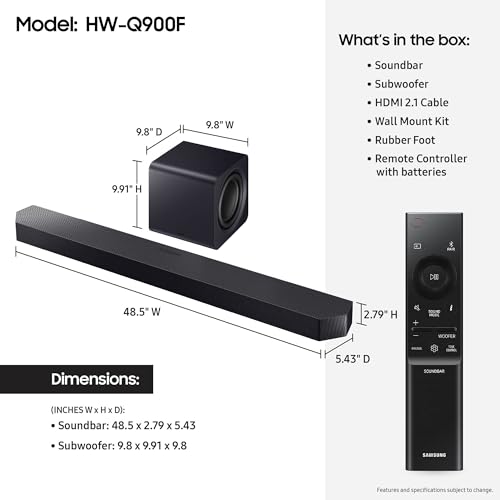
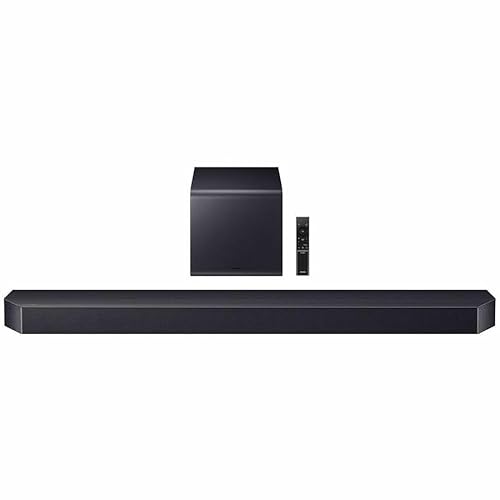
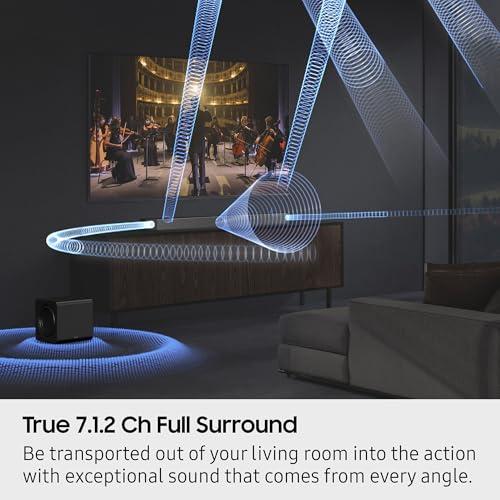
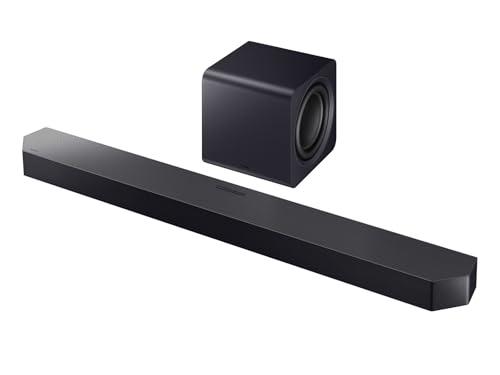
The Samsung HW-Q990F represents Samsung's "everything included" philosophy. When you open the box, you get the main soundbar, a wireless subwoofer, and wireless rear speakers—everything needed for genuine 11.1.4 surround sound with 23 total speakers. This isn't just a soundbar; it's a complete home theater system that happens to be packaged as separate wireless components.
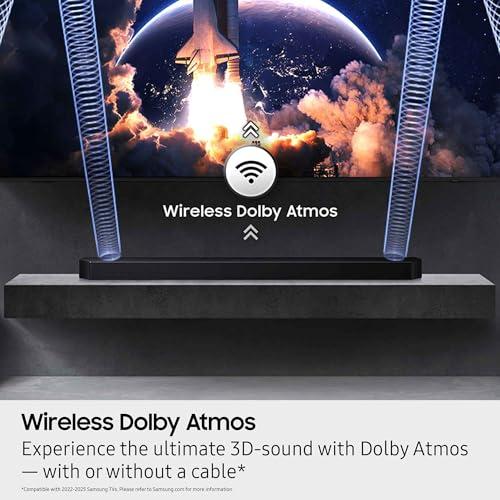
Samsung's approach prioritizes true surround immersion above all else. Those rear speakers aren't optional extras—they're integral to creating what audio engineers call a "hemisphere of sound" where effects move convincingly around and above you. When a helicopter flies overhead in a movie, you'll hear it start from the front soundbar, move to the rear speakers, then transition to the up-firing drivers that bounce sound off your ceiling. This creates a genuine sense of three-dimensional audio space that virtual processing simply cannot replicate.
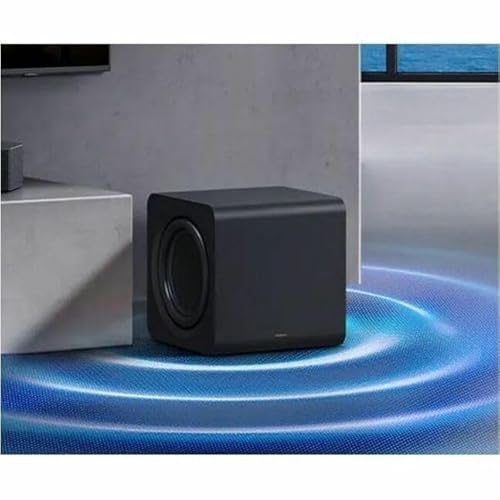
The subwoofer technology here is particularly impressive. Samsung redesigned their subwoofer for 2024 with dual 8-inch opposing woofers that cancel out vibrations—meaning you get powerful bass without the cabinet rattling that plagues cheaper systems. The AI-based nonlinear control system monitors the audio signal in real-time and adjusts the subwoofer's response to minimize distortion. In practical terms, this means explosions hit with visceral impact while dialogue remains clear and musical bass stays tight and controlled.
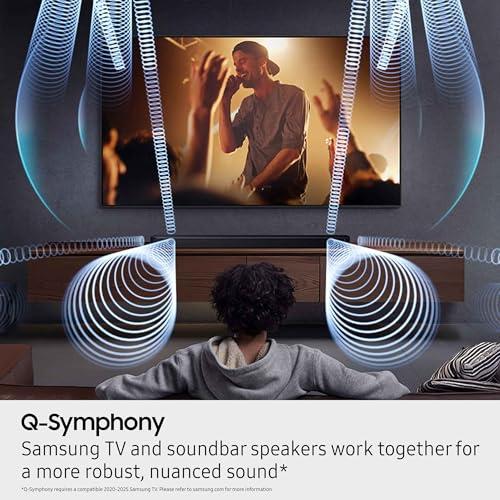
Samsung's Q-Symphony technology deserves special mention if you own or are considering a Samsung TV. This feature synchronizes the soundbar with compatible Samsung TV speakers, using both systems together rather than replacing the TV audio entirely. The result is a wider, more enveloping soundstage that feels like having additional speakers throughout your room.
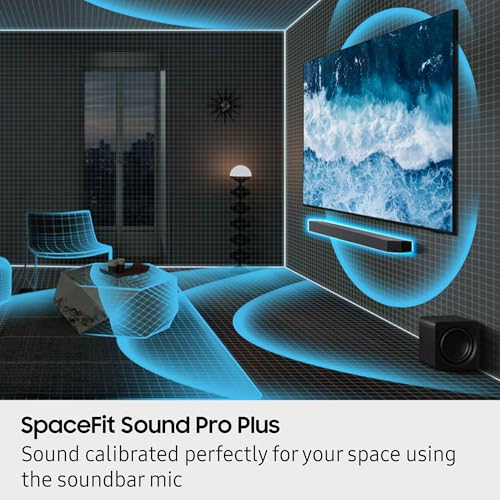
The Q990F also includes SpaceFit Sound Pro Plus, which uses built-in microphones to analyze your room's acoustics and automatically calibrate the system. This isn't just bass adjustment—it's comprehensive room correction that optimizes everything from dialogue clarity to surround effect timing based on your specific space.
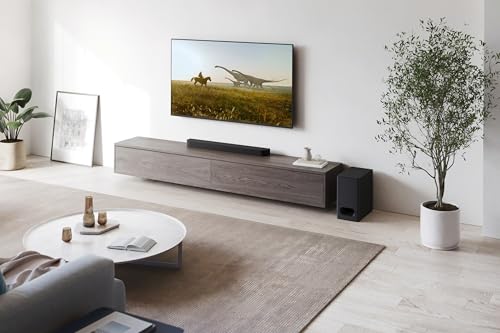
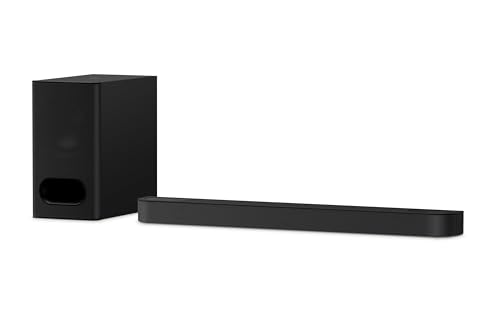
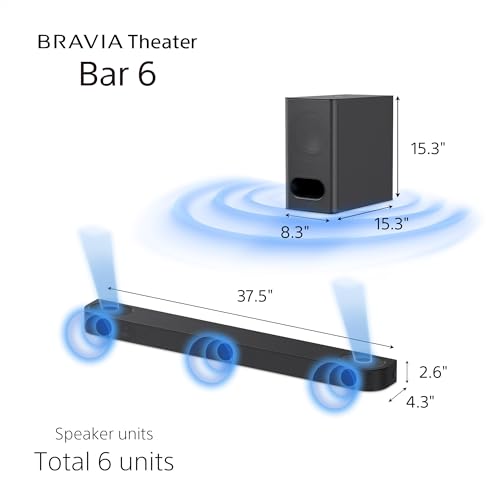
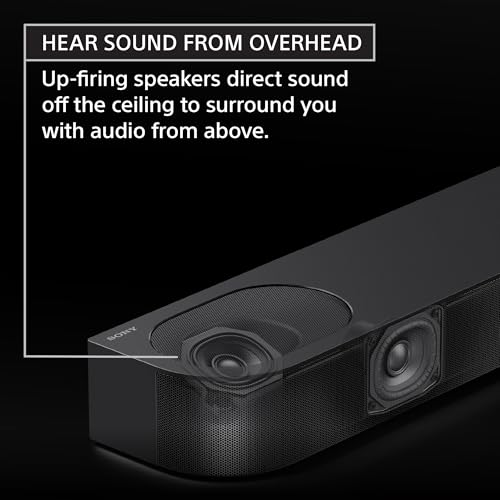
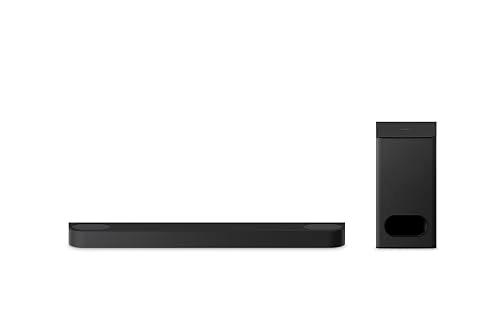
The Sony BRAVIA Theater Bar 6 takes a fundamentally different approach. Rather than trying to recreate a full surround system, Sony focused on making the best possible 3.1.2 soundbar with intelligent virtual surround processing. You get the main soundbar and a wireless subwoofer—no rear speakers cluttering your room or requiring careful placement.
Sony's X-Balanced drivers are a key differentiator here. Instead of traditional circular speakers, these use a rectangular design that increases surface area within the same cabinet space. The result is cleaner sound with less distortion, particularly noticeable in dialogue and mid-range frequencies where most music and voice content lives.
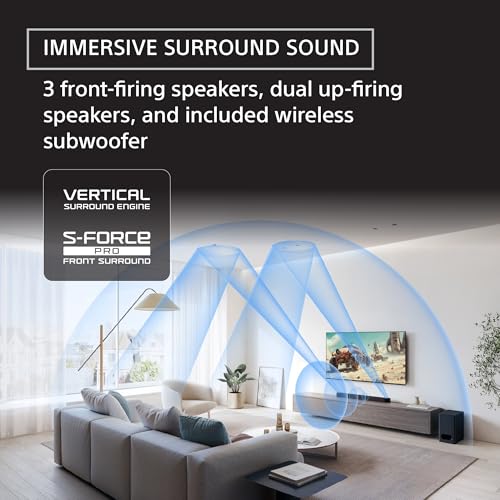
The Theater Bar 6 includes Sony's S-Force PRO Front Surround processing, which analyzes incoming audio and uses psychoacoustic principles to create the illusion of surround effects from front-facing speakers. While this can't match physical rear speakers for genuine behind-you effects, Sony's implementation is among the most convincing virtual surround systems available.
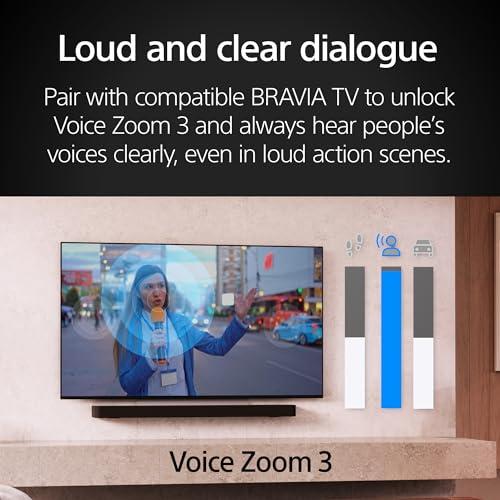
Voice enhancement is another Sony strength. The dedicated center channel handles dialogue, while Sony's Clear Voice algorithms and Voice Zoom 3.0 (when paired with compatible BRAVIA TVs) use AI to identify and boost speech frequencies. This is particularly valuable if you watch a lot of dialogue-heavy content or find yourself constantly adjusting volume during movies.
The design philosophy here prioritizes simplicity and elegance. The Theater Bar 6 is designed to disappear visually while delivering substantially better audio than your TV. Sony includes wall mount brackets and spacers in the box, and the entire system can be set up in minutes using the BRAVIA Connect app.
This is where the fundamental difference between these systems becomes most apparent. The Samsung Q990F creates what reviewers consistently describe as a "dome of sound" that genuinely surrounds the listener. When effects move from front to back in movies, you hear them travel through physical space because they're actually coming from different locations around your room.
The rear speakers in the Samsung system each contain multiple drivers—forward-firing, side-firing, and up-firing—ensuring that surround effects transition smoothly without gaps. This is particularly noticeable in action movies where helicopters, cars, or other moving objects maintain their spatial relationships as they travel across the soundstage.
The Sony Theater Bar 6, despite sophisticated processing, cannot fully overcome the physics limitation of having all speakers in front of you. Sony's virtual surround creates a wider, more spacious soundstage than basic soundbars, and the up-firing drivers do create convincing overhead effects. However, effects don't truly wrap around the listener—they create an enhanced frontal presentation rather than genuine surround immersion.
For home theater enthusiasts who prioritize maximum immersion, the Samsung's advantage here is substantial and worth the price premium. For casual viewers or those with space constraints, the Sony's virtual approach provides significant improvement over TV audio without the complexity.
Both systems approach bass differently, reflecting their design philosophies. The Samsung Q990F treats bass as a critical component of cinematic immersion. The dual 8-inch subwoofer with dedicated 300-watt amplification delivers deep, controlled bass that can pressurize a room during action sequences while maintaining clarity for musical content.
The Samsung's force-canceling woofer design is particularly clever—by mounting two drivers facing opposite directions, vibrations cancel out, allowing the subwoofer to play louder with less cabinet resonance. Combined with AI-based distortion control, this creates bass that hits hard when needed but doesn't overwhelm dialogue or delicate musical passages.
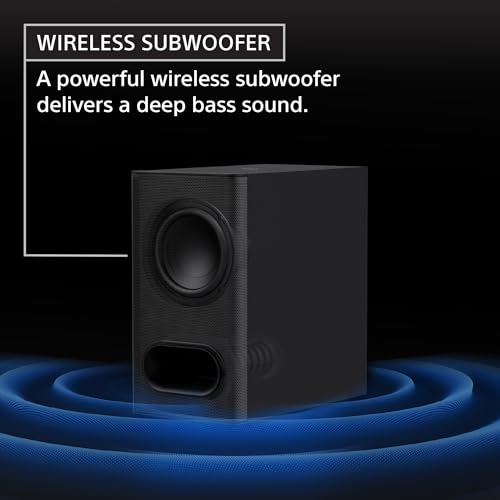
The Sony Theater Bar 6 includes bass response in its overall 350-watt system output rather than dedicating separate amplification to the subwoofer. The 6-inch driver is capable of impactful bass for most content, but reviews consistently note that it can be overwhelming at default settings and may struggle with the most demanding low-frequency content.
For rooms over 300 square feet or listeners who enjoy action movies and gaming, the Samsung's bass advantage is significant. For smaller spaces or dialogue-focused viewing, the Sony provides adequate low-end response without overwhelming the room.
Both systems excel at dialogue reproduction, but through different approaches. The Samsung Q990F uses a dedicated center channel combined with Active Voice Amplifier Pro, which analyzes ambient noise in real-time and boosts dialogue frequencies accordingly. When paired with Samsung TVs, Q-Symphony adds the TV's center speaker to create an even more focused vocal presentation.
The Sony Theater Bar 6 also features a dedicated center channel, enhanced by Sony's Clear Voice algorithms. These analyze incoming audio to identify speech patterns and apply targeted enhancement. With compatible BRAVIA TVs, Voice Zoom 3.0 uses the TV's acoustic surface technology to create additional vocal focus.
Both approaches work well, with the choice often coming down to which TV brand you own or prefer. Samsung TV owners will find Q-Symphony particularly compelling, while Sony BRAVIA owners get similar benefits from Voice Zoom integration.
The Samsung Q990F surprises many listeners with its musical capabilities. Despite being optimized for home theater, the system delivers balanced, detailed music reproduction with wide stereo imaging. The seven-band equalizer and multiple listening modes allow extensive customization, while support for high-resolution audio formats through Wi-Fi streaming makes it surprisingly capable for serious music listening.
The Sony Theater Bar 6 takes a more purist approach to music, emphasizing clean, natural reproduction over enhanced effects. Sony's tradition in audio engineering shows here—the system maintains good tonal balance and avoids the artificial coloration that affects some soundbars. However, customization options are more limited, and the lack of Wi-Fi streaming restricts high-resolution audio capabilities.
For listeners who want one system to handle both movies and music equally well, the Samsung offers more versatility. For those who prioritize natural music reproduction and plan to use the soundbar primarily for TV and casual music listening, the Sony's approach is more than adequate.
Modern soundbars need to integrate with smart homes and streaming services, and here the differences become pronounced. The Samsung Q990F includes built-in Alexa, compatibility with Google Assistant, and integration with Samsung's SmartThings ecosystem. Three HDMI 2.1 ports support 4K at 120Hz with HDR10+, making it ideal for current gaming consoles and future video standards.
Wi-Fi connectivity enables Spotify Connect, TIDAL Connect, Apple AirPlay 2, and Google Cast, while Roon Ready certification appeals to audiophiles with high-resolution music libraries. This connectivity makes the Samsung system genuinely future-proof for both home theater and streaming audio applications.
The Sony Theater Bar 6 offers more basic smart features, focusing on integration with Sony's ecosystem rather than broad compatibility. BRAVIA SYNC provides seamless control with Sony TVs, and the BRAVIA Connect app handles setup and basic customization. However, connectivity is limited to Bluetooth and basic streaming services—no Wi-Fi, no high-resolution format support, and only one HDMI input.
For users invested in smart home ecosystems or who want maximum connectivity flexibility, the Samsung offers clear advantages. For those seeking simple, reliable operation with minimal complexity, the Sony's focused approach may actually be preferable.
At the time of writing, the Samsung HW-Q990F costs approximately 2.5 times more than the Sony BRAVIA Theater Bar 6, but delivers nearly four times the channel count and includes physical rear speakers. From a pure performance-per-dollar calculation, both systems offer reasonable value within their respective market segments.
The Samsung's premium reflects its comprehensive feature set, advanced technology, and complete surround system inclusion. When compared to separating home theater systems with similar capabilities, the Q990F actually represents good value for users who want maximum performance without the complexity of an AV receiver and multiple speaker wire runs.
The Sony's value proposition centers on delivering substantial improvement over TV audio at a reasonable price point. While it can't match the Samsung's surround immersion or bass response, it provides excellent dialogue clarity, decent height effects, and clean design at a price that makes upgraded audio accessible to more users.
Your room size and primary usage patterns should heavily influence your decision. The Samsung Q990F is designed for medium to large rooms (300+ square feet) where its power output and genuine surround effects can be fully appreciated. In smaller spaces, the system's capabilities may be overkill, and placement of rear speakers could be challenging.
The Sony Theater Bar 6 works well in smaller to medium rooms where its more focused output won't overwhelm the space. The lack of rear speakers makes it ideal for apartments, smaller living rooms, or situations where family members object to additional speakers around the room.
Consider your primary content as well. Action movie enthusiasts, gamers, and those who frequently watch immersive content will appreciate the Samsung's surround capabilities and powerful bass response. Viewers who primarily watch dialogue-heavy content like dramas, news, and documentaries may find the Sony's clean, focused presentation more appropriate.
Choose the Samsung HW-Q990F if you want maximum home theater immersion and don't mind the higher price. This system excels for action movies, gaming, and creating genuinely cinematic experiences. The inclusion of rear speakers and advanced features makes it ideal for dedicated home theater rooms or large living spaces where audio quality is a priority.
The Samsung also makes sense if you own or plan to purchase Samsung TVs, as Q-Symphony integration provides unique benefits. Future-proofing is another consideration—the extensive connectivity and regular firmware updates suggest this system will remain relevant for years.
Choose the Sony BRAVIA Theater Bar 6 if you want significant audio improvement without the complexity or cost of a full surround system. This soundbar excels at dialogue clarity and provides decent immersive effects while maintaining a clean, minimalist aesthetic. It's ideal for smaller rooms, apartment living, or situations where simplicity and value take precedence over maximum performance.
The Sony also appeals to those who prefer gradual upgrades—rear speakers are available separately if you later decide you want fuller surround sound.
Both soundbars represent solid choices within their respective market segments. The Samsung Q990F delivers uncompromising performance for those willing to pay for it, while the Sony Theater Bar 6 provides excellent value for users seeking substantial improvement without premium complexity. Your choice should align with your room size, usage patterns, budget, and how much you value genuine surround immersion versus convenient simplicity.
| Samsung HW-Q990F | Sony BRAVIA Theater Bar 6 |
|---|---|
| Channel Configuration - Determines surround sound immersion level | |
| 11.1.4 channels with 23 total speakers (includes rear speakers) | 3.1.2 channels with 6 total speakers (soundbar + subwoofer only) |
| Physical Surround Sound - Key difference for home theater experience | |
| Yes, includes wireless rear speakers for true 360-degree audio | No, uses virtual surround processing from front-facing speakers |
| Dolby Atmos Implementation - How convincing overhead effects sound | |
| 4 up-firing channels (soundbar + rear speakers) for multi-point height | 2 up-firing channels in soundbar only for basic height effects |
| Subwoofer Power and Design - Impacts bass depth and room-filling capability | |
| Dual 8" force-canceling woofers, 300W dedicated power, AI distortion control | Single 6" driver, shared from 350W total system power |
| Smart TV Integration - Enhances dialogue and expands soundstage | |
| Q-Symphony with Samsung TVs (uses TV + soundbar speakers together) | Voice Zoom 3.0 with Sony BRAVIA TVs (AI dialogue enhancement) |
| HDMI Connectivity - Important for gaming and future-proofing | |
| 3 HDMI 2.1 ports (2 in, 1 eARC), supports 4K/120Hz, HDR10+ | 1 HDMI eARC port, no passthrough capability |
| Wireless Streaming - Determines music quality and service compatibility | |
| Wi-Fi, Bluetooth 5.3, AirPlay 2, Spotify/TIDAL Connect, Roon Ready | Bluetooth only, basic app control, limited streaming options |
| Room Calibration - Automatically optimizes sound for your space | |
| SpaceFit Sound Pro Plus (automatic acoustic analysis and adjustment) | Manual setup via app with basic room dimension input |
| Total System Power - Affects maximum volume and dynamic range | |
| 756W RMS (dedicated amplification per channel group) | 350W total system output (shared across all components) |
| Voice Assistant Integration - Smart home and hands-free control | |
| Built-in Alexa, Google Assistant compatible, SmartThings integration | Basic voice assistant compatibility through connected devices |
| Design Philosophy - Physical footprint and aesthetic approach | |
| Multi-component system requiring rear speaker placement | Streamlined 2-piece setup with minimalist design |
| Best Room Size - Where each system performs optimally | |
| Medium to large rooms (300+ sq ft) where surround effects shine | Small to medium rooms where virtual processing is adequate |
The Samsung HW-Q990F is significantly better for home theater use because it includes physical rear speakers that create true 360-degree surround sound. With 11.1.4 channels and 23 total speakers, effects genuinely move around and above you during action scenes. The Sony BRAVIA Theater Bar 6 uses virtual surround processing which can't match the immersion of actual rear speakers for movie watching.
For the most convincing surround sound experience, yes. The Samsung HW-Q990F includes wireless rear speakers that deliver authentic behind-you effects that virtual processing cannot replicate. The Sony BRAVIA Theater Bar 6 uses clever software to simulate surround effects from front-facing speakers, which works well but doesn't provide the same level of immersion as physical rear channels.
The Samsung HW-Q990F has superior bass with dual 8-inch force-canceling woofers and 300 watts of dedicated subwoofer power. This creates deeper, more controlled bass that can fill larger rooms. The Sony BRAVIA Theater Bar 6 has a 6-inch subwoofer that shares power from the total 350-watt system output, making it adequate for smaller spaces but less impactful overall.
The Samsung HW-Q990F has 11.1.4 channels meaning 11 main speakers, 1 subwoofer, and 4 up-firing height speakers distributed across the soundbar and rear speakers. The Sony BRAVIA Theater Bar 6 has 3.1.2 channels with 3 front speakers, 1 subwoofer, and 2 up-firing speakers all in the main soundbar. More channels generally mean more immersive and precise sound placement.
The Sony BRAVIA Theater Bar 6 is much easier to set up since it only requires placing the soundbar and subwoofer. The Samsung HW-Q990F requires finding optimal placement for rear speakers around your room, though they connect wirelessly. Both systems offer app-based setup, but Sony's two-component approach is simpler for most users.
Yes, both the Samsung HW-Q990F and Sony BRAVIA Theater Bar 6 work with any TV through HDMI or optical connections. However, each offers special features when paired with their respective TV brands - Samsung's Q-Symphony and Sony's Voice Zoom 3.0 provide enhanced dialogue and expanded soundstage when matched with compatible TVs.
The Sony BRAVIA Theater Bar 6 is ideal for small apartments because it doesn't require rear speaker placement and has a more compact footprint. Its virtual surround processing works well in smaller spaces where the Samsung HW-Q990F might be overkill and where placing rear speakers could be challenging or impractical.
Both the Samsung HW-Q990F and Sony BRAVIA Theater Bar 6 support Dolby Atmos for overhead sound effects. However, the Samsung delivers more convincing Atmos with four up-firing channels versus Sony's two, creating better height effects that truly sound like they're coming from above during compatible movies and shows.
The Sony BRAVIA Theater Bar 6 offers better value if you want significant audio improvement at a reasonable price point. The Samsung HW-Q990F costs significantly more but includes rear speakers and premium features that justify the price for serious home theater enthusiasts. Value depends on whether you prioritize maximum performance or budget-conscious improvement.
Sony does offer optional wireless rear speakers that can be purchased separately to upgrade the Sony BRAVIA Theater Bar 6 into a fuller surround system. However, the Samsung HW-Q990F includes rear speakers from the start, providing immediate true surround sound without needing additional purchases.
Both soundbars handle music well, but with different approaches. The Samsung HW-Q990F offers more customization with a 7-band equalizer and high-resolution streaming support, making it more versatile for serious music listening. The Sony BRAVIA Theater Bar 6 emphasizes clean, natural music reproduction with Sony's traditional balanced sound signature.
The Samsung HW-Q990F works best in medium to large rooms (300+ square feet) where its power and surround effects can be fully appreciated and rear speakers can be properly positioned. The Sony BRAVIA Theater Bar 6 is designed for small to medium rooms where its focused output won't overwhelm the space and virtual surround processing remains effective.
We've done our best to create useful and informative comparisons to help you decide what product to buy. Our research uses advanced automated methods to create this comparison and perfection is not possible - please contact us for corrections or questions. These are the sites we've researched in the creation of this article: rtings.com - crutchfield.com - sound-advice.online - samsung.com - soundandvision.com - samsung.com - whathifi.com - youtube.com - youtube.com - bestbuy.com - avsforum.com - content.syndigo.com - samsung.com - businessinsider.com - dolby.com - youtube.com - abcwarehouse.com - rtings.com - bestbuy.com - whathifi.com - youtube.com - youtube.com - sony.com - galaxus.at - helpguide.sony.net - audioadvice.com - electronics.sony.com - youtube.com - youtube.com - electronics.sony.com - helpguide.sony.net - whatgear.net - consumerreports.org

Privacy Policy
Terms and Conditions - Affiliate Policy
Home Security
© Copyright 2008-2026.
11816 Inwood Rd #1211, Dallas, TX 75244