













If you've ever watched a movie and felt like something was missing from the experience, you're not alone. That "something" is usually the audio—and that's where premium soundbars come into play. These sophisticated audio systems promise to transform your living room into a personal cinema, but choosing between options like the Sony BRAVIA Theater Bar 6 and Sonos Arc Ultra can feel overwhelming.
Both soundbars aim to deliver that cinematic experience you get at movie theaters, complete with sounds that seem to come from all around you and bass that you can actually feel. But they take completely different approaches to get there, and understanding these differences is crucial for making the right choice for your home.
Before diving into specifics, let's establish what we're dealing with here. Premium soundbars occupy that sweet spot between convenience and performance—they want to give you incredible sound without requiring you to become an audio engineer or fill your room with multiple speakers.
The key considerations for any premium soundbar include how well it reproduces different types of audio content, how it handles dialogue (which is surprisingly tricky), its ability to create that "surround sound" experience where audio seems to come from all directions, and how it integrates with your existing TV and entertainment setup. At the time of writing, you're typically looking at several hundred dollars for these systems, with the more sophisticated options commanding premium prices.
What makes these systems "premium" isn't just their price tag—it's their ability to process complex audio formats like Dolby Atmos (which creates height effects that make sounds appear to come from above you) and their sophisticated driver arrays that can simulate the experience of having speakers positioned all around your room.
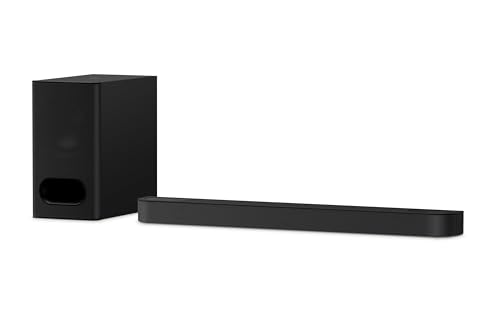
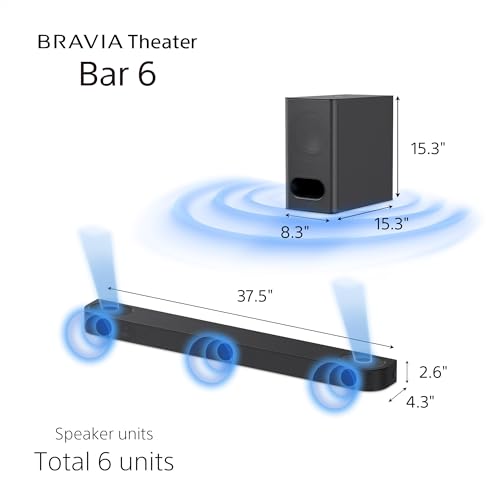
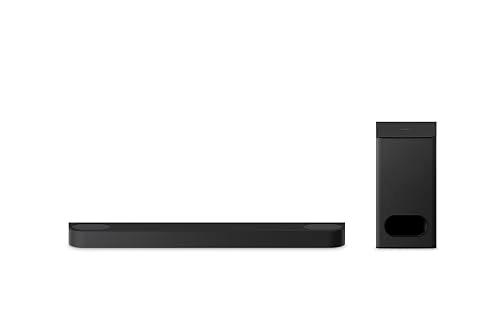
The fundamental difference between the Sony BRAVIA Theater Bar 6 and Sonos Arc Ultra lies in their basic design philosophy. Sony takes what I'd call the traditional approach: a soundbar paired with a separate wireless subwoofer. This two-piece system dedicates an entire separate speaker box to handling low-frequency sounds (bass), which typically means more powerful, room-shaking effects.
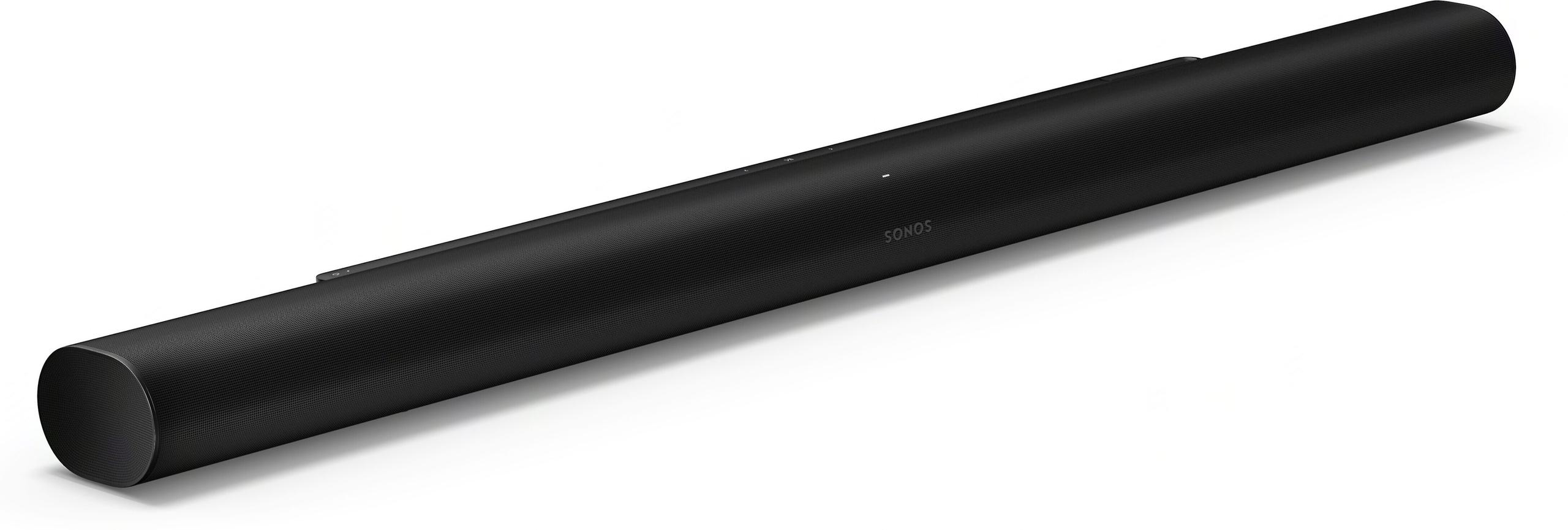
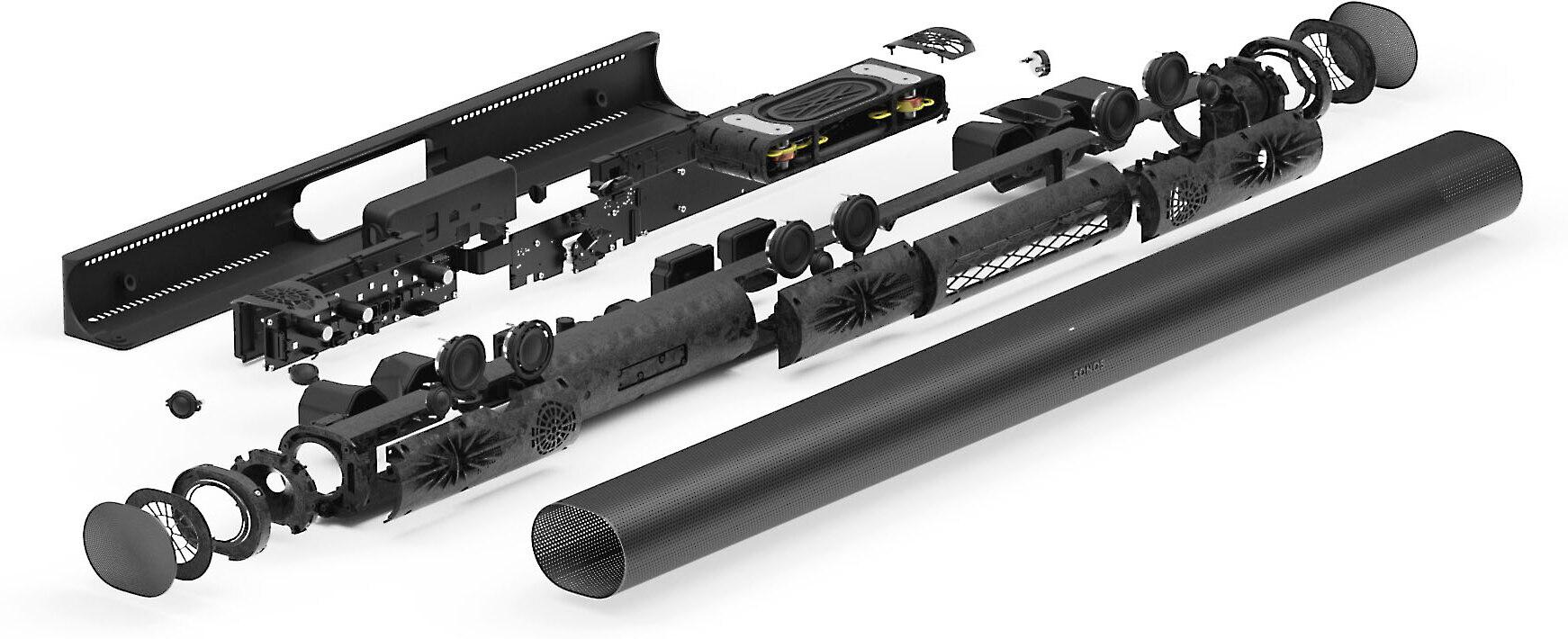
Sonos, on the other hand, has gone all-in on the single-unit approach with the Arc Ultra. Released in 2024, this soundbar represents a significant leap forward in their engineering, cramming 14 individual drivers (speaker elements) into one sleek package. This includes their revolutionary Sound Motion technology—essentially a new type of bass driver that can produce deeper, more controlled low-end frequencies from a much smaller space than traditional subwoofer designs.
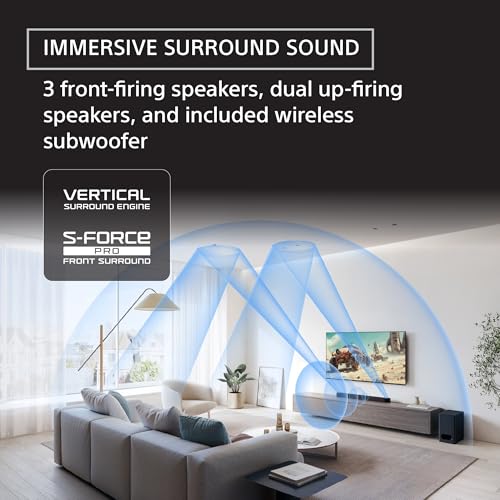
The Sony BRAVIA Theater Bar 6, which arrived as part of Sony's 2024 theater lineup, follows their established 3.1.2 channel configuration. What this means is three front-facing speakers (left, center, right), one subwoofer, and two upward-firing speakers for height effects. It's a proven formula that prioritizes raw impact and dramatic effects.
This is probably where you'll notice the biggest difference between these two systems, and it comes down to physics. The Sony BRAVIA Theater Bar 6 includes a dedicated wireless subwoofer with a 6-inch driver—a separate box designed specifically to move lots of air and create those low-frequency waves you feel in your chest during action scenes.
When I say "feel," I mean it literally. During explosion scenes or when a T-Rex stomps across the screen, that dedicated subwoofer can create physical sensations that you experience as much through your body as your ears. The separate subwoofer also gives you flexibility in placement—you can position it where it sounds best in your specific room, which can make a substantial difference in bass performance.
The Sonos Arc Ultra, meanwhile, achieves impressive bass response through its built-in Sound Motion woofer. This isn't your typical bass driver—Sonos developed a dual-membrane design that essentially does the work of a much larger, traditional subwoofer while fitting inside the soundbar itself. The result is bass that's more controlled and precise, with better "attack and decay" (meaning bass notes start and stop more cleanly), but it can't quite match the raw, room-filling presence of a dedicated subwoofer.
For home theater use, this difference is significant. If you're primarily watching action movies, superhero films, or anything with dramatic sound effects, the Sony will likely give you more of that visceral, theatrical experience. But if you listen to a lot of music or prefer a more balanced approach where the bass doesn't overwhelm other frequencies, the Sonos might be more to your liking.
Clear dialogue reproduction is absolutely critical for any soundbar, yet it's surprisingly challenging to get right. Both systems approach this differently, and both do it well.
The Sony BRAVIA Theater Bar 6 uses a dedicated center channel speaker—essentially a driver specifically assigned to handle dialogue and vocal frequencies. This is combined with Sony's Clear Voice algorithms and Voice Mode, which boost speech frequencies and can make dialogue cut through even during loud action scenes. If you pair it with a compatible Sony BRAVIA TV, you get access to Voice Zoom 3.0, which actually uses your TV's built-in speakers in combination with the soundbar to further enhance dialogue clarity.
The Sonos Arc Ultra takes a more sophisticated approach with multiple drivers working together to create precise dialogue imaging. Its Speech Enhancement feature offers three different levels of dialogue boosting, and the AI-powered processing can intelligently separate voice frequencies from background sounds. In my experience, the Sonos tends to excel at revealing subtle details in dialogue—things like room tone, breath sounds, or the slight echo that tells you a character is speaking in a large space.
For home theater applications, both perform admirably, but they have different strengths. The Sony tends to make dialogue more prominent and obvious, which can be helpful if you struggle to hear speech or often use subtitles. The Sonos provides more nuanced dialogue reproduction that maintains the natural character of voices while still ensuring clarity.
Both soundbars support Dolby Atmos, but their approaches to creating height effects—sounds that seem to come from above you—are quite different.
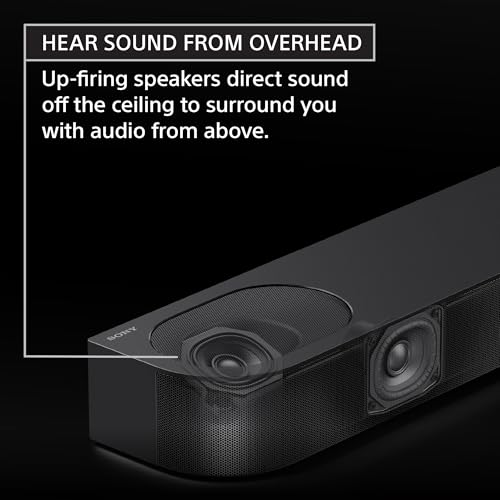
The Sony BRAVIA Theater Bar 6 includes dedicated upward-firing speakers. These are actual drivers pointed toward your ceiling that bounce sound off the surface above you to create the illusion of overhead audio. When properly set up (you need a relatively flat, reflective ceiling), this approach can create quite dramatic height effects. Helicopter flyovers, rain, or debris falling from above can feel remarkably convincing.
The Sonos Arc Ultra achieves its 9.1.4 Dolby Atmos simulation through clever positioning and processing of its 14 drivers. Rather than relying solely on ceiling reflections, it uses precisely angled drivers and sophisticated digital processing to create a wider, more immersive soundstage. The height effects might be more subtle than the Sony's, but the overall spatial presentation often feels more cohesive and natural.
In practical home theater use, the Sony's approach tends to create more obvious "wow" moments—you'll definitely notice when something flies overhead. The Sonos creates a more enveloping experience where the height effects integrate more seamlessly into the overall soundscape.
While both systems are primarily designed for home theater use, their musical performance reveals important differences in their overall audio character.
The Sony BRAVIA Theater Bar 6 can struggle with music, particularly acoustic genres or anything that requires subtlety. Its bass response, while impressive for movies, can become "woolly and overenthusiastic" with music, overwhelming midrange frequencies where vocals and most instruments live. It's clearly tuned for the dramatic impact that enhances action movies rather than the balanced presentation that serves music well.
The Sonos Arc Ultra shines when it comes to musical reproduction. Its more balanced frequency response, improved driver integration, and precise bass control make it genuinely enjoyable for listening to everything from classical to hip-hop. The system maintains its composure at higher volumes and reveals musical details that the Sony might gloss over.
This difference matters more than you might initially think. Even if you're primarily buying a soundbar for movie watching, you'll likely find yourself streaming music, watching concert videos, or listening to the soundtracks of shows and movies. A system that handles music well will be more versatile and satisfying in the long run.
The Sonos Arc Ultra represents a significant technological leap forward for Sonos. Most notably, it's their first soundbar to include Bluetooth connectivity—a feature that many users had been requesting for years. This adds considerable flexibility, allowing you to stream audio directly from phones, tablets, or other devices without requiring a Wi-Fi connection.
The Sound Motion bass technology deserves special attention. Traditional subwoofers work by moving a large cone back and forth to push air and create sound waves. Sonos's dual-membrane approach essentially doubles the effective surface area while reducing the physical size required. The result is bass that's both more powerful and more controlled than what you'd expect from such a compact driver.
The Arc Ultra also includes improved Trueplay room tuning, which uses your smartphone's microphone to measure how sound reflects around your room and automatically adjusts the soundbar's output accordingly. This feature now works with both iOS and Android devices, making the optimization process accessible to more users.
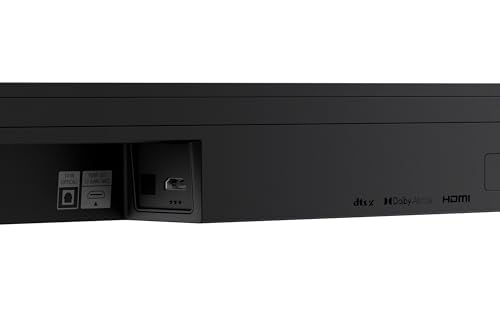
The Sony BRAVIA Theater Bar 6 focuses on more traditional but effective technologies. Its X-Balanced drivers use a rectangular shape rather than the typical circular design, increasing the surface area and theoretically improving sound dispersion. The system integrates deeply with Sony BRAVIA TVs through BRAVIA SYNC, allowing unified control and settings management through your TV's interface.
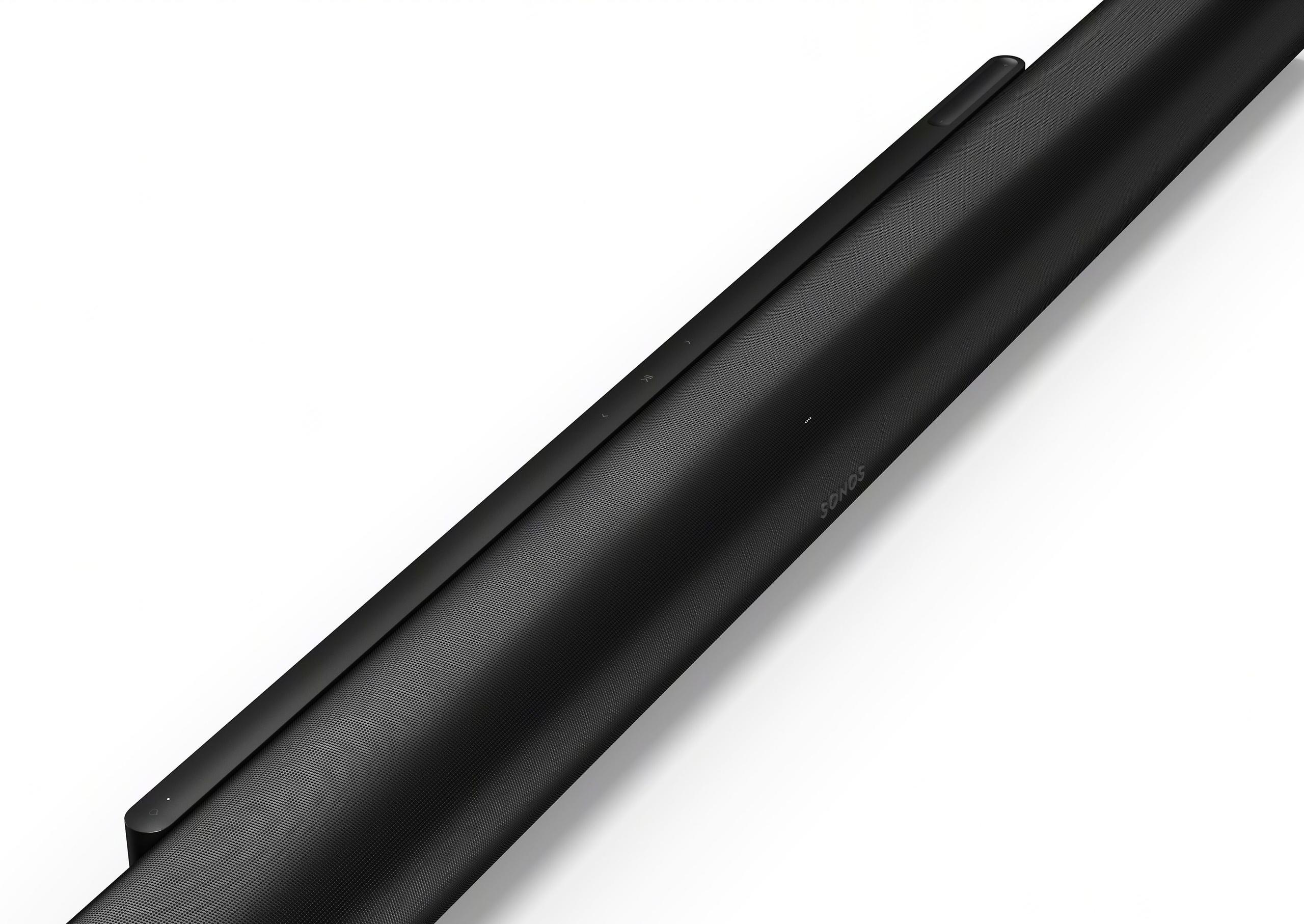
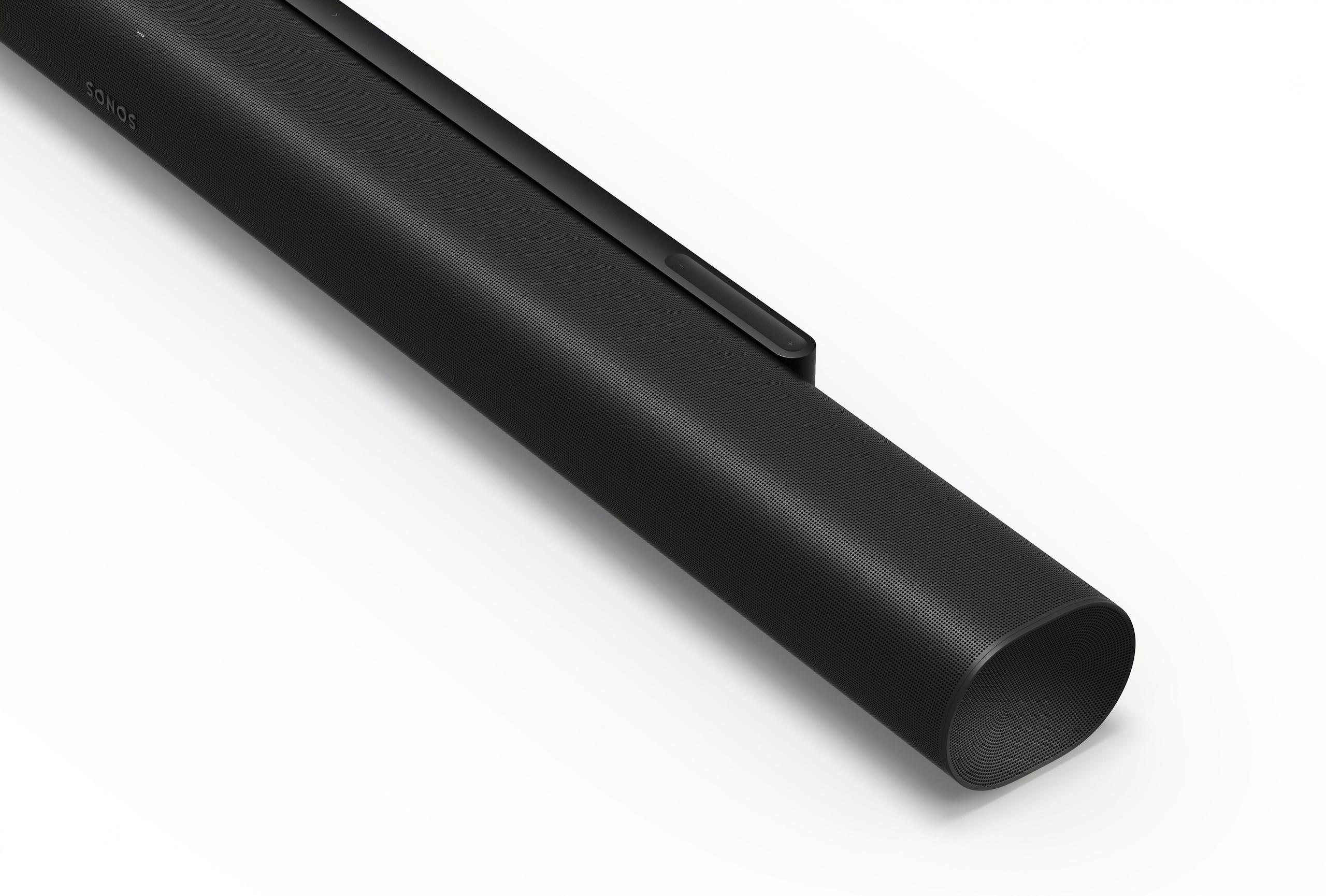
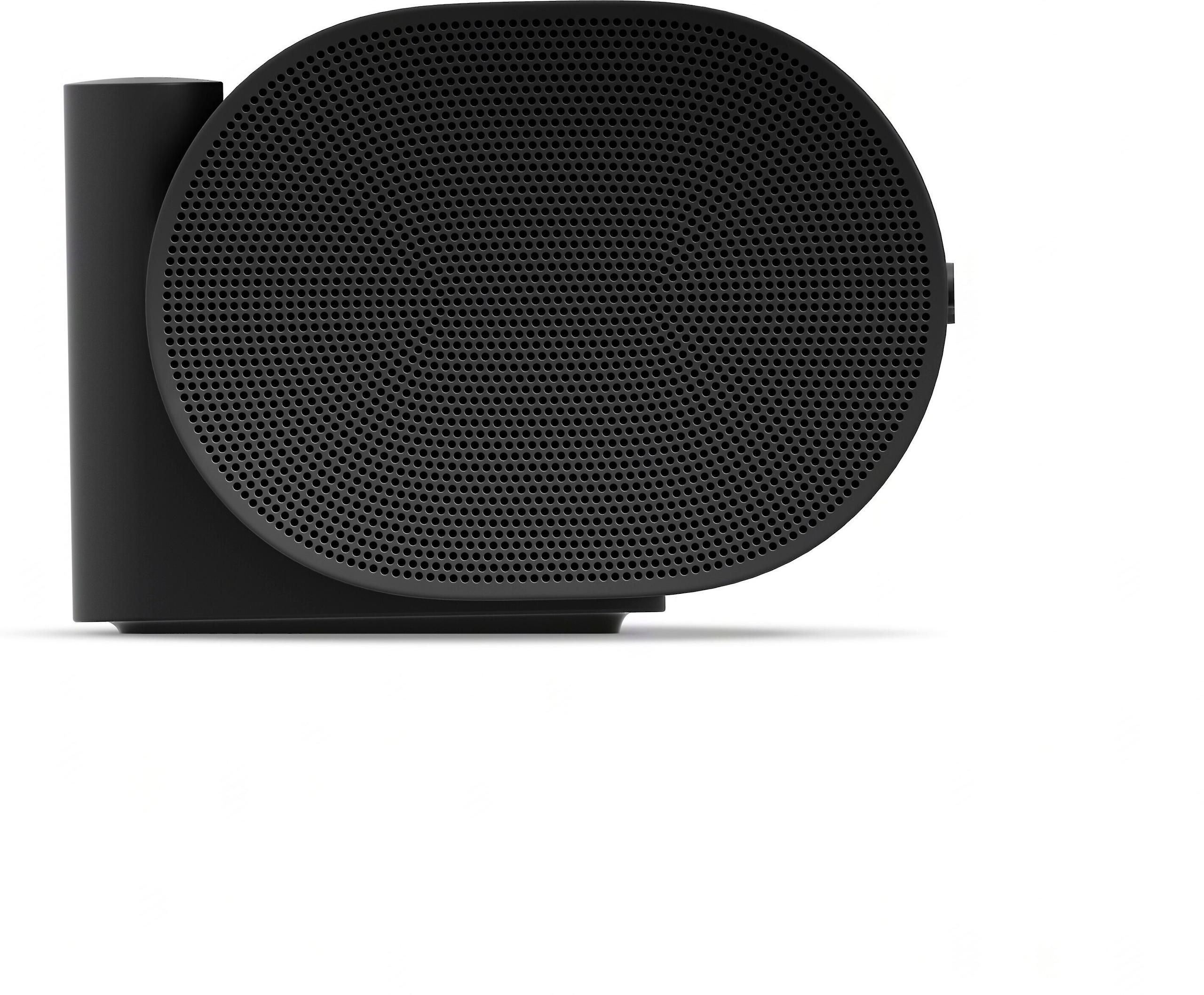
The aesthetic and practical differences between these systems can significantly impact your daily experience. The Sonos Arc Ultra presents a remarkably clean, single-unit solution. At 46 inches wide, it fits under most modern TVs while maintaining an elegant, understated appearance. The build quality is exceptional, with premium materials and tight tolerances that justify its positioning as a luxury audio product.
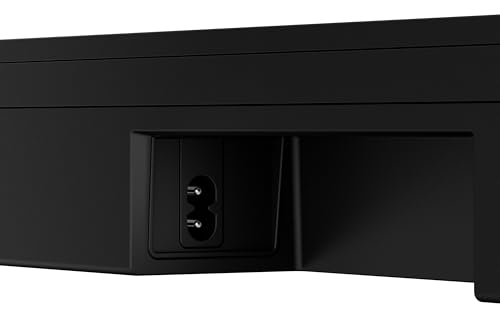
The Sony BRAVIA Theater Bar 6 requires more consideration in terms of placement and room layout. The soundbar itself is compact and unobtrusive, but you'll need to find appropriate placement for the wireless subwoofer. While this might seem like a disadvantage, it actually provides flexibility—you can position the subwoofer where it sounds best in your room, which might not be directly under your TV.
For home theater installations, both systems work well, but they serve different preferences. If you value a clean, minimalist setup with everything contained in a single unit, the Sonos is clearly superior. If you don't mind the additional component and prefer the performance benefits of a dedicated subwoofer, the Sony's approach has merit.
At the time of writing, there's a significant price difference between these systems, with the Sonos Arc Ultra commanding a substantial premium over the Sony BRAVIA Theater Bar 6. This price gap raises important questions about value and what you're actually getting for the additional investment.
The Sony delivers impressive performance per dollar, particularly if your priorities align with what it does best—dramatic movie sound with powerful bass and clear height effects. For many home theater enthusiasts, this represents excellent value, especially considering its compatibility with Sony's broader BRAVIA ecosystem.
The Sonos justifies its premium pricing through superior engineering, build quality, and versatility. Its ability to serve as both an excellent home theater solution and a high-quality music system, combined with its integration into Sonos's multi-room ecosystem, makes it a more comprehensive long-term investment.
Consider also the upgrade path. Sonos regularly updates their products with new features through software updates, and the Arc Ultra can be expanded with additional Sonos speakers and subwoofers as your needs grow. The Sony system is more limited in terms of expandability and future enhancement.
The choice between these soundbars ultimately comes down to your priorities, room setup, and how you plan to use the system.
Choose the Sony BRAVIA Theater Bar 6 if you're primarily focused on home theater performance, want maximum bass impact for your budget, don't mind a two-component setup, and especially if you own or plan to purchase a Sony BRAVIA TV. It's also the better choice if your content consumption leans heavily toward action movies, sports, and other material where dramatic sound effects enhance the experience.
The Sonos Arc Ultra makes more sense if you want a premium all-in-one solution that excels at both movies and music, value superior build quality and engineering, plan to use Bluetooth connectivity regularly, or want to integrate into a broader multi-room audio system. It's also the clear choice if you prefer subtle sophistication over dramatic impact, or if your living space demands the cleanest possible aesthetic.
Both systems represent excellent value within their respective market segments, but they serve distinctly different user preferences. The Sony prioritizes impact and drama, while the Sonos emphasizes refinement and versatility. Understanding which approach better matches your needs and preferences will guide you toward the right choice for your home theater setup.
| Sony BRAVIA Theater Bar 6 | Sonos Arc Ultra |
|---|---|
| Channel Configuration - Determines surround sound capabilities | |
| 3.1.2 channels with separate wireless subwoofer | 9.1.4 channels in single unit with 14 drivers |
| Bass Response - Critical for movie impact and music quality | |
| Dedicated 6-inch wireless subwoofer for room-shaking bass | Built-in Sound Motion woofer with dual-membrane technology |
| Dolby Atmos Implementation - Creates overhead sound effects | |
| Dedicated upfiring speakers for pronounced height effects | Sophisticated driver array with precise angle positioning |
| Design Philosophy - Affects placement flexibility and aesthetics | |
| Two-piece system (soundbar + subwoofer) | All-in-one sleek unit (46" wide, premium build) |
| Connectivity Options - Impacts device compatibility and streaming | |
| HDMI eARC, optical input, Bluetooth, BRAVIA SYNC | HDMI eARC, WiFi, Bluetooth 5.3, AirPlay 2, multi-room audio |
| Voice Enhancement - Essential for clear dialogue | |
| Dedicated center channel with Clear Voice and Voice Zoom 3.0 | AI-powered Speech Enhancement with 3 selectable levels |
| Room Optimization - Helps sound adapt to your space | |
| Manual setup via BRAVIA Connect app | Automatic Trueplay tuning for iOS and Android |
| Musical Performance - Important if you stream music frequently | |
| Bass-heavy tuning can overwhelm music playback | Balanced frequency response excellent for all music genres |
| Expandability - Future upgrade potential | |
| Limited expansion options within Sony ecosystem | Full Sonos ecosystem integration with wireless expansion |
| Smart Features - Modern convenience factors | |
| BRAVIA TV integration, basic app control | Voice control (Alexa/Sonos), advanced app features, regular updates |
| Build Quality - Affects longevity and premium feel | |
| Solid construction with functional design | Premium materials and exceptional build quality |
| Value Positioning - Performance per dollar consideration | |
| Strong performance for the price point, especially for movies | Premium pricing justified by versatility and engineering innovation |
For pure movie watching, the Sony BRAVIA Theater Bar 6 delivers more dramatic impact with its dedicated wireless subwoofer and pronounced height effects from upfiring speakers. The separate subwoofer creates room-shaking bass that's ideal for action movies. The Sonos Arc Ultra offers more refined and balanced movie audio with sophisticated 9.1.4 channel processing, but may lack the raw power some home theater enthusiasts prefer.
The Sony BRAVIA Theater Bar 6 includes a wireless subwoofer in the box, providing powerful bass without additional purchases. The Sonos Arc Ultra has built-in Sound Motion bass technology that eliminates the need for a separate subwoofer for most users, though Sonos does offer optional wireless subwoofers for those wanting even more bass extension.
The Sonos Arc Ultra significantly outperforms the Sony BRAVIA Theater Bar 6 for music with its balanced frequency response and precise driver control. The Sony's bass-heavy tuning that works well for movies can overwhelm musical content, while the Sonos maintains clarity across all music genres from classical to hip-hop.
Both excel at dialogue but use different approaches. The Sony BRAVIA Theater Bar 6 uses a dedicated center channel with Clear Voice technology and Voice Zoom 3.0 when paired with Sony TVs. The Sonos Arc Ultra features AI-powered Speech Enhancement with three selectable levels, often providing more nuanced and natural-sounding dialogue reproduction.
The Sonos Arc Ultra offers simpler installation as a single unit with automatic Trueplay room tuning via smartphone. The Sony BRAVIA Theater Bar 6 requires positioning both the soundbar and wireless subwoofer, plus manual room setup through the BRAVIA Connect app, making it slightly more complex but offering subwoofer placement flexibility.
The Sonos Arc Ultra works universally with any TV that has HDMI ARC/eARC connectivity and offers broad compatibility across brands. The Sony BRAVIA Theater Bar 6 works with all TVs but provides enhanced integration features like BRAVIA SYNC and Voice Zoom 3.0 specifically when paired with Sony BRAVIA televisions.
The Sony BRAVIA Theater Bar 6 creates more obvious and dramatic overhead effects with its dedicated upfiring speakers, making helicopter flyovers and rain effects particularly convincing. The Sonos Arc Ultra delivers more sophisticated spatial audio with its 14-driver array, creating a wider and more immersive overall soundstage with subtler height integration.
The Sonos Arc Ultra offers extensive expandability within the Sonos ecosystem, allowing you to add wireless rear speakers, subwoofers, and create multi-room audio setups. The Sony BRAVIA Theater Bar 6 has limited expansion options, though Sony does offer compatible wireless rear speakers as optional accessories.
The Sonos Arc Ultra provides more comprehensive connectivity with WiFi, Bluetooth 5.3, AirPlay 2, and multi-room streaming capabilities. The Sony BRAVIA Theater Bar 6 offers HDMI eARC, optical input, and Bluetooth, with strong BRAVIA TV integration but fewer wireless streaming options overall.
The Sonos Arc Ultra is a single 46-inch unit with premium build quality and sleek aesthetics that fit cleanly under most TVs. The Sony BRAVIA Theater Bar 6 consists of a compact soundbar plus a separate wireless subwoofer, requiring more space but offering flexibility in subwoofer placement for optimal room acoustics.
The Sony BRAVIA Theater Bar 6 typically offers strong performance per dollar, especially for movie-focused users who want powerful bass and dramatic effects. The Sonos Arc Ultra commands a premium but justifies it through superior build quality, musical performance, extensive features, and long-term ecosystem expandability.
The Sonos Arc Ultra includes built-in voice control through Amazon Alexa or Sonos Voice Control, plus advanced smart features and regular software updates. The Sony BRAVIA Theater Bar 6 focuses more on TV integration and can be controlled through compatible Sony TV remotes via BRAVIA SYNC, but has more limited standalone smart features.
We've done our best to create useful and informative comparisons to help you decide what product to buy. Our research uses advanced automated methods to create this comparison and perfection is not possible - please contact us for corrections or questions. These are the sites we've researched in the creation of this article: rtings.com - bestbuy.com - whathifi.com - youtube.com - youtube.com - sony.com - galaxus.at - helpguide.sony.net - audioadvice.com - electronics.sony.com - youtube.com - youtube.com - electronics.sony.com - helpguide.sony.net - whatgear.net - consumerreports.org - bestbuy.com - shopjetson.com - youtube.com - ign.com - crutchfield.com - dowtechnologies.com - sonos.com - appleinsider.com - pcrichard.com - clefdesol.com - sonos.com - businessinsider.com - audioadvice.com - en.community.sonos.com

Privacy Policy
Terms and Conditions - Affiliate Policy
Home Security
© Copyright 2008-2026.
11816 Inwood Rd #1211, Dallas, TX 75244