


When your TV's built-in speakers make dialogue sound like it's coming from inside a tin can, it's time for an upgrade. The soundbar market has exploded over the past decade, offering everything from simple stereo bars to complex systems that rival traditional home theater setups. Today we're comparing two fundamentally different approaches to better TV audio: the Ultimea Aura A40 U2601, which uses actual surround speakers placed around your room, and the Denon DHT-S517, which relies on advanced audio processing to create virtual surround sound.
Both systems launched in recent years during the streaming boom—the Ultimea Aura A40 arrived as part of the brand's push into premium features at budget prices, while the Denon DHT-S517 debuted in 2022 as Denon's answer to the growing demand for compact Dolby Atmos systems. Since their releases, we've seen the soundbar market become increasingly sophisticated, with features like app control and room calibration becoming standard rather than premium add-ons.
The core challenge facing any soundbar is physics: how do you create room-filling, directional sound from what's essentially a long, thin box sitting under your TV? Traditional home theater systems solve this by placing speakers around the room—left, right, center, surrounds, and subwoofer—but most people don't want five or seven separate speakers cluttering their living space.
This is where the two systems we're comparing take radically different approaches. The Ultimea Aura A40 says "let's include actual surround speakers, but make them small and manageable." The Denon DHT-S517 counters with "let's use sophisticated processing and precise driver placement to simulate surround sound without extra speakers."
Both philosophies have merit, but they create very different user experiences. Virtual surround processing has improved dramatically since the early 2010s, when it often sounded artificial and unconvincing. Modern systems like the Denon use psychoacoustic principles—basically tricks that exploit how our brains process directional sound—to create surprisingly convincing surround effects. Meanwhile, systems with physical surround speakers like the Ultimea offer authentic directional audio but require more complex setup and room consideration.
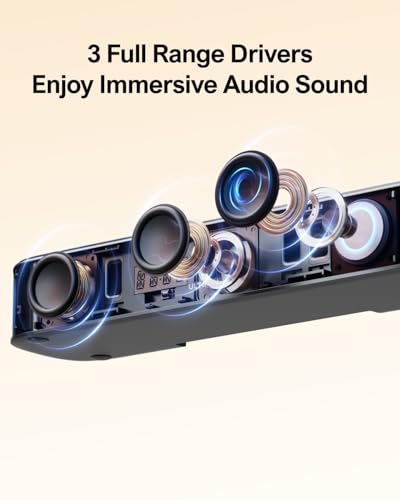
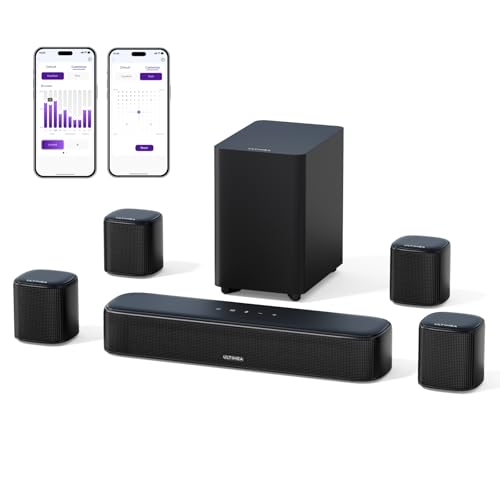
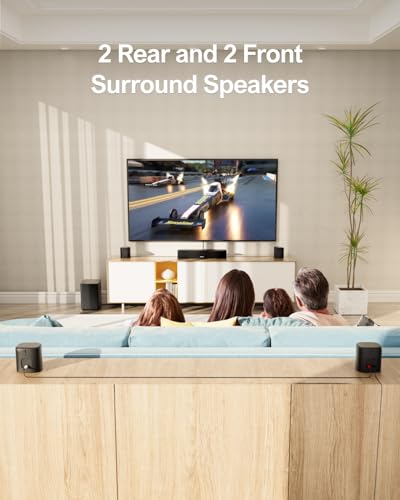
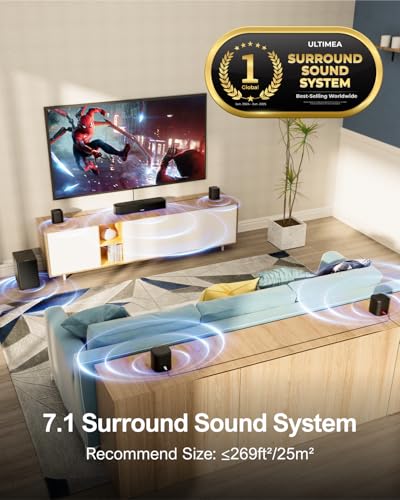
The Ultimea Aura A40 U2601 takes the "let's include real surround speakers" approach to its logical conclusion. This 7.1 virtual surround system includes not just a main soundbar and subwoofer, but four additional surround speakers: two front and two rear. At first glance, this might seem like it defeats the purpose of buying a soundbar instead of a full surround system, but Ultimea has kept these additional speakers small and manageable.
The system's SurroundX technology processes audio to create what the company claims is 99.99% detail accuracy in sound movement. While that specific number is marketing speak, the underlying concept is sound: when you have actual speakers positioned around your listening area, you can create genuine directional effects that virtual processing simply cannot match. When a helicopter flies overhead in a movie, you hear it move from speaker to speaker around the room, creating a convincing sense of motion.
What really sets the Ultimea system apart is its customization capabilities. The ULTIMEA Smart App provides access to 121 preset EQ matrices covering everything from Bass and Pop to Classical and Rock. This level of fine-tuning was practically unheard of in budget soundbars just a few years ago. The 10-band equalizer lets you adjust specific frequency ranges—maybe you want more punch in the 80Hz range for action movie explosions, or you need to tame harsh vocals around 3kHz.
The BassMX technology optimizes low-frequency output, working with the included 4-inch subwoofer to deliver what our research suggests is well-controlled bass that doesn't distort even at higher volumes. This is crucial because many budget systems suffer from boomy, poorly integrated bass that overwhelms dialogue and music.
One particularly clever feature is the adjustable surround levels with 13 different settings. This addresses a common problem with surround systems: the rear speakers either overpower the front soundstage or disappear entirely. Being able to fine-tune this balance means you can adapt the system to your room's acoustics and your personal preferences.
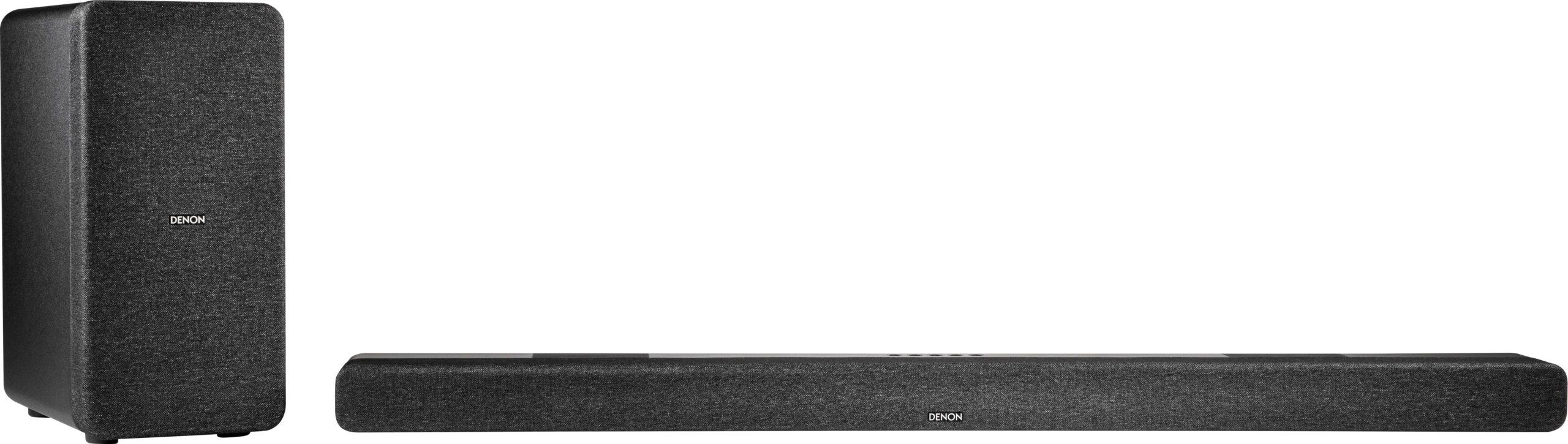
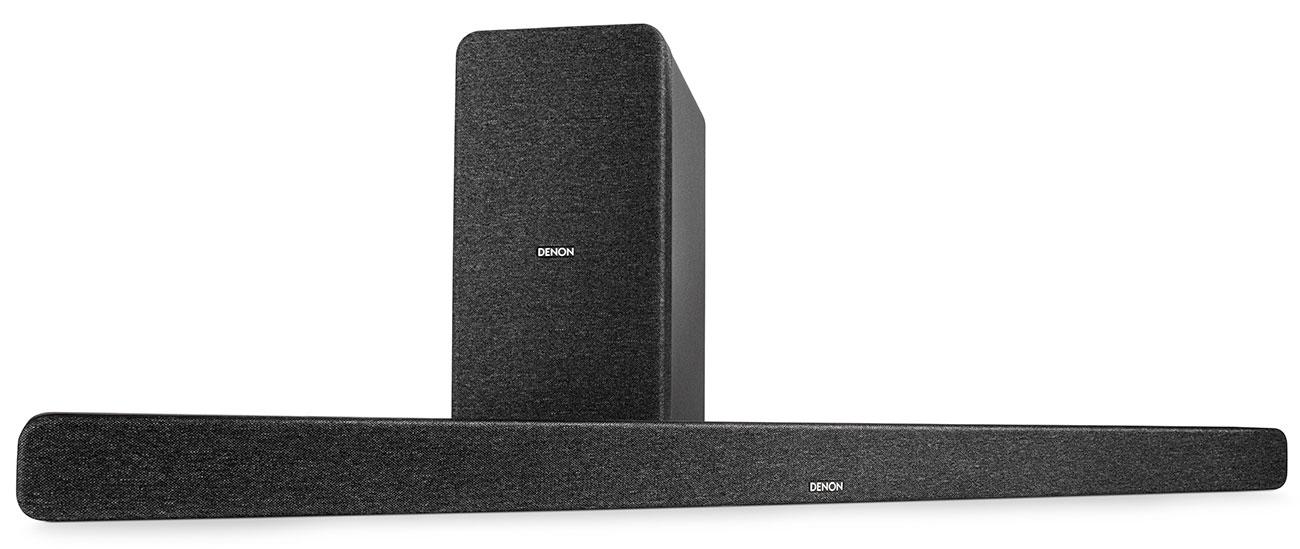
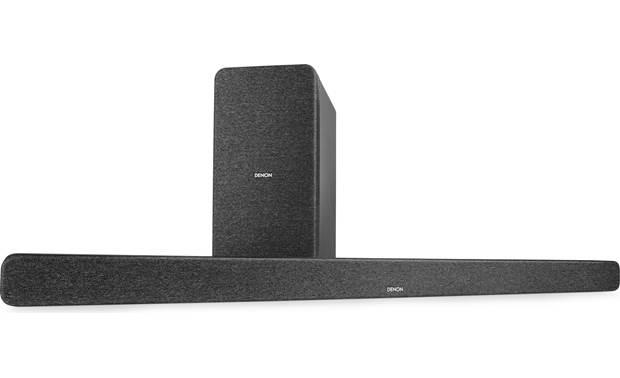
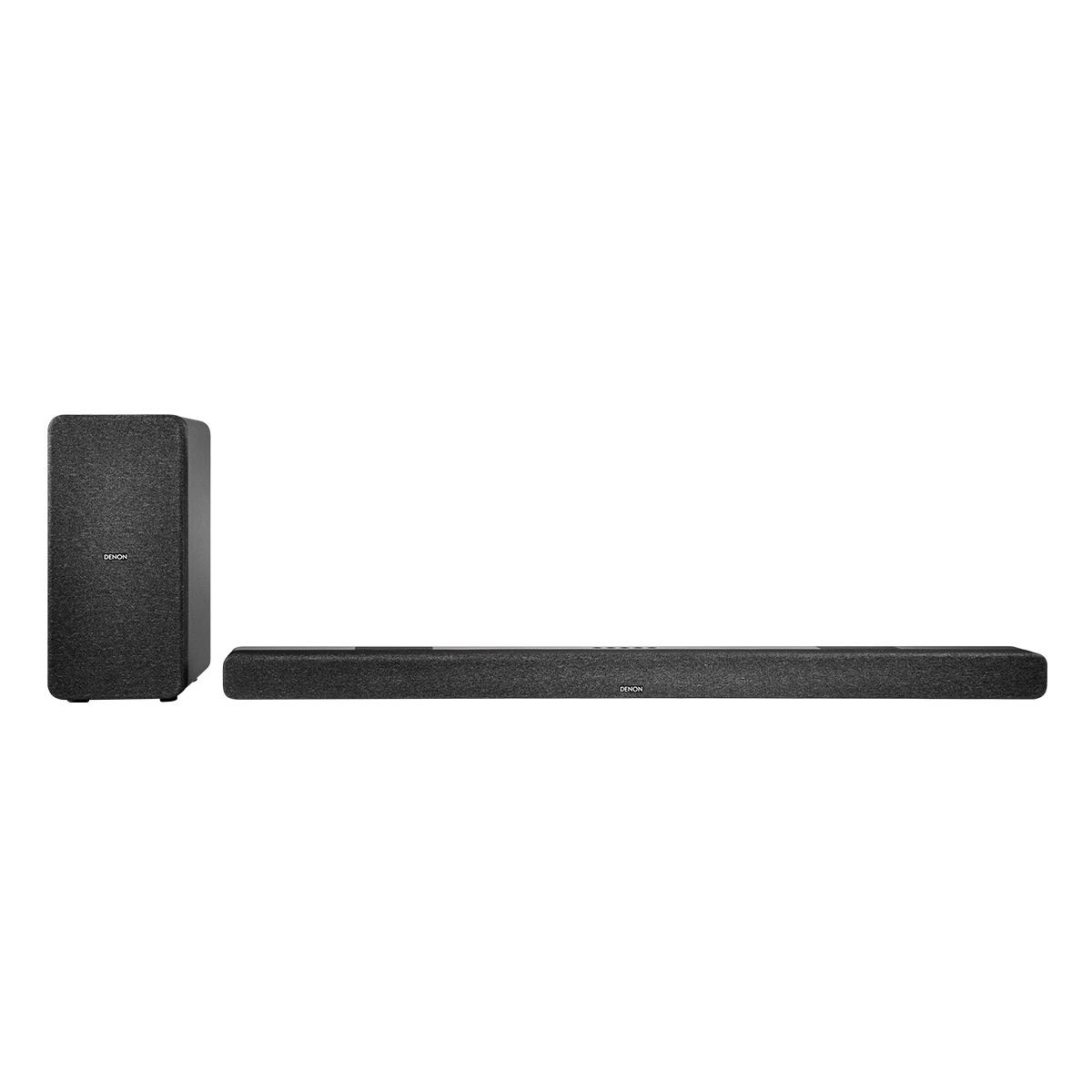
The Denon DHT-S517 represents a more traditional soundbar approach, but executed with professional-grade engineering. As a 3.1.2 channel system, it includes left, center, and right channels in the main bar, plus two upward-firing speakers for Dolby Atmos height effects. The ".2" in 3.1.2 refers to those height channels, which bounce sound off your ceiling to create the sensation of overhead audio.
Denon's decades of experience in home audio show throughout this system. The seven-driver array includes dedicated components for different frequency ranges: 1-inch dome tweeters handle high frequencies with clarity, while 4.75-inch racetrack-shaped midrange drivers provide the meat of the sound spectrum. This driver specialization, common in high-end speakers but rare in budget soundbars, allows each component to operate in its optimal frequency range.
The Dolby Atmos implementation deserves special attention. Atmos is an object-based audio format that treats sounds as discrete objects moving through three-dimensional space, rather than just assigning them to specific channels. The Denon system's upward-firing drivers create height effects that the Ultimea simply cannot replicate—imagine rain falling from above or a plane passing overhead with convincing vertical movement.
The Dialogue Enhancer feature addresses one of the most common complaints about modern TV and movie audio: mumbled, hard-to-understand dialogue. This feature can boost vocal frequencies independently of the overall volume, with three different intensity levels. It's particularly useful for streaming content, which often has inconsistent audio mixing compared to theatrical releases.
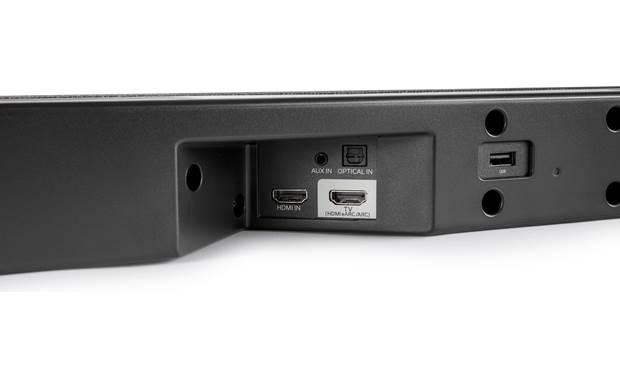
Connectivity is where the Denon really shows its premium positioning. The HDMI 2.0b input supports full 4K/60Hz pass-through with HDCP 2.2 and HDR10/Dolby Vision compatibility. This means you can connect a 4K Blu-ray player or gaming console to the soundbar, then run a single cable to your TV while maintaining full video quality. The eARC (enhanced Audio Return Channel) support simplifies connections even further by allowing the TV to send high-quality audio back to the soundbar through the same HDMI cable.
The fundamental difference between these systems becomes immediately apparent when you consider surround sound performance. The Ultimea Aura A40 creates what reviewers consistently describe as genuine 360-degree sound fields. When properly positioned, the four surround speakers can pinpoint effects around the listening area with precision that virtual processing struggles to match.
However, this comes with caveats. The surround speakers need proper positioning—ideally at ear level and angled toward the listening position. Room acoustics matter significantly; hard surfaces like tile floors and bare walls can create unwanted reflections, while heavily furnished rooms might absorb too much sound. The wired connections for the front speakers and mixed wired/wireless setup for the rear speakers adds complexity that some users find frustrating.
The Denon DHT-S517 takes a different approach that's both more limited and more sophisticated. Its virtual surround processing won't create the same pinpoint directional effects as physical speakers, but it doesn't require speaker placement around the room. The Dolby Atmos height channels add a dimension that the Ultimea system can't provide—true overhead effects that enhance immersion in compatible content.
Based on our analysis of user feedback, the Ultimea excels in creating wide soundstages and convincing left-to-right movement, while the Denon provides more subtle but arguably more sophisticated processing that works better with a wider variety of content.
Both systems include subwoofers, but they approach bass differently. The Ultimea's wired subwoofer uses BassMX technology to optimize low-frequency output. User reports suggest it delivers powerful, room-filling bass that doesn't distort, even at high volumes. The 4-inch driver might seem small, but the system's tuning appears to extract maximum performance from the available hardware.
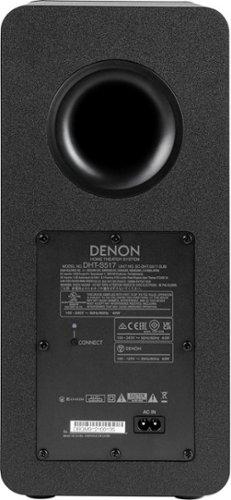
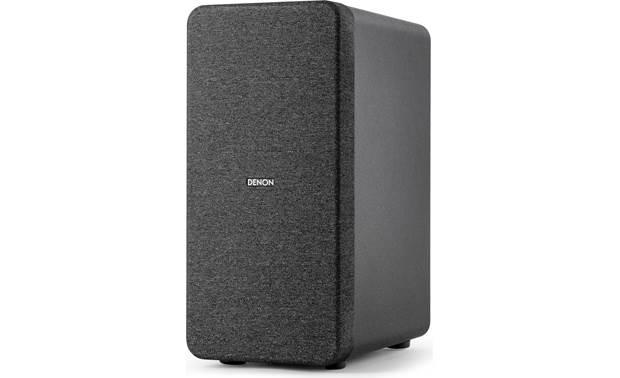
The Denon's wireless subwoofer offers more flexibility in placement, which is crucial for bass performance. The 5.25-inch driver powered by a 100-watt amplifier provides what reviewers describe as tight, detailed bass that integrates smoothly with the main soundbar. The wireless connection means you can position it for optimal room loading without worrying about cable runs.
From a technical standpoint, subwoofer placement dramatically affects bass quality. The ability to position the Denon's subwoofer away from the TV stand—perhaps in a corner where boundary loading enhances output, or away from walls that might cause boomy resonances—gives it a significant advantage in many rooms.
Clear dialogue is arguably the most important performance metric for most users. The Ultimea system addresses this through its Voice mode and EQ customization. The 10-band equalizer allows precise adjustment of midrange frequencies where vocals live, typically between 1-4kHz. This flexibility means you can tailor the sound specifically for your room and hearing preferences.
The Denon DHT-S517 takes a more targeted approach with its Dialogue Enhancer feature. Rather than broad EQ adjustments, this feature specifically boosts vocal frequencies without affecting the overall tonal balance. The three intensity levels (Low, Medium, High) provide enough adjustment range for most situations, and the dedicated center channel driver ensures dialogue remains anchored to the screen.
Professional reviews consistently praise the Denon's dialogue clarity, particularly noting that voices remain clear even during complex action scenes with lots of background noise. The Ultimea system can achieve similar results through EQ adjustment, but it requires more user involvement to optimize.
When it comes to music reproduction, these systems reveal their different design philosophies. The Ultimea Aura A40 offers 121 preset EQ matrices covering virtually every musical genre you can imagine. This extensive customization means you can optimize the sound for everything from acoustic jazz to electronic dance music. The physical surround speakers can create an expansive soundstage when playing stereo music, spreading the sound across a wider area than traditional soundbars.
The Denon DHT-S517 includes a Pure Mode that eliminates all processing for uncolored music reproduction. This reflects Denon's audiophile heritage—sometimes the best processing is no processing at all. The seven-driver array with dedicated tweeters and midrange drivers provides detailed, accurate sound reproduction that should appeal to critical listeners.
Our research suggests that music preferences strongly influence which system users prefer. Those who enjoy tweaking and optimizing their sound gravitate toward the Ultimea's extensive customization options. Users who prefer set-and-forget operation typically favor the Denon's more refined, hands-off approach.
The installation experience differs dramatically between these systems. The Denon DHT-S517 follows the traditional soundbar model: place the main unit under your TV, position the wireless subwoofer somewhere in the room, and connect everything with a single HDMI cable. The wireless subwoofer pairs automatically, and the system is essentially ready to use.
The Ultimea Aura A40 requires significantly more planning and effort. You'll need to position four surround speakers around your listening area, run cables for the front speakers, and manage the mixed wired/wireless connections for the rear speakers. The app-based setup process, while comprehensive, adds another layer of complexity that some users find daunting.
However, this complexity brings benefits. The ULTIMEA Smart App provides ongoing value through over-the-air firmware updates that can add new features and improve performance over time. At the time of writing, this kind of software support is becoming increasingly important as manufacturers add new streaming protocols and compatibility features through updates rather than requiring hardware replacement.
At the time of writing, both systems occupy interesting positions in their respective market segments. The Ultimea Aura A40 provides features typically found in much more expensive systems—physical surround speakers, extensive EQ customization, and app control—at a price point that makes it accessible to budget-conscious buyers who don't want to compromise on immersion.
The Denon DHT-S517 costs more but delivers professional-grade engineering and features like Dolby Atmos processing and 4K pass-through that justify the premium. The comprehensive 2-year warranty and Denon's reputation for reliability add value that extends beyond the initial purchase.
When evaluating value, consider your long-term usage patterns. If you frequently watch movies and want maximum immersion, the Ultimea's physical surround speakers provide experiences that virtual processing cannot match. If you prioritize simplicity and premium features like Dolby Atmos, the Denon delivers superior sophistication and convenience.
Choose the Ultimea Aura A40 U2601 if you're willing to invest time in setup and optimization for maximum immersion. This system works best in dedicated media rooms or living spaces where you can properly position the surround speakers. If you enjoy tweaking audio settings and want extensive customization options, the 121 EQ presets and 10-band equalizer provide almost unlimited fine-tuning possibilities.
The physical surround speakers make this system ideal for gaming, where directional audio cues can provide competitive advantages in first-person shooters or enhance immersion in single-player adventures. The system's strength in creating convincing surround effects makes it particularly appealing for action movies and content with lots of directional audio elements.
Choose the Denon DHT-S517 if you want professional-quality sound with minimal fuss. This system excels in situations where simplicity and reliability matter more than maximum customization. The Dolby Atmos processing and height channels provide immersive experiences that work well with modern streaming content and 4K Blu-rays.
The superior video connectivity makes the Denon ideal for users with modern gaming consoles, 4K media players, or streaming devices. If you frequently switch between different types of content—movies, music, gaming—the refined processing adapts automatically without requiring manual adjustment.
Both systems represent significant upgrades over TV speakers, but they serve different user needs and preferences. The Ultimea Aura A40 provides authentic surround sound immersion through physical speaker placement and offers enthusiast-level customization options at an accessible price point. The Denon DHT-S517 delivers professional engineering and modern features like Dolby Atmos in a convenient, refined package.
Your choice ultimately depends on how much complexity you're willing to accept in exchange for maximum immersion versus how much you value simplicity and sophisticated processing. Both approaches have merit, and both systems deliver substantial improvements over basic TV audio. The soundbar market continues evolving rapidly, but these two systems represent mature, well-executed examples of their respective design philosophies.
| Ultimea Aura A40 U2601 | Denon DHT-S517 |
|---|---|
| Channel Configuration - Determines surround sound capabilities | |
| 7.1 virtual surround with 4 physical surround speakers (2 front, 2 rear) | 3.1.2 Dolby Atmos with upward-firing height channels |
| Surround Speaker Implementation - Physical vs virtual surround experience | |
| Dedicated wired surround speakers create authentic 360° sound field | Virtual surround processing with ceiling-bounced Atmos effects |
| Total System Power - Impact on volume and dynamic range | |
| 330W peak power across all components | 150W total RMS (50W soundbar + 100W subwoofer) |
| Audio Format Support - Compatibility with premium content | |
| Standard surround formats, no Dolby Atmos | Full Dolby Digital, TrueHD, Digital Plus, and Dolby Atmos |
| Customization Options - Ability to fine-tune sound to your preferences | |
| 121 preset EQ matrices, 10-band equalizer, 6 listening modes | 3 preset modes (Movie, Music, Night), no app control |
| HDMI Connectivity - Modern video device compatibility | |
| Basic ARC support, limited video pass-through | HDMI 2.0b with 4K/60Hz, eARC, HDR10, Dolby Vision support |
| Subwoofer Design - Bass performance and placement flexibility | |
| 4" wired subwoofer with BassMX technology | 5.25" wireless subwoofer with 100W amplifier |
| Smart Control Features - Modern convenience and updates | |
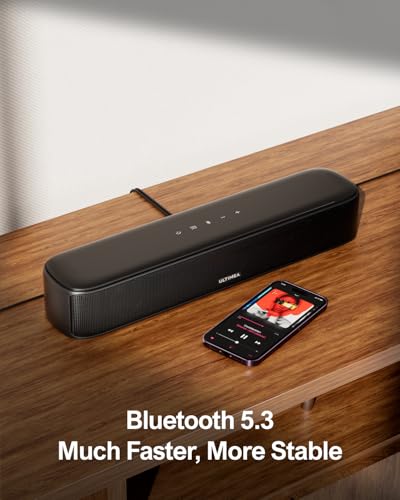
| ULTIMEA Smart App with OTA firmware updates, Bluetooth 5.3 | IR remote control, TV remote integration via HDMI CEC, Bluetooth 5.0 |
| Setup Complexity - Installation time and effort required | |
| Moderate complexity: 4 surround speakers to position and connect | Simple: 2-piece system with wireless subwoofer pairing |
| Room Size Optimization - Best performance match for space | |
| 108-270 ft² (small to medium rooms) with proper speaker placement | Mid-sized rooms with adequate ceiling height for Atmos reflection |
| Dialogue Enhancement - Speech clarity in noisy scenes | |
| Voice mode with EQ customization for vocal frequencies | Dedicated Dialogue Enhancer with 3 intensity levels |
| Warranty Coverage - Protection for your investment | |
| Standard warranty (specific terms vary by retailer) | 2-year comprehensive parts and labor warranty |
The Ultimea Aura A40 provides more authentic surround sound with four physical surround speakers positioned around your room, creating a true 360-degree sound field. The Denon DHT-S517 uses virtual surround processing and Dolby Atmos height channels for overhead effects. For genuine directional audio, the Ultimea wins, but the Denon offers superior height dimension with Atmos.
Only the Denon DHT-S517 supports Dolby Atmos with dedicated upward-firing speakers that bounce sound off your ceiling for overhead effects. The Ultimea Aura A40 does not support Dolby Atmos but compensates with physical surround speakers that create immersive side-to-side and front-to-back audio movement.
The Denon DHT-S517 is much easier to install with just a soundbar and wireless subwoofer that pairs automatically. The Ultimea Aura A40 requires positioning and connecting four surround speakers around your room, making setup more complex but ultimately more immersive once properly configured.
The Ultimea Aura A40 offers extensive customization with 121 preset EQ settings, a 10-band equalizer, and smartphone app control. The Denon DHT-S517 has limited customization with just three preset modes (Movie, Music, Night) and a Dialogue Enhancer feature, focusing more on professionally tuned defaults.
Both systems handle music well but differently. The Ultimea Aura A40 excels with its 121 music-specific EQ presets covering genres like Pop, Classical, and Rock, plus extensive fine-tuning options. The Denon DHT-S517 offers a Pure Mode for unprocessed music playback, appealing to audiophiles who prefer accurate, uncolored sound reproduction.
Yes, both include subwoofers but with different designs. The Ultimea Aura A40 has a 4-inch wired subwoofer with BassMX technology for enhanced bass response. The Denon DHT-S517 features a 5.25-inch wireless subwoofer with a 100-watt amplifier, offering more placement flexibility and potentially deeper bass output.
The Ultimea Aura A40 is superior for gaming due to its physical surround speakers that provide precise directional audio cues, helping locate enemies in competitive games and enhancing immersion in single-player adventures. The Denon DHT-S517 offers good gaming audio but relies on virtual processing rather than true surround positioning.
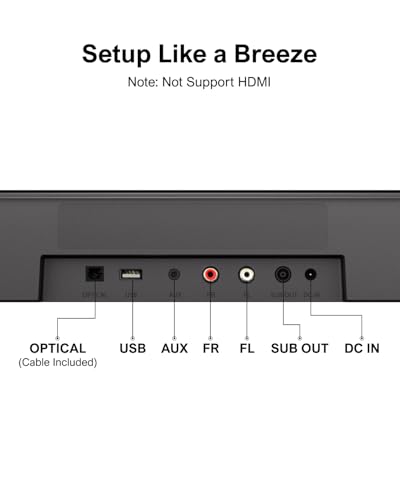
The Denon DHT-S517 fully supports 4K devices with HDMI 2.0b pass-through, 4K/60Hz support, and HDR10/Dolby Vision compatibility. The Ultimea Aura A40 has more limited video connectivity options, focusing primarily on audio inputs like optical, AUX, and USB rather than advanced HDMI features.
Both systems address dialogue clarity effectively. The Denon DHT-S517 features a dedicated Dialogue Enhancer with three intensity levels that boost speech without affecting overall volume. The Ultimea Aura A40 offers dialogue improvement through its Voice mode and customizable EQ settings that let you fine-tune vocal frequency ranges.
The Denon DHT-S517 requires minimal space with just a 41-inch soundbar and wireless subwoofer placement anywhere in the room. The Ultimea Aura A40 needs significantly more space planning to position four surround speakers around your seating area, making it better suited for dedicated media rooms or larger living spaces.
The Ultimea Aura A40 provides excellent long-term value with extensive features typically found in much more expensive systems, plus smartphone app control and over-the-air firmware updates. The Denon DHT-S517 offers premium build quality, professional engineering, and a comprehensive 2-year warranty, justifying its higher price point with reliability and refined performance.
The Denon DHT-S517 integrates seamlessly with TV remotes through HDMI CEC, allowing volume control directly from your television's remote. The Ultimea Aura A40 requires its own remote for power functions but can be controlled through the smartphone app, offering more advanced customization options but less convenient daily operation.
We've done our best to create useful and informative comparisons to help you decide what product to buy. Our research uses advanced automated methods to create this comparison and perfection is not possible - please contact us for corrections or questions. These are the sites we've researched in the creation of this article: walmart.com - newegg.com - youtube.com - ultimea.com - youtube.com - device.report - ultimea.co - manuals.plus - homestudiobasics.com - youtube.com - bestbuy.com - community.ultimea.com - manuals.plus - eu.ultimea.com - navesapeugeot.com.br - bestbuy.com - images.thdstatic.com - provantage.com - ultimea.com - bestbuy.com - techradar.com - consumerreports.org - crutchfield.com - bestbuy.com - bestbuy.com - pocket-lint.com - abt.com - manuals.denon.com - connectedmag.com.au - bestbuy.com - forum.flirc.tv - bhphotovideo.com

Privacy Policy
Terms and Conditions - Affiliate Policy
Home Security
© Copyright 2008-2026.
11816 Inwood Rd #1211, Dallas, TX 75244