

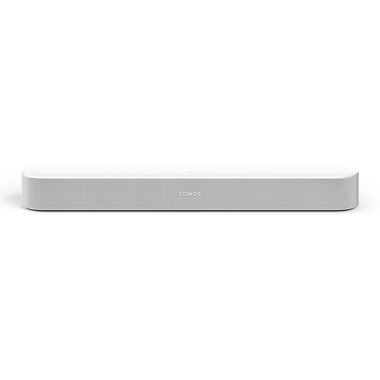
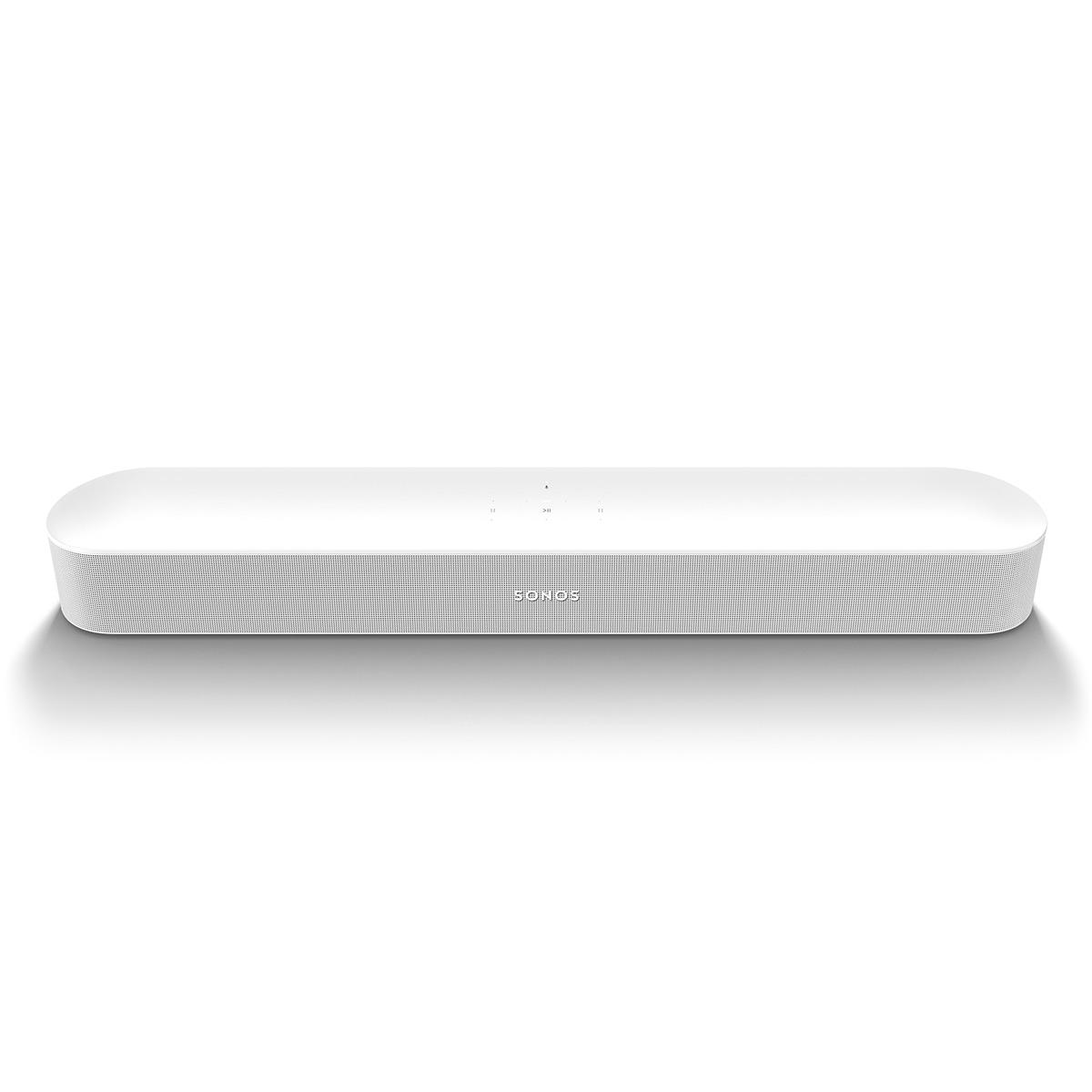
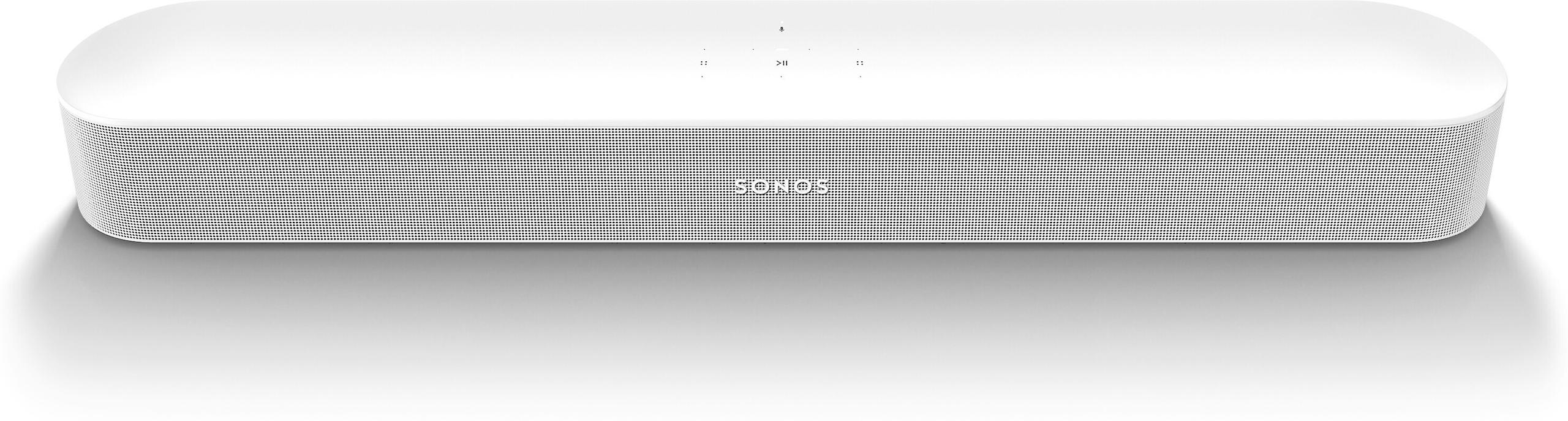
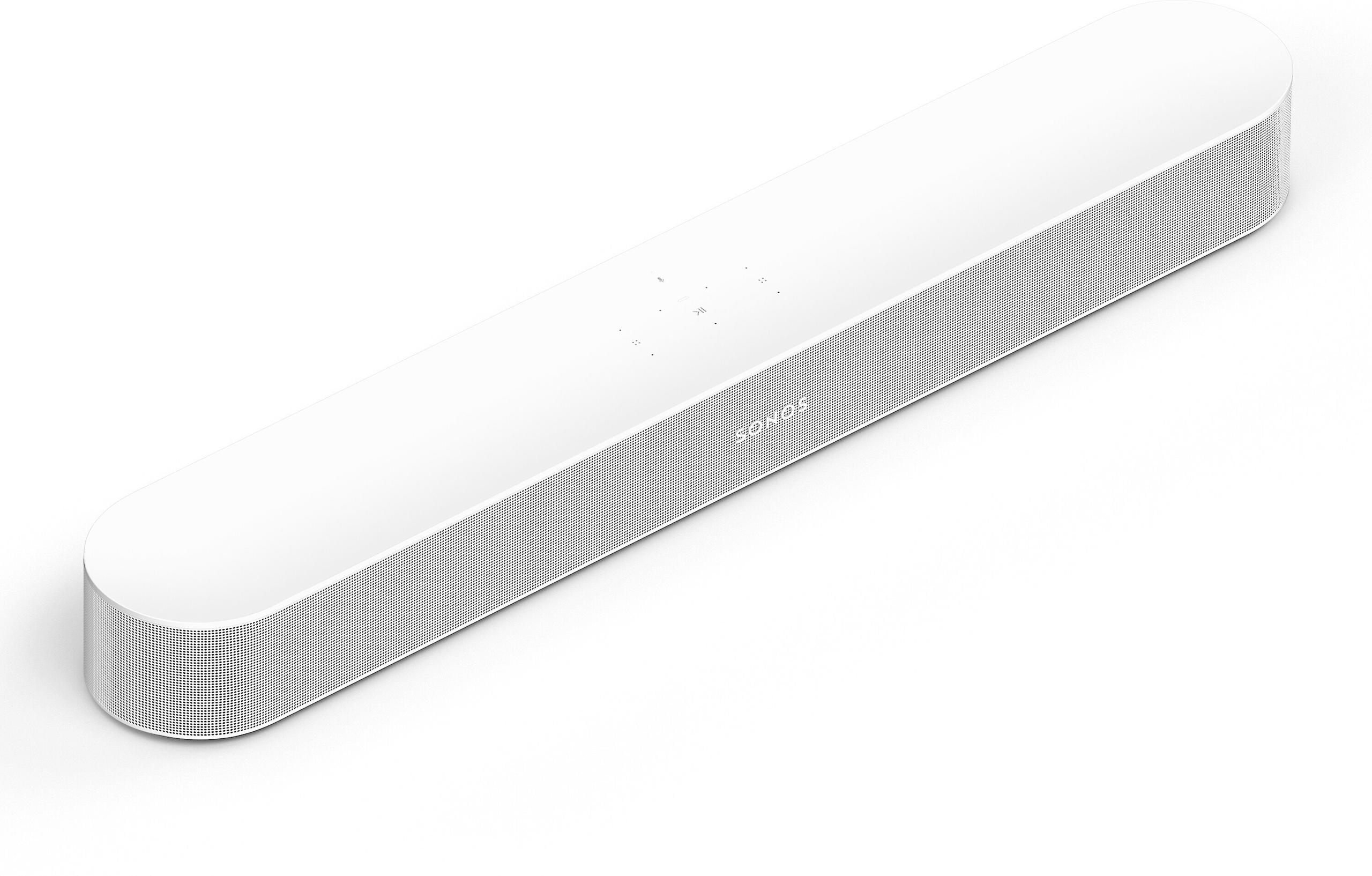





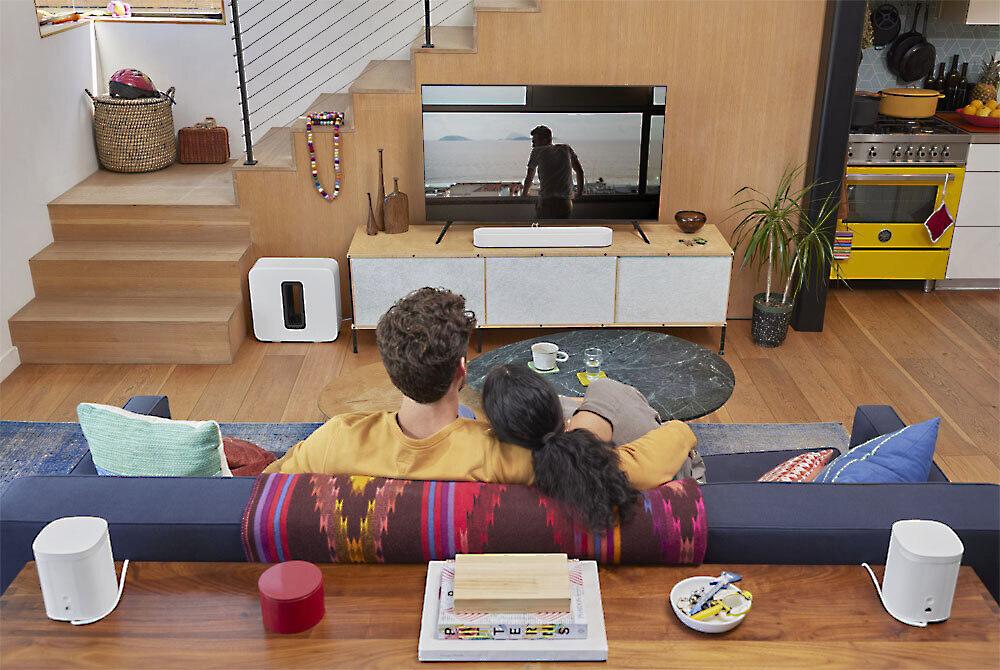


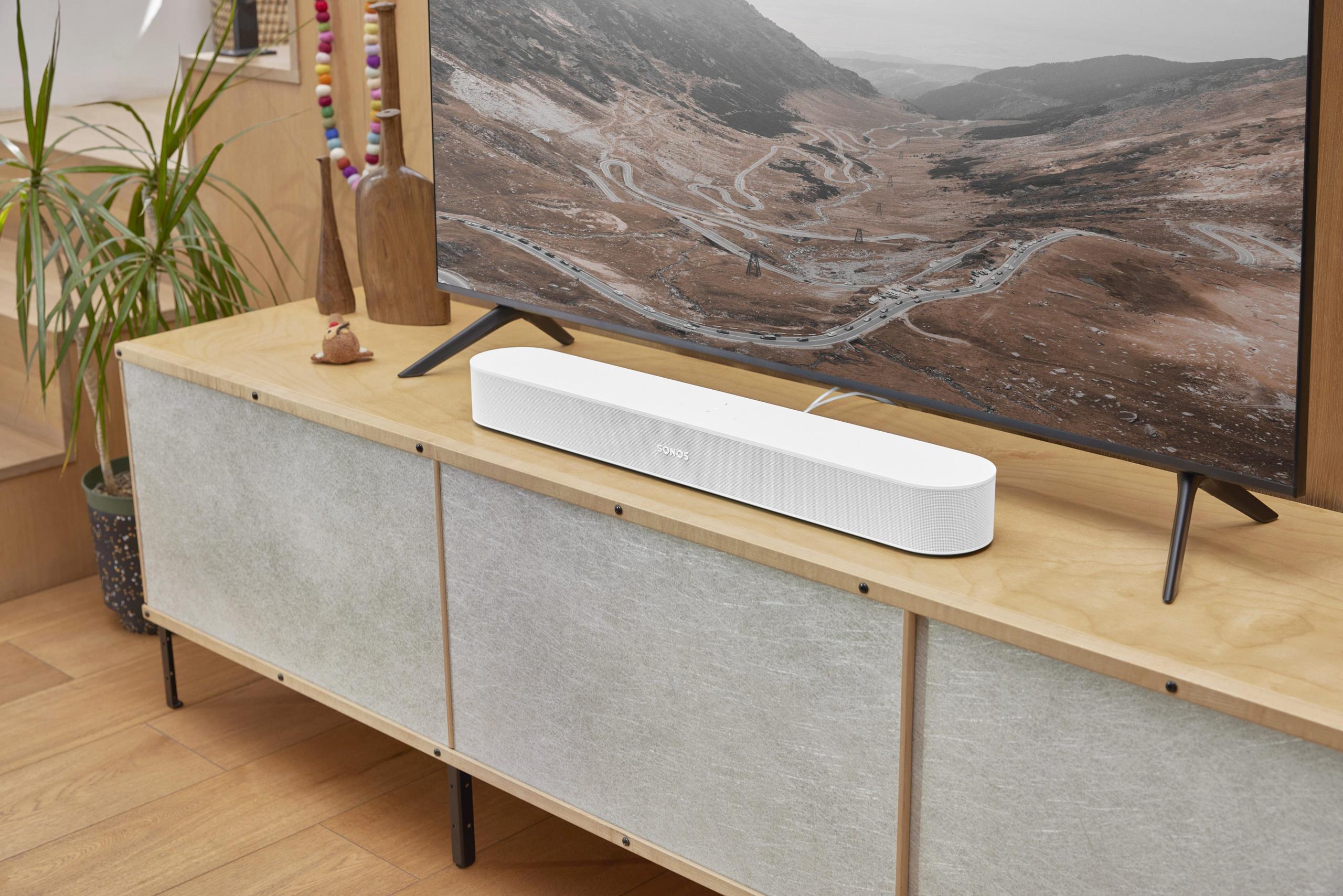
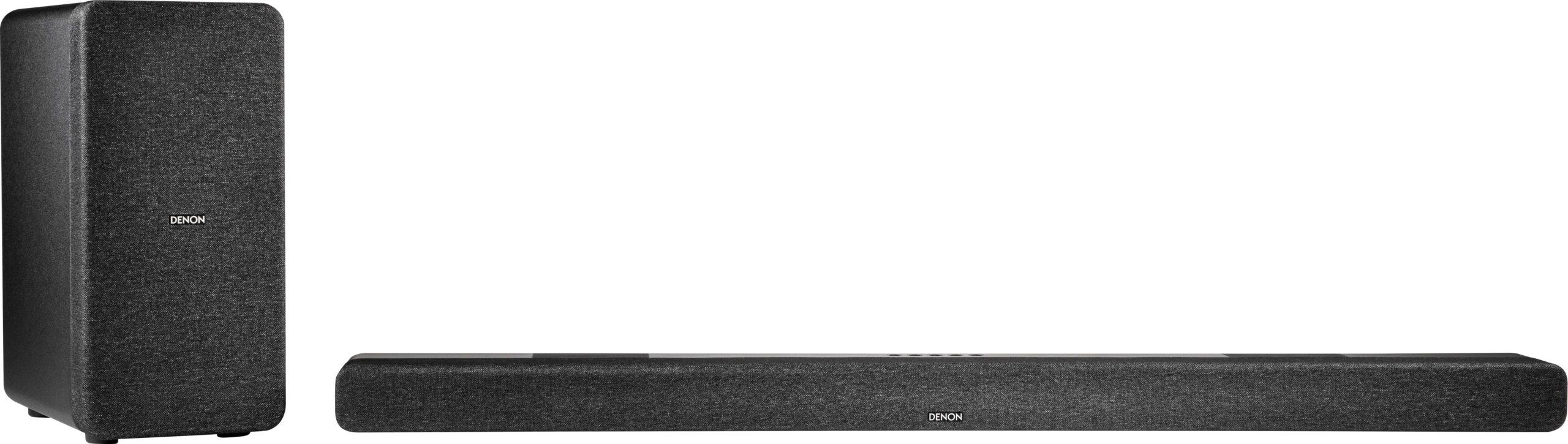
When your TV's built-in speakers just aren't cutting it anymore, a soundbar can transform your viewing experience. But with so many options available, choosing the right one can feel overwhelming. Today, we're comparing two popular choices that represent different philosophies in soundbar design: the Sonos Beam Gen 2 Soundbar ($449.10) and the Denon DHT-S517 Soundbar with Wireless Subwoofer ($302.34).
These aren't just random picks – they represent two distinct approaches to solving your TV audio problems. One focuses on seamless streaming and ecosystem integration, while the other prioritizes giving you maximum hardware for your money. Let's dive deep into what makes each unique and help you figure out which fits your needs better.
Before we get into the nitty-gritty details, it's worth understanding what soundbars are trying to accomplish. Modern flat-screen TVs are engineering marvels, but their thin profiles leave almost no room for decent speakers. That's where soundbars come in – they're designed to sit below or in front of your TV and dramatically improve the audio experience.
Today's soundbar market has evolved into two main camps. On one side, you have ecosystem-focused soundbars that emphasize wireless streaming, multi-room audio, and long-term expandability. On the other, you have traditional home theater soundbars that focus on delivering the most audio hardware possible right out of the box.
The key things to consider when shopping for a soundbar include audio performance (how good does it actually sound?), value proposition (what do you get for your money?), connectivity options (how does it connect to your devices?), and future expandability (can you add more speakers later?). Your room size and layout also matter significantly, especially when dealing with surround sound technologies like Dolby Atmos.
The Sonos Beam Gen 2 launched in October 2021 as the successor to the original Beam from 2018. Sonos made some significant improvements with this second generation, most notably adding support for Dolby Atmos – a surround sound technology that creates the illusion of sound coming from above and around you, not just from the front.
At 25.6 inches wide and weighing just 6.35 pounds, the Beam Gen 2 is remarkably compact. It's designed to blend seamlessly into your living space with a minimalist aesthetic that won't dominate your TV stand. But don't let the small size fool you – inside that sleek exterior are seven carefully engineered drivers: four woofers, one tweeter, and two passive radiators that help extend the bass response.
What really sets the Beam Gen 2 apart is its integration with the broader Sonos ecosystem. This isn't just a TV speaker – it's a Wi-Fi connected device that can stream music from dozens of services, respond to voice commands through built-in Alexa and Google Assistant support, and work as part of a whole-home audio system.
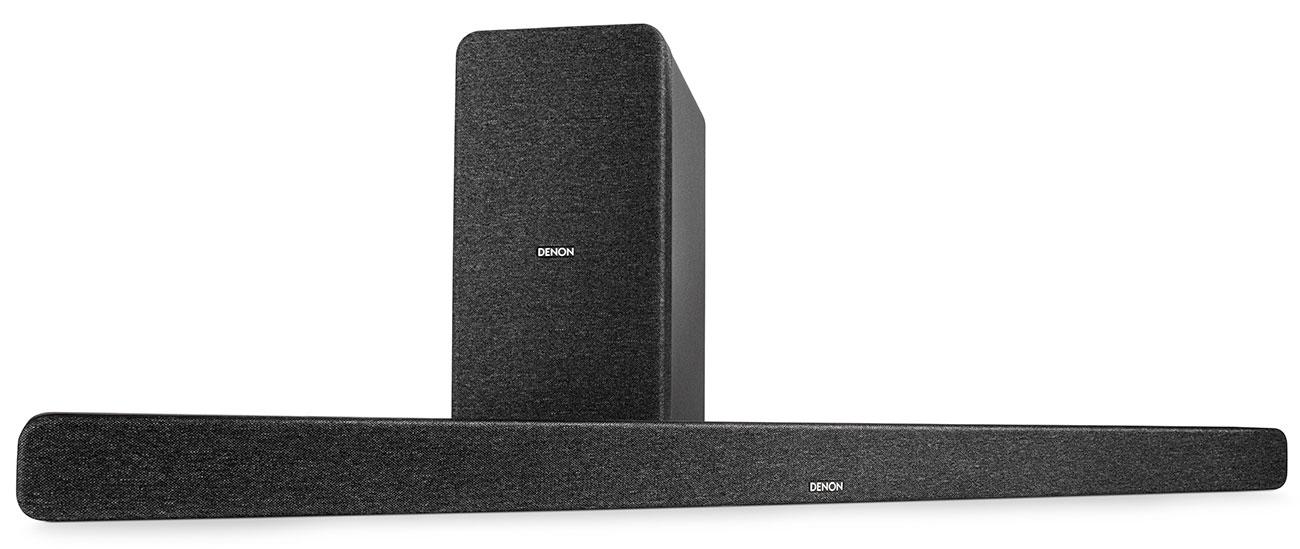
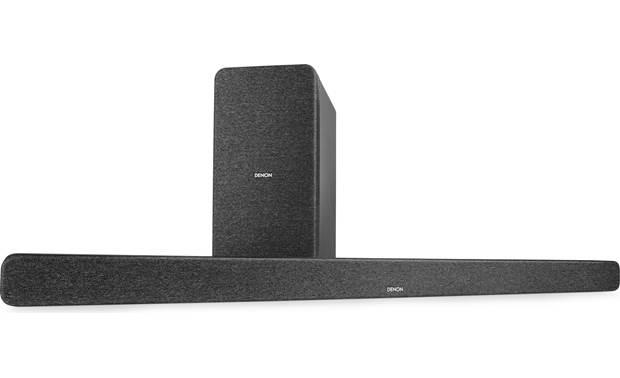
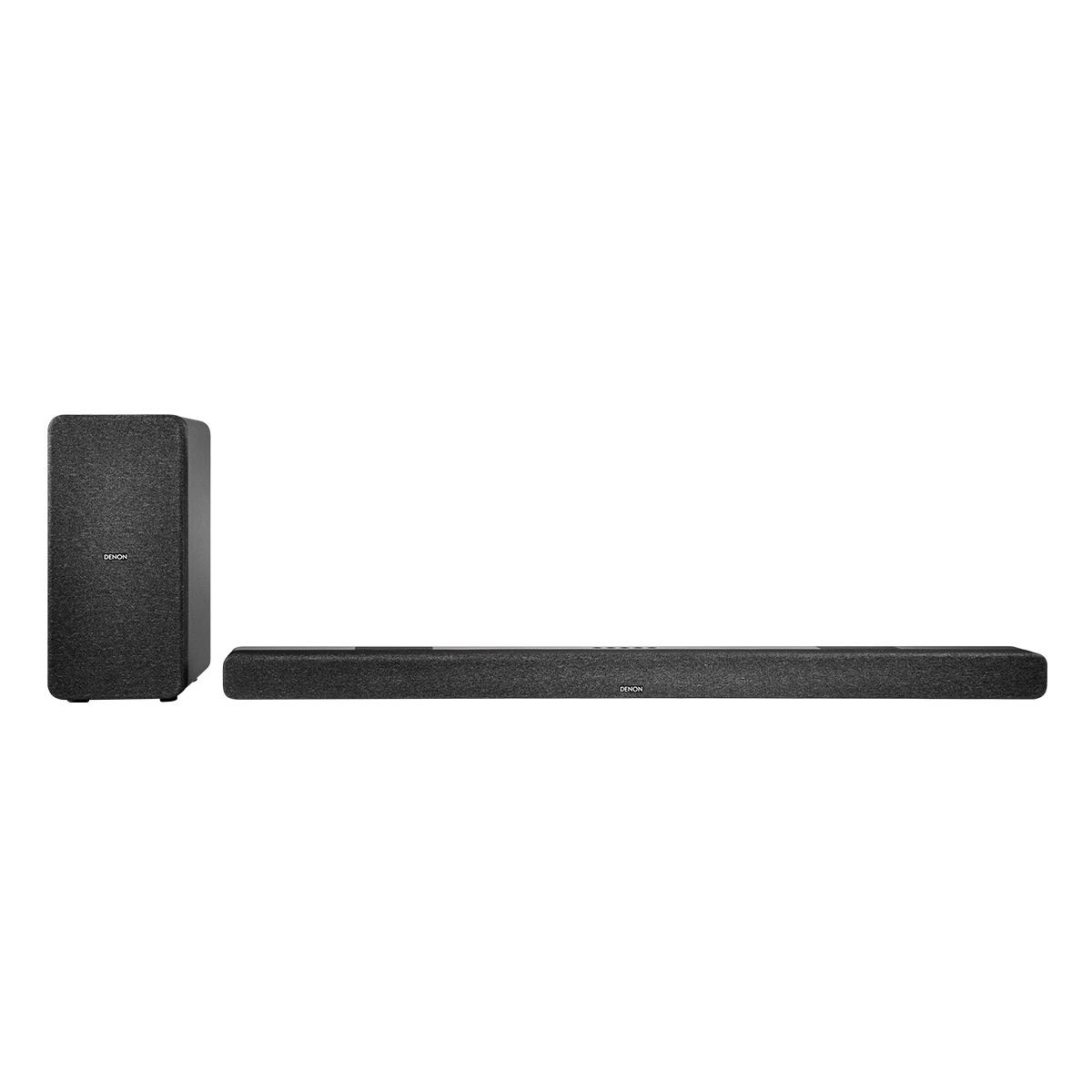
Released in January 2022, the Denon DHT-S517 represents a more traditional approach to home theater audio. Instead of focusing on streaming features, Denon packed this system with audio hardware designed to deliver an impressive surround sound experience right out of the box.
The DHT-S517 is what's called a 3.1.2 channel system. Let me break that down: the "3" represents left, center, and right front channels for stereo sound and dialogue. The ".1" is the subwoofer channel for deep bass. The ".2" represents two height channels that fire sound upward toward your ceiling, where it bounces back down to create overhead effects – this is how it achieves Dolby Atmos surround sound.
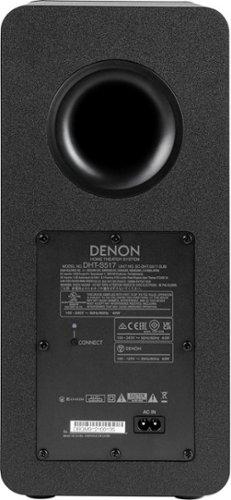
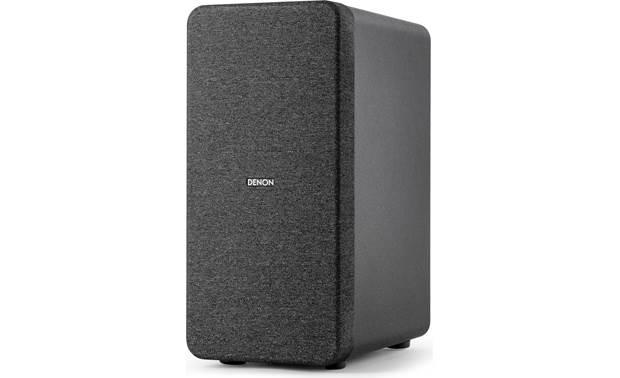
Unlike the Sonos, which requires you to buy additional components for bass, the Denon includes a wireless subwoofer with a 5.25-inch driver powered by a 100-watt amplifier. This subwoofer connects wirelessly to the main soundbar, giving you flexibility in placement while ensuring you get that deep, room-shaking bass that makes action movies come alive.
Both soundbars support Dolby Atmos, but they achieve it in very different ways. Understanding this difference is crucial because it significantly impacts your listening experience.
The Sonos Beam Gen 2 uses what's called "virtualized" Dolby Atmos. Instead of physically firing sound upward, it uses sophisticated digital signal processing and strategically placed side-firing drivers to create the illusion of height. Think of it like an audio magician – it's using psychoacoustic tricks (the science of how we perceive sound) to make your brain think sounds are coming from above and around you.
This approach works surprisingly well, especially in smaller rooms where the soundbar is close to the listening position. The Beam Gen 2 creates an impressively wide soundstage that extends well beyond the physical boundaries of the speaker. However, the overhead effects aren't as precise or convincing as what you'd get from dedicated height speakers.
The Denon DHT-S517, on the other hand, uses physical up-firing drivers – actual speakers that point toward your ceiling. These 2.5-inch drivers fire sound upward, where it bounces off the ceiling and back down to your ears, creating genuine overhead effects. When it works well, this approach delivers more convincing height effects than virtualized processing.
However, there's a catch: this only works effectively if you have the right room conditions. You need a relatively flat ceiling that's 8-10 feet high, and the soundbar needs to be positioned correctly relative to your seating area. In rooms with vaulted ceilings, textured surfaces, or unusual layouts, the effect can be diminished or lost entirely.
This is where the two soundbars differ most dramatically. Bass response isn't just about making explosions sound impressive – it's the foundation that makes all audio feel full and natural.
The Sonos Beam Gen 2, despite its four woofers and passive radiators, simply can't produce deep bass due to its compact size. Physics is physics – you need larger drivers and more internal volume to move the air required for low frequencies. The Beam handles mid-range frequencies beautifully and dialogue sounds crystal clear, but action movies and bass-heavy music will expose its limitations.
Sonos knows this, which is why they offer the Sub Mini for $439. When paired together, the Beam becomes a much more capable system, but you're now looking at nearly $900 for the complete setup.
The Denon, meanwhile, includes that wireless subwoofer from day one. With its 5.25-inch driver and 100-watt amplifier, it can reproduce frequencies down to 33Hz – that's the range where you feel bass in your chest, not just hear it. This makes a massive difference when watching action movies or listening to music with substantial low-end content.
However, some users report that the subwoofer integration isn't perfect. Occasionally, the bass can sound somewhat disconnected from the main soundbar, as if it's coming from a different location (which, of course, it is). This is a common challenge with wireless subwoofers and often improves with careful placement and adjustment of the crossover settings.
Clear dialogue is arguably the most important aspect of TV audio. There's nothing more frustrating than constantly adjusting the volume or turning on subtitles because you can't understand what characters are saying.
The Sonos Beam Gen 2 approaches dialogue enhancement through its Trueplay room calibration system. Using an iOS device (unfortunately, Android isn't supported), the system analyzes your room's acoustics and adjusts its processing accordingly. This helps ensure that voices cut through background music and sound effects clearly.
The Denon takes a more direct approach with its Dialogue Enhancer feature. This gives you three levels of vocal boost (Low, Medium, High) that specifically amplify the frequency range where human voices live. During loud action scenes, you can boost dialogue without raising the overall volume, ensuring voices remain intelligible even when explosions are going off.
In my experience, both approaches work well, but the Denon's manual control gives you more immediate adjustment capability. The Sonos system is more "set it and forget it," while the Denon lets you fine-tune dialogue prominence based on what you're watching.
While both soundbars excel at enhancing TV audio, their music performance reveals some interesting differences.
The Sonos Beam Gen 2 really shines here, thanks to its Wi-Fi connectivity and support for high-quality streaming protocols. You can stream music directly from services like Spotify, Apple Music, and Amazon Music without needing to connect a phone or tablet. The sound processing creates a convincing stereo image that makes music feel spacious and well-separated.
The multi-room capabilities are where Sonos really distinguishes itself. You can group the Beam with other Sonos speakers throughout your home, creating a synchronized audio system that follows you from room to room. For households where music streaming is a priority, this ecosystem integration is incredibly valuable.
The Denon offers a dedicated Music mode that optimizes the sound signature for stereo content, and its Pure mode bypasses all processing for listeners who prefer uncolored audio reproduction. However, music streaming is limited to Bluetooth, which compresses the audio signal and may not deliver the same quality as Wi-Fi-based streaming.
The way these soundbars connect to your devices and integrate with your existing setup can significantly impact your daily experience.
The Sonos Beam Gen 2 takes a minimalist approach with a single HDMI eARC (enhanced Audio Return Channel) connection. This is the newest and best way to connect a soundbar to your TV, as it supports the highest quality audio formats and allows your TV remote to control the soundbar's volume seamlessly.
For older TVs without eARC support, Sonos includes an optical audio adapter. This works fine for most content, though you might lose some advanced audio formats like uncompressed Dolby Atmos.
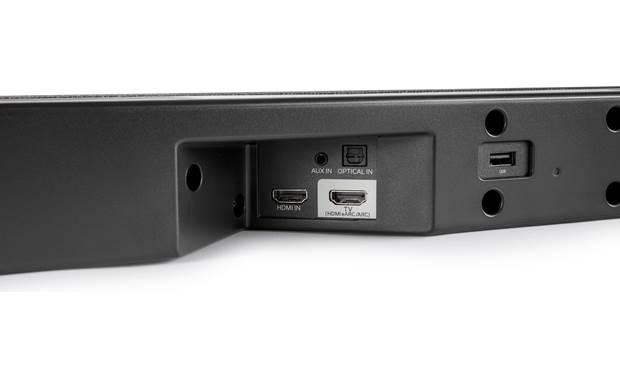
The Denon DHT-S517 offers more traditional connectivity with HDMI passthrough (meaning you can connect devices directly to the soundbar), optical digital input, and even a 3.5mm analog input. This flexibility is valuable if you have multiple source devices or an older TV setup.
The HDMI passthrough is particularly useful because it means you can connect a game console, Blu-ray player, or streaming device directly to the soundbar, then send the video to your TV through a single cable. This can be cleaner than running multiple cables to your TV.
Here's where the Sonos really flexes its smart credentials. Built-in Amazon Alexa and Google Assistant support means you can control the soundbar, adjust volume, and even control other smart home devices using voice commands. The integration feels natural and responsive.
The Wi-Fi connectivity enables features like automatic software updates, direct streaming from music services, and integration with smart home systems. You can use the Sonos app to control everything, or integrate it with other smart home platforms.
The Denon, being more focused on traditional home theater use, doesn't include voice assistants or Wi-Fi connectivity. It's controlled through the included remote or your TV's remote when connected via HDMI. This simplicity can actually be a benefit if you prefer straightforward operation without smart features.
Understanding value in soundbars isn't just about the upfront price – it's about what you get immediately versus what you might need to buy later.
At $302.34, the Denon DHT-S517 delivers an impressive amount of hardware. You're getting a full soundbar with seven drivers, two dedicated Atmos height channels, and a wireless subwoofer. Comparing this to other brands, you'd typically need to spend $600 or more to get similar hardware specifications.
The Sonos Beam Gen 2 at $449.10 is more expensive and doesn't include a subwoofer. However, you're paying for the advanced processing, Wi-Fi streaming capabilities, and ecosystem integration. Whether this represents good value depends on how much you value these features.
The Sonos approach is really about platform investment. While you might start with just the Beam, you can later add the Sub Mini ($439) for deep bass, and rear speakers (Sonos One SL at $199 each) for true surround sound. The total system cost approaches $1,000, but everything works together seamlessly with synchronized audio and unified control.
The Denon gives you most of what you need upfront. While you can't easily expand it into a larger surround system, for many users, what's included is sufficient for their needs.
Your room's characteristics significantly influence which soundbar will work better for you.
In smaller spaces (up to about 200 square feet), both soundbars can work well, but for different reasons. The Sonos Beam Gen 2 excels here because its virtualized Atmos processing works more effectively when you're sitting closer to the soundbar. The compact size also means it won't overwhelm a smaller TV or entertainment center.
The Denon DHT-S517 can actually be overkill in very small rooms, where the subwoofer might produce too much bass. However, most wireless subwoofers allow you to adjust the bass level, so this is manageable.
In bigger spaces, the Denon's included subwoofer becomes more valuable. Larger rooms absorb more bass energy, so having that dedicated low-frequency driver helps maintain audio balance. The physical Atmos speakers also work better in larger rooms where there's more space for the sound to reflect off the ceiling effectively.
The Sonos can work in larger rooms, but you'll likely want to add the subwoofer sooner rather than later to maintain audio balance.
If you have textured ceilings, very high ceilings (over 10 feet), or unusual room shapes, the Denon's up-firing Atmos speakers might not work as intended. In these situations, the Sonos's virtualized approach might actually deliver a more consistent experience.
Understanding some of the technical details can help you appreciate why these soundbars sound different and which might work better in your specific situation.
The Sonos Beam Gen 2 uses a sophisticated driver arrangement with four woofers, one central tweeter, and three passive radiators. The passive radiators are essentially speakers without magnets that resonate in response to the active drivers, helping to extend bass response without requiring additional amplification.
The clever part is how Sonos arranges these drivers. The central tweeter and some woofers fire forward for direct sound, while others fire to the sides. This creates a wider soundstage and helps with the virtualized Atmos effect.
The Denon DHT-S517 takes a more conventional approach with discrete channels. You have dedicated left and right channels (each with a tweeter and woofer), a center channel for dialogue, and two upward-firing speakers for Atmos effects. This separation allows for more precise control over different parts of the audio spectrum.
Sonos has invested heavily in digital signal processing (DSP) – the computer algorithms that manipulate audio signals. Their Trueplay system actually uses machine learning to adapt the sound to your room's characteristics. The system plays test tones, analyzes how they sound in your space, and then adjusts the processing accordingly.
Denon uses more traditional DSP with preset sound modes. The Movie mode enhances surround effects, Music mode optimizes stereo imaging, and Night mode compresses the dynamic range so you can watch movies at lower volumes without losing dialogue clarity.
Having spent time with both systems, I can say they each excel in their intended use cases. The Sonos Beam Gen 2 impressed me most when used as part of a daily routine that includes significant music streaming. The ability to start music in the kitchen on a Sonos speaker and have it seamlessly continue in the living room through the Beam is genuinely convenient.
For movie watching, the Beam's dialogue clarity is excellent, and the virtualized Atmos creates a surprisingly immersive experience in smaller rooms. However, action movies definitely benefit from adding the Sub Mini – the difference is substantial enough that I'd budget for it from the beginning if you watch a lot of bass-heavy content.
The Denon DHT-S517 impressed me with its immediate impact. Unboxing and setting up a complete surround sound system with deep bass for just over $300 feels like getting away with something. The up-firing Atmos effects worked well in my test room (9-foot flat ceiling), creating convincing overhead effects during helicopter scenes and thunderstorms.
The dialogue enhancer proved particularly useful during loud action sequences, and the variety of input options made it easy to connect different devices without having to switch cables constantly.
Choose the Denon DHT-S517 if:
You're primarily focused on enhancing your TV and movie watching experience and want maximum audio hardware for your budget. The included subwoofer and physical Atmos speakers deliver immediate satisfaction, and the multiple input options provide flexibility for various source devices. This is ideal for traditional home theater setups where you're not particularly interested in wireless streaming or smart home integration.
Choose the Sonos Beam Gen 2 if:
You want a soundbar that can grow with your needs and integrate into a larger ecosystem. If you frequently stream music, value the convenience of voice control, or plan to eventually create a multi-room audio system, the Sonos platform offers significant long-term benefits. The compact size is also beneficial if space is at a premium or you prefer minimalist aesthetics.
The decision ultimately comes down to whether you prioritize immediate hardware value or long-term platform benefits. Both soundbars will significantly improve your TV's audio, but they'll do so in ways that reflect their different design philosophies. Consider your current needs, but also think about how those needs might evolve – that consideration might tip the scales toward one approach or the other.
Whatever you choose, both the Sonos Beam Gen 2 and Denon DHT-S517 represent solid investments in better home audio that will serve you well for years to come.
| Sonos Beam Gen 2 Soundbar | Denon DHT-S517 Soundbar with Wireless Subwoofer |
|---|---|
| Price - Significant cost difference affects overall value | |
| $449.10 (no subwoofer included) | $302.34 (includes wireless subwoofer) |
| System Configuration - Determines what you get out of the box | |
| 5.0 channel standalone soundbar | 3.1.2 channel system with wireless subwoofer |
| Dolby Atmos Implementation - Affects overhead sound realism | |
| Virtualized through processing and side-firing drivers | Physical up-firing drivers for true height effects |
| Bass Response - Critical for action movies and music | |
| Limited without separate subwoofer purchase ($439 Sub Mini) | 5.25" wireless subwoofer with 100W amplifier included |
| Connectivity Options - Impacts device compatibility | |
| HDMI eARC only (optical adapter included) | HDMI eARC + passthrough, optical, analog inputs |
| Streaming Capabilities - Affects music and content access | |
| Wi-Fi with AirPlay 2, Spotify Connect, voice assistants | Bluetooth 5.0 only |
| Room Calibration - Optimizes sound for your space | |
| Trueplay automatic tuning (iOS device required) | Manual sound modes (Movie, Music, Night, Pure) |
| Expandability - Future upgrade potential | |
| Full Sonos ecosystem compatibility for multi-room audio | Limited expansion options |
| Physical Size - Space requirements | |
| 25.6" x 2.7" x 3.9" (compact, no separate subwoofer) | 41.3" soundbar + separate wireless subwoofer placement |
| Dialogue Enhancement - Voice clarity during loud scenes | |
| Speech Enhancement with room correction | Three-level Dialogue Enhancer (Low/Medium/High) |
| Smart Features - Convenience and control options | |
| Built-in Alexa/Google Assistant, app control | Traditional remote control, HDMI CEC |
| Complete System Cost - Total investment for full experience | |
| ~$888 with Sub Mini for comparable bass | $302 complete system with subwoofer |
The Denon DHT-S517 ($302.34) offers better immediate value, including a wireless subwoofer and physical Dolby Atmos speakers for $147 less than the Sonos Beam Gen 2 ($449.10). However, the Sonos provides premium streaming features and ecosystem integration that justify its higher price for users who value those capabilities.
The Denon DHT-S517 includes a wireless subwoofer in the box, providing deep bass immediately. The Sonos Beam Gen 2 requires purchasing the separate Sub Mini ($439) to achieve comparable bass performance, nearly doubling the total system cost.
Both work well in small rooms, but the Sonos Beam Gen 2 is more compact at 25.6 inches wide and doesn't require separate subwoofer placement. The virtualized Dolby Atmos also works more effectively in smaller spaces where you sit closer to the soundbar.
The Denon DHT-S517 uses physical up-firing speakers that bounce sound off your ceiling for more convincing overhead effects. The Sonos Beam Gen 2 uses virtualized Atmos through processing, which creates a wide soundstage but less precise height effects.
The Sonos Beam Gen 2 supports Wi-Fi streaming with AirPlay 2, Spotify Connect, and direct app control for high-quality music. The Denon DHT-S517 only supports Bluetooth streaming, which may compress audio quality but works with any Bluetooth device.
Both excel at dialogue, but use different approaches. The Denon DHT-S517 offers a three-level Dialogue Enhancer for manual control during loud scenes. The Sonos Beam Gen 2 uses automatic room calibration (Trueplay) to optimize voice clarity based on your room's acoustics.
The Sonos Beam Gen 2 has one HDMI eARC port for TV connection only. The Denon DHT-S517 offers more flexibility with HDMI passthrough, optical, and analog inputs, allowing direct connection of multiple devices like game consoles or Blu-ray players.
The Denon DHT-S517 is better for dedicated home theater use, providing immediate bass impact from its included subwoofer and more convincing Atmos effects from physical up-firing drivers. Action movies and blockbusters benefit significantly from the deeper bass response.
The Sonos Beam Gen 2 can expand into a complete multi-room system with additional Sonos speakers, including rear surrounds and subwoofers. The Denon DHT-S517 is designed as a complete system with limited expansion options beyond the included components.
Both are relatively easy to install, but the Sonos Beam Gen 2 requires only one HDMI cable connection and uses your TV remote for control. The Denon DHT-S517 requires positioning both the soundbar and wireless subwoofer, though the subwoofer pairs automatically.
The Sonos Beam Gen 2 has built-in Amazon Alexa and Google Assistant for voice control of the soundbar and smart home devices. The Denon DHT-S517 doesn't include voice assistants but works with traditional remote control and HDMI CEC commands from your TV.
Choose the Denon DHT-S517 ($302.34) if you want maximum hardware value with immediate bass and Atmos effects. Choose the Sonos Beam Gen 2 ($449.10) if you prioritize streaming features, compact design, and future expandability, understanding you'll need to add a subwoofer later for full bass response.
We've done our best to create useful and informative comparisons to help you decide what product to buy. Our research uses advanced automated methods to create this comparison and perfection is not possible - please contact us for corrections or questions. These are the sites we've researched in the creation of this article: whathifi.com - en.community.sonos.com - techradar.com - youtube.com - consumerreports.org - bestbuy.com - youtube.com - sonos.com - wave-electronics.com - en.community.sonos.com - epicsystems.tech - tomsguide.com - bestbuy.com - techradar.com - consumerreports.org - crutchfield.com - bestbuy.com - bestbuy.com - pocket-lint.com - abt.com - manuals.denon.com - connectedmag.com.au - bestbuy.com - forum.flirc.tv - bhphotovideo.com

Privacy Policy
Terms and Conditions - Affiliate Policy
Home Security
© Copyright 2008-2026.
11816 Inwood Rd #1211, Dallas, TX 75244