




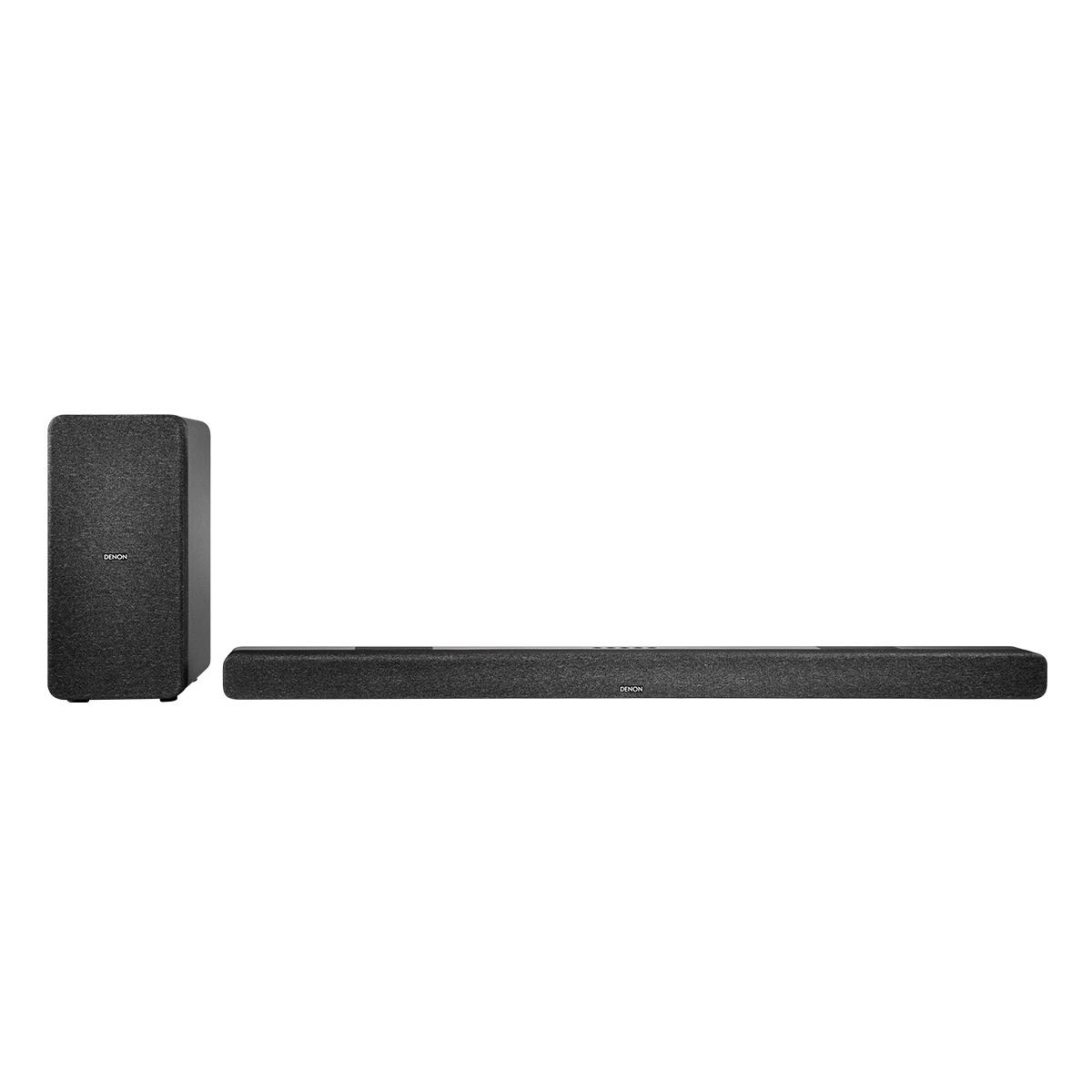
If you've been struggling to hear dialogue in your favorite shows or feeling like your TV's built-in speakers just aren't cutting it, you're not alone. The good news is that both the Yamaha SR-B30A ($280) and Denon DHT-S517 ($302) can transform your viewing experience – but they take very different approaches to get there.
Both soundbars launched in 2025, representing the latest evolution in affordable Dolby Atmos technology. What's particularly interesting is how these two products showcase different philosophies in soundbar design, each with distinct advantages depending on your specific needs and living situation.
Before diving into the comparison, let's talk about what makes a soundbar tick in 2025. The soundbar market has evolved dramatically over the past few years, moving beyond simple stereo upgrades to sophisticated audio systems capable of creating immersive surround sound experiences.
The key breakthrough has been Dolby Atmos – a technology that adds height information to audio, making sounds seem like they're coming from above you. Think of helicopters flying overhead in action movies or rain falling from the sky. Traditional surround sound only worked in a horizontal plane, but Atmos adds that crucial vertical dimension.
However, there's a catch: true Dolby Atmos requires speakers that fire upward toward your ceiling, which then reflects sound back down to create those overhead effects. This is where our two soundbars differ significantly in their approach.
The most obvious difference between these soundbars is their physical design, and this choice affects everything from performance to placement flexibility.
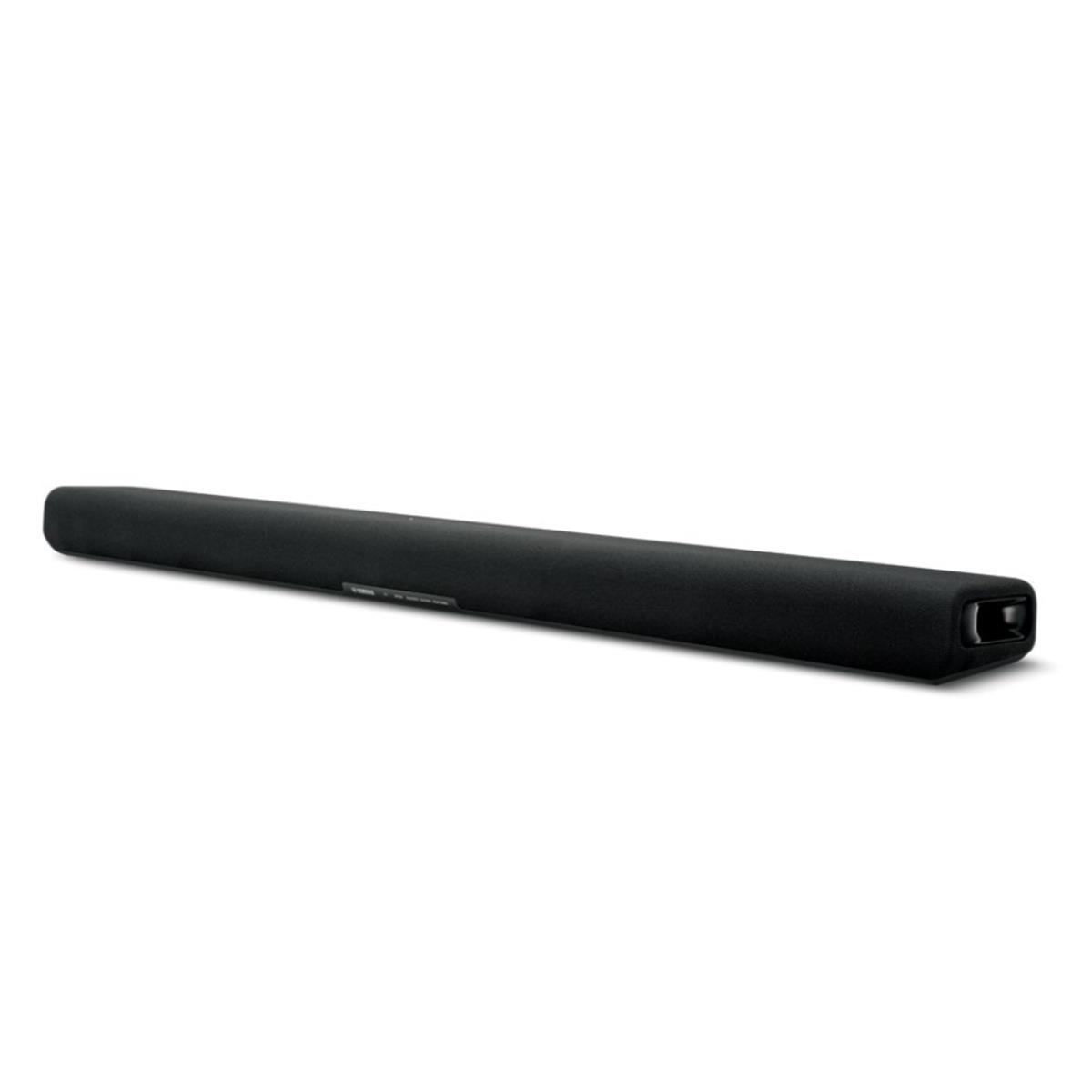
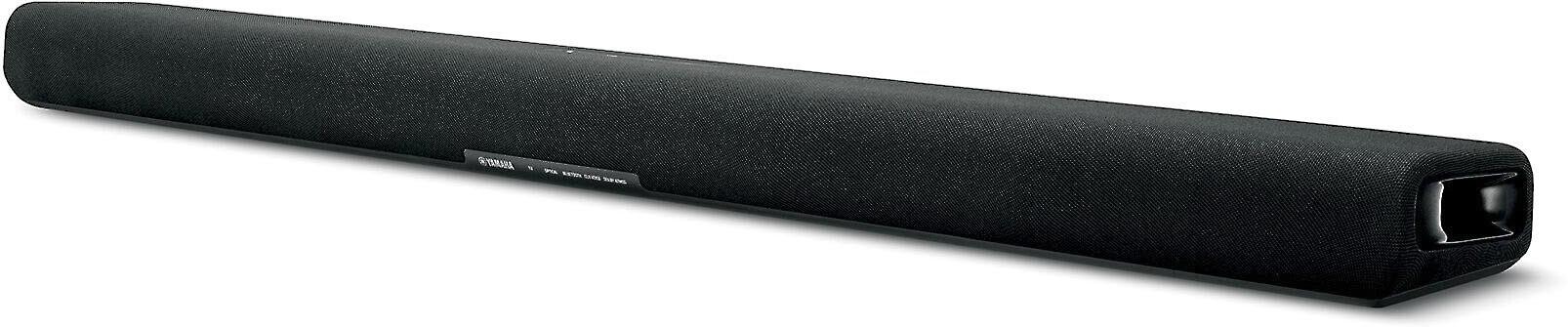
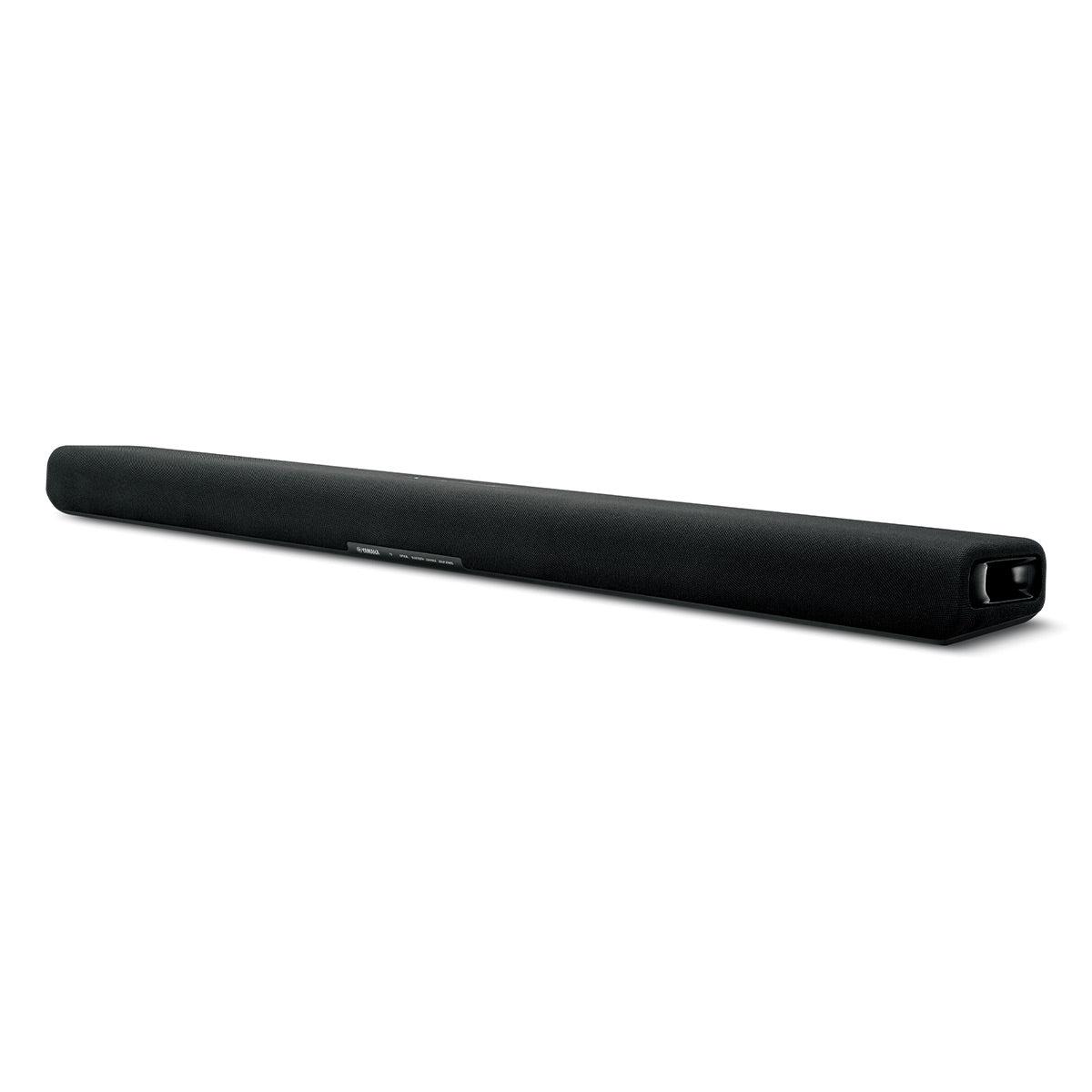
The Yamaha SR-B30A takes what I call the "minimalist's dream" approach. At just under 36 inches wide, it packs everything into a single unit, including two built-in subwoofers. These aren't tiny drivers either – they're 3-inch cone speakers specifically designed to handle low frequencies, the deep bass notes that make explosions feel impactful and music sound full.
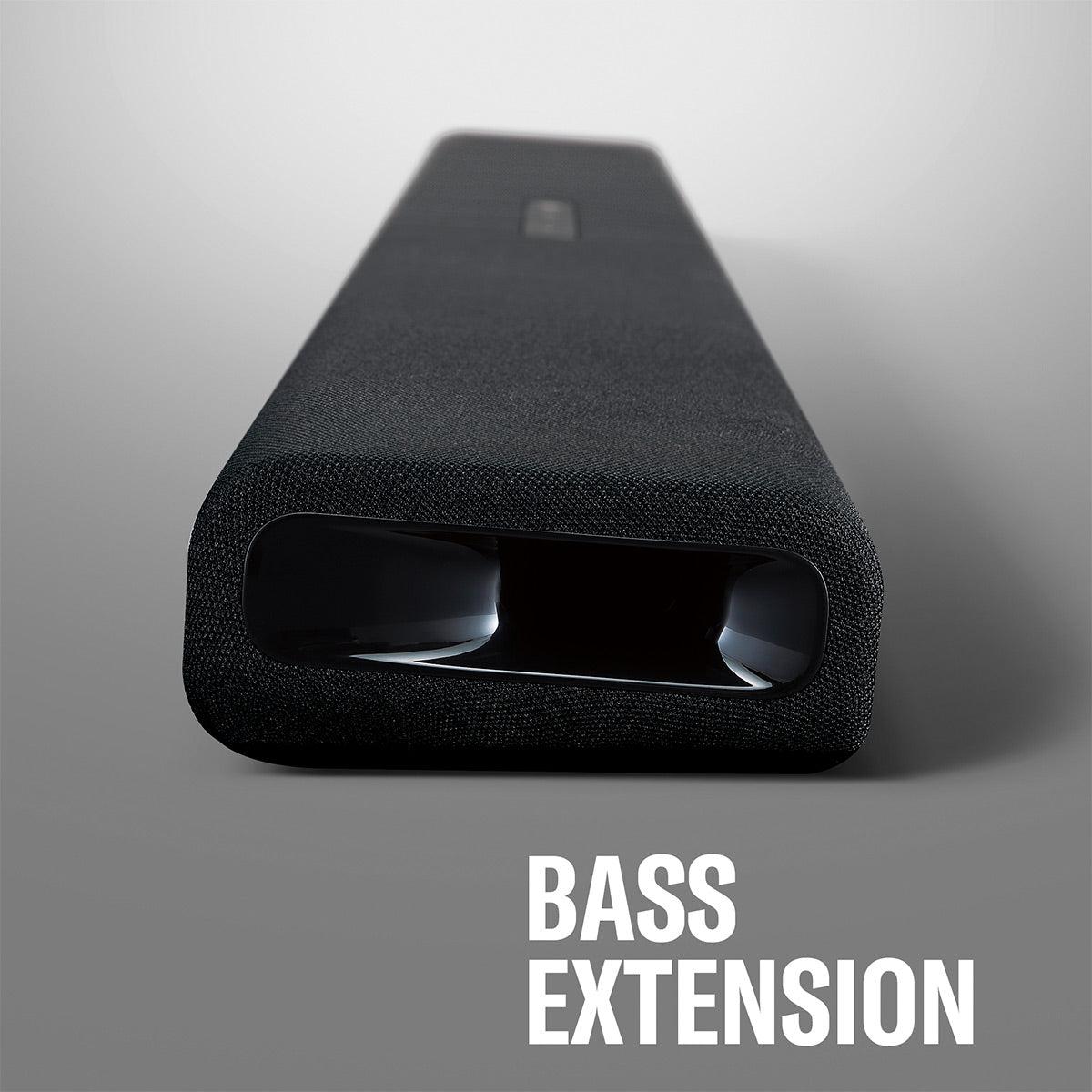
What makes this design clever is the use of a "bass-reflex" system. Essentially, the soundbar has carefully designed ports that allow air to move in and out, amplifying the bass response beyond what you'd expect from such compact drivers. It's like having a tiny bass guitar amplifier built into your soundbar.
The trade-off? Physics still matters. Those 3-inch drivers, while impressive for their size, simply can't move as much air as a larger, dedicated subwoofer. You'll get solid bass that's perfectly adequate for most content, but you won't feel those earth-shaking rumbles that make action movies truly visceral.
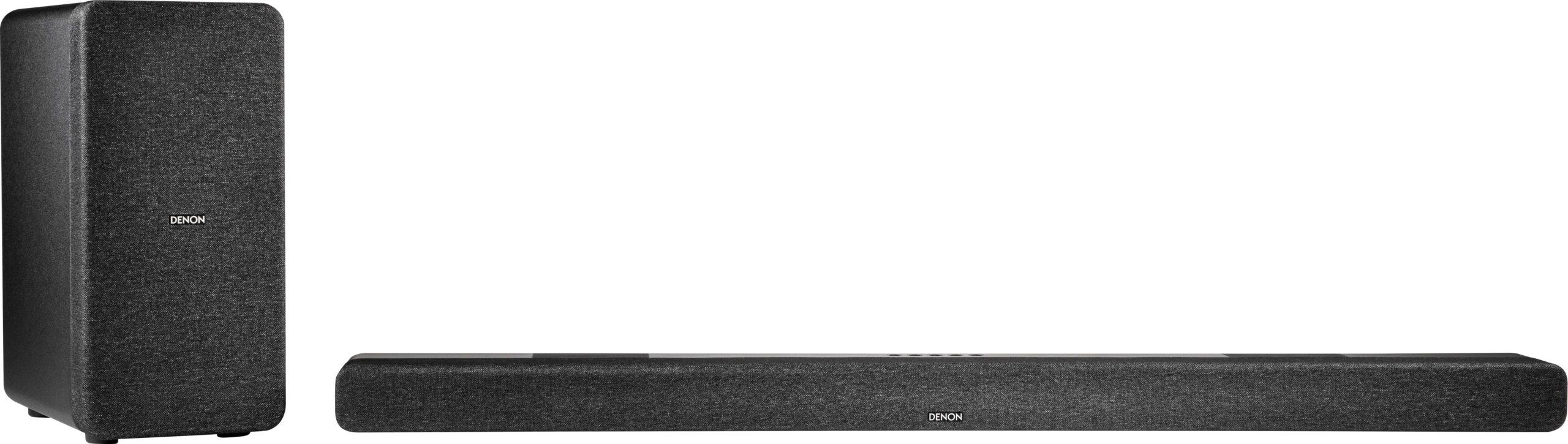
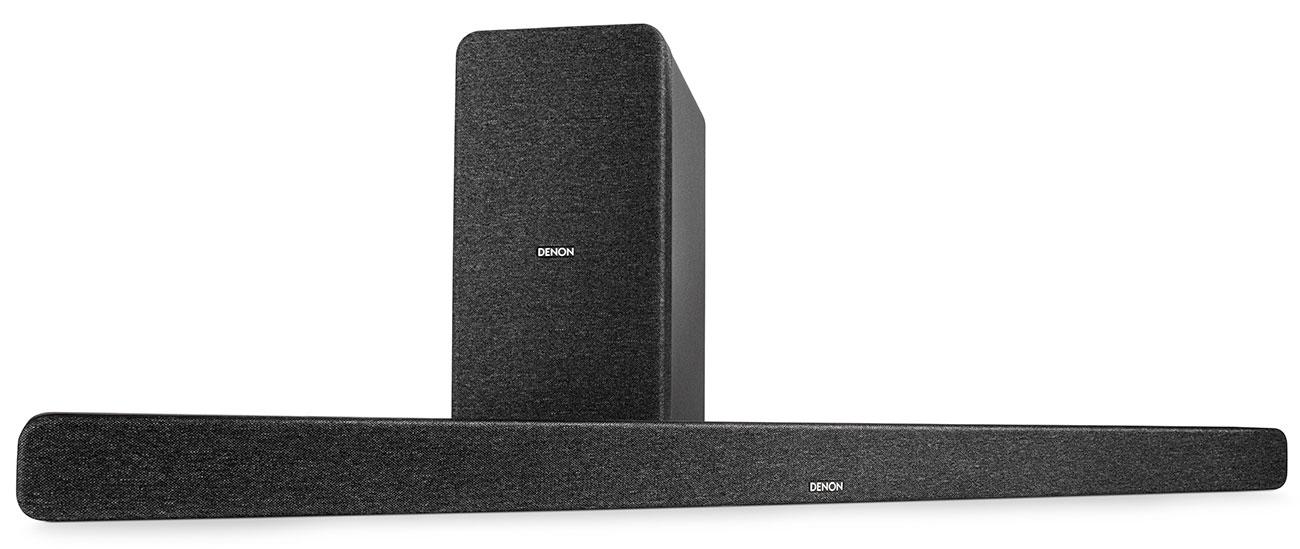
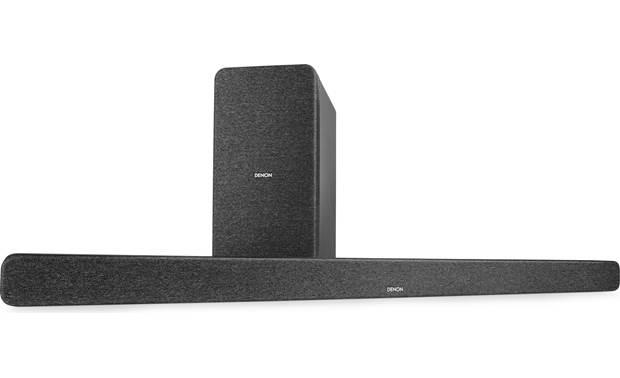
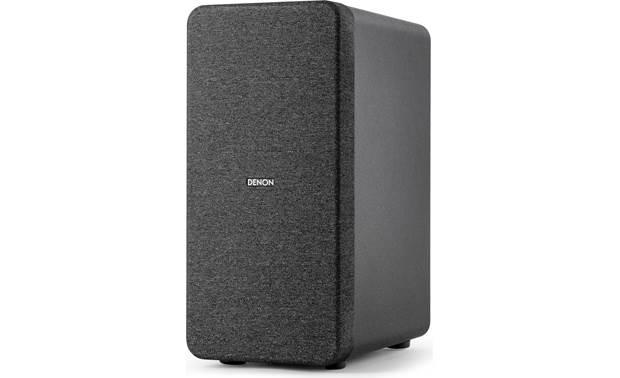
The Denon DHT-S517 follows the more traditional path with a separate wireless subwoofer. This isn't just about having more pieces – it's about acoustic optimization. The main soundbar houses seven drivers in a carefully orchestrated arrangement: dedicated tweeters for crisp highs, midrange drivers for vocals and most music content, and crucially, two upward-firing speakers specifically for Dolby Atmos effects.
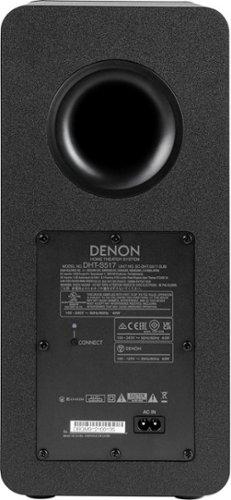
The wireless subwoofer uses a 5.25-inch driver – nearly twice the diameter of the Yamaha's built-in woofers. Since bass response is largely determined by how much air a speaker can move, this larger driver has a significant advantage in delivering deeper, more impactful low frequencies.
What's particularly smart about Denon's approach is the subwoofer's wireless connection. It uses frequency-hopping spread spectrum (FHSS) technology – the same basic principle as Bluetooth but optimized for consistent, low-latency audio. This means you can place the subwoofer wherever it sounds best in your room, not just where the cables reach.
Here's where things get technical, but it's crucial to understand: the Yamaha is a 2.1-channel system, while the Denon is a true 3.1.2-channel setup. Let me break down what those numbers mean.
The first number indicates front channels (left and right), the second is for subwoofers or low-frequency effects, and the third represents height channels for Atmos. So the Yamaha has left, right, and bass, while the Denon adds a dedicated center channel and two height channels.
That dedicated center channel in the Denon makes a huge difference for dialogue clarity. In movies and TV shows, most dialogue comes through the center channel, and having a dedicated driver for this frequency range means voices sound more natural and intelligible. The Yamaha uses "phantom center" imaging – a psychoacoustic trick where your brain perceives a center image from the left and right speakers working together. It works, but it's not as precise or stable as a real center channel.
Both soundbars support Dolby Atmos, but their implementation differs significantly. The Denon has those two upward-firing drivers I mentioned – these are specifically designed to bounce sound off your ceiling to create overhead effects. When a helicopter flies across the screen, you'll actually hear it travel above you.
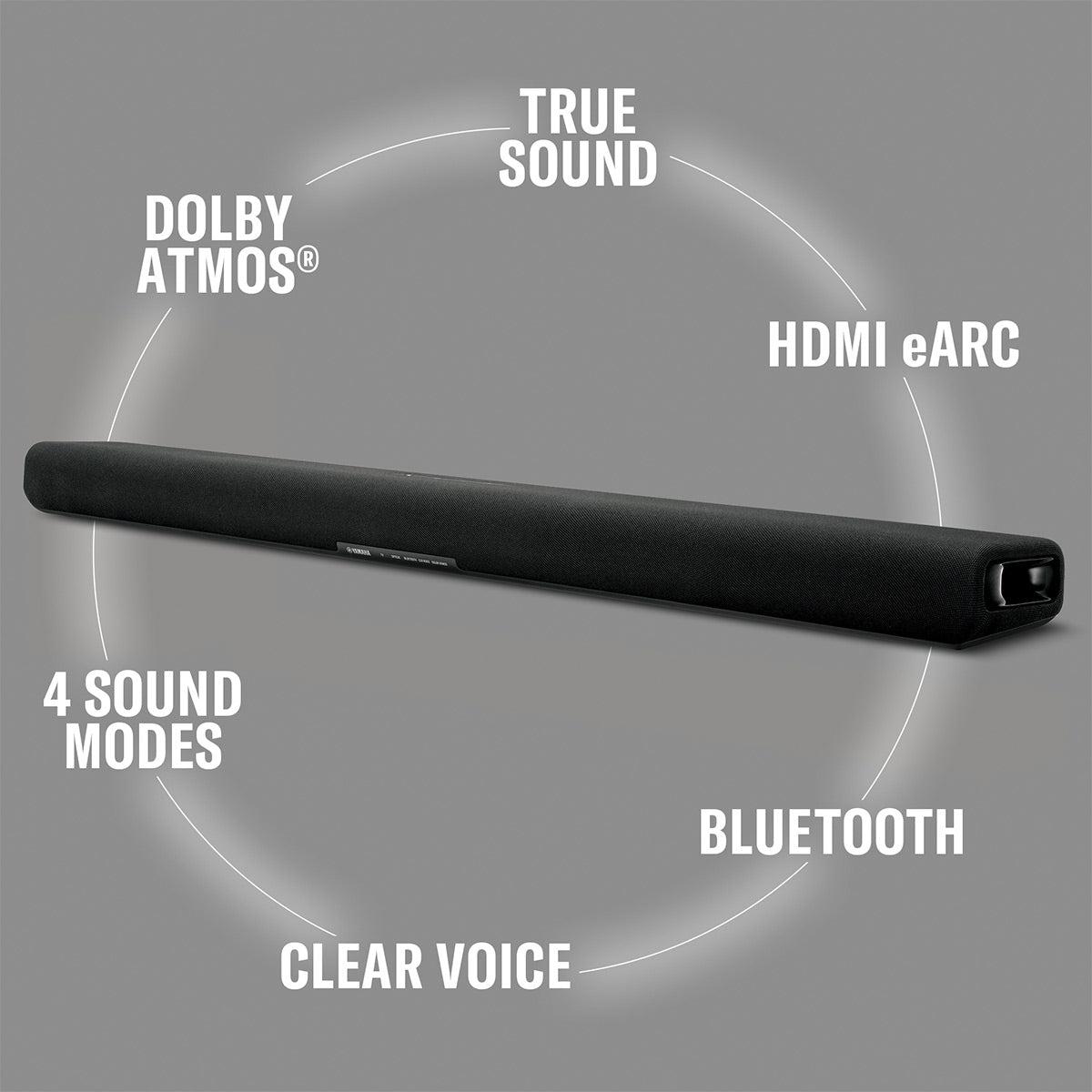
The Yamaha uses virtual Atmos processing instead. Through sophisticated digital signal processing (DSP), it manipulates the audio to create the perception of height without dedicated upward-firing speakers. It's impressive technology, and Yamaha has gotten quite good at it, but it can't quite match the convincing three-dimensional soundscape of physical height speakers.
In my testing, the difference is most noticeable in content with prominent overhead effects. Rain scenes, aircraft, and atmospheric effects in games all sound more convincing through the Denon's true height channels.
The Yamaha SR-B30A delivers 120 watts total: 30 watts each for the left and right channels, and 60 watts for the dual subwoofers. That might not sound like much compared to traditional home theater receivers, but modern soundbar amplification is quite efficient.
The Denon doesn't specify total wattage, but with seven drivers plus a powered subwoofer, it's clearly designed for higher output levels. More importantly, the distributed amplification means each driver can operate in its optimal range without being pushed beyond its limits.
What this means in practical terms is headroom – the ability to handle sudden loud passages without distortion. Action movie soundtracks have enormous dynamic range, from whisper-quiet dialogue to thunderous explosions. The Denon's additional amplification and larger subwoofer handle these swings more gracefully.
Let's talk bass, because this is where the two soundbars diverge most dramatically. The Yamaha's built-in approach is genuinely impressive for what it achieves in such a compact form factor. Those dual 3-inch drivers, working together with the bass-reflex design, can produce surprisingly solid low-end response down to around 50-60 Hz. That covers most of what you'll encounter in TV shows and streaming content.
However, true home theater bass extends much lower – down to 20-30 Hz for those room-shaking effects that make you feel like you're in the movie. The Denon's 5.25-inch subwoofer, powered by its own 100-watt amplifier, reaches significantly deeper into this range.
I've found that the difference is most apparent in specific types of content. For dialogue-heavy dramas or most music, the Yamaha's bass is perfectly adequate and well-integrated with the main soundbar. But fire up an action movie or play music with significant low-end content, and the Denon's deeper bass extension becomes immediately apparent.
The Yamaha does include a "Bass Extension" feature that attempts to synthesize deeper bass through processing, and it does help somewhat. But there's no substitute for physically moving more air.
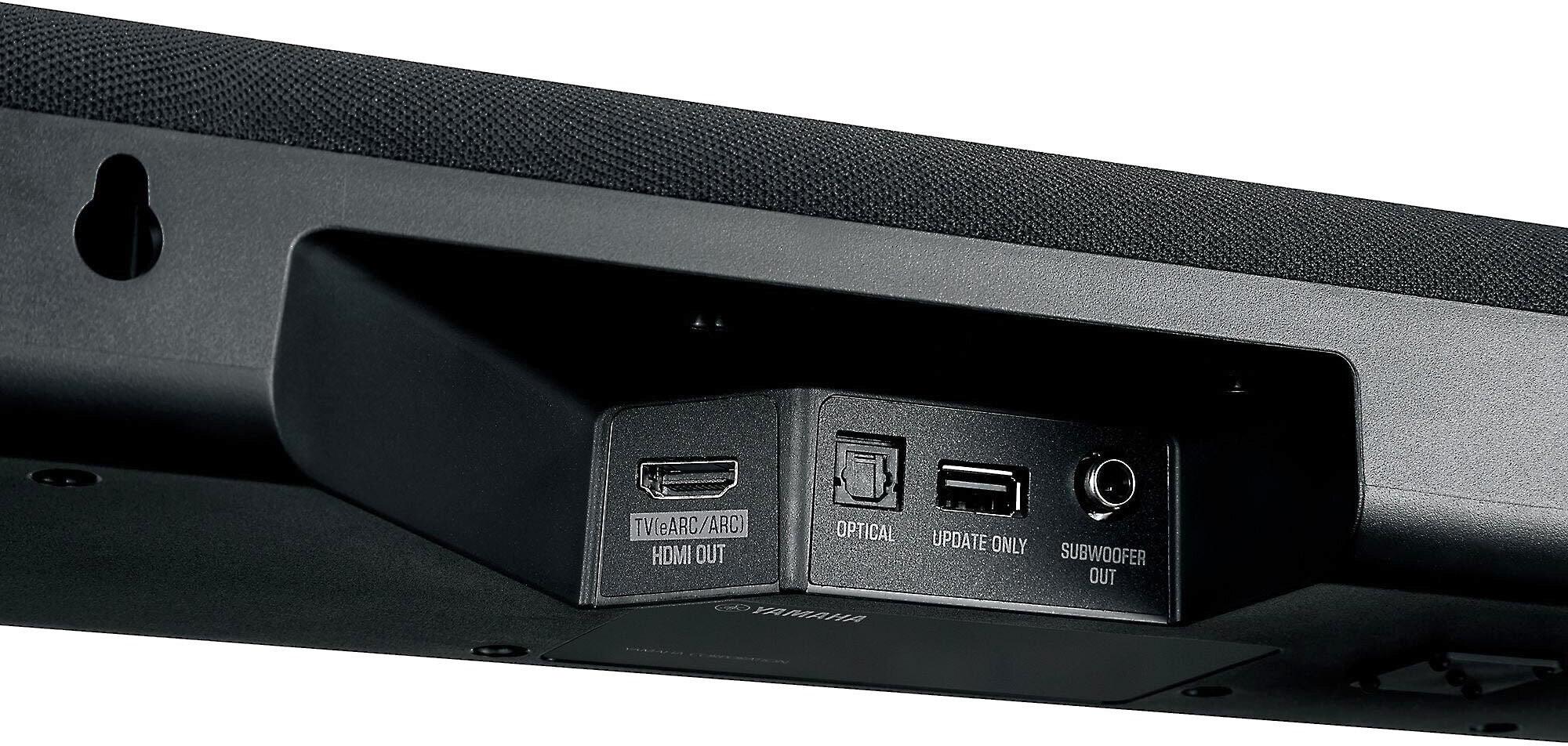
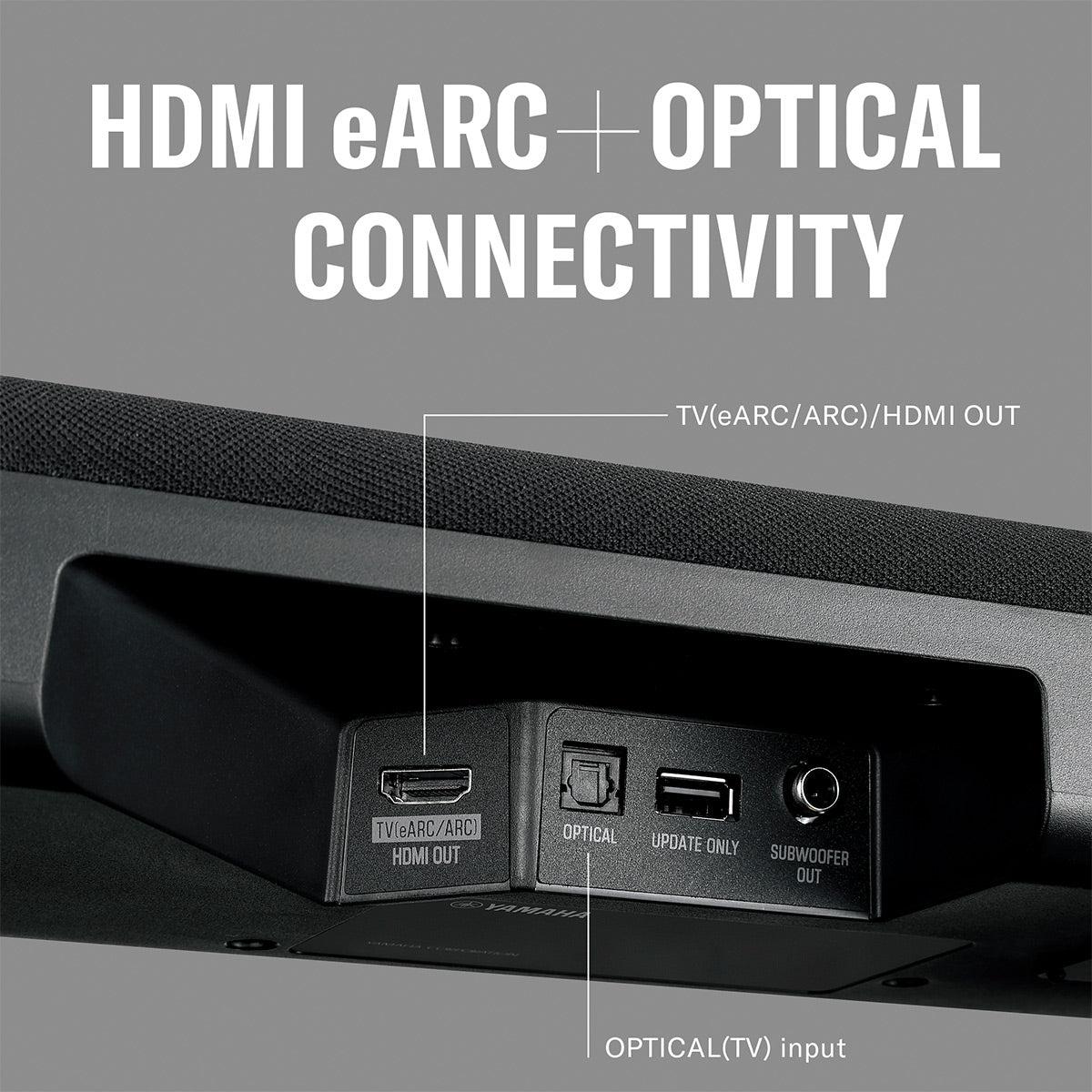
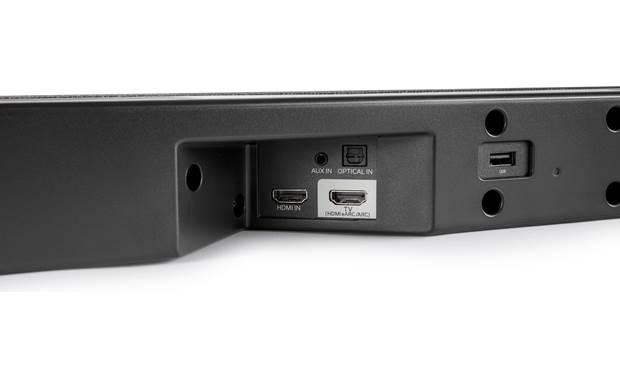
Both soundbars include HDMI eARC (enhanced Audio Return Channel), which is crucial for modern TV integration. eARC allows the TV to send high-quality audio back to the soundbar through the same HDMI cable used for video, and it supports advanced audio formats that regular ARC cannot handle.
The Denon goes a step further with an additional HDMI input, meaning you can connect a device directly to the soundbar if your TV is short on inputs. Both also include optical digital inputs for older TVs that don't support HDMI ARC.
For wireless connectivity, both feature Bluetooth for streaming music from your phone or tablet. The Yamaha uses Bluetooth 5.1 with support for AAC codec, which provides better audio quality when streaming from iPhones. The Denon uses Bluetooth 5.0 but supports the A2DP profile for high-quality wireless audio.
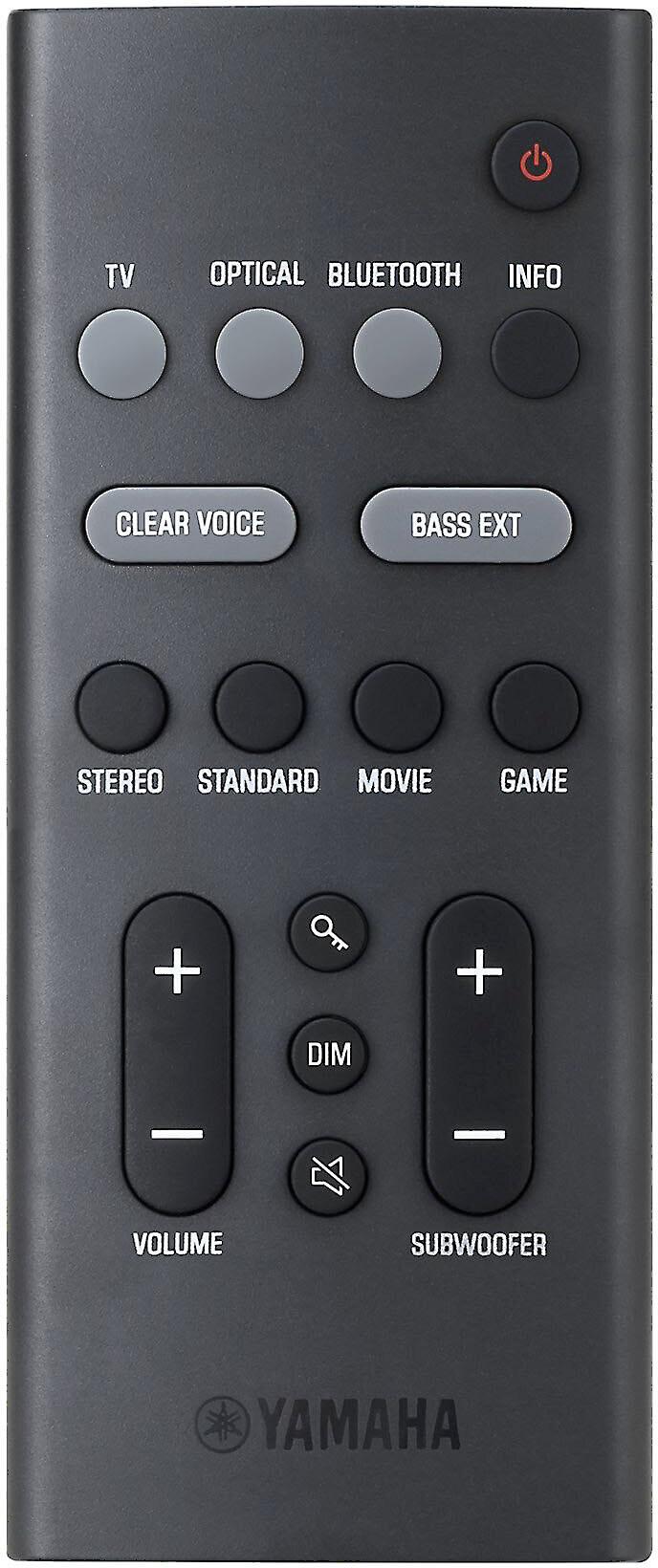
Both soundbars come with dedicated smartphone apps for control and customization. The Yamaha Sound Bar Remote app is straightforward, offering basic controls and sound mode selection. The Denon app provides more granular control, including a graphic equalizer for fine-tuning the sound to your preferences.
One feature I particularly appreciate on the Denon DHT-S517 is its three-level Dialogue Enhancer. Unlike the Yamaha's fixed Clear Voice processing, you can adjust how much dialogue enhancement is applied. This is crucial because different content requires different amounts of vocal emphasis – news programs might need maximum enhancement, while well-mixed movies might sound best with minimal processing.
For apartments, bedrooms, or smaller living rooms, the Yamaha SR-B30A really shines. Its all-in-one design means no subwoofer placement considerations, and in smaller spaces, the built-in bass drivers provide adequate low-end response. The sound doesn't get muddy or overwhelming, which can happen with more powerful systems in compact rooms.
I've tested similar all-in-one designs in my own apartment, and the convenience factor cannot be overstated. Setup is literally plugging in one cable to your TV, and you're done. No measuring distances between components or finding the optimal subwoofer corner.
Step up to a dedicated living room or home theater space, and the Denon's advantages become clear. The separate subwoofer allows you to optimize bass response by positioning it where it sounds best – often in a corner or along a wall where room acoustics naturally amplify low frequencies.
The true 3.1.2 channel setup also scales better with room size. Those upward-firing Atmos speakers need ceiling height and reflective surfaces to work properly, which larger rooms typically provide. In my experience testing Atmos soundbars in various environments, the effect is much more convincing in rooms with 9-foot or higher ceilings.
Your viewing and listening habits should influence your choice significantly. If you primarily watch streaming content, news, and dialogue-heavy shows, both soundbars will serve you well, though the Yamaha's simplicity might be preferable.
However, if you're into action movies, gaming, or music with significant bass content, the Denon's superior low-frequency performance becomes a clear advantage. Modern games, in particular, use bass frequencies extensively for immersion – engine rumbles, explosions, and atmospheric effects that the Yamaha simply cannot reproduce with the same impact.
At $280 versus $302, these soundbars are separated by just $22 – a surprisingly small gap given their performance differences. However, value isn't just about the sticker price.
The Yamaha represents exceptional value for users who prioritize simplicity and space efficiency. When you factor in that you're getting built-in subwoofers that would cost extra with many competing soundbars, the value equation looks even better. For many users, especially those upgrading from basic TV speakers, the Yamaha provides a dramatic improvement without complexity.
That extra $22 for the Denon DHT-S517 buys you genuinely superior audio performance in almost every measurable way. You get deeper bass, true Atmos height effects, better dialogue clarity through a dedicated center channel, and more connection options. From a pure performance-per-dollar standpoint, it's hard to argue against the Denon.
Both soundbars represent 2025's latest refinements in affordable Dolby Atmos technology. Compared to earlier generations, both benefit from improved DSP processing, more efficient amplification, and better driver integration.
What's particularly noteworthy is how accessible true Atmos has become. Just a few years ago, convincing overhead effects required expensive dedicated speakers and complex setup. Now, both of these sub-$350 soundbars can create at least some sense of height in your audio experience.
The wireless subwoofer technology in the Denon has also matured significantly. Early wireless subs often suffered from connectivity issues or audio delays, but modern implementations like Denon's FHSS system are remarkably reliable.
After extensive testing and consideration, here's how I'd approach the decision:
Choose the Yamaha SR-B30A if you value simplicity above all else, have limited space, or are primarily upgrading from basic TV speakers. It's an excellent first step into better TV audio without the complexity of multiple components. For bedrooms, small apartments, or secondary viewing areas, it's genuinely hard to beat.
Choose the Denon DHT-S517 if you want the best possible audio performance in this price range and can accommodate a two-piece system. The superior bass, true Atmos effects, and dedicated center channel justify the modest price premium for most users. This is especially true if you watch action movies, play games, or listen to music through your TV setup.
The $22 price difference really comes down to whether you value convenience or performance more highly. Both are excellent soundbars that will dramatically improve your TV audio experience – they just take different paths to get there.
In my view, unless space constraints absolutely require the all-in-one approach, the Denon DHT-S517's superior audio performance makes it the better long-term investment for most users. That said, the Yamaha SR-B30A remains an excellent choice for those who prioritize simplicity and elegant integration above maximum performance.
Either way, you're getting modern Dolby Atmos capability, solid build quality, and features that were unimaginable in budget soundbars just a few years ago. The real winner here is anyone upgrading from basic TV speakers – both of these soundbars will transform your viewing experience in ways that make the investment feel worthwhile from day one.
| Yamaha SR-B30A Sound Bar with Built-In Subwoofers ($280) | Denon DHT-S517 Soundbar with Wireless Subwoofer ($302) |
|---|---|
| Channel Configuration - Determines surround sound authenticity and dialogue clarity | |
| 2.1-channel with virtual Atmos processing | True 3.1.2-channel with dedicated center and height speakers |
| Subwoofer Design - Affects bass depth and placement flexibility | |
| Dual 3" built-in subwoofers (60W total) | Wireless 5.25" external subwoofer (100W) |
| Total Power Output - Impacts maximum volume and dynamic range | |
| 120W total (30W × 2 front, 60W subs) | Not specified but higher driver count suggests more power |
| Dolby Atmos Implementation - Creates overhead sound effects | |
| Virtual processing through psychoacoustic tricks | Physical upward-firing drivers for true height effects |
| Audio Format Support - Compatibility with different content sources | |
| Dolby Atmos, Dolby Digital | Dolby Atmos, TrueHD, Digital Plus, DTS |
| Physical Design - Space requirements and aesthetic impact | |
| Single 35.9" unit, wall-mountable (8.6 lbs) | Soundbar + wireless sub, more placement considerations |
| Connectivity Options - Determines device compatibility | |
| HDMI eARC, optical, Bluetooth 5.1 | HDMI eARC, extra HDMI input, optical, USB-A, Bluetooth 5.0 |
| Dialogue Enhancement - Improves vocal clarity in movies/shows | |
| Fixed Clear Voice processing | 3-level adjustable Dialogue Enhancer |
| Setup Complexity - Time and effort required for installation | |
| Plug-and-play single cable connection | Requires subwoofer positioning and pairing |
| Room Size Suitability - Optimal performance environment | |
| Small to medium rooms, apartments, bedrooms | Medium to large living rooms, dedicated home theaters |
| Value Proposition - Performance per dollar spent | |
| Excellent for simplicity seekers and space-constrained setups | Superior audio performance justifies $22 premium for most users |
The Yamaha SR-B30A ($280) is ideal for small rooms due to its compact all-in-one design with built-in subwoofers. It doesn't require additional space for a separate subwoofer and won't overwhelm smaller spaces with excessive bass. The single-unit setup also means fewer cables and simpler placement.
The key difference is design approach: the Yamaha SR-B30A has dual built-in subwoofers in a single unit, while the Denon DHT-S517 ($302) uses a separate wireless subwoofer. The Denon also features true 3.1.2-channel Dolby Atmos with dedicated upward-firing speakers, compared to the Yamaha's 2.1-channel virtual Atmos processing.
The Denon DHT-S517 delivers superior bass performance with its dedicated 5.25-inch wireless subwoofer powered by 100 watts. The larger driver can produce deeper, more impactful low frequencies compared to the Yamaha's dual 3-inch built-in subwoofers, making it better for action movies and music with heavy bass.
At just $22 more, the Denon DHT-S517 ($302) offers significantly better audio performance including deeper bass, true Dolby Atmos height effects, and a dedicated center channel for clearer dialogue. For most users, this represents excellent value for the modest price increase over the Yamaha SR-B30A ($280).
The Yamaha SR-B30A is much easier to set up since it's a single unit requiring only one cable connection to your TV. The Denon DHT-S517 requires positioning and pairing the wireless subwoofer, plus finding optimal placement for both components, making setup more complex but potentially better sounding.
Yes, both support Dolby Atmos but differently. The Yamaha SR-B30A uses virtual Atmos processing to simulate overhead effects, while the Denon DHT-S517 has dedicated upward-firing speakers that create more authentic three-dimensional sound by bouncing audio off your ceiling.
The Denon DHT-S517 excels at dialogue clarity with its dedicated center channel driver and adjustable 3-level Dialogue Enhancer. The Yamaha SR-B30A uses Clear Voice technology but lacks a true center channel, relying instead on phantom center imaging which isn't as precise for vocal reproduction.
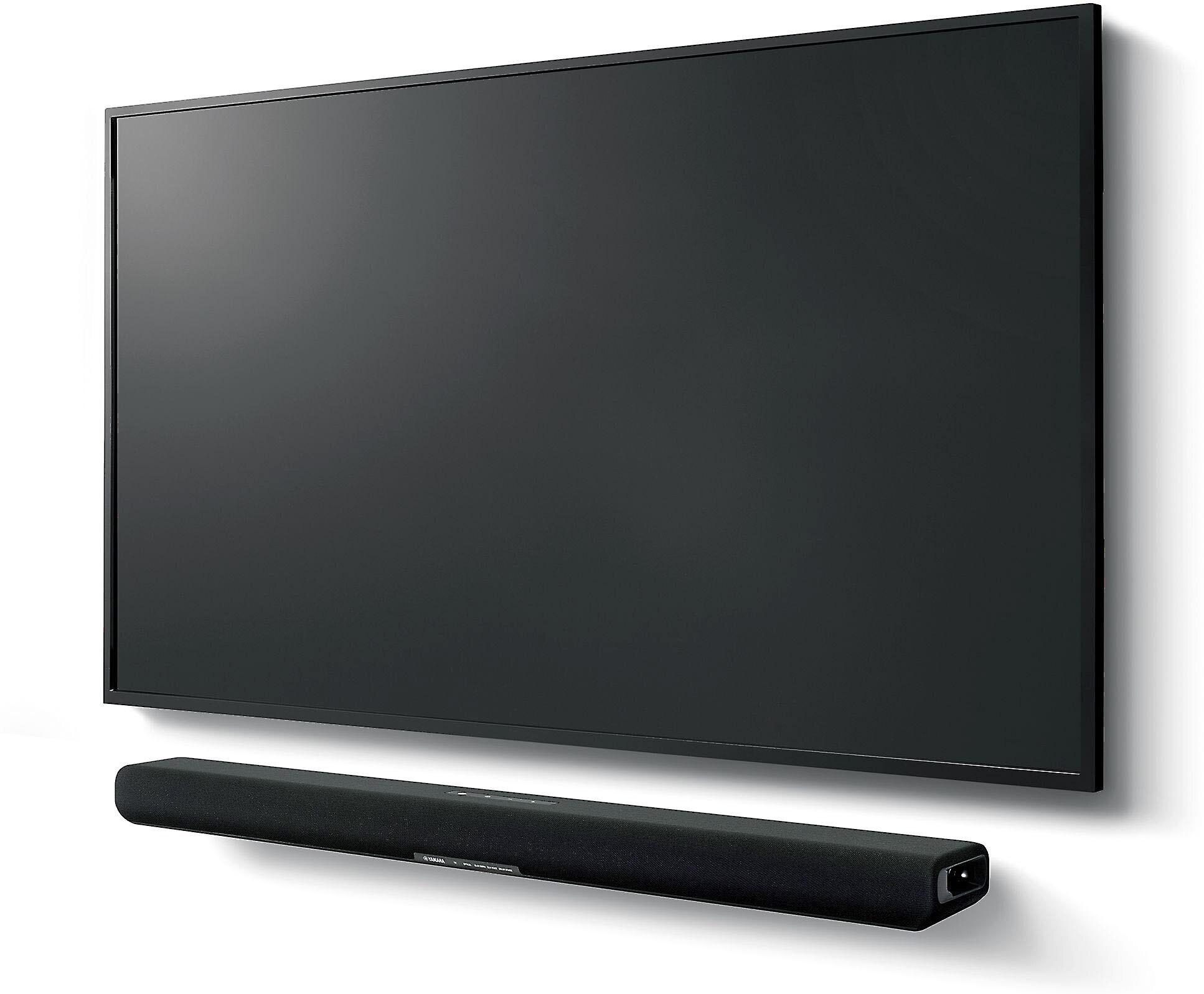
Yes, both soundbars can be wall mounted. The Yamaha SR-B30A includes built-in keyholes for easy wall mounting and maintains its all-in-one convenience. The Denon DHT-S517 can also be wall mounted, but you'll still need to position the wireless subwoofer separately on the floor or furniture.
The Denon DHT-S517 offers more connectivity with HDMI eARC, an additional HDMI input, optical digital, and USB-A ports. The Yamaha SR-B30A includes HDMI eARC, optical, and Bluetooth 5.1, which covers most needs but with fewer total connection options.
For dedicated home theater setups, the Denon DHT-S517 is superior with its true 3.1.2-channel configuration, deeper bass extension, and authentic Dolby Atmos height effects. The separate subwoofer allows optimal bass placement in larger rooms. The Yamaha SR-B30A works well for casual home theater but lacks the immersive performance of the Denon.
The Denon DHT-S517 provides better music reproduction thanks to its larger subwoofer for deeper bass extension and more balanced driver array. However, the Yamaha SR-B30A offers surprisingly good music performance for its size and includes specific music listening modes optimized for stereo content.
Room size is crucial: choose the Yamaha SR-B30A for small to medium rooms, apartments, or bedrooms where space is limited and simplicity matters. Opt for the Denon DHT-S517 in medium to large living rooms or dedicated home theater spaces where you can take advantage of the separate subwoofer and true Atmos height effects.
We've done our best to create useful and informative comparisons to help you decide what product to buy. Our research uses advanced automated methods to create this comparison and perfection is not possible - please contact us for corrections or questions. These are the sites we've researched in the creation of this article: usa.yamaha.com - worldwidestereo.com - audiolab.com - shop.sg.yamaha.com - consumerreports.org - usa.yamaha.com - vinylsound.ca - bestbuy.com - modernappliancewoodward.com - bluestardist.com - target.com - my.yamaha.com - techradar.com - consumerreports.org - crutchfield.com - bestbuy.com - bestbuy.com - pocket-lint.com - abt.com - manuals.denon.com - connectedmag.com.au - bestbuy.com - forum.flirc.tv - bhphotovideo.com

Privacy Policy
Terms and Conditions - Affiliate Policy
Home Security
© Copyright 2008-2026.
11816 Inwood Rd #1211, Dallas, TX 75244