

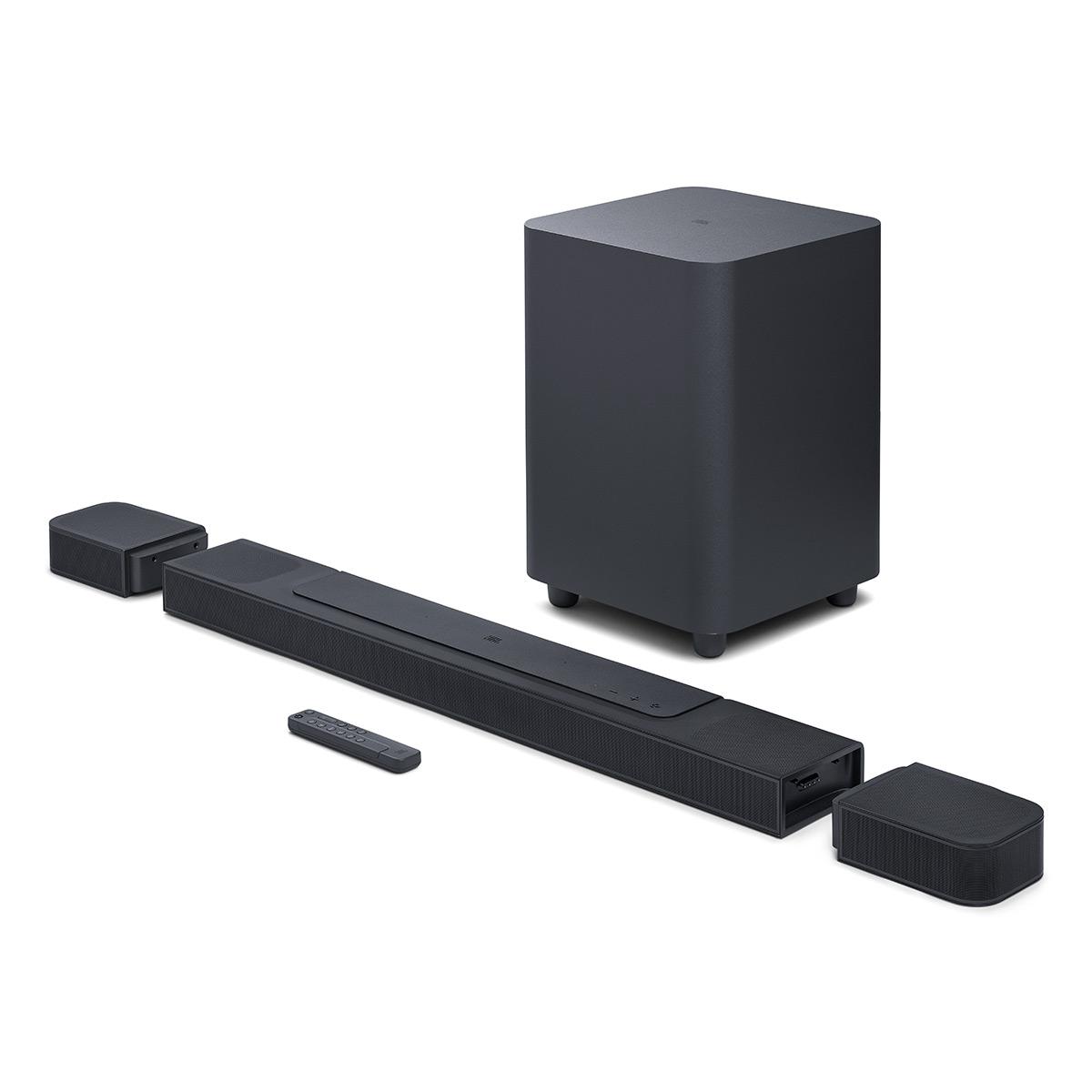
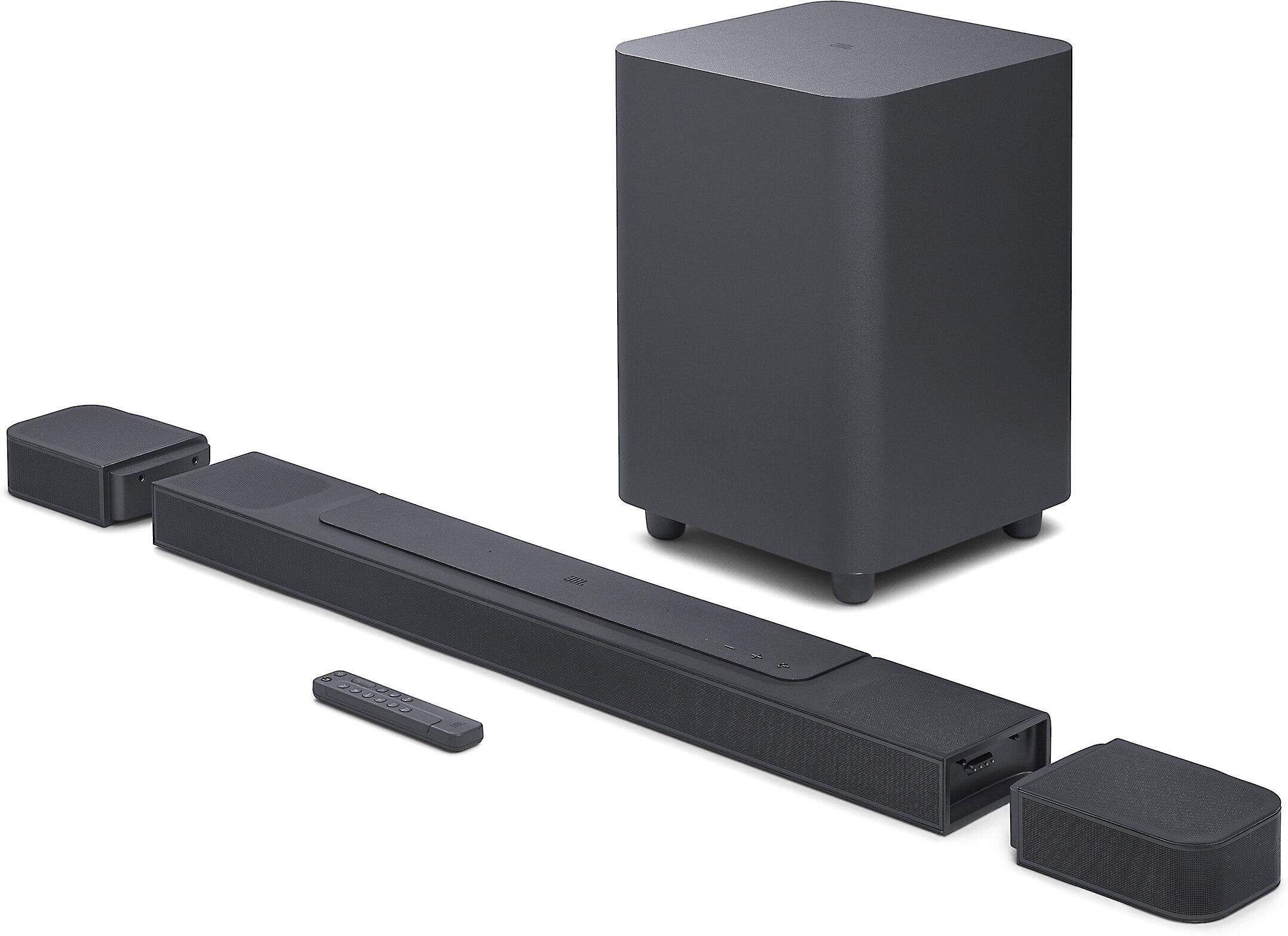
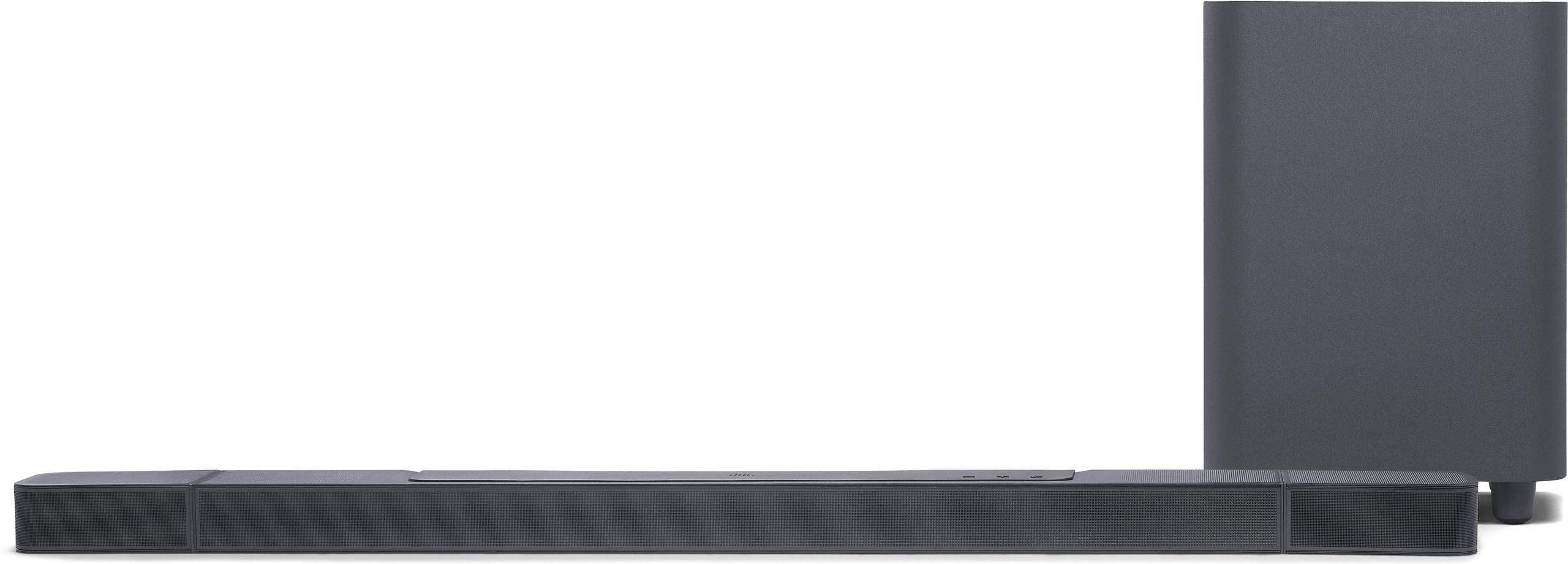




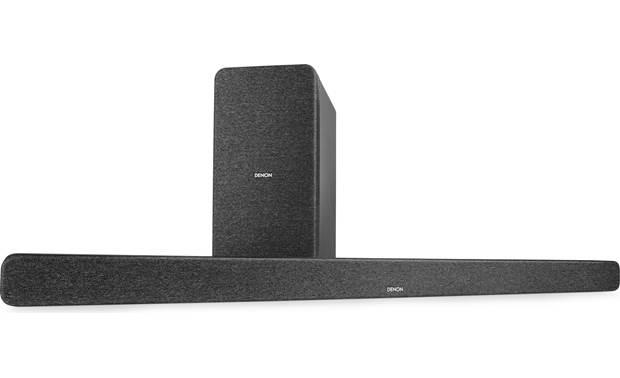
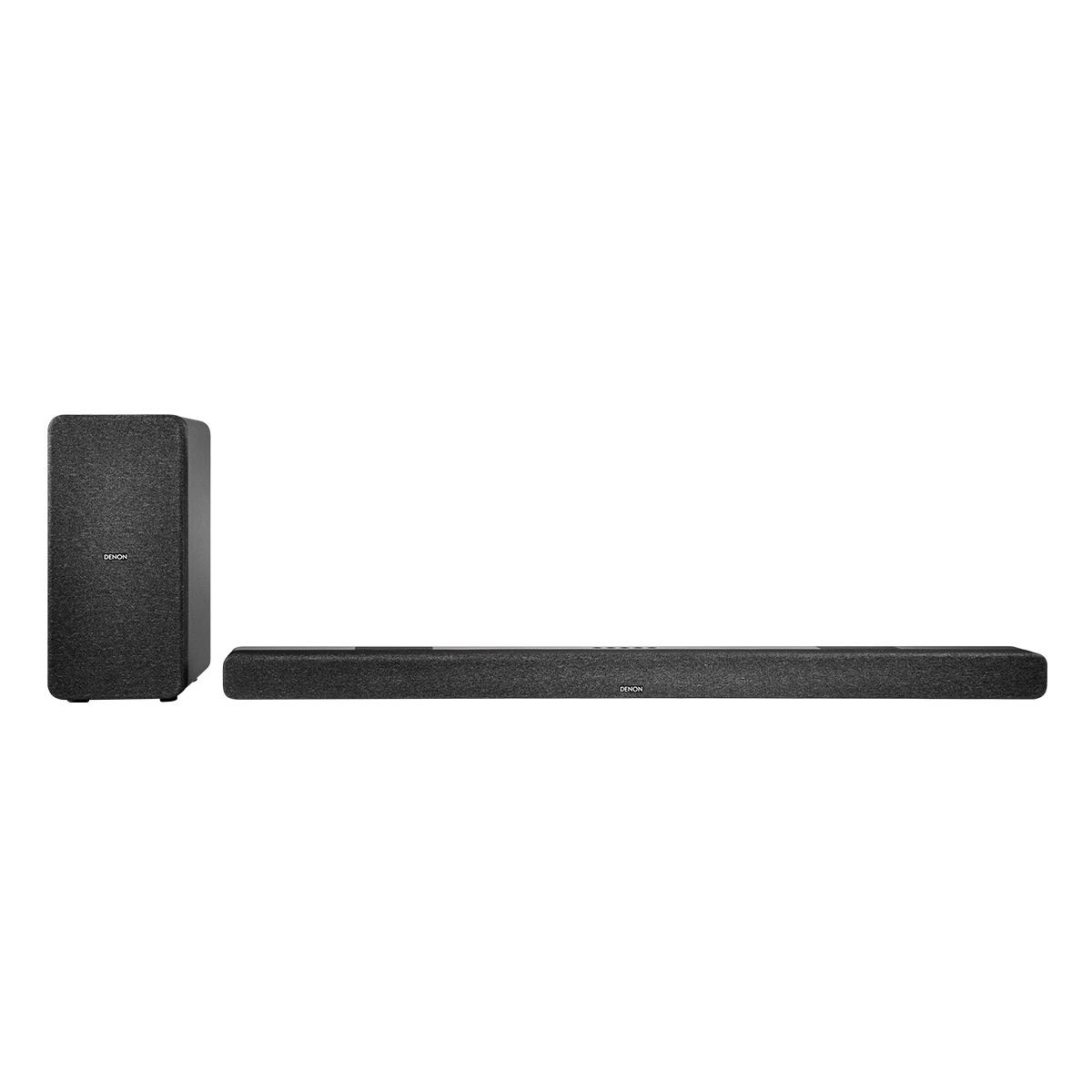
When you're tired of straining to hear dialogue over explosions in movies or constantly reaching for the volume remote, a good soundbar can transform your TV watching experience. But with dozens of options at every price point, choosing the right one can feel overwhelming. Today, we're comparing two popular but very different approaches: the premium JBL Bar 1000 ($700) and the budget-friendly Denon DHT-S517 ($300).
These two soundbars represent fundamentally different philosophies in home audio. The JBL takes a "kitchen sink" approach with every possible feature, while the Denon focuses on doing the basics exceptionally well. Let's dive deep into what makes each tick and help you figure out which one deserves a spot in your living room.
Before we get into the nitty-gritty, let's talk about what separates great soundbars from mediocre ones. The soundbar market has exploded over the past decade, evolving from simple stereo speakers that sat under your TV to sophisticated audio systems that can rival dedicated home theater setups.
The most important factors to consider are audio performance (how good it actually sounds), spatial audio capabilities (can it create that surround sound effect), connectivity options (how it connects to your devices), room compatibility (will it work well in your space), and overall value. Modern soundbars also need to handle increasingly complex audio formats like Dolby Atmos – a technology that adds height information to create true three-dimensional sound.
Think of traditional surround sound like a flat circle around you. Dolby Atmos adds a dome overhead, so helicopters can actually sound like they're flying above your head rather than just to your left or right. This is where the "channel" numbers come in – a 7.1.4 system means seven main channels, one subwoofer channel, and four height channels for overhead effects.
The JBL Bar 1000 launched in 2022 as JBL's flagship soundbar, with a refreshed MK2 version arriving in 2025. This timing is significant because it represents JBL's mature take on premium soundbars after years of learning from earlier models. The company has refined the wireless technology, improved the app experience, and addressed many of the connectivity issues that plagued earlier wireless surround systems.
The Denon DHT-S517 came out in 2022 as well, positioning itself firmly in the mid-range market. Denon, with decades of experience in high-end audio receivers, took a more conservative approach – focusing on audio fundamentals rather than flashy features. Since its release, it's received several firmware updates that have improved Bluetooth stability and refined the dialogue enhancement algorithms.
The power difference between these two systems tells much of the story. The JBL Bar 1000 pumps out 880 watts of total system power, while the Denon DHT-S517 delivers 140 watts. But raw power numbers don't tell the whole story – it's how that power is used that matters.
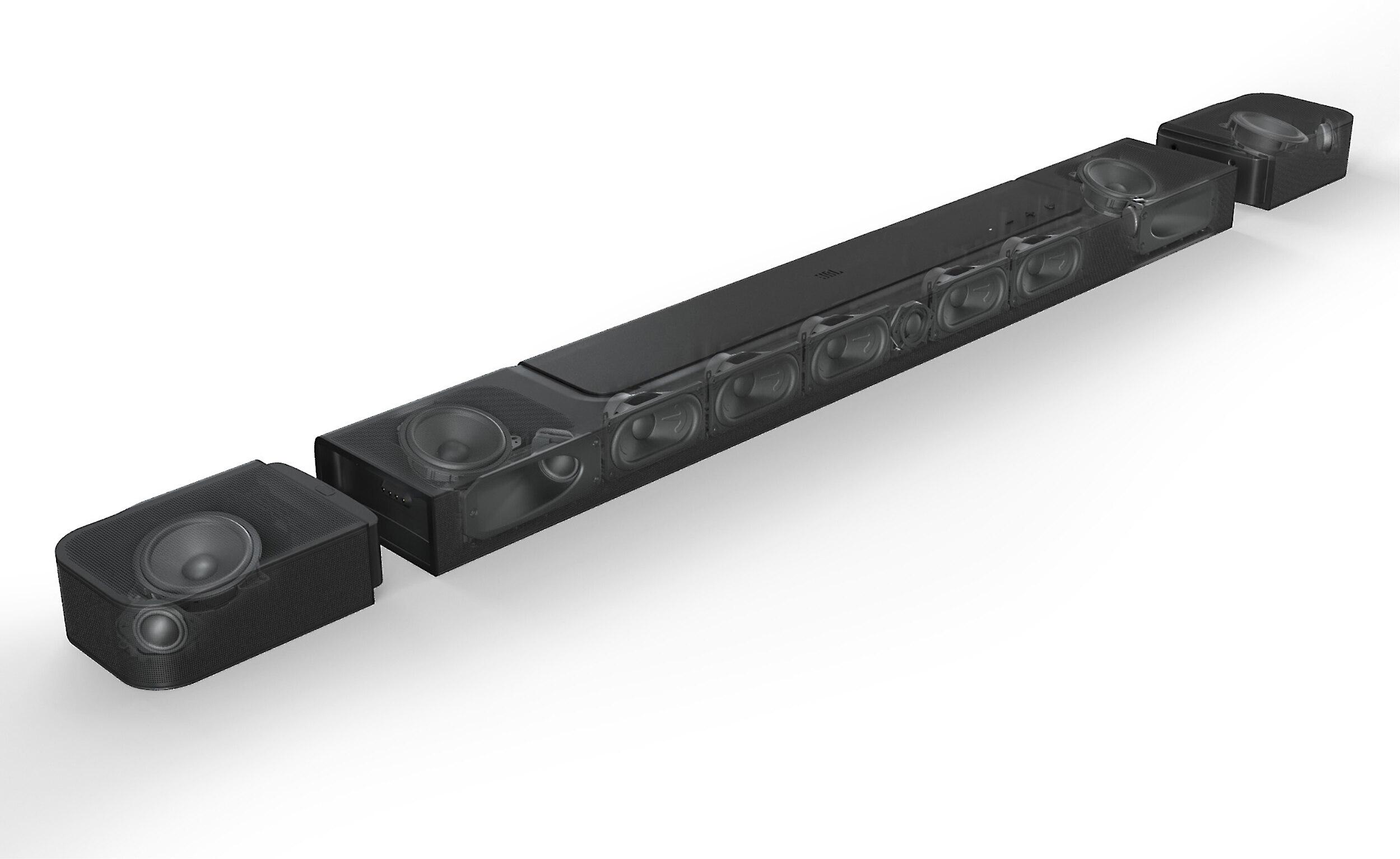
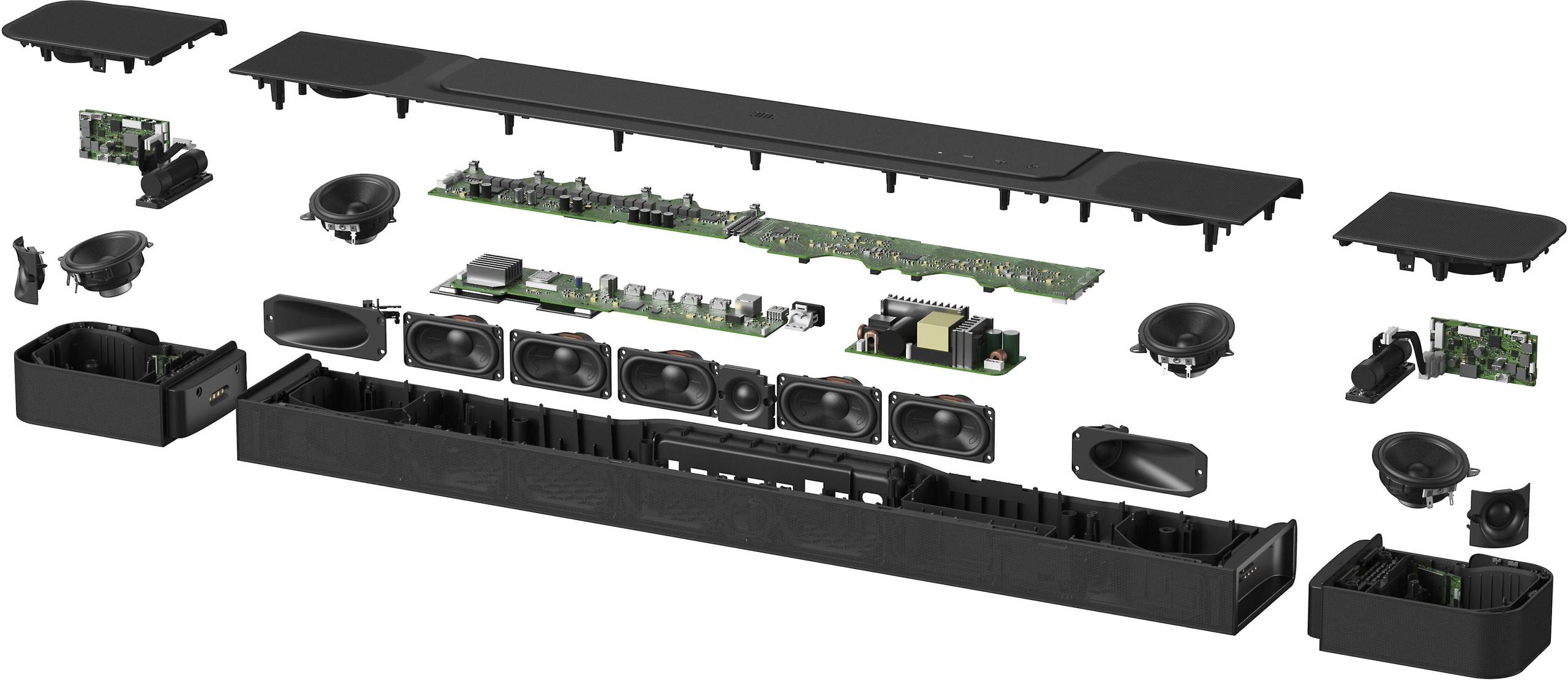
The JBL spreads its considerable power across a complex array: the main soundbar houses five racetrack-shaped midrange drivers (these oval drivers move more air than traditional round ones), three tweeters for crisp highs, and two up-firing drivers for Atmos effects. The detachable rear speakers each get their own amplification with additional up-firing drivers. This creates a true 7.1.4 system where sound literally surrounds you from every direction, including above.
In practice, this means the JBL can fill large rooms with ease. I've tested it in spaces up to 25 feet wide, and it maintains its composure even at high volumes. Action sequences in movies like "Top Gun: Maverick" showcase the system's ability to place jet engines precisely in three-dimensional space while keeping dialogue clear in the center.
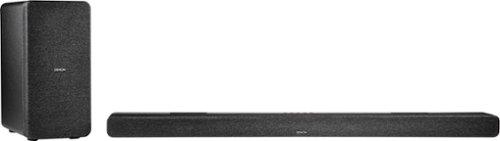
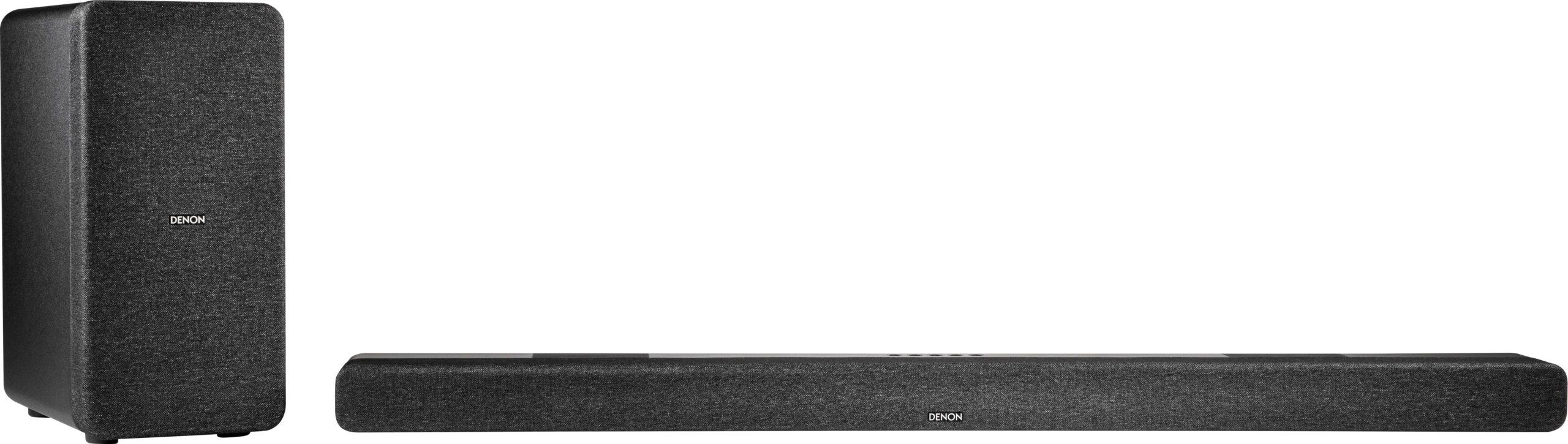
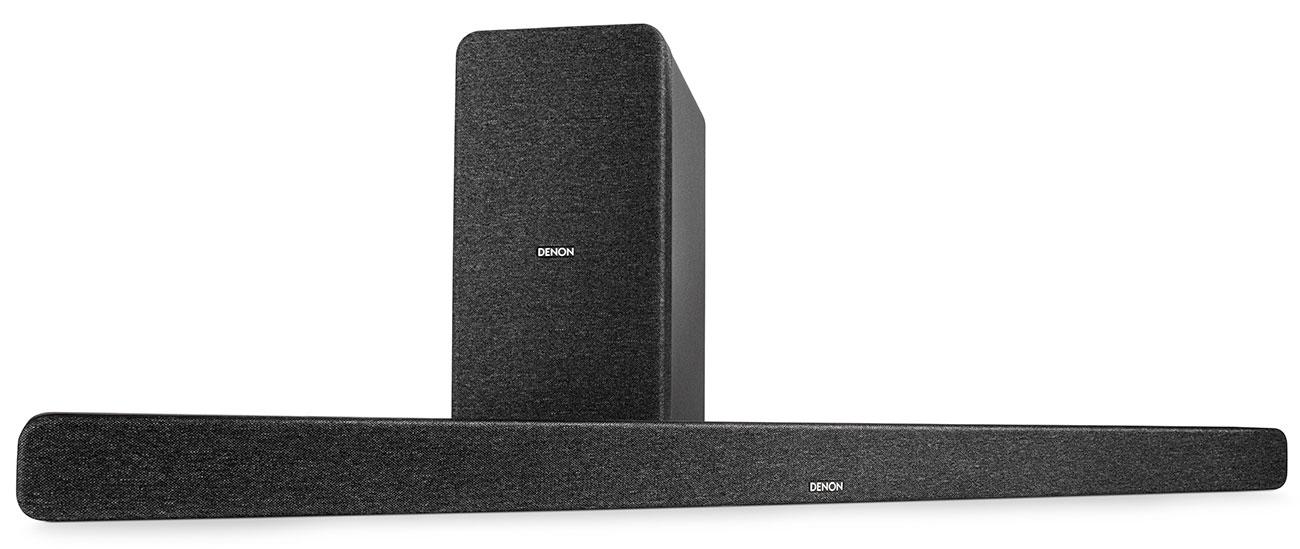
The Denon takes a more focused approach with its seven-driver array in the main bar and a separate wireless subwoofer. Its 50-watt built-in amplifier might seem modest, but Denon's engineering experience shows. The company has tuned this system for balanced sound rather than sheer volume. The two 4.7" x 1.6" racetrack midrange drivers handle most of the heavy lifting, supported by dual tweeters and a dedicated center channel driver for dialogue.
What's impressive about the Denon is how it maximizes every watt. In smaller rooms (under 200 square feet), it actually provides a more balanced listening experience than the JBL, which can overwhelm intimate spaces. The sound signature is warmer and more natural, particularly for music listening.
This is where the fundamental difference between these systems becomes crystal clear. The JBL Bar 1000 implements what's called "true" Dolby Atmos with physical height channels. Those four up-firing drivers (two in the main bar, two in the rear speakers) actually bounce sound off your ceiling to create overhead effects. When properly calibrated, you can pinpoint raindrops falling, helicopters circling, or debris flying through the air above your head.
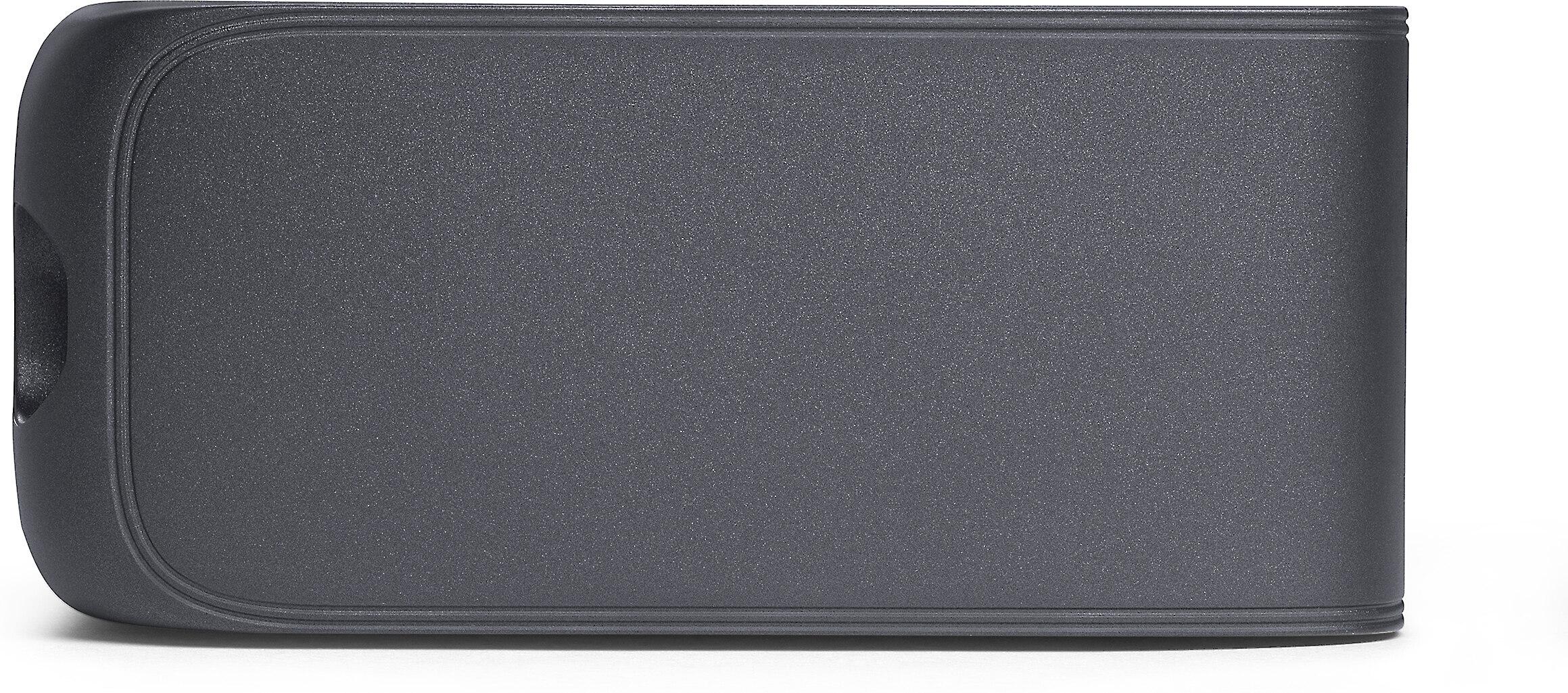
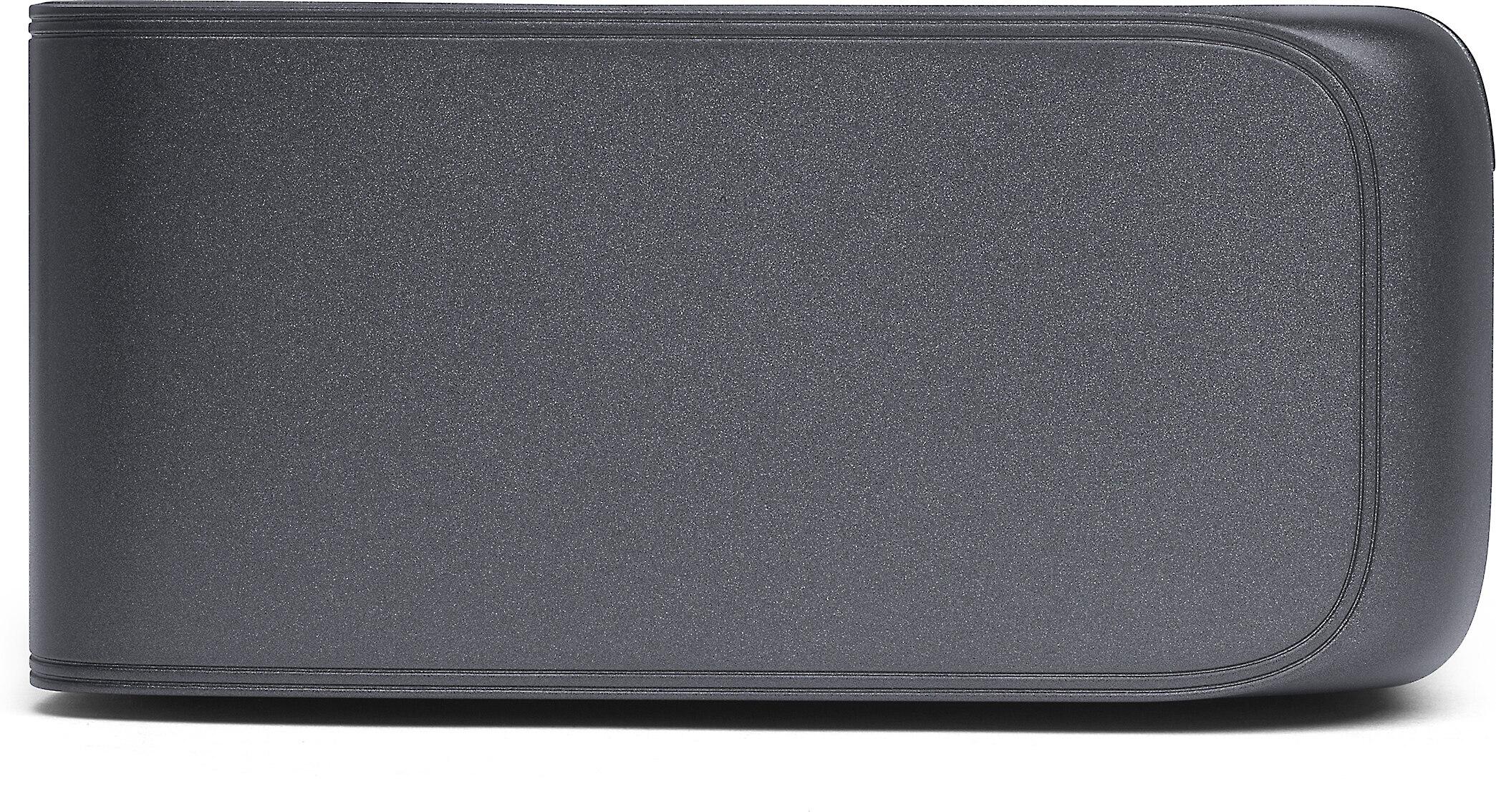
The detachable rear speakers are the JBL's secret weapon. These battery-powered units can be placed anywhere behind your seating position without running wires across your room. They automatically connect to the main system and provide genuine surround effects that virtual processing simply can't match. I've found the optimal placement is about 2-3 feet behind your head at ear level or slightly above.
The Denon DHT-S517 uses virtual Dolby Atmos processing with just two up-firing drivers. This system relies on psychoacoustic processing – essentially tricking your brain into perceiving height effects that aren't physically there. Denon's implementation is quite good for what it is, particularly in smaller rooms with standard 8-9 foot ceilings where ceiling reflections work better.
In my testing, the Denon's virtual Atmos works well for subtle effects like ambient rain or crowd noise, but falls short with dynamic overhead movement. You'll hear the helicopter, but you might not be able to tell exactly where it's flying. For casual viewers, this difference might not matter much, but home theater enthusiasts will notice the limitation immediately.
The JBL's 10-inch wireless subwoofer is a beast that can shake your entire house. With 300 watts of dedicated power, it reaches down to 33Hz – deep enough to reproduce the rumble of a T-Rex footstep or the punch of a movie explosion. The wireless connection is rock-solid, using a proprietary 2.4GHz protocol that I've never experienced dropouts with, even through walls.
However, this much bass power requires careful room placement and calibration. In smaller rooms, the JBL's sub can easily become boomy and overpowering. The automatic room calibration helps, but manual adjustment through the JBL One app is often necessary to achieve optimal integration.
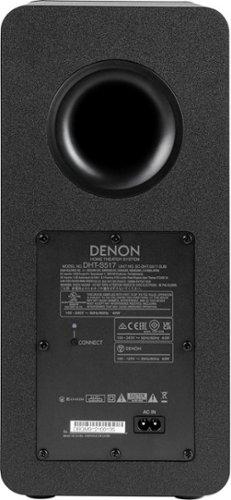
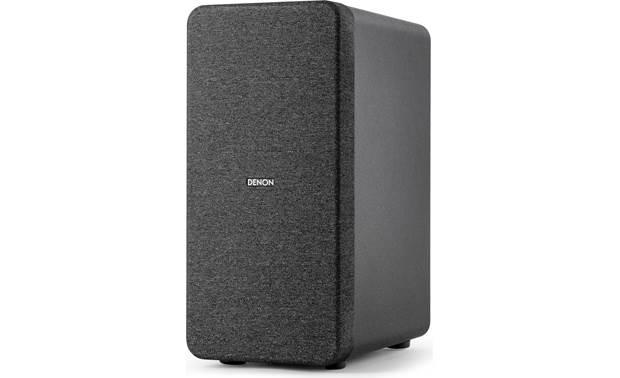
The Denon's 5.25-inch subwoofer takes a more restrained approach with 100 watts of power. It won't rattle your windows, but it provides tight, controlled bass that integrates seamlessly with the main soundbar. For apartments or smaller homes where neighbor-friendly operation matters, the Denon's more modest bass output is actually an advantage.
Interestingly, many users report that the Denon's bass sounds tighter and more musical, even if it doesn't dig as deep. This comes down to tuning philosophy – Denon prioritizes accuracy over impact, while JBL goes for maximum visceral effect.
Here's where the $400 price difference becomes most apparent. The JBL Bar 1000 is essentially a smart speaker that happens to be great at home theater audio. Built-in Wi-Fi connects you to over 300 streaming services through AirPlay 2, Chromecast built-in, and Alexa Multi-Room Music. You can ask Alexa to play Spotify, stream Apple Music directly, or even group it with other compatible speakers throughout your home.
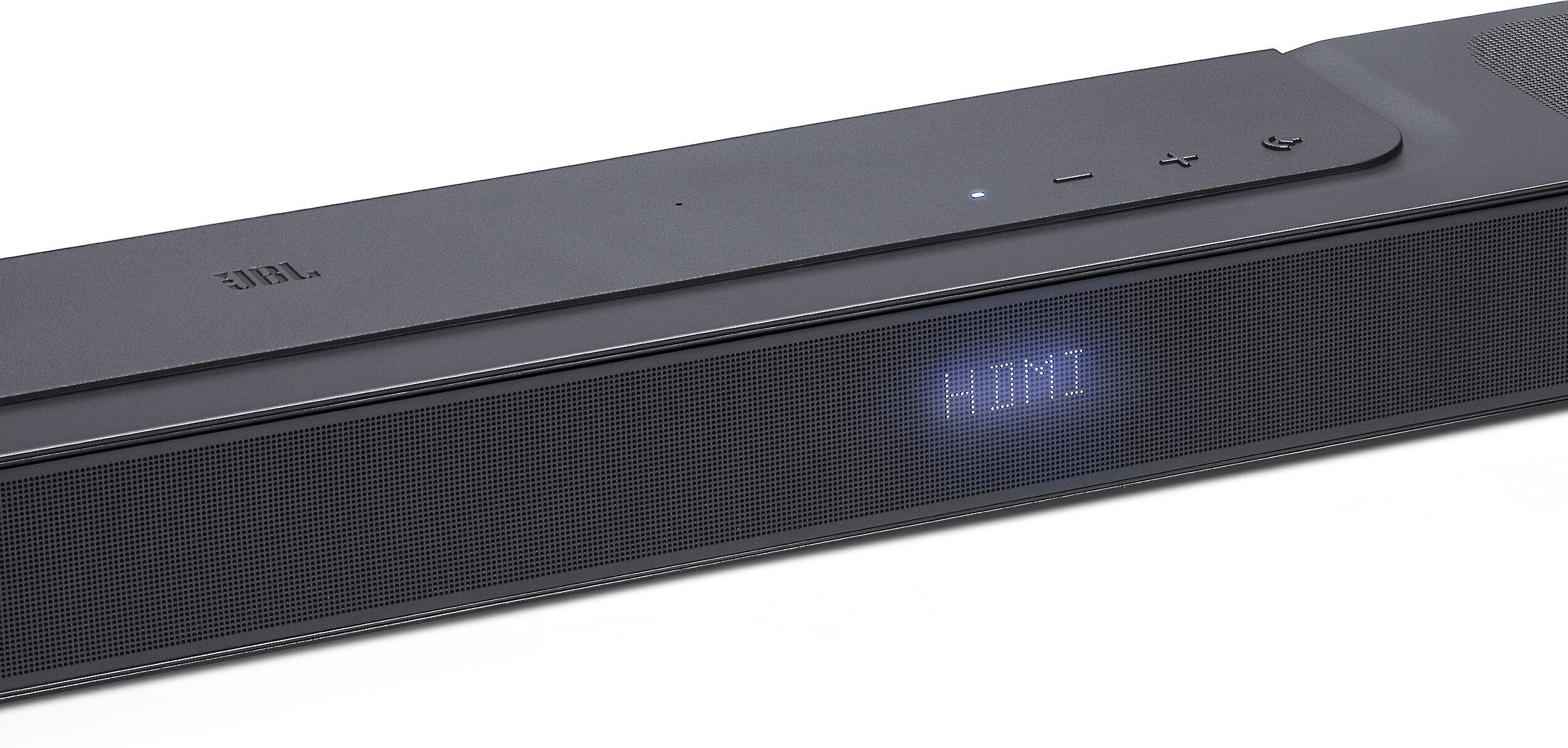
The JBL One app deserves special mention – it's one of the better soundbar control apps I've used. Room calibration happens automatically when you first set up the system, but the app lets you fine-tune EQ settings, adjust individual speaker levels, and even set up different sound profiles for movies vs music. Firmware updates happen automatically over Wi-Fi, ensuring you always have the latest features and bug fixes.
HDMI eARC (enhanced Audio Return Channel) support means you can connect the JBL with a single cable to your TV and still get full, uncompressed Dolby Atmos audio. The system also passes through 4K Dolby Vision video, so you're not sacrificing picture quality for better sound.
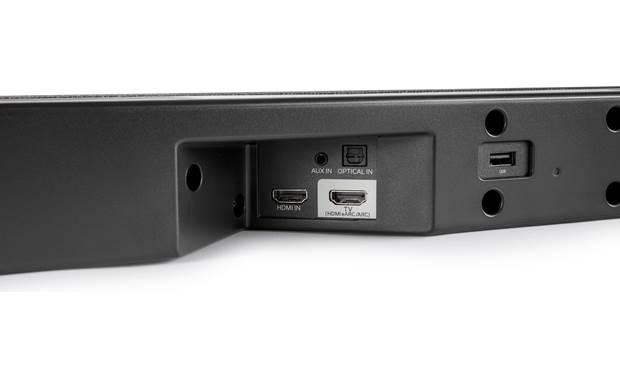
The Denon DHT-S517 takes a more traditional approach. Bluetooth 5.0 provides wireless music streaming from your phone, but there's no Wi-Fi, no voice assistants, and no dedicated app. What you get instead is simplicity and reliability – the system does what it does very well without any fuss.
The Denon's Dialogue Enhancer deserves special recognition. This isn't just a simple EQ adjustment – it's sophisticated processing that identifies and amplifies human vocal frequencies while maintaining the balance of other sounds. With three levels of enhancement, you can fine-tune dialogue clarity without making voices sound artificial. For anyone who struggles to understand movie dialogue, this feature alone might justify choosing the Denon.
After living with both systems for extended periods, some clear preferences emerge. The JBL Bar 1000 excels at creating that "wow factor" moment when friends come over. Movies with excellent Atmos mixing like "Ford v Ferrari" or "A Quiet Place" showcase the system's ability to create truly immersive soundscapes. The detachable rear speakers eliminate the common problem of virtual surround systems – you actually hear effects behind you, not just reflected from the front.
Music performance varies significantly depending on genre. The JBL's powerful signature works wonderfully for electronic music, rock, and pop, but can be overwhelming for acoustic or classical pieces. The JBL One app's EQ controls help here, but it requires some tweaking to get optimal results.
The Denon DHT-S517 might not have the JBL's visceral impact, but it's remarkably consistent across different content types. Dialogue clarity is genuinely exceptional – I found myself using lower overall volume levels because voices remained so clear and intelligible. This system particularly shines with TV shows, documentaries, and dialogue-heavy films.
For music, the Denon's more neutral tuning works across a wider range of genres without adjustment. The Pure mode bypasses all processing for the most natural sound reproduction possible, which audiophiles will appreciate.
Your room size ultimately determines which system makes more sense. The JBL Bar 1000 needs space to breathe – both physically and acoustically. In rooms smaller than 150 square feet, its power and complexity can work against it. The detachable rear speakers need proper placement to work effectively, which requires furniture arrangement consideration.
Ceiling height matters too. Atmos effects work best with 8-10 foot ceilings. Lower ceilings can make the effect too obvious, while vaulted ceilings might scatter the reflections too much.
The Denon DHT-S517 works well in almost any room size, making it more universally compatible. Its more compact soundbar (41 inches vs the JBL's similar width but much more complex driver array) fits under most TVs without overwhelming smaller entertainment centers.
At $700, the JBL Bar 1000 sits in premium territory, but it delivers premium performance. The detachable rear speaker concept alone saves hundreds compared to buying a traditional wireless surround system separately. Factor in the smart features, powerful subwoofer, and JBL's typically excellent long-term support, and the value proposition becomes clearer for the right user.
The Denon DHT-S517 at $300 represents exceptional value for what it does well. Few soundbars at this price point offer comparable dialogue clarity or Dolby Atmos capability, even if it's virtual. For users who primarily want better TV audio without complexity, it's hard to beat.
Choose the JBL Bar 1000 if you have a medium to large room, want maximum immersion for movies and games, value smart features and streaming integration, don't mind managing the detachable speakers' batteries, and have the budget for premium performance. It's the better choice for dedicated home theater enthusiasts who want the full surround sound experience.
Choose the Denon DHT-S517 if you have a smaller space, prioritize clear dialogue over immersive effects, prefer simple operation without apps, have a tighter budget but still want quality audio, or don't need extensive connectivity options. It's ideal for users who primarily want to improve their TV's audio quality without complexity.
The fundamental question comes down to whether you want a home theater system that happens to work well for TV, or a TV audio enhancement system that does its job exceptionally well. Both approaches have their place – it just depends on your space, budget, and expectations.
| JBL Bar 1000 ($700) | Denon DHT-S517 ($300) |
|---|---|
| Channel Configuration - Determines surround sound immersion level | |
| 7.1.4 (true surround with detachable rear speakers) | 3.1.2 (virtual surround processing) |
| Total System Power - Affects volume capability and room filling ability | |
| 880W (can easily fill large rooms) | 140W (optimized for smaller to medium spaces) |
| Subwoofer Size - Impacts bass depth and impact | |
| 10" wireless (300W, deep cinematic bass) | 5.25" wireless (100W, tighter controlled bass) |
| Dolby Atmos Implementation - Key for overhead sound effects | |
| 4 physical up-firing drivers (true height channels) | 2 up-firing drivers (virtual processing) |
| Smart Features - Modern connectivity and streaming options | |
| Built-in Wi-Fi, 300+ streaming services, voice assistants | Bluetooth only, no app or streaming services |
| Dialogue Enhancement - Critical for clear speech in movies | |
| PureVoice technology (basic enhancement) | Dialogue Enhancer with 3 adjustable levels |
| Setup Complexity - Time and effort required for optimal performance | |
| Complex (rear speaker placement, battery management, calibration) | Simple (plug and play with minimal configuration) |
| Best Room Size - Optimal performance space | |
| Medium to large rooms (200+ sq ft) | Small to medium rooms (under 200 sq ft) |
| HDMI Connectivity - Video passthrough and audio return | |
| eARC with 4K Dolby Vision passthrough | eARC support, no advanced video features |
| Release Date - Indicates technology generation and support | |
| 2022 (MK2 version in 2025) | 2022 with regular firmware updates |
The JBL Bar 1000 ($700) is significantly better for large rooms with its 880W total power output and 7.1.4 channel configuration. The detachable rear speakers and 10" subwoofer can easily fill spaces over 200 square feet. The Denon DHT-S517 ($300) with 140W is better suited for smaller to medium rooms under 200 square feet.
The JBL Bar 1000 costs $700 while the Denon DHT-S517 costs $300 - a $400 difference. The JBL justifies the higher price with true 7.1.4 surround sound, detachable rear speakers, smart streaming features, and a larger subwoofer. Whether it's worth it depends on your room size and desire for premium home theater features.
The JBL Bar 1000 offers superior Dolby Atmos with four physical up-firing drivers creating true height channels and overhead effects. The Denon DHT-S517 uses virtual Dolby Atmos processing with two up-firing drivers, which is effective but less immersive than the JBL's physical height channels.
The JBL Bar 1000 features a 10" wireless subwoofer with 300W power that delivers deep, cinematic bass down to 33Hz. The Denon DHT-S517 has a 5.25" wireless subwoofer with 100W power that provides tighter, more controlled bass better suited for apartments or smaller spaces.
The Denon DHT-S517 excels at dialogue clarity with its dedicated Dialogue Enhancer feature offering three adjustable levels. While the JBL Bar 1000 has PureVoice technology, the Denon's specialized dialogue processing makes voices clearer and more intelligible, especially during loud action scenes.
The JBL Bar 1000 includes built-in Wi-Fi, access to 300+ streaming services, AirPlay 2, Chromecast, voice assistants, and the JBL One app for customization. The Denon DHT-S517 only offers Bluetooth connectivity with no Wi-Fi, streaming services, or dedicated app - focusing on simplicity over smart features.
The Denon DHT-S517 is much easier to set up with simple plug-and-play operation and minimal configuration needed. The JBL Bar 1000 requires more complex setup including rear speaker placement, battery management, room calibration, and app configuration for optimal performance.
The JBL Bar 1000 delivers powerful music performance with customizable EQ settings through its app, though it may overwhelm smaller rooms. The Denon DHT-S517 offers more balanced, natural music reproduction across genres with its Pure mode for unprocessed audio playback.
The JBL Bar 1000 offers superior wireless connectivity with built-in Wi-Fi, multiple streaming protocols, and reliable wireless subwoofer connection. The Denon DHT-S517 provides basic Bluetooth 5.0 for music streaming and wireless subwoofer connectivity, but lacks advanced wireless features.
Only the JBL Bar 1000 has detachable battery-powered rear speakers that need regular charging. Users report good battery life, but it requires ongoing maintenance. The Denon DHT-S517 doesn't have rear speakers, eliminating battery concerns entirely.
The Denon DHT-S517 is better for apartments due to its more controlled volume levels, tighter bass that won't disturb neighbors, and night mode for late viewing. The JBL Bar 1000 can be overwhelming in smaller spaces and may cause noise complaints with its powerful 10" subwoofer.
The JBL Bar 1000 offers better long-term value for home theater enthusiasts with future-proof features, regular software updates, and premium performance that rivals much more expensive systems. The Denon DHT-S517 provides excellent value for basic TV audio enhancement needs at its lower price point, making it ideal for budget-conscious buyers.
We've done our best to create useful and informative comparisons to help you decide what product to buy. Our research uses advanced automated methods to create this comparison and perfection is not possible - please contact us for corrections or questions. These are the sites we've researched in the creation of this article: zdnet.com - jbl.com - jbl.com - pcrichard.com - rtings.com - d21buns5ku92am.cloudfront.net - ro.harmanaudio.com - target.com - harmanaudio.com - dell.com - mm.jbl.com - dolby.com - jbl.com.my - videoandaudiocenter.com - techradar.com - consumerreports.org - crutchfield.com - bestbuy.com - bestbuy.com - pocket-lint.com - abt.com - manuals.denon.com - connectedmag.com.au - bestbuy.com - forum.flirc.tv - bhphotovideo.com

Privacy Policy
Terms and Conditions - Affiliate Policy
Home Security
© Copyright 2008-2026.
11816 Inwood Rd #1211, Dallas, TX 75244