

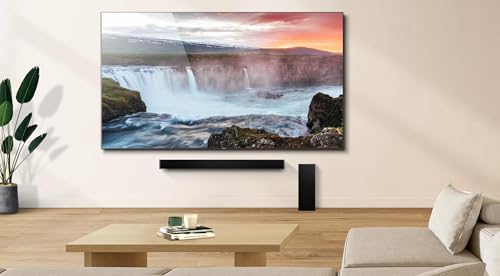

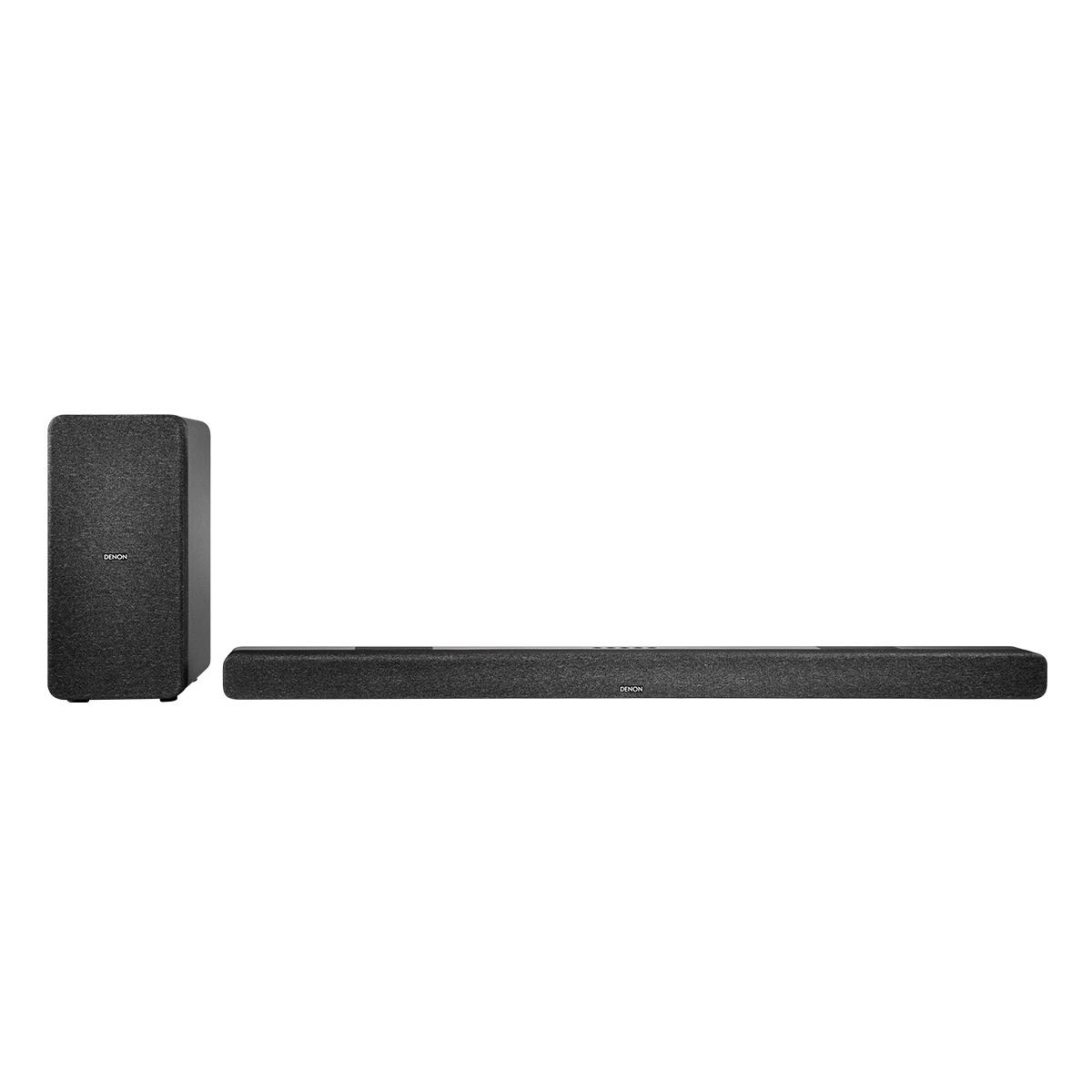
If you've ever found yourself cranking up your TV volume just to understand what the actors are saying, you're not alone. Modern TVs, despite their impressive picture quality, often have terrible built-in speakers that leave dialogue muddy and action scenes flat. That's where soundbars come in—they're designed to transform your viewing experience without the complexity of a full surround sound system.
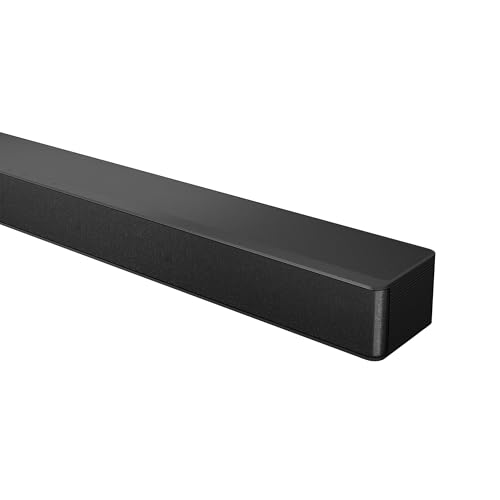
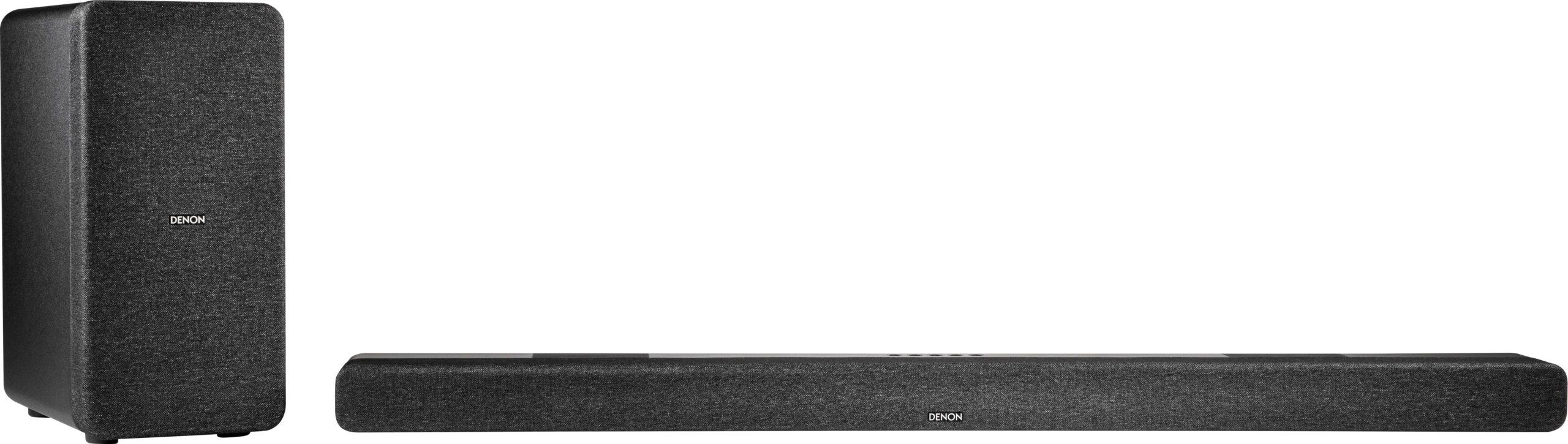
Today we're comparing two very different approaches to better TV audio: the budget-friendly Hisense HS2100 and the more premium Denon DHT-S517. These represent two distinct philosophies in soundbar design, and understanding their differences will help you make the right choice for your setup and budget.
Before diving into our comparison, let's establish what makes a good soundbar in 2024. The technology has evolved significantly since the first basic models appeared in the early 2000s. Today's soundbars use sophisticated digital signal processing (DSP)—essentially computer algorithms that manipulate audio signals to create specific sound effects—along with carefully designed driver arrays to simulate surround sound experiences.
The key specifications you'll encounter are channel configurations, expressed in numbers like 2.1 or 3.1.2. The first number represents left and right front channels, the middle number indicates whether there's a dedicated center channel for dialogue, and the final number (when present) shows height channels that fire sound upward to create overhead effects. A wireless subwoofer, indicated by the ".1," handles low-frequency bass that smaller soundbar drivers can't reproduce effectively.
Audio formats have also advanced dramatically. While older soundbars could only process basic stereo audio, modern systems support Dolby Atmos—a technology that treats sound as objects moving through three-dimensional space rather than just channels. This creates an immersive "dome" of sound that can make you feel like you're inside the movie.
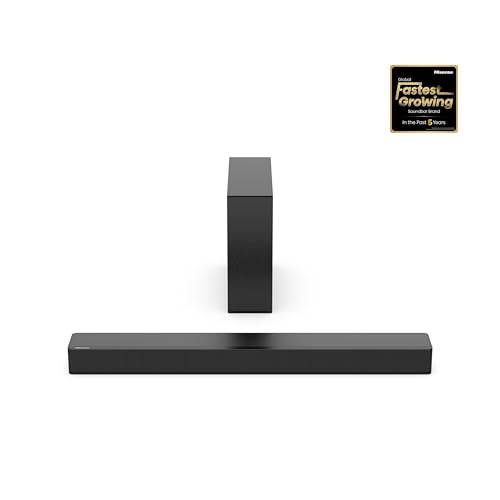
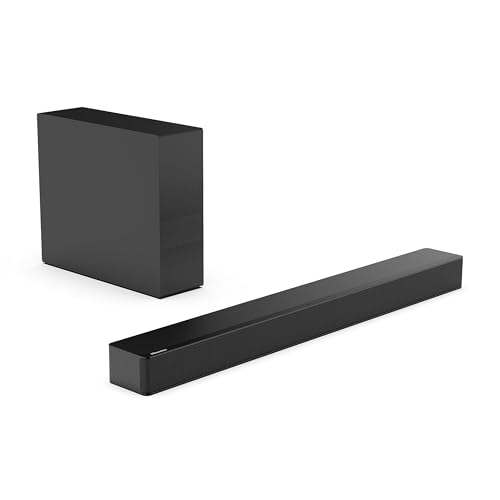
Released in 2023, the Hisense HS2100 represents the "maximum value" approach to soundbar design. At the time of writing, it typically sells for around one-quarter the price of premium alternatives, making it an attractive option for anyone wanting better TV audio without a significant investment.
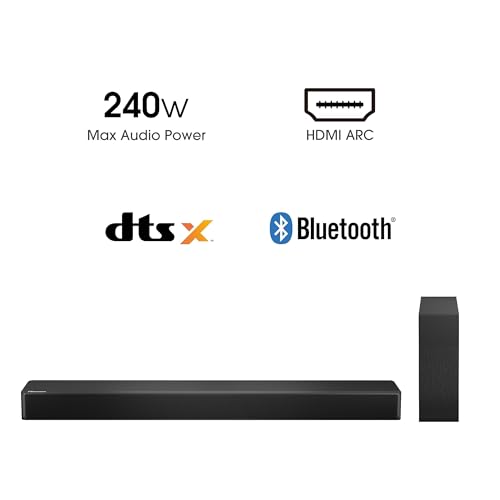
Hisense has built a reputation for delivering surprising performance at low price points, and the HS2100 continues this tradition. It's a 2.1 channel system, meaning it has left and right speakers in the main bar plus a separate wireless subwoofer for bass. The total system claims 240 watts of maximum power—though like most audio specifications, this "peak" power rating should be taken with a grain of salt, as it doesn't reflect typical listening levels.
What makes the HS2100 interesting is its use of DTS Virtual:X technology. This is a clever bit of audio processing that analyzes stereo or surround sound tracks and uses psychoacoustic tricks—basically exploiting how your brain processes directional audio cues—to create the impression of sound coming from locations where there are no actual speakers. While it's not as convincing as having real surround speakers, it's remarkably effective for a 2.1 system.
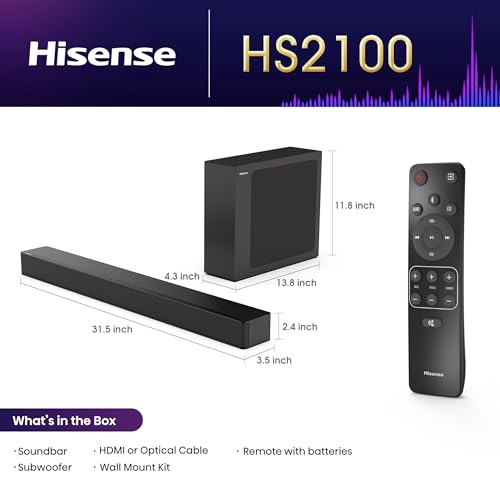
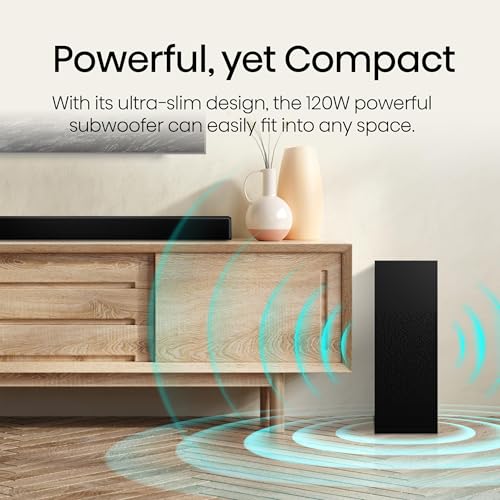
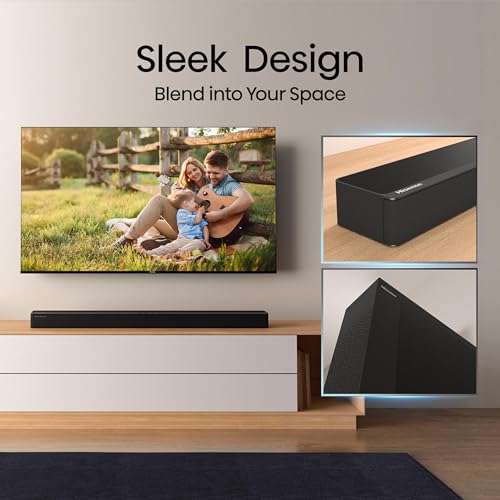
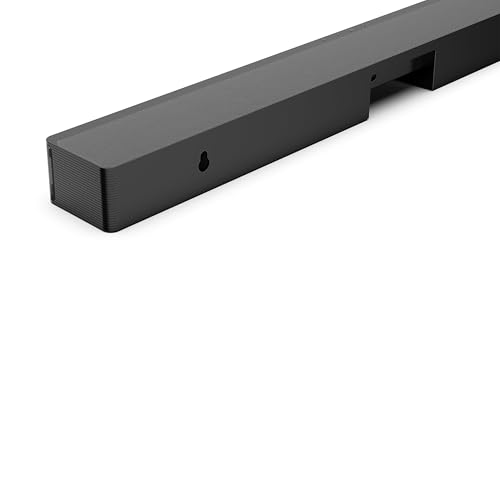
The soundbar itself is remarkably compact at just 31.5 inches wide and only 2.4 inches tall, making it suitable for smaller TVs and tight spaces. The wireless subwoofer is described as "ultra-thin" at just 4.3 inches deep, which is genuinely useful if you're trying to slide it under furniture or against a wall.
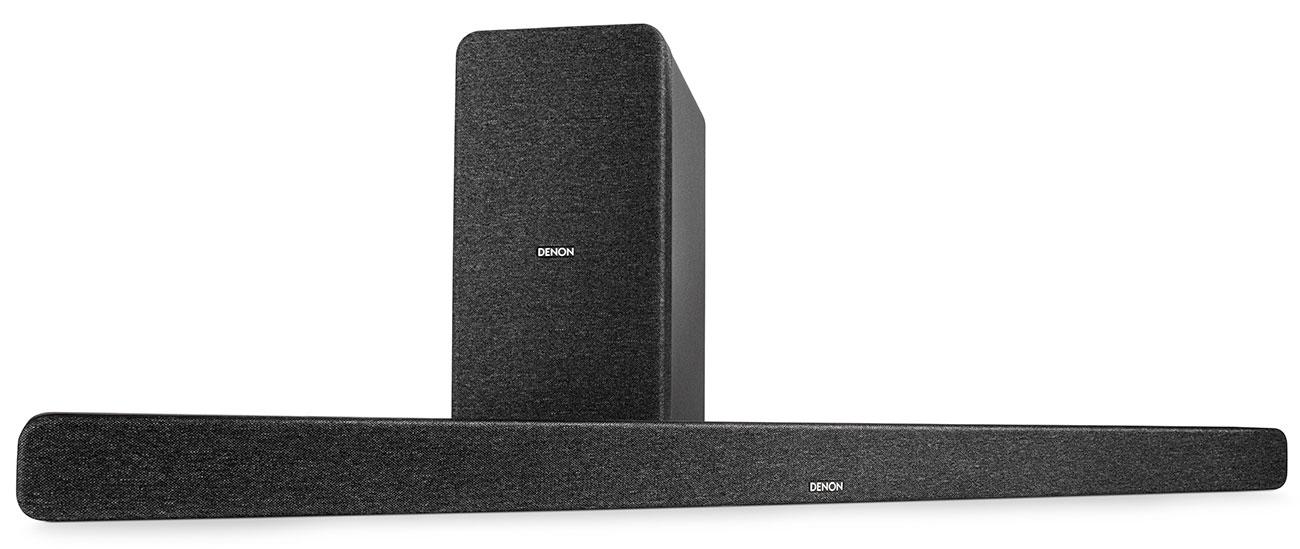
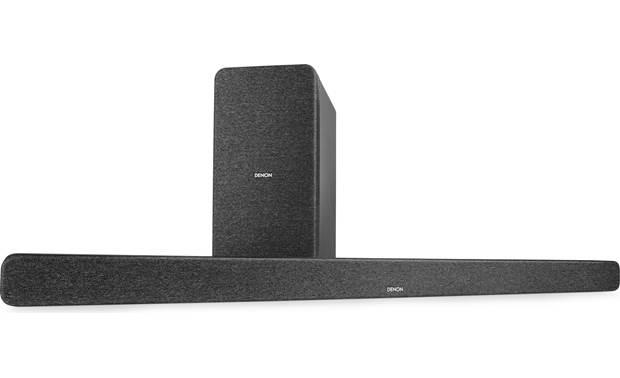
The Denon DHT-S517, launched in 2022, takes a fundamentally different approach. Denon has been making high-end audio equipment since 1910, and their expertise shows in the DHT-S517's sophisticated design. This is a true 3.1.2 system, meaning it has dedicated left, right, and center channels, plus two upward-firing speakers that bounce sound off your ceiling to create genuine height effects.
The seven-driver array is impressive for a soundbar of this size. The center channel uses a dedicated 1-inch full-range driver specifically for dialogue reproduction, while the left and right channels each get both a 1-inch tweeter for high frequencies and a large 4.75 x 1.625-inch racetrack-shaped midrange driver. The two height channels each use 2.5-inch full-range drivers angled upward.
This isn't just about having more speakers—it's about having the right speakers for each job. The dedicated center channel is crucial for dialogue clarity, as it prevents voices from getting lost in the stereo mix. The upward-firing drivers create actual Dolby Atmos effects rather than simulated ones, which makes a noticeable difference with properly mastered content.
The Denon also includes what they call a Dialogue Enhancer with three different intensity levels. This feature can boost dialogue volume independently of other audio elements, which is incredibly useful if you struggle with modern movies' tendency to mix dialogue quietly relative to explosions and music.
Based on our research into professional reviews and user feedback, these two soundbars deliver fundamentally different audio experiences. The Hisense HS2100 offers what reviewers consistently describe as a "warm" sound signature with emphasized bass and slightly rolled-off treble. This creates an immediately appealing sound that makes most TV content feel fuller and more impactful than TV speakers, but it's not particularly accurate to the original recording.
Professional measurements show the HS2100 has decent mid-bass response but limited extension below about 45Hz. In practical terms, this means you'll get satisfying punch from movie explosions and music bass lines, but you won't feel the deep, room-shaking rumble that higher-end systems can produce. The bass can also sound somewhat "boomy"—meaning it's not particularly tight or well-controlled—but it's still a massive improvement over TV speakers.
The Denon DHT-S517, by contrast, aims for accuracy over immediate impact. Reviews consistently praise its balanced tonal presentation and exceptional dialogue clarity. The dedicated center channel makes an enormous difference here—voices remain anchored to the screen and clearly separated from background music and effects, even during complex action sequences.
Where the Denon really shines is in its handling of dynamic content. Movies have enormous dynamic range, meaning the difference between quiet dialogue scenes and explosive action sequences can be 40-50 decibels. Lesser soundbars often compress this range, making everything sound somewhat flat. The DHT-S517 preserves these dynamics while keeping everything intelligible, which is the hallmark of good audio engineering.
This is perhaps the biggest difference between our two contenders. The Hisense HS2100 relies entirely on DTS Virtual:X processing to create surround effects. This technology is genuinely impressive—it can create the illusion of sound coming from beside and behind you using only front-facing speakers. However, it's still an illusion, and experienced listeners can usually tell the difference.
Virtual surround works best with certain types of content and in specific room configurations. It's most effective in smaller, more acoustically controlled spaces where reflections off walls can enhance the effect. The processing also tends to work better with some audio formats than others, and there can be a slight artificial quality to the sound that becomes more noticeable over time.
The Denon DHT-S517 takes a hybrid approach that's far more sophisticated. For horizontal surround effects, it uses similar processing to create the impression of left and right surround speakers. But for height effects, it uses real upward-firing drivers that bounce sound off your ceiling. This creates genuine overhead audio—when a helicopter flies over in a movie, you actually hear it pass above your head rather than just imagining it.
The effectiveness of these upward-firing speakers depends heavily on your room's ceiling height and material. Standard 8-10 foot ceilings with hard surfaces work best, while very high ceilings or acoustic tiles can diminish the effect. In ideal conditions, the height channels create a convincing dome of sound that makes properly mastered Dolby Atmos content significantly more immersive.
Poor dialogue reproduction is probably the number one complaint about modern TV audio, so this deserves special attention. The Hisense HS2100 handles dialogue adequately—it's certainly clearer than TV speakers—but it doesn't have any special processing for voices. It includes a "News" preset mode that supposedly emphasizes dialogue frequencies, but this is just basic equalization rather than sophisticated processing.
The Denon DHT-S517's approach is far more advanced. The dedicated center channel driver is positioned and sized specifically for vocal reproduction, and the Dialogue Enhancer feature is genuinely useful. This isn't just an equalizer—it's dynamic processing that can identify speech in the audio mix and boost it relative to other sounds without making everything sound unnatural.
In our research, users consistently report that the Denon makes it easier to follow dialogue in challenging content like Christopher Nolan films or British television shows with heavy accents. The difference is particularly noticeable at moderate listening volumes, where the Hisense might require you to turn up the overall volume to hear voices clearly, while the Denon keeps dialogue intelligible without making the rest of the soundtrack uncomfortably loud.
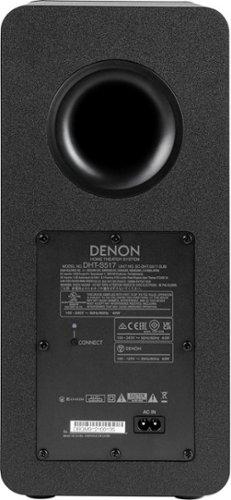
Both soundbars include wireless subwoofers, but they take different approaches to bass reproduction. The HS2100's subwoofer is rated at 120 watts and uses a 5.25-inch driver. It's designed to produce noticeable bass impact that immediately impresses listeners, but professional reviews suggest it's not particularly well-integrated with the main soundbar.
The integration issue means that bass can sound somewhat disconnected from the rest of the audio—you can often localize where the subwoofer is placed, which breaks the illusion of a cohesive soundstage. The bass also tends to be "one-note," meaning it emphasizes certain frequencies while being weak in others. This can make some movie soundtracks sound boomy while leaving music bass lines sounding thin.
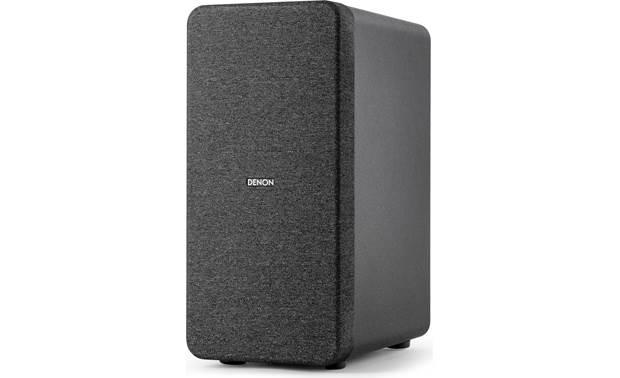
The Denon DHT-S517's 100-watt subwoofer, despite having lower power on paper, consistently receives better reviews for bass quality. The integration algorithms are more sophisticated, creating a seamless blend between the subwoofer and main speakers. The bass extension is also more even across the frequency range, providing both the punch you want for action movies and the articulation needed for complex music.
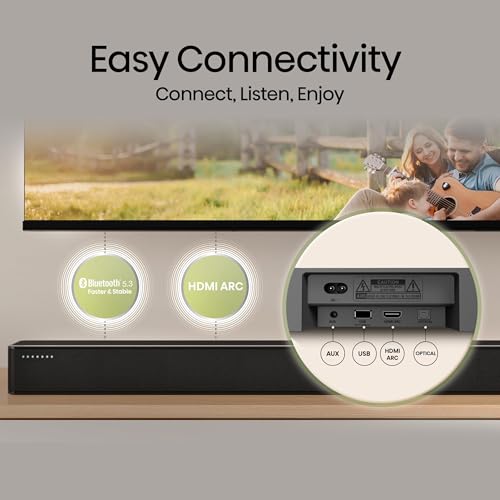
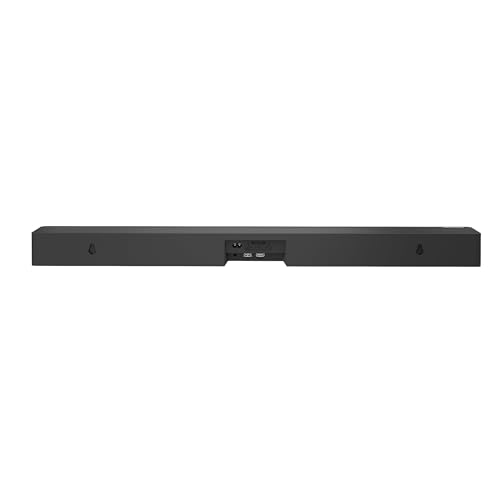
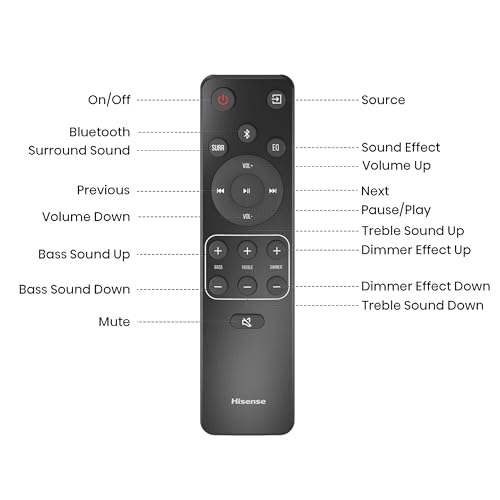
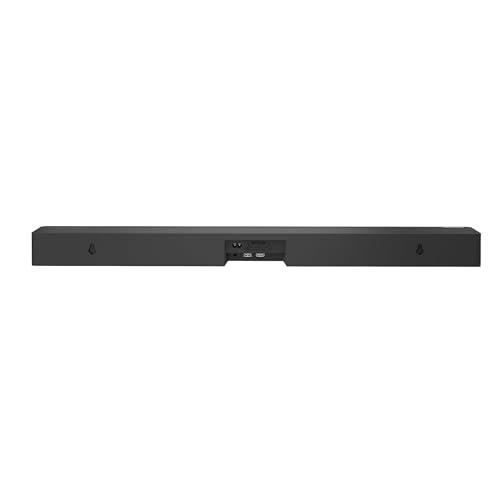
Connectivity options matter more than many buyers initially realize. The Hisense HS2100 offers Bluetooth 5.3 (the latest version, which is actually quite impressive at this price point), optical audio input, 3.5mm analog input, and USB for playing audio files directly. However, it notably lacks HDMI connectivity.
The missing HDMI connection is a significant limitation in 2024. HDMI ARC (Audio Return Channel) and eARC (enhanced ARC) allow for single-cable connection to your TV and enable the TV remote to control soundbar volume. Without this, you need to either use optical audio (which can't carry the highest-quality formats) or deal with multiple remotes.
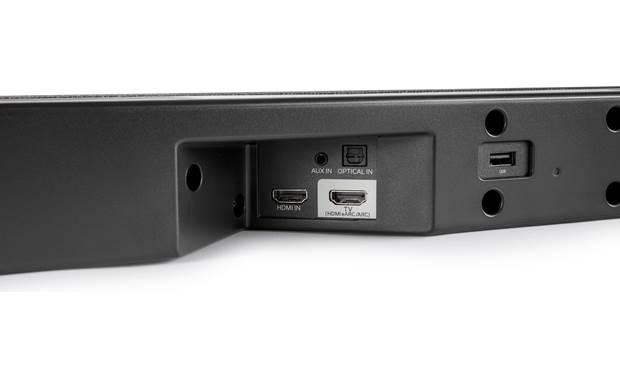
The Denon DHT-S517 includes HDMI eARC, which is the current gold standard for TV connectivity. This allows it to receive high-bandwidth audio formats like Dolby TrueHD and uncompressed multichannel audio that optical connections can't handle. The single-cable setup also enables CEC (Consumer Electronics Control), letting you control the soundbar with your TV remote and automatically powering both devices on and off together.
After extensive research into professional reviews and user feedback, clear usage patterns emerge for each soundbar.
The Hisense HS2100 makes sense for specific scenarios. If you're on a tight budget but want a meaningful upgrade over TV speakers, it delivers impressive bang for the buck. It's ideal for smaller rooms, secondary viewing areas like bedrooms, or situations where you primarily watch TV shows and news rather than movies. The compact size and easy setup also make it perfect for renters who want something temporary but effective.
However, the HS2100 shows its limitations with complex content. Action movies with wide dynamic range expose its compression at high volumes, and dialogue-heavy dramas might still require subtitles despite the improved audio. If you're planning to keep this soundbar for many years or if it's going in your primary entertainment space, you might outgrow its capabilities relatively quickly.
The Denon DHT-S517, despite costing roughly three times as much at the time of writing, represents a different value proposition entirely. This is a soundbar you can live with long-term. The genuine Dolby Atmos implementation, superior dialogue processing, and comprehensive connectivity make it suitable for serious movie watching and music listening.
The Denon particularly excels in home theater applications. If you regularly watch movies with Dolby Atmos soundtracks—which is increasingly common on streaming services like Netflix, Disney+, and Apple TV+—the height channels create noticeably more immersive experiences than virtual processing can achieve. The build quality and two-year warranty also suggest this is designed to be a long-term purchase rather than a stopgap solution.
The choice between these soundbars ultimately depends on your priorities and circumstances. If your budget is constrained and you just want better-than-TV-speaker audio, the Hisense HS2100 delivers solid value. Its warm sound signature and robust bass will make most content more enjoyable, and the compact design fits easily into any setup.
But if you're serious about audio quality and plan to keep your soundbar for several years, the Denon DHT-S517 is worth the investment. The superior dialogue processing alone might justify the price difference if you frequently struggle to understand movie dialogue. Add in genuine Dolby Atmos capability and professional-grade audio engineering, and it becomes a compelling long-term choice.
Consider your viewing habits honestly. If you primarily watch broadcast TV, news, and casual streaming content, the Hisense might provide all the improvement you need. But if you're into movies, premium streaming content, or gaming with high-quality audio, the Denon's additional capabilities will enhance your experience significantly.
The room size and acoustics also matter. In smaller spaces, the differences between these soundbars become less pronounced, while larger rooms reveal the Denon's superior power handling and processing capabilities.
Finally, consider your future plans. Technology moves quickly, and what seems like adequate performance today might feel limiting in a few years. The Denon DHT-S517 offers more room to grow with your expectations and is more likely to remain satisfying as your audio standards evolve.
Both soundbars represent honest value propositions within their respective price brackets. The key is choosing the one that matches your actual needs rather than either over-buying or settling for less than will truly satisfy you long-term.
| Hisense HS2100 | Denon DHT-S517 |
|---|---|
| Channel Configuration - Determines spatial audio capabilities and immersion level | |
| 2.1 channels (stereo + subwoofer) | 3.1.2 channels (left/right/center + sub + height) |
| Dolby Atmos Support - Essential for modern movie/streaming content with overhead effects | |
| No (DTS Virtual:X simulation only) | Yes (dedicated upward-firing drivers) |
| Dialogue Enhancement - Critical for speech clarity in movies and TV | |
| Basic News preset mode | Dedicated center channel + 3-level Dialogue Enhancer |
| HDMI Connectivity - Simplifies TV integration and supports highest audio quality | |
| None (optical/Bluetooth only) | HDMI eARC input/output with CEC control |
| Total Power Output - Affects maximum volume and dynamic range | |
| 240W max (marketing peak rating) | 150W RMS (true continuous power) |
| Subwoofer Design - Impacts bass quality and room placement flexibility | |
| 120W, 5.25" driver, ultra-thin wireless | 100W, refined integration, wireless |
| Sound Modes - Customization options for different content types | |
| 6 presets (Movie, Music, News, Sports, Night, Game) | 3 modes (Movie, Music, Night) + Pure mode |
| Physical Size - Important for TV compatibility and room aesthetics | |
| 31.5" x 2.4" x 3.5" (compact, fits smaller TVs) | 41.3" x 2.3" x 3.8" (larger, professional appearance) |
| Warranty Coverage - Indicates build quality confidence and long-term value | |
| 1 year standard warranty | 2 years parts and labor |
| Audio Format Support - Determines compatibility with streaming and disc content | |
| Dolby Digital, DTS Virtual:X, PCM | Dolby Atmos, Dolby TrueHD, Dolby Digital Plus |
| Target Use Case - Best application for each product's strengths | |
| Budget upgrade, small rooms, casual viewing | Home theater, movies, premium audio experience |
The Hisense HS2100 provides excellent entry-level value, delivering a significant upgrade over TV speakers at a budget-friendly price point. The Denon DHT-S517 costs more but offers professional-grade audio engineering, genuine Dolby Atmos, and superior dialogue processing that justify the higher investment for serious audio enthusiasts.
Only the Denon DHT-S517 supports true Dolby Atmos with dedicated upward-firing speakers that create genuine overhead sound effects. The Hisense HS2100 uses DTS Virtual:X technology to simulate surround sound but cannot process actual Dolby Atmos content with height channels.
The Denon DHT-S517 excels at dialogue reproduction with its dedicated center channel and three-level Dialogue Enhancer feature. The Hisense HS2100 offers decent speech clarity through its News preset mode, but lacks the specialized processing for challenging dialogue scenes.
Both include wireless subwoofers, but the Denon DHT-S517 delivers more refined, well-integrated bass despite lower wattage on paper. The Hisense HS2100 provides more immediately noticeable bass impact but can sound somewhat disconnected from the main soundbar at times.
The Denon DHT-S517 offers HDMI eARC connectivity for single-cable setup and TV remote control integration. The Hisense HS2100 requires optical or Bluetooth connections since it lacks HDMI, which means using multiple remotes and potentially lower audio quality.
The Hisense HS2100 is ideal for smaller spaces with its compact 31.5-inch width and ultra-thin subwoofer design. The Denon DHT-S517 works well in small to medium rooms but its larger size and more powerful output are better suited for spaces where you can fully appreciate its advanced features.
The Hisense HS2100 provides six preset sound modes including Movie, Music, News, Sports, Night, and Game settings. The Denon DHT-S517 offers fewer presets but includes more sophisticated features like the Dialogue Enhancer and Pure Mode for unprocessed audio playback.
For casual music listening, both soundbars perform well, with the Hisense HS2100 offering a warm, bass-forward sound signature. The Denon DHT-S517 provides more accurate, balanced audio reproduction that music enthusiasts will appreciate, especially when using Pure Mode for unprocessed playback.
The Denon DHT-S517 offers superior build quality with premium materials and a 2-year warranty reflecting the brand's audio expertise. The Hisense HS2100 provides solid construction for its price range but includes only a 1-year warranty.
Yes, both support Bluetooth connectivity. The Hisense HS2100 features the newer Bluetooth 5.3 standard, while the Denon DHT-S517 uses Bluetooth 5.0. Both provide reliable wireless music streaming from smartphones and tablets.
The Denon DHT-S517 is significantly better for home theater use with its true Dolby Atmos capability, dedicated center channel, and sophisticated audio processing. The Hisense HS2100 works for casual movie watching but lacks the immersive features serious home theater enthusiasts expect.
The Hisense HS2100 is more compact and flexible for various room sizes and TV configurations. The Denon DHT-S517 requires more space but delivers proportionally better performance in medium to large rooms where its advanced audio processing can be fully appreciated.
We've done our best to create useful and informative comparisons to help you decide what product to buy. Our research uses advanced automated methods to create this comparison and perfection is not possible - please contact us for corrections or questions. These are the sites we've researched in the creation of this article: rtings.com - shop.hisense-usa.com - bestbuy.com - content.syndigo.com - bestbuy.com - hisensedealers.co.ke - stuff.co.za - dtc-aus-api.hisense.com - youtube.com - manuals.plus - youtube.com - bestbuy.com - youtube.com - gallifurniture.com - hisense-usa.com - manuals.plus - uk.hisense.com - device.report - youtube.com - costco.ca - elmcreekwsa.com - gallifurniture.com - techradar.com - consumerreports.org - crutchfield.com - bestbuy.com - bestbuy.com - pocket-lint.com - abt.com - manuals.denon.com - connectedmag.com.au - bestbuy.com - forum.flirc.tv - bhphotovideo.com

Privacy Policy
Terms and Conditions - Affiliate Policy
Home Security
© Copyright 2008-2026.
11816 Inwood Rd #1211, Dallas, TX 75244