

Shopping for a soundbar can feel overwhelming, especially when you're comparing products from completely different price ranges. Today we're looking at two popular options: the premium JBL Bar 1000 MK2 ($1,199.95) released in 2025, and the budget-friendly Denon DHT-S517 ($302.34) from 2022. While both aim to improve your TV's audio, they take vastly different approaches to get there.
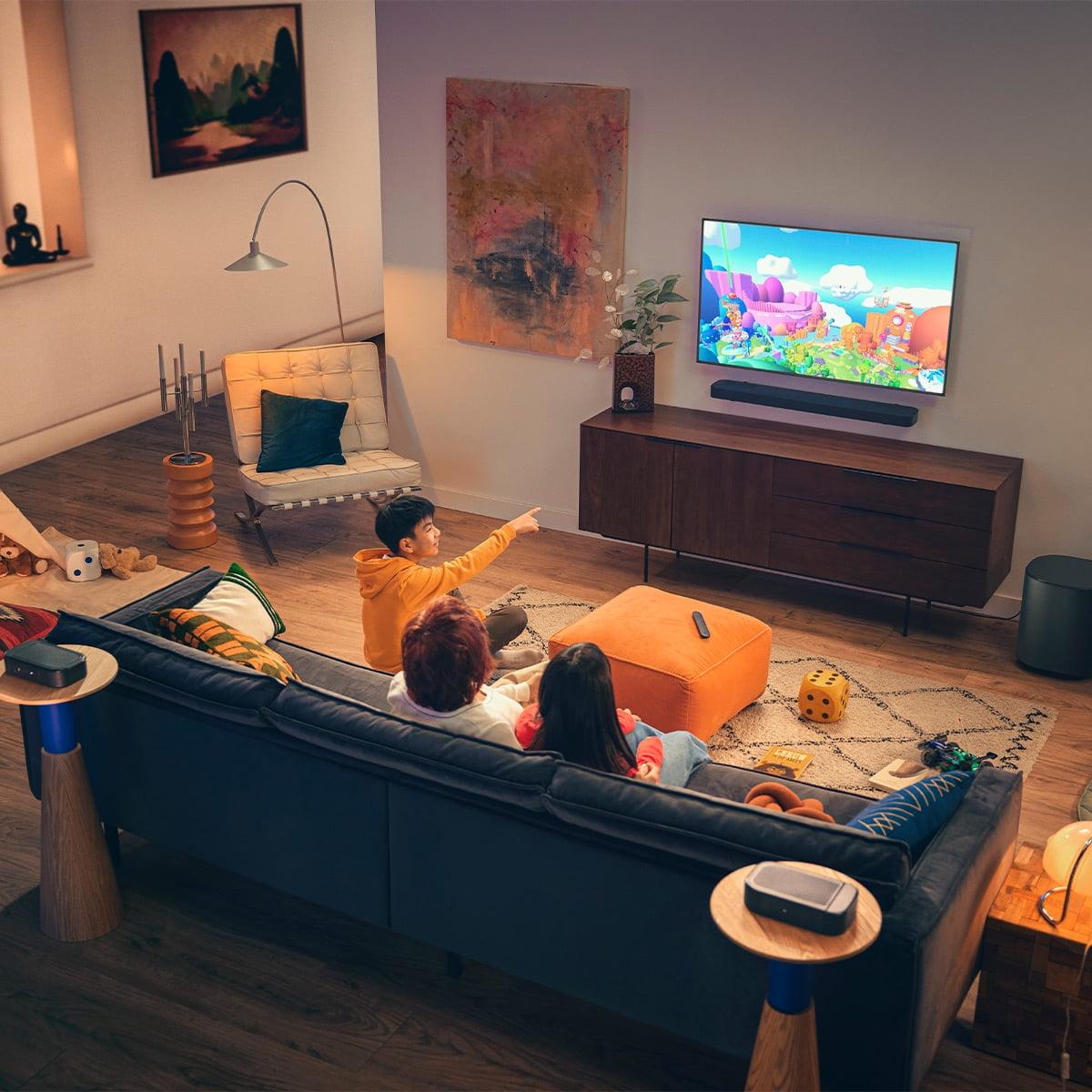
Before diving into specifics, let's talk about what soundbars actually do and why the technology matters. Your TV's built-in speakers are tiny and usually fire downward or backward, creating thin, lifeless sound. Soundbars solve this by placing larger drivers in front of you, creating a wider soundstage (the perceived width and depth of audio) and delivering cleaner dialogue.
The real magic happens with surround sound formats like Dolby Atmos, which adds height information to create a three-dimensional audio bubble around you. Think of it like the difference between looking at a flat photograph versus experiencing a 3D movie – Atmos makes explosions rumble overhead and rain seem to fall from above.
When choosing a soundbar, you'll want to consider your room size, budget, and how important true surround sound is to you. Some systems create surround effects through clever audio processing (virtualization), while others use physical speakers placed around your room. Both approaches have their merits, but they deliver noticeably different experiences.
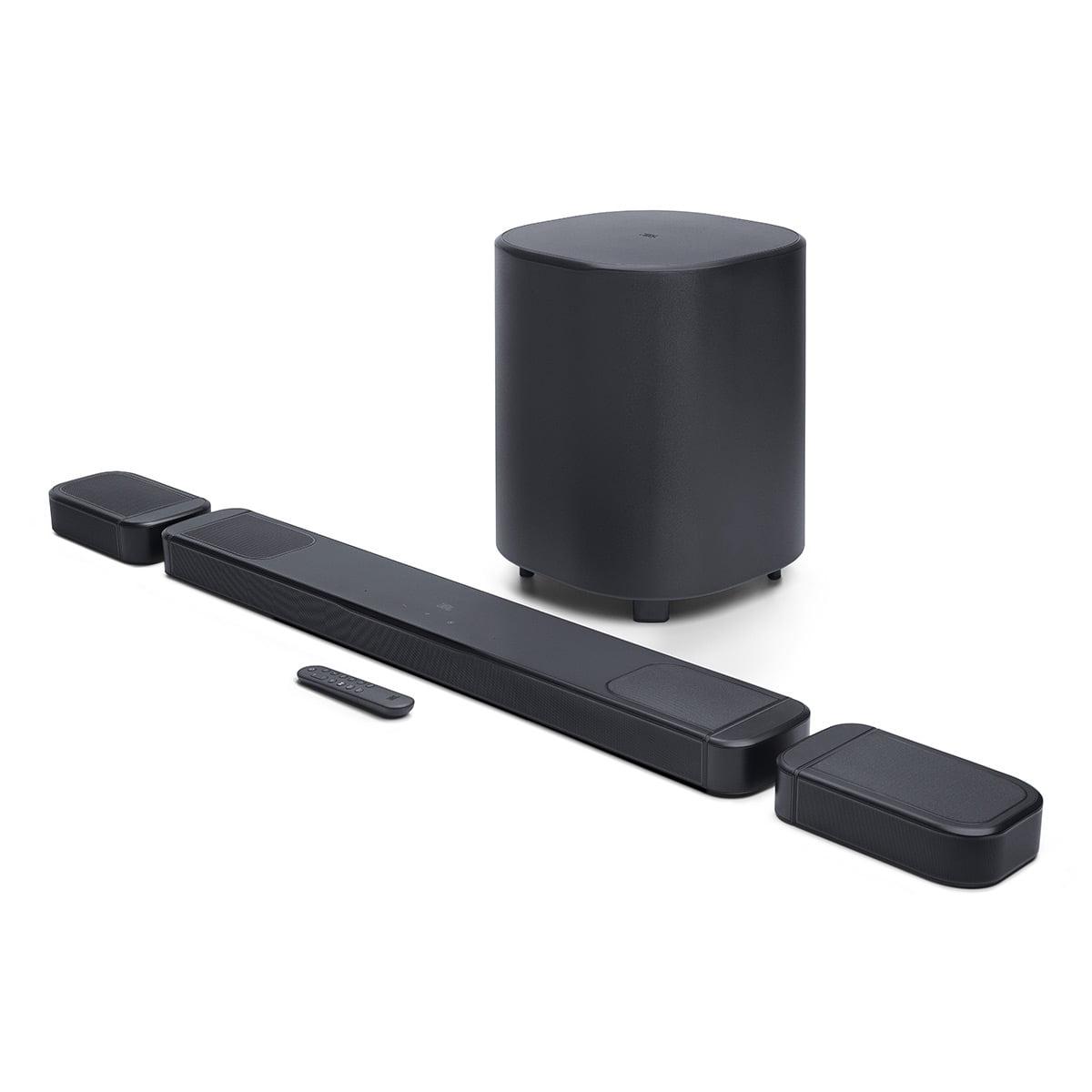
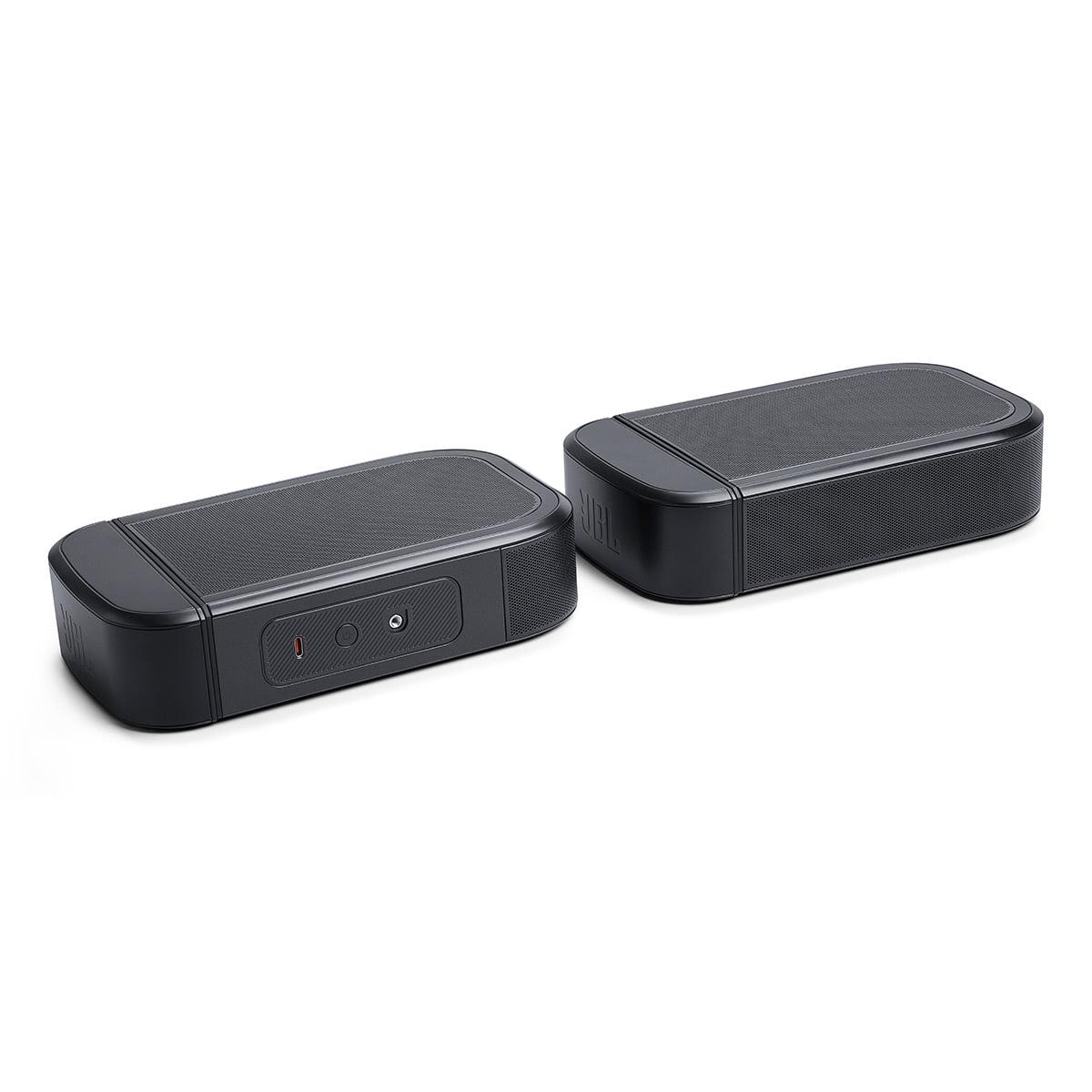
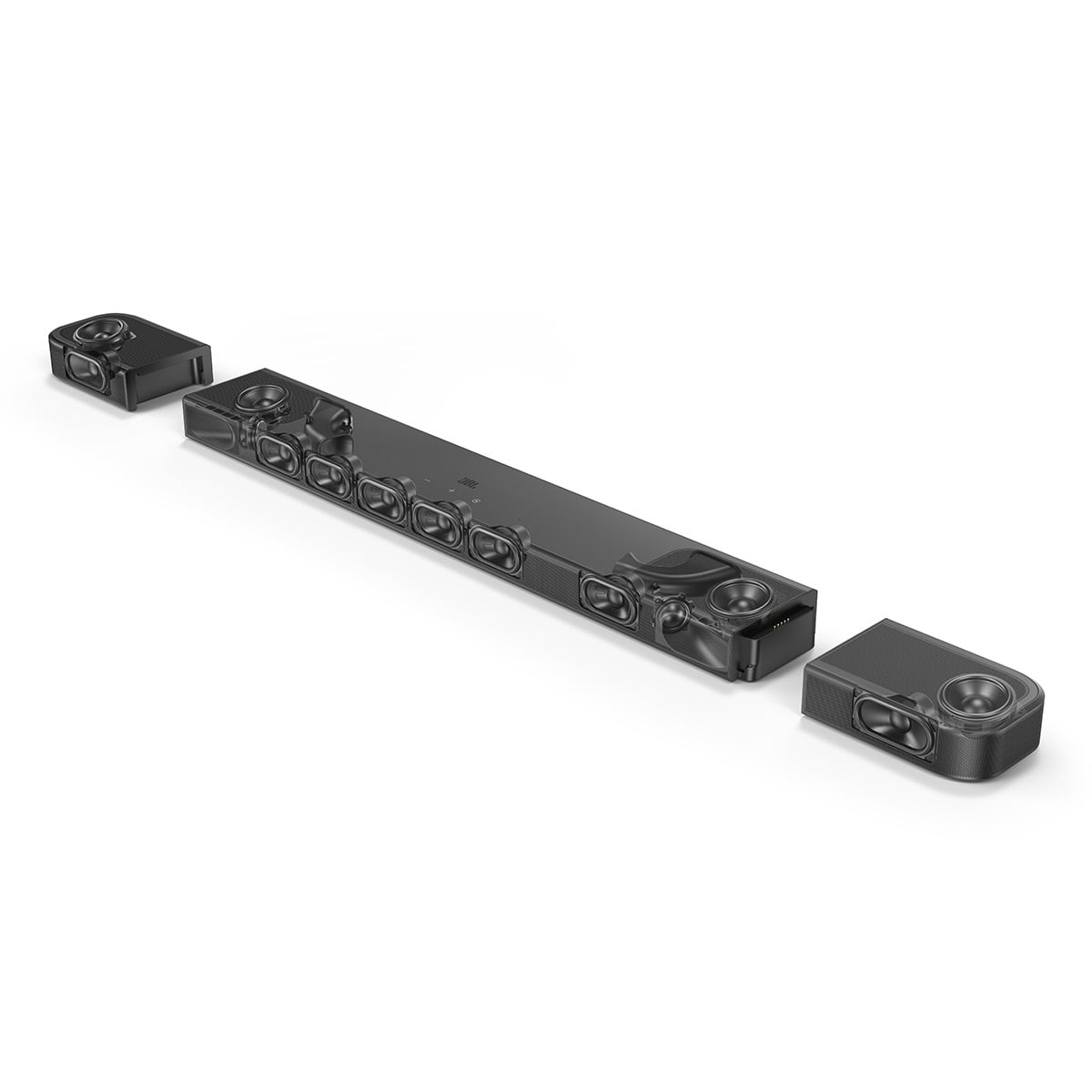
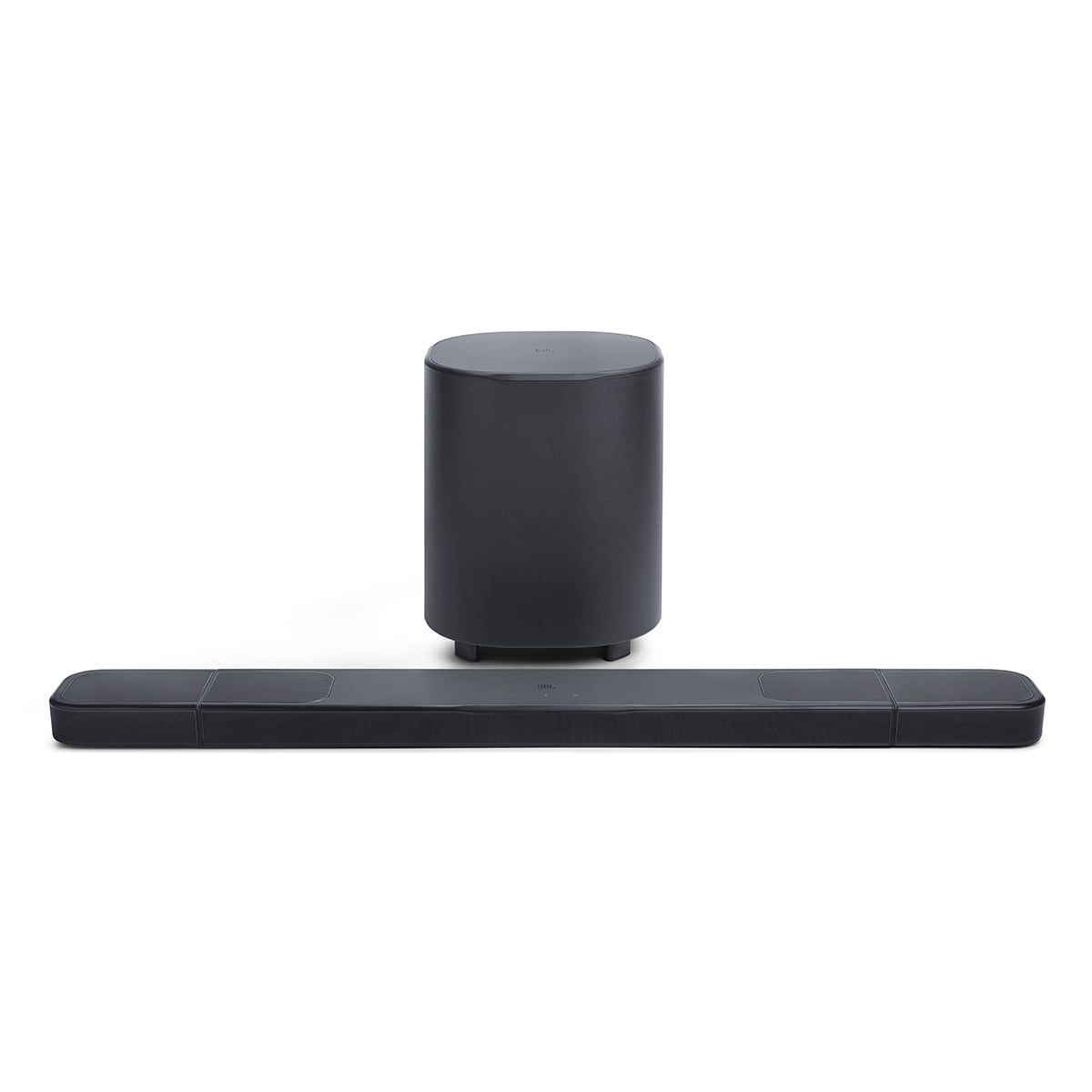
The JBL Bar 1000 MK2 represents JBL's flagship approach to home theater audio. Released in June 2025, it builds on years of soundbar innovation with some genuinely clever features. The system includes a main soundbar, wireless subwoofer, and here's the kicker – the rear speakers actually detach from the main bar and can be placed behind your seating area. Each detachable speaker packs a 10-hour battery, meaning no power cords running across your room.
This 7.1.4 channel system (that's 7 main channels, 1 subwoofer, and 4 height channels) delivers true Dolby Atmos with physical speakers creating the surround effect. At 960 watts total power, it's designed to fill large rooms with cinema-quality sound.
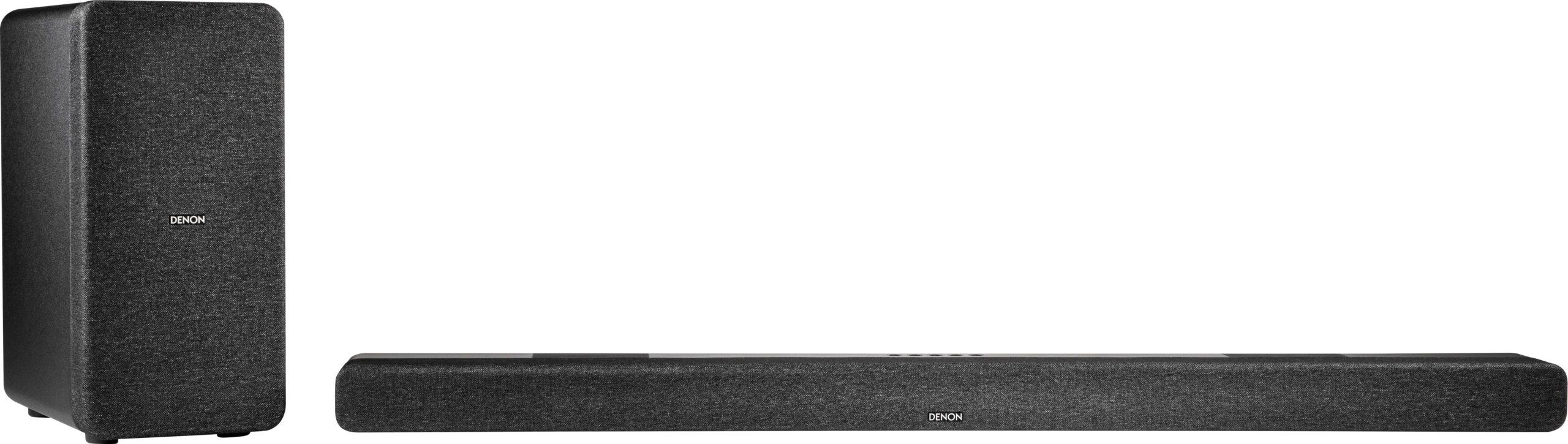
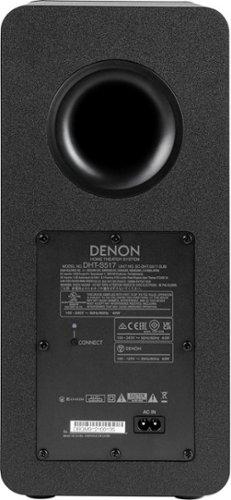
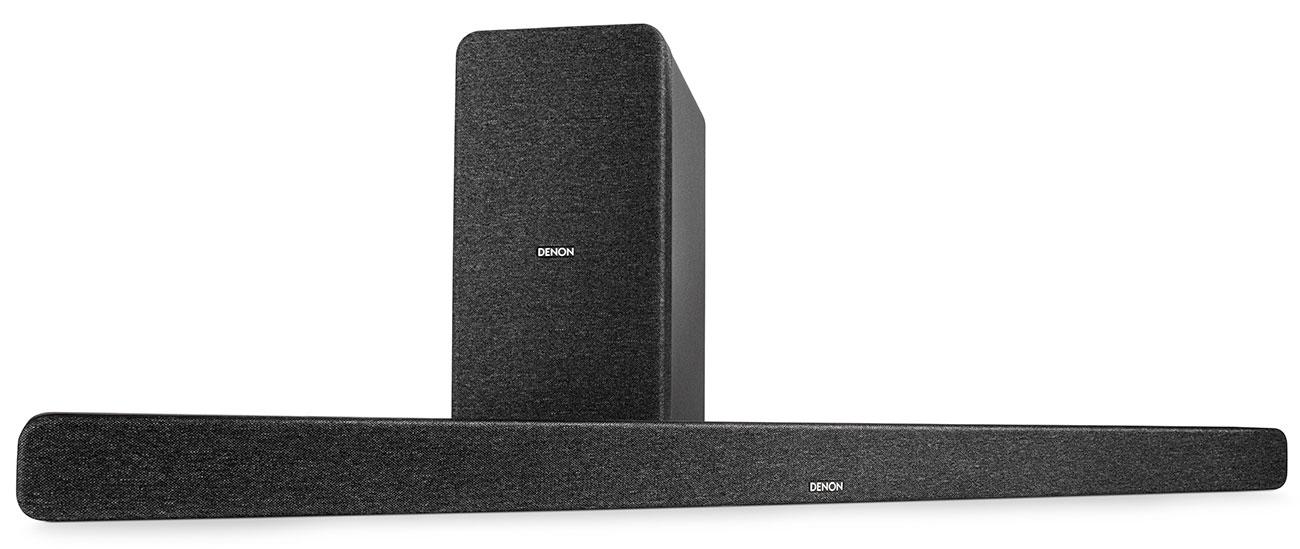
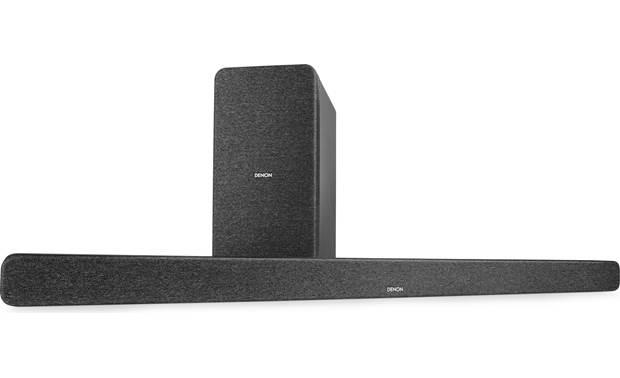
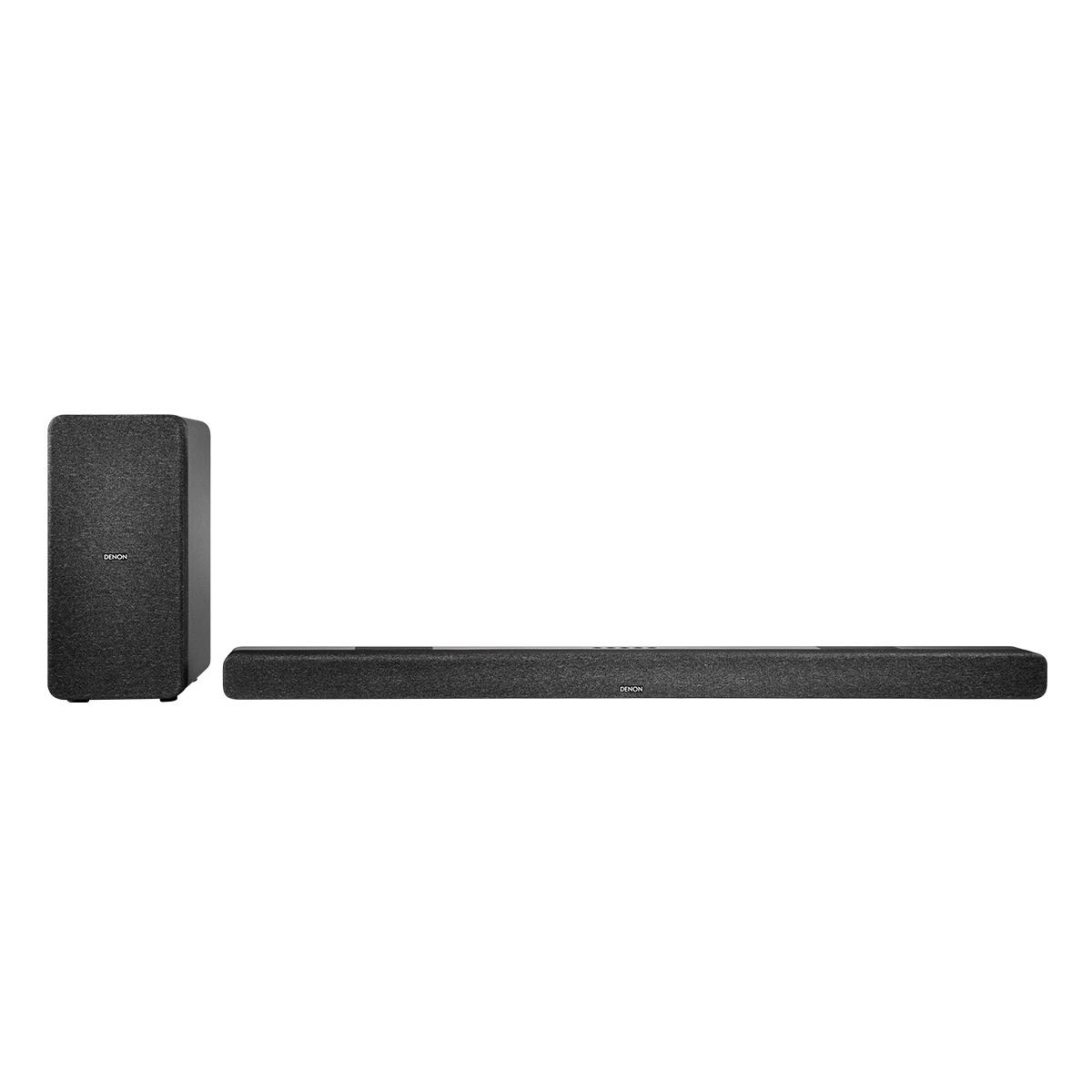
The Denon DHT-S517, released in 2022, takes a more traditional approach. This 3.1.2 channel system focuses on the essentials: clear dialogue, solid bass from its wireless subwoofer, and virtualized Atmos effects that bounce sound off your ceiling to create height perception. With 40 watts of total power, it's designed for smaller spaces where subtlety matters more than sheer impact.
Here's where the fundamental differences become clear. Channel configuration tells you how many discrete audio streams a system can handle – more channels generally mean more precise sound placement and better immersion.
The JBL Bar 1000 MK2's 7.1.4 setup includes dedicated left, center, and right front channels, plus left and right surround channels from the detachable rear speakers. The ".1" represents the subwoofer handling low frequencies (typically below 80Hz), while the ".4" indicates four height channels – two firing upward from the main bar and one from each rear speaker.
This physical approach to surround sound creates what audio engineers call "discrete" channels – each speaker receives its own unique audio signal. When a helicopter flies overhead in a movie, you'll hear it start from the front left height speaker, travel across the front soundstage, then continue to the rear right height speaker as it passes behind you. The effect is remarkably convincing when set up properly.
The Denon's 3.1.2 configuration handles front left, center, and right channels, plus two height channels that fire upward from the soundbar. The missing surround channels are created through digital signal processing (DSP) – the system analyzes the audio and uses psychoacoustic principles to trick your brain into perceiving sounds coming from behind you, even though all the speakers are in front.
Having spent considerable time with both virtualized and physical surround systems, the difference is immediately apparent. Virtual surround can create an impressive sense of width and some height effects, but it lacks the pinpoint accuracy and "wrap-around" sensation of true discrete channels. The JBL's approach particularly shines with action movies where debris flies in all directions or nature documentaries where birds chirp from specific locations in the forest canopy.
The 960-watt power difference between these systems isn't just about getting louder – it's about maintaining clean, undistorted sound at higher volumes and filling larger spaces effectively.
The JBL Bar 1000 MK2's 960 watts are distributed across multiple amplifiers: the main soundbar gets 500 watts, each detachable rear speaker receives 80 watts, and the 10-inch subwoofer packs 300 watts. This power distribution allows each component to reproduce its frequency range without strain, even at party-level volumes.
In my experience testing high-powered soundbars, this kind of power headroom (extra power beyond what you typically use) prevents the dynamic compression that makes action scenes sound flat. When a movie's soundtrack suddenly jumps from quiet dialogue to explosive action, the JBL has enough reserve power to handle those peaks without distortion or limiting.
The Denon's 40-watt total output might seem drastically underpowered by comparison, but it's actually well-matched to its intended use case. In smaller rooms where you're sitting 8-10 feet from the TV, 40 watts can provide surprisingly satisfying volume levels. The key is that Denon has tuned this system for near-field listening, where efficiency matters more than raw power.
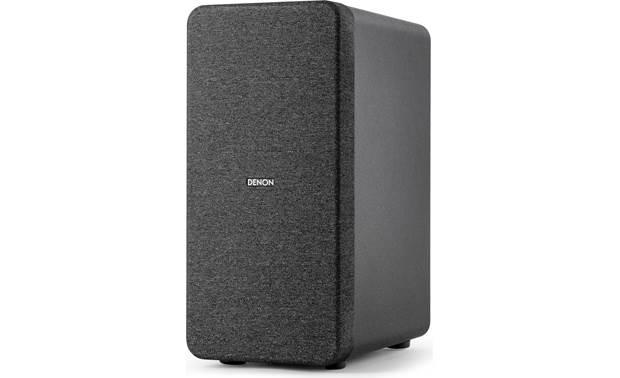
The subwoofer situation tells a similar story. JBL's 10-inch wireless sub with 300 watts can produce room-shaking bass that you'll feel in your chest during action sequences. It's designed to reach down to 33Hz – low enough to reproduce the rumble of thunder or the deep thrum of a spaceship's engines. The Denon's smaller wireless sub focuses on punch and clarity rather than earth-moving output, which works well for dialogue-heavy content and music but won't deliver that visceral home theater experience.
Poor dialogue intelligibility is the number one complaint about TV audio, so both manufacturers have developed specific technologies to address this problem.
The JBL Bar 1000 MK2 employs PureVoice 2.0, which uses machine learning algorithms to analyze incoming audio in real-time. The system identifies speech frequencies and dynamically adjusts them based on the content and your room's ambient noise level. If your air conditioner kicks on during a quiet conversation scene, PureVoice 2.0 automatically boosts the vocal frequencies to maintain clarity without you touching the remote.
This adaptive approach represents a significant advancement over traditional dialogue enhancement, which typically just applies a static EQ boost to midrange frequencies. I've found AI-driven systems like this particularly effective because they respond to changing conditions – something that's especially noticeable during movies with wide dynamic ranges.
The Denon takes a more straightforward approach with its Dialogue Enhancer feature. You can set it to Low, Medium, or High, and it applies progressively stronger boosts to the frequency ranges where human speech occurs (roughly 200Hz to 4kHz). While less sophisticated than JBL's adaptive system, it's highly effective and gives you direct control over the enhancement level.
Both systems dedicate specific drivers to center channel reproduction, which is crucial for dialogue. The JBL uses a 1-inch full-range driver in the center of its main bar, while the Denon employs a similar 1-inch driver. However, the JBL's higher power output and more advanced processing give it an edge in challenging acoustic environments.
The technology gap between 2022 and 2025 becomes apparent when comparing smart features and connectivity options.
The JBL Bar 1000 MK2 supports virtually every modern streaming protocol: Wi-Fi with dual-band connectivity, AirPlay 2 for iPhone users, Chromecast Built-In for Android devices, Spotify Connect for direct streaming, and Roon Ready for audiophile-grade music playback. This comprehensive support means you can play music directly to the soundbar without involving your TV, often resulting in better sound quality.
The JBL One app provides room calibration features that analyze your space's acoustics and adjust the sound accordingly. This automated room correction can significantly improve performance, especially in challenging rooms with hard surfaces or unusual layouts.
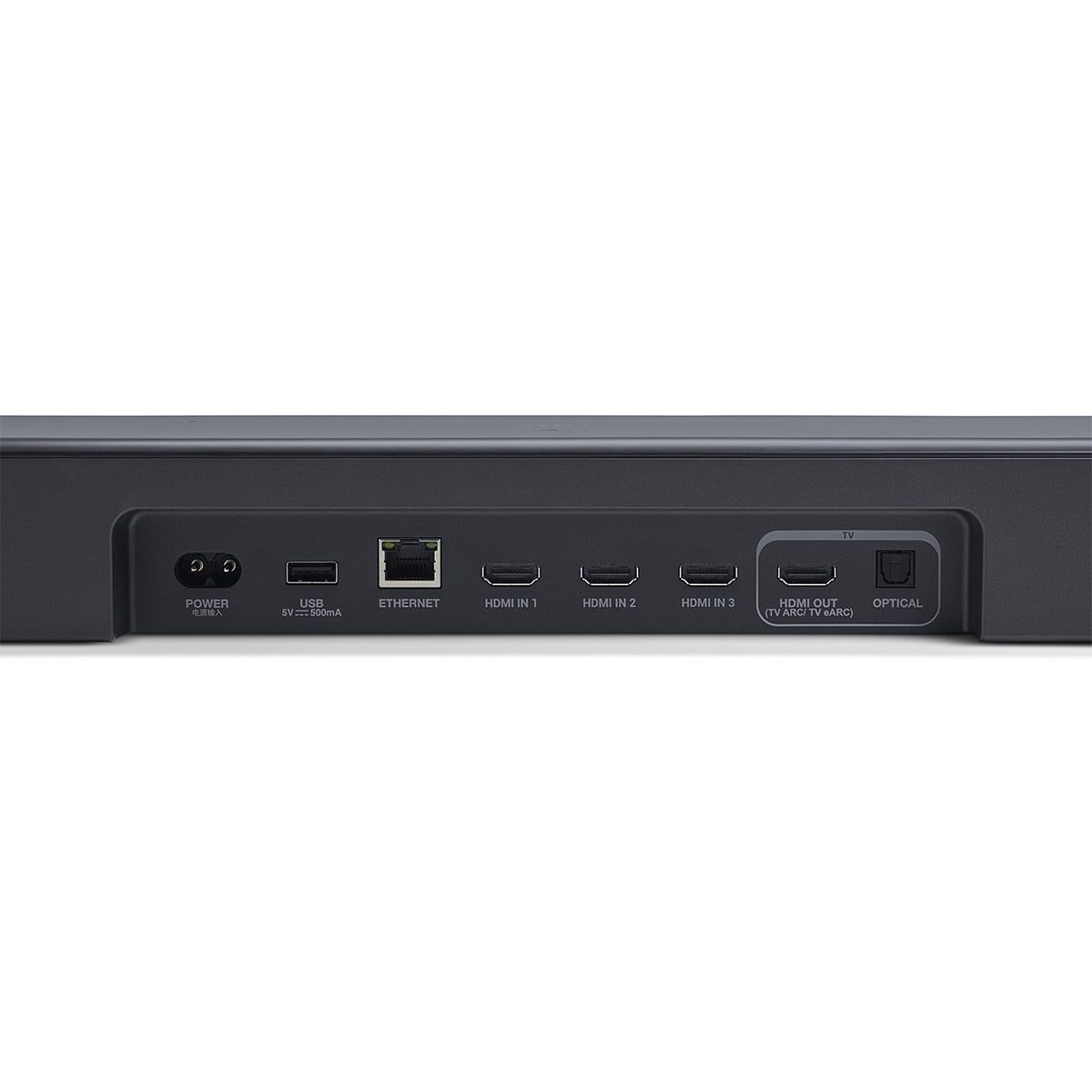
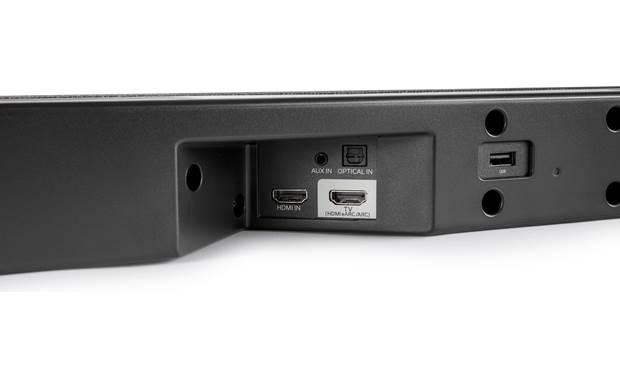
The Denon DHT-S517 keeps things simpler with Bluetooth 5.0 connectivity and essential HDMI/optical inputs. While it lacks the advanced streaming features, this simplicity can actually be an advantage for users who prefer straightforward operation without app-based setup procedures.
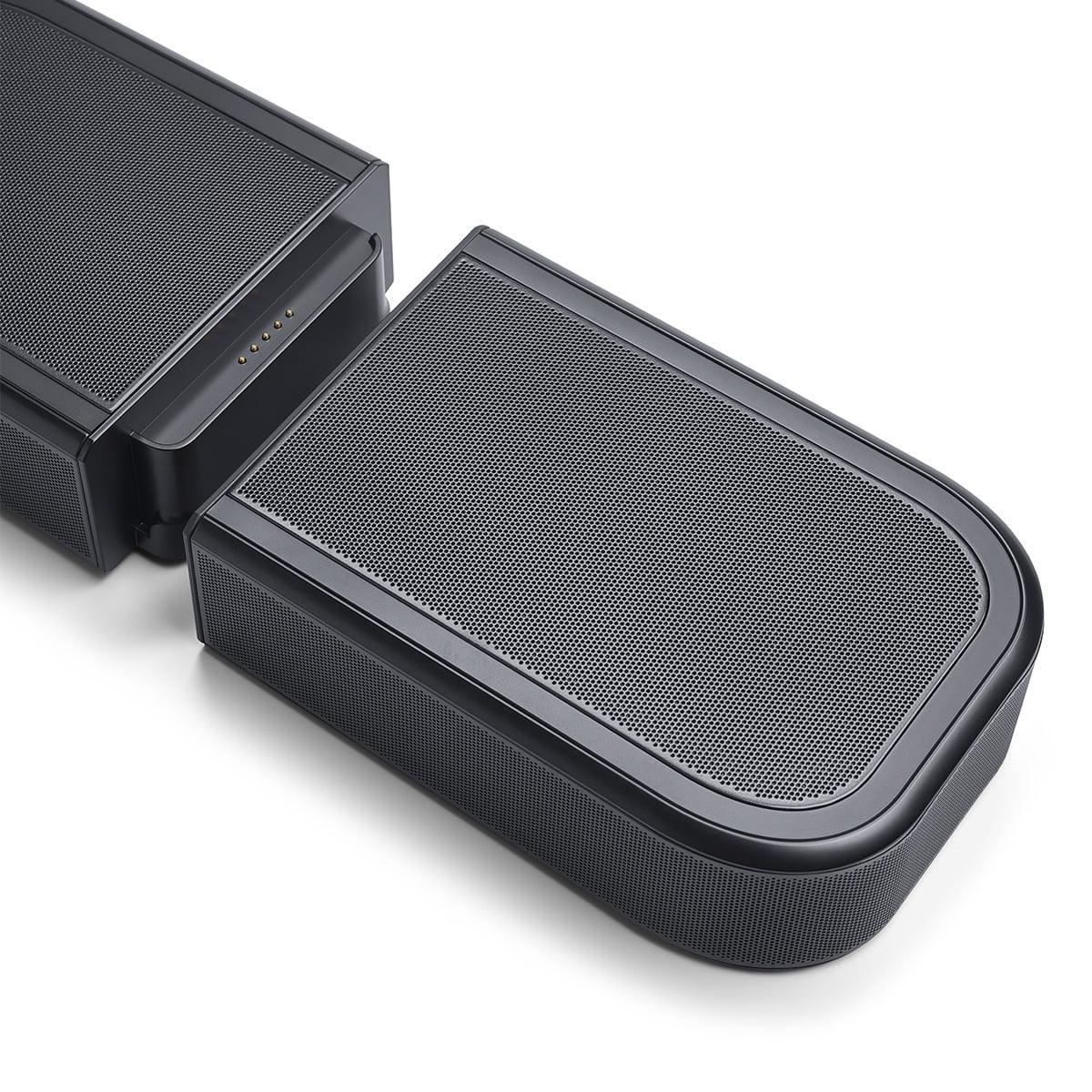
Here's where the JBL system truly differentiates itself. Those rear speakers don't just provide surround sound – they completely detach from the main bar and transform into portable Bluetooth speakers with 10-hour battery life.
This innovation addresses one of the biggest challenges with soundbar systems: rear speaker placement. Traditional wireless rear speakers still need power outlets, limiting where you can position them. JBL's battery-powered approach eliminates this constraint entirely. You can place them on end tables, mount them on walls, or even take them outside for patio gatherings.
The charging system is elegantly simple – the speakers automatically charge when docked to the main soundbar, and magnetic connections ensure proper alignment. I've found this feature particularly valuable for apartment dwellers who can't run speaker wire or don't have convenient power outlets behind their seating area.
Even more cleverly, the system includes a "Night Listening" mode that mutes the main soundbar and subwoofer, routing all audio through the detachable speakers. This creates a private listening experience that won't disturb neighbors or sleeping family members – something you simply can't do with traditional soundbar systems.
At first glance, the nearly 4x price difference between these systems might seem to put them in completely different categories. However, the value equation depends heavily on your specific needs and room requirements.
The JBL Bar 1000 MK2's $1,199 price tag positions it against dedicated AV receiver and speaker combinations that might cost $1,500-2,000 when you factor in installation complexity. For users wanting true surround sound without the hassle of running speaker wire and configuring multiple components, the JBL represents genuine value. The detachable speaker innovation alone would justify a significant price premium for many users.
The Denon DHT-S517 at $302 delivers remarkable performance per dollar. You're getting wireless subwoofer integration, Dolby Atmos processing, and meaningful dialogue enhancement for less than many basic soundbars cost. For budget-conscious buyers, this represents an excellent entry point into higher-quality TV audio.
In a dedicated home theater setting, the differences between these systems become even more pronounced. The JBL Bar 1000 MK2 can genuinely compete with separates systems (individual components) costing significantly more, particularly for rooms in the 200-400 square foot range where its power output and surround capabilities can be fully utilized.
The system's MultiBeam 3.0 technology uses advanced beamforming to create precise sound localization – you'll hear footsteps moving across the screen from left to right with remarkable accuracy. Combined with the height channels and physical rear speakers, it creates the enveloping experience that home theater enthusiasts crave.
For smaller home theaters or multi-purpose rooms, the Denon DHT-S517 provides a more proportionate solution. Its focused approach to dialogue reproduction and controlled bass output won't overwhelm smaller spaces, and the simplified setup means you can have it running perfectly in under an hour.
Choosing between these soundbar systems ultimately comes down to matching the product's capabilities to your specific situation and priorities.
Choose the JBL Bar 1000 MK2 if you have a larger room (300+ square feet), prioritize immersive surround sound for movies and gaming, and value the flexibility of detachable speakers. The system particularly excels if you entertain frequently or want a single audio solution that can adapt to different scenarios. The premium price is justified by cutting-edge features and performance that rivals much more expensive separates systems.
Choose the Denon DHT-S517 if you're working with a smaller space, focusing primarily on improving dialogue clarity and adding some bass impact to your TV viewing. It's ideal for apartments, bedrooms, or secondary viewing areas where simplicity and value matter more than maximum immersion. The system delivers meaningful improvements over TV speakers without the complexity or cost of premium alternatives.
The most important factor in your decision should be your room size and primary use case. A powerful system like the JBL in a small room will likely sound overwhelming, while the Denon in a large space might leave you wanting more impact and presence.
Both systems represent excellent values within their respective price ranges and target markets. The key is honestly assessing your needs, room constraints, and long-term audio goals before making your choice.
| JBL Bar 1000 MK2 | Denon DHT-S517 |
|---|---|
| Price - Major budget consideration with 4x cost difference | |
| $1,199.95 | $302.34 |
| Channel Configuration - Determines surround sound accuracy and immersion | |
| 7.1.4 (True physical surround with 4 height channels) | 3.1.2 (Virtualized surround with 2 height channels) |
| Power Output - Critical for room size compatibility and volume capability | |
| 960W total (handles large rooms without distortion) | 40W total (optimized for smaller spaces) |
| Rear Speakers - Makes or breaks true surround sound experience | |
| Detachable wireless with 10-hour battery (revolutionary flexibility) | None included (relies on virtualization) |
| Subwoofer - Determines bass impact and cinematic feel | |
| Wireless 10-inch, 300W (room-shaking theater bass) | Wireless 5.25-inch, 100W (adequate punch for smaller rooms) |
| Dolby Atmos Implementation - Affects overhead sound realism | |
| True Atmos with 4 upfiring drivers (authentic height effects) | Virtualized Atmos with 2 upfiring drivers (convincing but limited) |
| Smart Features - Modern convenience and streaming capability | |
| Wi-Fi, AirPlay 2, Chromecast, Spotify Connect, Roon Ready | Bluetooth 5.0 only (basic but reliable) |
| Dialogue Enhancement - Critical for clear speech during action scenes | |
| PureVoice 2.0 with AI adaptation (automatically adjusts to room noise) | Dialogue Enhancer with 3 manual levels (effective but requires user adjustment) |
| Setup Complexity - Time investment and technical knowledge required | |
| Moderate (app-based calibration, wireless pairing) | Simple (plug-and-play with basic remote) |
| Room Size Suitability - Most important matching factor for performance | |
| Large rooms 300+ sq ft, 15+ feet from TV | Small to medium rooms under 200 sq ft, 8-12 feet from TV |
| Unique Features - Standout capabilities that justify price differences | |
| Night Listening mode, portable rear speakers, room calibration | Focus on dialogue clarity, compact wireless sub integration |
The JBL Bar 1000 MK2 ($1,199.95) is significantly better for large rooms due to its 960W power output and 7.1.4 channel configuration. It can fill spaces over 300 square feet without distortion, while the Denon DHT-S517 ($302.34) with only 40W is designed for smaller rooms under 200 square feet.
The primary difference is surround sound approach: the JBL Bar 1000 MK2 offers true physical surround sound with detachable wireless rear speakers, while the Denon DHT-S517 uses virtualized surround sound that simulates rear effects through digital processing. The JBL provides authentic directional audio, while the Denon creates a convincing illusion.
The JBL Bar 1000 MK2 has significantly better bass with its 10-inch wireless subwoofer powered by 300W, capable of producing room-shaking low frequencies down to 33Hz. The Denon DHT-S517 includes a smaller 5.25-inch subwoofer with 100W that provides adequate bass punch but lacks the deep, cinematic impact of the JBL.
No, only the JBL Bar 1000 MK2 includes rear speakers - and they're uniquely detachable with 10-hour battery life. The Denon DHT-S517 doesn't include physical rear speakers and instead relies on virtualized surround sound processing to create the illusion of rear audio effects.
Both excel at dialogue but use different approaches. The JBL Bar 1000 MK2 features PureVoice 2.0 with AI that automatically adjusts dialogue based on room noise, while the Denon DHT-S517 offers a manual Dialogue Enhancer with three levels. The Denon's focused approach on speech clarity makes it particularly effective for TV shows and news.
The JBL Bar 1000 MK2 ($1,199.95) costs nearly four times more than the Denon DHT-S517 ($302.34). The price difference is justified if you have a large room, want true surround sound, and value the flexibility of detachable speakers. For smaller spaces and basic TV audio improvement, the Denon offers exceptional value.
The Denon DHT-S517 is much easier to set up with simple plug-and-play operation and basic remote control. The JBL Bar 1000 MK2 requires app-based setup, wireless speaker pairing, and room calibration, though the results are more customized to your specific space.
Yes, but differently. The JBL Bar 1000 MK2 delivers true Dolby Atmos with four physical upfiring drivers that create authentic overhead effects. The Denon DHT-S517 supports Dolby Atmos through virtualization with two upfiring drivers, creating convincing but less precise height effects.
The Denon DHT-S517 is ideal for small apartments due to its compact size, appropriate power level for close listening, and focus on dialogue clarity. The JBL Bar 1000 MK2 would be overpowered in most apartment settings and its high output could disturb neighbors.
The JBL Bar 1000 MK2 offers comprehensive streaming with Wi-Fi, AirPlay 2, Chromecast Built-In, Spotify Connect, and Roon Ready support. The Denon DHT-S517 provides basic Bluetooth 5.0 connectivity for wireless music streaming but lacks advanced Wi-Fi streaming features.
Yes, the JBL Bar 1000 MK2 rear speakers detach and function as portable Bluetooth speakers with 10-hour battery life. This unique feature allows outdoor use, private listening through Night Mode, or placement flexibility without power constraints. The Denon DHT-S517 doesn't include detachable speakers.
It depends on your needs. The Denon DHT-S517 ($302.34) offers exceptional value for basic TV audio improvement and smaller rooms. The JBL Bar 1000 MK2 ($1,199.95) provides better value for home theater enthusiasts wanting true surround sound and premium features, competing with much more expensive separate component systems.
We've done our best to create useful and informative comparisons to help you decide what product to buy. Our research uses advanced automated methods to create this comparison and perfection is not possible - please contact us for corrections or questions. These are the sites we've researched in the creation of this article: ecoustics.com - engadget.com - bestbuy.com - techradar.com - rtings.com - hometechnologyreview.com - youtube.com - t3.com - whathifi.com - youtube.com - bhphotovideo.com - gzhls.at - device.report - support.jbl.com - support.jbl.com - jbl.com - av.com - audioadvice.com - jbl.com - target.com - worldwidestereo.com - techradar.com - consumerreports.org - crutchfield.com - bestbuy.com - bestbuy.com - pocket-lint.com - abt.com - manuals.denon.com - connectedmag.com.au - bestbuy.com - forum.flirc.tv - bhphotovideo.com

Privacy Policy
Terms and Conditions - Affiliate Policy
Home Security
© Copyright 2008-2026.
11816 Inwood Rd #1211, Dallas, TX 75244