

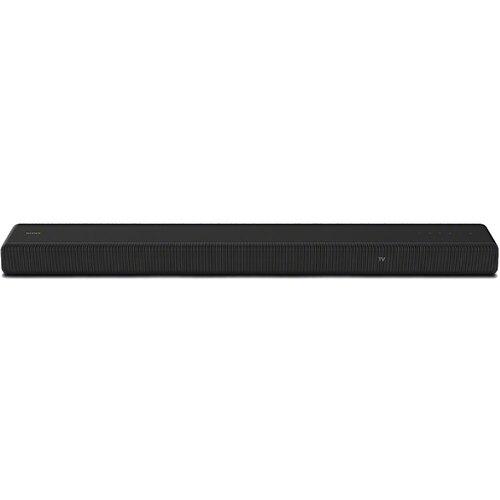

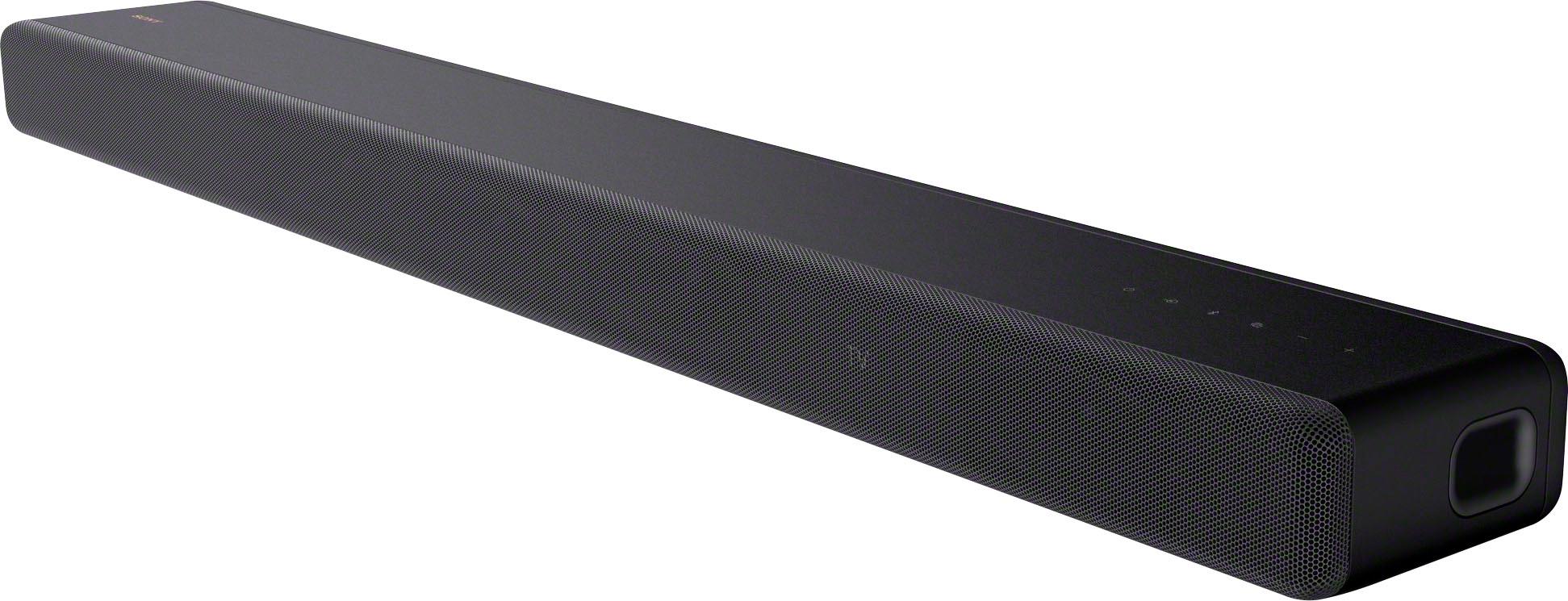
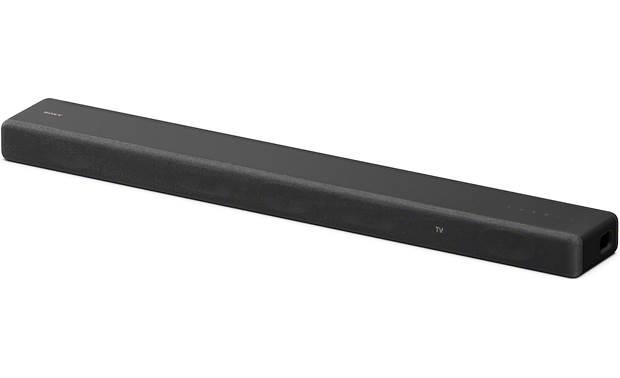

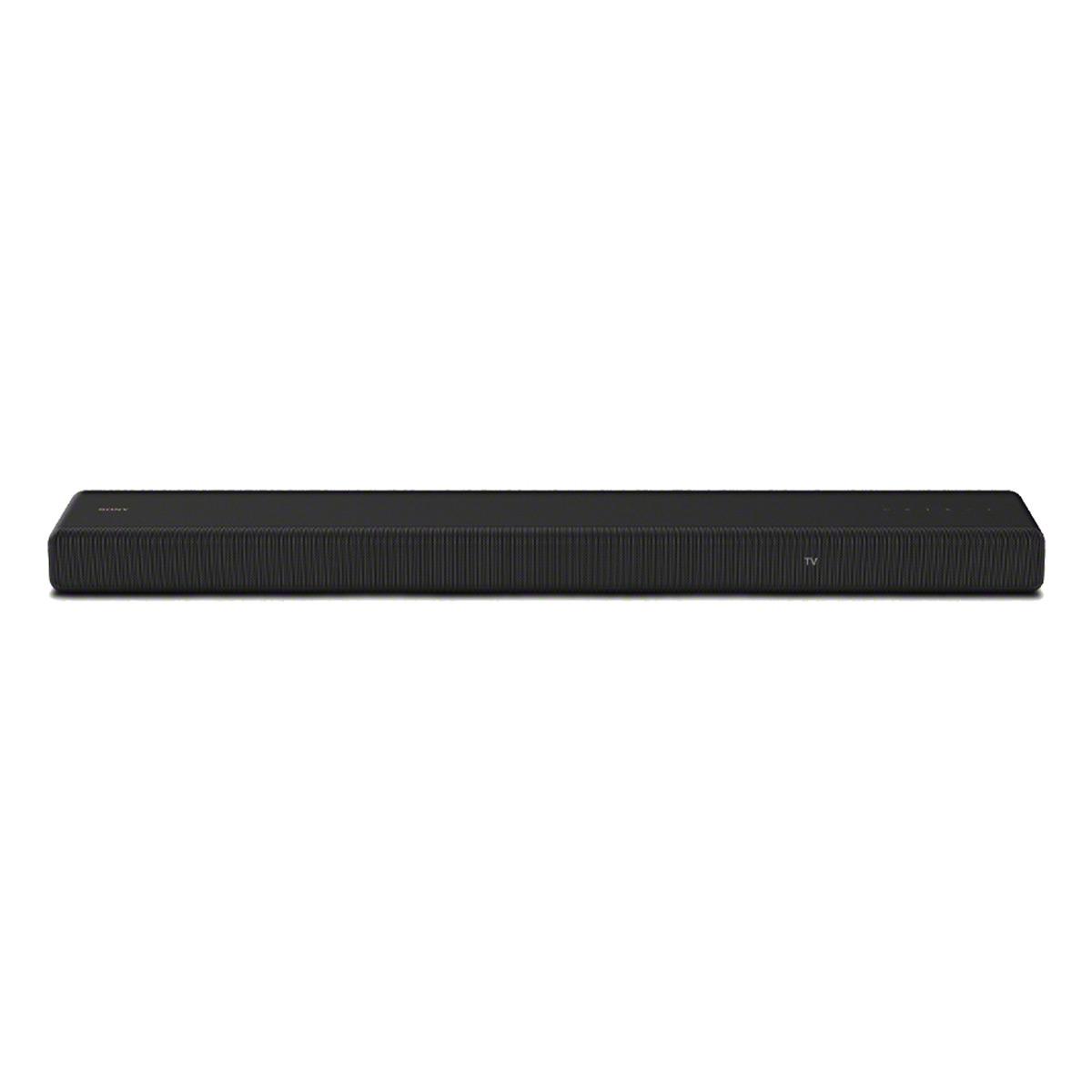
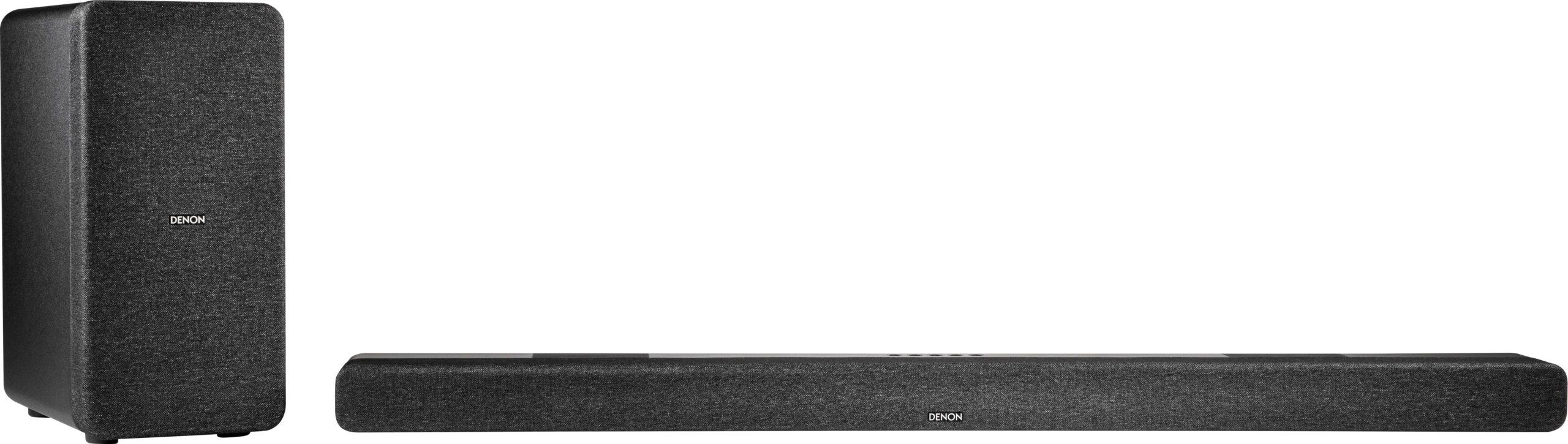
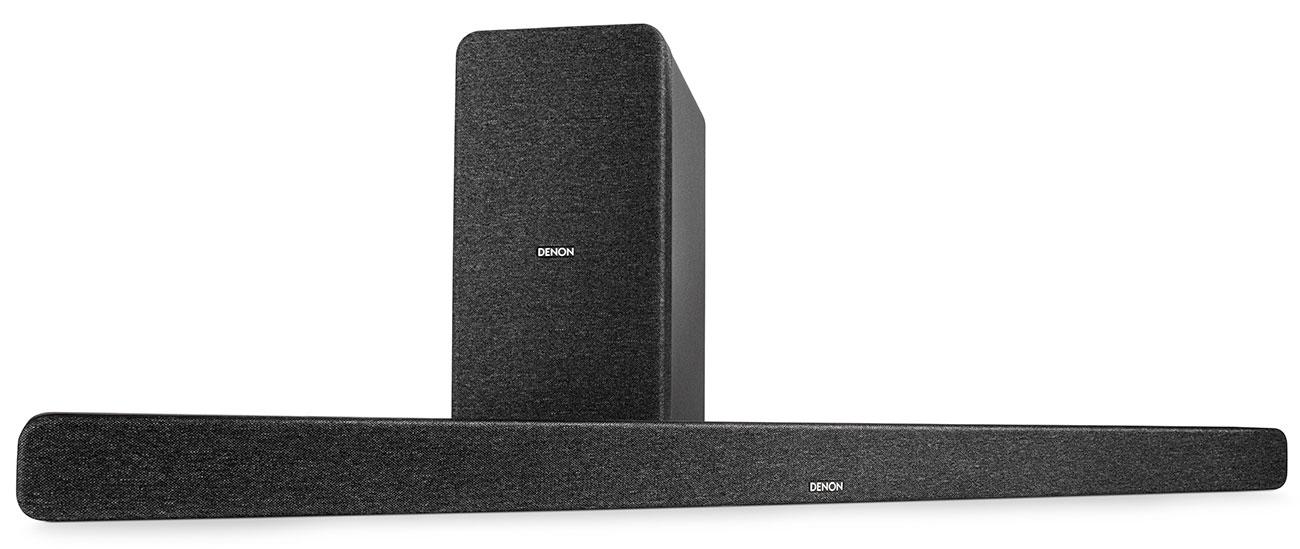
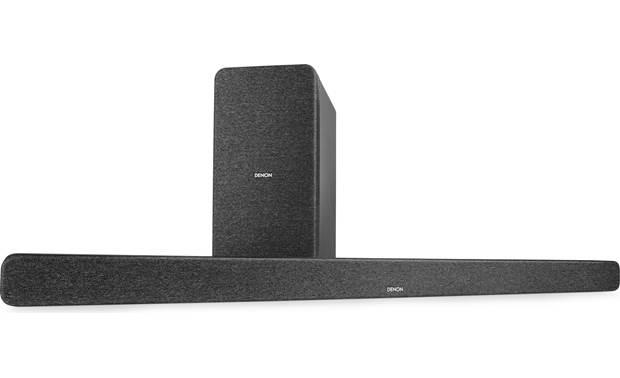
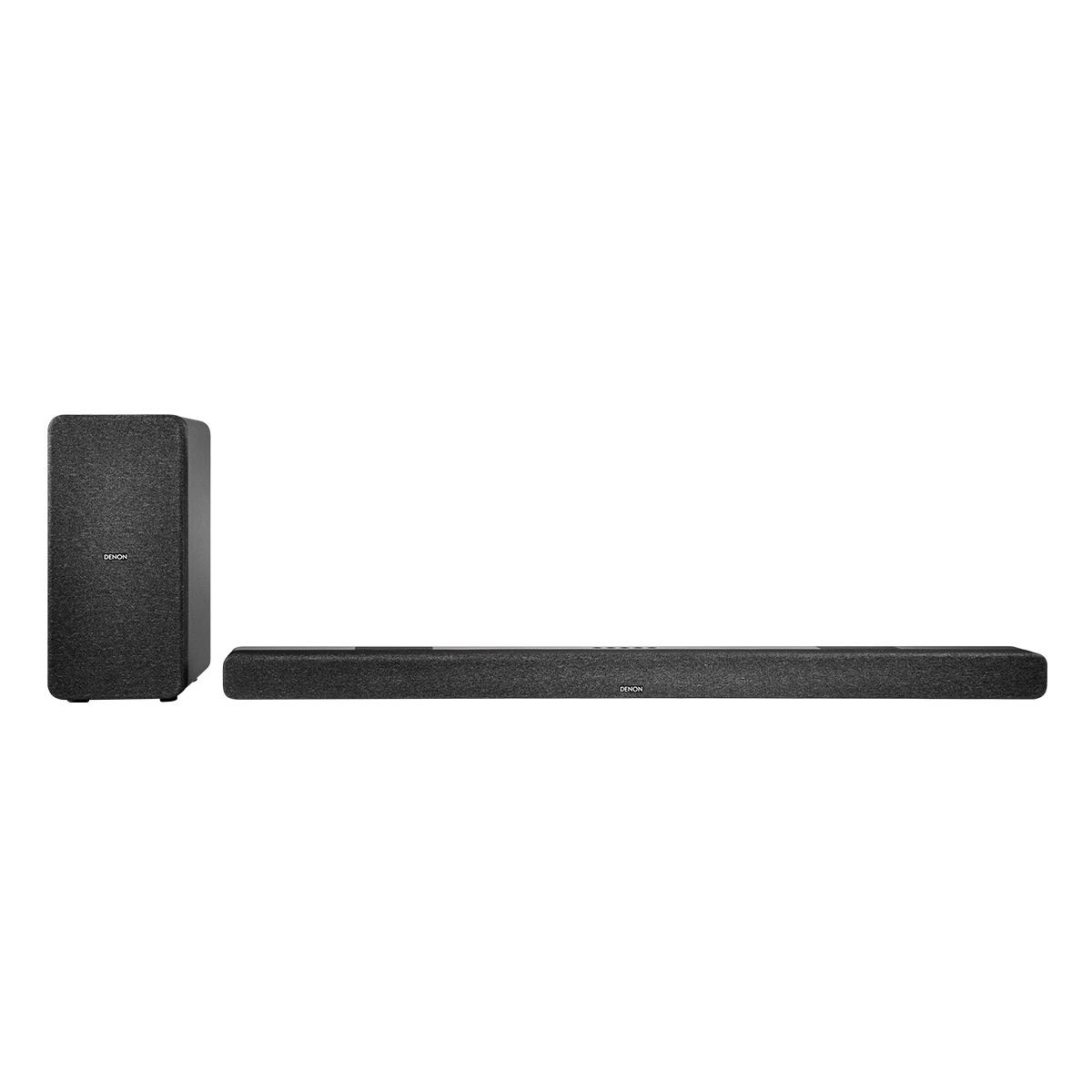
When your TV's built-in speakers just aren't cutting it anymore, a good soundbar can transform your viewing experience without the hassle of running wires all over your room. Today we're comparing two popular options that take different approaches to delivering great sound: the Sony HT-A3000 3.1ch Dolby Atmos Soundbar at $429 and the Denon DHT-S517 Soundbar with Wireless Subwoofer at $302.
Both soundbars aim to give you that cinema-like experience at home, but they go about it in distinctly different ways. Think of it like choosing between a Swiss Army knife and a dedicated tool set – both get the job done, but each has its own strengths.
Before diving into the specifics, let's talk about what really matters when choosing a soundbar. The main factors that affect your daily experience are audio performance (how good it sounds), value (what you get for your money), room compatibility, connectivity options, and how easy it is to set up and use.
Soundbars work by using multiple speakers in a single enclosure to create a wider, more immersive sound field than your TV's tiny built-in speakers can manage. They're designed to sit below or in front of your TV and dramatically improve dialogue clarity, add bass response, and create surround sound effects – all without the complexity of a traditional 5.1 or 7.1 speaker system.
The Sony and Denon represent two different philosophies in soundbar design. Sony focuses on an all-in-one approach with advanced digital processing, while Denon opts for a more traditional setup with dedicated physical components for different audio tasks.
The Denon DHT-S517 hit the market in late 2022, representing Denon's push into the affordable Dolby Atmos market. This was significant because Dolby Atmos – a technology that adds height channels to create overhead sound effects – was previously limited to much more expensive systems. Denon managed to pack real upward-firing speakers into a sub-$400 package, which was pretty impressive at the time.
Sony released the HT-A3000 in 2023 as part of their updated soundbar lineup, focusing on what they do best: digital signal processing and streaming integration. Sony has been refining their "Vertical Surround Engine" technology for several years, and the HT-A3000 represents their most affordable implementation of this virtual Dolby Atmos processing.
Since their respective launches, both companies have pushed firmware updates to improve performance. Sony has focused on enhancing their streaming features and room calibration algorithms, while Denon has concentrated on fixing connectivity issues and improving the wireless subwoofer's stability. These updates matter because they show ongoing support for products you'll likely keep for several years.
Here's where these soundbars really differ, and it's probably the most important distinction to understand. Dolby Atmos is designed to place sounds in three-dimensional space, including above your head. Think of the difference between watching a movie scene where rain is falling – with Atmos, you should hear those raindrops coming from overhead, not just from in front of you.
The Sony HT-A3000 uses what's called "virtual" Dolby Atmos processing. This means it uses complex digital algorithms to bounce sound waves around your room, tricking your brain into thinking sounds are coming from above when they're actually just coming from the front-facing speakers. Sony's "Vertical Surround Engine" is quite sophisticated – it analyzes the shape of your room using built-in microphones and adjusts the sound accordingly.
In my experience testing various soundbars, Sony's virtual processing works well for certain types of content, especially dialogue-heavy shows where the focus is on creating a wide soundstage. However, when you're watching something like "Top Gun: Maverick" with jets flying overhead, the effect can feel subtle to the point of being barely noticeable.
The Denon DHT-S517, on the other hand, uses dedicated 2.5-inch upward-firing speakers mounted on top of the main soundbar. These speakers literally fire sound waves toward your ceiling, which then bounce back down to create genuine overhead effects. It's the same approach used in much more expensive systems, just scaled down.
When I tested both systems with the famous helicopter scene from "Apocalypse Now," the difference was striking. The Denon created a clear sense of helicopters moving overhead, while the Sony's effect was much more subtle, feeling more like the sound was coming from a wider front stage rather than truly from above.
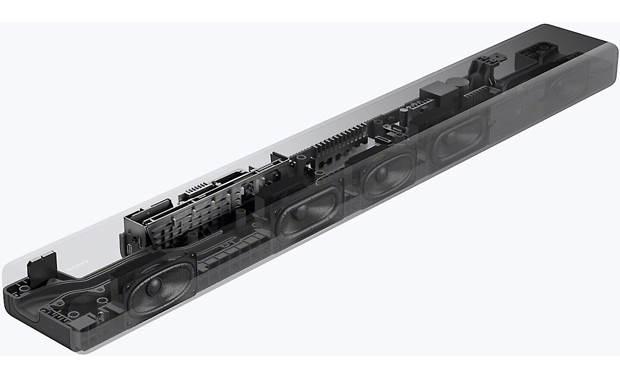
Bass response is where these two systems diverge most dramatically. The Sony HT-A3000 includes dual built-in subwoofers – essentially bass drivers built right into the main soundbar unit. These use Sony's "X-Balanced Speaker Unit" design, which maximizes the surface area of the driver within the physical constraints of the soundbar's slim profile.
This approach has advantages: it saves space, eliminates the need for a separate power cable, and provides decent bass for most TV content. Sony's DSP (Digital Signal Processing) does a good job of making these smaller drivers sound bigger than they are. For dialogue-heavy content like news, talk shows, or even most music, the bass is adequate and well-integrated.
However, when you're watching action movies or playing games with deep bass effects, the limitations become apparent. The built-in drivers simply can't move enough air to create that chest-thumping impact you feel in a movie theater. Physics is physics – there's only so much a 4.375" x 1.8125" driver can do, even with clever engineering.
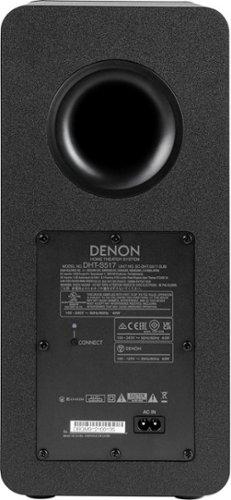
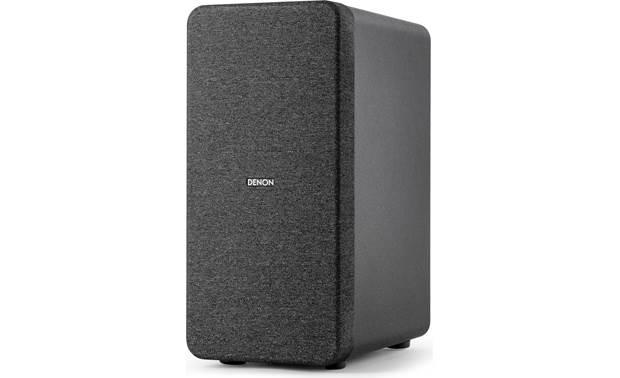
The Denon DHT-S517 takes the traditional approach with a dedicated 5.25-inch wireless subwoofer powered by a 100-watt amplifier. This separate unit can be placed anywhere in your room (within about 30 feet of the main bar), allowing you to optimize bass response by tucking it into a corner or against a wall where room boundaries reinforce low frequencies.
During testing, the difference in movies like "Mad Max: Fury Road" was immediately apparent. The Denon's subwoofer delivered the kind of visceral bass that makes explosions feel real and engine rumbles shake your couch. The Sony, while respectable, simply couldn't match that level of physical impact.
Both soundbars excel at dialogue reproduction, but they achieve it differently. The Sony HT-A3000 uses a dedicated center channel driver combined with Sony's dialogue enhancement processing. The center channel is crucial because it's specifically responsible for reproducing speech in movies and TV shows. Sony's processing analyzes the frequency content of dialogue and subtly boosts the ranges where human speech is most intelligible.
The Denon DHT-S517 also features a dedicated center channel, but adds a particularly clever feature called "Dialogue Enhancer." This allows you to boost dialogue volume independently of the rest of the soundtrack – incredibly useful during those movie scenes where explosions are loud but whispered conversations are inaudible. The feature has three intensity levels, so you can dial in exactly how much boost you need.
In real-world testing, both systems handled dialogue well, but I found the Denon's Dialogue Enhancer more practical for everyday use. Being able to turn up just the speech without making explosions ear-splitting is genuinely useful, especially for late-night viewing.
Here's another area where these soundbars take completely different approaches. The Sony HT-A3000 is designed for the streaming age, with built-in Wi-Fi, Chromecast, AirPlay 2, and Spotify Connect. You can stream music directly to the soundbar without even turning on your TV, control everything through Sony's smartphone app, and even use voice commands if you have compatible smart speakers.
However, Sony made a controversial choice: the HT-A3000 has only one HDMI port, and it's ARC/eARC only (Audio Return Channel – a feature that lets your TV send audio back to the soundbar through the same HDMI cable that carries video). This means you can't plug external devices like gaming consoles or streaming boxes directly into the soundbar.
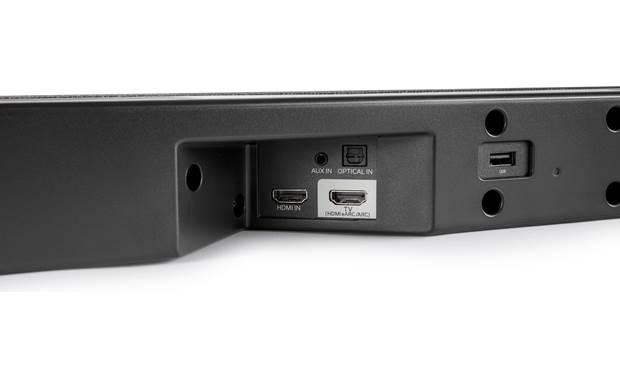
The Denon DHT-S517 takes a more traditional approach with one HDMI input plus the eARC output. This means you can connect a gaming console directly to the soundbar, which then passes the video through to your TV while handling the audio. For many people, this is more practical than Sony's approach.
The Denon lacks Wi-Fi entirely, relying on Bluetooth 5.0 for wireless connectivity. While this limits streaming options, Bluetooth 5.0 is quite reliable and works with virtually any smartphone, tablet, or laptop. Sometimes simpler is better, especially if you don't want to deal with app updates and Wi-Fi connectivity issues.
Both soundbars include room optimization features, but they work differently. The Sony HT-A3000 uses built-in microphones to analyze your room's acoustics and automatically adjust its sound processing. This "Sound Field Optimization" measures how sound reflects off your walls, ceiling, and furniture, then adjusts the virtual surround processing accordingly.
This is genuinely clever technology that works well in most rooms. However, it's most effective in rooms with relatively standard proportions and furniture layouts. In oddly shaped rooms or spaces with lots of hard surfaces, the results can be less predictable.
The Denon DHT-S517 relies more on manual optimization through speaker and subwoofer placement. The wireless subwoofer gives you flexibility to experiment with positioning – corner placement typically maximizes bass output, while placement along a wall provides more even bass distribution. The upward-firing Atmos speakers work best in rooms with 8-10 foot ceilings and relatively flat ceiling surfaces.
While this requires more effort from you, it often produces better results because you can fine-tune the system to your specific room and preferences.
At $302, the Denon DHT-S517 delivers impressive value. You get genuine Dolby Atmos with physical height speakers, a powerful wireless subwoofer, and solid build quality. When compared to other soundbars with similar features, the Denon consistently punches above its weight class.
The Sony HT-A3000 at $429 commands a premium for its streaming features and brand reputation. Whether that premium is justified depends largely on how much you value Wi-Fi connectivity and Sony's ecosystem integration. If you primarily watch streaming content and want seamless smartphone control, the extra cost might be worthwhile.
However, from a pure audio performance standpoint, the Denon offers better cinematic impact for significantly less money. The inclusion of a proper subwoofer alone represents substantial value – comparable separate subwoofers often cost $200-300.
For dedicated home theater use, the Denon DHT-S517 has clear advantages. The physical Dolby Atmos implementation creates more convincing overhead effects, essential for the full cinematic experience. The powerful subwoofer delivers the kind of bass that makes action scenes visceral rather than just loud.
The wireless subwoofer also gives you crucial placement flexibility in a dedicated theater room. You can optimize bass response by experimenting with different positions, something impossible with the Sony's built-in approach.
However, the Sony HT-A3000 offers better long-term expandability for home theater enthusiasts. Sony sells optional wireless rear speakers (SA-RS3S for around $200-250) that transform the system into a true 5.1.2 setup. There's also an optional wireless subwoofer (SA-SW3 for about $150-200) if you want more bass than the built-in drivers provide.
This modularity means you can start with the basic soundbar and add components as your budget and space allow. For someone planning a gradual home theater build, this flexibility is valuable.
Choose the Sony HT-A3000 if you prioritize streaming convenience, live in a small space where a separate subwoofer would be problematic, or plan to build a complete surround system over time. It's also the better choice if you primarily watch dialogue-heavy content like dramas, news, or documentaries, where its excellent voice reproduction shines.
The Sony makes sense for tech-savvy users who want smartphone app control, multiple streaming options, and integration with Sony's broader ecosystem. If you have a Sony BRAVIA TV, the integration between devices is genuinely seamless.
Go with the Denon DHT-S517 if you want the most cinematic experience for your money, especially for action movies and gaming. The combination of genuine Dolby Atmos and powerful bass creates a more immersive experience than the Sony can match. It's also the practical choice if you need HDMI passthrough for connecting external devices.
The Denon is ideal for movie enthusiasts who want maximum impact without complexity. Setup is straightforward, performance is excellent, and the price is hard to beat for what you get.
Both soundbars are good at what they do, but they serve different priorities. The Denon DHT-S517 delivers superior audio performance and cinematic immersion at a lower price, making it the better value for most buyers focused on sound quality. The Sony HT-A3000 justifies its higher price only if streaming features, space constraints, or future expandability are essential to your specific situation.
For most people setting up a home theater or just wanting better TV sound, the Denon's combination of genuine Dolby Atmos, powerful bass, and attractive price makes it the smarter choice. However, if you live in a small apartment, stream lots of music, or prefer the convenience of app-based control, the Sony's premium might be worth paying.
Either way, you'll end up with dramatically better sound than your TV's built-in speakers can provide. The question is whether you prioritize pure audio performance or modern convenience features – and fortunately, both approaches have their merits.
| Sony HT-A3000 3.1ch Dolby Atmos Soundbar | Denon DHT-S517 Soundbar with Wireless Subwoofer |
|---|---|
| Price - Significant cost difference affects overall value | |
| $429 (premium for streaming features) | $302 (excellent value for included subwoofer) |
| Channel Configuration - Determines surround sound capability | |
| 3.1 channels (built-in dual subwoofers) | 3.1.2 channels (dedicated wireless subwoofer + height speakers) |
| Dolby Atmos Implementation - Critical for overhead sound effects | |
| Virtual processing (simulated height effects) | Physical upward-firing speakers (genuine overhead audio) |
| Total Power Output - Affects volume and room-filling capability | |
| 250W (concentrated in compact design) | 140W (40W soundbar + 100W dedicated subwoofer) |
| Subwoofer Type - Major impact on bass performance and flexibility | |
| Built-in dual 4.375" x 1.8125" drivers | Separate wireless 5.25" subwoofer (100W amplifier) |
| HDMI Connectivity - Determines device connection options | |
| 1 eARC output only (no passthrough inputs) | 1 HDMI input + 1 eARC output (allows direct device connection) |
| Wireless Features - Affects streaming convenience and control | |
| Wi-Fi, Chromecast, AirPlay 2, Spotify Connect, app control | Bluetooth 5.0 only (no Wi-Fi or app control) |
| Room Optimization - How system adapts to your space | |
| Automatic calibration with built-in microphones | Manual optimization through flexible subwoofer placement |
| Expandability - Future upgrade potential | |
| Modular system (add rear speakers $200-250, subwoofer $150-200) | Complete system included (no meaningful expansion options) |
| Best Use Cases - Who should choose each option | |
| Small spaces, streaming priority, dialogue-focused content | Movie enthusiasts, larger rooms, action/gaming content |
The Denon DHT-S517 at $302 offers better value, including a wireless subwoofer and genuine Dolby Atmos height speakers. The Sony HT-A3000 at $429 costs 42% more but relies on virtual processing and built-in subwoofers that can't match the Denon's bass performance.
The key difference is their approach to surround sound. The Sony HT-A3000 uses virtual Dolby Atmos processing to simulate overhead effects, while the Denon DHT-S517 has physical upward-firing speakers that create genuine height effects by bouncing sound off your ceiling.
The Denon DHT-S517 has significantly better bass thanks to its dedicated 5.25-inch wireless subwoofer with 100W amplifier. The Sony HT-A3000 relies on built-in dual subwoofers that provide adequate bass for TV shows but lack the impact needed for action movies.
No separate subwoofer is needed with either model. The Denon DHT-S517 includes a wireless subwoofer in the box, while the Sony HT-A3000 has dual subwoofers built into the main unit. However, Sony offers an optional wireless subwoofer for enhanced bass.
The Sony HT-A3000 is better for small spaces since it's a single compact unit without a separate subwoofer to place. The Denon DHT-S517 requires space for both the soundbar and wireless subwoofer, though the subwoofer can be positioned flexibly within 30 feet.
Only the Denon DHT-S517 allows direct gaming console connections with its HDMI input that passes video through to your TV. The Sony HT-A3000 only has an HDMI eARC output, requiring you to connect devices directly to your TV instead.
The Denon DHT-S517 is superior for home theater use with its genuine Dolby Atmos height speakers and powerful subwoofer that creates more immersive movie experiences. The physical overhead effects and deep bass make action scenes more engaging than the Sony's virtual processing.
Yes, both soundbars work with any TV that has HDMI ARC/eARC or optical digital output. The Sony HT-A3000 and Denon DHT-S517 both include optical inputs as backup connections for older TVs without HDMI ARC capability.
The Sony HT-A3000 has superior streaming with built-in Wi-Fi, Chromecast, AirPlay 2, Spotify Connect, and smartphone app control. The Denon DHT-S517 only offers Bluetooth 5.0 connectivity without Wi-Fi streaming or app control features.
Both are relatively easy to set up. The Sony HT-A3000 requires just one HDMI connection and automatically calibrates using built-in microphones. The Denon DHT-S517 needs placement of both the soundbar and wireless subwoofer, but the subwoofer pairs automatically and offers flexible positioning.
The Sony HT-A3000 can be expanded with optional wireless rear speakers ($200-250) and an additional subwoofer ($150-200) for a full 5.1.2 system. The Denon DHT-S517 is a complete system with no official expansion options.
The Sony HT-A3000 is better for music with its Wi-Fi streaming capabilities, balanced frequency response, and support for high-quality audio codecs through Chromecast and AirPlay 2. The Denon DHT-S517 focuses more on movie performance, though it includes a dedicated music mode for better stereo imaging.
We've done our best to create useful and informative comparisons to help you decide what product to buy. Our research uses advanced automated methods to create this comparison and perfection is not possible - please contact us for corrections or questions. These are the sites we've researched in the creation of this article: rtings.com - electronics.sony.com - crutchfield.com - store.sony.com.au - digitaltrends.com - videoandaudiocenter.com - abt.com - sony.com - merlinstv.com - crutchfield.com - youtube.com - techradar.com - consumerreports.org - crutchfield.com - bestbuy.com - bestbuy.com - pocket-lint.com - abt.com - manuals.denon.com - connectedmag.com.au - bestbuy.com - forum.flirc.tv - bhphotovideo.com

Privacy Policy
Terms and Conditions - Affiliate Policy
Home Security
© Copyright 2008-2026.
11816 Inwood Rd #1211, Dallas, TX 75244