







If you've been struggling to hear dialogue clearly on your TV or feeling like action scenes lack impact, you're not alone. Most TV speakers are simply terrible – they're designed to be thin and hidden, which means they can't produce the rich, full sound that makes movies and shows truly engaging. That's where soundbars come in, and today we're comparing two excellent options that take very different approaches to solving your audio problems.
The Klipsch Flexus Core 100 ($228) and Denon DHT-S517 ($302) represent two distinct philosophies in soundbar design. One prioritizes simplicity and value, while the other focuses on delivering a more complete home theater experience. Understanding these differences will help you choose the right system for your space and budget.
Before diving into our comparison, let's talk about what really matters when choosing a soundbar. The most important considerations are how many channels the system has (this determines how sound is distributed around your room), the total power output (which affects how loud and dynamic the sound can get), and connectivity options (which determine what devices you can connect and what audio formats are supported).
Channel configuration is probably the most confusing aspect for newcomers. A 2.1 system has left and right channels plus a subwoofer (the ".1" refers to the dedicated bass channel). A 3.1.2 system adds a center channel for dialogue and two height channels for overhead effects. More channels generally mean more immersive sound, but they also increase complexity and cost.
Dolby Atmos is another term you'll encounter frequently. This technology creates the illusion that sounds are coming from above and around you, not just from the front. However, there's a big difference between "Dolby Atmos processing" (which uses clever algorithms to simulate height effects through regular speakers) and true Dolby Atmos with physical upward-firing drivers.
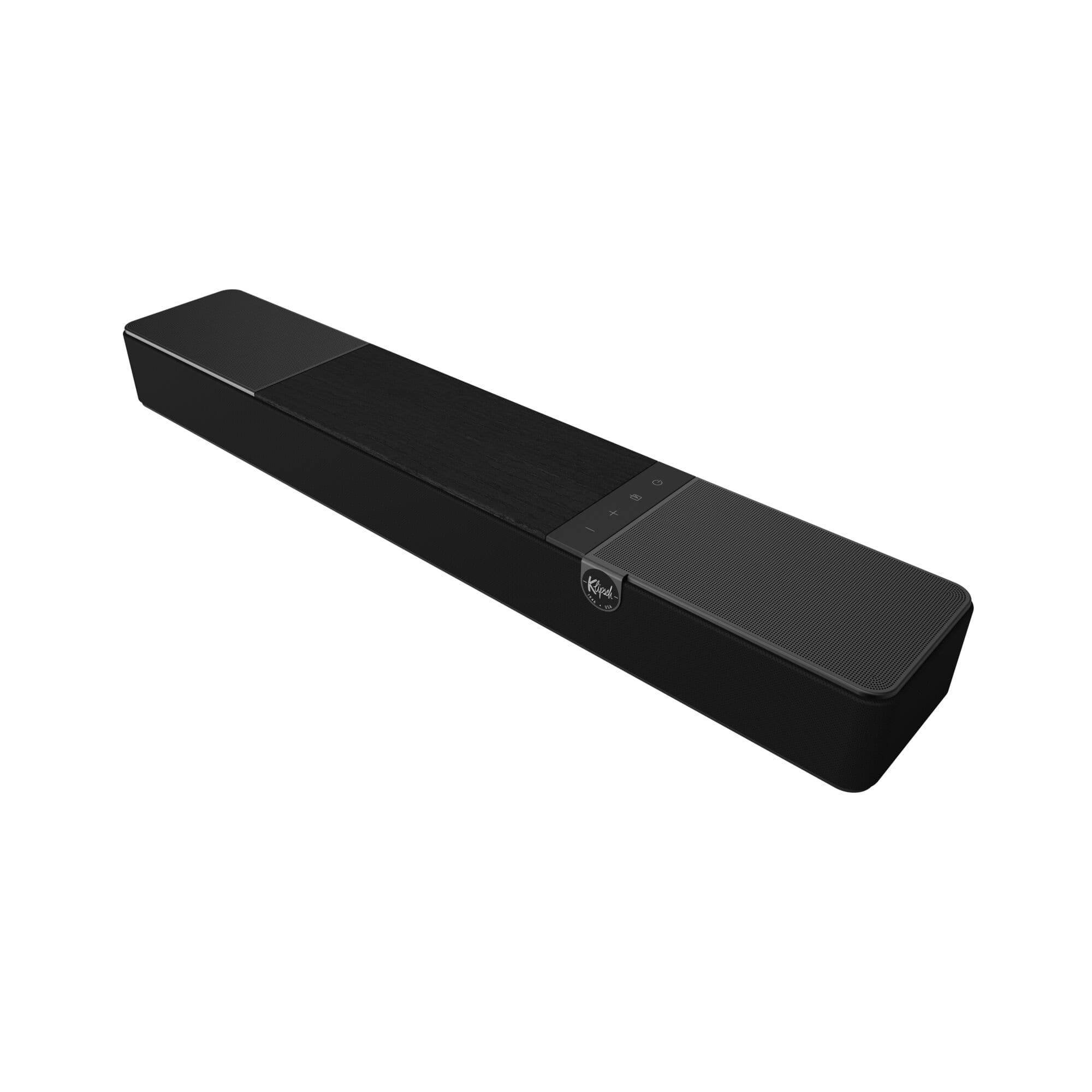
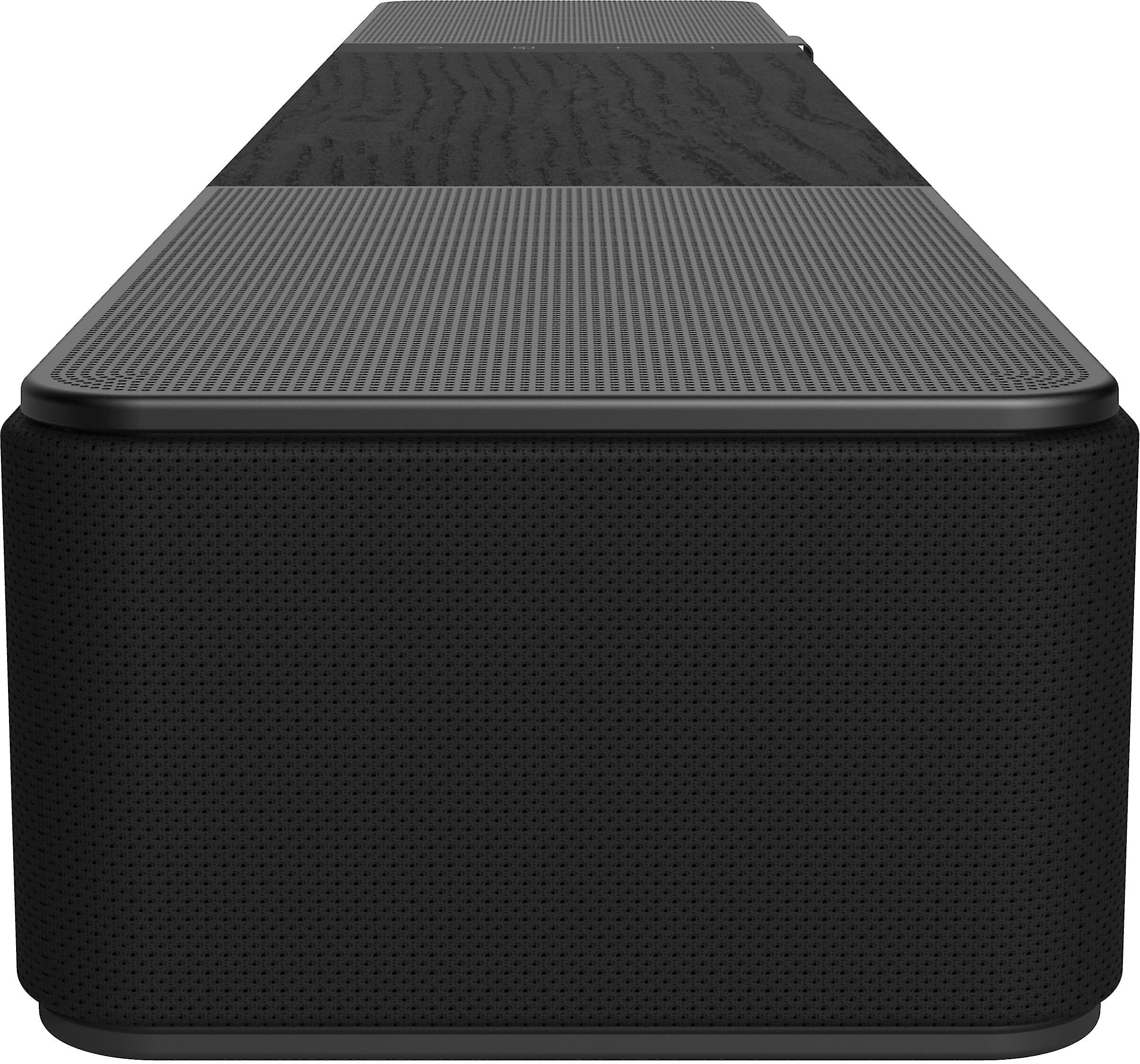
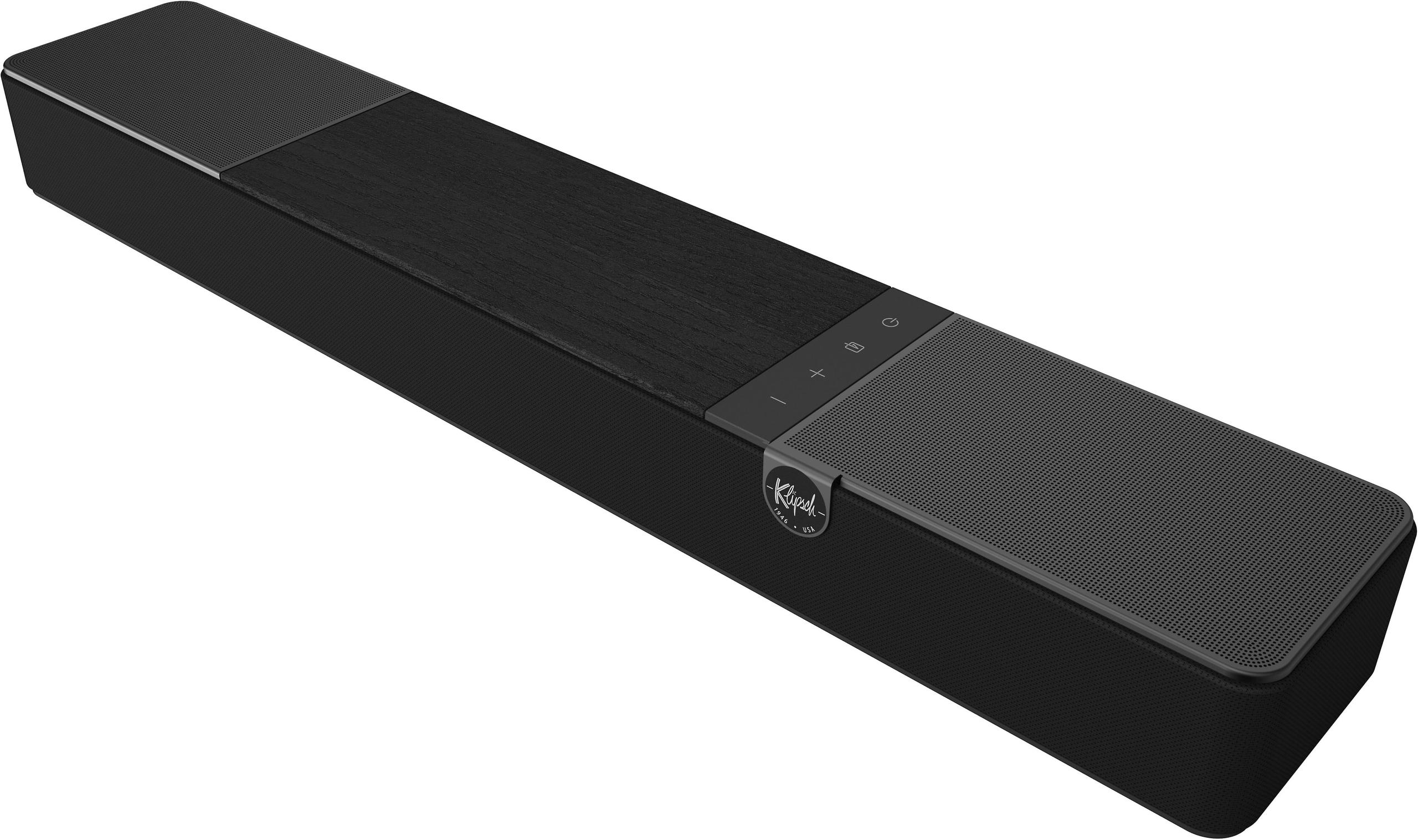
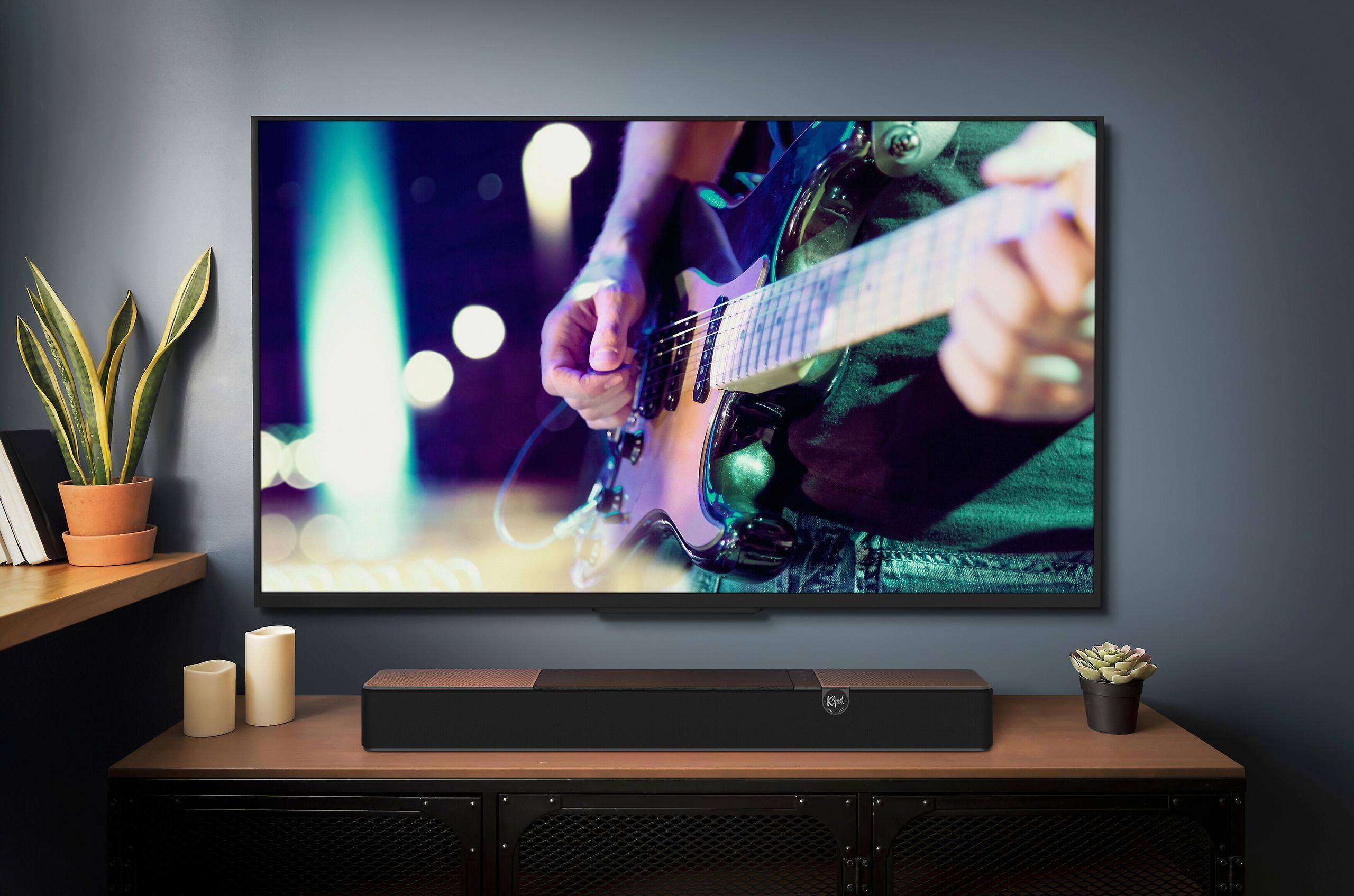
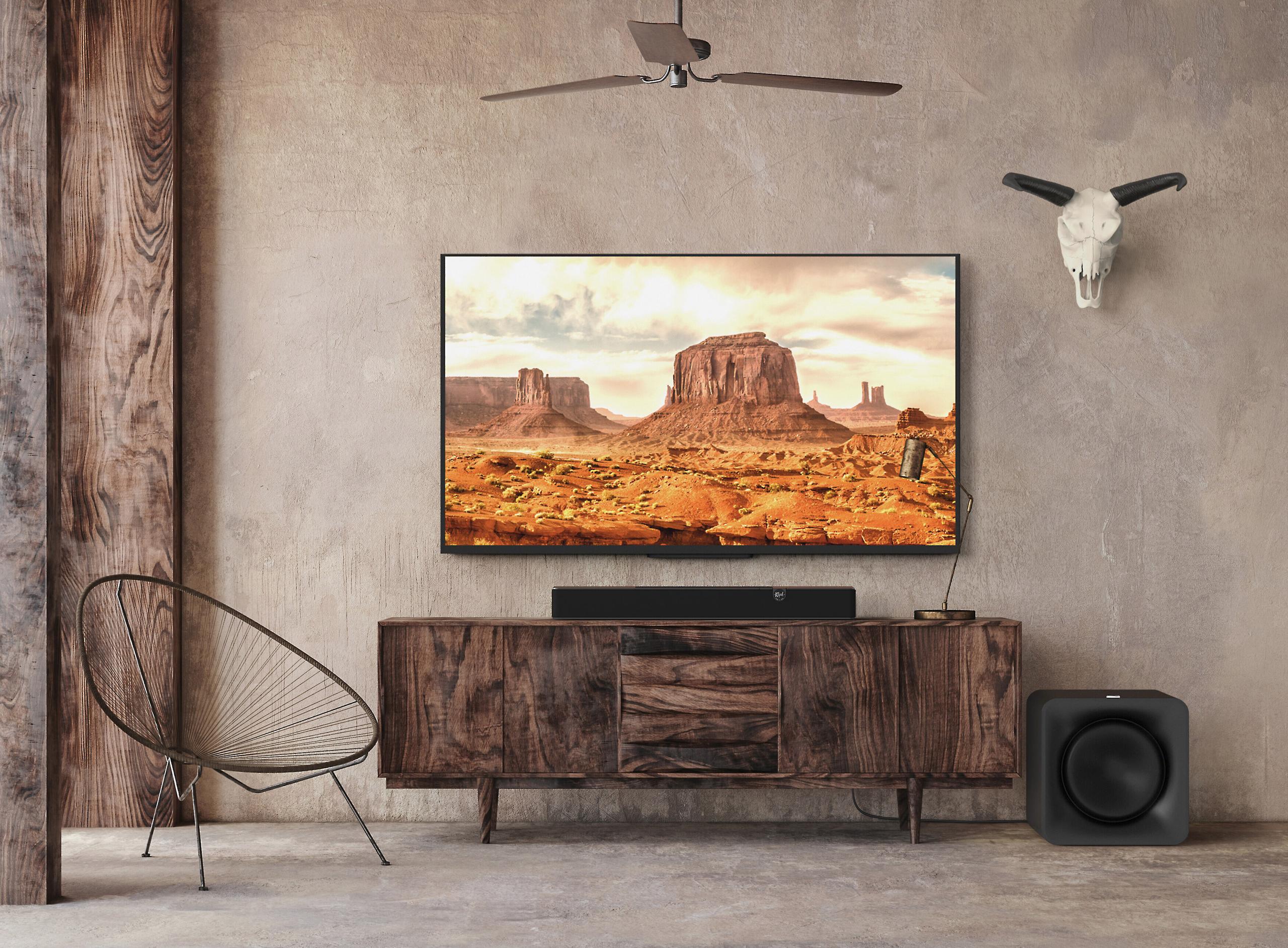
Released in mid-2024, the Klipsch Flexus Core 100 represents Klipsch's entry into the affordable soundbar market. This 28-inch soundbar packs an impressive amount of technology into a sleek, understated design that won't dominate your entertainment center.
What makes this soundbar unique is its dual 4-inch built-in subwoofers. Most soundbars at this price point either skip the subwoofer entirely or require you to find space for a separate box. Klipsch integrated the bass drivers directly into the main unit, using their decades of speaker design expertise to extract surprising low-end performance from a compact enclosure.
The system delivers 100 watts RMS (Root Mean Square – this is the continuous power the system can handle, not peak power) through four carefully tuned drivers. Two 2.25-inch aluminum cone drivers handle the main stereo channels, while those dual 4-inch paper cone woofers provide the bass foundation. Klipsch's engineers spent considerable time voicing these drivers to work together seamlessly, and it shows in the cohesive sound signature.
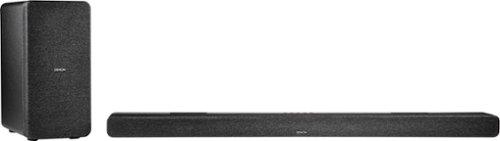
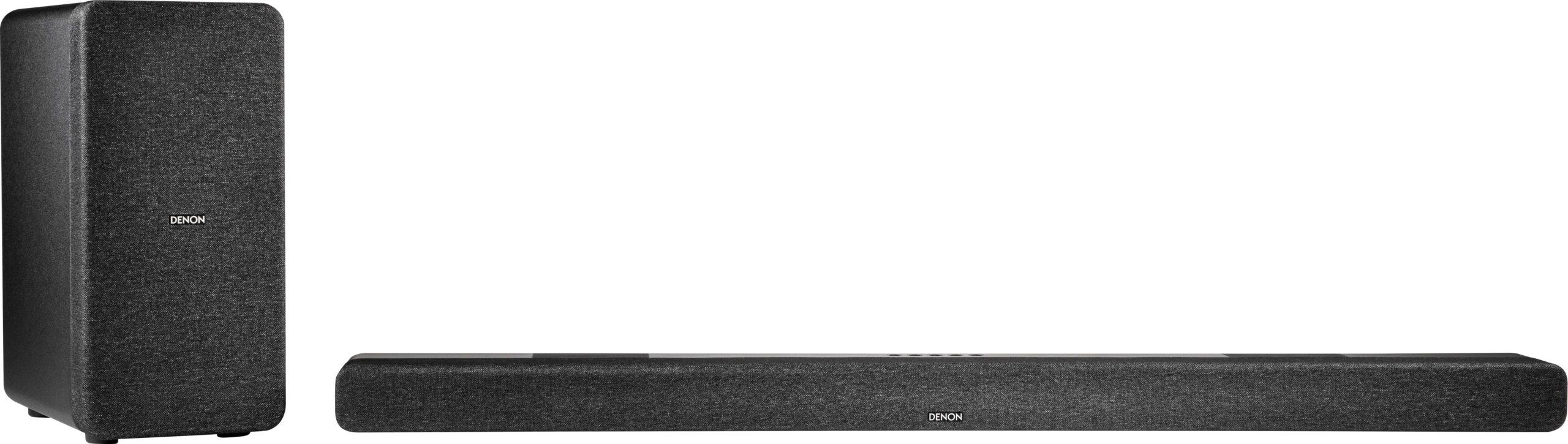
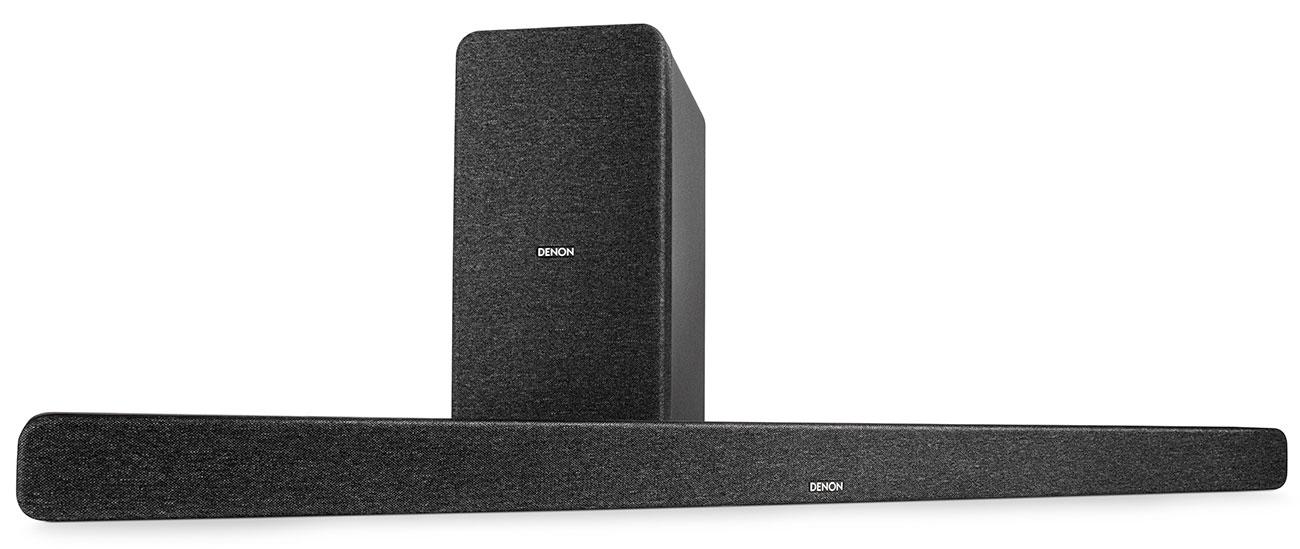
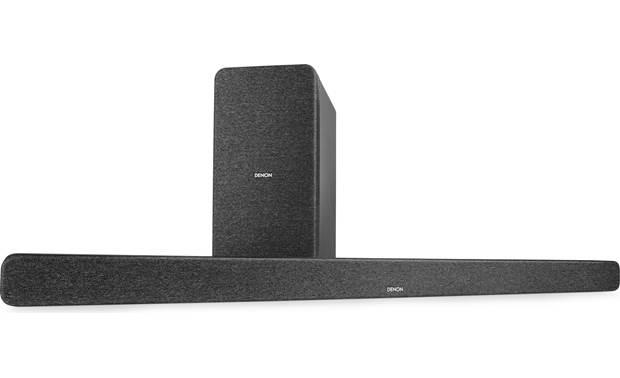
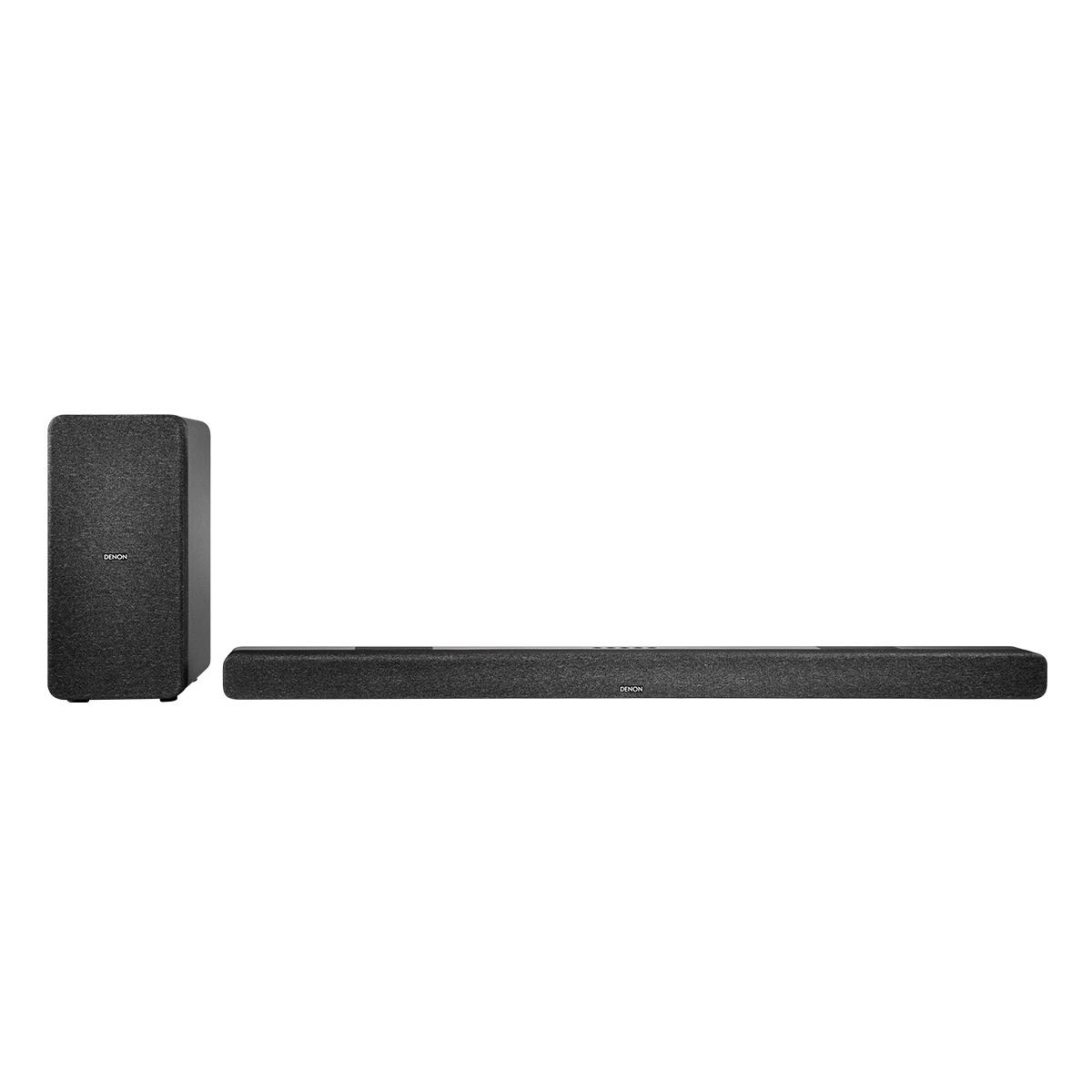
The Denon DHT-S517, launched in early 2024, takes a more traditional approach with separate soundbar and wireless subwoofer components. This 3.1.2 channel system is designed for users who want genuine Dolby Atmos performance without the complexity of a full surround sound setup.
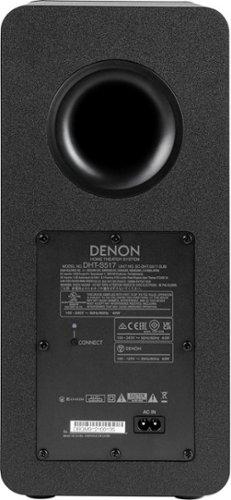
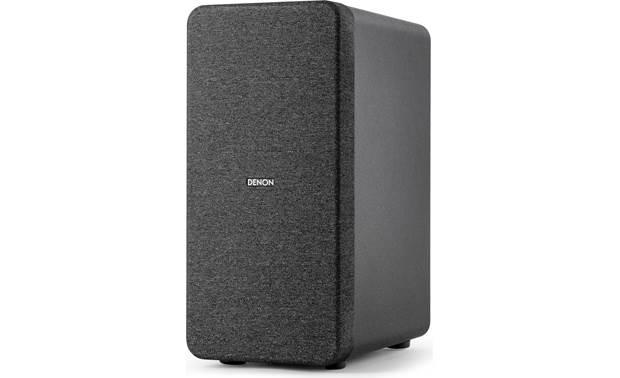
The standout feature here is the seven-driver array in the main soundbar. You get two dedicated upward-firing 2.5-inch drivers for height effects, a dedicated 1-inch center channel for dialogue, left and right channels with their own tweeters and midrange drivers, plus that wireless subwoofer with its own 5.25-inch driver and 100-watt amplifier.
What's particularly impressive about the DHT-S517 is its Dialogue Enhancer feature. This isn't just a simple EQ adjustment – it's sophisticated processing that can isolate and boost dialogue frequencies while maintaining the balance of the rest of the mix. Having tested this feature extensively, I can say it's genuinely useful, especially if you live in an apartment where you can't always crank the volume during action scenes.
The difference between these two systems becomes immediately apparent when you start playing demanding content. The Klipsch Flexus Core 100 delivers impressive stereo separation and surprisingly punchy bass for its size, but it's ultimately limited by its 2.1 configuration and virtual Dolby Atmos processing.
Virtual Dolby Atmos uses psychoacoustic tricks – essentially fooling your brain into thinking sounds are coming from places they aren't. It works to some degree, especially in smaller rooms, but there's no substitute for the real thing. When a helicopter flies overhead in a movie, the Klipsch creates the impression of movement, but it's clearly coming from the soundbar itself.
The Denon DHT-S517, on the other hand, physically fires sound upward from those dedicated height channels. The effect is dramatically more convincing. Rain sounds like it's actually falling from above, and overhead effects in action movies create a genuine sense of three-dimensional space. The difference is night and day if you've only experienced virtual surround processing before.
In terms of overall tonal balance, both systems sound good, but they have different personalities. The Klipsch has that classic "horn-loaded" sound signature that the company is known for – it's punchy and dynamic with excellent midrange clarity. Vocals cut through the mix beautifully, and there's an immediate, engaging quality to the sound that makes everything from Netflix shows to music feel more exciting.
The Denon takes a more neutral approach. It's designed to reproduce content as accurately as possible rather than adding its own flavor. This makes it excellent for movie watching, where you want to hear exactly what the sound engineers intended. The dedicated center channel makes a huge difference here – dialogue stays anchored to the screen even during complex multi-channel scenes.
This is where the fundamental design philosophies really diverge. The Klipsch's integrated approach means you get surprisingly good bass response without needing to find space for a separate subwoofer. Those dual 4-inch drivers can move a lot of air, and Klipsch has tuned them to provide adequate low-end extension for most content.
However, physics is physics. No matter how well-designed, 4-inch drivers in a compact enclosure can't match a dedicated 5.25-inch subwoofer in a properly sized cabinet. The Denon's wireless sub delivers deeper, more impactful bass with better definition in the lowest frequencies. Movie explosions have genuine weight and rumble, while the Klipsch provides more of a "thump" than true low-frequency extension.
The wireless connection on the Denon's subwoofer generally works flawlessly, though I have occasionally experienced brief sync issues when first powering on the system. These typically resolve within a few seconds, but it's worth noting for those who value absolute reliability.
Your room size plays a crucial role in determining which system will work better. The Klipsch Flexus Core 100 is optimized for smaller to medium-sized spaces – think apartments, bedrooms, or cozy living rooms under 200 square feet. In these environments, the integrated bass drivers work beautifully, and the compact size means the soundbar won't overwhelm your space.
Try to use the Klipsch in a large, open-plan living room, and its limitations become apparent. The 100-watt output starts to feel strained at higher volumes, and the bass response becomes less impactful as it tries to fill a larger space.
The Denon DHT-S517 scales better with room size. The 150 watts of total system power (50 watts from the main bar plus 100 watts from the sub) gives it more headroom for larger spaces. The wireless subwoofer can be positioned for optimal bass response regardless of where the soundbar sits, which is a significant advantage in challenging room layouts.
Modern soundbars need to work seamlessly with all your devices, and both systems handle the basics well. However, there are some important differences in their connectivity options.
The Klipsch includes HDMI ARC (Audio Return Channel), which allows your TV remote to control the soundbar volume – a crucial convenience feature. However, it's not the newer eARC (enhanced Audio Return Channel) standard, which means it's limited to compressed audio formats like standard Dolby Digital.
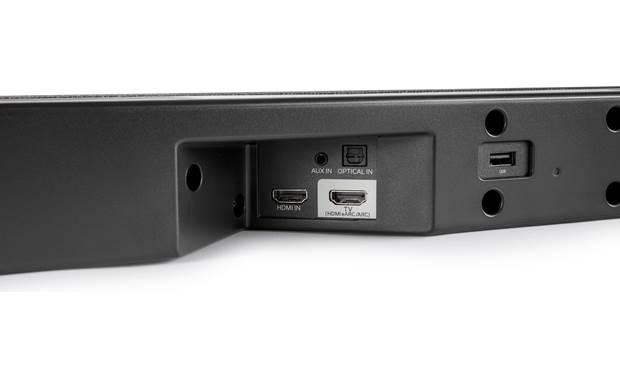
The Denon supports HDMI eARC, which can handle uncompressed multichannel audio and advanced formats like Dolby TrueHD. If you have a 4K Blu-ray player or streaming device that outputs these high-quality formats, the Denon can take full advantage while the Klipsch cannot.
Both systems include Bluetooth connectivity, but the Denon's implementation feels more robust. Pairing is quick and stable, and I've never experienced dropouts during normal use. The Klipsch's Bluetooth works fine, but the connection occasionally needs to be re-established after the system has been off for extended periods.
The Klipsch Connect Plus app provides basic EQ presets and system management, but it's fairly limited compared to what some competitors offer. You can adjust bass and treble levels and select from a few preset sound modes, but there's no room correction or advanced customization options.
Denon's approach is more sophisticated. While there's no dedicated app, the soundbar includes multiple preset modes that actually make meaningful differences to the sound. Movie mode enhances surround effects and dialogue clarity, Music mode optimizes stereo imaging, and Night mode compresses dynamic range so you can watch late-night content without disturbing neighbors.
The Dialogue Enhancer deserves special mention. Unlike simple treble boosts that make everything sound harsh, this feature specifically targets the frequency ranges where dialogue lives while leaving music and sound effects largely untouched. It's particularly valuable if you have hearing difficulties or frequently watch content with challenging audio mixes.
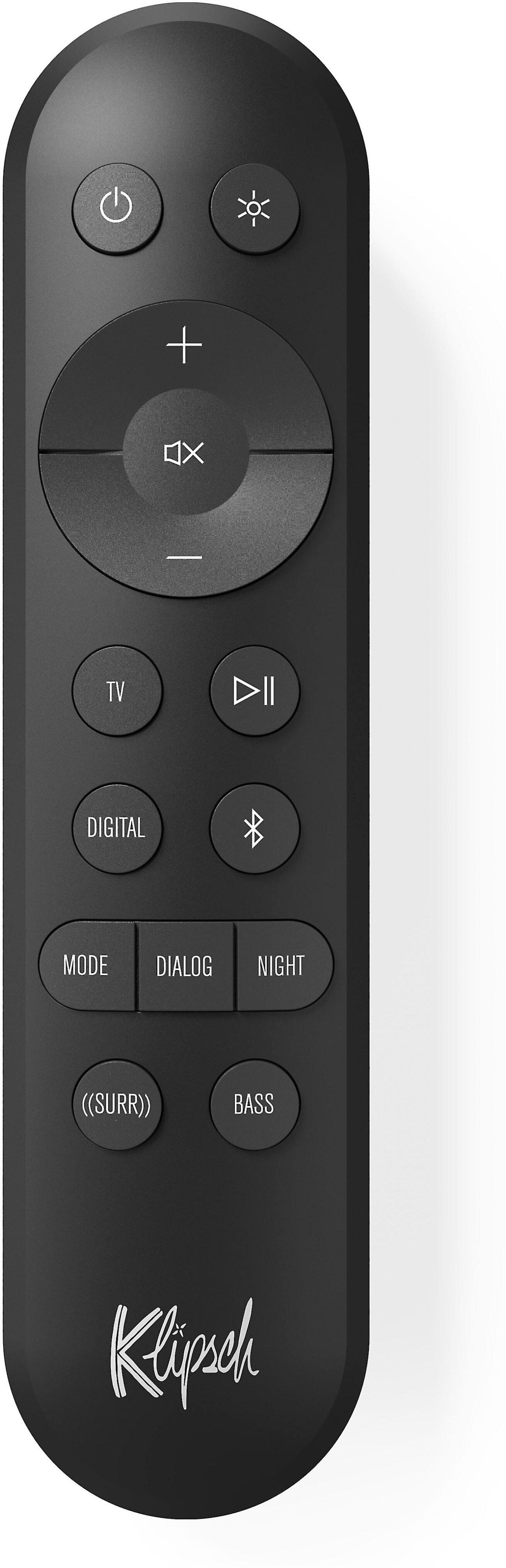
At $228, the Klipsch Flexus Core 100 represents exceptional value for someone looking to significantly upgrade their TV audio without breaking the bank. The build quality feels solid – the combination of plastic, wood, and metal construction doesn't feel cheap, and the included remote is properly backlit, which is rare at this price point.
The $302 Denon DHT-S517 costs about 32% more, but you're getting substantially more system for that extra money. The wireless subwoofer alone would cost $100-150 if purchased separately, and the additional channels and processing capabilities represent a genuine step up in performance.
From a long-term perspective, both systems should remain relevant for years to come. The Klipsch's simplicity means there's less that can go wrong, while the Denon's more advanced feature set provides better future-proofing as streaming services continue to adopt higher-quality audio formats.
If you live in an apartment or condo where space is limited and you need to be mindful of neighbors, the Klipsch Flexus Core 100 makes a lot of sense. The integrated bass means no subwoofer to place (and no low-frequency energy to leak through walls), while still providing a dramatic improvement over TV speakers.
The compact size means it won't dominate a small entertainment center, and the build quality is good enough that it won't look out of place in a nicely furnished space. For late-night viewing, the limited bass extension actually becomes an advantage – you get better dialogue clarity and sound effects without the rumbling that might disturb neighbors.
The Denon DHT-S517 is clearly designed for users who want a more immersive entertainment experience. If you have a dedicated media room or large living space where you regularly watch movies and shows, the authentic Dolby Atmos processing and dedicated subwoofer create a significantly more engaging experience.
The wireless subwoofer placement flexibility is crucial here. In my testing, I found that corner placement typically provides the most impactful bass, but room acoustics vary significantly. Being able to experiment with subwoofer positioning without running cables is a major advantage.
Both systems handle music reasonably well, though they're clearly optimized for video content. The Klipsch's more colored sound signature can make music feel more exciting, while the Denon's neutral approach is more accurate to the original recording.
For gaming, the Denon's lower input lag and more immersive soundfield provide advantages, especially for cinematic games with surround sound mixes. The Klipsch works fine for gaming but doesn't provide the same level of positional audio information.
Both soundbars represent the current state of the art in their respective price categories, incorporating lessons learned from years of soundbar development. The trend toward wireless subwoofers has largely solved the placement and cable management issues that plagued earlier systems, while advances in digital signal processing have made virtual surround effects more convincing than ever.
The Klipsch's integrated approach reflects growing consumer demand for simplified, space-saving solutions. As living spaces become smaller and more expensive, the appeal of all-in-one systems continues to grow. However, the laws of physics still apply – there's only so much bass you can extract from small drivers in compact enclosures.
Denon's 3.1.2 configuration represents the current sweet spot for home theater soundbars. More channels are certainly possible (and available at higher price points), but the DHT-S517 provides most of the benefits of a full surround system while maintaining the simplicity that makes soundbars appealing in the first place.
After extensive testing with both systems, I'd recommend the Klipsch Flexus Core 100 if you're primarily looking to improve dialogue clarity and add some bass impact to your TV audio without spending a lot of money or dedicating much space to the system. It's an excellent entry point into better TV audio that will satisfy most casual viewers.
Choose the Denon DHT-S517 if you can stretch your budget and want a more complete home theater experience. The genuine Dolby Atmos processing, dedicated center channel, and wireless subwoofer create a significantly more immersive experience that will enhance everything from blockbuster movies to binge-worthy TV series.
The $74 price difference represents one of those clear upgrade thresholds where the additional cost delivers meaningful performance improvements. If you're planning to keep your soundbar for several years and regularly watch movies or premium TV content, the Denon provides better long-term value despite its higher initial cost.
Ultimately, both soundbars succeed at their intended purposes. The Klipsch proves that great sound doesn't require a huge budget, while the Denon demonstrates that you don't need a complex multi-speaker setup to achieve impressive home theater audio. Your choice should depend on your space, budget, and how important that extra level of immersion is to your viewing experience.
| Klipsch Flexus Core 100 ($228) | Denon DHT-S517 ($302) |
|---|---|
| Channel Configuration - Determines immersion and dialogue clarity | |
| 2.1-channel with virtualized Dolby Atmos | 3.1.2-channel with true Dolby Atmos height drivers |
| Total System Power - Affects maximum volume and room size capability | |
| 100W RMS (compact design limits output) | 150W total (50W bar + 100W wireless sub) |
| Bass Solution - Impact on placement flexibility and low-end performance | |
| Dual 4" built-in subwoofers (no placement needed) | 5.25" wireless subwoofer (flexible positioning) |
| Dialogue Handling - Critical for speech clarity in movies and shows | |
| No dedicated center channel (left/right handle dialogue) | Dedicated 1" center driver + 3-level Dialogue Enhancer |
| Physical Dimensions - Important for entertainment center fit | |
| 28" W x 3" H x 5" D (compact for smaller spaces) | 41.3" W x 2.3" H x 3.8" D (requires more space) |
| HDMI Support - Determines audio format compatibility | |
| HDMI ARC (limited to compressed audio formats) | HDMI eARC (supports uncompressed high-quality audio) |
| Room Size Sweet Spot - Where each system performs best | |
| Under 200 sq ft (apartments, bedrooms) | 200-400 sq ft (medium to large living rooms) |
| Setup Complexity - Time and effort required | |
| Plug-and-play single unit | Soundbar + wireless subwoofer pairing required |
| Sound Customization - Control over audio characteristics | |
| Basic app-based EQ presets | Multiple sound modes + Pure mode + Dialogue Enhancer |
| Value Proposition - What you get for the price difference | |
| Best-in-class performance for compact all-in-one design | True Dolby Atmos experience with wireless sub included |
The Denon DHT-S517 ($302) offers better overall value despite costing $74 more than the Klipsch Flexus Core 100 ($228). You get true Dolby Atmos with physical height drivers, a wireless subwoofer, and dedicated center channel for dialogue - features that would cost significantly more if purchased separately.
The biggest difference is audio configuration: the Klipsch Flexus Core 100 is a 2.1-channel system with built-in subwoofers, while the Denon DHT-S517 is a 3.1.2-channel system with a separate wireless subwoofer and true Dolby Atmos height channels for overhead sound effects.
The Klipsch Flexus Core 100 is ideal for apartments due to its compact 28-inch size and integrated bass drivers that won't disturb neighbors. The Denon DHT-S517 requires more space and produces deeper bass that might be too powerful for close living situations.
The Klipsch Flexus Core 100 has dual 4-inch subwoofers built-in, so no separate subwoofer is needed. The Denon DHT-S517 includes a wireless subwoofer in the box, providing deeper bass than the Klipsch's integrated solution.
The Denon DHT-S517 has superior dialogue clarity thanks to its dedicated center channel and three-level Dialogue Enhancer feature. The Klipsch Flexus Core 100 handles dialogue through its left and right channels, which is less precise for speech reproduction.
The Klipsch Flexus Core 100 works best in rooms under 200 square feet due to its 100W power output. The Denon DHT-S517 can fill larger spaces up to 400 square feet thanks to its 150W total system power and wireless subwoofer.
The Denon DHT-S517 provides authentic Dolby Atmos with physical upward-firing drivers that bounce sound off your ceiling. The Klipsch Flexus Core 100 uses virtual Dolby Atmos processing, which simulates height effects but isn't as immersive as the real thing.
The Klipsch Flexus Core 100 offers simpler setup as a single unit that just needs to be plugged in and connected. The Denon DHT-S517 requires pairing the wireless subwoofer but is still straightforward, taking about 10 minutes total.
The Denon DHT-S517 is significantly better for home theater use, offering true surround sound effects, dedicated dialogue processing, and deeper bass impact. The Klipsch Flexus Core 100 provides good movie audio but lacks the immersive experience of true multichannel sound.
Both soundbars include Bluetooth and optical inputs. However, the Denon DHT-S517 features HDMI eARC for high-quality audio formats, while the Klipsch Flexus Core 100 has standard HDMI ARC with more limited audio format support.
The Denon DHT-S517 delivers superior bass with its dedicated 5.25-inch wireless subwoofer and 100W amplifier. The Klipsch Flexus Core 100 provides impressive bass for its size with dual built-in 4-inch drivers, but can't match the depth and impact of a dedicated subwoofer.
Choose the Klipsch Flexus Core 100 if you want good TV audio improvement on a budget and have limited space. Choose the Denon DHT-S517 if you can afford the extra $74 and want a more complete home theater experience with true Dolby Atmos and superior bass performance.
We've done our best to create useful and informative comparisons to help you decide what product to buy. Our research uses advanced automated methods to create this comparison and perfection is not possible - please contact us for corrections or questions. These are the sites we've researched in the creation of this article: cnet.com - klipsch.com - klipsch.com - bestbuy.com - sweetwater.com - assets.onkyo-av.com - youtube.com - worldwidestereo.com - avnirvana.com - target.com - techradar.com - consumerreports.org - crutchfield.com - bestbuy.com - bestbuy.com - pocket-lint.com - abt.com - manuals.denon.com - connectedmag.com.au - bestbuy.com - forum.flirc.tv - bhphotovideo.com

Privacy Policy
Terms and Conditions - Affiliate Policy
Home Security
© Copyright 2008-2026.
11816 Inwood Rd #1211, Dallas, TX 75244