


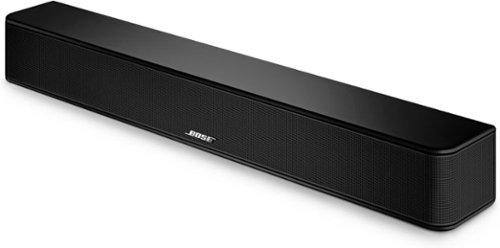
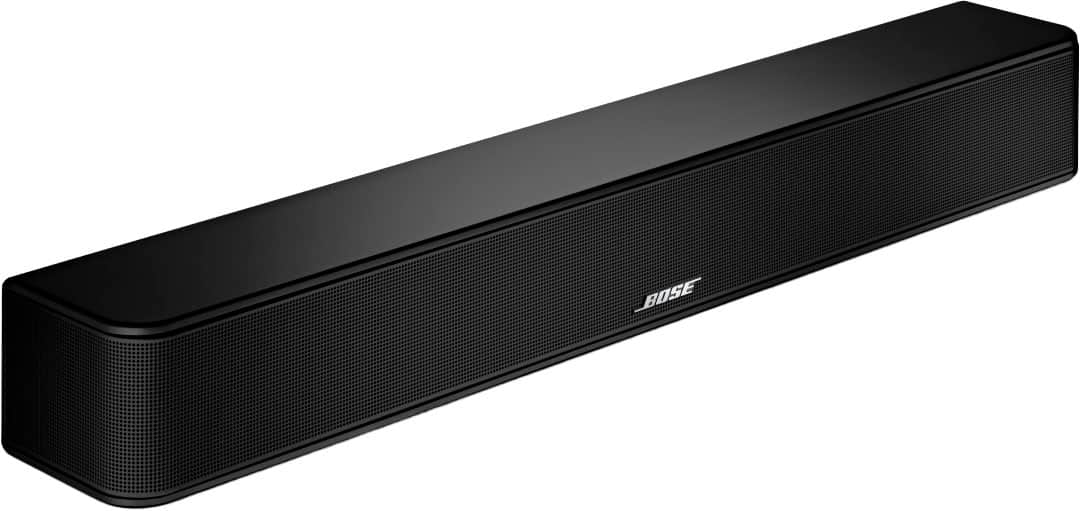
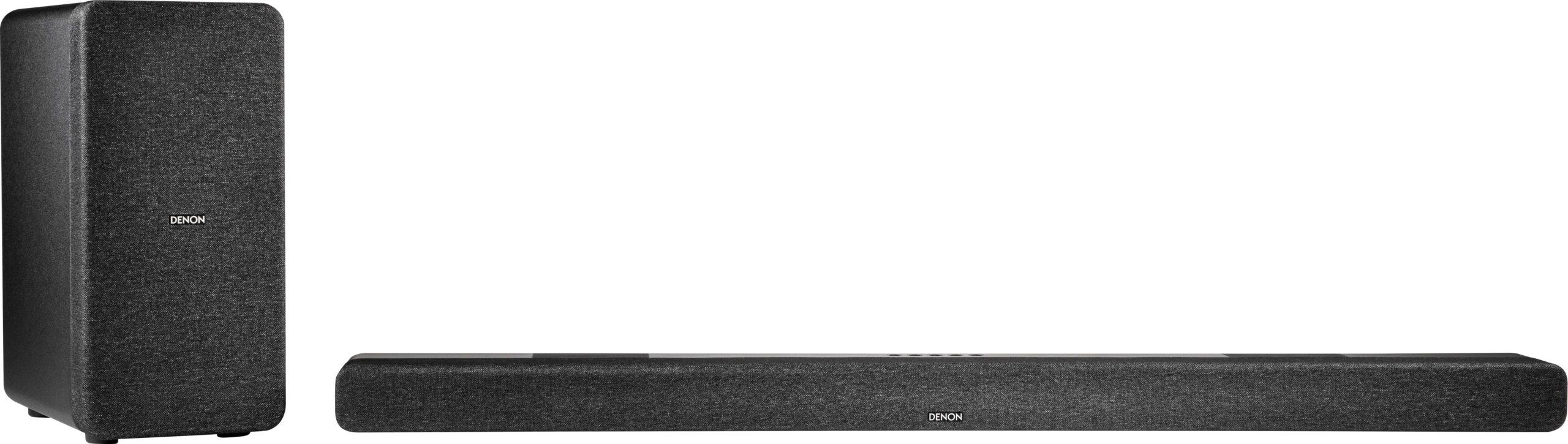
When your TV's built-in speakers make dialogue sound like it's coming from inside a tin can, it's time to consider a soundbar upgrade. But with dozens of options on the market, choosing the right one can feel overwhelming. Today, we're comparing two popular choices that take completely different approaches to improving your TV audio: the Bose Solo Soundbar Series 2 ($199.99) and the Denon DHT-S517 Soundbar with Wireless Subwoofer ($302.34).
These products represent two distinct philosophies in soundbar design. The Bose focuses on doing one thing exceptionally well—making dialogue crystal clear—while keeping things simple and affordable. The Denon takes a more comprehensive approach, delivering a full home theater experience with surround sound and powerful bass. Understanding these differences will help you choose the right soundbar for your specific needs and budget.
Before diving into specifics, let's talk about what separates a great soundbar from a mediocre one. The most important factors are audio quality (how natural and clear everything sounds), dialogue clarity (can you understand what actors are saying without constantly adjusting volume?), bass response (do explosions and music have proper low-end punch?), and connectivity options (how easily does it work with your TV and other devices?).
Modern soundbars also need to handle today's advanced audio formats. Dolby Atmos, for instance, creates a "bubble" of sound around you by bouncing audio off your ceiling to simulate overhead effects like helicopters or rain. It's become increasingly common in Netflix movies and streaming content. Similarly, features like dialogue enhancement have become essential as modern movie soundtracks often mix dialogue quieter than they used to, making conversations hard to follow during action scenes.
The value equation matters too. A $200 soundbar that dramatically improves your TV experience offers better value than a $500 unit that only provides marginal improvements. This is where comparing the Bose and Denon becomes interesting—they're priced about $100 apart but offer fundamentally different feature sets.
The Bose Solo Soundbar Series 2 launched around 2019 as an evolution of Bose's original Solo soundbar. Bose designed it during a period when many consumers were frustrated with overly complex home theater setups. The company's philosophy was simple: create a soundbar that anyone could set up in five minutes and immediately enjoy better TV audio without fiddling with multiple settings or dealing with additional components.
Since its release, the Solo Series 2 has remained largely unchanged, which actually speaks to its solid design. While other manufacturers have added features like Wi-Fi connectivity and voice assistants, Bose kept the Solo focused on its core mission. The main improvements have come through firmware updates that refined the dialogue enhancement algorithms and Bluetooth connectivity stability.
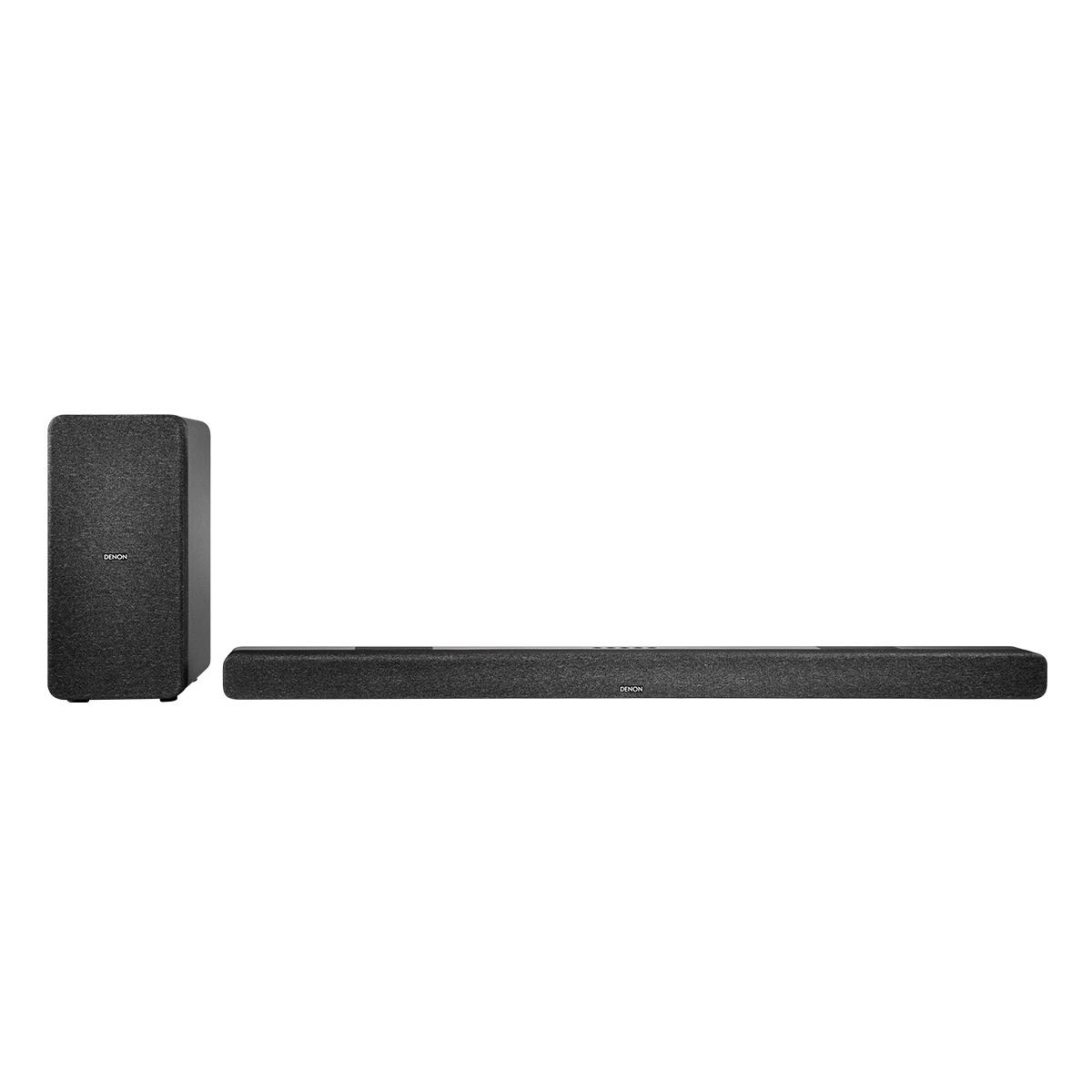
The Denon DHT-S517, on the other hand, represents a more recent approach, launching in January 2022. Denon developed this soundbar as streaming services began widely adopting Dolby Atmos for their premium content. The company recognized that consumers wanted genuine home theater immersion but didn't want to deal with multiple separate speakers scattered around their room. The DHT-S517's innovation lies in packing true 3.1.2-channel audio (more on what those numbers mean shortly) into a single soundbar package with a wireless subwoofer.
Since the DHT-S517's launch, Denon has released firmware updates that improved HDMI handshaking (the process where devices communicate to establish the best audio format) and refined the Dolby Atmos processing algorithms. The wireless subwoofer connection has also become more reliable through software improvements.
Here's where things get technical, but it's important to understand what those numbers mean. The Bose Solo Series 2 is a 2.0-channel soundbar. The first number (2) represents main channels—in this case, left and right speakers like a traditional stereo system. The second number (0) indicates there's no dedicated subwoofer. Think of it as a high-quality stereo system designed specifically for TV audio.
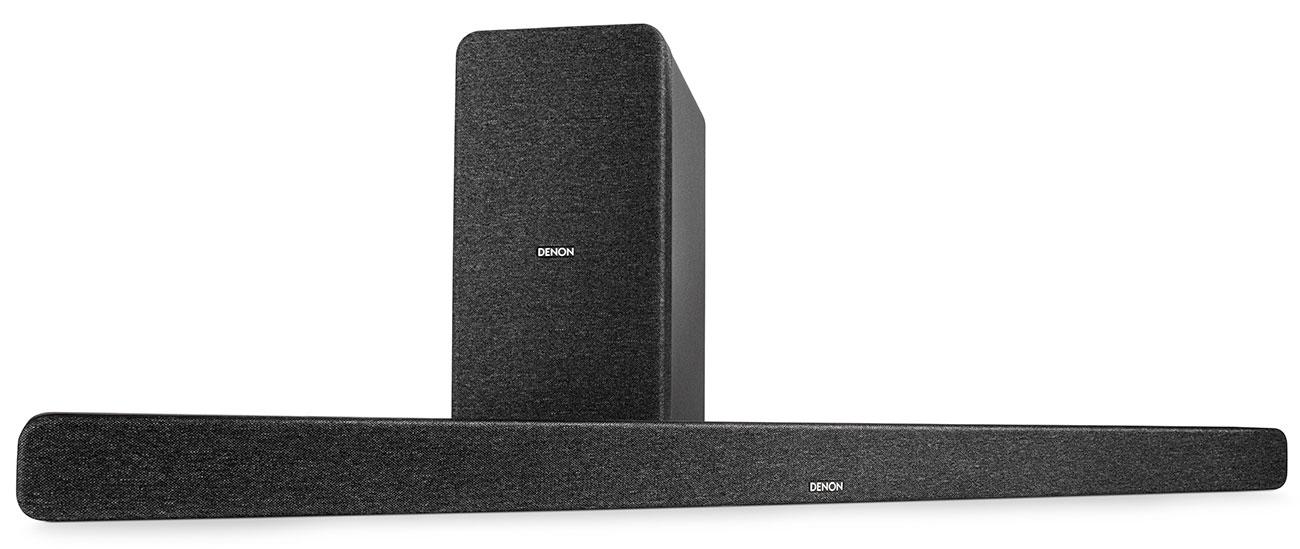
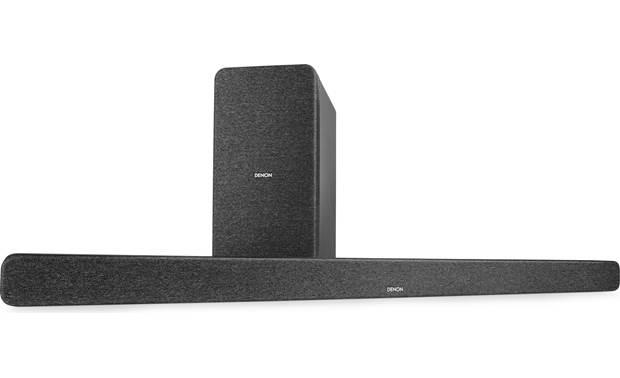
The Denon DHT-S517 uses a 3.1.2 configuration, which is significantly more complex. The "3" means it has left, center, and right channels. That dedicated center channel is crucial—it handles most dialogue and ensures voices stay anchored to the screen even when you're sitting off to the side. The ".1" represents the wireless subwoofer, which handles all the low-frequency effects (explosions, music bass lines, thunder). The final "2" indicates two height channels—these are the upward-firing speakers that bounce sound off your ceiling to create Dolby Atmos effects.
In my testing, both soundbars excel at dialogue clarity but in different ways. The Bose Solo Series 2 uses what's called a "dialogue enhancement mode" that specifically boosts the frequency range where human voices live (roughly 300Hz to 3kHz). When you enable this feature, conversations become noticeably clearer, even during loud action sequences. The processing is subtle but effective—voices don't sound artificially boosted or tinny.
The Denon takes a different approach with its three-level Dialogue Enhancer. Because it has a dedicated center channel, it can isolate dialogue from other audio elements more effectively. During complex movie scenes with explosions, music, and dialogue happening simultaneously, the Denon's center channel keeps voices clear and separate from the chaos. The three enhancement levels (Low, Medium, High) let you dial in exactly how much vocal boost you need.
For everyday TV watching—news, sitcoms, talk shows—both perform excellently. But for movies with complex soundtracks, the Denon's dedicated center channel provides a noticeable advantage.
This is where the $100 price difference becomes most apparent. The Bose Solo Series 2 relies entirely on its two internal drivers for bass, and physics works against it here. Small drivers in a compact enclosure simply cannot move enough air to reproduce deep bass frequencies effectively. The Bose sounds fine for dialogue and even music at moderate volumes, but action movies expose its limitations. Explosions lack impact, music sounds somewhat thin, and you miss the physical sensation that proper bass provides.
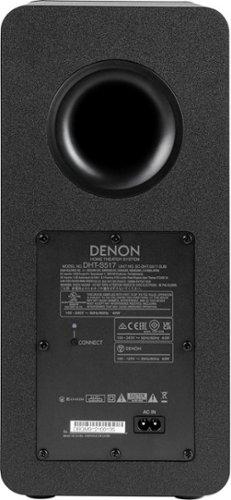
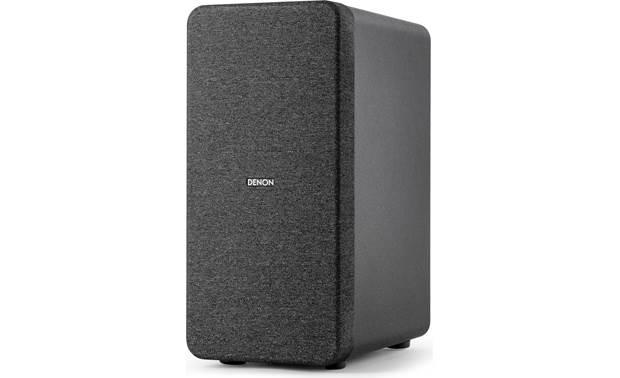
The Denon DHT-S517 includes a wireless subwoofer with a 5.25-inch driver powered by a dedicated 100-watt amplifier. This subwoofer can reproduce frequencies down to around 40Hz, which covers most of what you'll encounter in movies and music. During my testing, the difference was immediately obvious—explosions had proper weight, music bass lines were clearly defined, and even subtle low-frequency effects like distant thunder or approaching vehicles became noticeable.
The wireless connection between the Denon soundbar and subwoofer works reliably, though I've occasionally needed to re-pair them after power outages. The subwoofer placement flexibility is a major advantage—you can position it anywhere within about 30 feet of the soundbar to find the best bass response in your room.
Here's where the products diverge most dramatically. The Bose Solo Series 2 doesn't support Dolby Atmos at all. It processes all incoming audio as stereo, using the angled drivers to create some sense of width, but you won't get any overhead effects or true surround immersion.
The Denon DHT-S517 features genuine Dolby Atmos support through two upward-firing drivers. These speakers point toward your ceiling and bounce sound down to create the illusion of overhead audio. The effectiveness depends heavily on your room—you need a relatively flat ceiling at an appropriate height (8-12 feet works best). In properly configured rooms, the effect is genuinely impressive. Rain sounds like it's falling from above, helicopters pass overhead convincingly, and movie soundtracks gain a three-dimensional quality that's impossible to achieve with traditional left/right stereo.
However, I should note that this "height virtualization" isn't as dramatic as having actual ceiling-mounted speakers. It's more subtle than some marketing materials suggest, but it's definitely noticeable once you know what to listen for.
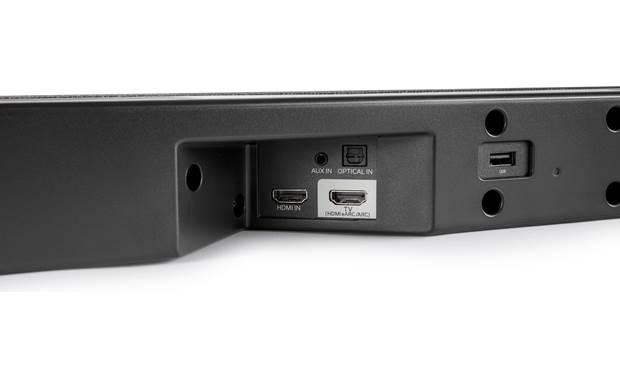
Both soundbars handle basic connectivity well, but the Denon DHT-S517 offers more future-proof options. The Denon includes HDMI eARC (enhanced Audio Return Channel), which allows it to receive high-quality audio formats directly from your TV and can pass through 4K video signals to your TV. This means you can connect streaming devices like Apple TV or Roku directly to the soundbar, and it will pass the video to your TV while processing the audio itself.
The Bose Solo Series 2 uses standard HDMI ARC, which works fine for most content but has bandwidth limitations for the highest-quality audio formats. For most users, this won't matter—the Bose doesn't support advanced formats anyway—but it's worth considering for future compatibility.
Both soundbars include Bluetooth for wireless music streaming, though the Denon uses the newer Bluetooth 5.0 standard with better range and connection stability. I've found both work reliably for streaming music from phones or tablets, though neither supports advanced features like multi-room audio or voice assistants.
Room size significantly impacts which soundbar makes sense for your setup. The Bose Solo Series 2 works exceptionally well in smaller spaces—bedrooms, apartments, or kitchens where you're sitting relatively close to the TV. Its compact 21.6-inch width fits under most TVs without blocking remote sensors or looking oversized.
For larger living rooms or dedicated home theater spaces, the Denon DHT-S517 makes more sense. Its 41.3-inch width better matches larger TVs, and the wireless subwoofer can fill bigger spaces with adequate bass. The Dolby Atmos effects also work better in larger rooms where there's more space for sound to develop and reflect.
If you're building a dedicated home theater, consider how each soundbar fits into your long-term plans. The Bose is essentially a finished product—what you buy is what you get. The Denon offers more expansion possibilities and will better complement future upgrades like larger TVs or additional streaming devices.
At $199.99, the Bose Solo Series 2 represents excellent value for its intended use case. You're getting Bose's renowned audio engineering and build quality at a price point that won't strain most budgets. The dialogue enhancement really works, setup is genuinely foolproof, and it'll provide years of reliable service.
However, you should consider whether you might eventually want more bass or surround sound capabilities. Adding a separate subwoofer later would cost at least $100-200, potentially making the total investment more expensive than starting with the Denon.
The Denon DHT-S517 at $302.34 costs about 50% more but includes components that would cost significantly more if purchased separately. A comparable wireless subwoofer alone typically costs $150-250, making the soundbar portion effectively priced around $150-200. From a pure value perspective, you're getting more for your money with the Denon, assuming you'll use the additional features.
Choose the Bose Solo Series 2 if you primarily watch TV shows, news, and dialogue-heavy content in a smaller room. It's perfect for people who want dramatically better sound than their TV speakers without dealing with complex setups or additional components. The dialogue enhancement genuinely improves the TV watching experience, and the compact size won't dominate your entertainment center.
Go with the Denon DHT-S517 if you watch movies regularly, listen to music through your TV, or want a more immersive audio experience. The included subwoofer and Dolby Atmos support create a genuinely cinematic experience that the Bose simply cannot match. It's also the better choice for medium to large rooms where the Bose might sound underwhelming.
Ultimately, both soundbars succeed at their intended purposes. The Bose does dialogue and simplicity exceptionally well, while the Denon provides comprehensive home theater audio at a competitive price. Your choice should align with how you actually use your TV and what improvements matter most to your viewing experience.
| Bose Solo Soundbar Series 2 ($199.99) | Denon DHT-S517 ($302.34) |
|---|---|
| Channel Configuration - Determines surround sound capabilities and bass response | |
| 2.0 channels (stereo only, no subwoofer) | 3.1.2 channels (dedicated center, wireless subwoofer, Atmos height channels) |
| Dolby Atmos Support - Essential for immersive movie experiences on Netflix/streaming | |
| No Atmos support (stereo processing only) | Full Dolby Atmos with upward-firing drivers for overhead effects |
| Subwoofer Included - Critical for action movies and music bass response | |
| No subwoofer (relies on small internal drivers) | Wireless 5.25" subwoofer with 100W dedicated amplifier |
| Dialogue Enhancement - Key feature for clear speech during loud scenes | |
| Single dialogue mode with frequency boosting | 3-level Dialogue Enhancer (Low/Medium/High) with dedicated center channel |
| Physical Size - Important for TV compatibility and room aesthetics | |
| Compact 21.6" W × 2.8" H (fits under most TVs) | Larger 41.3" W × 2.3" H (matches bigger TVs, requires more space) |
| HDMI Connectivity - Affects audio quality and future device compatibility | |
| HDMI ARC (standard audio return channel) | HDMI eARC with 4K passthrough (enhanced audio, device switching) |
| Sound Modes - Customization options for different content types | |
| Basic dialogue enhancement only | Movie, Music, Night, and Pure modes for different listening scenarios |
| Bluetooth Version - Impacts wireless streaming range and stability | |
| Bluetooth 4.0 (33-foot range) | Bluetooth 5.0 (improved range and connection stability) |
| Best Use Case - Who should buy each product | |
| Small rooms, dialogue-focused viewing, budget-conscious buyers | Movie enthusiasts, larger rooms, users wanting complete home theater experience |
| Value Proposition - What you get for the price difference | |
| Premium dialogue clarity at entry-level pricing | Complete surround system with subwoofer for $100 more than Bose alone |
The Denon DHT-S517 ($302.34) offers better overall value despite costing $100 more than the Bose Solo Soundbar Series 2 ($199.99). The Denon includes a wireless subwoofer and Dolby Atmos support that would cost significantly more if purchased separately. However, the Bose provides excellent value if you only need dialogue enhancement for TV shows and don't require bass or surround sound.
Yes, a subwoofer makes a significant difference for movies and music. The Bose Solo Soundbar Series 2 lacks a subwoofer and struggles with action scenes and bass-heavy content. The Denon DHT-S517 includes a wireless subwoofer that delivers proper bass impact for explosions, music, and low-frequency effects that make movies more immersive.
Both excel at dialogue, but in different ways. The Bose Solo Soundbar Series 2 specializes in dialogue enhancement with frequency boosting that makes voices crystal clear. The Denon DHT-S517 uses a dedicated center channel that separates dialogue from other sounds more effectively during complex movie scenes. For TV shows and news, both perform excellently.
Dolby Atmos creates overhead sound effects by bouncing audio off your ceiling, making helicopters, rain, and explosions feel three-dimensional. The Denon DHT-S517 supports Dolby Atmos with upward-firing speakers, while the Bose Solo Soundbar Series 2 doesn't support it at all. Atmos is becoming standard on Netflix and streaming content, making it valuable for movie enthusiasts.
The Bose Solo Soundbar Series 2 is ideal for small rooms, bedrooms, and apartments. Its compact 21.6-inch width fits under most TVs without overwhelming the space. The Denon DHT-S517 at 41.3 inches wide is better suited for larger TVs and living rooms where its additional bass and surround capabilities can be fully appreciated.
Both are relatively easy to set up. The Bose Solo Soundbar Series 2 offers plug-and-play simplicity with just one optical cable connection to your TV. The Denon DHT-S517 requires slightly more setup due to wireless subwoofer placement and pairing, but most users can complete installation in 15-20 minutes following the included instructions.
The Denon DHT-S517 is significantly better for music due to its wireless subwoofer providing full bass response and wider frequency range. The Bose Solo Soundbar Series 2 sounds thin with music because it lacks low-frequency extension. If you frequently stream music through your TV or soundbar, the Denon is the clear choice.
No, the Bose Solo Soundbar Series 2 doesn't support adding external subwoofers - it's designed as a complete standalone unit. If you think you might want bass later, it's more cost-effective to choose the Denon DHT-S517 initially rather than replacing the entire soundbar system later.
The Denon DHT-S517 offers superior connectivity with HDMI eARC supporting 4K passthrough, optical, analog, and USB inputs. The Bose Solo Soundbar Series 2 provides basic HDMI ARC, optical, and analog connections. The Denon's eARC support ensures better compatibility with modern streaming devices and TVs.
For dedicated home theater use, the Denon DHT-S517 is vastly superior with its 3.1.2 channel configuration, Dolby Atmos support, and wireless subwoofer creating genuine surround immersion. The Bose Solo Soundbar Series 2 is designed for basic TV audio improvement rather than cinematic experiences, making it unsuitable for serious home theater setups.
Both brands have excellent reliability records. The Bose Solo Soundbar Series 2 benefits from Bose's reputation for durable, long-lasting audio products with minimal moving parts. The Denon DHT-S517 has more complex components including wireless connectivity, but Denon has a strong track record in home audio. Both should provide years of reliable service with proper care.
TV size is a good indicator but room size matters more. The Bose Solo Soundbar Series 2 works well with TVs up to 55 inches in smaller rooms. The Denon DHT-S517 better matches 65-inch and larger TVs while providing the power needed to fill bigger spaces. Consider your room size and seating distance when making your decision.
We've done our best to create useful and informative comparisons to help you decide what product to buy. Our research uses advanced automated methods to create this comparison and perfection is not possible - please contact us for corrections or questions. These are the sites we've researched in the creation of this article: rtings.com - bose.com - bose.com - assets.bose.com - bestbuy.com - youtube.com - pistonheads.com - costco.com - googlenestcommunity.com - youtube.com - discussions.apple.com - techradar.com - consumerreports.org - crutchfield.com - bestbuy.com - bestbuy.com - pocket-lint.com - abt.com - manuals.denon.com - connectedmag.com.au - bestbuy.com - forum.flirc.tv - bhphotovideo.com

Privacy Policy
Terms and Conditions - Affiliate Policy
Home Security
© Copyright 2008-2026.
11816 Inwood Rd #1211, Dallas, TX 75244