



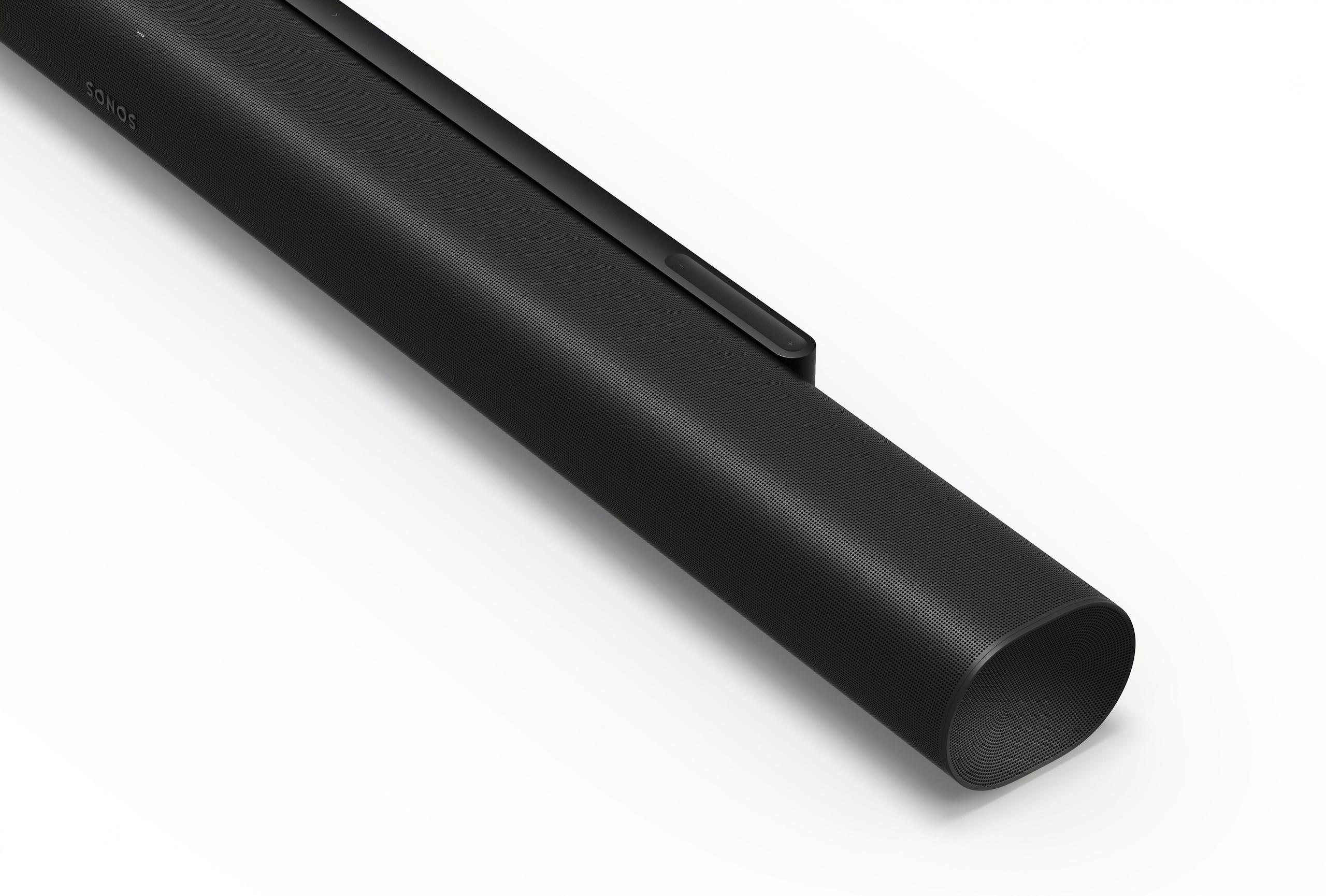
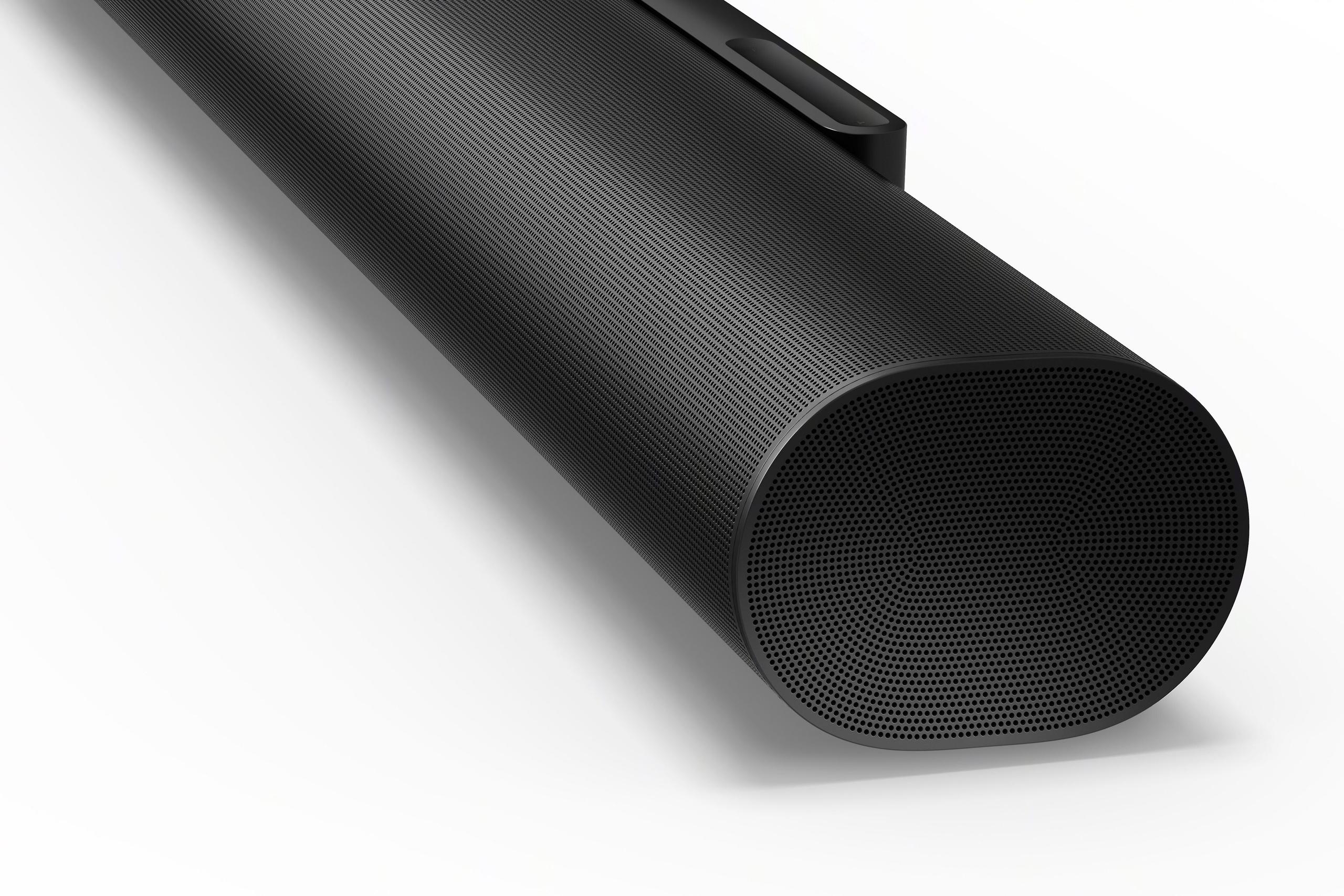
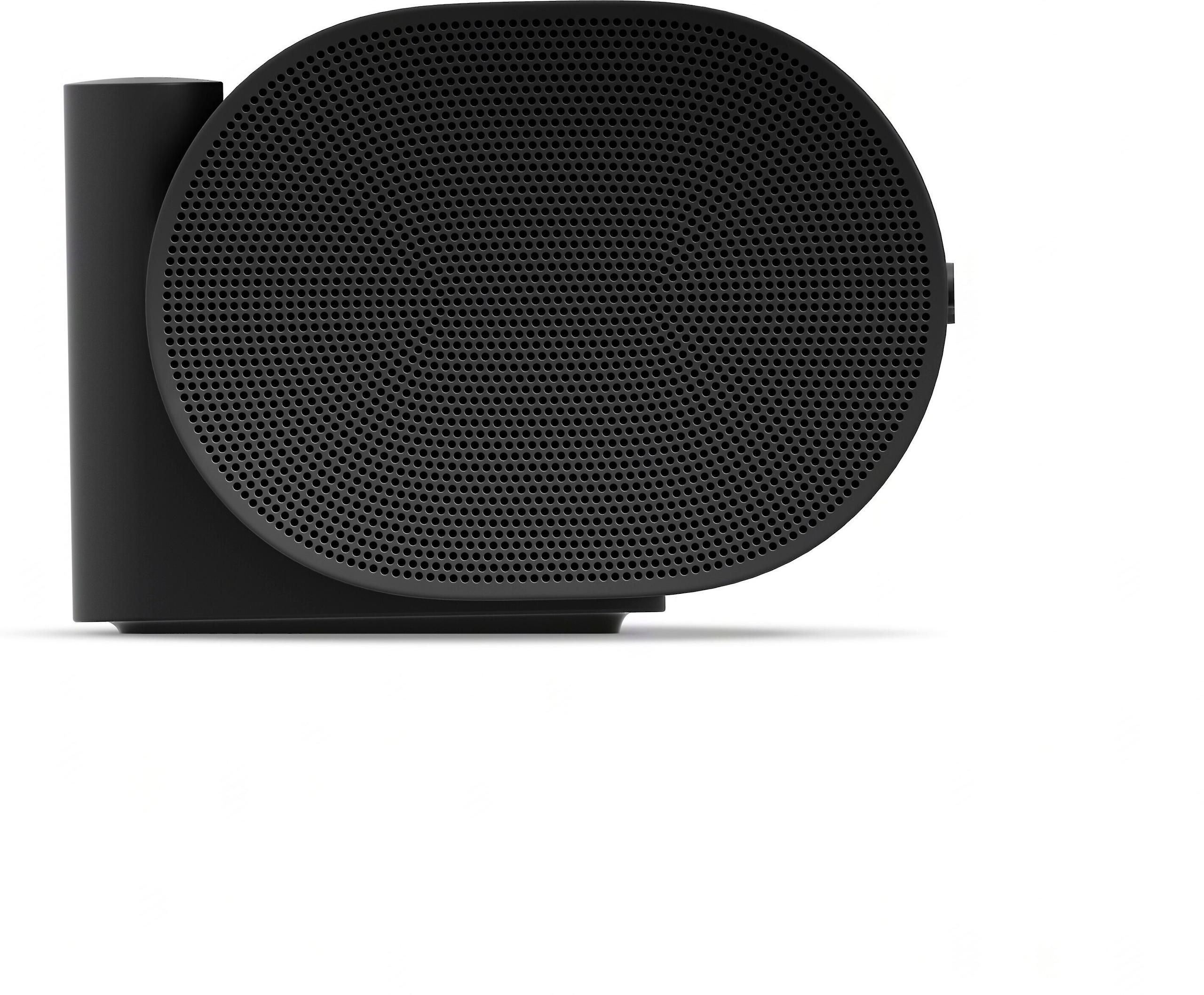
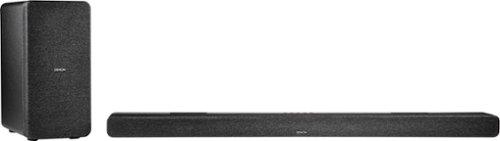
When you're ready to upgrade from your TV's built-in speakers, the world of soundbars can feel overwhelming. Do you need Dolby Atmos? What's the difference between virtual and real surround sound? Should you spend more for smart features, or focus purely on audio quality? These questions become especially important when comparing two very different approaches to home theater audio: the premium Sonos Arc Ultra ($929) and the value-focused Denon DHT-S517 ($302).
Before diving into these specific models, it's worth understanding what soundbars are trying to accomplish. Traditional home theater systems use multiple speakers placed around your room – front left and right, center channel for dialogue, rear surrounds, and a subwoofer for bass. This creates genuine surround sound but requires running wires everywhere and dedicating significant space to speakers.
Soundbars attempt to recreate this experience using a single horizontal speaker unit, usually paired with a separate subwoofer. They use various tricks – from precisely angled drivers to digital signal processing (DSP) – to make sound appear to come from locations where no speakers exist. Think of DSP as the soundbar's brain, using complex algorithms to manipulate audio signals and create the illusion of surround sound.
The key considerations when shopping for soundbars include audio performance (how good it sounds), Dolby Atmos implementation (3D surround sound technology), connectivity options, smart features, and overall value. Some prioritize raw power and bass impact, while others focus on refinement and integration with modern smart homes.
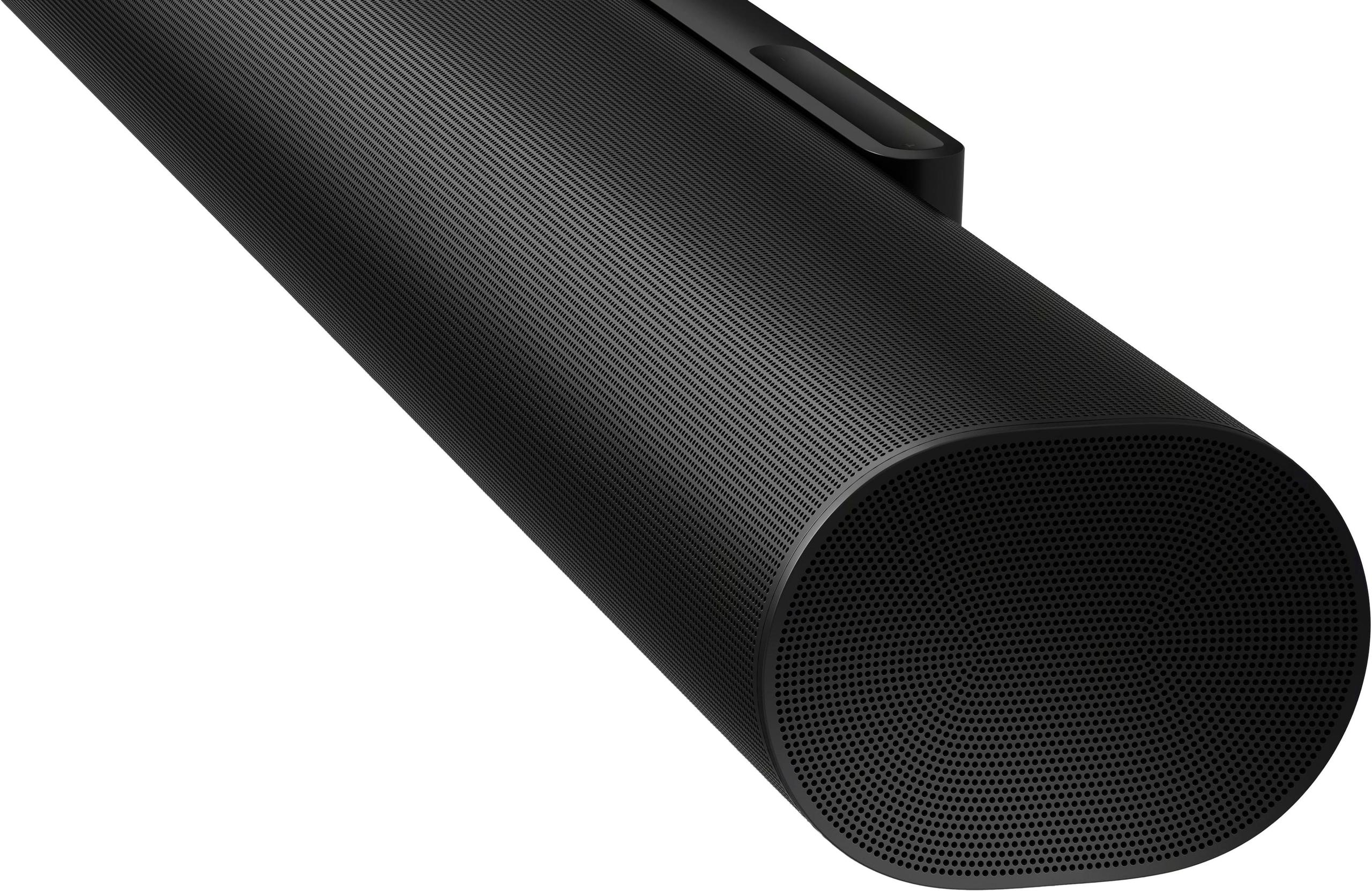
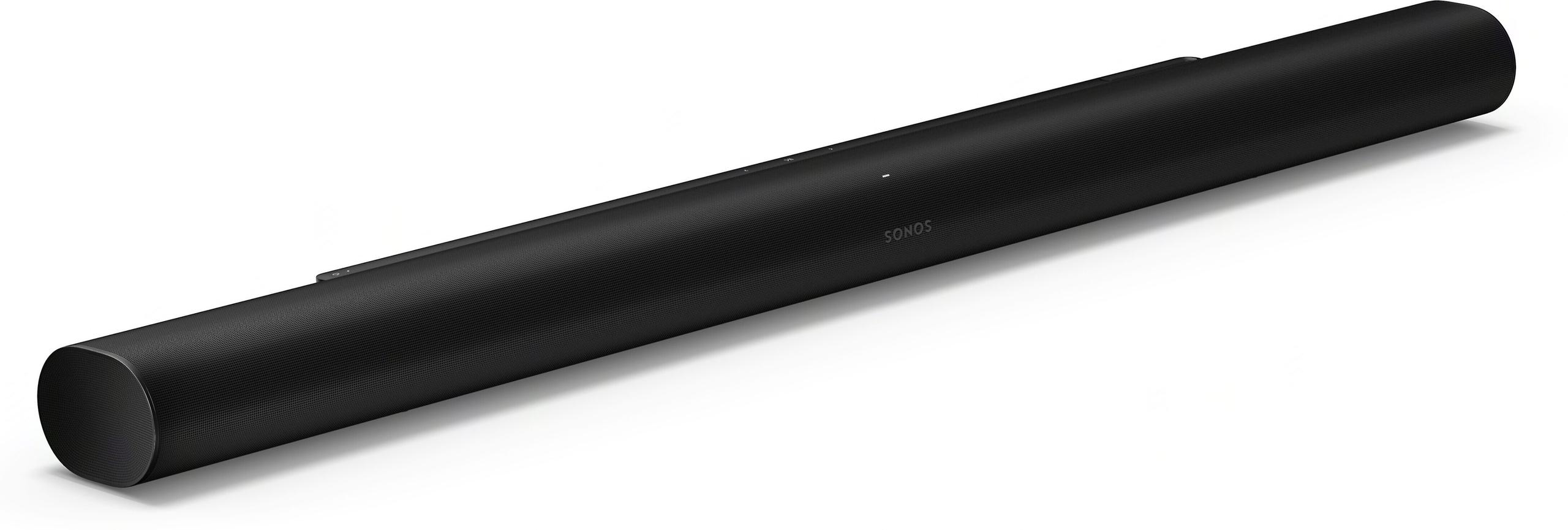
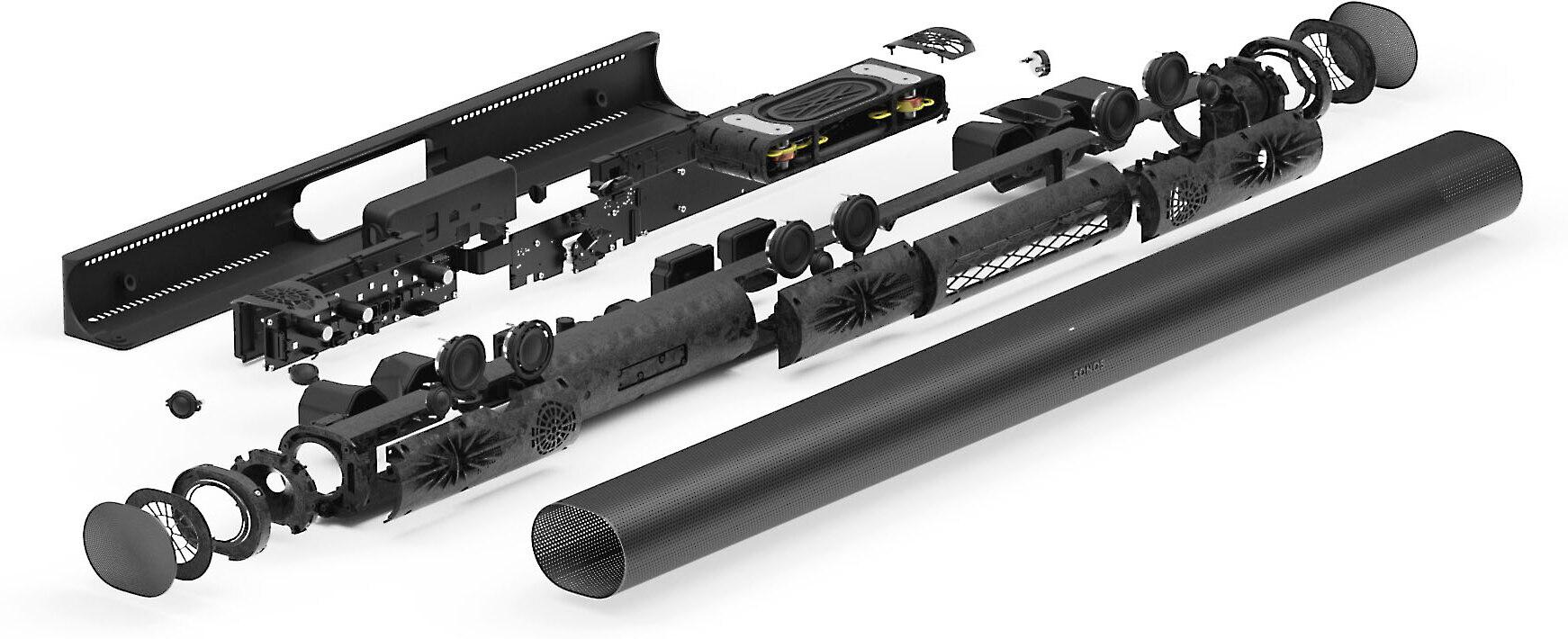
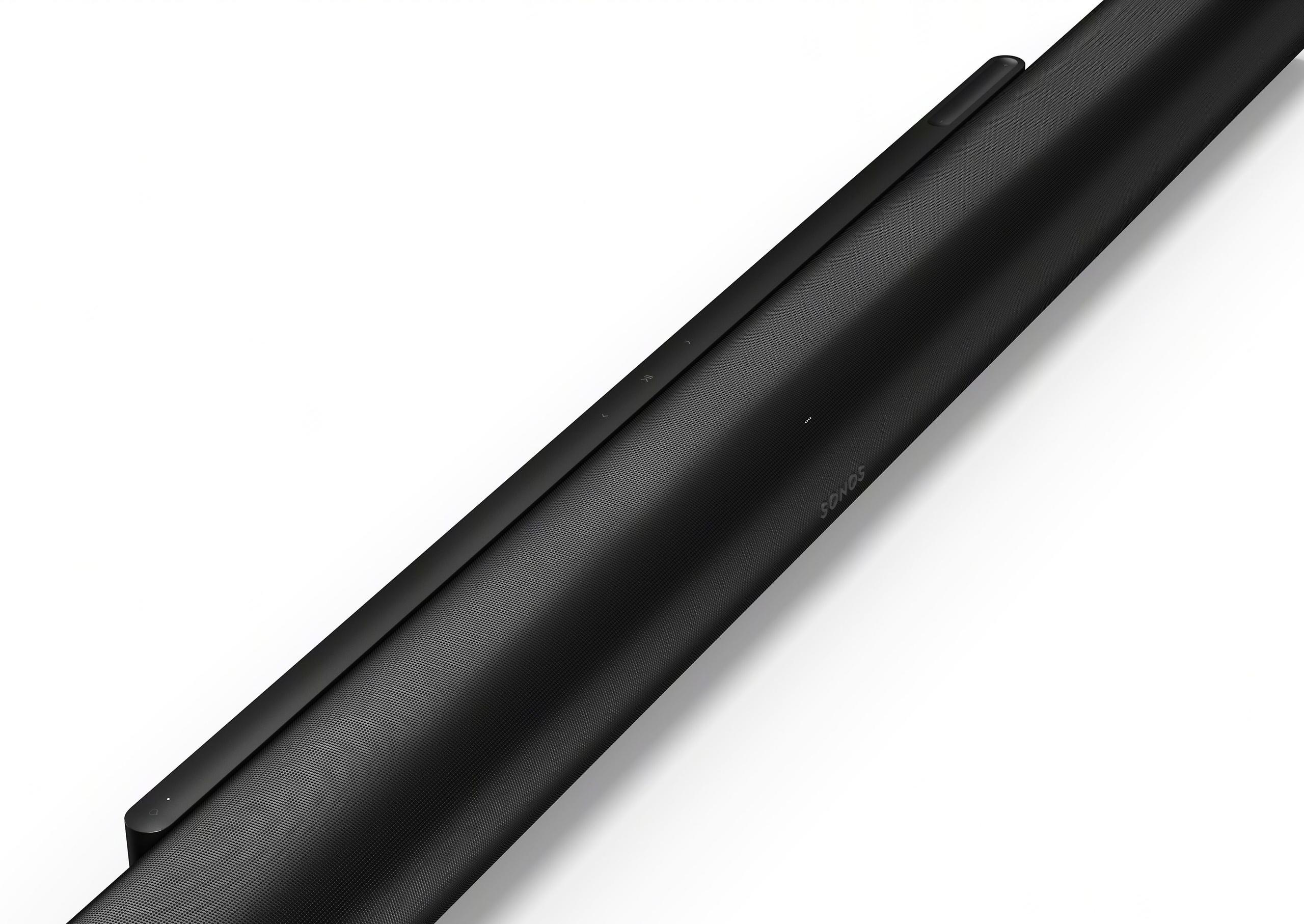
The Sonos Arc Ultra, released in October 2024, represents the latest evolution in premium soundbar technology. At $929, it's Sonos's flagship model, building on the success of the original Arc (released in 2020) with significant improvements. The company completely redesigned the internal architecture, moving from 11 to 14 drivers and introducing their proprietary Sound Motion technology – essentially a new type of woofer that produces deeper bass while taking up less physical space.
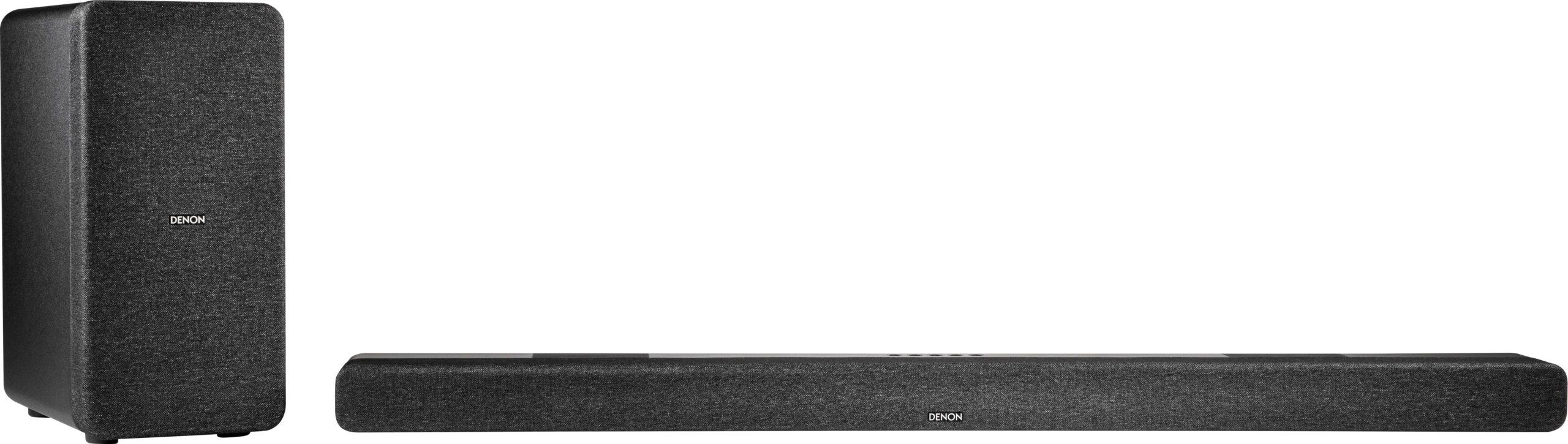
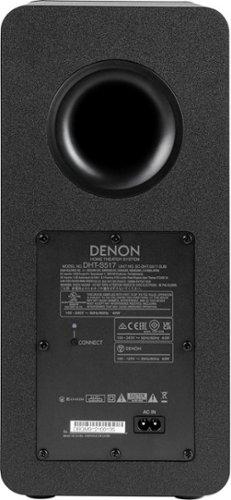
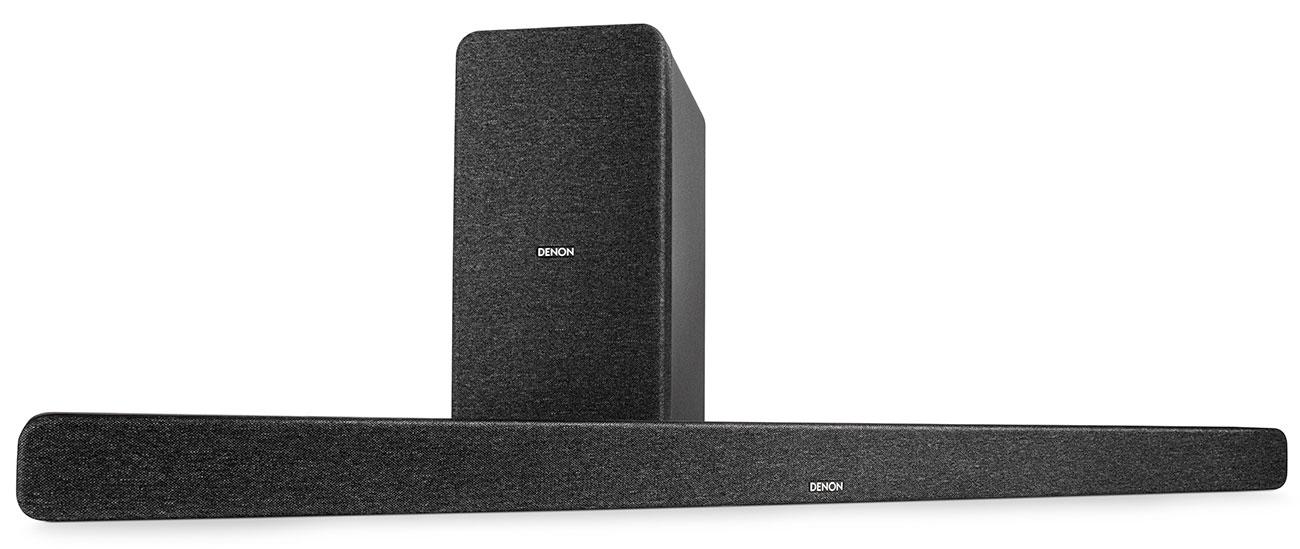
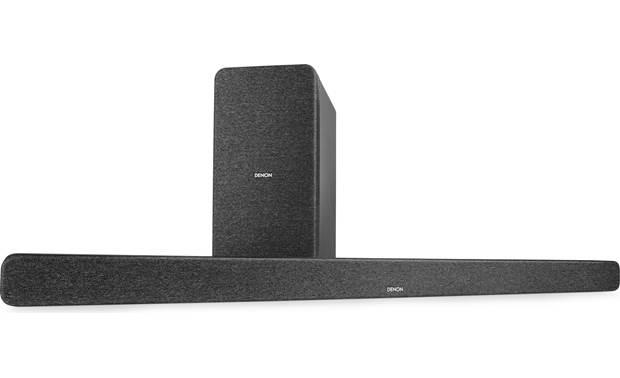
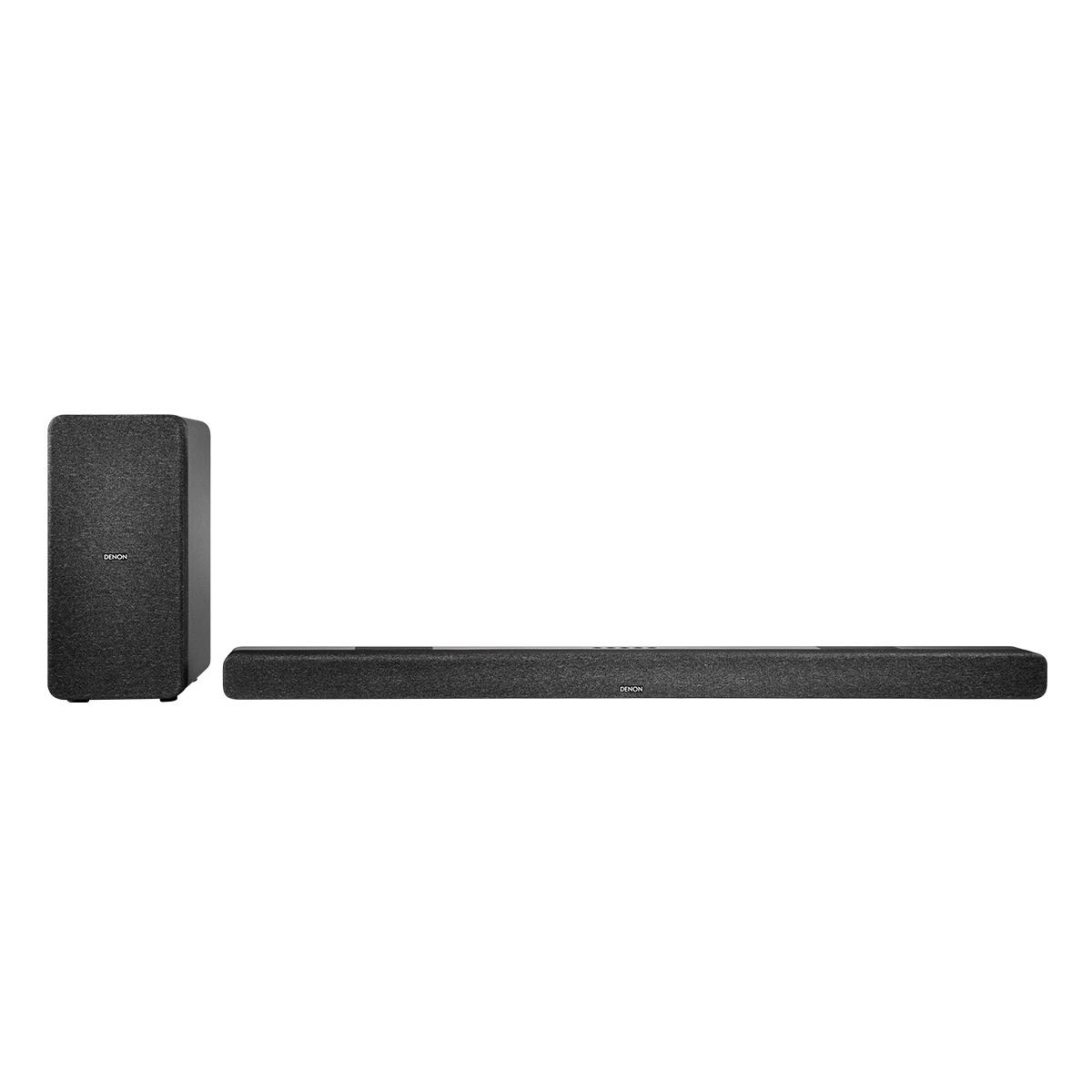
Meanwhile, the Denon DHT-S517, launched in 2022, takes a more traditional approach. At $302, it includes everything you need for a complete home theater setup: the main soundbar plus a wireless subwoofer. Denon, known for their AV receivers (the central hub components in traditional surround sound systems), applied decades of home theater expertise to create what they call a "true" Dolby Atmos experience using physical upward-firing drivers.
The most striking difference between these soundbars is their fundamental approach to audio reproduction. The Sonos Arc Ultra prioritizes balance and refinement. Its 14-driver array includes seven tweeters (small speakers that handle high frequencies like cymbals and dialogue), six midrange drivers for vocals and most instruments, and that innovative Sound Motion woofer for bass.
When you're watching a movie, this translates to incredibly clear dialogue that cuts through even the most complex action sequences. The Speech Enhancement feature uses artificial intelligence to analyze audio in real-time, boosting specific frequency ranges where human voices live while leaving music and sound effects untouched. It's particularly noticeable during scenes where characters are speaking over loud background music or explosions – something that often forces you to constantly adjust your volume.
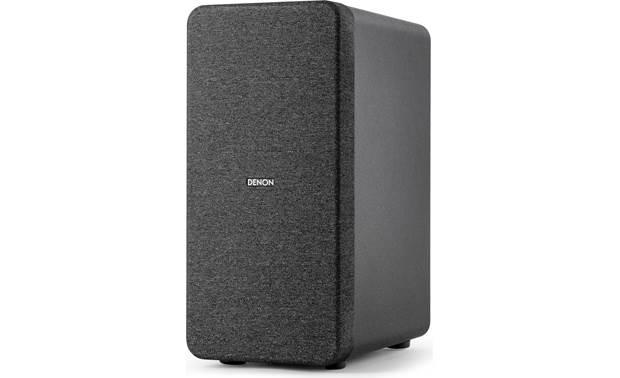
The Denon takes a more aggressive, cinema-focused approach. Its seven-driver setup emphasizes impact and presence, designed to make you feel like you're in a movie theater. The separate 5.25-inch wireless subwoofer (a dedicated speaker for low frequencies) provides the kind of chest-thumping bass that you simply cannot achieve from drivers built into a soundbar, no matter how clever the engineering.
Dolby Atmos deserves special attention because it's become the gold standard for home theater audio. Traditional surround sound sends specific audio to specific speakers – dialogue to the center, ambient sounds to the rears, and so on. Atmos adds a height dimension, allowing sound engineers to place effects anywhere in a three-dimensional space around you. When a helicopter flies overhead in a movie, Atmos makes it sound like it's actually above you.
The Sonos Arc Ultra creates its Atmos effect through virtualization – using advanced processing and precisely positioned drivers to trick your brain into hearing sounds from locations where no speakers exist. Sonos markets it as a 9.1.4 system (nine ear-level channels, one subwoofer channel, and four height channels), though without additional speakers, it's more accurately described as a virtualized 5.1.2 setup.
This virtualization is genuinely impressive. During test scenes from movies like "Mad Max: Fury Road" or "Blade Runner 2049," the Arc Ultra creates a convincing sense of height and width that extends well beyond the physical soundbar. Rain seems to fall from above, aircraft convincingly pan across the ceiling, and ambient sounds feel like they're coming from beside and behind you.
The Denon DHT-S517 uses a different approach: physical upward-firing drivers. Two 2.5-inch speakers on top of the soundbar literally bounce sound off your ceiling to create height effects. This is considered "true" Dolby Atmos because you're hearing actual reflected sound rather than processed virtualization. The result is more discrete, directional audio placement – when something happens above you in a movie, it genuinely sounds like it's coming from above rather than being cleverly simulated.
This is where the philosophical differences between these soundbars become most apparent. The Sonos Arc Ultra uses its Sound Motion technology to produce surprisingly deep bass from its integrated woofer. This isn't just marketing speak – the technology genuinely allows for deeper bass response than traditional soundbar drivers while maintaining the sleek, single-unit design that many people prefer.
For most content, including dialogue-heavy dramas, comedies, and even many action movies, the Arc Ultra's bass performance is entirely adequate. It handles the low-frequency effects in Marvel movies, the rumbling engines in "Top Gun: Maverick," and the deep synthesizer notes in sci-fi films without feeling thin or lacking.
However, there's no escaping physics. The Denon DHT-S517's dedicated subwoofer simply moves more air and produces more impact. During explosive action sequences, you feel the effects in your chest. Bass-heavy music genres like hip-hop, electronic, and rock have more weight and presence. The subwoofer covers frequencies down to 20Hz – the lowest notes that humans can hear – while the Arc Ultra, despite its clever engineering, cannot match this physical low-end extension.
The connectivity and smart feature differences between these soundbars reflect their different target audiences and design philosophies.
The Sonos Arc Ultra is designed for the modern smart home. It connects to your Wi-Fi network, allowing you to stream music directly from services like Spotify, Apple Music, or Tidal without needing your phone or TV. AirPlay 2 support means iPhone and iPad users can seamlessly send audio to the soundbar, while Bluetooth 5.3 handles connections from any other device.
More importantly, the Arc Ultra integrates with the broader Sonos ecosystem. If you already own Sonos speakers in other rooms, you can group them together for whole-home audio. You can also expand the Arc Ultra into a full surround sound system by adding Sonos Era 300 speakers as rears and a Sonos Sub for additional bass – though this pushes the total system cost well over $1,500.
The Trueplay room tuning feature deserves special mention. Using your iPhone's microphone, the Arc Ultra measures how sound reflects off your walls, furniture, and other surfaces, then adjusts its output to optimize performance for your specific room. This isn't just a gimmick – room acoustics dramatically affect how any speaker sounds, and Trueplay genuinely improves the listening experience in most spaces.
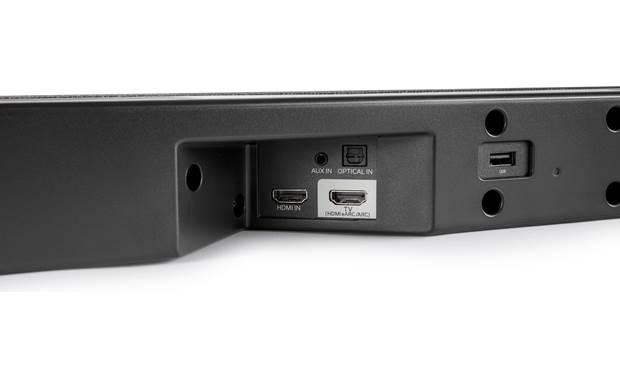
The Denon DHT-S517 takes a more traditional approach to connectivity. You'll find HDMI eARC (the modern standard for connecting soundbars to TVs), optical digital input (for older TVs), a 3.5mm analog input, USB port, and Bluetooth 5.0. What you won't find are Wi-Fi capabilities, voice control, or smartphone apps for advanced control.
This isn't necessarily a limitation – many users prefer the simplicity of a traditional remote control over smartphone apps. The DHT-S517 includes thoughtful features like multiple sound modes (Movie for enhanced surround effects, Music for stereo listening, Night for compressed dynamics when others are sleeping) and that Dialogue Enhancer for clearer speech.
Understanding when these products were released helps explain their different approaches and capabilities. The original Sonos Arc, launched in June 2020, was already impressive but had limitations in bass response and overall power. The Arc Ultra, released in October 2024, addresses virtually every criticism of its predecessor.
The most significant improvement is that Sound Motion woofer technology. Traditional woofers move back and forth to push air and create bass, but this requires significant internal volume and limits how much bass you can produce in a slim soundbar. Sound Motion uses a different mechanical approach that Sonos developed in partnership with Mayht, a Dutch audio technology company they acquired. Without getting too deep into the engineering, it allows for much greater bass output from a smaller, lighter driver.
The driver count increased from 11 to 14, with better distribution across the frequency spectrum. The new acoustic architecture creates a wider soundstage and more convincing surround effects. Most importantly for many users, dialogue clarity improved significantly through both hardware improvements and AI-powered processing.
The Denon DHT-S517, released in 2022, represents Denon's application of their AV receiver expertise to the soundbar format. As a company with decades of experience in home theater processing, Denon focused on delivering authentic surround sound reproduction rather than chasing smart features or ecosystem integration.
In practical home theater use, these soundbars excel in different scenarios. The Sonos Arc Ultra shines with content that emphasizes dialogue and subtle atmospheric effects. Watching prestige dramas like "House of the Dragon" or "The Last of Us," the Arc Ultra's refined approach becomes apparent. Dialogue remains intelligible even during complex scenes, ambient effects create convincing atmosphere, and the overall presentation feels balanced and natural.
For action-heavy content, the Arc Ultra holds its own surprisingly well. The Sound Motion woofer provides enough low-end impact for most viewers, and the wide soundstage makes action sequences feel immersive. However, if you're someone who loves feeling the physical impact of explosions, car chases, and dramatic music, you'll notice the limitations of not having a dedicated subwoofer.
The Denon DHT-S517 excels with blockbuster content. Watching "Dune," "No Time to Die," or any Marvel movie, the combination of physical Atmos effects and powerful subwoofer creates a genuinely cinematic experience. The upward-firing drivers make helicopter scenes convincing, while the subwoofer ensures that Hans Zimmer's dramatic scores have the weight and impact they deserve.
The DHT-S517 also handles music well, though its presentation is more aggressive than the Arc Ultra's refined approach. Rock, electronic, and hip-hop benefit from the subwoofer's presence, while the soundbar's music mode optimizes the frequency response for stereo content.
At three times the price, the Sonos Arc Ultra needs to justify its premium through superior performance, features, or long-term value. For many users, it succeeds on all three counts. The build quality is exceptional, the smart features genuinely enhance daily use, and the upgrade path through Sonos's ecosystem provides future expansion possibilities.
However, it's worth noting that achieving the DHT-S517's bass impact requires purchasing a Sonos Sub (around $749), bringing the total system cost to nearly $1,700. Even then, you won't have the physical height effects that the Denon's upward-firing drivers provide.
The DHT-S517 represents immediate gratification and complete value. Everything you need for impressive home theater audio comes in the box, and the total experience rivals systems costing significantly more. The lack of smart features isn't a dealbreaker for users who primarily want better movie and music playback from their TV.
Choose the Sonos Arc Ultra if you value refinement over raw power, want smart home integration, prioritize dialogue clarity, or plan to build a complete Sonos ecosystem over time. It's particularly suited to apartment dwellers who cannot accommodate a separate subwoofer, users with existing Sonos products, or anyone who wants the convenience of voice control and advanced room optimization.
The Denon DHT-S517 is ideal for movie enthusiasts who want immediate, dramatic improvement in their TV's audio without breaking the bank. If you have space for a subwoofer, prefer traditional remote control operation, and prioritize the physical impact of bass and discrete height effects over smart features, the Denon delivers exceptional value.
Both soundbars will dramatically improve your TV watching experience compared to built-in speakers. Your choice ultimately depends on whether you prefer the Arc Ultra's sophisticated, future-focused approach or the DHT-S517's immediate, complete, and affordable home theater transformation.
| Sonos Arc Ultra ($929) | Denon DHT-S517 ($302) |
|---|---|
| Price - Major factor in determining overall value | |
| $929 for soundbar only | $302 includes wireless subwoofer |
| Release Date - Impacts available features and technology | |
| October 2024 (latest tech) | 2022 (proven, mature platform) |
| Driver Configuration - Determines sound quality and power | |
| 14 drivers (7 tweeters, 6 midrange, 1 Sound Motion woofer) | 7 drivers + separate 5.25" subwoofer |
| Dolby Atmos Implementation - How 3D surround sound is created | |
| Virtualized 9.1.4 (advanced processing creates height effects) | Physical 3.1.2 (upward-firing drivers bounce sound off ceiling) |
| Subwoofer Inclusion - Critical for bass impact in movies | |
| Built-in Sound Motion woofer (no separate sub) | Wireless subwoofer included |
| Smart Features - Modern connectivity and convenience | |
| Wi-Fi, AirPlay 2, voice control, Trueplay room tuning, Sonos ecosystem | Bluetooth only, traditional remote control |
| Dialogue Enhancement - Important for speech clarity | |
| AI-powered Speech Enhancement with 4 levels | Dialogue Enhancer with 3 preset levels |
| Expandability - Future upgrade potential | |
| Can add Sonos Sub ($749) and rear speakers for full surround | No expansion options available |
| Room Optimization - Adapts to your specific space | |
| Trueplay automatic room tuning via iPhone | Manual sound mode selection only |
| Best Use Case - Who should buy each product | |
| Smart home users wanting refined sound | Movie fans prioritizing bass impact and value |
The Denon DHT-S517 ($302) offers exceptional value by including a wireless subwoofer at a fraction of the cost. However, the Sonos Arc Ultra ($929) provides premium features like AI-powered dialogue enhancement, smart home integration, and superior build quality that justify the higher price for users wanting advanced functionality.
The Denon DHT-S517 includes a wireless subwoofer in the box, providing immediate bass impact for movies and music. The Sonos Arc Ultra has a built-in Sound Motion woofer that's impressive for a standalone unit, but you'll need to add a Sonos Sub ($749) to match the bass performance of the Denon system.
The Denon DHT-S517 uses physical upward-firing drivers for "true" Dolby Atmos with discrete height channels. The Sonos Arc Ultra creates virtualized Atmos effects through advanced processing. Both are effective, but the Denon provides more authentic overhead sound placement while the Sonos offers a wider overall soundstage.
The Sonos Arc Ultra delivers refined, balanced audio with exceptional dialogue clarity and a wide soundstage. The Denon DHT-S517 provides more aggressive, cinema-focused sound with powerful bass impact from its included subwoofer. Choose Sonos for subtle detail and Denon for dramatic movie effects.
Both soundbars are relatively easy to set up, but the Denon DHT-S517 is simpler with just HDMI connection and automatic subwoofer pairing. The Sonos Arc Ultra requires Wi-Fi setup and the Sonos app, but offers Trueplay room tuning that automatically optimizes sound for your space.
The Sonos Arc Ultra connects directly to Wi-Fi and supports streaming from Spotify, Apple Music, and other services without needing your TV. The Denon DHT-S517 only supports Bluetooth streaming from your phone or tablet - you cannot stream music services directly to the soundbar.
The Sonos Arc Ultra is ideal for apartments since it doesn't require a separate subwoofer that might disturb neighbors. Its Night Sound mode reduces loud effects while boosting dialogue. The Denon DHT-S517 includes a wireless subwoofer that provides better bass but may be too powerful for thin apartment walls.
The Sonos Arc Ultra has built-in Amazon Alexa and Google Assistant support for voice control of music, volume, and smart home devices. The Denon DHT-S517 does not support voice assistants and relies on traditional remote control operation.
The Sonos Arc Ultra excels at music with its balanced sound signature, Wi-Fi streaming capabilities, and integration with music services. The Denon DHT-S517 handles music well with its dedicated Music mode and powerful subwoofer, but lacks the streaming convenience and refined tuning of the Sonos.
The Sonos Arc Ultra can expand into a full surround system by adding Sonos Era speakers as rears and a Sonos Sub for enhanced bass, though this increases the total cost significantly. The Denon DHT-S517 cannot be expanded - what you buy is the complete system.
The Sonos Arc Ultra features AI-powered Speech Enhancement with four customizable levels that intelligently boost dialogue frequencies. The Denon DHT-S517 includes a Dialogue Enhancer with three preset levels. Both improve speech clarity, but the Sonos system is more sophisticated and effective.
Choose the Sonos Arc Ultra if you want premium features, smart home integration, excellent dialogue clarity, and plan to expand your system over time. Pick the Denon DHT-S517 if you prioritize immediate bass impact, authentic Dolby Atmos effects, and want complete home theater performance at an affordable price with everything included in the box.
We've done our best to create useful and informative comparisons to help you decide what product to buy. Our research uses advanced automated methods to create this comparison and perfection is not possible - please contact us for corrections or questions. These are the sites we've researched in the creation of this article: bestbuy.com - shopjetson.com - youtube.com - ign.com - crutchfield.com - dowtechnologies.com - sonos.com - appleinsider.com - pcrichard.com - clefdesol.com - sonos.com - businessinsider.com - audioadvice.com - en.community.sonos.com - techradar.com - consumerreports.org - crutchfield.com - bestbuy.com - bestbuy.com - pocket-lint.com - abt.com - manuals.denon.com - connectedmag.com.au - bestbuy.com - forum.flirc.tv - bhphotovideo.com

Privacy Policy
Terms and Conditions - Affiliate Policy
Home Security
© Copyright 2008-2026.
11816 Inwood Rd #1211, Dallas, TX 75244