





Soundbars have transformed from simple TV audio upgrades into sophisticated home theater systems that can genuinely rival traditional surround sound setups. As someone who's spent countless hours researching audio equipment, I've found that the modern soundbar market offers compelling options at almost every price point—but choosing between them requires understanding what each system actually delivers for your specific needs.
Today's premium soundbars fall into two distinct categories: those that prioritize immersion through multiple physical speakers, and those that focus on refined audio engineering in a more streamlined package. The Hisense AX5140Q and Denon DHT-S517 represent these different philosophies perfectly, making them an ideal comparison for anyone serious about upgrading their home audio.
Before diving into specifics, it's crucial to understand the key factors that separate good soundbars from great ones. Channel configuration tells you how many discrete audio streams the system can handle—a 5.1.4 system processes eleven separate channels of audio, while a 3.1.2 system handles six. The difference isn't just academic; it directly impacts how convincingly the system can place sounds around your room.
Audio format support determines which premium soundtracks your system can actually decode. Dolby Atmos creates three-dimensional soundscapes by placing audio objects in virtual space, while DTS:X achieves similar results through different processing. Think of these formats as the difference between stereo and mono—once you experience properly implemented object-based audio, traditional surround sound feels flat.
The distinction between physical and virtual surround represents perhaps the biggest decision point. Virtual surround uses sophisticated processing to simulate sounds coming from behind you through speakers placed only in front, while physical surround actually places speakers around your room. Both approaches have merit, but they deliver fundamentally different experiences.
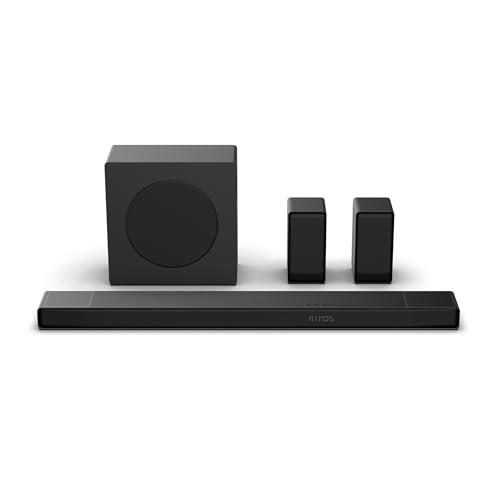
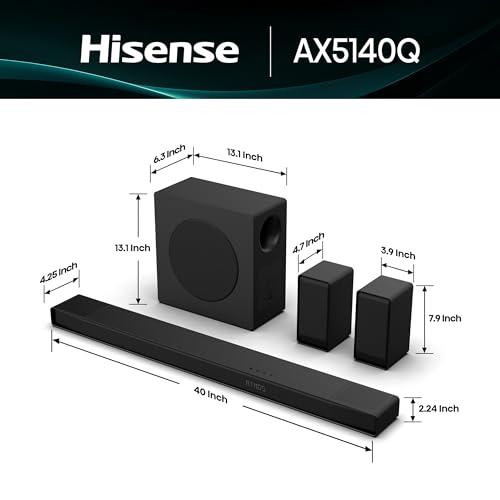
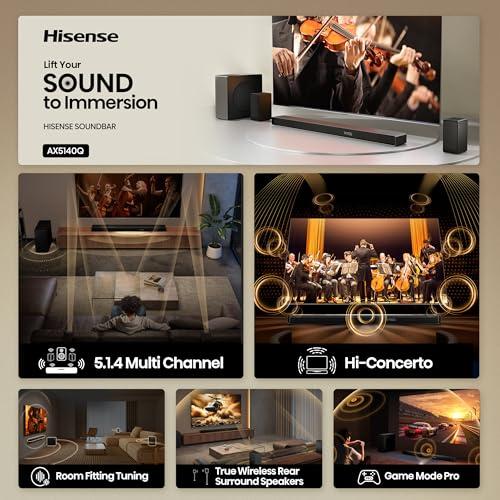
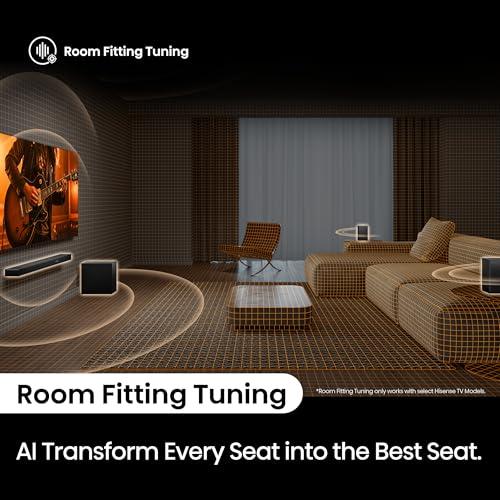
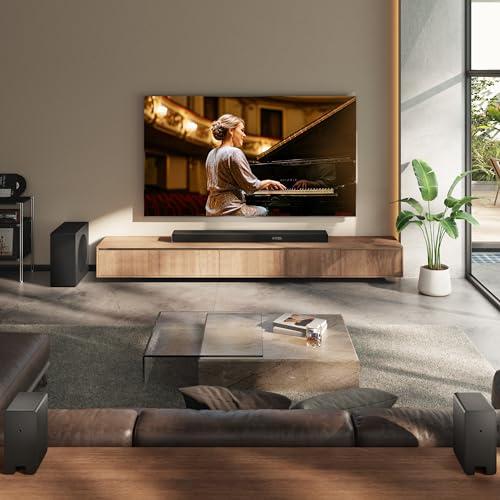
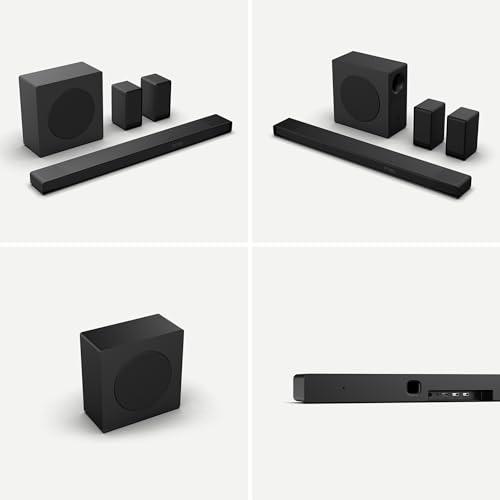
The Hisense AX5140Q, released in 2024, represents the "maximum immersion" philosophy. This true 5.1.4 system includes the main soundbar, a wireless subwoofer, and two separate wireless rear speakers that each contain their own up-firing drivers for height effects. At the time of writing, it occupies the competitive mid-tier pricing segment while delivering channel counts typically found in much more expensive systems.
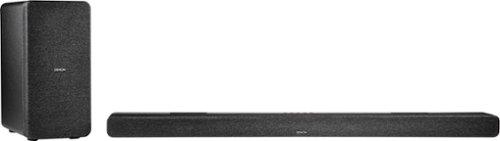
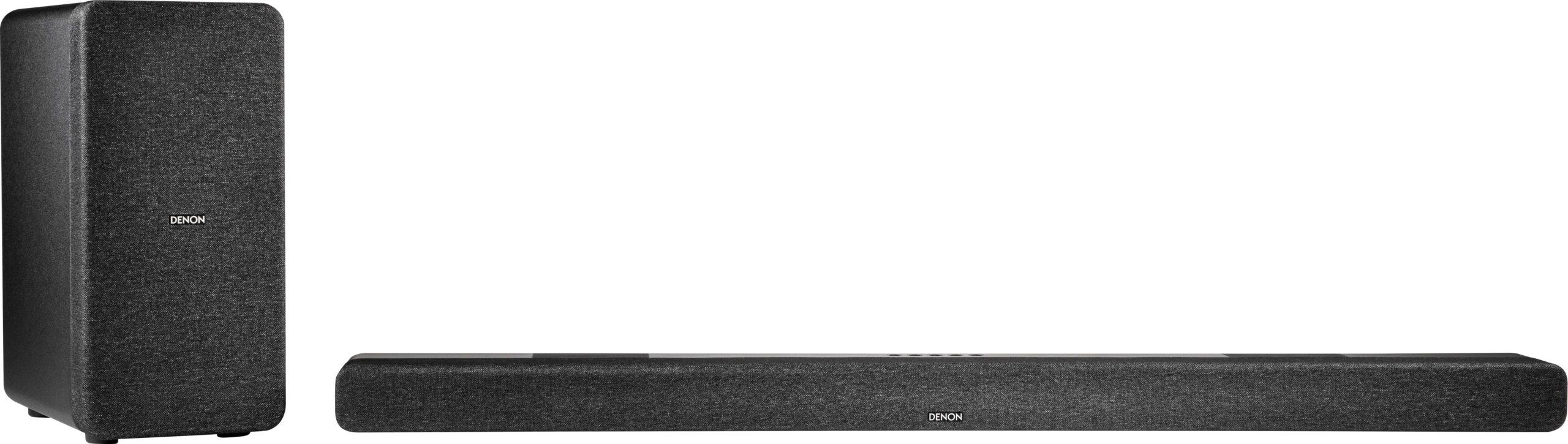
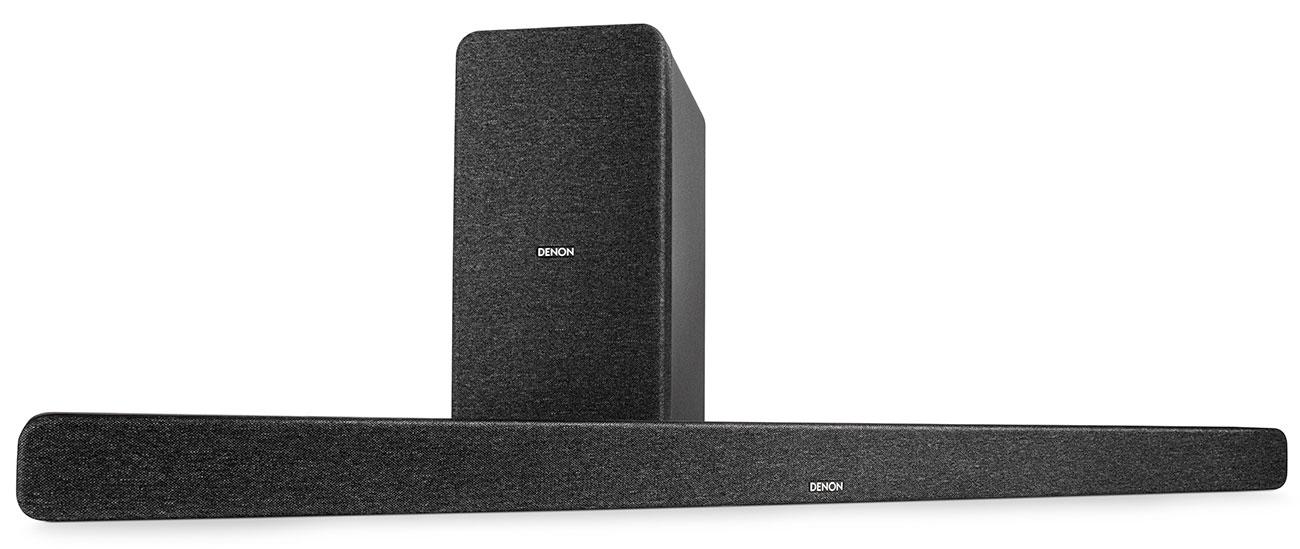
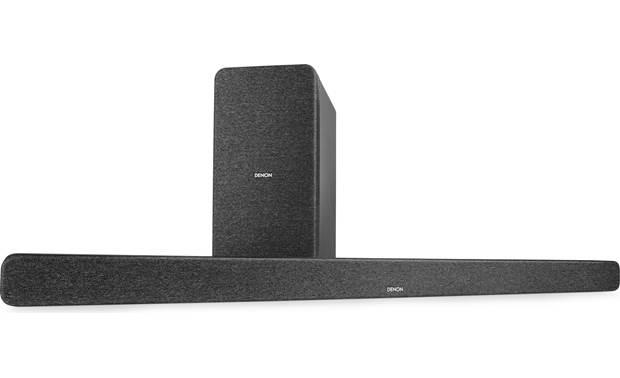
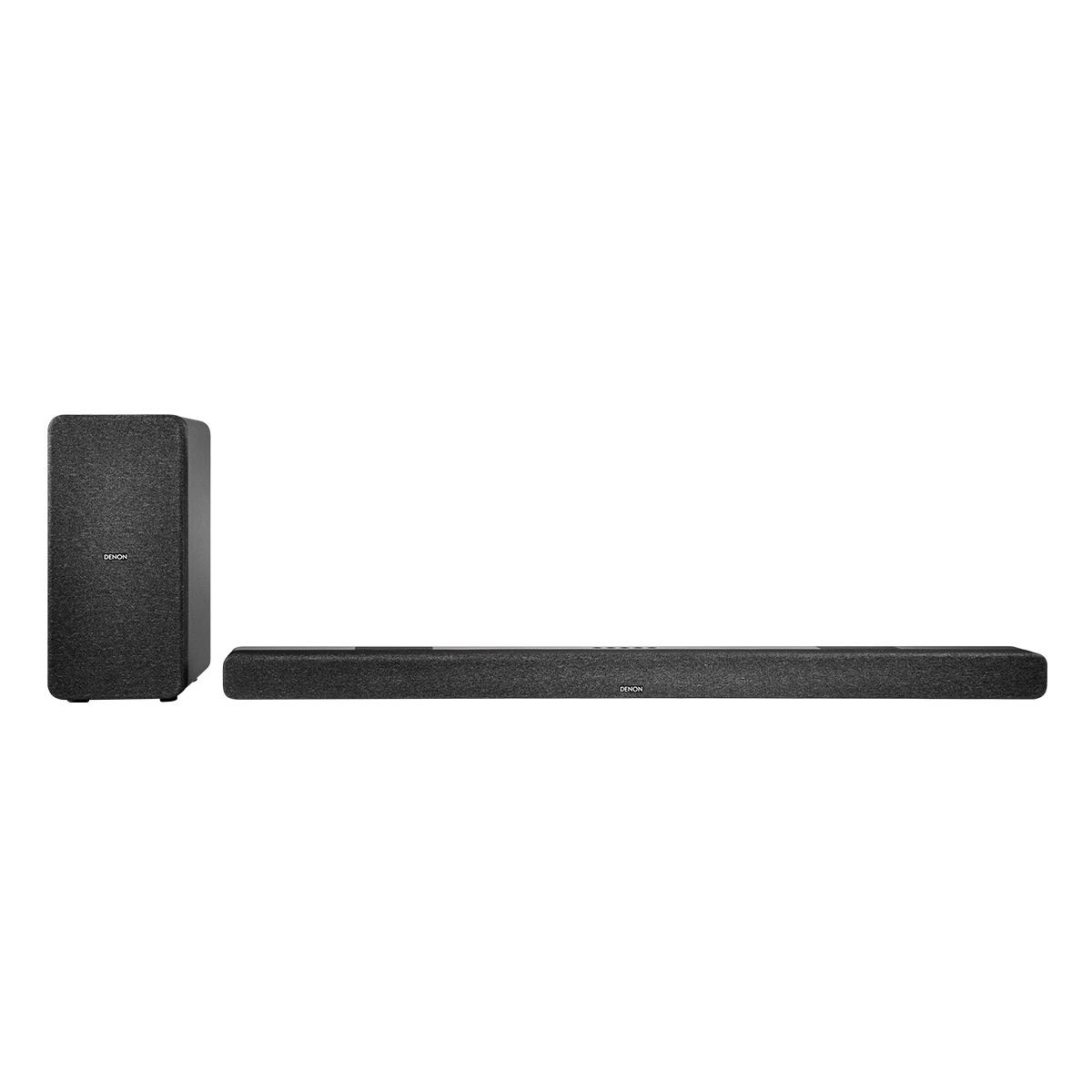
The Denon DHT-S517, launched in 2022, embodies Denon's century-plus audio engineering heritage in a refined 3.1.2 package. Rather than maximizing speaker count, Denon focused on audio quality, dialogue clarity, and the kind of tonal balance that comes from decades of making high-end audio components. It positions itself as a premium option that prioritizes refinement over raw specifications.
Both soundbars emerged during a period of rapid advancement in audio processing and wireless technology. Since 2022, we've seen significant improvements in room calibration algorithms, wireless stability, and the integration between soundbars and smart TV platforms. The AX5140Q benefits from these newer technologies, while the DHT-S517 represents a more mature, proven approach.
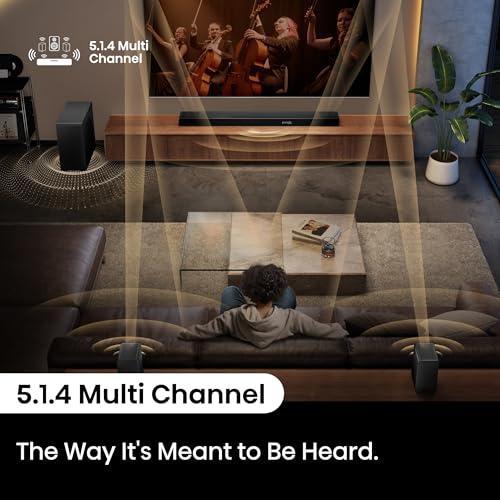
The most significant difference between these systems lies in their approach to surround sound. The Hisense AX5140Q delivers what audio enthusiasts call "true surround"—physical speakers positioned around your room that create genuine directional effects. When a helicopter flies overhead in a movie, you hear it move from the front speakers, across the height channels above you, and behind you through the rear speakers. This creates what's known as a "sound dome" that can be remarkably convincing.
The system's four up-firing drivers deserve special attention. Two sit in the main soundbar, firing upward to bounce sound off your ceiling and create the illusion of overhead speakers. Two more reside in the wireless rear speakers, creating height effects from behind your seating position. This front-and-rear height approach provides more comprehensive overhead coverage than systems that only fire upward from the front.
Research from multiple expert reviews consistently shows that this physical approach creates more convincing surround effects, particularly in larger rooms. The discrete rear channels excel with ambient sounds like crowd noise in sports, environmental effects in nature documentaries, and the subtle atmospheric touches that make movie soundtracks feel immersive rather than just loud.
The Denon DHT-S517 takes a fundamentally different approach with its 3.1.2 virtual surround implementation. Its seven-driver array includes dedicated left, center, and right channels plus two up-firing drivers for height effects. Advanced processing algorithms analyze the incoming audio and redistribute surround information to create the illusion that sounds are coming from beside and behind you.
This virtual approach offers distinct advantages. Setup is simpler since you only need to position one soundbar and a subwoofer. The system works better in rooms with unusual layouts where placing rear speakers would be impractical. For content that doesn't heavily rely on surround effects—think dialogue-driven dramas or news programming—the difference between virtual and physical surround becomes less noticeable.
However, our research into user experiences reveals that virtual surround systems struggle more with precise localization. When a character walks across the screen, physical rear speakers can create the convincing illusion that their footsteps are moving around the room. Virtual processing, while impressive, rarely achieves the same level of spatial precision.
Format compatibility represents a crucial consideration for anyone planning to keep their soundbar for several years. The Hisense AX5140Q supports virtually every current premium audio format: Dolby Atmos, DTS:X, Dolby TrueHD, DTS-HD Master Audio, and various PCM formats. This comprehensive support means it can handle the highest-quality audio tracks from UHD Blu-ray discs, premium streaming services, and next-generation gaming consoles.
DTS:X support, in particular, sets the AX5140Q apart. While Dolby Atmos dominates streaming platforms like Netflix and Disney+, many high-end Blu-ray releases use DTS:X for their premium audio tracks. Missing this support means potentially losing the best possible audio quality from your physical media collection.
The Denon DHT-S517 focuses exclusively on Dolby formats, supporting Dolby Atmos, Dolby TrueHD, and Dolby Digital Plus, but lacking any DTS variants. For many users, this limitation won't matter—Dolby Atmos has become the de facto standard for streaming content. However, serious movie enthusiasts who collect UHD Blu-rays may find themselves missing premium audio tracks on certain releases.
This format difference reflects each system's target audience. The Hisense aims for maximum compatibility across all content types, while the Denon optimizes specifically for the most common premium format.
Nothing reveals the difference between these systems' engineering approaches more clearly than dialogue performance. The Denon DHT-S517 includes a sophisticated Dialogue Enhancer that can independently boost voice frequencies without affecting background music or sound effects. This feature uses three intensity levels and represents genuinely useful technology—during loud action sequences, you can maintain clear conversations without constantly reaching for the remote.
Denon's approach reflects decades of experience in high-end audio. The center channel driver uses specialized tuning for vocal frequencies, and the overall system balance prioritizes midrange clarity over raw impact. User reviews consistently praise the DHT-S517 for making dialogue intelligible even during complex movie soundtracks.
The Hisense AX5140Q takes a different approach with its AI EQ Mode, which analyzes content in real-time and adjusts the entire frequency response automatically. This system works well for general listening but lacks the surgical precision of Denon's dedicated dialogue processing. However, the AX5140Q's discrete center channel and higher overall power output often compensate through sheer clarity and presence.
For households that primarily watch TV shows, news, or dialogue-heavy movies, this difference becomes significant. The Denon consistently delivers more natural-sounding voices, while the Hisense excels when you want voices to cut through complex action sequences.
While both systems excel with movie content, their music performance reveals important philosophical differences. The Denon DHT-S517 includes Pure Mode, which disables all surround processing and sound modifications to deliver uncolored audio reproduction. This mode transforms the soundbar into something closer to a traditional stereo system, revealing Denon's audiophile heritage.
During music playback, the DHT-S517 demonstrates superior stereo imaging—the ability to create a convincing soundstage between the left and right speakers where individual instruments seem to occupy specific positions. This characteristic comes from Denon's experience building high-end stereo amplifiers and speakers, where precise imaging is paramount.
The Hisense AX5140Q offers multiple music-focused modes but doesn't quite match the Denon's refinement for critical listening. However, its larger driver count and higher power output can fill rooms more effectively with casual background music. The wireless rear speakers can also create an interesting ambient effect for certain types of music, though this processing often adds more spectacle than accuracy.
For serious music listeners who want their soundbar to double as a quality stereo system, the Denon represents the stronger choice. For those who primarily use music as background while working or entertaining, the Hisense offers more flexibility and room-filling presence.
Bass response reveals another key difference in engineering philosophy. The Hisense AX5140Q includes a 6.5-inch wireless subwoofer that emphasizes impact and room-filling output. This larger driver can move more air, creating the kind of chest-thumping effects that make action movies feel visceral. User reports consistently mention impressive bass extension and power that can easily overwhelm smaller rooms.
However, some users note that the AX5140Q's bass occasionally sounds "one-note"—powerful but lacking the nuance needed for complex musical passages or subtle film scores. This tuning choice reflects the system's focus on dramatic impact over analytical precision.
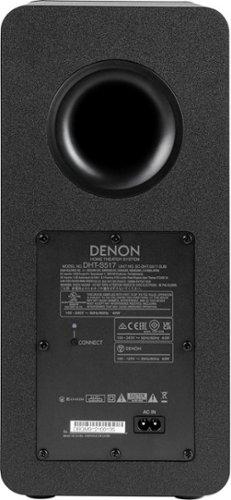
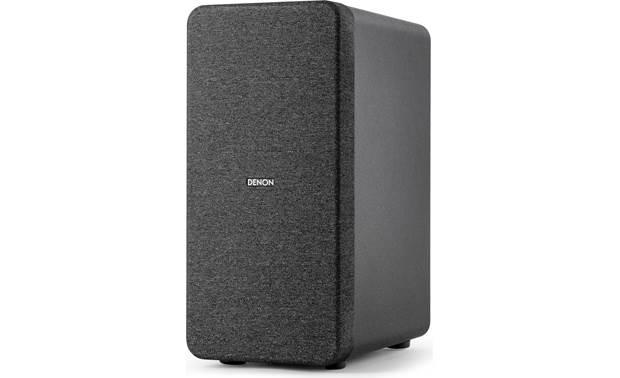
The Denon DHT-S517's 5.25-inch subwoofer takes a more refined approach, emphasizing integration and control over maximum output. Professional reviews consistently praise its ability to blend seamlessly with the main soundbar, creating a cohesive sound signature without obvious transitions between the subwoofer and satellite speakers.
This integration difference becomes particularly important in smaller rooms or apartments where overpowering bass can become problematic. The Denon delivers sufficient impact for most content while maintaining the kind of tonal balance that doesn't fatigue during long listening sessions.
Modern gaming demands precise audio localization, and these systems approach gaming audio differently. The Hisense AX5140Q includes a dedicated Game Pro mode that optimizes the system for competitive gaming scenarios. The physical rear speakers excel at providing directional cues—hearing footsteps behind you or gunfire from specific directions can provide genuine competitive advantages in multiplayer games.
The system's 4K 60Hz HDMI passthrough ensures compatibility with current-generation gaming consoles, though it lacks support for 120Hz gaming that some high-end displays now offer. For most users, this limitation won't matter since 4K 60Hz represents the standard for the majority of gaming content.
The Denon DHT-S517 lacks specialized gaming features but benefits from its low-latency processing and excellent dialogue clarity. For single-player, story-driven games, the superior voice reproduction can enhance narrative immersion. However, competitive gamers will likely prefer the Hisense's physical surround capabilities for their tactical advantages.
Installation requirements represent a practical consideration that often influences purchasing decisions more than pure performance metrics. The Hisense AX5140Q requires thoughtful room planning since optimal performance depends on proper rear speaker placement. You need available wall space or furniture positioning behind your primary seating area, plus multiple power outlets for the wireless speakers.
However, the system's wireless architecture eliminates the cable clutter that traditionally complicated surround sound installations. The rear speakers and subwoofer pair automatically with the main soundbar, and most users report setup completion within an hour, including basic positioning and room calibration.
The Denon DHT-S517 offers maximum simplicity with just the main soundbar and wireless subwoofer to position. This approach works better in smaller apartments, oddly-shaped rooms, or situations where rear speaker placement would be impractical. The trade-off is accepting virtual rather than physical surround effects.
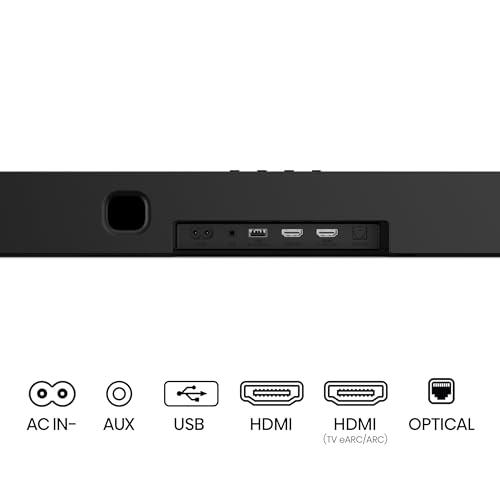
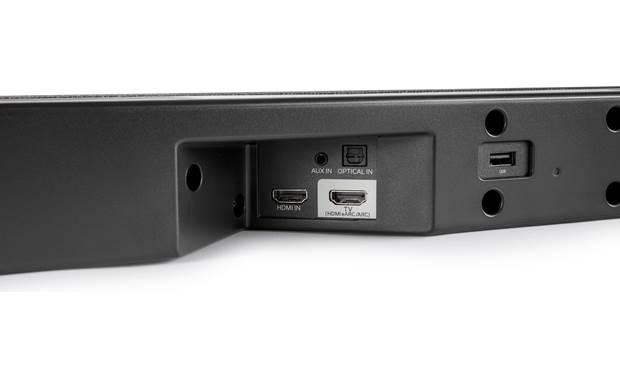
Both systems include comprehensive connectivity options with HDMI eARC, optical inputs, and Bluetooth capabilities. The Hisense adds USB connectivity for direct media playback, while the Denon focuses on core connection types with excellent implementation quality.
At the time of writing, both systems occupy similar price points in the premium soundbar market, though street prices fluctuate based on promotions and availability. The value equation depends heavily on your priorities and room situation.
The Hisense AX5140Q delivers exceptional value for users seeking maximum immersion. Getting a true 5.1.4 system with discrete rear speakers at this price point represents remarkable value compared to traditional home theater components. The comprehensive format support and high power output add to the value proposition for movie and gaming enthusiasts.
The Denon DHT-S517 justifies its pricing through refinement and brand heritage. Denon's century of audio engineering experience shows in the system's tonal balance, dialogue clarity, and overall coherence. For users prioritizing audio quality over channel count, this engineering excellence represents excellent value.
Choose the Hisense AX5140Q if you want maximum immersion for movies and gaming. The true 5.1.4 surround sound creates convincing effects that virtual processing can't match, particularly for action content with complex soundtracks. The comprehensive format support ensures compatibility with premium audio tracks from any source. This system works best in medium to large rooms where you can properly position the rear speakers and take advantage of the powerful subwoofer.
The AX5140Q particularly excels for gaming enthusiasts, home theater aficionados, and anyone who regularly watches action movies or sports with complex audio mixes. If you've been considering a traditional AVR-based surround system but want the convenience of a soundbar, this system delivers similar immersion with much simpler setup.
Choose the Denon DHT-S517 if audio refinement and dialogue clarity matter more than maximum surround immersion. The superior music performance, sophisticated dialogue processing, and excellent build quality make it ideal for users who value engineering excellence over raw specifications. This system works better in smaller spaces or rooms where rear speaker placement would be problematic.
The DHT-S517 suits users who primarily watch TV shows, dramas, and dialogue-heavy content, or who want their soundbar to serve double-duty as a quality music system. If you appreciate brands with audio heritage and prefer refinement over spectacle, Denon's approach delivers lasting satisfaction.
Both systems represent significant upgrades over TV speakers and budget soundbars, but they achieve excellence through different paths. Your choice should align with your content preferences, room constraints, and whether you prioritize immersion or refinement in your audio experience.
| Hisense AX5140Q | Denon DHT-S517 |
|---|---|
| Channel Configuration - Determines surround sound immersion quality | |
| True 5.1.4 with discrete wireless rear speakers | 3.1.2 with virtual surround processing |
| Total System Power - Affects volume levels and dynamic range | |
| 600W total system power | 150W (50W soundbar + 100W subwoofer) |
| Included Components - What you get in the box | |
| Soundbar + wireless subwoofer + 2 wireless rear speakers | Soundbar + wireless subwoofer only |
| Audio Format Support - Compatibility with premium content | |
| Dolby Atmos, DTS:X, Dolby TrueHD, DTS-HD Master Audio | Dolby Atmos, Dolby TrueHD, Dolby Digital Plus (no DTS formats) |
| Height Channels - Creates overhead sound effects | |
| 4 up-firing drivers (2 front, 2 rear) | 2 up-firing drivers (front only) |
| Subwoofer Size - Impacts bass depth and room coverage | |
| 6.5" wireless driver | 5.25" wireless driver with 100W amplifier |
| Sound Modes - Customization options for different content | |
| 8 modes including Game Pro and AI EQ | 3 modes (Movie/Music/Night) plus Pure Mode |
| Dialogue Enhancement - Clarity for speech-heavy content | |
| AI EQ Mode with automatic optimization | Dedicated Dialogue Enhancer with 3 intensity levels |
| Setup Complexity - Installation requirements | |
| Requires rear speaker placement behind seating area | Single soundbar + subwoofer placement only |
| Best Use Cases - Ideal scenarios for each system | |
| Gaming, action movies, large room immersion | TV shows, music listening, dialogue-heavy content |
| Connectivity Options - Available input/output ports | |
| HDMI eARC, HDMI In, Optical, AUX, USB, Bluetooth 5.3 | HDMI eARC, HDMI In, Optical, AUX, USB, Bluetooth 5.0 |
| TV Integration - Compatibility with smart TV features | |
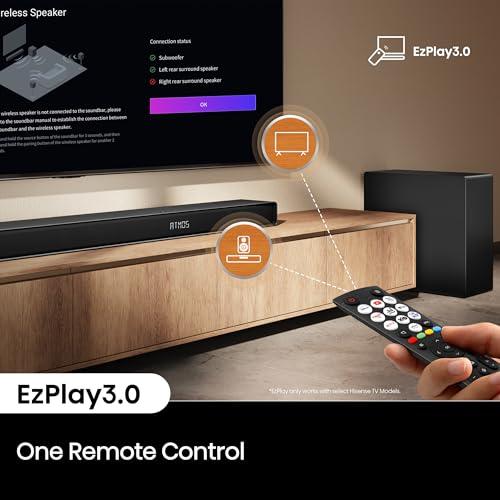
| Hisense Hi-Concerto platform, EzPlay 3.0 | Universal compatibility, no brand-specific features |
The Hisense AX5140Q delivers superior surround sound with its true 5.1.4 channel configuration and discrete wireless rear speakers. This creates genuine directional effects where sounds actually come from behind and above you. The Denon DHT-S517 uses virtual surround processing through its 3.1.2 setup, which simulates surround effects but can't match the immersion of physical rear speakers.
Yes, both the Hisense AX5140Q and Denon DHT-S517 support Dolby Atmos for three-dimensional audio. However, the Hisense also supports DTS:X format, while the Denon only supports Dolby formats. This makes the Hisense more versatile for premium audio content from various sources.
The Denon DHT-S517 is significantly easier to set up since it only requires positioning the main soundbar and wireless subwoofer. The Hisense AX5140Q requires additional setup for two wireless rear speakers, which need to be placed behind your seating area for optimal surround sound performance.
The Hisense AX5140Q features a larger 6.5" subwoofer that delivers more powerful, room-filling bass suitable for action movies and gaming. The Denon DHT-S517 uses a smaller 5.25" subwoofer that emphasizes tighter, more controlled bass that integrates better with music and dialogue content.
The Hisense AX5140Q is superior for gaming with its dedicated Game Pro mode and physical rear speakers that provide accurate directional audio cues. This setup helps with competitive gaming where hearing enemy positions matters. The Denon DHT-S517 works fine for casual gaming but lacks specialized gaming features.
The Denon DHT-S517 excels in dialogue clarity with its dedicated Dialogue Enhancer feature that independently boosts voice frequencies without affecting other sounds. The Hisense AX5140Q uses AI EQ Mode for dialogue enhancement, which works well but isn't as specialized as Denon's dedicated voice processing.
The Denon DHT-S517 is better for music with its Pure Mode that eliminates all processing for natural sound reproduction, plus Denon's audiophile engineering heritage. The Hisense AX5140Q can play music well but is optimized more for movies and gaming than critical music listening.
Yes, both the Hisense AX5140Q and Denon DHT-S517 include wireless subwoofers that connect without cables. The Hisense system also includes two additional wireless rear speakers, making it a complete 5.1.4 surround system out of the box.
The Hisense AX5140Q delivers significantly more power at 600W total system output compared to the Denon DHT-S517's 150W. This higher power allows the Hisense to play louder and fill larger rooms more effectively, though the Denon's power is well-matched to its refined audio approach.
Both the Hisense AX5140Q and Denon DHT-S517 offer HDMI eARC, additional HDMI input, optical digital input, and Bluetooth connectivity. The Hisense includes Bluetooth 5.3 and USB connectivity, while the Denon uses Bluetooth 5.0 and focuses on core connection types.
The Denon DHT-S517 is ideal for small apartments since it only requires space for the soundbar and subwoofer, with no rear speakers to position. The Hisense AX5140Q needs additional space for rear speakers, making it better suited for larger living rooms where you can properly position all components.
For dedicated home theater use, the Hisense AX5140Q provides more cinematic immersion with its true 5.1.4 surround sound and comprehensive format support including DTS:X. The Denon DHT-S517 offers excellent audio quality and dialogue clarity but with less surround immersion, making the Hisense the better choice for serious movie watching.
We've done our best to create useful and informative comparisons to help you decide what product to buy. Our research uses advanced automated methods to create this comparison and perfection is not possible - please contact us for corrections or questions. These are the sites we've researched in the creation of this article: shop.hisense-usa.com - manuals.plus - dolby.com - youtube.com - gzhls.at - rtings.com - youtube.com - bestbuy.com - manuals.plus - bestbuy.com - hisense-usa.com - youtube.com - device.report - manuals.plus - youtube.com - device.report - manuals.plus - youtube.com - techradar.com - consumerreports.org - crutchfield.com - bestbuy.com - bestbuy.com - pocket-lint.com - abt.com - manuals.denon.com - connectedmag.com.au - bestbuy.com - forum.flirc.tv - bhphotovideo.com

Privacy Policy
Terms and Conditions - Affiliate Policy
Home Security
© Copyright 2008-2026.
11816 Inwood Rd #1211, Dallas, TX 75244