



If you've ever found yourself cranking up the TV volume just to understand dialogue, only to have the next action scene blast you out of your seat, you're experiencing the classic problem that soundbars were designed to solve. Modern TVs, with their razor-thin profiles, simply can't fit the speakers needed for quality audio. That's where soundbars come in—they're the most practical way to dramatically improve your TV's sound without turning your living room into a speaker showroom.
But here's where it gets interesting: the soundbar market has two very different approaches to solving your audio problems. On one side, you have budget-friendly options like the Amazon Fire TV Soundbar that focus on delivering solid basics without breaking the bank. On the other, there are more sophisticated systems like the Denon DHT-S517 that bring genuine home theater technology to your living room. Understanding which approach fits your needs—and your budget—makes all the difference.
Before diving into specifics, let's talk about what actually happens when you upgrade from your TV's built-in speakers to a dedicated soundbar. Your TV's speakers are typically tiny affairs, maybe an inch or two across, firing downward or backward. They're designed to save space, not deliver quality sound. A soundbar, even a basic one, gives you larger drivers (the technical term for speakers) that can move more air and create fuller sound.
The magic happens in how that sound reaches your ears. When audio engineers talk about "soundstage," they're describing how wide and enveloping the audio feels. A good soundbar can make dialogue seem like it's coming from your TV screen rather than from tiny speakers hidden somewhere in the TV's frame. This creates a more natural, engaging experience that doesn't require you to constantly adjust the volume.
The key considerations when evaluating any soundbar come down to a few critical areas: how well it handles dialogue clarity, whether it can create an immersive listening experience, how much bass it can produce, and how easily it integrates into your existing setup. These factors determine whether you'll be satisfied with your purchase or find yourself shopping for an upgrade six months later.
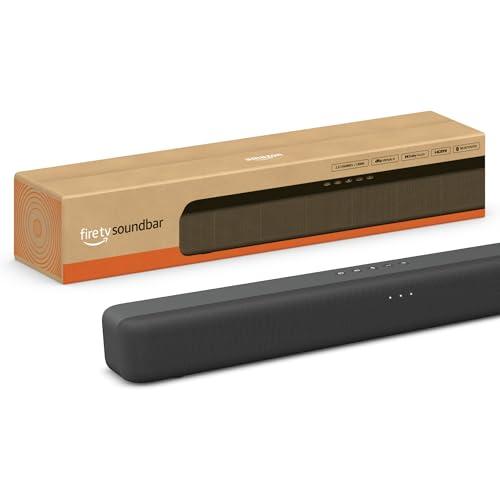
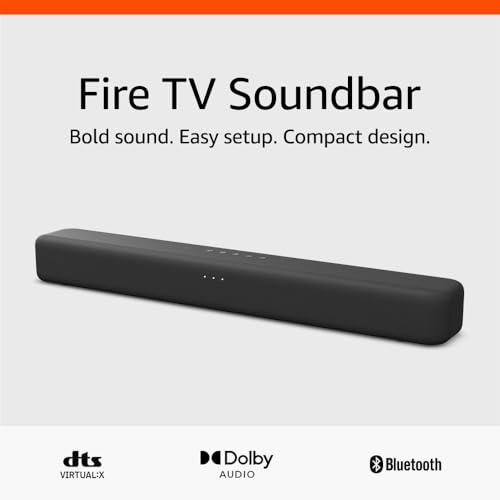
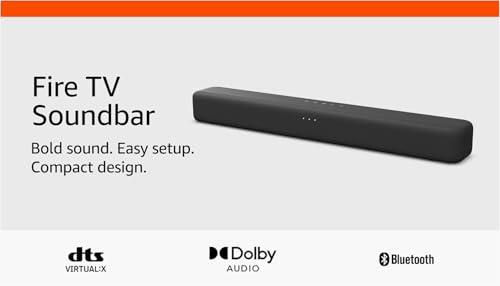
The Amazon Fire TV Soundbar, released in 2022, represents Amazon's entry into the budget soundbar market. Despite carrying the "Fire TV" name, this soundbar doesn't actually include streaming capabilities—it's purely focused on improving your TV's audio output. At the time of writing, it sits in the ultra-budget category, making it accessible to almost anyone looking to upgrade their TV audio.
What makes the Amazon Fire TV Soundbar interesting from a technical standpoint is its use of "racetrack" drivers. These are oval-shaped speakers that pack more surface area into the soundbar's compact 24-inch frame than traditional round drivers would allow. The soundbar uses two of these drivers, each powered by a 20-watt amplifier, creating what's called a 2.0 channel system—essentially left and right stereo channels without a dedicated center channel for dialogue or a subwoofer for bass.
The audio processing relies on DTS Virtual:X technology, which is where things get clever. This system analyzes the stereo audio signal and uses psychoacoustic tricks—essentially fooling your brain—to create the impression of sound coming from directions where there aren't actually any speakers. It's not magic, but it's surprisingly effective at making a two-speaker system sound wider and more enveloping than you'd expect.
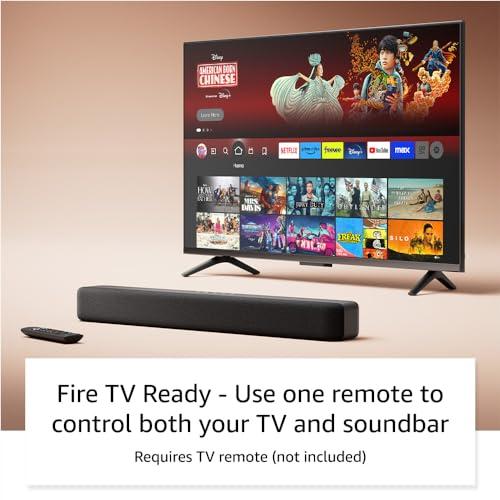
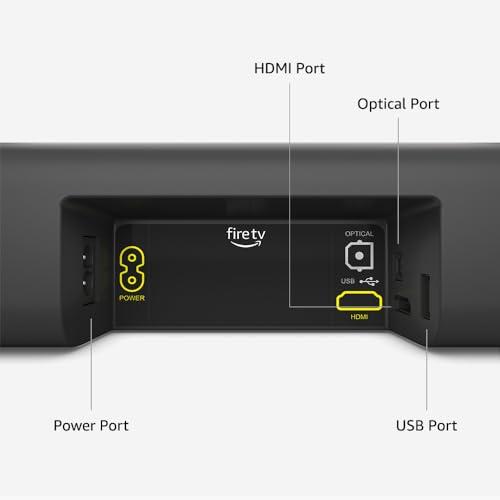
For connectivity, the Amazon Fire TV Soundbar keeps things simple with HDMI ARC (Audio Return Channel), optical input, and Bluetooth. HDMI ARC is particularly important because it allows your TV remote to control the soundbar's volume, creating a seamless experience. The optical input ensures compatibility with older TVs that might not have HDMI ARC capability.
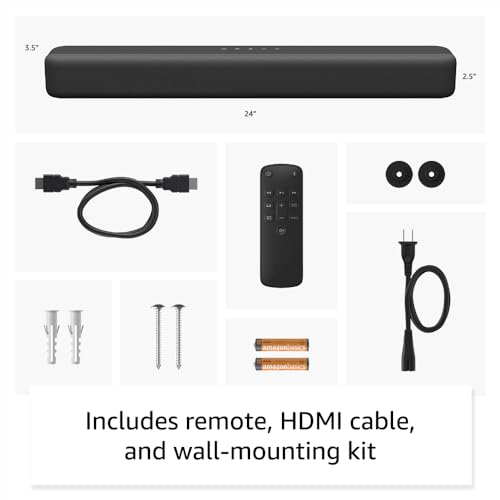
The physical design prioritizes discretion and simplicity. At just 2.5 inches tall and weighing under 4 pounds, it won't dominate your entertainment center or require elaborate mounting solutions. The touch controls on top include basic functions like volume, input selection, and Bluetooth pairing, though most users will control it through their TV remote once connected via HDMI ARC.
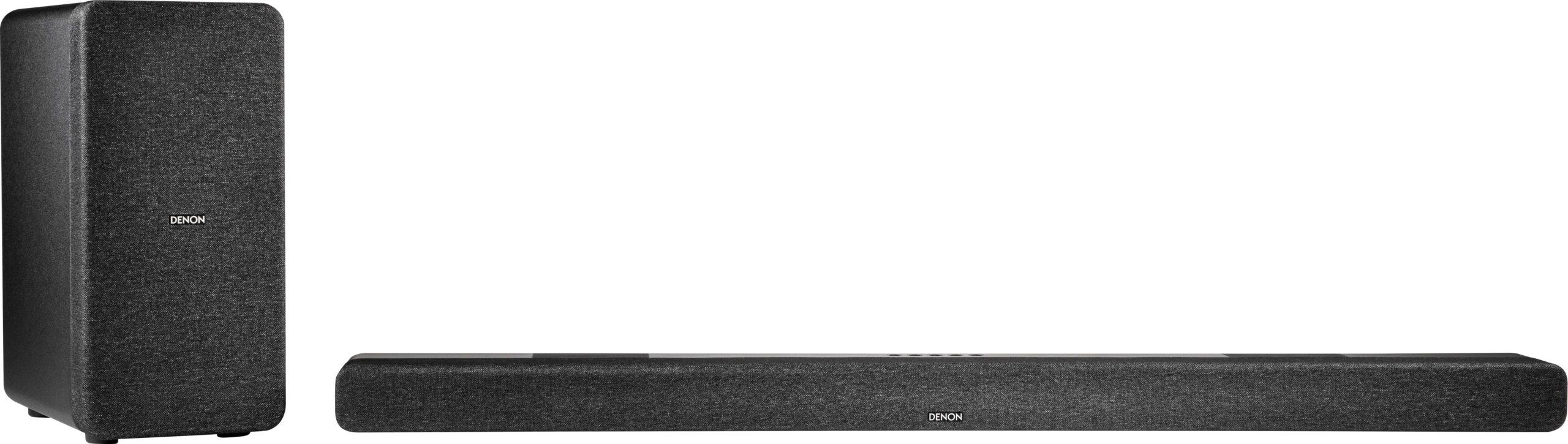
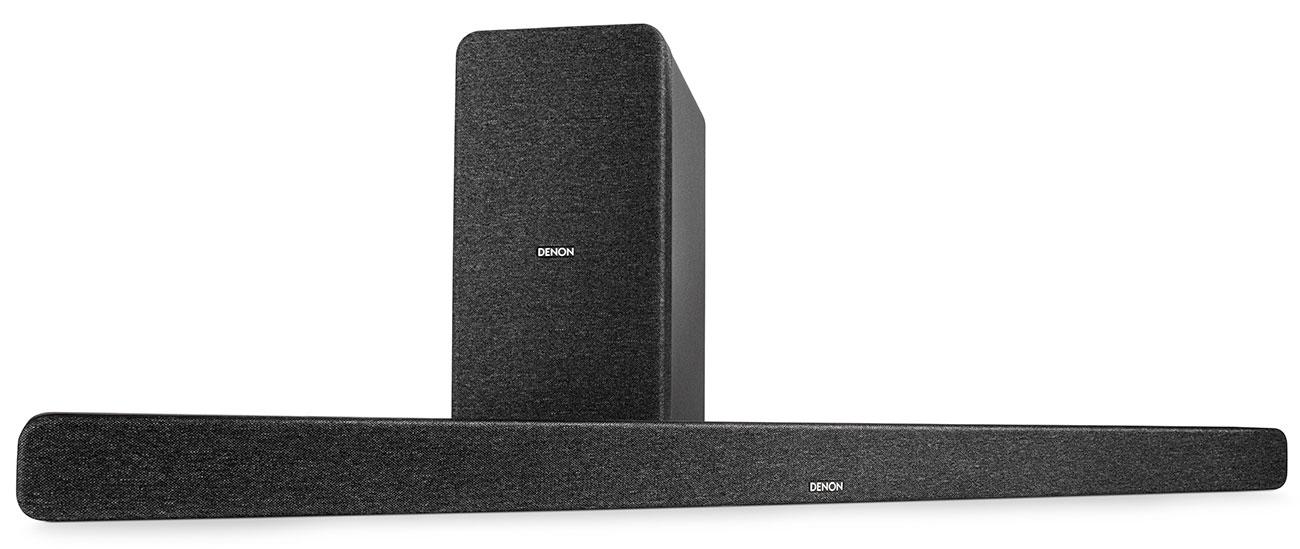
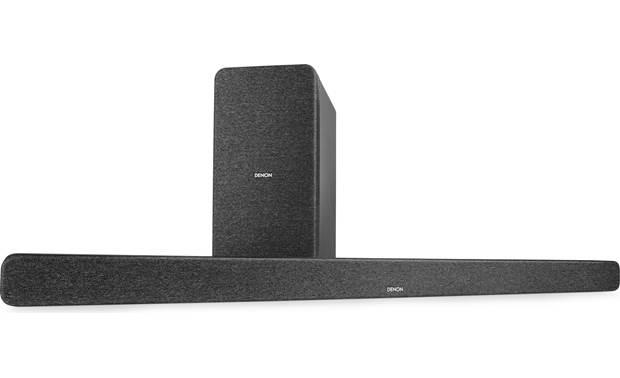
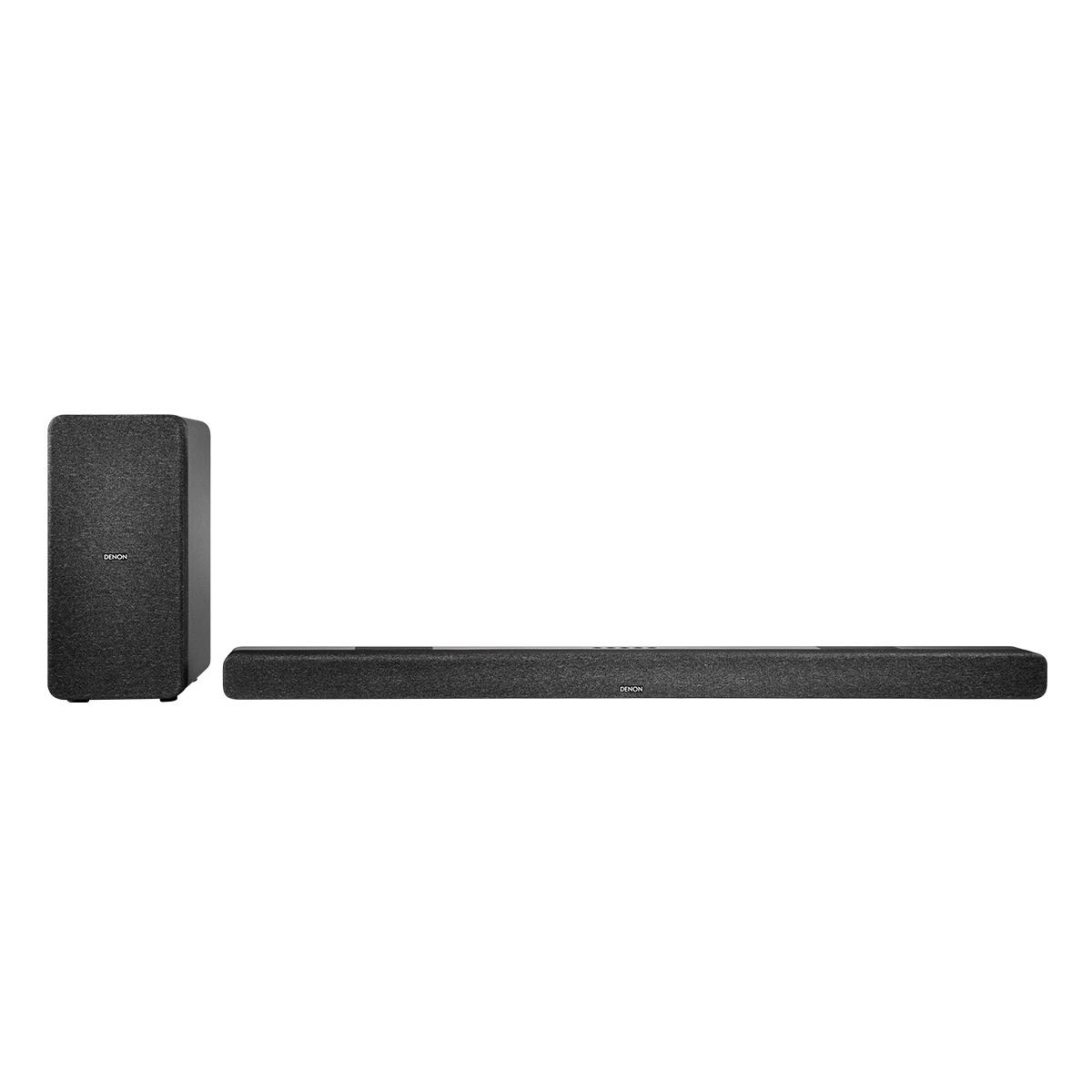
Released in early 2022, the Denon DHT-S517 takes a fundamentally different approach to solving the TV audio problem. Instead of trying to create surround sound from two speakers, it actually includes the hardware needed for genuine multi-channel audio. This soundbar represents Denon's effort to bring legitimate home theater technology to users who want more than basic TV audio improvement but aren't ready for a full surround sound system.
The technical specifications tell the story: this is a 3.1.2 channel system, which breaks down as three front channels (left, center, right), one subwoofer channel, and two height channels for Dolby Atmos effects. The "3.1.2" designation might sound like technical jargon, but it represents a significant leap in capability compared to the 2.0 system in the Amazon Fire TV Soundbar.
Inside the Denon DHT-S517's 41-inch frame, you'll find seven individual drivers: two tweeters for high-frequency detail, two midrange drivers for vocals and most instruments, one dedicated center channel driver for dialogue, and two upward-firing drivers for height effects. This driver array allows for much more precise sound reproduction than virtual processing can achieve.
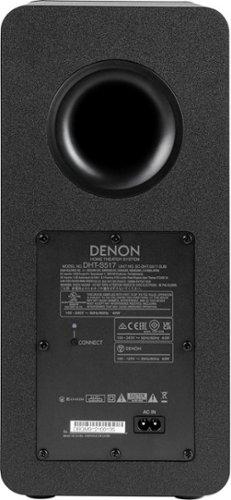
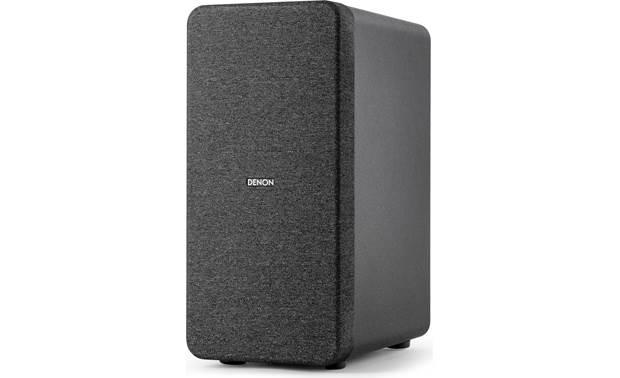
The wireless subwoofer deserves special attention because it fundamentally changes the listening experience. This separate unit houses a 5.25-inch woofer powered by its own 100-watt amplifier. Unlike the Amazon Fire TV Soundbar's integrated approach, having a dedicated subwoofer means you can place it anywhere in the room for optimal bass response. The wireless connection eliminates cable clutter while maintaining the flexibility that makes subwoofers effective.
Dolby Atmos support is where the Denon DHT-S517 truly differentiates itself. Those upward-firing drivers bounce sound off your ceiling to create the impression of audio coming from above—perfect for helicopter scenes, thunderstorms, or any movie where overhead effects matter. This isn't virtual processing trying to trick your brain; it's actual speakers creating actual overhead sound.
The dialogue enhancer feature addresses one of the most common complaints about modern movies and TV shows: dialogue that's too quiet relative to music and effects. This system can boost speech frequencies specifically, making voices clearer without affecting the rest of the audio mix. It offers three levels of enhancement, allowing you to find the right balance for your room and hearing preferences.
When it comes to actual performance, these two soundbars operate in different leagues, and understanding why requires looking at the physics of sound reproduction. The most fundamental difference lies in how they handle bass frequencies—the low-end rumble that gives weight to explosions, music, and even dialogue.
The Amazon Fire TV Soundbar relies on its compact drivers and a bass reflex design to produce what low frequencies it can. Bass reflex systems use a port (essentially a tuned opening) to enhance bass response, but there's only so much a small enclosure can do. Physics dictates that producing deep bass requires either large drivers or significant amplifier power, and budget constraints limit both. The result is bass that's adequate for dialogue and casual viewing but won't satisfy anyone looking for the impact of a movie theater experience.
The Denon DHT-S517's dedicated subwoofer changes the entire equation. That 5.25-inch driver, while not enormous by subwoofer standards, can move significantly more air than the Amazon Fire TV Soundbar's integrated drivers. More importantly, the separate enclosure allows for better bass extension and control. Users consistently report that this makes action movies more engaging and music more satisfying, though some note that the subwoofer integration isn't always seamless—occasionally, you can detect where the soundbar hands off to the subwoofer.
Dialogue clarity represents another crucial performance metric, and here both soundbars take different approaches to the same problem. The Amazon Fire TV Soundbar uses digital signal processing and its voice mode to emphasize speech frequencies. It's effective enough that most users report significant improvement over TV speakers, but it's working with limited hardware.
The Denon DHT-S517 dedicates an entire driver to center channel duties—the same approach used in professional movie theaters. This physical separation allows for more precise dialogue reproduction, and the adjustable dialogue enhancer provides fine-tuning that goes beyond simple EQ adjustments. The three-level system lets you boost dialogue clarity without making voices sound artificially processed.
Soundstage width and imaging—how wide and precise the audio sounds—showcase the fundamental differences between virtual and physical surround processing. The Amazon Fire TV Soundbar achieves surprisingly good results for a two-driver system. DTS Virtual:X processing can create the impression of sounds coming from beyond the physical boundaries of the soundbar, and many users report satisfaction with the spatial effect for TV shows and movies.
However, the Denon DHT-S517 operates on a different level entirely. With seven drivers spread across multiple channels, it creates a genuine soundfield that extends well beyond the soundbar itself. The upward-firing Atmos speakers add a height dimension that virtual processing simply cannot match. When a helicopter flies overhead in a movie, you actually hear it above you rather than just hearing processed audio that suggests height.
Both soundbars arrived in 2022, during a period when the audio industry was grappling with how to balance affordability with advancing technology. The streaming revolution had created demand for better home audio, but not everyone wanted the complexity or expense of traditional surround sound systems.
Since 2022, we've seen continued refinement in virtual surround processing, with newer algorithms becoming more sophisticated at creating spatial effects from limited hardware. However, the fundamental limitations haven't changed—you can't truly replicate multiple speakers with just two, no matter how clever the processing.
Dolby Atmos has become increasingly mainstream, with more content available on streaming platforms and UHD Blu-rays. This trend favors soundbars like the Denon DHT-S517 that can actually process and reproduce these height channels rather than just accepting and downmixing them.
The wireless subwoofer trend has also matured, with more reliable connection protocols and better integration between soundbars and their companion subwoofers. Early wireless subwoofer implementations often suffered from dropouts or synchronization issues, but modern systems like the one in the Denon DHT-S517 generally connect seamlessly and maintain stable connections.
In a typical living room setup, the differences between these soundbars become immediately apparent. The Amazon Fire TV Soundbar transforms the TV audio experience from thin and tinny to full and balanced. Dialogue becomes much clearer, and the overall sound takes on a warmth and presence that TV speakers simply cannot provide. For most TV shows, news, and casual movie watching, this improvement feels substantial and satisfying.
However, when you switch to action movies, the limitations become obvious. Explosions lack weight, gunshots sound more like firecrackers, and the overall dynamic range—the difference between quiet and loud sounds—feels compressed. This isn't necessarily a dealbreaker for everyone, but it does limit the Amazon Fire TV Soundbar's ability to create truly engaging movie experiences.
The Denon DHT-S517 operates in a different performance tier from the moment you turn it on. The wireless subwoofer adds not just bass extension but also a sense of power and impact that changes how movies feel. When paired with the genuine Dolby Atmos processing, action sequences become significantly more immersive. The height channels don't just add novelty effects—they create a more natural, three-dimensional soundscape that draws you into the content.
That said, the Denon DHT-S517 isn't perfect. Some users report that music reproduction, while better than TV speakers, doesn't quite match the natural balance of the best stereo systems. The subwoofer, while powerful, occasionally feels slightly disconnected from the main soundbar, particularly during complex musical passages where bass lines weave in and out of the mix.
Room size plays a crucial role in how these soundbars perform. In smaller spaces—apartments, bedrooms, or compact living rooms—the Amazon Fire TV Soundbar can provide satisfying results without overwhelming the room. Its compact size and moderate output suit these environments well, and the absence of a separate subwoofer eliminates concerns about disturbing neighbors.
Larger rooms reveal the Amazon Fire TV Soundbar's limitations more clearly. Without substantial power or bass extension, it can sound lost in bigger spaces, requiring higher volume levels that may push the small drivers beyond their comfort zone. The Denon DHT-S517, with its larger driver array and separate subwoofer, fills larger rooms more effectively and maintains composure at higher volume levels.
At the time of writing, these soundbars operate in completely different price segments, with the Denon DHT-S517 costing roughly three times more than the Amazon Fire TV Soundbar. This price difference reflects fundamental differences in design philosophy, component quality, and performance capability.
The Amazon Fire TV Soundbar represents exceptional value in the budget category. For the cost of a modest dinner out, you get a substantial upgrade over TV speakers with reliable connectivity and surprisingly good virtual surround processing. It's not trying to compete with more expensive systems—it's trying to provide the maximum improvement possible at its price point, and it succeeds admirably at that goal.
The Denon DHT-S517 operates in the mid-range category where value becomes more complex to evaluate. Yes, it costs significantly more, but you're getting genuine surround sound hardware, a wireless subwoofer, and Dolby Atmos processing. The question becomes whether these features justify the price premium for your specific needs and budget.
For someone who watches primarily TV shows and news, the additional capabilities of the Denon DHT-S517 may not provide proportional value. However, for movie enthusiasts or anyone who regularly streams action content, the immersive experience and bass impact can transform home viewing in ways that justify the higher cost.
Choosing between these soundbars ultimately depends on matching your priorities, budget, and usage patterns to the right product capabilities. The Amazon Fire TV Soundbar makes sense when budget constraints are paramount, when you're primarily looking to improve dialogue clarity for TV shows, or when you're working with limited space that can't accommodate a separate subwoofer.
It's also the right choice for secondary viewing areas—bedrooms, kitchens, or offices where you want better audio than TV speakers can provide but don't need home theater-level performance. The simple setup and operation make it particularly appealing for users who want audio improvement without complexity.
The Denon DHT-S517 becomes the better choice when you're building a dedicated entertainment space, when you regularly watch movies or action content, or when you want genuine surround sound processing rather than virtual alternatives. It's also worth considering if you listen to music through your TV setup and want better bass response and overall dynamics.
From a future-proofing perspective, the Denon DHT-S517 handles Dolby Atmos content properly, which matters as more streaming services and UHD Blu-rays include these enhanced soundtracks. If you're investing in a soundbar you plan to keep for several years, having genuine Atmos processing becomes more valuable over time.
For apartment dwellers, consider your neighbors and building construction. The Amazon Fire TV Soundbar produces all its sound from a single unit, making it easier to control volume and minimize sound transmission. The Denon DHT-S517's separate subwoofer can be powerful enough to travel through floors and walls, though proper placement and volume management can mitigate these concerns.
These soundbars represent two distinct philosophies for improving TV audio, each with clear strengths and limitations. The Amazon Fire TV Soundbar proves that significant audio improvement doesn't require a large budget, delivering balanced sound and impressive virtual surround effects from a simple, affordable package. Its limitation isn't poor engineering—it's physics and economics constraining what's possible at its price point.
The Denon DHT-S517 demonstrates what becomes possible when budget allows for proper surround sound hardware. The combination of multiple drivers, dedicated subwoofer, and genuine Dolby Atmos processing creates an authentically immersive experience that virtual processing cannot match.
Your decision should align with your priorities and constraints. If you need better TV audio and budget is the primary concern, the Amazon Fire TV Soundbar delivers remarkable value. If you want a genuine home theater upgrade and can accommodate the higher cost and separate subwoofer, the Denon DHT-S517 provides substantially better performance and more engaging movie experiences. Either choice will significantly improve over TV speakers—the question is how much improvement you need and how much you're willing to invest to get it.
| Amazon Fire TV Soundbar | Denon DHT-S517 Soundbar with Wireless Subwoofer |
|---|---|
| Channel Configuration - Determines surround sound capability and audio separation | |
| 2.0 channel stereo (left and right only) | 3.1.2 channel (left, center, right, subwoofer, 2 height channels) |
| Dolby Atmos Support - Essential for overhead sound effects in modern movies | |
| Virtual processing only via DTS Virtual:X | True Dolby Atmos with physical upward-firing drivers |
| Subwoofer - Critical for bass impact in action movies and music | |
| Built-in bass reflex design (limited low-end extension) | Dedicated wireless 5.25" subwoofer with 100W amplifier |
| Driver Array - More drivers typically mean better sound quality and separation | |
| 2 racetrack drivers with 20W amplification each | 7-driver array: 2 tweeters, 2 midrange, 1 center, 2 height drivers |
| Total Power Output - Higher wattage generally means louder, cleaner sound | |
| 40W total (2 x 20W) | 150W total (50W soundbar + 100W subwoofer) |
| Connectivity Options - More inputs provide greater flexibility with devices | |
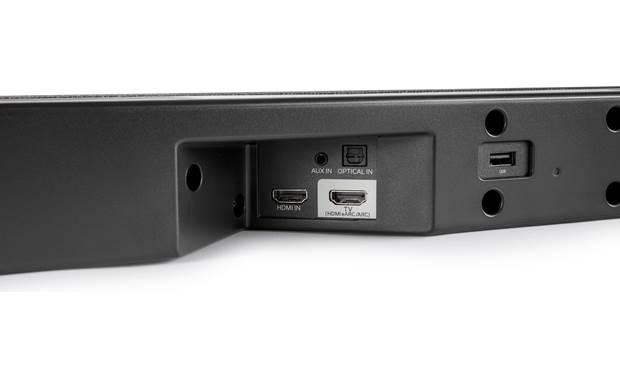
| HDMI ARC/eARC, optical, Bluetooth | HDMI eARC, optical, 3.5mm, USB-A, Bluetooth 5.0 |
| Dialogue Enhancement - Crucial for clear speech in movies and shows | |
| Voice mode with basic processing | 3-level dialogue enhancer (Low/Medium/High) |
| Sound Modes - Different presets optimize audio for various content types | |
| Movie, Music, Dialog modes | Movie, Music, Night, Pure modes |
| Physical Size - Important for TV compatibility and room aesthetics | |
| 24" wide, 2.5" tall, 3.8 lbs | 41" wide, 2.4" tall, 5.5 lbs (plus separate subwoofer) |
| Smart Features - Built-in streaming and voice control capabilities | |
| None (despite "Fire TV" branding) | None (focused purely on audio processing) |
| Setup Complexity - Affects ease of installation and daily use | |
| Single unit, simple HDMI or optical connection | Soundbar plus wireless subwoofer pairing required |
The Amazon Fire TV Soundbar is generally better for small apartments due to its compact single-unit design and moderate volume output. It won't disturb neighbors through thin walls like a separate subwoofer might, and its 24-inch width fits well with smaller TVs common in apartment living.
While not absolutely necessary, a subwoofer significantly improves your audio experience. The Denon DHT-S517 includes a wireless subwoofer that adds substantial bass impact for movies and music, while the Amazon Fire TV Soundbar relies on built-in bass that's adequate for dialogue but limited for action content.
The Amazon Fire TV Soundbar uses virtual surround processing to simulate directional audio from two speakers, while the Denon DHT-S517 has physical speakers that create genuine surround effects. Real surround sound provides more accurate positioning and immersion, especially for movies.
Both soundbars work equally well with streaming services since they connect to your TV, not directly to streaming platforms. However, the Denon DHT-S517 can properly decode Dolby Atmos content from Netflix, Disney+, and other services, while the Amazon Fire TV Soundbar processes this as standard audio.
The Amazon Fire TV Soundbar needs just 24 inches of width and sits as a single unit under your TV. The Denon DHT-S517 requires 41 inches of width for the soundbar plus floor space anywhere in the room for its wireless subwoofer, making it less suitable for cramped spaces.
Both soundbars significantly improve dialogue clarity compared to TV speakers. The Amazon Fire TV Soundbar has a dedicated voice mode, while the Denon DHT-S517 features a three-level dialogue enhancer and a dedicated center channel speaker specifically for speech reproduction.
The Amazon Fire TV Soundbar is simpler to set up as a single unit with just one HDMI or optical cable connection. The Denon DHT-S517 requires connecting the soundbar to your TV and pairing the wireless subwoofer, though the pairing process is typically automatic.
Yes, both the Amazon Fire TV Soundbar and Denon DHT-S517 include optical inputs for older TVs without HDMI ARC. However, you'll need to use the soundbar's remote for volume control instead of your TV remote with optical connections.
The Denon DHT-S517 generally performs better for music due to its separate subwoofer and multiple drivers providing better frequency separation. The Amazon Fire TV Soundbar offers decent stereo music playback but lacks the bass extension and dynamics that music benefits from.
The Denon DHT-S517 excels at action movies with its dedicated subwoofer providing impactful explosions and its higher power handling loud scenes without distortion. The Amazon Fire TV Soundbar can sound strained at high volumes and lacks the bass impact that makes action scenes engaging.
When connected via HDMI ARC, both the Amazon Fire TV Soundbar and Denon DHT-S517 can be controlled using your TV remote for volume and power. This creates a seamless experience where you don't need to juggle multiple remotes for basic functions.
The Amazon Fire TV Soundbar offers exceptional value in the budget category, providing substantial improvement over TV speakers at a very accessible price point. The Denon DHT-S517 offers better value for those wanting genuine home theater features like Dolby Atmos and dedicated subwoofer bass, justifying its higher cost with significantly enhanced performance.
We've done our best to create useful and informative comparisons to help you decide what product to buy. Our research uses advanced automated methods to create this comparison and perfection is not possible - please contact us for corrections or questions. These are the sites we've researched in the creation of this article: rtings.com - developer.amazon.com - stereoguide.com - developer.amazon.com - techradar.com - hometechnologyreview.com - whathifi.com - youtube.com - whathifi.com - wirelessplace.com - hometechnologyreview.com - dolby.com - aboutamazon.com - developer.amazon.com - community.anker.com - youtube.com - cordbusters.co.uk - techradar.com - consumerreports.org - crutchfield.com - bestbuy.com - bestbuy.com - pocket-lint.com - abt.com - manuals.denon.com - connectedmag.com.au - bestbuy.com - forum.flirc.tv - bhphotovideo.com

Privacy Policy
Terms and Conditions - Affiliate Policy
Home Security
© Copyright 2008-2026.
11816 Inwood Rd #1211, Dallas, TX 75244