

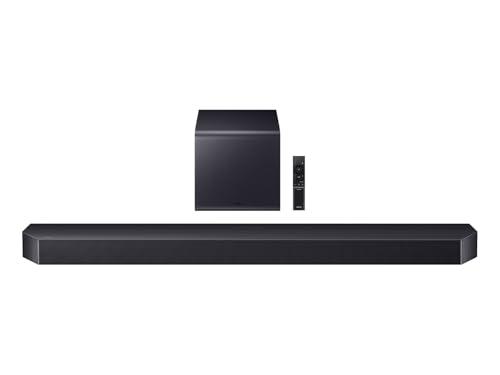
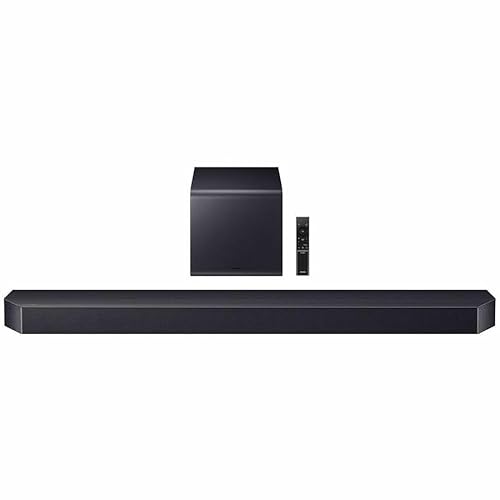
When your TV's built-in speakers sound like they're trapped in a tin can, it's time to consider a soundbar. But with options ranging from basic stereo units to complex multi-speaker systems, choosing the right one can feel overwhelming. Today we're comparing two soundbars that represent opposite ends of the spectrum: Samsung's flagship HW-Q990F and Denon's value-focused DHT-S517.
These products couldn't be more different in their approach. The Samsung HW-Q990F, released in 2025, costs roughly three times more than the Denon DHT-S517 from 2023, but delivers a fundamentally different audio experience. Understanding which approach suits your needs—and your budget—requires diving into what makes each system tick.
Before we compare these specific models, it's worth understanding what separates good soundbars from great ones. The most important factor is channel configuration, which describes how many discrete audio channels the system can reproduce. A 3.1 system has three main channels (left, center, right) plus one subwoofer channel, while an 11.1.4 system has eleven main channels, one subwoofer, and four height channels for overhead effects.
The magic happens when you have enough physical speakers to handle each channel separately. This is called "discrete" audio—each channel gets its own dedicated driver. The alternative is "virtual" surround, where clever processing algorithms try to make fewer speakers sound like they're coming from more directions. Virtual processing has improved dramatically in recent years, but physics still favors actual speakers positioned around your room.
Another crucial distinction is between soundbars that come complete versus those designed for expansion. Some systems include everything you need in the box, while others start basic and let you add components over time. This affects both your initial investment and long-term flexibility.
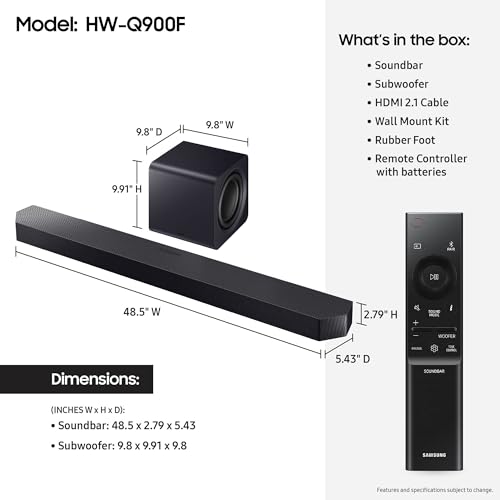
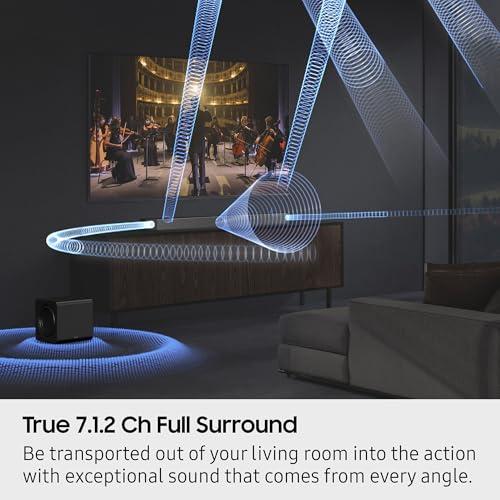
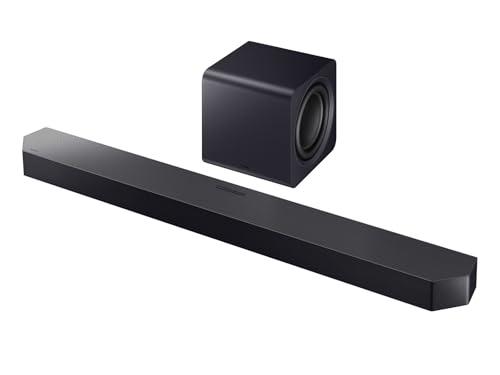
The Samsung HW-Q990F represents Samsung's 2025 flagship soundbar, and it shows in every aspect of its design. This isn't just a soundbar—it's a complete surround sound system disguised as a soundbar package. The system includes 23 individual speakers distributed across three main components: the soundbar itself, a wireless subwoofer, and a pair of wireless rear speakers.
The main soundbar houses 15 drivers, including front-firing speakers for stereo content, side-firing drivers that bounce sound off your walls to create width, and up-firing speakers that reflect off your ceiling for height effects. This multi-directional approach creates what Samsung calls a "sound bubble" that envelops your listening position.
What makes the HW-Q990F special is its true 11.1.4 channel configuration. Those rear speakers aren't afterthoughts—each one contains three drivers (front-firing, side-firing, and up-firing) to create genuine surround and height effects behind your seating position. When a helicopter flies overhead in a movie, you hear it move seamlessly from front to back and side to side, with convincing height information throughout the journey.
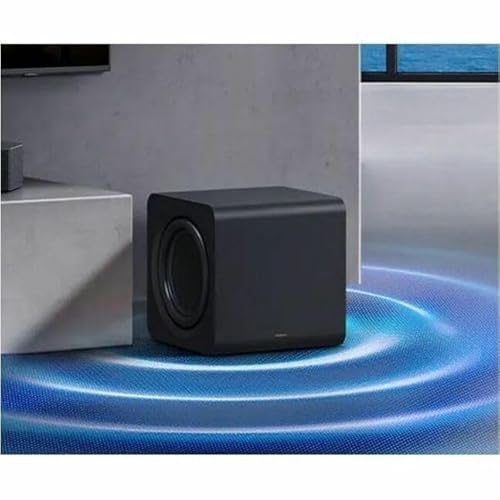
The subwoofer received significant improvements for 2025. Samsung upgraded from a single 8-inch driver to dual opposing 8-inch woofers, which cancel out cabinet vibrations while increasing bass output. The new design also includes AI-powered Dynamic Bass Control, which analyzes the audio signal in real-time and adjusts the subwoofer's response to minimize distortion. In practical terms, this means cleaner, tighter bass that doesn't overwhelm dialogue or muddy the midrange.
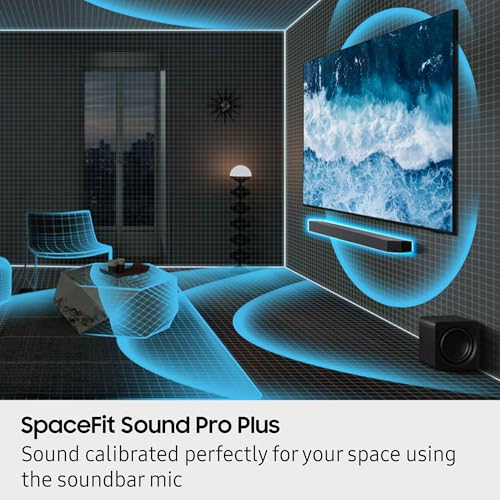
Samsung's smart features deserve mention too. SpaceFit Sound Pro Plus uses built-in microphones to analyze your room's acoustics and automatically calibrate the soundbar's output. The Active Voice Amplifier Pro monitors ambient noise levels and boosts dialogue accordingly—perfect for those moments when the air conditioner kicks in during a quiet scene.
For gaming enthusiasts, the HW-Q990F supports 4K video passthrough at 120Hz, essential for PlayStation 5 and Xbox Series X owners who want to experience games at their highest frame rates. The system's multiple HDMI inputs let you connect several devices directly to the soundbar, reducing cable clutter and simplifying your setup.
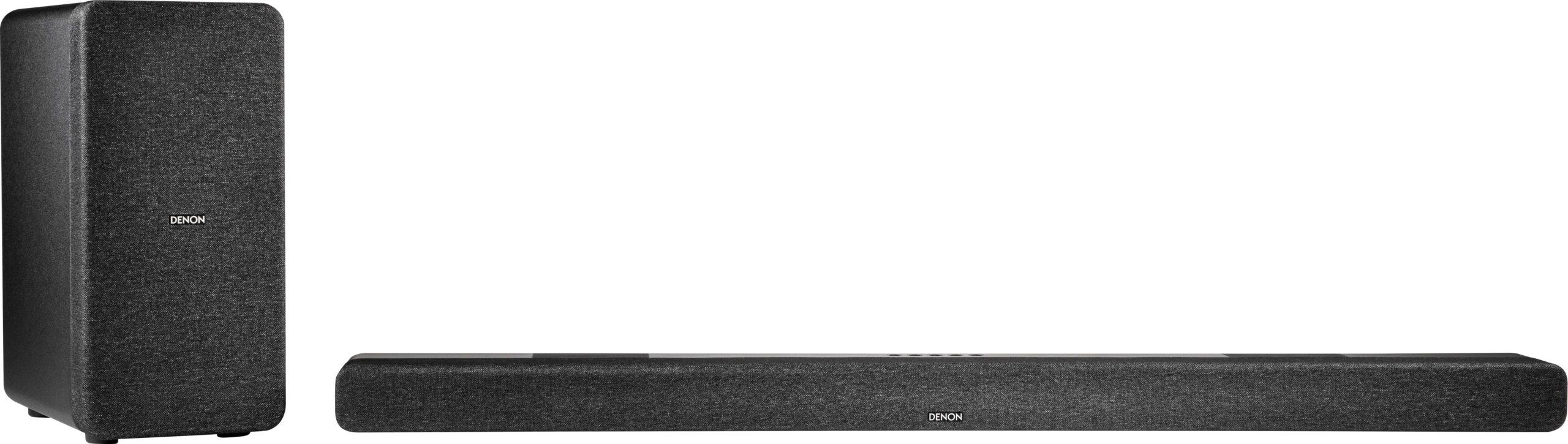
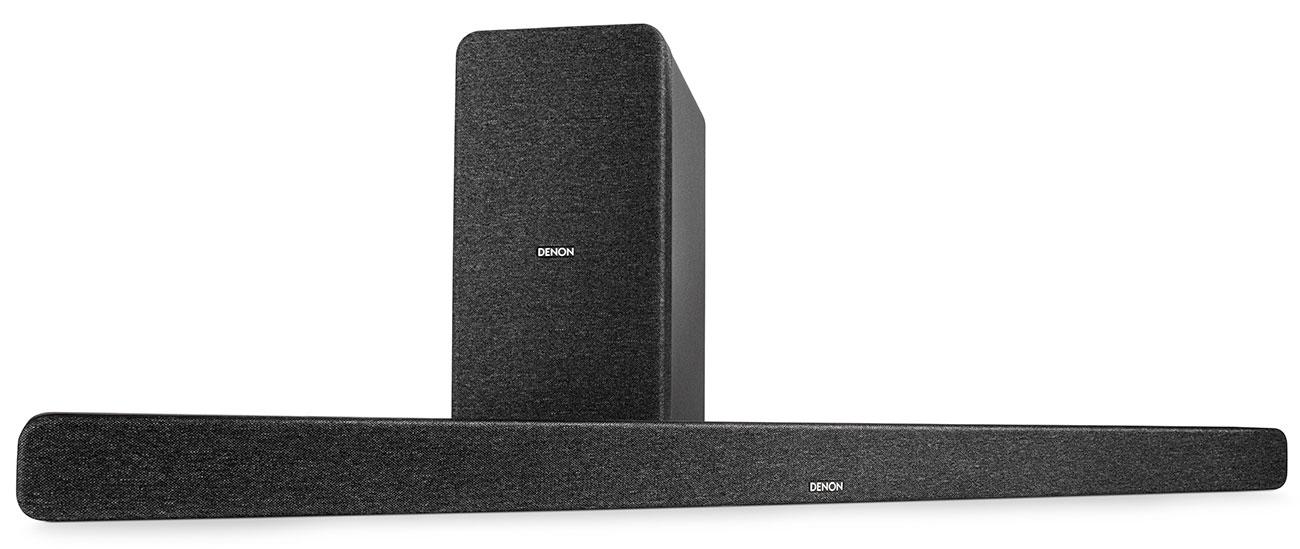
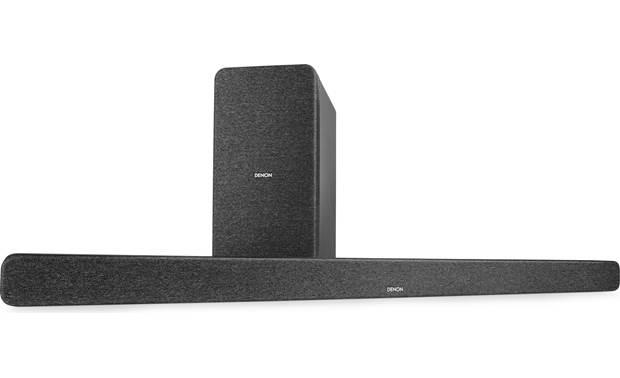
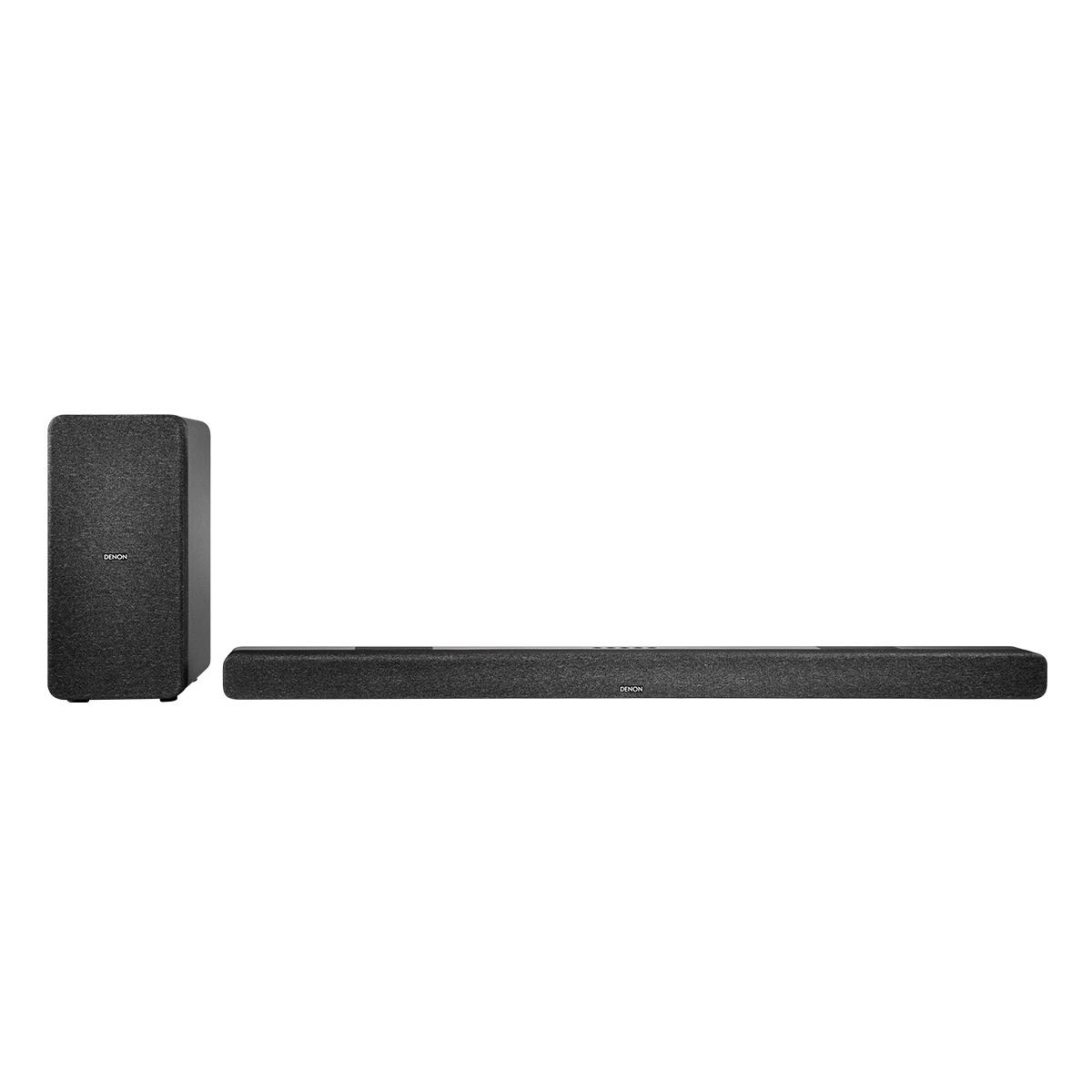
The Denon DHT-S517, released in 2023, takes a completely different approach to the soundbar challenge. Rather than trying to replicate a full surround system, Denon focused on delivering the best possible audio experience from a traditional soundbar-and-subwoofer configuration.
The DHT-S517 uses a 3.1.2 channel setup with seven carefully selected drivers. Two 4.7-inch racetrack-shaped midrange drivers handle the meat of the frequency spectrum, while 1-inch dome tweeters take care of the highs. A dedicated 1-inch center channel driver ensures dialogue remains clear and intelligible, which is often where cheaper soundbars struggle most.
The two up-firing drivers are what elevate this system above basic soundbars. These 2.5-inch speakers fire sound toward your ceiling, where it reflects back down to create convincing height effects for Dolby Atmos content. While this can't match the precision of the Samsung's four discrete height channels, it delivers genuine overhead dimensionality that many competing soundbars in this price range fake through processing alone.
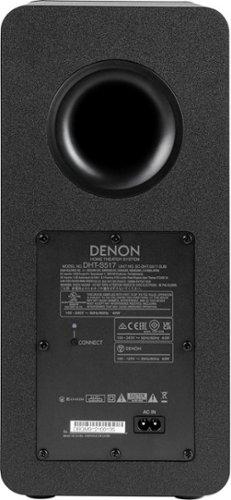
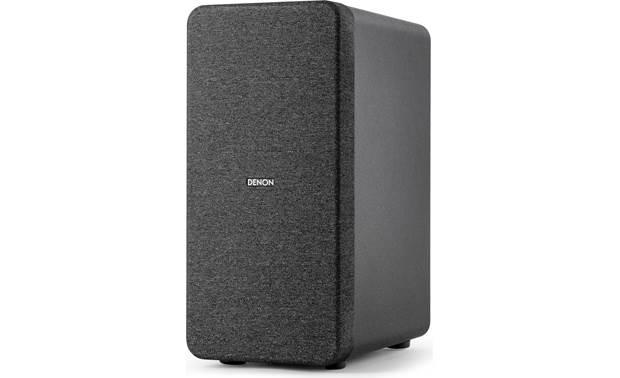
Denon's wireless subwoofer uses a single 5.25-inch driver in a ported enclosure, powered by a dedicated 100-watt amplifier. The bass reflex design (a fancy term for a carefully tuned port that enhances low-frequency response) helps this relatively compact subwoofer punch above its weight class. While it can't match the depth or impact of dual 8-inch drivers, it provides substantial improvement over any soundbar's built-in bass capabilities.
The DHT-S517 includes Denon's Dialogue Enhancer technology, which offers three levels of speech clarity improvement. This feature works differently than Samsung's automatic system—you manually select Low, Medium, or High enhancement based on your preference and the content you're watching. It's less sophisticated but more predictable, and frankly, most people prefer having direct control over dialogue levels.
This is where the fundamental difference between these systems becomes apparent. The Samsung HW-Q990F creates genuine 360-degree surround sound through its physical rear speakers. When watching action movies, you'll hear bullets whizzing past your ears, explosions erupting behind you, and ambient environmental sounds placing you directly in the scene. The system's ability to seamlessly move sound effects around the room is genuinely impressive and represents the closest you can get to a traditional surround sound system without running speaker wires.
The Denon DHT-S517 relies on psychoacoustic processing to create surround effects from its front-mounted drivers. Modern virtual surround has improved dramatically—the system does create a convincing sense of width and some rear ambiance—but it cannot replicate the precision and impact of actual speakers behind your listening position. For casual TV watching and most streaming content, this difference matters less. For serious movie nights, the Samsung's approach is clearly superior.
Bass reproduction reveals another significant performance gap. The Samsung's dual 8-inch configuration with 300 watts of amplification reaches down to around 32Hz, which covers the fundamental frequencies of most movie sound effects and music. The AI-powered distortion control means this bass stays clean and articulate even at high volumes, avoiding the boomy, one-note performance that plagues many soundbar subwoofers.
The Denon's single 5.25-inch driver reaches approximately 40Hz—still respectable and certainly adequate for most content. The difference between 32Hz and 40Hz might not seem significant, but those lowest octaves contain the rumble of explosions, the fundamental tones of pipe organs, and the physical impact that makes action scenes visceral rather than merely loud. The Denon provides satisfying bass for its size and price, but it can't match the Samsung's physical presence.
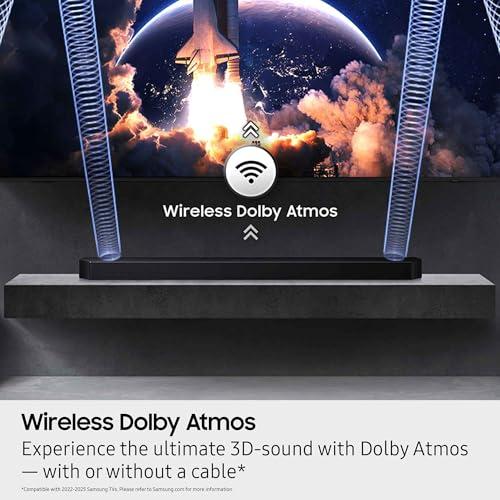
Both systems support Dolby Atmos, but their implementations differ substantially. The Samsung HW-Q990F uses four discrete height channels spread across the soundbar and rear speakers, creating a proper "hemisphere" of sound above your head. Rain effects patter convincingly across the ceiling, aircraft move overhead with realistic trajectories, and atmospheric elements like church bells or thunder genuinely seem to come from above.
The Denon DHT-S517 creates height effects through its two up-firing drivers, which is more than many competing soundbars offer. The overhead dimension is noticeable and adds genuine immersion to Dolby Atmos content. However, with height information only coming from the front of the room, the effects are more "in front and above" rather than truly overhead. It's a meaningful improvement over standard stereo soundbars, but not as enveloping as the Samsung's multi-point approach.
Both systems excel at dialogue reproduction, though through different methods. The Samsung's dedicated center channel and Active Voice Amplifier Pro automatically adjust dialogue levels based on ambient noise and content analysis. This works seamlessly in practice—voices remain intelligible whether you're watching a quiet drama or an explosion-heavy action film.
The Denon's approach is more traditional but equally effective. The dedicated 1-inch center driver provides clear, focused dialogue reproduction, while the manual Dialogue Enhancer lets you boost speech clarity when needed. Some listeners prefer this direct control over automatic adjustment, and the results are excellent either way.
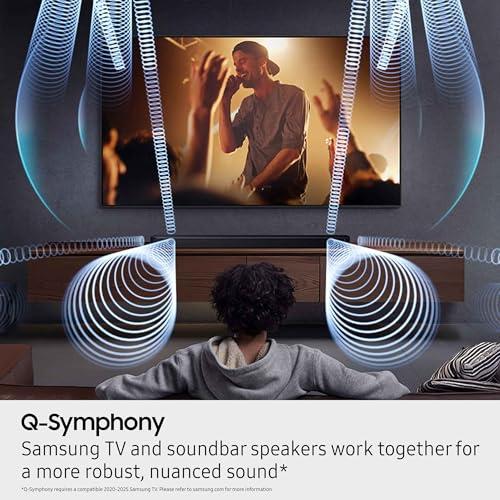
The feature gap between these systems is enormous. The Samsung HW-Q990F integrates deeply with smart home ecosystems through built-in Amazon Alexa, Google Cast, and Apple AirPlay 2. The Q-Symphony feature synchronizes with compatible Samsung TVs, using both the TV's speakers and the soundbar together for an even fuller sound. SpaceFit Sound Pro automatically calibrates the system to your room's acoustics without requiring manual measurement or setup.
For gaming, the HW-Q990F supports 4K video passthrough at 120Hz with HDR10+, essential for next-generation consoles. Multiple HDMI inputs accommodate several high-bandwidth devices simultaneously.
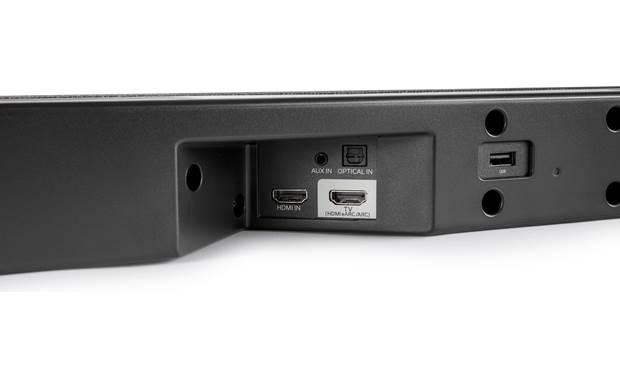
The Denon DHT-S517 keeps things simple with Bluetooth 5.0 for music streaming and basic HDMI connectivity. There's no Wi-Fi, no voice control, and no smart home integration. The HDMI supports 4K passthrough but only at standard 60Hz refresh rates. For many users, this simplicity is actually a benefit—fewer features mean fewer things to break or become obsolete.
Your room size significantly affects which system makes more sense. The Samsung HW-Q990F was designed for larger spaces where its multiple speakers and substantial power output can properly develop. In rooms smaller than 12x12 feet, the system's complexity and power might be overkill, and you won't fully appreciate the rear surround effects due to proximity.
The Denon DHT-S517 excels in small to medium-sized rooms where its more focused output provides excellent coverage without overwhelming the space. The wireless subwoofer gives you flexibility in placement—crucial in smaller rooms where every square foot matters.
At current pricing (as of late 2024), the Samsung HW-Q990F represents a significant investment that puts it in competition with traditional home theater receiver and speaker combinations. The value proposition depends on whether you prioritize convenience and integration over raw performance per dollar. For home theater enthusiasts with appropriate room sizes and budgets, it delivers flagship-level immersion in a much simpler package than separates would require.
The Denon DHT-S517 offers exceptional value for buyers making their first serious soundbar purchase. At roughly one-third the Samsung's cost, it provides genuine Dolby Atmos, meaningful bass extension through its wireless subwoofer, and build quality that punches above its price class. For most users upgrading from TV speakers, the performance improvement is dramatic and immediately apparent.
Neither system is perfect. The Samsung HW-Q990F requires space for three separate components and may overwhelm smaller rooms with its complexity. Some users find the automatic calibration overly aggressive, though manual adjustments are possible. The system's many features can also be overwhelming for users who simply want better sound without learning new technology.
The Denon DHT-S517 notably lacks DTS support, meaning some Blu-ray discs will be downmixed to stereo rather than playing in their native surround format. The lack of rear speakers also means surround effects are always virtualized rather than discrete. For serious movie collectors with extensive physical media libraries, these limitations might prove frustrating.
Choose the Samsung HW-Q990F if you have a room larger than 15x15 feet, budget flexibility for a premium purchase, and desire maximum movie immersion. It's ideal for homes with high-end TVs, gaming consoles, and family members who appreciate audio quality. The system works best when you can properly position all components and have content that takes advantage of its surround capabilities.
The Denon DHT-S517 makes more sense for budget-conscious buyers, smaller rooms, or anyone wanting substantial audio improvement without complexity. It's perfect for apartments, secondary viewing rooms, or households where simplicity trumps ultimate performance. The system delivers most of the satisfaction of more expensive options at a much more accessible price point.
Both soundbars represent excellent engineering within their respective market segments. Your choice should depend primarily on room size, budget constraints, and how seriously you take home theater audio. The Samsung offers flagship performance with a price to match, while the Denon provides premium value that's hard to beat in its category. Either way, you'll enjoy a massive improvement over your TV's built-in speakers.
| Samsung HW-Q990F | Denon DHT-S517 |
|---|---|
| Channel Configuration - Determines surround sound capability and immersion level | |
| 11.1.4 channels with true discrete surround | 3.1.2 channels with virtual surround processing |
| Total Speaker Count - More drivers enable better sound separation and clarity | |
| 23 speakers across soundbar, subwoofer, and rear speakers | 7 drivers contained within soundbar only |
| Physical Rear Speakers - Essential for authentic surround sound movement | |
| Wireless rear speakers included with 3 drivers each | No rear speakers (not available as add-on) |
| Subwoofer Configuration - Affects bass depth and impact for movies | |
| Dual 8-inch woofers with 300W amplification | Single 5.25-inch woofer with 100W amplification |
| Low Frequency Response - Lower numbers mean deeper, more impactful bass | |
| 32Hz (reaches down to movie theater bass levels) | ~40Hz (good for most content, less theater-like rumble) |
| Dolby Atmos Implementation - Height channel count affects overhead effect realism | |
| 4 discrete height channels (soundbar + rear speakers) | 2 up-firing drivers (front-positioned height only) |
| HDMI Connectivity - Important for 4K gaming and multiple device connections | |
| 2 HDMI inputs + 1 output with 4K/120Hz support | 1 HDMI input + 1 output with 4K/60Hz support |
| Smart Features - Convenience and future-proofing considerations | |
| Built-in Alexa, Google Cast, AirPlay 2, room calibration | Bluetooth only, no Wi-Fi or voice control |
| Room Size Suitability - Optimal performance depends on matching system to space | |
| Large rooms (15x15 feet or bigger) for full surround benefit | Small to medium rooms where compact design excels |
| Setup Complexity - Affects user experience and long-term satisfaction | |
| Three wireless components requiring optimal placement | Two-piece system with simple soundbar + subwoofer setup |
| Audio Format Support - Compatibility with your existing media collection | |
| Dolby Atmos, Dolby Digital, TrueHD, plus Samsung's proprietary modes | Dolby Atmos, Dolby Digital, TrueHD (no DTS support) |
| Release Year - Indicates latest technology and feature improvements | |
| 2025 (latest Samsung flagship with newest subwoofer design) | 2023 (proven technology at established value pricing) |
The Samsung HW-Q990F is significantly better for movies due to its true 11.1.4 surround sound with physical rear speakers. This creates authentic surround effects where sounds move seamlessly around your room. The Denon DHT-S517 provides good movie audio with virtual surround processing, but cannot match the immersive experience of actual rear speakers positioned behind your seating area.
The primary difference is surround sound capability. The Samsung HW-Q990F includes wireless rear speakers for true surround sound, while the Denon DHT-S517 uses only front-mounted speakers with virtual surround processing. The Samsung also has much more powerful bass with dual 8-inch subwoofer drivers versus the Denon's single 5.25-inch driver.
Yes, both the Samsung HW-Q990F and Denon DHT-S517 support Dolby Atmos. However, the Samsung uses 4 discrete height channels across its soundbar and rear speakers, while the Denon uses 2 up-firing drivers in the main soundbar only. The Samsung provides more convincing overhead effects due to its additional height channels.
The Denon DHT-S517 is better suited for small to medium rooms. Its compact two-piece design (soundbar plus subwoofer) works well in tighter spaces, while the Samsung HW-Q990F requires more room to properly position its three components and may overpower smaller spaces with its higher output.
No, the Denon DHT-S517 cannot be expanded with rear speakers. What you purchase is the complete system. In contrast, the Samsung HW-Q990F includes wireless rear speakers in the original package, providing a complete surround sound solution from day one.
The Samsung HW-Q990F has significantly more powerful bass with dual 8-inch woofers and 300 watts of subwoofer amplification, reaching down to 32Hz. The Denon DHT-S517 uses a single 5.25-inch driver with 100 watts, extending to about 40Hz. For action movies and deep bass impact, the Samsung is clearly superior.
Both work with gaming consoles, but the Samsung HW-Q990F offers better gaming support with 4K/120Hz passthrough for PlayStation 5 and Xbox Series X. The Denon DHT-S517 supports 4K but only at 60Hz, which may limit next-generation gaming features.
The Denon DHT-S517 offers exceptional value, providing genuine Dolby Atmos and wireless subwoofer at roughly one-third the cost of the Samsung. The Samsung HW-Q990F delivers flagship performance but at a premium price that may not justify the cost difference for casual listeners.
The Samsung HW-Q990F contains 23 total speakers distributed across the main soundbar, wireless subwoofer, and rear speakers. The Denon DHT-S517 has 7 drivers total, all contained within the main soundbar, plus the subwoofer driver.
The Denon DHT-S517 is simpler to set up with just two wireless components (soundbar and subwoofer) and basic connectivity options. The Samsung HW-Q990F requires positioning three separate wireless components and offers more complex features that may overwhelm users wanting simple operation.
The Samsung HW-Q990F includes extensive smart features with built-in Amazon Alexa, Google Cast, Apple AirPlay 2, and automatic room calibration. The Denon DHT-S517 keeps things simple with only Bluetooth connectivity and no Wi-Fi or voice control capabilities.
For most first-time buyers, the Denon DHT-S517 provides an excellent entry point with dramatic improvement over TV speakers at a reasonable cost. Choose the Samsung HW-Q990F if you have a larger room, higher budget, and want the most immersive movie experience possible from a soundbar system.
We've done our best to create useful and informative comparisons to help you decide what product to buy. Our research uses advanced automated methods to create this comparison and perfection is not possible - please contact us for corrections or questions. These are the sites we've researched in the creation of this article: rtings.com - crutchfield.com - sound-advice.online - samsung.com - soundandvision.com - samsung.com - whathifi.com - youtube.com - youtube.com - bestbuy.com - avsforum.com - content.syndigo.com - samsung.com - businessinsider.com - dolby.com - youtube.com - abcwarehouse.com - techradar.com - consumerreports.org - crutchfield.com - bestbuy.com - bestbuy.com - pocket-lint.com - abt.com - manuals.denon.com - connectedmag.com.au - bestbuy.com - forum.flirc.tv - bhphotovideo.com

Privacy Policy
Terms and Conditions - Affiliate Policy
Home Security
© Copyright 2008-2026.
11816 Inwood Rd #1211, Dallas, TX 75244