








If you've ever watched a movie on your TV and found yourself constantly adjusting the volume—cranking it up to hear whispered dialogue, then scrambling for the remote when explosions shake the walls—you're experiencing the fundamental problem that soundbars solve. Modern TVs, despite their impressive picture quality, have terrible audio. Their paper-thin designs simply can't accommodate the larger speakers needed for good sound.
This is where soundbars come in, but not all soundbars are created equal. Today we're comparing two very different approaches to solving your TV audio problems: the Denon DHT-S517 ($302) and the Yamaha SR-C20A ($18). These products represent opposite ends of both the price spectrum and design philosophy, making this comparison particularly interesting for anyone trying to understand what they're actually getting for their money.
Before diving into specifics, it's important to understand that soundbars fall into distinct categories based on their intended use. Premium home theater soundbars like the Denon aim to recreate the immersive experience you'd get at a movie theater, with sounds coming from multiple directions and overhead effects that make you feel like you're inside the action. Compact TV enhancers like the Yamaha focus on solving the most common TV audio problems—muddy dialogue and weak bass—without the complexity or space requirements of a full surround system.
The key considerations when choosing between these approaches include your room size, how you use your TV, and what you're willing to invest in audio quality. If you primarily watch Netflix shows and the occasional movie, your needs are vastly different from someone who hosts movie nights or plays immersive video games.
Room acoustics play a huge role too. A soundbar with upward-firing speakers (like the Denon) needs a ceiling to bounce sound off of, and preferably one that's 8-10 feet high. Throw that same soundbar into a basement with a 7-foot ceiling or a room with vaulted ceilings, and those overhead effects won't work properly.
The Denon DHT-S517 launched in 2021 as part of Denon's push into the mid-range soundbar market. At the time, Dolby Atmos was still relatively new to soundbars, having primarily existed in dedicated home theater receivers. Denon's challenge was cramming this complex surround sound processing into a single bar while keeping the price reasonable.
The Yamaha SR-C20A also debuted around the same period, but with completely different objectives. Yamaha has always prioritized natural sound reproduction in their audio products, and the SR-C20A represents their "no-frills" approach to TV audio enhancement. The dramatic price difference you're seeing now ($18 vs $302) reflects the Yamaha being cleared out as retailers make room for newer models.
Since these products launched, we've seen significant improvements in soundbar technology. Newer models often include room correction software that automatically adjusts the sound based on your space, and many now support higher-resolution audio formats. However, both of these soundbars represent mature technologies that work well within their intended scope.
The most fundamental difference between these soundbars lies in their channel configuration—essentially, how many separate audio streams they can handle and where those sounds are directed.
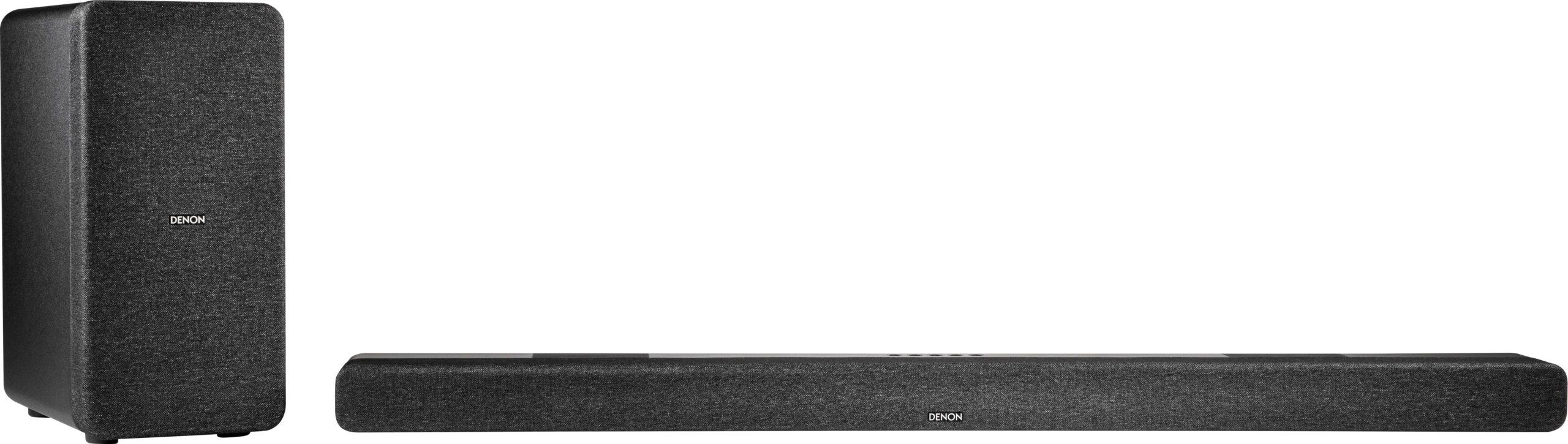
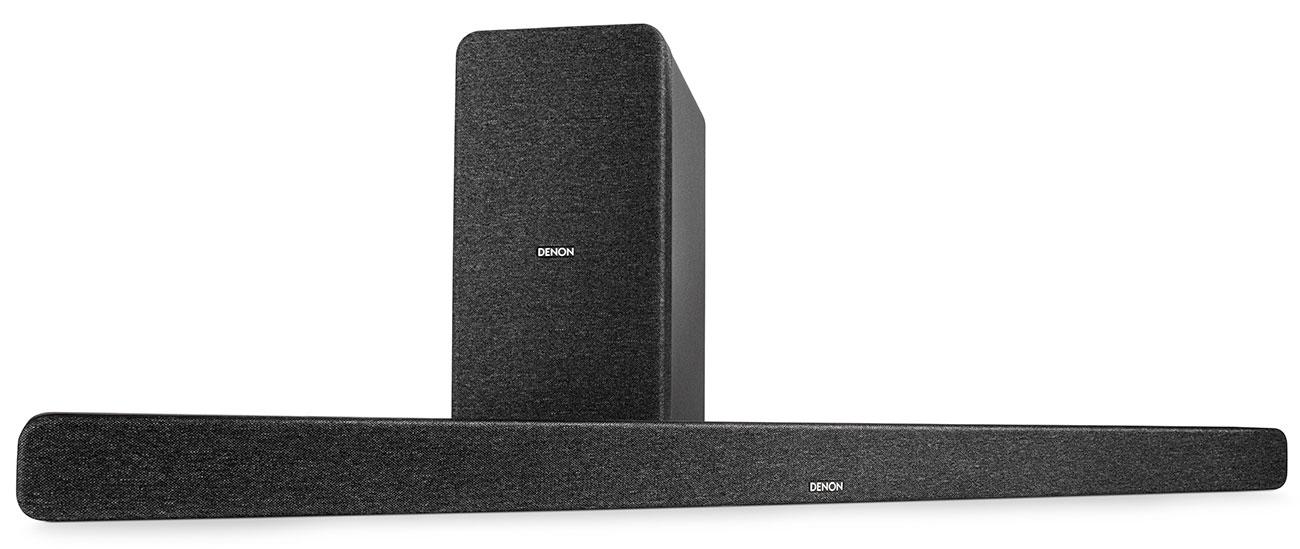
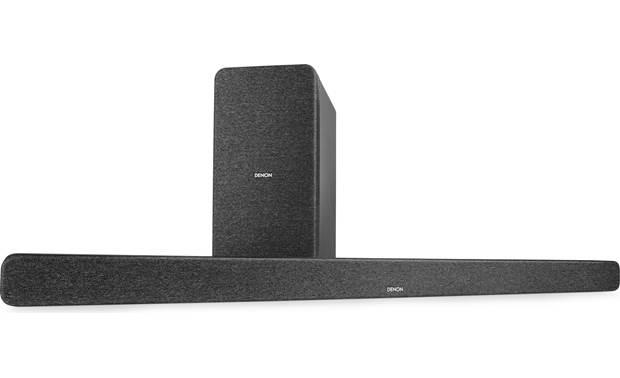
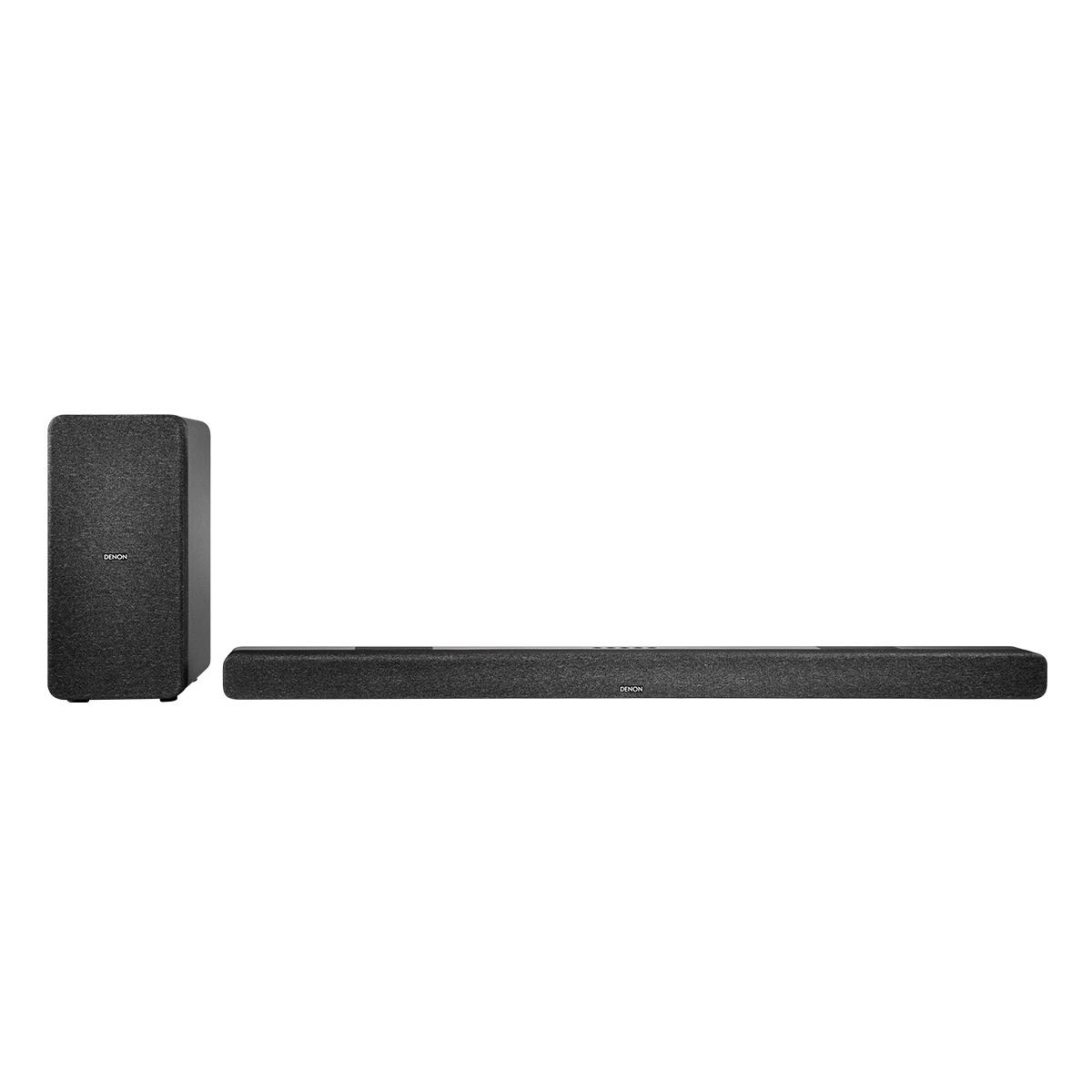
The Denon DHT-S517 uses a 3.1.2-channel system. Breaking this down: the "3" represents left, center, and right front channels, the "1" is for the subwoofer (low-frequency effects), and the "2" indicates two height channels that fire sound upward toward your ceiling. This creates what's called a Dolby Atmos soundfield—a three-dimensional audio environment where sounds can appear to come from above, behind, and all around you.
Inside the Denon's sleek cabinet, seven individual drivers work together: two large racetrack-shaped midrange drivers handle most of the frequency range, two tweeters (small speakers optimized for high frequencies) ensure crisp details, one dedicated center channel driver focuses solely on dialogue, and two upward-firing speakers create those overhead effects. This is a genuinely sophisticated setup that would have required multiple separate speakers just a decade ago.
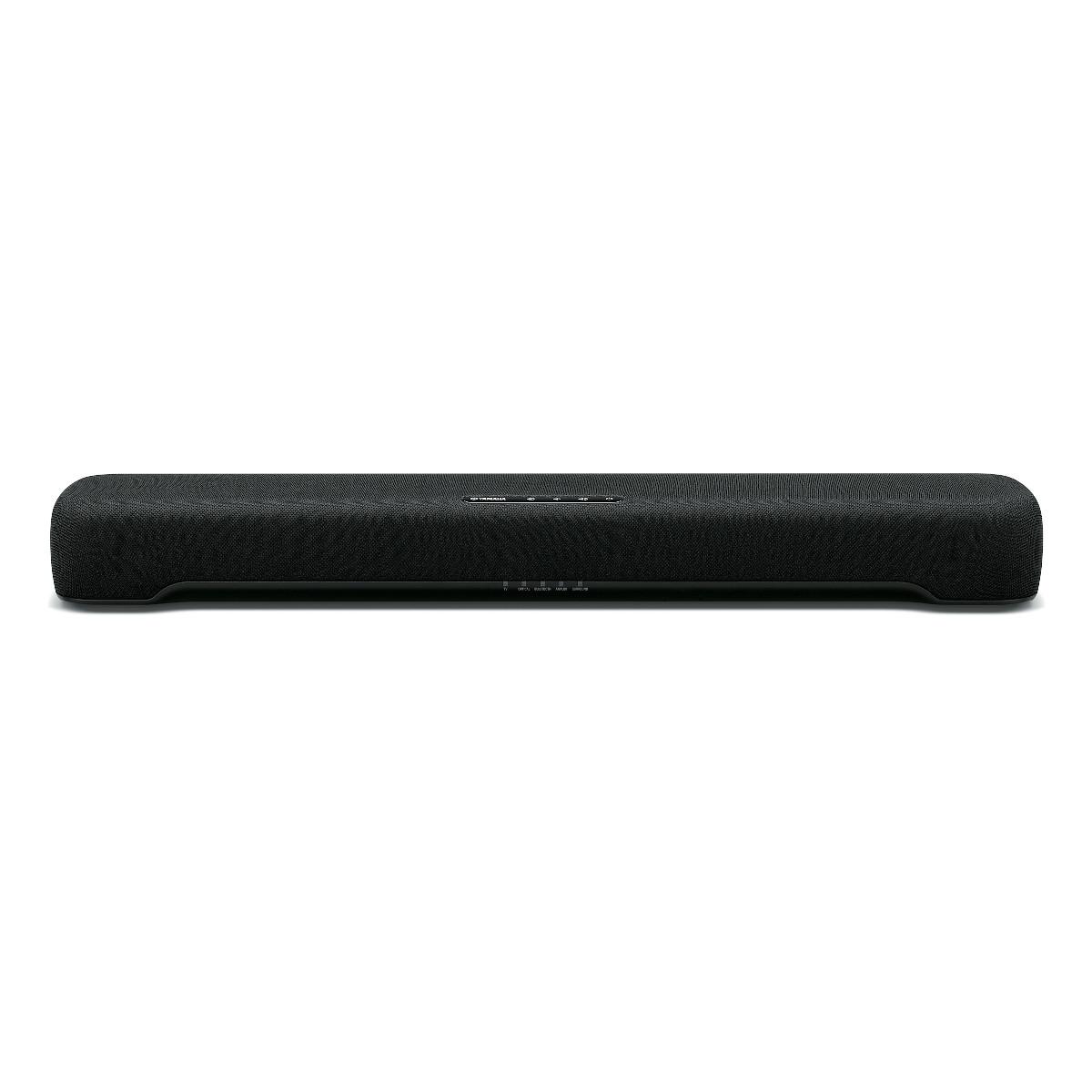
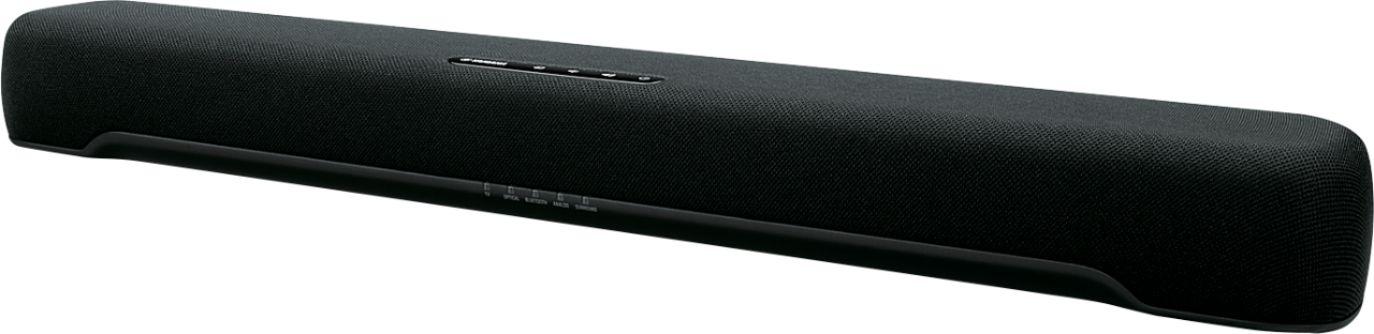
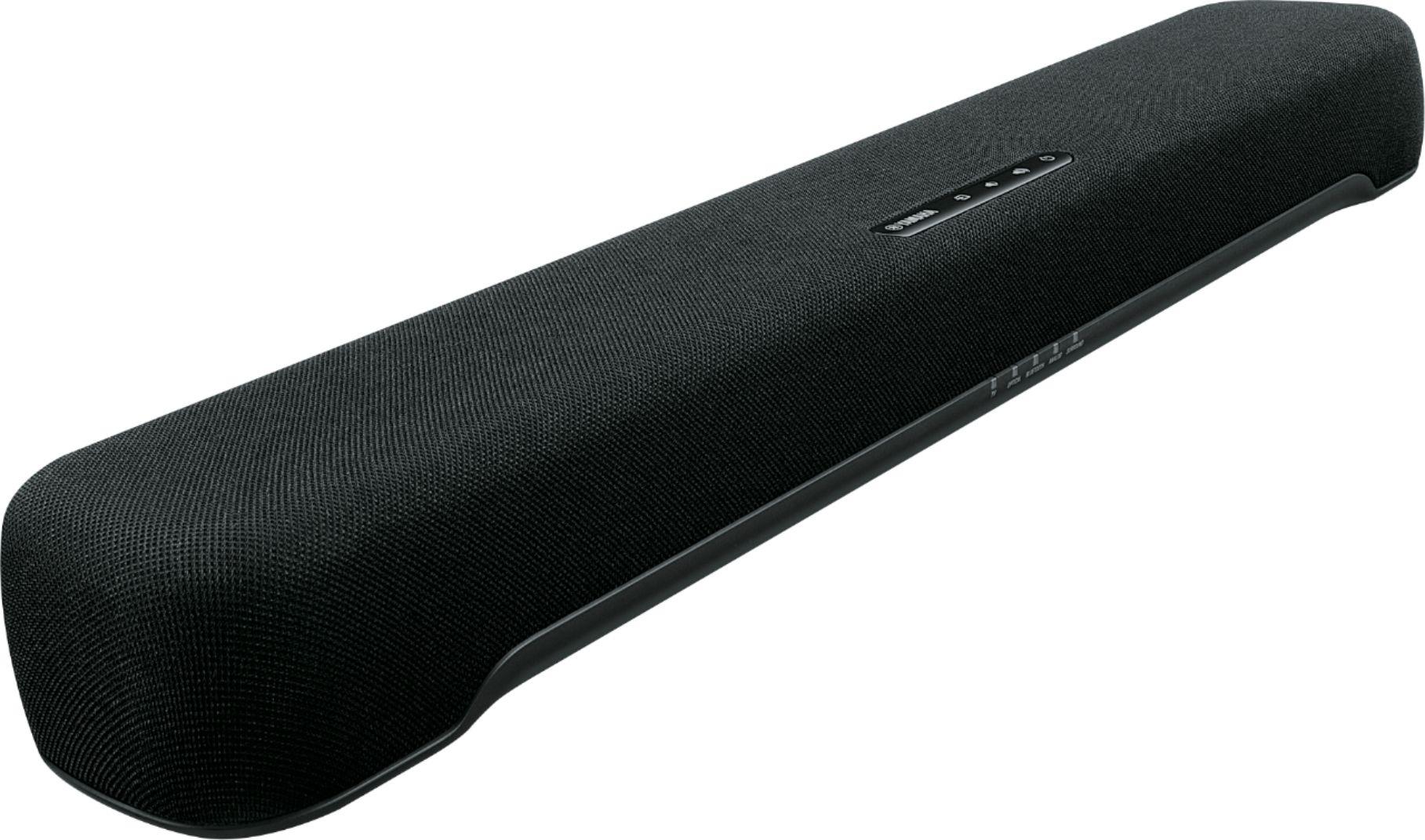
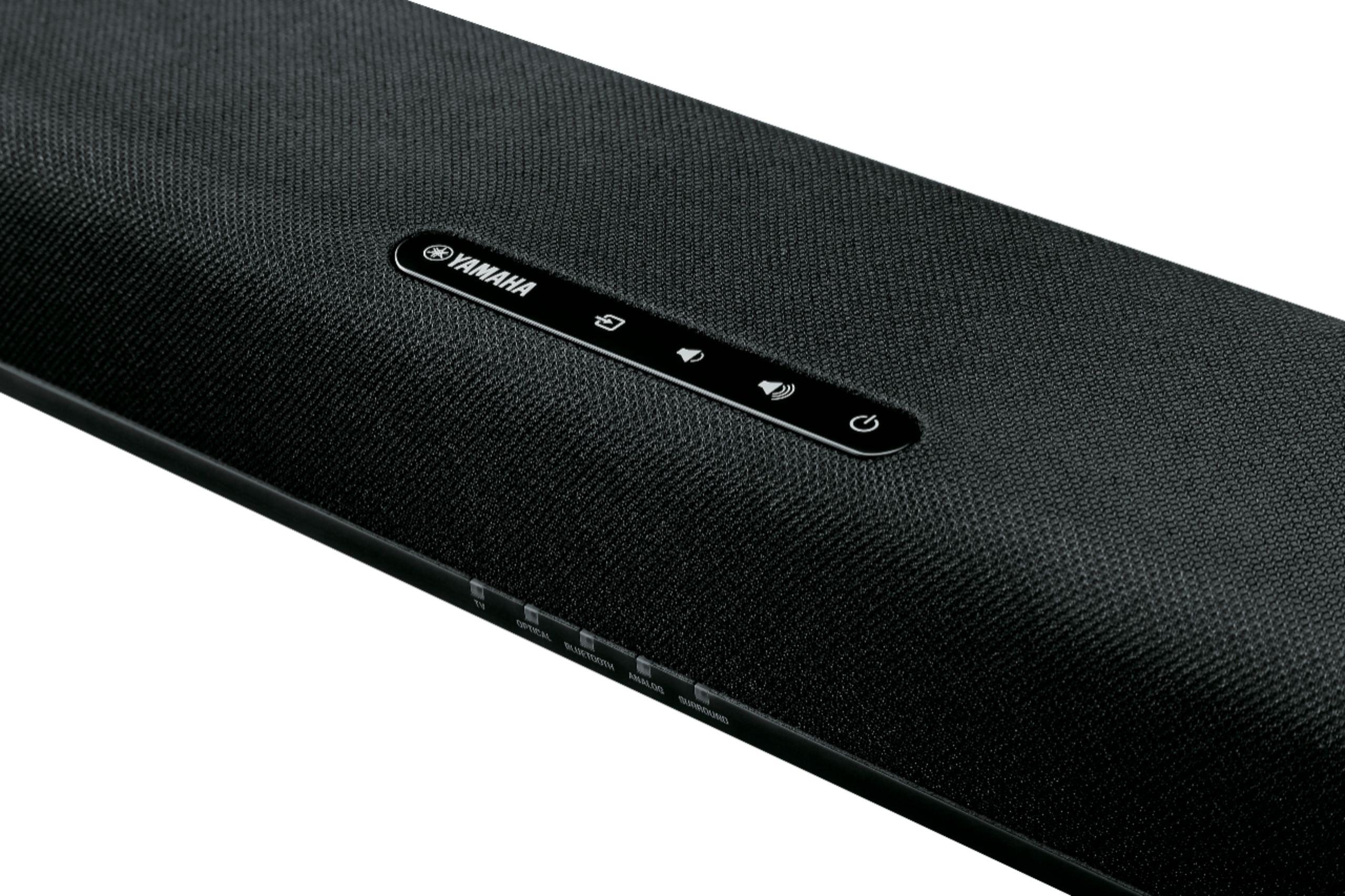
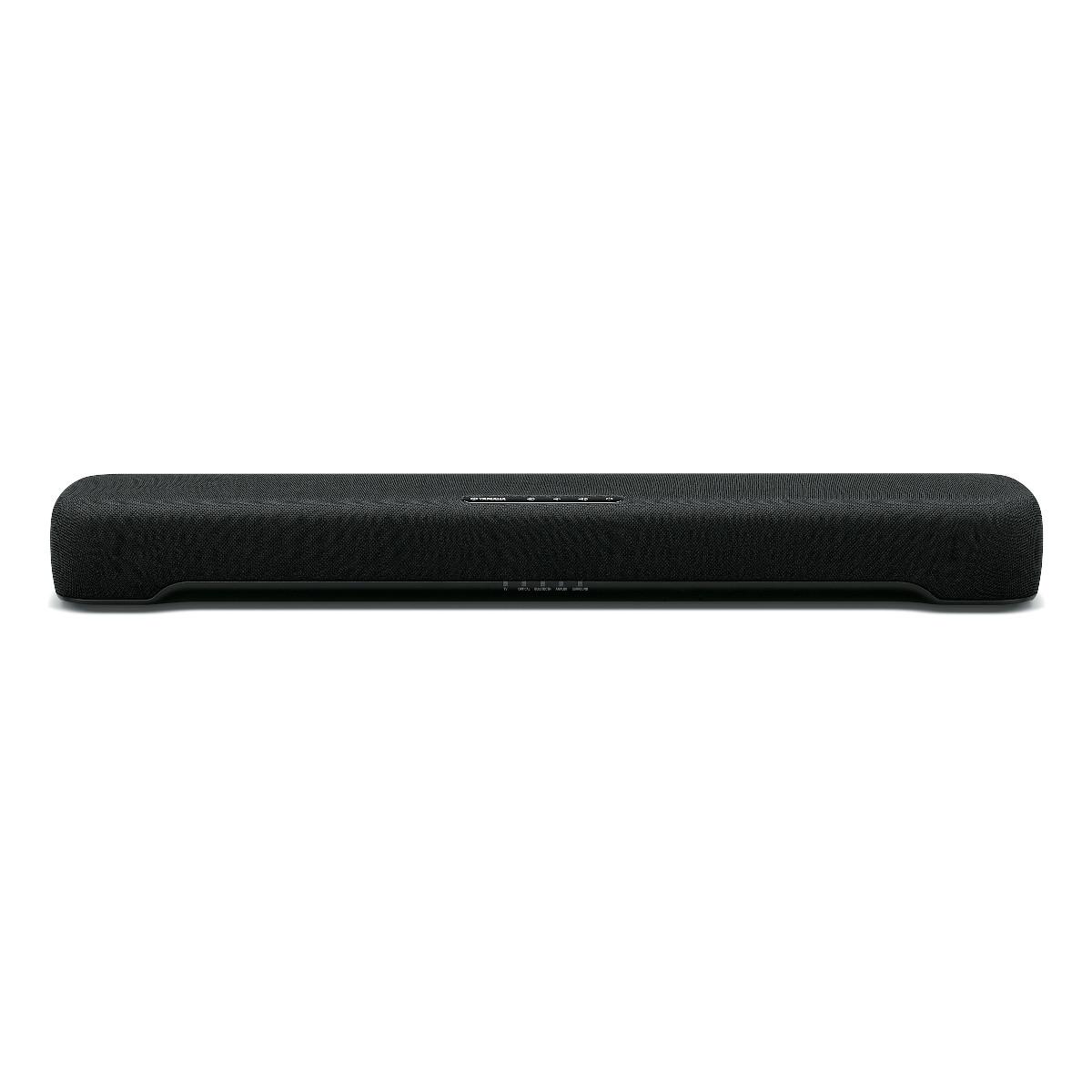
The Yamaha takes a completely different approach with its 2.1-channel configuration. This means left and right stereo channels plus a subwoofer—the same basic setup your grandmother's stereo system used, but optimized for modern content. Rather than physical surround effects, the Yamaha uses virtual surround processing, which is essentially clever digital manipulation that tries to trick your brain into hearing a wider soundstage than two speakers can naturally create.
Inside the compact Yamaha, you'll find a much simpler driver arrangement: standard left and right speakers plus a small built-in subwoofer enhanced by passive radiators. These passive radiators are essentially speakers without magnets that vibrate in response to the active subwoofer, helping extend bass response without requiring additional power or space.
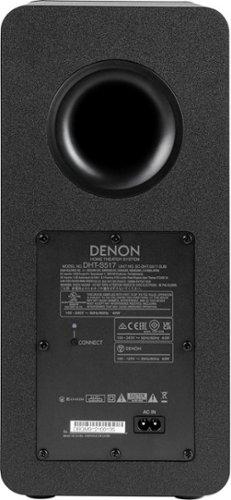
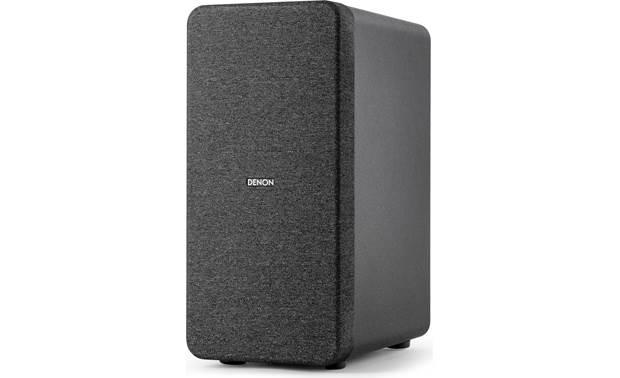
The subwoofer comparison reveals another philosophical divide between these products. The Denon DHT-S517's wireless subwoofer represents the traditional approach to bass reproduction. This separate unit houses a 5.25-inch driver powered by its own 100-watt amplifier, and because it's wireless, you can place it anywhere in your room for optimal bass response.
In my experience testing various soundbar setups, subwoofer placement makes an enormous difference. Corner placement typically provides the most bass output (sometimes too much), while positioning along a wall offers good balance. The Denon's wireless design means you're not limited by cable length, and you can experiment with different locations to find what works best in your space.
However, wireless subwoofers aren't perfect. They need their own power outlet, they take up floor space, and occasionally you might experience connection dropouts (though this is rare with modern systems). Some people also find the separate unit aesthetically challenging, especially in smaller rooms where it can dominate the space.
The Yamaha's built-in subwoofer eliminates these concerns entirely. Everything lives in one compact unit that sits under your TV without requiring additional floor space or power outlets. The 3-inch subwoofer might sound small compared to the Denon's 5.25-inch driver, but Yamaha compensates with those passive radiators I mentioned earlier.
Passive radiators work by using the air pressure created by the active subwoofer to move additional speaker cones, effectively increasing the bass output without requiring more amplifier power. It's an elegant engineering solution that maximizes bass performance within strict size constraints.
The trade-off is extension and impact. The Yamaha can produce punchy, musical bass that works well for most TV content and music, but it struggles with the deep, room-shaking effects that make action movies thrilling. Physics ultimately wins here—you can't generate truly deep bass from a small enclosure, no matter how clever the engineering.
Poor dialogue clarity is the number one complaint about TV audio, and both soundbars address this problem differently. The Denon DHT-S517 uses a dedicated center channel driver—a speaker whose sole job is reproducing dialogue and other center-panned audio. This mirrors how movie theaters and high-end home theaters work, ensuring that voices remain clear and prominent even when surrounded by music and sound effects.
The Denon's Dialogue Enhancer takes this further with three adjustable levels that boost voice frequencies while leaving other sounds relatively untouched. During loud action sequences, this feature can be the difference between understanding what characters are saying and missing crucial plot points. I've found the medium setting works well for most content, while the high setting can sound a bit artificial but proves invaluable for movies with particularly dense soundtracks.
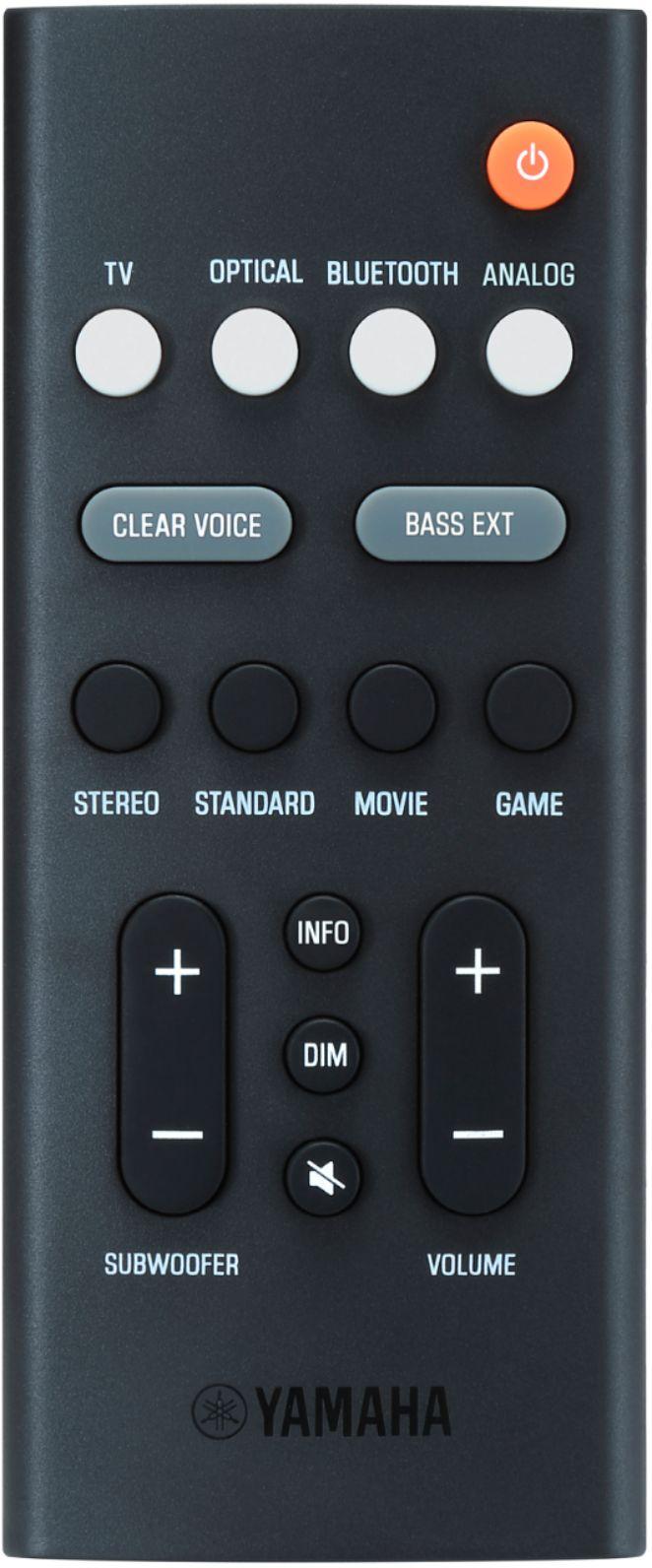
The Yamaha approaches dialogue clarity through Clear Voice technology, which emphasizes midrange frequencies where human voices naturally sit. Rather than using a separate driver, this system processes the entire audio signal to make voices more prominent. It's less precise than the Denon's approach but more elegant in its simplicity.
Yamaha's natural midrange reproduction also helps here. The company has decades of experience tuning speakers for musical accuracy, and this expertise translates to realistic voice reproduction. Dialogue through the SR-C20A sounds natural and unstrained, though it can get overwhelmed during particularly busy audio passages.
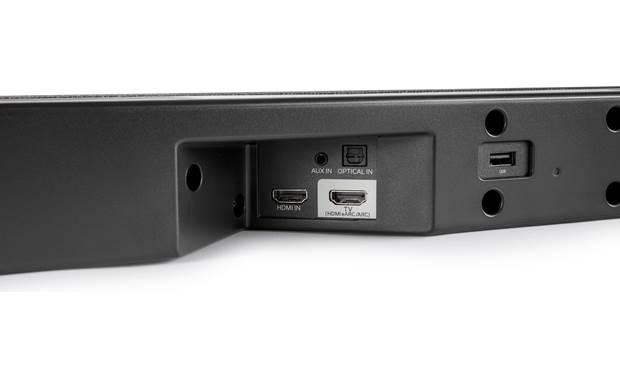
The Denon DHT-S517 offers comprehensive connectivity that reflects its positioning as a serious home theater component. HDMI eARC (enhanced Audio Return Channel) is the preferred connection method, allowing the soundbar to receive high-quality audio from your TV while also enabling TV remote control of volume. The system also includes HDMI passthrough, meaning you can connect devices directly to the soundbar and have video passed along to your TV.
Additional inputs include optical digital (for older TVs), analog 3.5mm (for devices like older game consoles), and USB-A (for playing music files directly). Bluetooth 5.0 provides wireless streaming from phones and tablets, with support for higher-quality AAC codec in addition to the standard SBC.
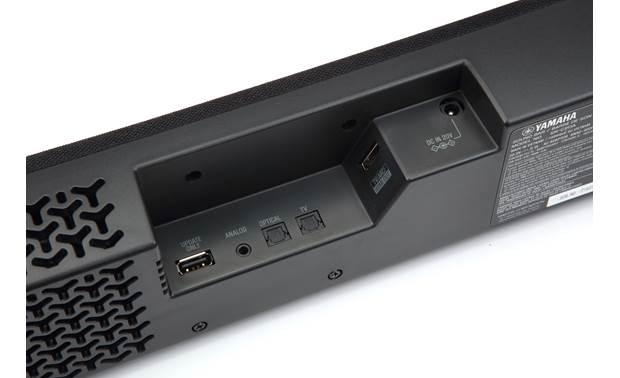
The Yamaha keeps things simpler with HDMI ARC (the older, more limited version), optical digital input, and Bluetooth streaming. This covers the basics for most users, but the lack of additional inputs or passthrough capability means less flexibility for complex setups.
Both soundbars include smartphone apps for setup and control, though I've found these vary widely in usefulness. The Denon app provides access to all the sound processing options and can be handy for fine-tuning, while the Yamaha app mainly duplicates the physical remote's functions.
Understanding how these soundbars perform in different room sizes is crucial for making the right choice. The Denon DHT-S517 outputs 150 watts total power and can comfortably fill rooms up to 300 square feet without distortion. The separate subwoofer particularly helps here, as bass reproduction requires significantly more power than midrange and treble frequencies.
The Dolby Atmos height effects work best in rooms with 8-10 foot ceilings. Too low, and the reflected sound doesn't have enough time to develop properly. Too high, and the effects become diffuse and hard to localize. I've tested Atmos soundbars in various rooms, and ceiling height makes a dramatic difference in the effectiveness of overhead effects.
The Yamaha SR-C20A, with its 100-watt total output, works best in spaces under 150 square feet. Push it beyond about 80% volume in larger rooms, and you'll notice compression and loss of detail as the small amplifiers and drivers reach their limits. However, within its intended scope, the Yamaha performs admirably.
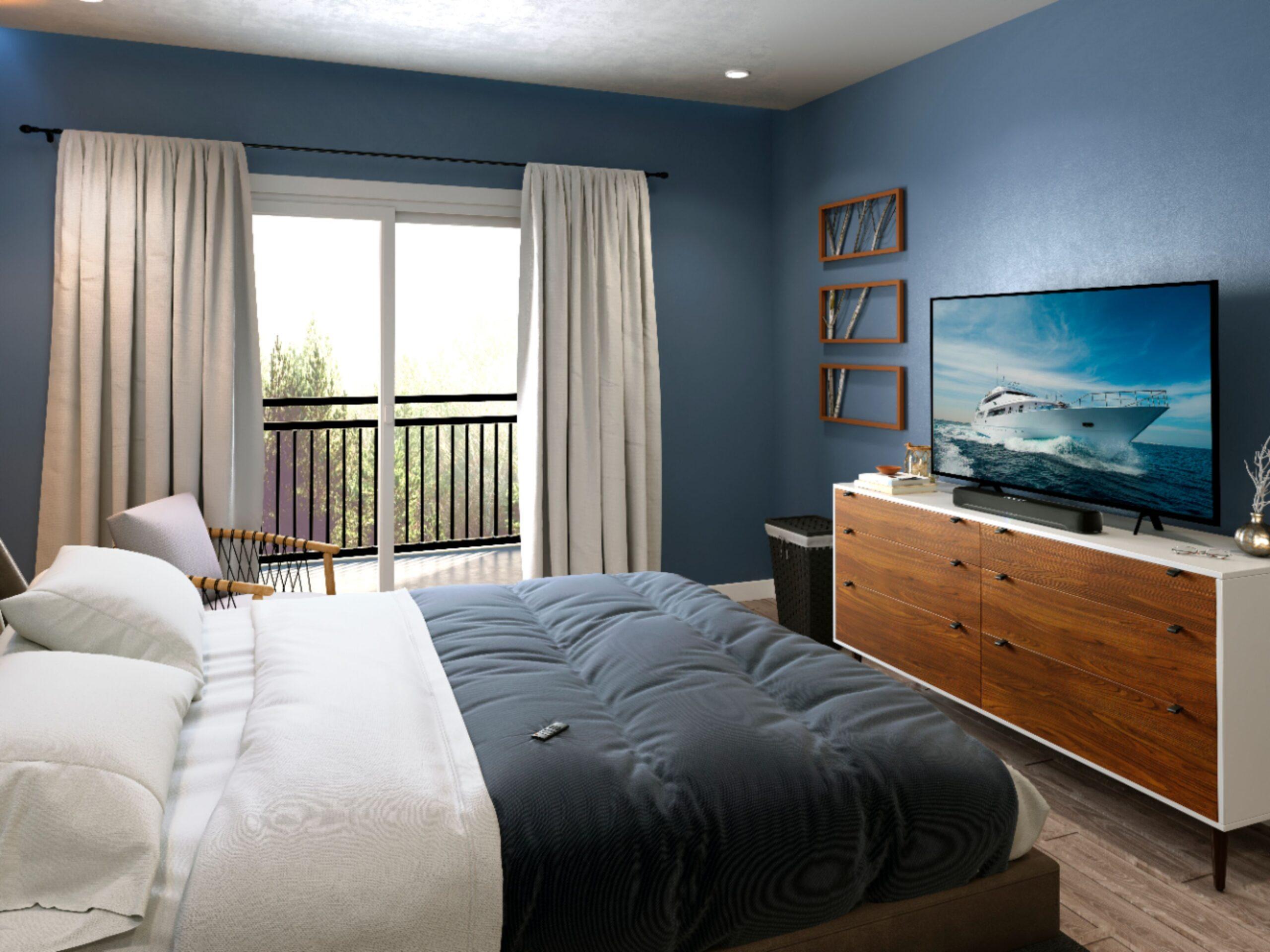
For apartment dwellers or bedroom setups, the Yamaha's compact size and integrated design offer significant advantages. There's no subwoofer to find space for, no additional power outlet required, and the understated appearance won't dominate smaller rooms.
For dedicated home theater use, the Denon DHT-S517 clearly takes the lead. The Dolby Atmos processing creates convincing overhead effects when the source material supports it. Movies like "Top Gun: Maverick" or "Dune" become genuinely immersive experiences, with jet engines screaming overhead and environmental effects that seem to surround you.
Gaming represents another area where the Denon excels. Modern games increasingly support Dolby Atmos, and the positional audio can provide competitive advantages in multiplayer games while making single-player adventures more engaging. The wireless subwoofer adds impact to explosions and environmental effects that flat TV speakers simply cannot reproduce.
The Yamaha's approach works better for casual entertainment consumption. TV shows, news, and music all sound natural and well-balanced through the SR-C20A. The Game mode reduces audio processing delays, making it suitable for gaming, though without the immersive effects that more expensive soundbars provide.
At current prices, these products represent entirely different value propositions. The Yamaha SR-C20A at $18 is arguably one of the best audio bargains available today. You're getting legitimate improvement over TV speakers, decent build quality, and Yamaha's reputation for reliable electronics at a price lower than most meals.
However, it's important to understand what you're not getting. The Yamaha won't transform your living room into a movie theater, won't provide future compatibility with new audio formats, and won't impress audiophile friends. It's a functional solution to TV audio problems, nothing more or less.
The Denon DHT-S517 at $302 asks you to invest in genuine home theater technology. You're paying for Dolby Atmos processing, quality drivers, wireless subwoofer convenience, and the engineering required to make it all work together seamlessly. Whether this represents good value depends entirely on how much you prioritize audio quality and immersive entertainment.
Choose the Denon DHT-S517 if you're serious about improving your home entertainment experience. This soundbar makes sense for movie enthusiasts, gamers, and anyone with a medium to large living room who wants to hear what they've been missing. The investment pays off if you regularly consume content that benefits from surround sound and have the room setup to take advantage of Atmos effects.
Choose the Yamaha SR-C20A if you want immediate improvement over TV speakers without complexity or significant expense. This soundbar excels in small spaces, serves as an excellent secondary system for bedrooms or kitchens, and provides a low-risk way to test whether soundbars meet your needs before making larger investments.
The decision ultimately comes down to matching the product to your specific situation. A $300 soundbar in a 100-square-foot apartment is overkill, while an $18 soundbar in a dedicated media room will leave you wondering why you bothered upgrading at all.
Both products serve their intended audiences well, but they're solving different problems for different users. Understanding which problem you're trying to solve—and how much you're willing to invest in the solution—will lead you to the right choice.
| Denon DHT-S517 Soundbar with Wireless Subwoofer ($302) | Yamaha SR-C20A Compact Sound Bar with Built-In Subwoofer ($18) |
|---|---|
| Channel Configuration - Determines surround sound capability and immersion level | |
| 3.1.2 channels with Dolby Atmos (overhead effects, dedicated center for dialogue) | 2.1 channels with virtual surround (stereo plus subwoofer, simulated surround) |
| Total Power Output - Affects maximum volume and room filling capability | |
| 150W (can fill rooms up to 300 sq ft without distortion) | 100W (best for rooms under 150 sq ft, compresses at high volumes) |
| Subwoofer Type - Impacts bass quality, placement flexibility, and setup complexity | |
| Separate wireless 5.25" subwoofer with 100W amp (flexible placement, deeper bass) | Built-in 3" subwoofer with dual passive radiators (space-saving, limited extension) |
| Connectivity Options - Determines compatibility with different devices and setups | |
| HDMI eARC + passthrough, optical, USB-A, analog, Bluetooth 5.0 | HDMI ARC, optical, analog, Bluetooth 5.0 (no passthrough or USB) |
| Dimensions and Weight - Important for TV stand compatibility and wall mounting | |
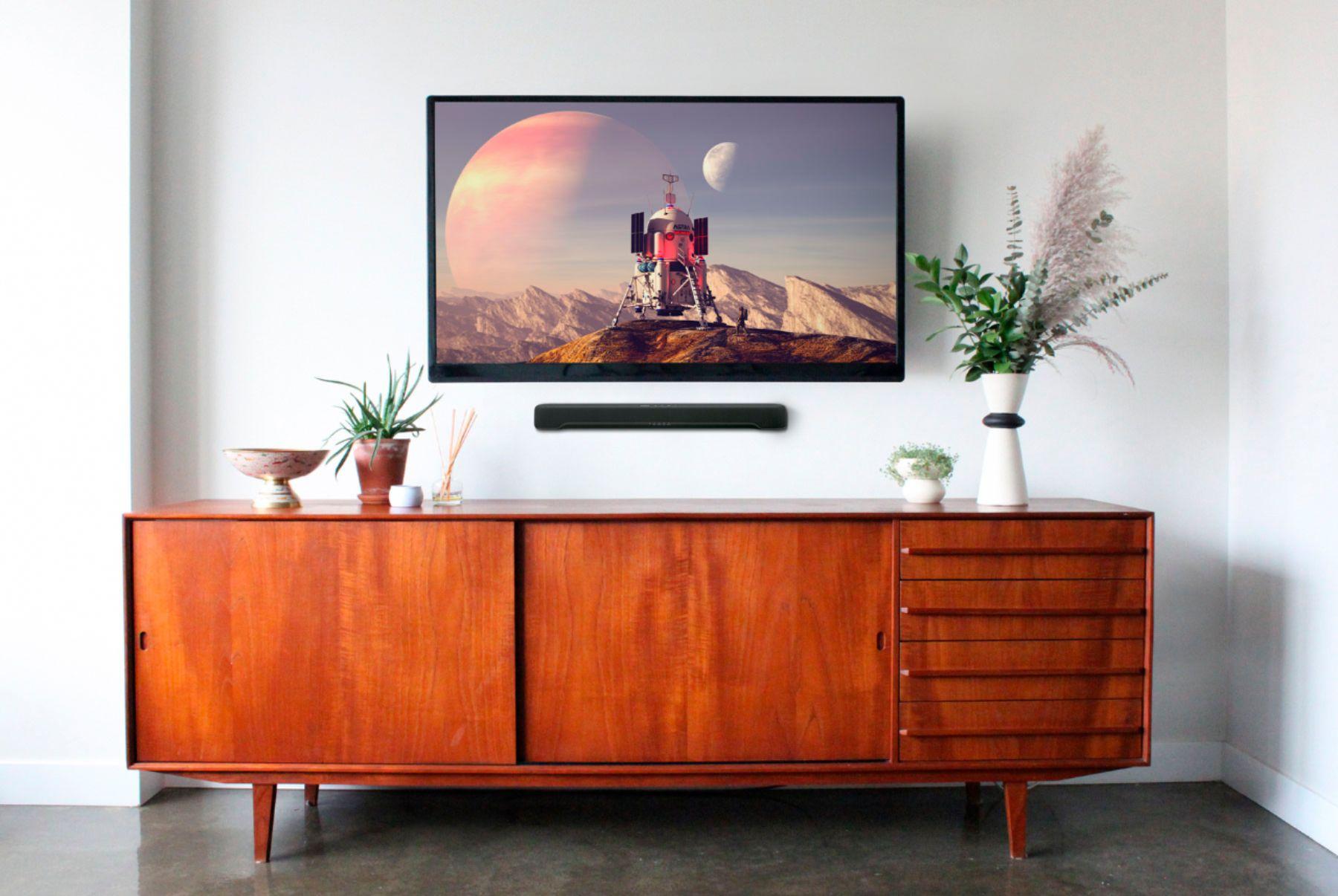
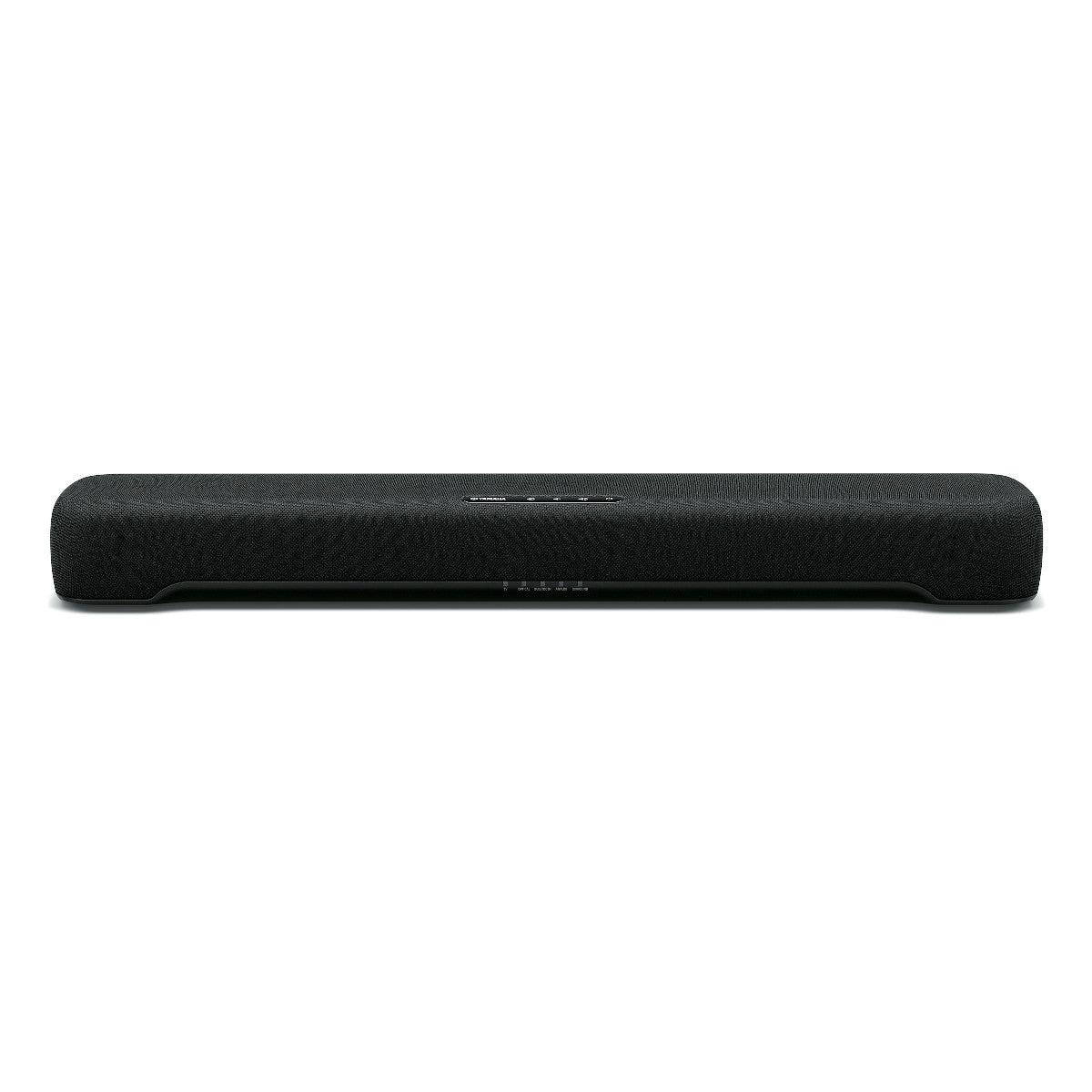
| 41.3" W × 2.3" H × 3.8" D, 5.5 lbs (plus separate subwoofer) | 23.6" W × 2.5" H × 3.7" D, 3.9 lbs (all-in-one design) |
| Sound Processing Features - Enhanced dialogue and customization options | |
| Dialogue Enhancer (3 levels), 4 sound modes, Pure Mode for unprocessed audio | Clear Voice technology, 4 sound modes including Game mode, Bass Extension |
| Ideal Room Size - Maximum effective coverage area | |
| Medium to large rooms (200-300 sq ft) with 8-10 ft ceilings for optimal Atmos | Small rooms, bedrooms, apartments (under 150 sq ft) |
| Best Use Cases - Content types and user priorities this excels at | |
| Movies, gaming, home theater setups requiring immersive surround sound | TV shows, music, simple audio enhancement without complexity |
| Value Proposition - What you're paying for at each price point | |
| Premium home theater experience with future-proof Dolby Atmos technology | Exceptional budget upgrade over TV speakers with reliable Yamaha quality |
The Yamaha SR-C20A ($18) is ideal for small rooms under 150 square feet. Its compact 23.6-inch width and built-in subwoofer design eliminates the need for additional floor space, making it perfect for apartments, bedrooms, or tight spaces where the Denon DHT-S517's ($302) separate wireless subwoofer would be impractical.
Yes, the Denon DHT-S517 ($302) features true 3.1.2-channel Dolby Atmos with dedicated upward-firing speakers that bounce sound off your ceiling to create overhead effects. The Yamaha SR-C20A ($18) does not support Dolby Atmos and only offers virtual surround sound processing.
The Denon DHT-S517 delivers superior bass with its separate wireless 5.25-inch subwoofer powered by a 100-watt amplifier. The Yamaha SR-C20A has a built-in 3-inch subwoofer with passive radiators that provides decent bass for its size but cannot match the depth and impact of the Denon's dedicated subwoofer.
Both soundbars support TV remote control through HDMI connections. The Denon DHT-S517 ($302) uses HDMI eARC for full integration, while the Yamaha SR-C20A ($18) connects via standard HDMI ARC. Both allow you to adjust volume using your existing TV remote.
The Yamaha SR-C20A ($18) is significantly easier to set up as it's a single unit that connects to your TV with one cable. The Denon DHT-S517 ($302) requires positioning both the soundbar and wireless subwoofer, finding an additional power outlet for the subwoofer, and pairing the wireless connection.
The Denon DHT-S517 offers superior sound quality with dedicated drivers for different frequency ranges, true surround sound processing, and deeper bass extension. The Yamaha SR-C20A provides natural, well-balanced sound that significantly improves over TV speakers but lacks the immersive effects and dynamic range of the Denon.
The Denon DHT-S517 ($302) excels for home theater use with Dolby Atmos support, dedicated center channel for dialogue clarity, and powerful bass for action scenes. The Yamaha SR-C20A ($18) improves movie dialogue and adds basic bass but cannot create the immersive surround sound experience that enhances cinematic content.
Both soundbars handle music well, but differently. The Yamaha SR-C20A ($18) offers Yamaha's signature natural, musical sound reproduction that many prefer for stereo music. The Denon DHT-S517 ($302) includes a Pure Mode that bypasses sound processing for uncolored music playback, plus more powerful bass for genres that benefit from extended low frequencies.
Yes, both the Denon DHT-S517 and Yamaha SR-C20A feature Bluetooth 5.0 connectivity for wireless streaming from smartphones, tablets, and other devices. Both support high-quality AAC codec in addition to standard SBC for better wireless audio quality from compatible devices.
The Denon DHT-S517 ($302) is designed for medium to large rooms up to 300 square feet and works best with 8-10 foot ceilings for optimal Dolby Atmos effects. The Yamaha SR-C20A ($18) is ideal for smaller spaces under 150 square feet and performs well in any ceiling height due to its stereo-focused design.
At current prices, the Yamaha SR-C20A ($18) offers exceptional value as a basic TV audio upgrade, providing significant improvement over built-in TV speakers at an unbeatable price. The Denon DHT-S517 ($302) offers better value for serious home theater enthusiasts who want Dolby Atmos immersion and premium features that justify the higher investment.
Neither the Denon DHT-S517 nor the Yamaha SR-C20A supports adding additional wireless rear speakers for expanded surround sound. Both are complete, self-contained systems. If you want expandability, you'd need to consider higher-end soundbar systems that specifically offer wireless rear speaker add-ons.
We've done our best to create useful and informative comparisons to help you decide what product to buy. Our research uses advanced automated methods to create this comparison and perfection is not possible - please contact us for corrections or questions. These are the sites we've researched in the creation of this article: techradar.com - consumerreports.org - crutchfield.com - bestbuy.com - bestbuy.com - pocket-lint.com - abt.com - manuals.denon.com - connectedmag.com.au - bestbuy.com - forum.flirc.tv - bhphotovideo.com - t3.com - usa.yamaha.com - radiotimes.com - shop.usa.yamaha.com - whathifi.com - hifiheaven.net - usa.yamaha.com - sweetwater.com - hub.yamaha.com - bestbuy.com

Privacy Policy
Terms and Conditions - Affiliate Policy
Home Security
© Copyright 2008-2026.
11816 Inwood Rd #1211, Dallas, TX 75244