

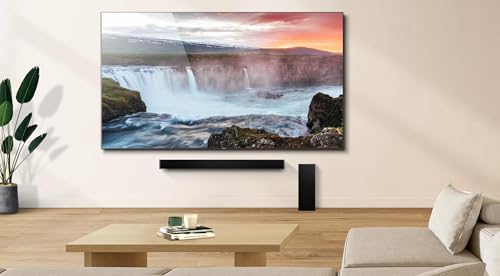

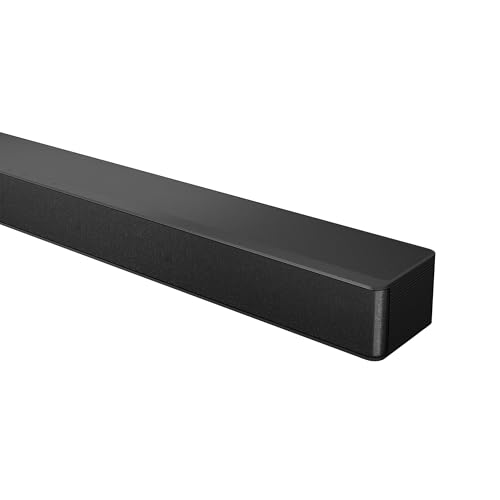
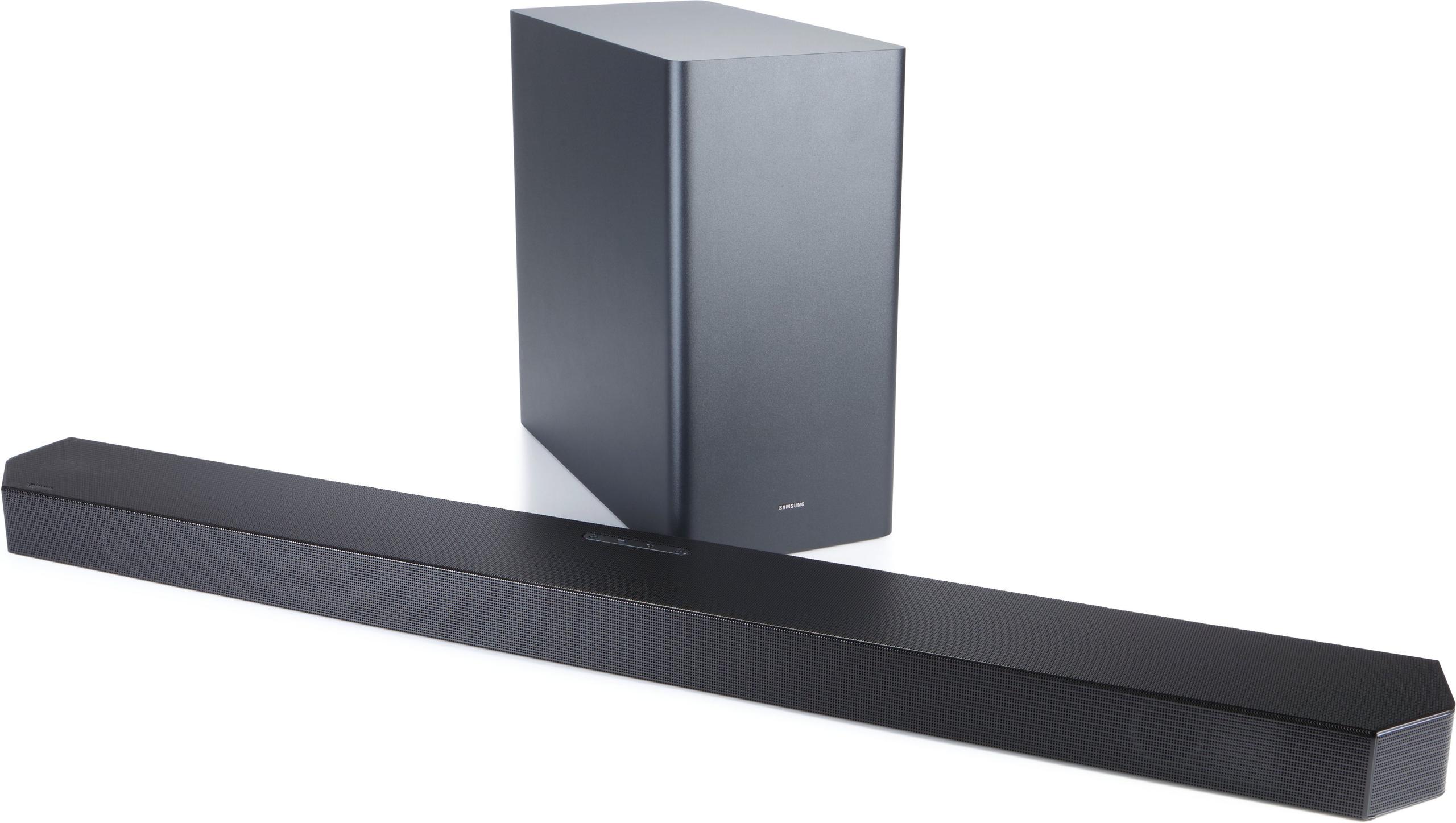
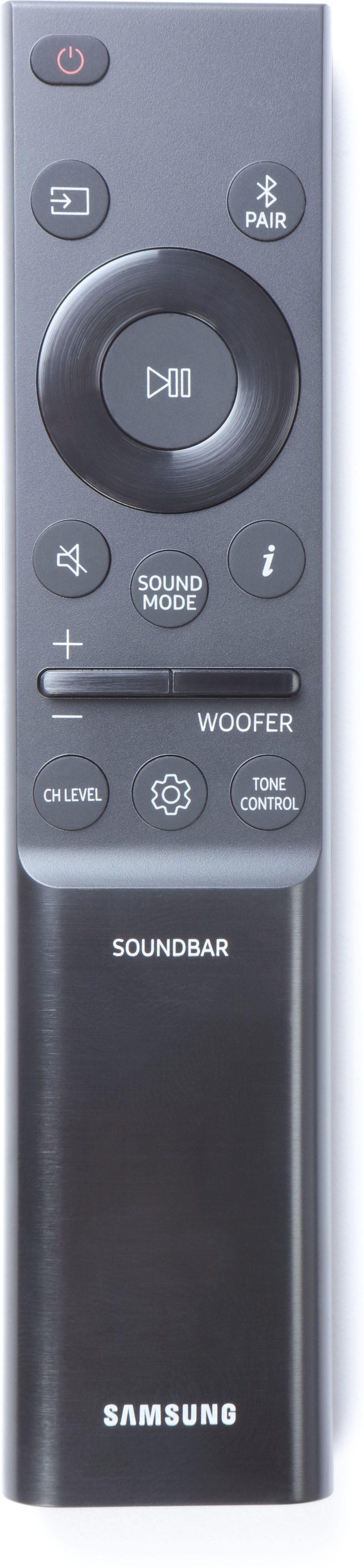




If you've ever tried watching a movie through your TV's built-in speakers and found yourself constantly adjusting the volume—turning it up for whispered dialogue and down for explosive action scenes—you understand why soundbars have become essential home theater components. Modern flat-screen TVs prioritize thin designs over audio quality, leaving viewers with speakers that sound like they're trapped in a tin can.
The soundbar market offers solutions ranging from basic audio upgrades to sophisticated surround sound systems that rival traditional home theater setups. Today, we're examining two products that represent different philosophies in this space: the budget-friendly Hisense HS2100 2.1 channel system and the mid-range Samsung HW-Q800D 5.1.2 channel powerhouse.
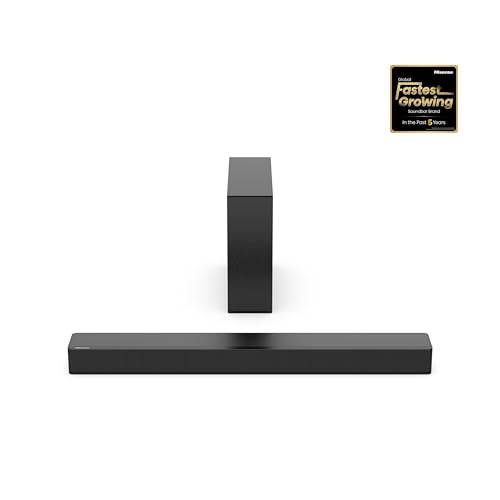
Before diving into specifics, it's worth understanding what those channel numbers actually mean. The Hisense HS2100 uses a 2.1 configuration—two main channels (left and right stereo) plus one subwoofer channel dedicated to bass frequencies below roughly 120Hz. This setup handles most TV content well but requires downmixing surround sound content into stereo.
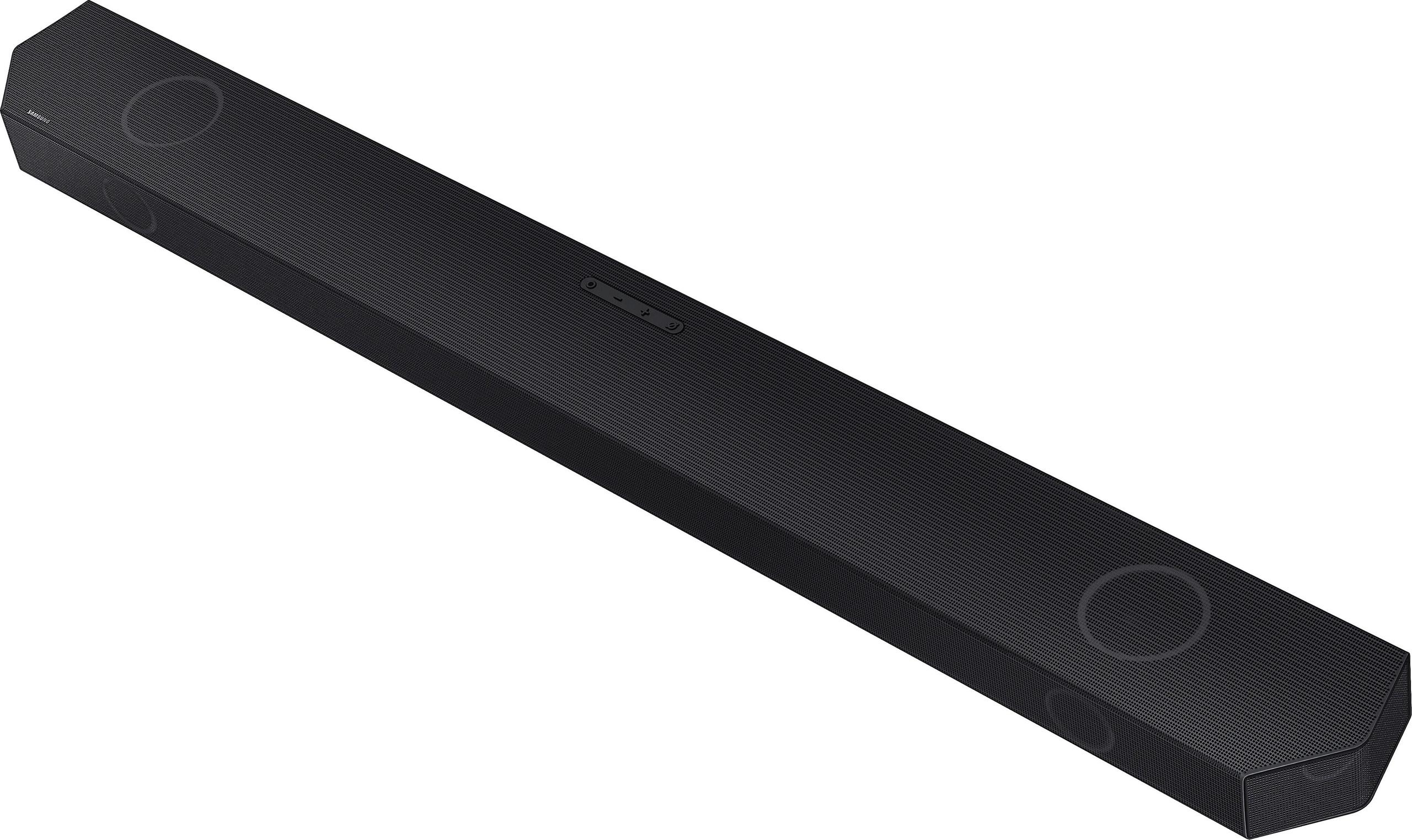
The Samsung HW-Q800D employs a more complex 5.1.2 architecture. The "5.1" represents five main channels (front left, center, front right, rear left, rear right) plus one subwoofer, while the ".2" indicates two height channels that fire sound upward to bounce off your ceiling, creating the impression of overhead effects. This configuration can preserve the original spatial information from movie soundtracks without compromise.
Both soundbars released in recent years represent current-generation thinking about home audio. The Hisense HS2100 emerged as part of Hisense's push into affordable home theater accessories, while the Samsung HW-Q800D launched in 2024 as Samsung's latest refinement of their mid-range soundbar technology, building on years of development in spatial audio processing and room optimization.
Research into professional reviews and user feedback reveals distinct performance characteristics for each system. The Hisense HS2100 delivers what experts consistently describe as a "warm" sound signature—meaning it emphasizes mid-bass frequencies that make vocals sound rich and music feel full-bodied. This tuning works particularly well for TV dialogue, which occupies the crucial midrange frequencies where human speech lives.
However, the Hisense HS2100's frequency response shows limitations at both extremes. The treble (high frequencies above 8kHz) appears slightly rolled off in measurements, which can make dialogue sound less crisp and reduce the "air" and detail in music recordings. Meanwhile, bass extension stops around 45Hz according to Hisense's own specifications, meaning you won't feel the deep, room-shaking rumble that modern movie soundtracks can produce.
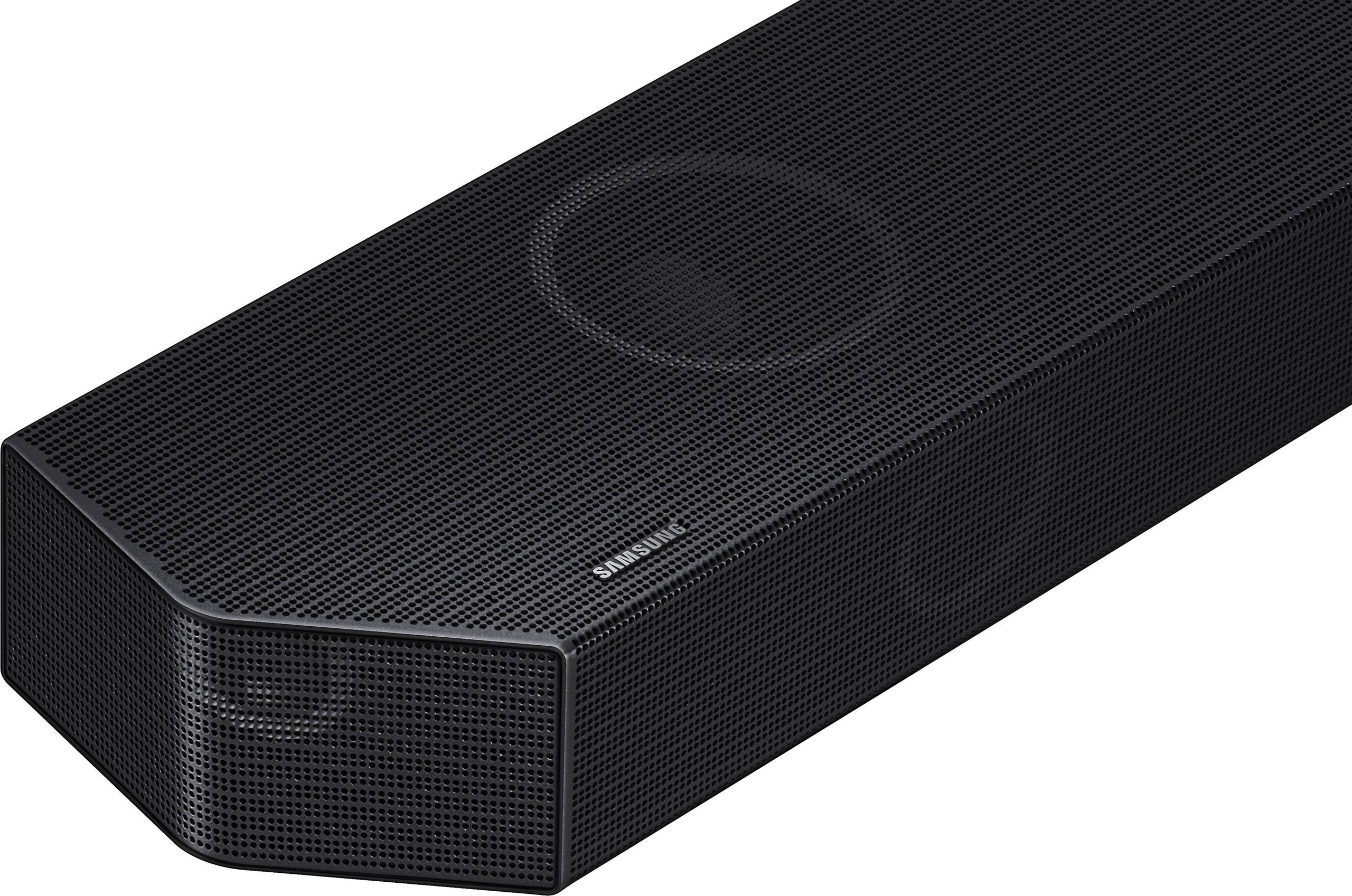
The Samsung HW-Q800D takes a markedly different approach. With 11 individual drivers spread across the main bar and subwoofer, it can reproduce different frequency ranges through speakers specifically designed for those tasks. Professional reviews consistently praise its ability to maintain clarity across the entire frequency spectrum, with a dedicated center channel that makes dialogue exceptionally clear even during complex action sequences.
What sets the Samsung HW-Q800D apart is its dynamic range handling—the difference between the quietest and loudest sounds it can reproduce without distortion. While the Hisense HS2100 shows noticeable compression artifacts when pushed to high volumes, the Samsung maintains its composure, preserving the impact of explosive movie moments while keeping quiet dialogue intelligible.
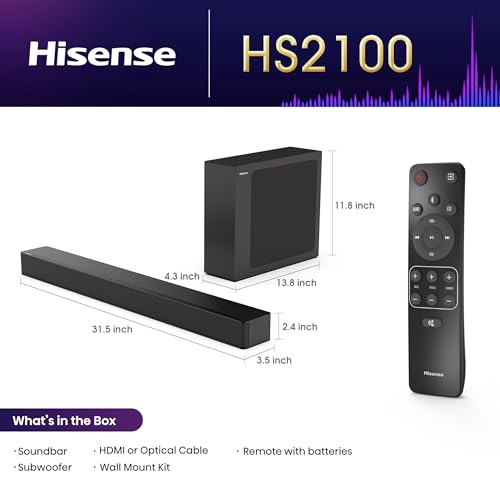
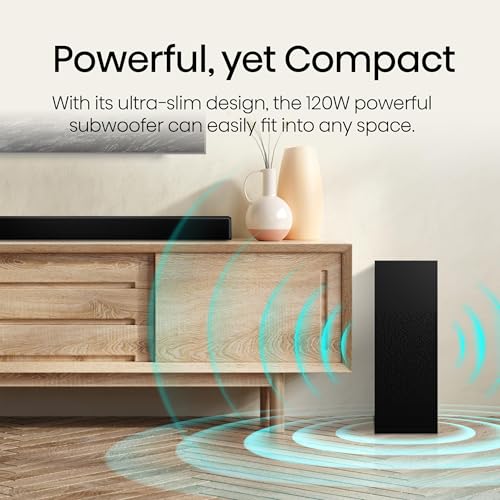
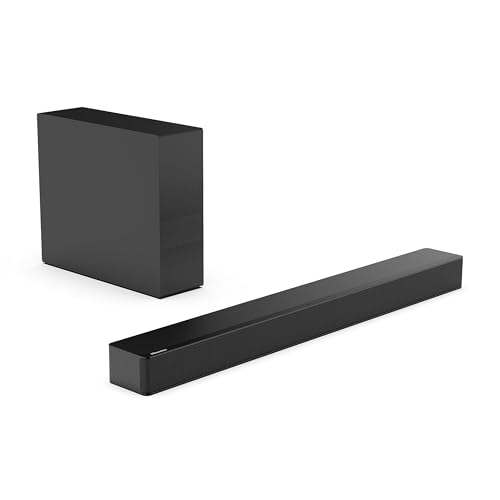
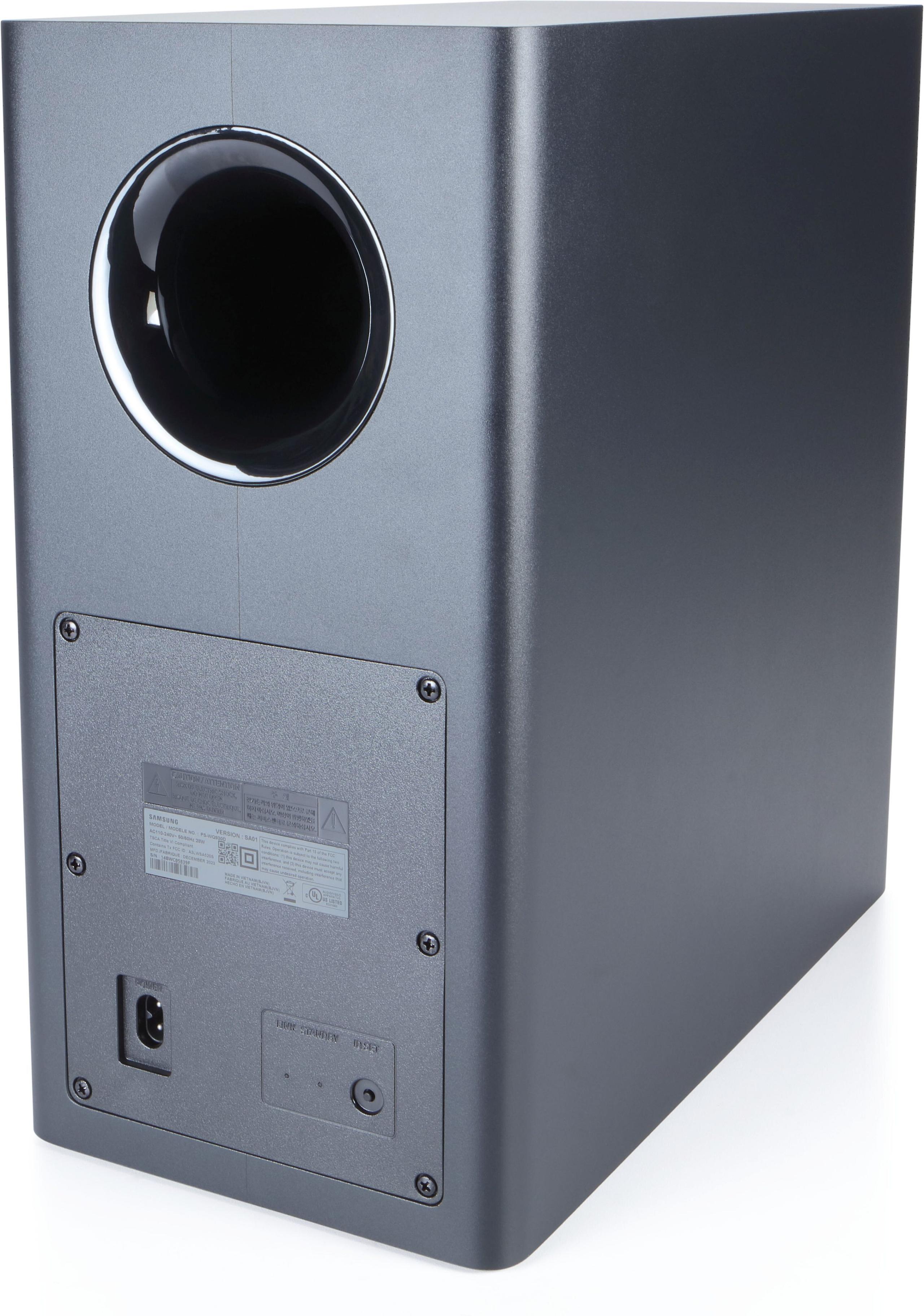
The subwoofer comparison reveals why driver size and enclosure design matter. The Hisense HS2100's 5.25-inch wireless subwoofer provides adequate bass for casual listening, but its compact size limits both extension (how deep it goes) and precision (how accurately it reproduces different bass notes). User reviews frequently mention that while it adds welcome weight to music and movies, the bass can sound "boomy" rather than tight and controlled.
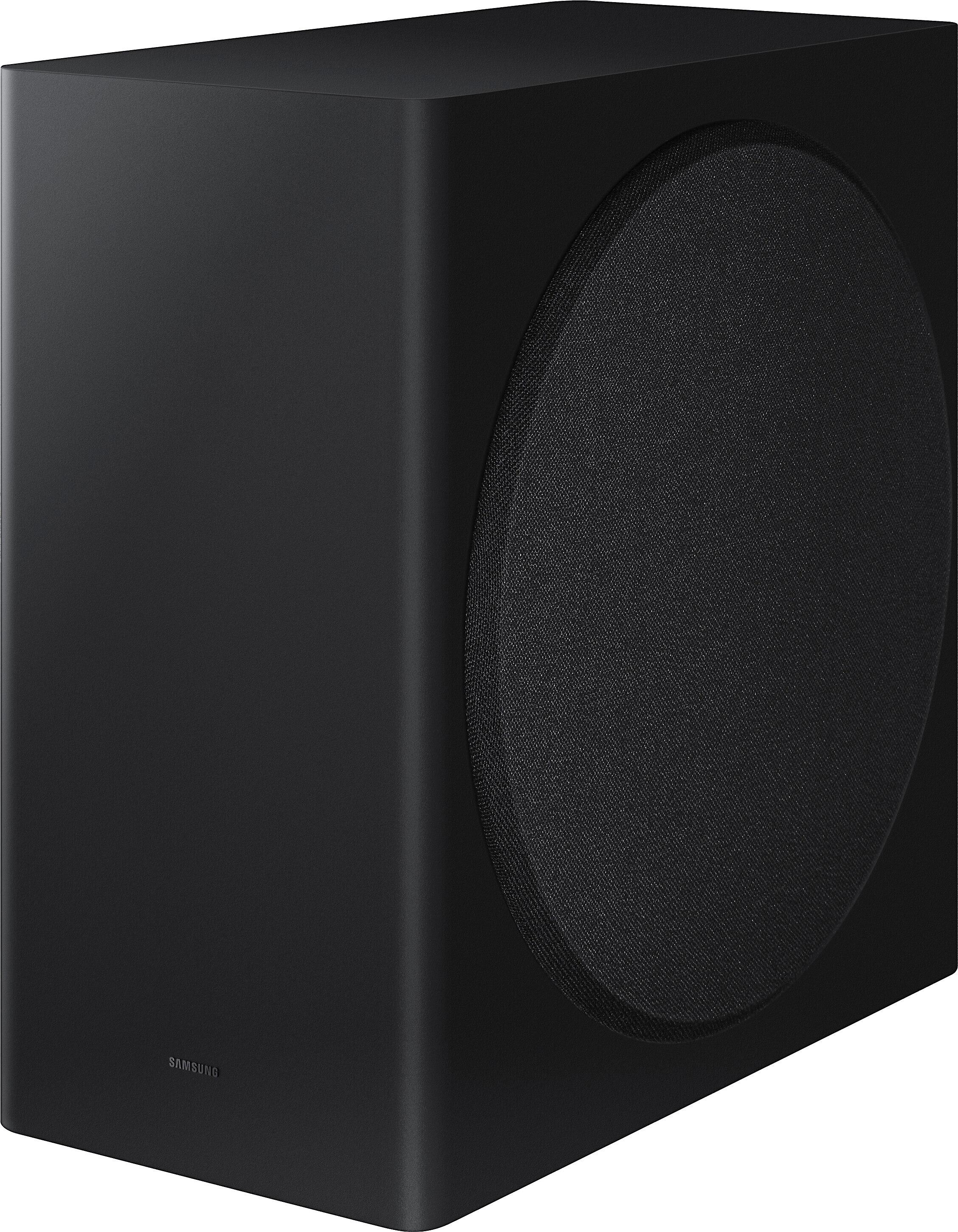
The Samsung HW-Q800D's 8-inch side-firing subwoofer represents a significant upgrade in both specifications and real-world performance. The larger driver moves more air, creating not just louder bass but bass that extends deeper into the sub-40Hz range where movie sound effects truly rumble. The side-firing design helps distribute bass energy more evenly throughout the room, reducing the "one-note bass" syndrome that plagues many budget systems.
This difference becomes particularly apparent with content like action movies or bass-heavy music. Where the Hisense HS2100 might make explosions sound like distant thunder, the Samsung HW-Q800D can reproduce the chest-thumping impact that filmmakers intended.
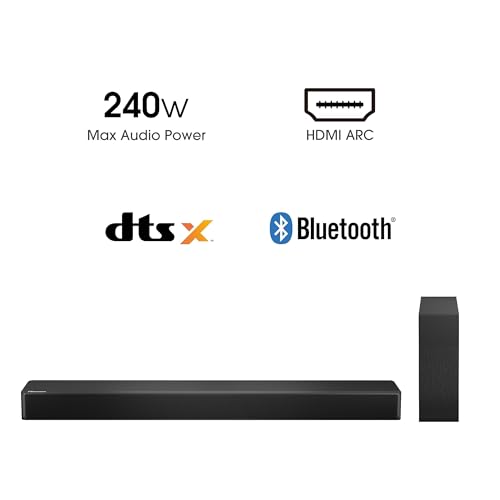
Here's where the fundamental architectural differences between these systems become most apparent. The Hisense HS2100, despite including DTS Virtual:X processing (a technology that attempts to create surround effects from stereo speakers), remains limited by its basic 2.1 configuration. Virtual surround processing can widen the soundstage slightly and create some sense of spatial effects, but it cannot replicate the precise positioning and movement of sounds that true surround systems achieve.
The Samsung HW-Q800D's 5.1.2 setup changes the game entirely. With discrete surround channels and upfiring height speakers, it can reproduce object-based audio formats like Dolby Atmos—a technology that treats individual sounds as objects that can be precisely positioned anywhere in three-dimensional space around the listener.
This capability becomes transformative for content mastered in these advanced formats. A helicopter flying overhead doesn't just get louder or quieter; it actually moves through the acoustic space above your head. Rain sounds like it's falling from the sky rather than just playing from speakers in front of you. The effect, when properly implemented, creates genuine immersion that draws you deeper into movies and games.
Poor dialogue clarity remains the most common complaint about TV audio, and it's often the primary reason people invest in soundbars. Both systems address this issue but through different approaches.
The Hisense HS2100 includes a "News" mode that boosts midrange frequencies where most speech occurs. While this helps, the system's lack of a dedicated center channel means dialogue competes with music and sound effects for the same frequency space. During complex movie scenes with orchestral scores and dialogue simultaneously, voices can get lost in the mix.
The Samsung HW-Q800D's dedicated center channel changes this dynamic completely. In professional home theater systems, the center channel typically handles 60-70% of a movie's dialogue, and having a speaker specifically optimized for this task makes an enormous difference. The Samsung goes further with its Active Voice Amplifier technology, which uses AI processing to automatically detect and emphasize speech in real-time, adapting to each scene's unique audio mix.
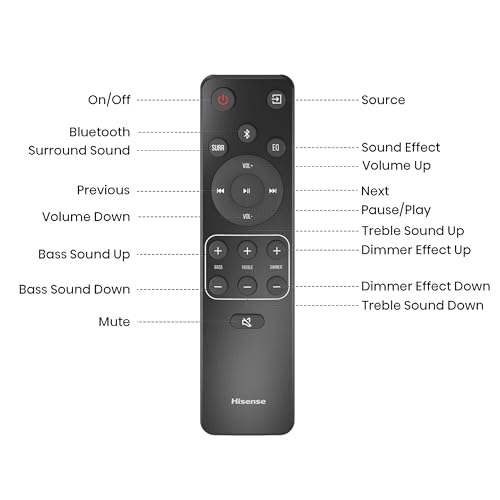
One area where the price difference becomes immediately apparent is in customization options. The Hisense HS2100 provides basic bass and treble controls plus six preset sound modes. While these presets (Movie, Music, News, Sport, Game, Night) cover most use cases, they represent fixed EQ curves that may or may not suit your room's acoustics or personal preferences.
The Samsung HW-Q800D includes SpaceFit Sound Pro technology, which uses built-in microphones to analyze your room's acoustic characteristics and automatically adjust the audio processing accordingly. This isn't just marketing fluff—room acoustics dramatically affect sound quality, with factors like ceiling height, wall materials, and furniture placement all influencing how audio waves behave.
Beyond automatic room correction, the Samsung provides a 10-band graphic equalizer that allows precise frequency adjustments. Each frequency band can be adjusted independently, enabling fine-tuning that addresses specific acoustic issues or personal preferences. This level of control typically requires dedicated audio equipment costing significantly more.
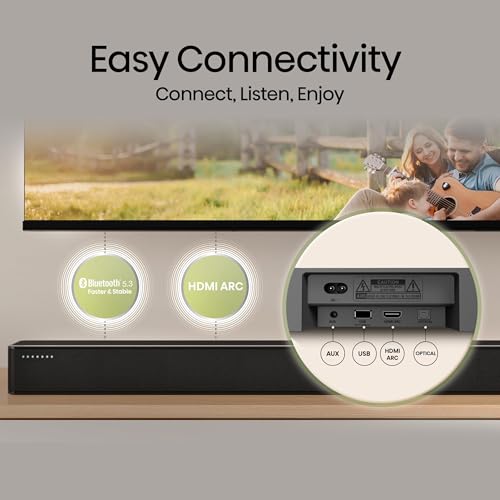
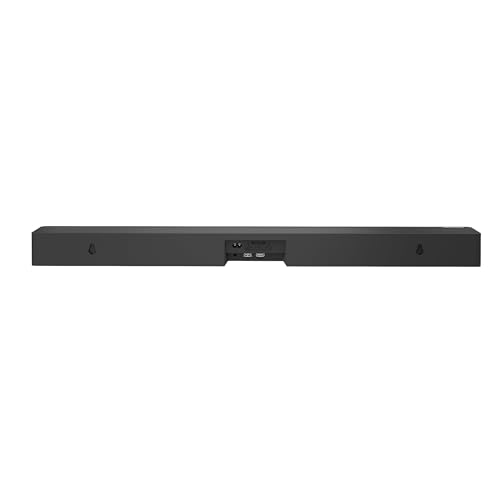
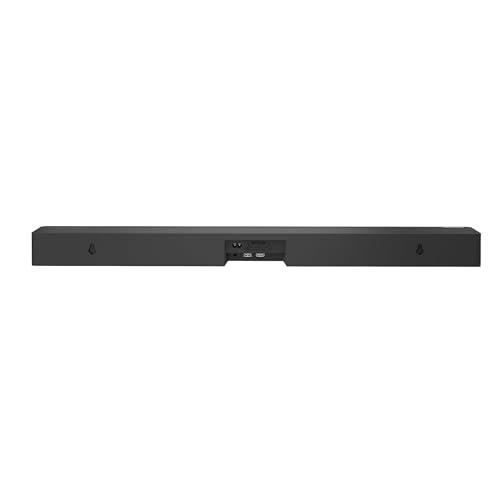
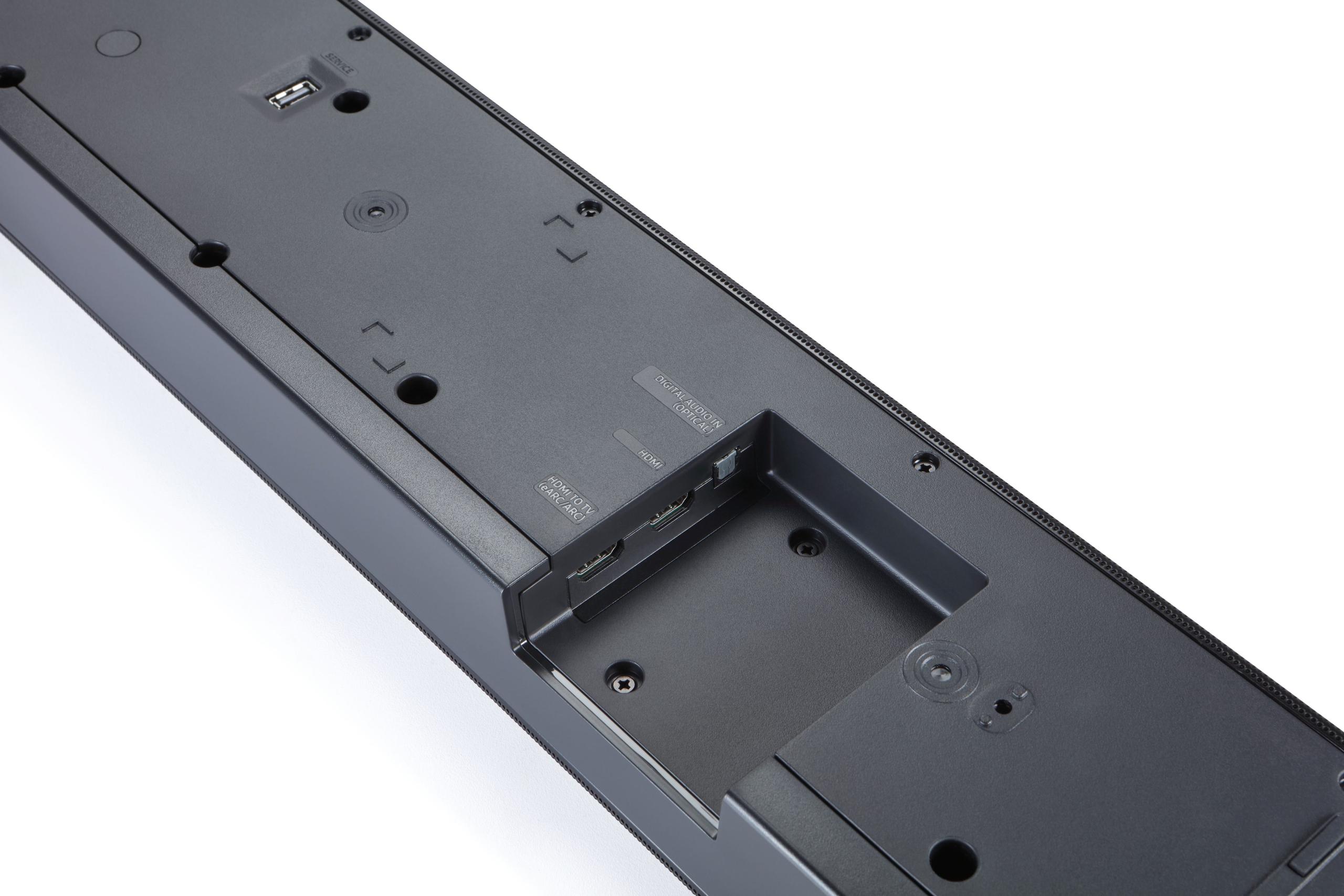
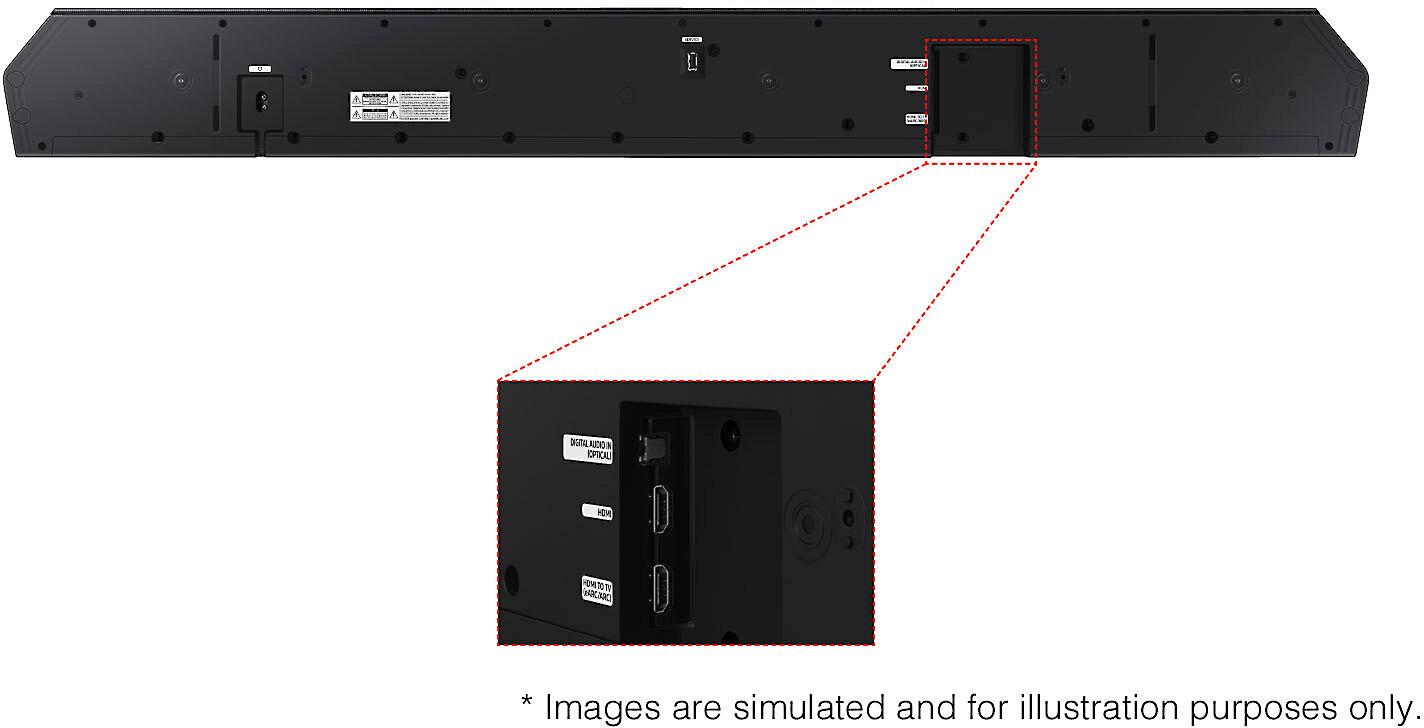
The connectivity differences reflect each product's target market and design philosophy. The Hisense HS2100 covers the basics with HDMI ARC (Audio Return Channel), optical digital input, auxiliary input, and USB playback. These connections handle the vast majority of home entertainment setups without complexity.
The Samsung HW-Q800D adds HDMI eARC (enhanced Audio Return Channel), which supports higher-bandwidth audio formats that regular ARC cannot handle. It also includes 4K video passthrough, allowing you to connect source devices directly to the soundbar and pass video to your TV while extracting audio for processing.
More significantly, the Samsung includes modern wireless connectivity options: Wi-Fi, Chromecast built-in, Apple AirPlay, and Spotify Connect. These features transform the soundbar into a versatile music streaming system that works independently of your TV, essentially serving as both home theater audio and whole-room music system.
At the time of writing, the Hisense HS2100 represents exceptional value for users whose primary goal is upgrading from terrible TV speakers without breaking the bank. Its strengths align well with typical TV viewing: clear dialogue for sitcoms and news, adequate bass for casual music listening, and enough volume to fill average-sized living rooms.
This system excels in scenarios where simplicity matters. The wireless subwoofer automatically pairs with the main bar, setup requires minimal configuration, and the included remote covers all essential functions. For users who primarily watch broadcast television, streaming services, and occasional movies, the performance improvement over TV speakers justifies the modest investment.
However, the Hisense HS2100 shows its limitations with demanding content. Action movies with complex surround soundtracks lose their spatial dimensionality, becoming somewhat flat and front-focused. Gaming audio, particularly in titles that use advanced spatial audio for competitive advantage, doesn't benefit from proper surround positioning cues.
The Samsung HW-Q800D, despite being significantly more expensive at the time of writing, targets users who view audio quality as integral to their entertainment experience. Its capabilities shine with premium content: 4K movies with Dolby Atmos soundtracks, high-quality music streaming, and video games that support spatial audio.
The room optimization features become particularly valuable in challenging acoustic environments. Rooms with high ceilings, hardwood floors, or minimal furniture can create acoustic reflections that muddy sound quality. The Samsung's automatic calibration and extensive manual controls help address these issues, potentially eliminating the need for expensive acoustic treatments.
For users building dedicated home theater spaces, the Samsung HW-Q800D offers a compelling middle ground between entry-level systems and full discrete surround setups. While it doesn't match the ultimate performance of separate speakers and receivers, it delivers surprisingly convincing surround effects with minimal setup complexity and space requirements.
Based on our research into professional measurements and user experiences, several performance metrics consistently correlate with user satisfaction:
Maximum SPL (Sound Pressure Level): Both systems can achieve adequate volume for typical living rooms, but the Samsung HW-Q800D maintains better sound quality at higher volumes due to superior dynamic range handling and more powerful amplification.
Frequency Response Linearity: The Samsung's flatter frequency response across the audible spectrum results in more accurate reproduction of source material, while the Hisense HS2100's warm tuning, while pleasant, colors all content with its signature sound.
Bass Extension and Quality: The 3-inch difference in subwoofer size translates to significantly deeper bass extension and better transient response (how quickly the driver starts and stops), making the Samsung noticeably superior for both movies and music.
Surround Sound Accuracy: The most dramatic difference lies in spatial audio reproduction. The Samsung's discrete channel processing preserves the original audio engineer's intent, while the Hisense HS2100's virtual processing creates approximations that, while better than stereo, cannot match true surround positioning.
The decision between these systems ultimately depends on your priorities, expectations, and budget constraints. The Hisense HS2100 succeeds as a straightforward TV audio upgrade that solves the most common problems—poor dialogue clarity and absence of bass—without complexity or significant expense. It represents smart engineering focused on delivering maximum impact for minimal investment.
Choose the Hisense HS2100 if you primarily watch TV shows and news, have a limited audio budget, value simplicity over features, or live in an apartment where excessive bass might disturb neighbors. It's also ideal for secondary viewing areas like bedrooms or kitchens where premium audio quality isn't essential.
The Samsung HW-Q800D justifies its higher price through genuinely superior performance across every measurable metric. Its advanced features aren't just marketing checkboxes—they solve real acoustic problems and enable experiences impossible with simpler systems. The room optimization alone can be worth hundreds of dollars in avoided acoustic treatment costs.
Choose the Samsung HW-Q800D if movies and gaming are important to your entertainment experience, you have content with advanced audio formats like Dolby Atmos, you're building a dedicated home theater space, or you want one system that serves both TV audio and music streaming duties. It's also the better choice for future-proofing, as its advanced codec support and connectivity options will remain relevant longer.
The performance gap between these systems is substantial enough that audio-focused users will likely find the price premium worthwhile, while budget-conscious buyers will appreciate that the Hisense HS2100 delivers meaningful improvement without premium pricing. Both products succeed in their respective market segments, offering honest value propositions for different user priorities and financial situations.
| Hisense HS2100 2.1 Channel 240W Soundbar System | Samsung HW-Q800D 5.1.2 Channel Soundbar |
|---|---|
| Channel Configuration - Determines surround sound capability and immersion level | |
| 2.1 channels (stereo + subwoofer, downmixes surround content) | 5.1.2 channels (true surround + height effects, preserves original audio) |
| Total Power Output - Affects maximum volume and dynamic range | |
| 240W total (adequate for small to medium rooms) | 360W total (fills large rooms without compression) |
| Audio Format Support - Determines compatibility with modern content | |
| Dolby Digital, DTS (downmixed to stereo) | Dolby Atmos, DTS:X, Dolby Digital (full format preservation) |
| Subwoofer Driver Size - Directly impacts bass depth and quality | |
| 5.25" wireless subwoofer (decent impact, limited extension) | 8" side-firing subwoofer (deep bass, room-filling presence) |
| Room Optimization - Helps adapt sound to your specific space | |
| None (manual bass/treble adjustment only) | SpaceFit Sound Pro (automatic room analysis and correction) |
| EQ Customization - Allows fine-tuning for personal preferences | |
| 6 presets + basic bass/treble controls | 10-band graphic EQ + multiple presets + channel level controls |
| Connectivity Options - Determines source compatibility and streaming capability | |
| HDMI ARC, optical, AUX, USB, Bluetooth 5.3 | HDMI eARC, 4K passthrough, Wi-Fi, Chromecast, AirPlay, Spotify Connect |
| Voice Enhancement - Critical for dialogue clarity in movies and shows | |
| News mode preset (basic vocal boost) | Dedicated center channel + Active Voice Amplifier technology |
| Height Effects - Creates overhead sound for immersive movie experience | |
| None (limited to front-facing stereo imaging) | Upfiring drivers with Dolby Atmos height processing |
| Setup Complexity - Important for users wanting plug-and-play simplicity | |
| Minimal setup, auto-pairing subwoofer | More options require configuration, but includes auto-calibration |
| Future Expandability - Ability to add components for complete surround | |
| No upgrade path (replace entire system for better performance) | Compatible with optional rear speakers for full 5.1.2.2 setup |
| Best Use Cases - Where each system excels most | |
| TV shows, news, casual music, compact spaces, budget-conscious buyers | Movies, gaming, music streaming, home theater setups, Atmos content |
The primary difference is channel configuration and immersion capability. The Hisense HS2100 is a 2.1 channel system that provides stereo sound with a subwoofer, while the Samsung HW-Q800D offers true 5.1.2 surround sound with dedicated center, surround, and height channels. This means the Samsung delivers genuine surround effects and Dolby Atmos support, while the Hisense downmixes all content to stereo.
For movie watching, the Samsung HW-Q800D is significantly superior due to its dedicated center channel for dialogue clarity and full surround sound processing. It supports Dolby Atmos and DTS:X formats that create immersive 3D audio effects. The Hisense HS2100 works well for TV shows and casual viewing but lacks the spatial audio capabilities that make movies truly cinematic.
Yes, both the Hisense HS2100 and Samsung HW-Q800D include wireless subwoofers. However, the Samsung features a larger 8-inch side-firing driver compared to the Hisense's 5.25-inch driver, resulting in deeper bass extension and more powerful low-frequency performance for movies and music.
The Hisense HS2100 offers exceptional value for budget-conscious buyers seeking a basic TV audio upgrade with clear dialogue and added bass. The Samsung HW-Q800D provides better value for users wanting genuine home theater performance, room optimization features, and future-proofing through advanced audio format support.
Both soundbars support Bluetooth connectivity for wireless music streaming. The Hisense HS2100 includes Bluetooth 5.3, while the Samsung HW-Q800D features Bluetooth 5.2 plus additional wireless options like Wi-Fi, Chromecast built-in, Apple AirPlay, and Spotify Connect for more versatile streaming capabilities.
The Hisense HS2100 offers simpler setup with automatic subwoofer pairing and basic controls. The Samsung HW-Q800D has more setup options but includes helpful features like SpaceFit Sound Pro for automatic room calibration. Both connect easily via HDMI ARC, though the Samsung offers more advanced connectivity options.
The Hisense HS2100 includes an HDMI cable and requires only a standard HDMI ARC connection to your TV. The Samsung HW-Q800D also includes necessary cables and supports HDMI eARC for enhanced audio formats. Both systems work with existing TV setups without requiring additional receivers or amplifiers.
The Samsung HW-Q800D is better for gaming due to its dedicated Game Pro mode, true surround sound positioning for directional audio cues, and support for spatial audio formats used in modern games. The Hisense HS2100 includes a Game mode but lacks the surround sound capabilities that enhance competitive gaming experiences.
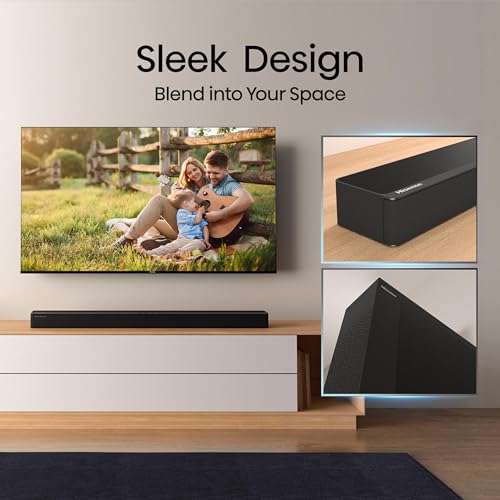
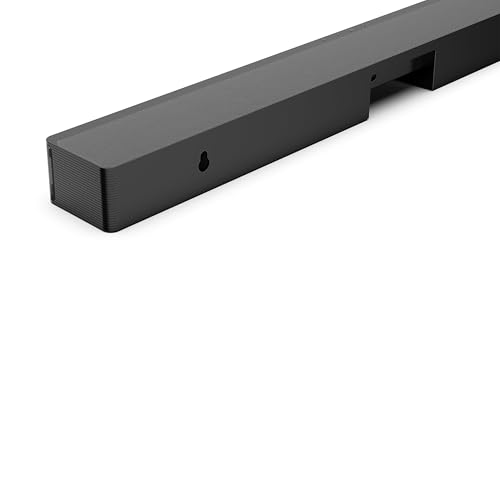
Yes, both the Hisense HS2100 and Samsung HW-Q800D include wall-mounting hardware. The Hisense is more compact and lightweight, making wall mounting simpler, while the Samsung is larger but still designed for easy wall installation with the included mounting kit.
The Samsung HW-Q800D provides superior dialogue clarity through its dedicated center channel and Active Voice Amplifier technology that automatically enhances speech. While the Hisense HS2100 includes a News mode that boosts vocal frequencies, it lacks a dedicated center channel, making dialogue less distinct during complex audio scenes.
Only the Samsung HW-Q800D supports true Dolby Atmos with upfiring speakers that create height effects by bouncing sound off your ceiling. The Hisense HS2100 does not support Dolby Atmos, instead using DTS Virtual:X processing to simulate wider soundstage effects from its stereo configuration.
For small apartments, the Hisense HS2100 provides adequate performance without overwhelming the space or disturbing neighbors, plus its compact design fits easily under most TVs. For large living rooms, the Samsung HW-Q800D offers the power and room-filling capabilities needed to deliver immersive audio across bigger spaces with its higher output and advanced processing.
We've done our best to create useful and informative comparisons to help you decide what product to buy. Our research uses advanced automated methods to create this comparison and perfection is not possible - please contact us for corrections or questions. These are the sites we've researched in the creation of this article: rtings.com - shop.hisense-usa.com - bestbuy.com - content.syndigo.com - bestbuy.com - hisensedealers.co.ke - stuff.co.za - dtc-aus-api.hisense.com - youtube.com - manuals.plus - youtube.com - bestbuy.com - youtube.com - gallifurniture.com - hisense-usa.com - manuals.plus - uk.hisense.com - device.report - youtube.com - costco.ca - elmcreekwsa.com - gallifurniture.com - techradar.com - valueelectronics.com - samsung.com - rtings.com - samsung.com - crutchfield.com - samsung.com - samsung.com - samsung.com - shidirect.com

Privacy Policy
Terms and Conditions - Affiliate Policy
Home Security
© Copyright 2008-2026.
11816 Inwood Rd #1211, Dallas, TX 75244