

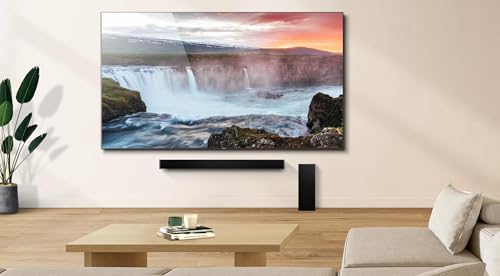
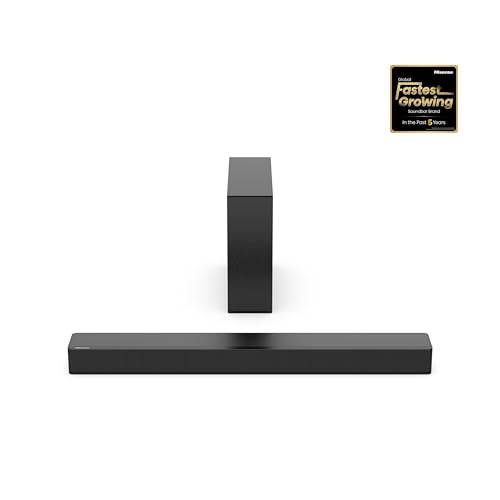



When your TV's built-in speakers make movie dialogue sound like it's coming from a tin can, it's time for a soundbar. But choosing between an affordable option and a premium model can be tricky—especially when both promise to transform your viewing experience. We've spent considerable time researching two popular options that represent different philosophies: the budget-focused Hisense HS2100 and the premium Samsung HW-S700D.
At the time of writing, these soundbars sit in completely different price brackets, with the Hisense typically costing under $150 while the Samsung commands nearly three times that amount. But does the Samsung justify its premium price tag, or does the Hisense deliver enough performance to make the Samsung's extra cost unnecessary?
Before diving into specifics, let's establish what makes soundbars effective. The core concept is simple: modern TVs prioritize thinness over audio quality, leaving little room for decent speakers. Soundbars solve this by housing multiple drivers (individual speakers) in a dedicated enclosure, often paired with a separate subwoofer for bass frequencies that smaller speakers can't reproduce effectively.
The "channel" designation you see (like 2.1 or 3.1) tells you about the soundbar's speaker configuration. The first number indicates how many main channels handle mid and high frequencies, while the second number after the decimal point represents dedicated subwoofer channels. A 2.1 system has left and right channels plus a subwoofer, while a 3.1 system adds a center channel specifically for dialogue—a crucial difference for TV viewing where clear speech matters most.
Both soundbars we're examining use wireless subwoofers, meaning the bass unit connects to the main bar without cables. This wireless connection uses a dedicated frequency band (typically 2.4GHz) that's separate from your home Wi-Fi, ensuring stable audio transmission without interference.
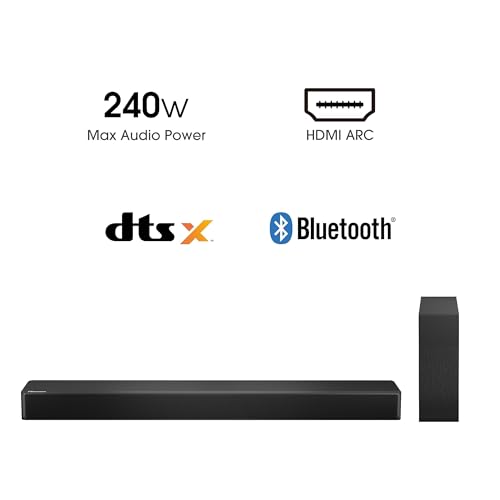
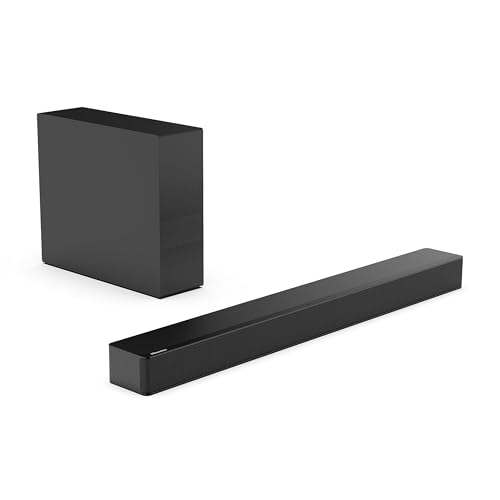
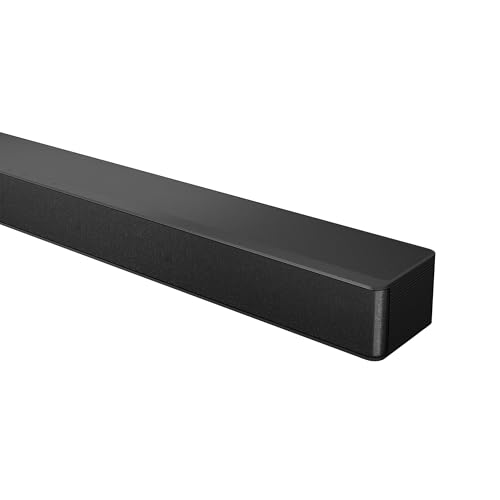
The Hisense HS2100, released in late 2023, represents the "essential upgrade" approach. It's a 2.1-channel system delivering 240 watts of total power, designed to provide the most meaningful audio improvement for the least money. The focus here is straightforward: take terrible TV audio and make it dramatically better without breaking the bank.
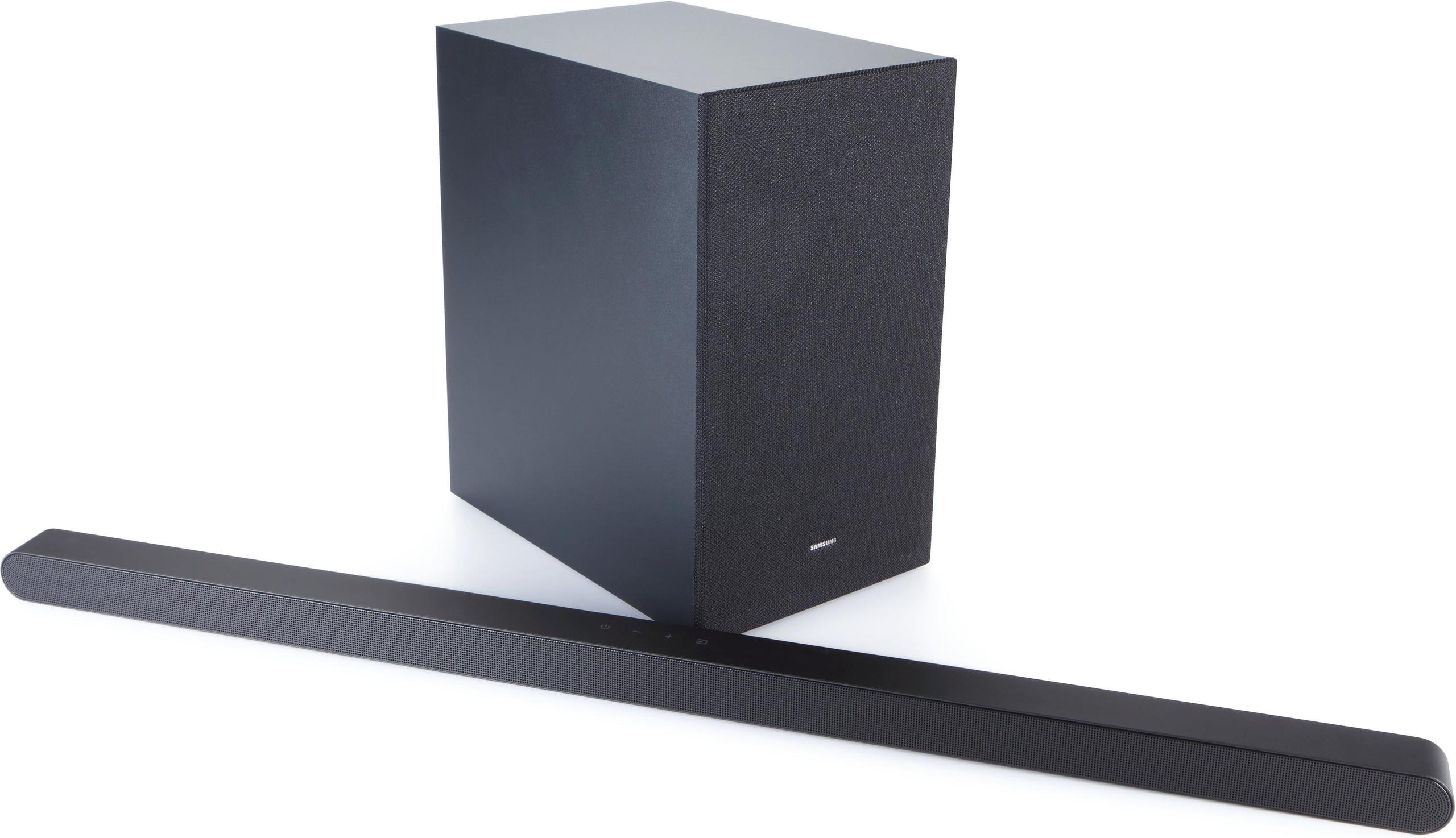
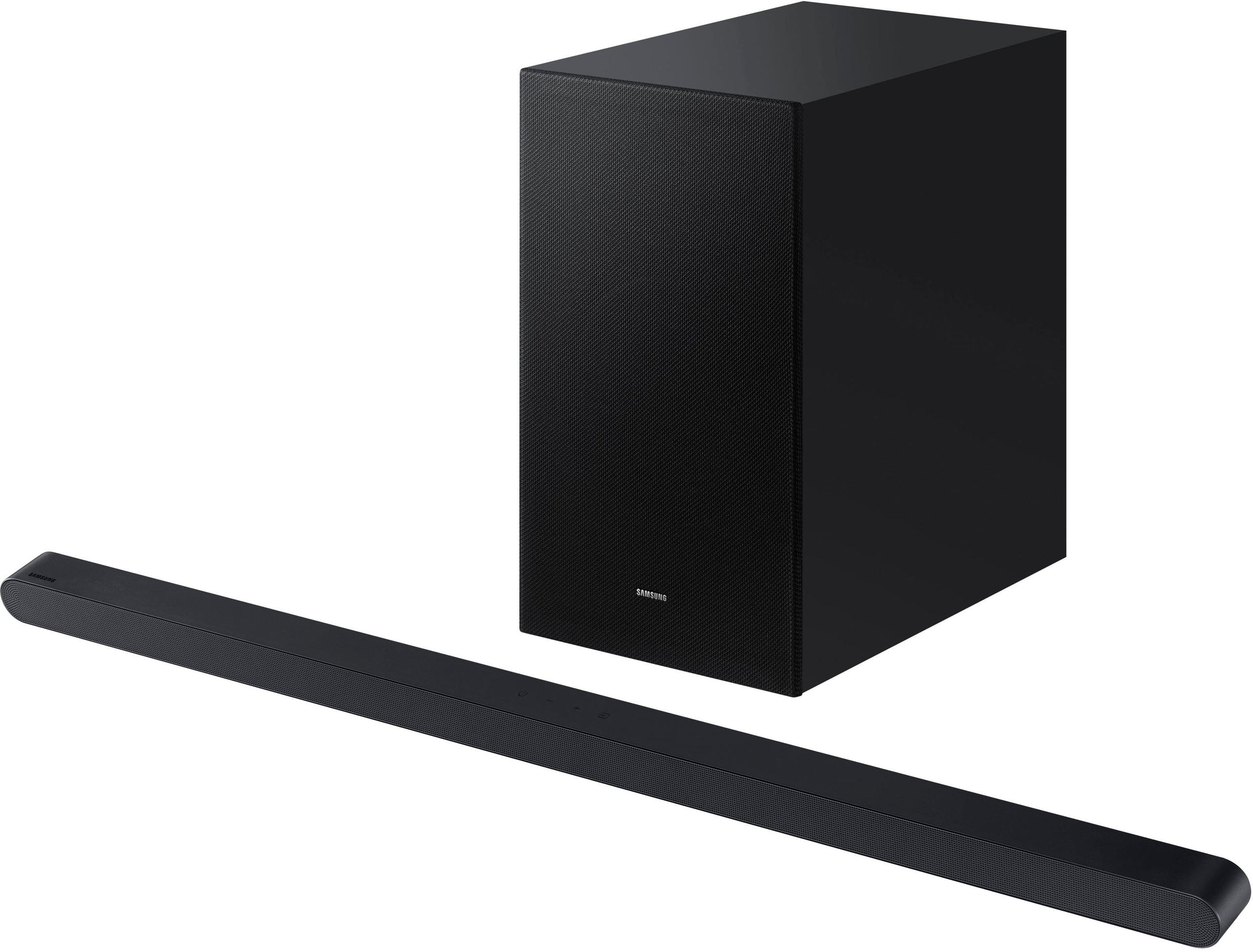
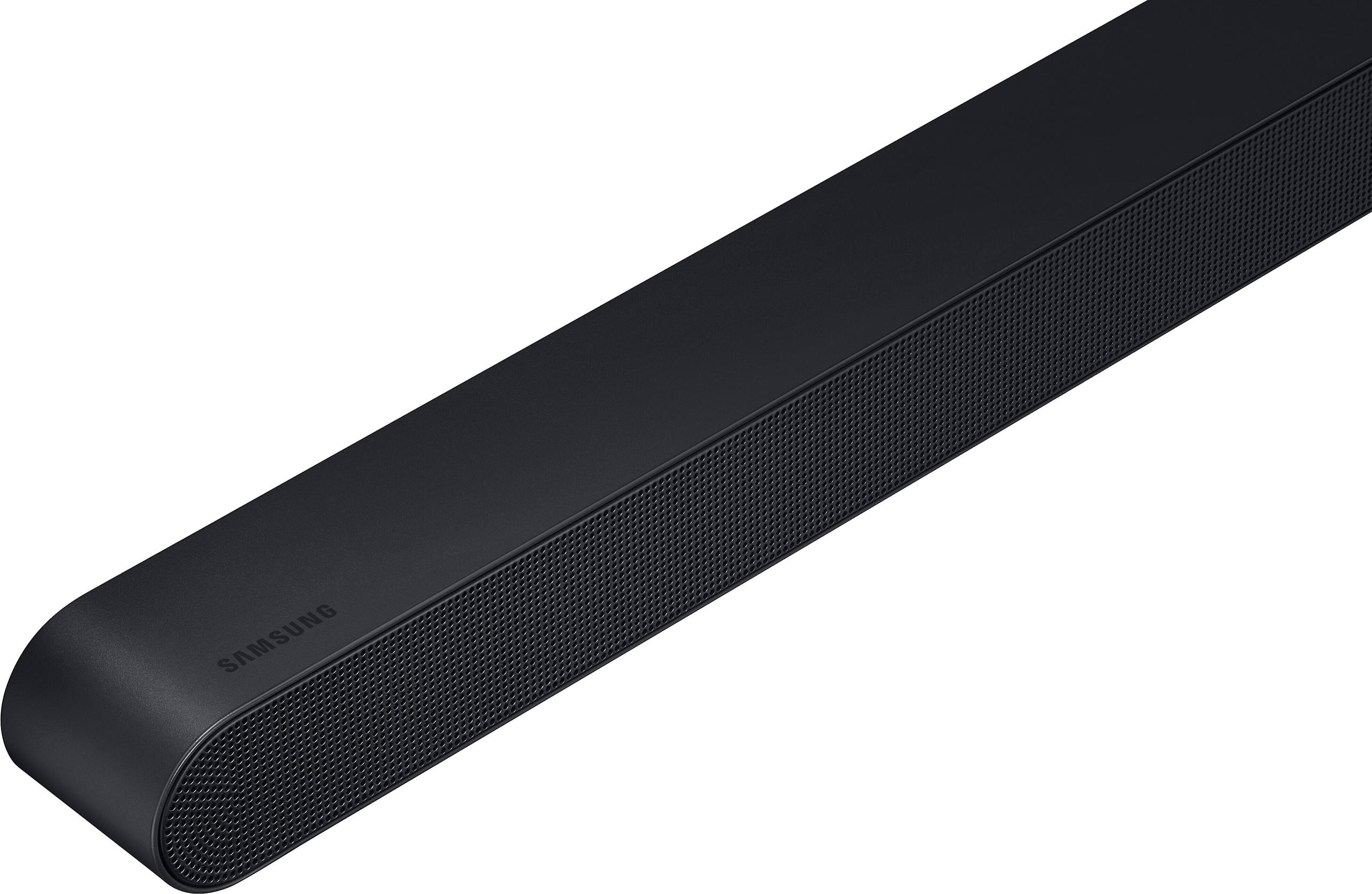
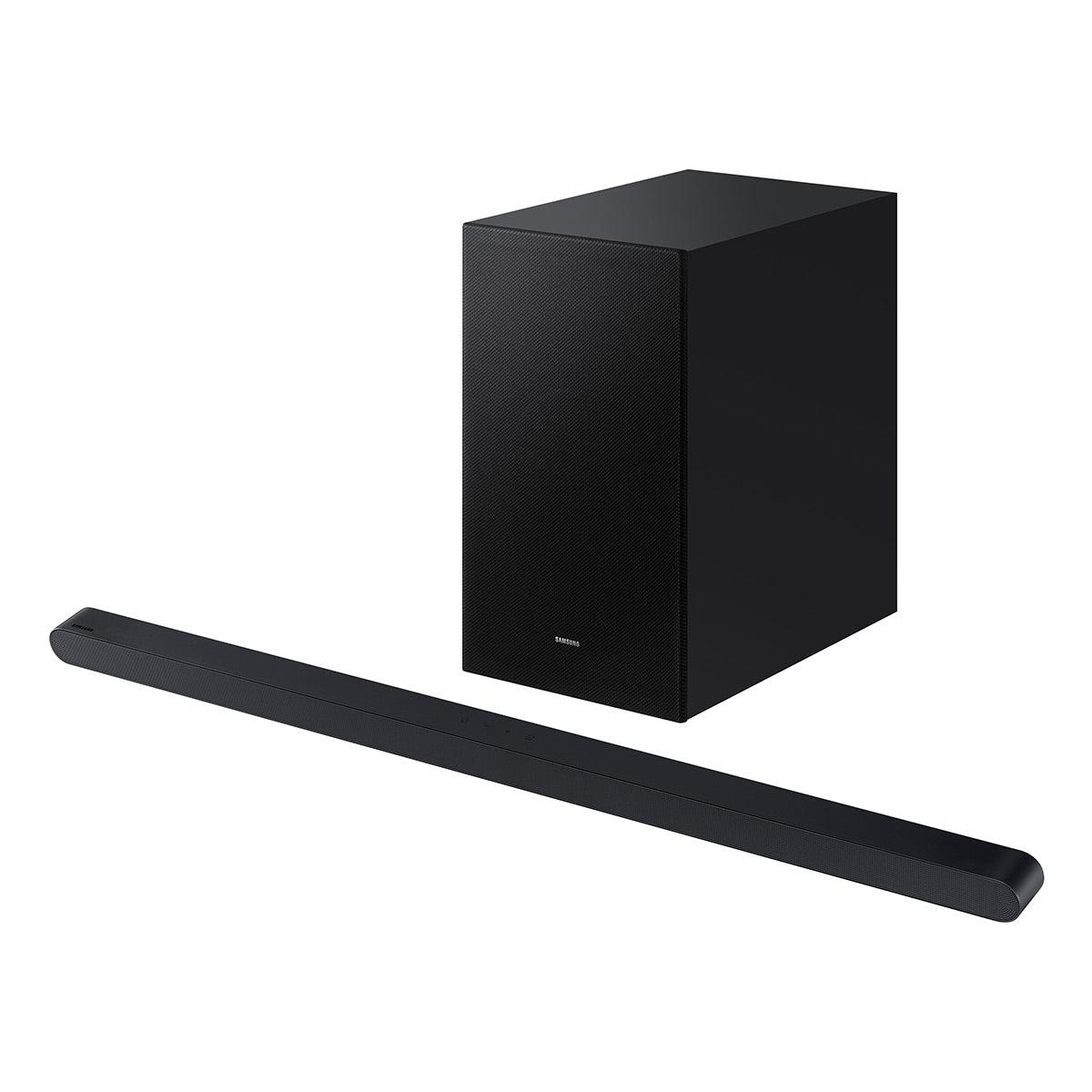
In contrast, the Samsung HW-S700D, a 2024 model, embodies the "premium experience" philosophy. This 3.1-channel system pushes 250 watts through seven individual speakers, including dedicated center channel drivers and support for advanced audio formats like Dolby Atmos. Samsung's approach assumes you want not just better audio, but genuinely immersive sound that rivals a movie theater experience.
The most significant performance difference lies in how these soundbars handle dialogue and create spatial audio. The Samsung's dedicated center channel makes an enormous difference for TV viewing. Instead of mixing dialogue with music and effects across left and right speakers, the center channel isolates voices, making them clearer and more prominent. This architectural advantage becomes especially noticeable during complex scenes with lots of background noise or when characters speak softly.
Our research into user feedback reveals consistent praise for the Samsung's dialogue clarity. Customers frequently mention never having to ask "what did they say?" anymore—a common frustration with TV speakers and even some basic soundbars. The Hisense, while offering balanced audio that's certainly clearer than TV speakers, can't match this level of vocal precision because it lacks that dedicated center channel.
The spatial audio capabilities differ dramatically too. The Samsung supports true Dolby Atmos, an object-based audio format that places sounds in three-dimensional space around you. When a helicopter flies overhead in a movie, Dolby Atmos can make it sound like it's actually passing above your head, not just moving left to right. The soundbar achieves this through up-firing drivers that bounce sound off your ceiling, creating the illusion of height channels.
The Hisense uses DTS Virtual:X, which simulates surround effects through audio processing rather than additional speakers. While this creates a wider soundstage than basic stereo, it can't match the convincing three-dimensional audio that true Dolby Atmos provides. Think of it as the difference between watching a 3D movie with proper 3D glasses versus just increasing the screen size—both improve the experience, but one creates genuine depth while the other just makes things bigger.
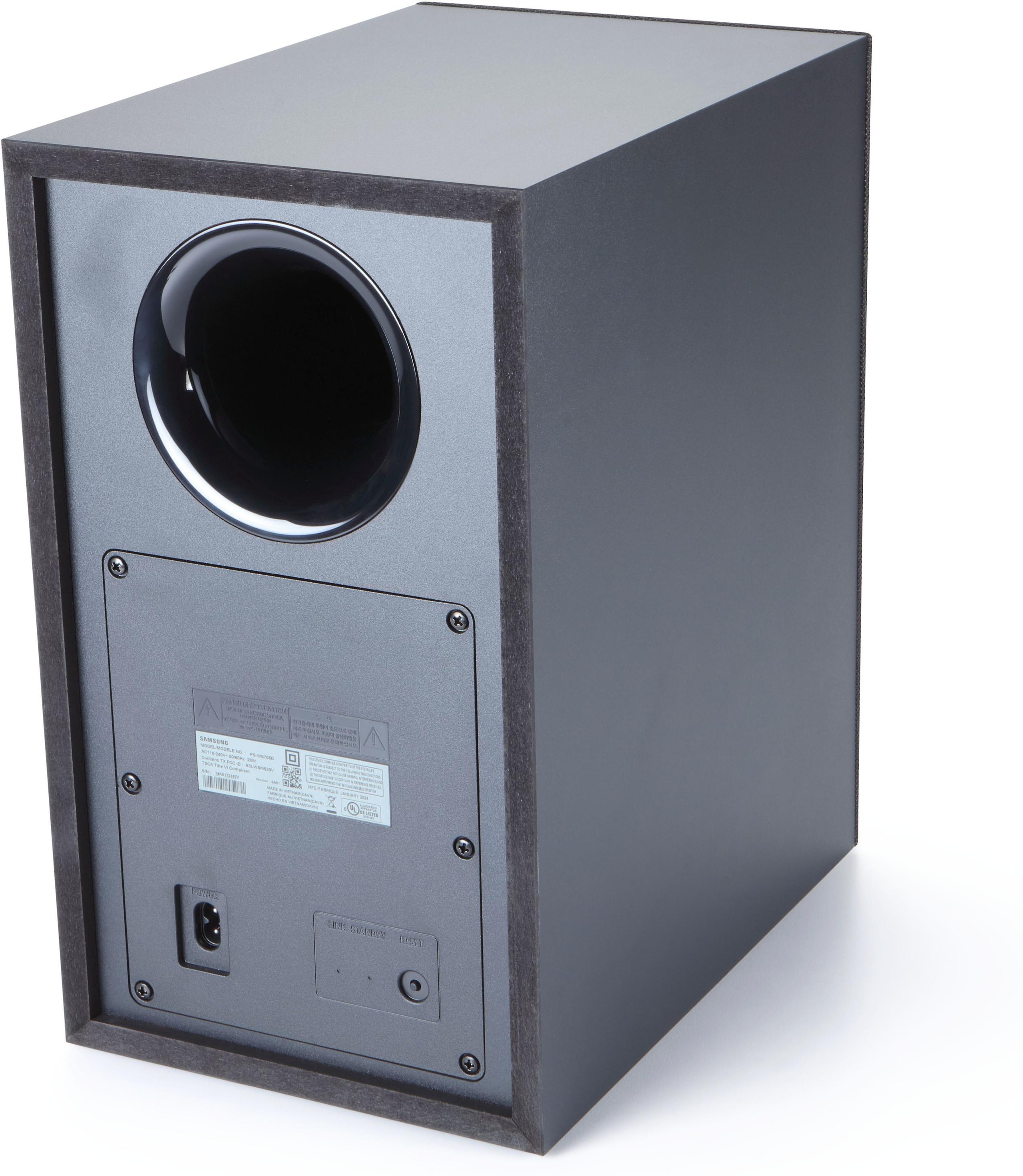
Both soundbars include wireless subwoofers, but their approaches differ significantly. The Samsung's 6-inch subwoofer benefits from more sophisticated digital signal processing and room correction technology. User reviews consistently describe its bass as "room-shaking" and well-integrated with the main soundbar, meaning bass notes blend seamlessly with mid and high frequencies rather than sounding disconnected.
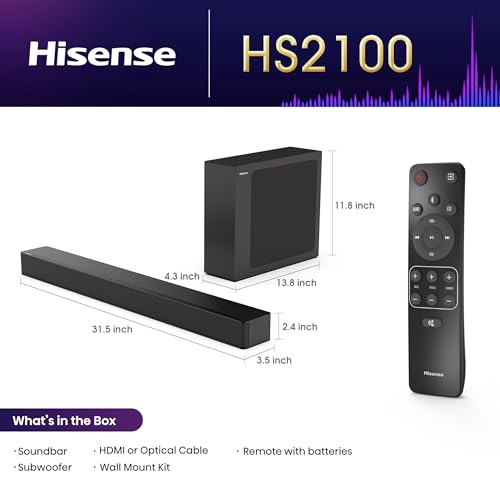
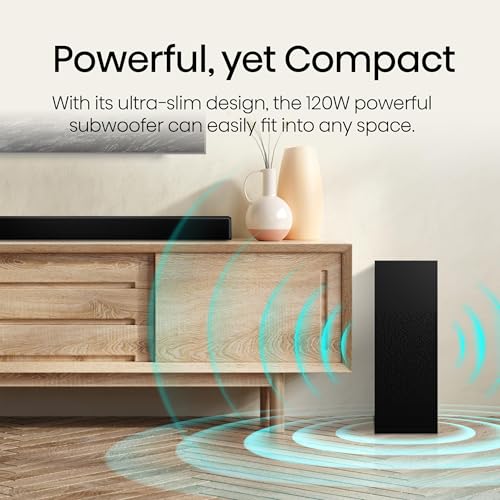
The Hisense's 5.25-inch subwoofer takes a different approach, prioritizing an ultra-slim form factor that fits into tight spaces. At roughly 4.3 inches deep, this subwoofer can slide under most furniture or against walls where larger subs won't fit. The trade-off is somewhat less powerful bass extension and occasional "boominess"—where bass notes sound slightly muddy rather than tight and controlled.
For most casual viewing, the Hisense's bass performance proves adequate and satisfying. However, if you're watching bass-heavy content like action movies or listening to electronic music, the Samsung's superior low-frequency control and extension becomes apparent. The difference isn't just about loudness—it's about accuracy and how well the bass integrates with dialogue and effects.
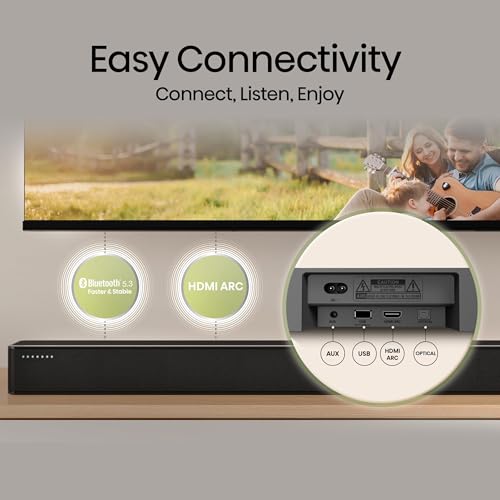
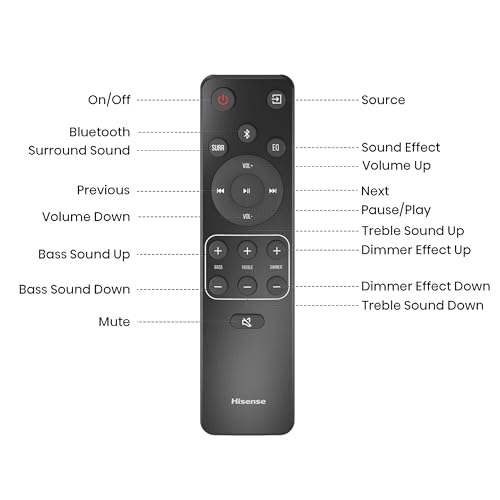
The feature gap between these soundbars is substantial. The Hisense HS2100 focuses on core functionality: six preset sound modes (Movie, Music, News, Sport, Night, Game), basic bass and treble controls, and Bluetooth 5.3 for wireless music streaming. It's Roku TV Ready, meaning it integrates smoothly with Roku TV remotes for volume and power control. This straightforward approach appeals to users who want improvement without complexity.
The Samsung HW-S700D takes smart features seriously. Q-Symphony technology allows the soundbar to work in harmony with compatible Samsung TVs, using both the TV's speakers and the soundbar simultaneously for a fuller soundstage. SpaceFit Sound Pro uses built-in microphones to analyze your room acoustics and automatically adjust the audio profile—essentially providing professional room calibration without hiring an audio technician.
Adaptive Sound continuously monitors the content you're watching and adjusts the audio profile accordingly. During dialogue-heavy scenes, it emphasizes vocal clarity; during action sequences, it opens up the soundstage and enhances effects. This isn't just an equalizer preset—it's real-time audio processing that adapts to what's happening on screen.
The Samsung also supports multiple voice assistants (Alexa and Google Assistant) and streaming protocols like AirPlay and Chromecast. For smart home enthusiasts, these features integrate the soundbar into broader automation systems and make it easy to stream music directly without going through your TV.
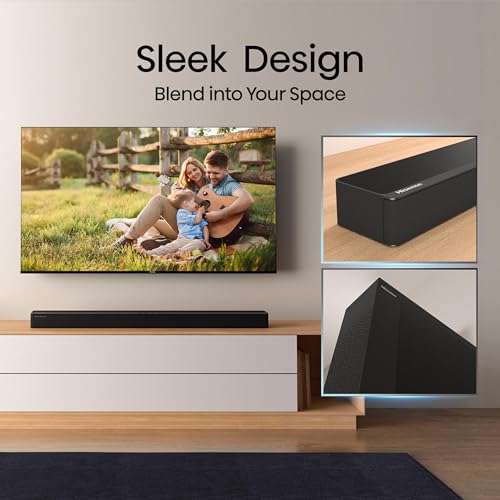
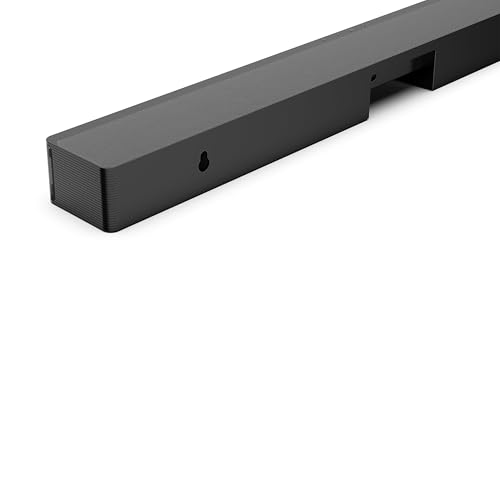
Both soundbars prioritize sleek aesthetics, but their design priorities differ. The Hisense HS2100 emphasizes practical compactness—it's small enough to fit most entertainment centers and includes an ultra-thin subwoofer that disappears into tight spaces. The plastic construction keeps costs down while still looking presentable in most living rooms.
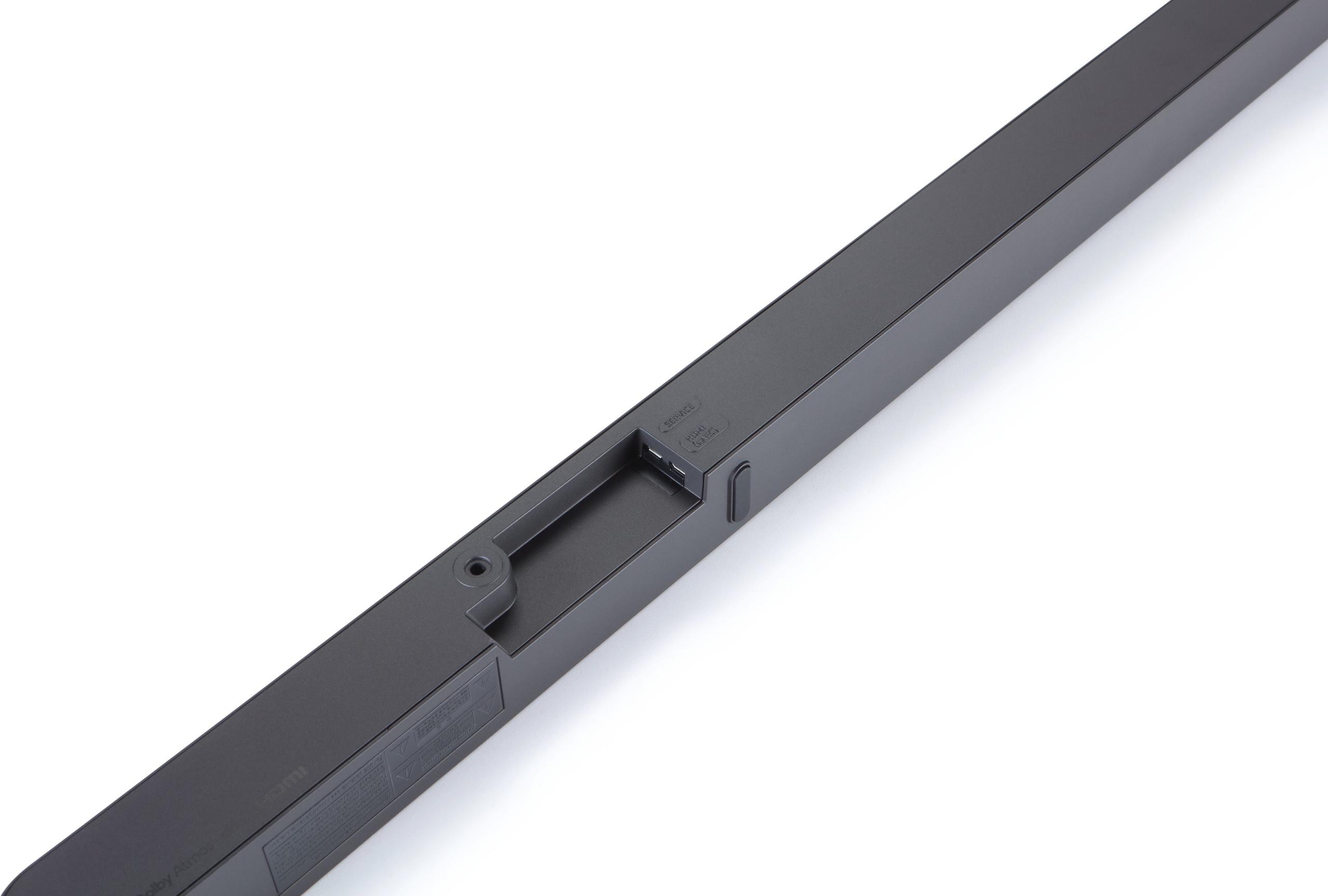
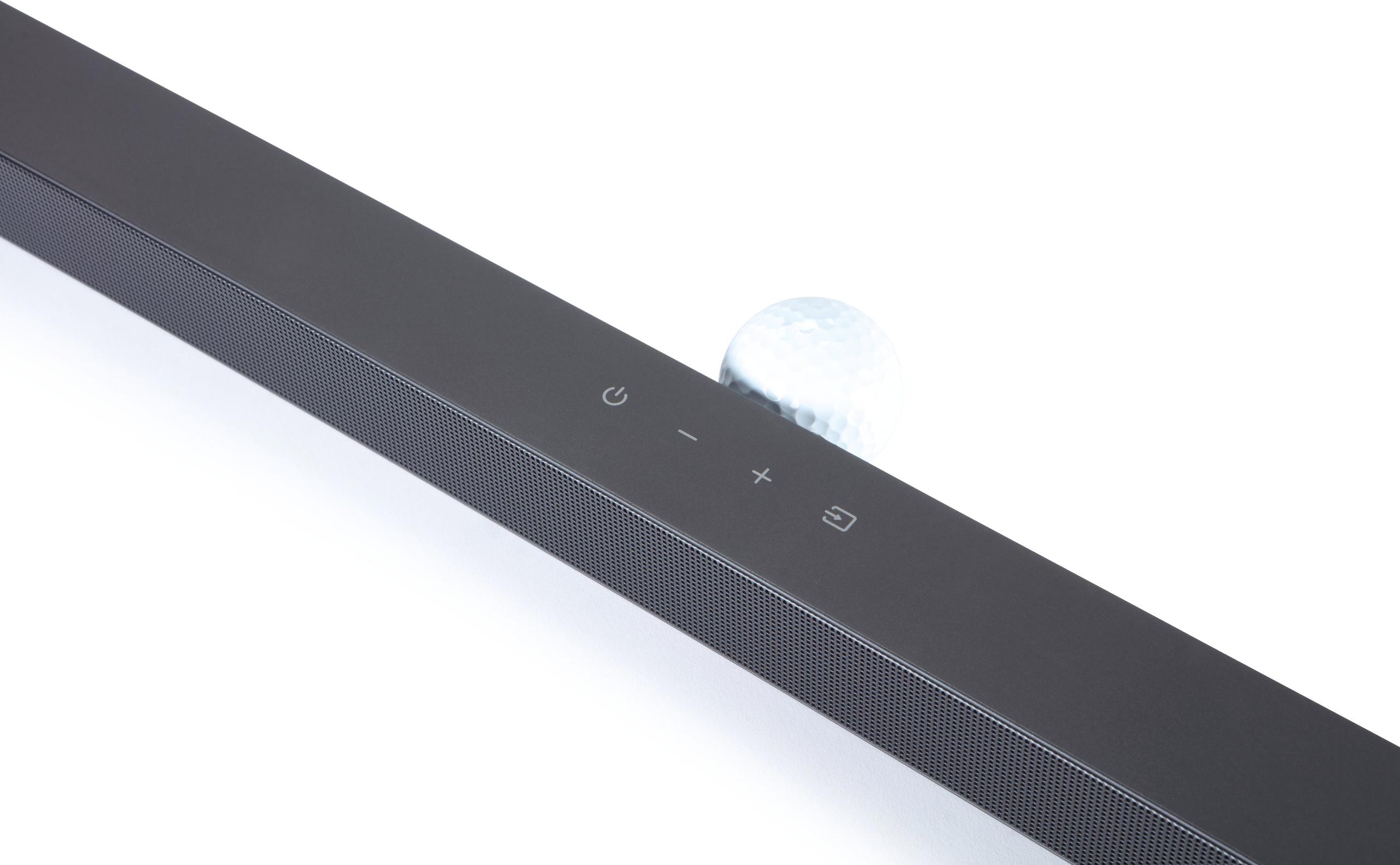
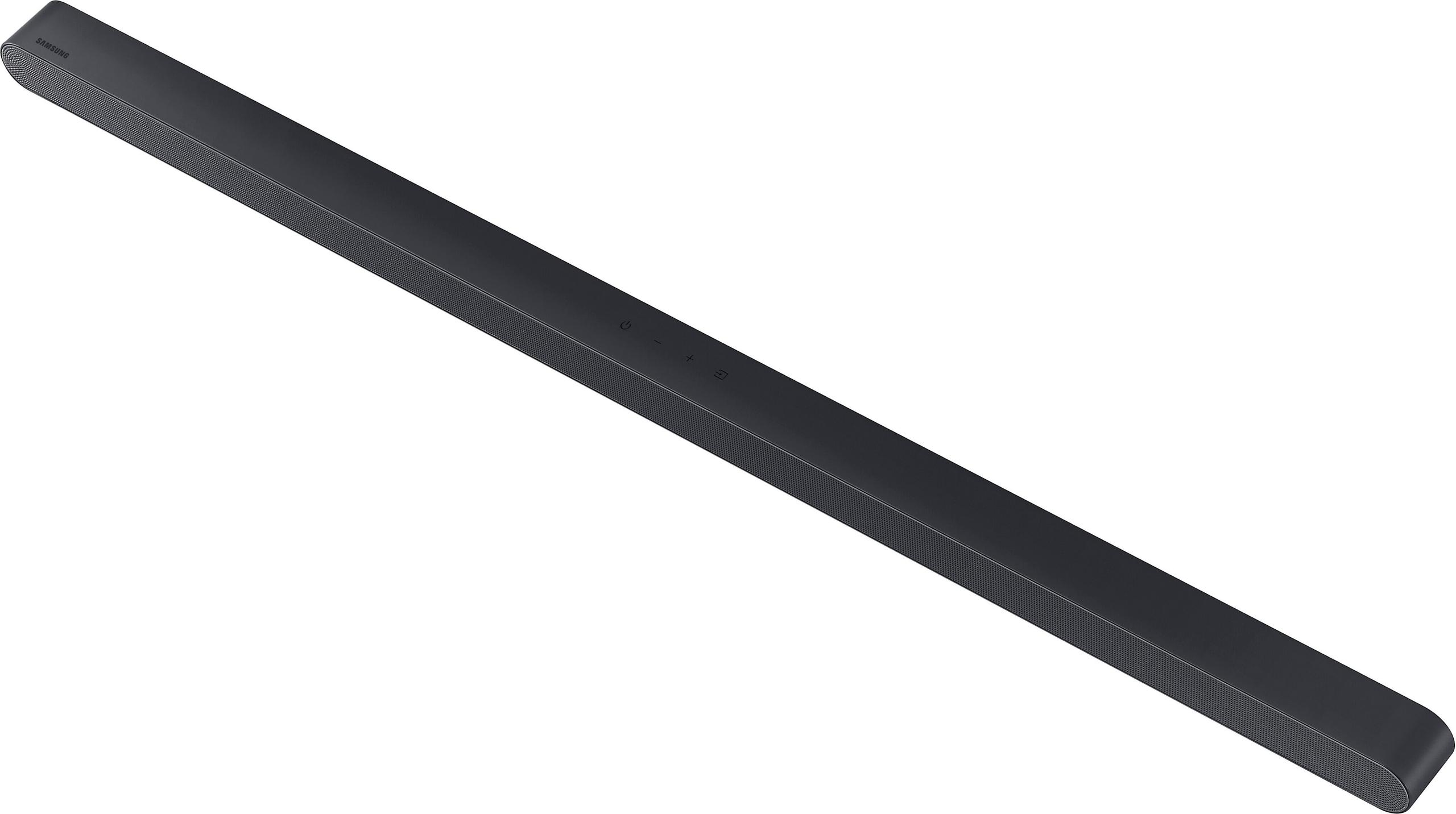
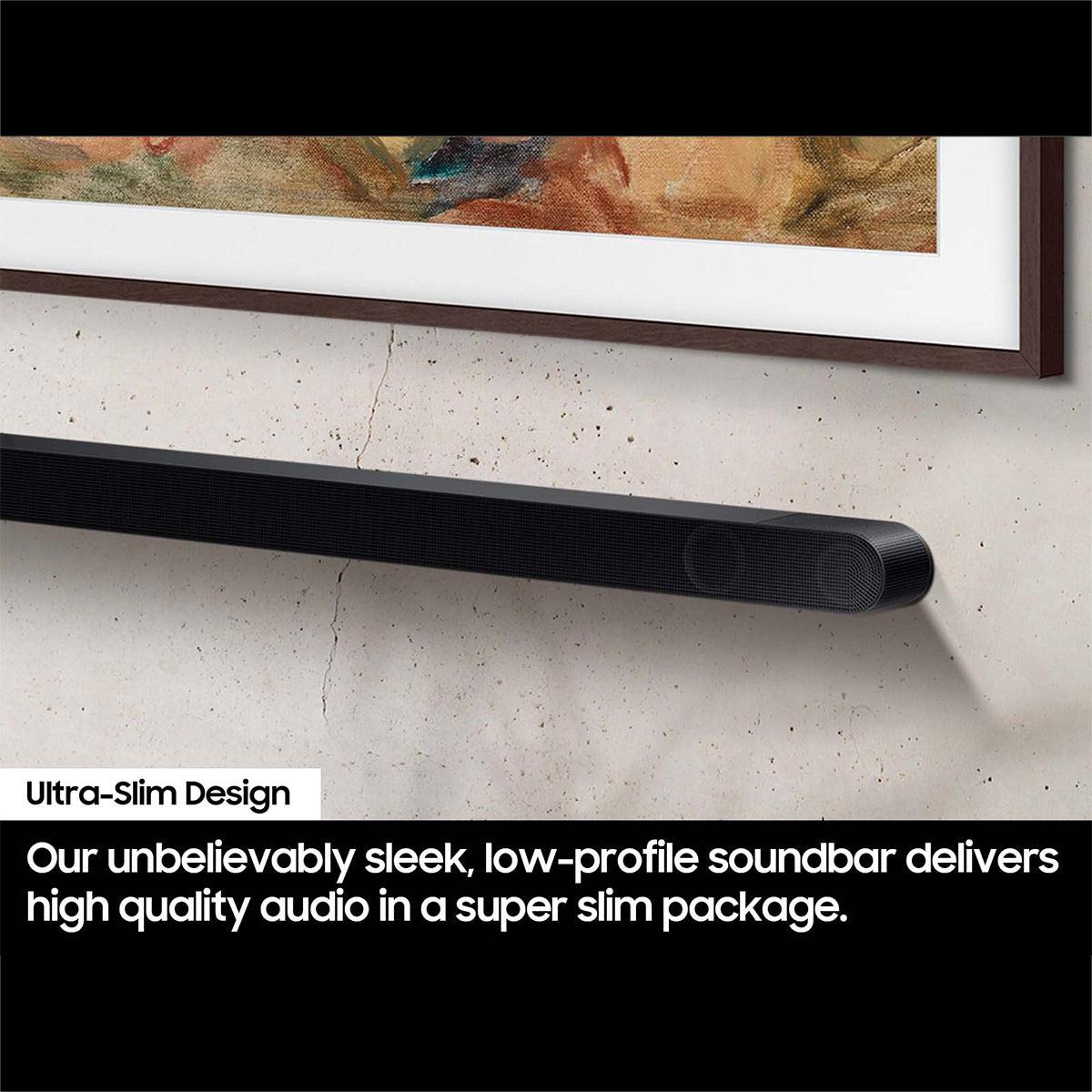
The Samsung HW-S700D pushes the slim design concept to its extreme, measuring just 3.8cm in height. This ultra-low profile means it virtually disappears when wall-mounted beneath a TV, appealing to minimalist aesthetics. The premium materials and finish quality reflect its higher price point, with more attention paid to details like button feel and overall build quality.
For wall-mounting scenarios, the Samsung's extreme slimness provides a significant visual advantage. It looks more like part of the TV than a separate component, which many users prefer for clean, modern setups. The Hisense is certainly compact, but it has a more obvious presence beneath your television.
When you crank up the volume for action movies or parties, differences in audio processing become apparent. The Samsung HW-S700D maintains clarity and detail even at high volume levels, with less compression artifacts—those unpleasant squashed or flattened sound characteristics that emerge when systems are pushed hard.
The Hisense HS2100 handles moderate to high volumes well for its price class, though some compression becomes noticeable at maximum levels. This isn't necessarily problematic for typical use, but it means the Samsung provides more headroom for demanding content or larger rooms.
Both systems include automatic volume leveling features, but the Samsung's implementation is more sophisticated. Its Night Mode doesn't just reduce overall volume—it intelligently compresses dynamic range so quiet dialogue remains audible while preventing loud explosions from waking the neighbors. The Hisense includes a Night Mode too, but it's a simpler implementation that primarily reduces output levels.
For gaming enthusiasts, audio latency (the delay between what happens on screen and when you hear it) becomes critical. Both soundbars perform well in this regard, but the Samsung HW-S700D includes Game Mode Pro, which specifically optimizes audio processing for gaming scenarios.
Game Mode Pro reduces audio processing delays and emphasizes directional audio cues—helpful for competitive gaming where hearing enemy footsteps or gunfire direction provides tactical advantages. The spatial audio capabilities of Dolby Atmos also enhance gaming immersion, making environmental effects more convincing.
The Hisense HS2100 includes a Game preset mode that adjusts the frequency response for gaming content, though it doesn't include the advanced processing optimizations of the Samsung's implementation. For casual gaming, this difference may not matter, but serious gamers will appreciate the Samsung's more comprehensive approach.
At the time of writing, the price gap between these soundbars is substantial—roughly three-to-one in the Samsung's favor. This raises the crucial question: what does that extra money actually buy?
The Hisense HS2100 delivers what we consider the core soundbar benefit: dramatically better audio than TV speakers. For users whose primary frustration is simply not being able to hear dialogue clearly or wanting some bass impact during movies, it accomplishes this mission admirably. The value proposition is exceptional because it solves the fundamental problem at minimal cost.
The Samsung HW-S700D goes far beyond basic improvement to deliver what approaches a genuine home theater experience. The Dolby Atmos support, sophisticated room correction, smart features, and superior dialogue clarity represent meaningful technological advantages rather than just marketing claims.
However, the law of diminishing returns applies here. The Hisense might provide 80% of the practical benefit at 30% of the cost. Whether that extra 20% of performance justifies nearly tripling your investment depends entirely on your priorities, budget, and how important audio quality is to your entertainment experience.
Technology evolution affects these products differently. The Samsung HW-S700D, with its advanced codec support and smart features, is better positioned for future streaming service improvements and audio format developments. As more content becomes available in Dolby Atmos and other premium formats, the Samsung's capabilities become increasingly valuable.
The Hisense HS2100 takes a different approach to longevity—by focusing on fundamental audio improvement rather than cutting-edge features, it remains relevant as long as TVs have poor built-in speakers. Its simplicity also means fewer components that might fail or become obsolete.
For most buyers, the decision comes down to budget constraints and performance expectations. The Hisense HS2100 makes sense if you want the maximum audio improvement for minimum investment, don't need advanced features, and primarily watch basic TV programming or casual movies. It's also ideal for secondary rooms, rental properties, or situations where you want better sound but aren't building a dedicated home theater.
Choose the Samsung HW-S700D if audio quality significantly impacts your entertainment enjoyment, you regularly watch premium streaming content or movies, you own a Samsung TV that can leverage Q-Symphony features, or you want room-filling sound that genuinely competes with dedicated speaker systems. The customer satisfaction ratings and consistent positive feedback suggest most buyers feel the premium price is justified by the performance delivered.
Both soundbars succeed at their intended missions. The Hisense HS2100 proves that dramatic audio improvement doesn't require major financial investment, while the Samsung HW-S700D demonstrates how advanced technology can create genuinely immersive home theater experiences in a sleek package.
Your choice should align with your entertainment habits and budget reality. If you're primarily trying to escape awful TV speakers and want good value, the Hisense delivers exceptional bang for the buck. If you're building a home theater setup and want advanced features that will remain relevant for years, the Samsung justifies its premium pricing through superior technology and performance.
Neither choice is wrong—they're just designed for different users with different priorities. The key is being honest about what you actually need versus what sounds appealing in marketing materials.
| Hisense HS2100 2.1 Channel 240W Soundbar System | Samsung HW-S700D 3.1 Channel Slim Soundbar |
|---|---|
| Channel Configuration - Determines dialogue clarity and spatial audio capabilities | |
| 2.1 channels (stereo + subwoofer) | 3.1 channels with dedicated center speaker for superior dialogue |
| Total Power Output - Affects maximum volume and room-filling capability | |
| 240W total (60W × 2 soundbar, 120W subwoofer) | 250W peak power through 7 individual speakers |
| Premium Audio Format Support - Critical for streaming services and Blu-ray content | |
| Dolby Digital, DTS Virtual:X (simulated surround) | Dolby Atmos, DTS:X (true 3D spatial audio) |
| Smart Features - Convenience and ecosystem integration | |
| Roku TV Ready, Bluetooth 5.3, 6 preset modes | Q-Symphony, SpaceFit Sound Pro, Adaptive Sound, voice assistants |
| Physical Dimensions - Important for TV compatibility and room aesthetics | |
| Soundbar: 31.5" × 2.4" × 3.5" (standard profile) | Ultra-slim: 8.1" × 13.9" × 12.1" (3.8cm height - nearly invisible when wall-mounted) |
| Subwoofer Design - Affects bass performance and placement flexibility | |
| 5.25" driver, ultra-thin 4.3" depth (fits tight spaces) | 6" driver with bass reflex design (more powerful, requires more space) |
| Connectivity Options - Determines how many devices you can connect | |
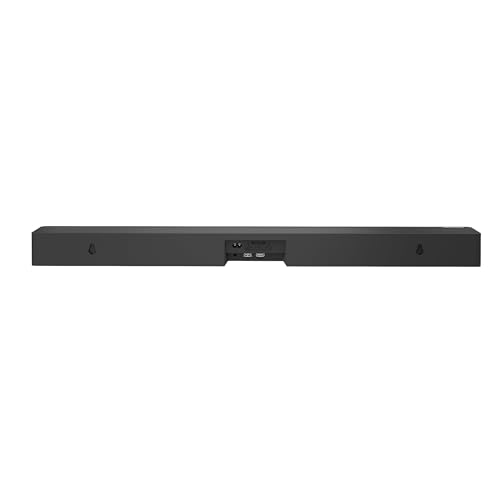
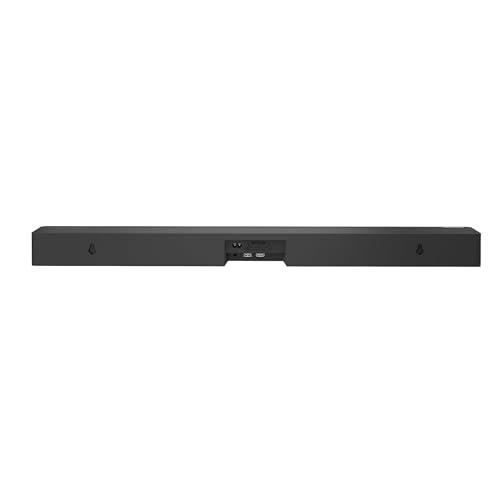
| HDMI ARC, Optical, USB, 3.5mm AUX, Bluetooth | HDMI eARC, USB (service only), Bluetooth, AirPlay, Chromecast |
| Release Year & Technology Generation - Affects future-proofing and feature relevance | |
| 2023 model with current-generation Bluetooth 5.3 | 2024 model with latest Samsung audio processing technology |
| Target Use Case - Who each product serves best | |
| Budget-conscious upgrade from TV speakers for casual viewing | Premium home theater experience with advanced spatial audio |
| Value Proposition - What you get for your investment | |
| Maximum audio improvement per dollar spent | Premium technology and features justify higher cost for audio enthusiasts |
The Samsung HW-S700D delivers significantly better dialogue clarity due to its dedicated center channel that isolates voices from background music and effects. The Hisense HS2100 offers decent vocal clarity through its balanced 2.1 setup, but can't match the precision of a dedicated center speaker for TV viewing and movie dialogue.
The Hisense HS2100 uses a 2.1 configuration with left/right speakers plus a subwoofer, while the Samsung HW-S700D adds a dedicated center channel (3.1) specifically for dialogue. This extra center channel in the Samsung provides much clearer speech and better audio separation during complex scenes.
Only the Samsung HW-S700D supports true Dolby Atmos for 3D spatial audio that places sounds above and around you. The Hisense HS2100 uses DTS Virtual:X to simulate surround effects, which creates a wider soundstage but can't match the immersive overhead audio that Dolby Atmos provides.
The Hisense HS2100 works excellently in small rooms with its compact design and ultra-thin subwoofer that fits tight spaces. The Samsung HW-S700D also suits small rooms well with its ultra-slim 3.8cm profile, though its more powerful output might be overkill for very small spaces.
Both soundbars work with any TV that has HDMI ARC or optical output. However, the Samsung HW-S700D offers additional features like Q-Symphony when paired with Samsung TVs, while the Hisense HS2100 provides universal compatibility with special integration for Roku TVs.
The Hisense HS2100 provides exceptional value by delivering dramatic audio improvement over TV speakers at a budget-friendly price point. The Samsung HW-S700D costs significantly more but justifies the premium with advanced features like Dolby Atmos, smart room calibration, and superior build quality.
The Samsung HW-S700D includes a 6-inch subwoofer with more powerful bass and better integration, while the Hisense HS2100 features a 5.25-inch ultra-slim subwoofer that's easier to place in tight spaces. Both are wireless, but the Samsung delivers deeper, more controlled bass performance.
The Samsung HW-S700D excels for home theater use with true Dolby Atmos support, superior dialogue clarity, and immersive spatial audio that makes movies more cinematic. The Hisense HS2100 provides a solid upgrade for casual movie watching but lacks the advanced surround capabilities for serious home theater setups.
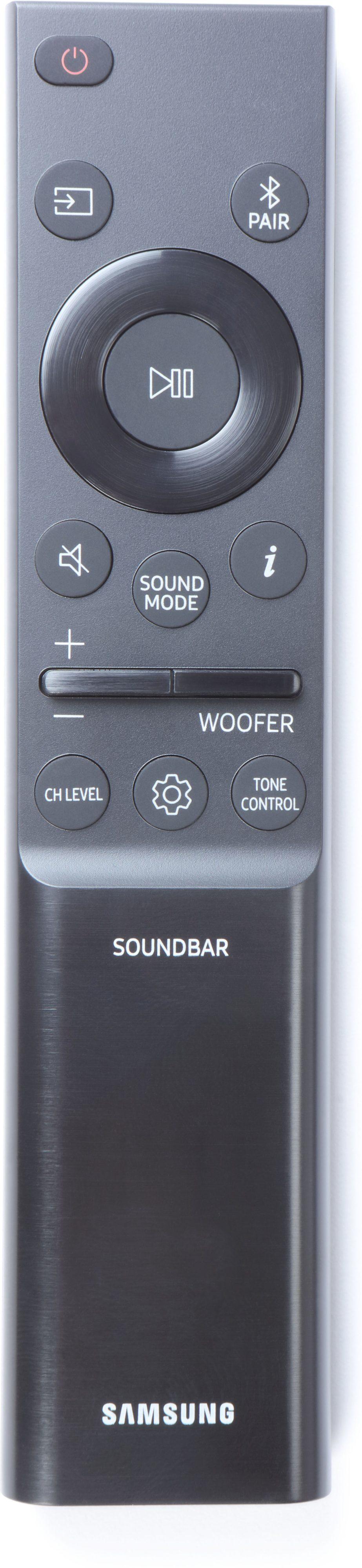
Yes, both support TV remote control through HDMI ARC/CEC. The Hisense HS2100 is Roku TV Ready for seamless integration with Roku remotes, while the Samsung HW-S700D works with most TV remotes and offers enhanced integration with Samsung TV remotes for full feature access.
The Samsung HW-S700D offers extensive smart features including voice assistant support, automatic room calibration, adaptive sound processing, and multiple streaming options. The Hisense HS2100 focuses on essential features with Bluetooth connectivity, preset sound modes, and simple remote control without advanced smart capabilities.
Both soundbars handle music well, with the Hisense HS2100 providing balanced sound suitable for most genres through Bluetooth streaming. The Samsung HW-S700D delivers superior musical performance with better instrument separation, wider soundstage, and support for high-quality streaming protocols like AirPlay and Chromecast.
The Samsung HW-S700D includes Game Mode Pro with optimized processing for gaming and spatial audio that enhances directional cues. The Hisense HS2100 offers a Game preset mode and low latency performance that works well for casual gaming, making either suitable depending on your gaming priorities and budget.
We've done our best to create useful and informative comparisons to help you decide what product to buy. Our research uses advanced automated methods to create this comparison and perfection is not possible - please contact us for corrections or questions. These are the sites we've researched in the creation of this article: rtings.com - shop.hisense-usa.com - bestbuy.com - content.syndigo.com - bestbuy.com - hisensedealers.co.ke - stuff.co.za - dtc-aus-api.hisense.com - youtube.com - manuals.plus - youtube.com - bestbuy.com - youtube.com - gallifurniture.com - hisense-usa.com - manuals.plus - uk.hisense.com - device.report - youtube.com - costco.ca - elmcreekwsa.com - gallifurniture.com - crutchfield.com - samsung.com - bestbuy.com - avsforum.com - walts.com - samsung.com - samsung.com - videoandaudiocenter.com - samsung.com - samsung.com - samsung.com - pcrichard.com

Privacy Policy
Terms and Conditions - Affiliate Policy
Home Security
© Copyright 2008-2026.
11816 Inwood Rd #1211, Dallas, TX 75244