


If you've ever watched a movie on your TV and wondered why the dialogue sounds like it's coming from underwater while explosions barely register, you're not alone. Built-in TV speakers are notoriously terrible, which is why the soundbar market has exploded over the past decade. Today we're comparing two popular options that promise to fix your audio woes without breaking the bank: the Hisense HS2100 and the Amazon Fire TV Soundbar Plus with Subwoofer.
Before diving into specifics, let's talk about what actually matters in a soundbar. The most important factor is channel configuration—this refers to how many separate audio channels the system can handle. A 2.1 system has two main speakers (left and right) plus one subwoofer for bass. A 3.1 system adds a dedicated center channel, which is crucial for dialogue clarity. The numbers might seem small, but they make a huge difference in how your content sounds.
Audio format support is equally critical but often overlooked. Modern streaming services and Blu-rays use advanced formats like Dolby Atmos, which creates three-dimensional sound by placing audio objects in space around you. If your soundbar can't decode these formats, you're missing out on the filmmaker's intended experience.
Bass response deserves special attention because it's where most TV speakers fail completely. A good subwoofer doesn't just add boom—it provides the foundation that makes dialogue clearer and music more balanced. The key specification is frequency response, measured in Hertz (Hz). Human hearing goes down to about 20Hz, but most budget soundbars only reach 50-60Hz, missing that crucial low-end rumble.
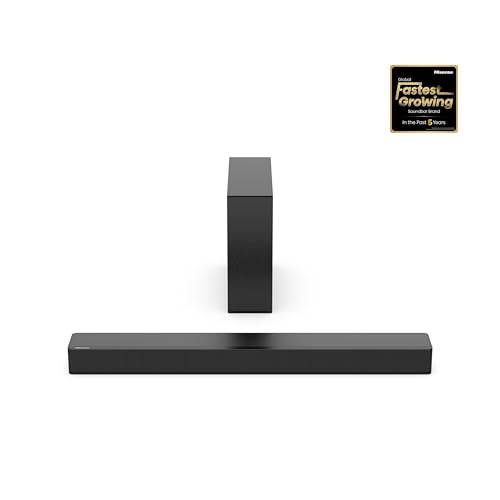
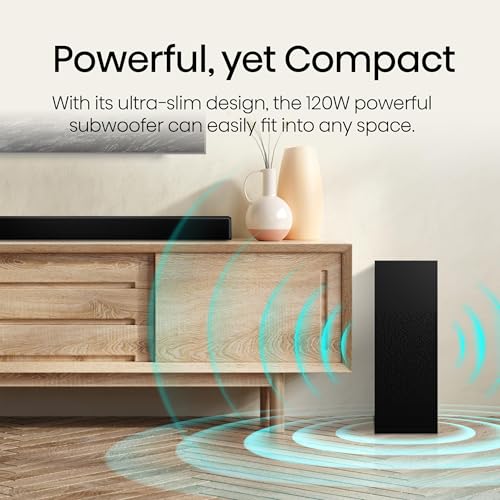
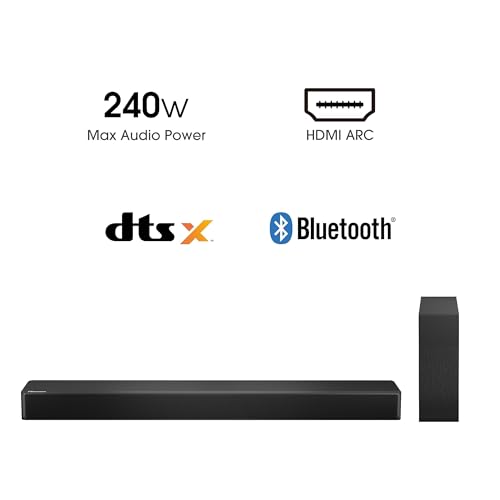
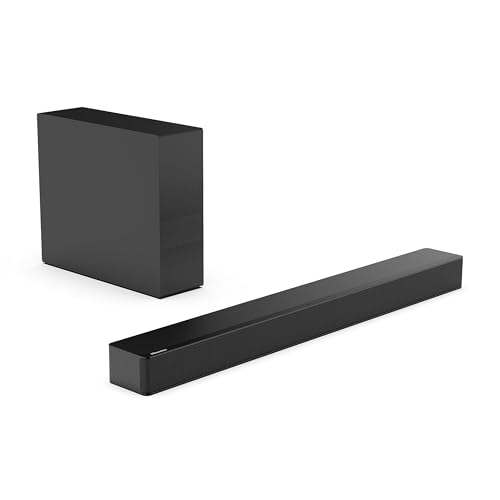
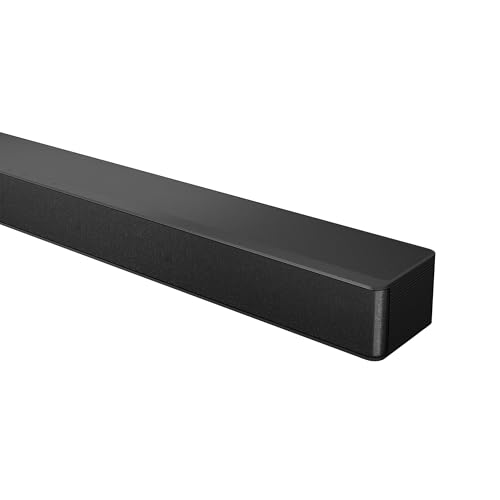
The Hisense HS2100, released in 2023, represents the "keep it simple" philosophy. At its core, it's a straightforward 2.1 system with a compact soundbar and wireless subwoofer delivering 240 watts of total power. Hisense positioned this as an entry-level option for people who just want better TV audio without complexity.
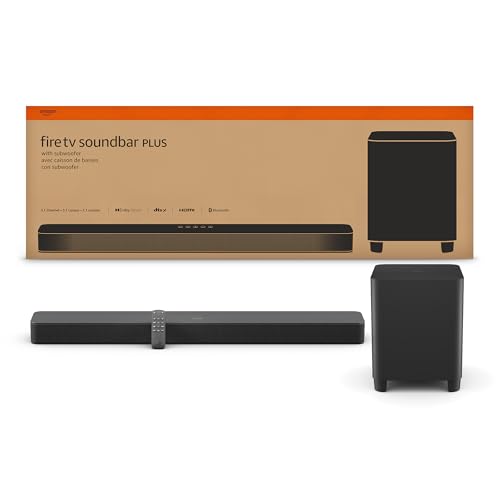
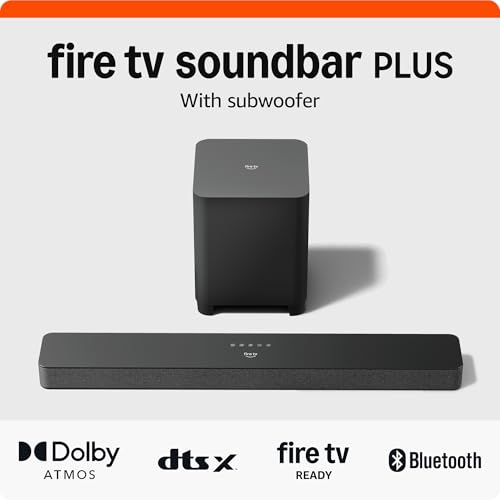
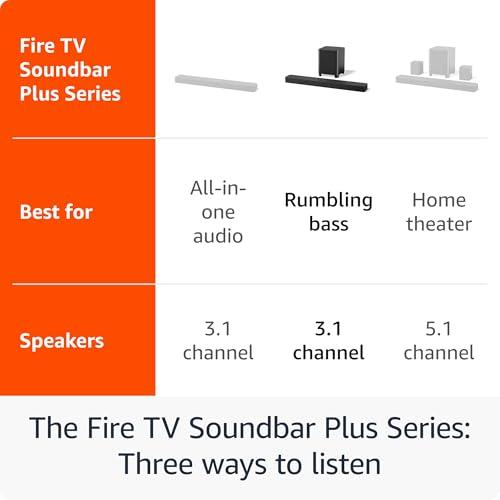
The Amazon Fire TV Soundbar Plus with Subwoofer, also from 2023, takes a more ambitious approach. It's technically a 3.1 system that can expand to full 5.1 surround sound with additional speakers. Amazon designed it primarily for their Fire TV ecosystem, though it works with any TV that has the right connections.
These different philosophies create distinct user experiences. The Hisense HS2100 focuses on delivering the biggest audio improvement for the least money and complexity. The Amazon Fire TV Soundbar Plus aims to provide modern features and expansion possibilities while remaining relatively affordable.
Based on extensive research from professional reviews and user feedback, the Hisense HS2100 delivers a warm, balanced sound signature that's particularly flattering to dialogue and vocals. This warmth comes from slightly boosted mid-bass frequencies (around 80-200Hz) that add body to voices and make the overall sound more pleasant than typical budget soundbars.
The system's frequency response spans 45Hz to 20kHz according to Hisense's specifications, which is respectable for this price range. However, real-world testing suggests the bass doesn't have much energy below 50Hz, meaning you'll get decent punch but won't feel those deep movie rumbles that shake your couch.
The Amazon Fire TV Soundbar Plus takes a different approach with what reviewers describe as a slightly "excited" sound profile—meaning it emphasizes certain frequencies to create a more dramatic effect. The bass response goes deeper than the Hisense HS2100, and the separate subwoofer provides more impactful low-end performance.
One crucial advantage of the Amazon Fire TV system is its discrete center channel. In a 3.1 configuration, dialogue gets its own dedicated speaker rather than being mixed between left and right channels. This typically results in clearer, more focused speech that doesn't get lost when action sequences get busy.
Bass isn't just about making explosions louder—it's fundamental to how we perceive audio quality. When done right, a subwoofer makes everything sound more natural by providing the foundation that allows mid-range frequencies to shine.
The Hisense HS2100 includes a 5.25-inch wireless subwoofer that, according to user reports, provides satisfying bass for its size. The wireless connection is convenient for placement flexibility, though some users note that the bass can sound slightly "boomy"—meaning it emphasizes certain frequencies over others rather than providing smooth, even response.
The Amazon Fire TV system's subwoofer goes deeper and provides more controlled bass response. Professional reviewers consistently note that it delivers more impactful low-end performance, especially for movie content. However, they also point out that it can be somewhat "one-note," lacking the nuanced low-mid emphasis found in more expensive systems.
For movie watching, this difference is significant. Action sequences, explosions, and even musical scores rely on deep bass to create the intended emotional impact. If you're primarily upgrading for better movie experiences, the Amazon Fire TV system has a clear advantage here.
Here's where things get interesting, because both systems excel at dialogue but through different methods. The Hisense HS2100 achieves excellent speech clarity through its balanced midrange response. The warm sound signature prevents voices from sounding thin or harsh, making it particularly good for TV shows, news, and dialogue-heavy content.
The Amazon Fire TV Soundbar Plus uses a more direct approach with its dedicated center channel. This physical separation means dialogue literally comes from a different speaker than music and sound effects, providing cleaner separation and better intelligibility during complex scenes. It also includes a dialogue enhancement feature that can boost speech levels when the mix gets busy.
Both systems include preset modes optimized for different content types. The Hisense HS2100 offers six options including a specific "News" mode for speech-heavy content, while the Amazon Fire TV system provides four main presets plus manual adjustment options.
This is where the fundamental difference between these systems becomes most apparent. The Hisense HS2100 uses DTS Virtual:X technology to simulate surround sound from its 2.1 configuration. Virtual surround processing analyzes audio and tries to create the impression of sounds coming from around you using psychoacoustic tricks.
The results are mixed. Virtual surround can make the soundstage feel wider than the physical soundbar, but it can't truly place sounds behind you or create the immersive bubble that real surround speakers provide. It's better than plain stereo, but it's not the same as having actual speakers around your room.
The Amazon Fire TV Soundbar Plus offers both virtual processing and the option to expand to real 5.1 surround with additional speakers. In its basic 3.1 configuration, it provides better front soundstage separation than the Hisense system. When expanded with rear speakers, it can deliver genuine surround effects that place sounds precisely around your listening position.
Both systems support some form of Dolby Atmos, but there's an important caveat. Neither has physical up-firing speakers (drivers that bounce sound off your ceiling), so height effects are virtualized. True Dolby Atmos requires speakers above your listening position to create realistic overhead effects.
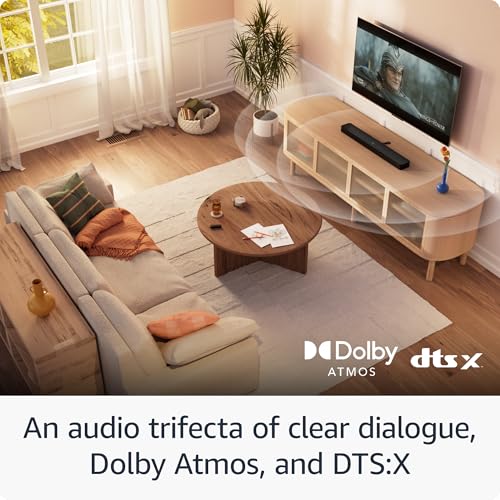
This is where the Amazon Fire TV Soundbar Plus pulls significantly ahead. It supports Dolby Atmos, DTS:X, and lossless formats like Dolby TrueHD found on Blu-rays. This means it can properly decode the audio formats used by Netflix, Disney+, Apple TV+, and other modern streaming services.
The Hisense HS2100 is limited to older formats like standard Dolby Digital and DTS. While these are still widely used, they're compressed formats that don't deliver the full quality possible from modern sources. More importantly, any multichannel content gets downmixed to stereo, so you lose the spatial information that makes movies more immersive.
This limitation matters more than you might expect. As streaming services continue to upgrade their audio quality, the Hisense system will increasingly feel outdated. The Amazon Fire TV system is better positioned to handle whatever audio formats become standard in the coming years.
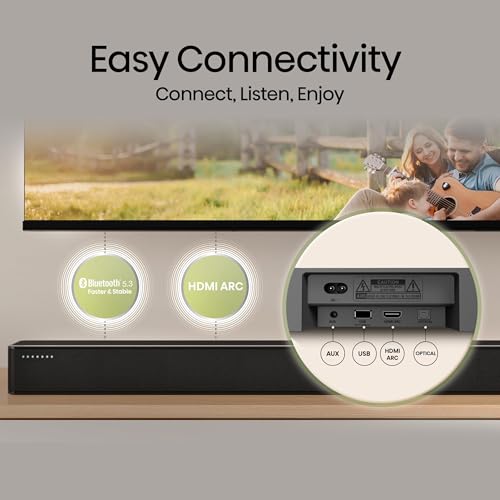
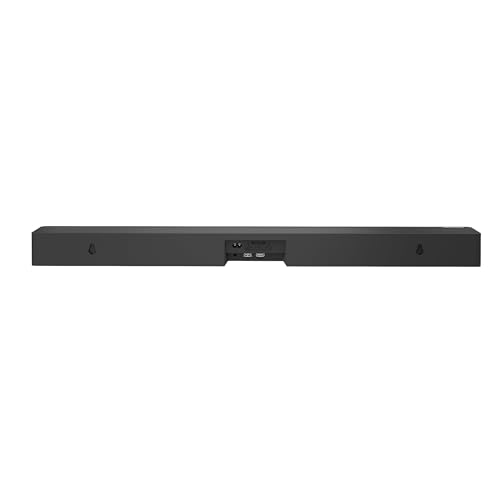
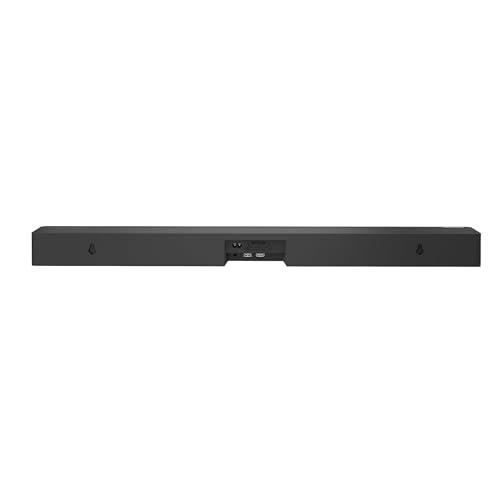
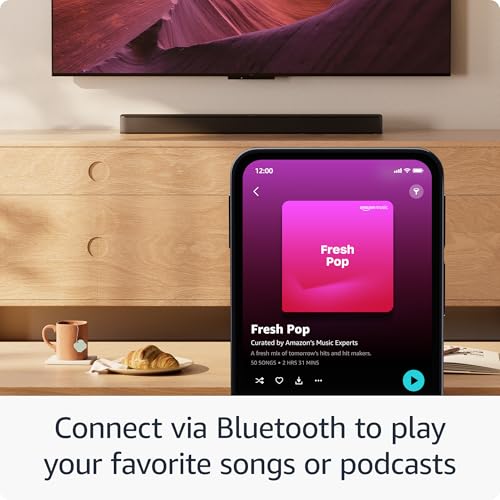
Both systems offer modern connectivity options, but with different focuses. The Hisense HS2100 includes HDMI ARC (Audio Return Channel, which sends audio from your TV back to the soundbar), optical input, Bluetooth 5.3, and even USB for playing music files. It's Roku TV Ready, meaning it integrates seamlessly with Roku TVs for simplified control.
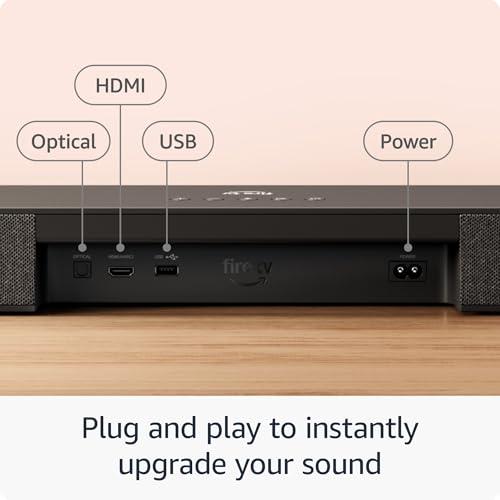
The Amazon Fire TV Soundbar Plus steps up with HDMI eARC (enhanced Audio Return Channel), which provides higher bandwidth for lossless audio formats. It also offers deep integration with Fire TV devices, allowing more granular audio adjustments through the TV's settings menu.
One quirk of the Amazon system is that despite the "Fire TV" branding, it doesn't include streaming capabilities or Alexa voice control. It's purely a soundbar that works well with Fire TV devices, not a streaming device itself.
At the time of writing, these systems occupy different value categories. The Hisense HS2100 typically costs significantly less than the Amazon Fire TV Soundbar Plus with Subwoofer—roughly half the price in most markets.
For the Hisense HS2100, you're paying for maximum audio improvement per dollar spent. It delivers dramatically better sound than TV speakers with minimal complexity. The warm sound signature is genuinely pleasant, and the wireless subwoofer provides satisfying bass for the price point.
The Amazon Fire TV system costs substantially more but includes modern audio format support, better bass response, discrete channel separation, and expansion possibilities. Whether that's worth the extra money depends on your priorities and budget.
The Hisense HS2100 prioritizes simplicity. The subwoofer pairs automatically with the soundbar, and setup typically involves plugging in power cables and connecting one HDMI cable to your TV. The system includes auto power-on features that sync with your TV, making daily use seamless.
The Amazon Fire TV Soundbar Plus requires more initial setup, especially if you're adding the subwoofer and rear speakers. However, the components come pre-paired, so it's mostly a matter of positioning everything correctly and running through the connection process.
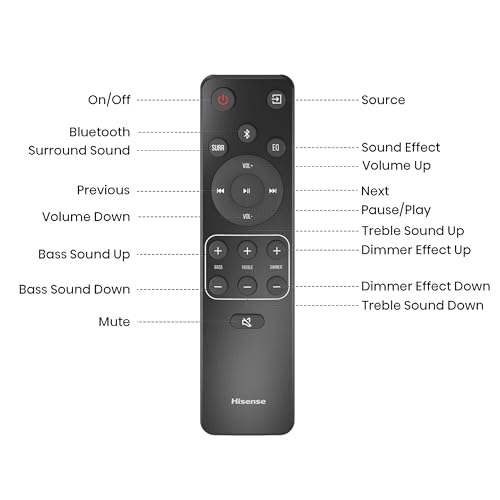
Both systems include physical controls on the soundbar for basic functions, but most features require the included remote controls. The Hisense remote is straightforward with dedicated buttons for the six EQ presets, while the Amazon remote includes more adjustment options like dialogue enhancement and surround modes.
For dedicated home theater use, the Amazon Fire TV Soundbar Plus is the clear winner, particularly when expanded to 5.1. The combination of modern format support, discrete channel separation, and genuine surround capabilities creates a more cinematic experience.
However, the Hisense HS2100 shouldn't be dismissed for movie watching. Its warm sound signature is actually quite pleasant for films, and the virtual surround processing does add some spatial effect. It's more of a "good enough" solution that punches above its price point.
The key consideration is room size and usage patterns. In a smaller room where you're sitting relatively close to the TV, the Hisense system can provide satisfying movie experiences. In larger spaces or dedicated theater rooms, the Amazon system's expandability and higher output become more important.
Choose the Hisense HS2100 if you:
Choose the Amazon Fire TV Soundbar Plus with Subwoofer if you:
Both soundbars succeed at their intended goals, but they serve different users. The Hisense HS2100 maximizes audio improvement per dollar spent, making it an excellent choice for budget-conscious buyers who just want their TV to sound significantly better. It's genuinely pleasant to listen to and handles dialogue beautifully.
The Amazon Fire TV Soundbar Plus with Subwoofer costs considerably more but provides modern features, better bass, and expansion possibilities that justify the price for users building a more complete home theater experience. Its support for current audio formats makes it a better long-term investment.
In my research, I've found that most people underestimate how much better audio can improve their viewing experience. Either of these systems will provide a dramatic upgrade over built-in TV speakers, but the Amazon system offers more room to grow and adapt to changing technology. However, if budget is your primary concern, the Hisense HS2100 delivers remarkable value and will make you genuinely happy with the improvement it provides.
The choice ultimately comes down to whether you want the best possible performance for your money right now (Hisense HS2100) or prefer to invest a bit more for features and capabilities you'll appreciate over several years (Amazon Fire TV Soundbar Plus). Both are solid choices that will transform your TV watching experience—just in different ways.
| Hisense HS2100 2.1 Channel 240W Soundbar System | Amazon Fire TV Soundbar Plus Subwoofer |
|---|---|
| Channel Configuration - Determines dialogue clarity and surround capabilities | |
| 2.1 channels (stereo + subwoofer, downmixes all content) | 3.1 channels (discrete center for dialogue, expandable to 5.1) |
| Audio Format Support - Critical for modern streaming content compatibility | |
| Dolby Digital, DTS, PCM only (no Atmos support) | Dolby Atmos, DTS:X, Dolby TrueHD (virtual height effects) |
| Bass Extension - Affects movie impact and music fullness | |
| 45Hz-20kHz with 5.25" wireless subwoofer | Deeper bass response with larger external subwoofer |
| Maximum Power Output - Determines room-filling capability | |
| 240W total (soundbar 120W + subwoofer 120W) | Higher total output with dedicated amplification per channel |
| Connectivity Options - Affects device compatibility and audio quality | |
| HDMI ARC, Optical, Bluetooth 5.3, USB, 3.5mm AUX | HDMI eARC (higher bandwidth), Optical, Bluetooth 5.0, USB |
| Sound Customization - Important for tailoring audio to content and preferences | |
| 6 EQ presets + manual bass/treble adjustment | 4 main presets + dialogue enhancer + independent bass/treble |
| Setup Complexity - Affects ease of installation and daily use | |
| Simple 2-piece system with automatic subwoofer pairing | More complex with subwoofer + optional rear speakers |
| Smart Integration Features - Enhances control and ecosystem compatibility | |
| Roku TV Ready certification for unified remote control | Deep Fire TV integration for enhanced audio tuning |
| Physical Design - Important for room aesthetics and TV compatibility | |
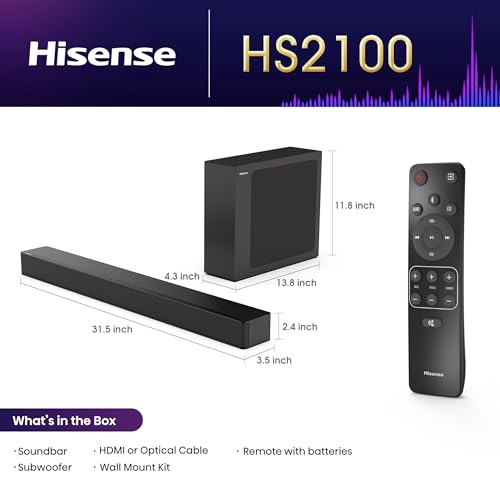
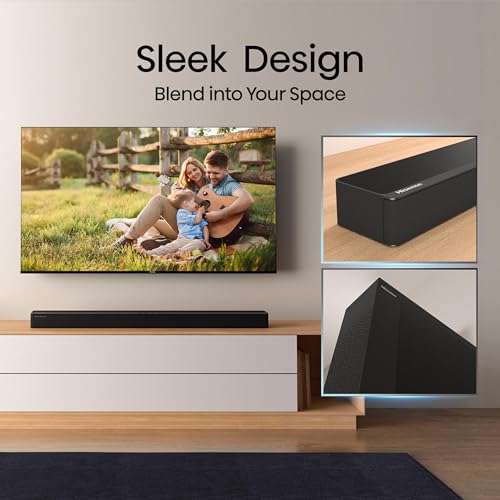
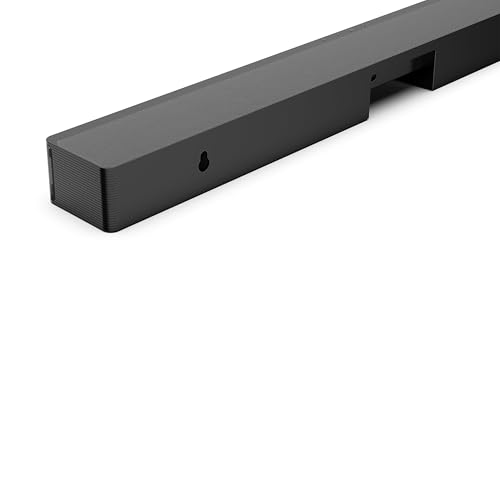
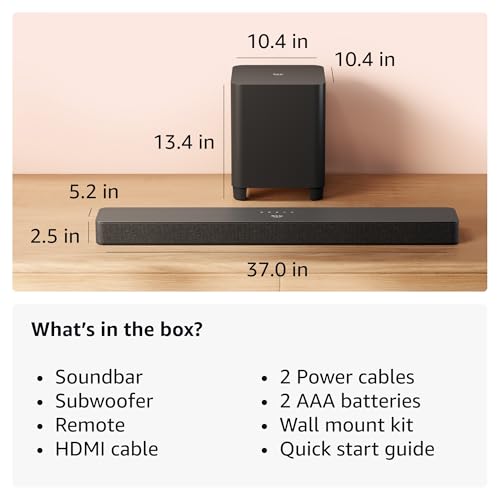
| Ultra-slim 31.5" soundbar with compact wireless subwoofer | Larger 37" soundbar with substantial external subwoofer |
| Expandability Options - Future upgrade potential without replacing entire system | |
| Fixed 2.1 configuration (no expansion possible) | Can expand to full 5.1 surround with additional speakers |
| Target Use Case - Best suited applications based on design priorities | |
| Budget TV audio upgrade with warm, dialogue-friendly sound | Modern home theater with format support and expansion capability |
The Amazon Fire TV Soundbar Plus Subwoofer is better for movies due to its 3.1 channel configuration with a dedicated center channel for clearer dialogue, plus support for modern audio formats like Dolby Atmos. The Hisense HS2100 offers good movie performance for the price with its warm sound signature, but it downmixes all surround content to stereo. For dedicated home theater use, the Amazon Fire TV system provides more immersive audio experiences.
The primary difference is channel configuration: the Hisense HS2100 is a simple 2.1 system (stereo plus subwoofer), while the Amazon Fire TV Soundbar Plus Subwoofer is a 3.1 system with discrete left, center, and right channels. This gives the Amazon system better dialogue separation and the ability to expand to full 5.1 surround sound with additional speakers.
The Amazon Fire TV Soundbar Plus Subwoofer delivers deeper, more controlled bass with its larger external subwoofer. While the Hisense HS2100 includes a capable 5.25-inch wireless subwoofer that provides satisfying bass for its price range, the Amazon system reaches lower frequencies and offers more impactful low-end performance for movies and music.
Only the Amazon Fire TV Soundbar Plus Subwoofer supports Dolby Atmos, along with DTS:X and other modern audio formats. The Hisense HS2100 is limited to standard Dolby Digital and DTS formats. However, both systems use virtual processing for height effects since neither has physical up-firing speakers.
The Hisense HS2100 is significantly easier to set up with just two components that pair automatically. The Amazon Fire TV Soundbar Plus Subwoofer requires more complex setup, especially when adding the subwoofer and optional rear speakers, though the components do come pre-paired from the factory.
The Amazon Fire TV Soundbar Plus Subwoofer can expand to a complete 5.1 surround system by adding rear satellite speakers. The Hisense HS2100 cannot be expanded beyond its 2.1 configuration and relies on DTS Virtual:X processing to simulate surround effects from its stereo setup.
Both excel at dialogue but through different methods. The Amazon Fire TV Soundbar Plus Subwoofer uses a dedicated center channel that physically separates dialogue from other audio, plus includes a dialogue enhancement feature. The Hisense HS2100 achieves excellent speech clarity through its balanced midrange and warm sound signature, making it particularly good for TV shows and news.
The Hisense HS2100 offers HDMI ARC, optical, Bluetooth 5.3, USB, and 3.5mm AUX inputs. The Amazon Fire TV Soundbar Plus Subwoofer provides HDMI eARC (higher bandwidth), optical, Bluetooth 5.0, and USB connectivity. The Amazon system's eARC support allows for lossless audio formats from compatible TVs.
The Hisense HS2100 offers exceptional value for budget-conscious buyers, delivering significant audio improvement over TV speakers at an entry-level price. The Amazon Fire TV Soundbar Plus Subwoofer costs more but provides modern format support, better bass, and expansion capabilities that justify the higher price for users wanting a more complete home theater experience.
Yes, both the Hisense HS2100 and Amazon Fire TV Soundbar Plus Subwoofer work with any TV that has HDMI ARC or optical audio output. The Hisense system is Roku TV Ready certified for enhanced integration with Roku TVs, while the Amazon system offers deeper integration with Fire TV devices but works universally with other brands.
The Amazon Fire TV Soundbar Plus Subwoofer achieves higher maximum volume levels and is better suited for larger rooms, especially when expanded with rear speakers. The Hisense HS2100 reaches adequate volume for small to medium rooms but may show compression artifacts at maximum levels in larger spaces.
The Hisense HS2100 provides six EQ presets (Movie, Music, News, Sport, Night, Game) plus manual bass and treble adjustment. The Amazon Fire TV Soundbar Plus Subwoofer offers four main presets (Film, Music, Sport, Night) with independent bass/treble controls and a dedicated dialogue enhancement feature. Both systems allow you to tailor the sound to different content types and personal preferences.
We've done our best to create useful and informative comparisons to help you decide what product to buy. Our research uses advanced automated methods to create this comparison and perfection is not possible - please contact us for corrections or questions. These are the sites we've researched in the creation of this article: rtings.com - shop.hisense-usa.com - bestbuy.com - content.syndigo.com - bestbuy.com - hisensedealers.co.ke - stuff.co.za - dtc-aus-api.hisense.com - youtube.com - manuals.plus - youtube.com - bestbuy.com - youtube.com - gallifurniture.com - hisense-usa.com - manuals.plus - uk.hisense.com - device.report - youtube.com - costco.ca - elmcreekwsa.com - gallifurniture.com - rtings.com - cordbusters.co.uk - techradar.com - youtube.com - t3.com - hometechnologyreview.com - youtube.com - hometechnologyreview.com - whathifi.com - developer.amazon.com - manuals.plus - dolby.com

Privacy Policy
Terms and Conditions - Affiliate Policy
Home Security
© Copyright 2008-2026.
11816 Inwood Rd #1211, Dallas, TX 75244