


When your TV's built-in speakers sound like they're coming from inside a cardboard box, it's time for an upgrade. But the soundbar market can feel overwhelming, with options ranging from basic audio improvements to full home theater replacements. Today we're comparing two fundamentally different approaches: the budget-friendly Hisense HS2100 2.1 channel system and the premium TCL Q85H 7.1.4 surround setup.
At the time of writing, these products represent a roughly five-fold price difference, making this less about choosing between similar options and more about understanding whether premium features justify the investment. Both were released in 2024, reflecting the current state of soundbar technology, but they target completely different user needs and budgets.
The soundbar category has evolved dramatically over the past decade. What started as simple speaker bars designed to improve TV dialogue has expanded into sophisticated audio systems capable of rivaling traditional home theater setups. The key breakthrough has been the development of psychoacoustic processing—technology that tricks your brain into perceiving surround sound from speakers positioned in front of you.
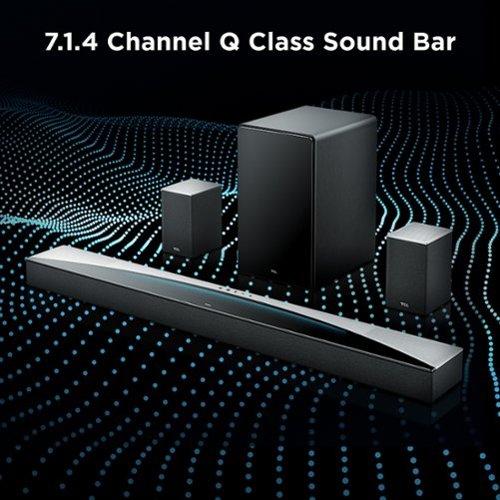
Channel configuration tells the whole story. The numbers represent left/right channels, surround channels, and height channels respectively. A 2.1 system like the Hisense HS2100 includes two front speakers plus a subwoofer (the ".1" represents the dedicated bass channel). The TCL Q85H's 7.1.4 configuration is far more complex: seven main channels (left, center, right, plus four surround), one subwoofer, and four height channels that bounce sound off your ceiling to create overhead effects.
This difference fundamentally shapes what each system can accomplish. The Hisense HS2100 must rely on digital signal processing (DSP) to simulate surround effects from its stereo configuration, while the TCL Q85H can physically place sounds around your listening space using dedicated speakers.
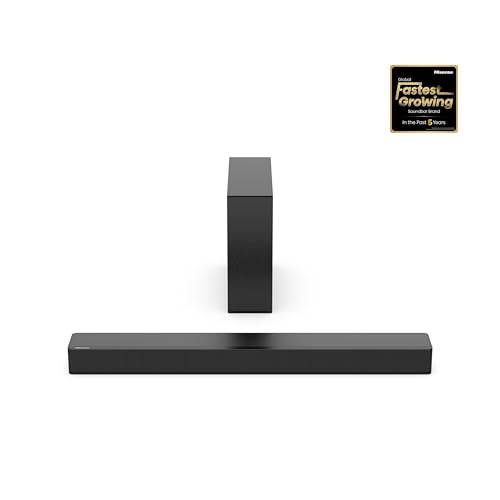
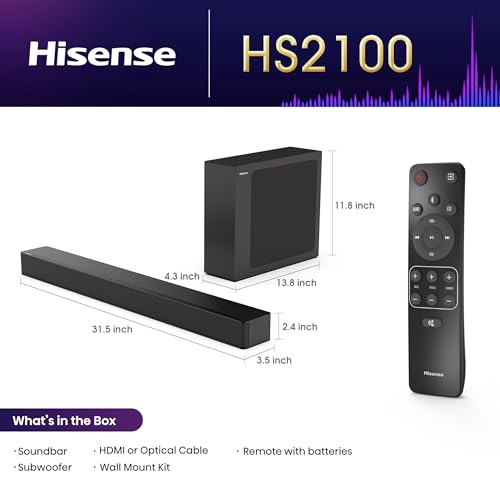
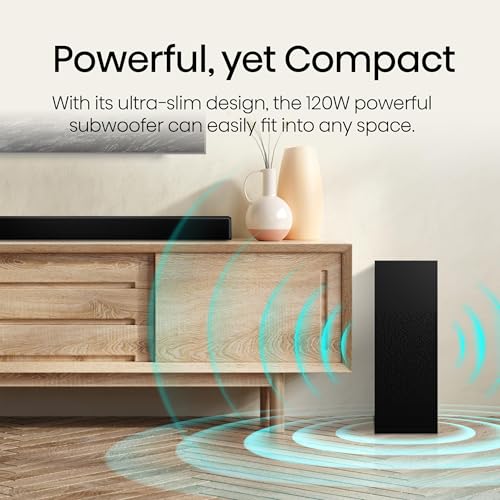
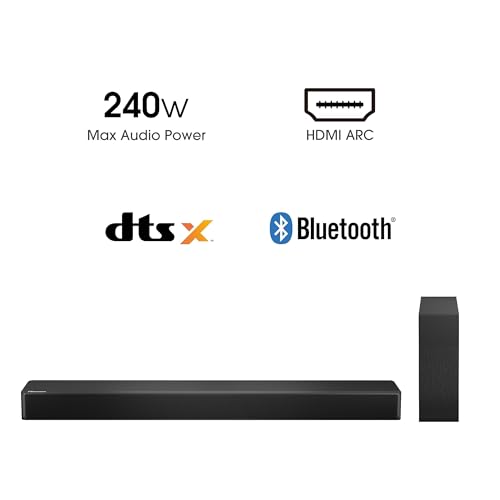
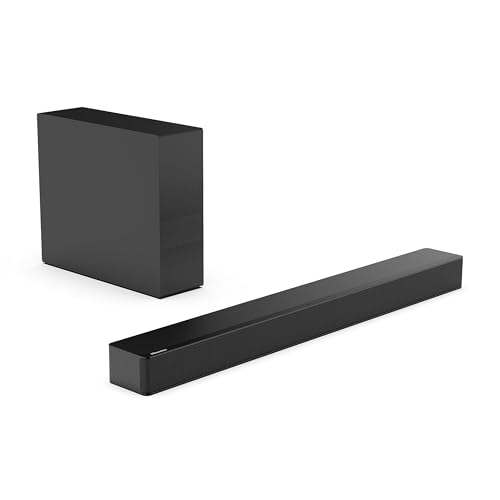
Released in 2024, the Hisense HS2100 represents remarkable engineering efficiency at an ultra-low price point. With 240 watts of total power split between the main bar (120W) and wireless subwoofer (120W), it delivers genuine audio improvement over TV speakers without breaking the bank.
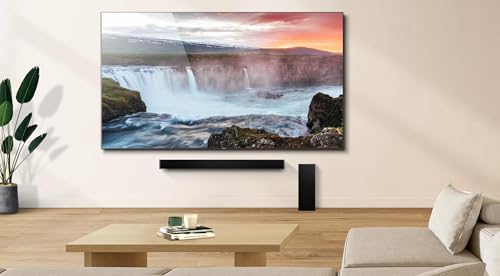
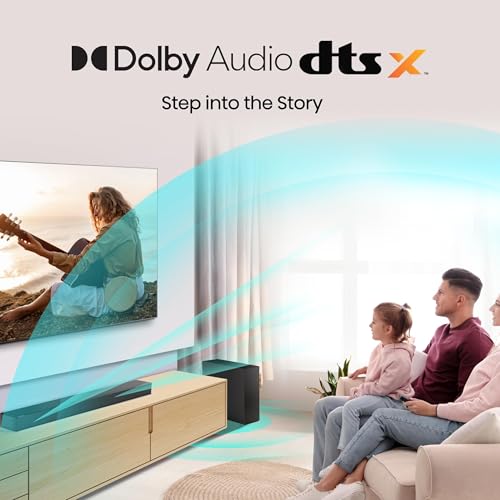
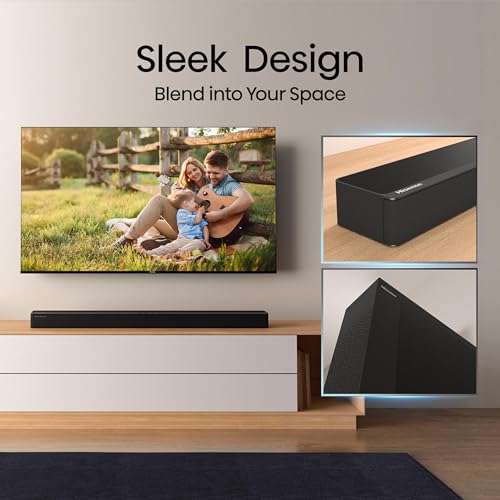
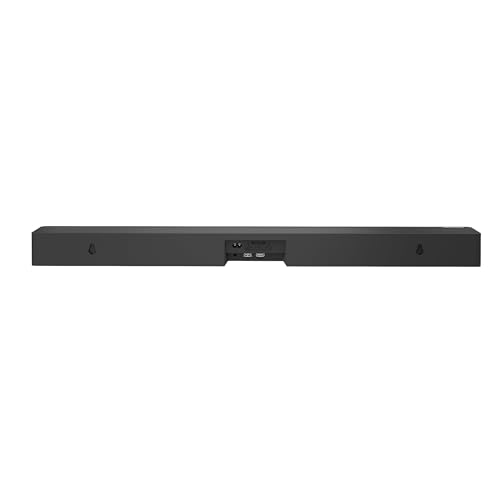
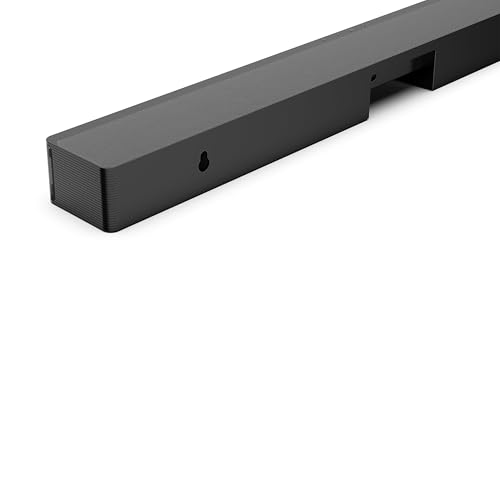
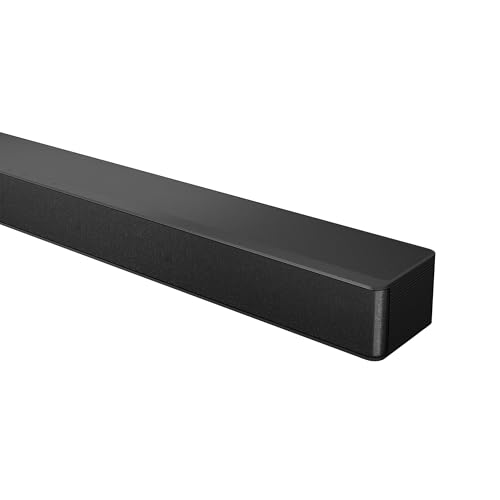
The soundbar itself measures just over 31 inches wide and under 2.5 inches tall, making it compatible with virtually any TV setup without blocking the screen. More importantly, it includes DTS Virtual:X processing—a technology typically found in significantly more expensive systems. Virtual:X analyzes incoming audio and applies psychoacoustic algorithms to create the impression of height and surround effects from the stereo configuration.
Based on our research of user experiences and professional measurements, the Hisense HS2100 delivers a warm, slightly bass-heavy sound signature that works well for most TV content. The frequency response extends down to about 45Hz on the low end, which means you'll get satisfying bass punch for explosions and music, though the very deepest sub-bass found in premium systems isn't present. This limitation is physics, not engineering—a 5.25-inch subwoofer simply cannot move enough air to reproduce the lowest frequencies at high volumes.
The wireless subwoofer deserves special mention. Unlike many budget systems that use wired subs or integrated bass drivers, Hisense included a separate wireless unit that automatically pairs with the main bar. This provides placement flexibility and ensures the bass response isn't compromised by the soundbar's slim profile. From our analysis of user feedback, the automatic pairing works reliably, though some users with Hisense TVs report occasional connectivity quirks that require power cycling.
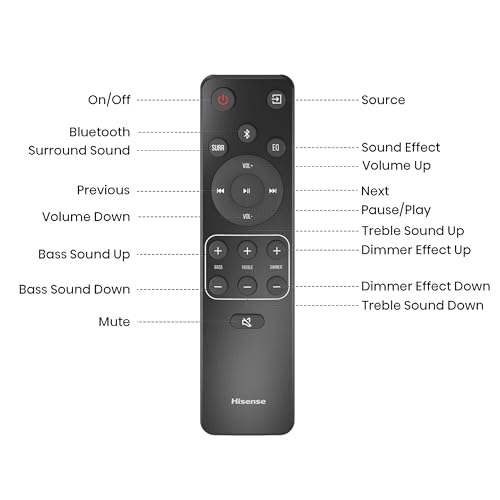
Six EQ presets (Movie, Music, News, Sports, Night, and Game) provide basic sound tailoring, and the inclusion of manual bass and treble controls gives users more adjustment capability than typical budget bars. The Night mode is particularly well-implemented, compressing dynamic range so late-night viewing doesn't disturb others—a feature that shows thoughtful engineering beyond just hitting a price point.
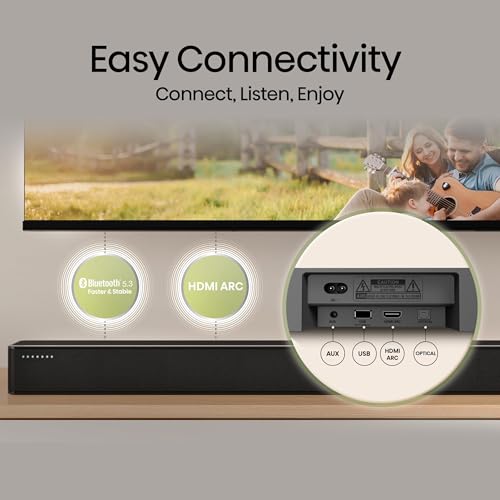
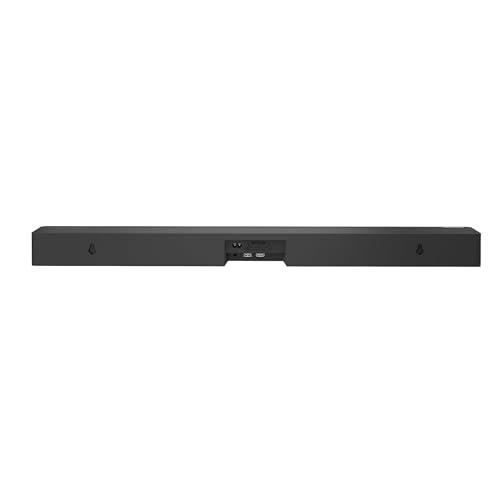
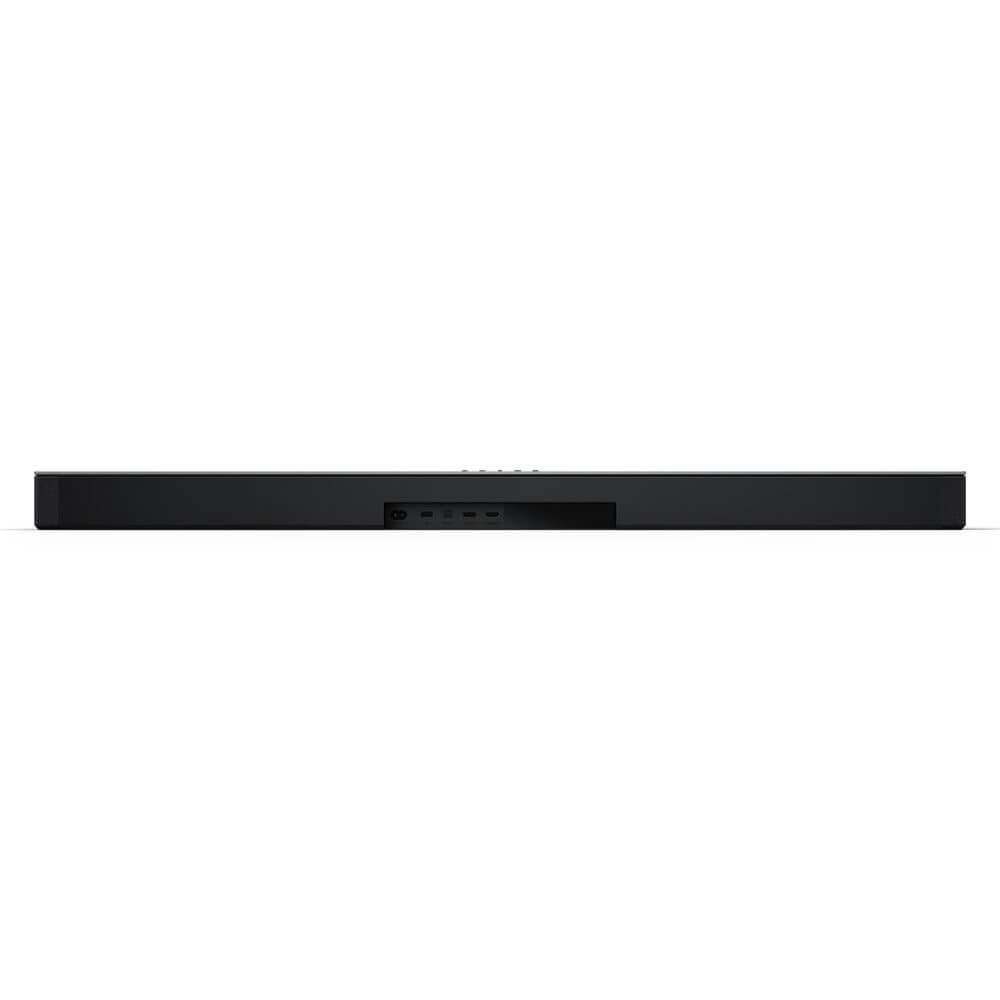
Connectivity options cover the essentials: HDMI ARC with CEC (Consumer Electronics Control, which lets your TV remote control the soundbar), optical digital input, 3.5mm analog input, and Bluetooth 5.3 for wireless music streaming. The Bluetooth 5.3 specification is notably current for a budget device, providing better range and stability than older versions.
However, limitations become apparent when dealing with surround content. All multichannel audio gets downmixed to stereo before the Virtual:X processing attempts to recreate spatial effects. This works reasonably well for dialogue-heavy content but can't match the precision of discrete surround channels for action movies or gaming.
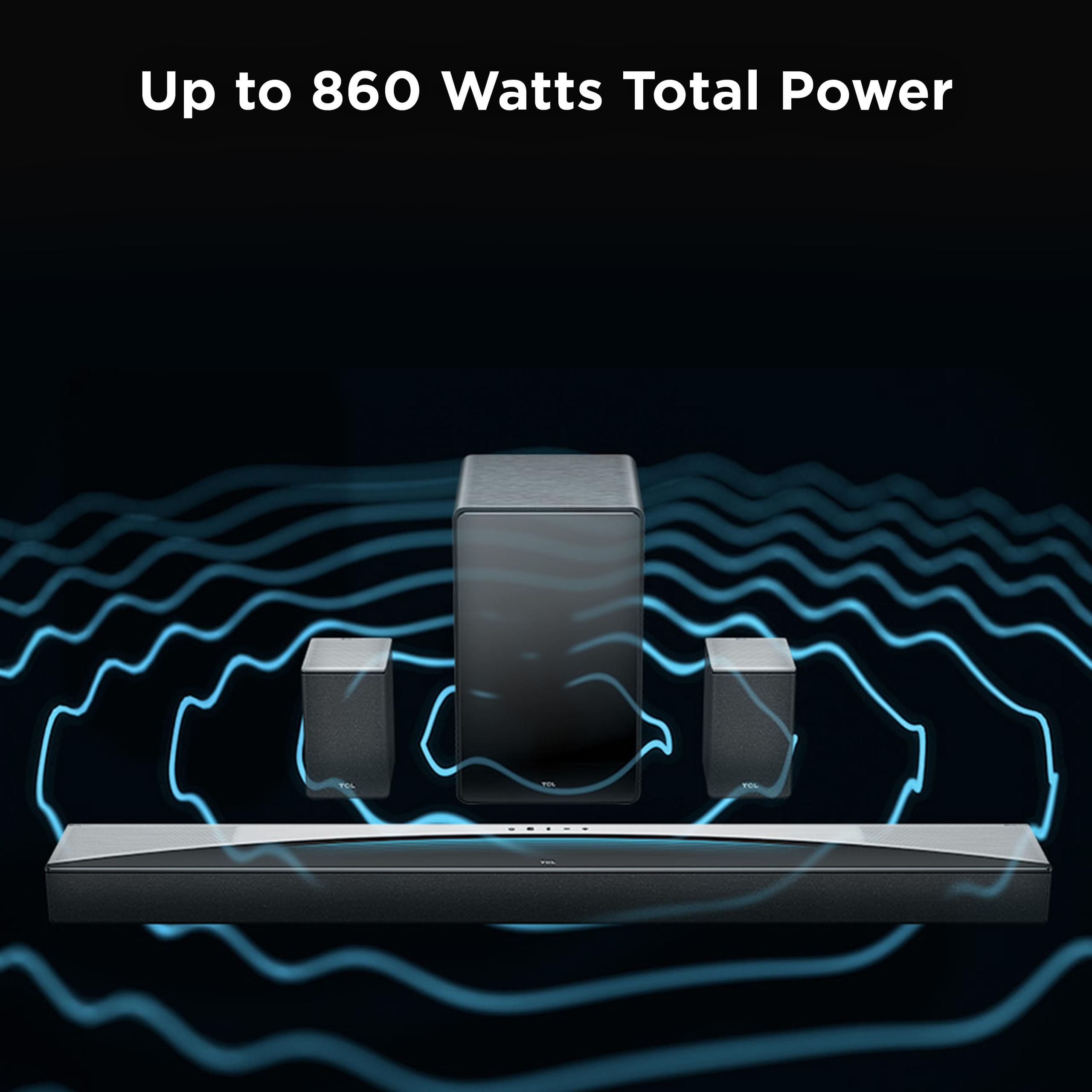
The TCL Q85H, also released in 2024, represents TCL's serious entry into premium home audio. With 860 watts of total power distributed across 15 individual speakers, it's not just louder than the Hisense HS2100—it's fundamentally different in capability.
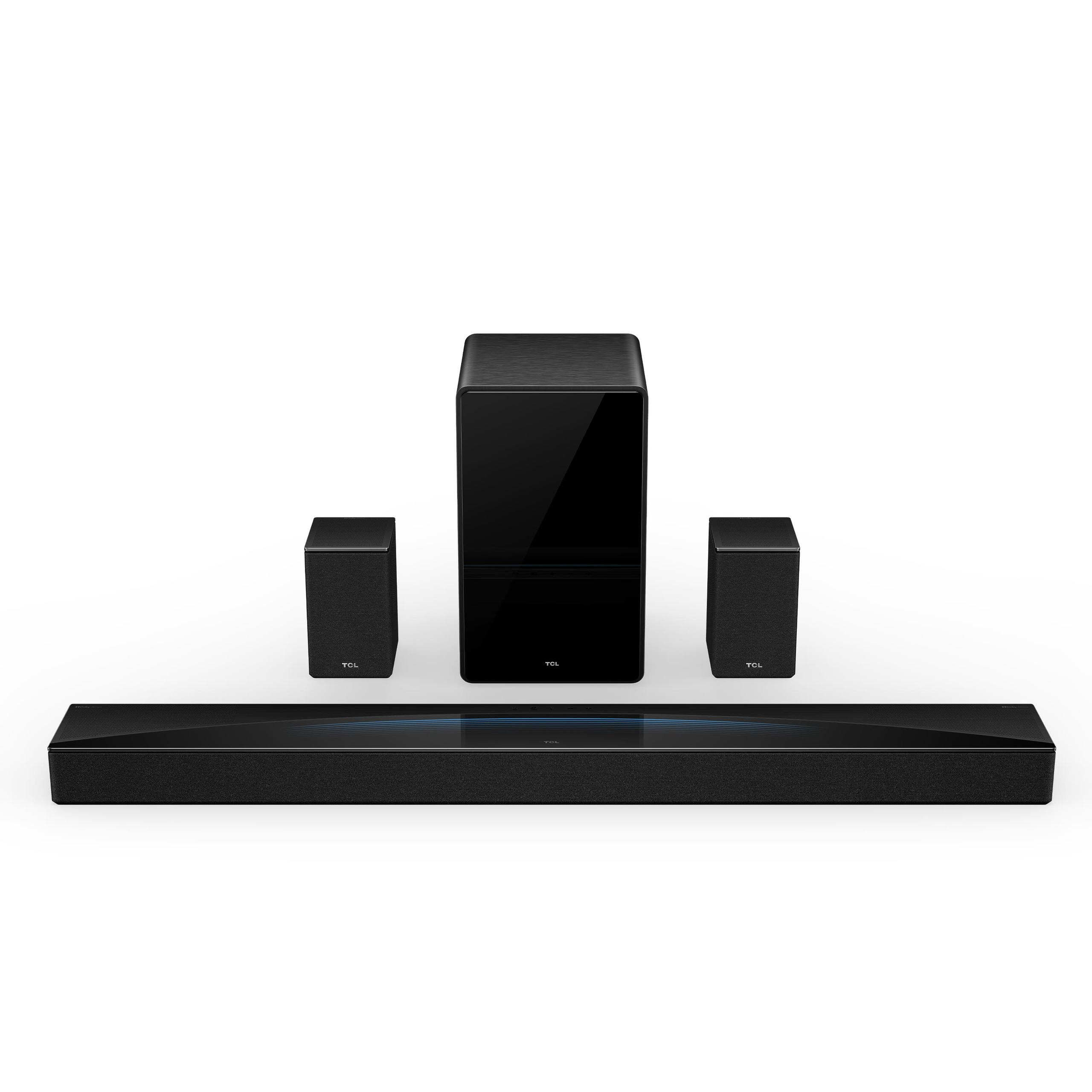
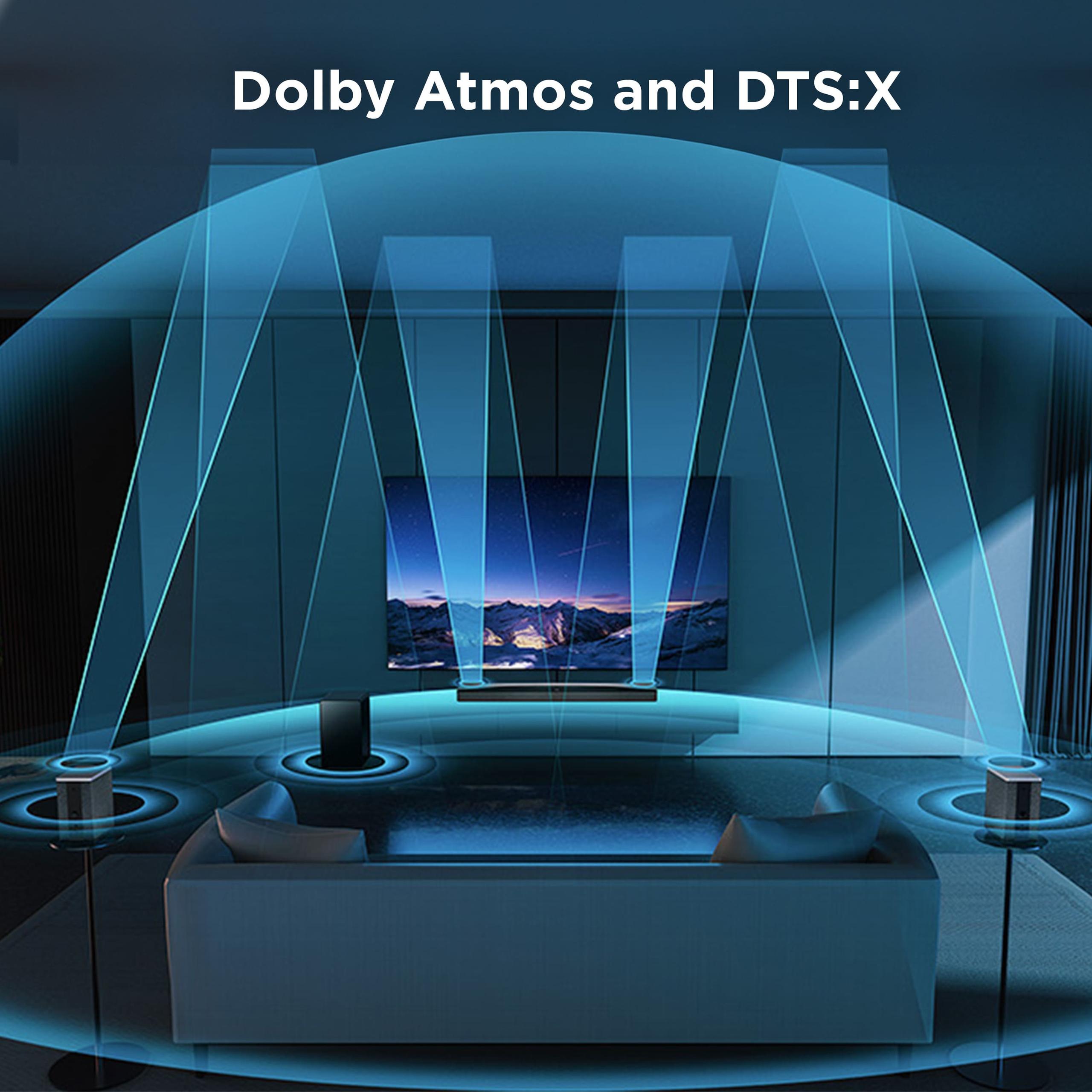
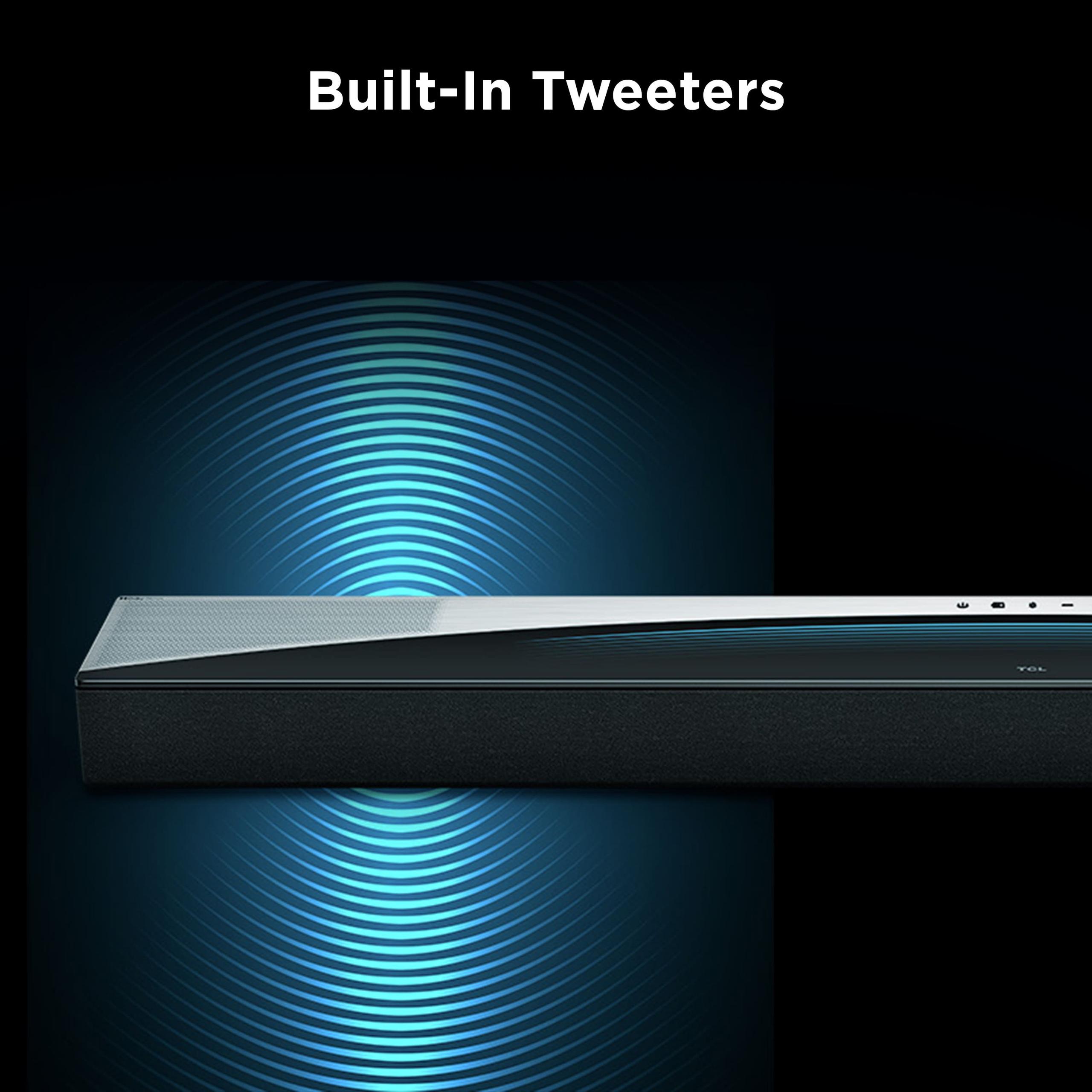
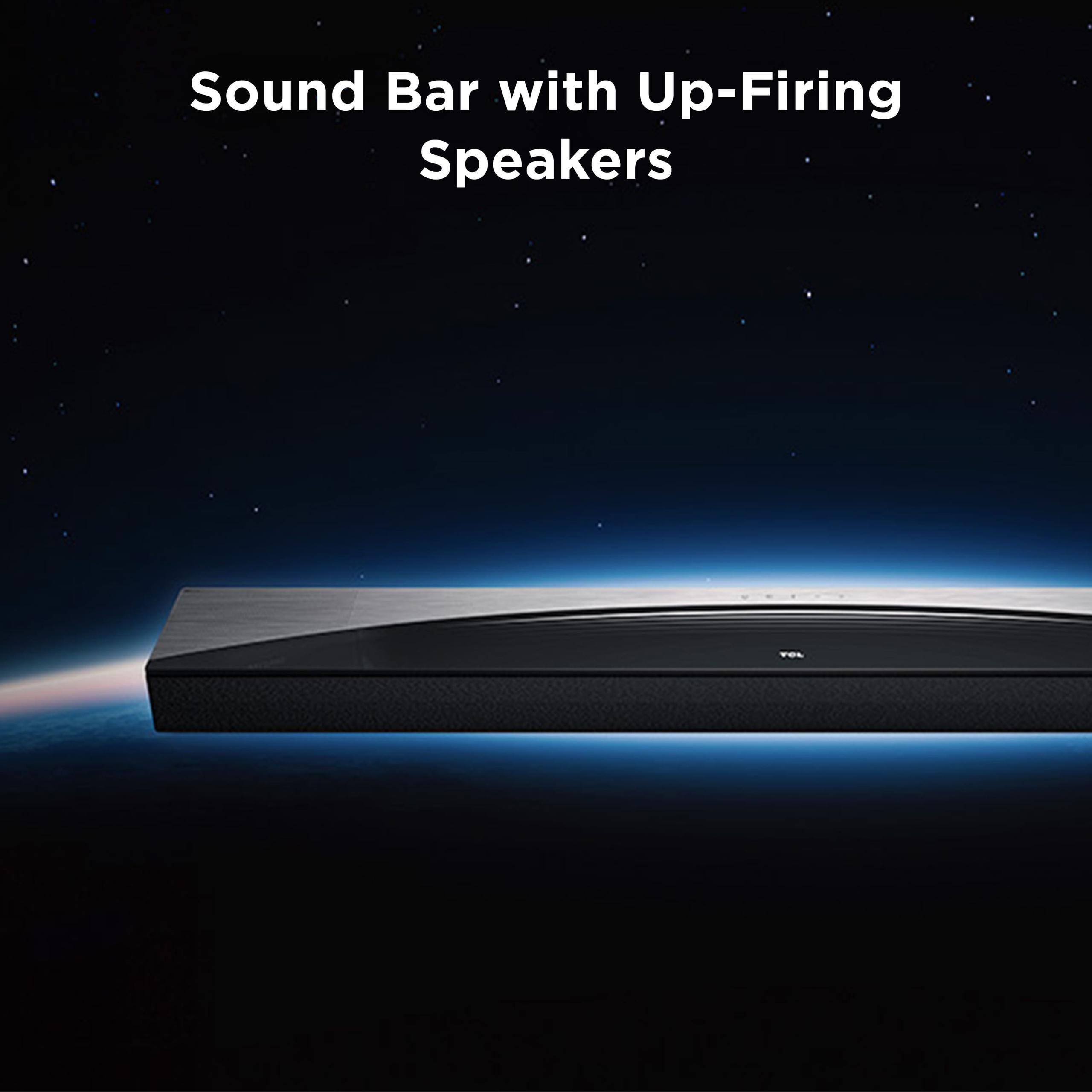
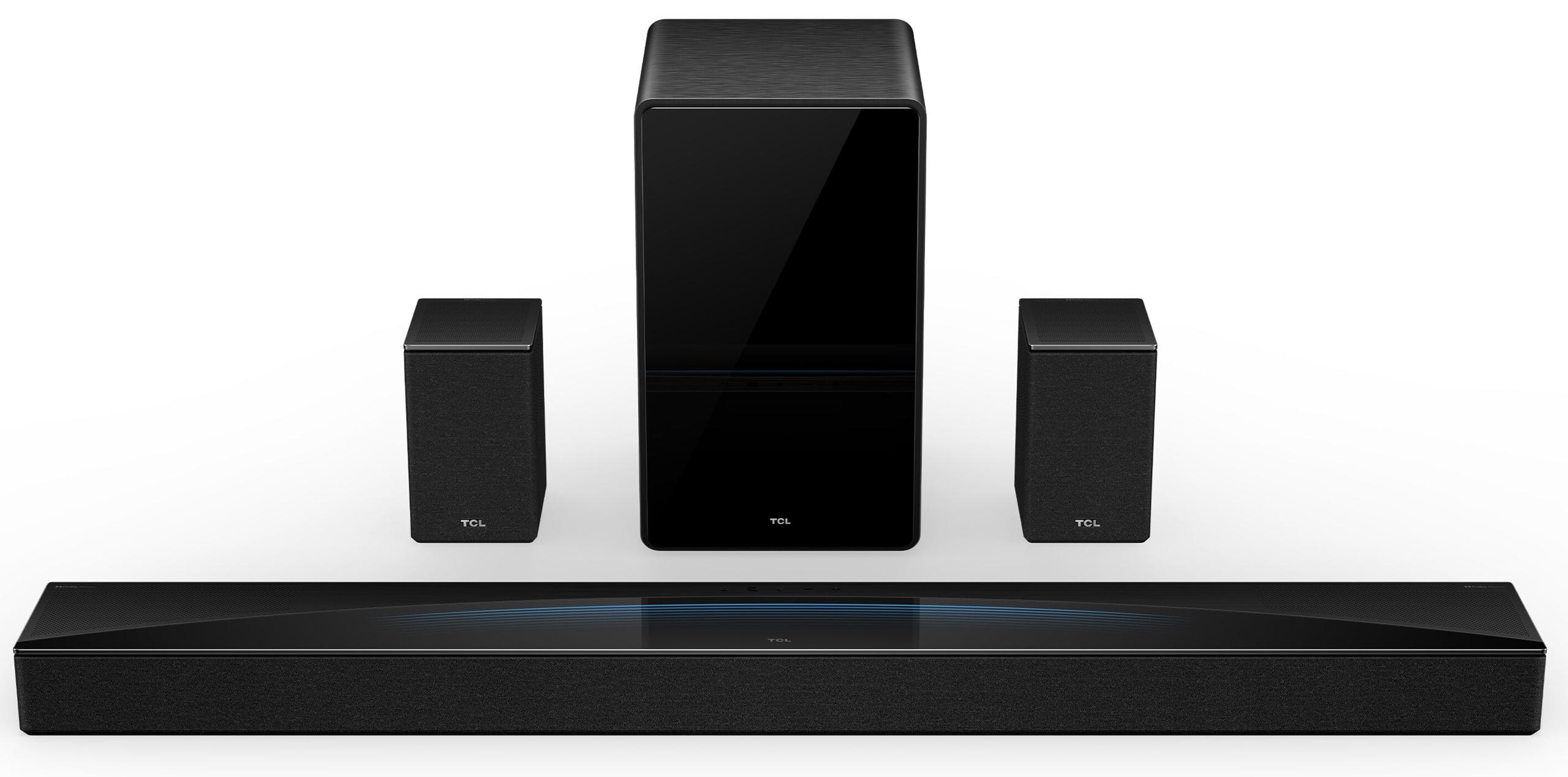
The 7.1.4 channel configuration includes dedicated drivers for each audio channel. The main soundbar houses left, center, and right channels plus four upward-firing drivers for Dolby Atmos height effects. Wireless rear surround speakers provide true behind-the-listener positioning, while a separate wireless subwoofer handles low frequencies with a larger 6.5-inch driver.
Dolby Atmos represents the current pinnacle of home audio technology. Unlike traditional surround sound that places audio around you horizontally, Atmos adds a height dimension by bouncing sound off your ceiling. The TCL Q85H's four dedicated height channels can precisely place helicopters overhead, rain falling from above, or subtle ambient effects that create genuine three-dimensional soundscapes.
Based on professional reviews and user feedback we've analyzed, the TCL Q85H excels in dynamic range—the difference between the quietest and loudest sounds it can reproduce. This translates to explosive action sequences that maintain clarity even at reference volume levels (around 85dB, the cinema standard), while subtle details remain audible during quiet moments.
The included wireless rear speakers solve home theater's biggest challenge: getting surround channels behind your seating position without running wires across the room. Each rear speaker includes both traditional surround drivers and upward-firing units for rear height channels, creating a complete 360-degree audio environment.
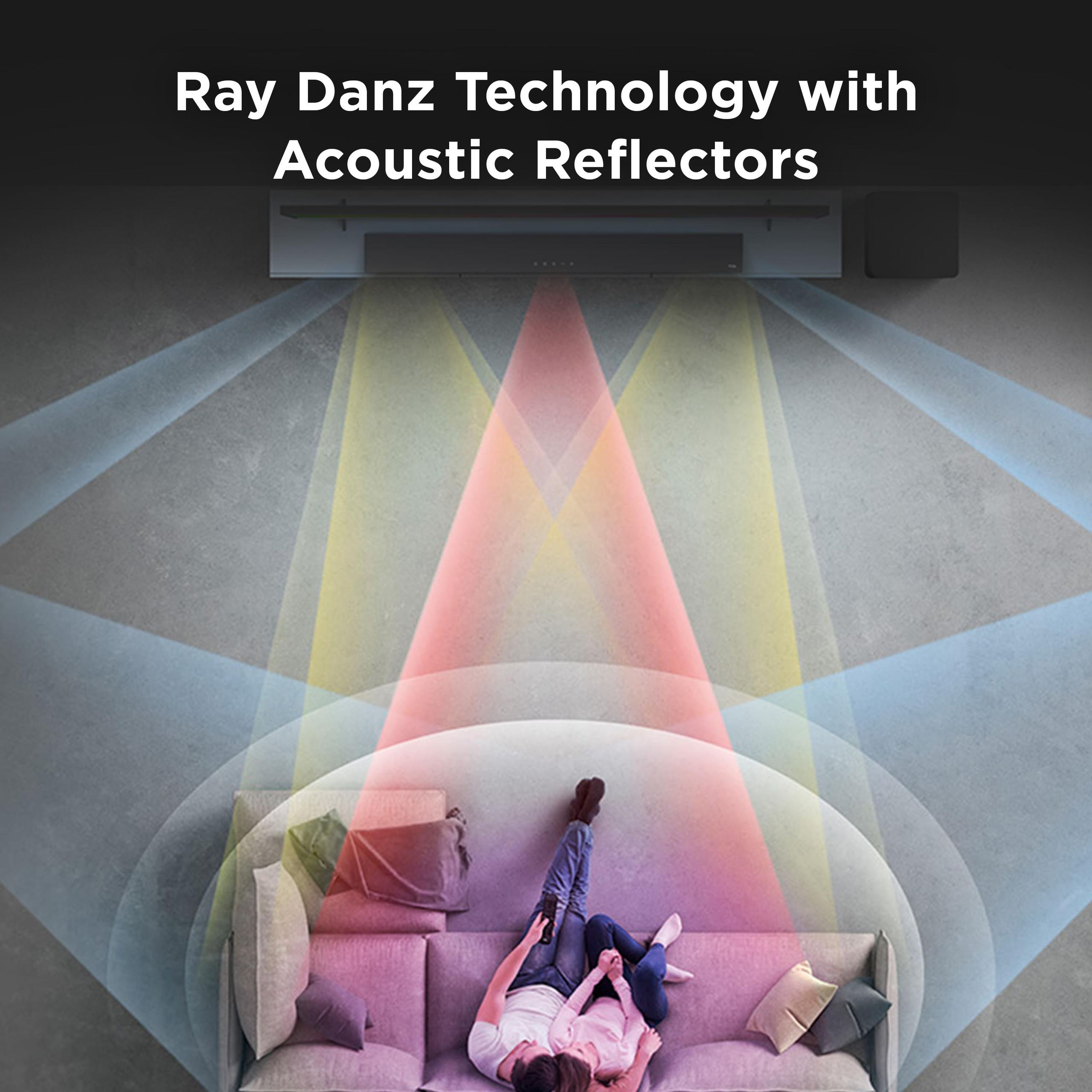
TCL's RayDanz technology deserves explanation. This proprietary system uses acoustic reflectors and precise driver placement to widen the soundstage beyond the physical boundaries of the speakers. Combined with room calibration through the AI Sonic system, the TCL Q85H can adapt its output to different room acoustics automatically.
The mobile app provides extensive control options, including detailed EQ adjustment, individual channel level controls, and various listening modes optimized for different content types. This level of customization typically requires professional calibration equipment but is accessible to any user through their smartphone.
However, this sophistication comes with complexity. The system requires four separate power connections (soundbar, subwoofer, and two rear speakers), careful speaker placement for optimal performance, and initial setup time for room calibration. Some users report that the rear speakers run quieter than ideal, requiring overall volume increases to achieve full Atmos immersion.
The fundamental difference between these systems becomes obvious when comparing frequency response and dynamic capability. The Hisense HS2100 delivers respectable sound quality for its price range, with clear dialogue reproduction and adequate bass response for casual listening. However, its 240-watt power limit means compression artifacts become noticeable at high volumes, and the frequency range, while adequate, doesn't extend to the extremes.
The TCL Q85H's 860-watt capability isn't just about getting louder—it's about maintaining clarity and detail at all volume levels. Professional measurements show cleaner bass extension, better treble definition, and importantly, the ability to reproduce complex, layered soundtracks without compression. When a movie features dialogue, background music, and explosive effects simultaneously, the TCL Q85H can handle each element distinctly rather than muddling them together.
This is where the fundamental architectural difference becomes most apparent. The Hisense HS2100's Virtual:X processing creates a reasonably convincing sense of width and some height effects, but it's ultimately an illusion created by clever signal processing. It works well enough for casual TV viewing and represents a significant improvement over built-in TV speakers.
The TCL Q85H creates genuine spatial audio through physical speaker placement. Sound effects can be precisely located in three-dimensional space because they're actually coming from speakers positioned around and above your listening area. For movie enthusiasts and gamers, this difference is transformative. Footsteps approach from behind, aircraft pass overhead realistically, and the overall sense of being "inside" the content is substantially stronger.
Both systems include dedicated subwoofers, but the implementation and capability differ significantly. The Hisense HS2100's 5.25-inch wireless sub provides satisfying mid-bass impact—perfect for TV dialogue clarity and moderate music listening. However, based on frequency response measurements, it begins rolling off around 45Hz, meaning the deepest bass in movie soundtracks and modern music isn't fully reproduced.
The TCL Q85H's 6.5-inch subwoofer, backed by more powerful amplification, extends deeper and with better control. This translates to more realistic explosions, deeper electronic music bass lines, and overall better foundation for the full-range speakers. The larger driver and higher power handling also mean less distortion at high output levels.
Both systems reflect 2024's emphasis on simplified connectivity and smart integration. The Hisense HS2100 includes HDMI ARC with CEC, allowing single-cable connection to your TV and remote control integration. Bluetooth 5.3 provides reliable wireless music streaming with better range and lower latency than previous versions.
The TCL Q85H steps up to HDMI eARC (enhanced Audio Return Channel), which supports higher bandwidth for uncompressed Dolby Atmos audio. Multiple HDMI inputs provide flexibility for gaming consoles and media players, while AirPlay 2 support enables seamless streaming from Apple devices.
The mobile app control on the TCL Q85H represents a significant advancement in user experience. Rather than fumbling with small remote buttons, users can access detailed settings, room calibration, and EQ adjustments through an intuitive smartphone interface. This might seem like a minor feature, but in practice, it encourages experimentation and customization that improves overall satisfaction.
Room size and layout significantly impact soundbar performance, and these two systems have very different optimal environments. The Hisense HS2100 works well in smaller to medium rooms (up to about 300 square feet) where its 240-watt output can adequately fill the space without strain. The wireless subwoofer's compact design makes it easy to place in apartments or smaller living areas without dominating the room visually.
Setup is genuinely simple: connect the HDMI ARC cable to your TV, plug in both units, and the subwoofer pairs automatically. The soundbar's low profile fits under most TVs without blocking screens or looking disproportionate.
The TCL Q85H demands more from your space and setup process. With four separate components requiring power connections, optimal performance requires careful planning. The rear speakers need positioning behind or to the sides of your seating area, while the upward-firing drivers require adequate ceiling height and reflective surfaces to work properly.
The AI room calibration helps optimize performance automatically, but the initial setup process takes considerably longer. You're also committing to a more permanent installation—while the wireless speakers eliminate running cables, you still need power outlets in multiple locations.
For home theater enthusiasts, this complexity is worthwhile. The TCL Q85H can fill larger spaces (400+ square feet) with immersive audio that maintains clarity and impact across the entire listening area.
At the time of writing, the price difference between these systems reflects their fundamental design philosophies. The Hisense HS2100 prioritizes essential improvements at minimal cost, while the TCL Q85H provides premium features with corresponding pricing.
For budget-conscious users who primarily watch TV shows, news, and casual movies, the Hisense HS2100 represents exceptional value. It delivers the most important upgrade—clear dialogue and adequate bass—at a price point that makes the decision easy. The included wireless subwoofer alone would cost significant money as a separate purchase.
Home theater enthusiasts will find the TCL Q85H's premium compelling despite the higher investment. True Dolby Atmos, discrete surround channels, and reference-level power output create experiences that simply aren't possible with budget alternatives. For users who consider audio quality a priority and have the space for proper setup, the performance justifies the investment.
The decision between the Hisense HS2100 and TCL Q85H isn't really about which is "better"—they serve different needs entirely.
Choose the Hisense HS2100 if you want meaningful audio improvement without complexity or major investment. It's perfect for apartments, secondary rooms, or situations where simple TV audio enhancement is the primary goal. The wireless subwoofer and DTS Virtual:X processing provide genuine benefits over TV speakers without requiring expertise or extensive setup.
The TCL Q85H makes sense when audio quality is a genuine priority and you have the space and budget for a proper home theater experience. If you regularly watch movies, play immersive games, or simply value high-quality audio reproduction, the discrete multichannel capability and Dolby Atmos support deliver experiences that justify the premium.
Consider your typical usage patterns, room characteristics, and honestly assess whether you'll use advanced features enough to warrant the investment. Both systems represent solid engineering for their respective price points, but the wrong choice for your situation won't provide satisfaction regardless of objective performance.
The Hisense HS2100 succeeds by making meaningful audio improvement accessible to everyone, while the TCL Q85H succeeds by bringing premium home theater capabilities to mainstream pricing. Your choice should reflect which philosophy better matches your needs and expectations.
| Hisense HS2100 | TCL Q85H |
|---|---|
| Channel Configuration - Determines surround sound capability and immersion level | |
| 2.1 channel (stereo + subwoofer) | 7.1.4 channel (true surround + height channels) |
| Total Power Output - Affects maximum volume and dynamic range | |
| 240W (adequate for small-medium rooms) | 860W (reference-level volume for large spaces) |
| Surround Sound Technology - How spatial audio effects are created | |
| DTS Virtual:X (simulated 3D from stereo speakers) | Dolby Atmos (true 3D with dedicated height channels) |
| Included Components - What you get and setup complexity | |
| Soundbar + wireless subwoofer (2 power connections) | Soundbar + wireless subwoofer + wireless rear speakers (4 power connections) |
| Subwoofer Driver Size - Impacts bass depth and power handling | |
| 5.25" wireless subwoofer | 6.5" wireless subwoofer with deeper extension |
| Connectivity Options - Flexibility for different devices and setups | |
| HDMI ARC, Optical, 3.5mm, USB, Bluetooth 5.3 | HDMI eARC, Multiple HDMI, Optical, USB, Bluetooth, AirPlay 2 |
| Room Calibration - Automatic audio optimization for your space | |
| None (manual EQ presets only) | AI Sonic room calibration with mobile app control |
| EQ and Sound Customization - Ability to tailor audio to your preferences | |
| 6 presets + basic bass/treble adjustment | Multiple presets + detailed app-based EQ and channel control |
| Setup Complexity - Time and effort required for optimal performance | |
| Plug-and-play with automatic subwoofer pairing | Multi-component setup requiring strategic speaker placement |
| Ideal Room Size - Space where each system performs optimally | |
| Small to medium rooms (up to ~300 sq ft) | Medium to large rooms (400+ sq ft) |
| Target User - Who gets the most value from each system | |
| Budget-conscious users wanting TV audio improvement | Home theater enthusiasts prioritizing immersive audio experience |
The primary difference is channel configuration and capability. The Hisense HS2100 is a 2.1 channel system with 240W power that simulates surround sound, while the TCL Q85H is a 7.1.4 channel system with 860W that creates true surround sound with dedicated speakers and Dolby Atmos height effects.
The Hisense HS2100 is ideal for smaller spaces due to its compact design, simple two-component setup, and adequate power output for rooms up to 300 square feet. The TCL Q85H requires multiple wireless speakers and more space for optimal performance.
Only the TCL Q85H supports true Dolby Atmos with dedicated upward-firing speakers that create genuine overhead sound effects. The Hisense HS2100 uses DTS Virtual:X technology to simulate height effects from its stereo configuration.
The Hisense HS2100 offers exceptional value for budget-conscious buyers, providing significant TV audio improvement at a very low cost. The TCL Q85H provides strong value in the premium segment with features typically found in much more expensive systems.
The Hisense HS2100 offers plug-and-play setup with just an HDMI connection and automatic subwoofer pairing. The TCL Q85H requires positioning four separate wireless components and running room calibration for optimal performance.
The TCL Q85H significantly outperforms with 860W of power versus the Hisense HS2100's 240W. For action movies, the TCL Q85H provides reference-level volume, better dynamic range, and true surround sound placement for explosions and effects.
Both soundbars support TV remote control through HDMI ARC/eARC with CEC functionality. The Hisense HS2100 works with most modern TVs, while the TCL Q85H offers deeper integration with TCL TVs and additional mobile app control.
Both support Bluetooth music streaming, but the TCL Q85H provides superior music reproduction with wider frequency response, more power, and detailed app-based EQ controls. The Hisense HS2100 offers adequate music performance for casual listening.
The Hisense HS2100 includes a 5.25" wireless subwoofer that provides satisfying mid-bass for most content. The TCL Q85H features a larger 6.5" subwoofer with deeper extension and more controlled bass response for home theater applications.
For serious gaming, the TCL Q85H excels with true spatial audio positioning that enhances directional awareness in competitive games. The Hisense HS2100 provides adequate gaming audio improvement over TV speakers but lacks precise sound placement.
The TCL Q85H performs optimally in medium to large rooms (400+ square feet) where its multiple speakers and high power output can create proper surround effects. Smaller rooms may not fully utilize its capabilities compared to the more appropriately sized Hisense HS2100.
For beginners wanting simple TV audio improvement, the Hisense HS2100 offers an easy entry point with immediate benefits and minimal complexity. Those ready to invest in a complete home theater experience should consider the TCL Q85H for its advanced features and room-filling performance.
We've done our best to create useful and informative comparisons to help you decide what product to buy. Our research uses advanced automated methods to create this comparison and perfection is not possible - please contact us for corrections or questions. These are the sites we've researched in the creation of this article: rtings.com - shop.hisense-usa.com - bestbuy.com - content.syndigo.com - bestbuy.com - hisensedealers.co.ke - stuff.co.za - dtc-aus-api.hisense.com - youtube.com - manuals.plus - youtube.com - bestbuy.com - youtube.com - gallifurniture.com - hisense-usa.com - manuals.plus - uk.hisense.com - device.report - youtube.com - costco.ca - elmcreekwsa.com - gallifurniture.com - gamerant.com - bestbuy.com - tcl.com - bestbuy.com - tcl.com - tcl.com - nfm.com - tcl.com - electronicexpress.com - tcl.com - tcl.com - digitaltrends.com

Privacy Policy
Terms and Conditions - Affiliate Policy
Home Security
© Copyright 2008-2026.
11816 Inwood Rd #1211, Dallas, TX 75244