

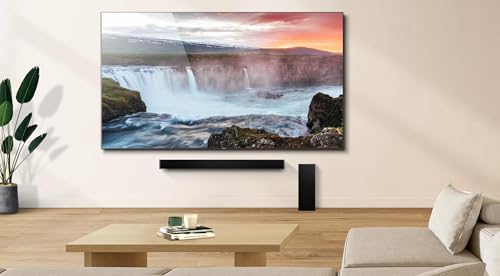



If you've ever found yourself cranking up the TV volume just to understand what characters are saying, you're not alone. Modern TVs, with their ultra-thin designs, simply can't fit the speakers needed for decent audio. That's where soundbars come in—they're the most practical way to transform your TV's tinny audio into something that actually enhances your viewing experience.
Today we're comparing two popular options that represent different approaches to the soundbar market: the budget-friendly Hisense HS2100 and the mid-range Samsung HW-B550D. Both launched in 2021, riding the wave of increased home entertainment demands during the pandemic years, but they target different audiences with distinct philosophies on how to deliver better TV audio.
Before diving into specifics, it's worth understanding what makes a soundbar tick. The most important spec you'll see is the channel configuration—those numbers like "2.1" or "3.1" that describe how the audio is divided up. The first number represents the main channels (left, center, right), while the ".1" refers to the subwoofer channel that handles deep bass frequencies below about 80Hz.
This matters because different channel setups affect how well you can pinpoint sounds and voices in a movie. A 2.1 system like the Hisense HS2100 combines left and right audio into two speakers, while a 3.1 system like the Samsung HW-B550D includes a dedicated center channel specifically for dialogue. Think of it like the difference between having a conversation in a crowded room versus having someone speak directly to you—that center channel makes voices much clearer and easier to locate.
Power ratings, measured in watts, give you a rough idea of how loud a soundbar can get, but they don't tell the whole story. What matters more is how cleanly that power is delivered and whether the soundbar maintains audio quality when pushed to higher volumes. A 240W system that stays clean sounds better than a 400W system that distorts.
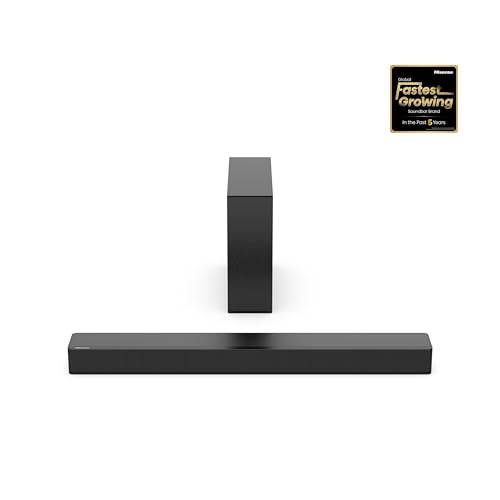
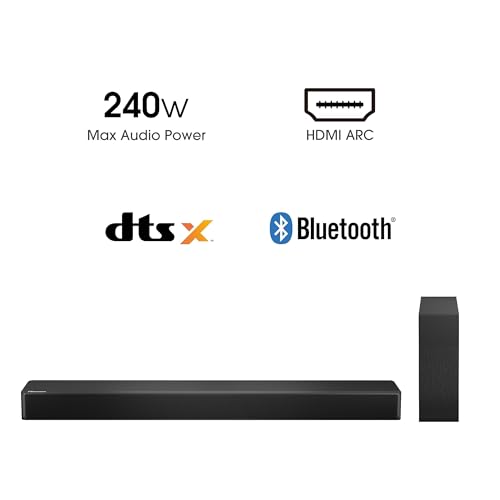
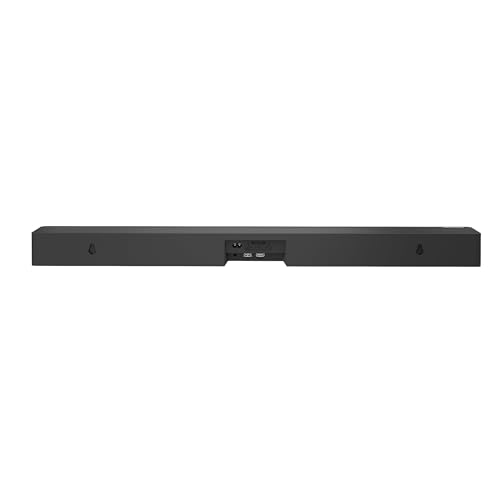
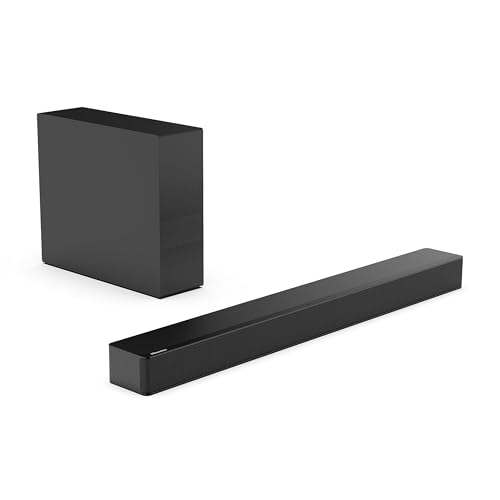
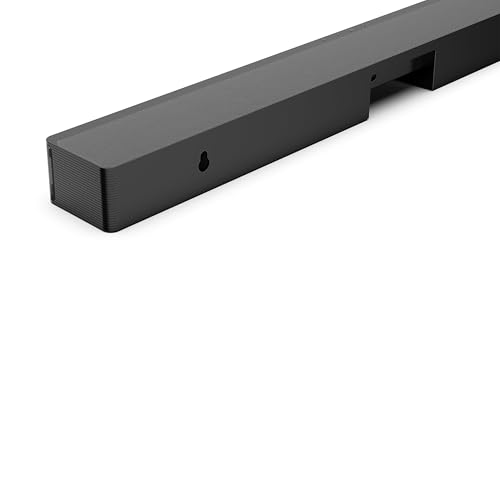
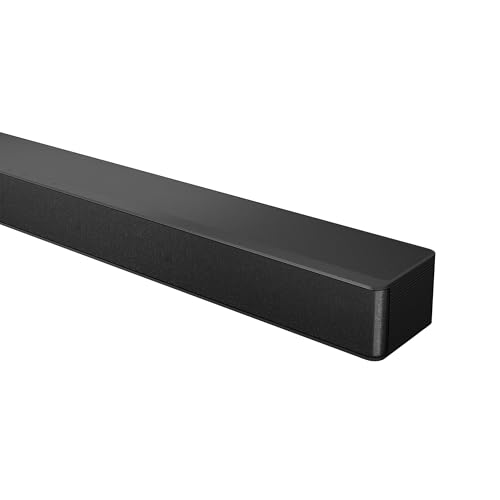
The Hisense HS2100 represents the "maximum value" approach to soundbar design. Released in 2021 at an aggressive price point, it aims to give you the most noticeable upgrade from TV speakers without breaking the bank. Its 2.1 channel setup with a wireless subwoofer delivers 240W of total power, focusing on simplicity and solid basics rather than advanced features.
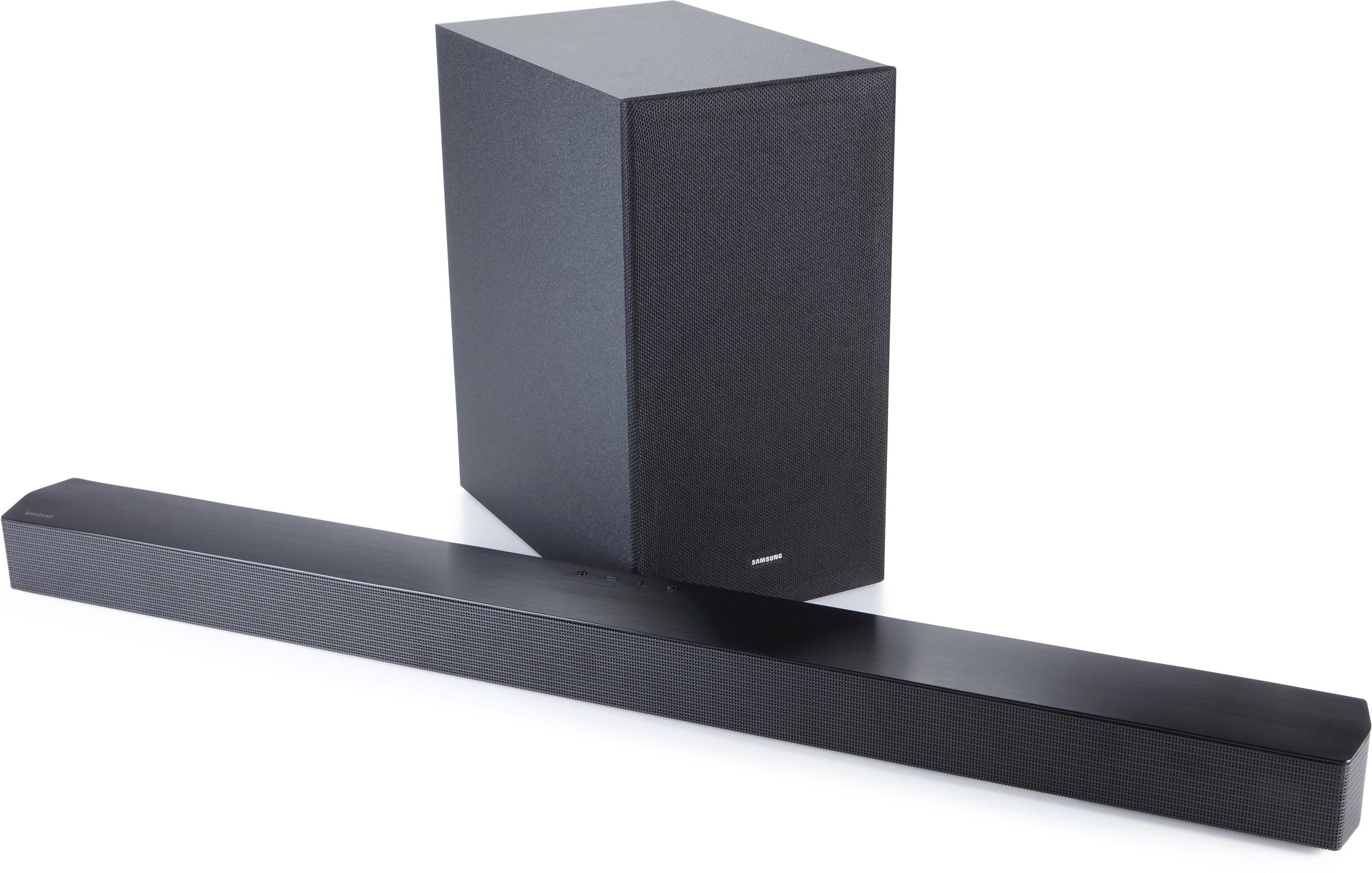
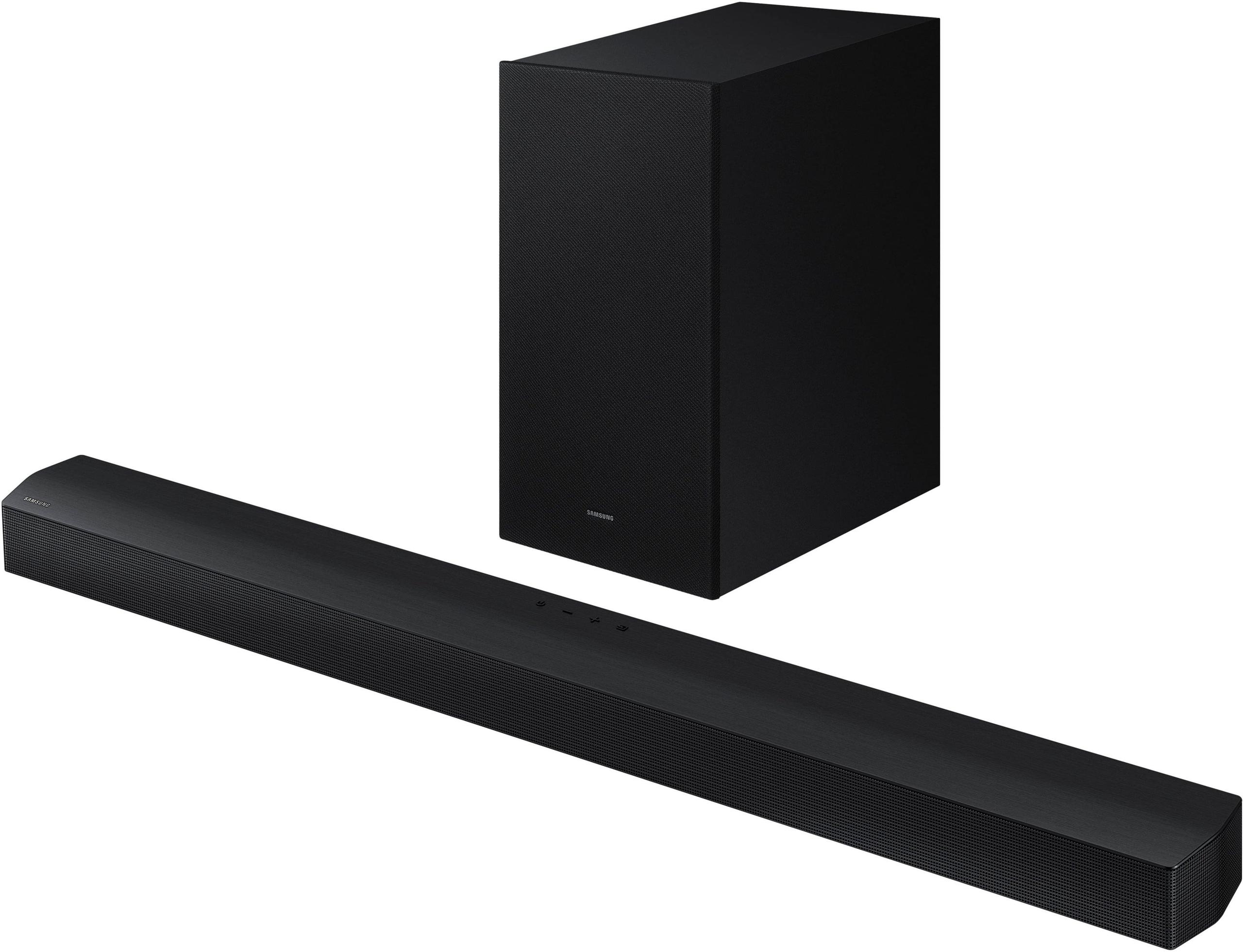
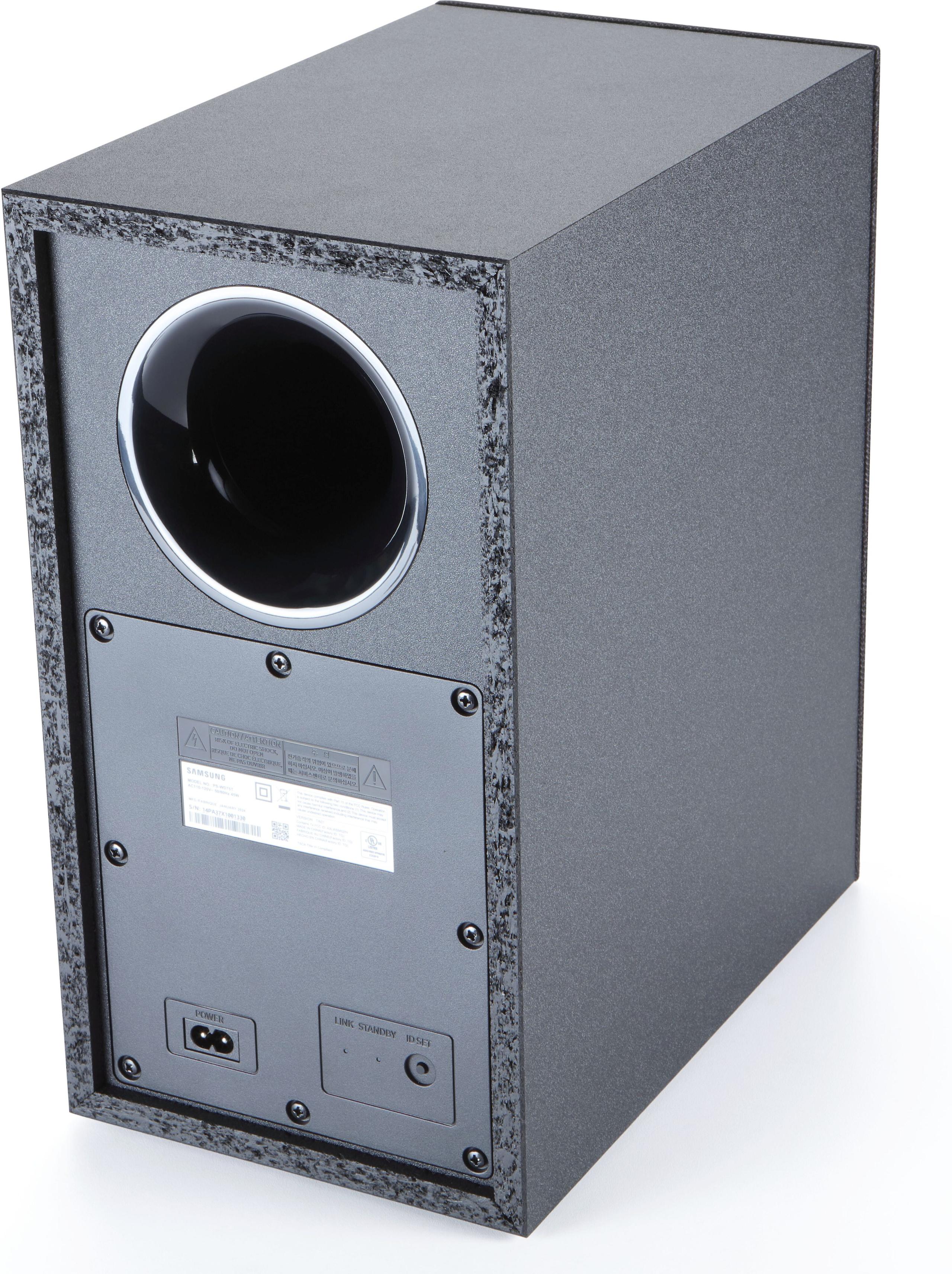
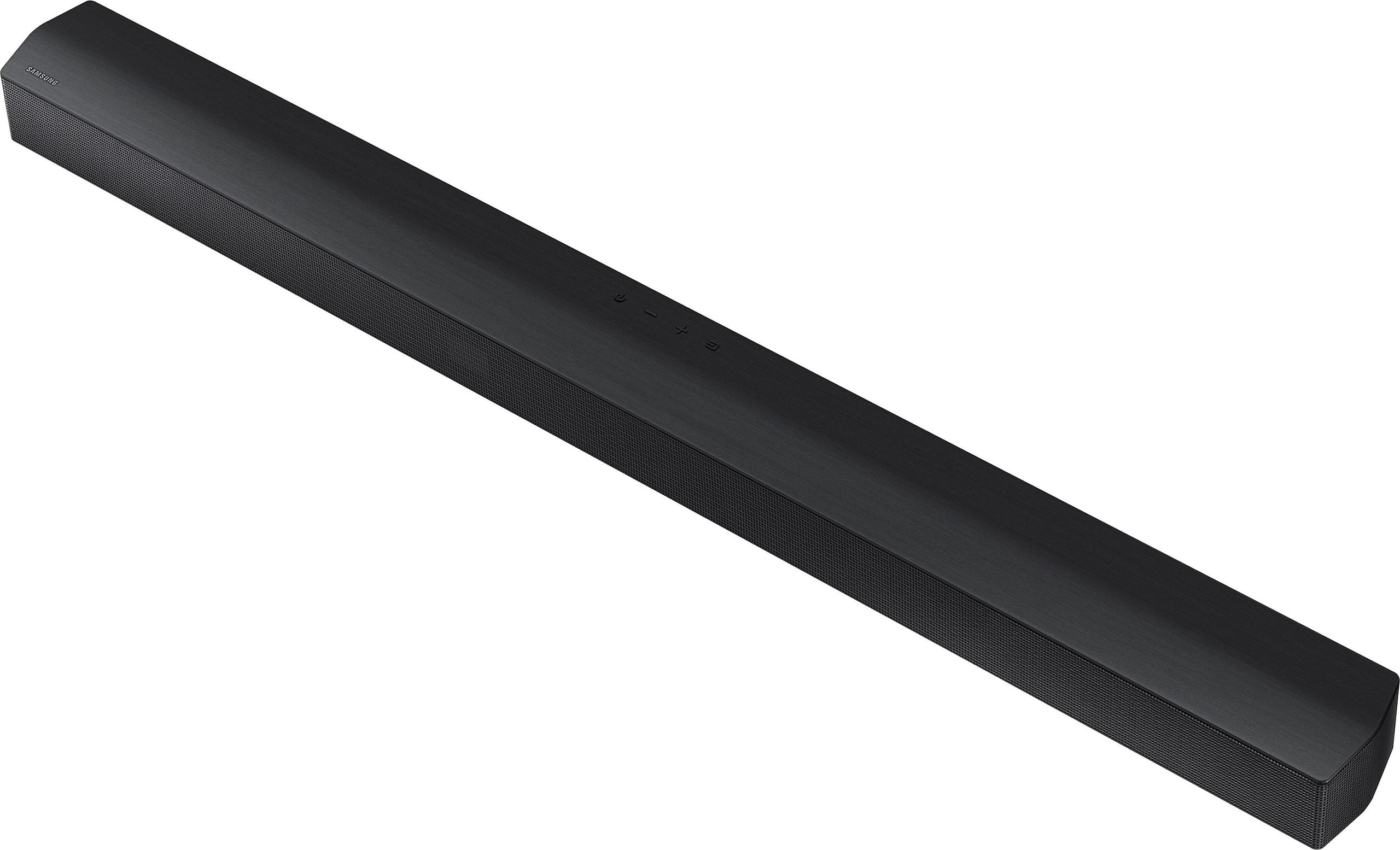
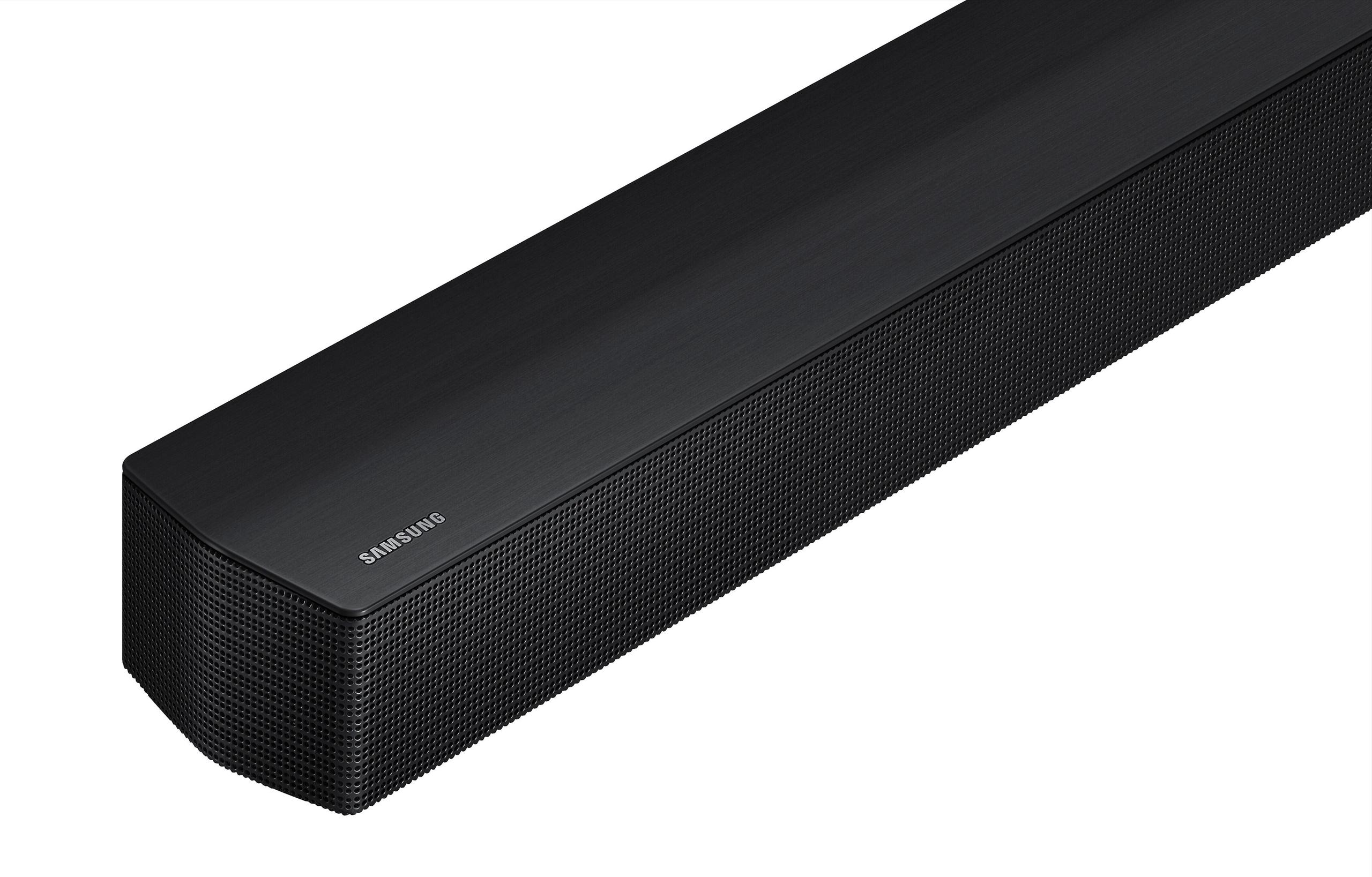
The Samsung HW-B550D, also from 2021, takes a more sophisticated approach. Its 3.1 configuration includes that crucial dedicated center channel, and its roughly 410W of power output suggests Samsung prioritized clean, high-volume performance. At the time of writing, it typically costs about 2.5 times more than the Hisense, positioning it in the mid-range category where buyers expect noticeably better performance for the price premium.
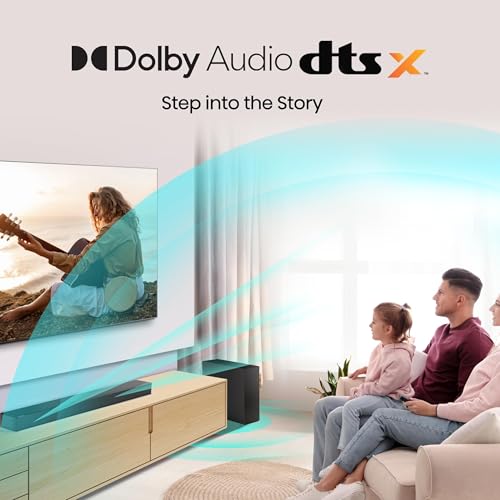
Both soundbars arrived during a period of rapid advancement in virtual surround processing. Technologies like DTS Virtual:X, which both models support, use psychoacoustic tricks to make a soundbar's limited number of speakers create the illusion of sounds coming from above and beside you. While not as convincing as actual surround speakers, these technologies have improved dramatically since their introduction in the late 2010s.
The most significant difference between these soundbars lies in their fundamental audio architecture, and this affects everything from dialogue clarity to overall immersion.
The Samsung HW-B550D's dedicated center channel is a game-changer for dialogue reproduction. In movies and TV shows, roughly 60-70% of the audio information comes through the center channel—mostly dialogue, but also many sound effects and musical elements. When a soundbar lacks this dedicated channel, it must mix these sounds with the left and right channels, which can make voices seem to wander across the soundstage or get buried in busy audio scenes.
Our research into user experiences consistently shows that people upgrading to the Samsung HW-B550D notice immediately clearer dialogue, especially in content with complex soundtracks. Action movies with explosions, background music, and rapid-fire dialogue become much easier to follow without constantly adjusting volume.
The Hisense HS2100, using its 2.1 setup, must downmix multichannel content to stereo. While its DTS Virtual:X processing helps create some spatial effects, dialogue still comes from a phantom center position between the left and right drivers. This works reasonably well for most content, but in challenging scenes—think of a character speaking while cars race by, or whispered conversations over dramatic music—the lack of a true center channel becomes apparent.
However, the Hisense HS2100 does have some audio advantages. Its default sound signature tends toward a warmer, more balanced presentation that many find immediately pleasing. The slightly emphasized bass and smooth midrange make it particularly enjoyable for music listening, where the lack of a center channel matters less than it does for dialogue-heavy content.
Both soundbars support virtual surround processing, but the Samsung HW-B550D's additional power and more sophisticated signal processing create more convincing spatial effects. Its Surround Sound Expansion mode can make properly mixed content feel like it's coming from well beyond the soundbar's physical boundaries.
Raw power numbers don't tell the complete story, but they matter for two key reasons: maximum volume capability and dynamic range preservation. The Samsung HW-B550D's roughly 410W versus the Hisense HS2100's 240W translates to more than just loudness—it means cleaner sound when you need higher volumes.
Expert testing and user reports consistently show that the Samsung HW-B550D maintains better sound quality when pushed hard. The Hisense HS2100, while adequate for small to medium rooms, begins showing compression artifacts—where loud sounds get squashed and lose their impact—at maximum volume. This matters during action sequences or when you're trying to overcome background noise in your room.
For most living rooms under 300 square feet, the Hisense HS2100 provides adequate volume levels. But if you have a larger space, enjoy explosive action movies, or simply prefer listening at higher volumes, the extra headroom of the Samsung HW-B550D becomes valuable.
The dynamic range—the difference between the quietest and loudest sounds—also suffers more on the Hisense HS2100 when pushed to its limits. This means that during a quiet dialogue scene followed by a sudden explosion, the contrast between those moments becomes less dramatic, reducing the emotional impact of well-mixed content.
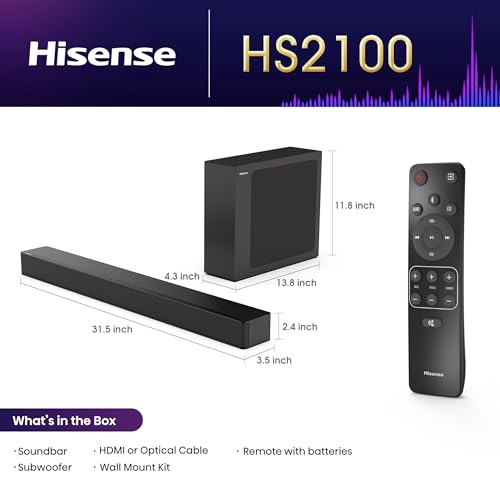
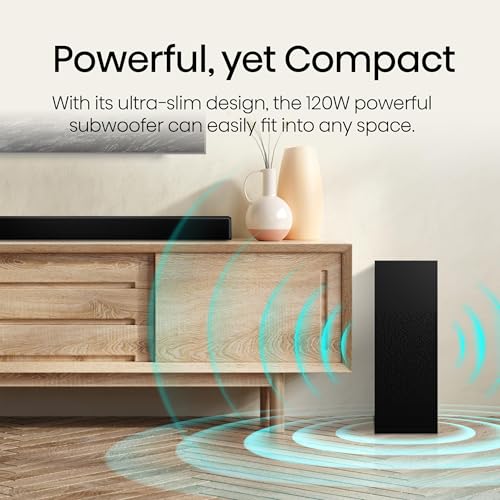
Both soundbars include wireless subwoofers, but they approach bass reproduction differently. The Hisense HS2100's subwoofer is notably compact—at just 4.3 inches deep, it can fit in places where most subs simply won't. This ultra-slim design uses a 5.25-inch driver and delivers 120W of dedicated power.
The trade-off for this compact size shows up in bass extension and control. While the Hisense HS2100 delivers satisfying bass impact for its size class, it doesn't reach the deepest frequencies that make movie explosions truly rumble through your room. The bass also tends toward slightly "boomy" characteristics—meaning it emphasizes certain frequencies more than others, which can make some content sound muddy.
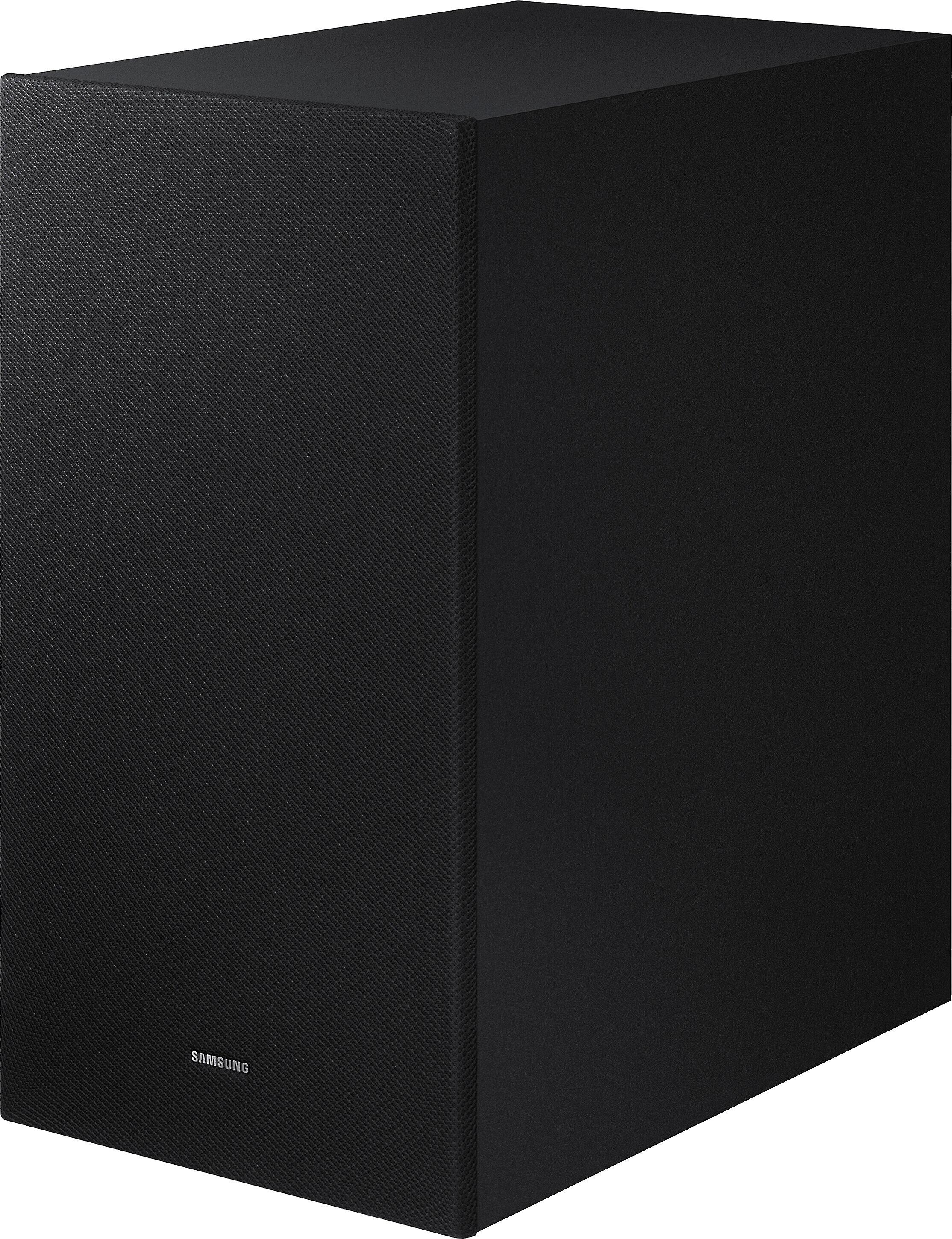
The Samsung HW-B550D's subwoofer, while still wireless and reasonably compact, focuses more on control and integration. Its Bass Boost mode can enhance low-end impact when you want it, but the default tuning prioritizes accuracy over pure impact. This means bass lines in music and low-frequency effects in movies sound more natural and controlled, even if they don't hit you quite as hard as some budget alternatives.
For music listening, this difference becomes particularly apparent with bass-heavy genres like electronic or hip-hop. The Samsung HW-B550D typically renders these more accurately, while the Hisense HS2100's warmer signature can make them sound more exciting but less precise.
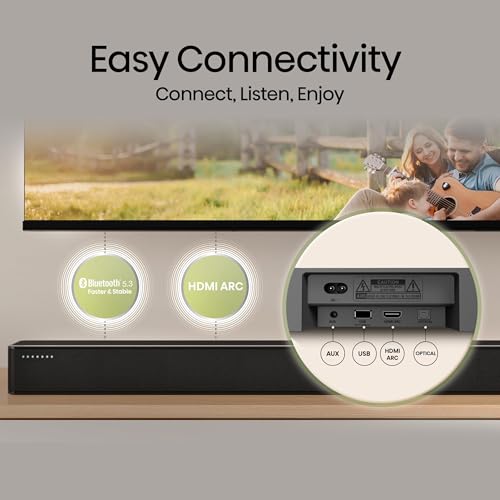
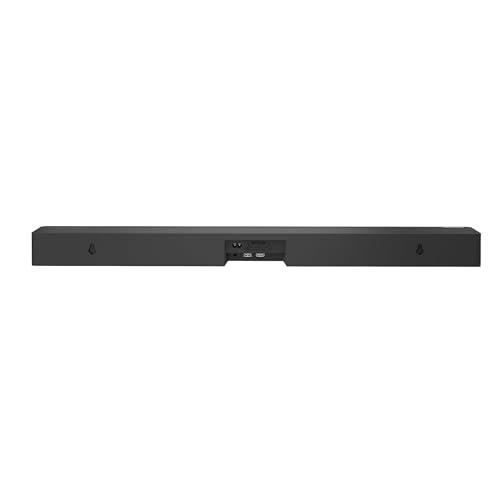
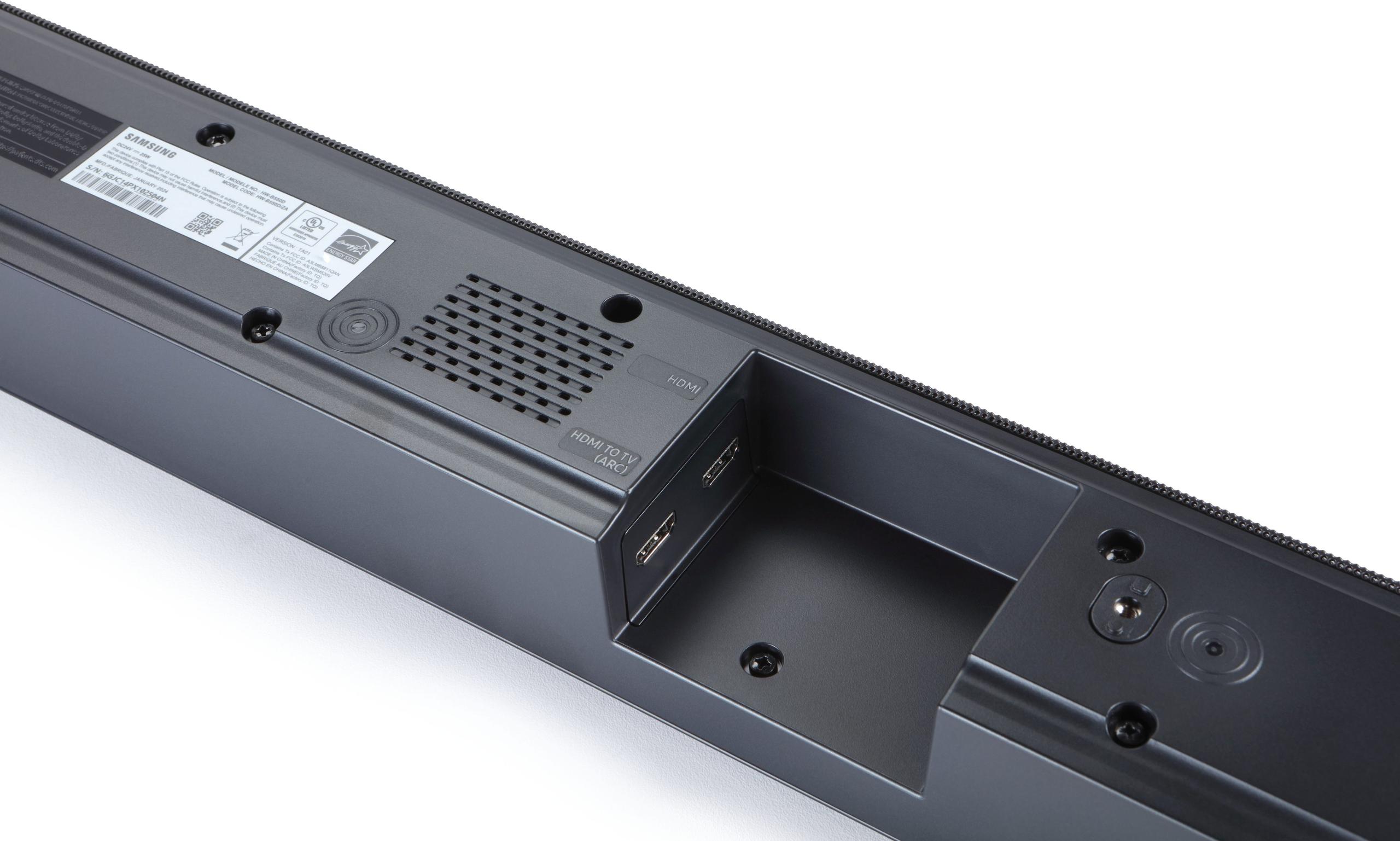
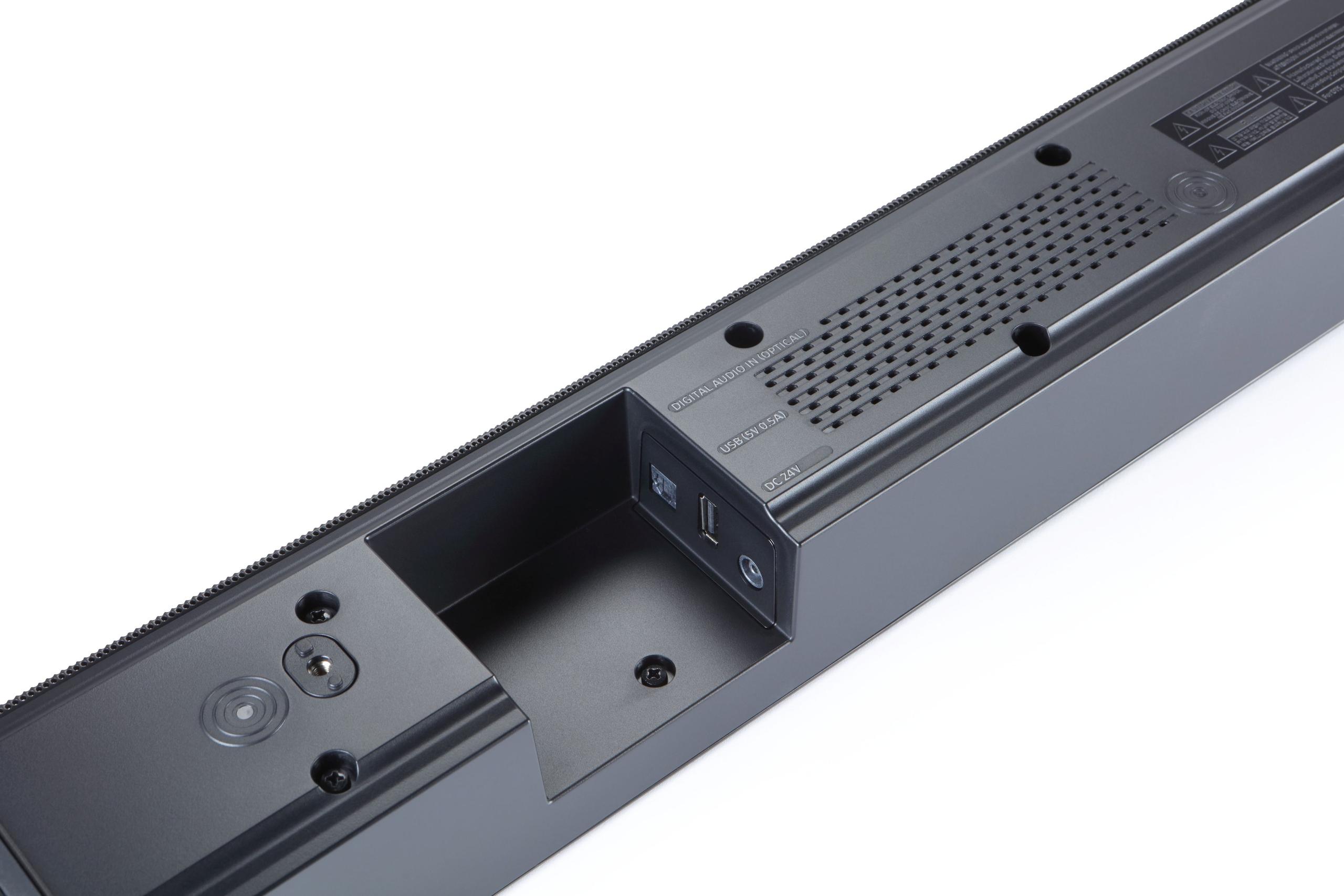
Both soundbars offer similar basic connectivity—HDMI ARC, optical input, Bluetooth, and USB playback—but they differ in their approach to user experience and advanced features.
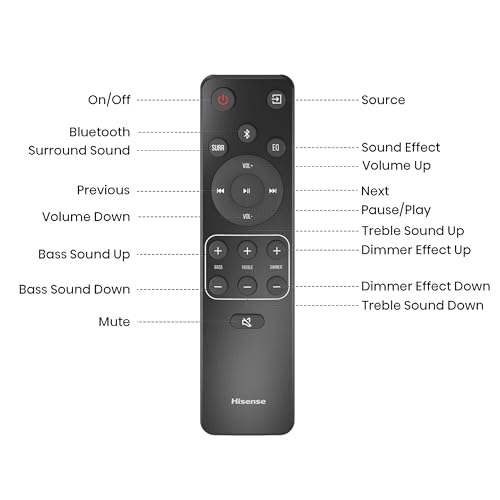
The Hisense HS2100 focuses on essential features done well. Its six EQ presets (Movie, Music, News, Sport, Night, Game) cover most common use cases, and the manual bass and treble controls let you fine-tune the sound to your preferences. The Night mode preset is particularly well-implemented, reducing dynamic range for late-evening viewing without completely killing the excitement of your content.
One standout feature of the Hisense HS2100 is its Roku TV Ready integration. If you own a compatible Roku TV, the soundbar can be controlled entirely through your TV remote, eliminating the need to juggle multiple remotes for basic volume and power functions.
The Samsung HW-B550D takes a more advanced approach with features like Adaptive Sound Lite, which analyzes incoming audio and automatically adjusts the sound profile based on content type. While this sounds gimmicky, user reports suggest it actually works reasonably well, particularly for switching between dialogue-heavy content and action scenes.
Game Mode on the Samsung HW-B550D deserves special mention. It uses cross-talk cancellation technology to reduce audio distractions and minimize latency—the delay between when something happens on screen and when you hear it. For gaming, especially competitive gaming where audio cues matter, this can provide a real advantage.
Both soundbars support Bluetooth 5.3, which offers better connection stability and lower latency compared to older Bluetooth versions. This matters for wireless music streaming from phones and tablets, where audio dropouts can ruin the listening experience.
For dedicated home theater use, the differences between these soundbars become more pronounced. The Samsung HW-B550D's superior dialogue clarity, wider soundstage, and better high-volume performance make it more suitable for serious movie watching.
The dedicated center channel particularly shines in film content mixed for surround sound. Whether you're watching a Marvel blockbuster with complex audio layering or a dialogue-driven drama, the Samsung HW-B550D maintains better separation between voice and effects, making it easier to follow conversations without adjusting volume.
However, the Hisense HS2100 shouldn't be dismissed for home theater use, especially in smaller rooms or for more casual viewing habits. Its warm sound signature actually complements many older films and TV shows that weren't mixed with modern surround processing in mind.
Both soundbars handle common streaming service audio formats well, including the Dolby Digital and Dolby Digital Plus used by Netflix, Amazon Prime, and most broadcast TV. Neither supports more advanced formats like Dolby Atmos or DTS-HD Master Audio, which keeps them in the entry-to-mid-range category but also means they work well with standard TV and streaming content.
The decision between the Hisense HS2100 and Samsung HW-B550D ultimately comes down to your priorities and budget constraints.
Choose the Hisense HS2100 if you're primarily looking for the most dramatic improvement over TV speakers at the lowest possible cost. Its combination of wireless subwoofer, warm sound signature, and ultra-compact design makes it ideal for smaller spaces, casual viewing, and budget-conscious buyers who still want a genuine upgrade. The ultra-slim subwoofer is particularly valuable if you have placement constraints that rule out larger alternatives.
The Samsung HW-B550D makes sense when dialogue clarity is a top priority and you're willing to pay significantly more for noticeably better performance. If you watch a lot of dialogue-heavy content, have a medium to large room, or simply want cleaner sound when playing content at higher volumes, the price premium becomes justified.
For dedicated home theater enthusiasts, even on a budget, the Samsung HW-B550D's dedicated center channel and superior power handling make it the better long-term investment. The improved dialogue clarity alone can transform your viewing experience in ways that might not be immediately obvious from spec sheets.
Both soundbars represent solid value in their respective price categories. The Hisense HS2100 maximizes performance per dollar for basic needs, while the Samsung HW-B550D delivers meaningful improvements that justify its higher cost for users who prioritize audio quality. Your room size, viewing habits, and budget should guide the decision—but either choice will be a substantial upgrade from relying on your TV's built-in speakers.
| Hisense HS2100 2.1 Channel 240W Soundbar System | Samsung HW-B550D 3.1 Channel Sound Bar |
|---|---|
| Channel Configuration - Determines dialogue clarity and sound positioning | |
| 2.1 channels (phantom center, requires downmixing) | 3.1 channels (dedicated center channel for clear dialogue) |
| Total Power Output - Affects maximum volume and dynamic range | |
| 240W total (60W × 2 + 120W sub) | ~410W total (cleaner sound at higher volumes) |
| Audio Format Support - Compatibility with streaming and broadcast content | |
| Dolby Digital, DTS Virtual:X, PCM | Dolby Audio, DTS Virtual:X, Adaptive Sound Lite |
| Subwoofer Design - Balance of bass performance vs. room placement | |
| 5.25" wireless, ultra-slim 4.3" depth (fits anywhere) | 5" wireless with Bass Boost mode (better control) |
| Sound Customization - Ability to tailor audio to your preferences | |
| 6 EQ presets + manual bass/treble adjustment | Adaptive Sound Lite + Game Mode + equalizer bands |
| Smart TV Integration - Simplifies daily use and remote management | |
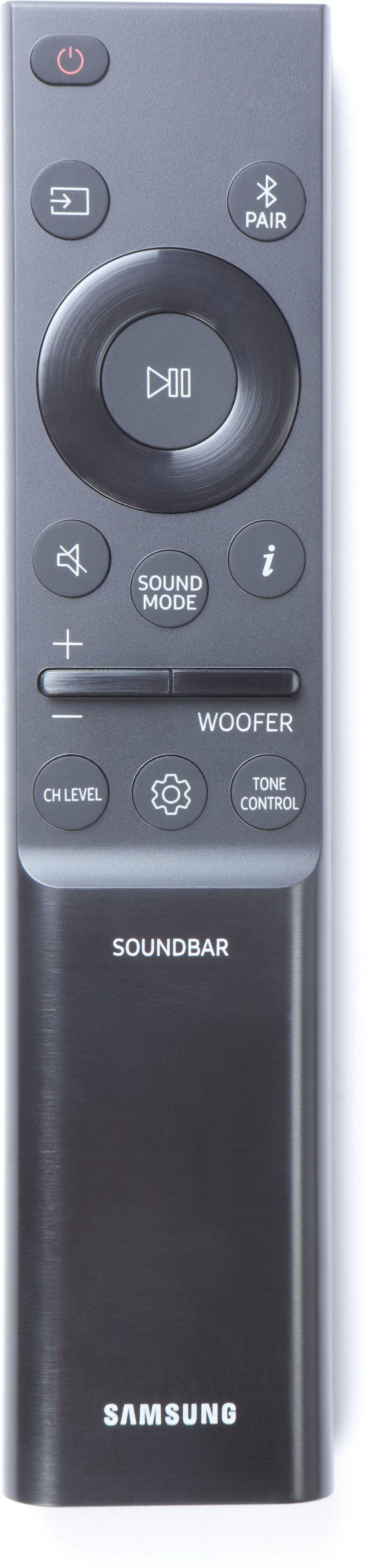
| Roku TV Ready (single remote control) | Samsung TV remote compatibility + HDMI CEC |
| Soundbar Dimensions - Ensures proper fit with your TV setup | |
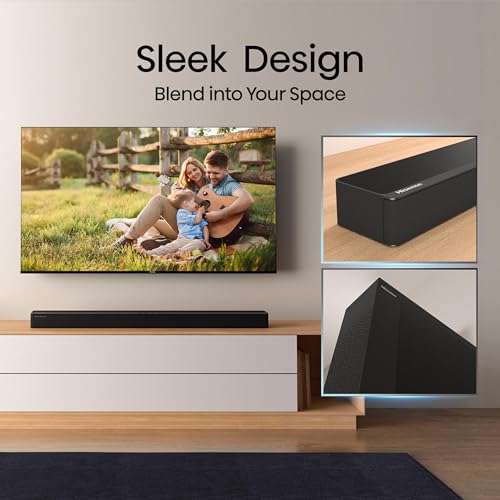
| 31.5" × 2.4" × 3.5" (compact, fits most setups) | 33.9" × 2.4" × 3" (slightly wider, premium build) |
| Bluetooth Connectivity - Modern wireless streaming capabilities | |
| Bluetooth 5.3 (stable connection, low latency) | Bluetooth 5.3 + multi-device pairing support |
| Best For - Primary use cases where each excels | |
| Budget upgrade, small rooms, music listening | Dialogue clarity, larger rooms, home theater use |
| Value Proposition - What you get for the investment | |
| Maximum upgrade per dollar spent | Meaningful performance improvements justify higher cost |
The Samsung HW-B550D is significantly better for dialogue clarity due to its dedicated center channel. This 3.1 configuration keeps voices separated and focused, making it easier to understand conversations in movies and TV shows. The Hisense HS2100 uses a 2.1 setup that must mix dialogue with other sounds, which can make voices less distinct during complex audio scenes.
The Hisense HS2100 is a 2.1 system with left, right, and subwoofer channels, while the Samsung HW-B550D is a 3.1 system that adds a dedicated center channel. The center channel in the Samsung HW-B550D is specifically designed for dialogue and vocals, providing clearer speech reproduction compared to the phantom center created by the Hisense HS2100.
The Samsung HW-B550D delivers approximately 410W compared to the Hisense HS2100's 240W, resulting in higher maximum volume and cleaner sound at loud levels. The Samsung HW-B550D maintains better audio quality when pushed hard, while the Hisense HS2100 may show compression artifacts at maximum volume.
Both include wireless subwoofers, but the Hisense HS2100 features an ultra-slim design at just 4.3 inches deep, making it ideal for tight spaces. The Samsung HW-B550D has a more traditional subwoofer with Bass Boost mode and better overall control. The Hisense HS2100 emphasizes impact while the Samsung HW-B550D focuses on accuracy.
The Hisense HS2100 works well in small to medium rooms under 200 square feet, providing adequate volume and bass impact. The Samsung HW-B550D is better suited for medium to large rooms due to its higher power output and ability to maintain clean sound at higher volumes needed for bigger spaces.
Both offer HDMI ARC, optical input, and Bluetooth 5.3 connectivity. The Hisense HS2100 includes Roku TV Ready integration for simplified remote control, while the Samsung HW-B550D features Adaptive Sound Lite, Game Mode, and multi-device Bluetooth pairing for more advanced functionality.
The Hisense HS2100 offers exceptional value as a budget option, delivering the most significant upgrade from TV speakers at the lowest cost. The Samsung HW-B550D costs significantly more but provides meaningful performance improvements that justify the premium for users prioritizing dialogue clarity and overall audio quality.
The Hisense HS2100 has a warm, balanced sound signature that many find immediately pleasing for music, with slightly emphasized bass and smooth midrange. The Samsung HW-B550D offers more accurate reproduction with better control, making it superior for critical music listening, especially with bass-heavy genres.
Both soundbars offer simple setup with automatic subwoofer pairing. The Hisense HS2100 excels with Roku TV Ready integration, allowing control through your TV remote. The Samsung HW-B550D provides Samsung TV remote compatibility and more automated features like Adaptive Sound Lite that adjust settings based on content.
Neither the Hisense HS2100 nor Samsung HW-B550D supports Dolby Atmos. Both handle standard formats like Dolby Digital and DTS, with virtual surround processing to enhance the listening experience. The Samsung HW-B550D includes more advanced processing features like Adaptive Sound Lite.
The Samsung HW-B550D is superior for gaming due to its dedicated Game Mode that reduces audio latency and uses cross-talk cancellation to minimize distractions. Both soundbars support low-latency Bluetooth 5.3, but the Samsung HW-B550D's higher power and cleaner high-volume performance benefit gaming audio.
Choose the Hisense HS2100 if you want maximum value on a tight budget, have space constraints requiring an ultra-slim subwoofer, or primarily listen to music. Choose the Samsung HW-B550D if dialogue clarity is crucial, you have a larger room, want cleaner high-volume performance, or prefer more advanced audio processing features.
We've done our best to create useful and informative comparisons to help you decide what product to buy. Our research uses advanced automated methods to create this comparison and perfection is not possible - please contact us for corrections or questions. These are the sites we've researched in the creation of this article: rtings.com - shop.hisense-usa.com - bestbuy.com - content.syndigo.com - bestbuy.com - hisensedealers.co.ke - stuff.co.za - dtc-aus-api.hisense.com - youtube.com - manuals.plus - youtube.com - bestbuy.com - youtube.com - gallifurniture.com - hisense-usa.com - manuals.plus - uk.hisense.com - device.report - youtube.com - costco.ca - elmcreekwsa.com - gallifurniture.com - bestbuy.com - crutchfield.com - avsforum.com - consumerreports.org - abt.com - pcrichard.com - samsung.com - samsung.com - rtings.com - samsung.com - jeffsappliance.com

Privacy Policy
Terms and Conditions - Affiliate Policy
Home Security
© Copyright 2008-2026.
11816 Inwood Rd #1211, Dallas, TX 75244