

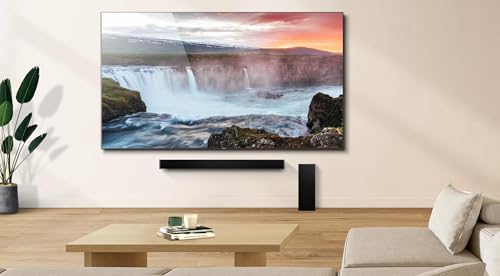
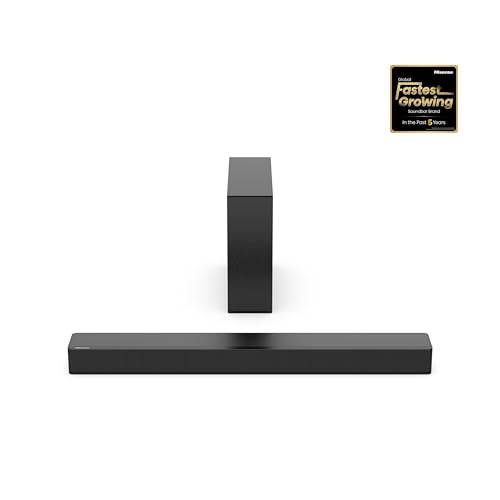

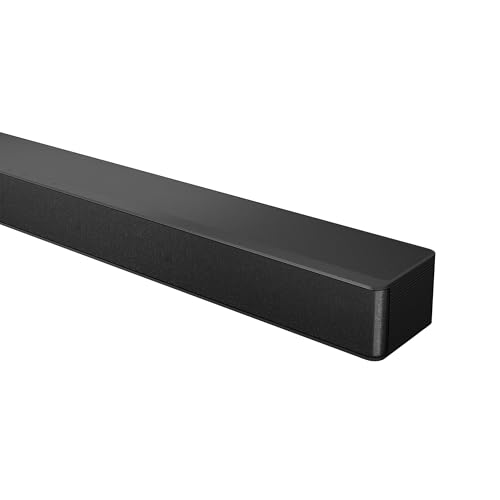
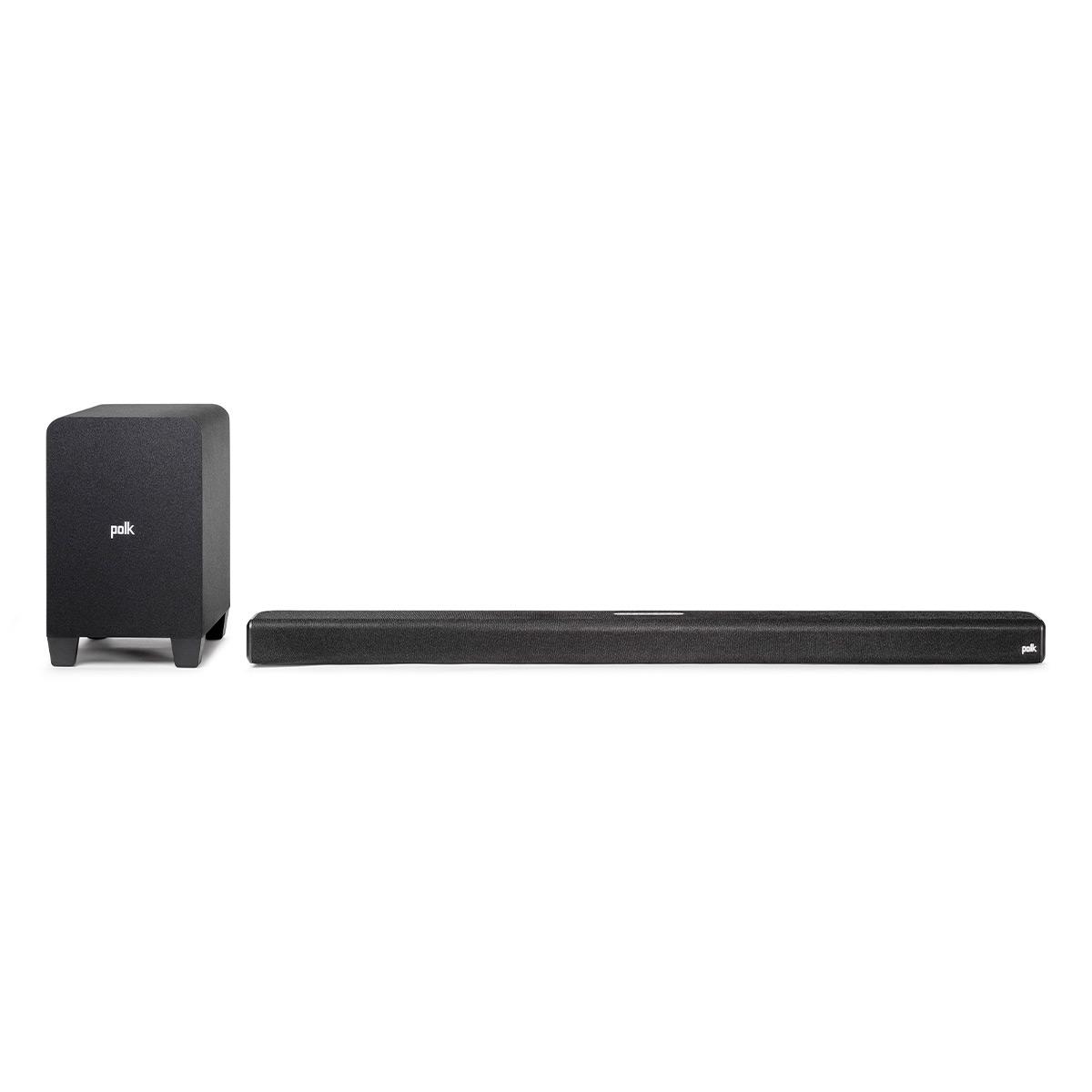
When your TV's built-in speakers make dialogue sound like it's coming through a tin can, it's time for a soundbar upgrade. But walking into the soundbar market can feel overwhelming—prices range from under $100 to over $1,000, and the technical specifications read like alphabet soup. Today we're comparing two popular options that represent very different approaches: the budget-friendly Hisense HS2100 and the premium Polk Audio Signa S4.
At the time of writing, these soundbars sit about $180 apart in price, with the Hisense HS2100 targeting budget-conscious buyers and the Polk Audio Signa S4 aiming at those willing to invest more for advanced features like Dolby Atmos. But does that price difference actually translate to better performance where it matters?
Before diving into specifics, let's establish what we're looking for in a soundbar. The primary job is simple: make your TV sound dramatically better than those tiny built-in speakers. But beyond that basic improvement, soundbars differ significantly in how they approach audio reproduction.
The most fundamental consideration is channel configuration—essentially how many separate audio streams the soundbar can handle. A 2.1 system has left and right channels plus a subwoofer for bass (the ".1" represents the sub). A 3.1.2 system adds a dedicated center channel for dialogue and two height channels for overhead effects. More channels generally mean more precise audio placement and a more immersive experience.
Audio format support determines what kind of content your soundbar can properly decode. Basic Dolby Digital has been standard for decades, while newer formats like Dolby Atmos create three-dimensional soundscapes with audio that appears to come from above and around you. Think of the difference between watching a movie in regular stereo versus sitting in an IMAX theater—that's the kind of upgrade Dolby Atmos can provide when implemented well.
Connectivity matters more than you might expect. HDMI ARC (Audio Return Channel) sends audio from your TV back to the soundbar through the same cable, while the newer eARC (enhanced Audio Return Channel) can handle much higher quality, uncompressed audio signals. This becomes crucial when you're dealing with advanced formats that need more bandwidth.
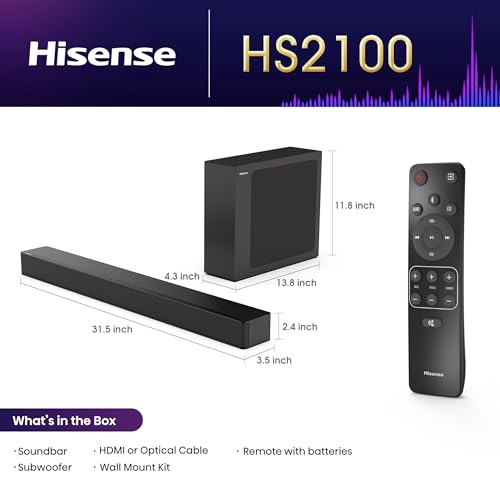
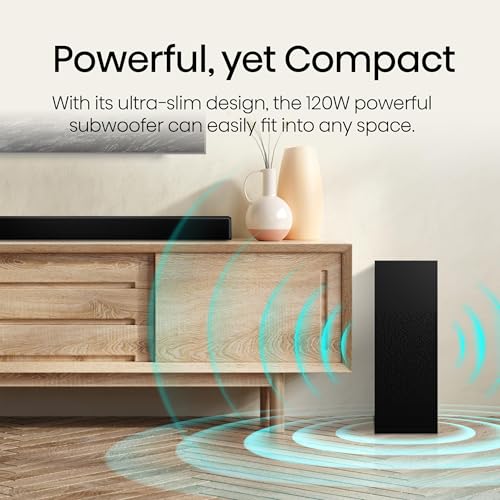
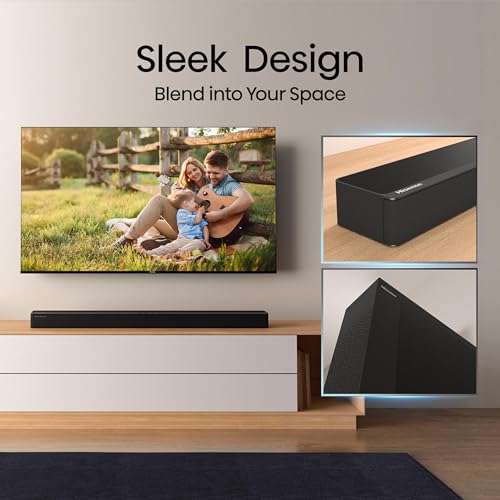
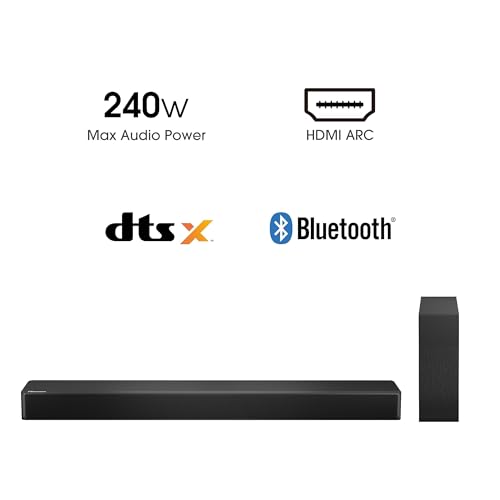
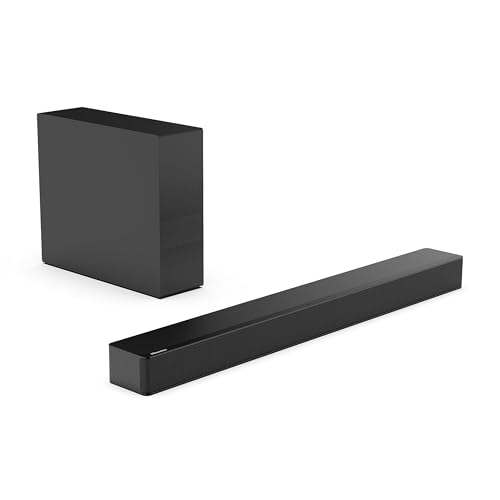
Released in 2021, the Hisense HS2100 represents what happens when a manufacturer focuses on getting the fundamentals right at an accessible price point. This 2.1 channel system puts out 240 watts of total power—60 watts from each of the soundbar's two full-range drivers, and 120 watts from the wireless subwoofer's 5.25-inch driver.
The "wireless" subwoofer designation is somewhat misleading—while it doesn't need an audio cable connection to the main bar, it still requires its own power outlet. What this wireless connection provides is placement flexibility. You can position the sub anywhere within about 30 feet of the soundbar, which is genuinely helpful for optimizing bass response in your specific room layout.
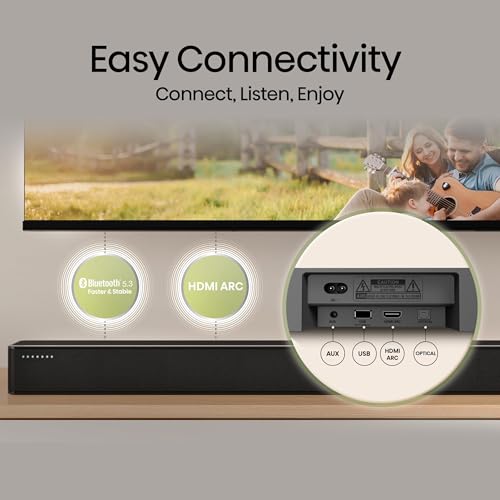
One standout feature of the Hisense HS2100 is its inclusion of Bluetooth 5.3, which is relatively advanced for a budget soundbar. Bluetooth 5.3 offers improved connection stability, lower latency (the delay between audio being sent and heard), and better power efficiency compared to older Bluetooth versions. This makes wireless music streaming from your phone or tablet noticeably more reliable.
The HS2100 also includes DTS Virtual:X processing, which attempts to create a surround sound experience from just two main speakers. Virtual surround technologies use psychoacoustic tricks—essentially fooling your brain about where sounds are coming from—to expand the apparent soundstage beyond the physical width of the soundbar. While it can't match true multi-channel systems, the effect does add some dimensionality to the audio.
Six preset sound modes (Movie, Music, News, Sport, Game, and Night) provide quick optimization for different content types. The Night mode is particularly useful—it compresses the dynamic range, meaning it reduces the difference between the quietest and loudest sounds, making late-night viewing more neighbor-friendly without sacrificing dialogue clarity.
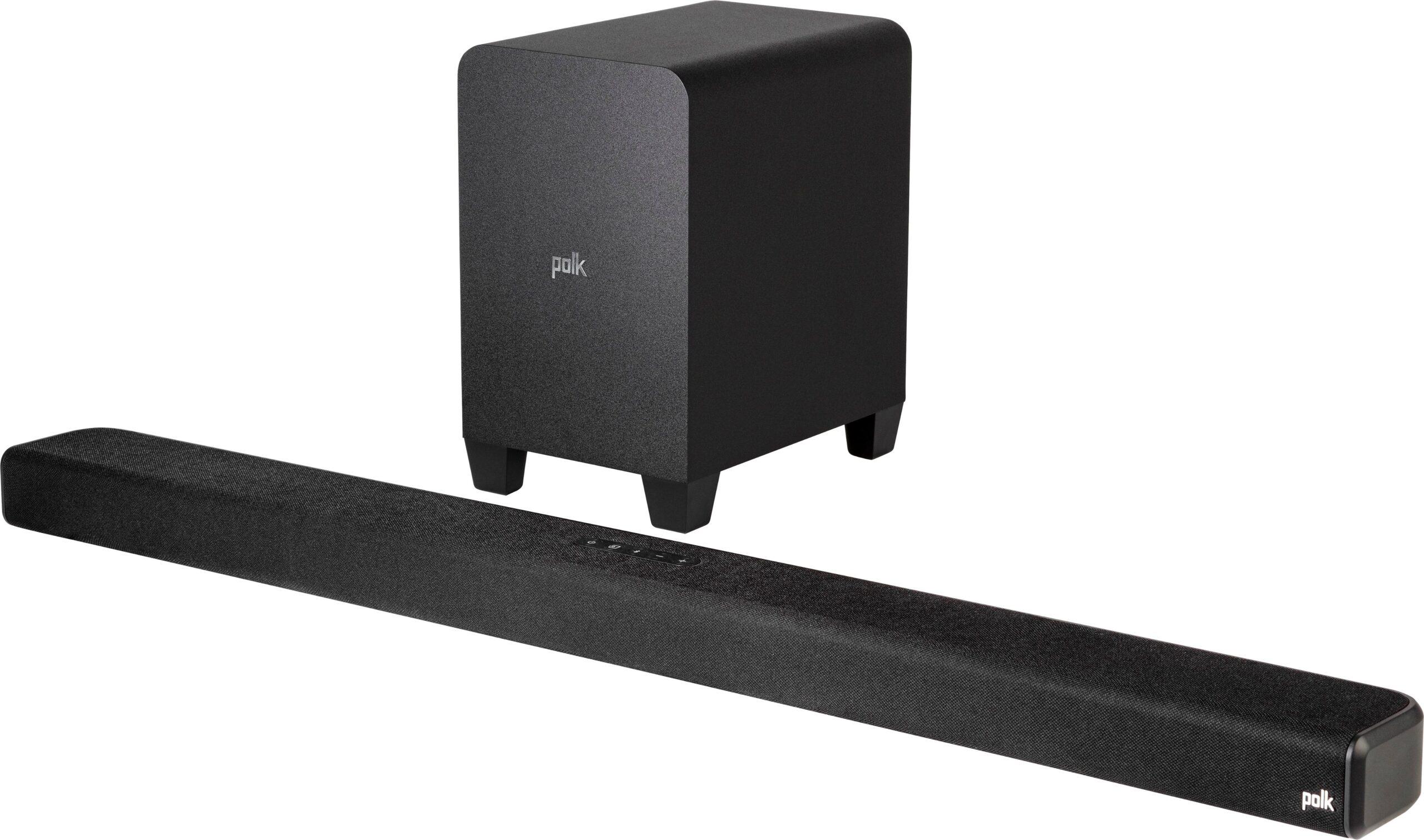
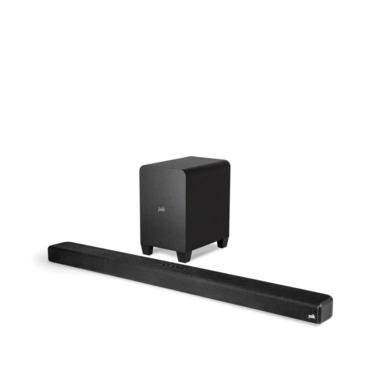
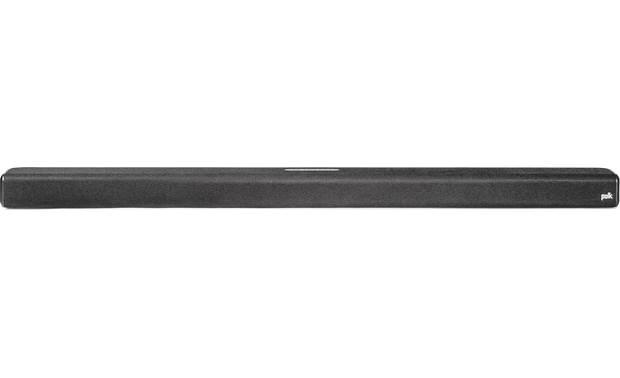
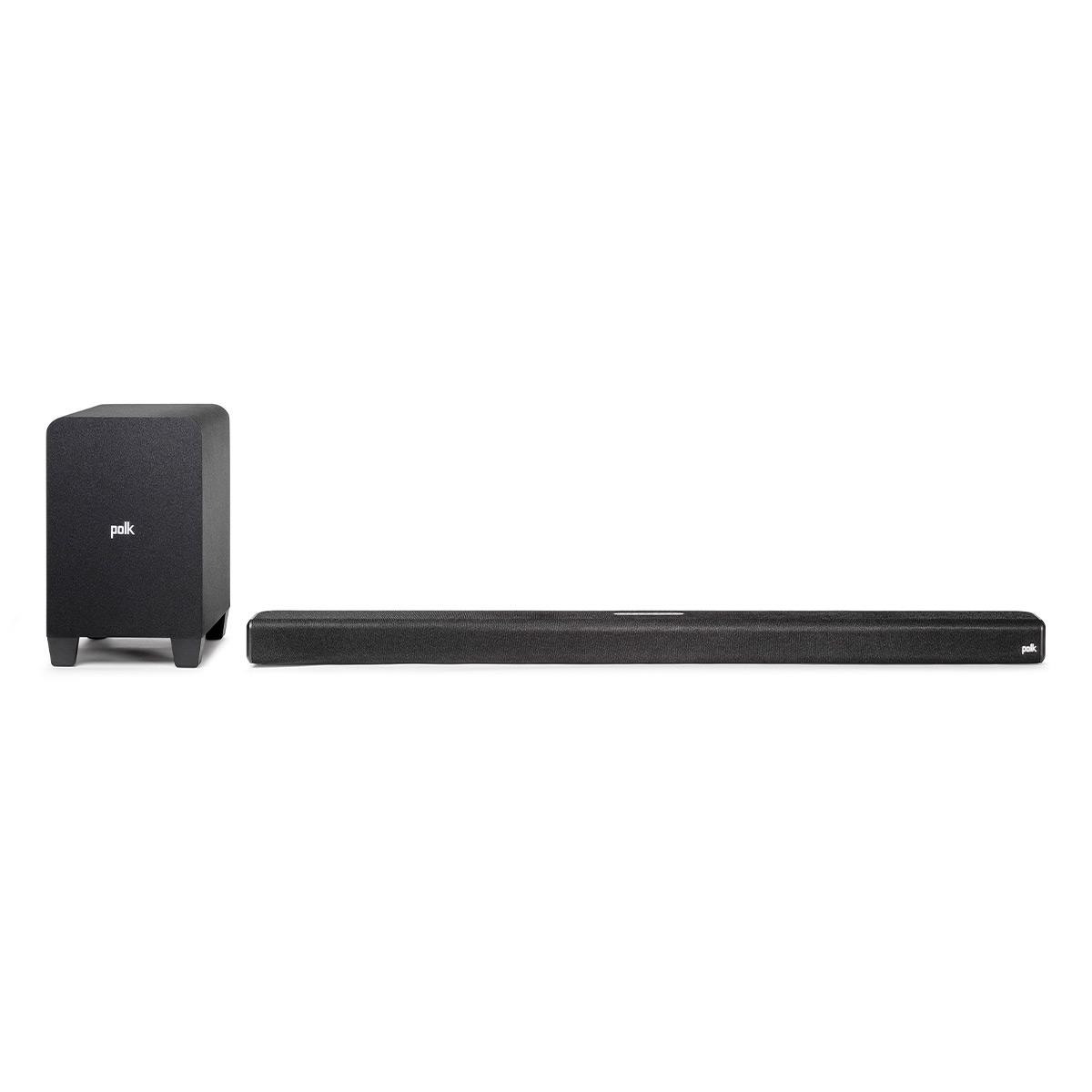
Also arriving in 2021, the Polk Audio Signa S4 takes a fundamentally different approach. This is a genuine 3.1.2 Dolby Atmos system, which means it has seven discrete drivers: two tweeters for high frequencies, two midrange drivers, two upward-firing height channel speakers, and one dedicated center channel, plus the separate wireless subwoofer with its larger 5.9375-inch driver.
The center channel deserves special attention because it's responsible for most dialogue in movies and TV shows. Having a dedicated center speaker means voices can be reproduced with greater clarity and at higher volumes without affecting other parts of the soundtrack. The Polk Signa S4 enhances this with Polk's proprietary VoiceAdjust technology, which can boost dialogue levels independently of other audio elements.
Those upward-firing height channels are what enable true Dolby Atmos reproduction. These speakers fire sound toward your ceiling, which then reflects down to create the impression of audio coming from above. When watching a movie with proper Dolby Atmos mixing, you'll hear helicopters flying overhead, rain falling from above, or debris crashing down with convincing three-dimensional positioning.
The Polk Audio Signa S4 includes HDMI 2.1 eARC support, which is significant for audio quality. While standard ARC can handle basic surround sound formats, eARC has the bandwidth for uncompressed, full-resolution Dolby Atmos. If you're watching content from a modern streaming service or 4K Blu-ray with Atmos soundtracks, eARC ensures you're getting the complete audio experience.
In our research across professional reviews and user feedback, dialogue clarity emerged as the most consistently praised aspect of both systems, but for different reasons. The Hisense HS2100 achieves clear dialogue through a balanced midrange frequency response—the range where most human voices sit. Its warm sound signature means voices aren't thin or harsh, making extended viewing comfortable.
The Polk Audio Signa S4, however, takes dialogue reproduction to another level with its dedicated center channel and VoiceAdjust processing. Professional reviewers consistently noted that even during complex action sequences with explosions and music, dialogue remained crisp and intelligible. This dedicated center channel approach is why most home theater enthusiasts consider 3.1 the minimum configuration for serious movie watching.
Based on measurement data from professional reviews, the Polk Signa S4 maintains dialogue clarity at higher overall volumes, which becomes important in larger rooms or when competing with ambient noise. The Hisense HS2100 performs admirably in smaller spaces but can experience some compression when pushed to its limits.
Both systems include wireless subwoofers, but they approach bass reproduction differently. The Hisense HS2100's 5.25-inch subwoofer provides satisfying impact for its size class, with professional measurements showing good mid-bass presence but limited extension below about 45Hz. This means you'll feel the punch of action movie explosions and the thump of music beats, but the deepest organ notes or most powerful cinematic rumbles may be missing.
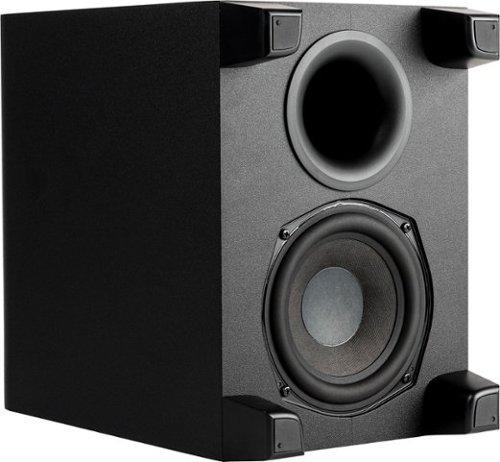
The Polk Signa S4's larger 5.9375-inch driver in a down-firing configuration with a flared port delivers tighter, more controlled bass response. The down-firing design uses your floor as a coupling surface, which can actually enhance bass response in many room configurations. Professional reviewers noted that the Polk's bass control remains distinct and punchy even at higher volumes, while the Hisense system can become somewhat "boomy"—meaning the bass becomes less precise and starts to interfere with midrange clarity.
For music listening, this difference becomes particularly apparent with bass-heavy genres. The Polk Signa S4 maintains better separation between bass notes, while the Hisense HS2100 tends to blur rapid bass passages together.
This is where the fundamental architectural differences between these systems become most apparent. The Hisense HS2100 creates a soundstage roughly equivalent to its physical width—about 31.5 inches. DTS Virtual:X processing does expand this somewhat, creating the illusion of wider audio, but it remains fundamentally a stereo presentation enhanced with psychoacoustic processing.
The Polk Audio Signa S4's seven-driver array and Dolby Atmos processing create a genuinely three-dimensional audio environment. Professional reviewers consistently noted that the soundstage extends well beyond the physical dimensions of the bar itself, with clear positioning of effects across a wide front stage. More importantly, the height channels add a vertical dimension that the Hisense simply cannot achieve.
When watching properly mixed Atmos content—which now includes most major movie releases and many streaming shows—the difference is transformational. Rain sounds like it's falling from above, aircraft movements track convincingly through three-dimensional space, and ambient effects create a sense of being inside the action rather than merely observing it from the front.
Professional measurements show both systems can achieve adequate volume levels for most home environments, but they handle dynamic range—the difference between quiet and loud sounds—differently. The Hisense HS2100 reaches maximum levels around 90-95 dB, which is sufficient for small to medium rooms but may struggle in larger open-plan spaces.
The Polk Signa S4 not only achieves higher peak levels but maintains better composure when pushed hard. Its seven-driver configuration means each individual driver works less hard to achieve the same overall output, reducing distortion and maintaining clarity during peak moments.
The Night mode implementations differ significantly between the two systems. The Hisense HS2100's Night mode simply reduces overall output levels, while the Polk Signa S4's Night mode intelligently compresses dynamic range while boosting dialogue—meaning you can still hear every word at very low volumes without losing the impact of the soundtrack entirely.
Both soundbars acknowledge that modern audio systems need to handle more than just TV audio. The Hisense HS2100's Bluetooth 5.3 implementation is genuinely impressive for its price point, providing reliable wireless streaming with noticeably lower latency than older Bluetooth versions. This makes it suitable for both music listening and casual gaming where audio delay would be noticeable.
The Polk Signa S4 uses Bluetooth 4.2 but adds support for the AAC codec, which provides higher quality wireless audio from Apple devices. Its multi-device pairing capability (up to 8 devices) is convenient in households where multiple people want to stream music from different phones or tablets.
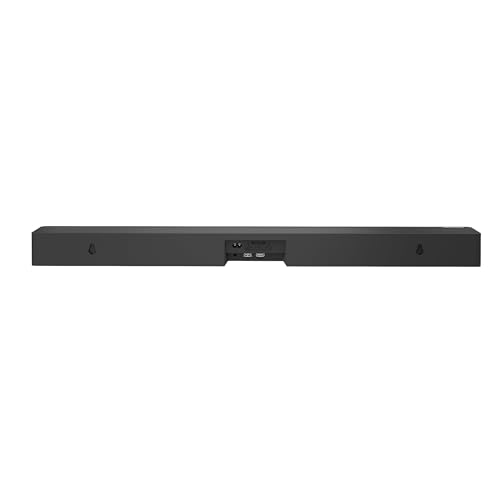
HDMI connectivity represents a more significant difference. The Hisense HS2100's standard ARC support handles Dolby Digital and DTS content competently, which covers the vast majority of current TV and streaming content. However, the Polk Signa S4's eARC support future-proofs your setup for higher-quality audio formats and ensures you're getting uncompressed audio from premium streaming services and 4K Blu-rays.
In smaller spaces—think studio apartments or bedrooms—the Hisense HS2100 often represents the sweet spot. Its warm sound signature and adequate bass response provide a substantial upgrade over TV speakers without overwhelming the space. The wireless subwoofer can be positioned to optimize bass response without the complex setup considerations of a multi-driver system.
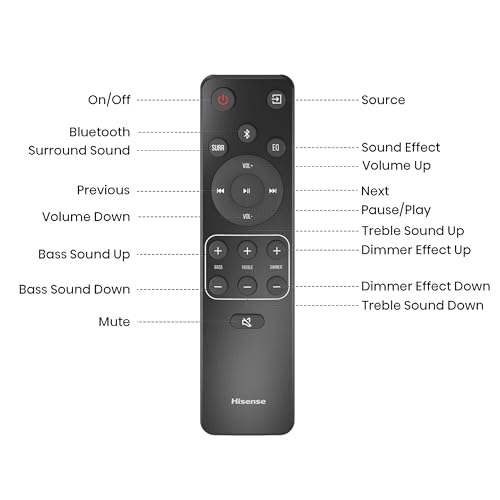
The system's auto power-on feature syncs well with TV viewing habits, and its relatively simple control scheme reduces the learning curve for less tech-savvy users. Six sound presets cover most content types adequately, and the manual bass and treble controls provide enough customization for most preferences.
For dedicated movie watching in larger rooms, the Polk Audio Signa S4 justifies its premium pricing through genuine performance advantages. The dedicated center channel and VoiceAdjust technology make it noticeably easier to follow dialogue in complex action sequences or when watching content with heavy accents or rapid speech.
More importantly, the Dolby Atmos capability transforms the viewing experience for properly mixed content. Recent blockbuster movies, premium streaming series, and even some video games now include Atmos soundtracks designed to take advantage of height channels. Missing this content element means experiencing these productions in a fundamentally reduced way.
Neither system is designed primarily for critical music listening—dedicated stereo systems or high-quality bookshelf speakers would serve that purpose better. However, both handle casual music streaming competently, with different strengths.
The Hisense HS2100's warm signature makes most popular music genres pleasant to listen to, though the slightly recessed treble means some detail and "air" around vocals and instruments is missed. Its Music mode provides better stereo imaging than the other presets, making it suitable for background listening during daily activities.
The Polk Signa S4's superior driver array and wider soundstage create a more engaging music listening experience. Individual instruments are better separated in the mix, and the overall presentation feels more spacious and dynamic. However, the system's movie-focused tuning means some music may benefit from bass adjustment to prevent the powerful subwoofer from overwhelming the midrange.
Since both systems launched in 2021, the soundbar market has continued evolving rapidly. Newer models increasingly include Wi-Fi connectivity for direct streaming, voice control integration, and more sophisticated room correction technologies. However, the fundamental performance characteristics that define these two approaches—budget efficiency versus premium immersion—remain relevant.
The Hisense HS2100 represents a mature approach to budget soundbar design that continues to offer solid value. Its combination of features and performance at its price point hasn't been significantly surpassed by newer budget models, though some newer options add Wi-Fi and voice control.
The Polk Signa S4's Dolby Atmos implementation remains competitive with newer models. While some premium soundbars have added additional height channels or more sophisticated processing, the fundamental advantages of its 3.1.2 configuration and dedicated center channel haven't been diminished by newer technology.
The choice between these systems ultimately comes down to your specific priorities and how you actually use your entertainment system. If your primary use is casual TV watching, news, and occasional movie streaming in a smaller space, the Hisense HS2100 provides excellent value and will dramatically improve your audio experience over built-in TV speakers.
However, if you're serious about movie watching, have a medium to large living room, and want to experience modern content as its creators intended, the Polk Audio Signa S4's premium pricing delivers transformational performance improvements. The Dolby Atmos capability alone represents a fundamental upgrade in how you experience cinematic content.
Consider also your long-term plans. If you're likely to upgrade your TV, streaming devices, or overall entertainment setup within the next few years, the Polk Signa S4's eARC support and advanced format compatibility provide better future-proofing. If you want something that works well right now without concern for future expansion, the Hisense HS2100's simpler approach may be preferable.
At the time of writing, the roughly $180 price difference between these systems represents a meaningful investment for many buyers. But that premium buys genuine technological advantages that translate to daily performance improvements for the right user. Choose the Hisense HS2100 if you want reliable improvement on a budget. Choose the Polk Audio Signa S4 if you want the closest thing to a true home theater experience that a soundbar can provide.
| Hisense HS2100 | Polk Audio Signa S4 |
|---|---|
| Channel Configuration - Determines audio complexity and immersion | |
| 2.1 channels (stereo + subwoofer) | 3.1.2 channels (left/right/center + sub + height) |
| Dolby Atmos Support - Essential for modern 3D movie soundtracks | |
| No (uses DTS Virtual:X for simulated surround) | Yes (certified with dedicated upward-firing drivers) |
| Driver Array - More drivers enable better sound separation | |
| 2 full-range drivers in soundbar | 7 drivers: 2 tweeters, 2 midrange, 2 height, 1 center |
| Subwoofer Size - Larger drivers produce deeper, more controlled bass | |
| 5.25" wireless subwoofer (120W) | 5.9375" wireless subwoofer (down-firing design) |
| HDMI Connectivity - Newer eARC handles higher quality audio | |
| HDMI ARC (compressed audio formats) | HDMI 2.1 eARC (uncompressed Dolby Atmos) |
| Bluetooth Version - Newer versions have better stability and lower latency | |
| Bluetooth 5.3 (excellent for budget class) | Bluetooth 4.2 with AAC codec support |
| Voice Enhancement - Critical for clear dialogue | |
| Balanced midrange with 6 EQ presets | Dedicated center channel + VoiceAdjust technology |
| Sound Modes - Optimize audio for different content types | |
| 6 modes: Movie, Music, News, Sport, Game, Night | 3 modes: Movie, Music, Night (plus customizable bass) |
| Frequency Response - Shows how deep bass extends and how high treble reaches | |
| 45Hz - 20kHz (limited deep bass extension) | Not specified (likely extends lower with larger sub) |
| Power Output - Affects maximum volume and dynamic range | |
| 240W total (60W x 2 soundbar, 120W sub) | Power rating not specified (7-driver array suggests higher) |
| Remote Features - Additional control over sound customization | |
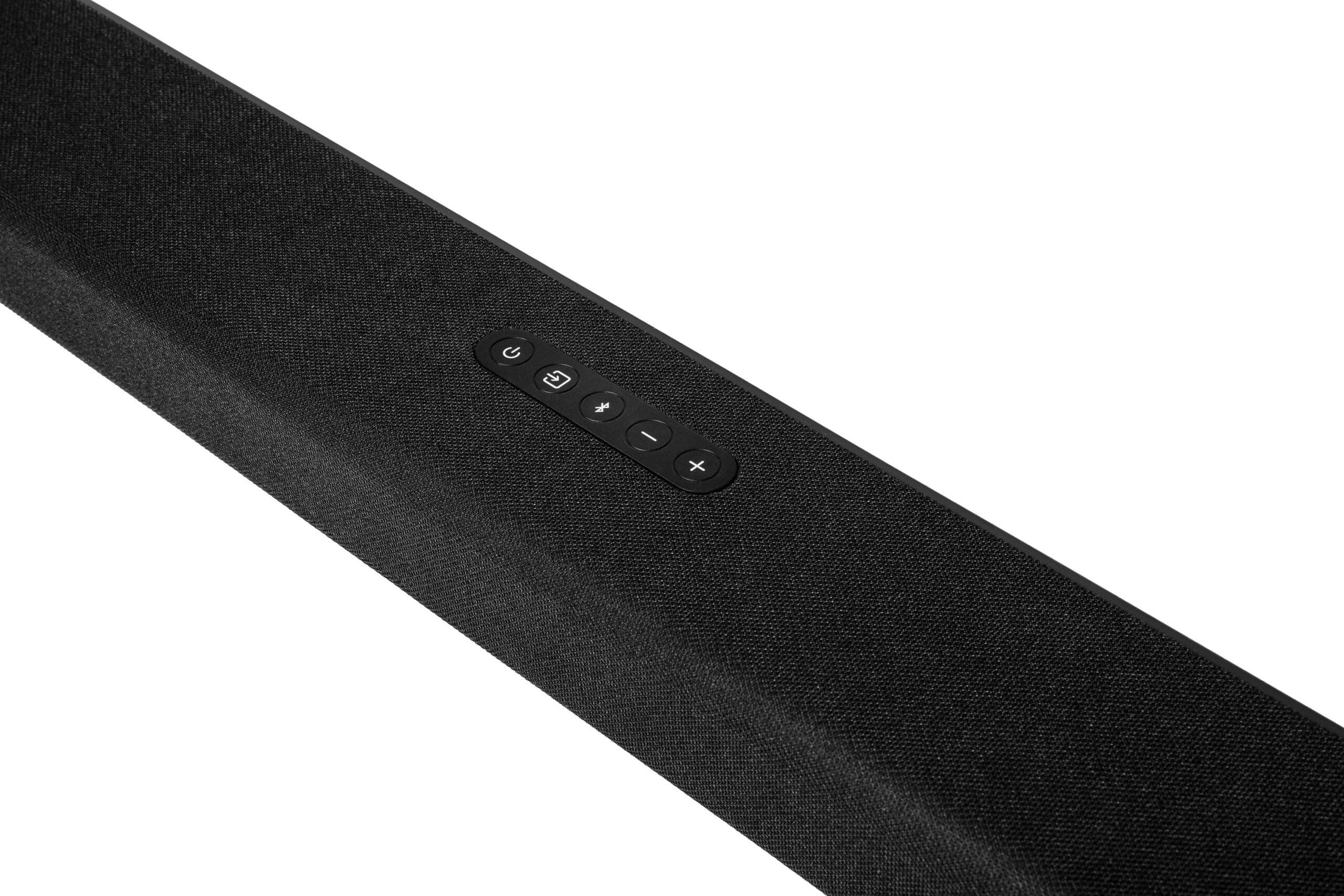
| Bass/treble adjustment, dimmer, surround toggle | VoiceAdjust, BassAdjust, preset TV brand codes |
| Best Use Case - Who should choose this soundbar | |
| Budget upgrade for small-medium rooms, casual viewing | Home theater enthusiasts wanting cinematic immersion |
The Polk Audio Signa S4 is significantly better for movies due to its Dolby Atmos support and dedicated center channel. While the Hisense HS2100 handles movies adequately with virtual surround processing, the Polk Signa S4 delivers true 3D audio with overhead effects that make action scenes and blockbusters much more immersive. The dedicated center channel also ensures dialogue stays crystal clear during complex soundtracks.
The primary difference is channel configuration and audio processing. The Hisense HS2100 is a 2.1 system (stereo plus subwoofer) that uses virtual surround technology, while the Polk Audio Signa S4 is a true 3.1.2 Dolby Atmos system with seven separate drivers including upward-firing speakers for overhead effects. This makes the Polk Signa S4 capable of genuine 3D surround sound.
The Polk Audio Signa S4 has superior dialogue clarity thanks to its dedicated center channel and VoiceAdjust technology, which can boost voices independently without affecting other audio. The Hisense HS2100 provides clear dialogue through balanced sound tuning, but it cannot match the precision of a discrete center channel speaker found in the Polk Signa S4.
Yes, both the Hisense HS2100 and Polk Audio Signa S4 include wireless subwoofers. The Hisense HS2100 features a 5.25" subwoofer, while the Polk Signa S4 has a larger 5.9375" down-firing subwoofer that typically provides deeper, more controlled bass response.
The Hisense HS2100 is often better suited for smaller rooms due to its more compact audio presentation and warm sound signature that won't overwhelm tight spaces. The Polk Audio Signa S4 can be excellent in small rooms too, but its powerful bass may need adjustment to prevent it from being too overwhelming in confined spaces.
The Hisense HS2100 supports Dolby Digital, Dolby Digital Plus, DTS Virtual:X, and various music formats through USB. The Polk Audio Signa S4 supports Dolby Atmos, Dolby Digital, Dolby Digital Plus, and Dolby TrueHD through its eARC connection, but notably does not support DTS formats. The Polk Signa S4 offers more advanced format support overall.
Both soundbars offer similar basic connectivity with HDMI ARC, optical, and Bluetooth. However, the Polk Audio Signa S4 has a slight edge with HDMI 2.1 eARC support for uncompressed audio and multi-device Bluetooth pairing. The Hisense HS2100 features newer Bluetooth 5.3 for potentially better wireless performance, while the Polk Signa S4 uses Bluetooth 4.2 with AAC codec support.
The Hisense HS2100 offers six preset modes: Movie, Music, News, Sport, Game, and Night. The Polk Audio Signa S4 provides three main modes (Movie, Music, Night) but includes customizable VoiceAdjust and BassAdjust technologies for more precise sound tailoring. Both approaches work well, with the Hisense HS2100 offering more presets and the Polk Signa S4 providing more advanced customization.
For casual music listening, both perform well with different strengths. The Hisense HS2100 has a warm, pleasant sound signature that works well for most music genres. The Polk Audio Signa S4 offers better instrument separation and a wider soundstage due to its seven-driver array, making it more engaging for active music listening, though neither is designed primarily for audiophile music reproduction.
The Polk Audio Signa S4 generally provides superior bass performance with its larger 5.9375" down-firing subwoofer that delivers tighter, more controlled low frequencies. The Hisense HS2100's 5.25" subwoofer offers satisfying bass impact for its class but can become somewhat "boomy" at higher volumes and has more limited deep bass extension.
The Hisense HS2100 is generally easier to set up due to its simpler 2.1 configuration and straightforward controls. The Polk Audio Signa S4 requires slightly more setup consideration due to its multiple drivers and advanced features, but both systems feature automatic subwoofer pairing and HDMI CEC for TV remote control integration.
Value depends on your priorities and budget. The Hisense HS2100 offers excellent value for budget-conscious buyers who want a significant upgrade over TV speakers without advanced features. The Polk Audio Signa S4 provides better value for those willing to invest more for genuine Dolby Atmos, superior dialogue clarity, and immersive home theater performance. Both represent strong value propositions within their respective price categories.
We've done our best to create useful and informative comparisons to help you decide what product to buy. Our research uses advanced automated methods to create this comparison and perfection is not possible - please contact us for corrections or questions. These are the sites we've researched in the creation of this article: rtings.com - shop.hisense-usa.com - bestbuy.com - content.syndigo.com - bestbuy.com - hisensedealers.co.ke - stuff.co.za - dtc-aus-api.hisense.com - youtube.com - manuals.plus - youtube.com - bestbuy.com - youtube.com - gallifurniture.com - hisense-usa.com - manuals.plus - uk.hisense.com - device.report - youtube.com - costco.ca - elmcreekwsa.com - gallifurniture.com - soundandvision.com - audioholics.com - crutchfield.com - cnet.com - richersounds.com - crutchfield.com - rtings.com - polkaudio.com - walmart.com - polkaudio.com - crutchfield.com - youtube.com - profx.com

Privacy Policy
Terms and Conditions - Affiliate Policy
Home Security
© Copyright 2008-2026.
11816 Inwood Rd #1211, Dallas, TX 75244