







The world of TV audio has changed dramatically in recent years. As TVs have gotten thinner, their speakers have gotten worse, creating a massive opportunity for soundbars to fill the gap. But the soundbar market itself has split into two distinct paths: affordable systems that focus on immediate improvement over TV speakers, and premium units that promise near-surround sound experiences from a single bar.
This divide is perfectly illustrated by comparing the Hisense HS2100 and the Sennheiser AMBEO Mini. Released in 2023 and 2023 respectively, these products represent fundamentally different approaches to solving the same problem. Understanding which approach works better for your situation requires diving into what makes each one tick.
Before we dig into specifics, let's establish what we're dealing with. Traditional soundbars used simple stereo speakers to improve on terrible TV audio. Modern soundbars fall into two camps: physical multi-speaker systems and virtualized surround systems.
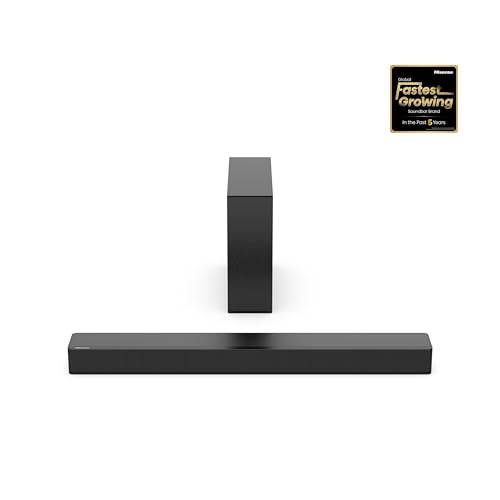
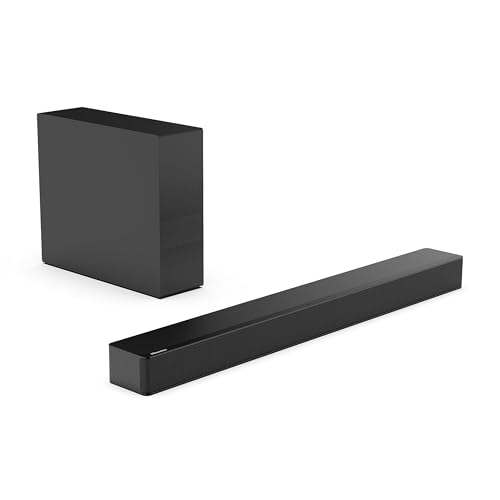
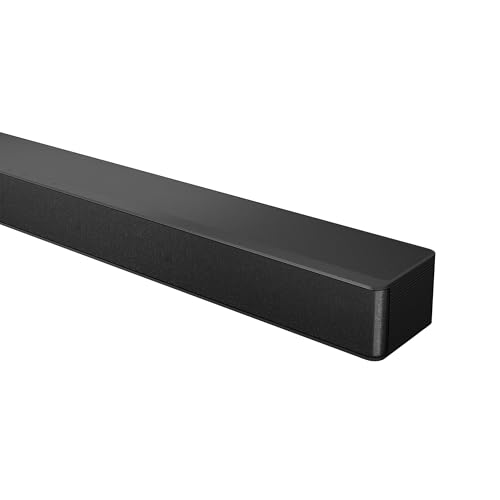
Physical systems like the Hisense HS2100 use actual separate speakers—in this case, a soundbar plus a wireless subwoofer—to create distinct audio channels. When you hear bass, it's coming from a real bass speaker. When you hear dialogue, it's coming from dedicated drivers in the main bar.
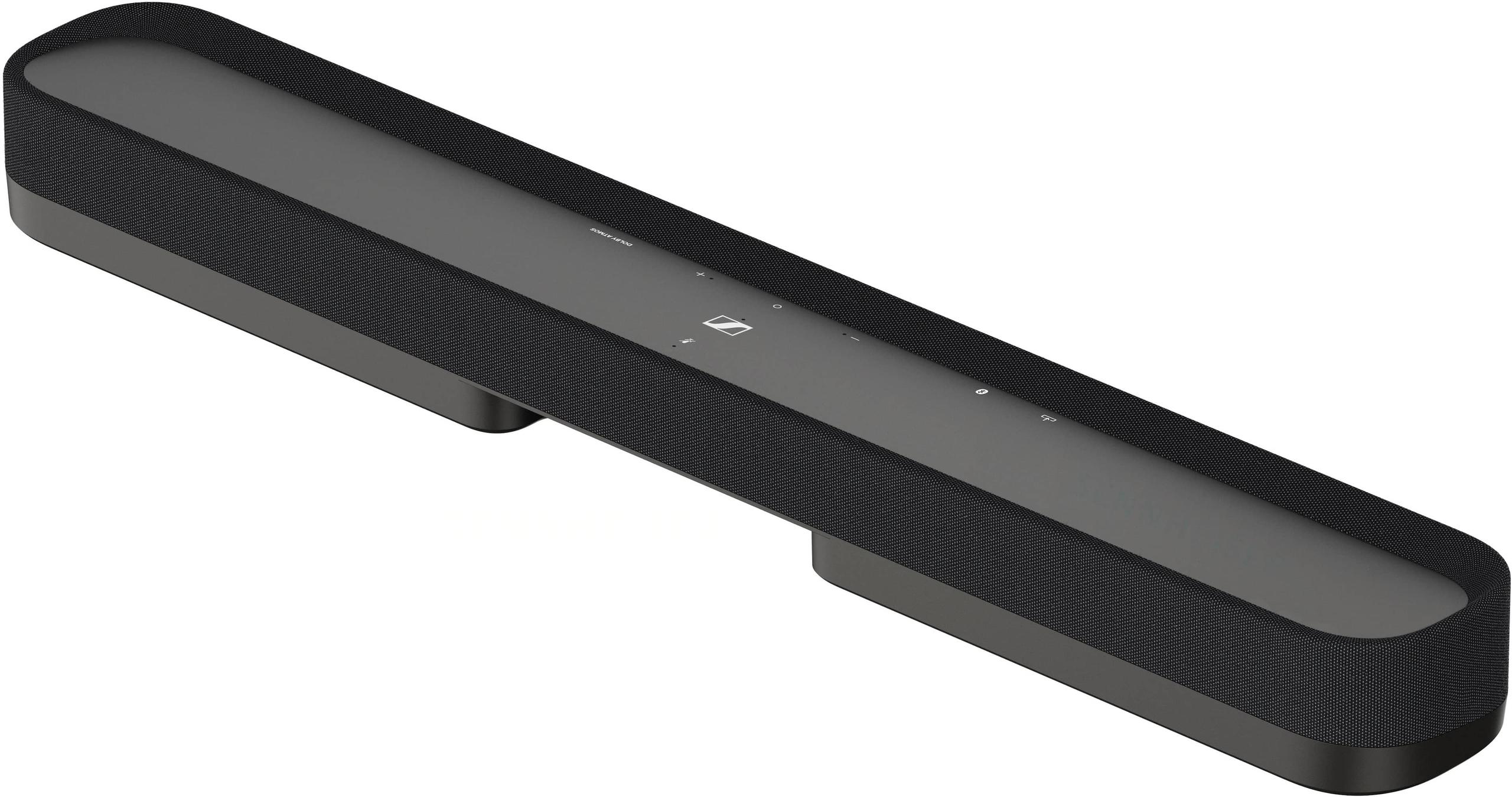
Virtualized systems like the Sennheiser AMBEO Mini use sophisticated digital signal processing (DSP) to trick your brain into hearing sounds that seem to come from speakers that aren't actually there. This psychoacoustic processing analyzes incoming audio and uses precisely timed reflections off your walls and ceiling to create the illusion of surround sound.
Both approaches have merit, but they excel in different scenarios and serve different priorities.
The Hisense HS2100 represents what most people think of when they hear "soundbar upgrade." At the time of writing, it sits in the budget-friendly category, typically priced well under $200, making it accessible to almost anyone looking to improve their TV audio.
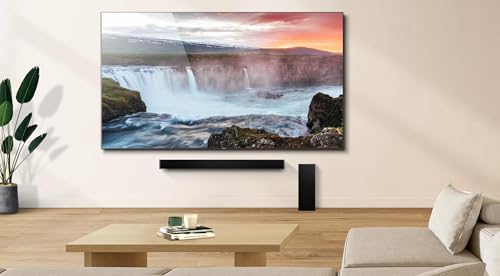
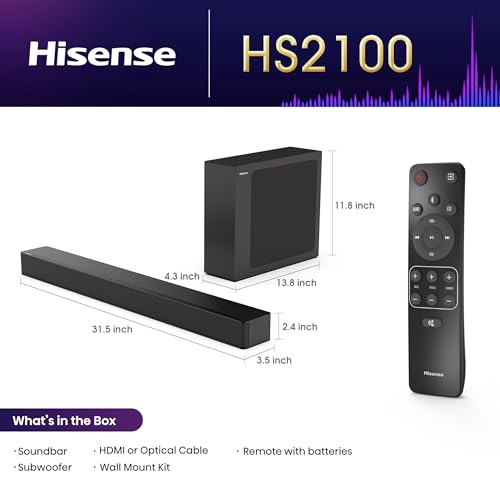
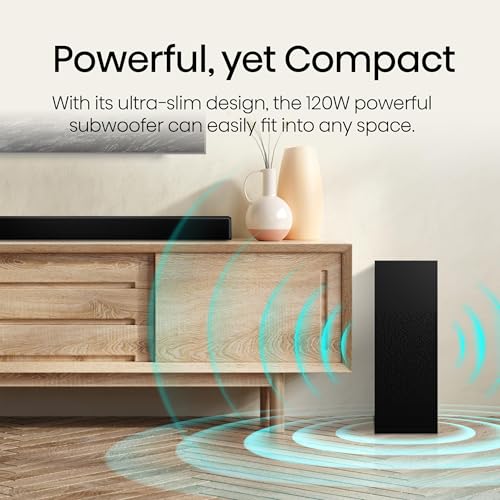
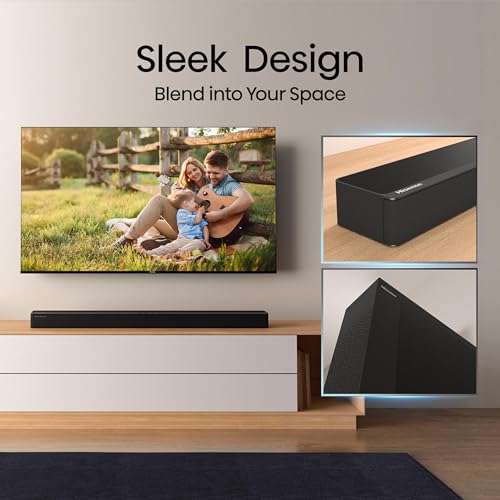
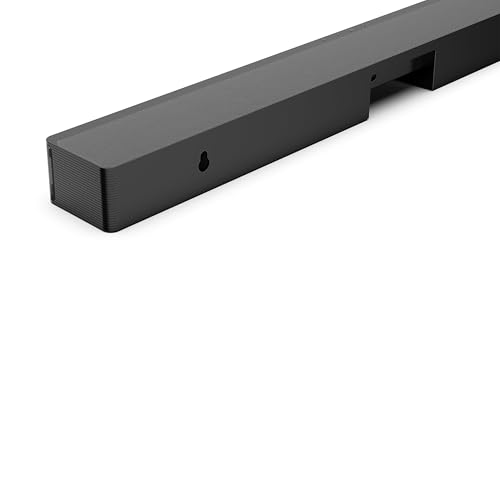
The HS2100's approach is refreshingly straightforward. You get a 31.5-inch soundbar that's thin enough (2.4 inches high) to fit under most TVs without blocking the screen, plus a separate wireless subwoofer that you can place anywhere in the room. This modular approach solves one of the biggest problems with all-in-one solutions: bass placement.
Bass frequencies are non-directional, meaning your brain can't tell where they're coming from. This lets you hide the HS2100's subwoofer behind furniture, in a corner, or wherever it fits your room layout. The wireless connection means no ugly cables running across your floor—a practical advantage that shouldn't be underestimated.
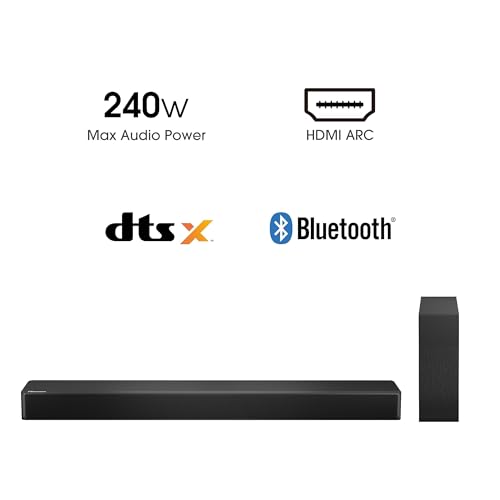
When evaluating any soundbar, certain specifications tell you more than others. The Hisense HS2100 delivers 240W of total power, with 120W dedicated to the subwoofer. But power ratings can be misleading—what matters more is how that power translates to actual sound.
Based on professional testing, the HS2100 can reach about 90+ dB of maximum output, which is plenty loud for most living rooms. For reference, normal conversation happens around 60 dB, while movie theaters typically hit 85 dB during action scenes. The HS2100's output means you can achieve cinema-like volume levels without straining the system.
The frequency response spans 45Hz to 20kHz, which tells us the system can reproduce most of what humans can hear. The 45Hz low-end cutoff means you'll get solid mid-bass impact—the thump of explosions and the punch of drums—but you won't get the deepest sub-bass rumble that you feel in your chest at movie theaters. For most content, this is perfectly adequate.
The HS2100 supports DTS: Virtual X, which is Hisense's attempt at creating surround effects from a simple 2.1 setup. Virtual X processing takes multichannel audio (like 5.1 surround tracks) and downmixes it to stereo while trying to preserve some spatial information.
In practice, this means you get a somewhat wider soundstage than basic stereo, but don't expect true surround effects. Professional reviews consistently note that the sound remains front-focused, which is fine for most TV viewing but limiting for movie experiences where directional audio matters.
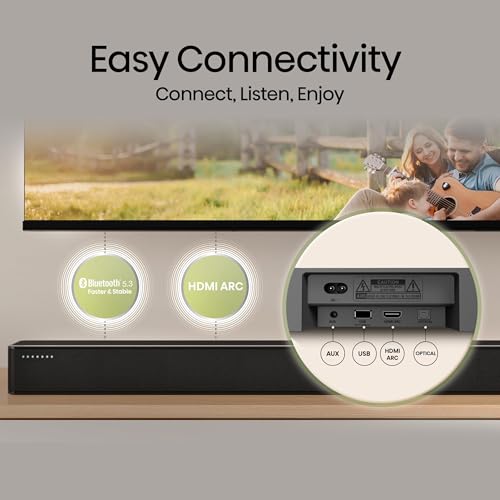
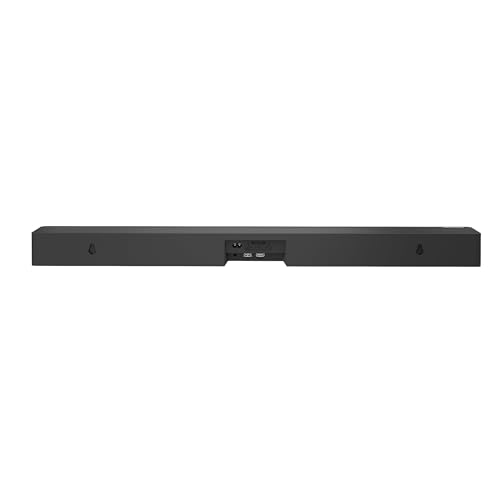
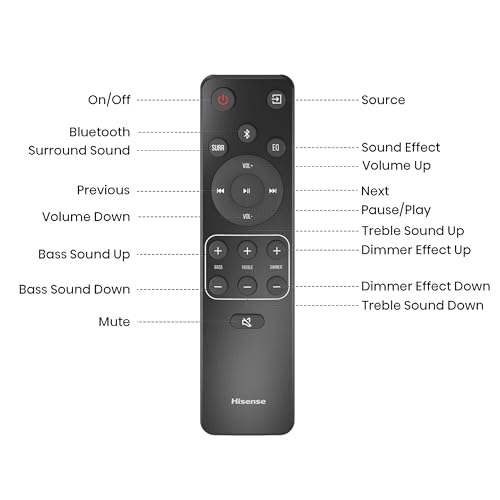
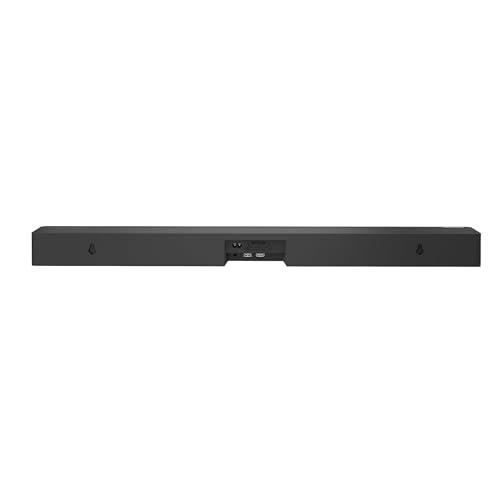
Modern soundbars need to connect to everything, and the Hisense HS2100 covers the basics well. HDMI ARC (Audio Return Channel) connects to your TV with a single cable, automatically turning the soundbar on and off with your TV and allowing volume control from your TV remote.
The inclusion of Bluetooth 5.3 is notable—this newer Bluetooth version offers better range, lower latency, and more stable connections than older versions. For streaming music from your phone or tablet, this translates to fewer dropouts and better audio quality.
Six preset sound modes (Movie, Music, News, Sport, Game, Night) let you optimize the sound for different content types. The News mode, for example, emphasizes dialogue frequencies, while Movie mode enhances bass and surround effects. These aren't revolutionary features, but they're useful for fine-tuning your experience.
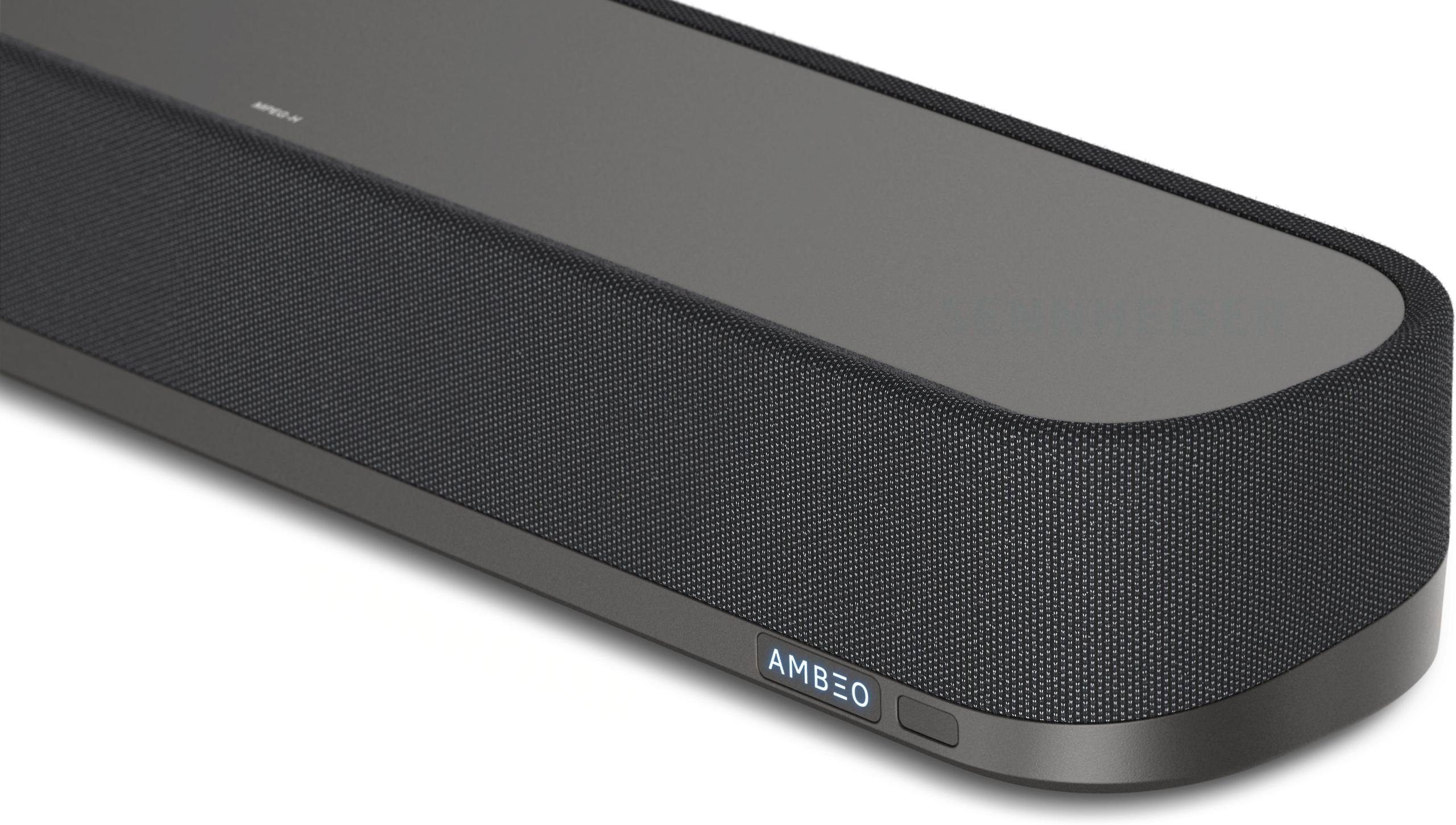
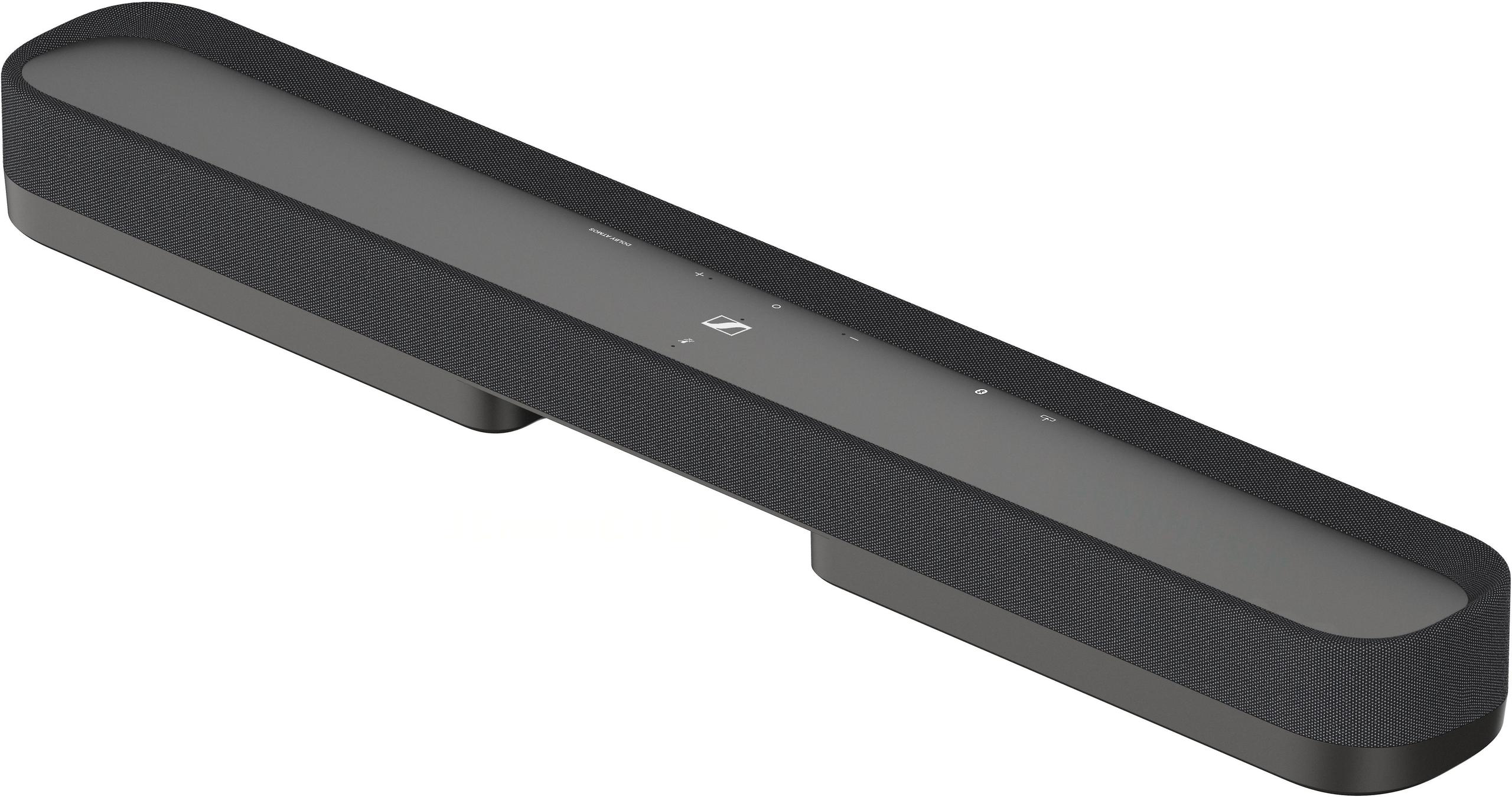
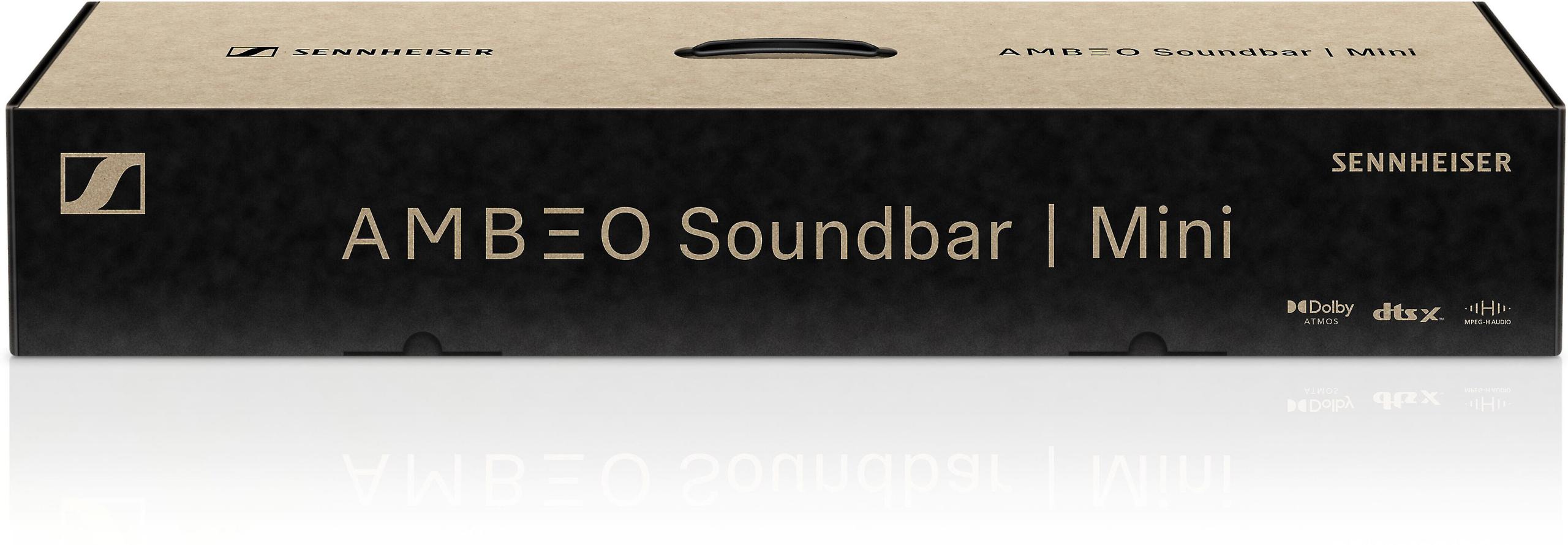
The Sennheiser AMBEO Mini takes a completely different approach to soundbar design. Instead of adding more physical speakers, Sennheiser invested in advanced virtualization technology to create what they call a "7.1.4 channel" experience from a single, compact bar.
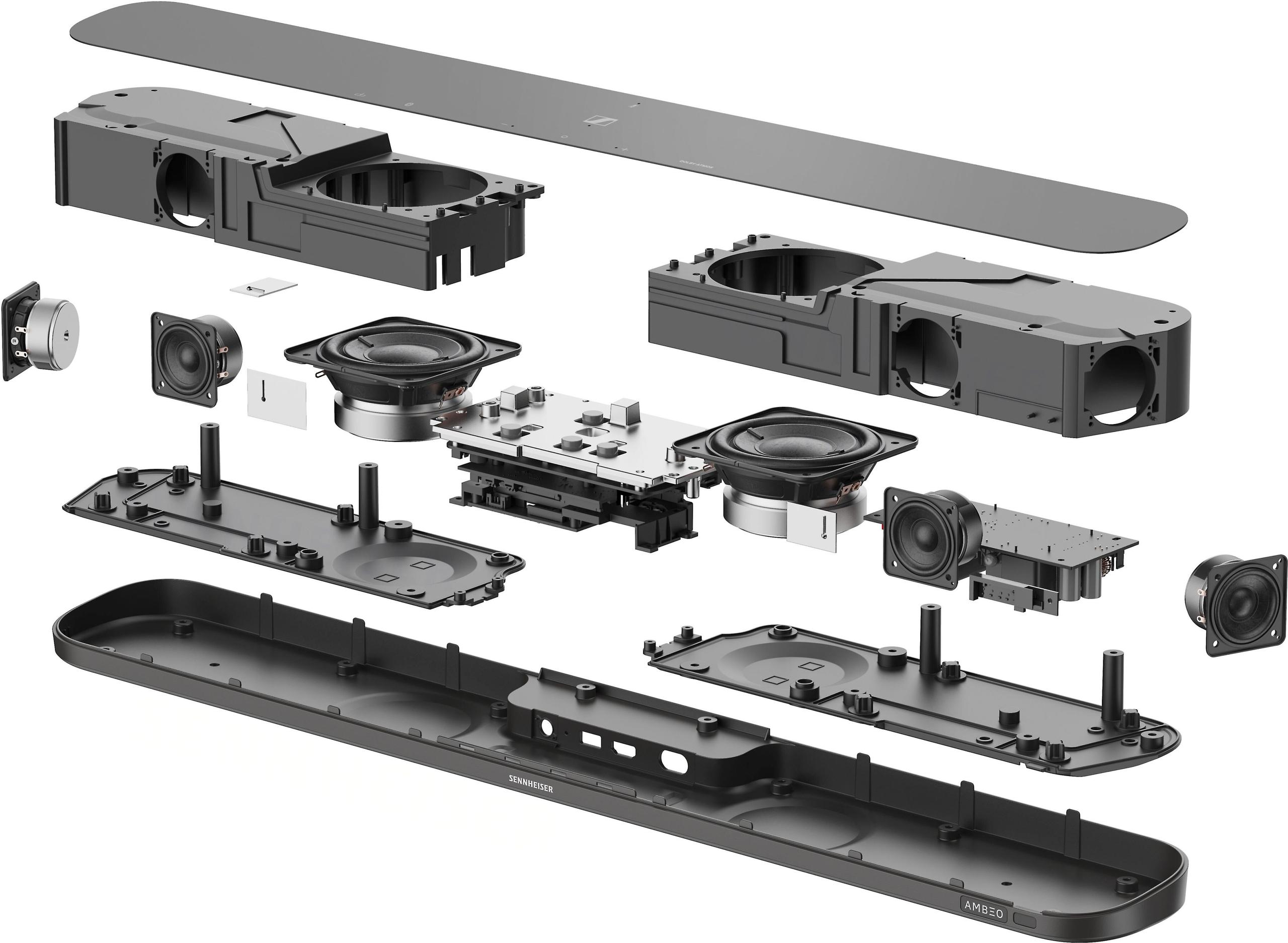
The AMBEO Mini's core technology deserves explanation because it's genuinely impressive. The soundbar contains six carefully positioned drivers along with four high-precision microphones that continuously analyze your room's acoustics. When you first set it up, the system generates test tones and listens to how they reflect off your walls, ceiling, and furniture.
This acoustic mapping lets the Sennheiser AMBEO Mini create a virtual speaker layout that adapts to your specific space. The processing algorithms can then direct sound reflections to create the illusion that audio is coming from beside you, behind you, and even above you. This isn't just marketing—when done well, the effect can be genuinely convincing.
The "7.1.4" designation breaks down like this: 7 refers to seven main channels (front left, center, right, side left, side right, rear left, rear right), 1 refers to a low-frequency effects channel for bass, and 4 refers to four height channels for overhead effects. All of these are virtualized, but the AMBEO Mini can create distinct audio zones for each.
Sennheiser brings over 75 years of audio engineering to the AMBEO Mini, and it shows in the details. The soundbar uses high-end full-range drivers with dual built-in 4-inch subwoofers. While these internal subs can't match a dedicated external subwoofer for raw output, they provide surprisingly tight, controlled bass down to 43Hz.
The frequency response extends to 20kHz on the high end, but more importantly, the response curve is much flatter than typical soundbars. This means all frequencies are reproduced more accurately, resulting in clearer dialogue, better instrument separation, and overall more natural sound.
Professional reviews consistently praise the AMBEO Mini's clarity and detail resolution. Dialogue comes through cleanly without sounding harsh, music maintains proper instrument placement, and sound effects have realistic texture. This level of audio quality typically costs significantly more in traditional hi-fi separates.
Where the Sennheiser AMBEO Mini truly shines is with spatial audio content. Dolby Atmos, DTS:X, and newer formats like 360 Reality Audio contain specific positional information that tells audio systems where each sound should appear in three-dimensional space.
Most soundbars simply ignore this information or process it poorly. The AMBEO Mini, however, was designed specifically to interpret and reproduce these spatial cues. With properly mastered content from Netflix, Disney+, Apple TV+, or Ultra HD Blu-ray discs, you can experience remarkably convincing overhead and surround effects.
The system also excels at upmixing standard stereo content. Its processing can take a regular music track and create a room-filling soundstage that makes you feel like you're in a larger acoustic space. This isn't artificial reverb—it's intelligent analysis that extracts spatial information already embedded in stereo recordings.
The AMBEO Mini runs on Sennheiser's AMBEO OS, which provides significantly more functionality than typical soundbar interfaces. Built-in Alexa voice control lets you adjust settings, control playback, and query information without reaching for a remote. Google Chromecast built-in means you can stream directly from any compatible app on your phone.
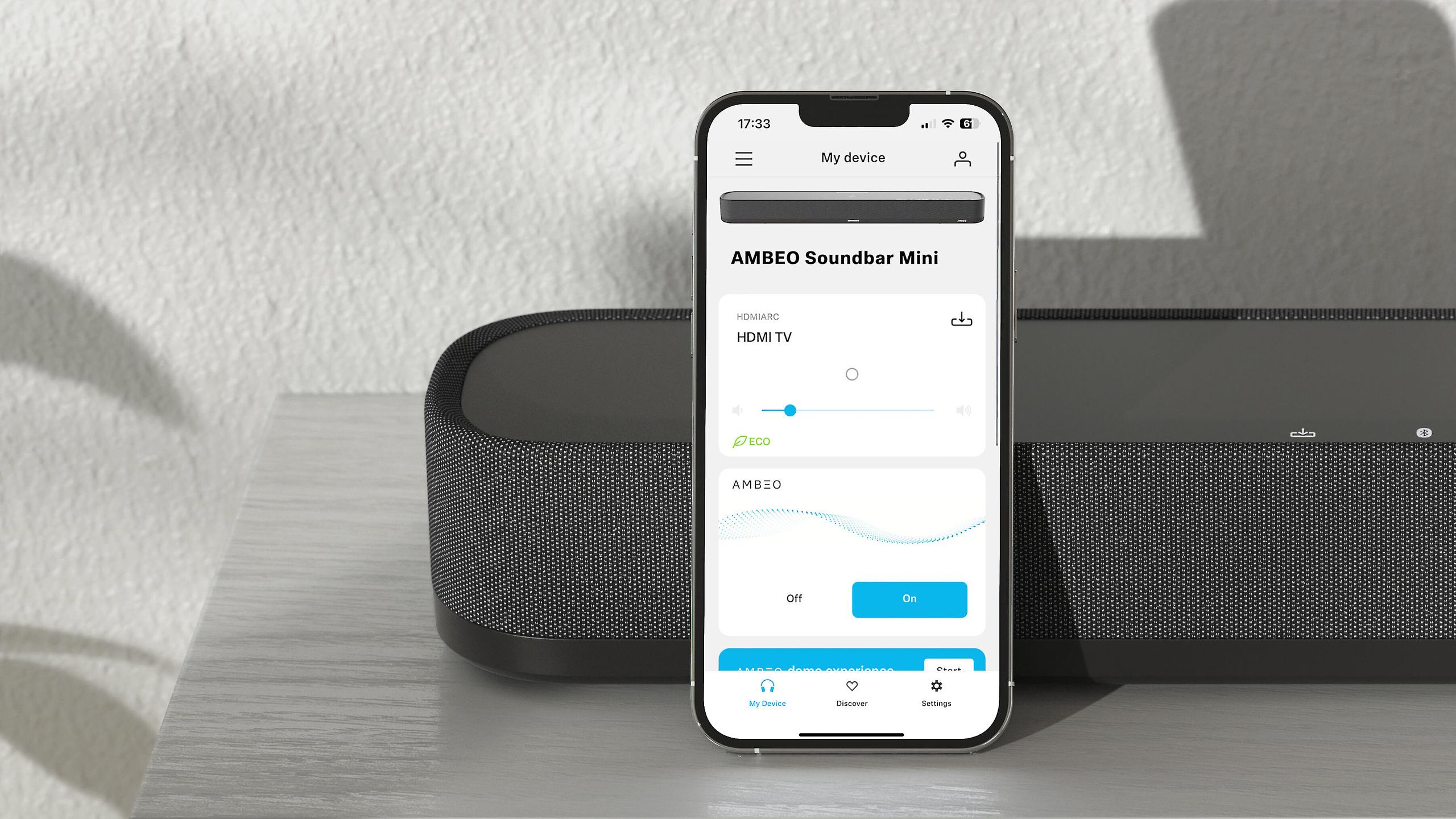
Apple AirPlay 2 support enables high-quality wireless streaming from iOS devices, while direct integration with Spotify Connect and Tidal Connect lets premium subscribers access their music libraries at full resolution. The comprehensive smartphone app provides detailed EQ controls, room correction adjustments, and firmware updates.
Both soundbars improve significantly on TV speakers for dialogue, but they achieve it differently. The Hisense HS2100 uses dedicated EQ presets and a relatively balanced midrange to ensure voices come through clearly. Its "News" mode specifically emphasizes vocal frequencies, which works well for talk shows, news broadcasts, and dialogue-heavy content.
The Sennheiser AMBEO Mini takes a more sophisticated approach with dedicated voice enhancement processing. This technology analyzes incoming audio in real-time, identifying and amplifying vocal frequencies while reducing background noise and music that might mask dialogue. The result is consistently clear speech even during complex movie soundtracks.
For home theater use, the AMBEO Mini's approach proves superior. During action sequences where explosions and music might overwhelm dialogue, its intelligent processing maintains vocal clarity without requiring manual volume adjustments.
This represents the most significant practical difference between the two systems. The Hisense HS2100's dedicated wireless subwoofer provides immediate, obvious bass impact. When an explosion happens on screen, you feel it. When a music track has a deep bass line, it fills the room.
The Sennheiser AMBEO Mini's dual internal subwoofers offer more subtle but arguably more accurate bass. The response is tighter and more controlled, without the occasional boominess that can affect external subs in certain room positions. However, the physical limitations of internal drivers mean less ultimate output and impact.
For casual viewing and music listening, the AMBEO Mini's bass approach works beautifully. For action movies, gaming, or bass-heavy music genres, the HS2100's dedicated subwoofer provides more visceral impact.
Here's where the fundamental approaches create the biggest performance gap. The Hisense HS2100's DTS: Virtual X processing creates a modest sense of width and spaciousness, but effects remain clearly anchored to the front of the room. You get a wider soundstage than TV speakers, but it's still obviously coming from the soundbar location.
The Sennheiser AMBEO Mini's advanced virtualization can create genuinely convincing surround and height effects with appropriate content. Helicopters seem to pass overhead, ambient sounds appear to come from beside you, and musical performances can sound like you're in a larger acoustic space.
This difference becomes most apparent with modern streaming content. Movies and shows on Netflix, Amazon Prime Video, and Disney+ increasingly use Dolby Atmos soundtracks that contain specific overhead and surround information. The AMBEO Mini can reproduce these effects convincingly, while the HS2100 cannot.
Both soundbars work well in typical living spaces, but they serve different priorities. The Hisense HS2100 provides immediate improvement over TV speakers with satisfying bass impact and adequate volume levels. Setup is straightforward, and the wireless subwoofer gives placement flexibility for optimal bass response.
The Sennheiser AMBEO Mini excels in smaller spaces where its room calibration can work most effectively. The compact design fits elegantly under modern TVs, and the virtualized surround effects work better in rooms with good wall and ceiling surfaces for sound reflection.
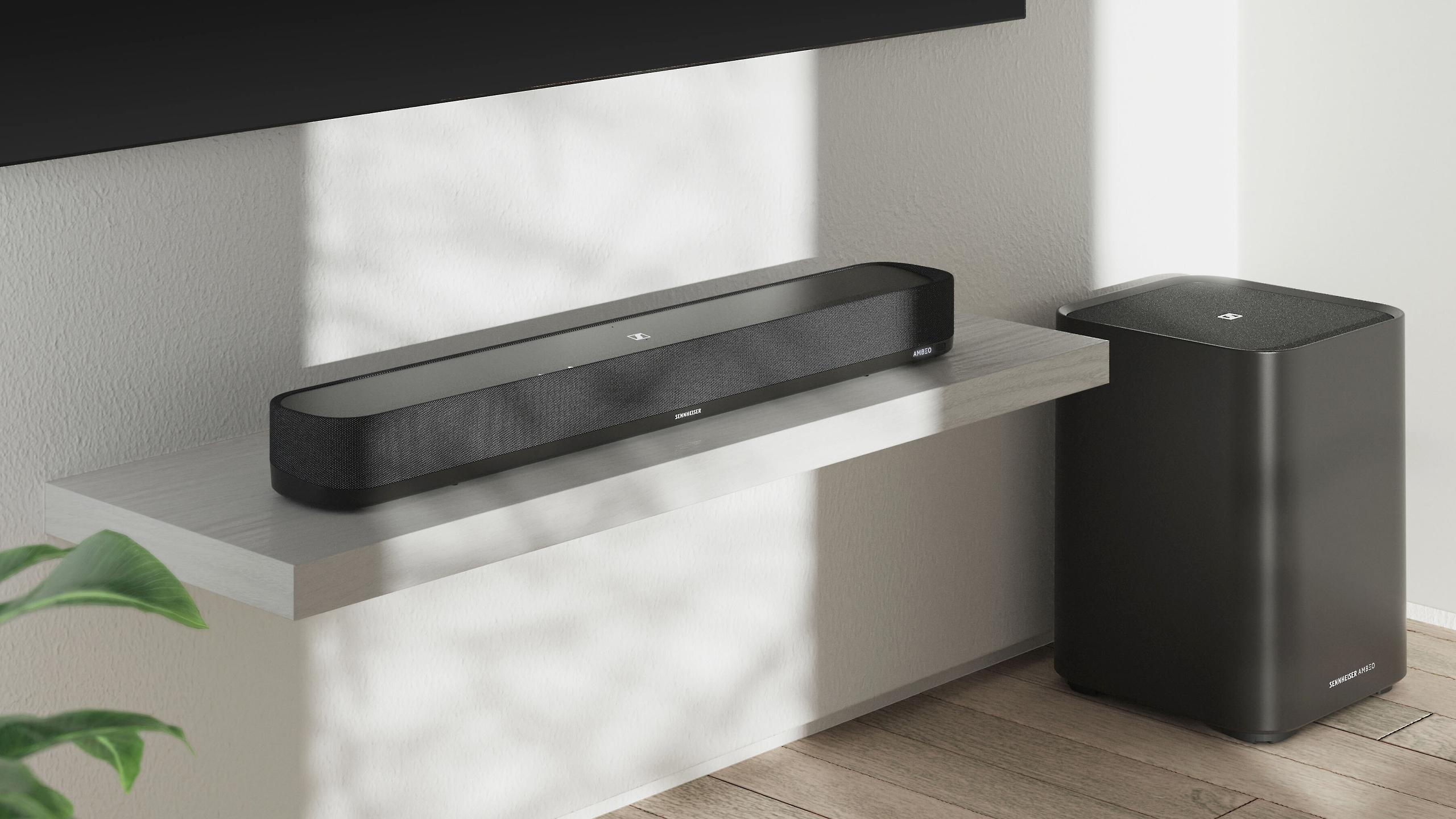
For apartment dwellers, the AMBEO Mini offers significant advantages. Its night mode and precise bass control prevent the neighbor complaints that external subwoofers can generate. The single-unit design eliminates the need to place and hide a separate subwoofer, which matters in small spaces.
The Hisense HS2100 works in apartments too, but the wireless subwoofer requires consideration of neighbors and floor transmission of bass frequencies.
If you're building a dedicated home theater setup, both products serve different roles. The Hisense HS2100 works as an affordable interim solution while you plan a full surround system, or as a permanent solution for smaller theater spaces focused on casual viewing.
The Sennheiser AMBEO Mini can serve as the foundation of a high-quality system. Its advanced processing and connectivity options provide room for growth—you can add external subwoofers or rear speakers later while maintaining the sophisticated room correction and spatial processing.
At the time of writing, these products occupy different value territories entirely. The Hisense HS2100 typically costs well under $200, making it accessible to almost any budget. When you consider that you're getting both a soundbar and wireless subwoofer for this price, the immediate value is exceptional.
The Sennheiser AMBEO Mini commands a significant premium, typically costing over four times as much as the HS2100. This pricing reflects its advanced technology, premium audio components, and comprehensive feature set, but it also places it in competition with much more complex surround sound systems.
The value equation depends entirely on your priorities and expectations. If your goal is dramatic improvement over TV speakers at minimal cost, the HS2100 delivers exceptional value. If you want cutting-edge spatial audio technology and audiophile-grade sound quality in a compact package, the AMBEO Mini justifies its premium pricing.
Want immediate, dramatic improvement over TV speakers without breaking your budget. The combination of a decent soundbar plus dedicated wireless subwoofer provides everything most people need for casual TV viewing, streaming, and music listening. It's ideal for buyers who prioritize obvious bass impact, simple setup, and reliable performance over advanced features.
The HS2100 makes sense for secondary TVs, rental properties, or situations where you need good sound without the complexity of premium systems. If you primarily watch standard TV content, news, sports, and occasional movies, the HS2100's capabilities align well with these usage patterns.
Value audio quality and technological sophistication over pure affordability. This soundbar rewards listeners who consume spatial audio content from modern streaming services, appreciate detailed sound reproduction, and want a system that grows with advancing content standards.
The AMBEO Mini suits buyers building quality audio systems incrementally, those with space constraints requiring single-unit solutions, and anyone who prioritizes the latest surround sound formats. If you stream premium content with Dolby Atmos, listen to high-resolution music, or want your soundbar to remain relevant for years, the investment makes sense.
The choice ultimately comes down to your audio priorities and budget reality. The Hisense HS2100 provides immediate satisfaction and complete functionality at an accessible price. The Sennheiser AMBEO Mini offers superior technology and sound quality for those willing to invest in premium audio performance.
Both products excel within their intended markets, serving different but equally valid approaches to upgrading your TV audio experience.
| Hisense HS2100 2.1 Channel 240W Soundbar System | Sennheiser AMBEO Soundbar Mini |
|---|---|
| Channel Configuration - Determines how immersive your audio experience will be | |
| 2.1 channel with physical wireless subwoofer | 7.1.4 virtualized surround (no physical subwoofer) |
| Total Power Output - Affects maximum volume and dynamic range | |
| 240W (soundbar: 120W, subwoofer: 120W) | 250W from 6 Class D amplifiers |
| Frequency Response - Shows how deep the bass goes and how clear the highs are | |
| 45Hz - 20kHz (limited deep bass extension) | 43Hz - 20kHz (slightly better low-end from compact design) |
| Spatial Audio Support - Critical for modern streaming content with Dolby Atmos | |
| DTS: Virtual X only (basic surround widening) | Dolby Atmos, DTS:X, MPEG-H, 360 Reality Audio |
| Room Calibration - Optimizes sound for your specific space and furniture layout | |
| None (manual EQ adjustments only) | Automatic calibration with 4 built-in microphones |
| Physical Dimensions - Important for TV compatibility and room aesthetics | |
| Soundbar: 31.5" × 2.4" × 3.5" + separate subwoofer | Single unit: 27.6" × 2.6" × 3.9" (more compact) |
| Smart Features - Convenience and streaming integration capabilities | |
| Bluetooth 5.3, Roku TV Ready, basic presets | Built-in Alexa, Chromecast, AirPlay 2, advanced app control |
| Setup Complexity - Time and effort required to get optimal performance | |
| Plug-and-play with automatic subwoofer pairing | Guided room calibration process with smartphone app |
| Bass Performance - Physical impact and deep frequency reproduction | |
| Dedicated 5.25" wireless subwoofer (stronger impact) | Dual 4" internal subwoofers (tighter but less powerful) |
| Connectivity Options - Flexibility for different source devices | |
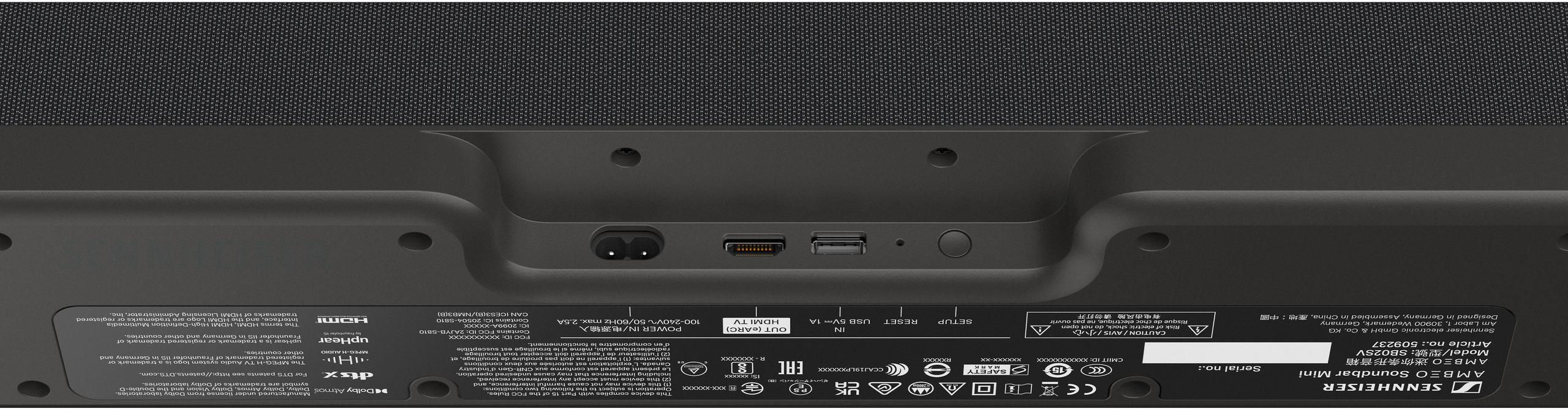
| HDMI ARC, Optical, 3.5mm AUX, USB, Bluetooth | HDMI eARC, USB-A, Wi-Fi, Bluetooth 5.0 |
| Target Market - Who each product is designed for | |
| Budget-conscious buyers wanting immediate bass improvement | Premium users prioritizing spatial audio and compact design |
The Hisense HS2100 offers exceptional value as a budget option, including both a soundbar and wireless subwoofer in one package. The Sennheiser AMBEO Mini costs significantly more but provides premium audio quality, advanced spatial processing, and cutting-edge features. Choose the HS2100 for immediate improvement at low cost, or the AMBEO Mini if you prioritize audiophile-grade sound and future-proof technology.
Yes, the Hisense HS2100 includes a dedicated 120W wireless subwoofer with a 5.25-inch driver. This gives it a significant advantage over the Sennheiser AMBEO Mini, which relies on built-in dual 4-inch subwoofers. The HS2100's separate subwoofer provides stronger bass impact and flexible placement options.
Only the Sennheiser AMBEO Mini supports Dolby Atmos, along with DTS:X and other advanced spatial audio formats. The Hisense HS2100 is limited to DTS: Virtual X, which provides basic surround widening but cannot process true height effects. For modern streaming content with Atmos soundtracks, the AMBEO Mini is the clear choice.
The Sennheiser AMBEO Mini is better suited for apartments due to its compact single-unit design and precise bass control that won't disturb neighbors. The Hisense HS2100 requires placing a separate wireless subwoofer, which can transmit bass vibrations through floors. The AMBEO Mini's night mode also provides better volume control for late-night viewing.
The Hisense HS2100 offers simpler plug-and-play setup with automatic wireless subwoofer pairing and basic sound presets. The Sennheiser AMBEO Mini requires a more involved setup process including guided room calibration using built-in microphones and smartphone app configuration. Choose the HS2100 for immediate simplicity or the AMBEO Mini for optimized performance.
Yes, both soundbars connect to smart TVs via HDMI ARC. The Hisense HS2100 is Roku TV Ready for seamless integration with Roku TVs, while the Sennheiser AMBEO Mini features HDMI eARC for higher bandwidth audio formats. Both support TV remote control and auto power on/off functionality.
The Sennheiser AMBEO Mini excels at music reproduction with audiophile-grade drivers, flat frequency response, and intelligent upmixing that creates an immersive soundstage from stereo content. The Hisense HS2100 provides good music playback with strong bass impact but lacks the detail and spatial processing of the AMBEO Mini.
The Sennheiser AMBEO Mini offers better expansion potential, allowing you to add external subwoofers while maintaining its advanced room correction and processing capabilities. The Hisense HS2100 is essentially a complete system with limited upgrade paths, making it ideal for users who want a finished solution rather than a modular approach.
Both soundbars can achieve similar maximum volume levels around 90+ dB, adequate for most living rooms. The Hisense HS2100 may seem louder due to its prominent bass response from the dedicated subwoofer. The Sennheiser AMBEO Mini maintains better clarity at high volumes thanks to superior driver quality and processing algorithms.
Both soundbars significantly improve dialogue over TV speakers, but use different approaches. The Hisense HS2100 relies on balanced midrange reproduction and a dedicated "News" mode for vocal clarity. The Sennheiser AMBEO Mini features advanced voice enhancement technology that intelligently processes speech in real-time, providing superior dialogue clarity even during complex movie soundtracks.
The Sennheiser AMBEO Mini provides advantages for gaming through low-latency processing, spatial audio support for games that use 3D sound positioning, and detailed audio reproduction for competitive gaming. The Hisense HS2100 offers a dedicated Game mode and solid performance, but lacks the advanced spatial processing that can provide tactical audio advantages in modern games.
For home theater use, the Sennheiser AMBEO Mini is the superior choice due to its Dolby Atmos support, room calibration, and ability to decode modern spatial audio formats used in streaming and disc content. The Hisense HS2100 works well as an affordable home theater upgrade but cannot reproduce the immersive surround effects that define modern cinema audio experiences.
We've done our best to create useful and informative comparisons to help you decide what product to buy. Our research uses advanced automated methods to create this comparison and perfection is not possible - please contact us for corrections or questions. These are the sites we've researched in the creation of this article: rtings.com - shop.hisense-usa.com - bestbuy.com - content.syndigo.com - bestbuy.com - hisensedealers.co.ke - stuff.co.za - dtc-aus-api.hisense.com - youtube.com - manuals.plus - youtube.com - bestbuy.com - youtube.com - gallifurniture.com - hisense-usa.com - manuals.plus - uk.hisense.com - device.report - youtube.com - costco.ca - elmcreekwsa.com - gallifurniture.com - techradar.com - sennheiser-hearing.com - stereonet.com - rtings.com - youtube.com - youtube.com - newsroom.sennheiser.com - whathifi.com - baybloorradio.com - sennheiser-hearing.com - files.bbystatic.com

Privacy Policy
Terms and Conditions - Affiliate Policy
Home Security
© Copyright 2008-2026.
11816 Inwood Rd #1211, Dallas, TX 75244