


When it comes to upgrading your TV's audio, soundbars have become the go-to solution for most people. They're simple to set up, don't require multiple speakers scattered around your room, and can dramatically improve your entertainment experience. But the soundbar market spans an enormous range—from basic stereo upgrades that cost little more than a decent dinner out, to sophisticated home theater systems that rival traditional surround sound setups costing thousands.
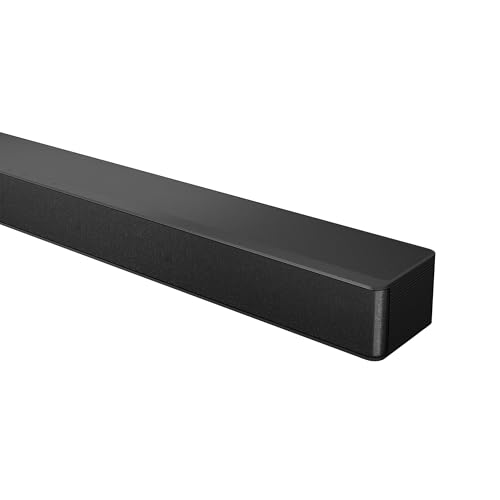
Today we're comparing two soundbars that represent opposite ends of this spectrum: the budget-friendly Hisense HS2100 and the premium Samsung Q990F. These aren't just different price points—they represent fundamentally different approaches to solving the same problem of poor TV audio.
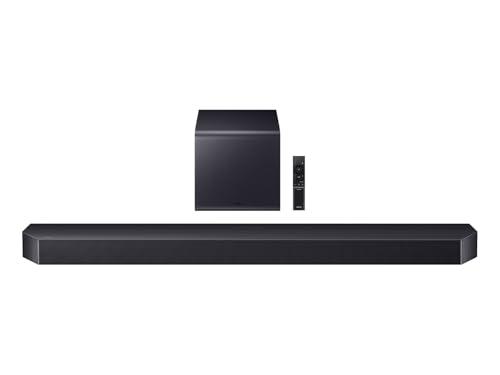
Before diving into specifics, it's worth understanding what separates a basic soundbar from a premium one. The most important factor is channel configuration, which determines how many discrete audio streams the system can handle. A 2.1 system like the Hisense HS2100 has two main channels (left and right) plus one subwoofer channel for bass. An 11.1.4 system like the Samsung Q990F has eleven main channels, one subwoofer channel, and four height channels for overhead effects.
This difference isn't just about numbers—it fundamentally changes what the soundbar can do with audio content. Modern movies and shows are mixed with surround sound in mind, placing different sounds in specific locations around you. A 2.1 system has to squeeze all this spatial information into just two channels, while an 11.1.4 system can place sounds exactly where the director intended.
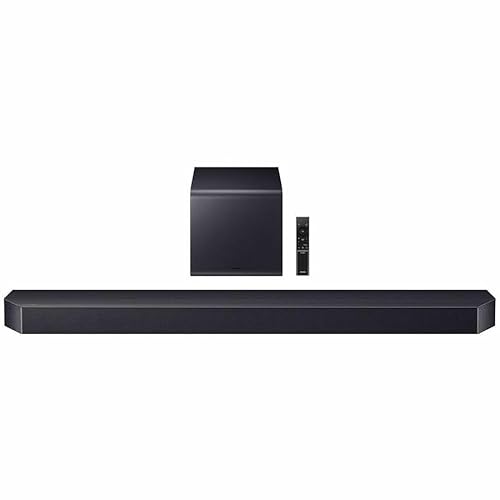
The Samsung Q990F, released in 2025, represents the latest evolution in premium soundbar technology. It includes significant improvements over Samsung's previous flagship models, particularly in subwoofer design and room calibration. The Hisense HS2100 takes a different approach entirely, focusing on delivering the essentials—better-than-TV sound with wireless bass—at an accessible price point.
When evaluating any audio system, sound quality forms the bedrock of the experience. Here's where the differences between our two contenders become immediately apparent, though both succeed within their respective goals.
The Hisense HS2100 delivers what our research shows is a warm, generally balanced sound profile that represents a clear upgrade over typical TV speakers. Professional reviewers consistently describe its midrange reproduction as neutral and clear, making dialogue easy to understand—a crucial factor for TV watching. However, the system shows its budget constraints in the treble region, where sounds can lack the sparkle and detail you'd expect from more expensive systems. This means that while voices come through clearly, the subtle details in movie soundtracks or the shimmer of cymbals in music might feel somewhat muted.
The Samsung Q990F, by contrast, operates in an entirely different league. Based on comprehensive reviewer testing, it delivers reference-quality audio with exceptional detail across the entire frequency spectrum. The discrete center channel—a dedicated speaker just for dialogue—ensures that conversation remains crystal clear even during the most chaotic action sequences. The system's wide frequency response means you hear nuances in both the lowest bass notes and the highest treble frequencies that budget systems simply cannot reproduce.
What makes this particularly impressive is how the Samsung Q990F handles dynamic range—the difference between the quietest and loudest sounds. In practice, this means explosions feel impactful without drowning out whispered dialogue, and musical passages maintain their emotional intensity without becoming fatiguing during long listening sessions.
This is where the fundamental differences in approach become most apparent. The Hisense HS2100 includes DTS Virtual:X processing, which attempts to create a surround sound effect from its 2.1 speaker configuration. Think of it like audio sleight-of-hand—the system uses psychoacoustic processing (tricks that exploit how our brains process sound) to make audio seem wider and more enveloping than the physical speakers should allow.
However, there are limits to what virtual processing can achieve. Our research into user and professional reviews reveals that while the Hisense HS2100 does create a modestly expanded soundstage compared to basic stereo, the effect feels primarily front-focused. You might notice some width to the sound, but you won't experience the genuine sense of being surrounded by audio that comes from true surround sound systems.
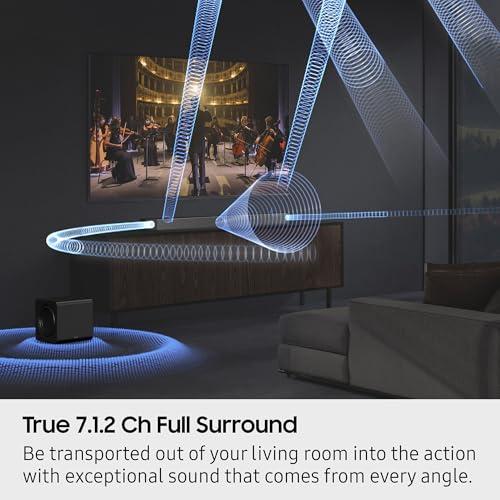
The Samsung Q990F takes an entirely different approach with its true 11.1.4 configuration. This system includes physical rear speakers that you place behind your seating area, along with up-firing drivers in both the main soundbar and rear speakers that bounce sound off your ceiling to create height effects. The result is what professionals describe as a genuine "bubble of sound" that surrounds you completely.
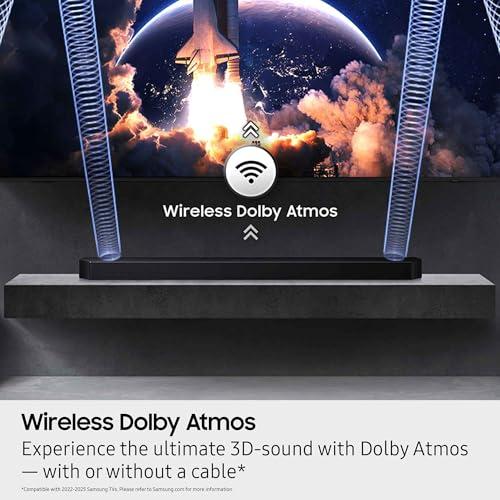
What's particularly impressive about modern Dolby Atmos content (which the Samsung Q990F supports natively) is how seamlessly sounds move through three-dimensional space. A helicopter flying overhead doesn't just get louder or quieter—it actually sounds like it's moving from behind you, over your head, and off to one side. Rain seems to fall from above, and ambient environmental sounds create a convincing sense of place that draws you deeper into the content.
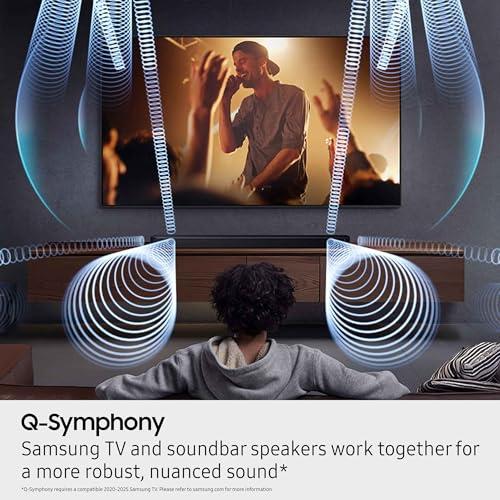
The Samsung Q990F also includes Q-Symphony technology, which can coordinate with compatible Samsung TVs to use both the TV's built-in speakers and the soundbar simultaneously. This creates an even wider, more immersive soundstage by essentially turning your TV into an additional speaker in the array.
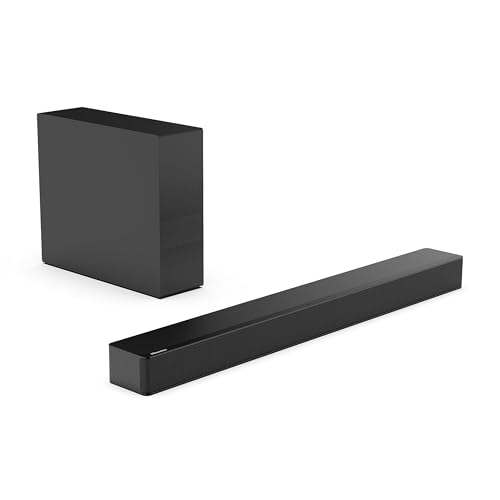
Bass performance reveals another area where these systems' different philosophies become clear. The Hisense HS2100 includes a wireless subwoofer with a 5.25-inch driver that provides solid mid-bass impact for its price category. Based on reviewer measurements, the system's frequency response extends down to around 45Hz, which covers most of the bass content in movies and music but misses the deepest sub-bass frequencies that add visceral impact to explosions and electronic music.
Professional reviewers note that the Hisense HS2100's bass, while adequate, can sound somewhat "boomy"—meaning it emphasizes certain bass frequencies over others, creating an uneven response that prioritizes impact over accuracy. For casual TV watching and most music, this approach works reasonably well and certainly beats the thin, weak bass from TV speakers.
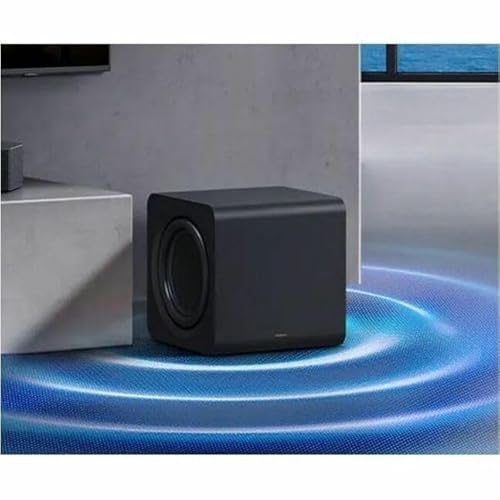
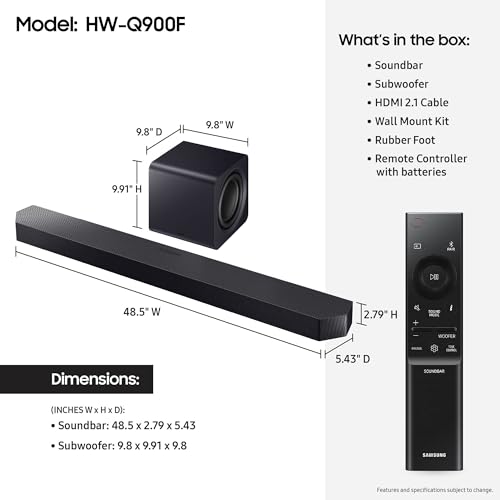
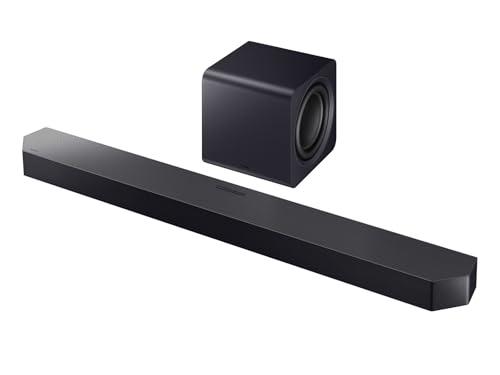
The Samsung Q990F represents a significant leap forward with its redesigned subwoofer system. The 2025 model features dual 8-inch force-canceling woofers arranged in a sealed enclosure—a design that prioritizes accuracy and control over pure output. Force-canceling technology uses two drivers mounted in opposite directions, with their movements canceling out cabinet vibrations that could cause rattling or distortion.
This technical approach yields bass that extends cleanly below 30Hz with remarkable linearity—meaning all bass frequencies are reproduced at consistent levels rather than emphasizing some over others. The result is bass that sounds natural and controlled, even at high volume levels. Instead of the one-note "thump" you might get from cheaper systems, you hear the actual texture and character of different bass instruments and effects.
The Samsung Q990F also includes AI-powered dynamic bass control, which continuously analyzes the audio signal and adjusts the subwoofer's output to minimize distortion. This means the system can deliver powerful bass without the cabinet rattling or port noise that plague many subwoofers when pushed hard.
For gamers, audio latency—the delay between when something happens on screen and when you hear it—can significantly impact the experience. Both systems handle basic gaming well, but with important differences in capability.
The Hisense HS2100 offers low latency across its inputs, making it suitable for casual gaming where timing isn't critical. However, its 2.1 configuration means you miss out on the directional audio cues that can provide competitive advantages in games. You'll hear enemies shooting, but you won't necessarily know which direction the shots are coming from.
The Samsung Q990F elevates gaming performance through several key features. Its HDMI 2.1 support enables 4K gaming at 120Hz—crucial for next-generation consoles like the PlayStation 5 and Xbox Series X that can output games at these high refresh rates. The system's Game Pro mode optimizes processing for ultra-low latency while maintaining the full surround sound experience.
More importantly, the true surround configuration provides genuine spatial audio that can offer tactical advantages in competitive games. Footsteps, gunfire, and other audio cues maintain their directional accuracy, helping you react faster to threats from specific locations. For single-player games, the immersive audio simply makes exploration and storytelling more engaging.
Modern soundbars increasingly function as smart home hubs, not just audio devices. Here, the price difference between our two systems becomes evident in feature depth.
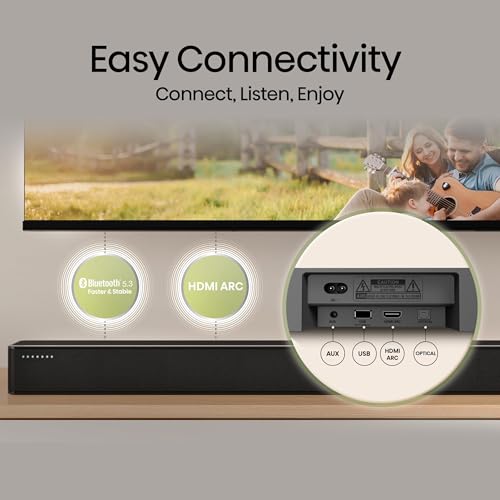
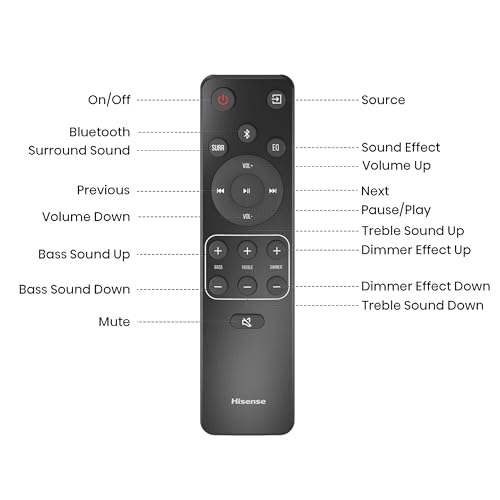
The Hisense HS2100 covers the essentials with Bluetooth 5.3 for wireless music streaming, six EQ presets for different content types (Movie, Music, News, Sport, Night, and Game), and basic bass and treble adjustments. It's Roku TV Ready, meaning it integrates seamlessly with Roku TV remotes for unified control. The system also includes automatic power management, turning on when it detects audio signals and shutting down during periods of silence.
The Samsung Q990F operates more like a comprehensive smart audio platform. It includes built-in voice assistants (Bixby and Alexa), with support for Google Assistant through external devices. The system supports virtually every major music streaming protocol: Spotify Connect, Apple AirPlay 2, Google Cast, and it's even Roon Ready for audiophile-grade high-resolution music streaming.
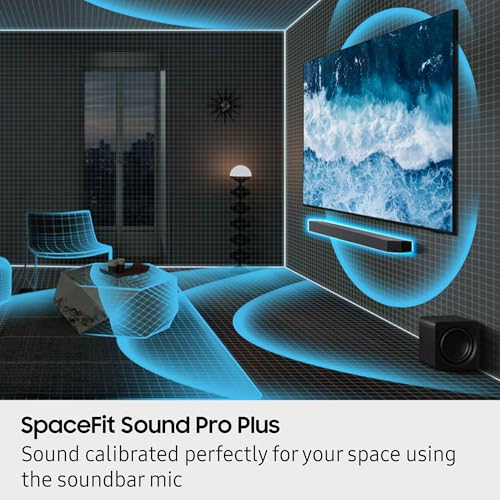
The Samsung's room correction technology, called SpaceFit Sound Pro Plus, automatically analyzes your room's acoustics and adjusts the system's output for optimal performance in your specific space. This process uses built-in microphones to measure how sound reflects off your walls, furniture, and ceiling, then applies corrective processing to ensure balanced audio throughout your listening area.
For customization enthusiasts, the Samsung Q990F includes a comprehensive seven-band graphic equalizer and independent level adjustments for each speaker group (center, rear, height, and subwoofer). This level of control lets you fine-tune the system's performance to match your room, your preferences, and your content.
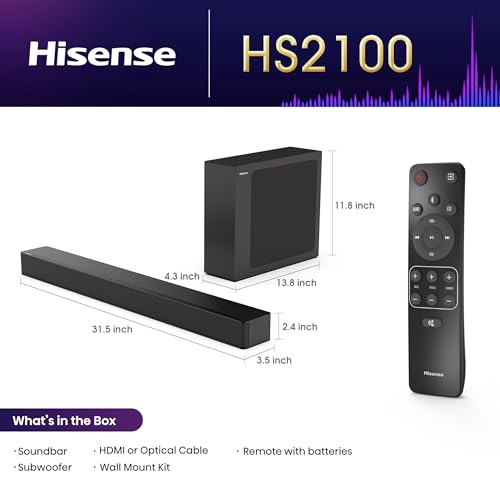
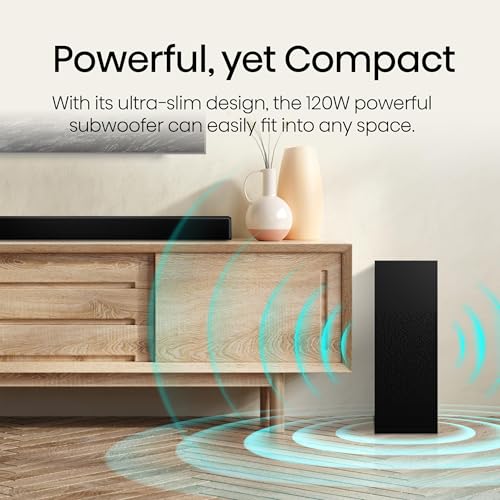
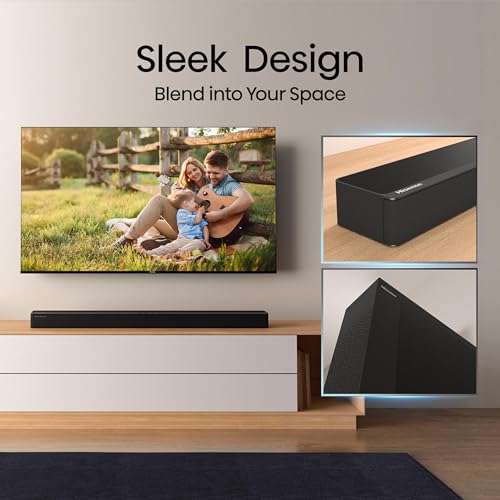
Your room size and layout significantly influence which system makes more sense. The Hisense HS2100's compact design makes it ideal for smaller spaces where a full surround system might be overwhelming or impractical. Its ultra-thin wireless subwoofer—just 4.3 inches deep—can fit under furniture or against walls where larger subs wouldn't work.
For apartment dwellers or anyone with space constraints, the Hisense HS2100 offers the advantage of simplicity. You get improved TV audio without dealing with multiple speakers, complex setup procedures, or the need for specific room layouts.
The Samsung Q990F demands more consideration for placement but rewards careful setup with vastly superior performance. The wireless rear speakers need AC power outlets behind your seating area, and the system works best in medium to large rooms where the various speakers have space to create their intended acoustic effects.
However, the Samsung Q990F's room correction technology helps it adapt to challenging spaces. Unlike many traditional surround systems that require precise speaker positioning, the Samsung can automatically compensate for less-than-ideal placement through its advanced processing.
At the time of writing, these systems occupy vastly different price tiers, with the Samsung Q990F costing roughly six times as much as the Hisense HS2100. This price difference reflects genuine capability gaps rather than simple brand premiums.
The Hisense HS2100 represents exceptional value for budget-conscious buyers who want meaningful TV audio improvement without complex setup or high cost. For secondary rooms, apartments, or anyone upgrading from TV speakers for the first time, it delivers satisfying performance that justifies its modest price.
However, the system's fundamental limitations mean some users might eventually desire more advanced features. The lack of true surround sound, limited bass extension, and basic customization options could drive future upgrade desires as your expectations grow.
The Samsung Q990F commands premium pricing but delivers professional-grade capabilities that rival traditional component systems costing significantly more. Its comprehensive feature set, future-proof connectivity, and advanced processing justify the higher investment for serious home theater enthusiasts.
More importantly, the Samsung Q990F supports the latest audio formats like Dolby Atmos and DTS:X, ensuring compatibility with current and future content. As streaming services and physical media increasingly adopt these immersive formats, the Samsung provides a more future-proof investment.
The Hisense HS2100 makes the most sense for specific scenarios and users. If you're upgrading from TV speakers in a small to medium room, have a strict budget, or need audio improvement for a secondary viewing area, it delivers excellent value. The system also works well for casual viewers who primarily watch TV shows and news rather than action movies or immersive content.
Choose the Hisense HS2100 if you want plug-and-play simplicity, have space constraints that make rear speakers impractical, or if your primary goal is better dialogue clarity for TV watching rather than cinematic immersion.
The Samsung Q990F targets users who prioritize audio quality and want a comprehensive home theater experience. If you regularly watch movies, play games, or listen to music through your TV system, the Samsung's advanced capabilities justify its premium price. The system also makes sense for anyone planning to keep their soundbar for many years, as its advanced features and format support provide better long-term value.
Choose the Samsung Q990F if you have a dedicated entertainment room, enjoy content with immersive audio tracks, want the flexibility to fine-tune your audio experience, or if this represents a long-term investment in your home entertainment system.
These soundbars succeed within their respective market segments, but they're solving fundamentally different problems. The Hisense HS2100 transforms poor TV audio into satisfying sound at an accessible price, while the Samsung Q990F creates a genuine home theater experience that rivals much more expensive component systems.
For most people upgrading from TV speakers on a budget, the Hisense HS2100 provides excellent value and immediate satisfaction. Its warm sound signature, clear dialogue reproduction, and wireless convenience deliver meaningful improvement without complexity or high cost.
However, if your budget allows and you value premium audio quality, the Samsung Q990F represents one of the finest soundbar systems available at the time of writing. Its combination of true surround sound, advanced room correction, comprehensive connectivity, and future-proof format support creates an experience that justifies its premium positioning.
The key is honest assessment of your needs, room, and expectations. Both systems excel within their intended use cases—the difference lies in matching the right tool to your specific situation and audio ambitions.
| Hisense HS2100 | Samsung Q-Series HW-Q990F |
|---|---|
| Channel Configuration - Determines surround sound capability and immersion level | |
| 2.1 channels (stereo + subwoofer, limited spatial audio) | 11.1.4 channels (true surround with height effects) |
| Total Audio Power - Affects maximum volume and room size compatibility | |
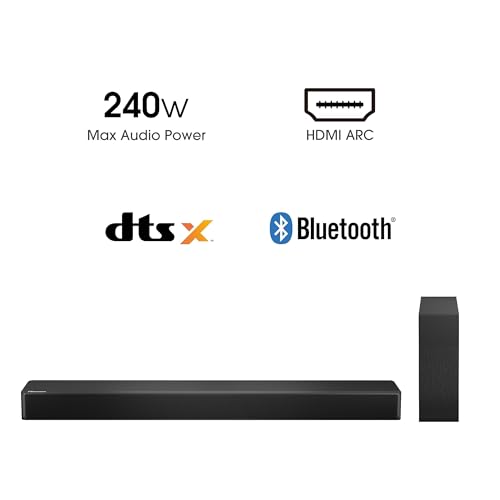
| 240W total (adequate for small-medium rooms) | 756W RMS (powerful enough for large spaces) |
| Subwoofer Design - Critical for bass depth and impact | |
| Single 5.25" wireless driver (punchy but limited extension) | Dual 8" force-canceling woofers (deep, controlled bass) |
| Surround Sound Formats - Determines compatibility with modern content | |
| Dolby Digital, DTS Virtual:X (virtual surround only) | Dolby Atmos, DTS:X, Dolby TrueHD (native object-based audio) |
| Physical Components - Affects setup complexity and placement flexibility | |
| Soundbar + wireless subwoofer (simple 2-piece setup) | Soundbar + subwoofer + 2 wireless rear speakers (4-piece system) |
| Room Calibration - Optimizes sound for your specific space | |
| Manual EQ presets only (basic customization) | SpaceFit Sound Pro Plus (automatic acoustic analysis) |
| Gaming Features - Important for console and PC gaming | |
| Low latency, basic game mode (casual gaming suitable) | HDMI 2.1, 4K/120Hz passthrough, Game Pro mode (premium gaming) |
| Smart Connectivity - Streaming and voice control options | |
| Bluetooth 5.3, basic app control, Roku TV Ready | Wi-Fi, multiple streaming protocols, built-in Alexa/Bixby |
| Dialogue Enhancement - Crucial for TV shows and movies | |
| Balanced midrange, News mode preset (good clarity) | Discrete center channel, Active Voice Amplifier Pro (exceptional) |
| Customization Options - Fine-tuning capability for audio preferences | |
| 6 presets, basic bass/treble adjustment (limited control) | 7-band EQ, individual channel levels, multiple sound modes (extensive) |
The Hisense HS2100 is a basic 2.1 channel system with a soundbar and wireless subwoofer, while the Samsung Q990F is a premium 11.1.4 channel system that includes rear speakers and height channels for true surround sound. The Samsung delivers immersive Dolby Atmos audio, while the Hisense provides virtual surround processing only.
The Hisense HS2100 is better suited for small rooms due to its compact design and simpler setup. Its 2.1 configuration provides adequate audio enhancement without overwhelming smaller spaces. The Samsung Q990F is designed for medium to large rooms where its multiple speakers can create proper surround effects.
No, only the Samsung Q990F supports true Dolby Atmos with dedicated height channels for overhead effects. The Hisense HS2100 supports Dolby Digital but uses virtual processing to simulate surround sound rather than delivering native Atmos content.
The Hisense HS2100 offers exceptional value for budget-conscious buyers, providing significant TV audio improvement at an entry-level price point. The Samsung Q990F provides premium value for those wanting flagship performance, with features that rival much more expensive component systems.
Yes, both support music streaming. The Hisense HS2100 offers Bluetooth 5.3 connectivity for basic wireless streaming. The Samsung Q990F provides comprehensive streaming options including Wi-Fi, Spotify Connect, Apple AirPlay 2, and Google Cast for higher-quality audio streaming.
The Samsung Q990F is superior for gaming with HDMI 2.1 support, 4K/120Hz passthrough, and Game Pro mode that provides spatial audio cues for competitive advantages. The Hisense HS2100 offers low latency suitable for casual gaming but lacks advanced gaming features.
The Hisense HS2100 offers simple plug-and-play setup with automatic subwoofer pairing and basic TV integration. The Samsung Q990F requires more complex setup including placement of rear speakers and room calibration, but includes automatic acoustic optimization to simplify the process.
The Samsung Q990F delivers superior bass with dual 8-inch force-canceling woofers that extend below 30Hz with controlled, accurate response. The Hisense HS2100 provides solid mid-bass impact from its 5.25-inch driver but has limited deep bass extension.
Both offer good dialogue clarity, but the Samsung Q990F excels with its discrete center channel and Active Voice Amplifier Pro technology. The Hisense HS2100 provides clear dialogue through balanced midrange reproduction and a dedicated News mode preset.
The Samsung Q990F is specifically designed for home theater applications with true 11.1.4 surround sound, Dolby Atmos support, and immersive audio processing. The Hisense HS2100 provides basic home theater enhancement but cannot match the cinematic experience of a full surround system.
Yes, both support TV remote control integration. The Hisense HS2100 is Roku TV Ready and works with HDMI CEC for basic control. The Samsung Q990F offers comprehensive CEC support and can integrate with Samsung TV remotes for unified control of all functions.
The Hisense HS2100 is ideal for apartment living with its compact design, simple two-piece setup, and night mode for volume management. The ultra-thin subwoofer fits easily in tight spaces. The Samsung Q990F may be overkill for apartments and requires more space for optimal rear speaker placement.
We've done our best to create useful and informative comparisons to help you decide what product to buy. Our research uses advanced automated methods to create this comparison and perfection is not possible - please contact us for corrections or questions. These are the sites we've researched in the creation of this article: rtings.com - shop.hisense-usa.com - bestbuy.com - content.syndigo.com - bestbuy.com - hisensedealers.co.ke - stuff.co.za - dtc-aus-api.hisense.com - youtube.com - manuals.plus - youtube.com - bestbuy.com - youtube.com - gallifurniture.com - hisense-usa.com - manuals.plus - uk.hisense.com - device.report - youtube.com - costco.ca - elmcreekwsa.com - gallifurniture.com - rtings.com - crutchfield.com - sound-advice.online - samsung.com - soundandvision.com - samsung.com - whathifi.com - youtube.com - youtube.com - bestbuy.com - avsforum.com - content.syndigo.com - samsung.com - businessinsider.com - dolby.com - youtube.com - abcwarehouse.com

Privacy Policy
Terms and Conditions - Affiliate Policy
Home Security
© Copyright 2008-2026.
11816 Inwood Rd #1211, Dallas, TX 75244