


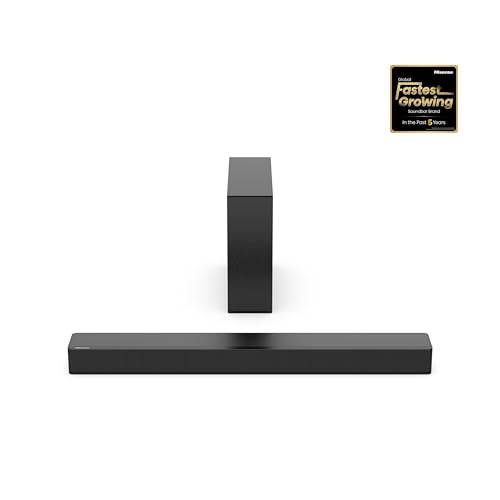



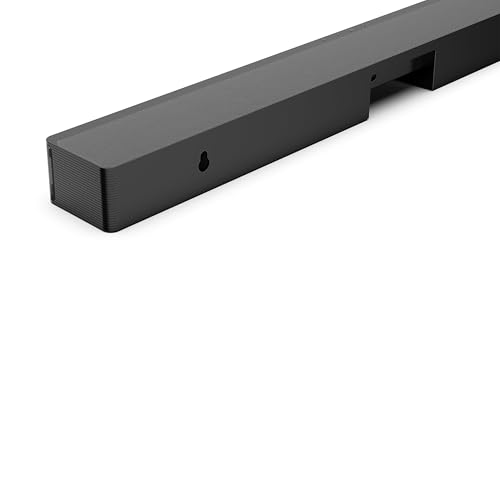
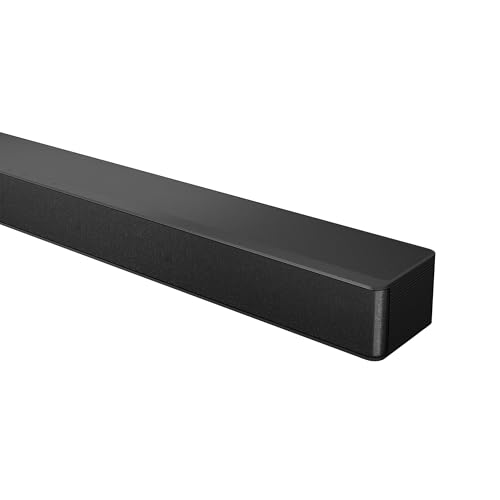
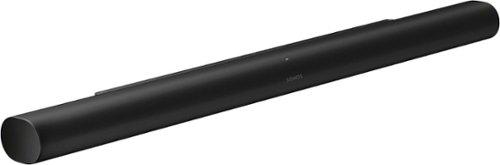
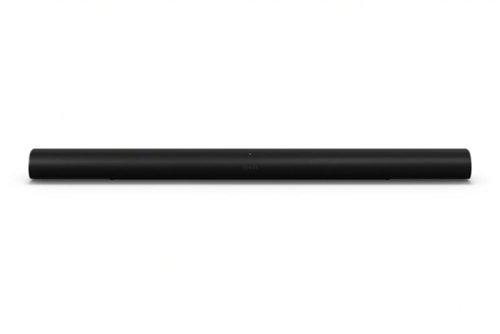
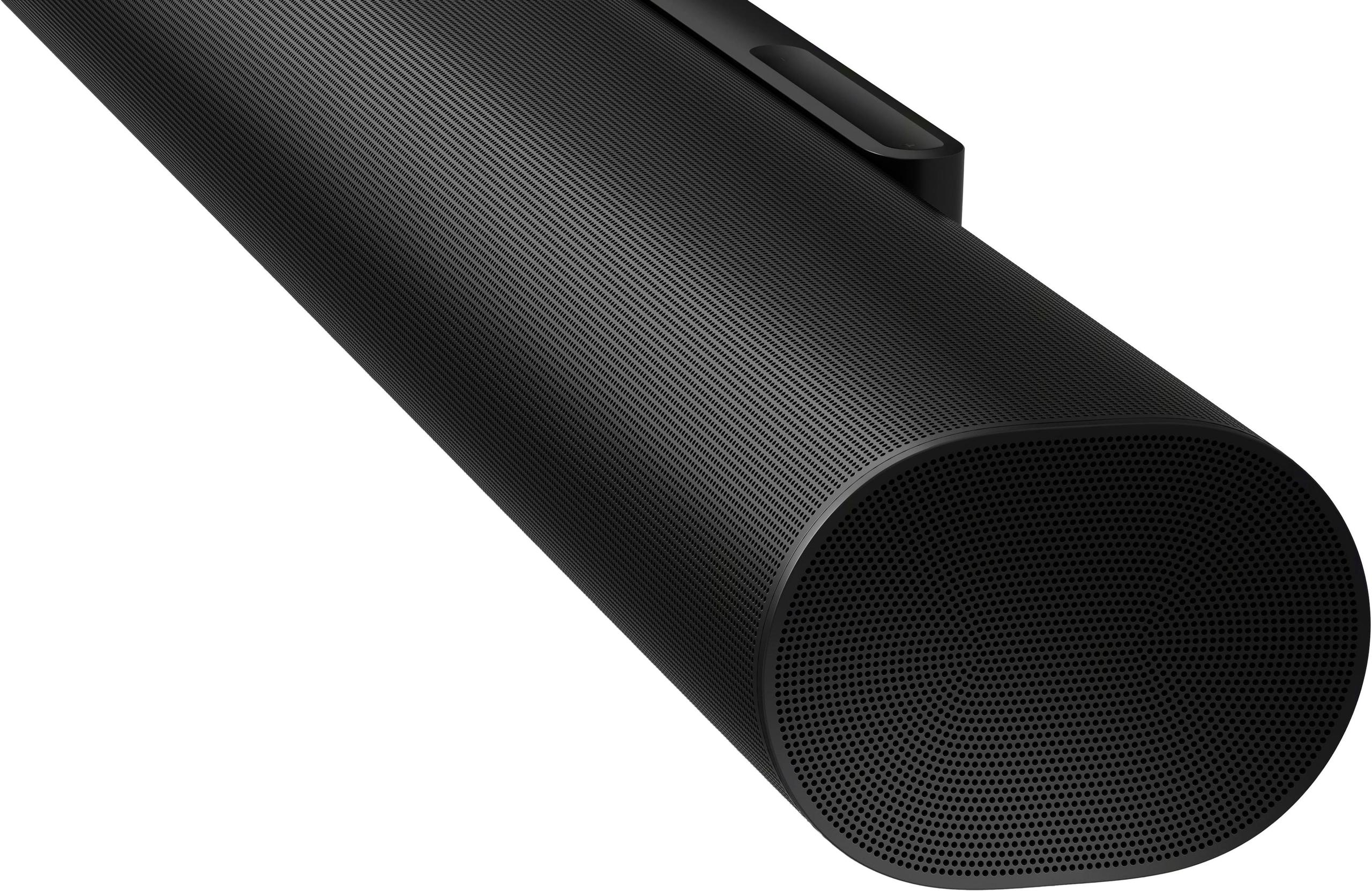
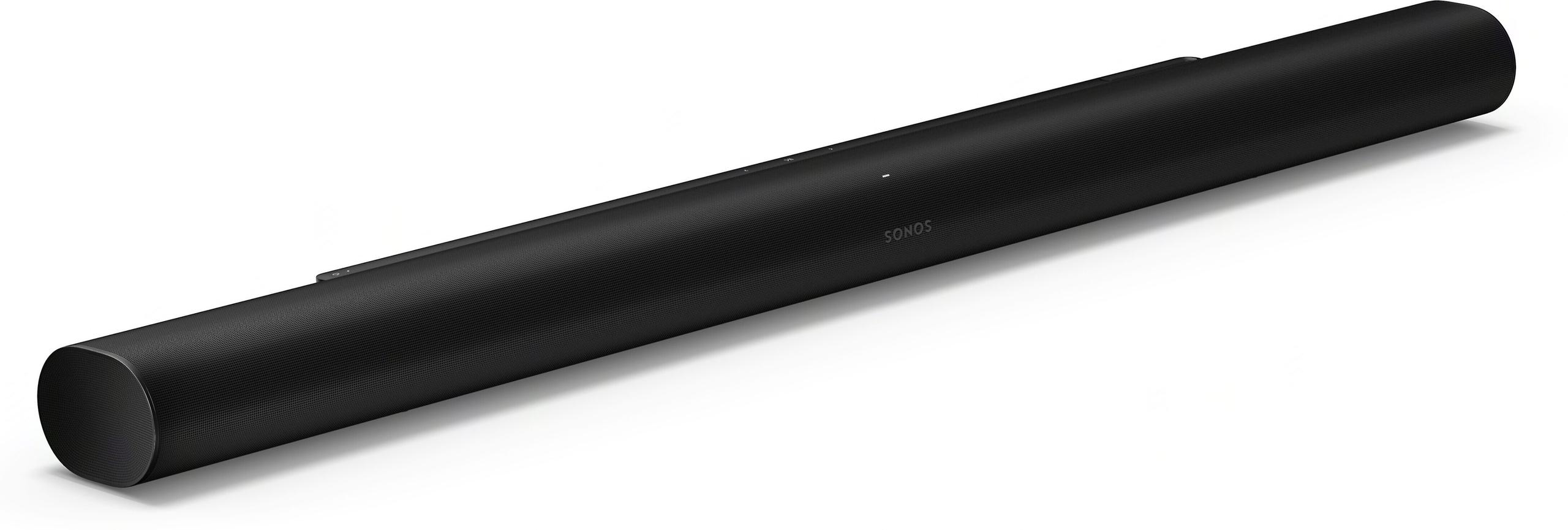
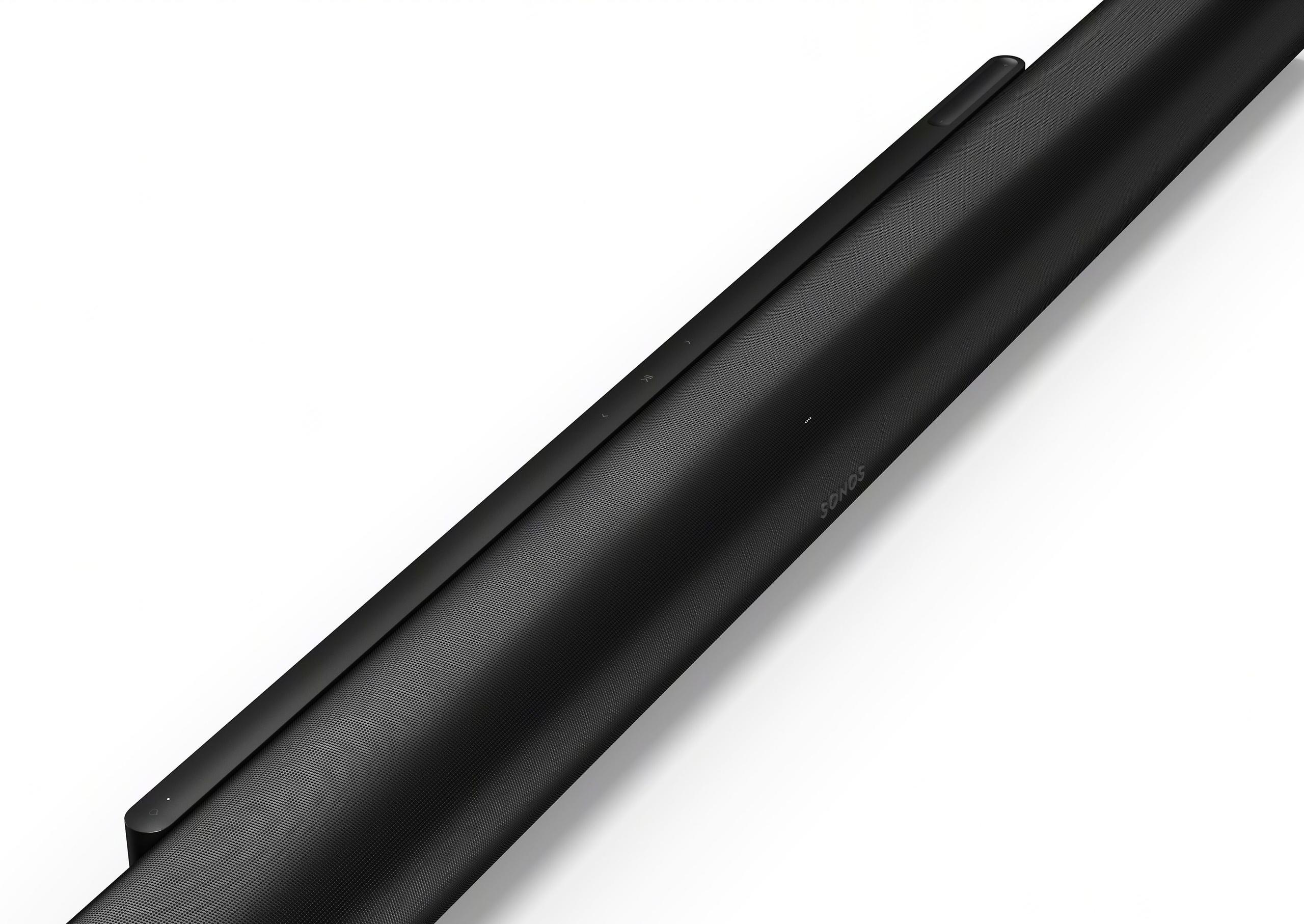
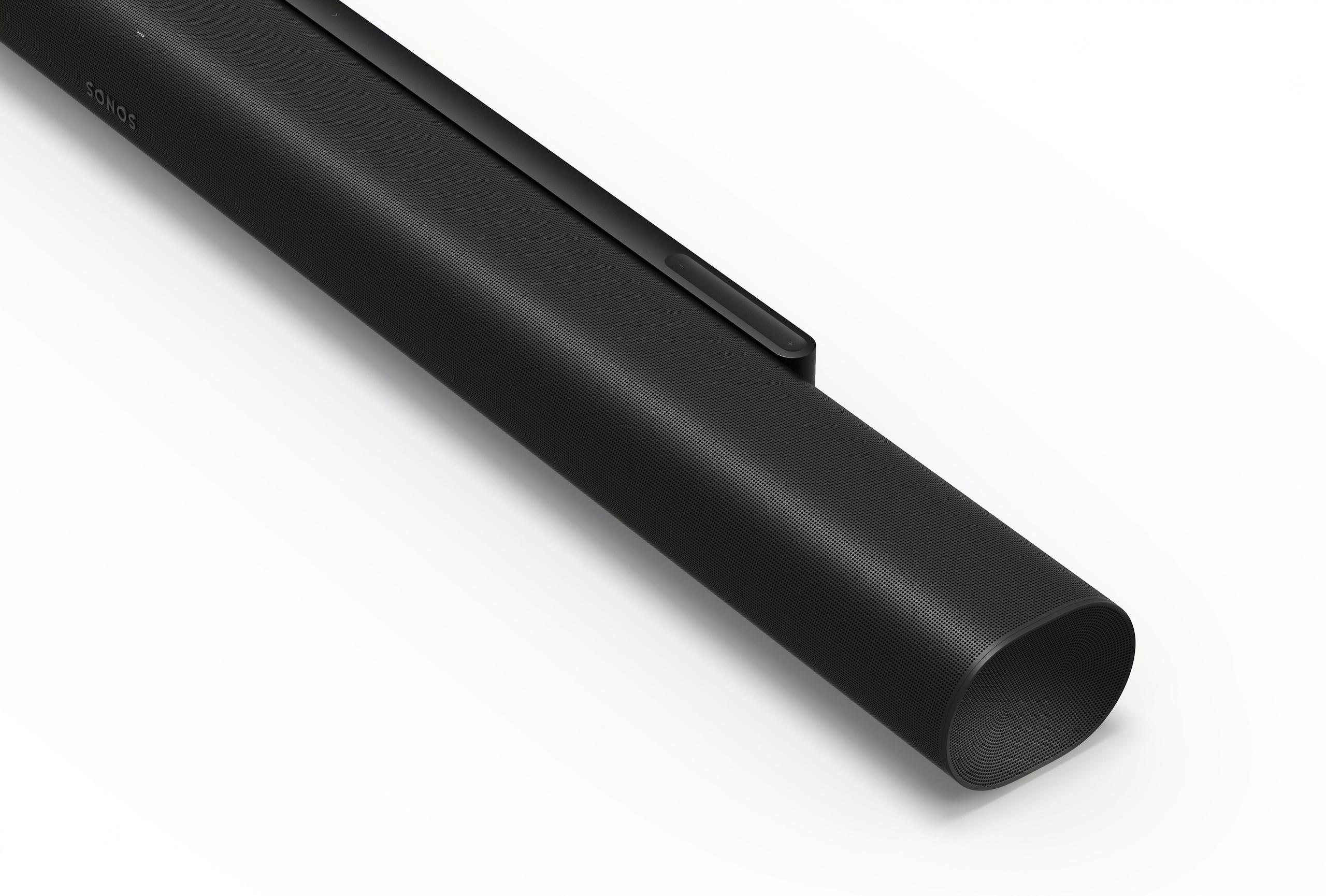
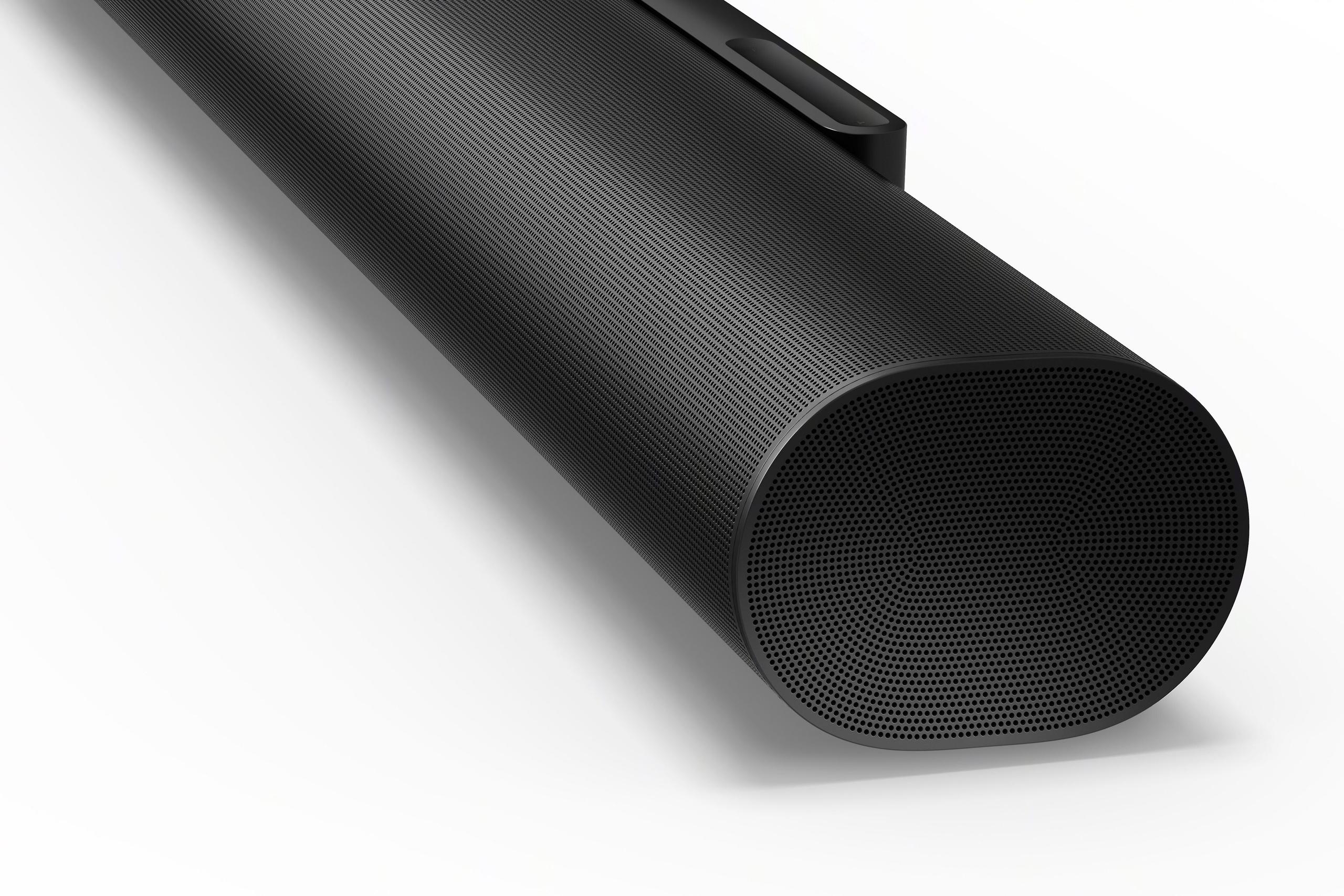
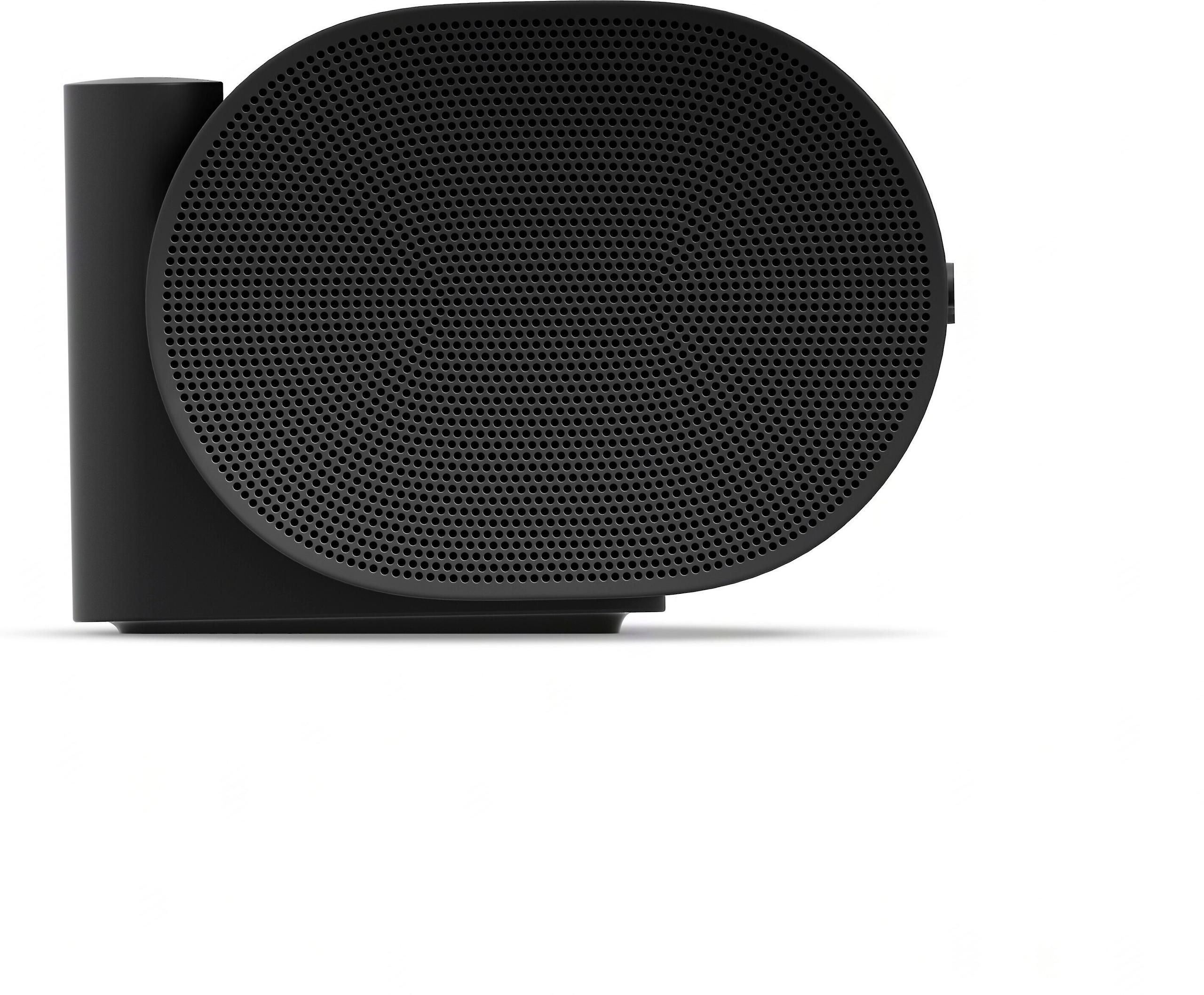
When your TV's built-in speakers make dialogue sound like it's coming from inside a tin can, it's time for a soundbar upgrade. But the soundbar world can be overwhelming—prices range from under $150 to well over $800, and the feature lists read like alphabet soup. Today, we're comparing two soundbars that represent opposite ends of this spectrum: the budget-friendly Hisense HS2100 and the premium Sonos Arc Ultra.
These products couldn't be more different in their approach to solving the same problem. The Hisense HS2100 launched in 2023 as an entry-level system that includes a wireless subwoofer for around $120 at the time of writing. Meanwhile, the Sonos Arc Ultra, released in late 2024, represents the cutting edge of soundbar technology at roughly seven times the price. Let's dive into what that price difference actually gets you.
Before we get into the nitty-gritty, it's worth understanding what makes a soundbar work. At its core, a soundbar is just a bunch of speakers arranged horizontally to replace your TV's terrible audio. But the magic happens in how those speakers are configured and what kind of processing happens behind the scenes.
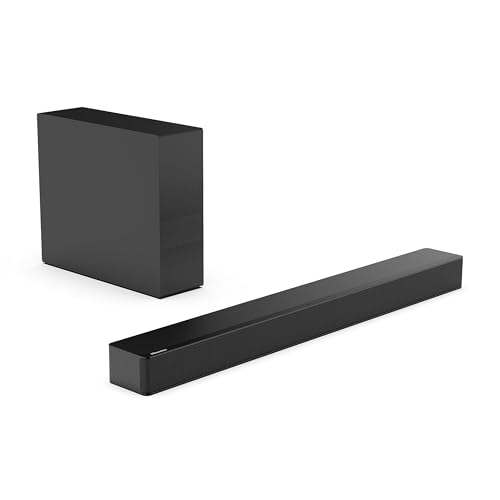
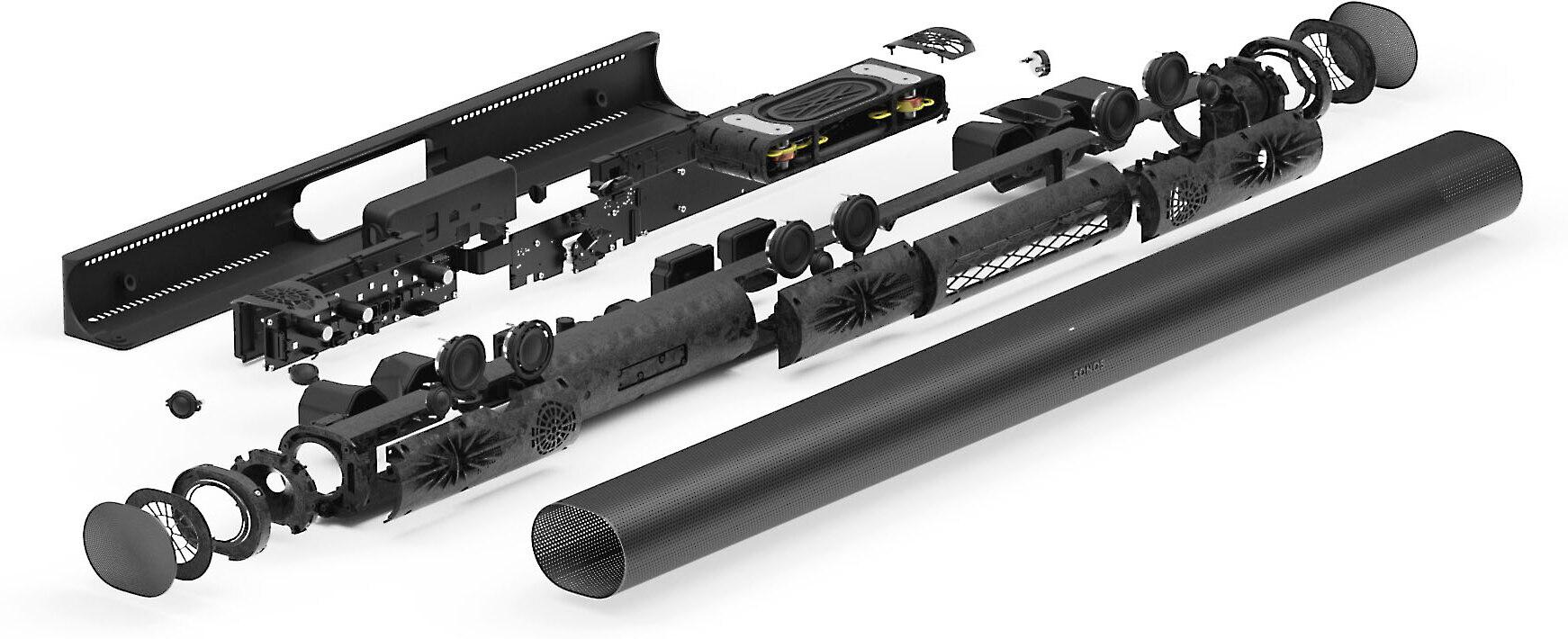
The Hisense HS2100 uses what's called a 2.1 configuration—two main speakers in the bar for left and right channels, plus one subwoofer (that's the ".1") for bass. This is the most basic setup that still provides meaningful bass improvement over TV speakers. The Sonos Arc Ultra, on the other hand, uses a 9.1.4 configuration, which sounds complicated because it is. Those numbers represent nine ear-level speakers, one subwoofer channel (though it's built into the bar), and four height channels that fire sound toward your ceiling to bounce back down.
This difference in speaker arrangement fundamentally changes what these soundbars can do. When you're watching a movie with surround sound, the Hisense HS2100 has to take that multi-channel audio and squeeze it down to just left, right, and bass—a process called downmixing that loses a lot of spatial information. The Sonos Arc Ultra can actually place different sounds in different locations around your room, creating that "you're in the movie" feeling.
Let's talk bass, because it's often the most noticeable upgrade when moving from TV speakers to a soundbar. The Hisense HS2100 takes the traditional approach: it includes a separate wireless subwoofer with a 5.25-inch driver. This dedicated bass speaker connects wirelessly to the main soundbar, so you can place it wherever it sounds best in your room.
Based on our research into user and expert reviews, this subwoofer provides solid mid-bass impact—the kind that makes explosions feel punchy and music sound fuller. However, it struggles with the very deepest bass frequencies (below about 45Hz), so you won't get that room-shaking rumble from the most intense movie scenes. The bass also tends to sound a bit "boomy"—meaning it's not super tight or controlled, but for casual listening, it's satisfying.
The Sonos Arc Ultra takes a completely different approach with something called Sound Motion technology. This is genuinely revolutionary stuff—instead of a traditional round woofer, Sonos developed a flat, four-motor system that can produce deep bass without taking up much space. This means they could build powerful bass directly into the soundbar itself, eliminating the need for a separate subwoofer while actually delivering better low-end performance.
According to Sonos, this technology produces double the bass of their previous flagship soundbar. More importantly, it's much more controlled and precise than the Hisense HS2100's subwoofer, meaning you get impact without the boom. This matters for both movies and music—explosions hit hard without muddying dialogue, and bass guitars sound defined rather than mushy.
Here's where the fundamental difference between these soundbars becomes crystal clear. When you're watching a movie with Dolby Atmos or DTS surround sound, what happens to that audio depends entirely on your soundbar's capabilities.
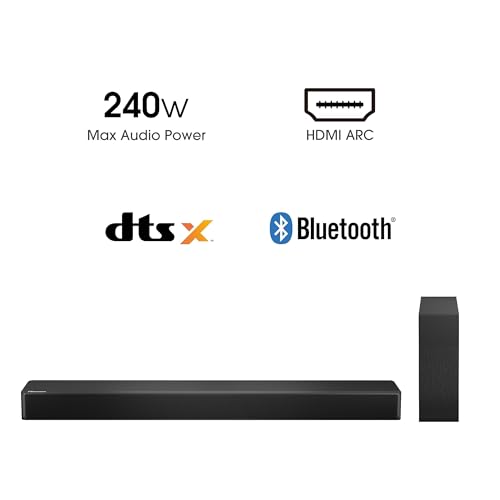
The Hisense HS2100 doesn't support Dolby Atmos at all. When it receives surround sound content, it uses something called DTS Virtual:X to simulate surround effects through its two main speakers. This is audio processing that tries to trick your brain into hearing sounds from different directions, but it's ultimately still just stereo sound. The effect is noticeable compared to TV speakers, but it's not genuine surround sound.
The Sonos Arc Ultra is a completely different beast. It natively supports Dolby Atmos and can actually place sounds in three-dimensional space around your listening position. Those upward-firing speakers bounce sound off your ceiling to create height effects—helicopters flying overhead actually sound like they're above you, not just louder. The side-firing speakers create width that extends beyond the physical soundbar.
From our research into professional reviews and user experiences, this difference is dramatic. Users consistently describe the Sonos Arc Ultra as creating an enveloping sound experience that makes you feel like you're inside the action, while the Hisense HS2100 provides a noticeable but more modest improvement over TV speakers.
Both soundbars prioritize dialogue clarity, but they approach it very differently. Clear speech is crucial because it's the main reason people buy soundbars—those muddy TV speakers make it hard to understand what characters are saying without turning the volume way up.
The Hisense HS2100 handles dialogue reasonably well thanks to its balanced midrange frequencies—the range where human voices live. It includes a "News" preset that boosts these frequencies, making speech clearer. You can also manually adjust bass and treble to find the right balance for your ears. For basic TV watching and dialogue-heavy content, this approach works fine.
The Sonos Arc Ultra uses artificial intelligence to enhance speech. Its Speech Enhancement feature actually analyzes audio in real-time to identify human voices and boost them intelligently. It offers four different enhancement levels, so you can dial in exactly how much dialogue boost you want. This is particularly helpful for people with hearing difficulties or those who watch a lot of content with accents or mumbling actors.
The Sonos Arc Ultra also includes dedicated center channel drivers—speakers specifically designed to handle dialogue. This is a big deal because in movie sound mixing, dialogue is typically assigned to the center channel. Having actual speakers dedicated to this job, rather than trying to reproduce speech through left and right speakers, makes voices sound more natural and easier to understand.
Your room dramatically affects how any speaker sounds. Hard surfaces reflect sound (creating echoes), soft surfaces absorb it (making things sound dead), and room shape affects how bass builds up in corners. The question is: how do these soundbars adapt to your specific space?
The Hisense HS2100 gives you basic manual tools. You get six preset sound modes (Movie, Music, News, Sport, Night, and Game) plus manual bass and treble adjustment. This means you'll need to experiment to find what sounds best in your room. The Night mode is particularly useful—it reduces the volume of loud sounds while boosting quiet ones, so you can watch movies late without waking anyone up.
The Sonos Arc Ultra includes something called Trueplay, which is like having an audio engineer tune your system. Using your phone's microphone, you walk around your room while the soundbar plays test tones. The system then analyzes how sound reflects off your walls, furniture, and ceiling, automatically adjusting its output to compensate for your room's acoustic quirks.
This automatic room correction was previously only available on iOS devices, but as of 2024, it works on Android phones too. Based on user reports, the difference is significant—the soundbar sounds noticeably clearer and more balanced after running Trueplay. This kind of intelligent adaptation is something you typically only find on much more expensive audio equipment.
While these are primarily TV soundbars, many people also use them for music streaming. The performance difference here mirrors their movie capabilities but is worth discussing separately.
The Hisense HS2100 handles music reasonably well for its price point. It has a warm, generally pleasant sound that works across different genres. Vocals come through clearly, and the subwoofer adds weight to bass-heavy tracks. However, our research suggests that stereo imaging—the ability to place instruments in specific locations within the soundstage—is limited. Music sounds like it's coming from the general direction of the soundbar rather than creating a wide, detailed soundscape.
The Sonos Arc Ultra approaches music reproduction with serious intent. Its seven precision-angled tweeters handle high frequencies with exceptional detail, while six dedicated midrange drivers ensure vocals and instruments sound natural. The result is a wide, enveloping soundstage that can make well-recorded music sound almost holographic.
The Sonos Arc Ultra also connects to the broader Sonos ecosystem, which includes features like multi-room audio synchronization and high-quality streaming service integration. If you're someone who cares about music quality, this soundbar can serve as the foundation of a whole-home audio system.
Modern soundbars are increasingly smart devices, and the difference between these two models reflects the broader trend in consumer electronics.
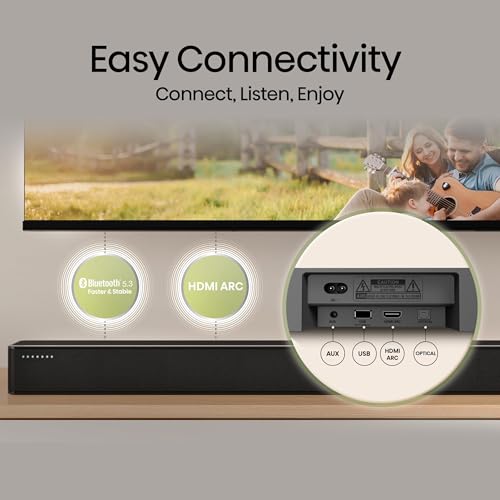
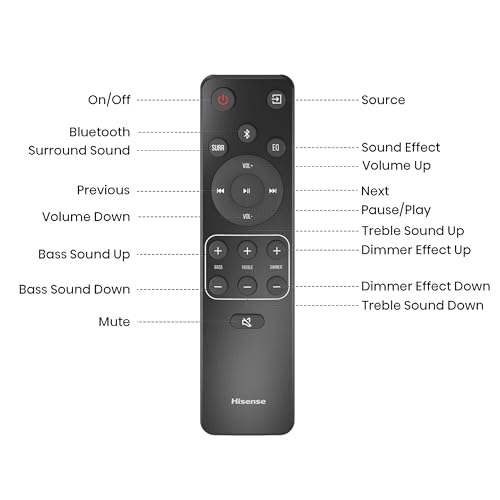
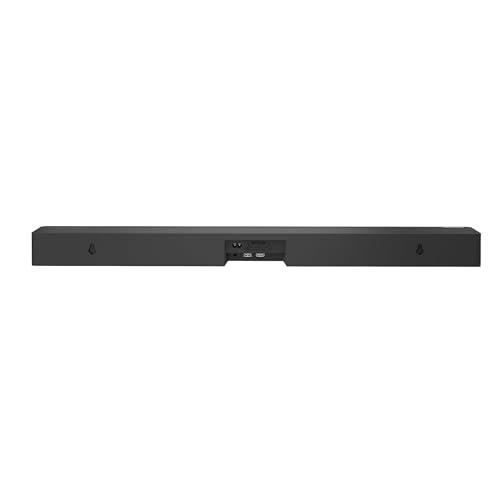
The Hisense HS2100 keeps things simple. It includes Bluetooth 5.3 for streaming from your phone, HDMI ARC for TV connection, and basic remote control. There's also Roku TV Ready integration, which means compatible Roku TVs can control the soundbar directly. It's straightforward and functional without unnecessary complexity.
The Sonos Arc Ultra is essentially a computer that happens to play audio. It includes WiFi streaming, AirPlay 2, Spotify Connect, and voice control through Amazon Alexa or Google Assistant. The Sonos app provides detailed control over every aspect of the sound, and the system receives regular software updates that add new features over time.
This smart functionality extends to expandability. The Hisense HS2100 is essentially a closed system—what you buy is what you get. The Sonos Arc Ultra can grow with your needs. You can add a Sonos Sub for even deeper bass, or Era 300 speakers for true wireless rear surround channels, creating a complete 5.1.4 home theater system without running any wires.
When evaluating these soundbars, it's important to consider how they perform in typical living room scenarios. Based on our analysis of user reviews and professional testing, both have sweet spots where they excel.
The Hisense HS2100 works best in small to medium-sized rooms where you're not trying to achieve reference-level volume. It can get adequately loud (around 90 decibels) before running into compression issues, which means dynamic peaks in movies start to sound squashed. For typical TV watching at normal volumes, this isn't a problem, but don't expect it to deliver thunderous action movie soundtracks without some strain.
The Sonos Arc Ultra maintains its composure even at high volumes. Professional reviewers consistently note that it retains dynamics and clarity when pushed hard, making it suitable for larger rooms and more demanding listening. The sophisticated amplification and processing mean you can crank it up for movie night without the sound falling apart.
At the time of writing, these soundbars represent completely different value propositions. The Hisense HS2100 delivers the biggest possible improvement over TV speakers for the least money. If your budget is limited and you primarily want clearer dialogue and some bass impact, it's hard to argue with the value it provides.
The Sonos Arc Ultra asks you to pay a significant premium for technology that was essentially unavailable at any price just a few years ago. That Sound Motion bass technology alone represents years of research and development. Whether it's worth the extra cost depends on how much you value the enhanced experience and whether you'll use the advanced features.
Choose the Hisense HS2100 if you're working with a tight budget but want a meaningful upgrade from TV speakers. It's perfect for people who primarily watch dialogue-heavy content like news, sitcoms, or talk shows in small to medium rooms. The included subwoofer provides satisfying bass for casual movie watching, and the simple setup means you'll be up and running quickly.
The Sonos Arc Ultra makes sense if you're serious about home theater and have the budget to match. It's the choice for people who watch a lot of movies with Dolby Atmos soundtracks, want the latest technology, and value the potential for system expansion. If you're building a dedicated movie-watching space or want a soundbar that will remain impressive for years to come, the premium is justified.
Consider your viewing habits, room size, and budget carefully. The Hisense HS2100 will make your TV sound dramatically better for a modest investment. The Sonos Arc Ultra will transform your living room into a mini movie theater, but at a price that reflects that capability. Both serve their intended purposes well—the question is which purpose matches your needs and expectations.
| Hisense HS2100 | Sonos Arc Ultra |
|---|---|
| Channel Configuration - Determines surround sound capability and immersion level | |
| 2.1 channels (stereo + subwoofer, downmixes surround content) | 9.1.4 channels (native Dolby Atmos with height effects) |
| Dolby Atmos Support - Essential for modern movie streaming and immersive audio | |
| No Dolby Atmos (DTS Virtual:X processing only) | Full Dolby Atmos with object-based 3D audio placement |
| Bass Solution - Affects placement flexibility and low-frequency performance | |
| Separate 5.25" wireless subwoofer (45Hz lower limit) | Built-in Sound Motion technology (deeper, more controlled bass) |
| Room Correction - Automatically optimizes sound for your specific space | |
| Manual EQ presets and bass/treble adjustment only | Trueplay automatic room tuning (iOS and Android compatible) |
| Dialogue Enhancement - Critical for clear speech in movies and TV | |
| Balanced midrange with "News" preset mode | AI-powered Speech Enhancement with 4 customizable levels |
| Smart Features - Streaming, voice control, and ecosystem integration | |
| Bluetooth 5.3, basic HDMI ARC, Roku TV Ready | WiFi streaming, AirPlay 2, Alexa/Google voice control, Sonos ecosystem |
| Maximum Volume Performance - Important for larger rooms and dynamic content | |
| ~90dB with compression artifacts at max volume | Reference-level output while maintaining dynamics and clarity |
| Expandability - Ability to upgrade system over time | |
| Standalone system with no expansion options | Can add Sonos Arc Ultra Sub and Era speakers for full 5.1.4 setup |
| Physical Design - Size constraints and aesthetic integration | |
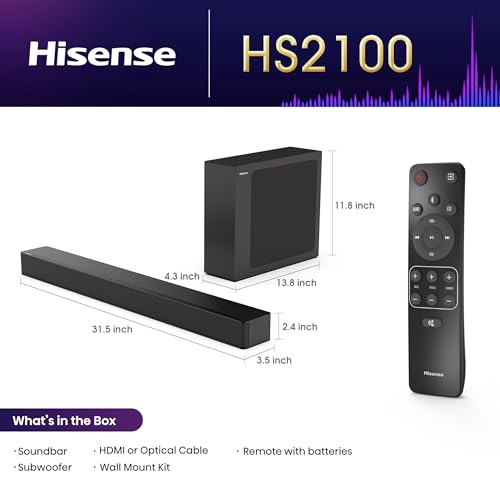
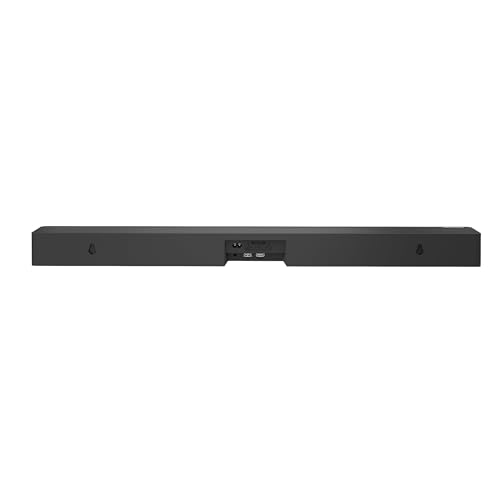
| Compact soundbar (31.5" wide) with separate subwoofer placement | Ultra-slim 46.18" curved design with all drivers integrated |
| Target Use Case - Best suited for specific room sizes and priorities | |
| Budget upgrade for small-medium rooms, dialogue-focused content | Premium home theater for any room size, movie enthusiasts |
The Hisense HS2100 is a budget 2.1 channel soundbar with a separate wireless subwoofer, while the Sonos Arc Ultra is a premium 9.1.4 Dolby Atmos soundbar with advanced spatial audio. The key difference is immersion level—the Hisense HS2100 downmixes surround content to stereo, while the Sonos Arc Ultra delivers true 3D surround sound with height effects.
The Sonos Arc Ultra is significantly better for home theater use. It supports native Dolby Atmos processing, creating genuine surround sound effects with overhead audio. The Hisense HS2100 can only simulate surround effects through virtual processing, making it less immersive for movies but still a solid upgrade over TV speakers.
The Hisense HS2100 includes a wireless subwoofer in the package, providing decent bass for the price. The Sonos Arc Ultra has built-in Sound Motion technology that delivers powerful bass without needing a separate subwoofer, though you can add a Sonos Sub for even deeper low-end performance.
Both soundbars handle dialogue well, but the Sonos Arc Ultra has a clear advantage with AI-powered Speech Enhancement that automatically detects and boosts human voices. The Hisense HS2100 relies on balanced midrange frequencies and a "News" preset mode for dialogue clarity, which works adequately for basic TV viewing.
Yes, both the Hisense HS2100 and Sonos Arc Ultra support Bluetooth connectivity for wireless music streaming from smartphones and tablets. The Sonos Arc Ultra additionally offers WiFi streaming, AirPlay 2, and Spotify Connect for higher-quality wireless audio.
The Hisense HS2100 is well-suited for small to medium rooms where maximum volume isn't critical. Its compact design fits easily under most TVs. The Sonos Arc Ultra works in any room size but may be overkill for very small spaces, though its advanced room correction helps optimize performance regardless of room size.
The Sonos Arc Ultra includes built-in support for Amazon Alexa and Google Assistant voice control. The Hisense HS2100 doesn't have voice assistant integration, relying instead on traditional remote control and basic TV integration features like Roku TV Ready compatibility.
The Sonos Arc Ultra is part of the expandable Sonos ecosystem—you can add a Sonos Sub for deeper bass and Era speakers for wireless rear surround channels. The Hisense HS2100 is a standalone system with no expansion options beyond what's included in the box.
The Sonos Arc Ultra features Trueplay automatic room correction that analyzes your space and adjusts the sound accordingly, working with both iOS and Android devices. The Hisense HS2100 offers manual adjustment through six EQ presets and basic bass/treble controls, requiring you to tune the sound yourself.
The Hisense HS2100 offers exceptional value as a budget option, providing a significant upgrade over TV speakers with included subwoofer at an entry-level price point. The Sonos Arc Ultra costs significantly more but delivers premium technology and performance that justifies the investment for serious home theater enthusiasts.
The Hisense HS2100 uses a traditional 5.25" wireless subwoofer that provides solid mid-bass impact but limited deep bass extension. The Sonos Arc Ultra features revolutionary Sound Motion technology built into the soundbar itself, delivering deeper, more controlled bass without requiring a separate subwoofer unit.
Choose the Hisense HS2100 if you want a budget-friendly upgrade from TV speakers for dialogue-heavy content in smaller rooms. Choose the Sonos Arc Ultra if you prioritize premium home theater performance, watch lots of movies with Dolby Atmos soundtracks, and want the latest audio technology with room for future expansion.
We've done our best to create useful and informative comparisons to help you decide what product to buy. Our research uses advanced automated methods to create this comparison and perfection is not possible - please contact us for corrections or questions. These are the sites we've researched in the creation of this article: rtings.com - shop.hisense-usa.com - bestbuy.com - content.syndigo.com - bestbuy.com - hisensedealers.co.ke - stuff.co.za - dtc-aus-api.hisense.com - youtube.com - manuals.plus - youtube.com - bestbuy.com - youtube.com - gallifurniture.com - hisense-usa.com - manuals.plus - uk.hisense.com - device.report - youtube.com - costco.ca - elmcreekwsa.com - gallifurniture.com - bestbuy.com - shopjetson.com - youtube.com - ign.com - crutchfield.com - dowtechnologies.com - sonos.com - appleinsider.com - pcrichard.com - clefdesol.com - sonos.com - businessinsider.com - audioadvice.com - en.community.sonos.com

Privacy Policy
Terms and Conditions - Affiliate Policy
Home Security
© Copyright 2008-2026.
11816 Inwood Rd #1211, Dallas, TX 75244