






When your TV's built-in speakers sound like they're trapped in a tin can, it's time for a soundbar. These sleek audio upgrades have transformed how we experience everything from Netflix binges to epic movie nights. But choosing the right one can feel overwhelming, especially when comparing products that take completely different approaches to solving the same problem.
Today we're diving deep into two popular options that couldn't be more different: the Hisense HS2100 2.1 system and the Sonos Ray stereo soundbar. One delivers immediate bass impact with a dedicated subwoofer, while the other focuses on refined audio engineering and smart home integration. Both have earned strong followings, but for very different reasons.
Before we dig into the specifics, let's talk about what actually matters when choosing a soundbar. The most important factor is audio channels—this refers to how many separate audio streams the system can handle. A 2.0 system has left and right channels (stereo), while a 2.1 adds a dedicated subwoofer channel for bass. More channels generally mean better sound separation and a more immersive experience.
Power output, measured in watts, tells you how loud the system can get, but it's not everything. A well-designed 100-watt system often outperforms a poorly engineered 300-watt one. What really matters is how cleanly that power is delivered and how well the speakers are tuned.
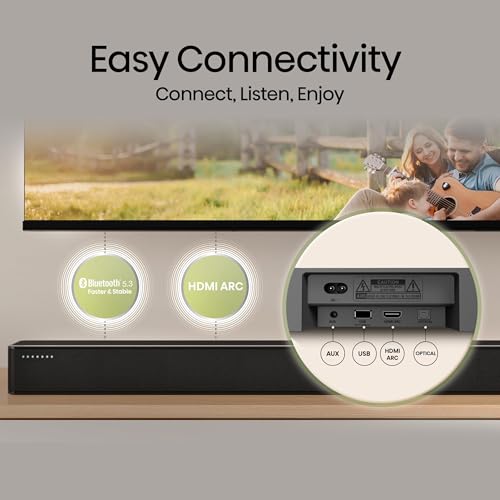
Connectivity options have become crucial as our entertainment setups get more complex. HDMI ARC (Audio Return Channel) lets your soundbar receive audio from your TV through the same cable that sends video, while also allowing your TV remote to control the soundbar's volume. Optical connections use light to transmit digital audio signals, offering excellent sound quality without the two-way control features of HDMI ARC.
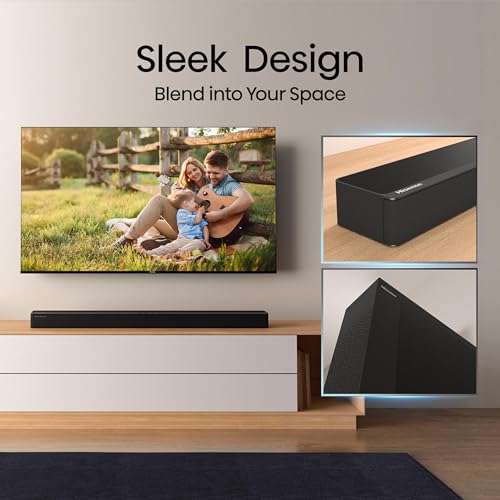
The physical design matters more than you might think. A soundbar needs to fit your space without blocking your TV's infrared sensor or looking awkward. Some people prefer the clean look of a single unit, while others don't mind having a separate subwoofer if it means better bass performance.
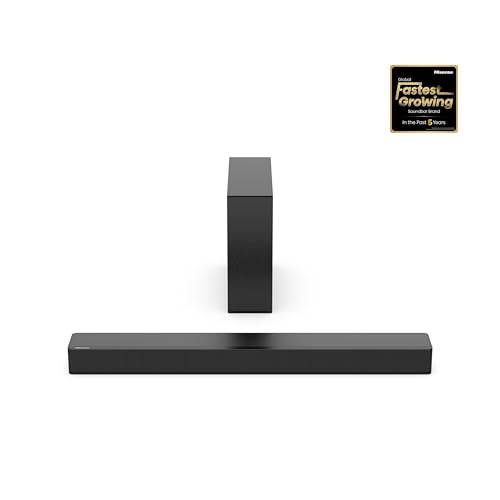
Released in 2022, the Hisense HS2100 represents what budget-conscious buyers have been asking for: a complete 2.1 channel system that doesn't require additional purchases. At the time of writing, it sits in the ultra-affordable category while including features typically found in more expensive systems.
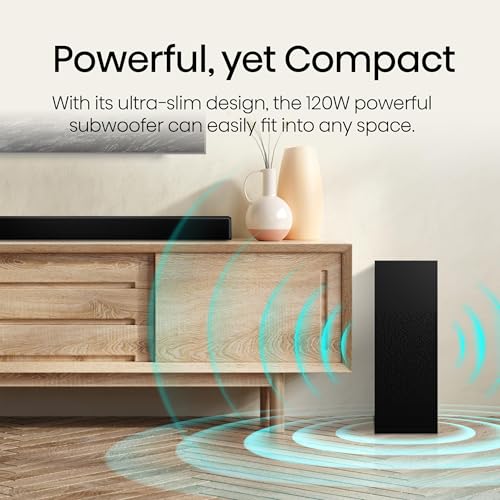
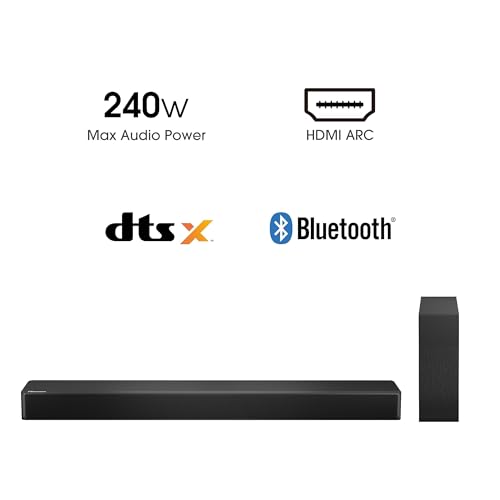
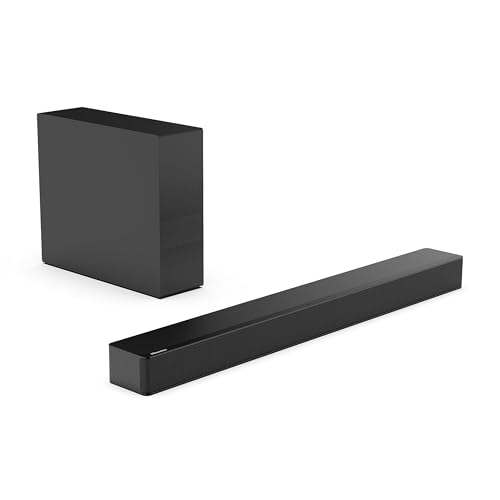
This 240-watt system combines a main soundbar with a wireless subwoofer that pairs automatically out of the box. The soundbar houses two full-range drivers, while the 5.25-inch subwoofer handles everything below about 120 Hz—that's where you feel the rumble of explosions and the thump of bass drums.
What sets the Hisense HS2100 apart is its DTS Virtual:X processing. This technology takes regular stereo or surround sound and uses psychoacoustic tricks to make it seem like sound is coming from all around you, even above. It's not the same as having actual ceiling speakers, but it's surprisingly convincing for movie soundtracks and games.
The system supports modern Bluetooth 5.3, which offers better range and stability than older Bluetooth versions. This means fewer dropouts when streaming music from your phone, plus faster connection times. Six preset sound modes let you optimize the audio for different content types—Movie mode boosts surround effects, while News mode emphasizes vocal clarity.
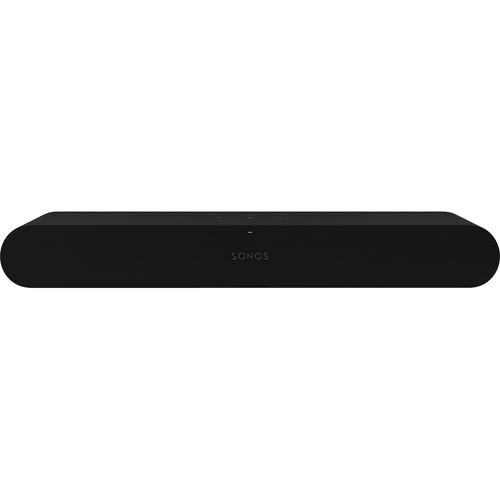
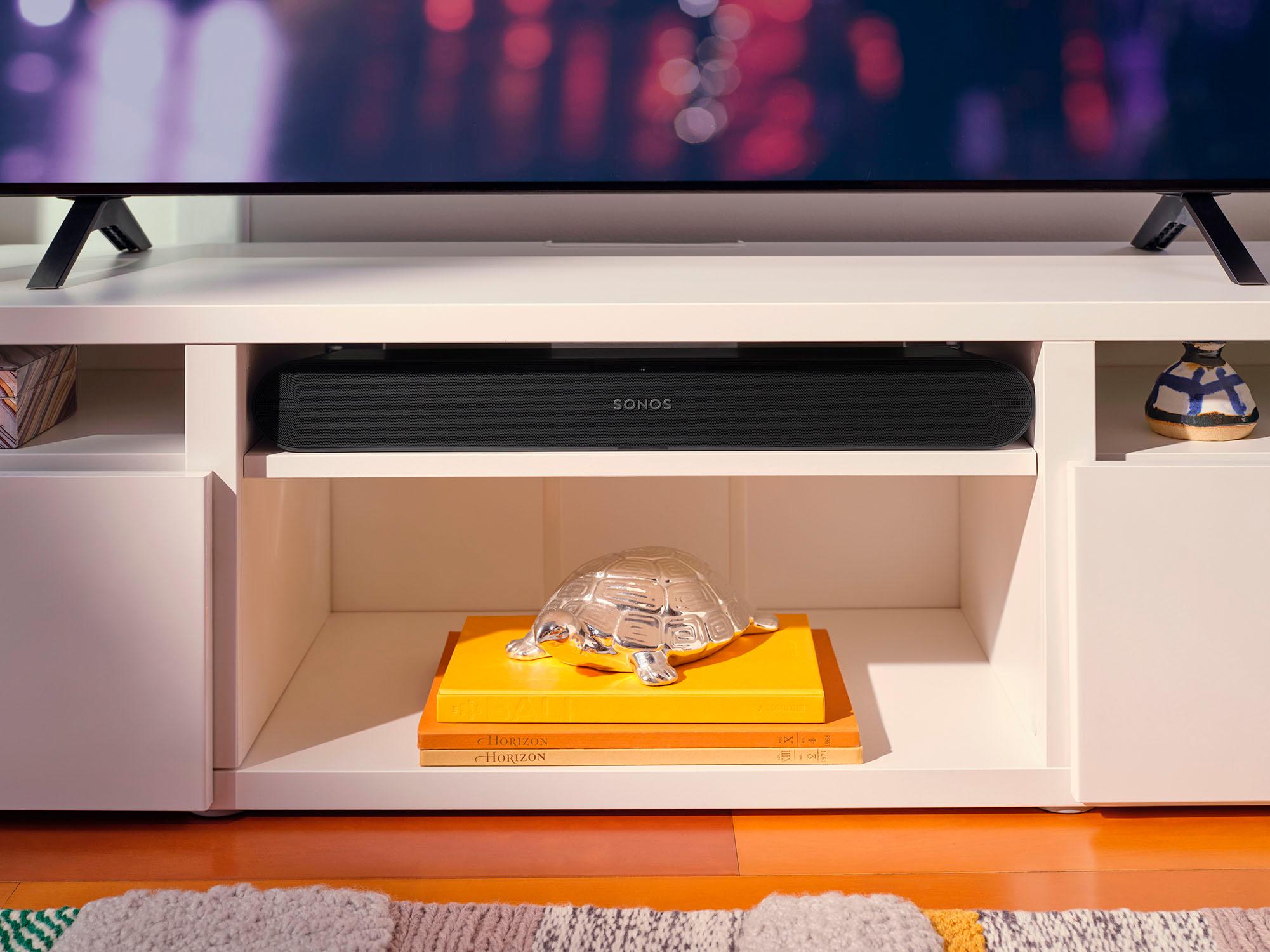
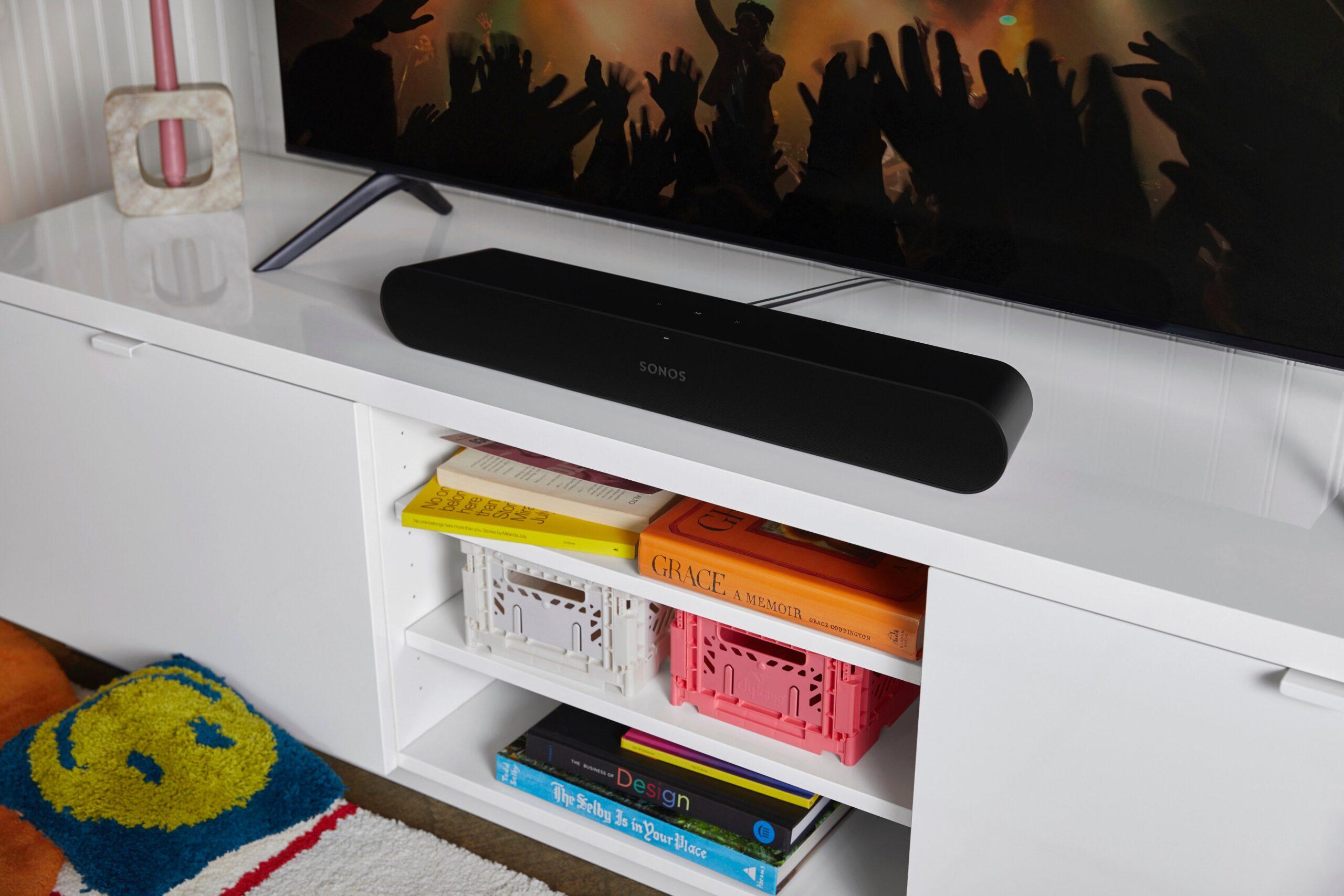
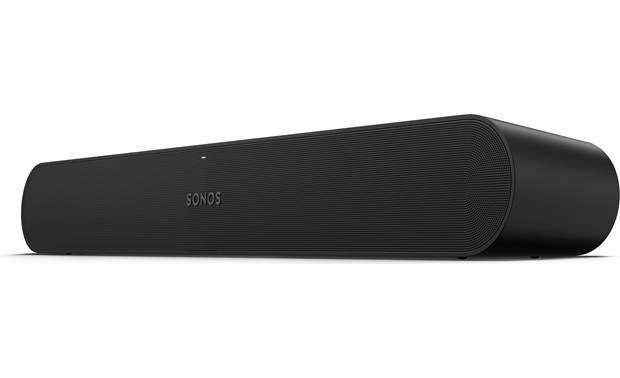
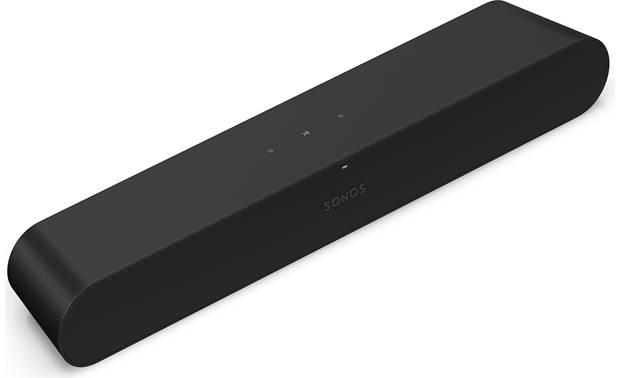
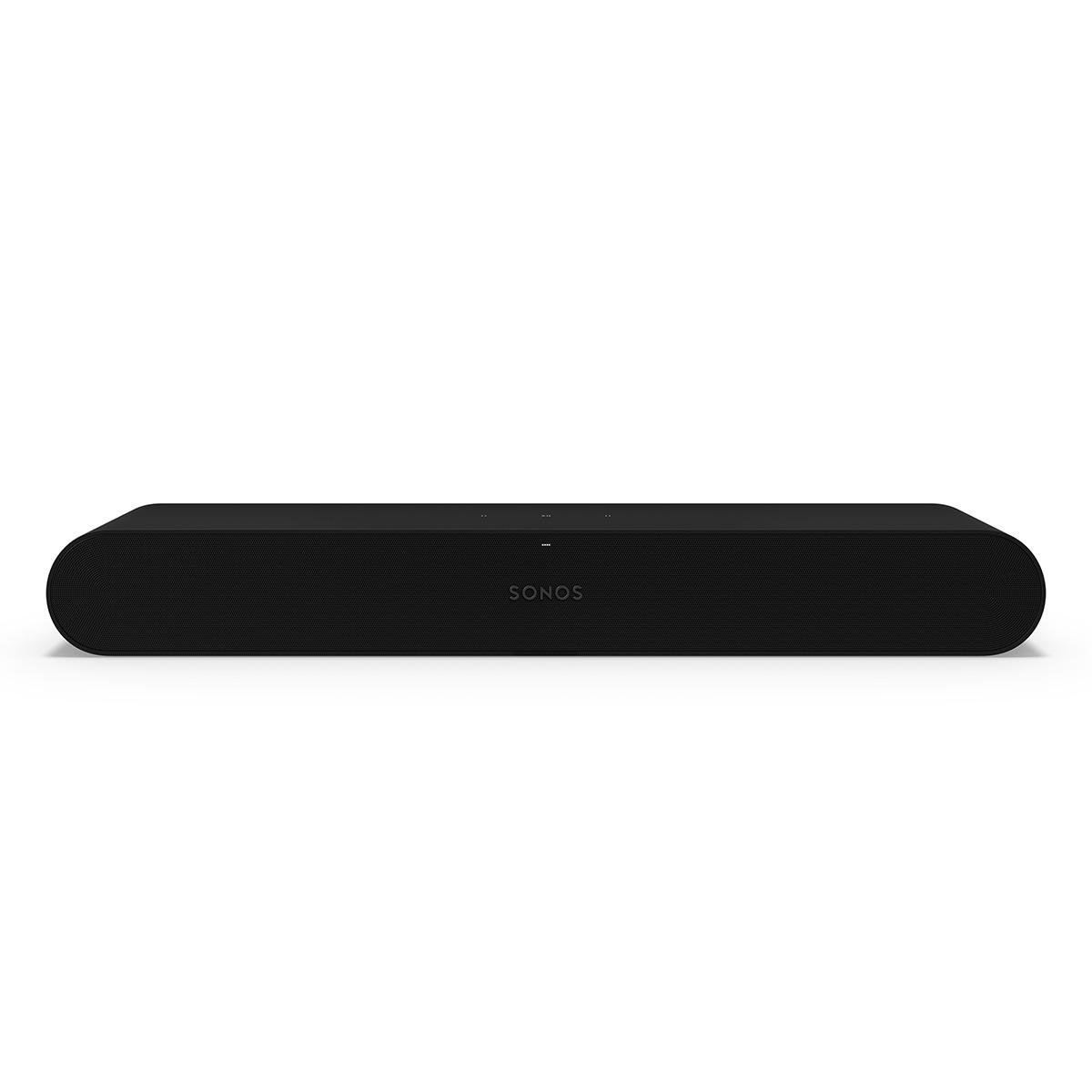
The Sonos Ray, also launched in 2022, takes a completely different approach. Instead of including everything upfront, Sonos designed a compact stereo soundbar that excels at what it does while offering a clear path for future expansion.
At just under 22 inches wide and weighing only about 4 pounds, the Sonos Ray is remarkably compact. But don't let its size fool you—inside are four carefully tuned drivers: two tweeters for crisp high frequencies and two midwoofers that handle everything else, including surprisingly solid bass for a unit without a separate subwoofer.
The real magic happens with Trueplay tuning. Using your iPhone's microphone (sorry Android users), the system analyzes your room's acoustics and adjusts its output accordingly. Hard surfaces that cause echoes? Trueplay compensates. Furniture that absorbs certain frequencies? It boosts those ranges to maintain balance. This kind of room correction was once limited to high-end home theater receivers.
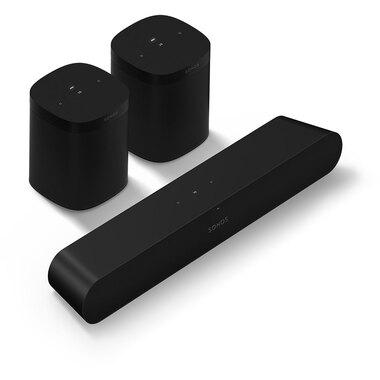
Sonos has built its reputation on multiroom audio, and the Ray integrates seamlessly into that ecosystem. You can start with just the soundbar, then add a wireless Sonos Sub for deeper bass, or even Sonos surround speakers for true 5.1 audio. Everything works together through the Sonos app, creating a cohesive whole-home audio experience.
This is where the fundamental difference between these systems becomes most apparent. The Hisense HS2100 delivers satisfying bass right out of the box thanks to its included wireless subwoofer. That 5.25-inch driver can dig down to about 40 Hz, which covers most of what you'll encounter in movies and music. When a spaceship rumbles across the screen or a bass line drops in your favorite song, you'll feel it.
However, based on our research into user experiences and professional measurements, the Hisense's bass can become somewhat "boomy" at higher volumes. It's enthusiastic rather than refined—great for action movies but occasionally overwhelming for dialogue-heavy content or acoustic music.
The Sonos Ray takes a different approach entirely. Its compact form factor limits how deep it can go (physics is physics), but what bass it produces is remarkably clean and controlled. For a standalone soundbar, it punches well above its weight class. The trade-off is that when you want that chest-thumping impact for movies, you'll need to add the optional Sonos Sub, which significantly increases the total system cost.
Both systems excel at making voices clear and intelligible, but they achieve this through different methods. The Hisense HS2100 uses a relatively balanced midrange frequency response with a dedicated News preset that emphasizes vocal frequencies. The system's 2.1 configuration helps by keeping bass sounds in the subwoofer, preventing them from muddying the critical midrange where voices live.
The Sonos Ray was specifically engineered with dialogue in mind. Those two central full-range drivers are precisely tuned to highlight the frequency range where human speech occurs. Professional reviewers consistently praise its vocal reproduction, noting that even whispered dialogue remains clearly audible without making other sounds harsh or unnatural.
In our evaluation of user feedback, both systems significantly outperform TV speakers for dialogue, but the Sonos Ray has a slight edge in challenging scenarios—think British accents in period dramas or rapid-fire comedy dialogue.
Soundstage refers to how wide and deep the audio presentation feels. A good soundstage makes it seem like sounds are coming from beyond the physical boundaries of the speakers, creating a more immersive experience.
The Hisense HS2100 creates a decently wide soundstage for a budget system, helped by its DTS Virtual:X processing. When properly positioned, it can make movie soundtracks feel more expansive than basic stereo. The separate subwoofer adds depth to the presentation, making action sequences feel more dynamic and engaging.
But the Sonos Ray is where acoustic engineering really shows its value. Despite being a compact stereo soundbar, its custom waveguides and sophisticated digital signal processing create an impressively wide and detailed soundstage. Instruments and effects are more precisely positioned within the stereo field, and the overall presentation feels more three-dimensional than the Hisense system, even without a separate subwoofer.
The technology landscape has evolved rapidly since both these systems launched in 2022. Smart home integration has become increasingly important, and this is where the two systems diverge significantly.
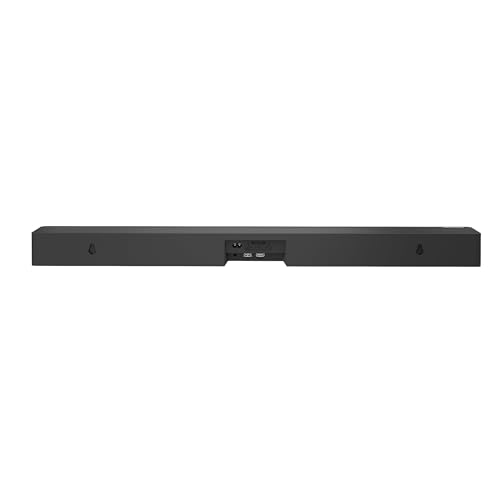
The Hisense HS2100 keeps things straightforward with essential connectivity options. Its Bluetooth 5.3 support means easy pairing with phones and tablets, while HDMI ARC and optical inputs handle TV connections. The "Roku TV Ready" certification ensures seamless integration with Roku TVs, allowing your TV remote to control volume and power. It's simple, reliable, and doesn't require any apps or network setup.
The Sonos Ray is built around smart home integration from the ground up. Wi-Fi connectivity enables not just music streaming but also regular software updates that add new features over time. Apple AirPlay 2 support means seamless streaming from iPhones, iPads, and Macs. The Sonos app provides detailed control over every aspect of the sound, including that room-correcting Trueplay tuning.
More importantly, the Ray serves as a gateway into the broader Sonos ecosystem. You can group it with other Sonos speakers throughout your home for synchronized music playback, or use it as part of a more complex home theater setup with wireless surround speakers and subwoofer.
For blockbuster action movies, the Hisense HS2100 brings immediate satisfaction. Explosions have weight, chase scenes feel dynamic, and the overall experience is visceral and engaging. The DTS Virtual:X processing adds a sense of height and movement that makes big-budget soundtracks more immersive. If you're mainly watching Marvel movies, Netflix action series, or playing console games, this system delivers the kind of impact that makes you feel like you're getting your money's worth.
However, for more nuanced content—think prestige dramas, documentaries, or foreign films with subtitles—the Sonos Ray shows its strengths. Its precise imaging and exceptional dialogue clarity make it easier to follow complex storylines and catch subtle audio details. The refined sound signature doesn't fatigue your ears during long viewing sessions.
Musical preferences play a huge role in which system you'll prefer. The Hisense HS2100 excels with bass-heavy genres like electronic music, hip-hop, and rock. That dedicated subwoofer provides the foundation these genres need, and the overall warm sound signature is forgiving with compressed streaming audio.
The Sonos Ray shines with acoustic music, jazz, classical, and vocal-focused content. Its balanced frequency response and wide soundstage let you hear individual instruments clearly, and the overall presentation feels more natural and uncolored. If you're an audiophile on a budget, the Ray's approach will likely appeal more to your sensibilities.
Gaming presents unique audio challenges. Fast-paced shooters benefit from precise audio positioning to locate enemies, while adventure games need immersive soundscapes to draw you into their worlds.
The Hisense HS2100 creates a more immediately impressive gaming experience. Explosions feel powerful, vehicle engines rumble convincingly, and the overall experience feels more visceral. The low latency across all inputs means no noticeable delay between visual and audio cues.
For competitive gaming, however, the Sonos Ray offers cleaner audio separation that can actually provide a tactical advantage. Footsteps, weapon reloads, and environmental cues are more precisely positioned within the soundfield, potentially giving you better situational awareness.
Your living space significantly influences which system will work better. The Hisense HS2100 can fill medium to large rooms with satisfying sound levels. Its 240-watt rating isn't just marketing—it can genuinely get loud without excessive distortion. The wireless subwoofer can be tucked nearly anywhere within about 30 feet, giving you flexibility in bass placement.
The Sonos Ray is optimized for small to medium rooms. Its compact size makes it ideal for apartments, bedrooms, or smaller living rooms where a larger system might overwhelm the space. The lack of a separate subwoofer also makes it perfect for situations where space is at a premium or where additional components aren't practical.
At the time of writing, these systems occupy different value propositions entirely. The Hisense HS2100 represents exceptional immediate value—you get a complete 2.1 system at a price point that historically would have bought you only a basic stereo soundbar. For users who want maximum impact without additional purchases, it's hard to argue with the value proposition.
The Sonos Ray costs significantly more upfront but represents a different kind of value. Its software-based features improve over time through updates, and the modular ecosystem approach means your investment grows with your needs and budget. If you start with just the Ray, you can later add a Sonos Sub for deeper bass, surround speakers for true multichannel audio, or additional Sonos speakers throughout your home.
You want immediate gratification and maximum bang for your buck. This system is perfect for users who primarily watch action movies, play games, or listen to bass-heavy music. It's ideal if you have a medium to large room, want simple setup without apps or network configuration, and prefer having all components included upfront.
The Hisense also makes sense if you're not particularly interested in smart home integration or multiroom audio. If you just want your TV to sound dramatically better without overthinking it, this is your system.
You prioritize audio quality over immediate bass impact and appreciate sophisticated engineering. This soundbar is perfect for smaller spaces, users who plan to expand their system over time, or anyone already invested in (or interested in) smart home technology.
The Ray is also the better choice if you listen to a lot of music, watch dialogue-heavy content, or value the aesthetic of a single, minimalist unit. If you're an iOS user who can take advantage of Trueplay tuning, that's another point in Sonos's favor.
Both systems succeed at their intended goals, but they're solving different problems. The Hisense HS2100 delivers maximum immediate impact and value, making it perfect for users who want a complete upgrade right now without compromise. The Sonos Ray offers superior engineering and flexibility, making it ideal for users who value long-term versatility and refined sound quality.
Your choice ultimately comes down to whether you prioritize immediate satisfaction and bass impact, or refined sound quality and future expandability. Both will dramatically improve your TV's audio—they just do it in fundamentally different ways.
For most people on a tight budget who want the biggest immediate upgrade, the Hisense HS2100 is hard to beat. For those willing to invest more initially for superior engineering and growth potential, the Sonos Ray offers a more sophisticated approach that can evolve with your needs over time.
| Hisense HS2100 2.1 Channel 240W Soundbar System | Sonos Ray Soundbar |
|---|---|
| Channel Configuration - Determines bass depth and surround capability | |
| 2.1 channels with wireless subwoofer included | 2.0 stereo channels (subwoofer sold separately) |
| Total Power Output - Affects maximum volume and dynamic range | |
| 240W total (60W soundbar + 120W subwoofer) | Not specified (Class-D amplifiers, room-filling but lower max volume) |
| Bass Performance - Critical for movies and music impact | |
| Dedicated 5.25" wireless subwoofer with 40-120Hz response | Built-in bass via midwoofers (excellent for size, limited deep bass) |
| Connectivity Options - Determines compatibility with your devices | |
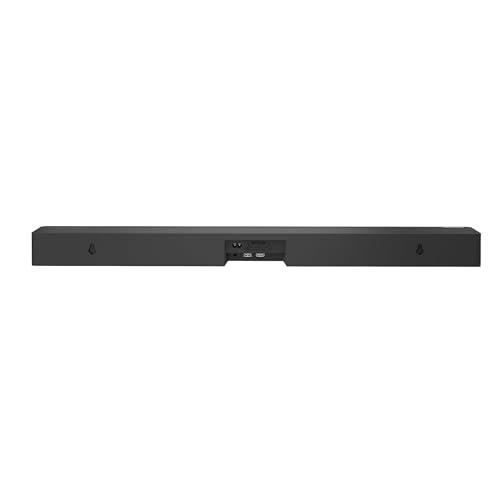
| HDMI ARC, Optical, 3.5mm AUX, USB, Bluetooth 5.3 | Optical only, Apple AirPlay 2, Wi-Fi streaming |
| Smart Features - Long-term usability and convenience | |
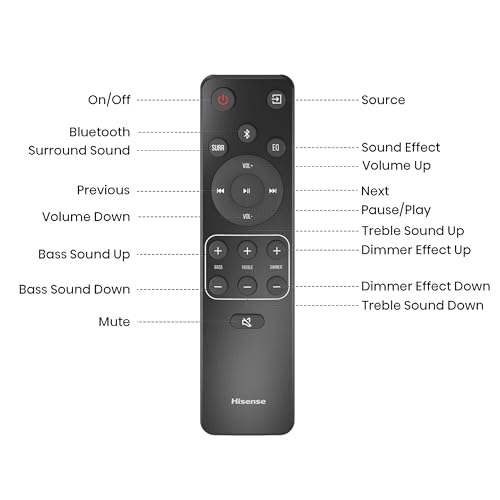
| Basic remote control, Roku TV Ready, 6 EQ presets | Trueplay room tuning, Sonos app, voice assistant support |
| Surround Sound Processing - Creates immersive audio from stereo sources | |
| DTS Virtual:X with convincing height effects | Virtual Dolby Atmos with sophisticated stereo imaging |
| Physical Design - Space requirements and aesthetic impact | |
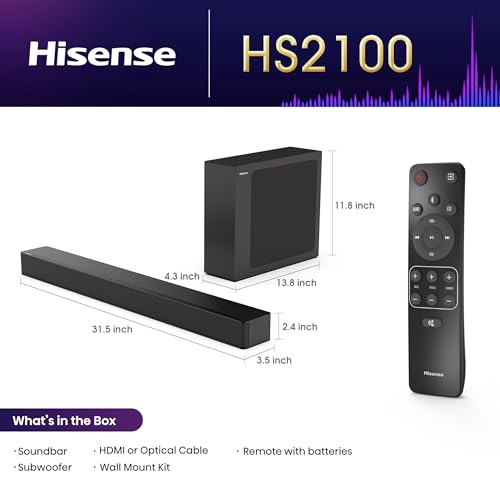
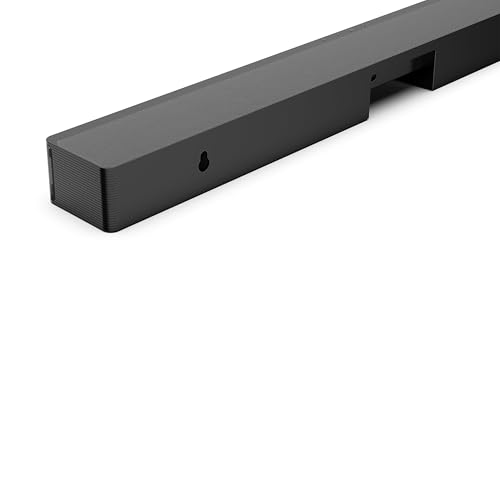
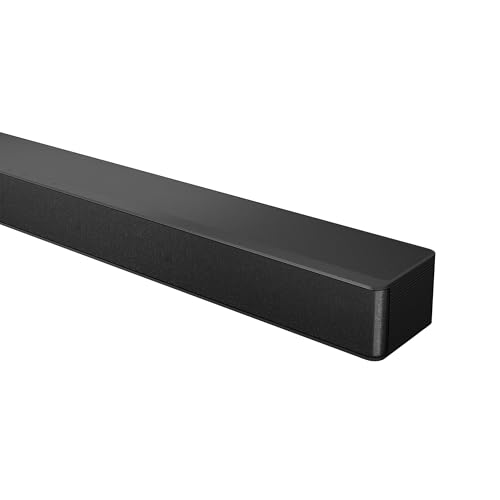
| 31.5" soundbar + separate subwoofer placement needed | Compact 22" single unit (4 lbs, ultra-minimal footprint) |
| Expandability - Future upgrade potential | |
| Limited expansion options beyond basic system | Full Sonos ecosystem (Sub, surrounds, multiroom audio) |
| Room Calibration - Optimizes sound for your specific space | |
| Manual bass/treble adjustment only | Trueplay auto-tuning (iOS devices required) |
| Best Use Cases - Where each system excels | |
| Action movies, gaming, bass-heavy music, larger rooms | Dialogue clarity, acoustic music, smaller spaces, gradual system building |
The Hisense HS2100 is generally better for action movies and blockbuster content due to its dedicated wireless subwoofer that delivers deep bass and explosive sound effects. The 240W system with DTS Virtual:X creates more immersive surround sound for cinematic experiences. However, the Sonos Ray excels at dialogue-heavy films and dramas with superior vocal clarity and precise audio imaging.
The Hisense HS2100 includes a wireless subwoofer in the box, providing immediate bass impact without additional purchases. The Sonos Ray is a stereo soundbar that produces solid bass for its size but requires adding the optional Sonos Sub if you want deep, room-shaking bass for movies and music.
The Hisense HS2100 offers exceptional immediate value as a complete 2.1 system at a budget-friendly price point. The Sonos Ray costs more upfront but provides superior audio engineering, smart features, and expandability options that can justify the higher investment for users planning to build a larger audio system over time.
The Hisense HS2100 delivers a warm, bass-forward sound signature that's exciting for movies and bass-heavy music. The Sonos Ray offers more refined, balanced audio with exceptional dialogue clarity and precise stereo imaging. The Sonos Ray sounds more natural and detailed, while the Hisense HS2100 provides more immediate impact and excitement.
The Sonos Ray is ideal for smaller spaces due to its compact 22-inch design and refined sound that won't overwhelm tight quarters. The Hisense HS2100 is better suited for medium to large rooms where its higher power output and separate subwoofer can be fully utilized without disturbing neighbors.
Both soundbars work with TV remotes but through different methods. The Hisense HS2100 supports HDMI ARC with CEC control and is Roku TV Ready for seamless integration. The Sonos Ray learns your TV remote's infrared commands and can be controlled through the Sonos app, offering more sophisticated control options.
The Hisense HS2100 offers Bluetooth 5.3 for direct device pairing plus standard wired connections. The Sonos Ray provides Wi-Fi connectivity and Apple AirPlay 2 support but lacks Bluetooth. For simple phone pairing, the Hisense is more straightforward, while the Sonos offers more advanced streaming capabilities.
Neither soundbar supports true Dolby Atmos with height channels. The Hisense HS2100 uses DTS Virtual:X processing to simulate surround effects, while the Sonos Ray employs virtual Dolby Atmos processing. Both create expanded soundstages beyond basic stereo, but the Hisense feels more cinematic due to its dedicated subwoofer.
The Hisense HS2100 offers simpler plug-and-play setup with automatic subwoofer pairing and basic remote control. The Sonos Ray requires the Sonos app for setup and optimal performance but offers more advanced features like room tuning and multiroom integration once configured.
The Sonos Ray is highly expandable within the Sonos ecosystem - you can add a wireless subwoofer, surround speakers, or additional room speakers for multiroom audio. The Hisense HS2100 is a complete system with limited expansion options, making it better for users who want everything included upfront.
This depends on your music preferences. The Hisense HS2100 excels with bass-heavy genres like electronic, hip-hop, and rock thanks to its dedicated subwoofer. The Sonos Ray is superior for acoustic music, jazz, classical, and vocal-focused content due to its balanced frequency response and precise stereo imaging.
The fundamental choice is between immediate impact versus refinement and expandability. Choose the Hisense HS2100 if you want maximum bass and cinematic sound right out of the box at an excellent price. Choose the Sonos Ray if you prioritize audio quality, smart features, and the ability to build a more sophisticated system over time.
We've done our best to create useful and informative comparisons to help you decide what product to buy. Our research uses advanced automated methods to create this comparison and perfection is not possible - please contact us for corrections or questions. These are the sites we've researched in the creation of this article: rtings.com - shop.hisense-usa.com - bestbuy.com - content.syndigo.com - bestbuy.com - hisensedealers.co.ke - stuff.co.za - dtc-aus-api.hisense.com - youtube.com - manuals.plus - youtube.com - bestbuy.com - youtube.com - gallifurniture.com - hisense-usa.com - manuals.plus - uk.hisense.com - device.report - youtube.com - costco.ca - elmcreekwsa.com - gallifurniture.com - techradar.com - soundandvision.com - youtube.com - appleinsider.com - youtube.com - sonos.com - cnet.com - howtogeek.com - pcrichard.com - en.community.sonos.com - epicsystems.tech - en.community.sonos.com - cepro.com - videoandaudiocenter.com

Privacy Policy
Terms and Conditions - Affiliate Policy
Home Security
© Copyright 2008-2026.
11816 Inwood Rd #1211, Dallas, TX 75244