


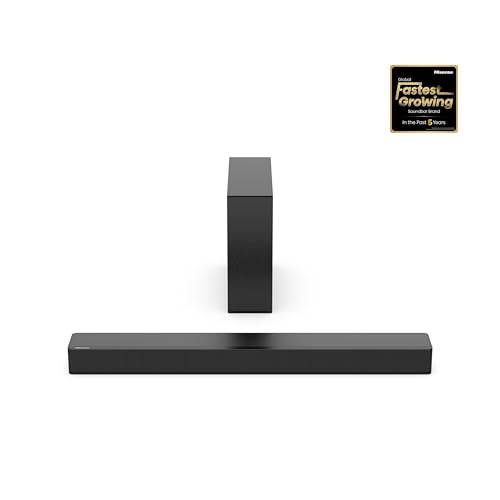

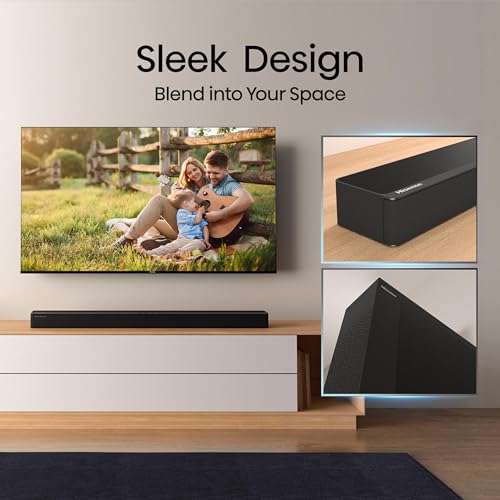

When your TV's built-in speakers sound like they're coming from inside a tin can, a budget soundbar becomes an essential upgrade. But not all affordable audio solutions take the same approach. Two standout options—the Hisense HS2100 and Amazon Fire TV Soundbar Plus—represent fundamentally different philosophies about what makes great sound without breaking the bank.
Released in recent years as streaming services began pushing higher-quality audio formats, these soundbars tackle the same problem from opposite angles. The Hisense HS2100 follows the traditional route: raw power and dedicated bass through a separate wireless subwoofer. The Amazon Fire TV Soundbar Plus, launched in 2023, embraces the modern all-in-one approach with advanced audio processing and format support.
Understanding which approach works better for your living room requires diving into what makes each system tick—and where your priorities lie.
The sub-$200 soundbar market exists in a fascinating sweet spot. These systems need to deliver meaningful improvements over TV speakers while keeping costs reasonable for mainstream buyers. That creates interesting engineering challenges: How do you pack decent bass into a compact, affordable package? Should you prioritize raw volume or sophisticated processing? Is it better to include every modern audio format or focus on making basic content sound great?
Budget soundbars typically sacrifice premium features like room correction (technology that adjusts sound based on your room's acoustics), high-end DACs (digital-to-analog converters that turn digital audio into the analog signals speakers need), and true multi-channel surround speakers. Instead, they focus on core improvements: clearer dialogue, better bass response than TV speakers can manage, and enough volume to fill a typical living room.
The category has evolved significantly since 2020. Streaming services like Netflix and Disney+ now routinely offer Dolby Atmos soundtracks—immersive audio that places sounds in three-dimensional space around the listener. This has pushed even budget manufacturers to include support for these formats, though implementing them properly at low price points remains challenging.
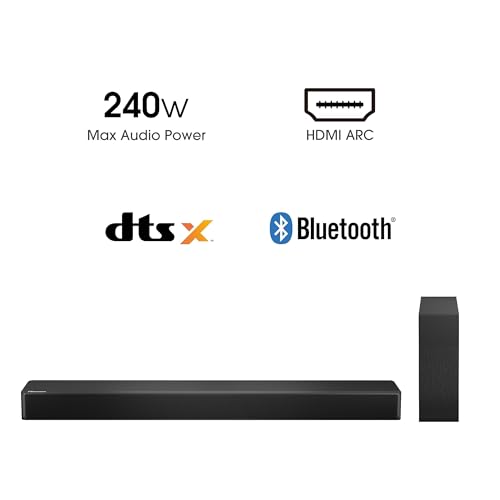
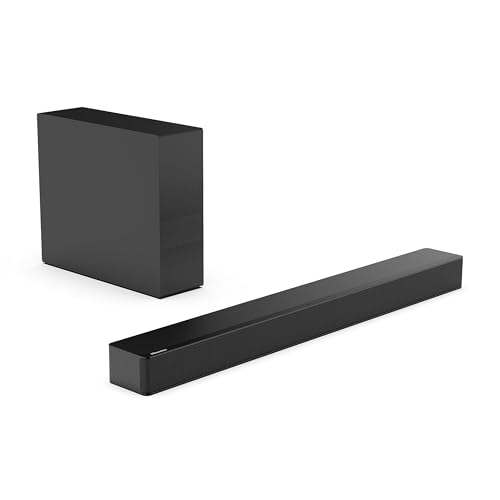
The Hisense HS2100 represents the "bigger is better" school of budget audio. With 240 watts of total power and a dedicated wireless subwoofer packing a 5.25-inch driver, it prioritizes the kind of room-filling sound that makes action movies feel impactful. This 2.1 channel configuration (two main speakers plus a separate subwoofer) has dominated home audio for decades because it works: dedicated bass drivers in larger enclosures simply produce deeper, more powerful low frequencies than tiny drivers crammed into a soundbar can manage.
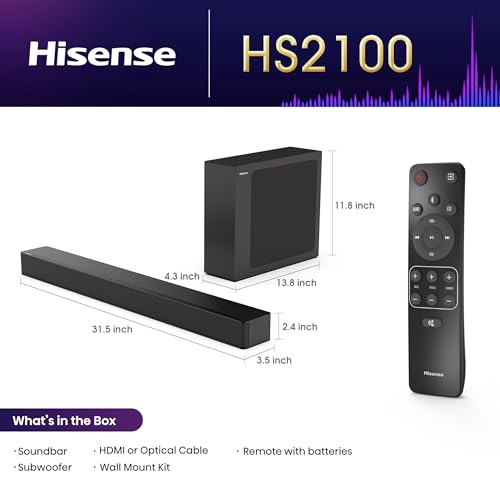
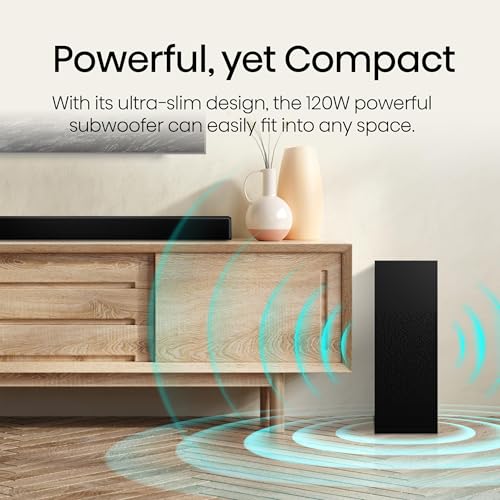
The wireless subwoofer deserves special attention. At just 4.3 inches deep, it's designed to slide under furniture or tuck against walls where traditional subs won't fit. The wireless connection eliminates the cable run between the soundbar and sub, though both units still need power outlets. When our research dove into user feedback, the automatic pairing between bar and sub consistently impressed owners—it typically connects within seconds of powering on.
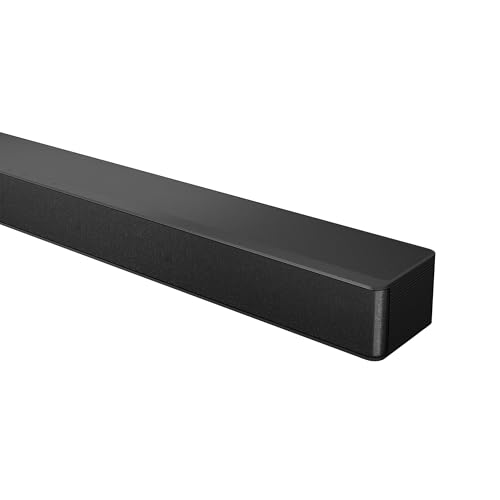
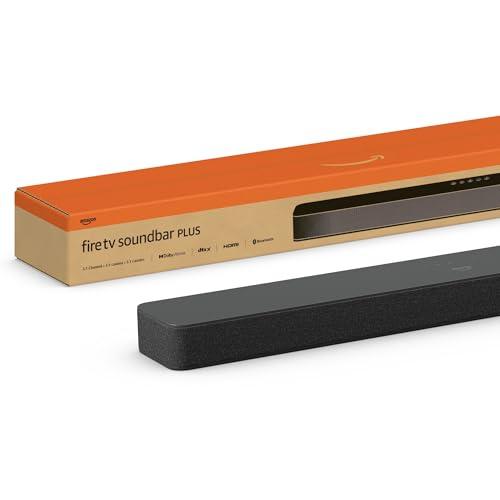
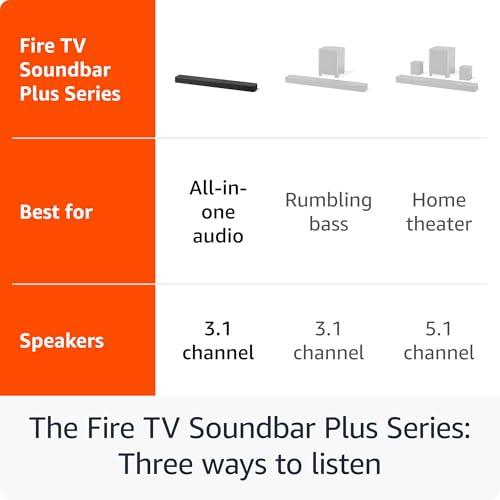
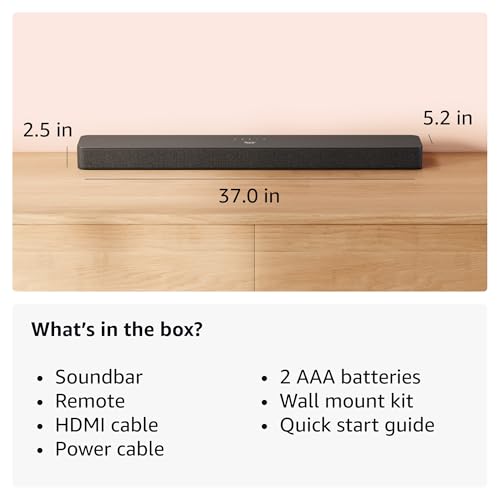
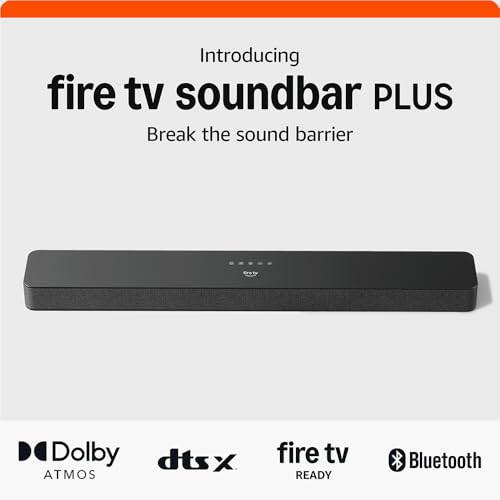
The Amazon Fire TV Soundbar Plus takes the opposite tack. Instead of maximum power, it emphasizes processing sophistication and space efficiency. The 3.1 channel array (left, center, right speakers plus built-in bass drivers) fits everything into a single 37-inch enclosure. The dedicated center channel—uncommon in budget soundbars—handles dialogue and vocals specifically, while left and right channels manage music, effects, and ambient sounds.
This all-in-one design philosophy gained traction as living spaces became smaller and consumers demanded simpler setups. No separate subwoofer means no additional floor space, no extra power cable, and no potential wireless connection issues. The trade-off comes in bass output: built-in drivers simply can't move as much air as a dedicated subwoofer cabinet.
Both systems excel at the most critical aspect of TV audio: making dialogue intelligible. Poor dialogue clarity ruins the viewing experience faster than any other audio shortcoming, and it's where TV speakers fail most dramatically.
The Hisense HS2100 achieves clear vocals through its balanced frequency response. The warm sound signature—meaning slightly boosted midrange and bass with relaxed treble—ensures voices cut through background noise without becoming harsh or fatiguing. Professional measurements show the midrange sits in a sweet spot where most human voices naturally reside, making conversations feel present and natural.
However, the Amazon Fire TV Soundbar Plus takes a more targeted approach. The dedicated center channel acts like a specialist for dialogue, isolated from the left and right channels that handle music and effects. This separation prevents dialogue from getting masked by explosions or orchestral swells. More importantly, the system includes a dialogue enhancer with five discrete levels of boost, letting users fine-tune speech clarity based on content and hearing preferences.
From our analysis of user reviews, dialogue enhancement proves most valuable for older viewers or those with mild hearing loss, but even younger listeners appreciate the control during challenging content like Christopher Nolan films or British dramas with thick accents.
This category reveals the starkest difference between these systems. Bass reproduction involves moving large volumes of air, which requires either big drivers, powerful amplifiers, or both. The Hisense HS2100 delivers both: a dedicated 120-watt amplifier drives the 5.25-inch subwoofer in a separate enclosure tuned specifically for low-frequency extension.
The result is bass that reaches down to 40Hz—deep enough to reproduce most movie explosions and electronic music with satisfying impact. User feedback consistently praises the system's ability to add weight and drama to action scenes without becoming muddy or overwhelming. The wireless sub placement flexibility also matters: corner placement naturally boosts bass output through boundary reinforcement (walls reflect and reinforce low frequencies).
The Amazon Fire TV Soundbar Plus produces what reviewers describe as "adequate" bass from its built-in woofers. Two dedicated bass drivers handle low-frequency duties within the main enclosure, but physics limits their effectiveness. Smaller drivers in smaller boxes simply can't move enough air for true low-frequency extension. The bass feels controlled and tight—less prone to the "one-note" character that plagues some budget subwoofers—but lacks the visceral impact that makes movie soundtracks exciting.
For music listening, this difference becomes even more apparent. Hip-hop, electronic, and modern pop recordings rely heavily on sub-bass content that the Hisense HS2100 reproduces with authority while the Amazon Fire TV Soundbar Plus merely suggests.
Soundstage refers to the perceived width, depth, and height of audio reproduction—essentially, how well a system creates the illusion that sounds come from specific locations in space rather than just from the speakers themselves. Both systems attempt to expand the apparent sound source beyond their physical dimensions, but through different technologies.
The Hisense HS2100 employs DTS Virtual:X processing, which analyzes incoming audio and applies psychoacoustic processing to create the impression of surround sound from just two main speakers. This works reasonably well for ambient effects and music, creating a soundstage that extends somewhat beyond the bar's 31.5-inch width. However, multichannel surround content gets downmixed to stereo, losing the discrete channel separation that makes surround sound effective.
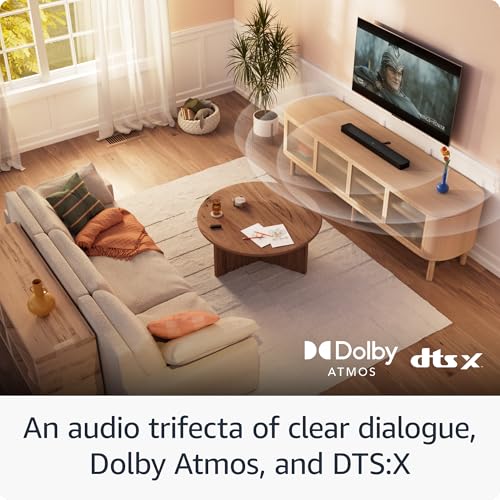
The Amazon Fire TV Soundbar Plus takes a more sophisticated approach with true Dolby Atmos and DTS:X processing. These object-based audio formats allow content creators to place sounds at specific locations in three-dimensional space. While the soundbar lacks up-firing drivers for true height effects, its processing creates a more convincing illusion of spatial audio than the Hisense's virtual surround.
The three-speaker front array also helps. Having dedicated left, center, and right channels maintains better stereo separation and imaging accuracy. Effects pan more smoothly across the soundstage, and stereo music reproduction feels more spacious and natural.
Maximum volume capability matters more than many buyers realize. Not because you'll always listen at ear-splitting levels, but because dynamic range—the difference between the quietest and loudest passages—requires headroom. When a movie shifts from whispered dialogue to explosive action, the system needs sufficient power reserves to handle peaks without compression or distortion.
The Hisense HS2100 excels here with its 240-watt power rating. Professional measurements show it reaching 90+ decibels, enough to fill larger living rooms and still maintain reasonable sound quality. The separate subwoofer amplification means bass doesn't steal power from midrange and treble drivers during demanding passages.
The Amazon Fire TV Soundbar Plus, with 80 watts total, reaches adequate volume for most medium-sized rooms but shows compression artifacts when pushed to extremes. The all-in-one design means the amplifier must allocate power between multiple drivers simultaneously, potentially limiting peak output during complex material.
For most users in typical living rooms, both systems provide sufficient volume. The difference emerges during demanding content or in larger spaces where the Hisense HS2100 maintains its composure while the Amazon Fire TV Soundbar Plus begins to strain.
The streaming audio landscape changed dramatically in the past few years. Services that once offered basic stereo now deliver Dolby Atmos and DTS:X soundtracks as standard. This creates a dilemma for budget soundbar buyers: pay for format support you might not use immediately, or save money but potentially miss out on improved audio experiences.
The Amazon Fire TV Soundbar Plus embraces modern formats fully. Dolby Atmos support means compatibility with premium Netflix content, Disney+ releases, and Apple TV+ originals that use object-based audio mixing. While the soundbar can't reproduce true height effects without upward-firing drivers, the virtualized processing still provides a more immersive experience than standard stereo or even 5.1 surround.
DTS:X support adds compatibility with Ultra HD Blu-rays and some streaming platforms that prefer DTS encoding. Having both major immersive audio formats ensures compatibility with virtually any current content source.
The Hisense HS2100 takes a more conservative approach, supporting DTS Virtual:X but skipping Dolby Atmos entirely. This limits compatibility with streaming content that relies specifically on Atmos encoding, though most services still offer fallback formats like Dolby Digital Plus that the system handles perfectly well.
From a practical standpoint, this difference depends heavily on your content preferences. If you primarily watch broadcast TV, older movies, or standard streaming content, the Hisense HS2100 handles everything admirably. If you're an early adopter who wants access to premium streaming audio or plan to keep the soundbar for many years, the Amazon Fire TV Soundbar Plus provides better future compatibility.
At the time of writing, these soundbars occupy different price tiers that reflect their design philosophies. The Hisense HS2100 typically costs significantly less while delivering more raw audio power and a separate subwoofer—exceptional value for pure sound improvement per dollar spent.
The Amazon Fire TV Soundbar Plus commands a premium that reflects its advanced processing, modern format support, and space-saving convenience. Whether that premium feels justified depends on your priorities and usage patterns.
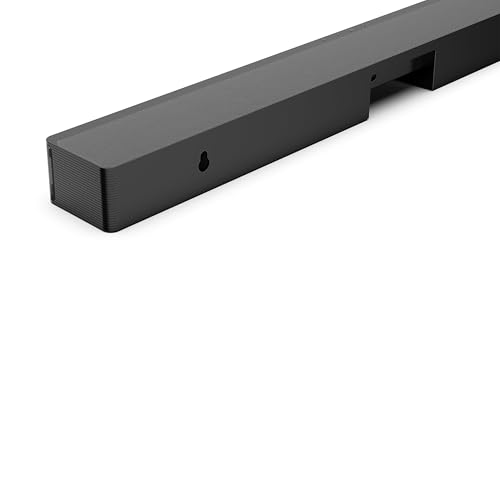
Consider the total cost of ownership: both systems include necessary cables and wall-mount hardware. Neither requires subscription services or ongoing costs. The Amazon Fire TV Soundbar Plus offers expansion options with optional wireless rear speakers and subwoofer, potentially justifying its higher initial cost if you plan to build a full surround system eventually.
For dedicated home theater setups, several factors tip the scales toward specific strengths. Room size matters enormously: the Hisense HS2100 better suits larger spaces where its power advantage becomes noticeable, while the Amazon Fire TV Soundbar Plus works well in smaller or medium rooms where setup simplicity trumps maximum output.
Viewing habits also influence the choice. Movie enthusiasts who watch action films, sci-fi, or anything with significant bass content will appreciate the Hisense HS2100's subwoofer impact. Those who prefer dramas, comedies, or dialogue-heavy content might value the Amazon Fire TV Soundbar Plus's superior speech clarity and processing sophistication.
Equipment compatibility deserves consideration too. The Amazon Fire TV Soundbar Plus integrates seamlessly with Fire TV devices for unified remote control, while the Hisense HS2100 works universally with any TV or source device through standard connections.
Choose the Hisense HS2100 if you prioritize dramatic audio improvement over convenience. This system delivers the most noticeable upgrade from TV speakers, especially for bass-heavy content. It's ideal for users with adequate space for a subwoofer who want maximum impact from their entertainment budget. The warm, engaging sound signature makes everything from sitcoms to blockbusters more enjoyable, and the reliable wireless connectivity typically works without fuss.
The Amazon Fire TV Soundbar Plus suits buyers who value modern features and space efficiency over raw power. Choose this system if you want access to Dolby Atmos content, need precise dialogue control, or plan to expand to full surround sound eventually. The all-in-one convenience and future-proof format support justify the premium for users who prioritize flexibility and advanced processing.
Both systems represent solid values in their respective niches. The Hisense HS2100 maximizes traditional audio performance per dollar, while the Amazon Fire TV Soundbar Plus provides a more sophisticated, future-oriented approach. Understanding your priorities—power versus processing, simplicity versus features, immediate impact versus long-term flexibility—points toward the right choice for your living room and listening preferences.
| Hisense HS2100 | Amazon Fire TV Soundbar Plus |
|---|---|
| Channel Configuration - Determines bass performance and setup complexity | |
| 2.1 channels with wireless subwoofer | 3.1 channels with built-in subwoofer |
| Total Power Output - Affects maximum volume and dynamic range | |
| 240W (60W soundbar + 120W subwoofer) | 80W all-in-one system |
| Subwoofer Design - Critical for bass impact and room placement flexibility | |
| Separate 5.25" wireless subwoofer (120W) | Built-in woofers within main unit |
| Dolby Atmos Support - Essential for premium streaming content | |
| No (DTS Virtual:X only) | Yes (virtualized processing) |
| Audio Format Compatibility - Determines streaming service compatibility | |
| Dolby Digital, DTS Virtual:X, PCM | Dolby Atmos, DTS:X, Dolby Digital, PCM |
| Sound Modes - Customization options for different content types | |
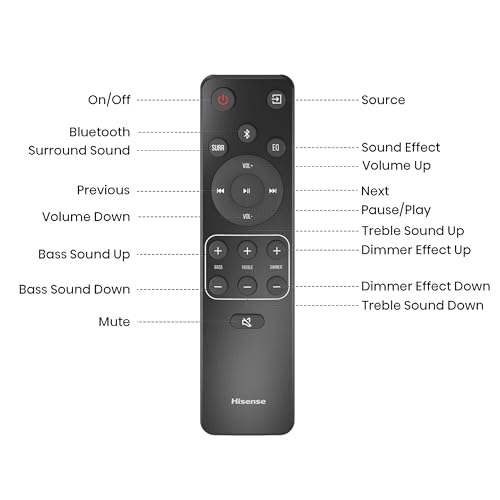
| 6 presets (Movie, Music, News, Sport, Night, Game) | 4 presets (Movie, Music, Sport, Night) |
| Dialogue Enhancement - Important for speech clarity | |
| Standard midrange balance | Dedicated center channel + 5-level dialogue boost |
| Physical Footprint - Space requirements and placement options | |
| 31.5" soundbar + separate subwoofer placement | 37" all-in-one unit (no separate subwoofer) |
| Bluetooth Version - Wireless streaming quality and connection stability | |
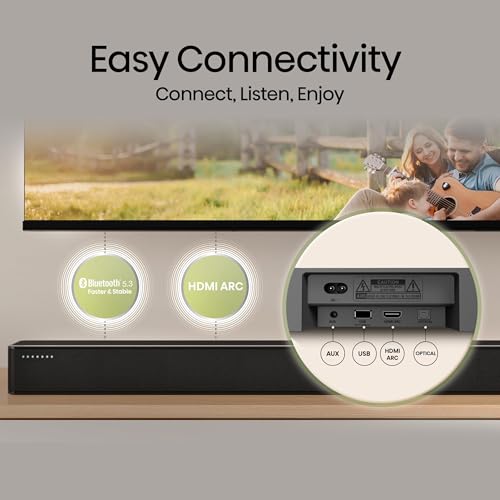
| Bluetooth 5.3 (latest standard) | Bluetooth 5.0 (adequate for most uses) |
| HDMI Connectivity - TV connection and control integration | |
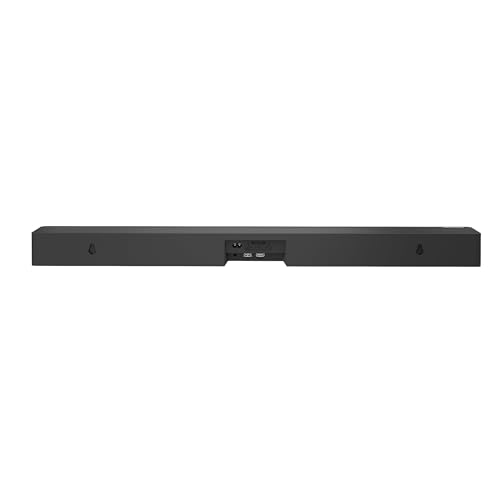
| HDMI ARC with CEC control | HDMI eARC with enhanced bandwidth |
| Expandability - Future upgrade potential | |
| Fixed 2.1 system | Expandable to 5.1 with optional rear speakers |
| Release Timing - Technology generation and feature set | |
| Recent release (traditional approach) | 2023 launch (modern format support) |
The Amazon Fire TV Soundbar Plus edges ahead for movies due to its Dolby Atmos support and dedicated center channel for clearer dialogue. However, the Hisense HS2100 delivers more impactful bass through its wireless subwoofer, making action scenes more thrilling. For dialogue-heavy content, choose the Amazon Fire TV Soundbar Plus. For bass-heavy blockbusters, the Hisense HS2100 provides better impact.
The Hisense HS2100 includes a dedicated wireless subwoofer that produces significantly deeper and more powerful bass than the built-in woofers in the Amazon Fire TV Soundbar Plus. If you enjoy action movies, electronic music, or want room-filling bass, the separate subwoofer makes a noticeable difference. The Amazon Fire TV Soundbar Plus offers adequate bass for casual listening but can't match the impact of a dedicated sub.
The Amazon Fire TV Soundbar Plus is the clear winner for space efficiency with its all-in-one design requiring only the main soundbar unit. The Hisense HS2100 requires placement for both the soundbar and a separate wireless subwoofer, though the sub is designed to fit under furniture at just 4.3 inches deep.
The Hisense HS2100 uses a 2.1 setup (left/right speakers plus subwoofer), while the Amazon Fire TV Soundbar Plus features 3.1 channels (left/center/right plus built-in bass). The dedicated center channel in the Amazon Fire TV Soundbar Plus provides clearer dialogue separation, while the Hisense HS2100 focuses on stereo imaging with more powerful bass.
Only the Amazon Fire TV Soundbar Plus supports Dolby Atmos, making it compatible with premium content from Netflix, Disney+, and other streaming services. The Hisense HS2100 uses DTS Virtual:X for spatial processing but doesn't support Dolby Atmos. If you frequently watch streaming content with immersive audio, the Amazon Fire TV Soundbar Plus is the better choice.
The Hisense HS2100 delivers significantly more volume with its 240W power output compared to the 80W Amazon Fire TV Soundbar Plus. For larger living rooms or those who enjoy high volume levels, the Hisense HS2100 provides better dynamic range and headroom without distortion.
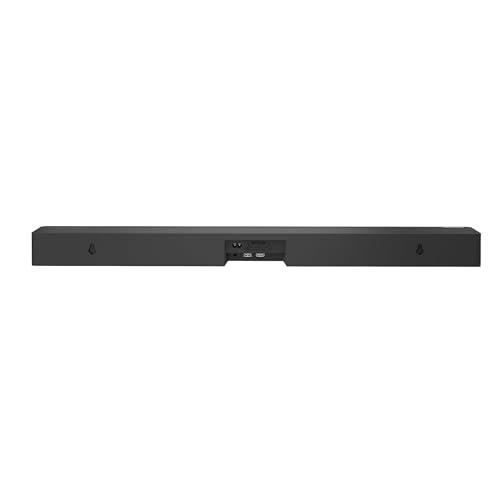
The Amazon Fire TV Soundbar Plus offers simpler setup with just one unit to position and power. The Hisense HS2100 requires placement of both the soundbar and wireless subwoofer, though the automatic pairing typically works seamlessly. Both systems connect easily via HDMI ARC to your TV.
The Amazon Fire TV Soundbar Plus can be expanded to a complete 5.1 system with optional wireless rear speakers and subwoofer. The Hisense HS2100 is a fixed 2.1 system with no official expansion options. If you plan to build a full home theater setup gradually, the Amazon Fire TV Soundbar Plus provides a clear upgrade path.
The Amazon Fire TV Soundbar Plus excels at dialogue with its dedicated center channel and five-level dialogue enhancement feature. The Hisense HS2100 provides clear vocals through its balanced sound signature, but the Amazon Fire TV Soundbar Plus gives you more control to fine-tune speech clarity based on your hearing preferences and content type.
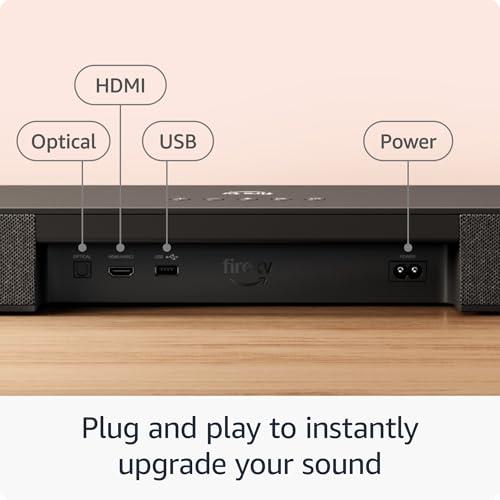
Both the Hisense HS2100 and Amazon Fire TV Soundbar Plus work with any TV through HDMI ARC, optical, or auxiliary connections. The Amazon Fire TV Soundbar Plus offers enhanced integration with Fire TV devices for single-remote control, while the Hisense HS2100 provides universal compatibility without ecosystem dependencies.
For music, the Hisense HS2100 typically provides better value with its powerful bass response and warm sound signature that enhances most genres. The separate subwoofer delivers the low-end impact that electronic, hip-hop, and rock music demand. The Amazon Fire TV Soundbar Plus offers more controlled bass and wider soundstage but lacks the musical impact of the Hisense HS2100.
The Hisense HS2100 features newer Bluetooth 5.3 for improved wireless streaming stability and range, while the Amazon Fire TV Soundbar Plus uses Bluetooth 5.0. Both provide reliable wireless music streaming from phones and tablets, but the Hisense HS2100 offers slightly better wireless performance for mobile device connectivity.
We've done our best to create useful and informative comparisons to help you decide what product to buy. Our research uses advanced automated methods to create this comparison and perfection is not possible - please contact us for corrections or questions. These are the sites we've researched in the creation of this article: rtings.com - shop.hisense-usa.com - bestbuy.com - content.syndigo.com - bestbuy.com - hisensedealers.co.ke - stuff.co.za - dtc-aus-api.hisense.com - youtube.com - manuals.plus - youtube.com - bestbuy.com - youtube.com - gallifurniture.com - hisense-usa.com - manuals.plus - uk.hisense.com - device.report - youtube.com - costco.ca - elmcreekwsa.com - gallifurniture.com - rtings.com - wirelessplace.com - techradar.com - cordbusters.co.uk - whathifi.com - developer.amazon.com - t3.com - dolby.com - youtube.com - youtube.com - youtube.com - dugoutnorthbrook.com - dolby.com - aboutamazon.com - youtube.com - developer.amazon.com

Privacy Policy
Terms and Conditions - Affiliate Policy
Home Security
© Copyright 2008-2026.
11816 Inwood Rd #1211, Dallas, TX 75244