



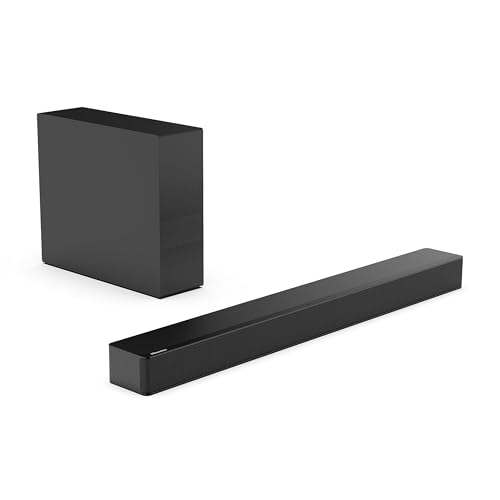
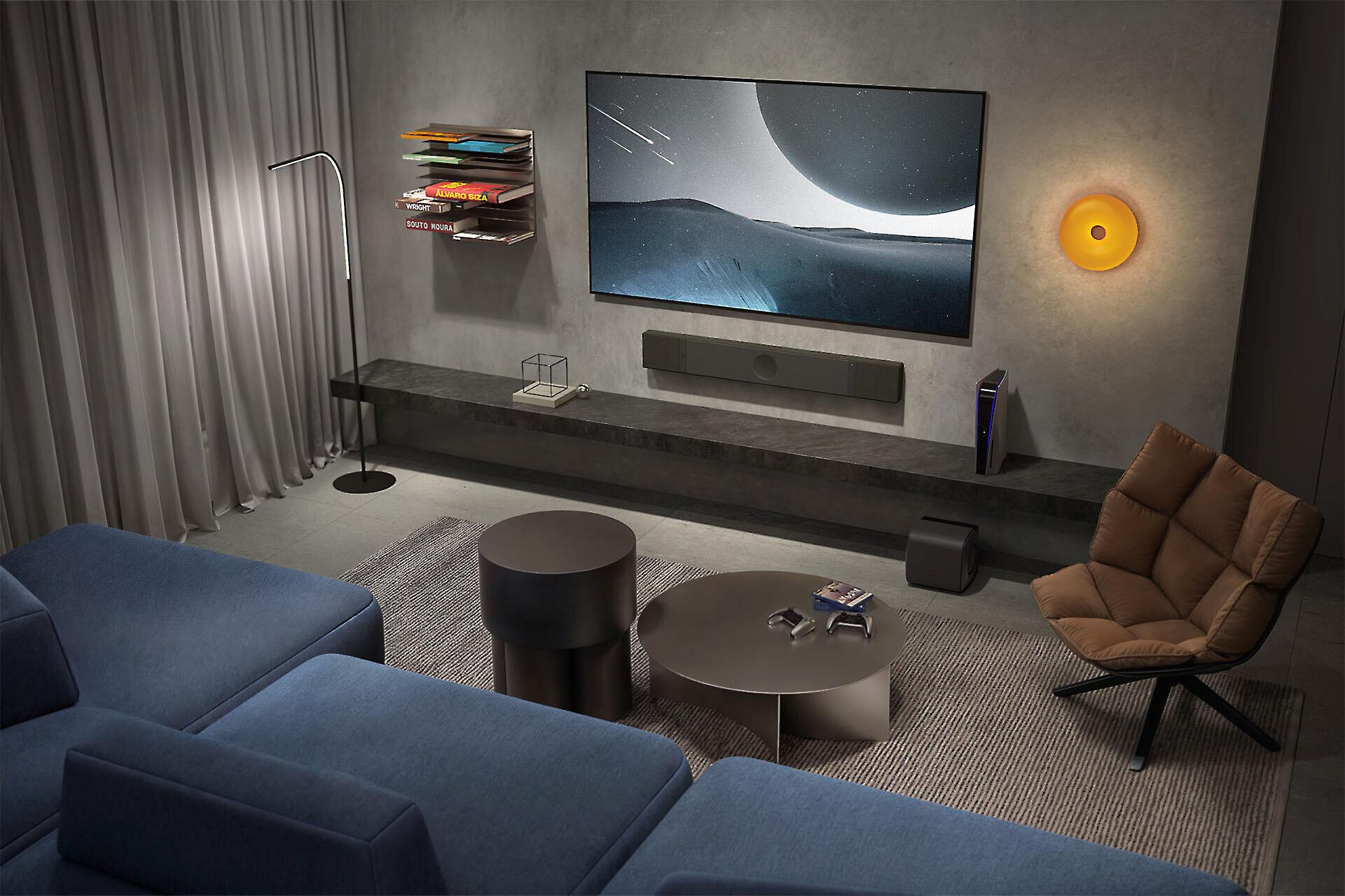



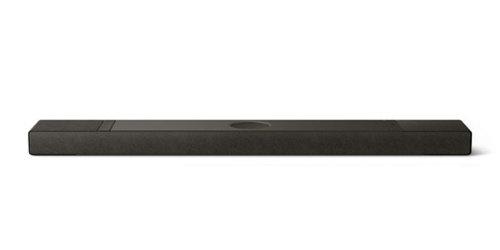
If you've ever watched a movie and found yourself cranking up the volume just to hear the dialogue, only to have the explosions blow out your eardrums, you know why soundbars exist. These sleek audio devices promise to fix your TV's terrible built-in speakers without cluttering your living room with a full surround sound system. But choosing between budget and premium options can feel overwhelming, especially when the price difference is as dramatic as it is between the Hisense HS2100 and the KEF XIO.
At the time of writing, these two soundbars represent opposite ends of the market spectrum. The Hisense HS2100, released in recent years as part of the company's push into affordable home audio, costs roughly what you'd spend on a nice dinner for two. Meanwhile, the KEF XIO, which launched in 2024 as the British audio company's first-ever soundbar, costs about as much as a decent used car. That's not a typo—we're talking about a 20-fold price difference.
Before diving into specifics, let's establish what makes a soundbar tick. Traditional soundbars are essentially multiple speakers crammed into a single enclosure, designed to sit beneath your TV. They range from basic stereo units that barely improve on TV speakers to sophisticated systems that can create convincing surround sound effects.
The most important factors when evaluating soundbars are channel configuration (how many distinct audio streams they can handle), driver technology (the actual speakers inside), format support (which audio technologies they understand), and smart features. Channel configuration is expressed in numbers like 2.1 or 5.1.2—the first number represents left/center/right channels, the second indicates subwoofer presence, and the third (when present) refers to height channels for overhead effects.
Driver technology varies dramatically between budget and premium models. Cheaper soundbars typically use basic cone drivers, while expensive ones might feature exotic materials and specialized designs. Format support determines whether your soundbar can handle advanced audio like Dolby Atmos (which adds height information to create a three-dimensional sound bubble) or DTS:X (a competing surround technology).
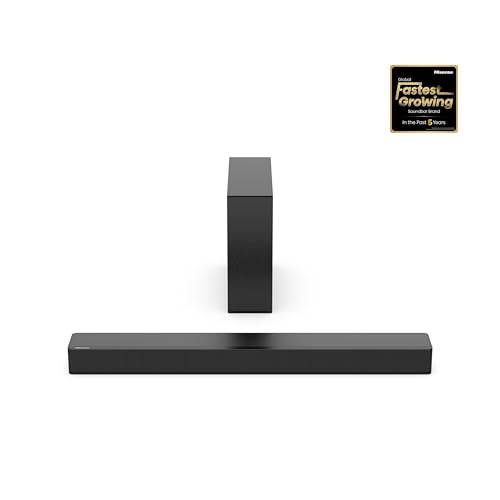
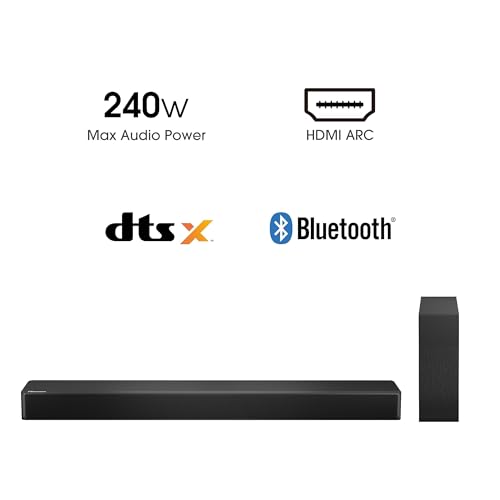
The Hisense HS2100 represents the sweet spot of budget soundbar engineering. As a 2.1 system, it includes a main soundbar plus a separate wireless subwoofer—that chunky box responsible for deep bass frequencies. This configuration immediately puts it ahead of cheaper all-in-one bars that try to squeeze bass out of tiny drivers.
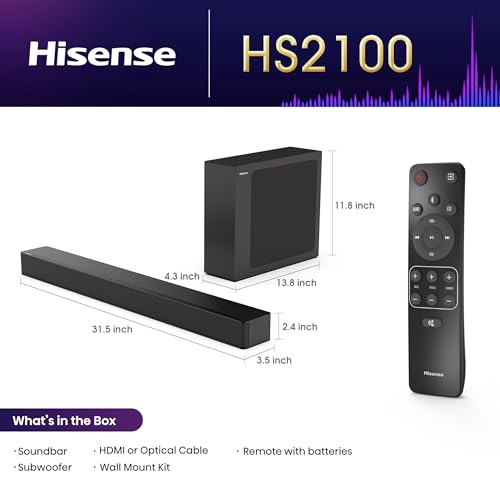
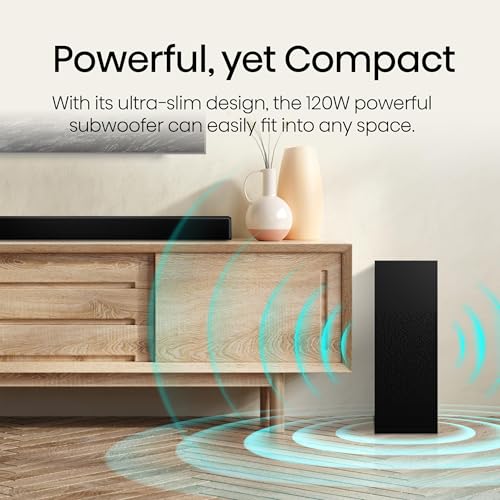
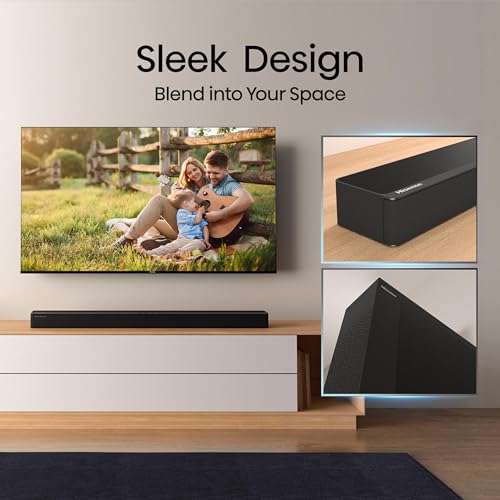
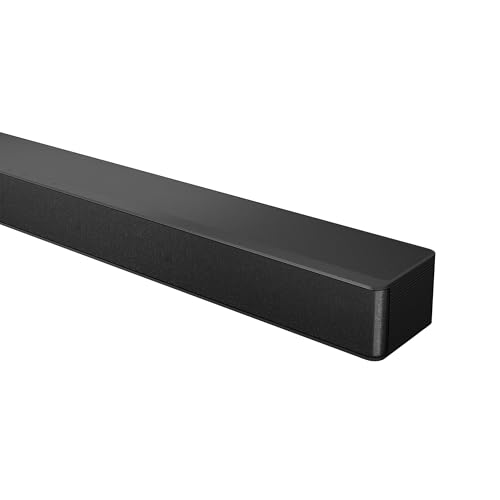
At roughly three feet wide and surprisingly lightweight, the HS2100 won't dominate your entertainment center. The included wireless subwoofer gives you flexibility in bass placement, which matters more than you might think. Bass frequencies are omnidirectional (they spread in all directions), so you can tuck the subwoofer beside your couch or in a corner without affecting the stereo image.
The soundbar's 240-watt power rating might seem impressive, but wattage alone doesn't tell the whole story. What matters more is how cleanly those watts are delivered and how well the drivers handle dynamic content. Based on our research into professional reviews and user feedback, the HS2100 performs admirably for its price class, delivering clear dialogue and reasonably punchy bass without the harshness that plagues many budget options.
However, the HS2100 has significant limitations. As a 2.1 system, it downmixes all surround sound content to stereo. This means when you're watching a movie with helicopters flying overhead, those effects will come from the front speakers rather than creating the illusion of height. The soundbar includes some virtual surround processing—digital tricks that try to create spatial effects from stereo speakers—but these can't match true multi-channel systems.
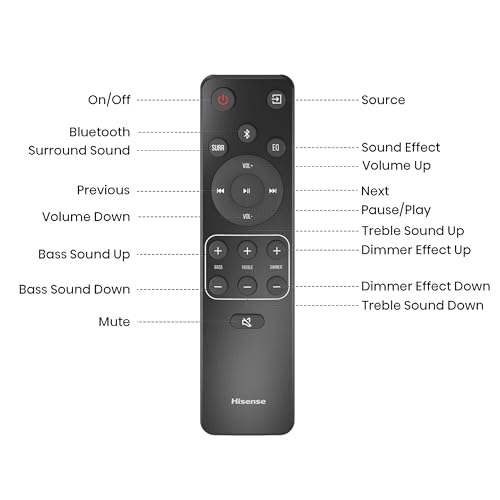
The HS2100 supports basic audio formats like Dolby Digital, which covers most TV content and streaming services. It includes six preset sound modes (Movie, Music, News, Sport, Game, and Night) that adjust the tonal balance for different content types. Night mode is particularly clever, compressing loud sounds and boosting quiet ones so you can follow dialogue without waking the neighbors during late-night viewing sessions.
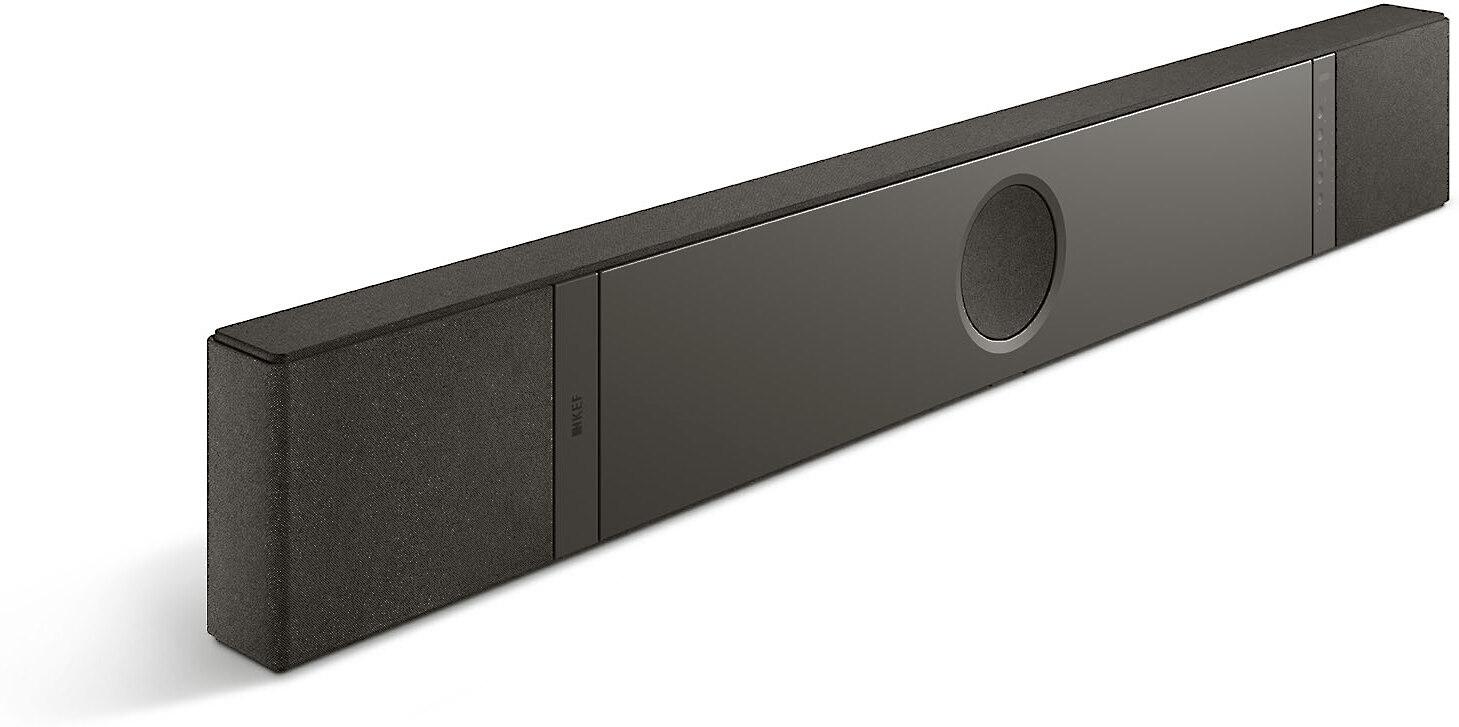
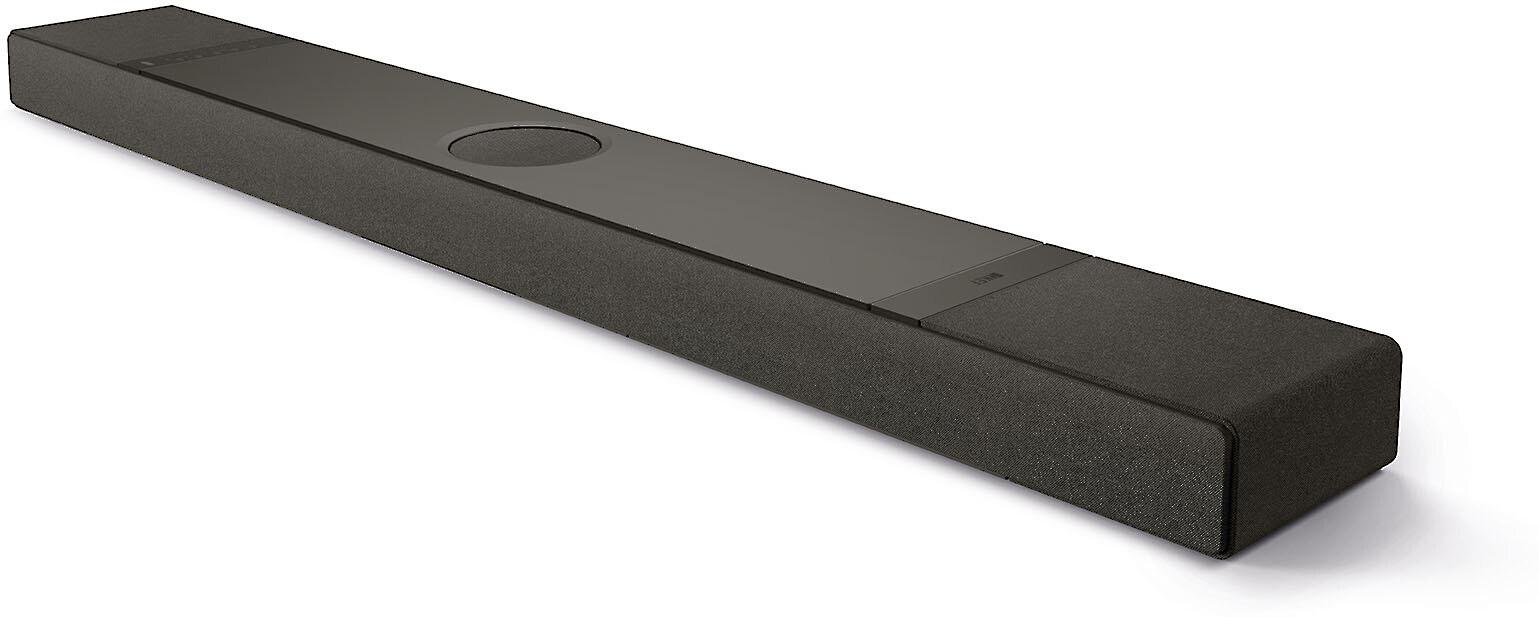
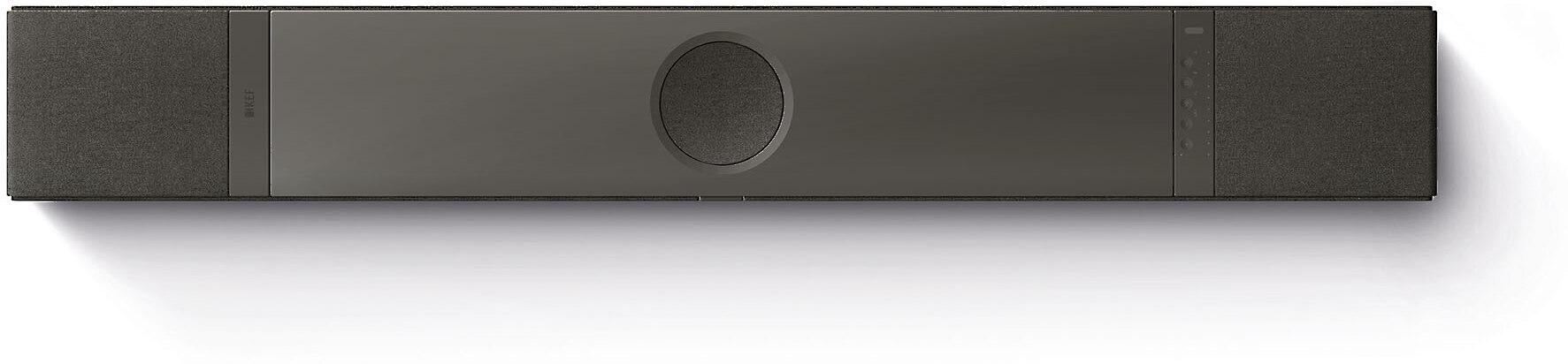
The KEF XIO operates in an entirely different universe. Released in 2024, it represents KEF's first foray into soundbars after decades of building some of the world's most respected hi-fi speakers. This pedigree shows in every aspect of the design.
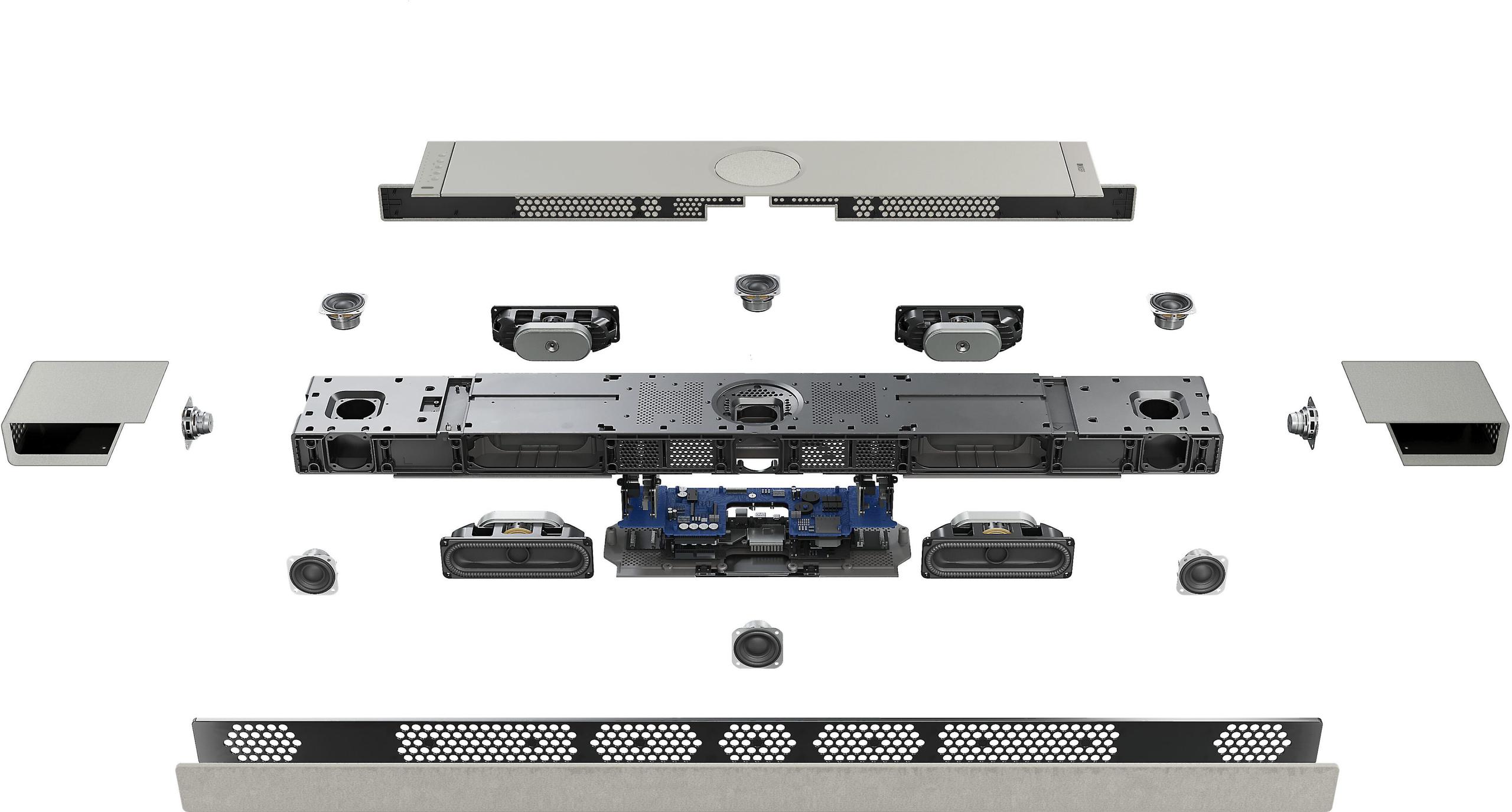
As a true 5.1.2 system, the XIO contains seven distinct channels plus two height speakers for Dolby Atmos effects. This means it can properly reproduce surround sound content without downmixing, placing dialogue in the center, effects in specific locations, and atmospheric sounds overhead. The difference in immersion compared to stereo soundbars is night and day.
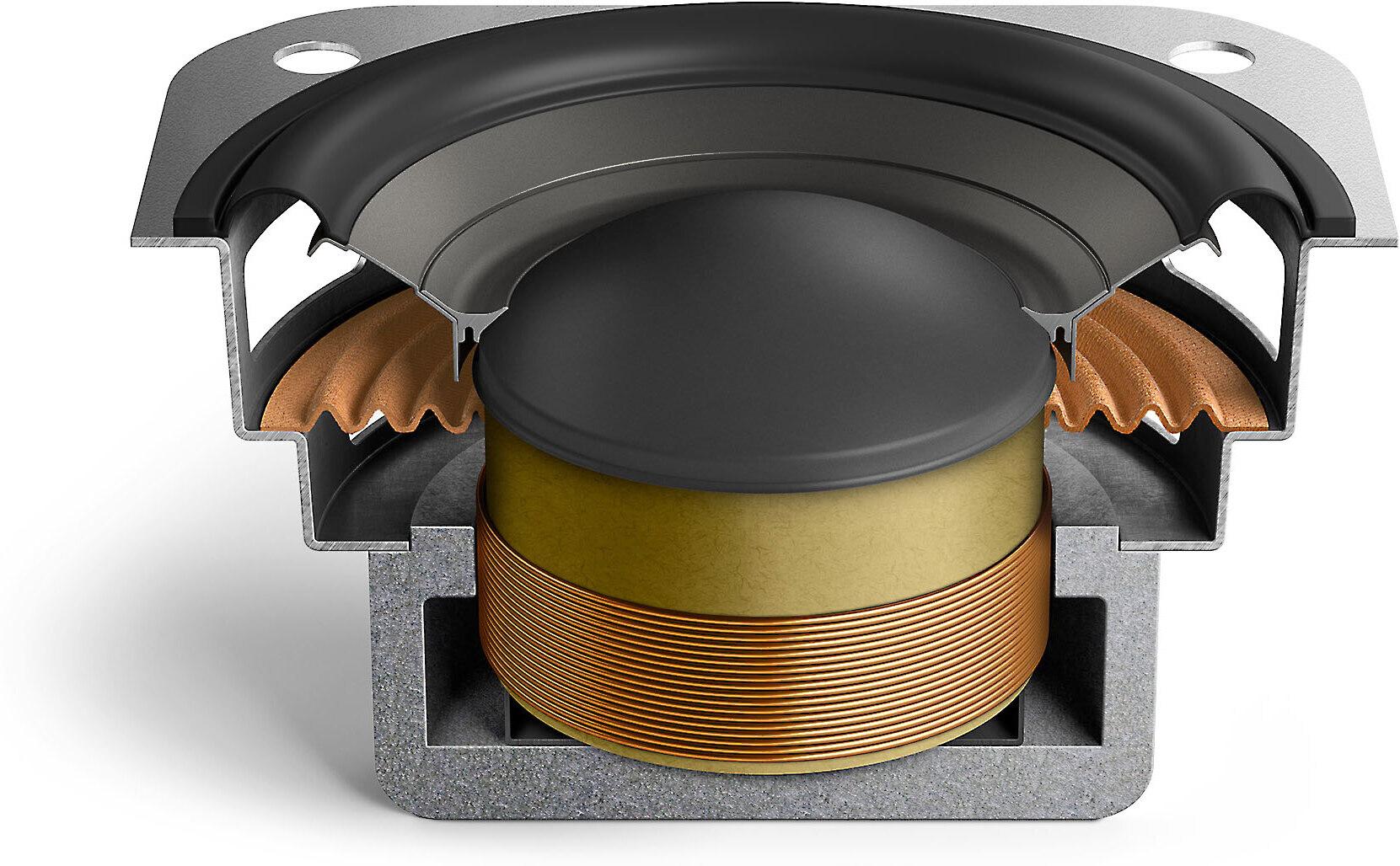
The XIO houses twelve separate amplifiers delivering 820 watts of total power—nearly four times the HS2100's output. But the real magic lies in KEF's driver technology. The soundbar uses six Uni-Q MX drivers, a miniaturized version of KEF's famous concentric design where the tweeter (high-frequency driver) sits in the center of the midrange cone. This configuration ensures consistent sound dispersion across your seating area, so dialogue remains clear whether you're sitting directly in front or off to the side.
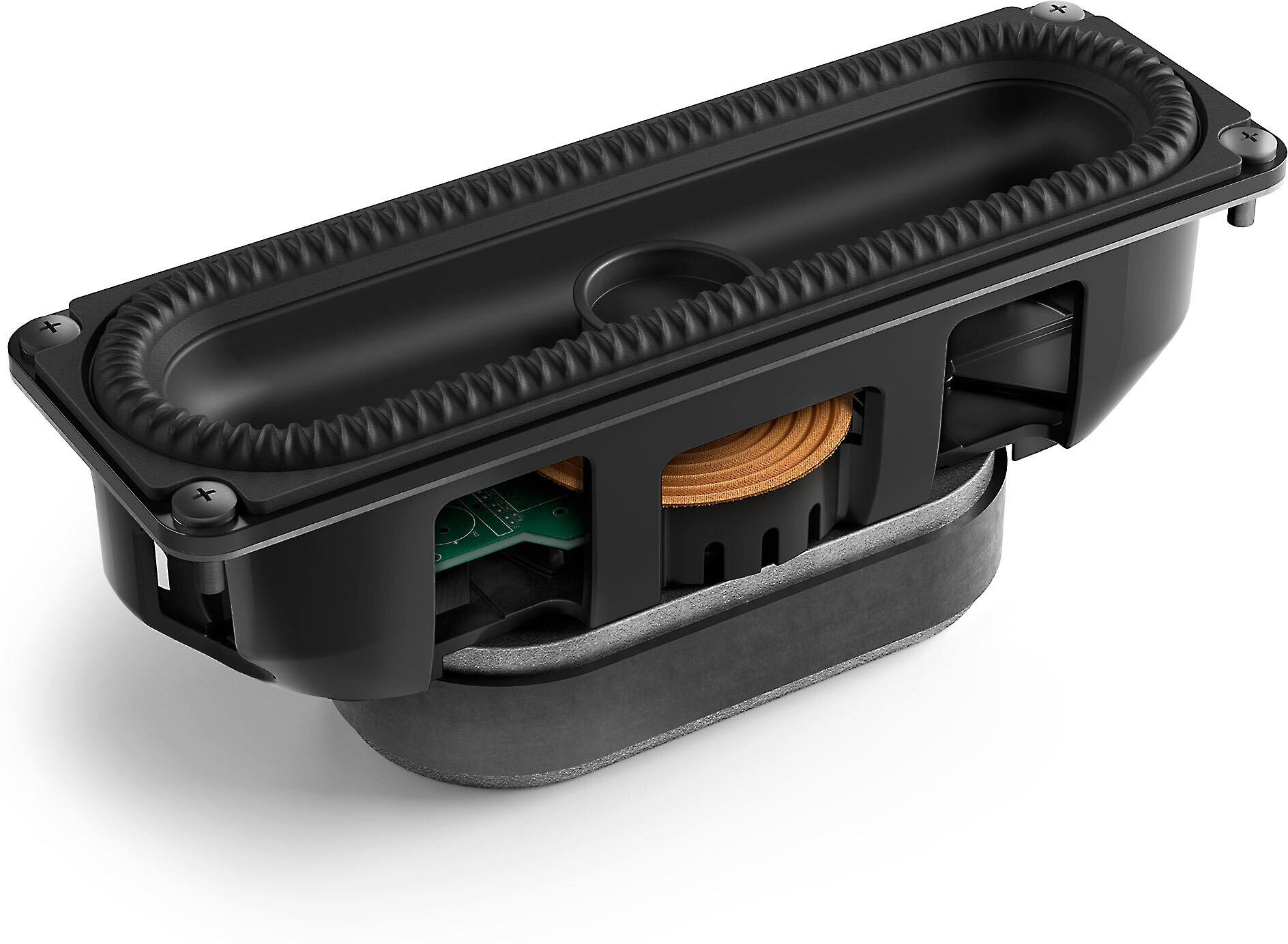
For bass, the XIO employs four racetrack-shaped drivers in a force-canceling configuration. These aren't your typical round speakers—they're oval-shaped with specialized suspension systems borrowed from KEF's high-end subwoofers. The force-canceling arrangement means opposing drivers work against each other to eliminate unwanted vibrations that could muddy the sound.
Perhaps most impressive is KEF's VECO (Velocity Control) technology, which uses sensors to monitor how the bass drivers are moving in real-time. When the system detects distortion creeping in, it automatically adjusts the signal to maintain clean output. This is the kind of sophisticated engineering typically found in reference-grade audio equipment.
The XIO supports every major audio format, including Dolby Atmos, DTS:X, and Sony's 360 Reality Audio. It can decode high-resolution audio files up to 24-bit/384kHz—far beyond what most content provides but ensuring the soundbar won't become a bottleneck as streaming quality improves.
The performance gap between these soundbars is substantial. Our research into professional measurements and user experiences reveals that the HS2100 delivers warm, pleasant sound that's dramatically better than TV speakers but shows obvious limitations when pushed hard. Dialogue comes through clearly thanks to decent midrange tuning, but the treble can sound rolled off, making some content seem muffled.
The XIO, by contrast, maintains clarity across the entire frequency spectrum. The Uni-Q drivers provide exceptional imaging—the ability to create precise sound placement—while the sophisticated DSP (digital signal processing) ensures perfect timing between all twelve drivers. Dialogue doesn't just sound clear; it sounds positioned in space, creating a more natural and engaging experience.
Bass performance reveals the most significant difference between budget and premium approaches. The HS2100's wireless subwoofer provides adequate low-frequency impact for casual viewing, but our research suggests it can sound boomy and lacks the precision needed for complex musical content. The bass is there, but it's not particularly articulate or well-integrated with the main soundbar.
The XIO's bass performance is genuinely exceptional for a soundbar. Those four racetrack drivers, combined with VECO distortion control, deliver bass that's both powerful and precise. The frequency response extends down to 34Hz—deep enough to reproduce most movie effects convincingly—while maintaining the control needed for acoustic music and dialogue clarity.
This is where the fundamental difference in approach becomes most apparent. The HS2100 uses virtual processing to create pseudo-surround effects from its stereo configuration. While these digital tricks can add some width to the soundstage, they can't create convincing overhead effects or accurate sound placement.
The XIO's true 5.1.2 configuration changes everything. Dolby Atmos content genuinely sounds like it's coming from above and around you, not just from the front. Rain effects in movies create the sensation of precipitation overhead, while helicopters seem to move through three-dimensional space. The two dedicated height drivers fire upward, reflecting sound off your ceiling to create these effects.
The HS2100 takes a simple approach to room integration—it doesn't really attempt it. You place it, connect it, and hope for the best. The six sound modes provide some customization, but there's no automatic calibration or room analysis.
The XIO includes Intelligent Placement Technology that uses built-in microphones to analyze your room acoustics automatically. It can detect whether the soundbar is wall-mounted or sitting on furniture and adjust its output accordingly. This kind of self-calibration was previously found only in high-end receivers and active studio monitors.
Evaluating value requires looking beyond pure performance metrics. The HS2100 excels at delivering maximum improvement per dollar spent. For someone coming from TV speakers, the difference will be transformative. You get clear dialogue, decent bass, and adequate volume levels for typical rooms—all for less than many people spend on a single night out.
The XIO targets a completely different value equation. You're paying for reference-quality engineering, exotic materials, and performance that competes with dedicated component systems. If audio quality is a priority and budget isn't a primary constraint, the XIO delivers genuinely exceptional performance for a single-device solution.
The decision between these soundbars ultimately comes down to expectations and budget rather than any inherent superiority. Both products succeed within their intended markets.
Choose the Hisense HS2100 if you're looking for your first soundbar upgrade and want immediate, noticeable improvement over TV speakers without breaking the bank. It's perfect for apartments, secondary rooms, or situations where you primarily watch dialogue-heavy content like news and sitcoms. The HS2100 also makes sense if you're not particularly interested in advanced audio formats or immersive effects.
The KEF XIO makes sense for serious audio enthusiasts who want the convenience of a soundbar without compromising on quality. If you're the type of person who notices compression artifacts in streaming audio or gets frustrated by poorly integrated bass, the XIO's engineering excellence will be immediately apparent. It's also ideal for dedicated home theater setups where audio quality rivals video quality in importance.
Technology continues evolving rapidly in the soundbar space. Since the HS2100's release, we've seen improvements in virtual surround processing and the gradual rollout of more sophisticated room correction in budget models. However, the fundamental limitations of 2.1 systems remain unchanged.
The XIO represents current state-of-the-art technology, with support for emerging formats and processing capabilities that should remain relevant for years. The build quality and driver technology suggest this is a long-term investment rather than a device you'll replace when the next generation launches.
Both soundbars succeed at their intended purposes, but they serve fundamentally different audiences. The Hisense HS2100 proves that you don't need to spend a fortune to dramatically improve your TV audio experience. It's a smart, straightforward solution that will satisfy most casual listeners.
The KEF XIO demonstrates what's possible when engineering constraints are relaxed and cost isn't the primary consideration. It delivers genuinely reference-quality audio in a form factor that doesn't dominate your living room.
Your choice should align with your audio priorities, room requirements, and budget reality. Either way, you'll end up with significantly better sound than what your TV provides—it's just a question of how much better and how much that improvement is worth to you.
| Hisense HS2100 2.1 Channel 240W Soundbar System | KEF XIO Soundbar |
|---|---|
| Channel Configuration - Determines surround sound capability and immersion level | |
| 2.1 channels (stereo + subwoofer, downmixes surround to stereo) | True 5.1.2 channels (discrete surround + height channels for Dolby Atmos) |
| Total Power Output - Affects maximum volume and dynamic range | |
| 240W total (adequate for small-medium rooms) | 820W total with 12 discrete amplifiers (room-filling power) |
| Driver Technology - Core component determining sound quality and clarity | |
| Standard cone drivers with 5.25" wireless subwoofer | 6x Uni-Q MX concentric drivers + 4x P185 racetrack woofers with VECO distortion control |
| Frequency Response - How deep the bass goes and how crisp the highs are | |
| 45Hz - 20kHz (limited low-end extension) | 34Hz - 20kHz (exceptional bass extension without separate subwoofer) |
| Spatial Audio Format Support - Essential for modern movie and gaming content | |
| Dolby Digital, DTS Virtual:X (basic virtual surround) | Dolby Atmos, DTS:X, Sony 360 Reality Audio (full immersive audio support) |
| Room Calibration - Automatic optimization for your specific listening environment | |
| None (manual adjustment via 6 preset modes) | Intelligent Placement Technology with microphone-based auto-calibration |
| Connectivity Options - Determines compatibility with your devices | |
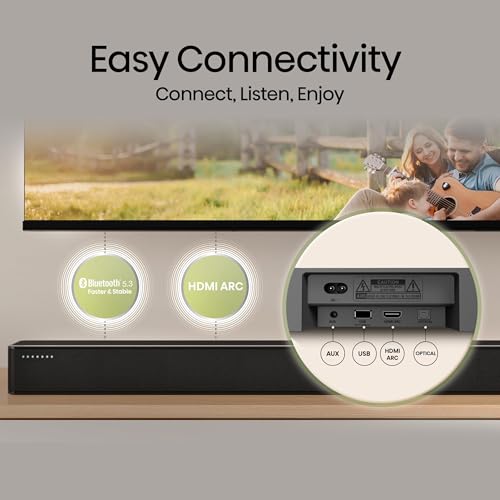
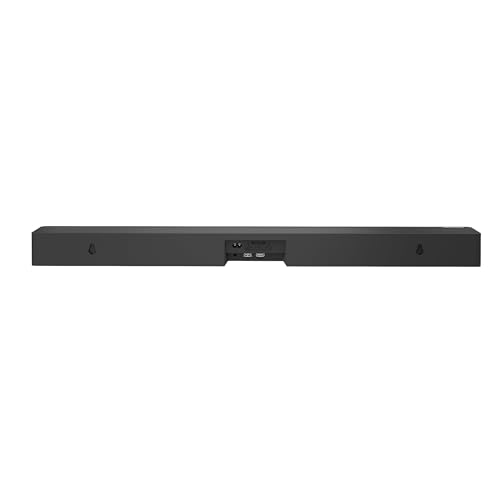
| HDMI ARC, Optical, AUX, USB, Bluetooth 5.3 | HDMI 2.1 eARC, Optical, Ethernet, USB-C, Wi-Fi 6, Bluetooth 5.3 |
| Streaming Integration - Built-in music service access without external devices | |
| Basic Bluetooth streaming only | Native Spotify Connect, Tidal Connect, Qobuz, Amazon Music, and more |
| Physical Dimensions - Important for TV stand and wall mounting compatibility | |
| 31.5" x 2.4" x 3.5", 3.3 lbs (compact and lightweight) | 47.6" x 2.8" x 6.5", 23.1 lbs (premium build, requires sturdy mounting) |
| Target Use Case - Who this product is designed for | |
| Budget-conscious buyers wanting basic TV audio upgrade | Audio enthusiasts demanding reference-quality soundbar performance |
| Subwoofer Requirement - Additional purchase considerations | |
| Includes wireless 120W subwoofer (essential for bass) | Optional external subwoofer (excellent bass performance built-in) |
The Hisense HS2100 offers exceptional value for budget-conscious buyers, providing a significant upgrade over TV speakers with clear dialogue and decent bass from its included wireless subwoofer. The KEF XIO delivers reference-quality audio performance that justifies its premium pricing for serious audio enthusiasts who want the best possible soundbar experience.
The fundamental difference is channel configuration and target audience. The Hisense HS2100 is a 2.1 system that downmixes surround content to stereo, while the KEF XIO is a true 5.1.2 system with dedicated height channels for immersive Dolby Atmos effects. This makes the KEF XIO far superior for movies and gaming.
The Hisense HS2100 includes a wireless subwoofer that's essential for its bass performance. The KEF XIO has exceptional built-in bass from four specialized drivers and doesn't require a subwoofer, though you can add one for even deeper extension in large rooms.
The KEF XIO is significantly better for home theater use due to its true 5.1.2 configuration, Dolby Atmos support, and superior driver technology. The Hisense HS2100 can handle movies but lacks the immersive surround effects and spatial audio that modern films are designed for.
Yes, both the Hisense HS2100 and KEF XIO support Bluetooth connectivity for streaming music from your phone. However, the KEF XIO offers additional wireless options including Wi-Fi streaming and native integration with services like Spotify Connect and Tidal Connect.
The Hisense HS2100 is simpler to set up with basic plug-and-play functionality and automatic subwoofer pairing. The KEF XIO includes intelligent room calibration that automatically optimizes sound for your space, making setup more sophisticated but ultimately more optimized for your room.
The KEF XIO excels at music with its high-resolution audio support, precise imaging from Uni-Q drivers, and exceptional bass control. The Hisense HS2100 provides decent music playback with a warm sound signature but lacks the detail and accuracy that serious music listeners expect.
Both work well in small rooms, but the Hisense HS2100 is specifically designed for smaller spaces and offers good performance without overwhelming compact areas. The KEF XIO will sound excellent in small rooms but represents overkill unless audio quality is your top priority.
Only the KEF XIO supports true Dolby Atmos with dedicated height channels for overhead effects. The Hisense HS2100 supports basic Dolby Digital but cannot process Atmos content, limiting its ability to create immersive three-dimensional soundscapes.
Both soundbars offer good dialogue clarity, but the KEF XIO provides superior speech intelligibility through its dedicated center channel and advanced processing. The Hisense HS2100 delivers clear dialogue that's much better than TV speakers, especially in its News sound mode.
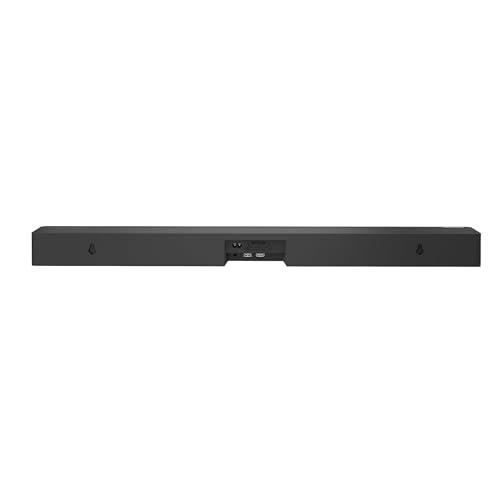
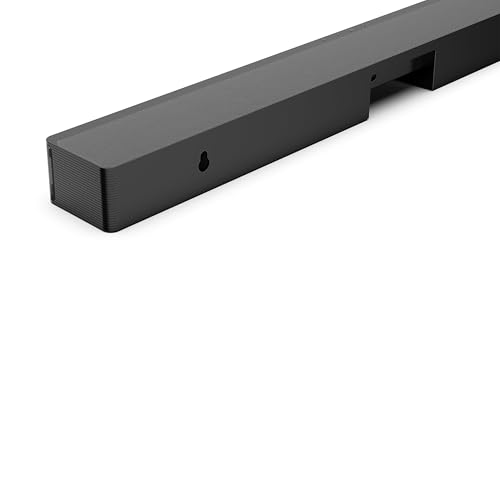
Yes, both the Hisense HS2100 and KEF XIO can be wall-mounted. The Hisense HS2100 is lighter and easier to mount, while the KEF XIO requires a more robust mounting system due to its premium construction and heavier weight.
For first-time soundbar buyers on a budget, the Hisense HS2100 provides an excellent introduction with dramatic improvement over TV audio at an accessible price point. If budget isn't a concern and you want the best possible experience from day one, the KEF XIO offers future-proof performance that won't need upgrading.
We've done our best to create useful and informative comparisons to help you decide what product to buy. Our research uses advanced automated methods to create this comparison and perfection is not possible - please contact us for corrections or questions. These are the sites we've researched in the creation of this article: rtings.com - shop.hisense-usa.com - bestbuy.com - content.syndigo.com - bestbuy.com - hisensedealers.co.ke - stuff.co.za - dtc-aus-api.hisense.com - youtube.com - manuals.plus - youtube.com - bestbuy.com - youtube.com - gallifurniture.com - hisense-usa.com - manuals.plus - uk.hisense.com - device.report - youtube.com - costco.ca - elmcreekwsa.com - gallifurniture.com - blog.son-video.com - residentialsystems.com - whathifi.com - audioadvice.com - crutchfield.com - homecrux.com - techradar.com - youtube.com - us.kef.com - gramophone.com - cepro.com - audioxpress.com - musicdirect.com - gramophone.com - us.kef.com - crutchfield.com - hifipig.com - bestbuy.com - listenup.com - bestbuy.com - bestbuy.com - listenup.com

Privacy Policy
Terms and Conditions - Affiliate Policy
Home Security
© Copyright 2008-2026.
11816 Inwood Rd #1211, Dallas, TX 75244