



If you're tired of constantly adjusting your TV volume just to hear dialogue clearly, you're not alone. Modern TVs have gotten incredibly thin, which unfortunately means their built-in speakers have gotten terrible. That's where soundbars come in—they're the most popular solution for dramatically improving your TV's audio without turning your living room into a maze of speakers and wires.
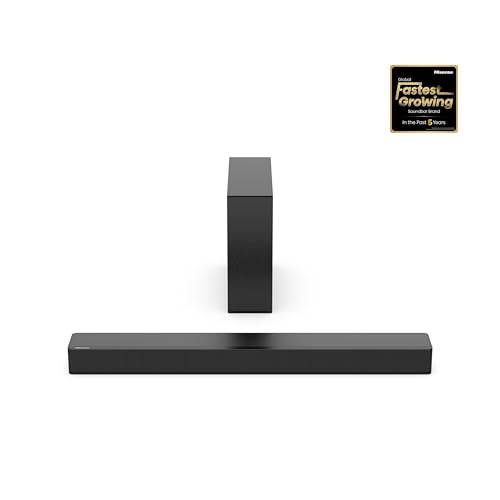
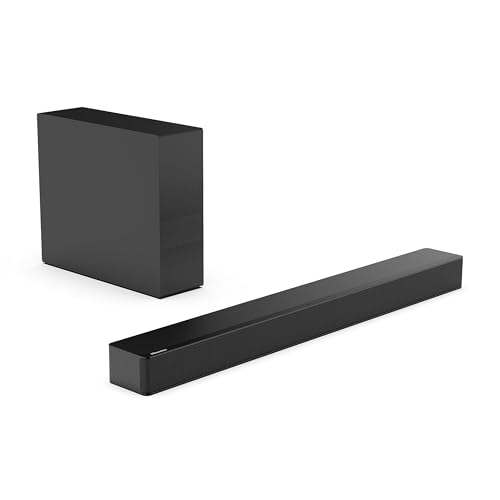
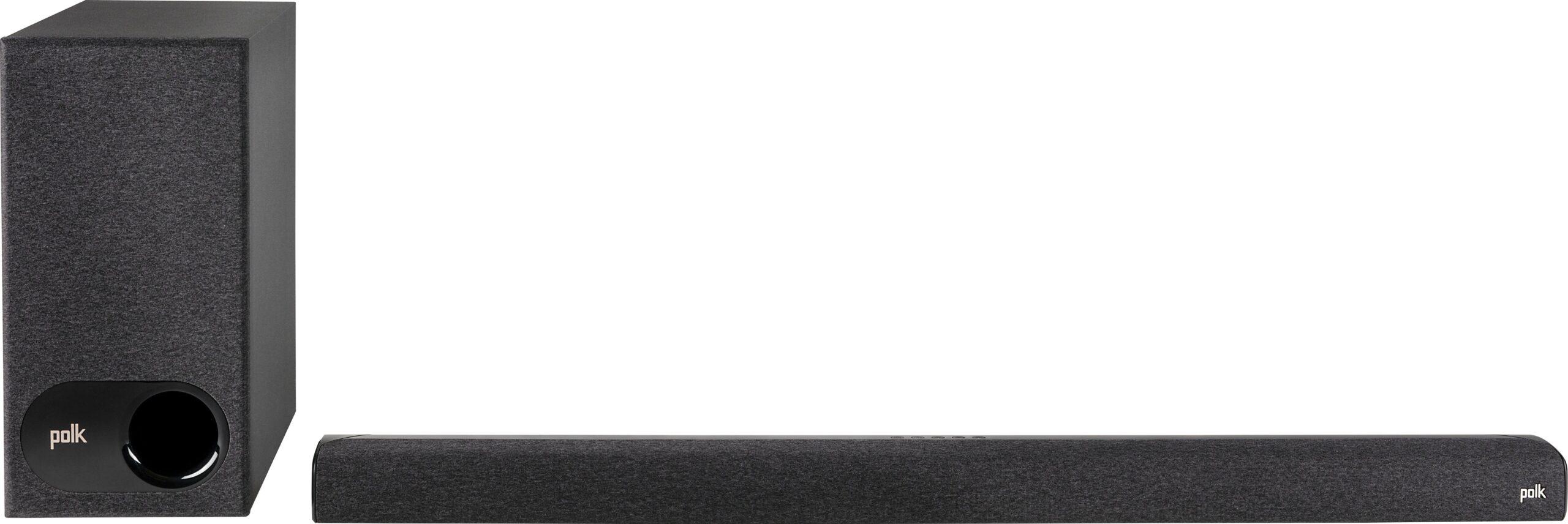
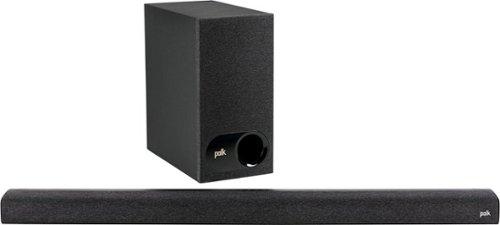
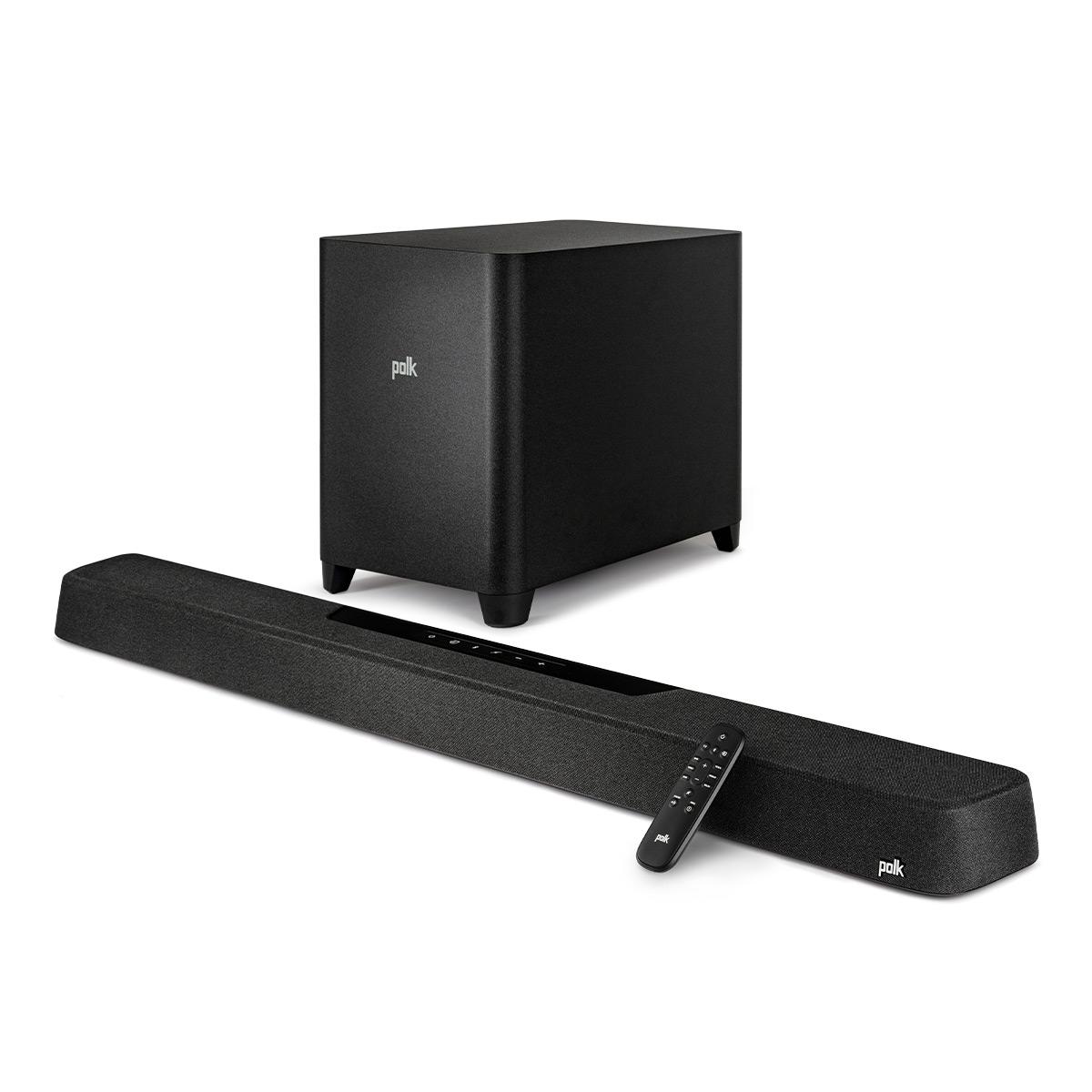
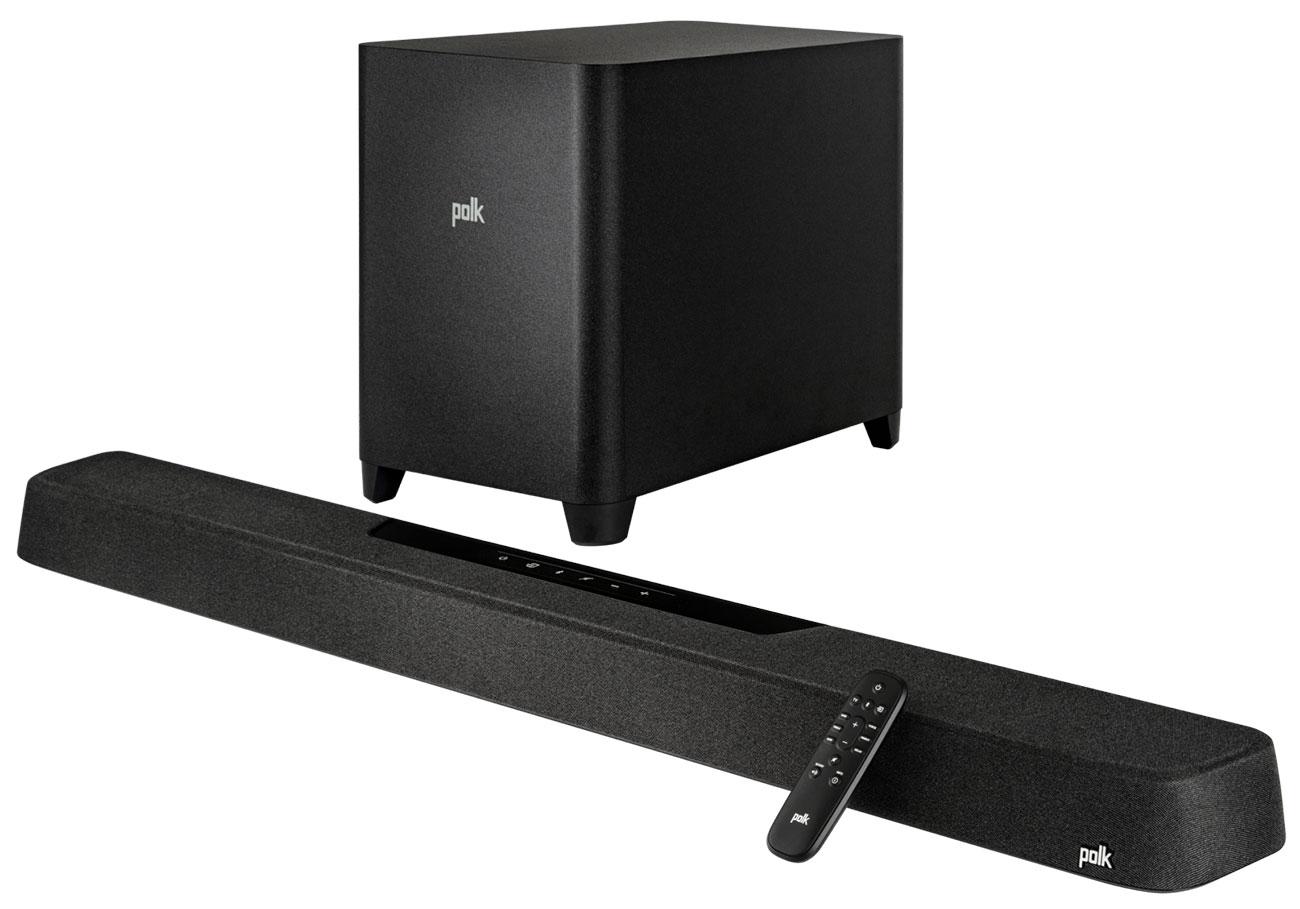
Today we're comparing two very different approaches to better TV sound: the budget-friendly Hisense HS2100 and the premium Polk Audio MagniFi Max AX 3.1.2. These products represent opposite ends of the soundbar market, and understanding their differences will help you decide whether spending more money actually gets you better performance, or if the cheaper option does everything you need.
Before diving into specifics, let's decode what "2.1" and "3.1.2" actually mean, since these numbers determine how your movies and shows will sound.
The first number represents left and right speakers—the basic stereo channels. The second number indicates whether there's a dedicated center channel speaker, which is crucial for dialogue clarity since most movie conversations come through the center channel. The third number (when present) shows how many height or overhead channels the system includes.
So the Hisense HS2100 is a 2.1 system: two main speakers plus a subwoofer for bass. The Polk Audio MagniFi Max AX is a 3.1.2 system: left, right, and center speakers, plus a subwoofer, plus two height channels for overhead effects.
This fundamental difference shapes everything about how these systems handle your content. The Hisense takes surround sound movies and "downmixes" them—basically squashing all that carefully mixed audio into just left and right speakers. The Polk can actually play back true surround sound with dedicated speakers for each channel.
Both soundbars reflect significant changes in how we consume entertainment. The Hisense HS2100, released in 2023, represents the modern budget soundbar approach: decent performance at an extremely accessible price point, targeting the millions of people upgrading from terrible TV speakers.
The Polk Audio MagniFi Max AX, introduced in 2022, emerged as streaming services began heavily promoting Dolby Atmos content. Dolby Atmos is an audio format that places sounds in three-dimensional space—imagine hearing a helicopter fly overhead in a movie, and the sound actually seems to come from above you rather than just in front. Netflix, Disney+, Apple TV+, and even YouTube now offer tons of Atmos content, but you need compatible hardware to experience it.
Since 2022, the importance of Atmos support has only grown. What seemed like a premium feature two years ago is now becoming standard for anyone serious about their entertainment setup. This timing matters when considering long-term value.
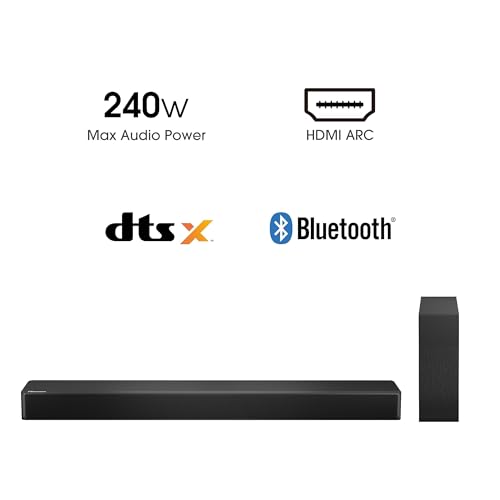
The most significant difference between these systems lies in how they handle surround sound content. The Hisense HS2100 uses something called DTS Virtual:X, which is essentially audio trickery. It takes surround sound content and uses digital signal processing to create the illusion of sounds coming from different directions, even though you only have two main speakers.
Think of it like Instagram filters for audio—it's trying to make something basic look more impressive through software magic. Sometimes it works reasonably well, but you're always aware it's not quite real.
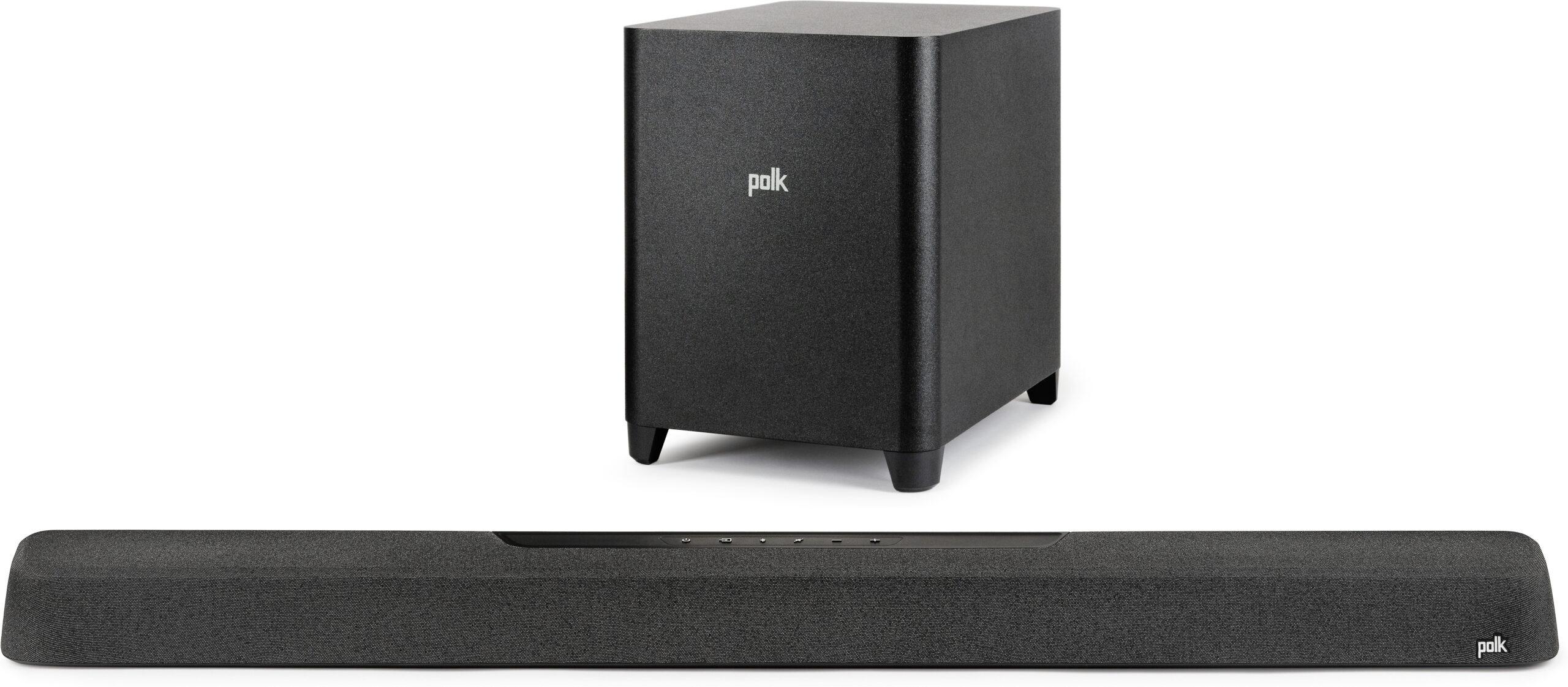
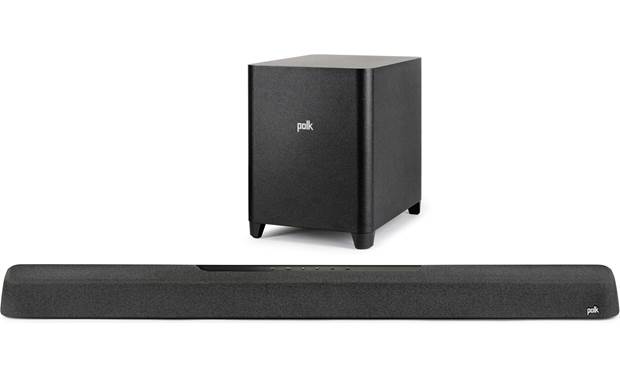
The Polk Audio MagniFi Max AX takes the opposite approach with actual physical speakers dedicated to different channels. It includes two up-firing drivers that bounce sound off your ceiling to create genuine overhead effects. When a spaceship flies over your head in a movie, you'll actually hear it above you because sound is literally reflecting down from your ceiling.
This isn't just a subtle difference. Based on extensive review analysis and user feedback, the spatial audio experience between these approaches is night and day. The Polk creates an immersive bubble of sound around your listening position, while the Hisense provides enhanced stereo that's still clearly coming from in front of you.
Here's something that might surprise you: dialogue clarity often matters more than surround effects for everyday viewing. Most people watch more dialogue-heavy content—TV shows, news, documentaries—than explosive action movies.
The Hisense HS2100 handles dialogue the same way most budget soundbars do: it mixes center channel content (where dialogue lives) into the left and right speakers. This works fine for basic content, but voices can get lost when there's background music or sound effects competing for attention.
The Polk Audio MagniFi Max AX includes a dedicated center channel speaker—essentially a third speaker positioned in the middle that handles only dialogue and vocals. This makes voices sound like they're coming directly from the characters on screen rather than from the sides of your TV.
Professional reviews consistently highlight this as one of the Polk's biggest advantages. Even if you never watch action movies, having voices clearly separated from background audio makes everything more enjoyable. You'll find yourself reaching for the volume remote less often because you can actually understand what people are saying.
The Polk also includes VoiceAdjust technology, which lets you boost dialogue levels without affecting the rest of the soundtrack. This is incredibly useful for movies with inconsistent audio mixing—you know, those films where explosions are deafening but whispered conversations are inaudible.
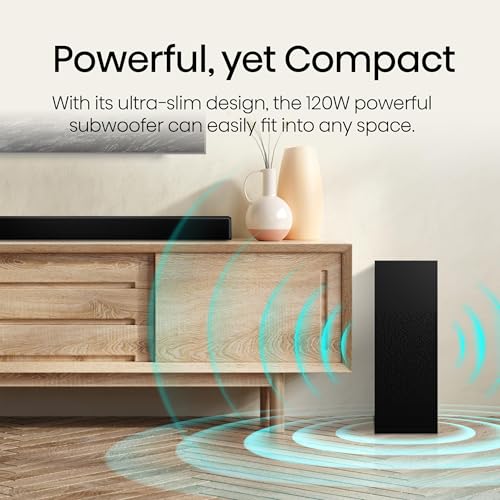
Both systems include wireless subwoofers, but they're designed for very different purposes. The Hisense HS2100 includes a compact 5.25-inch subwoofer that's optimized for small spaces. It's designed to fit under furniture or in tight corners, which is genuinely useful in apartments or smaller rooms.
However, physics limits what a small driver can accomplish. The Hisense system's frequency response bottoms out at 45Hz, which means it reproduces most bass frequencies you'll encounter in TV shows and many movies, but it misses the deepest rumbling effects.
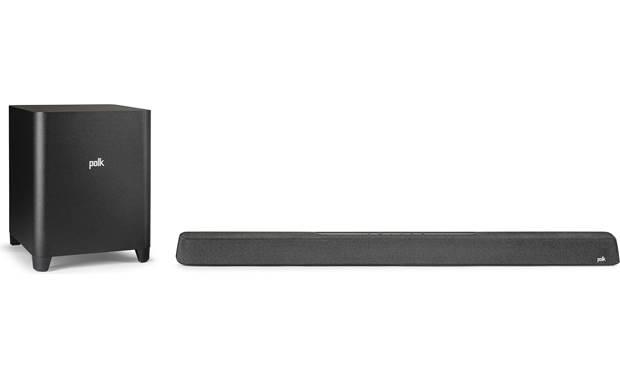
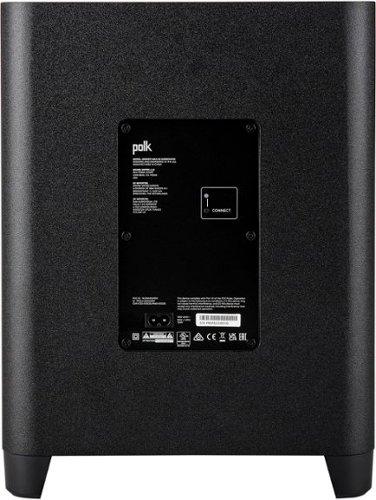
The Polk Audio MagniFi Max AX includes a substantial 10-inch subwoofer that reaches down to 35Hz. That 10Hz difference might seem small, but it's the difference between hearing an explosion and feeling it in your chest. This subwoofer weighs over 26 pounds compared to the Hisense's lightweight design—that mass helps it move more air and create more impactful bass.
For reference, most music and TV content sits comfortably above 50Hz, so the Hisense handles normal content fine. But movie soundtracks often include deep bass effects below 45Hz that you'll simply miss with the smaller system. If you watch a lot of action movies, science fiction, or listen to electronic music, the difference becomes immediately apparent.
The Hisense HS2100 outputs 240 watts total power, which sounds impressive until you realize that's spread across just three drivers (two in the soundbar plus the subwoofer). For small to medium-sized rooms—think typical bedrooms or apartments—this provides adequate volume levels.
The Polk Audio MagniFi Max AX pushes 340 watts through its 11-driver array, and that additional power shows up in real-world performance. Professional measurements indicate it can maintain clean audio reproduction at significantly higher volume levels, which matters in larger spaces or open floor plans where sound has more room to dissipate.
More importantly, the Polk's higher power reserves mean it handles dynamic peaks better. When a movie soundtrack suddenly jumps from quiet dialogue to an explosion, the Polk can reproduce that contrast without compression or distortion. The Hisense reaches its limits faster and starts to sound strained at high volumes.
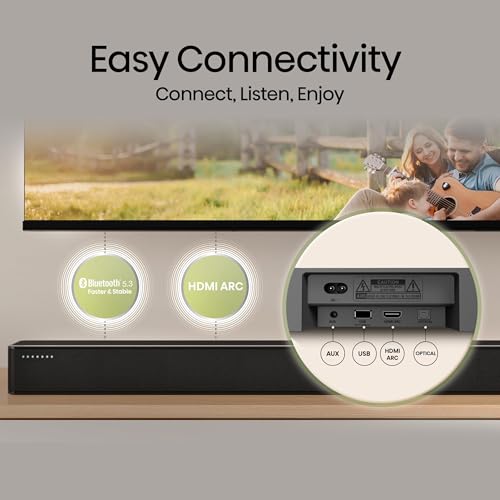
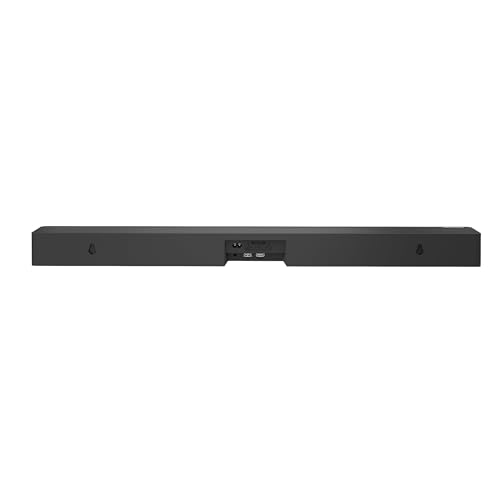
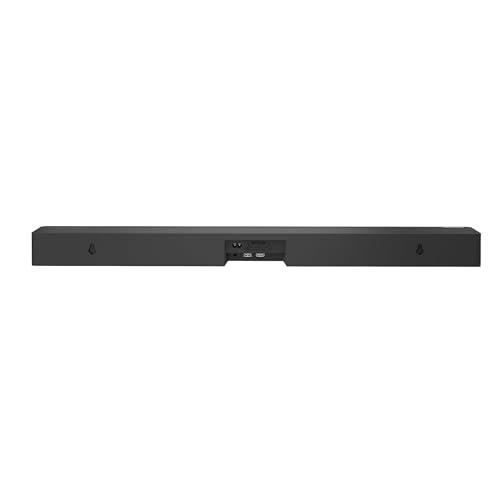
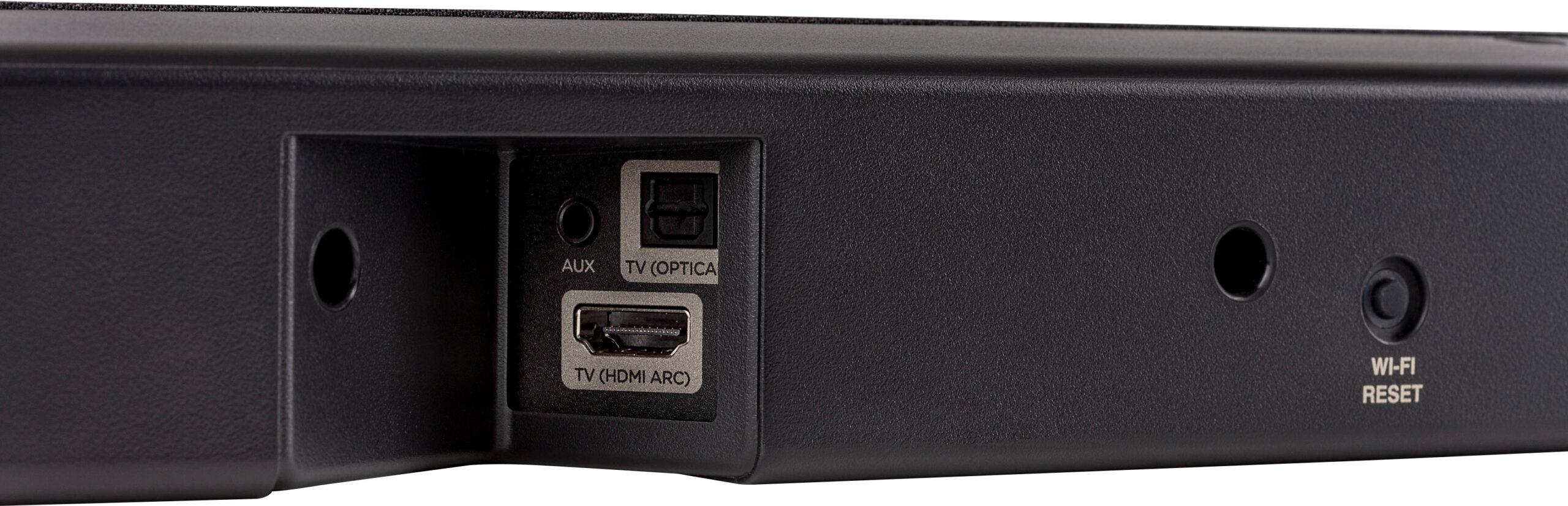
This is where the price difference becomes most apparent in practical terms. The Hisense HS2100 includes basic connectivity: one HDMI ARC port, optical input, USB port, and Bluetooth 5.3 for wireless streaming. That's perfectly adequate if you're just connecting to your TV and occasionally streaming music from your phone.
The Polk Audio MagniFi Max AX includes four HDMI inputs with 4K passthrough capability. This means you can connect your Apple TV, PlayStation, Xbox, and Blu-ray player directly to the soundbar, then send everything to your TV through a single cable. If your TV only has two or three HDMI inputs (which is common), this essentially quadruples your connectivity options.
The Polk also supports multiple wireless streaming protocols: AirPlay 2 for Apple devices, Chromecast for Google ecosystem integration, Spotify Connect for direct streaming without your phone, and Alexa compatibility for voice control. You can start playing music just by asking Alexa, or seamlessly hand off audio from your iPhone to the soundbar.
These might seem like luxury features, but they become incredibly convenient in daily use. Instead of juggling multiple remotes and switching TV inputs, everything just works together smoothly.
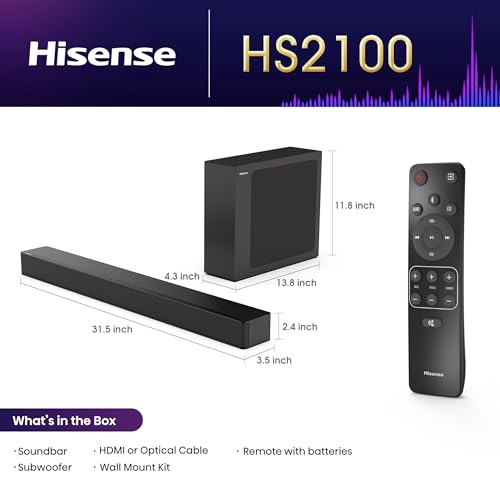
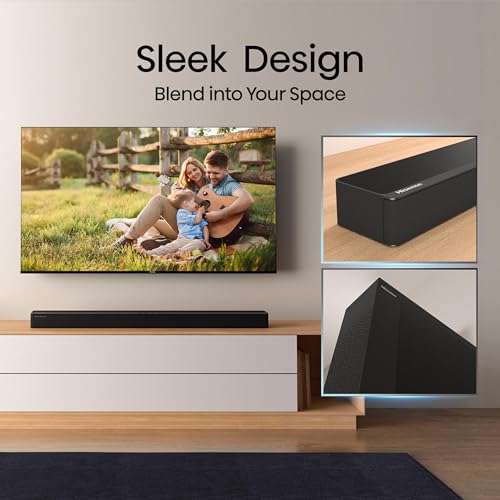
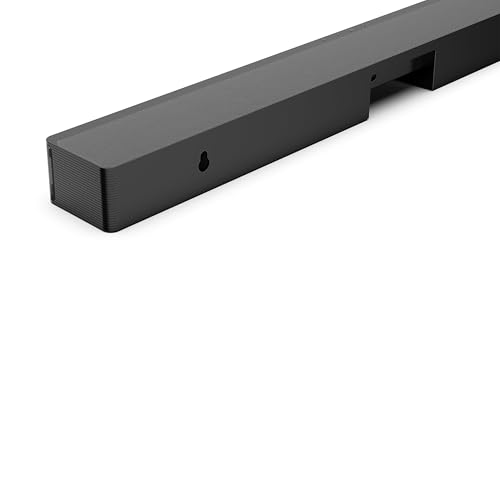
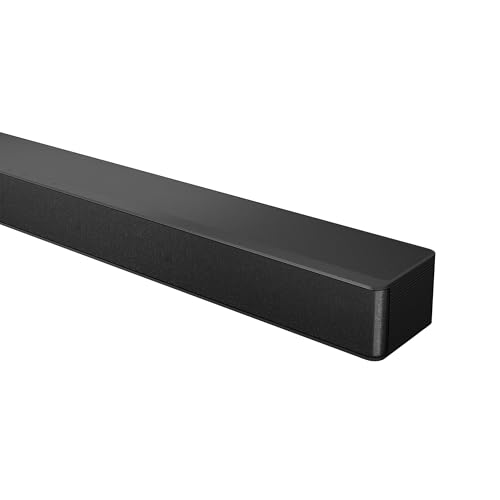
The Hisense HS2100 was clearly designed for easy installation and flexible placement. The soundbar measures just 31.5 inches wide and weighs only 3.3 pounds, making it suitable for most TV stands and simple wall mounting. The subwoofer is remarkably slim at just 4.3 inches deep, so it can slide under furniture or against walls without dominating your room's layout.
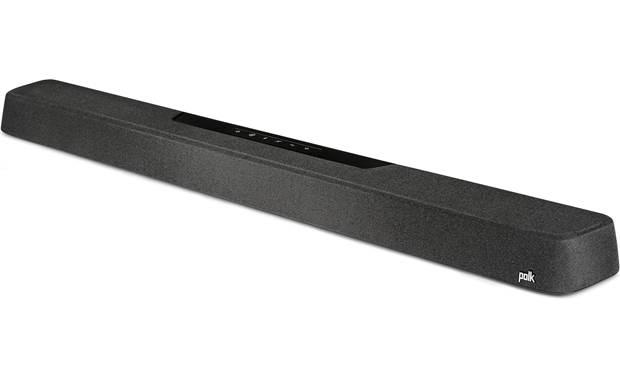
The Polk Audio MagniFi Max AX requires more commitment to placement. At 45 inches wide and significantly heavier, it needs a substantial TV stand or proper wall mounting hardware. The subwoofer weighs over 26 pounds and measures nearly 14 inches deep, so you'll need dedicated floor space for optimal performance.
This size difference isn't just about convenience—it reflects the different approaches to sound reproduction. The Polk's larger drivers and more substantial cabinet construction contribute directly to its superior audio performance. Sometimes bigger really is better when it comes to audio equipment.
At the time of writing, the Hisense HS2100 costs roughly one-fifth the price of the Polk Audio MagniFi Max AX. That's a substantial difference that raises an important question: when does spending more actually get you proportionally better performance?
If you primarily watch basic cable TV, older movies, or casual content, the Hisense provides genuine value. It's dramatically better than TV speakers and includes a wireless subwoofer at an incredibly accessible price point. You get real audio improvement without significant financial commitment.
However, if you subscribe to premium streaming services, play modern video games, or watch a lot of movies, the Polk's additional capabilities become worthwhile investments. The ability to properly reproduce Dolby Atmos content alone justifies much of the price difference, since you're actually hearing content the way it was intended rather than a downmixed approximation.
Consider also the total cost of ownership. The Hisense might require replacement in 2-3 years as your content consumption evolves and you become more discerning about audio quality. The Polk, with its comprehensive format support and expandability options, likely represents a 5+ year investment that grows with your needs.
For serious home theater enthusiasts, expandability matters significantly. The Hisense HS2100 is essentially a complete system—what you buy is what you get, with no meaningful upgrade path beyond replacing the entire unit.
The Polk Audio MagniFi Max AX can expand into a full 7.1.2 surround system with the addition of optional wireless rear speakers. This means you can start with the soundbar and subwoofer, then add true surround speakers later without replacing your initial investment. The wireless rear speakers integrate seamlessly and are timbre-matched to the soundbar, ensuring consistent sound character across all channels.
This expandability is particularly valuable if you're building a dedicated home theater room or have a large living space where rear surround effects would enhance the experience. Starting with a quality foundation and expanding gradually often makes more financial sense than buying budget equipment you'll eventually outgrow.
Based on extensive research into professional reviews and user feedback, here's how to decide between these very different approaches:
Choose the Hisense HS2100 if you're working with a tight budget but want meaningful improvement over TV speakers. It's ideal for smaller spaces, casual viewing habits, and situations where you want to test whether soundbar technology appeals to you before making a larger investment. The inclusion of a wireless subwoofer at this price point represents genuine value.
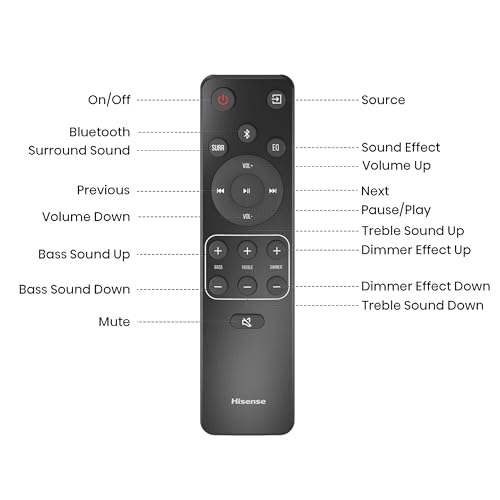
The Hisense also makes sense if you primarily watch content that doesn't benefit from advanced audio processing—older TV shows, news, basic streaming content. Its six EQ presets and DTS Virtual:X processing provide enough customization for typical viewing without overwhelming complexity.
Choose the Polk Audio MagniFi Max AX if you're serious about your entertainment experience and want a system that handles modern content properly. The dedicated center channel alone makes dialogue significantly clearer, while true Dolby Atmos support ensures you're hearing Netflix and Disney+ content as intended.
The Polk becomes especially worthwhile if you have a larger room, connect multiple devices, or plan to keep your soundbar for several years. Its comprehensive connectivity, expandability options, and future-proof format support justify the higher initial investment through longer-term satisfaction and relevance.
These products represent two valid but fundamentally different philosophies about home audio improvement. The Hisense HS2100 proves that decent soundbar performance doesn't require a major financial commitment, while the Polk Audio MagniFi Max AX demonstrates why premium features and proper surround sound processing command higher prices.
Neither choice is objectively wrong—it depends entirely on your priorities, budget, and viewing habits. But understanding what you're actually getting for your money helps ensure you'll be satisfied with your choice for years to come rather than wondering if you should have spent more or saved money.
The audio landscape continues evolving rapidly, with streaming services pushing more advanced formats and content creators taking advantage of spatial audio capabilities. Your choice today should consider not just current needs, but how your entertainment consumption might change over the next few years.
| Hisense HS2100 2.1 Channel 240W Soundbar System | Polk Audio MagniFi Max AX 3.1.2 Soundbar |
|---|---|
| Channel Configuration - Determines surround sound capability and dialogue clarity | |
| 2.1 channels (stereo + subwoofer, downmixes surround content) | 3.1.2 channels (dedicated center + height channels for true surround) |
| Dolby Atmos Support - Essential for modern streaming content immersion | |
| No Atmos support (DTS Virtual:X only simulates overhead effects) | True Dolby Atmos with physical up-firing drivers for ceiling reflection |
| Total Power Output - Affects maximum volume and room coverage | |
| 240W total (adequate for small-medium rooms up to 200 sq ft) | 340W total (handles larger spaces and open floor plans effectively) |
| Driver Count - More drivers typically mean better sound separation | |
| 2 main drivers + subwoofer (basic stereo reproduction) | 11 drivers including tweeters and dedicated center channel |
| Subwoofer Specifications - Determines bass depth and impact | |
| 5.25" driver, 120W, 45Hz low frequency (compact, adequate bass) | 10" driver, 160W, 35Hz low frequency (deeper bass, more impact) |
| HDMI Connectivity - Affects device connection flexibility | |
| 1 HDMI ARC port (limited to TV connection only) | 4 HDMI inputs with 4K passthrough (direct device connections) |
| Wireless Streaming - Determines music playback options | |
| Bluetooth 5.3 only (phone/tablet streaming) | Wi-Fi + Bluetooth (AirPlay 2, Chromecast, Spotify Connect, Alexa) |
| Physical Dimensions - Important for TV stand compatibility | |
| 31.5" × 2.4" × 3.5", ultra-slim subwoofer (fits most setups) | 45" × 4.6" × 2.8", large subwoofer (requires substantial space) |
| Format Support - Compatibility with modern audio standards | |
| Dolby Digital/Plus, PCM, DTS Virtual:X (basic surround simulation) | Full Dolby Atmos, DTS:X, plus all standard formats (premium support) |
| Expandability - Future upgrade potential | |
| Fixed 2.1 system (no expansion options available) | Expandable to 7.1.2 with optional SR2 wireless speakers |
| Target Room Size - Optimal performance environment | |
| Small to medium rooms, apartments, bedrooms | Large living rooms, open floor plans, dedicated home theaters |
| Best Use Case - Primary scenarios where each excels | |
| Budget TV audio upgrade, casual viewing, space-constrained setups | Premium home theater, modern streaming content, multi-device connectivity |
The Polk Audio MagniFi Max AX 3.1.2 Soundbar is significantly better for movies due to its true Dolby Atmos support and dedicated center channel. Unlike the Hisense HS2100 which downmixes surround sound to stereo, the Polk can properly reproduce the spatial audio effects found in modern movies from Netflix, Disney+, and Blu-ray discs. The dedicated center channel also makes dialogue much clearer during action scenes.
The Hisense HS2100 is a 2.1 system with left/right speakers plus a subwoofer, while the Polk Audio MagniFi Max AX is a 3.1.2 system with dedicated center, left, right, subwoofer, and two height channels. This means the Polk has a separate speaker just for dialogue and can create overhead sound effects, while the Hisense mixes everything through just two main speakers.
The Polk Audio MagniFi Max AX 3.1.2 Soundbar has substantially better bass with its 10-inch, 160W subwoofer that reaches down to 35Hz. The Hisense HS2100 has a compact 5.25-inch subwoofer that only reaches 45Hz. This means the Polk can reproduce deeper rumbling effects in action movies and electronic music that the Hisense simply cannot play.
Both soundbars require a wired connection to your TV via HDMI ARC or optical cable for the main audio signal. However, the Polk Audio MagniFi Max AX offers more wireless streaming options including AirPlay 2, Chromecast, and Spotify Connect, while the Hisense HS2100 only supports Bluetooth for wireless music streaming from phones and tablets.
The Hisense HS2100 is designed specifically for smaller spaces with its compact 31.5-inch width and ultra-slim subwoofer that fits under furniture. The Polk Audio MagniFi Max AX at 45 inches wide with a large subwoofer requires more space but will sound better even in small rooms if you have the room for it.
If you watch content on Netflix, Disney+, Amazon Prime, or play modern video games, Dolby Atmos support becomes increasingly important. The Polk Audio MagniFi Max AX 3.1.2 Soundbar supports true Atmos with physical height channels, while the Hisense HS2100 cannot play Atmos content properly, only simulating overhead effects through virtual processing.
The Polk Audio MagniFi Max AX offers four HDMI inputs plus eARC, allowing you to connect multiple devices directly to the soundbar. The Hisense HS2100 only has one HDMI ARC port, so you'll need to use your TV's inputs for additional devices like game consoles or streaming players.
A dedicated center channel makes a significant difference for dialogue clarity. The Polk Audio MagniFi Max AX 3.1.2 Soundbar has a separate speaker just for voices, making conversations easier to understand even during loud action scenes. The Hisense HS2100 mixes dialogue through its left and right speakers, which can make voices less clear when competing with background music and effects.
The Polk Audio MagniFi Max AX with 340W total power can reach higher volumes without distortion compared to the Hisense HS2100 at 240W. The Polk also maintains better sound quality at high volumes, making it more suitable for larger rooms or when you want to feel the full impact of movie soundtracks.
The Polk Audio MagniFi Max AX 3.1.2 Soundbar can be expanded to a full 7.1.2 system with optional wireless rear speakers, allowing you to add true surround sound later. The Hisense HS2100 is a fixed system with no expansion options - what you buy is what you get.
This depends on your needs and budget. The Hisense HS2100 offers excellent value for basic TV audio improvement at a very accessible price point. The Polk Audio MagniFi Max AX costs significantly more but provides premium features like true Atmos support, dedicated center channel, and extensive connectivity that justify the higher investment for serious home theater use.
For casual gaming, the Hisense HS2100 works fine with its low latency and Game mode. However, the Polk Audio MagniFi Max AX 3.1.2 Soundbar is better for modern gaming with its true surround sound processing, multiple HDMI inputs for direct console connection, and support for spatial audio formats used in newer games on PlayStation 5 and Xbox Series X.
We've done our best to create useful and informative comparisons to help you decide what product to buy. Our research uses advanced automated methods to create this comparison and perfection is not possible - please contact us for corrections or questions. These are the sites we've researched in the creation of this article: rtings.com - shop.hisense-usa.com - bestbuy.com - content.syndigo.com - bestbuy.com - hisensedealers.co.ke - stuff.co.za - dtc-aus-api.hisense.com - youtube.com - manuals.plus - youtube.com - bestbuy.com - youtube.com - gallifurniture.com - hisense-usa.com - manuals.plus - uk.hisense.com - device.report - youtube.com - costco.ca - elmcreekwsa.com - gallifurniture.com - youtube.com - avsforum.com - rtings.com - rtings.com - bestbuy.com - walts.com - hometechnologyreview.com - polkaudio.com - pcrichard.com

Privacy Policy
Terms and Conditions - Affiliate Policy
Home Security
© Copyright 2008-2026.
11816 Inwood Rd #1211, Dallas, TX 75244