

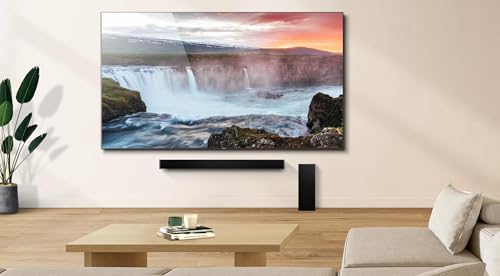

If you've ever found yourself cranking up your TV volume just to understand what characters are saying, or felt like movie explosions sound more like gentle puffs of air, you're not alone. Built-in TV speakers have gotten progressively worse as TVs have become thinner—there's simply no room for decent drivers in those sleek panels. That's where budget soundbars come in, promising to transform your audio experience without breaking the bank.
Today we're comparing two popular entry-level options: the Hisense HS2100 2.1 Channel Soundbar System and the Amazon Fire TV Soundbar. At the time of writing, these represent different philosophies in budget audio—one focuses on traditional bass performance with a dedicated subwoofer, while the other prioritizes absolute affordability in a compact package.
Budget soundbars occupy a crucial sweet spot in home audio. They're designed for people who recognize that TV speakers are terrible but aren't ready to invest in a complex surround sound system or premium audio equipment. The key considerations in this category center around practical performance improvements rather than audiophile perfection.
The most important performance metric is dialogue clarity. If you can't understand what people are saying without subtitles, nothing else matters. This comes down to how well the soundbar handles midrange frequencies—roughly 200Hz to 2000Hz—where human voices live. A good budget soundbar should make dialogue crisp and forward, even when there's background music or sound effects competing for attention.
Bass performance ranks second in importance. This doesn't mean earth-shaking subterranean frequencies (those require serious money), but rather the ability to reproduce the punch of explosions, the growl of engines, and the body of musical instruments. Bass adds weight and excitement to content, making everything feel more immersive and less flat.
Volume capability matters too, especially if you have a medium or large room. A soundbar that can't get loud enough to fill your space defeats the purpose. However, it's not just about maximum volume—it's about maintaining clarity and avoiding distortion as you turn things up.
Finally, there's the question of soundstage width—how spread out the audio sounds. TV speakers fire directly forward in a narrow beam. A good soundbar should create the impression that sound comes from a wider area, making dialogue feel more natural and effects more spacious.
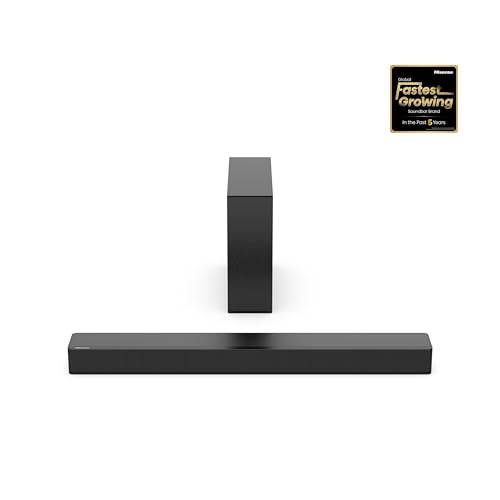
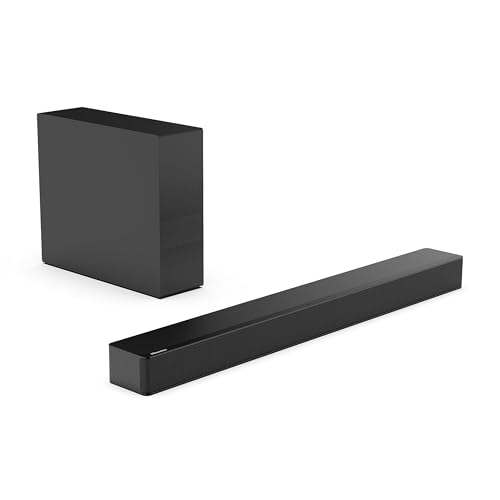
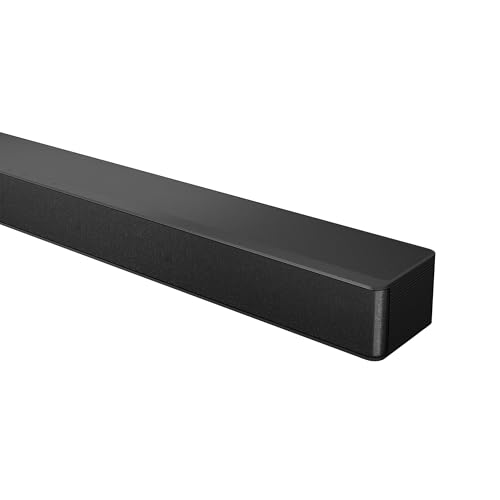
The Hisense HS2100, released in 2023, represents the traditional 2.1 approach to budget soundbar design. The "2.1" designation means two main channels (left and right) plus one dedicated subwoofer channel. This system includes a wireless subwoofer—essentially a specialized speaker designed specifically to handle bass frequencies below about 120Hz. By separating bass duties from the main soundbar, this approach can optimize each component for its specific frequency range.
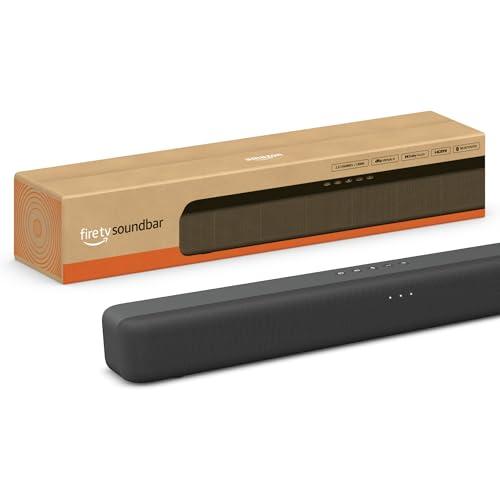
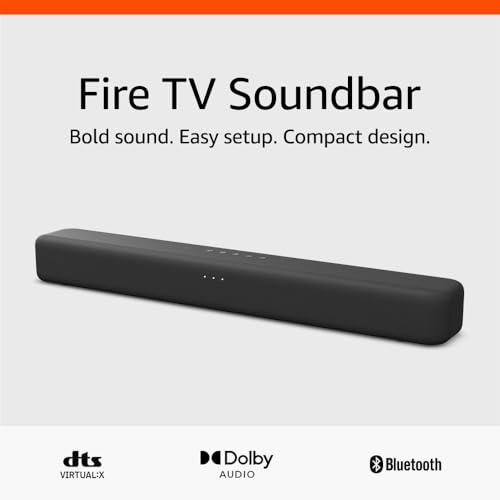
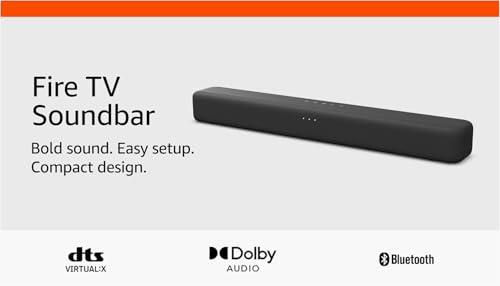
The Amazon Fire TV Soundbar, also from 2023, takes the all-in-one route with a 2.0 configuration. Here, "2.0" means two main channels with no separate subwoofer. Instead, the soundbar uses what's called a bass reflex design—a tuned port system that enhances low-frequency response from the main drivers. Amazon uses "Racetrack" drivers, which are oval-shaped speakers that can move more air than traditional round drivers of the same height.
Both approaches have merit, but they create different user experiences and performance characteristics that become apparent in real-world use.
Based on our research into professional reviews and user feedback, the Hisense HS2100 consistently outperforms the Amazon Fire TV Soundbar in dialogue reproduction. The key difference lies in frequency separation. Because the Hisense system uses a dedicated subwoofer to handle bass, its main drivers can focus entirely on midrange and treble frequencies. This specialization creates cleaner, more forward dialogue that cuts through background noise effectively.
The Hisense includes six EQ presets, including a dedicated "News" mode that further enhances vocal clarity by boosting the specific frequencies where human speech occurs. This might seem like a minor feature, but if you watch a lot of dialogue-heavy content—dramas, documentaries, news programs—it makes a meaningful difference in comprehension without requiring manual adjustment.
The Amazon Fire TV Soundbar, by contrast, asks its drivers to handle everything from deep bass to crisp highs. This creates what reviewers describe as a "boomy" character where all frequencies tend to be amplified together rather than presented distinctly. While dialogue is certainly clearer than TV speakers, it doesn't have the forward presence and separation that makes the Hisense system easier to understand at lower volumes.
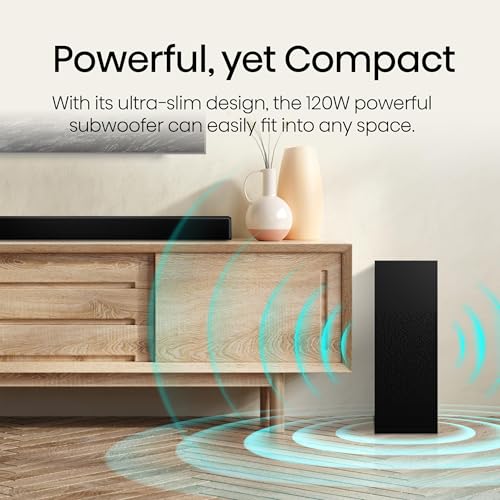
This is where the fundamental design difference becomes most apparent. The Hisense HS2100 includes a 5.25-inch wireless subwoofer powered by a dedicated 120-watt amplifier. Even though this isn't a massive subwoofer by home theater standards, it can move significantly more air than the integrated drivers in the Amazon soundbar. The frequency response extends down to 45Hz, which covers most of the bass content in movies and music.
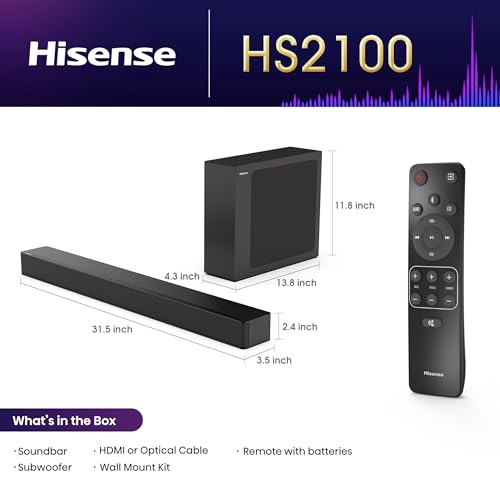
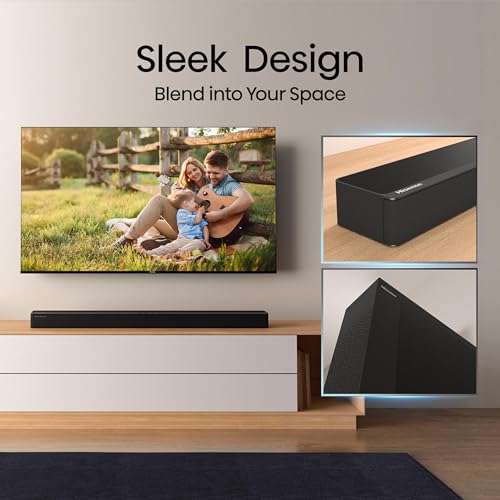
What's particularly clever about the Hisense subwoofer design is its ultra-slim profile—just 4.3 inches deep. This allows placement flexibility in tight spaces while still delivering meaningful bass impact. The wireless connection eliminates cable runs, though you do need to plug the subwoofer into wall power.
The Amazon Fire TV Soundbar relies on bass reflex tuning through its front-facing port to enhance low-frequency response. While this produces more bass than you'd expect from such a compact unit, it can't match the dedicated output of a separate subwoofer. The bass tends to be less defined and punchy, though it's still a significant improvement over TV speakers.
For movie watching, this difference becomes obvious during action sequences. Explosions, crashes, and rumbling engines have more weight and impact through the Hisense system. Music playback also benefits, with better separation between bass instruments and the rest of the mix.
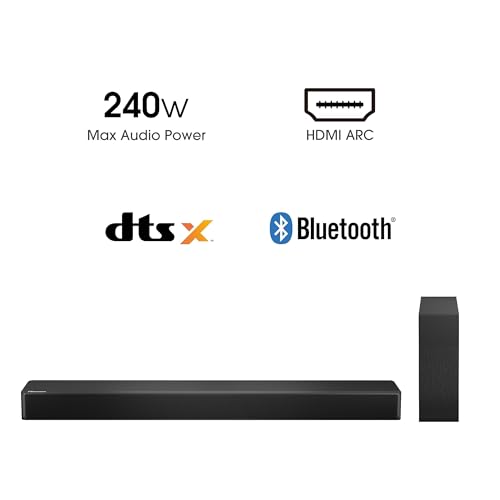
The Hisense HS2100 delivers 240 watts of total system power—60 watts per main channel plus 120 watts for the subwoofer. More importantly, professional testing shows it can reach sustained levels above 90dB, which is adequate for small to medium-sized rooms without significant compression or distortion.
The Amazon Fire TV Soundbar uses two 20-watt amplifiers, and while Amazon doesn't specify maximum output, user reports suggest it can get reasonably loud for smaller spaces but begins to struggle in larger rooms or when you want to really feel the impact of action movies. Distortion becomes noticeable at higher volumes, particularly during complex scenes with multiple sound elements.
Both systems include automatic volume management to prevent overdriving, but the Hisense has more headroom before these protections kick in.
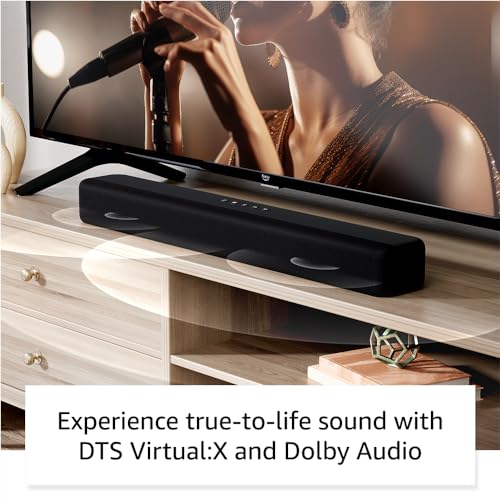
Neither system provides true surround sound—that requires speakers behind or beside you. However, both include DTS Virtual:X processing, which uses psychoacoustic tricks to create the impression of wider, more enveloping sound from front-facing drivers.
The Hisense HS2100 achieves slightly more convincing virtual surround effects, primarily because the dedicated subwoofer frees up the main drivers to handle spatial processing more effectively. The soundstage feels wider and effects have better localization within the stereo field.
The Amazon Fire TV Soundbar also supports DTS Virtual:X, but the effect is more subtle due to the driver limitations. The soundstage does expand beyond the physical width of the bar, but not as dramatically.
Both systems support Dolby Digital and other common surround formats, downmixing them to stereo with virtual processing. If true surround sound is important to you, neither of these budget options will satisfy—you'd need to step up to a 5.1 system with rear speakers or a premium Dolby Atmos soundbar with upfiring drivers.
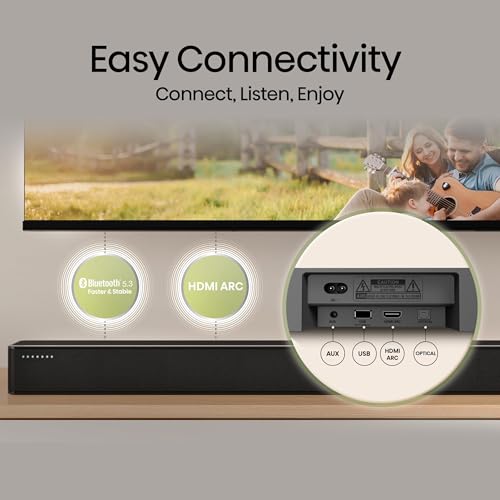
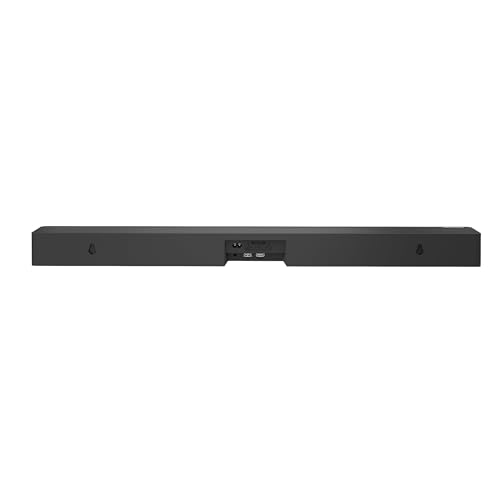
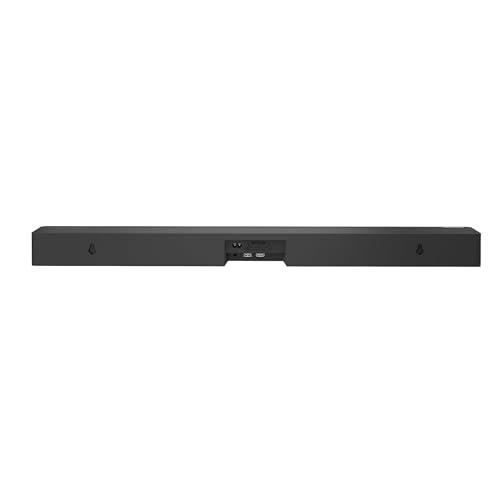
The Hisense HS2100 provides more comprehensive connectivity with HDMI ARC (Audio Return Channel), optical digital input, 3.5mm analog input, USB port, and Bluetooth 5.3. The USB port serves dual purposes—audio playback from drives and firmware updates, which helps future-proof the system.
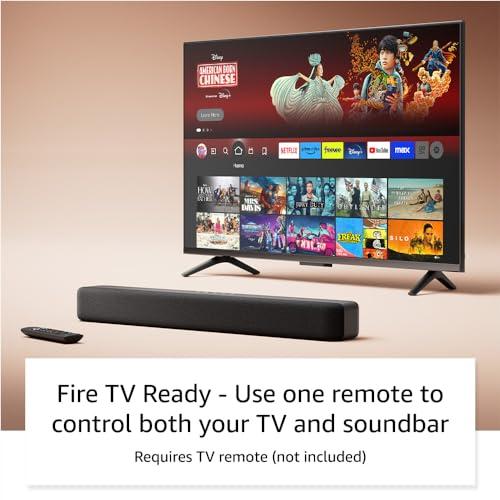
HDMI ARC is crucial for modern setups because it allows two-way communication between your TV and soundbar. You can control soundbar volume with your TV remote, and the soundbar automatically turns on when you start watching. The Hisense system is "Roku TV Ready," meaning it integrates seamlessly with Roku TVs for unified control.
Bluetooth 5.3 represents the latest standard at the time of writing, offering better range, stability, and power efficiency than older versions. This makes the Hisense HS2100 more reliable for streaming music from phones and tablets.
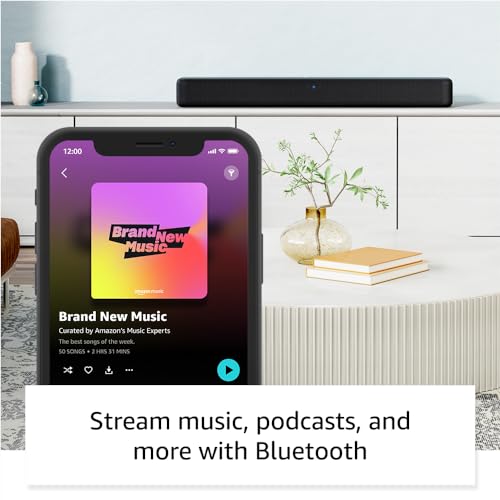
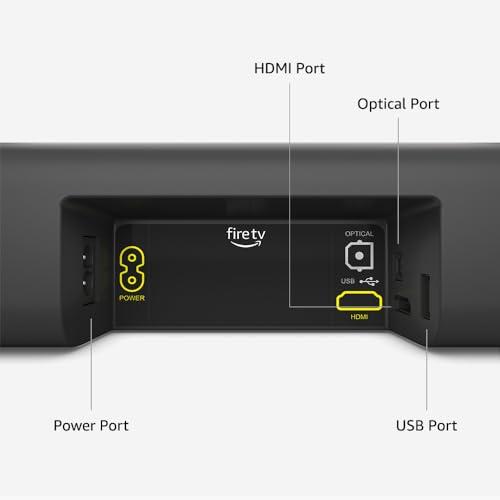
The Amazon Fire TV Soundbar covers the basics with HDMI ARC/eARC, optical input, and Bluetooth, but lacks the analog input and functional USB port. For most users, this won't matter, but it does limit flexibility if you have older devices or want to play music from USB drives.
Despite carrying the "Fire TV" name, the Amazon Fire TV Soundbar doesn't include built-in streaming capabilities, voice control, or smart TV functions. The branding mainly indicates compatibility with Fire TV devices rather than integrated smart features.
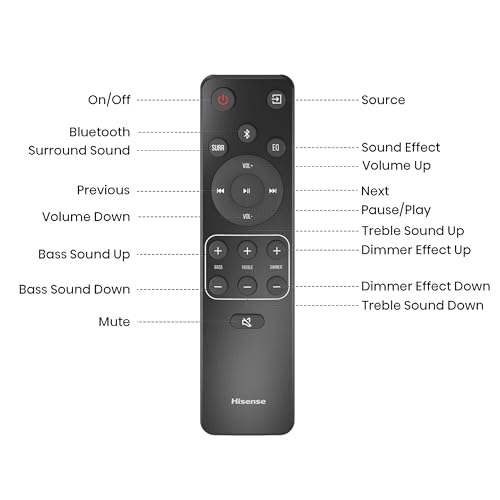
The Hisense HS2100 focuses on audio performance rather than smart features, but it does include practical conveniences like automatic power management, TV mode optimization (when paired with Hisense TVs), and comprehensive remote control with dedicated buttons for all functions.
Both systems offer touch controls on the soundbar itself, though the Amazon model relies more heavily on these since it has fewer remote functions.
At the time of writing, budget soundbars occupy roughly the $80-150 range, with the Amazon Fire TV Soundbar positioned at the lower end and the Hisense HS2100 in the middle tier. The price difference—approximately 40% more for the Hisense—reflects the additional hardware (dedicated subwoofer) and more advanced connectivity.
From a pure value standpoint, both systems deliver meaningful improvements over TV speakers. The Amazon model achieves exceptional bang-for-buck by focusing on essential functionality at minimal cost. The Hisense system justifies its higher price through better sound balance, dedicated bass performance, and additional features.
The question becomes whether the performance improvements warrant the price increase. Based on our evaluation of reviews and user feedback, the answer depends heavily on your use case and room size.
You're working with a strict budget and need the maximum improvement per dollar spent. The Amazon Fire TV Soundbar excels in smaller rooms—apartments, bedrooms, or offices—where you're sitting relatively close to the TV. It's particularly well-suited for dialogue-heavy content like streaming shows, news, and documentaries where bass impact isn't crucial.
The single-unit design appeals to users who value simplicity and minimal setup. If you're frequently moving or live in temporary housing, the compact form factor and simple connectivity make sense. Students, renters, and anyone who needs a basic upgrade without complexity will appreciate the straightforward approach.
You can stretch your budget for noticeably better sound quality and want a system that handles diverse content well. The Hisense HS2100 shines in medium-sized rooms where you need adequate volume and bass impact for movie watching. If you regularly stream music via Bluetooth, the dedicated subwoofer and better frequency separation create a more satisfying listening experience.
The six EQ presets add real value if you watch varied content—switching between News mode for talk shows and Movie mode for action films actually improves the experience. Users who plan to keep their soundbar for several years will appreciate the more balanced sound that doesn't become fatiguing with extended use.
Neither system approaches true home theater performance, but they serve different roles in entertainment setups. The Hisense HS2100 works well as a starter home theater component that could eventually integrate into a larger system—you might add rear speakers later or upgrade to a more powerful receiver while keeping the subwoofer.
The Amazon Fire TV Soundbar is better viewed as a TV audio enhancement rather than a home theater foundation. It solves the immediate problem of poor TV speakers without pretending to deliver cinematic sound.
For actual home theater use—large rooms, projection setups, or serious movie watching—both systems reveal their limitations. You'd want to consider true 5.1 systems or premium soundbars with Dolby Atmos support, though these require significantly higher budgets.
The Hisense HS2100 represents the sweet spot in budget soundbar design at the time of writing. The dedicated subwoofer provides meaningful bass improvement, the sound balance works well across different content types, and the feature set justifies the modest price premium. If you can afford the difference, it's the more satisfying long-term choice.
The Amazon Fire TV Soundbar achieves its goal of maximum improvement per dollar but with notable compromises. It's best viewed as a stepping stone—a significant upgrade from TV speakers that you might eventually replace as your needs or budget evolve.
Both systems succeed at their primary mission of making TV audio dramatically better than built-in speakers. Your choice should align with your current budget, room size, and expectations for bass performance. Neither will disappoint if you understand their capabilities and limitations going in.
| Hisense HS2100 2.1 Channel 240W Soundbar System | Amazon Fire TV Soundbar |
|---|---|
| Channel Configuration - Determines bass performance and sound separation | |
| 2.1 channels with dedicated wireless subwoofer | 2.0 channels with integrated drivers only |
| Total System Power - Affects maximum volume and dynamic range | |
| 240W (60W per channel + 120W subwoofer) | 40W total (2 x 20W amplifiers) |
| Bass Extension - Critical for movie impact and music enjoyment | |
| Dedicated 5.25" wireless subwoofer (45Hz-20kHz response) | Built-in bass reflex system with oval drivers |
| Audio Format Support - Determines compatibility with modern content | |
| Dolby Digital, Dolby Digital Plus, DTS Virtual:X, PCM | Dolby Audio, DTS Virtual:X |
| Sound Customization - Ability to tailor audio to different content types | |
| 6 EQ presets (Movie, Music, News, Sport, Night, Game) plus bass/treble controls | 3 basic sound modes (Movie, Music, Dialog) |
| Connectivity Options - Flexibility for different devices and setups | |
| HDMI ARC, Optical, 3.5mm AUX, USB (audio + firmware), Bluetooth 5.3 | HDMI ARC/eARC, Optical, Bluetooth |
| Smart TV Integration - Simplifies remote control and setup | |
| Roku TV Ready with auto power on/off and CEC control | Basic HDMI ARC control with compatible TVs |
| Physical Design - Impact on placement and room aesthetics | |
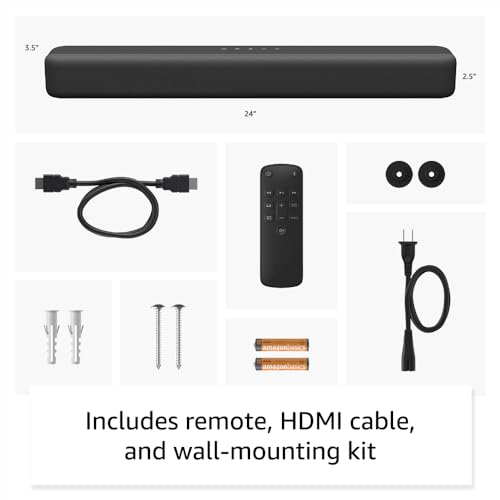
| Main bar: 31.5" x 2.4" x 3.5", separate slim subwoofer required | Single unit: 24" x 3.5" x 2.6", no additional components |
| Setup Complexity - Time and effort required for installation | |
| Two-piece system requires subwoofer placement and wireless pairing | Single soundbar with simple plug-and-play setup |
| Target Room Size - Maximum effective coverage area | |
| Small to medium rooms (up to 90dB+ output) | Small rooms and close listening positions |
| Best Use Cases - Content types and scenarios where each excels | |
| Movies, music streaming, varied content with customizable sound modes | Basic TV enhancement, dialogue-focused content, space-constrained setups |
The Hisense HS2100 is significantly better for movies due to its dedicated wireless subwoofer that delivers deeper bass for explosions, music scores, and sound effects. The 2.1 channel system with 240W of power provides more dynamic range and impact compared to the Amazon Fire TV Soundbar's 2.0 design. However, the Amazon Fire TV Soundbar still offers a meaningful upgrade over TV speakers for dialogue-focused content at a lower price point.
While not absolutely necessary, a separate subwoofer makes a substantial difference in sound quality. The Hisense HS2100 includes a dedicated 5.25" wireless subwoofer that handles bass frequencies independently, creating better separation and impact. The Amazon Fire TV Soundbar uses built-in bass reflex technology which improves low-end response but cannot match the dedicated bass performance of a separate subwoofer.
The Amazon Fire TV Soundbar is simpler to set up since it's a single unit that only requires connecting to your TV via HDMI ARC or optical cable. The Hisense HS2100 requires placing and powering both the main soundbar and wireless subwoofer, though the subwoofer pairs automatically. Both systems support HDMI ARC for easy TV remote control.
A 2.1 channel soundbar like the Hisense HS2100 has two main speakers plus a dedicated subwoofer (.1) for bass, while a 2.0 system like the Amazon Fire TV Soundbar has only two main channels handling all frequencies. The 2.1 configuration typically provides better bass response and overall sound separation, making it more suitable for movies and music.
The Hisense HS2100 gets significantly louder with its 240W total system power and can reach over 90dB output, making it suitable for medium-sized rooms. The Amazon Fire TV Soundbar with 40W total power is better suited for smaller rooms or close listening positions, as it may struggle with volume in larger spaces.
Both soundbars support Bluetooth music streaming, but the Hisense HS2100 provides a better music experience due to its dedicated subwoofer and multiple EQ presets including a dedicated Music mode. The Amazon Fire TV Soundbar can handle music streaming adequately for casual listening, though it lacks the bass depth and customization options of the Hisense HS2100.
Neither soundbar supports Dolby Atmos. The Hisense HS2100 supports Dolby Digital, Dolby Digital Plus, and DTS Virtual:X for simulated surround sound, while the Amazon Fire TV Soundbar supports Dolby Audio and DTS Virtual:X. Both use virtual processing to create wider soundstages from their front-facing speakers.
The Amazon Fire TV Soundbar is better suited for small apartments due to its compact single-unit design and lower power output that won't overwhelm small spaces. However, if you have room for a subwoofer and want better sound quality, the Hisense HS2100's ultra-slim wireless subwoofer can fit in tight spaces while providing superior audio performance.
The Hisense HS2100 offers more connectivity options including HDMI ARC, optical, 3.5mm analog input, USB port for audio playback, and Bluetooth 5.3. The Amazon Fire TV Soundbar covers the basics with HDMI ARC/eARC, optical input, and Bluetooth. Both provide adequate connectivity for most users, but the Hisense HS2100 offers more flexibility.
The Hisense HS2100 provides better dialogue clarity due to its dedicated subwoofer handling bass frequencies, allowing the main drivers to focus on midrange vocals. It also includes a dedicated News/Dialog EQ preset for enhanced speech. The Amazon Fire TV Soundbar improves dialogue over TV speakers but may sound slightly boomy since its drivers handle all frequencies simultaneously.
Both soundbars provide significant improvements over built-in TV speakers. The Amazon Fire TV Soundbar offers excellent value for basic audio enhancement, while the Hisense HS2100 delivers more substantial improvements in bass response, volume capability, and overall sound quality. Either option will make dialogue clearer and provide better audio immersion than TV speakers.
The best value depends on your budget and needs. The Amazon Fire TV Soundbar offers exceptional value for basic TV audio improvement at the lowest price point. The Hisense HS2100 provides better long-term value with superior sound quality, dedicated bass, and more features, making it worth the additional investment if your budget allows for the enhanced performance.
We've done our best to create useful and informative comparisons to help you decide what product to buy. Our research uses advanced automated methods to create this comparison and perfection is not possible - please contact us for corrections or questions. These are the sites we've researched in the creation of this article: rtings.com - shop.hisense-usa.com - bestbuy.com - content.syndigo.com - bestbuy.com - hisensedealers.co.ke - stuff.co.za - dtc-aus-api.hisense.com - youtube.com - manuals.plus - youtube.com - bestbuy.com - youtube.com - gallifurniture.com - hisense-usa.com - manuals.plus - uk.hisense.com - device.report - youtube.com - costco.ca - elmcreekwsa.com - gallifurniture.com - rtings.com - developer.amazon.com - stereoguide.com - developer.amazon.com - techradar.com - hometechnologyreview.com - whathifi.com - youtube.com - whathifi.com - wirelessplace.com - hometechnologyreview.com - dolby.com - aboutamazon.com - developer.amazon.com - community.anker.com - youtube.com - cordbusters.co.uk

Privacy Policy
Terms and Conditions - Affiliate Policy
Home Security
© Copyright 2008-2026.
11816 Inwood Rd #1211, Dallas, TX 75244