

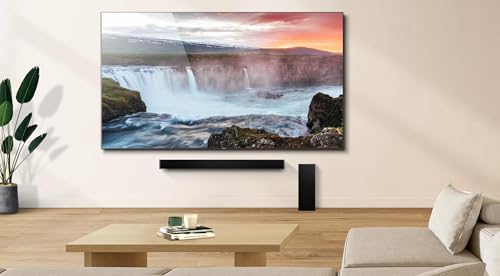



If you've ever found yourself straining to hear dialogue in movies or constantly adjusting your TV volume between whisper-quiet conversations and explosion-heavy action scenes, you're experiencing the limitations of built-in TV speakers. Soundbars solve this problem by delivering clearer dialogue, stronger bass, and a more immersive audio experience—all without the complexity of a full surround sound system.
Today we're comparing two very different approaches to upgrading your TV audio: the budget-friendly Hisense HS2100 and the premium Sony HT-A3000. These products represent fundamentally different philosophies in soundbar design, and understanding their strengths will help you make the right choice for your setup and budget.
Before diving into specifics, it's worth understanding what makes a good soundbar. The most important factors include channel configuration (how many discrete speakers), audio format support (which surround sound technologies), connectivity options, and overall build quality.
Channel configuration tells you how many separate audio streams a soundbar can handle. A 2.1 system has left and right speakers plus a subwoofer for bass. A 3.1 system adds a center channel specifically for dialogue, while more advanced systems can simulate or actually reproduce full surround sound with rear and height channels.
Audio formats have evolved significantly over the past decade. Traditional Dolby Digital provides basic surround sound, while newer formats like Dolby Atmos add height information to create truly three-dimensional audio that can place sounds above, around, and even behind you.
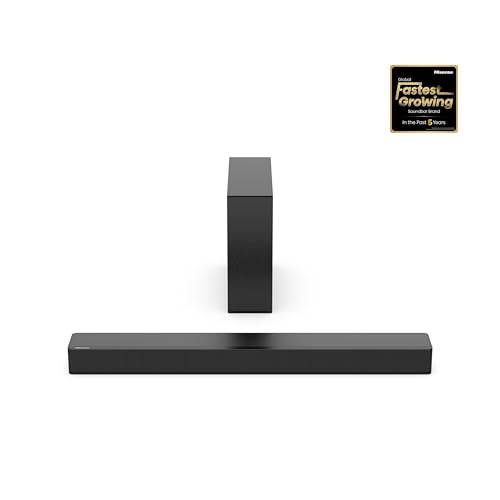
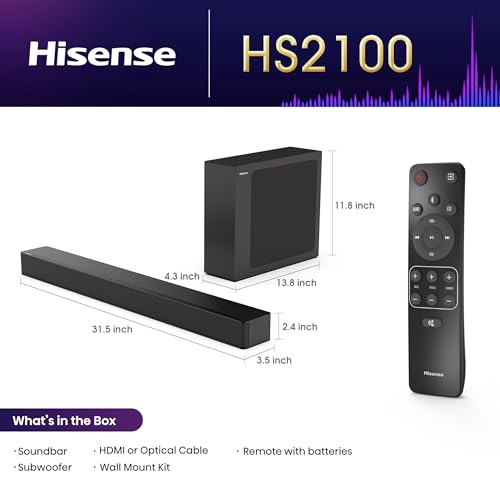
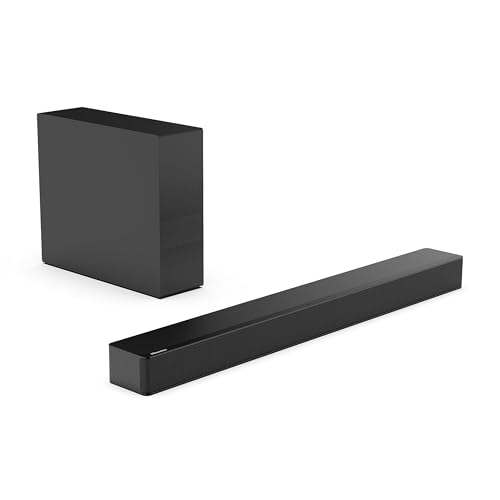
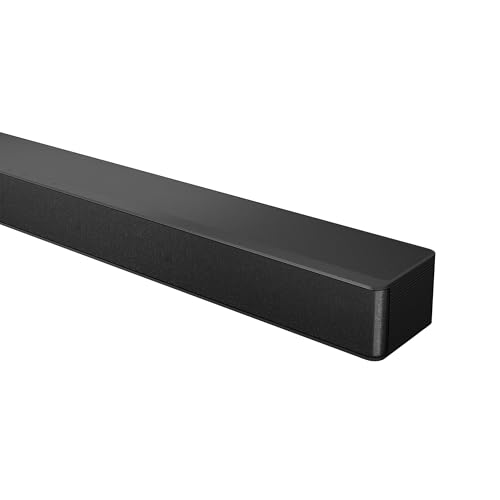
The Hisense HS2100, released in 2022, represents the "complete package on a budget" approach. At the time of writing, it costs roughly what you might spend on a nice dinner for two, yet includes everything you need for dramatically better TV audio: a soundbar and wireless subwoofer.
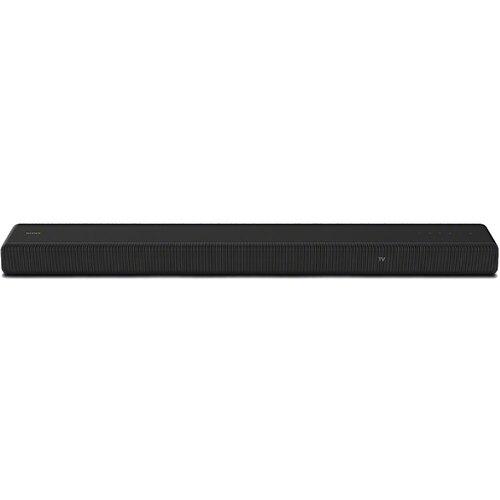
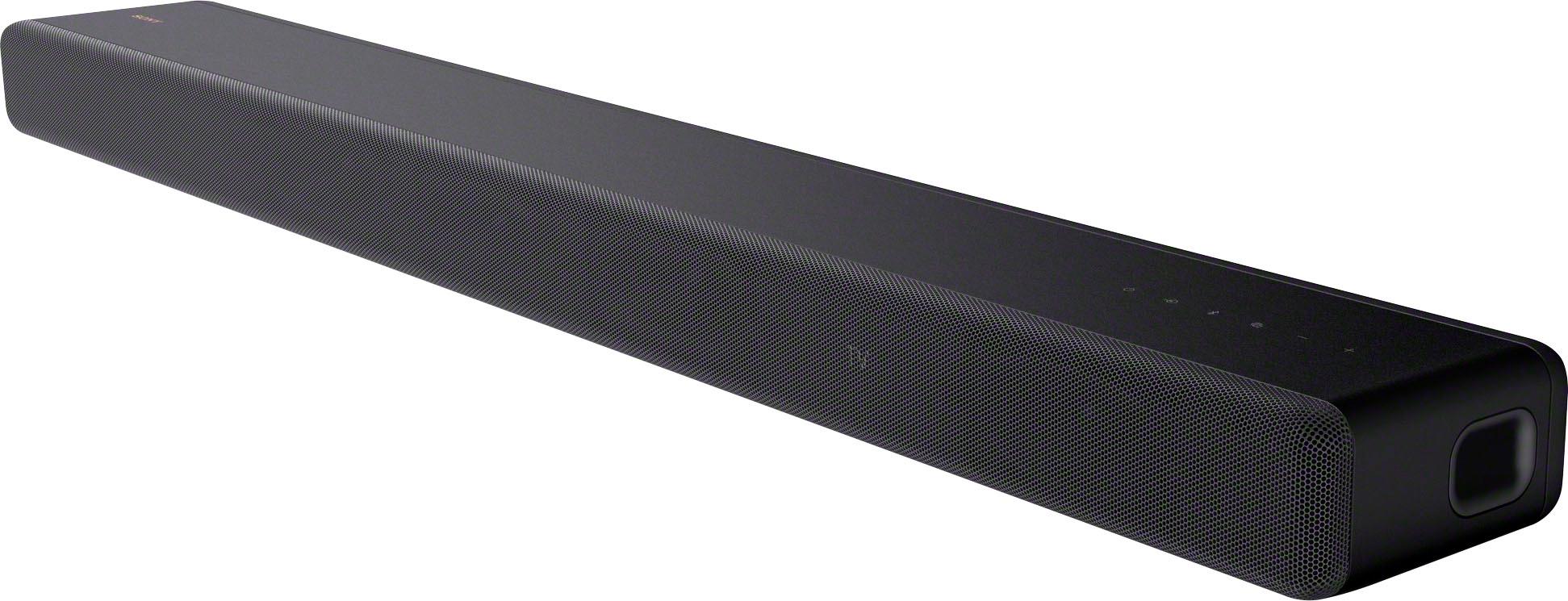
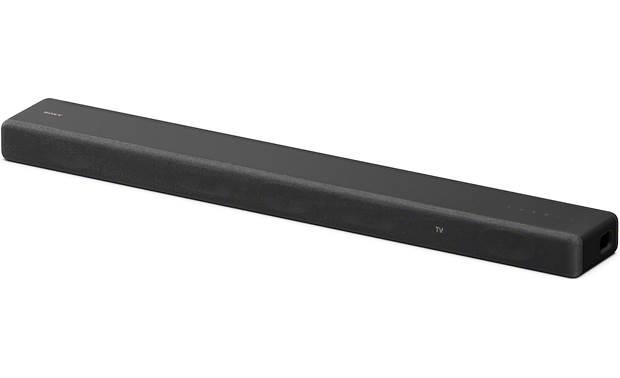
The Sony HT-A3000, also from 2022, takes a different path. It costs significantly more—roughly five to six times the Hisense—but positions itself as the foundation of an expandable, future-ready audio system that can grow with your needs and budget.
Both products emerged during a period when streaming services were rapidly adopting Dolby Atmos, making immersive audio more accessible to home viewers. This timing explains why Sony prioritized Atmos support while Hisense focused on delivering solid fundamentals at an accessible price point.
Here's where these soundbars diverge most dramatically. The Sony HT-A3000 fully supports modern audio formats including Dolby Atmos and DTS:X—technologies that add height and spatial information to create immersive, three-dimensional soundscapes. When you watch a helicopter scene, Atmos can make it sound like it's actually flying overhead, even without ceiling speakers.
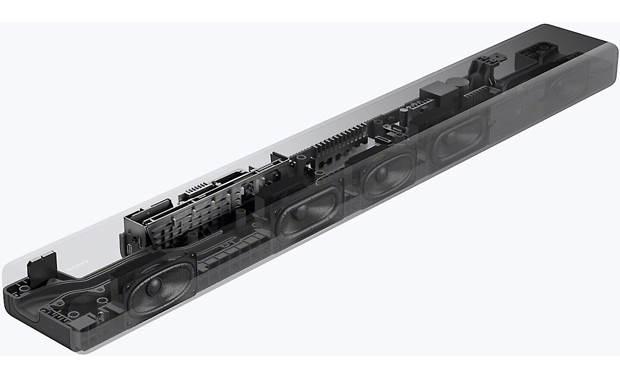
The Sony HT-A3000 achieves this through sophisticated processing called Vertical Surround Engine and S-Force Pro Front Surround. These technologies analyze incoming audio and use psychoacoustic tricks—exploiting how your brain processes sound—to create the illusion of height and surround effects from front-facing speakers alone.
In contrast, the Hisense HS2100 supports basic Dolby Digital and DTS formats but lacks Atmos capability entirely. It includes DTS Virtual:X processing, which attempts to create some spatial effects, but this is significantly less sophisticated than Sony's implementation. When the Hisense HS2100 receives Atmos content, it simply downmixes it to regular stereo.
This difference matters more than you might expect. Major streaming services like Netflix, Disney+, and Apple TV+ now offer extensive Atmos content, and modern gaming consoles support spatial audio for more immersive gameplay. If you consume a lot of modern content, the format support difference becomes crucial.
The Sony HT-A3000 features a proper 3.1 configuration with a dedicated center channel speaker. This might sound like a minor detail, but it's actually transformative for dialogue clarity. In movies and TV shows, most spoken dialogue is mixed to the center channel, and having a discrete speaker handling this information means voices sound more natural and easier to understand.
The Hisense HS2100 uses a 2.1 configuration, relying on stereo imaging to position dialogue between its left and right speakers. While this works reasonably well, it can't match the precision of a dedicated center channel, especially when you're sitting off-axis from the soundbar.
Our research into user experiences consistently shows that people notice dialogue improvements immediately when upgrading from 2.1 to 3.1 systems. If you frequently watch dialogue-heavy content—dramas, documentaries, or news—this difference becomes particularly important.
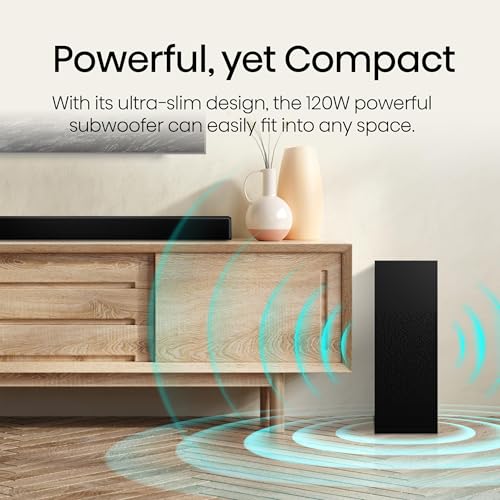
This is one area where the Hisense HS2100 initially seems superior. It includes a wireless subwoofer with a 5.25-inch driver that can reach down to about 40Hz—low enough to add satisfying punch to explosions and music. The wireless connection eliminates cable clutter while providing flexibility in subwoofer placement.
The Sony HT-A3000 takes a different approach, incorporating dual built-in subwoofers rather than including an external sub. These provide some low-frequency extension but can't match the impact of the Hisense's dedicated subwoofer. However, Sony designed the system to accept an optional wireless subwoofer (the SA-SW3) that significantly outperforms the Hisense's included sub.
Here's the trade-off: the Hisense HS2100 gives you satisfying bass immediately, while the Sony HT-A3000 requires additional investment to reach its full bass potential. For bass-heavy content like action movies or electronic music, this difference is immediately apparent.
Soundstage refers to how wide and spacious audio sounds—essentially, how well a soundbar can make you forget you're listening to a single speaker unit. The Sony HT-A3000 creates a notably wider and more precise soundstage, thanks to its 3.1 configuration and advanced processing.
The Hisense HS2100 produces a more limited soundstage that roughly corresponds to its physical width. While DTS Virtual:X processing attempts to expand this, the effect is subtle compared to Sony's more sophisticated spatial processing.
For stereo content like music or simple TV shows, this difference is less noticeable. But for movies with complex sound design—think Marvel films or nature documentaries—the Sony's wider, more precise imaging creates a more engaging experience.
Modern soundbars need to handle various input sources and audio formats, and here the Sony HT-A3000 demonstrates its premium positioning. It features HDMI eARC (enhanced Audio Return Channel), which supports full-bandwidth audio including uncompressed Dolby Atmos and DTS:X. It also includes a USB port that can play high-resolution audio files up to 24-bit/192kHz—a feature appreciated by music enthusiasts with high-quality digital collections.
For wireless connectivity, the Sony HT-A3000 supports LDAC, Sony's high-resolution Bluetooth codec that can transmit near-CD-quality audio wirelessly. It also includes AirPlay 2 and Chromecast built-in, making it easy to stream music from virtually any device.
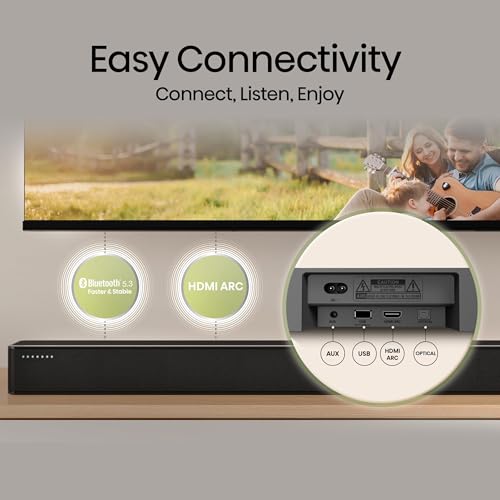
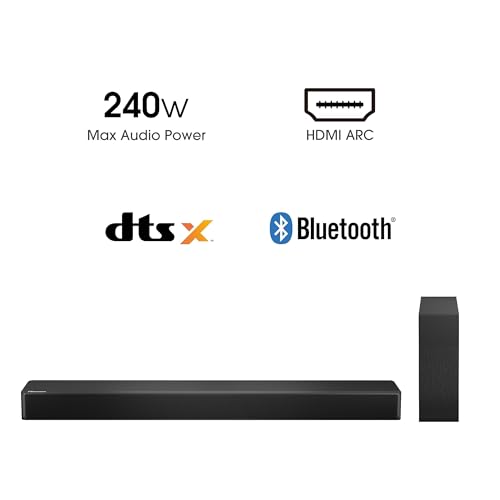
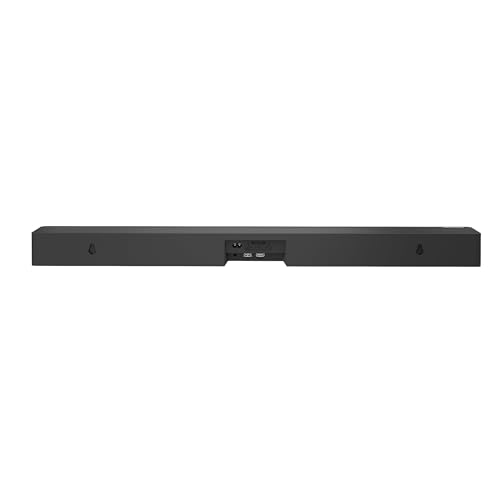
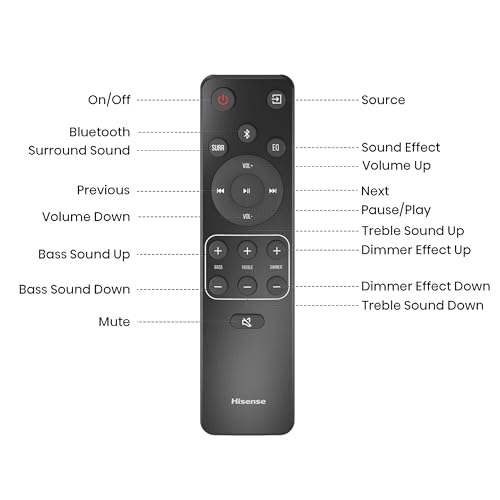
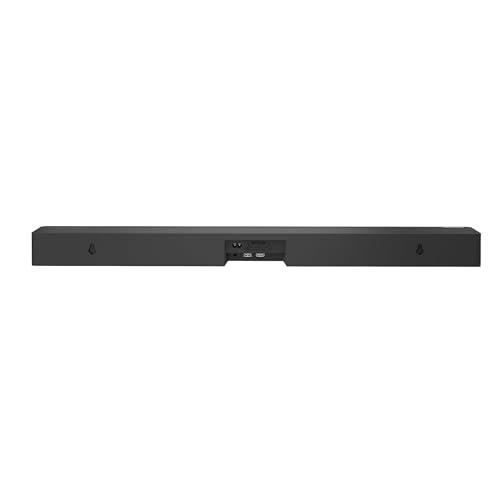
The Hisense HS2100 covers the basics well with HDMI ARC (the standard version), optical input, and Bluetooth 5.3. While it lacks the high-resolution capabilities of the Sony, it includes all the connectivity most users need for daily TV watching and casual music streaming.
Perhaps the most significant philosophical difference between these products is expandability. The Hisense HS2100 is essentially a complete, fixed system. What you buy is what you get, with no official upgrade path.
The Sony HT-A3000 is designed as the foundation of a modular system. You can add wireless rear speakers (SA-RS3S) and a subwoofer (SA-SW3) to create a full 5.1.2 surround system with 360 Spatial Sound Mapping. This technology creates virtual "phantom" speakers throughout your room, providing immersive surround sound that rivals traditional multi-speaker setups.
This expandability comes with trade-offs. A fully expanded Sony system costs significantly more than the Hisense HS2100—roughly ten times as much at the time of writing. However, you can start with just the soundbar and add components over time as budget allows.
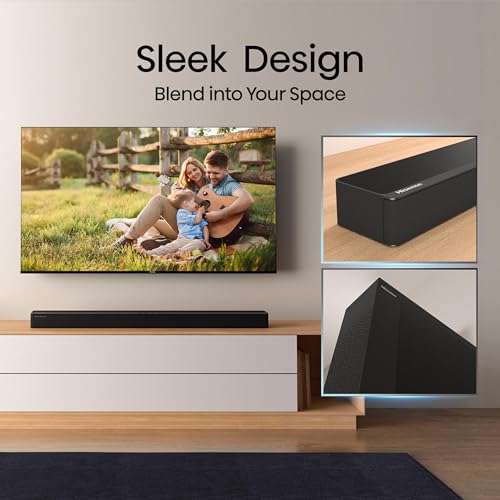
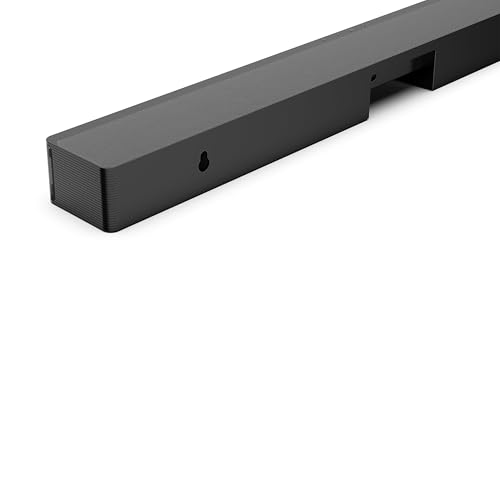
Both soundbars reflect their price positioning in build quality and design. The Hisense HS2100 uses a plastic construction that's lightweight and functional but not premium. Its compact dimensions make it suitable for smaller TVs and spaces, while the wireless subwoofer's slim profile helps it fit in tight spots.
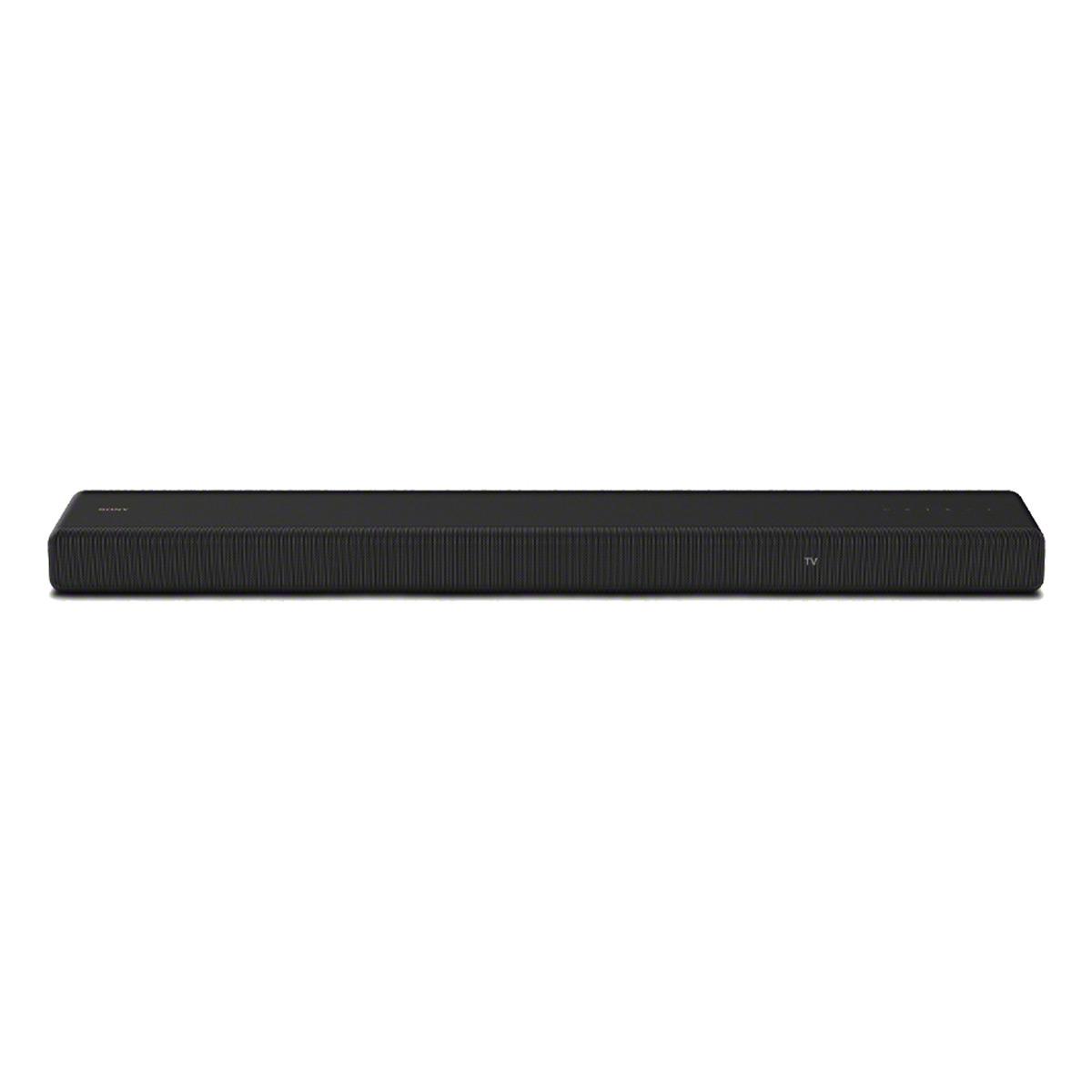
The Sony HT-A3000 features more sophisticated construction with better materials and finish quality. It's designed to complement premium TVs both aesthetically and functionally, with refined button layouts and display elements.
For typical TV watching—news, sitcoms, dramas—both soundbars deliver significant improvements over TV speakers. The Hisense HS2100 provides clear dialogue and satisfying bass for general content, while its various EQ presets (Movie, Music, News, Sport, Night, Game) help optimize sound for different content types.
However, with modern blockbuster movies or immersive gaming, the differences become stark. The Sony HT-A3000 can decode and process complex Atmos soundtracks, creating spatial effects that enhance the viewing experience. Action scenes feel more dynamic, and quiet moments maintain better atmospheric detail.
Our analysis of user reviews shows that Hisense HS2100 owners consistently report satisfaction with dialogue clarity and overall volume, but some note limitations with very bass-heavy content or complex movie soundtracks. Sony HT-A3000 users more frequently mention being impressed by the spatial audio effects and overall sound quality, though some express frustration about needing additional purchases for full bass impact.
In dedicated home theater setups, the Sony HT-A3000 makes more sense despite its higher cost. Home theaters typically involve larger rooms, bigger screens, and more demanding content where Atmos support and expandability become crucial advantages.
The Sony HT-A3000's room optimization features, which use built-in microphones to measure and adjust for your space's acoustics, provide measurable improvements in larger rooms. Its ability to expand into a full surround system also means it can grow with your home theater ambitions.
For smaller spaces or casual viewing setups, the Hisense HS2100 often provides sufficient improvement at a fraction of the cost. Its included subwoofer immediately enhances movie watching, and its compact design suits apartments or bedrooms where space is limited.
Value depends entirely on your priorities and budget. The Hisense HS2100 offers exceptional value for basic TV audio improvement, providing immediate satisfaction with dialogue clarity and bass impact at a very accessible price point. It represents perhaps the best performance-per-dollar in the entry-level soundbar category.
The Sony HT-A3000 targets a different value proposition: superior sound quality, future-ready format support, and expandability. While it costs significantly more, it provides meaningfully better audio performance and the ability to evolve into a reference-quality surround system.
Choose the Hisense HS2100 if you primarily watch television shows, news, or dialogue-heavy content, have budget constraints, want immediate improvement with no future purchases required, or have a smaller room where stereo sound suffices. It's also ideal if you prefer simple setup and operation without complex features.
Choose the Sony HT-A3000 if you frequently watch movies with Dolby Atmos soundtracks, plan to expand your audio system over time, value superior dialogue clarity from the center channel, listen to high-resolution music, or want the latest audio technologies. It's worth the investment if audio quality significantly impacts your enjoyment and you have the budget for premium features.
The fundamental question isn't which is objectively better—it's which better matches your needs, content consumption habits, and budget. The Hisense HS2100 excels at solving the basic TV audio problem affordably and completely. The Sony HT-A3000 provides a superior foundation for serious audio enthusiasts who want room to grow.
At the time of writing, both represent strong values in their respective categories. Your choice should align with whether you want the best possible upgrade under a tight budget or are willing to invest in significantly superior audio quality and future expandability.
| Hisense HS2100 2.1 Channel 240W Soundbar System | Sony HT-A3000 3.1ch Dolby Atmos Soundbar |
|---|---|
| Channel Configuration - Determines dialogue clarity and sound separation | |
| 2.1 channels (left, right, subwoofer) | 3.1 channels (left, center, right, dual built-in subs) |
| Dolby Atmos Support - Essential for modern streaming content and immersive audio | |
| No (downmixes Atmos to stereo) | Yes (full Dolby Atmos and DTS:X decoding) |
| Subwoofer Inclusion - Affects immediate bass performance and total cost | |
| 5.25" wireless subwoofer included | Dual built-in subs (external sub sold separately) |
| Total Power Output - Impacts maximum volume and dynamics | |
| 240W (120W sub + 60W × 2 soundbar) | 250W across 5 amplifier channels |
| Expandability - Ability to upgrade system over time | |
| Fixed 2.1 system, no expansion options | Modular design, adds wireless rear speakers and subwoofer |
| HDMI Connectivity - Determines audio format support from TV | |
| HDMI ARC (standard bandwidth) | HDMI eARC (full bandwidth, uncompressed audio) |
| Bluetooth Audio Quality - Affects wireless music streaming quality | |
| Bluetooth 5.3 with standard codecs | Bluetooth 5.0 with LDAC high-resolution codec |
| Virtual Surround Processing - Creates spatial audio effects without rear speakers | |
| DTS Virtual:X (basic spatial effects) | Vertical Surround Engine + S-Force Pro (advanced 3D audio) |
| High-Resolution Audio Support - Important for music enthusiasts | |
| Limited format support via USB | USB playback up to 24-bit/192kHz FLAC |
| Wireless Streaming Options - Convenience for multi-device households | |
| Bluetooth only | Bluetooth, AirPlay 2, Chromecast built-in |
| Room Optimization - Automatically adjusts sound for your space | |
| Manual EQ presets only | Built-in microphones with automatic room correction |
| Target Use Case - Best suited for different viewing habits | |
| Budget TV audio upgrade, dialogue-focused content | Premium home theater foundation, Atmos content |
The Hisense HS2100 is better for beginners because it includes everything you need in one purchase - the soundbar and wireless subwoofer. It's much simpler to set up and doesn't require additional components to get good sound quality. The Sony HT-A3000 is more complex and may require additional purchases like a separate subwoofer to reach its full potential.
Yes, the Sony HT-A3000 fully supports Dolby Atmos and DTS:X, creating immersive 3D audio from streaming services and Blu-ray discs. The Hisense HS2100 does not support Dolby Atmos and will downmix Atmos content to regular stereo sound.
The Hisense HS2100 includes a dedicated 5.25" wireless subwoofer that provides immediate, satisfying bass impact. The Sony HT-A3000 has dual built-in subwoofers but requires purchasing a separate subwoofer for deep bass comparable to the Hisense system.
Only the Sony HT-A3000 can be expanded with optional rear speakers and a subwoofer to create a full 5.1.2 surround sound system. The Hisense HS2100 is a fixed 2.1 system with no official expansion options.
The Sony HT-A3000 is significantly better for dialogue because it has a dedicated center channel speaker that handles most spoken dialogue in movies and TV shows. The Hisense HS2100 relies on stereo imaging for dialogue, which is less precise.
The Sony HT-A3000 delivers superior audio quality with more detailed sound, wider soundstage, and support for high-resolution audio formats. The Hisense HS2100 provides good sound quality for the money but lacks the refinement and spatial audio capabilities of the Sony.
The Hisense HS2100 is often better for small rooms because its included subwoofer provides immediate bass impact, and its 2.1 configuration is sufficient for smaller spaces. The premium features of the Sony HT-A3000 may be overkill in very small rooms.
Yes, both the Hisense HS2100 and Sony HT-A3000 work with any TV that has HDMI ARC, optical output, or analog audio outputs. However, the Sony requires HDMI eARC for full Dolby Atmos support, which newer TVs provide.
The Sony HT-A3000 is better for gaming because it supports advanced audio formats that modern gaming consoles output, including spatial audio that enhances gameplay immersion. The Hisense HS2100 works fine for gaming but lacks these advanced audio features.
The Sony HT-A3000 offers more wireless options including Bluetooth with LDAC, AirPlay 2, and Chromecast built-in for streaming from various devices. The Hisense HS2100 provides Bluetooth connectivity but lacks the advanced wireless streaming features of the Sony.
The Hisense HS2100 offers exceptional value for basic TV audio improvement, including a subwoofer at a very affordable price. The Sony HT-A3000 provides better value for those wanting premium audio quality and future expandability, despite its higher cost.
The Sony HT-A3000 is excellent for home theater use with its Dolby Atmos support, expandability, and room optimization features. The Hisense HS2100 can work in home theaters but is better suited for casual TV watching rather than dedicated movie experiences requiring immersive surround sound.
We've done our best to create useful and informative comparisons to help you decide what product to buy. Our research uses advanced automated methods to create this comparison and perfection is not possible - please contact us for corrections or questions. These are the sites we've researched in the creation of this article: rtings.com - shop.hisense-usa.com - bestbuy.com - content.syndigo.com - bestbuy.com - hisensedealers.co.ke - stuff.co.za - dtc-aus-api.hisense.com - youtube.com - manuals.plus - youtube.com - bestbuy.com - youtube.com - gallifurniture.com - hisense-usa.com - manuals.plus - uk.hisense.com - device.report - youtube.com - costco.ca - elmcreekwsa.com - gallifurniture.com - rtings.com - electronics.sony.com - crutchfield.com - store.sony.com.au - digitaltrends.com - videoandaudiocenter.com - abt.com - sony.com - merlinstv.com - crutchfield.com - youtube.com

Privacy Policy
Terms and Conditions - Affiliate Policy
Home Security
© Copyright 2008-2026.
11816 Inwood Rd #1211, Dallas, TX 75244