




If you've ever found yourself cranking up the volume just to hear what characters are saying on TV, or felt like explosions in movies sound more like gentle puffs, you're not alone. Modern TVs, despite their impressive picture quality, often have terrible built-in speakers. This is where soundbars come in – they're designed to dramatically improve your audio experience without the complexity of a full surround sound system.
Today we're comparing two popular options that take very different approaches to solving this problem: the Hisense HS2100 and the JBL Bar 300 MK2. At the time of writing, these represent two distinct philosophies in budget soundbar design, with the Hisense typically priced well under $200 and the JBL falling in the $300-400 range.
Before diving into specifics, it's worth understanding what separates good budget soundbars from disappointing ones. The most important factors are power output (measured in watts), frequency response (how well it reproduces different pitches), and channel configuration (how many separate audio streams it can handle).
Budget soundbars face a fundamental challenge: physics. Sound waves need space to develop properly, especially bass frequencies that require larger drivers and enclosures. Manufacturers solve this in two main ways: either by including a separate subwoofer (a specialized speaker just for low frequencies), or by using advanced digital processing to simulate what dedicated hardware would provide.
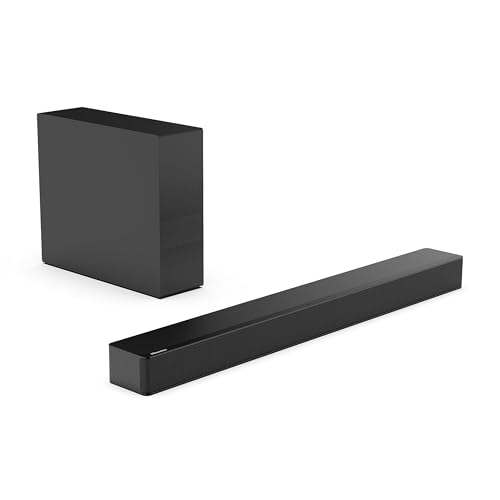
The Hisense HS2100 takes the first approach with its 2.1 channel design – that means two main speakers plus one subwoofer. The JBL Bar 300 MK2 represents the second approach, packing everything into a single unit and relying on sophisticated audio processing to create the illusion of multiple speakers.
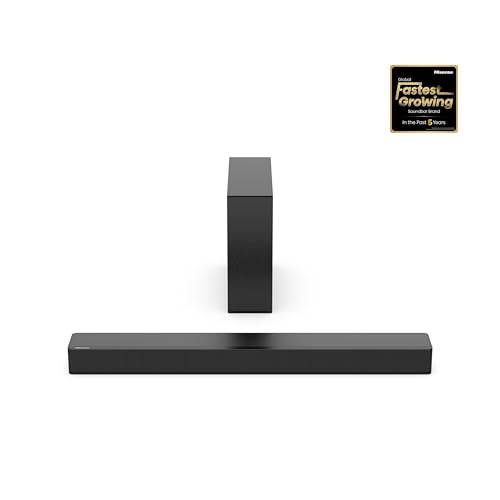
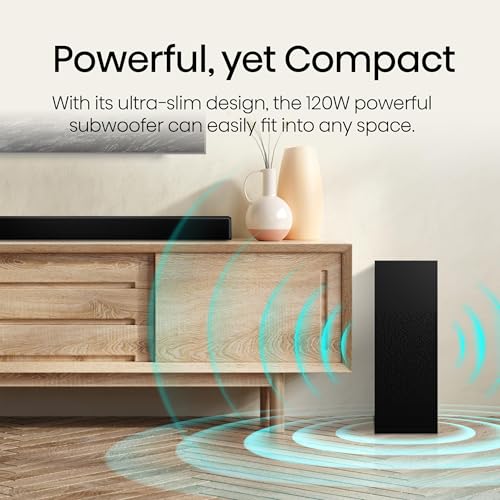
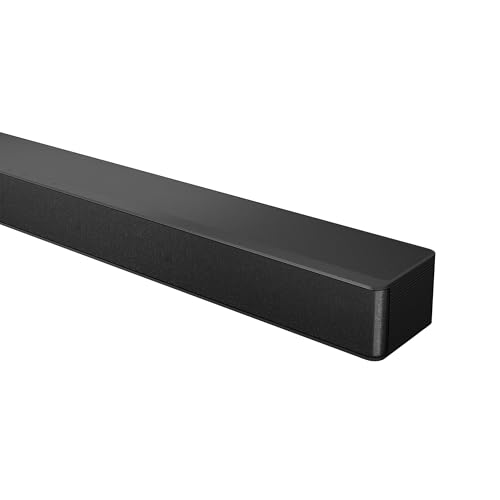
Released in 2023, the Hisense HS2100 follows a tried-and-true formula that's been working for decades. The system splits audio duties between a main soundbar containing two full-range drivers (speakers that handle mid and high frequencies) and a separate wireless subwoofer with a dedicated 5.25-inch driver for bass.
This separation of duties immediately gives the HS2100 an advantage in low-frequency reproduction. Bass waves are physically long – a 40Hz note has a wavelength of about 28 feet – so having a dedicated driver in a properly sized enclosure makes a real difference. The wireless subwoofer can be placed anywhere in your room for optimal bass response, which is crucial since bass behavior changes dramatically based on room positioning.
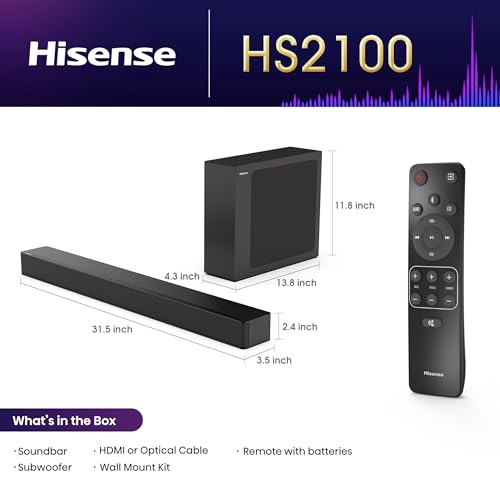
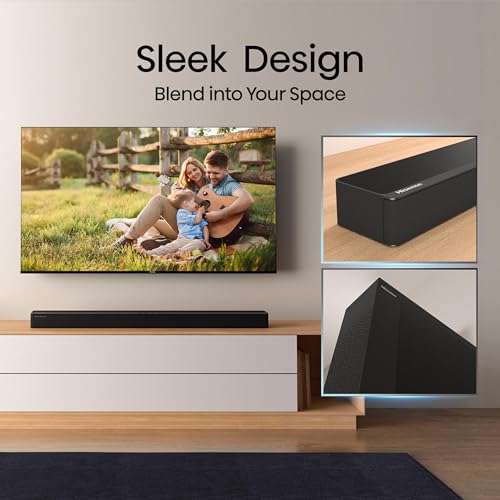
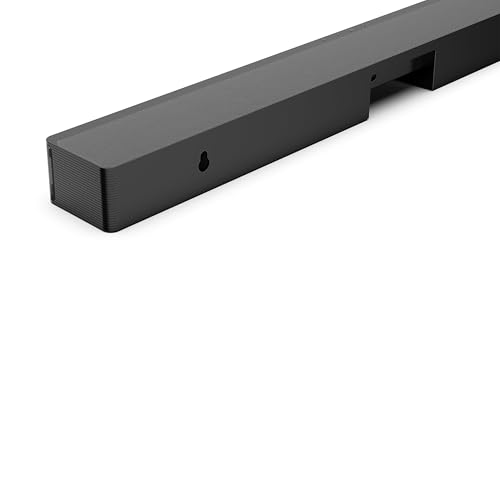
The soundbar itself measures 31.5 inches wide, making it suitable for most TV stands, and at just 2.4 inches tall, it won't block your TV screen or remote sensor. The build quality feels solid for the price point, with a fabric grille covering the front-firing drivers.
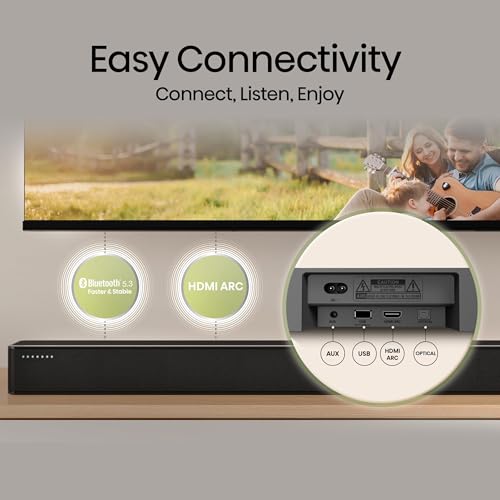
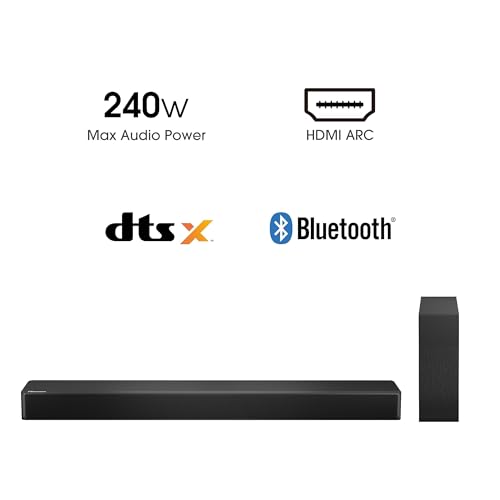
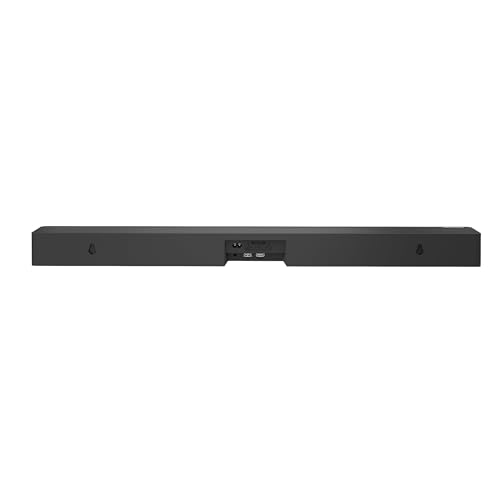
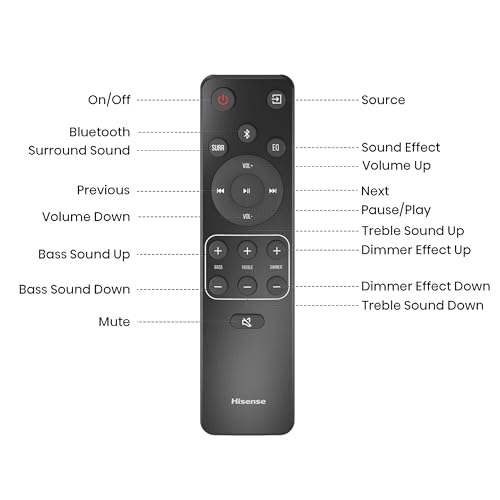
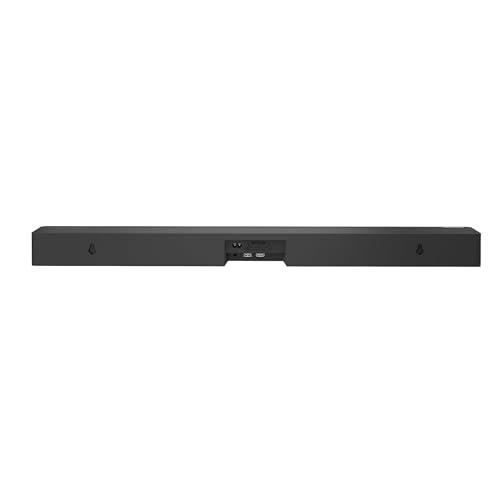
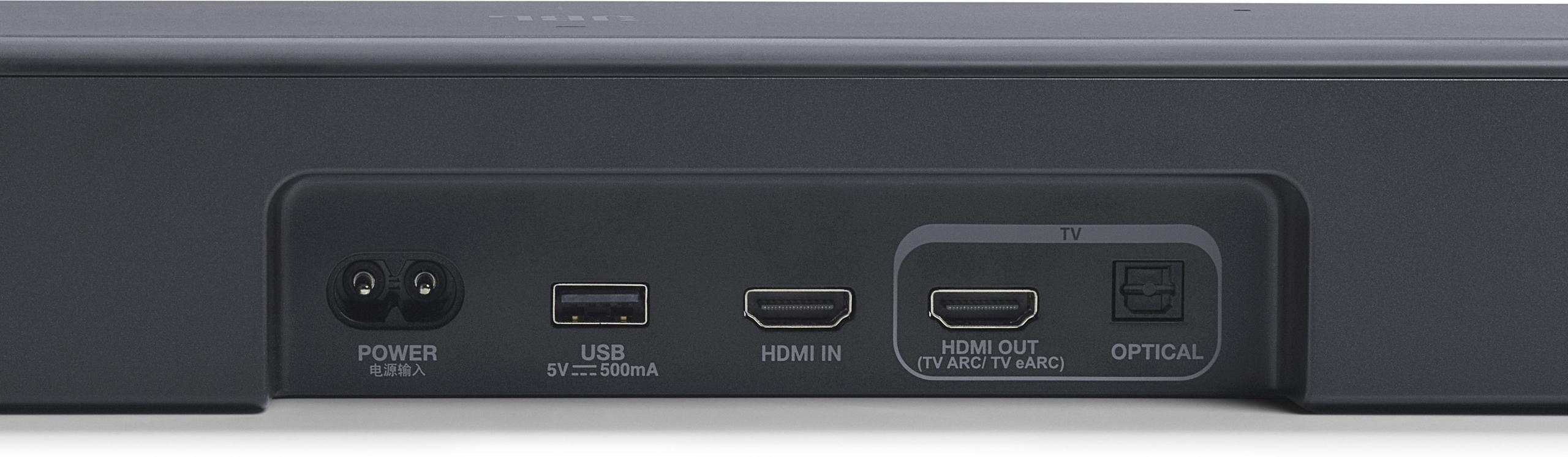
What's particularly impressive about the Hisense HS2100 is its connectivity options. Beyond the expected HDMI ARC (Audio Return Channel, which lets your TV send audio back to the soundbar through the same cable that carries video), it includes optical input, 3.5mm auxiliary input, and USB playback. The Roku TV Ready certification is especially useful – it means the soundbar integrates seamlessly with Roku TVs, allowing control through your TV remote rather than juggling multiple controllers.
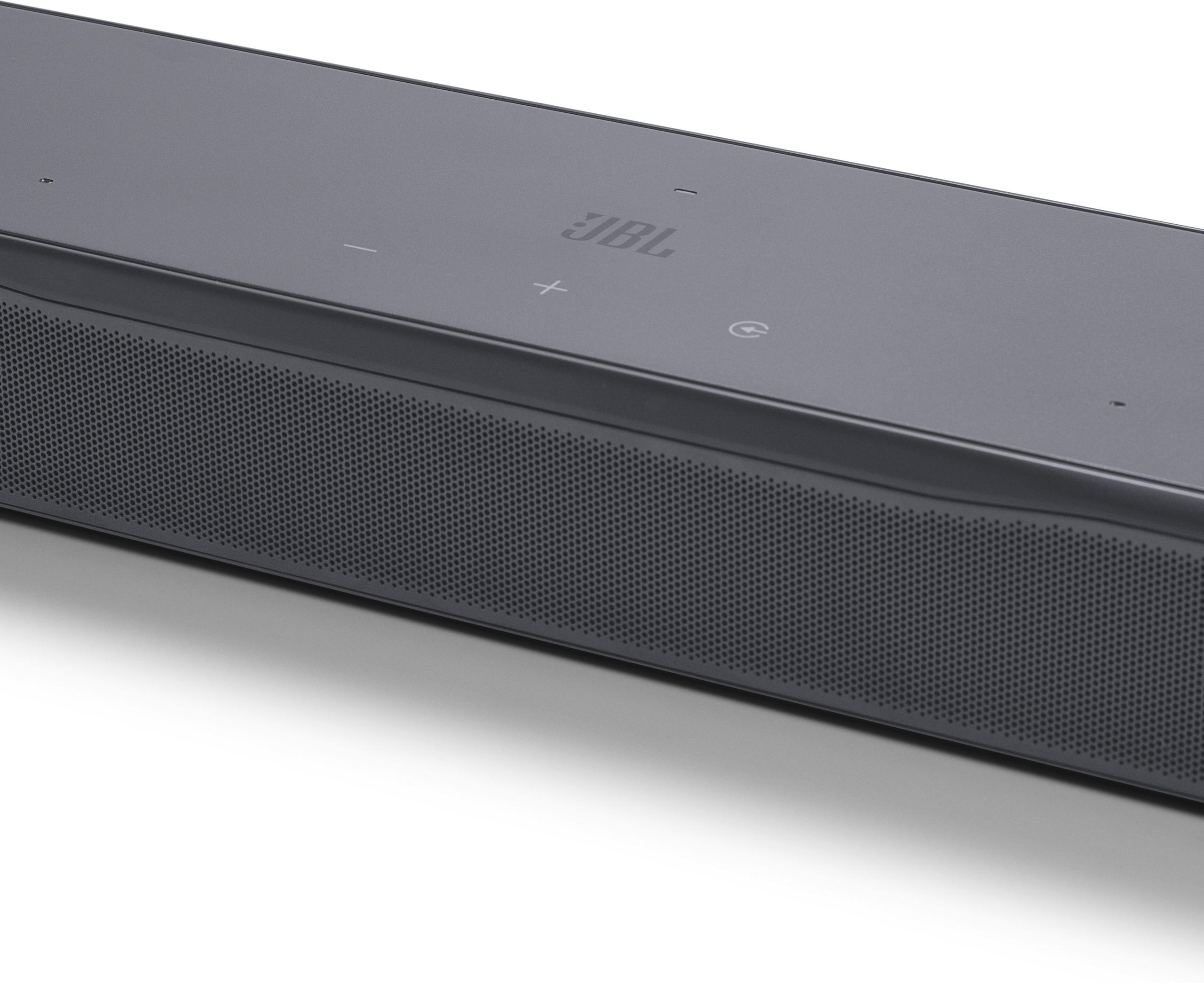
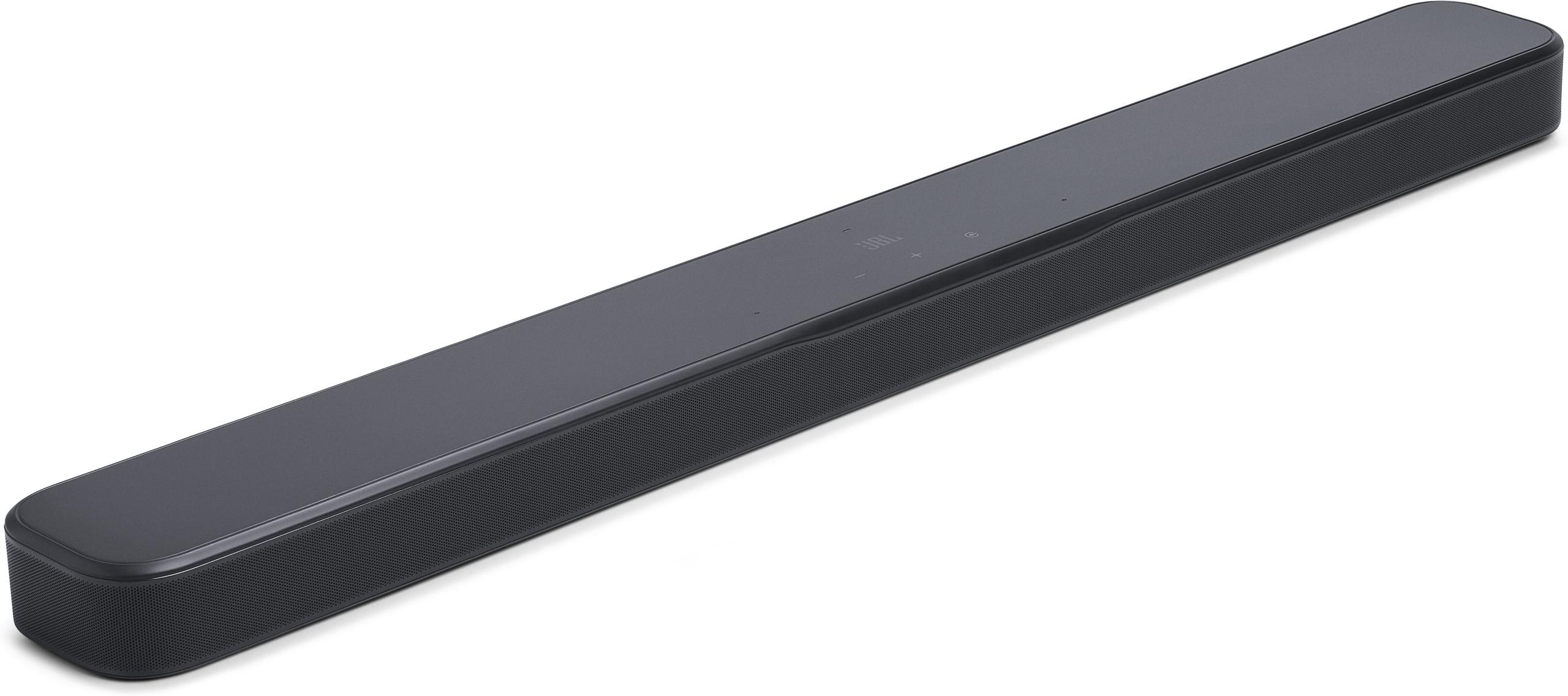
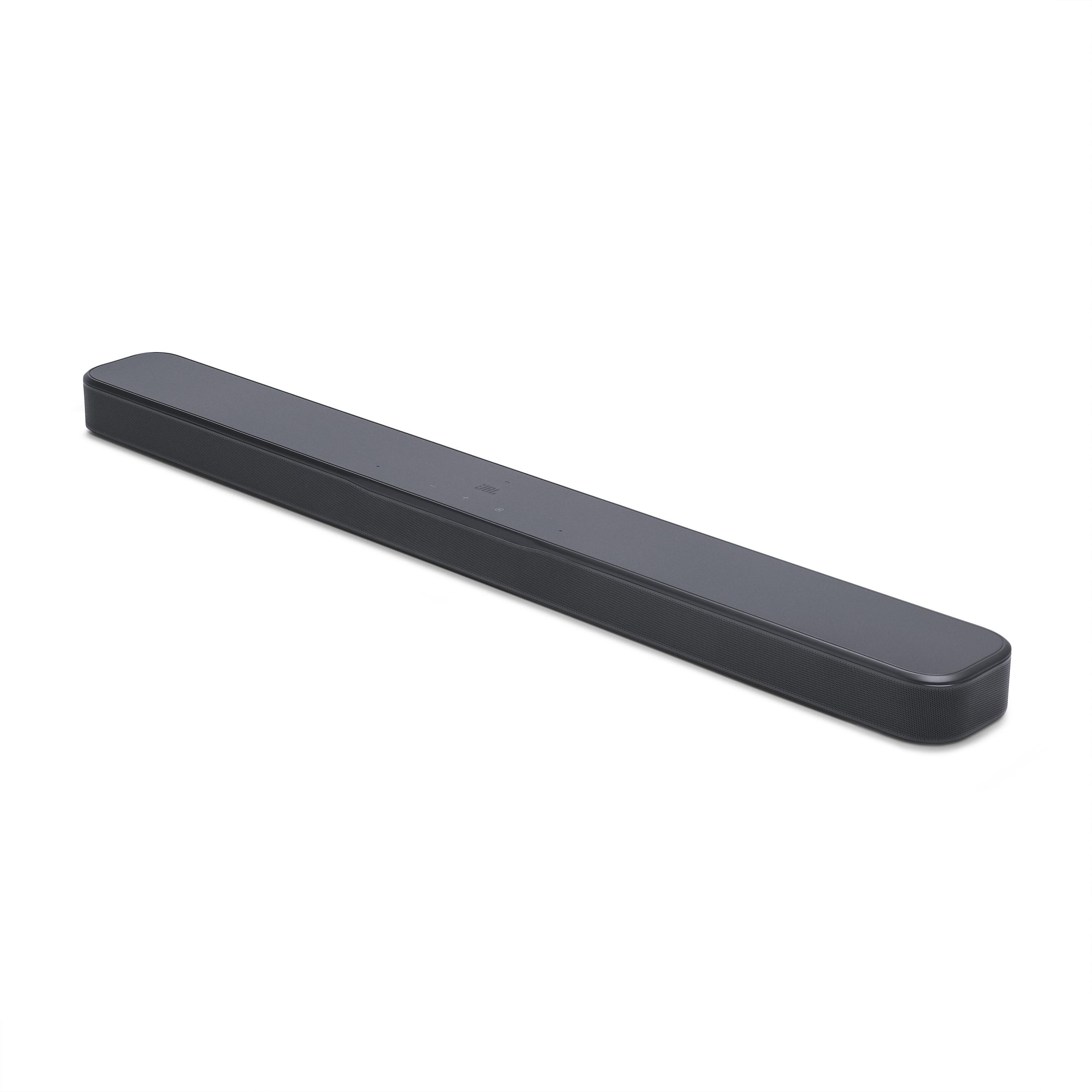
The JBL Bar 300 MK2, released in 2025, represents a more modern approach to soundbar design. Instead of relying on physical separation of drivers, JBL packs everything into a single 32.3-inch bar and uses advanced signal processing to create the illusion of surround sound.
This isn't just marketing speak – the technology behind virtual surround has genuinely improved over the past few years. The Bar 300 MK2 uses MultiBeam 3.0 technology, which analyzes room acoustics and adjusts audio output to bounce sound off walls and ceiling in specific patterns. Combined with Dolby Atmos processing (a surround sound format that includes height information), it can create a surprisingly convincing three-dimensional soundfield from a single speaker array.
The all-in-one approach offers obvious practical advantages. Setup is simpler – just one power cord and one connection to your TV. There's no subwoofer to find space for, and the sleek design looks more premium than most budget options. The JBL Bar 300 MK2 also includes comprehensive smart features, supporting Wi-Fi streaming protocols like AirPlay 2, Google Cast, and Spotify Connect directly.
Perhaps most importantly, JBL includes their PureVoice 2.0 technology, which uses real-time analysis to enhance dialogue clarity. This addresses one of the most common complaints about modern TV audio – that dialogue gets lost in the mix during action scenes.
This is where the fundamental design difference between these soundbars becomes most apparent. The Hisense HS2100 delivers genuinely impressive bass for its price range, thanks to that dedicated 120-watt subwoofer. In our research of user reviews, owners consistently mention the "chest-thumping" bass response and room-filling low-end impact.
The physics here are straightforward – the separate subwoofer can move more air and reproduce lower frequencies than what's possible in a slim soundbar enclosure. The HS2100 reportedly reaches down to about 45Hz, which covers most movie soundtracks and music adequately, though it won't match the sub-bass extension of more expensive systems.
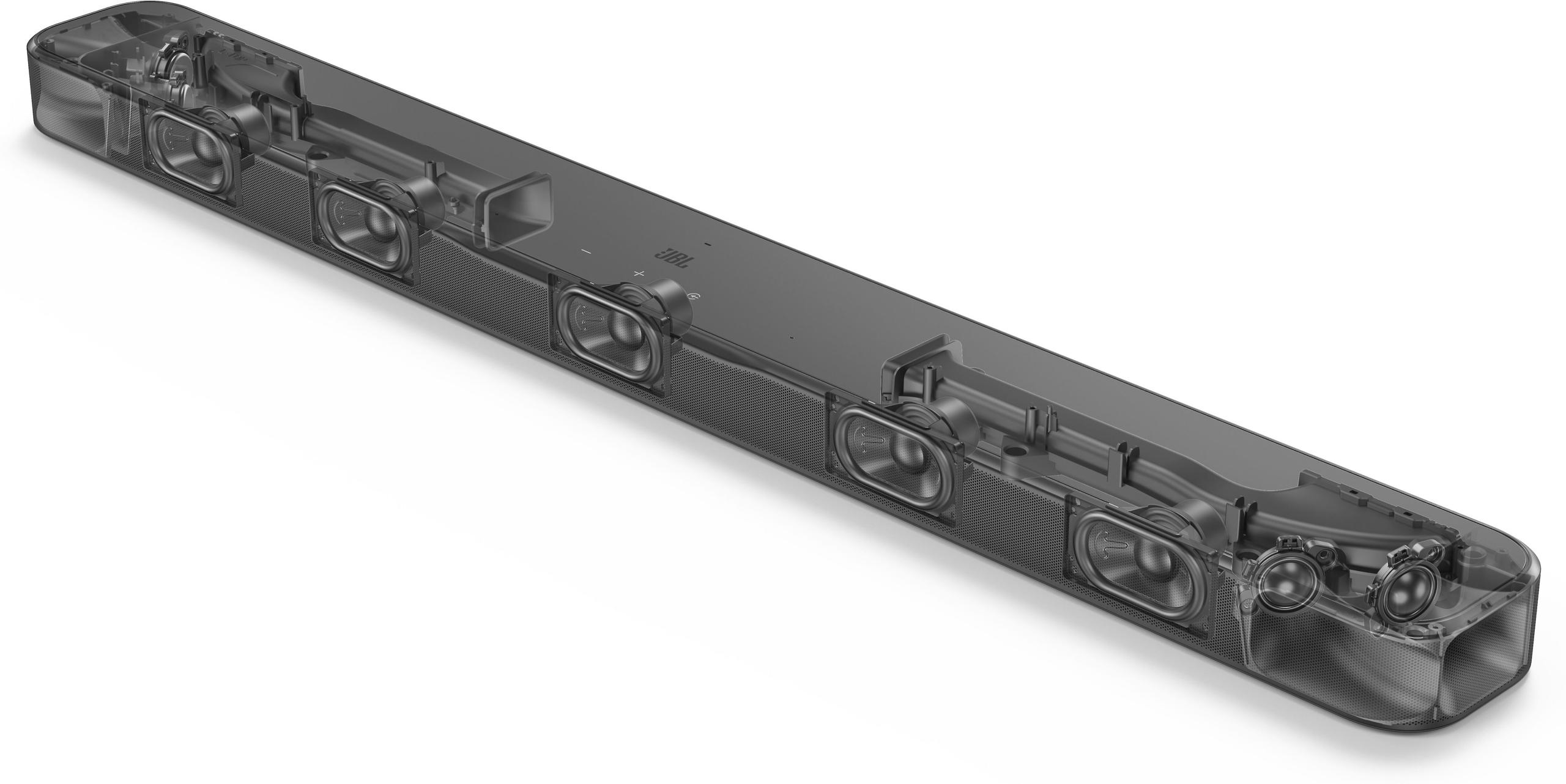
The JBL Bar 300 MK2 takes a different approach, using specially designed racetrack drivers (oval-shaped speakers that fit more surface area in less space) and a built-in bass port. While this produces surprisingly strong bass for an all-in-one design, it simply can't match the physical advantages of a dedicated subwoofer. However, the bass it does produce is typically tighter and more controlled, which some listeners prefer for music.
Here's where modern signal processing shows its advantages. The JBL Bar 300 MK2 excels at dialogue reproduction, using multiple technologies to ensure voices remain clear and intelligible. PureVoice 2.0 actively monitors the audio stream and boosts vocal frequencies when needed, while SmartDetails technology preserves subtle audio nuances that often get lost in budget systems.
The 5.0 channel processing in the Bar 300 MK2 also helps with dialogue placement. Even though all sound comes from the front bar, the system can create a convincing center channel image where dialogue appears to come directly from your TV screen rather than from the left and right sides.
The Hisense HS2100 handles dialogue well for its price point, with clean midrange reproduction and a dedicated News mode that emphasizes vocal clarity. However, without dedicated center channel processing, dialogue placement isn't quite as precise, and there's no active enhancement technology to help during challenging audio passages.
This category reveals another clear difference in approach. The JBL Bar 300 MK2 uses virtual Dolby Atmos processing combined with MultiBeam technology to create height and surround effects. While this isn't true Atmos (which requires ceiling-mounted or upward-firing speakers), the processing has become sophisticated enough to create a convincing sense of space and directionality.
Expert reviews consistently note that while the virtual surround effect isn't as convincing as a true multi-speaker setup, it's impressive for a single-bar solution. The Bar 300 MK2 can make helicopter sounds seem to move overhead or create the sense that ambient effects are coming from beside or behind the listener.
The Hisense HS2100 includes DTS Virtual:X processing, which provides basic surround effects, but the implementation is less sophisticated. The soundbar essentially takes multi-channel content and downmixes it to stereo while applying some spatial processing. It's an improvement over basic stereo playback, but doesn't match the immersive capabilities of the JBL's more advanced system.
Raw power output tells an important story here. The JBL Bar 300 MK2 rates at 450 watts maximum output compared to the Hisense HS2100's 240 watts. In practical terms, this means the JBL can play louder with less distortion and has better dynamic range – the difference between quiet and loud sounds.
For most living rooms, both systems provide adequate volume, but the JBL's extra power headroom means it maintains clarity better at high volumes. The HS2100 reportedly shows some compression and pumping effects when pushed to maximum volume, which is typical for budget systems but worth considering if you have a larger room or prefer loud listening levels.
The connectivity story heavily favors the JBL Bar 300 MK2, which includes comprehensive smart features that weren't common in budget soundbars even a few years ago. Built-in Wi-Fi enables direct streaming from services like Spotify and Tidal without needing your phone or TV as an intermediary. AirPlay 2 support means seamless integration with Apple devices, while Google Cast handles Android devices and Chromecast.
The JBL One app deserves special mention – it provides full control over the soundbar including custom EQ adjustment, source switching, and firmware updates. Having tried similar apps from other manufacturers, JBL's implementation is particularly user-friendly and responsive.
The Hisense HS2100 offers more basic but still useful connectivity. HDMI ARC handles most modern setups, while optical input provides compatibility with older TVs. The 3.5mm auxiliary input is becoming rare but remains useful for connecting older devices. Bluetooth 5.3 is actually more advanced than what many competitors offer, providing stable wireless connectivity with improved range and lower power consumption.
For dedicated home theater use, both soundbars represent significant upgrades over TV speakers, but with different strengths. The Hisense HS2100 excels with action movies and bass-heavy content. The dedicated subwoofer provides the low-frequency impact that makes explosions feel visceral and music sound full-bodied.
However, for mixed content including dialogue-heavy dramas or news programs, the JBL Bar 300 MK2 often performs better. The PureVoice technology genuinely helps with challenging audio mixes where dialogue gets buried under background music or effects. The virtual Atmos processing also adds immersion for properly encoded content from streaming services and Blu-ray discs.
If your primary viewing includes a lot of sports, the Bar 300 MK2's wider soundstage and spatial processing help create stadium atmosphere, making crowd noise and commentary feel more realistic. For gaming, the lower latency processing in both systems works well, though the HS2100 has slight advantages in maintaining low audio delay across different input types.
After evaluating expert reviews, user feedback, and technical specifications, these soundbars serve different priorities effectively. The Hisense HS2100 delivers exceptional value for listeners who prioritize bass impact and overall volume. At its typical pricing, it provides more low-frequency extension and room-filling sound than most competitors. The trade-offs in processing sophistication and smart features are reasonable compromises for budget-focused buyers.
The JBL Bar 300 MK2 justifies its higher price through superior dialogue processing, comprehensive smart features, and more sophisticated surround sound simulation. It's the better choice for varied content consumption and integration into smart home ecosystems.
Choose the Hisense HS2100 if you're primarily upgrading from terrible TV speakers on a tight budget, have space for a subwoofer, and prioritize impactful bass over advanced features. It's particularly strong for action movies, music listening, and situations where maximum bang-for-buck matters most. The system works well in small to medium rooms where the 240 watts provides adequate coverage.
The JBL Bar 300 MK2 makes more sense if you watch lots of dialogue-heavy content, value clean aesthetics without extra components, or want comprehensive streaming capabilities built in. The superior power handling makes it more suitable for larger rooms, while the advanced processing helps with challenging audio content that often trips up budget systems.
Both represent solid choices in their respective price ranges, but they're solving different aspects of the TV audio problem. The Hisense HS2100 maximizes physical performance per dollar, while the JBL Bar 300 MK2 maximizes features and processing sophistication. Your room size, content preferences, and budget priorities should guide your decision between these two capable but different approaches to better TV sound.
| Hisense HS2100 2.1 Channel 240W Soundbar System | JBL Bar 300 MK2 Soundbar |
|---|---|
| Configuration - Determines bass performance and setup complexity | |
| 2.1 channel with wireless subwoofer (separate bass unit) | 5.0 channel all-in-one design (no separate subwoofer) |
| Total Power Output - Affects maximum volume and dynamic range | |
| 240W (soundbar 120W + subwoofer 120W) | 450W (nearly double the power for better headroom) |
| Audio Processing - Key for dialogue clarity and surround effects | |
| DTS Virtual:X basic surround processing | Dolby Atmos + MultiBeam 3.0 + PureVoice 2.0 dialogue enhancement |
| Bass Performance - Critical for action movies and music impact | |
| Dedicated 5.25" subwoofer driver (deeper, more impactful bass) | Built-in bass port with racetrack drivers (tighter but less extension) |
| Smart Features - Determines streaming and app control capabilities | |
| Basic remote control, Roku TV Ready integration | JBL One app, Wi-Fi streaming, AirPlay 2, Google Cast, Spotify Connect |
| Connectivity Options - Important for device compatibility | |
| HDMI ARC, Optical, 3.5mm AUX, USB, Bluetooth 5.3 | HDMI eARC, Optical, USB (service only), Wi-Fi, Bluetooth 5.0 |
| Physical Setup - Affects placement flexibility and room aesthetics | |
| Two units (soundbar + subwoofer placement required) | Single unit (cleaner setup, no subwoofer positioning needed) |
| Frequency Response - Determines how low bass extends | |
| 45Hz - 20kHz (better low-end extension with subwoofer) | 50Hz - 20kHz (limited by all-in-one design constraints) |
| Voice Assistant Support - Modern smart home integration | |
| None built-in (works with TV's assistants via HDMI) | Works with Alexa, Google Assistant, and Siri |
| Surround Sound Technology - Affects movie immersion quality | |
| Basic virtual surround (stereo downmixing with processing) | Advanced virtual Dolby Atmos with height simulation |
| Target Room Size - Based on power output and bass extension | |
| Small to medium rooms (240W adequate for most living rooms) | Medium to large rooms (450W handles bigger spaces better) |
| Best Use Cases - Where each product excels most | |
| Action movies, bass-heavy music, maximum value per dollar | Mixed content, dialogue-heavy shows, smart home integration |
The JBL Bar 300 MK2 is generally better for movies and TV shows due to its advanced Dolby Atmos processing and PureVoice 2.0 dialogue enhancement technology. The virtual surround sound creates a more immersive experience for films, while the dialogue clarity features ensure you won't miss conversations during action scenes. However, the Hisense HS2100 excels with action movies that benefit from deep bass impact thanks to its dedicated subwoofer.
The Hisense HS2100 includes a wireless subwoofer that delivers significantly deeper and more impactful bass than the JBL Bar 300 MK2's built-in bass system. If you prioritize strong low-end for action movies, hip-hop music, or gaming, the separate subwoofer makes a noticeable difference. The JBL Bar 300 MK2 produces decent bass for an all-in-one unit, but it can't match the physics of a dedicated bass driver.
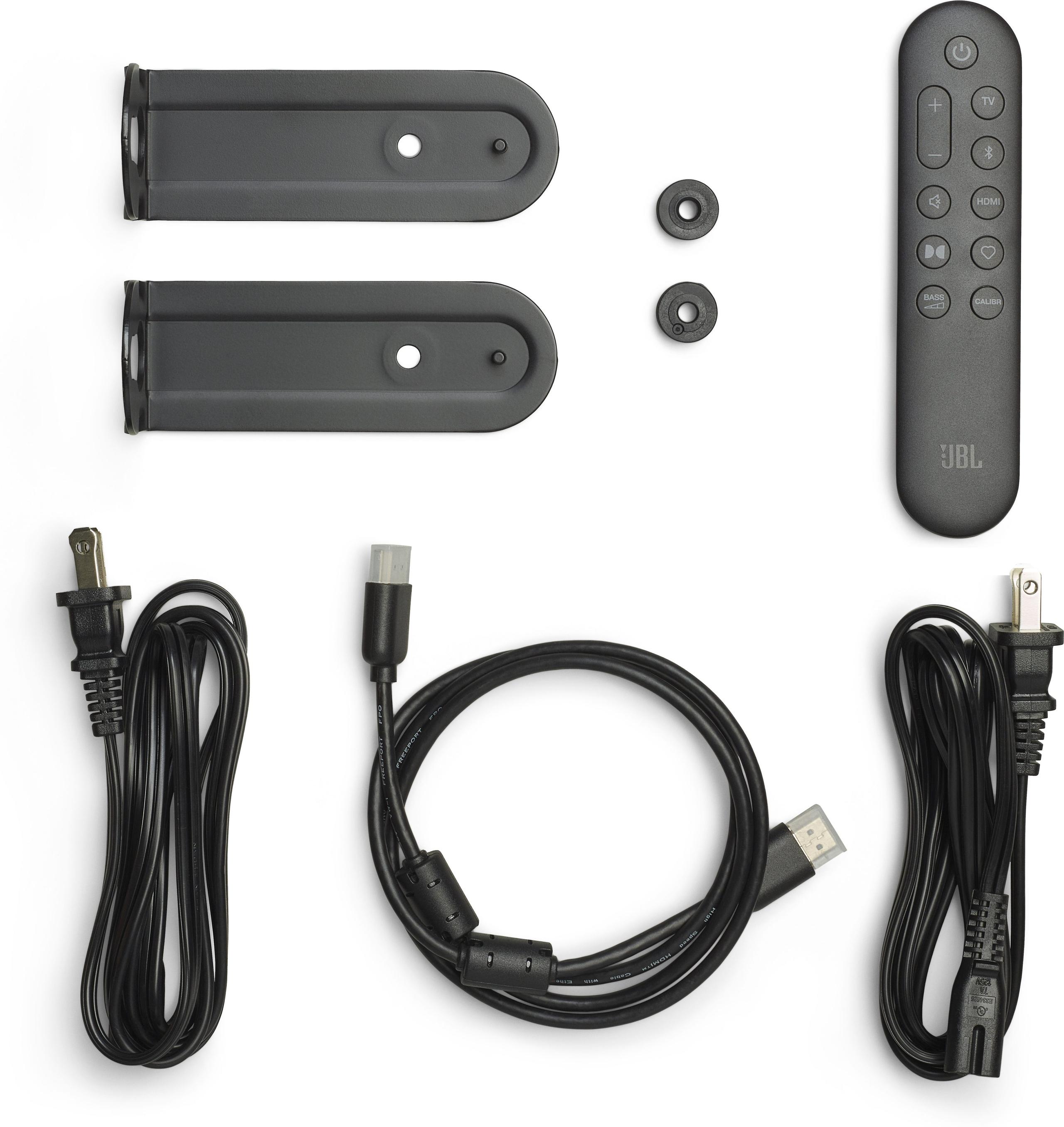
The JBL Bar 300 MK2 is easier to set up since it's a single unit requiring just one power cord and one connection to your TV. The Hisense HS2100 requires positioning both the soundbar and wireless subwoofer, plus managing two power cords. However, both systems support simple HDMI ARC connection for straightforward TV integration.
Both soundbars support Bluetooth streaming, but the JBL Bar 300 MK2 offers much more comprehensive wireless music options. It includes built-in Wi-Fi with support for AirPlay 2, Google Cast, Spotify Connect, and over 300 streaming services. The Hisense HS2100 is limited to Bluetooth 5.3 streaming from your phone or tablet.
The Hisense HS2100 works well in small to medium rooms, providing excellent value and strong bass impact. The JBL Bar 300 MK2 is also suitable for smaller spaces and offers the advantage of no subwoofer placement requirements. Both fit under most TVs, but the JBL Bar 300 MK2 provides a cleaner aesthetic with its single-unit design.
Only the JBL Bar 300 MK2 supports Dolby Atmos, using virtual processing to simulate height effects from its single bar design. The Hisense HS2100 supports Dolby Digital and Dolby Digital Plus but lacks Atmos capability. For modern streaming content that includes Atmos encoding, the JBL Bar 300 MK2 provides a more future-proof experience.
The JBL Bar 300 MK2 excels at dialogue clarity with its PureVoice 2.0 technology that actively enhances voice frequencies and SmartDetails processing. The 5.0 channel configuration also creates better center channel imaging for speech. The Hisense HS2100 offers clear dialogue reproduction and includes a dedicated News mode, but lacks advanced voice enhancement features.
Both soundbars support TV remote control through HDMI CEC, but with different capabilities. The Hisense HS2100 is Roku TV Ready certified for seamless integration with Roku TVs. The JBL Bar 300 MK2 works with most modern TV remotes via HDMI eARC and also offers comprehensive smartphone app control through the JBL One app.
The JBL Bar 300 MK2 produces higher maximum volume with its 450W power output compared to the Hisense HS2100's 240W. The JBL also maintains better clarity at high volumes with less distortion. However, both soundbars provide adequate volume for typical living room use, with the power difference most noticeable in larger rooms or for very loud listening preferences.
Both soundbars work well for gaming with low audio latency. The Hisense HS2100 provides impactful bass for action games and explosions. The JBL Bar 300 MK2 offers better spatial audio processing for directional cues in competitive gaming and supports more advanced audio formats from modern gaming consoles through its HDMI eARC connection.
The Hisense HS2100 typically offers exceptional value for budget-conscious buyers, providing significant bass impact and room-filling sound for its lower price point. The JBL Bar 300 MK2 costs more but includes premium features like advanced audio processing, comprehensive streaming capabilities, and smartphone app control. Value depends on whether you prioritize raw performance per dollar or advanced features.
Neither the Hisense HS2100 nor the JBL Bar 300 MK2 can be expanded with additional rear speakers or upgraded subwoofers. Both are complete systems designed to work as standalone units. If you want future expandability for a true surround sound setup, you'd need to consider different soundbar models that support wireless rear speakers or separate component systems.
We've done our best to create useful and informative comparisons to help you decide what product to buy. Our research uses advanced automated methods to create this comparison and perfection is not possible - please contact us for corrections or questions. These are the sites we've researched in the creation of this article: rtings.com - shop.hisense-usa.com - bestbuy.com - content.syndigo.com - bestbuy.com - hisensedealers.co.ke - stuff.co.za - dtc-aus-api.hisense.com - youtube.com - manuals.plus - youtube.com - bestbuy.com - youtube.com - gallifurniture.com - hisense-usa.com - manuals.plus - uk.hisense.com - device.report - youtube.com - costco.ca - elmcreekwsa.com - gallifurniture.com - homecinemachoice.com - retailspecs.com - hometechnologyreview.com - whathifi.com - news.jbl.com - engadget.com - crutchfield.com - harmanaudio.com - techradar.com - bestbuy.com - jbl.com - sweech.co.ke - jbl.com - jbl.com.sg - mm.jbl.com - abcwarehouse.com - harmanaudio.com - sweetwater.com - ro.harmanaudio.com - dell.com - jbl.co.nz

Privacy Policy
Terms and Conditions - Affiliate Policy
Home Security
© Copyright 2008-2026.
11816 Inwood Rd #1211, Dallas, TX 75244