























If you've ever tried watching an action movie on a modern flat-screen TV, you've probably noticed something frustrating: the picture looks amazing, but the sound is terrible. That's because today's ultra-thin TVs simply don't have room for decent speakers. The solution? A soundbar. But with options ranging from under $150 to over $800, how do you know what's worth your money?
Today we're comparing two soundbars that represent completely different approaches to solving your TV's audio problems: the budget-friendly Hisense HS2100 and the premium Sonos Arc. These aren't just different price points—they're fundamentally different philosophies about home audio.
Before diving into specifics, let's talk about what actually matters in a soundbar. At its core, a soundbar needs to make dialogue clearer, add some punch to action scenes, and ideally create a sense that sound is coming from around you rather than just straight ahead. The best soundbars accomplish this through a combination of multiple speakers, smart processing, and sometimes additional components like subwoofers.
The key technical specs to understand are channels (how many discrete audio streams the bar can handle), drivers (the individual speakers inside), and supported audio formats. When you see "2.1" it means two main channels plus one subwoofer channel. "5.0.2" means five main channels, no dedicated subwoofer channel, and two height channels that bounce sound off your ceiling.
Audio formats like Dolby Digital and DTS are compression systems that pack multichannel surround sound into smaller file sizes for streaming and broadcast. Dolby Atmos, introduced in 2012, adds height information to create truly three-dimensional sound that can place effects above and around you.
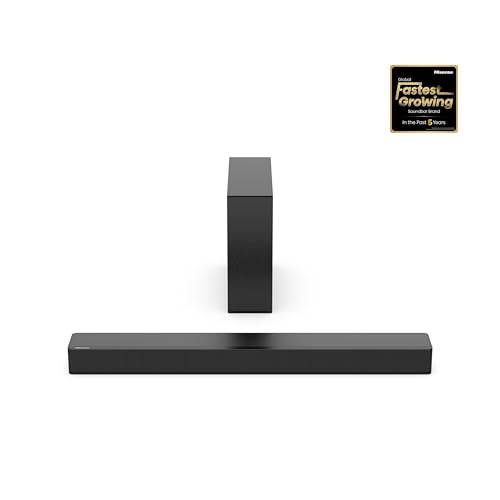
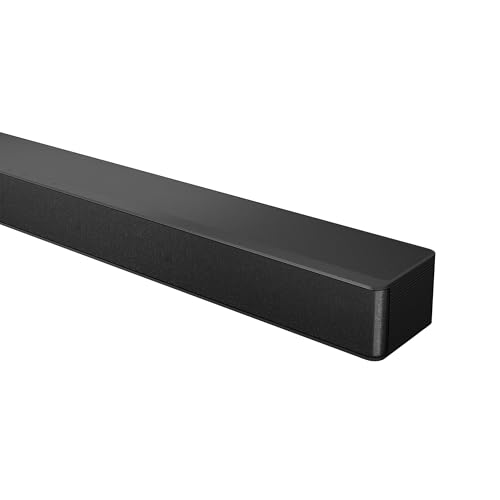
Released in 2023, the Hisense HS2100 represents what happens when a major TV manufacturer applies their cost-efficiency expertise to soundbars. At the time of writing, it typically costs less than a decent pair of headphones, yet includes features you'd expect from much pricier options.
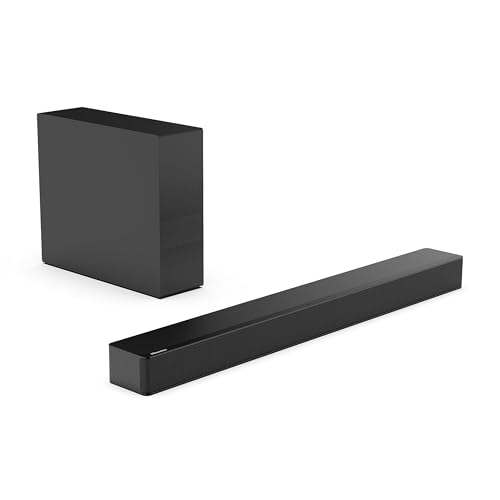
The HS2100 is a 2.1 channel system, meaning it has two main speakers in the soundbar plus a separate wireless subwoofer. This is genuinely impressive at this price point—most budget soundbars either skip the subwoofer entirely or include a wired one that limits placement options.
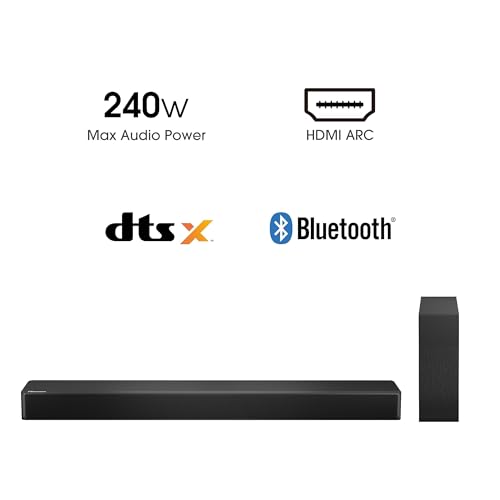
The main soundbar houses two full-range drivers powered by 60 watts each, while the wireless subwoofer adds a 5.25-inch driver with 120 watts of power. Total system power of 240 watts sounds impressive on paper, though real-world performance depends more on how efficiently that power is used.
What sets the Hisense HS2100 apart in the budget category is its support for DTS:Virtual X, a processing technology that attempts to create surround sound effects from just two speakers. While it can't match true multichannel systems, it does add some sense of width and spatial depth that makes movies more engaging.
Based on professional measurements and user feedback, the HS2100 delivers exactly what you'd expect from a well-executed budget soundbar. The frequency response spans 45Hz to 20kHz, which means it handles most of what you hear in movies and music, though it won't deliver the deepest bass or the most extended highs.
The sound signature is intentionally warm, meaning it emphasizes mid-bass and keeps treble from becoming harsh—a smart choice since most people find this more pleasant for long listening sessions. Dialogue comes through clearly thanks to relatively balanced midrange, though you won't get the pin-point vocal imaging that comes from a dedicated center channel.
Where the Hisense shows its limitations is in dynamic range (the difference between loud and quiet sounds) and soundstage width. At maximum volume, some compression artifacts become noticeable, and the stereo imaging doesn't extend much beyond the physical width of the bar itself.
The wireless subwoofer deserves special mention. While it can't extend down to the lowest frequencies that create room-shaking movie effects, it provides solid impact in the 40-120Hz range where most bass content lives. The wireless connection works reliably and pairs automatically, eliminating the cable management headaches of wired subs.
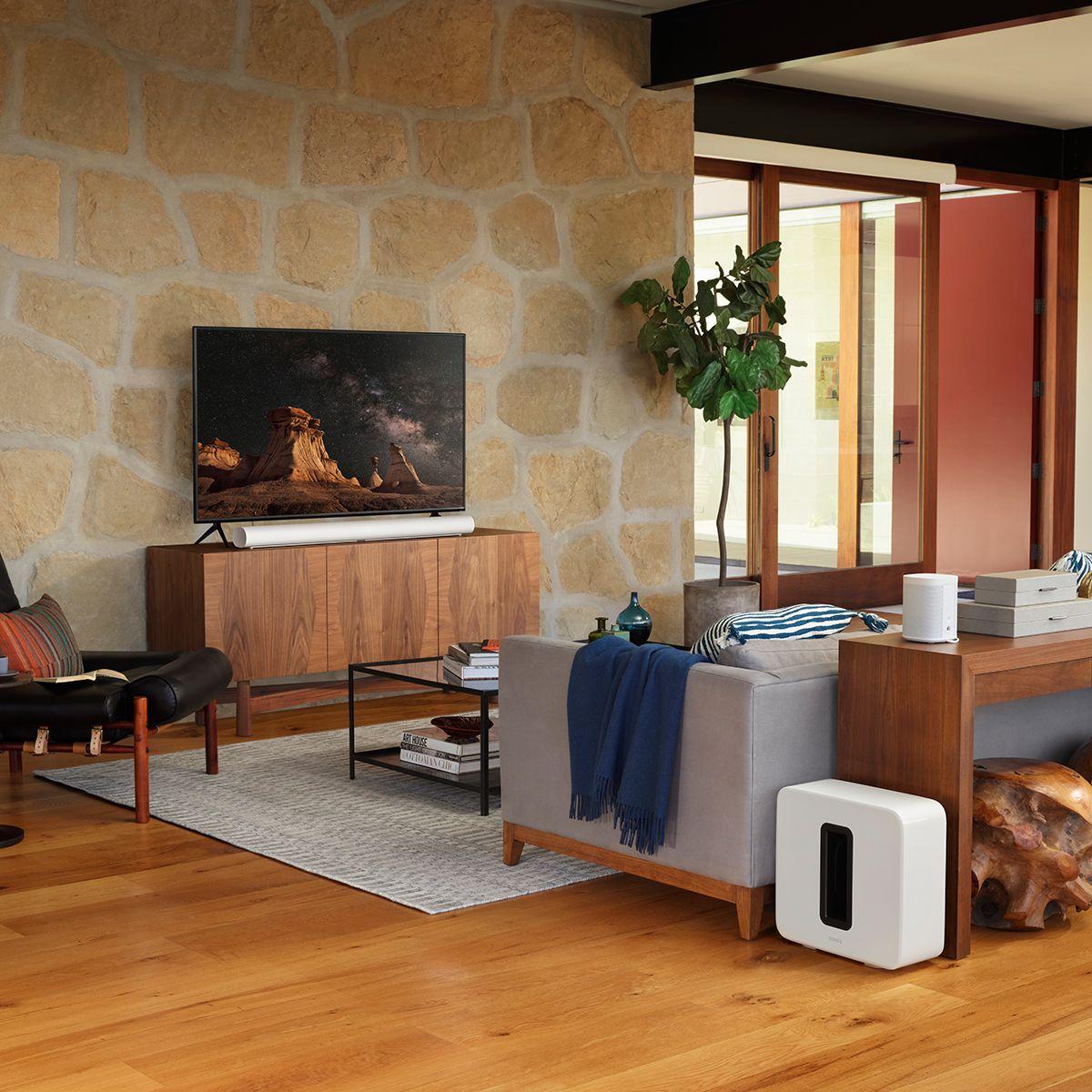
When Sonos released the Arc in 2020, they weren't just making another soundbar—they were making a statement about what premium home audio could be. The Sonos Arc costs significantly more than the Hisense at the time of writing, but it delivers a fundamentally different level of performance and capability.
The Sonos Arc packs eleven precisely tuned drivers into its sleek enclosure: three silk-dome tweeters for crisp highs and clear dialogue, eight elliptical woofers for midrange and bass, all powered by individual Class-D amplifiers. This isn't just more speakers—it's a complete acoustic system designed from the ground up.
The real magic happens with the Arc's 5.0.2 channel configuration. Those upward-firing speakers create genuine height effects by bouncing sound off your ceiling, while sophisticated processing places specific sounds at precise locations in three-dimensional space. When a helicopter flies overhead in a movie, you actually hear it move above you.
Dolby Atmos support is where the Sonos Arc truly shines. Unlike the Hisense's virtual surround processing, the Arc can decode and play back genuine object-based surround sound. This means sound engineers can place specific effects anywhere in a three-dimensional soundfield, and the Arc recreates that positioning with remarkable accuracy for a single soundbar.
The Arc includes both Google Assistant and Amazon Alexa built-in, but the smart features go deeper than just voice control. Trueplay room correction uses an iOS device's microphone to measure your room's acoustics and automatically adjusts the Arc's output for optimal performance. This kind of automated room optimization was previously found only in high-end receivers.
Speech Enhancement mode boosts dialogue frequencies when background music or effects threaten to overwhelm voices—incredibly useful for modern movies that often mix dialogue too quietly. Night Sound mode compresses dynamic range for late-night viewing without waking the household.
The Sonos ecosystem integration deserves mention too. You can start with just the Arc and later add a Sonos Sub for deeper bass or rear surround speakers for full 5.1 surround. This expandability means your initial investment can grow into a complete home theater system over time.
The difference in audio quality between these soundbars is immediately apparent. The Hisense HS2100 delivers pleasant, warm sound that's perfect for casual TV watching and makes dialogue much clearer than TV speakers. It gets reasonably loud for small to medium rooms and the included subwoofer adds satisfying punch to action scenes.
The Sonos Arc, however, operates in a different league entirely. Professional reviews consistently praise its precise imaging, wide soundstage, and clean dynamics even at high volumes. Where the Hisense might compress and distort when pushed hard, the Arc maintains clarity and control.
The Arc's dedicated center channel makes an enormous difference for dialogue. Instead of phantom center imaging where voices seem to float somewhere between the left and right speakers, the Arc places voices precisely at screen center with natural weight and presence.
This is where the fundamental differences between these products become crystal clear. The Hisense HS2100 uses virtual processing to simulate surround effects from its two-channel setup. While DTS:Virtual X does add some sense of width and occasional height cues, it's still fundamentally a stereo system playing back multichannel content.
The Sonos Arc creates genuine surround immersion that can be startling in its effectiveness. Those upward-firing speakers really do create convincing overhead effects when your room has a suitable ceiling. Rain sounds like it's falling around you, helicopters fly convincingly overhead, and ambient effects fill the room rather than just coming from in front of you.
For home theater enthusiasts, this difference is transformative. Watching a well-mixed Dolby Atmos movie on the Arc provides immersion that approaches what you'd get from a full surround speaker system, while the Hisense simply makes regular TV sound better.
Here's where things get interesting. The Hisense HS2100 includes a wireless subwoofer out of the box, while the Sonos Arc requires a separate subwoofer purchase for the deepest bass. At the time of writing, a Sonos Sub costs significantly more than the entire Hisense system.
The Hisense subwoofer provides solid mid-bass impact that makes action movies more engaging and adds weight to music. It won't rattle your windows, but it fills in the low-frequency foundation that the main soundbar can't reproduce.
The Arc alone produces impressive bass for its size, but it can't match a dedicated subwoofer for deep bass extension. However, when paired with a Sonos Sub, the combination delivers bass quality and control that the Hisense can't approach—tighter, more articulate, with extension down to frequencies you feel as much as hear.
The Hisense HS2100 represents exceptional value for its price point at the time of writing. You get a complete system that includes everything needed for significantly better TV audio. There are no hidden costs, no required accessories, and no complex setup procedures.
For many people, the HS2100 provides all the improvement they need. If you primarily watch TV shows, news, and occasional movies, and you want clearer dialogue with some added bass impact, this soundbar delivers exactly that at a price that won't strain most budgets.
The Sonos Arc costs significantly more, and that's before considering additional components like a subwoofer or rear surrounds. However, it's important to understand what you're buying: a premium audio component that can serve as the foundation for a complete home theater system.
The Arc also benefits from Sonos's track record of long-term software support. The company regularly updates their products with new features and improvements, meaning your investment continues to get better over time. The original Sonos products from the early 2000s still receive updates today.
You're working within a tight budget but want a meaningful upgrade from TV speakers. The HS2100 makes sense for small to medium rooms where you primarily watch TV shows, news, and occasional movies. It's perfect for apartments, bedrooms, or secondary viewing areas where good-enough audio improvement is the goal.
The included subwoofer means you get immediate bass impact without additional purchases. If you want to set it up and forget about it, never thinking about audio again, the Hisense delivers exactly that experience.
You're serious about home theater and want genuine surround immersion. The Arc makes sense for larger rooms, dedicated movie watching spaces, and situations where audio quality is a priority rather than just an afterthought.
If you enjoy the idea of building a system over time—starting with the soundbar and later adding a subwoofer and rear speakers—the Arc provides that upgrade path. The smart home integration and voice control capabilities also appeal to users who want their audio system to be part of a connected home ecosystem.
It's worth noting how soundbar technology has evolved. When the first soundbars appeared in the mid-2000s, they were essentially just wider versions of TV speakers. Today's products like these two represent mature categories with sophisticated processing and genuine performance capabilities.
The Hisense HS2100 benefits from decades of cost reduction and manufacturing efficiency improvements. What would have been expensive technology ten years ago—wireless subwoofers, digital signal processing, multiple connectivity options—is now standard even in budget products.
The Sonos Arc represents the current state-of-the-art in single-soundbar surround processing. The combination of precisely positioned drivers, room correction, and object-based surround decoding would have required a full rack of equipment just a decade ago.
The choice between these soundbars ultimately comes down to your priorities and budget reality. The Hisense HS2100 is an excellent example of how good budget audio can be when done right—it solves the core problem of poor TV audio without breaking the bank or introducing complexity.
The Sonos Arc represents what's possible when you prioritize audio quality and advanced features. It transforms the TV viewing experience in ways that go beyond just making things louder or clearer.
At the time of writing, the price difference between these products is substantial—you could buy multiple Hisense systems for the cost of one Sonos Arc. But you're not just paying for better sound; you're paying for advanced technology, premium construction, smart features, and long-term upgrade potential.
Consider your room size, content preferences, and how much you value audio quality. If you're happy with good-enough improvement and want to spend money elsewhere, the Hisense HS2100 delivers excellent value. If audio quality matters enough to invest significantly more money, the Sonos Arc provides performance that justifies its premium positioning.
Both represent smart engineering solutions to the TV audio problem—they just target different users with different priorities and budgets.
| Hisense HS2100 2.1 Channel 240W Soundbar System | Sonos Arc Wireless Sound Bar with Dolby Atmos |
|---|---|
| Channel Configuration - Determines surround sound capability and dialogue clarity | |
| 2.1 channels (stereo + subwoofer) | 5.0.2 channels (true surround + height channels) |
| Dolby Atmos Support - Essential for immersive movie experience | |
| Not supported (DTS:Virtual X only) | Full Dolby Atmos with upward-firing speakers |
| Subwoofer Inclusion - Impacts bass performance and total system cost | |
| Wireless 5.25" subwoofer included | No subwoofer (must purchase Sonos Sub separately) |
| Total Power Output - Affects maximum volume and dynamic range | |
| 240W (60W × 2 + 120W subwoofer) | 11 Class-D amplifiers (power not specified) |
| Smart Features - Voice control and home automation integration | |
| Basic EQ presets, Roku TV Ready | Built-in Google Assistant, Alexa, Trueplay room correction |
| Audio Format Support - Compatibility with streaming and disc content | |
| Dolby Digital, DTS (downmixed to stereo) | Dolby Digital, Dolby Digital Plus, Dolby Atmos, DTS |
| Connectivity Options - How you connect sources and expand the system | |
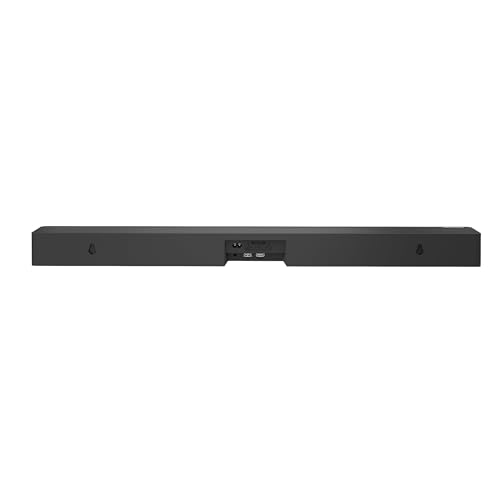
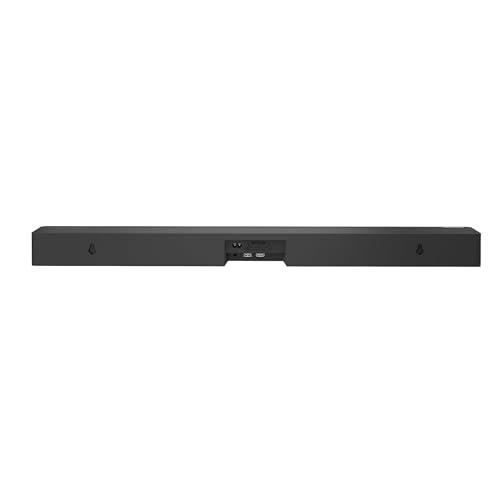
| HDMI ARC, optical, aux, USB, Bluetooth 5.3 | HDMI eARC, optical, WiFi, AirPlay 2, Ethernet |
| Expandability - Ability to upgrade system over time | |
| Complete system, no expansion options | Can add Sonos Sub and rear surrounds for full 5.1.2 |
| Room Correction - Automatic audio optimization for your space | |
| Manual bass/treble adjustment only | Trueplay automatic room tuning (iOS required) |
| Physical Design - Size and mounting considerations | |
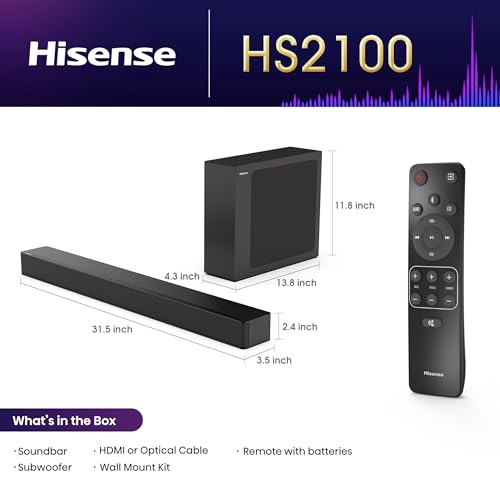
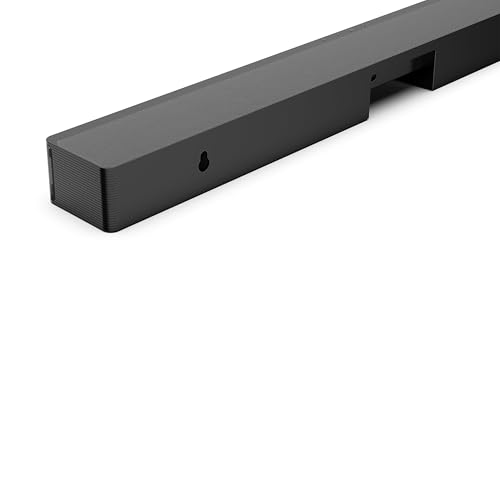
| 31.5" × 2.4" × 3.5", wall-mount kit included | 45" × 3.4" × 4.6", premium build quality |
| Target Use Case - Best suited for different viewing habits | |
| Budget TV audio upgrade, casual viewing | Premium home theater, serious movie watching |
The Hisense HS2100 is a budget 2.1 channel soundbar that includes a wireless subwoofer, while the Sonos Arc is a premium soundbar with Dolby Atmos support and smart home features. The HS2100 focuses on providing good value with basic surround sound processing, while the Arc delivers true 3D audio with upward-firing speakers and advanced room correction.
The Sonos Arc is significantly better for home theater use. It supports full Dolby Atmos with genuine height channels that create overhead effects, has a dedicated center channel for clear dialogue, and produces a much wider soundstage. The Hisense HS2100 only offers virtual surround processing and downmixes all multichannel content to stereo, making it less immersive for movies.
The Hisense HS2100 comes complete with a wireless subwoofer included, so no additional purchases are required. The Sonos Arc works as a standalone unit but doesn't include a subwoofer - you'll need to buy the Sonos Sub separately for deep bass, plus rear speakers if you want full surround sound.
The Hisense HS2100 offers exceptional value for budget-conscious buyers, providing a complete 2.1 system with subwoofer at a very affordable price point. The Sonos Arc costs significantly more but delivers premium audio quality, smart features, and expandability that justify the higher investment for serious home theater enthusiasts.
Yes, both the Hisense HS2100 and Sonos Arc support HDMI ARC for simple TV connection with a single cable. The Arc also supports the newer HDMI eARC standard for higher bandwidth audio formats. Both include optical connections for older TVs that lack HDMI ARC.
The Sonos Arc provides superior music performance with more precise imaging, better frequency response, and the ability to stream from multiple services. However, the Hisense HS2100 offers decent music quality with its included subwoofer providing good bass impact, making it adequate for casual music listening at a much lower cost.
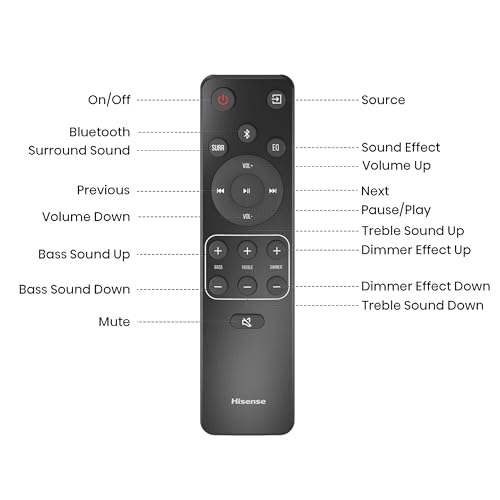
The Sonos Arc has built-in Google Assistant and Amazon Alexa for hands-free voice control. The Hisense HS2100 doesn't include voice assistants but does support Roku TV Ready for simplified remote control integration with compatible Roku TVs.
The Hisense HS2100 includes a 5.25-inch wireless subwoofer that provides solid bass impact out of the box. The Sonos Arc has impressive built-in bass for its size but requires the separate Sonos Sub for deep bass extension, which significantly increases the total system cost but delivers superior bass quality.
Both soundbars work well in small rooms, but the Hisense HS2100 might be more practical due to its lower cost and complete system approach. The Sonos Arc includes Trueplay room correction that optimizes sound for your specific space, making it excellent for small rooms if you can justify the higher investment.
The Hisense HS2100 is a complete system with no expansion options - what you buy is what you get. The Sonos Arc is highly expandable within the Sonos ecosystem, allowing you to add a subwoofer, rear surround speakers, and integrate with other Sonos speakers throughout your home for multiroom audio.
The Sonos Arc features premium construction with high-quality materials, precision-tuned drivers, and sophisticated internal components. The Hisense HS2100 has solid build quality for its price point with a plastic chassis and fabric grille, but it's clearly designed to meet a budget rather than premium standards.
Choose the Hisense HS2100 if you want significant improvement over TV speakers at minimal cost, primarily watch TV shows, and prefer a complete system with no additional purchases required. Choose the Sonos Arc if you're serious about home theater, want genuine Dolby Atmos immersion, value smart features, and don't mind investing more for premium audio quality and expandability.
We've done our best to create useful and informative comparisons to help you decide what product to buy. Our research uses advanced automated methods to create this comparison and perfection is not possible - please contact us for corrections or questions. These are the sites we've researched in the creation of this article: rtings.com - shop.hisense-usa.com - bestbuy.com - content.syndigo.com - bestbuy.com - hisensedealers.co.ke - stuff.co.za - dtc-aus-api.hisense.com - youtube.com - manuals.plus - youtube.com - bestbuy.com - youtube.com - gallifurniture.com - hisense-usa.com - manuals.plus - uk.hisense.com - device.report - youtube.com - costco.ca - elmcreekwsa.com - gallifurniture.com - whathifi.com - soundandvision.com - en.community.sonos.com - cnet.com - worldwidestereo.com - abt.com - creativeaudio.net - target.com - sonos.com - worldwidestereo.com - businessinsider.com - en.community.sonos.com - youtube.com

Privacy Policy
Terms and Conditions - Affiliate Policy
Home Security
© Copyright 2008-2026.
11816 Inwood Rd #1211, Dallas, TX 75244