

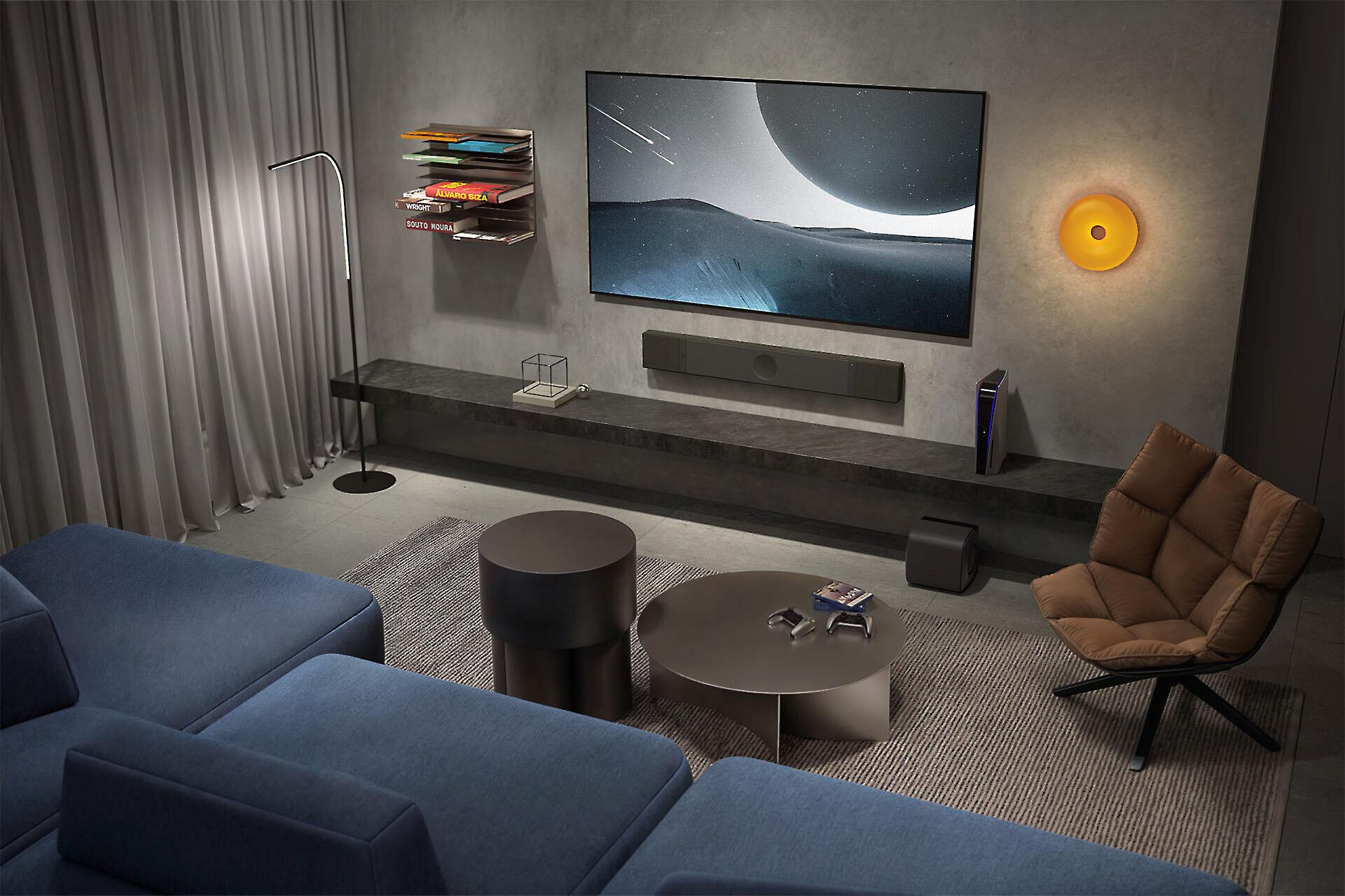
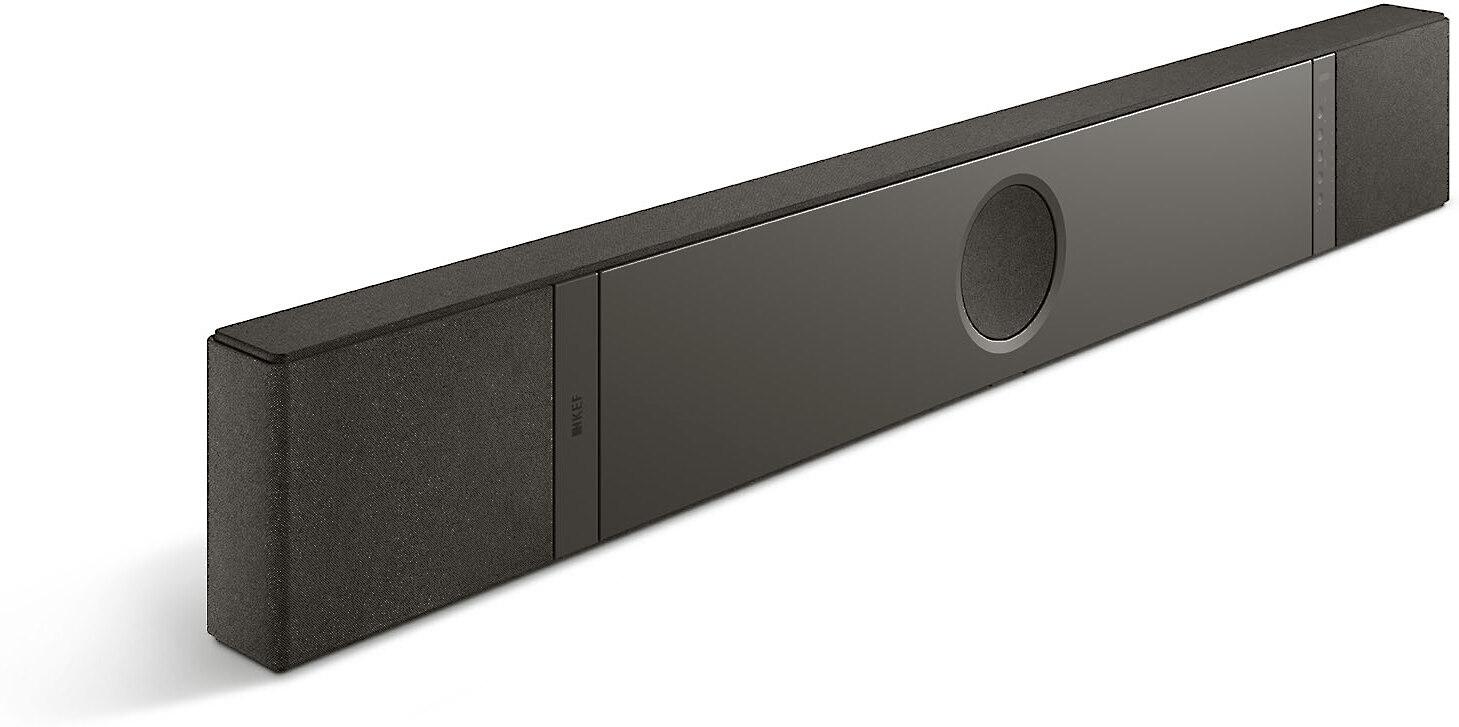
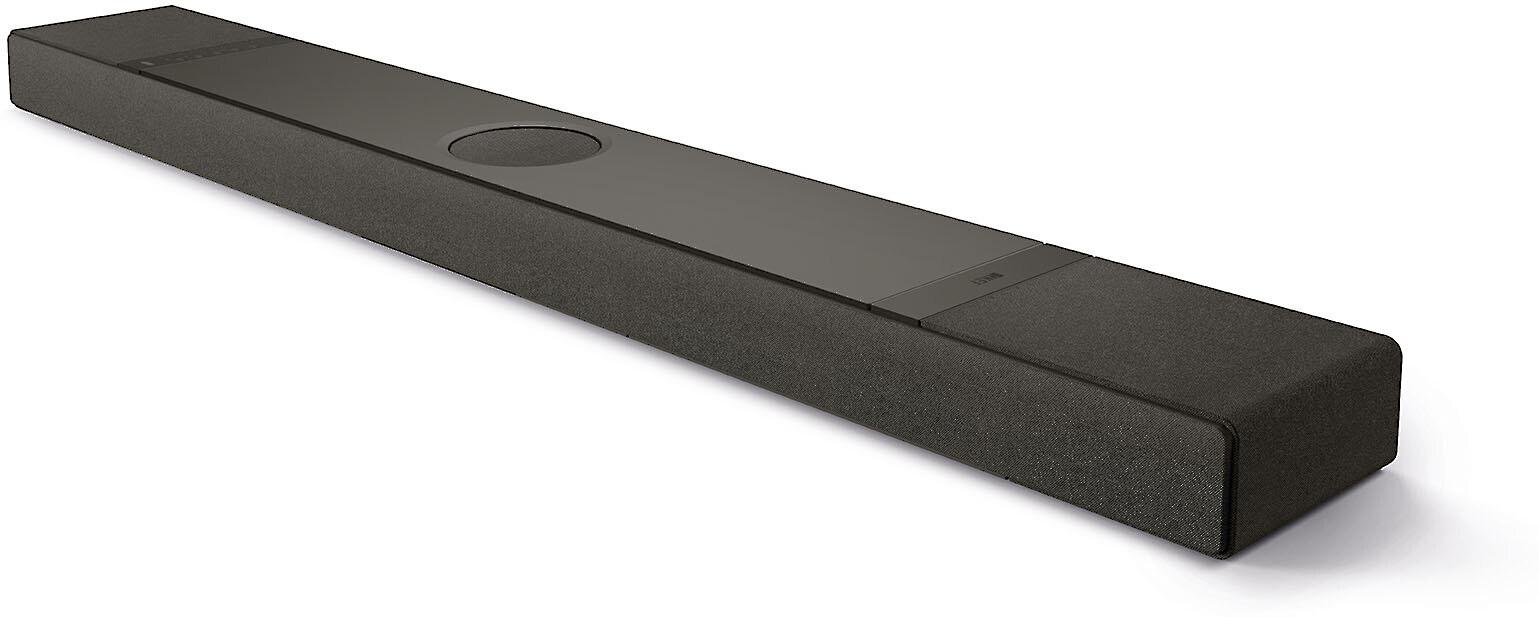
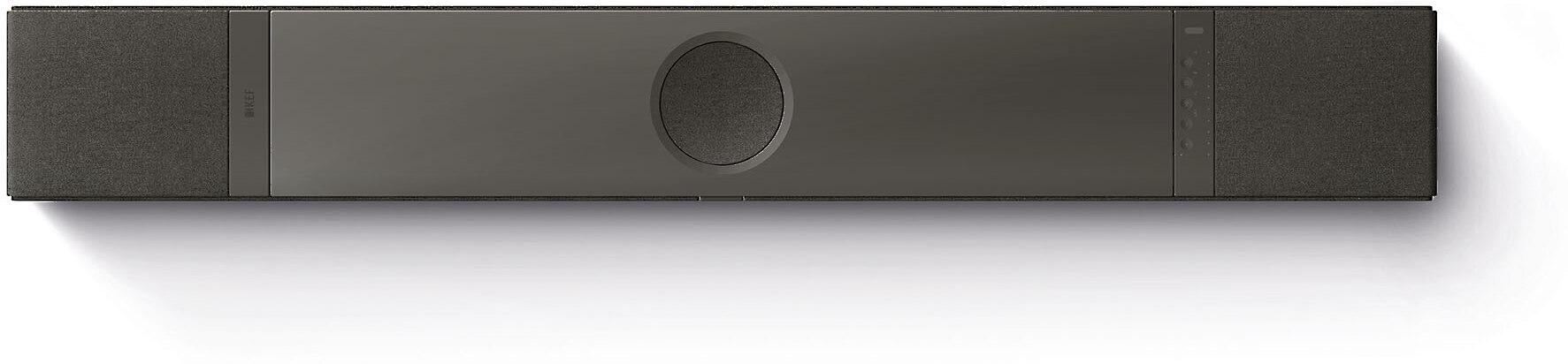



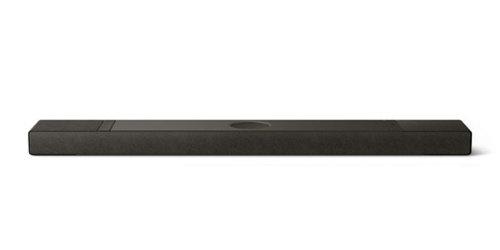
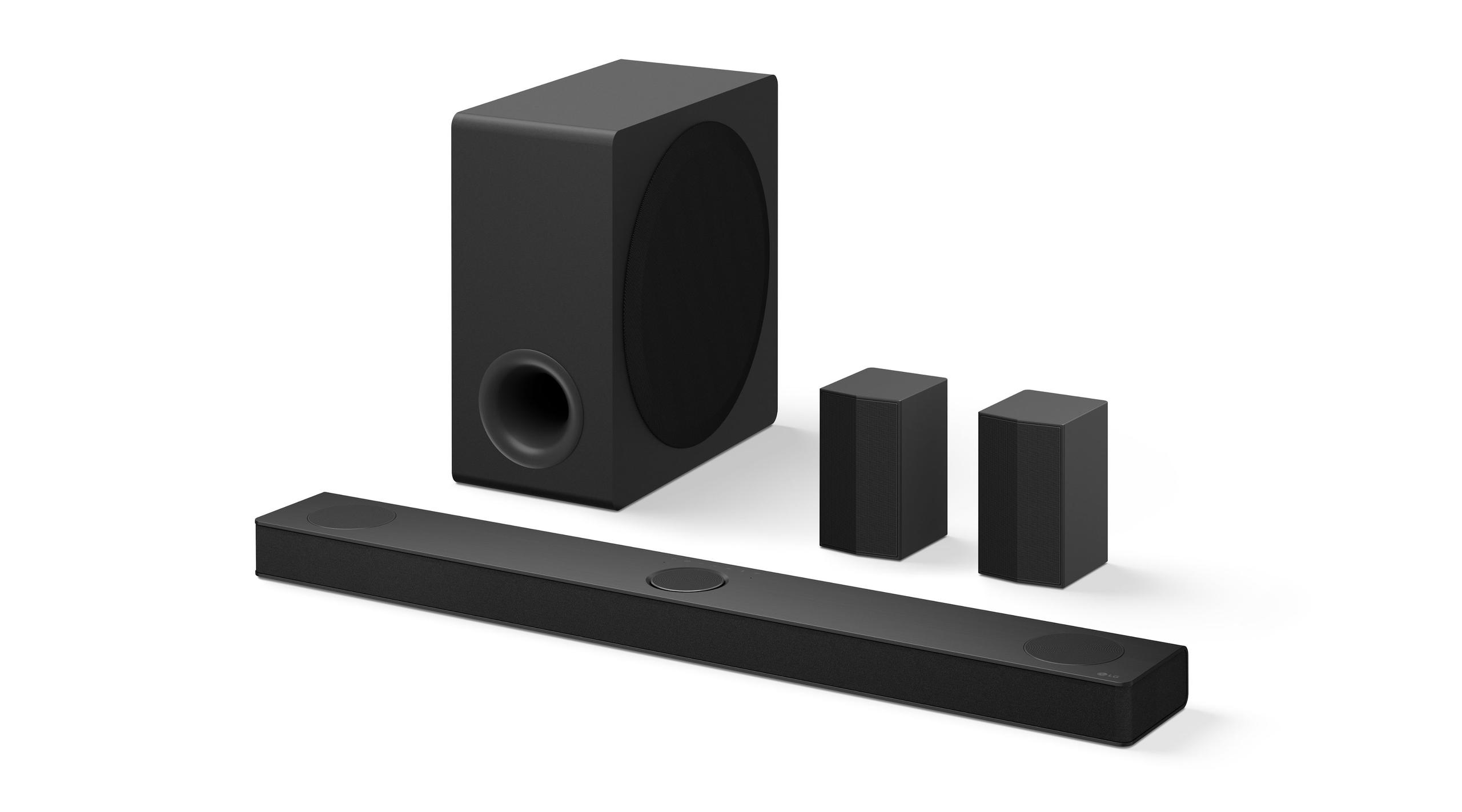
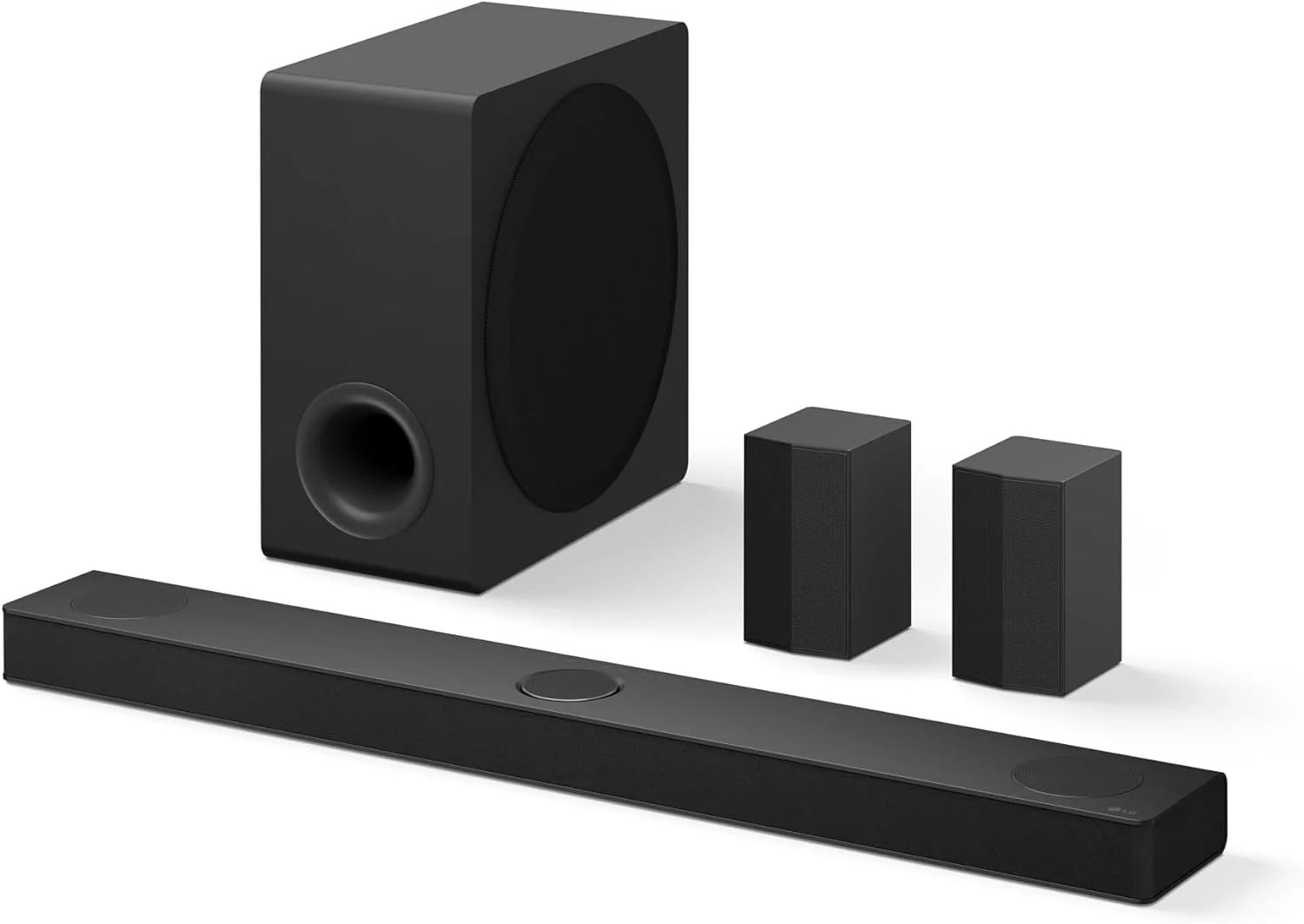




When I first heard about KEF entering the soundbar market with the KEF XIO ($2,499), I'll admit I was skeptical. KEF has spent decades building some of the world's finest speakers, so why venture into a category dominated by convenience over pure sound quality? After spending time with both the XIO and the budget-friendly LG S80TR ($547), I understand exactly what KEF was thinking—and why these two products represent completely different philosophies about what a "premium" soundbar should be.
The soundbar market has evolved dramatically since the first models appeared in the early 2000s. Back then, they were simple solutions to thin TV speakers—basic stereo bars that prioritized space-saving over sound quality. Today's premium soundbars split into two distinct camps: the "everything in one elegant package" approach and the "modular home theater replacement" strategy.
The KEF XIO, released in mid-2024, represents the former philosophy. It's what happens when a company famous for $50,000 speakers decides to tackle the soundbar challenge without compromising their reputation for audio excellence. Meanwhile, the LG S80TR, launched as the successor to LG's popular S80QR series in early 2024, embodies the latter approach—delivering authentic surround sound through multiple components at a price that won't require a second mortgage.
Understanding which philosophy matches your priorities is crucial, because these products solve fundamentally different problems despite both claiming to deliver "premium" audio experiences.
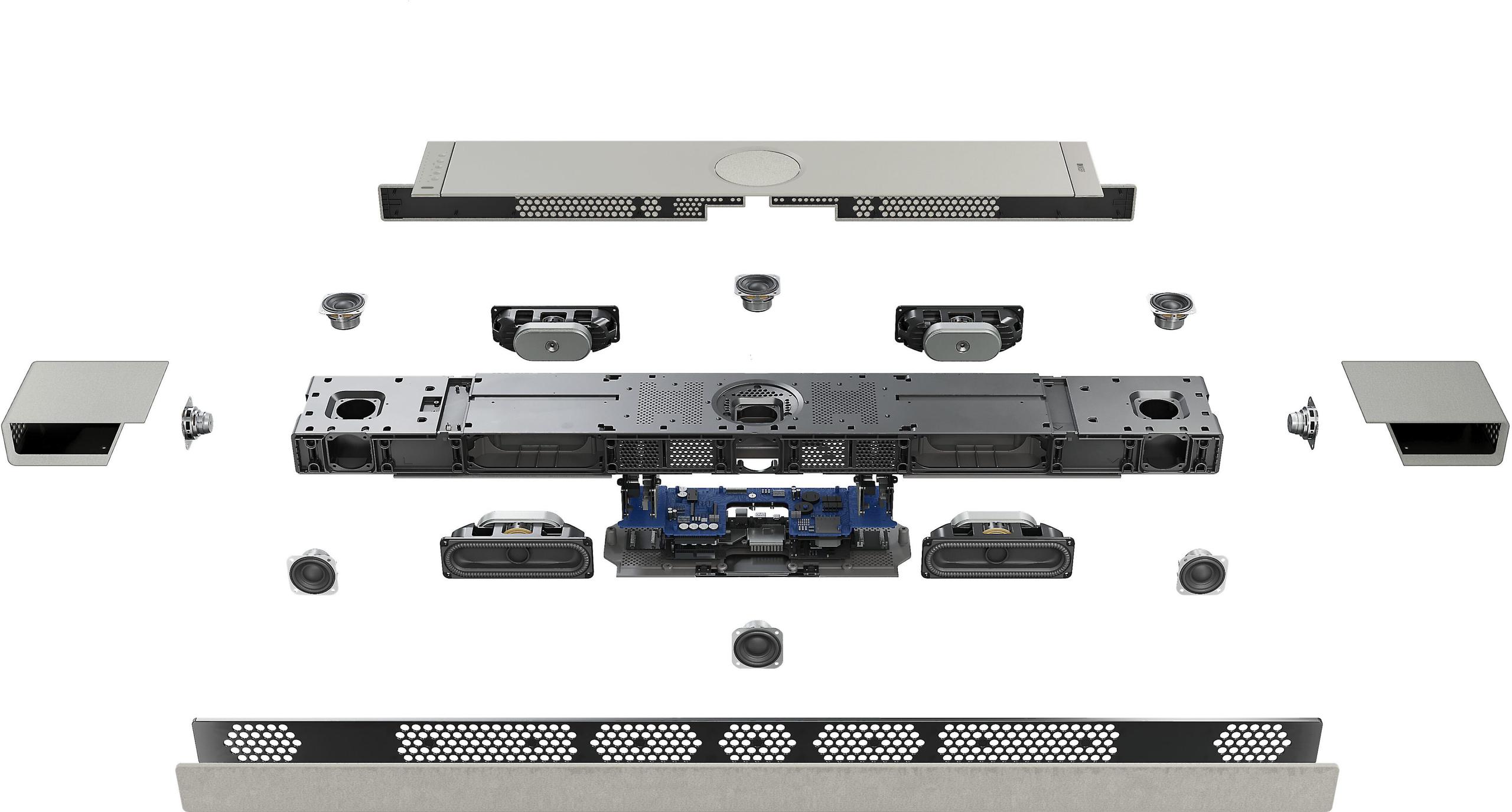
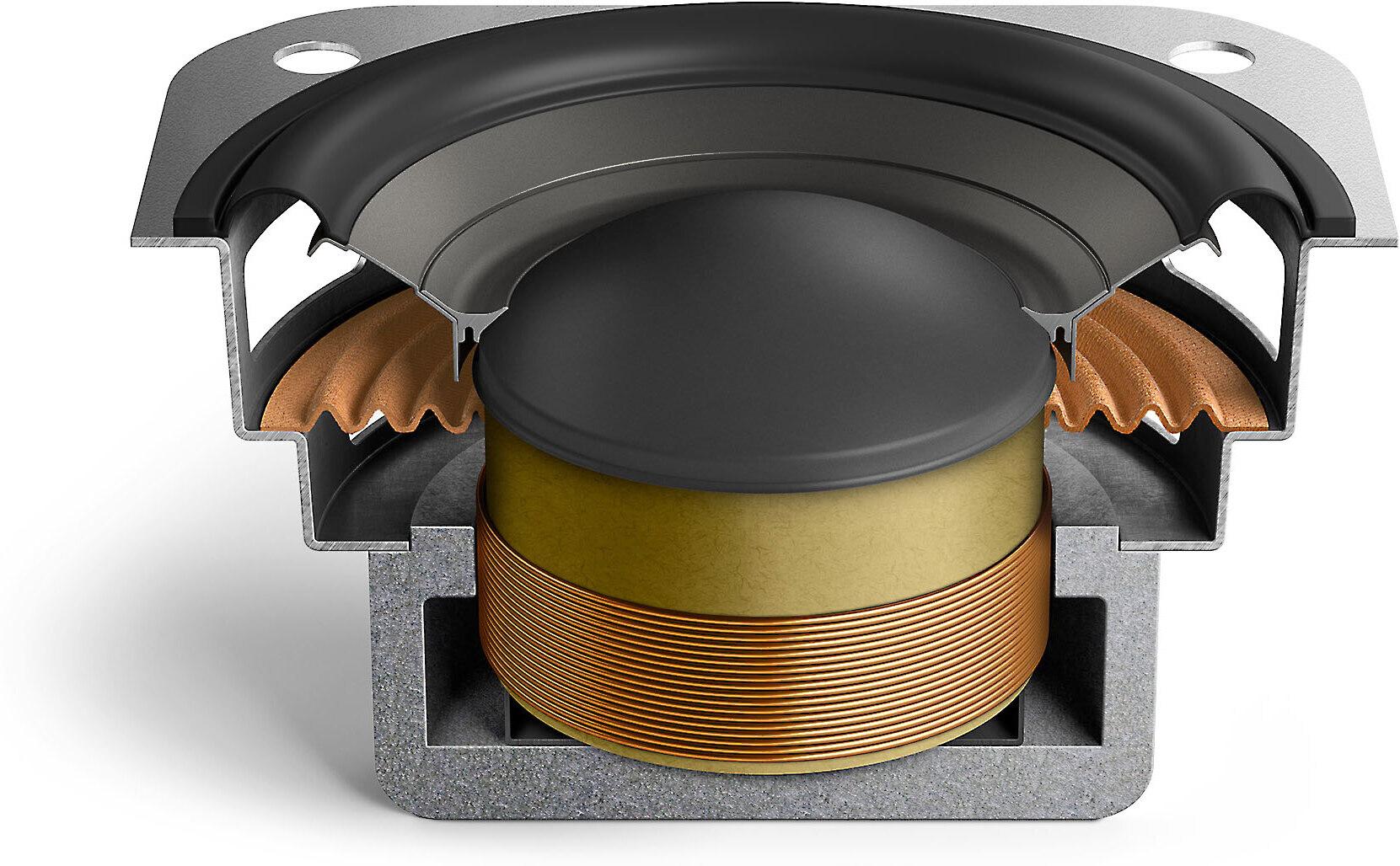
The KEF XIO's most distinctive feature is its array of six Uni-Q MX drivers. If you're not familiar with KEF's Uni-Q technology, imagine trying to create perfect sound by placing a tweeter (high-frequency driver) directly in the center of a woofer (low-frequency driver). This "coaxial" design means both high and low frequencies emanate from the exact same point, eliminating the timing issues that plague conventional speakers where different drivers are physically separated.
The "MX" designation indicates these are miniaturized versions of KEF's flagship Uni-Q drivers, specifically engineered for the XIO's compact form factor. What's remarkable is that KEF managed to maintain the wide dispersion characteristics of their full-size drivers. In practical terms, this means you'll hear consistent, detailed sound whether you're sitting directly in front of the soundbar or off to the side—something most soundbars struggle with.
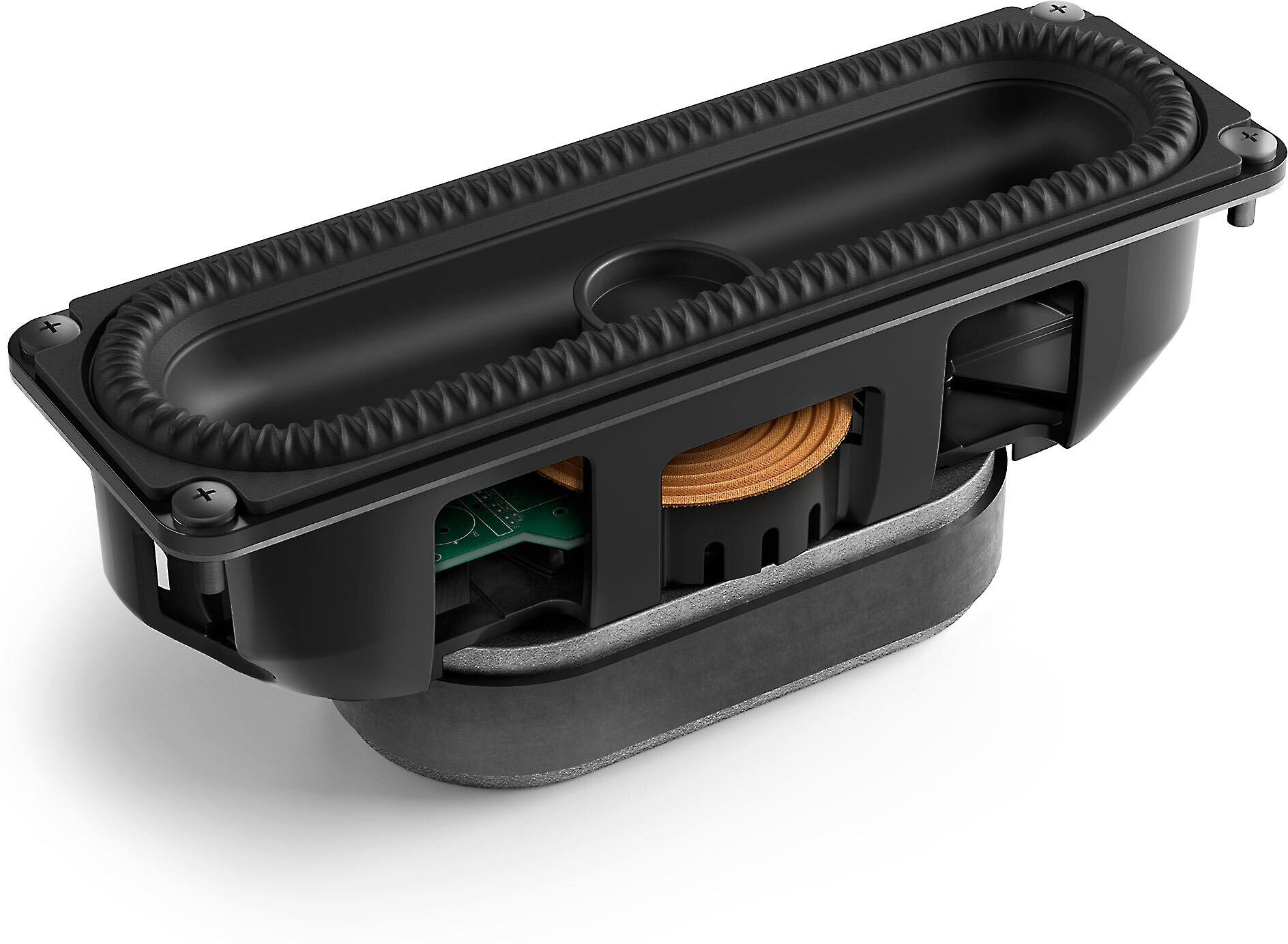
But KEF didn't stop there. The XIO incorporates four P185 racetrack woofers using technology borrowed from their acclaimed KC62 subwoofer. These aren't typical round drivers; their oval shape allows for more surface area in the limited space of a soundbar chassis. More importantly, they're arranged in a force-canceling configuration, meaning pairs of drivers work in opposition to minimize cabinet vibration. Think of it like noise-canceling headphones, but for unwanted vibrations that would otherwise muddy the sound.
The real magic happens with KEF's Velocity Control Technology (VECO). Using real-time sensors, the system monitors driver movement and applies corrective feedback to reduce distortion by up to 28dB. That might sound like marketing speak, but the audible result is bass that remains clean and articulate even at high volumes—something that typically requires a much larger cabinet or separate subwoofer.
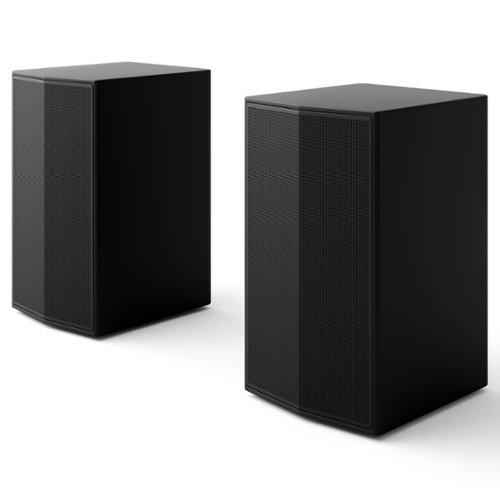
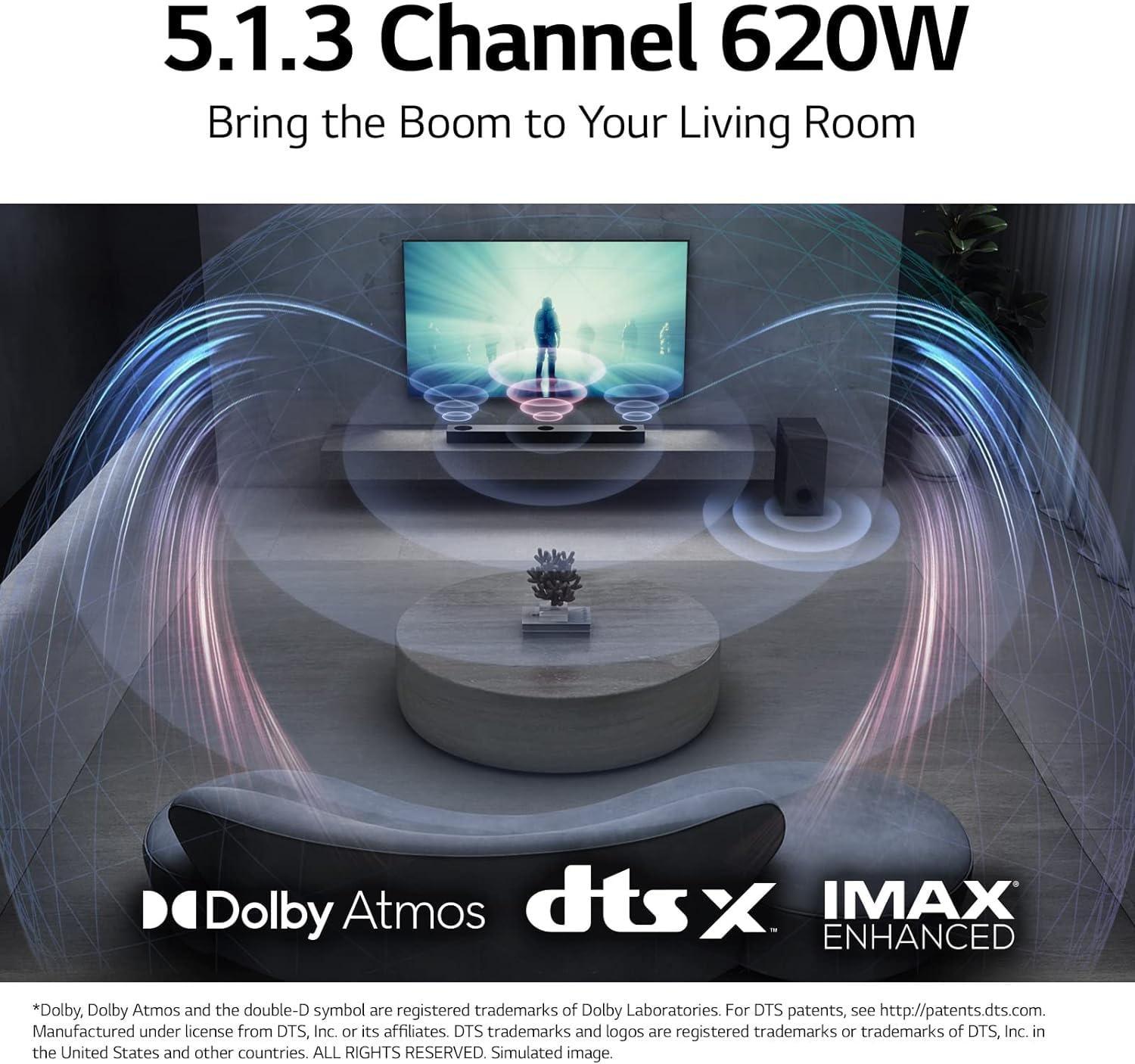
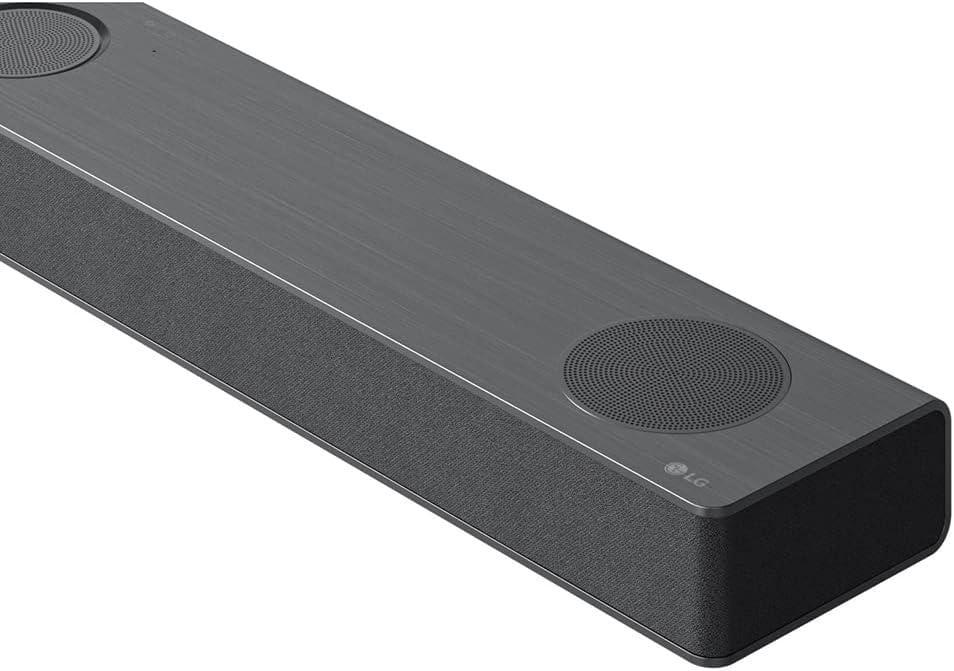
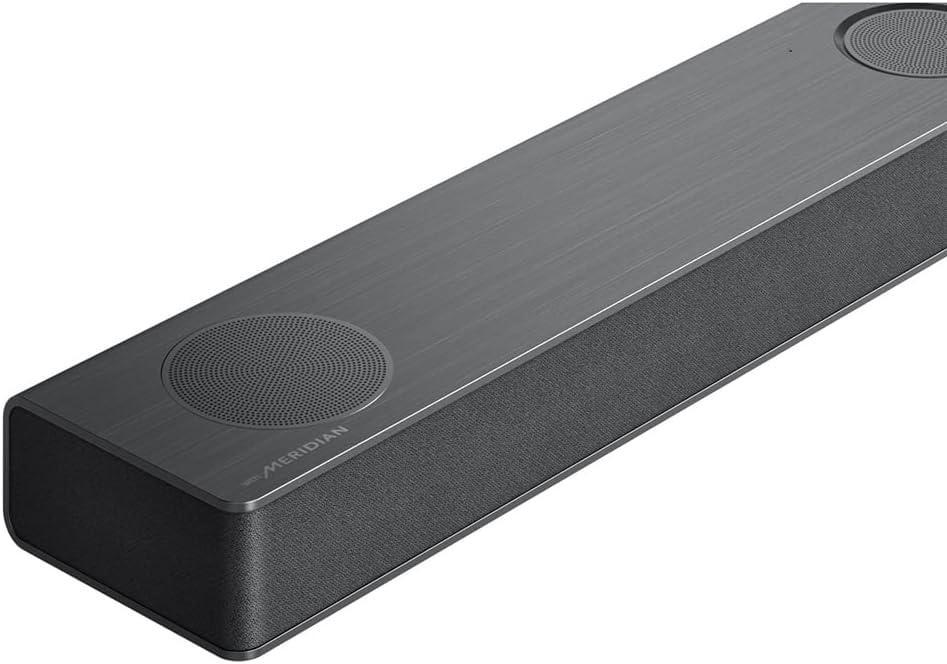
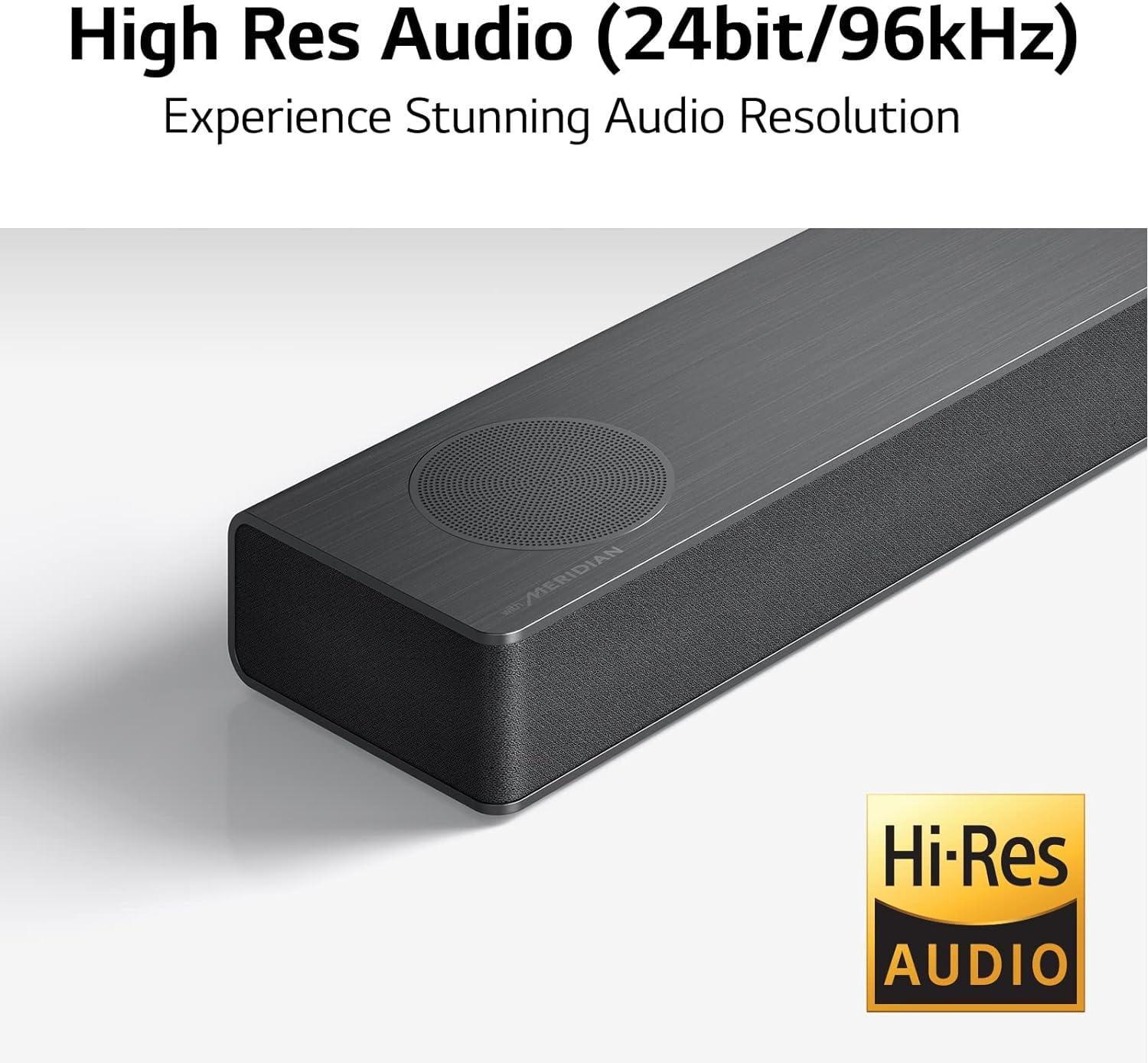
The LG S80TR takes a completely different approach. Rather than cramming everything into a single bar, LG provides what amounts to a complete 5.1.3 home theater system: a main soundbar, wireless subwoofer, and two wireless rear speakers. The "5.1.3" designation tells you exactly what you're getting—five main channels (left, center, right, left surround, right surround), one subwoofer channel, and three height channels for Dolby Atmos overhead effects.
This physical separation offers advantages that no single-bar system can match. Real rear speakers create genuine surround effects because the sound is actually coming from behind you, not virtualized through psychoacoustic processing. The dedicated subwoofer, while not as sophisticated as the XIO's built-in bass system, can move more air and deliver the kind of room-shaking low-frequency effects that movie soundtracks demand.
LG's AI Room Calibration deserves special mention. Using built-in microphones, the system measures your room's acoustics and automatically adjusts timing, levels, and frequency response. It's similar to what high-end AV receivers have offered for years, but implemented in a much more user-friendly package. The system even accounts for the wireless rear speakers, ensuring everything stays perfectly synchronized despite the complex signal processing required.
Having tested both systems extensively with various music genres, the differences are immediately apparent. The KEF XIO approaches music reproduction with the same philosophy as KEF's standalone speakers—neutral, detailed, and focused on revealing what's actually in the recording rather than emphasizing particular frequency ranges.
Playing Patricia Barber's "The Moon Song" through the XIO reveals the intimate club atmosphere that makes her recordings so compelling. Her voice appears precisely centered and naturally sized, while the subtle reverb of the recording space extends well beyond the physical boundaries of the soundbar. The bass line remains tight and controlled, never overwhelming but providing proper foundation to the performance.
The same track through the LG S80TR sounds good, but noticeably different. LG has tuned their system for movie enjoyment, which means a warmer overall balance with enhanced bass and a slightly recessed treble. This makes action movies more exciting but can obscure musical details. Barber's voice, while clear thanks to the dedicated center channel, doesn't have the same pinpoint precision or natural timbre.
This difference becomes more pronounced with complex orchestral pieces. The XIO's Uni-Q drivers excel at maintaining clarity when multiple instruments play simultaneously, while the S80TR's more colored sound signature can make dense passages feel congested.
For movie watching, the comparison becomes more complex. Both systems support Dolby Atmos, the object-based audio format that places sounds in three-dimensional space rather than just sending them to specific channels. However, their approaches to creating this immersion couldn't be more different.
The KEF XIO uses sophisticated signal processing and precisely angled drivers to create virtual surround effects. KEF's Music Integrity Engine (MIE) for Cinema analyzes incoming audio and determines how to best recreate spatial effects using the soundbar's driver array. During the helicopter scene in "Blade Runner 2049," the XIO creates a convincing sense of overhead movement, with the aircraft appearing to travel from behind your head to in front of you.
But here's where physics matters. The LG S80TR's physical rear speakers provide something the XIO simply cannot: actual sound sources behind your seating position. In the same scene, you hear the helicopter approaching from behind because there's literally a speaker back there producing that sound. The effect is more dramatic and less dependent on your specific seating position.
The trade-off comes in setup complexity and aesthetic impact. The XIO requires only a single power cord and one HDMI connection to your TV. The S80TR needs strategic placement of four separate components, with careful attention to rear speaker positioning for optimal effect.
One feature that sets the KEF XIO apart is its Intelligent Placement Technology (IPT). Using built-in sensors and the KEF Connect app, the system automatically detects whether it's wall-mounted or shelf-mounted, then adjusts its acoustic output accordingly. This might seem minor, but placement dramatically affects how any speaker sounds.
When wall-mounted, the XIO reduces bass output to compensate for the boundary reinforcement effect—essentially, the wall acts as a giant woofer, boosting low frequencies. When shelf-mounted, the system applies different corrections based on proximity to surfaces. This automatic optimization ensures consistent performance regardless of your specific setup constraints.
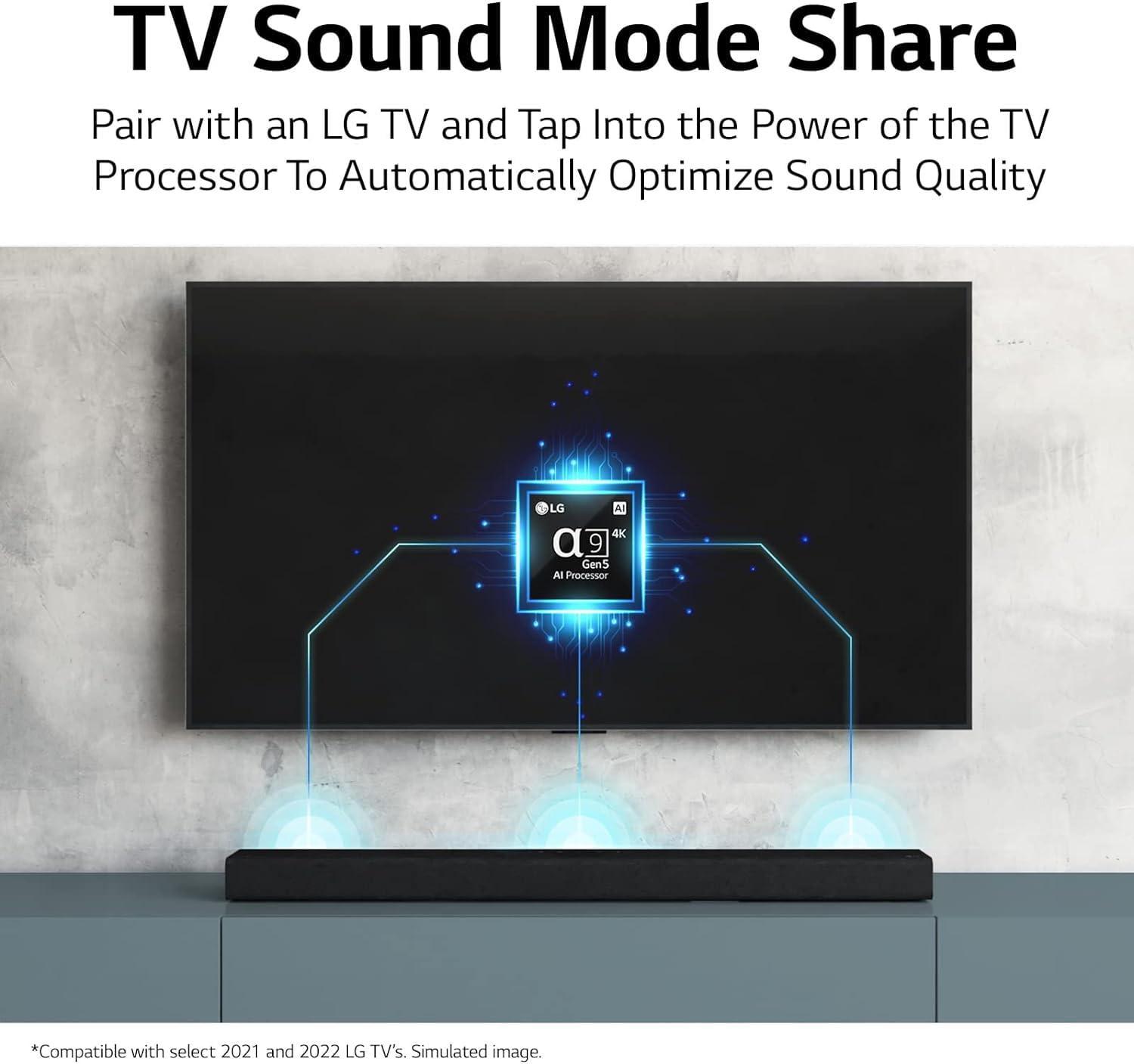
The LG S80TR offers a unique advantage if you own an LG TV: WOW Orchestra mode. This feature uses both the TV's built-in speakers and the soundbar system simultaneously, creating an even wider soundstage. While it might seem counterintuitive to use TV speakers alongside a premium soundbar, the implementation is surprisingly effective.
The TV speakers handle certain midrange frequencies while the soundbar focuses on bass, treble, and surround effects. The result is a more enveloping sound that fills larger rooms more effectively than either component alone. It's a clever solution that maximizes the hardware you've already purchased.
At $2,499, the KEF XIO commands premium pricing that reflects its advanced engineering and premium materials. However, when compared to assembling a comparable hi-fi system (quality amplifier, high-end speakers, and subwoofer), the XIO actually represents reasonable value. A pair of KEF's LS50 Meta speakers alone costs nearly as much, and you'd still need amplification and bass extension.
The LG S80TR at $547 delivers remarkable value for a complete surround sound system. Comparable separates from established home theater brands would typically cost $1,000 or more. The inclusion of wireless rear speakers eliminates the need for long cable runs or additional receivers, simplifying installation while maintaining authentic surround effects.
In my experience with both systems in various room sizes, the KEF XIO performs exceptionally well in smaller to medium-sized spaces. Its sophisticated driver array and room correction technology create impressive scale from a single elegant enclosure. The lack of separate components makes it ideal for apartments or rooms where aesthetic considerations outweigh maximum sound pressure levels.
The XIO's bass performance consistently surprises listeners. During the warehouse battle in "John Wick," the system delivers impactful low-frequency effects that rival many dedicated subwoofers, all while maintaining the clarity needed for complex dialogue and subtle musical scores.
The LG S80TR comes into its own in larger spaces where the physical separation of components provides clear advantages. The dedicated subwoofer can energize a large room in ways that even the XIO's sophisticated bass management cannot match, while the rear speakers ensure consistent surround effects across multiple seating positions.
For families who prioritize movie nights and don't require audiophile-level music reproduction, the S80TR provides a complete home theater experience at an accessible price point. The system's gaming features, including direct HDMI input and low-latency processing, also make it attractive for console gaming where competitive audio positioning matters.
Both systems offer different approaches to future-proofing. The KEF XIO includes HDMI 2.1 eARC support, ensuring compatibility with the latest gaming consoles and upcoming TV features. Its streaming capabilities support high-resolution audio formats up to 24-bit/384kHz, accommodating the highest quality digital sources available today.
The LG S80TR provides a subwoofer output for adding an additional subwoofer if needed, while its HDMI input ensures direct connection to gaming consoles without relying on TV passthrough. Regular firmware updates add new features and improve existing functionality.
After extensive testing with both systems, the choice ultimately depends on your primary use case and personal priorities. The KEF XIO ($2,499) represents the pinnacle of single-bar audio engineering, delivering genuinely audiophile-grade sound reproduction that happens to excel at movies as well. It's the choice for music lovers who want their soundbar to disappear visually while delivering reference-quality audio.
The LG S80TR ($547) provides authentic home theater immersion through proven multi-component design, delivering remarkable value for buyers who prioritize surround sound effects and maximum bang for buck. It's the practical choice for movie enthusiasts who want the full surround experience without the complexity of traditional separates.
Both products excel in their intended roles. Your decision should be based on whether you value ultimate sound quality and elegant simplicity (KEF XIO) or maximum immersion and value (LG S80TR). Either way, you'll be getting significantly better audio than what came with your TV—and isn't that really the point?
| KEF XIO Soundbar | LG S80TR 5.1.3 Channel Soundbar |
|---|---|
| Price - Major cost difference reflects different target audiences | |
| $2,499 | $547 |
| Channel Configuration - Determines surround sound authenticity | |
| 5.1.2 channels (virtualized rear surround) | 5.1.3 channels (physical rear speakers) |
| Driver Technology - Core audio quality differentiator | |
| 12 drivers including 6 Uni-Q MX coaxial arrays | 11 standard drivers across multiple components |
| Total Power Output - Affects maximum volume and dynamics | |
| 820W peak from 12 Class D amplifiers | 580W across soundbar, subwoofer, and rears |
| Bass Extension - How deep the low frequencies reach | |
| 34Hz without separate subwoofer (impressive) | Deeper bass with dedicated 8" wireless subwoofer |
| Construction Quality - Durability and premium feel | |
| Aluminum chassis with splash-proof fabric | Plastic construction across all components |
| Setup Complexity - Installation and placement requirements | |
| Single soundbar, power cord, one HDMI connection | Four separate components requiring strategic placement |
| Room Calibration - Automatic audio optimization | |
| Intelligent Placement Technology with app control | AI Room Calibration with built-in microphones |
| HDMI Connectivity - Gaming and source flexibility | |
| HDMI 2.1 eARC output only (no inputs) | HDMI eARC plus dedicated HDMI input |
| Music Streaming - High-quality audio sources | |
| Native Spotify/TIDAL Connect, 24-bit/384kHz support | Standard Bluetooth, Chromecast, AirPlay 2 |
| Dolby Atmos Implementation - Overhead sound effects quality | |
| Advanced processing with dedicated up-firing drivers | Three height channels but limited overhead projection |
| Best Use Case - Primary strength of each system | |
| Audiophile music + movies in elegant package | Complete home theater with authentic surround sound |
The LG S80TR ($547) offers exceptional value, providing a complete 5.1.3 surround sound system with physical rear speakers and subwoofer for under $600. The KEF XIO ($2,499) costs significantly more but delivers audiophile-grade sound quality with premium materials and advanced driver technology that rivals high-end stereo systems.
The KEF XIO ($2,499) excels at music reproduction with its Uni-Q coaxial drivers and neutral tuning designed for audiophile-quality sound. The LG S80TR ($547) is tuned more for movies with warmer bass and may not reproduce music with the same clarity and detail.
The KEF XIO ($2,499) requires minimal space as a single 47.6-inch soundbar that can be wall-mounted or shelf-placed. The LG S80TR ($547) needs strategic placement of four components: the main bar, subwoofer, and two rear speakers throughout your room.
The LG S80TR includes a dedicated HDMI input for direct console connection with gaming features like low latency mode. The KEF XIO ($2,499) only has HDMI eARC output, so gaming consoles must connect through your TV, though it supports HDMI 2.1 features like VRR and ALLM.
Both support Dolby Atmos, but differently: the KEF XIO ($2,499) uses advanced processing and up-firing drivers to create convincing overhead effects from a single bar. The LG S80TR ($547) has three dedicated height channels but may not project sound as effectively overhead due to its lower positioning.
Choose the KEF XIO ($2,499) if you prioritize premium sound quality, elegant aesthetics, and primarily listen to music alongside movies. Choose the LG S80TR ($547) if you want maximum home theater immersion with authentic surround sound, have space for multiple components, and prefer exceptional value for a complete system.
We've done our best to create useful and informative comparisons to help you decide what product to buy. Our research uses advanced automated methods to create this comparison and perfection is not possible - please contact us for corrections or questions. These are the sites we've researched in the creation of this article: blog.son-video.com - residentialsystems.com - whathifi.com - audioadvice.com - crutchfield.com - homecrux.com - techradar.com - youtube.com - us.kef.com - gramophone.com - cepro.com - audioxpress.com - musicdirect.com - gramophone.com - us.kef.com - crutchfield.com - hifipig.com - bestbuy.com - listenup.com - bestbuy.com - bestbuy.com - listenup.com - bestbuy.com - billsmith.com - brandsmartusa.com - avsforum.com - youtube.com - lg.com - buydig.com - louisdoehomecenter.com - lg.com - videoandaudiocenter.com - mynavyexchange.com - walts.com - bestbuy.com

Privacy Policy
Terms and Conditions - Affiliate Policy
Home Security
© Copyright 2008-2026.
11816 Inwood Rd #1211, Dallas, TX 75244