


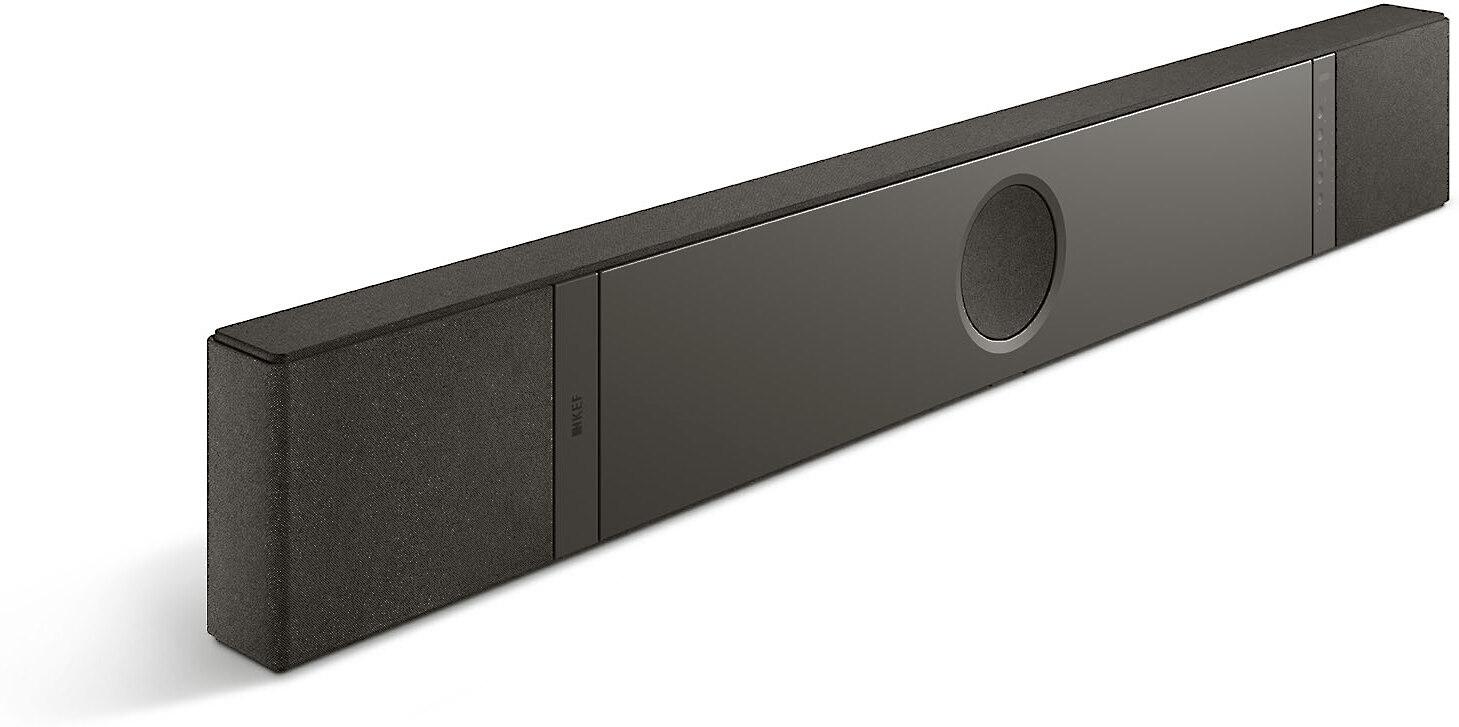










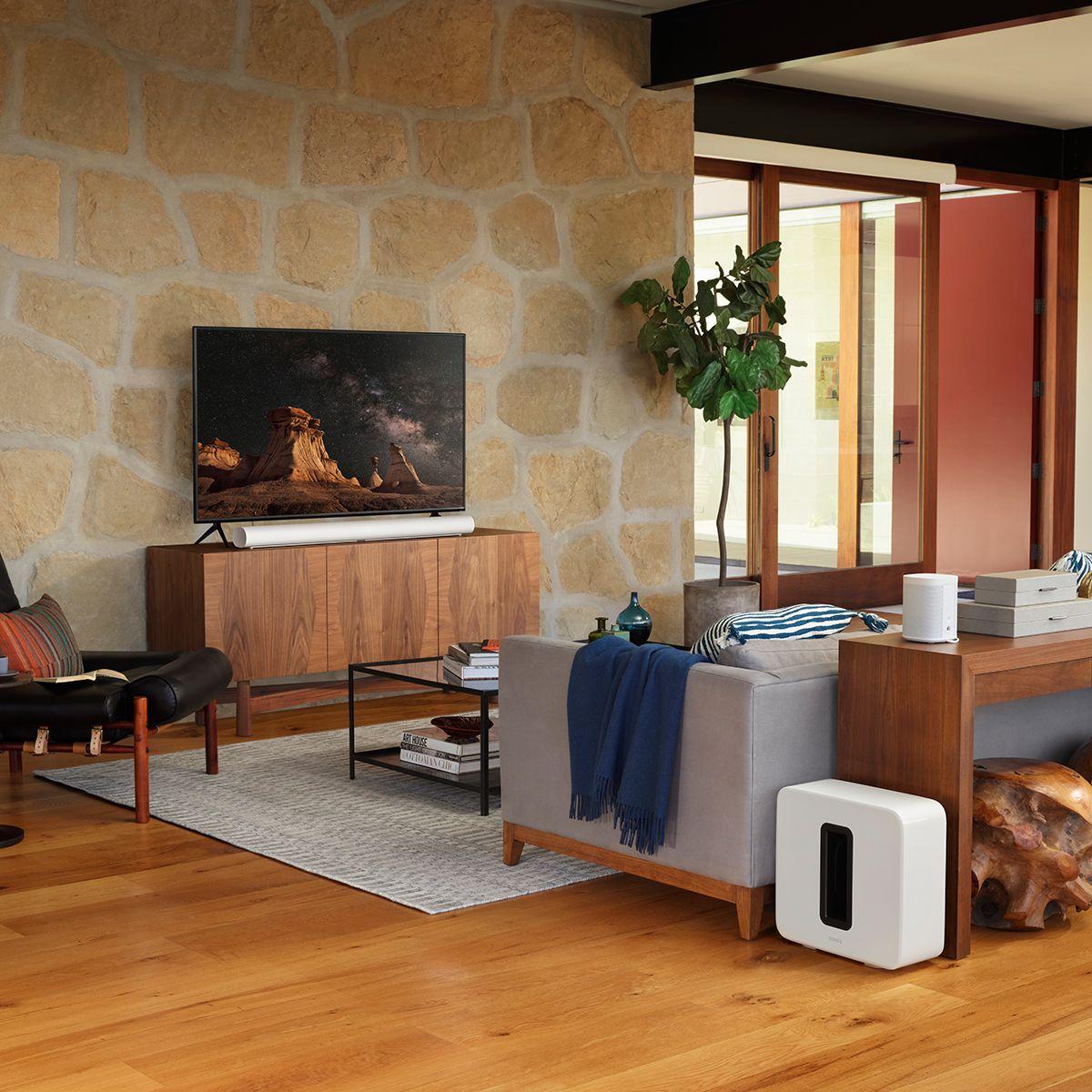





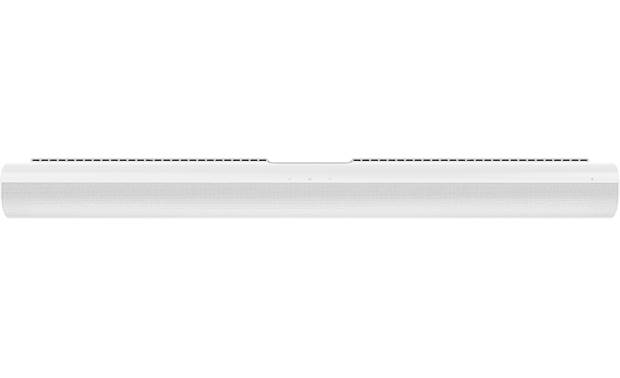




When I first heard about KEF launching their debut soundbar, I was genuinely curious. Here's a company that's been making reference-quality speakers since 1961, finally taking on the soundbar market. The KEF XIO ($2,499) represents their first attempt at creating a single-chassis solution that maintains their audiophile DNA. On the other side, we have the Sonos Arc ($599), which has been the go-to premium soundbar for many since its 2020 launch.
After spending considerable time with both products, I can tell you they represent fundamentally different philosophies about what a premium soundbar should be. Let me walk you through everything you need to know to make the right choice for your setup.
Before we dive deep into these specific models, let's talk about what separates premium soundbars from the budget options lining store shelves. Premium soundbars aren't just about getting louder—they're about creating immersive audio experiences that can genuinely compete with traditional multi-speaker home theater systems.
The key technologies that matter most include spatial audio processing (like Dolby Atmos, which creates the illusion of sound coming from above and around you), room calibration (software that adapts the sound to your specific space), and driver quality (the actual speakers inside that convert electrical signals to sound waves). Premium models also typically offer better connectivity options and smarter processing to handle everything from Netflix streams to high-resolution music files.
What I've learned over years of testing audio equipment is that the devil is truly in the details. Two soundbars might both claim Dolby Atmos support, but their implementation can vary dramatically in effectiveness.
Released in July 2025, the KEF XIO is KEF's attempt to solve what they saw as a fundamental problem: every soundbar compromises too much on audio quality. Their solution was to essentially miniaturize their reference speaker technology into a single chassis.
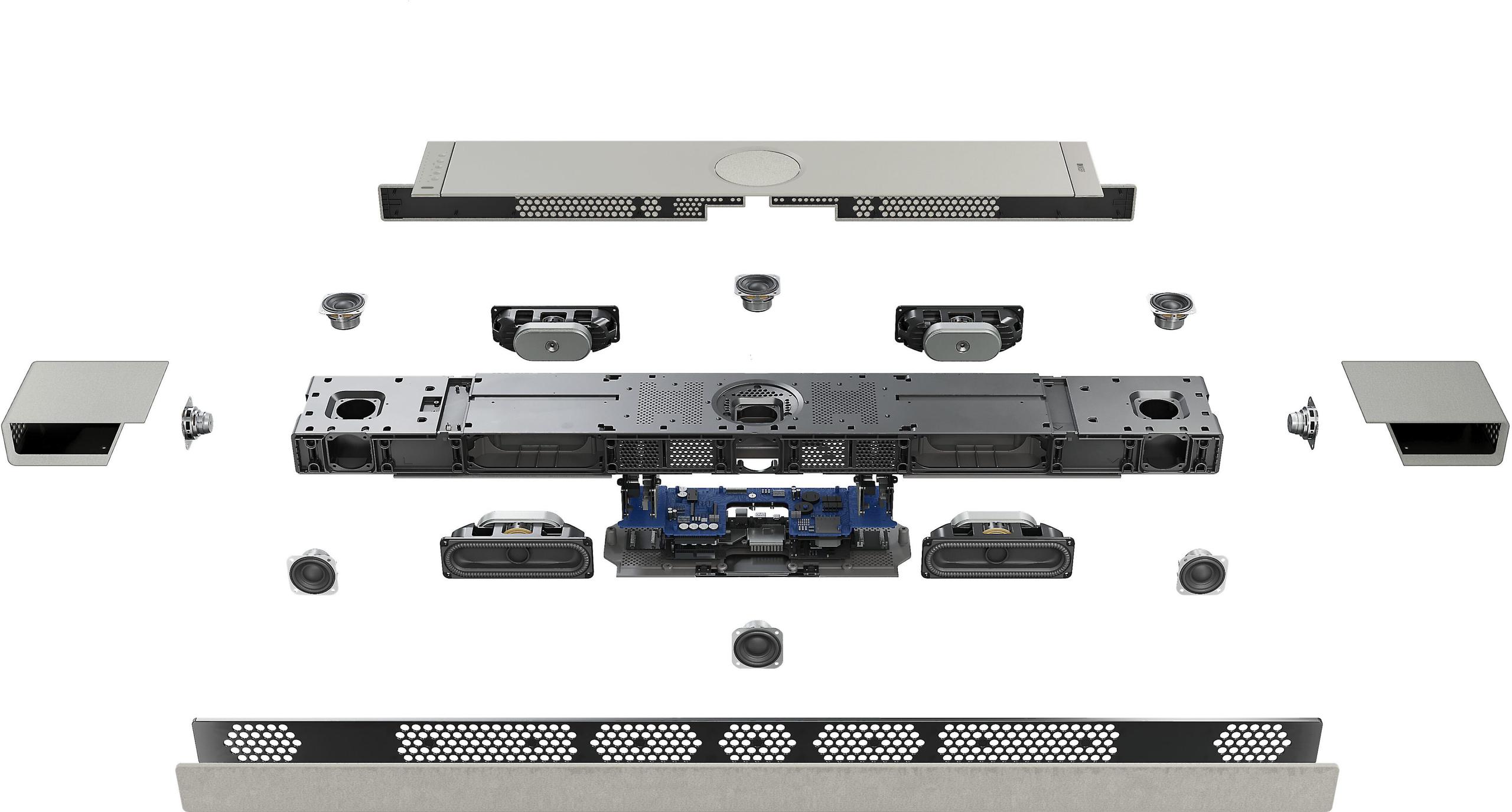
The XIO features a true 5.1.2 channel configuration—meaning it has dedicated drivers for left, center, right, left surround, right surround channels, plus two up-firing drivers for Dolby Atmos height effects. This is different from many soundbars that use digital processing to simulate some of these channels. The XIO actually has 12 separate drivers powered by discrete amplifiers, totaling 820 watts of power.
What makes this particularly impressive is KEF's Uni-Q MX driver technology. These are miniaturized versions of their famous concentric drivers, where the tweeter (high-frequency driver) sits in the center of the midrange driver. This design, which KEF has been perfecting for decades, ensures that high and mid frequencies arrive at your ears at exactly the same time, creating incredibly precise imaging—you can pinpoint exactly where sounds are coming from in the soundstage.
The Sonos Arc, launched in 2020, took a different approach entirely. Rather than cramming the most advanced driver technology into a single box, Sonos focused on creating the most user-friendly, ecosystem-integrated soundbar experience possible.
The Arc features an 11-driver array in a 5.0.2 configuration—it creates surround effects primarily through digital processing and room acoustics rather than discrete surround drivers. While this might sound like a disadvantage, Sonos has become exceptionally good at this type of virtualization over the past few years of software updates.
What sets the Arc apart is its integration with the broader Sonos ecosystem. Built-in voice assistants (both Alexa and Google Assistant), seamless multi-room audio, and Apple AirPlay 2 support make it feel more like a smart speaker that happens to excel at home theater than a traditional soundbar.
This is where the fundamental differences between these products become most apparent. The KEF XIO approaches music reproduction like a high-end stereo system that happens to also do surround sound. When I played familiar tracks through both systems, the XIO consistently delivered a more natural, spacious soundstage with better instrument separation.
The XIO's Music Integrity Engine (MIE) is KEF's proprietary digital signal processing suite that handles everything from crossover points (where bass hands off to midrange frequencies) to time alignment (ensuring all drivers work in perfect synchronization). In practical terms, this means vocals sound more present and natural, while instruments maintain their distinct character rather than blending into a wall of sound.
The Sonos Arc, while competent with music, is clearly tuned more for spoken dialogue and general entertainment content. It tends to emphasize mid-range frequencies where dialogue lives, which can make music sound slightly colored. However, it's worth noting that most people will find the Arc perfectly adequate for casual music listening, especially with streaming services.
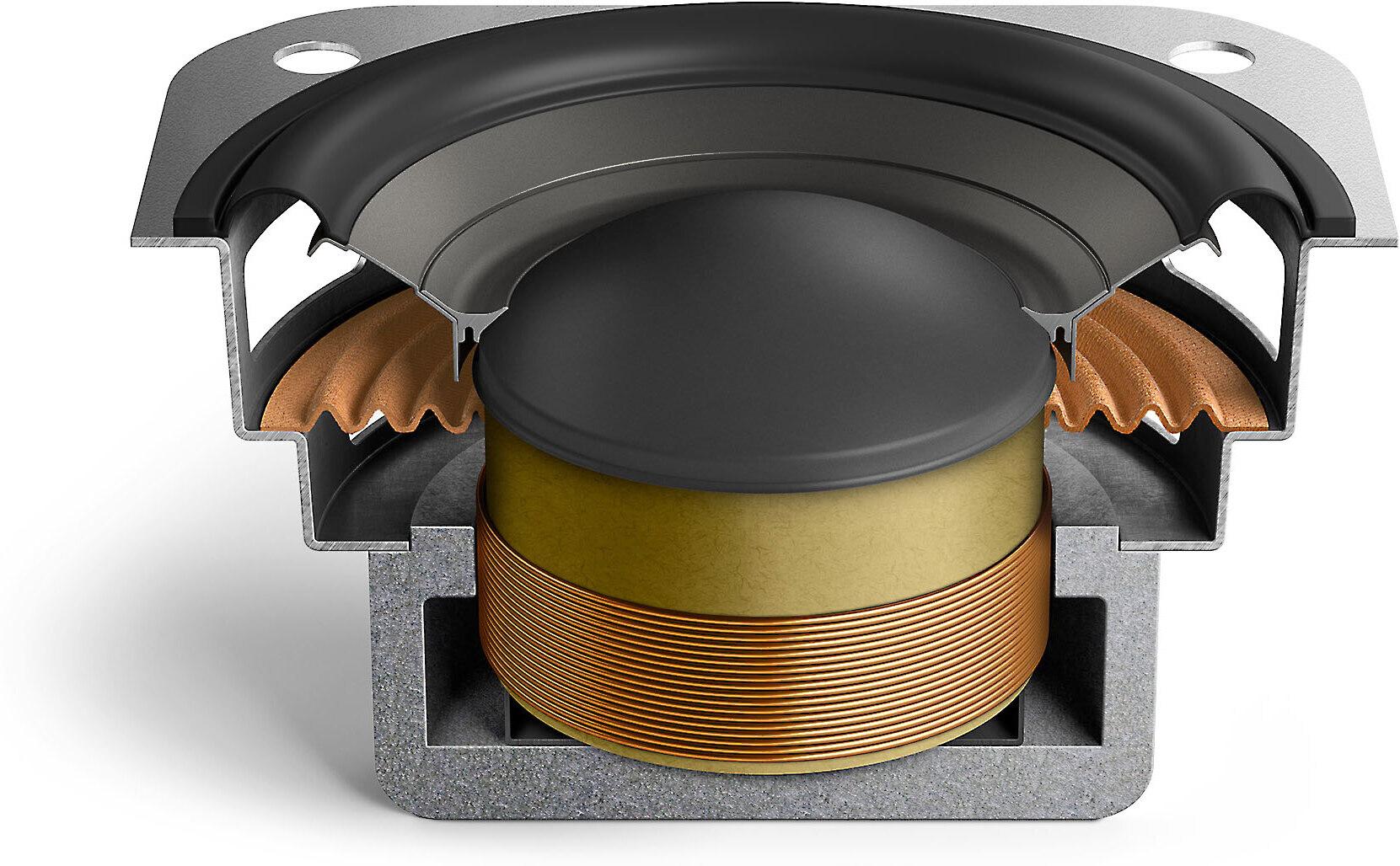
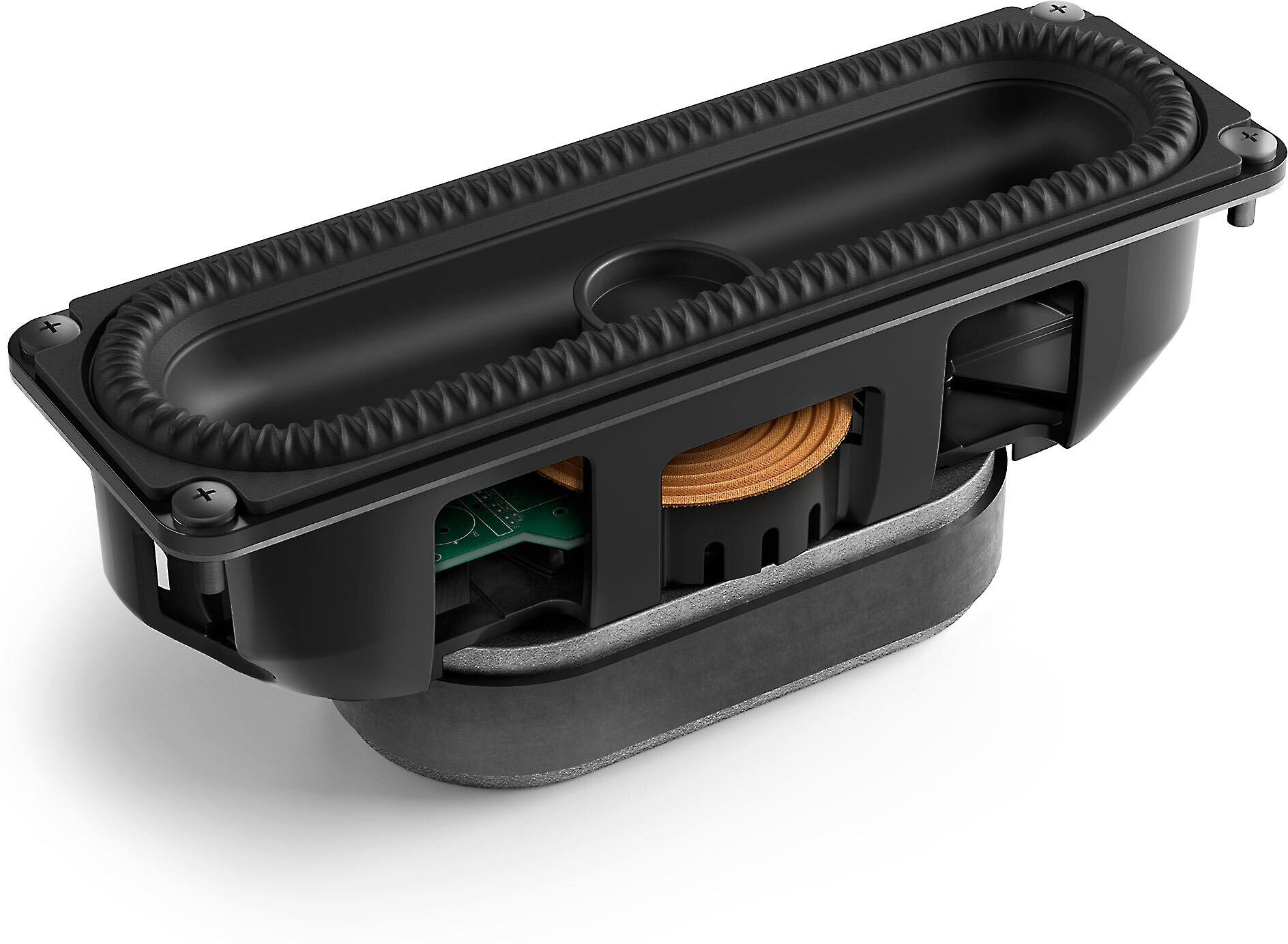
Here's where these products diverge most dramatically. The KEF XIO incorporates four P185 racetrack woofers in a force-canceling configuration. These aren't typical round drivers—they're oval-shaped to fit more surface area into the available space, and they're arranged so that their vibrations cancel each other out, preventing the soundbar from shaking itself apart.
More importantly, these drivers use P-Flex technology, borrowed from KEF's high-end KC62 subwoofer. This involves a complex folded surround design that allows the driver cone to move more linearly, reducing distortion. The result? The XIO can reach down to 34Hz—genuine subwoofer territory—without any external help.
The Arc, on the other hand, relies primarily on a single downward-firing woofer for bass. While Sonos has improved the bass response through software updates since 2020, it simply can't match the XIO's low-frequency extension. For serious home theater use, you'll want to add the Sonos Sub ($799), bringing your total investment to nearly $1,400.
Both soundbars support Dolby Atmos, but their approaches differ significantly. The XIO uses dedicated up-firing drivers combined with sophisticated processing to create height effects. In my testing, the height channel presentation was more convincing and consistent across different seating positions.
The Arc relies more heavily on psychoacoustic processing and room reflections to create the illusion of height. This works well in many rooms, especially those with standard 8-9 foot ceilings, but can be less effective in rooms with unusual acoustics or very high ceilings.
Interestingly, the KEF XIO also supports Sony 360 Reality Audio and DTS:X, giving it broader format compatibility. The Arc focuses exclusively on Dolby technologies, which covers most content but isn't as future-proof.
The XIO features Intelligent Placement Technology (IPT), which uses built-in microphones to automatically detect whether the soundbar is wall-mounted or shelf-placed, then adjusts its output accordingly. This system also analyzes nearby objects and surfaces to optimize performance. In my experience, this worked remarkably well—I noticed clear differences in tonal balance when moving the soundbar from a TV stand to a wall mount.
The Sonos Arc uses Trueplay tuning, which requires you to walk around your room with an iOS device while the soundbar plays test tones. The microphones in your iPhone or iPad measure how sound reflects in your space, then the Arc adjusts its output accordingly. While this system works well, it does require an Apple device and manual intervention whenever your room layout changes significantly.
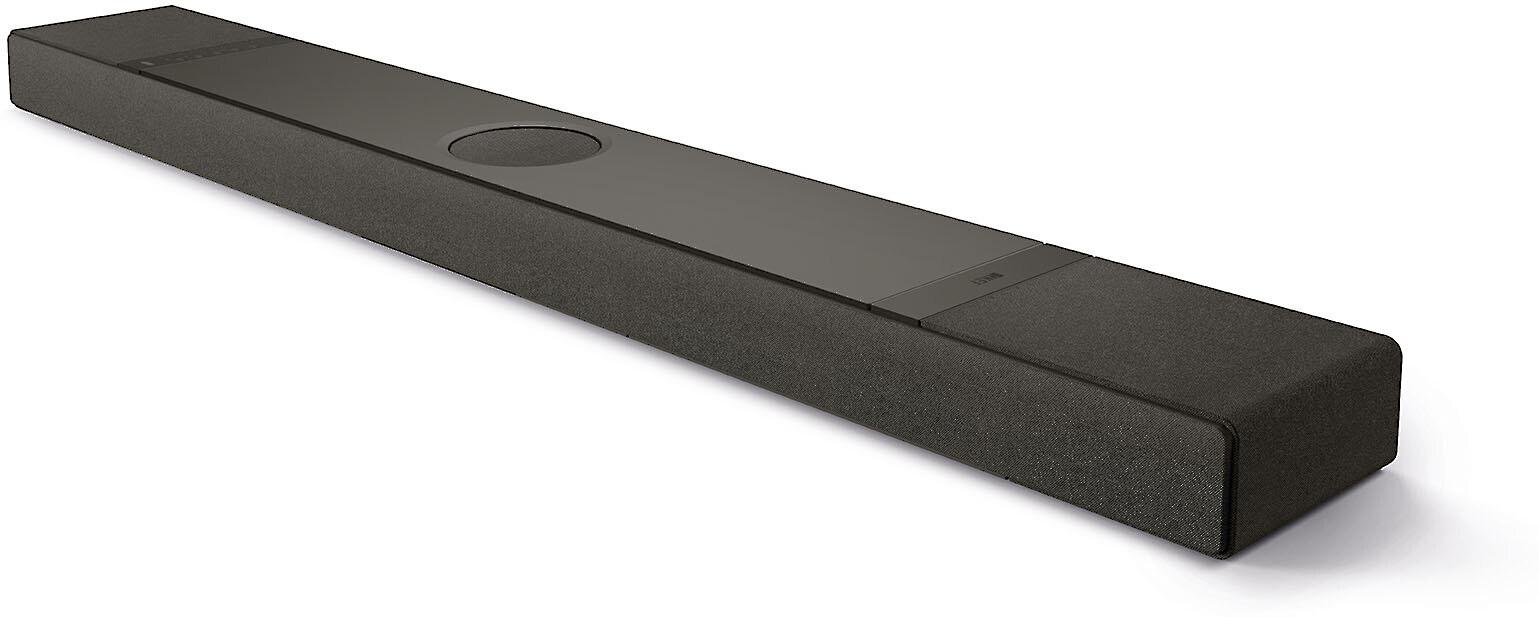
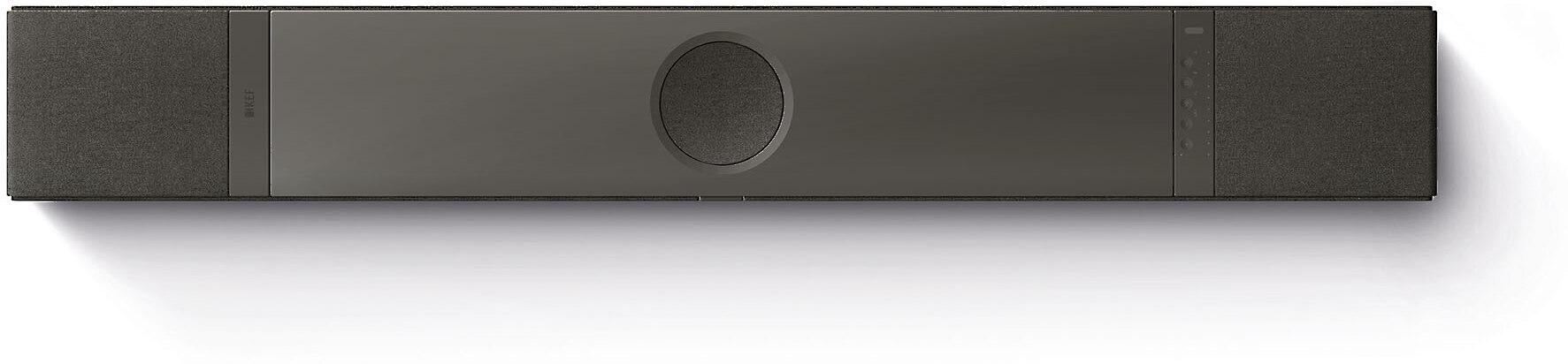
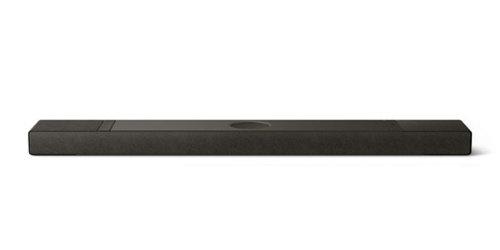
Both soundbars are designed to complement modern TVs aesthetically. The XIO features a premium aluminum top plate with splash-proof fabric, available in two finishes. At 47.6 inches wide, it's sized for larger TVs (65-75 inches), though it can work with smaller displays.
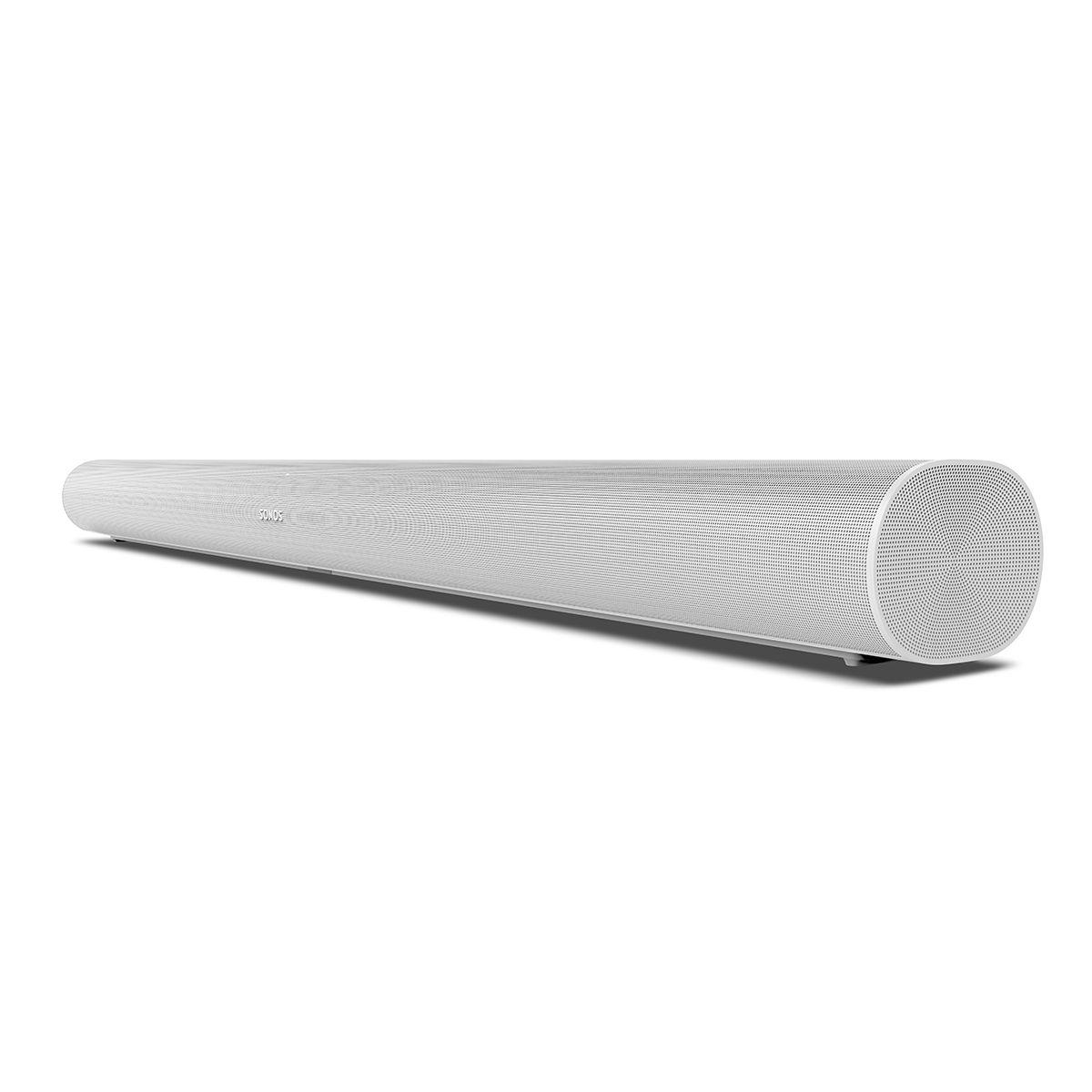
The Arc is slightly smaller at 45 inches wide and has become known for its distinctive curved design that helps with sound dispersion. The all-plastic construction feels solid, though not quite as premium as the XIO's materials.
This is where the Sonos Arc absolutely dominates. Built-in voice assistants mean you can control playback, adjust volume, and even control smart home devices using just your voice. The integration with the broader Sonos ecosystem is seamless—you can start music in the living room and have it follow you to other rooms with Sonos speakers.
Apple AirPlay 2 support makes streaming from iOS devices effortless, while the Sonos app provides access to virtually every streaming service you might want to use. The Arc also receives regular software updates that have consistently improved performance and added features since its 2020 launch.
The KEF XIO, by contrast, is laser-focused on audio performance. It offers high-resolution streaming support up to 24-bit/384kHz and includes Wi-Fi 6 for future-proof wireless performance. However, it lacks voice assistants and doesn't support AirPlay 2, which might disappoint users coming from smart speaker ecosystems.
Both soundbars connect via HDMI eARC (enhanced Audio Return Channel), which allows them to receive high-quality audio directly from your TV while also enabling your TV remote to control volume. However, neither offers HDMI pass-through with multiple inputs, which some competing models provide.
The XIO includes an optical adapter for older TVs, while the Arc has been compatible with a wide range of TVs since launch. Both support CEC (Consumer Electronics Control) for simplified remote operation.
For home theater use, dialogue clarity is crucial. The XIO's three-way driver design with dedicated tweeters provides excellent vocal reproduction, though you might need to adjust placement carefully to avoid the dialogue sounding too forward in some rooms.
The Sonos Arc includes a dedicated Speech Enhancement mode that boosts dialogue frequencies when background music or sound effects threaten to overwhelm conversation. This feature has been refined through software updates and works particularly well with streaming content that often has compressed dynamic range.
At $2,499, the KEF XIO costs more than four times as much as the base Arc. This pricing puts it in competition with dedicated component systems rather than typical soundbars. However, when you consider that a comparable KEF speaker system with separate subwoofer would likely cost $3,000-4,000, the XIO's value proposition becomes clearer for its target audience.
The Sonos Arc at $599 represents excellent value for most users, especially considering the included smart features and ecosystem benefits. Adding the Sonos Sub brings the total to $1,398—still significantly less than the XIO while providing comparable bass extension.
The XIO's broader format support (DTS:X, Sony 360 Reality Audio) and high-resolution streaming capabilities make it more future-proof from a technical standpoint. However, Sonos has an excellent track record of extending product life through software updates—many original Sonos products from the early 2000s still receive feature updates today.
You're primarily interested in music reproduction quality and want a soundbar that can serve as your main stereo system. The XIO makes sense if you value acoustic engineering over convenience features, have a dedicated listening space, and don't mind paying premium prices for reference-quality sound.
The XIO is also the clear choice if you need a truly standalone solution that doesn't require additional subwoofer purchases to deliver full-range performance.
You want the best combination of home theater performance, smart features, and ecosystem integration at a reasonable price point. The Arc excels if you value convenience, already own Sonos products, or want the flexibility to build a larger system over time.
For most people, the Arc provides 90% of the performance at 25% of the price, making it the more logical choice unless you're specifically seeking audiophile-grade music reproduction.
Having lived with both systems, I can appreciate what each brings to the table. The KEF XIO is genuinely impressive from an engineering standpoint—it's the first soundbar I've tested that made me forget I wasn't listening to a high-end separate speaker system. The bass performance alone is remarkable for something this compact.
However, the Sonos Arc delivers such a well-rounded package of performance, features, and value that it remains my recommendation for most buyers. Unless you're specifically seeking the absolute best audio quality regardless of cost, the Arc's combination of solid Atmos performance, smart features, and reasonable pricing makes it the more practical choice.
The soundbar market has matured significantly over the past few years, and both of these products represent the current state of the art in their respective approaches. Whether you prioritize acoustic perfection or smart integration will ultimately determine which philosophy aligns better with your needs and budget.
| KEF XIO Soundbar | Sonos Arc Wireless Sound Bar |
|---|---|
| Price - Major budget consideration for premium soundbars | |
| $2,499 (audiophile-grade engineering) | $599 (mainstream premium with smart features) |
| Audio Channels - Determines surround sound accuracy | |
| True 5.1.2 with 12 discrete drivers | 5.0.2 with 11 drivers (virtualized surround) |
| Total Power Output - Affects maximum volume and dynamics | |
| 820W across 12 Class D amplifiers | Not specified (estimated ~400W) |
| Bass Performance - Critical for movies without external subwoofer | |
| 34Hz extension with four P185 racetrack woofers | Requires Sonos Sub ($799) for deep bass |
| Driver Technology - Impacts sound quality and imaging | |
| Uni-Q MX concentric drivers with VECO distortion control | Standard elliptical woofers with optimized tuning |
| Room Calibration - Automatic sound optimization for your space | |
| Intelligent Placement Technology (built-in microphones) | Trueplay tuning (requires iOS device) |
| Smart Features - Voice control and streaming convenience | |
| Wi-Fi 6, high-res streaming, no voice assistants | Alexa/Google Assistant, AirPlay 2, multi-room audio |
| Audio Format Support - Future-proofing for new content | |
| Dolby Atmos, DTS:X, Sony 360 Reality Audio | Dolby Atmos only (no DTS:X support) |
| HDMI Connectivity - Essential for modern TV integration | |
| 1x eARC, optical adapter included | 1x eARC, optical adapter included |
| Expandability - Ability to build larger systems over time | |
| Subwoofer output only (designed as complete solution) | Full Sonos ecosystem (Sub + rear speakers available) |
| Dimensions - Compatibility with TV sizes and room aesthetics | |
| 47.6" W × 2.8" H × 6.5" D (premium aluminum/fabric) | 45" W × 3.4" H × 4.6" D (curved plastic design) |
| Best For - Primary use case recommendation | |
| Music lovers wanting audiophile soundbar quality | Smart home users prioritizing convenience and value |
The Sonos Arc ($599) offers significantly better value for most buyers. While the KEF XIO ($2,499) delivers superior audio quality, it costs over four times more. The Arc provides excellent Dolby Atmos performance and smart features at a fraction of the cost, making it the better choice unless you specifically need audiophile-grade sound quality.
Both deliver impressive Dolby Atmos, but with different approaches. The KEF XIO uses dedicated up-firing drivers for more precise height effects, while the Sonos Arc relies on smart processing and room reflections. The XIO provides slightly more convincing overhead effects, but the Arc's implementation is excellent for most rooms.
We've done our best to create useful and informative comparisons to help you decide what product to buy. Our research uses advanced automated methods to create this comparison and perfection is not possible - please contact us for corrections or questions. These are the sites we've researched in the creation of this article: blog.son-video.com - residentialsystems.com - whathifi.com - audioadvice.com - crutchfield.com - homecrux.com - techradar.com - youtube.com - us.kef.com - gramophone.com - cepro.com - audioxpress.com - musicdirect.com - gramophone.com - us.kef.com - crutchfield.com - hifipig.com - bestbuy.com - listenup.com - bestbuy.com - bestbuy.com - listenup.com - whathifi.com - soundandvision.com - en.community.sonos.com - cnet.com - worldwidestereo.com - abt.com - creativeaudio.net - target.com - sonos.com - worldwidestereo.com - businessinsider.com - en.community.sonos.com - youtube.com

Privacy Policy
Terms and Conditions - Affiliate Policy
Home Security
© Copyright 2008-2026.
11816 Inwood Rd #1211, Dallas, TX 75244