

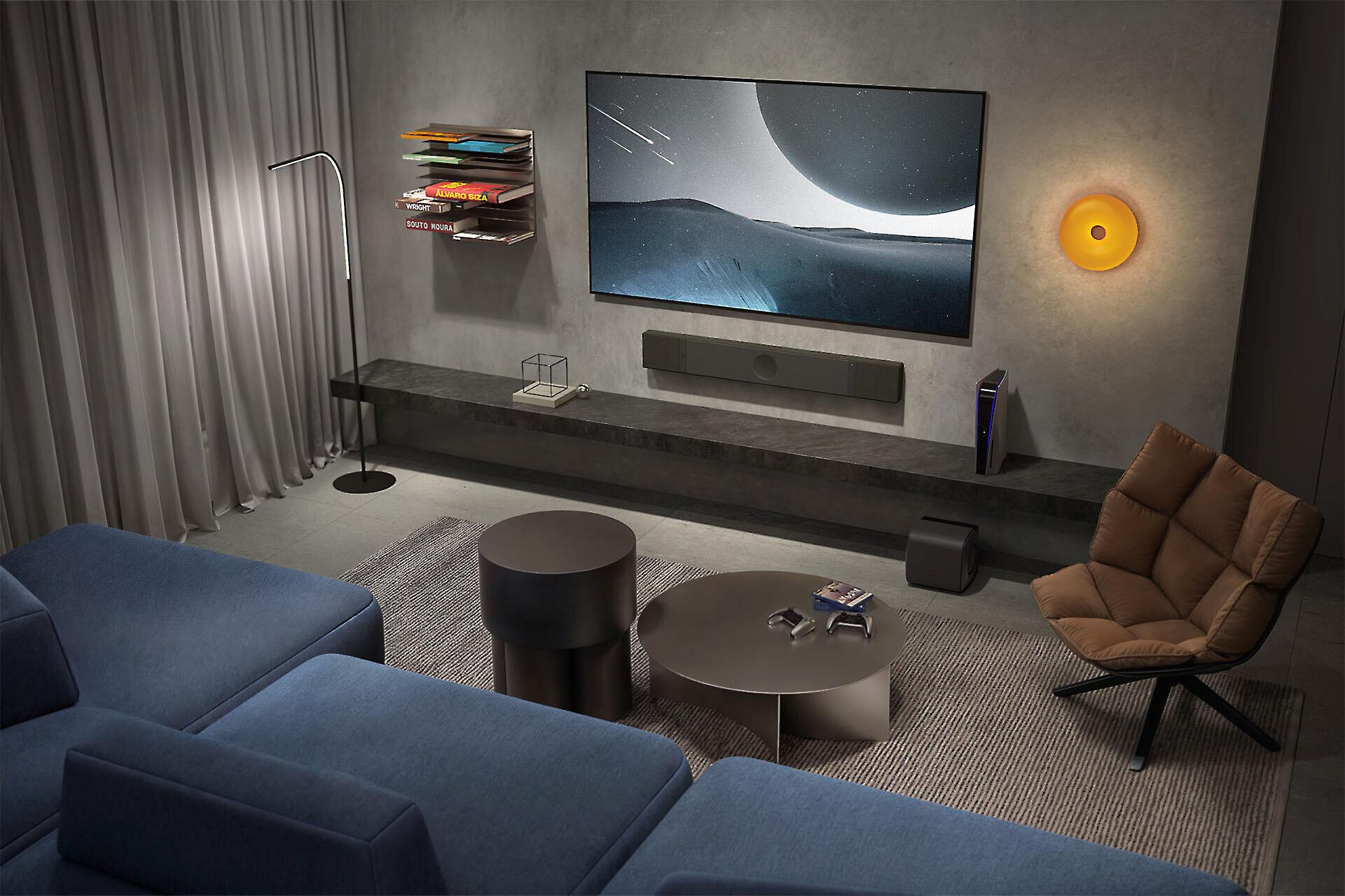






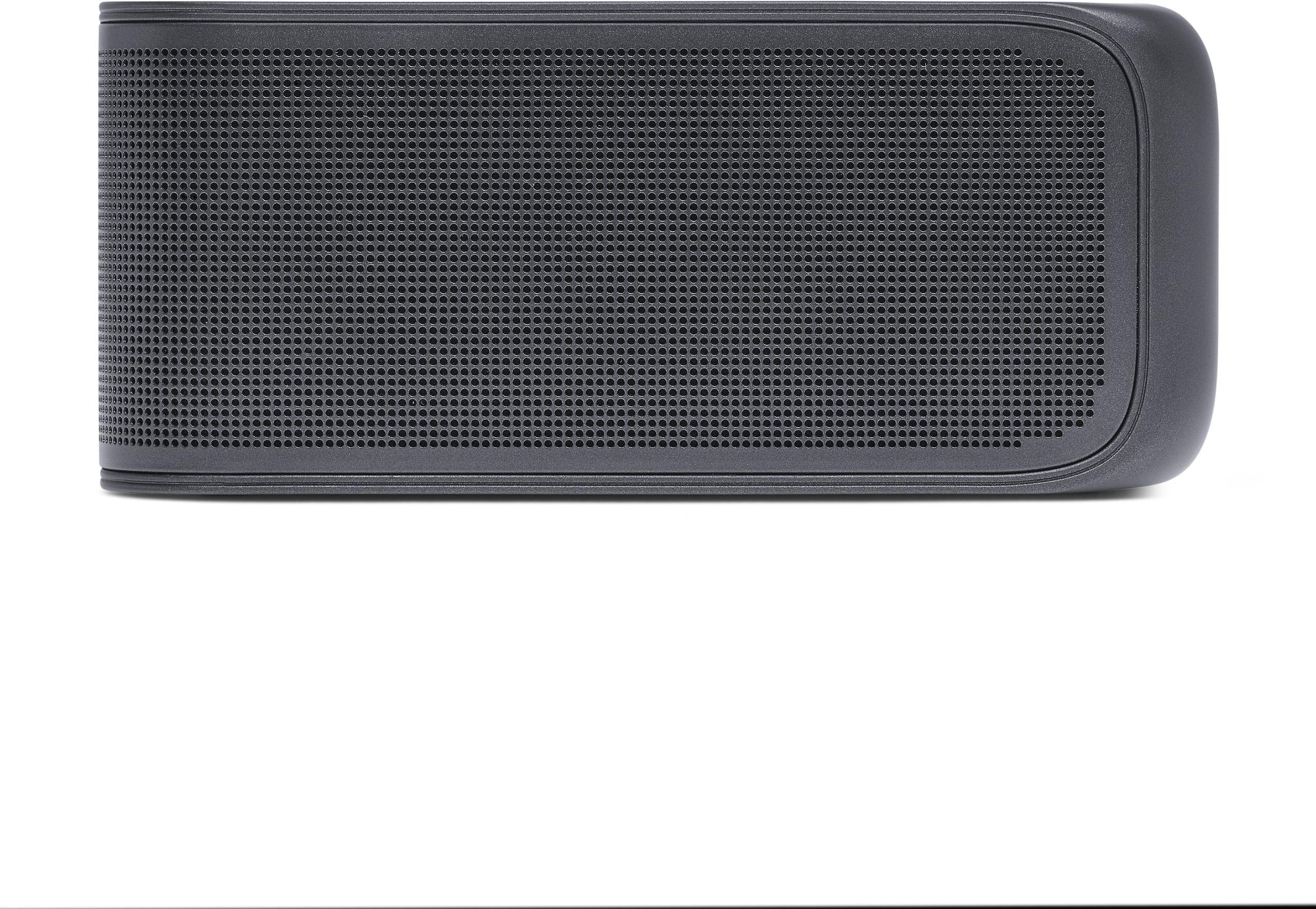
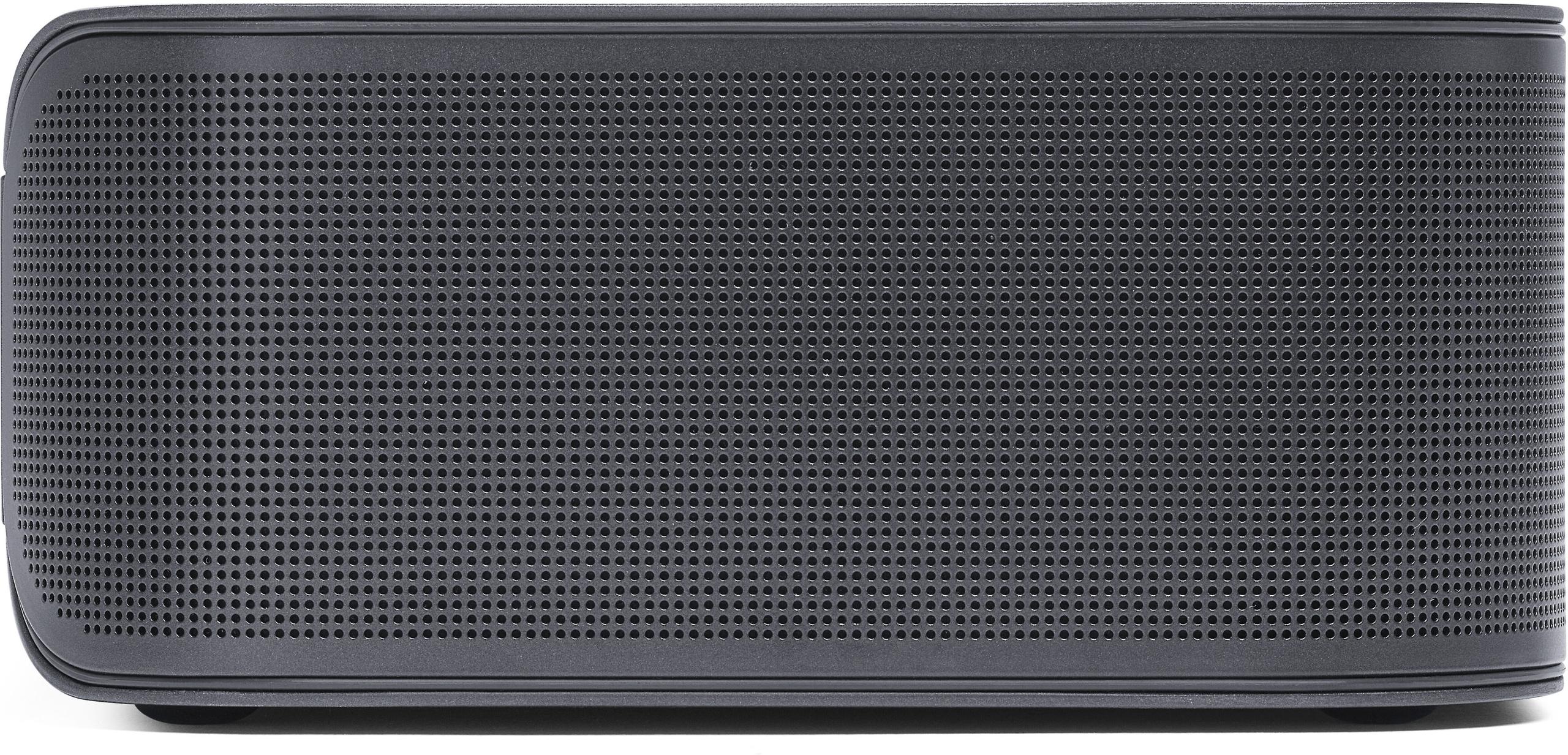
When you're looking to upgrade your home entertainment setup, soundbars have become the go-to solution for getting great audio without the complexity of a full surround sound system. But not all soundbars are created equal, especially when you step into the premium category where companies are pushing the boundaries of what's possible from a single bar-shaped speaker.
Today we're comparing two very different approaches to premium audio: the KEF XIO Soundbar at $2,499 and the JBL Bar 1300X at $1,299. These represent fundamentally different philosophies in soundbar design, and understanding their differences will help you make the right choice for your specific needs.
Before diving into these specific models, it's worth understanding what separates premium soundbars from their budget counterparts. Premium soundbars typically feature advanced driver technology (the individual speakers inside), sophisticated digital signal processing (DSP - the computer brain that optimizes the sound), and support for spatial audio formats like Dolby Atmos, which creates three-dimensional sound effects.
The main considerations when choosing a premium soundbar come down to your priorities: Are you primarily a music listener who wants audiophile-grade sound quality, or are you focused on creating an immersive home theater experience? Do you want the simplicity of a single unit, or are you willing to deal with multiple components for potentially better performance?
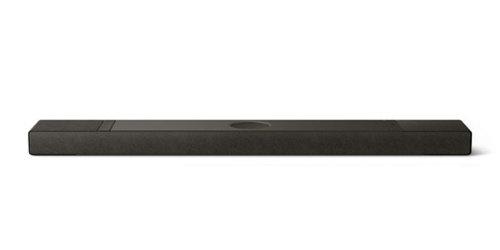
The KEF XIO, released in 2025, represents KEF's first entry into the soundbar market. KEF has been making high-end speakers for over 50 years, and they're known for their innovative Uni-Q driver technology, which places the tweeter (high-frequency speaker) inside the cone of the midrange driver. This creates what's called a "point source" - essentially making the sound appear to come from a single point rather than multiple locations, which improves imaging and reduces phase issues.
The JBL Bar 1300X, launched in 2023, comes from JBL's extensive experience in both consumer and professional audio. JBL has been particularly successful in the soundbar market, and the 1300X represents their flagship model with some genuinely innovative features, particularly around wireless surround speaker implementation.
Since the JBL's 2023 release, we've seen the soundbar market become increasingly competitive, with companies pushing harder on both virtual surround processing and physical surround speaker integration. The KEF's 2025 arrival shows how established hi-fi companies are now taking soundbars seriously as legitimate audio products rather than just convenient TV accessories.
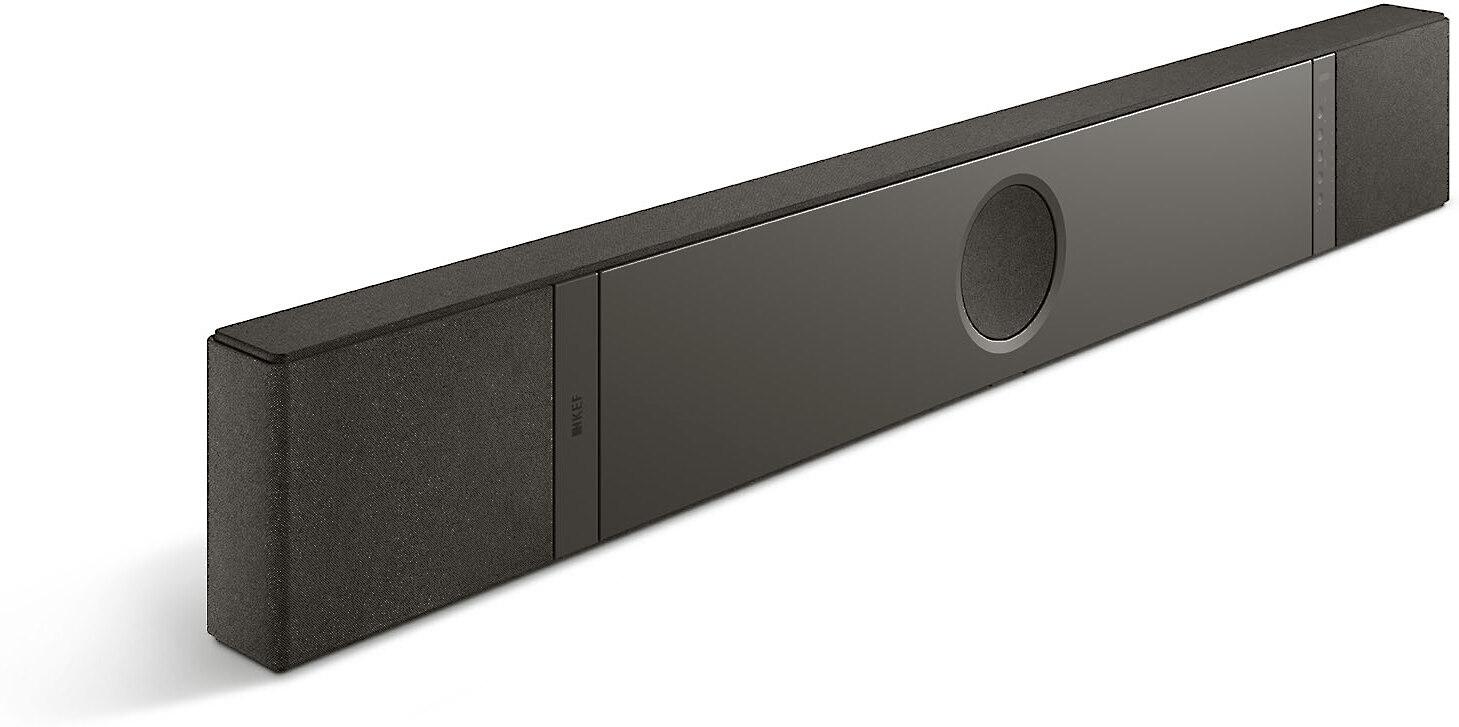
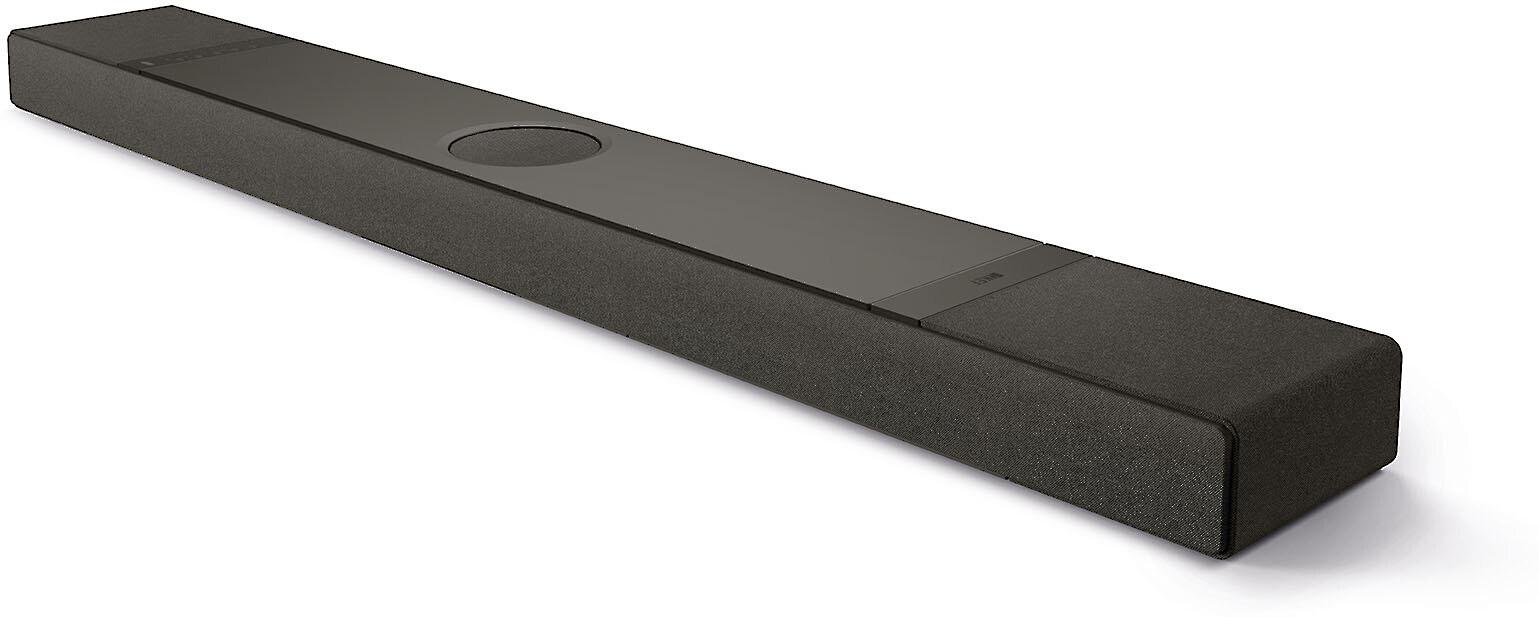
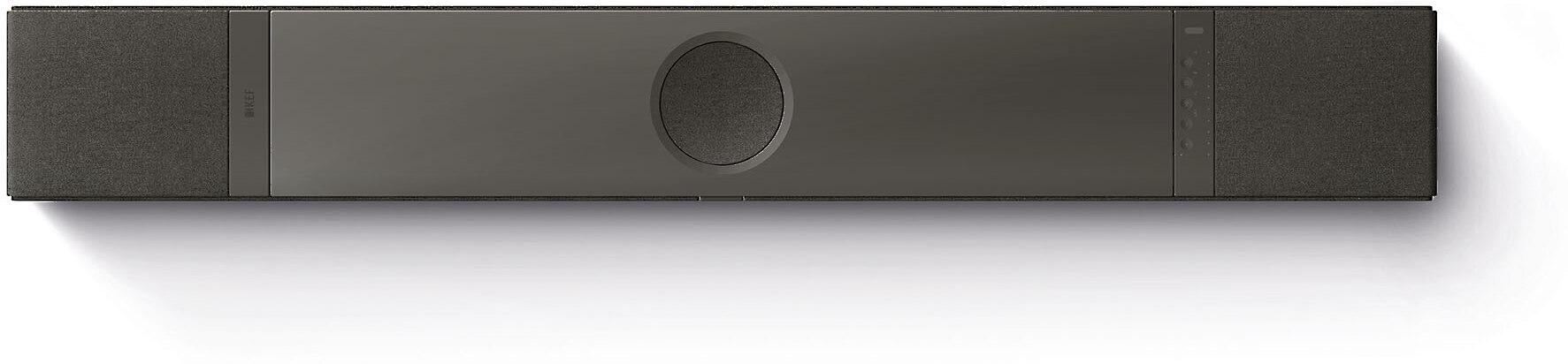
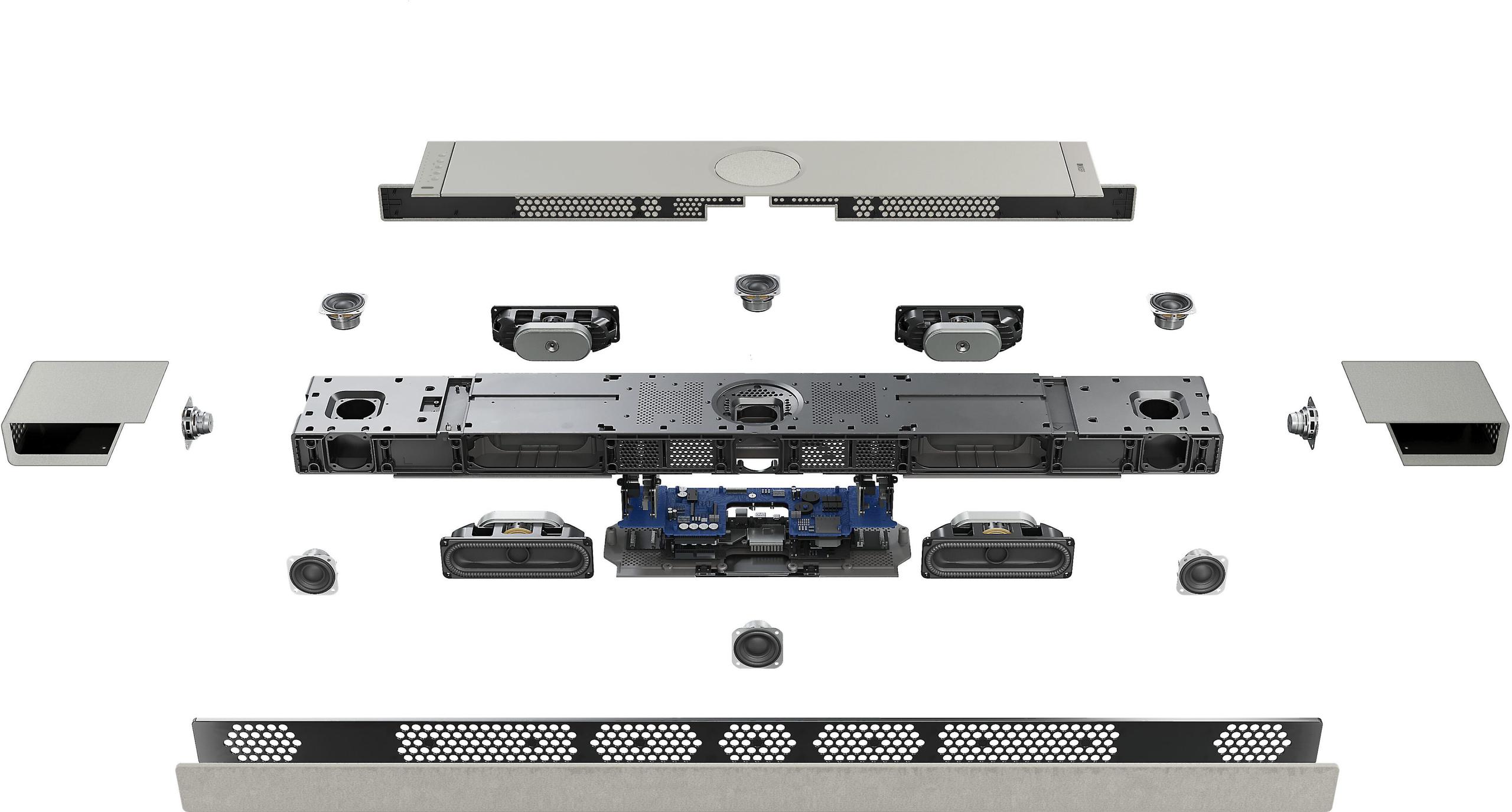
These two soundbars represent completely different approaches to achieving great sound. The KEF XIO follows an integration philosophy - everything you need is built into the main soundbar unit. It uses twelve discrete drivers powered by individual amplifiers, with four specialized bass drivers arranged in a force-cancelling configuration to minimize cabinet vibration.
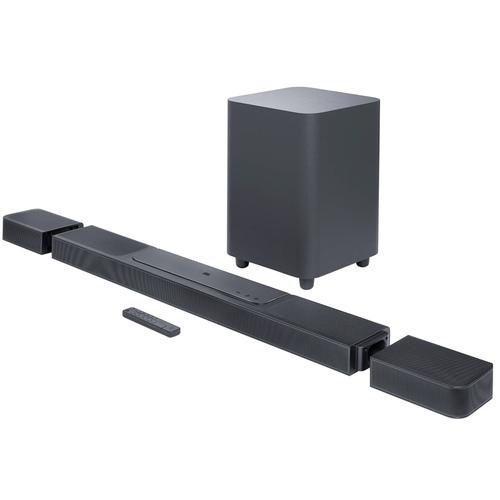
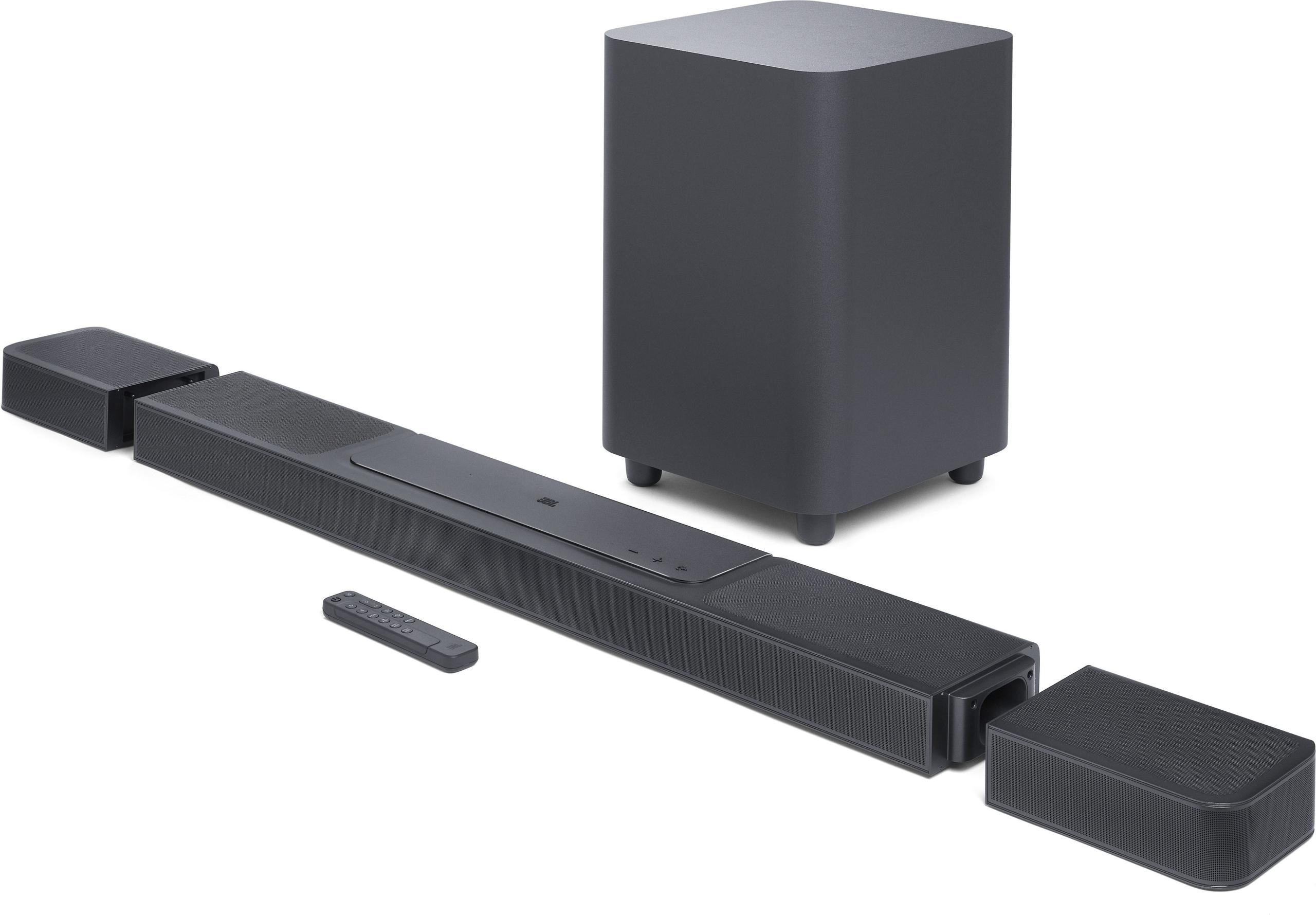
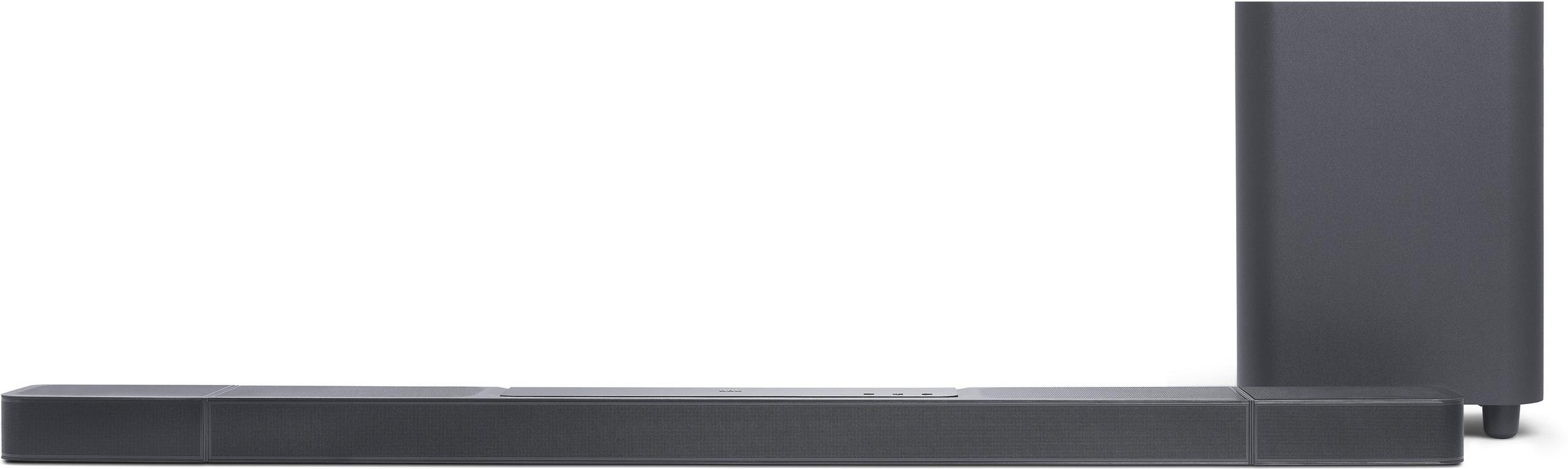
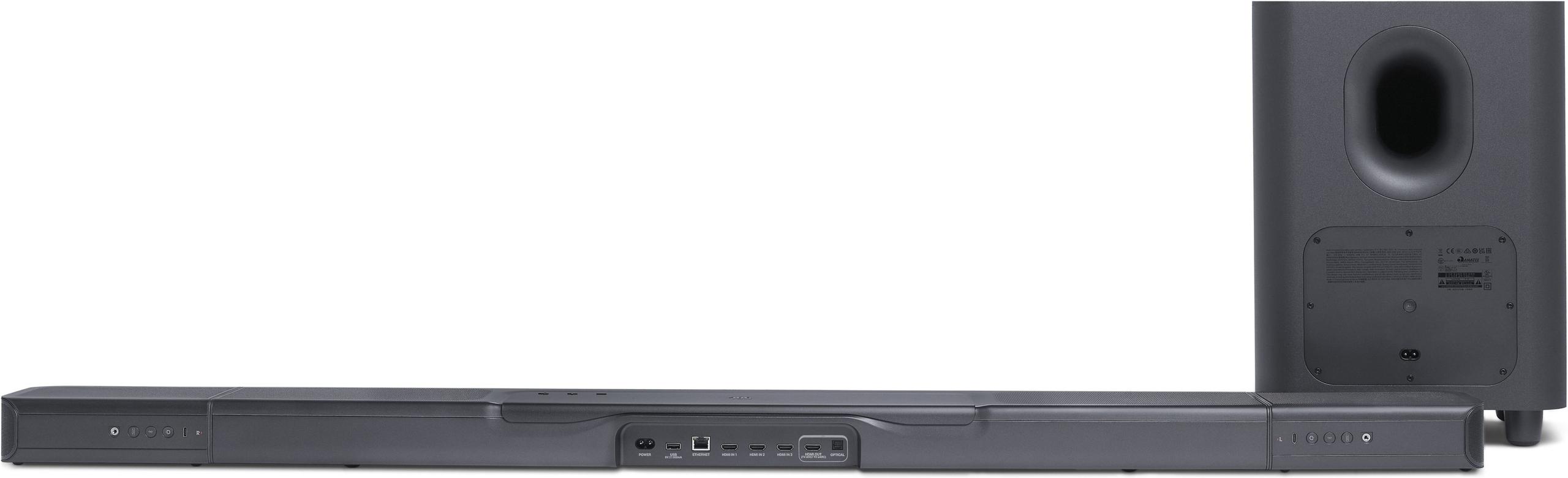
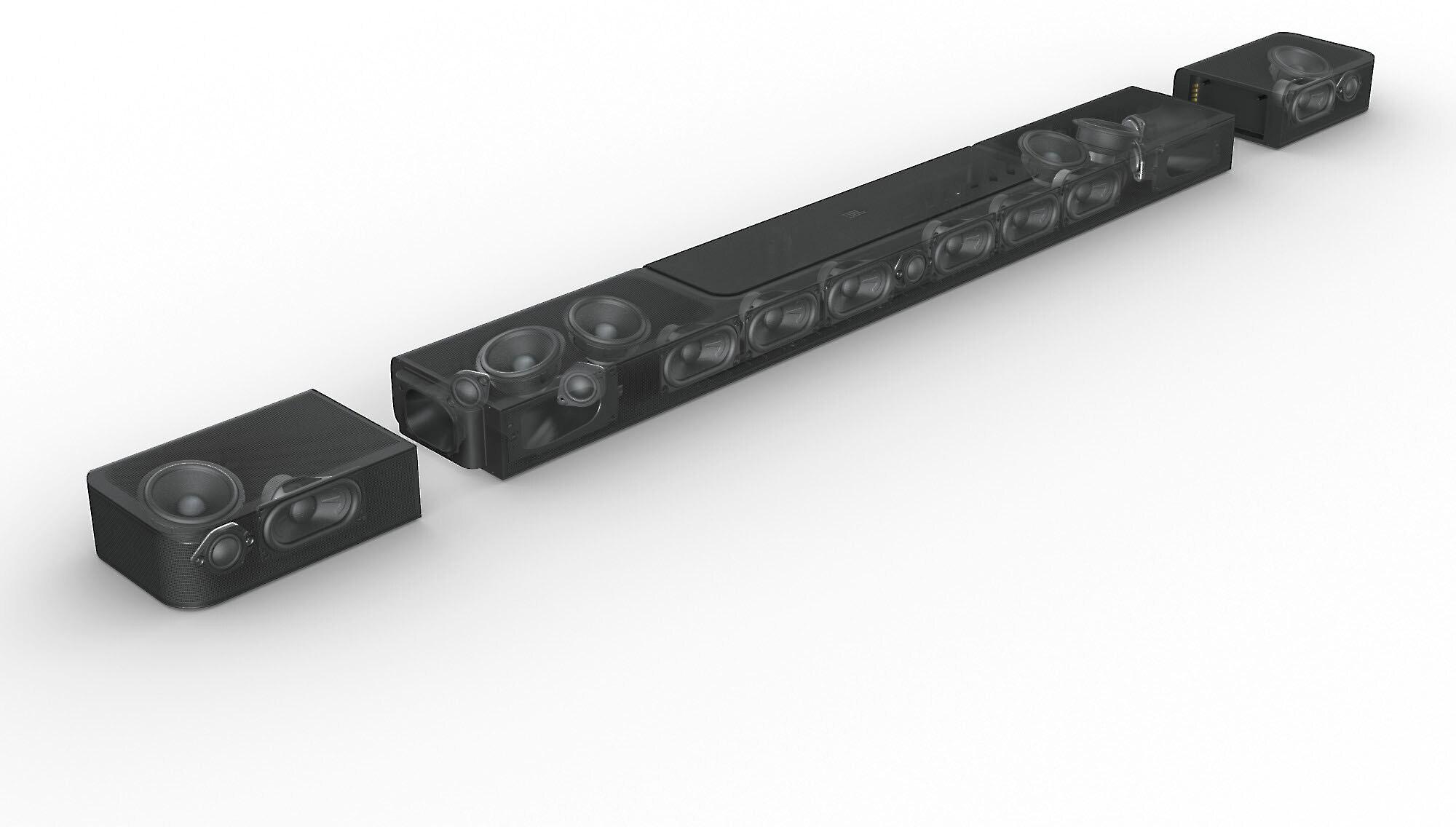
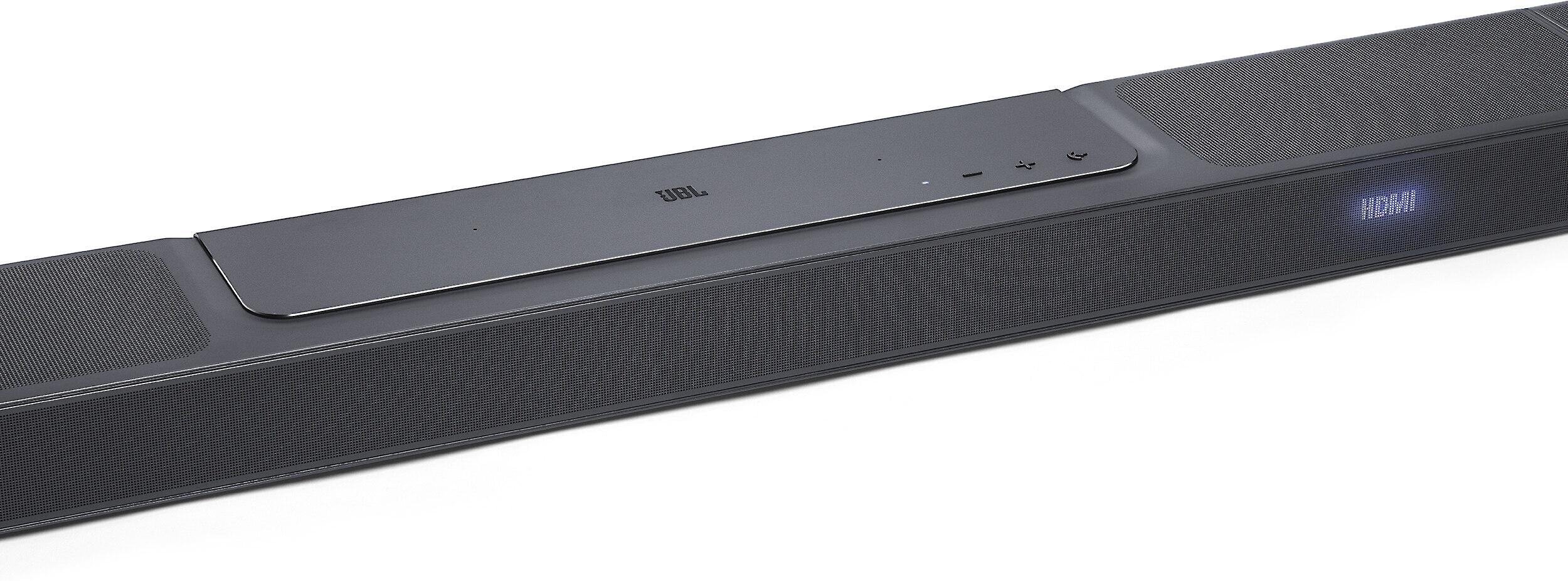
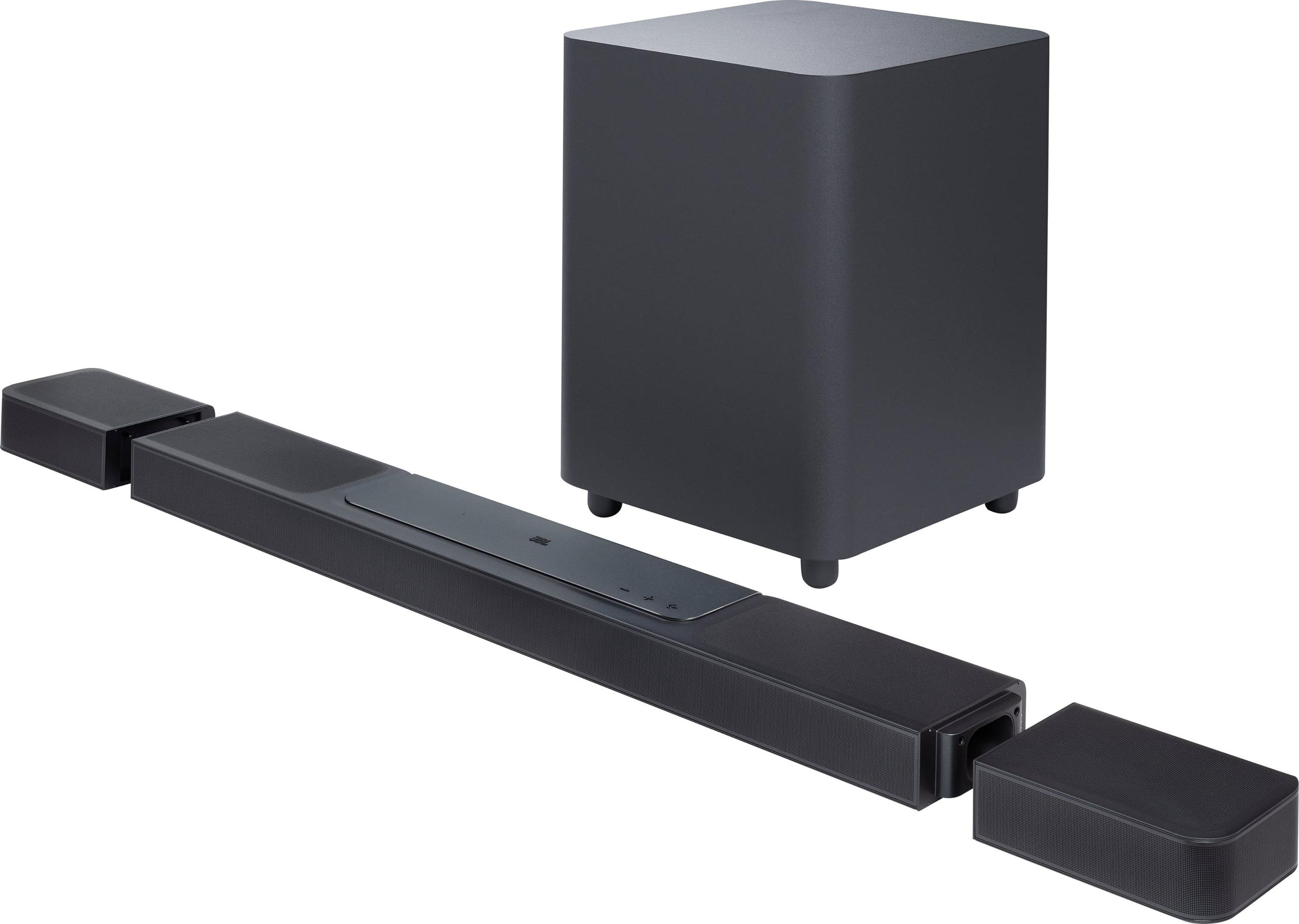
The JBL Bar 1300X takes an expansion approach - it's actually a system of three separate wireless components: the main soundbar, a 12-inch wireless subwoofer, and two detachable wireless surround speakers. This gives you true physical surround sound placement, but it also means more components to set up and potentially more things that can go wrong.
I've found that the integration approach works particularly well in smaller rooms or apartments where you can't easily place rear speakers. The expansion approach shines in larger spaces where you can take advantage of proper surround speaker placement.
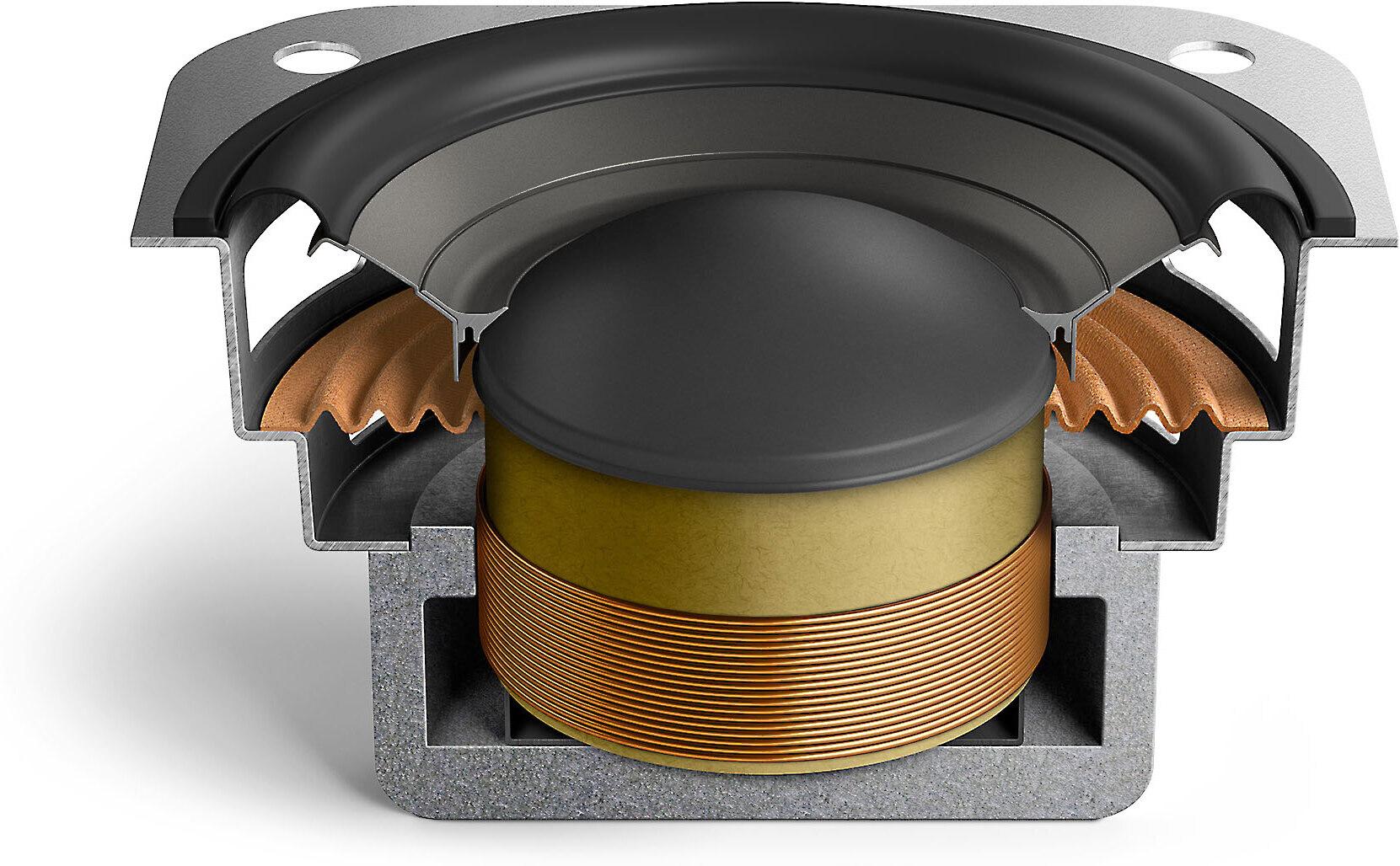
This is where the KEF XIO really demonstrates its pedigree. KEF's Uni-Q MX drivers are miniaturized versions of the technology used in their $30,000+ flagship speakers. The benefit of coaxial drivers (tweeter mounted inside the midrange cone) is that all frequencies appear to come from the same point in space, which creates incredibly precise stereo imaging.
The XIO's Music Integrity Engine (MIE) is specifically designed to preserve the timing relationships that make music sound natural. When you're listening to a jazz trio, you can clearly locate each instrument in the soundstage, and the natural reverb and ambience of the recording space comes through beautifully.
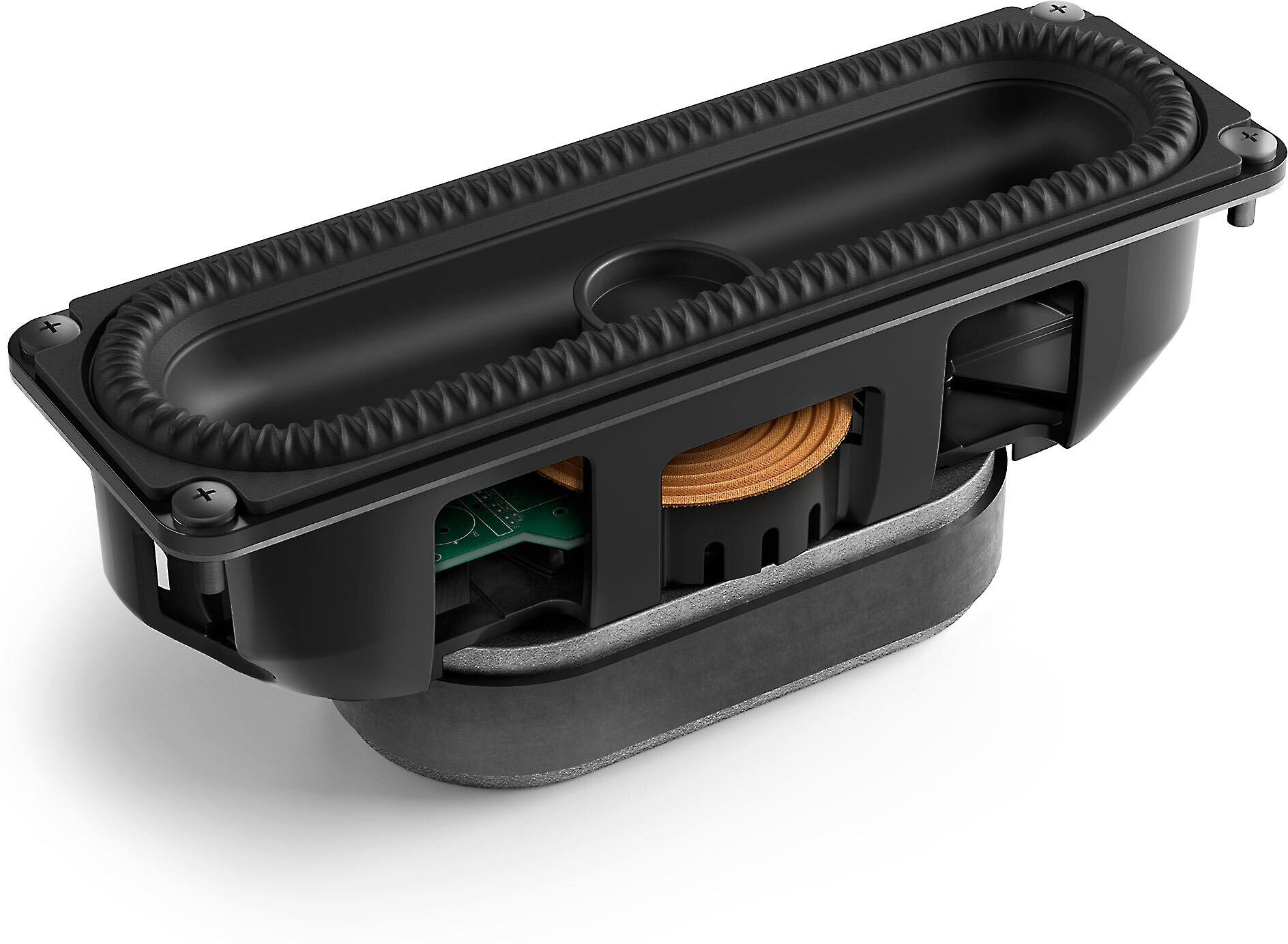
The force-cancelling bass system is particularly impressive. Instead of relying on a separate subwoofer, the XIO uses four P185 racetrack-shaped drivers arranged so their movements cancel each other out, eliminating cabinet vibration. The result is bass that extends down to 34Hz (very low for a soundbar) while remaining tight and controlled.
In contrast, the JBL Bar 1300X's approach to music is more conventional. Its racetrack drivers and tweeters are well-implemented, but the overall tuning leans toward excitement rather than accuracy. The separate subwoofer provides impressive impact, but it's not as seamlessly integrated as the KEF's built-in bass system. For casual music listening, it's perfectly enjoyable, but audiophiles will notice the difference.
For movies and TV, these soundbars take dramatically different approaches to creating immersive audio. The JBL Bar 1300X creates true 7.1.4 surround sound through its wireless rear speakers and multiple up-firing drivers. When you're watching an action movie, sounds genuinely come from behind you - there's no substitute for having actual speakers placed around the room.
The wireless rear speakers are particularly clever. They're battery-powered (lasting up to 10 hours) and connect wirelessly to the main soundbar. When not in use for surround sound, they can function as portable Bluetooth speakers, which adds unexpected versatility to the system.
The KEF XIO relies entirely on psychoacoustic processing to create its 5.1.2 surround effect. It uses beamforming and digital signal processing to bounce sound off your walls and ceiling, tricking your brain into perceiving surround effects. Modern virtual surround has gotten remarkably good, but it's still dependent on your room's acoustics and wall reflections.
In my experience testing both approaches, physical surround speakers like the JBL's simply provide more convincing spatial effects, especially for the surround channels. However, the KEF's virtual processing is sophisticated enough that you still get a wide, enveloping soundstage that extends well beyond the physical dimensions of the soundbar.
The KEF's advantage comes in dialogue clarity and overall cohesion. Its dedicated center channel and advanced DSP ensure that voices remain clear and centered even when the action gets intense. The JBL can sometimes struggle with dialogue clarity when the subwoofer is doing heavy lifting during explosive scenes.
If you're a serious gamer, the JBL Bar 1300X has some significant advantages. It includes three HDMI inputs plus eARC output, supporting 4K video at 120Hz passthrough - crucial for next-generation gaming consoles. This means you can connect your PlayStation 5, Xbox Series X, and a streaming device without constantly swapping cables.
The multiple HDMI inputs are more important than they might seem. Gaming audio often benefits from the lowest possible latency, and having dedicated inputs for each device eliminates the need for external HDMI switches that can introduce additional delay.
The KEF XIO includes only HDMI eARC plus optical input, which means you'll need an external HDMI switch if you have multiple gaming devices. While it supports the latest audio formats, the single HDMI connection could be limiting for gamers with multiple high-end consoles.
The technical differences between these soundbars are fascinating and directly impact their performance. The KEF's Uni-Q MX drivers use a mechanically separated midrange cone and tweeter dome powered by a single voice coil. This creates wide, even dispersion while maintaining phase coherence - essentially, all frequencies reach your ears at exactly the same time, which is crucial for proper imaging.
The P185 bass drivers incorporate P-Flex technology, borrowed from KEF's high-end subwoofers. The concentric fold surround design resists internal cabinet pressure, allowing the cone to move linearly even at high volumes. Combined with VECO (Velocity Control) technology that uses real-time motion sensing, distortion is reduced by up to 28dB compared to conventional drivers.
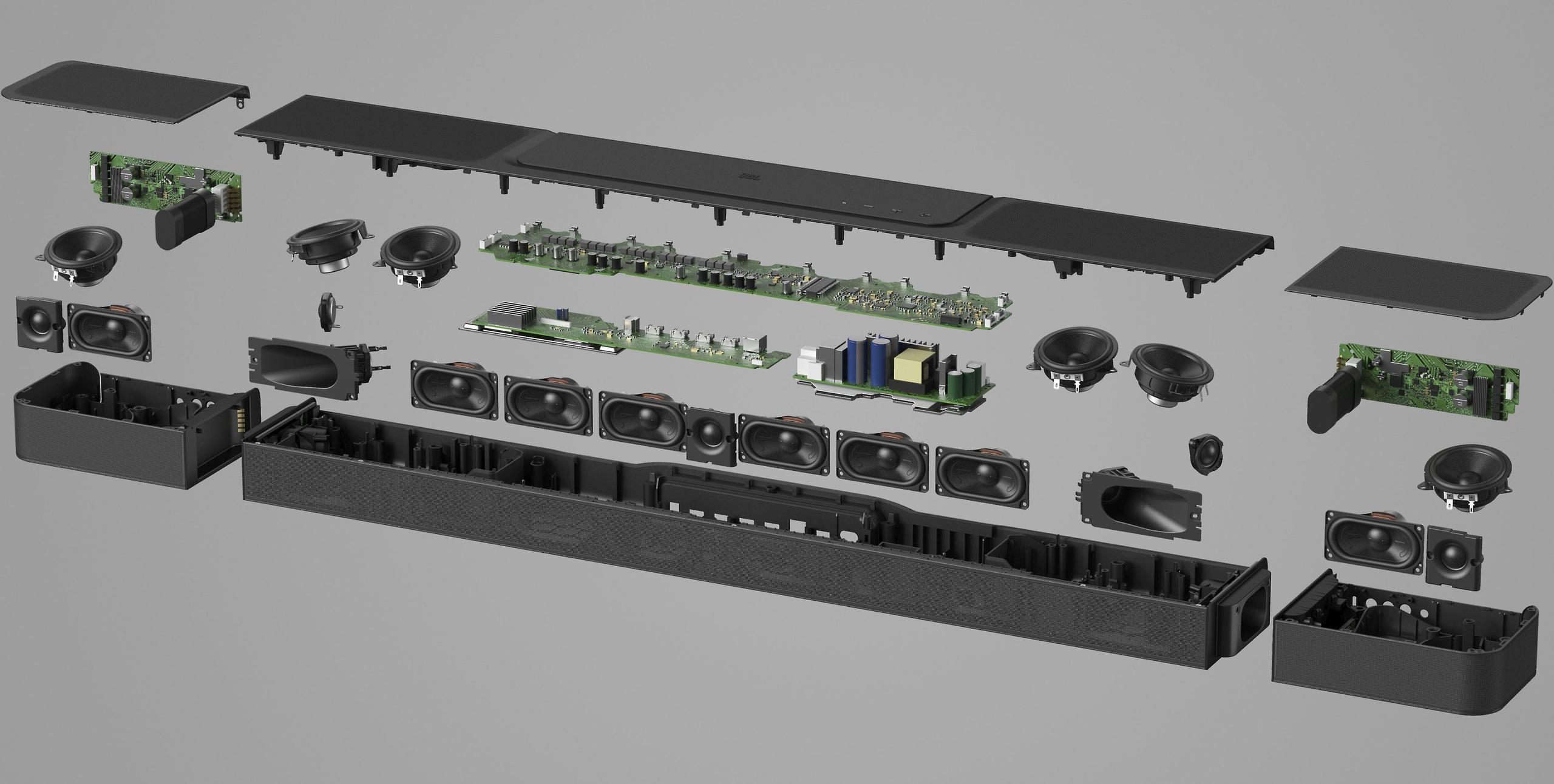
The JBL uses more conventional separate drivers - racetrack-shaped drivers for midrange, dome tweeters for highs, and dedicated up-firing drivers for Atmos effects. While this approach is tried and true, it can't match the phase coherence benefits of the KEF's coaxial design.
Setup complexity differs dramatically between these systems. The KEF XIO features Intelligent Placement Technology that automatically calibrates the sound based on whether you've wall-mounted or shelf-placed the soundbar. The built-in microphone analyzes your room and adjusts the output accordingly.
The JBL Bar 1300X requires more thoughtful placement. You need to position the wireless subwoofer where it provides good bass response without overwhelming the room, and the rear speakers need to be placed at ear level behind your seating position. The JBL One app provides room calibration, but you're still dealing with optimizing three separate wireless components.
I've found the KEF's single-unit approach particularly appealing for renters or people who frequently rearrange their living spaces. There's something elegant about getting excellent performance from a single, well-engineered component.
Both soundbars support modern wireless protocols, but their approaches differ. The KEF includes Wi-Fi 6, AirPlay 2, Chromecast, and high-resolution streaming support up to 24-bit/384kHz. It's designed for audiophiles who might have extensive digital music libraries stored on network drives.
The JBL focuses more on convenience features like Alexa Multi-room Music and broad streaming service integration. It's optimized for people who primarily use streaming services rather than maintaining local music collections.
Both support firmware updates, which is increasingly important as audio formats and streaming protocols evolve. However, the KEF's more sophisticated DSP processing suggests it may age better as virtual surround algorithms continue improving.
At $2,499, the KEF XIO is asking premium pricing for premium engineering. You're paying for proprietary driver technology that typically appears in speakers costing much more, advanced DSP processing, and the convenience of achieving excellent performance from a single component.
The $1,299 JBL Bar 1300X offers impressive value for a complete surround system. When you consider that you're getting a soundbar, wireless subwoofer, and wireless rear speakers that double as portable Bluetooth speakers, the pricing becomes quite competitive.
The value equation really depends on your priorities. If music reproduction quality is paramount and you value engineering elegance, the KEF's premium pricing makes sense. If you want maximum features and genuine surround sound at a more accessible price point, the JBL delivers exceptional bang for your buck.
After extensive time with both systems, I'd recommend the KEF XIO if you're primarily interested in music listening quality and appreciate sophisticated engineering. It's particularly well-suited for smaller to medium-sized rooms where virtual surround processing can be most effective, and for users who value aesthetic minimalism.
Choose the JBL Bar 1300X if home theater immersion is your primary goal, especially in larger rooms where the physical surround speakers can be properly positioned. It's also the clear choice for gamers who need multiple HDMI inputs and 4K/120Hz support.
The bottom line is that both soundbars excel at different things. The KEF represents the pinnacle of integrated soundbar engineering with a focus on audio purity, while the JBL offers a comprehensive home theater solution with practical features that enhance daily use. Your choice should align with whether you prioritize audiophile-grade music reproduction or maximum cinematic immersion.
| KEF XIO Soundbar | JBL Bar 1300X Soundbar with Wireless Subwoofer |
|---|---|
| Price - Significant investment difference affects value proposition | |
| $2,499 (premium audiophile pricing) | $1,299 (competitive for full surround system) |
| Channel Configuration - Determines surround sound approach | |
| 5.1.2 virtual surround (all-in-one processing) | 7.1.4 physical surround (wireless rear speakers) |
| Driver Technology - Core audio quality differentiator | |
| 6x Uni-Q MX coaxial drivers + 4x P185 force-canceling bass drivers | Racetrack drivers + tweeters + up-firing drivers (conventional design) |
| Total Power Output - Affects volume and dynamic range | |
| 820W (12 discrete Class D amplifiers) | 1,170W (650W to subwoofer, distributed across components) |
| Bass System - Impacts setup flexibility and low-frequency performance | |
| Integrated force-canceling drivers (34Hz extension, no subwoofer placement needed) | Wireless 12" subwoofer (300W, requires room positioning optimization) |
| HDMI Connectivity - Critical for multiple gaming/media devices | |
| 1x HDMI eARC + optical (requires external switching for multiple sources) | 3x HDMI inputs + eARC with 4K/120Hz passthrough (ideal for gaming) |
| Surround Speaker Implementation - Affects immersion and convenience | |
| Virtual processing with wall/ceiling reflections | Physical wireless rear speakers (10-hour battery, double as Bluetooth speakers) |
| Music Performance Focus - Important for serious listening | |
| Audiophile-grade with natural tonality and precise imaging | Cinema-optimized with bright tuning, adequate for casual music |
| Setup Complexity - Impacts user experience and room integration | |
| Single unit with automatic room calibration | Multi-component system requiring subwoofer and rear speaker placement |
| Streaming Features - Modern connectivity options | |
| Wi-Fi 6, AirPlay 2, Chromecast, high-res up to 24-bit/384kHz | Wi-Fi, AirPlay, Chromecast, Alexa MRM, broad streaming service integration |
| Dimensions (Main Unit) - Space requirements | |
| 47.6" x 2.8" x 6.5" (single elegant unit) | 39.4" x 2.4" x 5.5" + detachable 8" surround modules |
The JBL Bar 1300X at $1,299 offers better overall value for most users, providing a complete 7.1.4 surround system with wireless subwoofer and rear speakers. The KEF XIO at $2,499 commands premium pricing for audiophile-grade driver technology and superior music reproduction, making it worthwhile for serious music listeners willing to pay for advanced engineering.
The KEF XIO uses virtual surround processing from a single integrated unit, while the JBL Bar 1300X provides true physical surround sound through wireless rear speakers and subwoofer. The KEF focuses on audiophile music quality with premium Uni-Q drivers, whereas the JBL prioritizes home theater immersion with multiple components.
The KEF XIO is significantly better for music, featuring audiophile-grade Uni-Q MX coaxial drivers that deliver natural tonality, precise stereo imaging, and controlled bass down to 34Hz. The JBL Bar 1300X has a brighter, cinema-focused tuning that makes music sound less natural, though it's adequate for casual listening.
The KEF XIO doesn't require a separate subwoofer thanks to its integrated force-canceling bass drivers that extend to 34Hz. The JBL Bar 1300X includes a wireless 12-inch subwoofer as part of the package, providing powerful bass impact for movies but requiring room placement optimization.
The JBL Bar 1300X is better for gaming with three HDMI inputs plus eARC output supporting 4K/120Hz passthrough for next-gen consoles. The KEF XIO only has one HDMI eARC input, requiring external switching for multiple gaming devices, though it delivers excellent audio quality.
The KEF XIO contains 12 discrete drivers including 6 Uni-Q coaxial drivers and 4 bass drivers, all powered by individual amplifiers in a single unit. The JBL Bar 1300X has multiple drivers across three components: the main bar, wireless subwoofer, and two detachable surround speakers.
The KEF XIO is much easier to set up as a single unit with automatic room calibration. The JBL Bar 1300X requires positioning three separate wireless components (soundbar, subwoofer, and rear speakers) and managing battery charging for the surround speakers.
Both soundbars can function without WiFi for basic TV audio through HDMI or optical connections. However, the KEF XIO and JBL Bar 1300X lose streaming capabilities, app control, and firmware updates without internet connectivity. The JBL's wireless components communicate directly with the main unit, not through your home WiFi.
The KEF XIO is ideal for small spaces with its single-unit design and virtual surround processing that doesn't require rear speaker placement. The JBL Bar 1300X may be challenging in small apartments due to optimal subwoofer positioning requirements and the need for proper rear surround speaker placement.
The JBL Bar 1300X wireless rear speakers provide up to 10 hours of battery life and can function as portable Bluetooth speakers when not used for surround sound. They recharge by connecting to the main soundbar. The KEF XIO doesn't have wireless components requiring battery management.
Both the KEF XIO and JBL Bar 1300X support Dolby Atmos and DTS:X. The KEF additionally supports Sony 360 Reality Audio and high-resolution streaming up to 24-bit/384kHz, making it more versatile for audiophile music formats.
Yes, both the KEF XIO and JBL Bar 1300X work with any TV through HDMI ARC/eARC or optical connections. However, you'll get the best performance using HDMI eARC with compatible TVs. The JBL's additional HDMI inputs provide more flexibility for connecting multiple devices directly to the soundbar.
We've done our best to create useful and informative comparisons to help you decide what product to buy. Our research uses advanced automated methods to create this comparison and perfection is not possible - please contact us for corrections or questions. These are the sites we've researched in the creation of this article: blog.son-video.com - residentialsystems.com - whathifi.com - audioadvice.com - crutchfield.com - homecrux.com - techradar.com - youtube.com - us.kef.com - gramophone.com - cepro.com - audioxpress.com - musicdirect.com - gramophone.com - us.kef.com - crutchfield.com - hifipig.com - bestbuy.com - listenup.com - bestbuy.com - bestbuy.com - listenup.com - techradar.com - jbl.com - audioadvice.com - youtube.com - rtings.com - jbl.com - greentoe.com - harmanaudio.com - youtube.com - mm.jbl.com - jbl.com

Privacy Policy
Terms and Conditions - Affiliate Policy
Home Security
© Copyright 2008-2026.
11816 Inwood Rd #1211, Dallas, TX 75244