

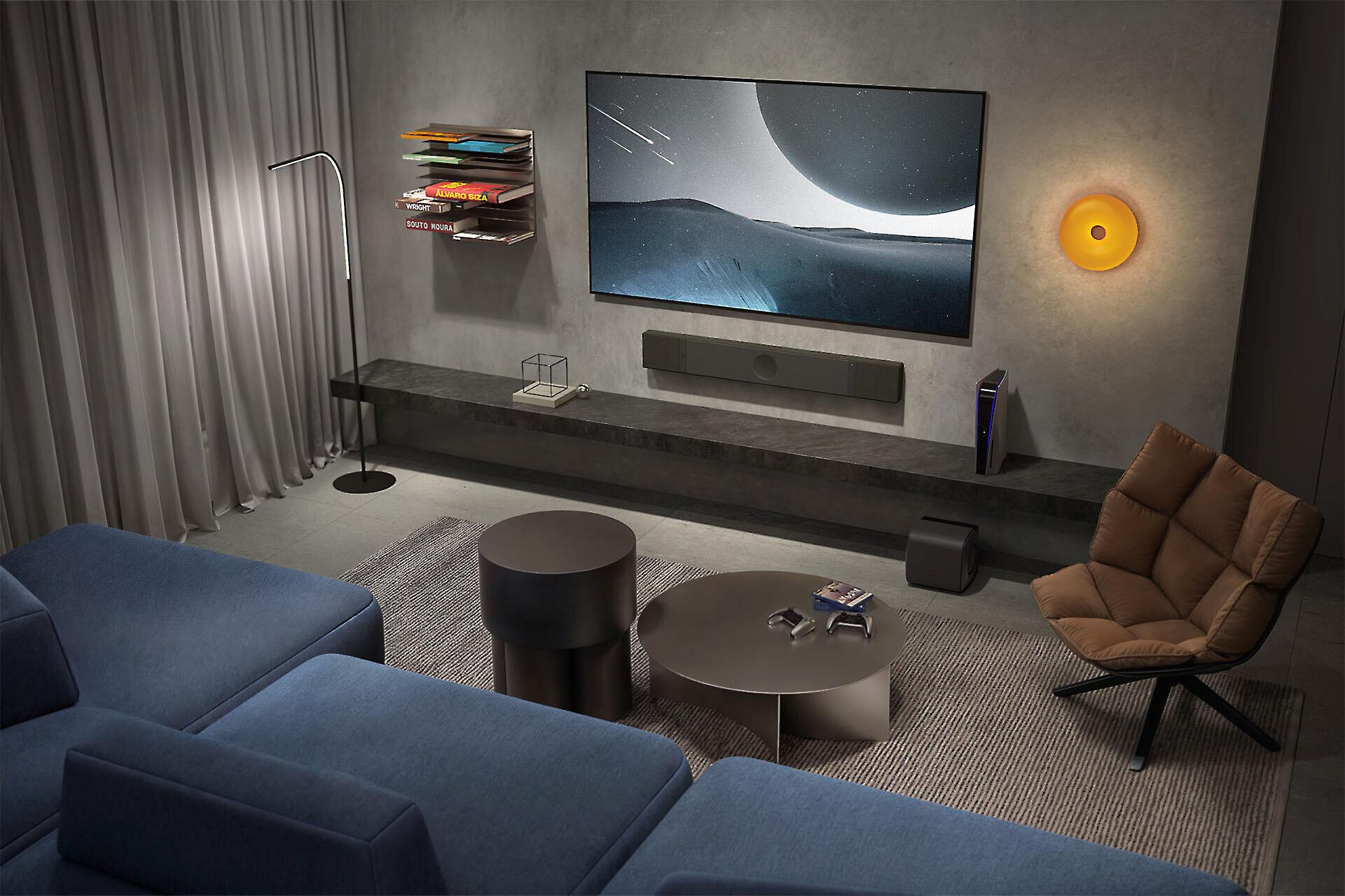
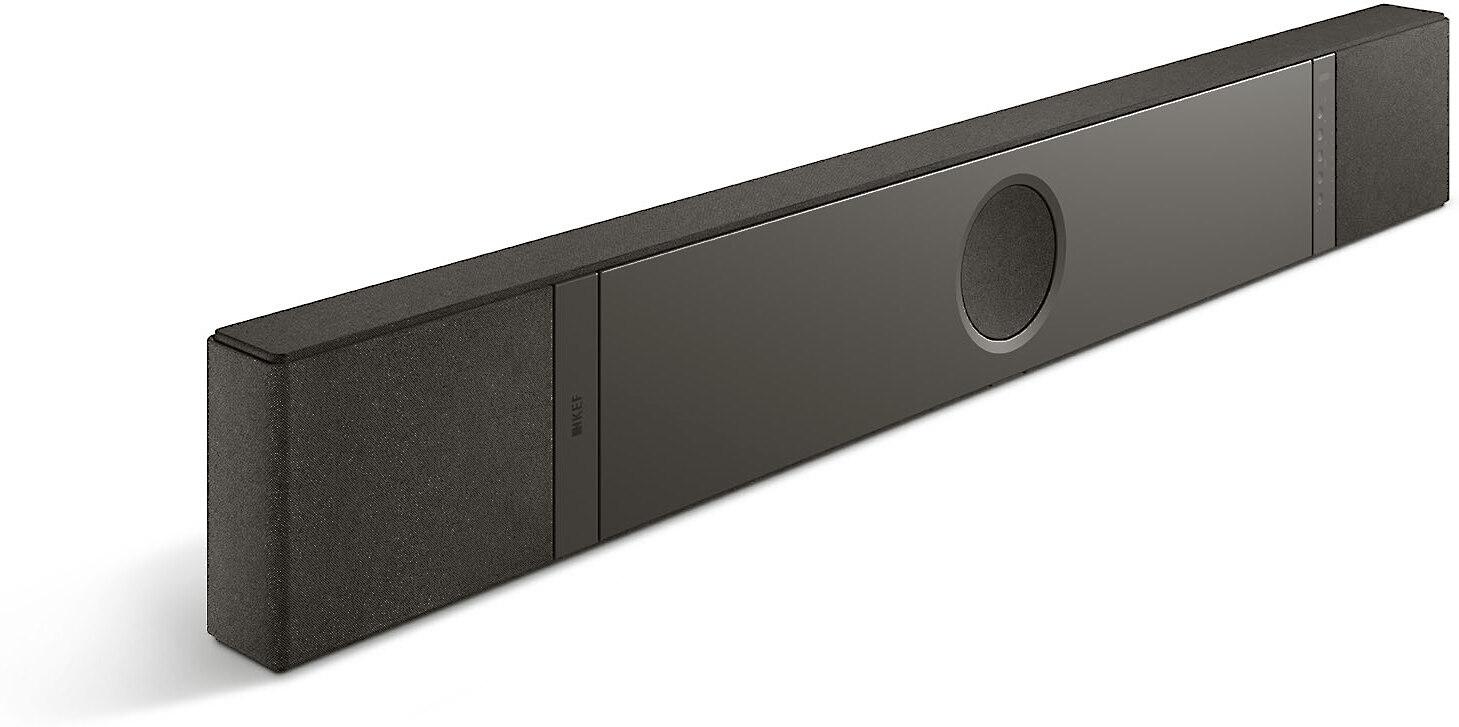
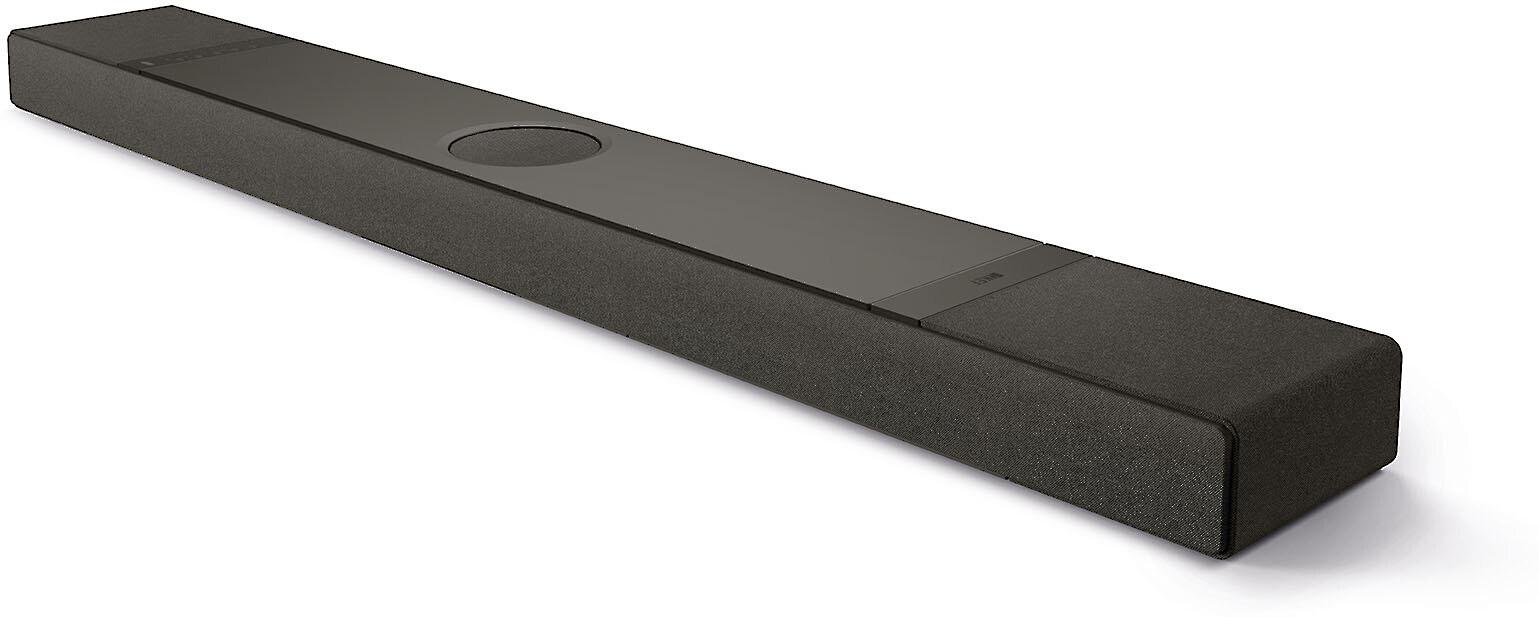
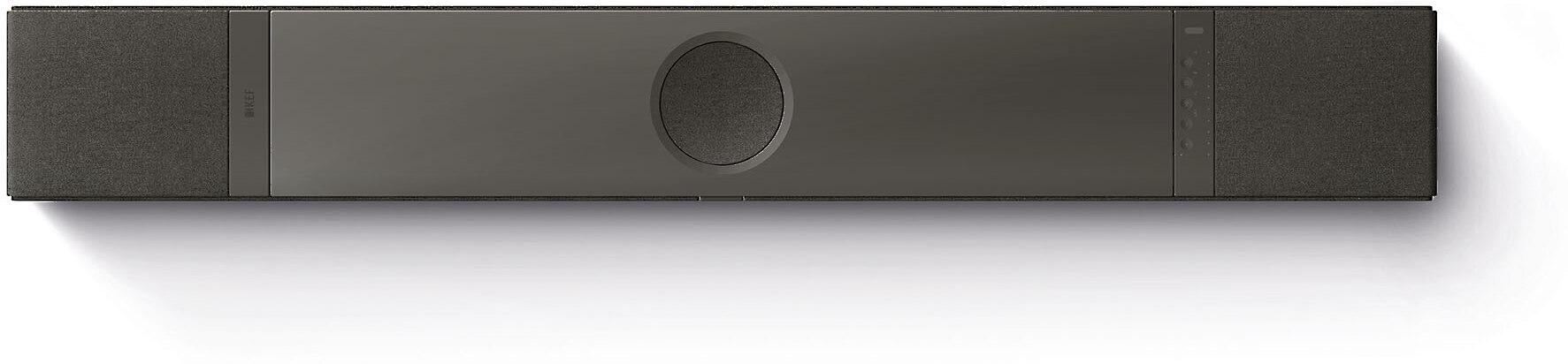



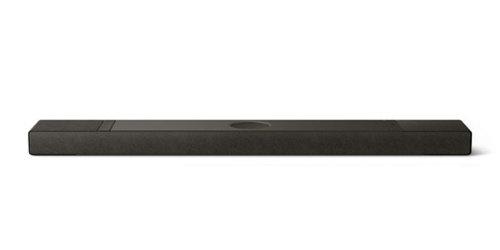
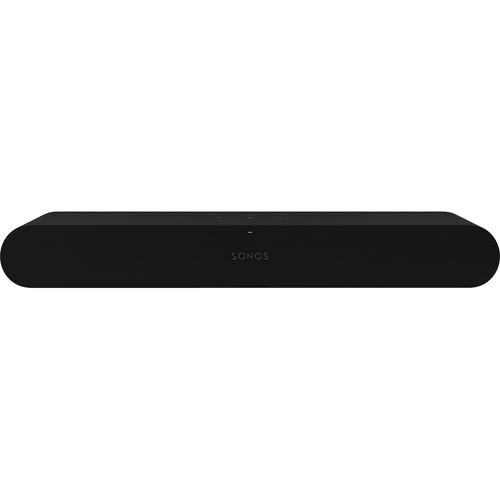


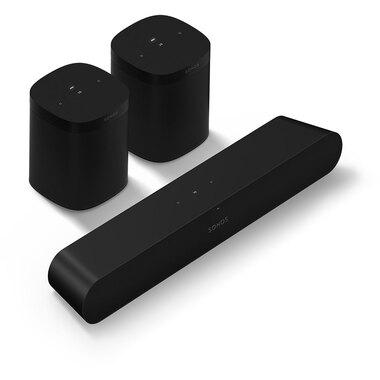
When you're shopping for a soundbar, you're essentially choosing between two different philosophies about home audio. On one side, you have companies like KEF pushing the absolute limits of what's possible in a single enclosure. On the other, brands like Sonos focus on making great sound accessible and easy to live with. The KEF XIO ($2,499) and Sonos Ray ($169) represent these approaches perfectly—and the $2,330 price difference tells you everything about how different their goals really are.
I've spent time with both of these soundbars, and honestly, they're solving completely different problems. But understanding which problem matches your situation will save you from either overspending on features you'll never use or underwhelming yourself with something that can't deliver what you actually need.
The soundbar market has exploded over the past decade, and for good reason. Nobody wants those tiny, tinny TV speakers ruining their Netflix binges or making dialogue impossible to follow. But what started as a simple solution—"make TV audio better"—has evolved into something much more complex.
Modern soundbars need to handle everything from whispered dialogue in dramatic scenes to explosive action sequences, all while doubling as music streaming devices for your daily Spotify sessions. Some focus on dialogue clarity above all else, while others try to recreate the full cinema experience in your living room. The challenge is figuring out which approach matches your actual needs rather than what sounds impressive in a showroom.
Room acoustics play a huge role too. A soundbar that sounds fantastic in a small apartment might get completely lost in a large living room with high ceilings. Similarly, a powerhouse designed for home theater might overwhelm a cozy bedroom setup. These aren't just minor considerations—they can make or break your experience with any soundbar.
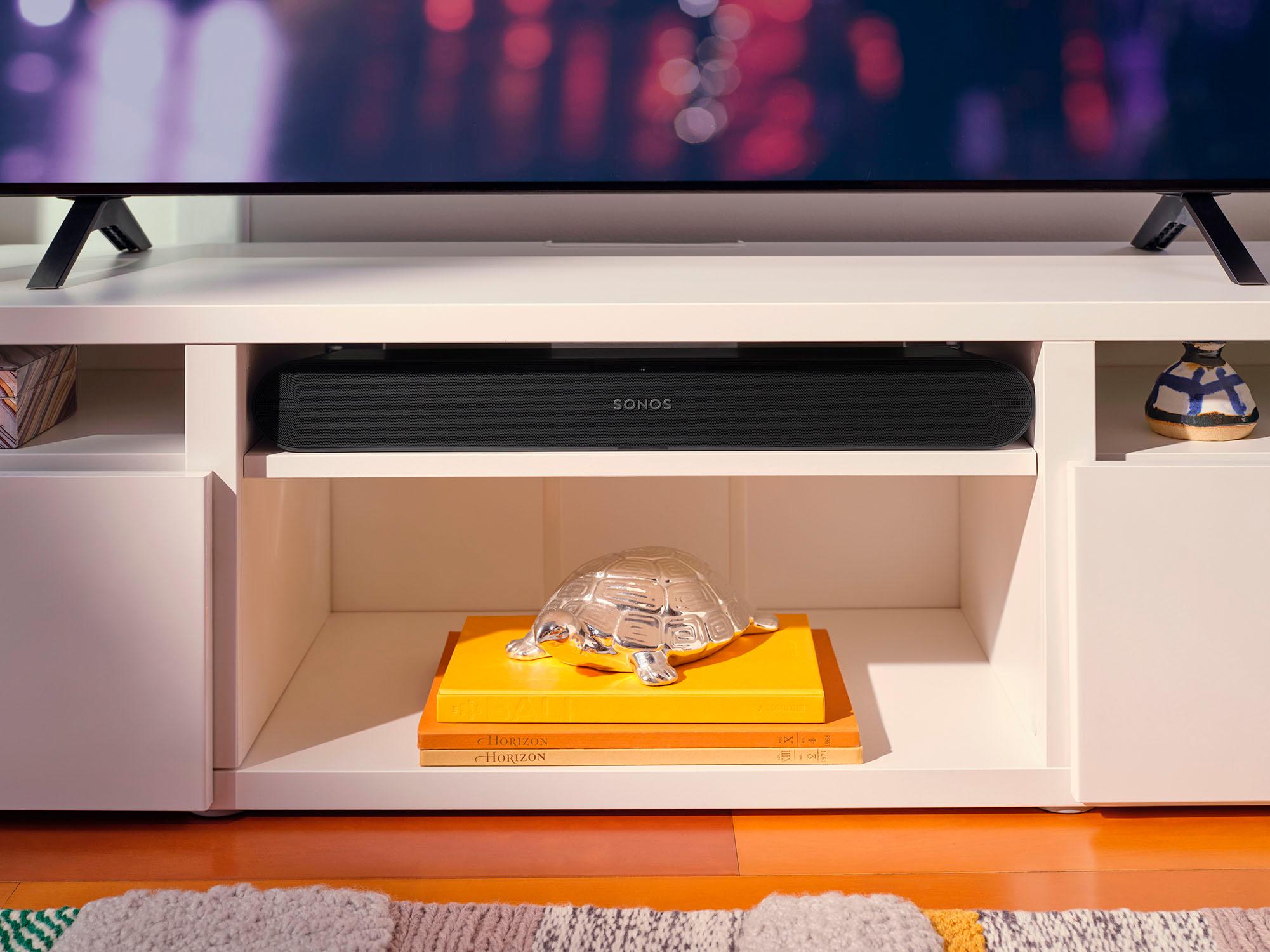
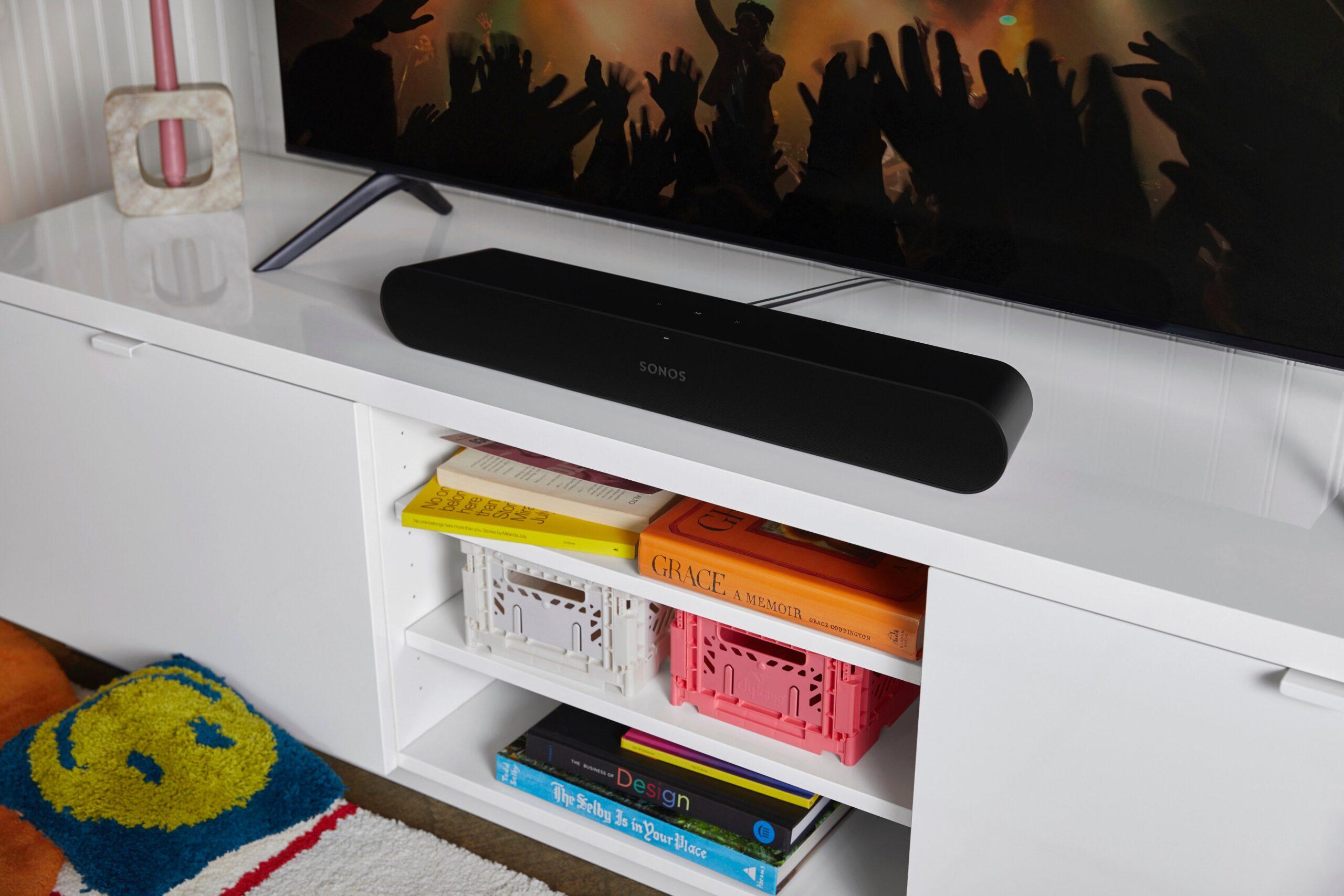
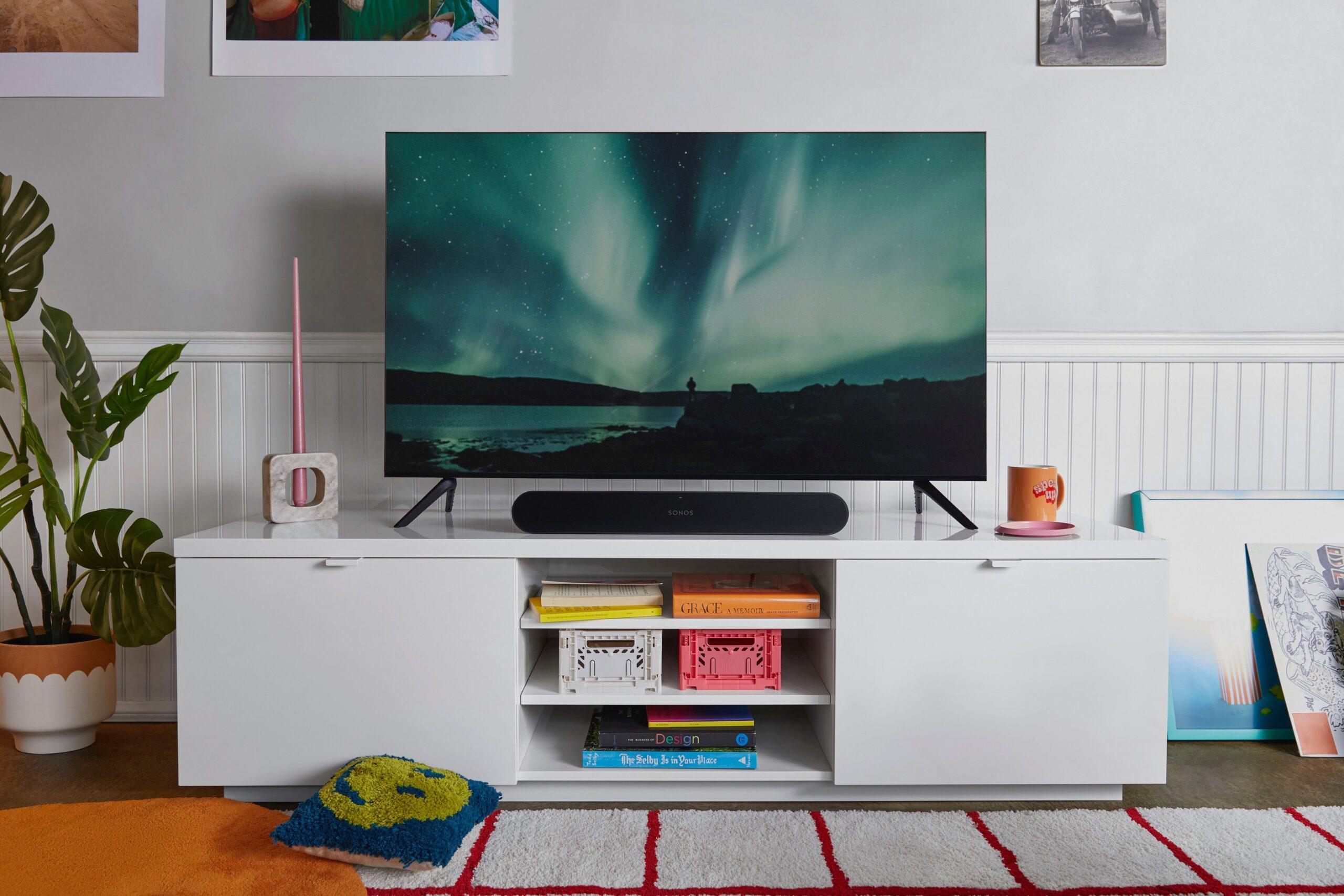
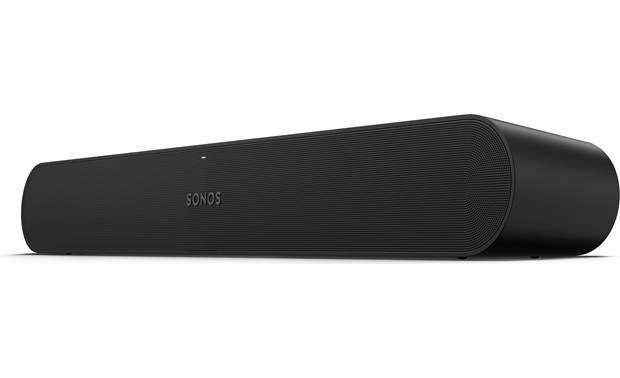
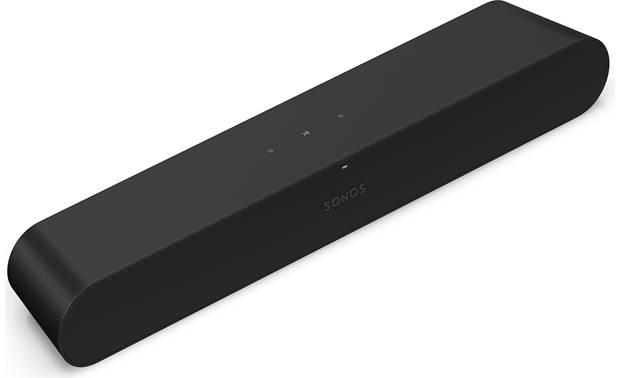
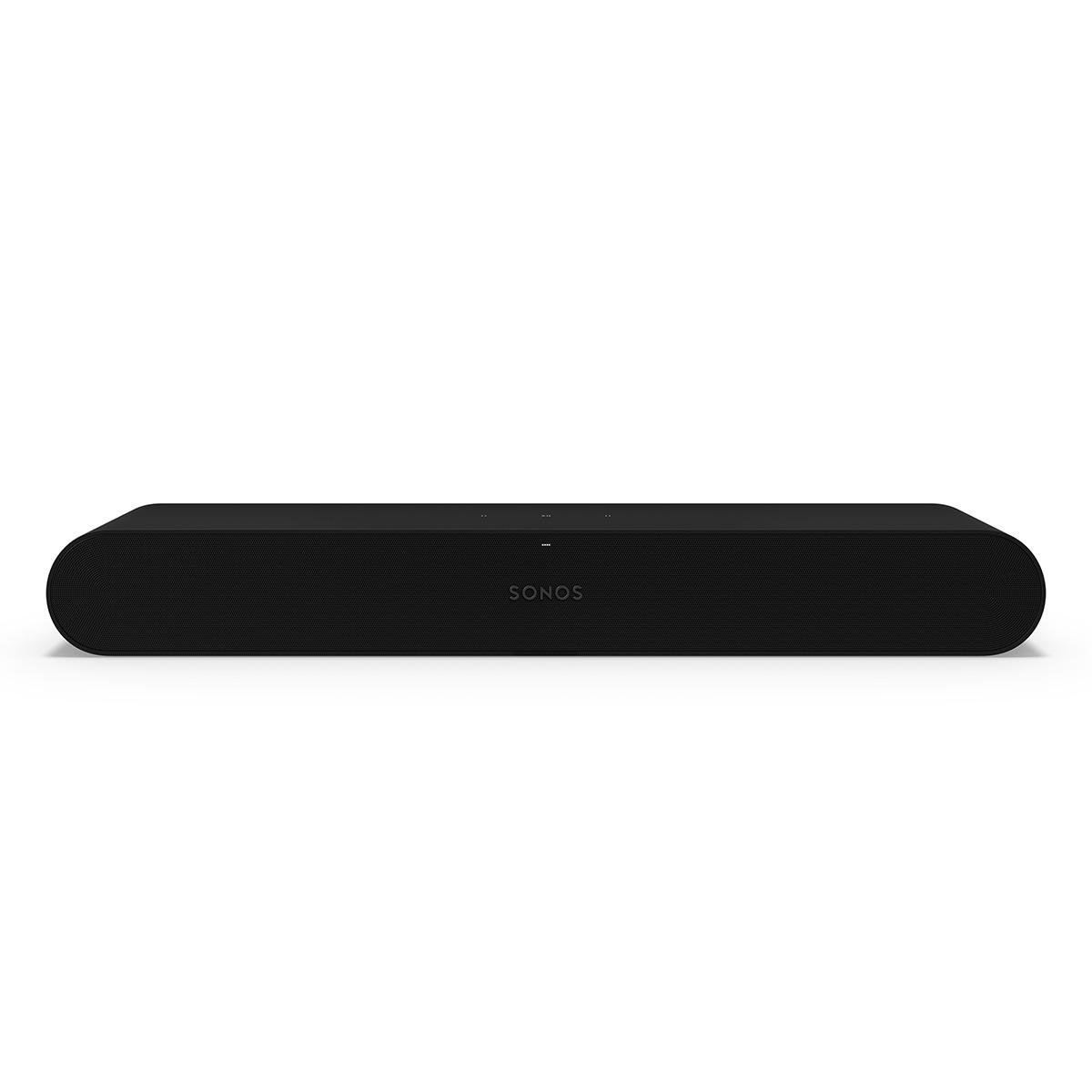
The Sonos Ray launched in 2022 as Sonos' answer to the budget soundbar market. At $169, it was designed to be an affordable entry point into the Sonos ecosystem while addressing the most basic complaint about TV audio: you can't understand what people are saying. It's a compact, no-frills approach that prioritizes the essentials.
The KEF XIO, on the other hand, arrived in July 2025 as KEF's first-ever soundbar—and what an entrance it made. At $2,499, it's not just expensive; it's a statement piece that brings decades of high-end speaker engineering into the soundbar format. KEF waited until they could do something truly special rather than rushing to market with a me-too product.
The timing matters here. The Ray came out when the soundbar market was still figuring out how to balance features with affordability. The XIO arrived after years of KEF studying what worked and what didn't in existing soundbars, allowing them to skip past common compromises and build something genuinely different.
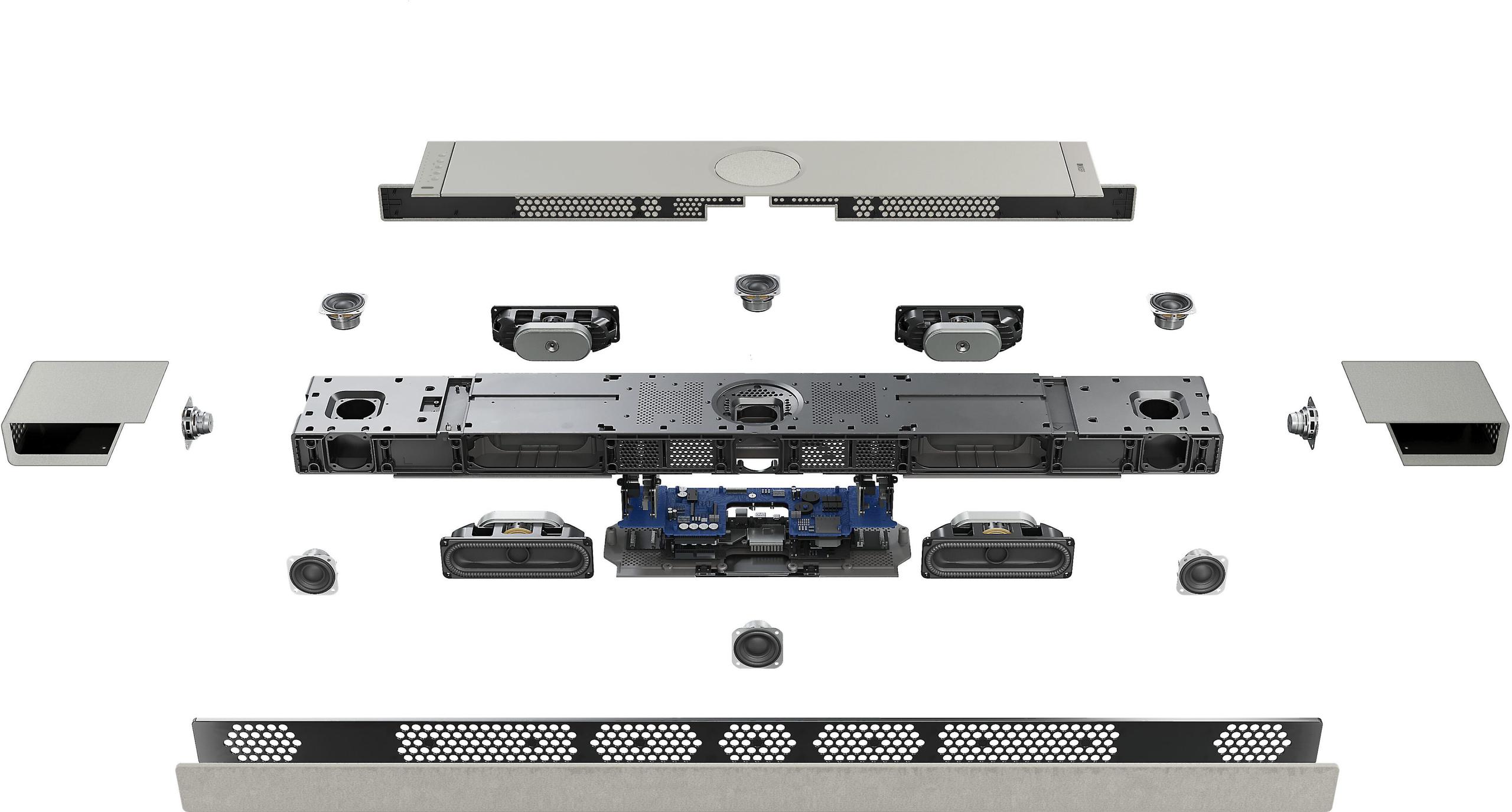
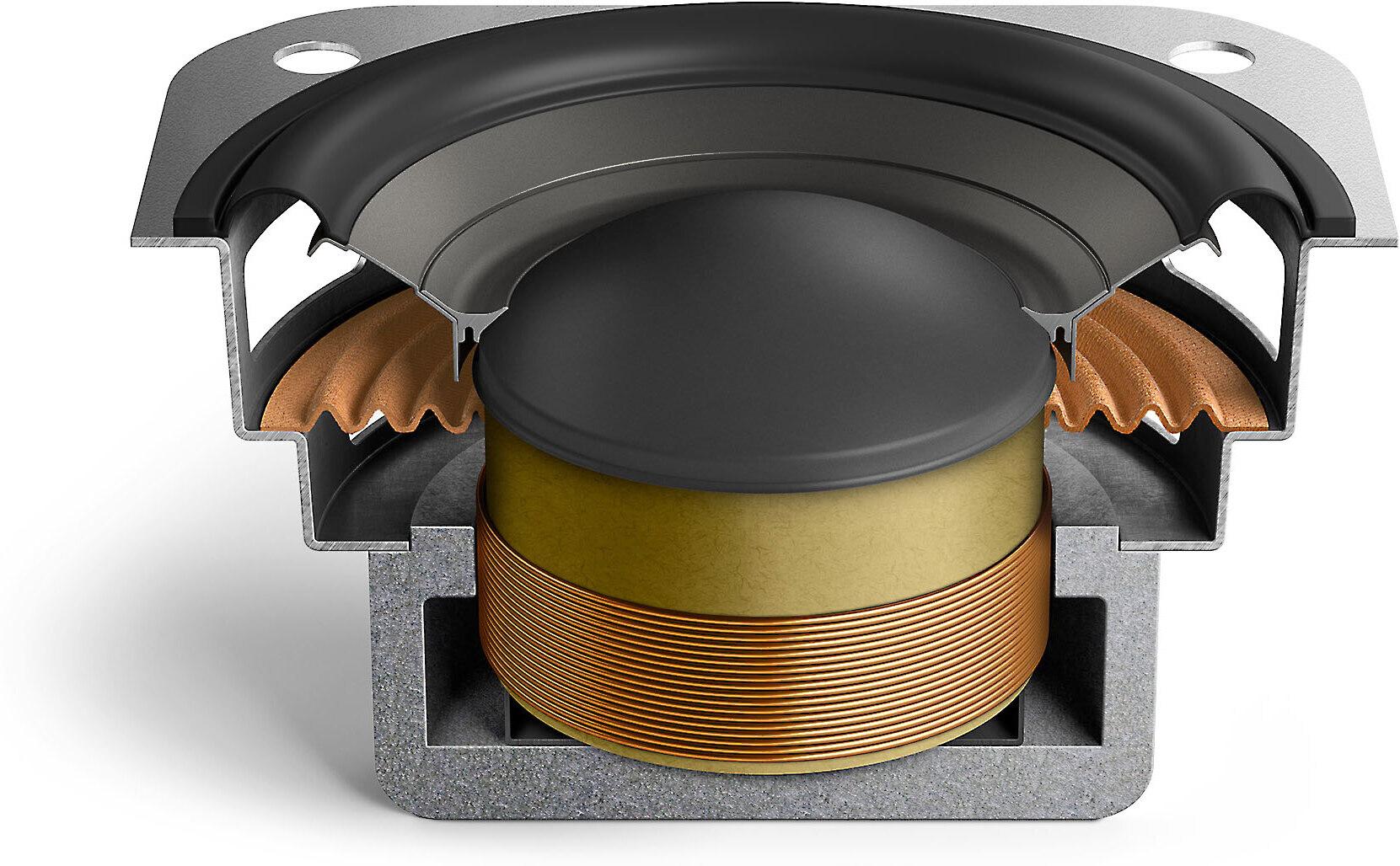
The KEF XIO doesn't just sound different from other soundbars—it sounds different from what you'd expect any soundbar to be capable of. The secret starts with those Uni-Q MX drivers, which are miniaturized versions of the concentric drivers KEF uses in their high-end speakers. In traditional speakers, the tweeter (which handles high frequencies) and midrange driver are separate, creating timing issues as sound travels different distances to your ears. KEF's Uni-Q design puts the tweeter right in the center of the midrange driver, so all the sound arrives at exactly the same time.
What this means in practice is remarkable stereo imaging—the ability to pinpoint exactly where sounds are coming from in the audio landscape. When watching a movie, you'll hear dialogue locked precisely to the center of the screen, with sound effects positioned exactly where they should be in the visual field. It's the kind of precision that typically requires expensive bookshelf speakers placed perfectly in your room.
The XIO takes this further with its 5.1.2 channel configuration, which includes dedicated upward-firing drivers for Dolby Atmos height effects. These create the illusion of sound coming from above and behind you, turning your living room into a three-dimensional audio space. When a helicopter flies overhead in a movie, you'll actually hear it moving across the ceiling—not just panning left to right like traditional stereo.
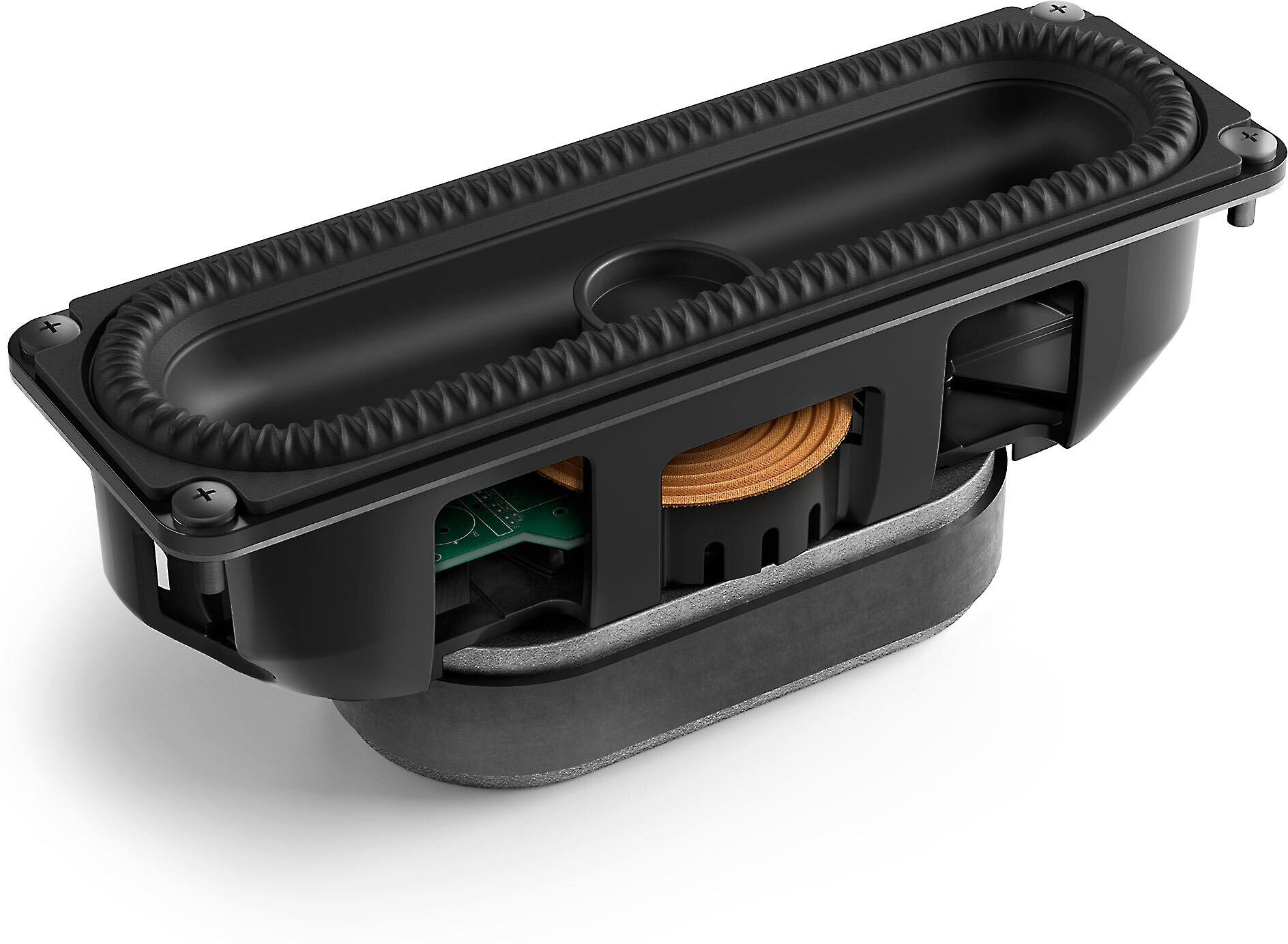
But here's where KEF's speaker expertise really shows: the bass. Most soundbars struggle with low frequencies because there simply isn't enough internal volume for proper bass reproduction. KEF solved this with their P185 racetrack woofers arranged in a force-canceling configuration. This means the drivers work in opposition to each other, canceling out the vibrations that would normally rattle your TV stand while reinforcing the actual bass frequencies you want to hear.
The VECO (Velocity Control) technology takes this even further by using real-time feedback to monitor how the drivers are moving and correct for any distortion. The result is bass that extends down to 34Hz—nearly as low as many dedicated subwoofers—without the muddiness or distortion that plagues most soundbar bass attempts.
The Sonos Ray takes a completely different approach. Instead of chasing ultimate performance, it focuses on solving the specific problems that most people actually have with their TV audio. The biggest complaint? "I can't understand what they're saying." The Ray addresses this with dedicated speech enhancement processing that boosts the frequency ranges where human voices live while reducing competing background noise.
This might sound simple, but it's surprisingly effective. The Ray uses custom waveguides—essentially shaped channels inside the speaker that control how sound disperses—to spread audio evenly across your viewing area. Unlike the XIO's pinpoint precision, the Ray aims for consistent, clear sound no matter where you're sitting on the couch.
The bass approach here is much more modest. Two carefully tuned bass ports help extend low-frequency response, but you're not getting the earth-shaking lows of the XIO. Instead, the Ray provides enough bass foundation to make action scenes feel more impactful than your TV speakers without overwhelming smaller rooms or annoying neighbors.
What the Ray lacks in ultimate performance, it makes up for in reliability and ease of use. The sound signature is designed to work well with a wide variety of content without requiring adjustment. Whether you're watching a quiet drama or an action blockbuster, the Ray provides clear, balanced audio that improves your experience without demanding attention.
This is where the philosophical differences become most apparent. The KEF XIO approaches music reproduction with the same seriousness as dedicated hi-fi equipment. Those Uni-Q drivers create a proper stereo soundstage with instruments positioned naturally across the audio field. The Music Integrity Engine—KEF's digital signal processing suite—optimizes the sound specifically for musical content, applying different processing than it would for movie soundtracks.
I've found the XIO genuinely impressive for music listening. Jazz recordings reveal the spatial relationship between instruments, electronic music hits with controlled but impactful bass, and acoustic performances maintain the natural warmth and detail that makes you forget you're listening to a soundbar rather than traditional speakers. The high-resolution audio support (up to 24-bit/384kHz) means you can take full advantage of premium streaming services like Tidal or Qobuz.
The Sonos Ray, meanwhile, treats music as one of several use cases rather than the primary focus. It sounds good enough for casual listening—certainly better than phone speakers or most smart speakers in this price range—but it doesn't have the resolution or dynamic range to make music feel like a primary experience. The stereo imaging is adequate rather than impressive, and the limited bass extension means you're missing some of the foundation that makes music feel full and engaging.
However, the Ray integrates beautifully with Sonos' streaming ecosystem. The app experience is mature and reliable, with seamless integration across dozens of music services. If you're more interested in convenient access to your music than ultimate sound quality, the Ray delivers exactly what you need.
For home theater use, the differences become even more pronounced. The KEF XIO creates what I can only describe as a bubble of immersive sound around your seating area. Dolby Atmos content reveals layers of detail that you simply can't get from traditional stereo soundbars. Rain falls from above, aircraft move convincingly through three-dimensional space, and explosions have the kind of low-frequency impact that you feel as much as hear.
The XIO's 820 watts of total amplification means it can fill even large rooms with authoritative sound. At reference volumes, action scenes have real weight and presence without the distortion or compression that plague most soundbars when pushed hard. The dialogue clarity remains excellent even during complex scenes with multiple sound elements competing for attention.
The Sonos Ray takes a more modest approach to home theater. It doesn't support Dolby Atmos or DTS:X, so you're getting enhanced stereo rather than true surround sound. But within those limitations, it performs admirably. Dialogue comes through clearly, action scenes have more impact than TV speakers, and the overall experience feels more engaging and cinematic.
For smaller rooms or apartments where you can't (or don't want to) play audio at high volumes, the Ray's approach makes sense. The Night Sound feature compresses dynamic range so you can follow dialogue without explosions waking the neighbors—a practical feature that the XIO lacks.
Both soundbars handle modern connectivity, but with different priorities. The KEF XIO includes HDMI 2.1 eARC, which supports the latest high-resolution audio formats and ensures compatibility with current and future gaming consoles and streaming devices. However, it only has one HDMI input, which can complicate setups with multiple devices.
The Intelligent Placement Technology automatically calibrates the XIO's sound based on room acoustics and placement. Whether it's wall-mounted or sitting on a media console, the soundbar adjusts its output to optimize performance for your specific setup. This kind of automatic room correction typically requires expensive separate processors.
The Sonos Ray focuses on ecosystem integration rather than cutting-edge connectivity. The Sonos S2 app provides reliable control and seamless integration with other Sonos speakers throughout your home. Trueplay room tuning (available on iOS devices) uses your phone's microphone to measure room acoustics and adjust the sound accordingly.
Where Sonos really shines is in the multi-room experience. If you already have other Sonos speakers, the Ray integrates seamlessly, allowing you to play synchronized music throughout your home or use other Sonos speakers as surrounds for TV watching.
The price difference between these soundbars reflects fundamentally different approaches to engineering. The KEF XIO's $2,499 price tag pays for genuinely advanced technology: those Uni-Q drivers require precision manufacturing, the force-canceling woofer arrangement demands careful acoustic engineering, and the real-time distortion correction systems require significant processing power.
The VECO system alone represents years of development. By continuously monitoring driver movement and correcting for non-linear behavior in real-time, it achieves distortion levels that rival much more expensive dedicated components. This isn't marketing fluff—it's measurable technology that directly impacts what you hear.
The Sonos Ray's $169 price reflects a different set of priorities. Instead of cutting-edge driver technology, your money goes toward reliable manufacturing, mature software development, and the infrastructure needed to support seamless streaming and multi-room capabilities. The engineering focus is on consistency and reliability rather than ultimate performance.
After extended time with both soundbars, their different personalities become clear. The KEF XIO demands attention in the best possible way. Every movie sounds better, music becomes more engaging, and you find yourself noticing audio details that were always there but never properly presented. It's the kind of upgrade that changes how you experience content.
However, it also requires a certain commitment. The single HDMI input means careful consideration of your source setup. The $2,499 price point means it needs to be a priority purchase rather than an impulse buy. And the exceptional performance makes you aware of poor source material in ways that lesser soundbars mask.
The Sonos Ray integrates into daily life more seamlessly. It makes everything sound better without calling attention to itself. The dialogue enhancement means you can actually follow conversations in movies without constantly adjusting volume. The Sonos ecosystem integration means your music is always easily accessible.
The Ray's limitations become apparent only in direct comparison. On its own, it's a significant upgrade from TV speakers that solves the most common audio complaints. In the context of what's possible with modern soundbar technology, it feels conservative—but for many users, conservative is exactly what they need.
Choosing between the KEF XIO and Sonos Ray comes down to understanding what you actually want from a soundbar—and being honest about how you'll use it.
If you're serious about audio quality, have a larger room that can benefit from powerful sound, and want something that excels equally at movies and music, the XIO justifies its premium price. It's genuinely capable of replacing a much more complex and expensive component system while fitting into a single, elegant enclosure.
If you want better TV audio without complexity or significant investment, need reliable streaming integration, or have a smaller space where subtlety matters more than impact, the Ray delivers exactly what you need at a price that won't dominate your entertainment budget.
Neither choice is wrong—they're just optimized for different users and different priorities. The XIO pushes the boundaries of what's possible in a soundbar; the Ray makes good sound accessible and easy to live with. Understanding which philosophy matches your needs will ensure you end up with something you'll genuinely enjoy rather than something that impresses in the store but disappoints at home.
The soundbar market has room for both approaches, and honestly, it's better for having products that commit fully to their respective philosophies rather than trying to split the difference and satisfying no one completely.
| KEF XIO Soundbar | Sonos Ray Soundbar |
|---|---|
| Price - Major factor in determining value proposition | |
| $2,499 (premium audiophile market) | $169 (budget-friendly entry level) |
| Audio Channels - Determines immersive audio capability | |
| 5.1.2 with Dolby Atmos, DTS:X, Sony 360RA | Stereo 2.0 only (no surround formats) |
| Driver Technology - Core component affecting sound quality | |
| 12 drivers: 6 Uni-Q MX concentric arrays, 4 P185 racetrack woofers with VECO distortion control | Basic stereo drivers with custom waveguides |
| Power Output - Determines volume and dynamic range capability | |
| 820W total amplification across 12 discrete Class D amplifiers | Not specified (significantly lower than XIO) |
| Bass Extension - Critical for full-range sound without subwoofer | |
| 34Hz without subwoofer (force-canceling woofer design) | Limited bass extension, relies on TV or room acoustics |
| HDMI Connectivity - Affects compatibility with modern devices | |
| Single HDMI 2.1 eARC (limitation for multi-device setups) | HDMI ARC or optical input only (no eARC support) |
| Smart Features - Convenience and ecosystem integration | |
| Room calibration via built-in microphone, KEF Connect app | Mature Sonos ecosystem, multi-room audio, Trueplay tuning |
| Music Streaming Quality - Important for daily music listening | |
| High-res audio up to 24-bit/384kHz, audiophile-grade reproduction | Standard streaming quality, excellent service integration |
| Physical Design - Affects placement flexibility and aesthetics | |
| Ultra-slim premium build (47.6" × 2.8" × 6.5"), wall-mountable | Compact design (22" × 2.8" × 3.7"), fits smaller spaces |
| Subwoofer Support - Option to expand bass performance | |
| Wireless subwoofer output (optional KEF sub compatibility) | No subwoofer output (must rely on built-in drivers) |
| Target User - Who benefits most from each approach | |
| Audiophiles wanting reference-grade performance in soundbar format | Budget-conscious users seeking basic TV audio improvement |
The Sonos Ray ($169) offers exceptional value for budget-conscious buyers, providing significant TV audio improvement at an accessible price. The KEF XIO ($2,499) delivers premium audiophile performance that justifies its high cost for serious audio enthusiasts, but represents a major investment.
Both excel at dialogue clarity but through different approaches. The KEF XIO uses precise Uni-Q drivers and advanced DSP for crystal-clear speech reproduction. The Sonos Ray features dedicated Speech Enhancement technology specifically designed to boost vocal frequencies and reduce background noise.
The Sonos Ray provides excellent long-term value through regular software updates, reliable performance, and expansion possibilities within the Sonos ecosystem. The KEF XIO offers long-term value through premium build quality and future-proof audio format support, but requires a much higher initial investment.
Choose the KEF XIO if you want premium audio quality, have a larger room, prioritize music reproduction, and can justify the $2,499 investment. Choose the Sonos Ray if you want affordable TV audio improvement, have limited space, prefer simple setup, or want to start building a Sonos multi-room system.
We've done our best to create useful and informative comparisons to help you decide what product to buy. Our research uses advanced automated methods to create this comparison and perfection is not possible - please contact us for corrections or questions. These are the sites we've researched in the creation of this article: blog.son-video.com - residentialsystems.com - whathifi.com - audioadvice.com - crutchfield.com - homecrux.com - techradar.com - youtube.com - us.kef.com - gramophone.com - cepro.com - audioxpress.com - musicdirect.com - gramophone.com - us.kef.com - crutchfield.com - hifipig.com - bestbuy.com - listenup.com - bestbuy.com - bestbuy.com - listenup.com - techradar.com - soundandvision.com - youtube.com - appleinsider.com - youtube.com - sonos.com - cnet.com - howtogeek.com - pcrichard.com - en.community.sonos.com - epicsystems.tech - en.community.sonos.com - cepro.com - videoandaudiocenter.com

Privacy Policy
Terms and Conditions - Affiliate Policy
Home Security
© Copyright 2008-2026.
11816 Inwood Rd #1211, Dallas, TX 75244