

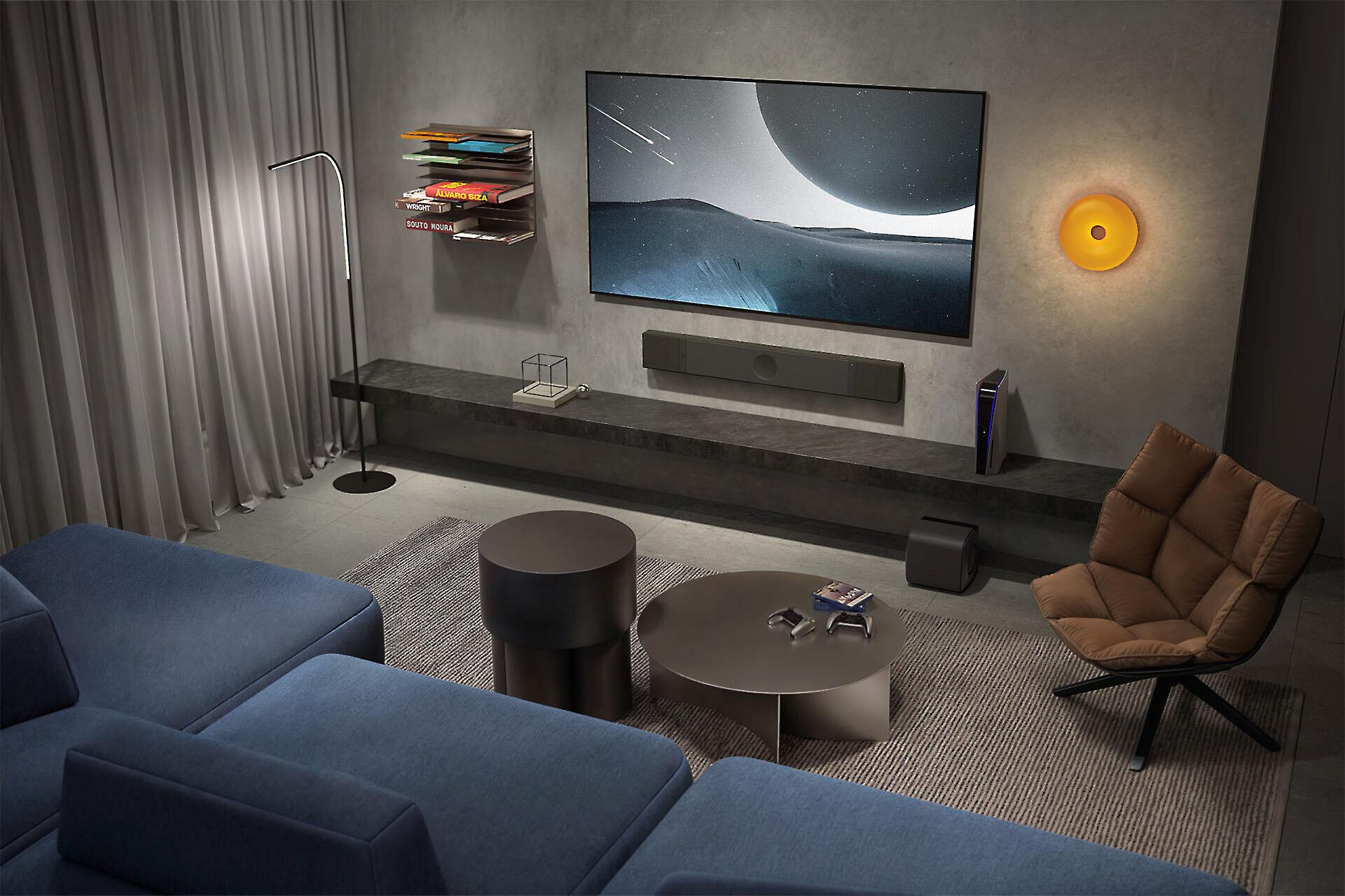
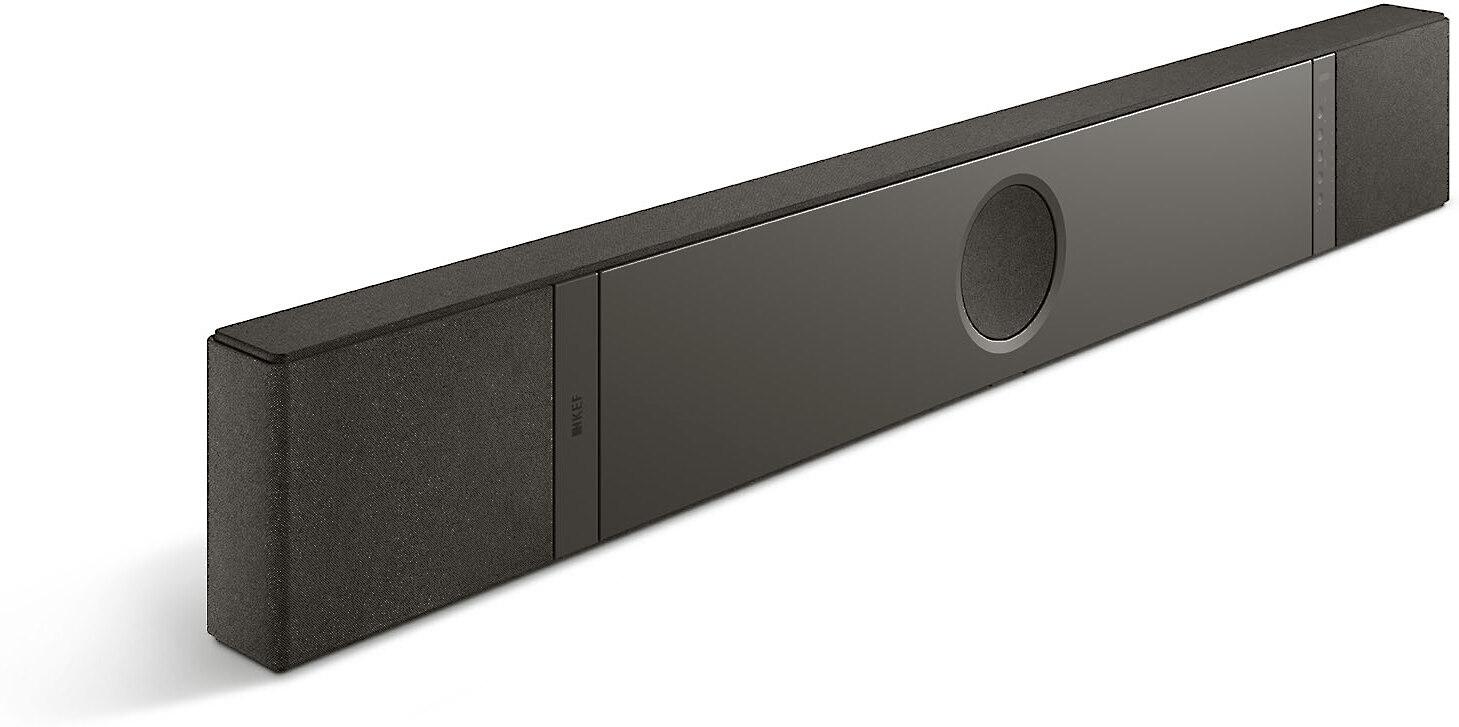
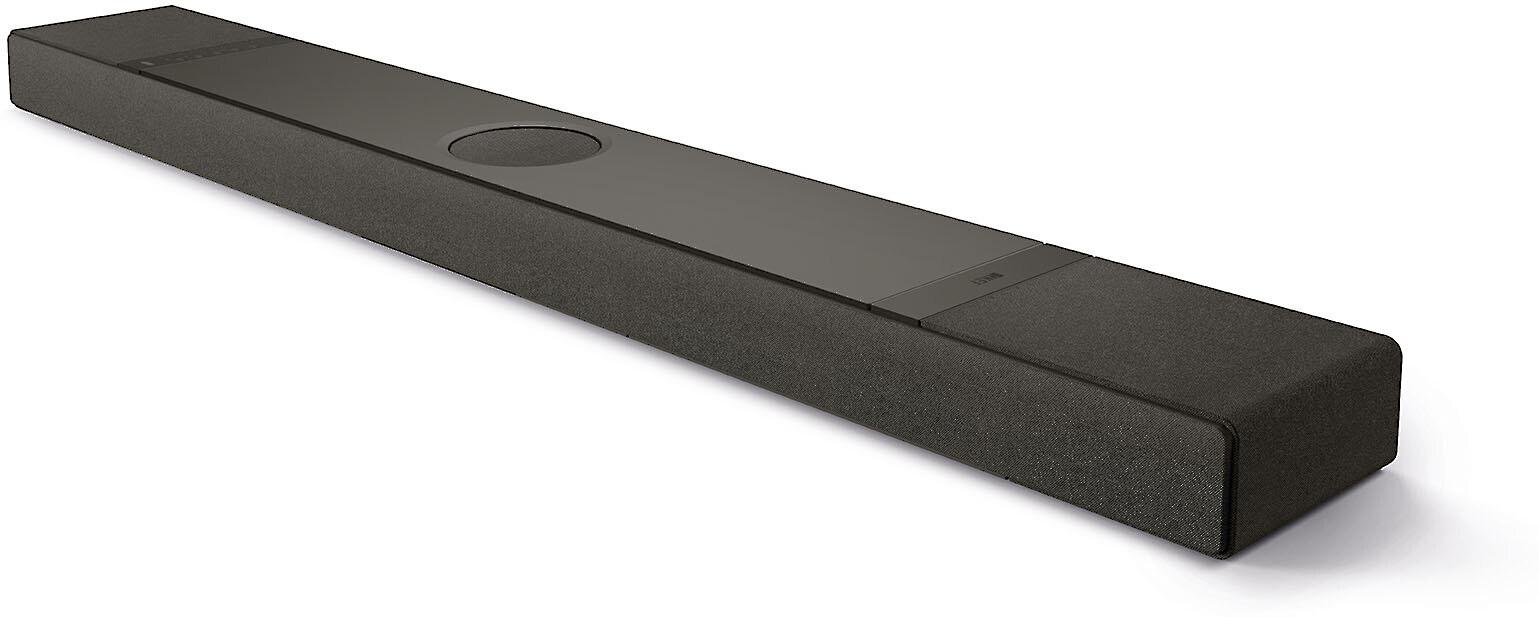
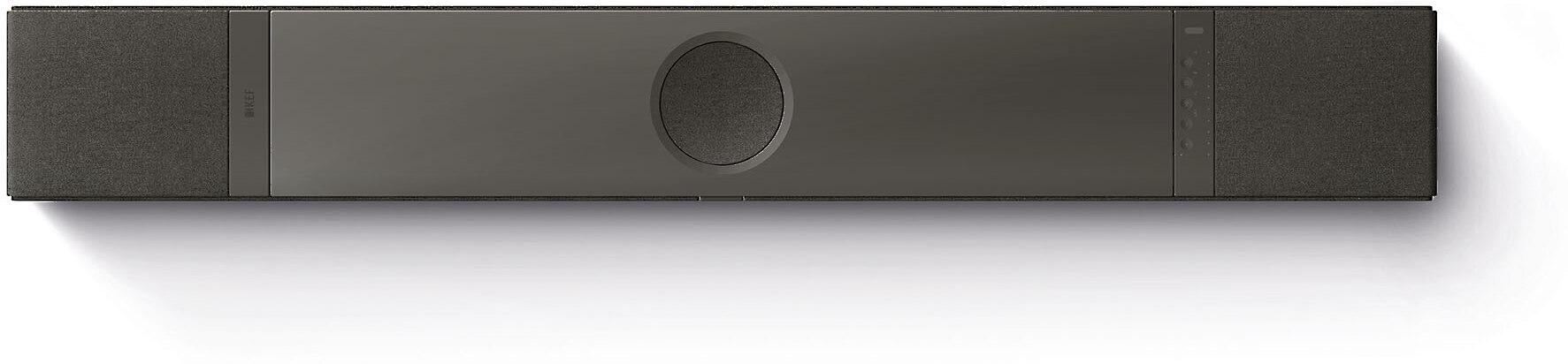







When you're looking to upgrade your home entertainment setup without the complexity of a full surround sound system, premium soundbars offer an appealing middle ground. They promise cinema-quality audio from a single, sleek unit that won't overwhelm your living space. But with prices ranging from under $700 to over $2,000, choosing the right one requires understanding what you're actually getting for your money.
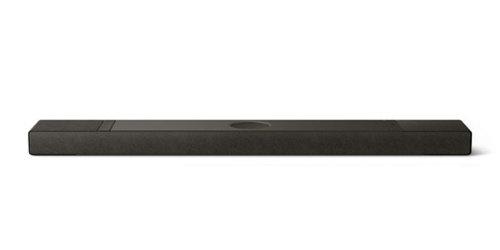
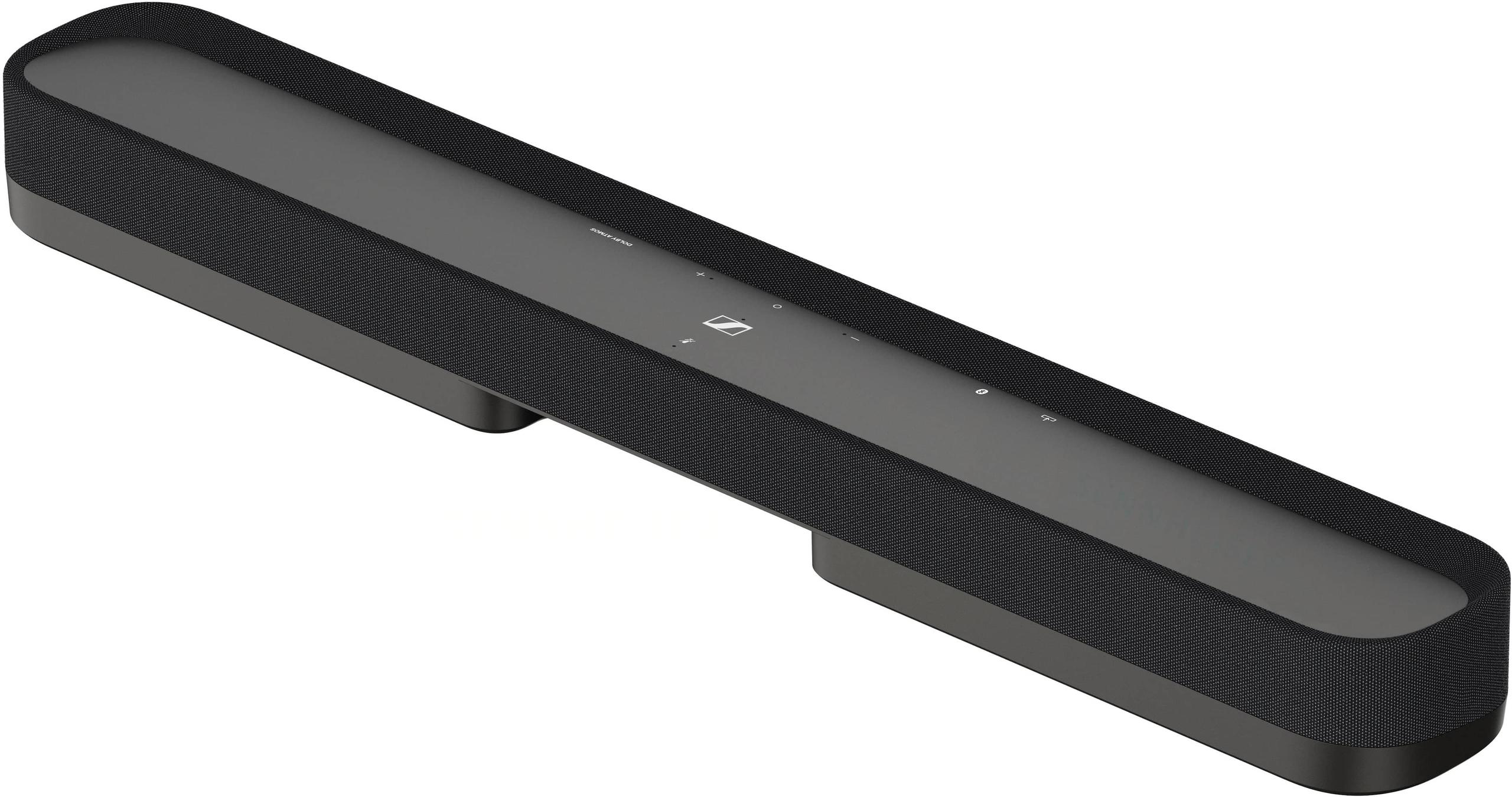
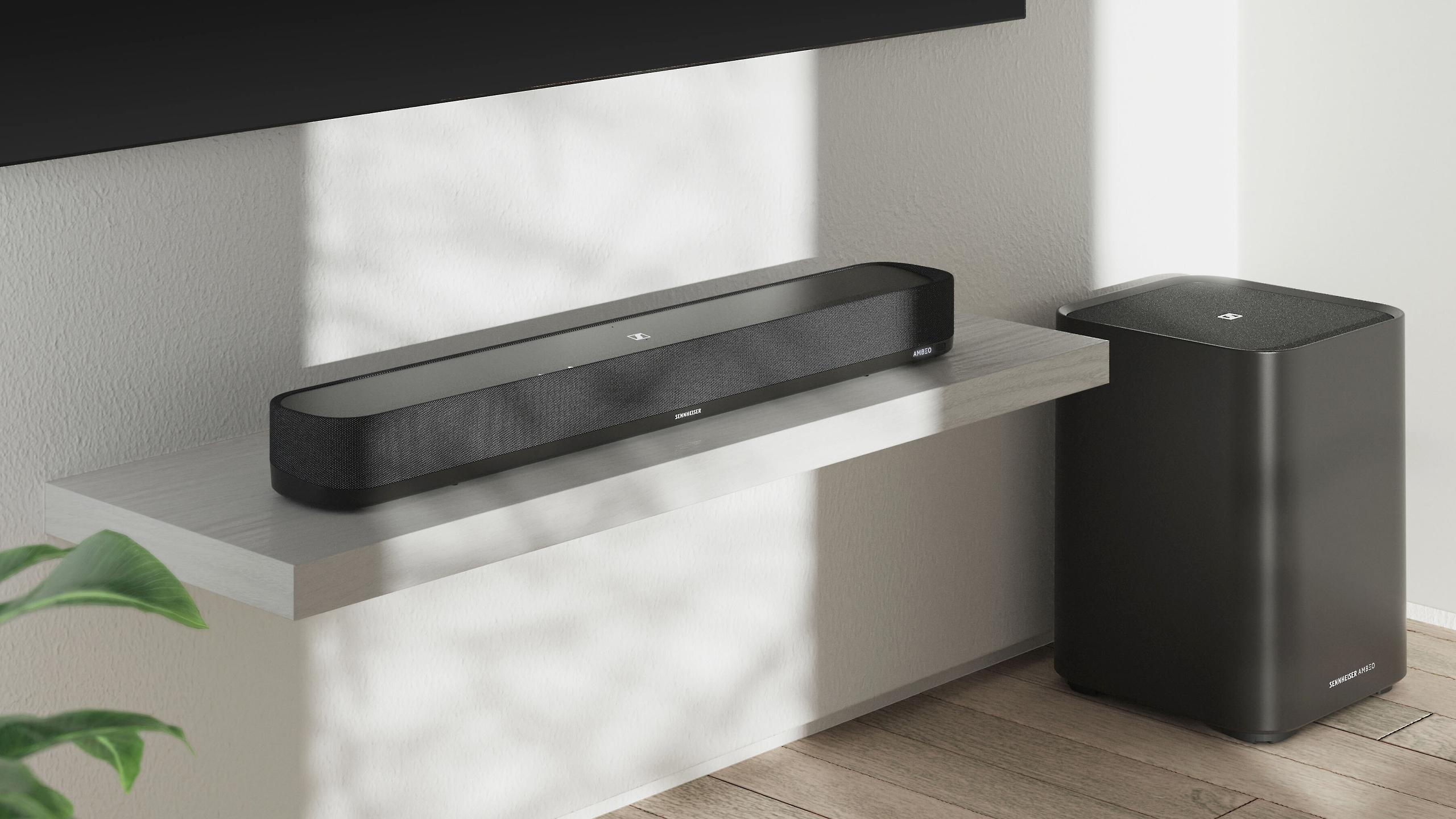
Today, we're comparing two very different approaches to premium audio: the KEF XIO Soundbar ($2,499) and the Sennheiser AMBEO Mini ($695). These represent opposite ends of the premium soundbar spectrum—one prioritizing no-compromise audio engineering, the other focusing on smart virtualization technology in a compact package.
Before diving into specifics, it's worth understanding what makes a soundbar "premium." Unlike basic TV audio upgrades, premium soundbars aim to create immersive, three-dimensional soundscapes that rival traditional surround sound systems. They use advanced processing to simulate height channels for Dolby Atmos (audio that moves around and above you), sophisticated room correction to adapt to your space, and high-quality drivers that can handle both explosive movie soundtracks and delicate musical passages.
The key considerations when shopping in this category include how effectively they create that 3D soundstage, their ability to deliver impactful bass without a separate subwoofer, whether they excel at movies, music, or both, and ultimately, whether the performance justifies the price premium over more basic options.
The KEF XIO, released in July 2025, represents KEF's first foray into soundbars after decades of building some of the world's most respected hi-fi speakers. This timing is significant—it allowed KEF to incorporate their latest driver technologies, including miniaturized versions of their famous Uni-Q drivers and bass innovations from their award-winning KC62 subwoofer.
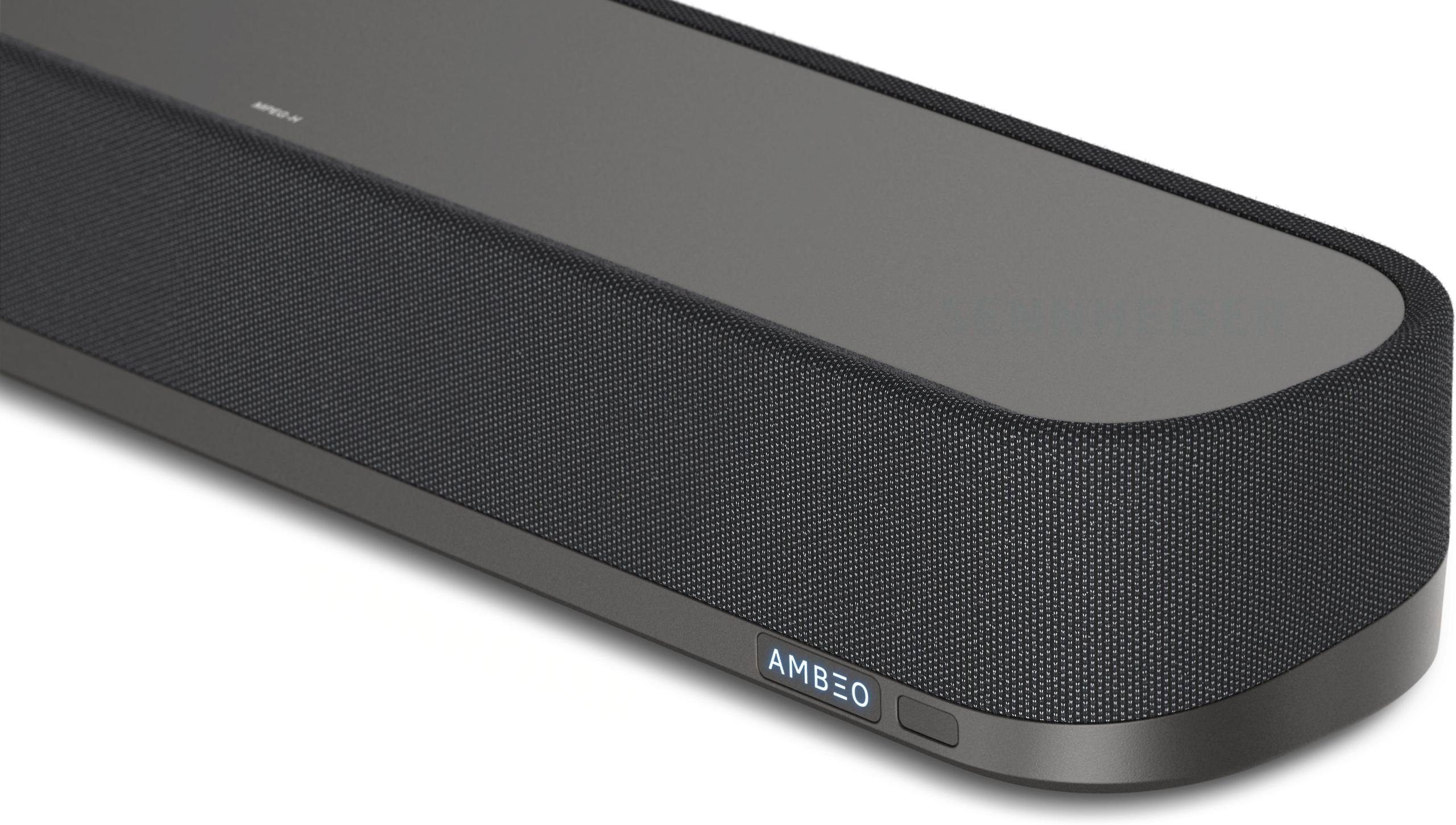
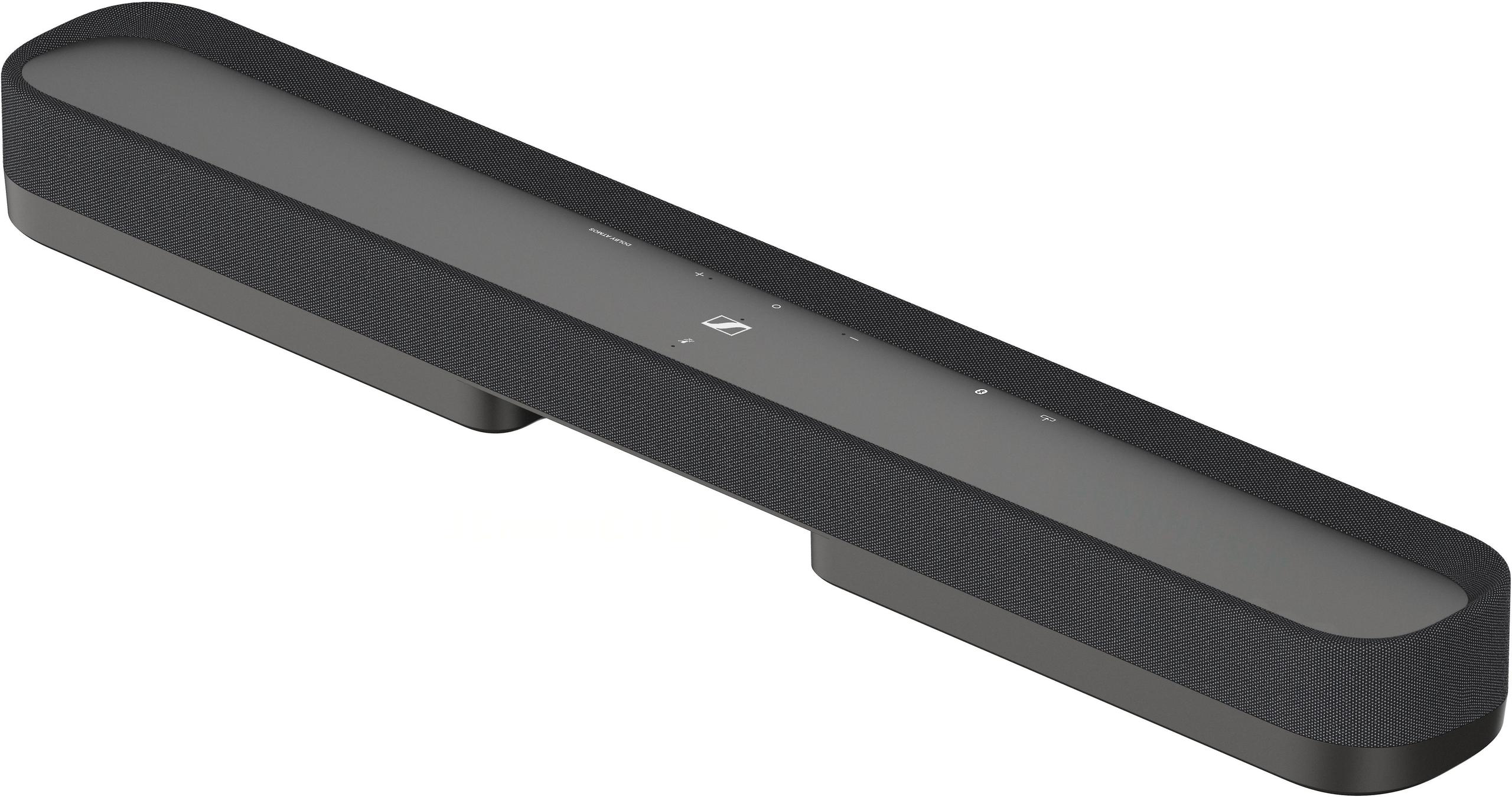
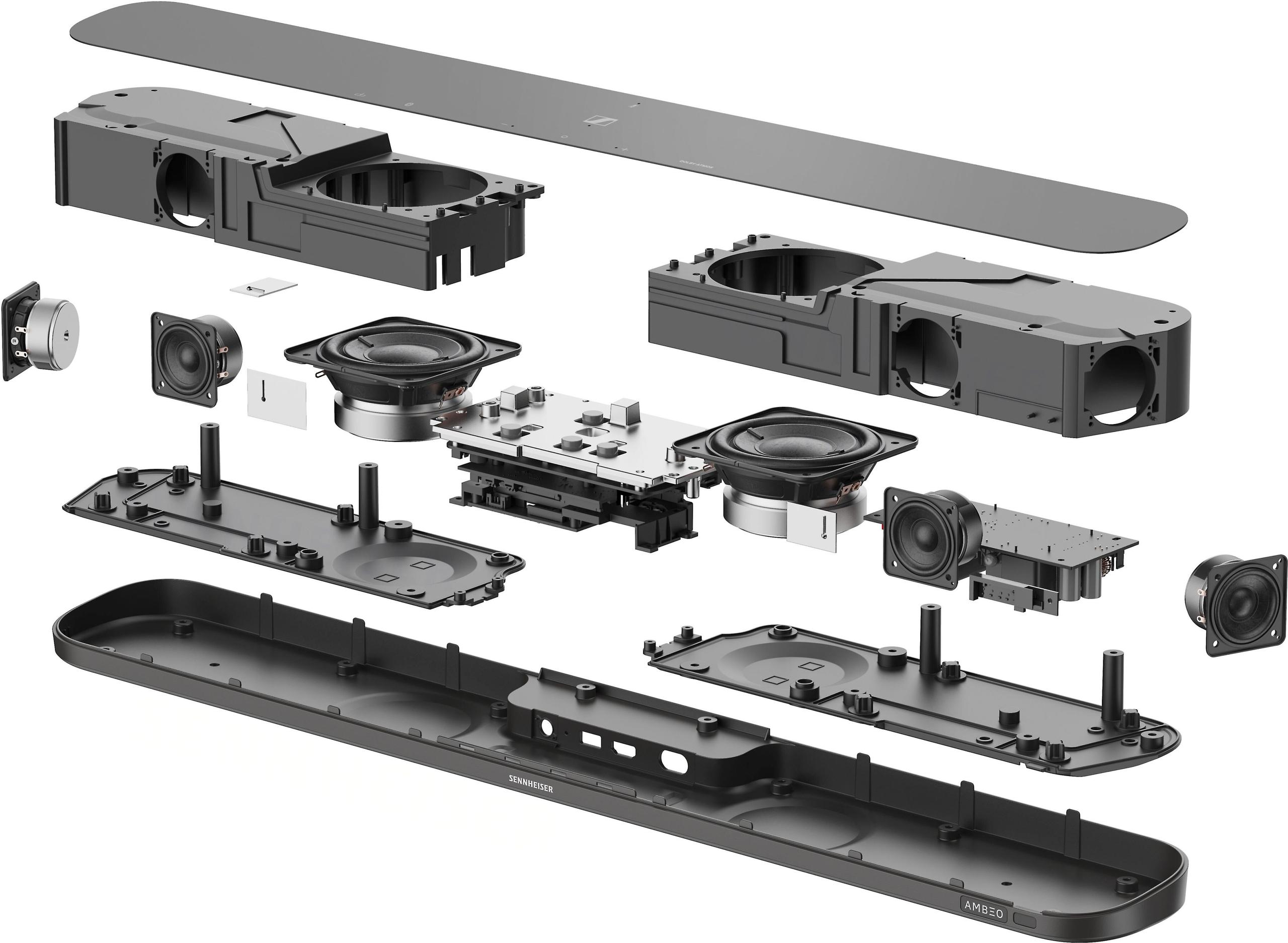
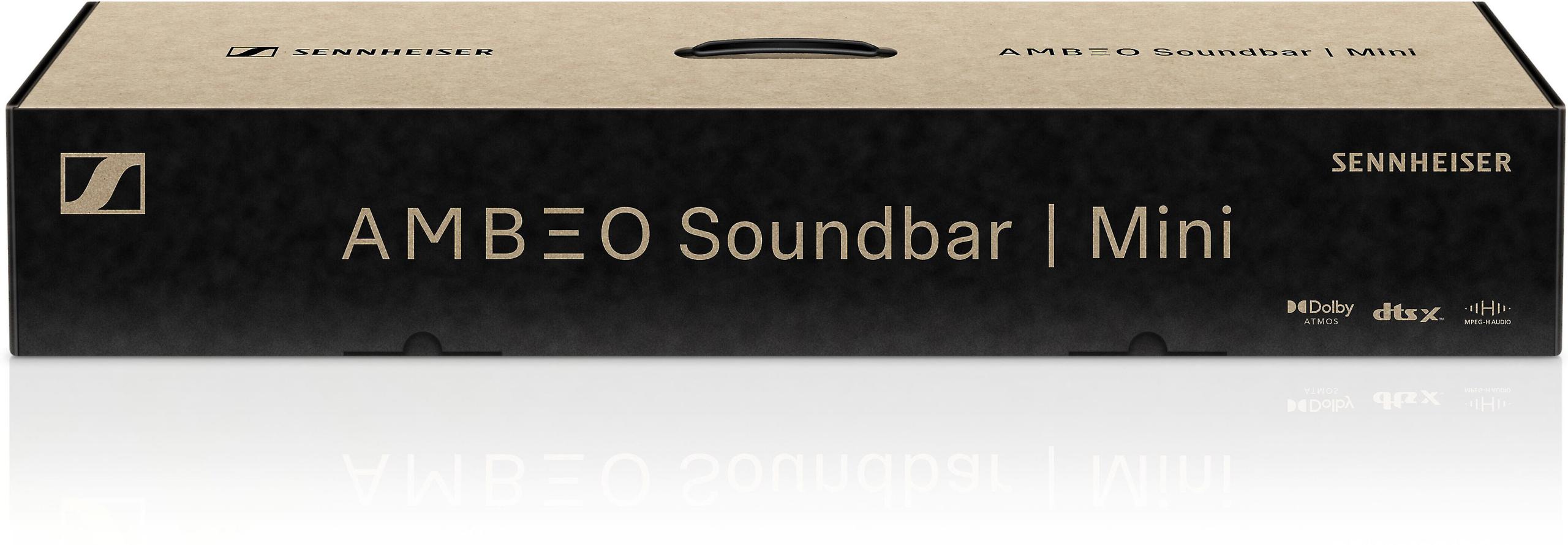
The Sennheiser AMBEO Mini, launched in 2023, takes a different approach. Rather than cramming in more drivers, Sennheiser focused on their AMBEO virtualization technology—sophisticated digital signal processing (DSP) that uses psychoacoustics (how our brains interpret sound) to create the illusion of surround sound from a compact form factor.
These different release timelines matter. The KEF benefits from more recent advances in driver materials and wireless connectivity standards like Wi-Fi 6, while the Sennheiser has had time to mature through software updates and user feedback.
The fundamental difference between these soundbars lies in how they create immersive audio. This distinction affects everything from setup complexity to ultimate performance.
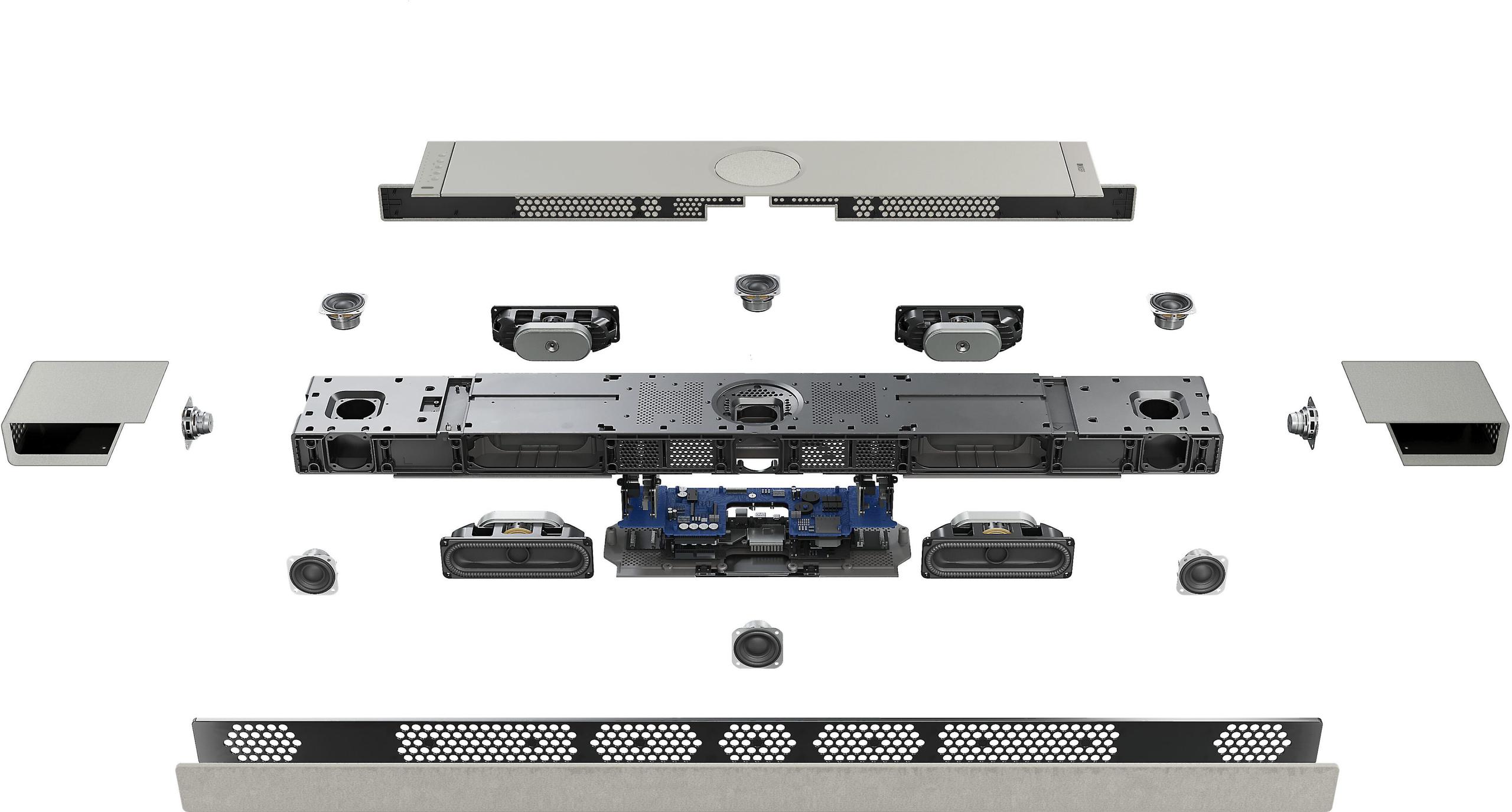
The KEF XIO uses what's called a "true" 5.1.2 channel configuration. This means it has dedicated speakers for each channel: left, center, right, two surrounds, a subwoofer channel, and two height channels. The "height" comes from upward-firing drivers that bounce sound off your ceiling to create the sensation of audio coming from above—crucial for Dolby Atmos effects like helicopters flying overhead or rain falling around you.
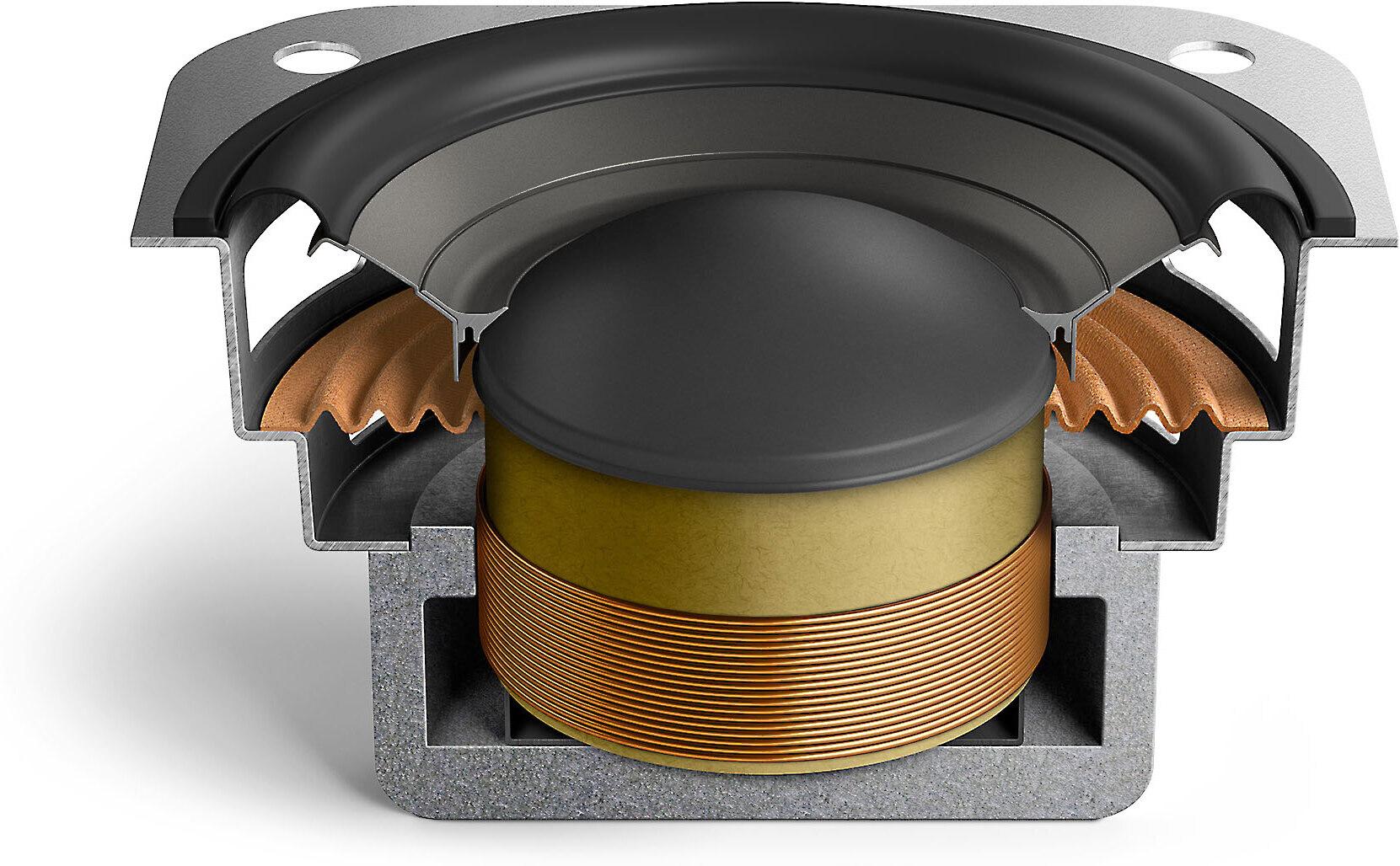
At the heart of this system are six Uni-Q MX drivers, a miniaturized version of KEF's signature technology. Traditional speakers separate the tweeter (high frequencies) and woofer (low frequencies), which can create timing issues as sound from different drivers reaches your ears at slightly different moments. KEF's Uni-Q design places the tweeter at the center of the woofer, creating what engineers call a "point source"—sound appears to come from a single point, resulting in more precise imaging and wider dispersion. When I've listened to KEF speakers with this technology, the effect is immediately noticeable: vocals seem to hang in space with laser-like precision, and the sweet spot for optimal listening expands dramatically.
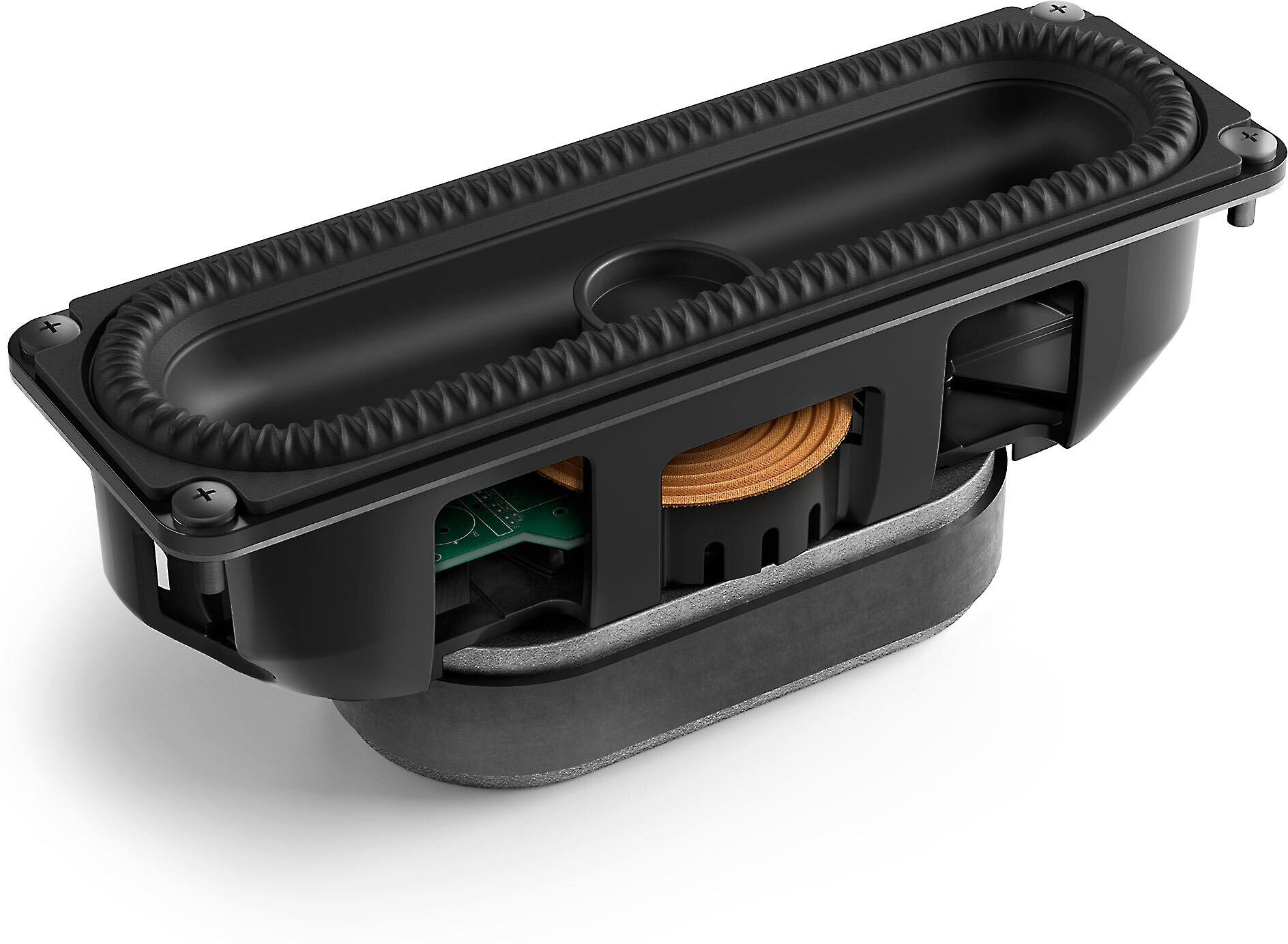
For bass, the XIO employs four P185 racetrack-shaped drivers arranged in a force-canceling configuration. These aren't ordinary woofers. They incorporate P-Flex technology, borrowed from KEF's acclaimed KC62 subwoofer, which uses a unique concentric fold design to resist internal cabinet pressure. Think of it like a suspension system that keeps the driver moving linearly even under high power. Additionally, Velocity Control Technology (VECO) uses real-time feedback to monitor and correct driver movement, reducing distortion by up to 28dB—a massive improvement that translates to cleaner, more controlled bass.
The Sennheiser AMBEO Mini takes an entirely different path. Instead of physically creating surround sound, it uses sophisticated digital processing to trick your brain into perceiving 7.1.4 surround sound from a much simpler driver arrangement. This virtualization technology analyzes incoming audio and applies complex algorithms that exploit how our ears and brain process sound.
The science behind this is fascinating. Our brains determine sound location based on timing differences (sound reaching one ear slightly before the other), frequency filtering (how our head and ears shape incoming sound), and reflection patterns. By carefully manipulating these cues through digital processing, the AMBEO can create convincing surround effects.
In practice, this works surprisingly well for width—sounds can genuinely seem to come from beyond the physical boundaries of the soundbar. However, height effects remain more limited. Without actual upward-firing drivers, creating the sensation of overhead audio relies entirely on psychoacoustic processing, which varies significantly based on room acoustics and listener position.
This is where the philosophical differences between these soundbars become most apparent. The KEF XIO achieves bass extension down to 34Hz without any external subwoofer—impressive for any speaker, let alone a soundbar. This comes from those four P185 drivers working in concert, moving substantial air while the force-canceling design prevents the cabinet from vibrating and muddying the sound.
Having experienced this firsthand, the difference is immediately obvious. Movie explosions have genuine impact, bass lines in music maintain their texture and definition, and there's none of the one-note boom that plagues many soundbars. The 820 watts of total power across 12 discrete amplifiers provides enormous headroom, meaning the system remains composed even at high volumes.
The Sennheiser AMBEO Mini, constrained by its compact size, manages 43Hz from its built-in 4" dual subwoofers. While respectable for the form factor, this represents a significant gap in low-end extension. The 9Hz difference might seem small, but in bass response, it's substantial—it's the difference between feeling movie explosions in your chest versus just hearing them.
Sennheiser addresses this limitation by offering optional subwoofers, but this adds complexity and cost, potentially bringing the total investment closer to the KEF's price while still not matching its integrated approach.
For Dolby Atmos and DTS:X content, the differences become even more pronounced. The KEF XIO's dedicated upward-firing drivers create genuine height effects. When properly calibrated, sounds can appear to move convincingly through three-dimensional space. Rain in a movie scene doesn't just sound wider—it genuinely seems to fall from above.
The AMBEO Mini's virtualization impresses with its width and some sense of surround envelopment, but height remains its limitation. While some users report subtle overhead sensations, it can't match the physical reality of actual upward-firing drivers. This isn't necessarily a dealbreaker—many listeners find the virtualized surround effects quite satisfying for regular TV and movie viewing.
Here's where KEF's audio heritage shines most clearly. The KEF XIO isn't just a movie soundbar that happens to play music—it's a legitimate hi-fi system that also excels at home theater. The Uni-Q drivers provide the kind of imaging and soundstage precision that audiophiles expect, while supporting high-resolution streaming up to 24-bit/384kHz for those with lossless music libraries.
The Music Integrity Engine (MIE) for Cinema represents KEF's approach to digital signal processing, handling everything from crossover management to room correction. Unlike some DSP implementations that can sound processed or artificial, KEF's approach maintains the natural character of the source material while optimizing it for the acoustic environment.
The Sennheiser AMBEO Mini performs competently with music but clearly prioritizes movie and TV content. Its processing excels at dialogue clarity and creating engaging soundscapes for dramatic content, but lacks the refinement for serious music listening that many audiophiles would expect at this price point.
Both soundbars include sophisticated room correction systems, but they serve different purposes. The KEF XIO's Intelligent Placement Technology uses built-in microphones to analyze your room's acoustics and adjust accordingly. It can detect whether you've wall-mounted the unit or placed it on a shelf, automatically optimizing the sound dispersion pattern.
The AMBEO Mini's calibration system serves a different function—it's essential for the virtualization algorithms to work properly. The four far-field microphones map your room's acoustic signature, allowing the AMBEO processing to adjust its psychoacoustic tricks for your specific environment.
From a practical standpoint, size matters significantly. The AMBEO Mini's compact dimensions make it suitable for smaller TVs and tighter spaces, while the XIO's larger footprint demands more room but delivers correspondingly bigger sound.
The KEF XIO includes more advanced connectivity options, reflecting its later release date. Wi-Fi 6 provides better streaming stability and bandwidth for high-resolution audio, while Bluetooth 5.3 offers improved range and audio quality. The single HDMI eARC connection might seem limiting compared to soundbars with multiple HDMI inputs, but for most users connecting through their TV, this simplifies the setup considerably.
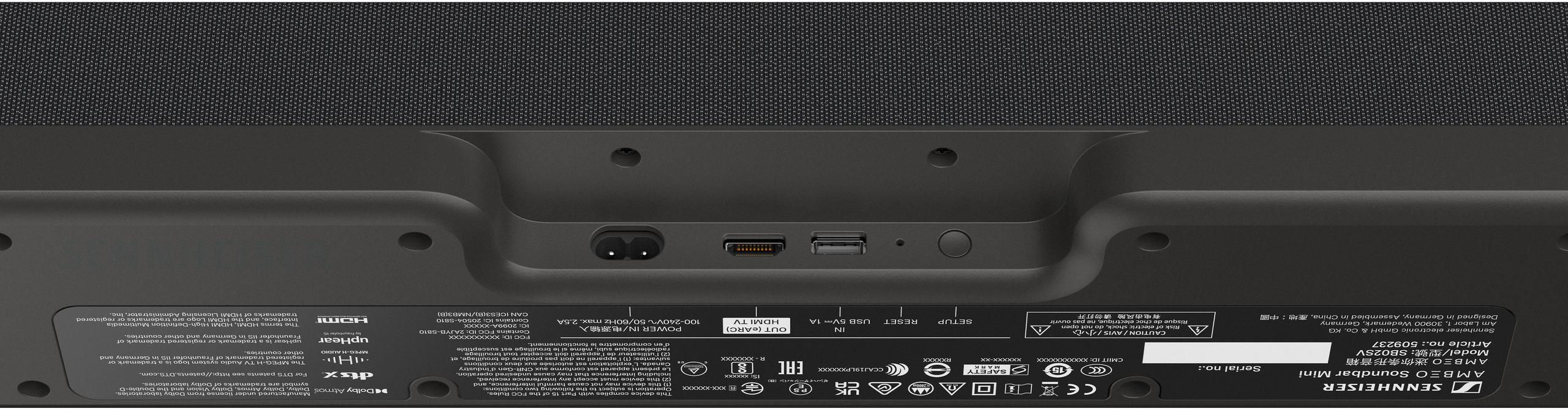
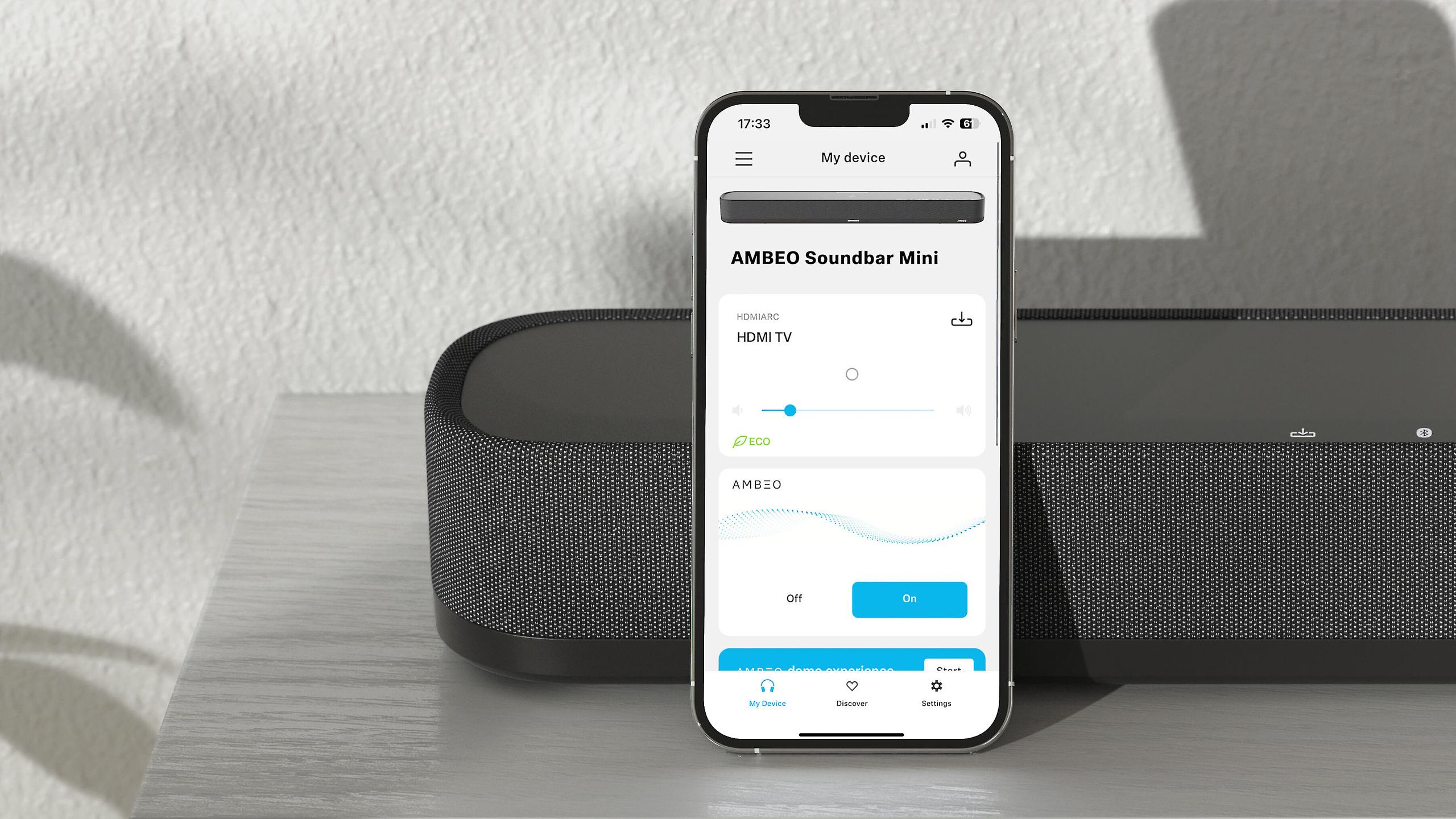
The Sennheiser AMBEO Mini provides solid connectivity options appropriate for its 2023 release, including the convenience of built-in Alexa and Google Assistant integration—features the KEF lacks.
At $2,499, the KEF XIO sits firmly in flagship territory. However, consider what this money typically buys in traditional hi-fi: a quality stereo amplifier, bookshelf speakers, and a subwoofer could easily exceed this price while offering only stereo playback and requiring multiple components and cables.
The XIO's value proposition rests on its integration—you're getting audiophile-quality drivers, sophisticated processing, powerful amplification, and true surround sound in a single, aesthetically pleasing package. For someone wanting reference-quality sound without the complexity of separates, this represents reasonable value.
The Sennheiser AMBEO Mini at $695 targets a different buyer entirely. It's for someone who wants significantly better-than-TV audio with decent surround effects in a space-conscious package. The value equation changes if you add Sennheiser's optional subwoofer, pushing the total closer to $1,200—still substantially less than the KEF, but narrowing the gap considerably.
For dedicated home theater use, the KEF XIO provides a more complete solution. Its ability to deliver impactful bass without a separate subwoofer eliminates one potential complication, while the true Atmos channels create more convincing overhead effects for movie soundtracks. The 102dB maximum output ensures it can fill larger rooms without strain.
The AMBEO Mini works well in smaller home theater setups, particularly apartments or secondary viewing rooms where space constraints matter more than ultimate performance. Its dialogue enhancement modes and night-time listening options show thoughtful attention to practical home theater needs.
Choose the KEF XIO if you're an audio enthusiast who wants the best possible sound quality from a soundbar format. If you regularly listen to music, appreciate technical excellence, and have the space and budget for a flagship product, the XIO's engineering sophistication and performance capabilities justify its premium pricing.
The Sennheiser AMBEO Mini makes sense if you prioritize compact size, reasonable performance, and good value. It's ideal for smaller spaces, casual listening habits, and situations where convenience matters more than absolute audio fidelity.
Both represent excellent examples of their respective approaches—the KEF pushing the boundaries of what's possible in a soundbar format, the Sennheiser optimizing performance within practical constraints. Your choice ultimately depends on which philosophy aligns better with your space, listening habits, and budget priorities.
In my experience, audio upgrades tend to be long-term investments. If you're unsure, consider which compromise you'd be more comfortable living with: paying more for capabilities you might not fully utilize, or potentially wanting more performance than your chosen system can deliver. Either way, both of these soundbars represent significant upgrades over basic TV audio and will transform your home entertainment experience.
| KEF XIO Soundbar | Sennheiser AMBEO Soundbar Mini |
|---|---|
| Price - Significant investment difference that affects value calculation | |
| $2,499 (flagship pricing for premium engineering) | $695 (mid-range pricing, may need subwoofer addition) |
| Audio Architecture - Determines quality of surround sound experience | |
| True 5.1.2 channels with physical upward-firing drivers | Virtualized 7.1.4 channels via AMBEO processing |
| Driver Technology - Core component affecting sound quality and clarity | |
| 12 drivers: 6x Uni-Q MX concentric arrays + 4x P185 racetrack woofers | Compact driver array with dual 4" subwoofers |
| Bass Extension - Critical for movie impact and music fullness | |
| 34Hz without subwoofer (P-Flex + VECO technology) | 43Hz without subwoofer (optional sub recommended) |
| Total Power Output - Affects maximum volume and dynamic range | |
| 820W peak across 12 discrete Class D amplifiers | 250W (specific amplifier configuration not detailed) |
| Dimensions - Important for TV compatibility and room placement | |
| 47.6" × 2.8" × 6.5" (requires substantial space) | 27.6" × 2.6" × 3.9" (compact, fits smaller setups) |
| Connectivity Standards - Future-proofing and streaming quality | |
| Wi-Fi 6, Bluetooth 5.3, HDMI 2.1 eARC, high-res up to 384kHz | Wi-Fi, Bluetooth 5.0, HDMI eARC, standard streaming |
| Room Calibration - Automatic optimization for your space | |
| Intelligent Placement Technology with built-in mics | AMBEO automated calibration with 4x far-field mics |
| Music Performance - Important if you listen to music regularly | |
| Audiophile-grade with Uni-Q imaging and MIE processing | Competent but movie/TV focused, adequate for casual listening |
| Atmos Height Effects - Realism of overhead sound placement | |
| Physical upward-firing drivers create genuine height channels | Virtualized height via psychoacoustic processing |
| Smart Features - Voice control and streaming integration | |
| KEF Connect app, multiple streaming services, no voice assistant | Alexa built-in, Google Chromecast, voice control ready |
The Sennheiser AMBEO Mini ($695) offers better value for most buyers, providing solid virtualized surround sound at a reasonable price. The KEF XIO ($2,499) costs nearly 4x more but delivers flagship-level performance with true Atmos channels and audiophile-quality drivers. If budget is a concern, the AMBEO Mini provides excellent performance-per-dollar.
The KEF XIO delivers impressive bass down to 34Hz without a subwoofer, making it a complete solution for most rooms. The Sennheiser AMBEO Mini includes built-in subwoofers but many users recommend adding an external sub for full movie impact, which increases the total cost significantly.
The KEF XIO excels at music with its Uni-Q drivers and audiophile heritage, supporting high-resolution streaming up to 384kHz. The AMBEO Mini focuses primarily on movies and TV, offering adequate but not exceptional music performance. Choose KEF if you're serious about music quality.
The KEF XIO uses physical upward-firing drivers to create genuine overhead effects, making helicopters and rain sound convincingly above you. The Sennheiser AMBEO Mini uses digital processing to simulate height effects, which works for width but lacks true overhead immersion.
The Sennheiser AMBEO Mini at just 27.6 inches wide fits perfectly under smaller TVs and in compact rooms. The KEF XIO measures 47.6 inches wide and requires more substantial space but delivers correspondingly bigger sound.
Both soundbars include automatic room correction. The KEF XIO uses Intelligent Placement Technology to adapt to wall-mount or shelf placement. The AMBEO Mini employs four far-field microphones essential for its virtualization algorithms to work properly in your specific room.
The KEF XIO provides a more complete home theater solution with true 5.1.2 channels, deeper bass extension, and higher maximum output (102dB). The Sennheiser AMBEO Mini works well for smaller home theaters and apartments where space matters more than ultimate performance.
The KEF XIO includes more advanced connectivity with Wi-Fi 6, Bluetooth 5.3, and HDMI 2.1 eARC, plus support for multiple streaming services. The AMBEO Mini offers standard connectivity plus built-in Alexa and Google Assistant, which the KEF lacks.
Both the KEF XIO and Sennheiser AMBEO Mini include optical inputs as alternatives to HDMI, plus extensive wireless connectivity options including Bluetooth, Wi-Fi, and various streaming service integrations for flexible connection options.
The KEF XIO with its 820W of power across 12 amplifiers reaches 102dB maximum output while maintaining clarity. The AMBEO Mini with 250W total power provides adequate volume for most rooms but can't match the KEF's headroom for larger spaces.
Both KEF and Sennheiser offer standard manufacturer warranties and established customer support networks. KEF brings decades of hi-fi expertise, while Sennheiser has extensive experience in both professional and consumer audio markets.
The KEF XIO represents a no-compromise, future-proof solution with cutting-edge drivers and connectivity that should remain relevant for years. The Sennheiser AMBEO Mini offers solid performance and features at a more accessible price point, making it better for budget-conscious buyers or those planning to upgrade later.
We've done our best to create useful and informative comparisons to help you decide what product to buy. Our research uses advanced automated methods to create this comparison and perfection is not possible - please contact us for corrections or questions. These are the sites we've researched in the creation of this article: blog.son-video.com - residentialsystems.com - whathifi.com - audioadvice.com - crutchfield.com - homecrux.com - techradar.com - youtube.com - us.kef.com - gramophone.com - cepro.com - audioxpress.com - musicdirect.com - gramophone.com - us.kef.com - crutchfield.com - hifipig.com - bestbuy.com - listenup.com - bestbuy.com - bestbuy.com - listenup.com - techradar.com - sennheiser-hearing.com - stereonet.com - rtings.com - youtube.com - youtube.com - newsroom.sennheiser.com - whathifi.com - baybloorradio.com - sennheiser-hearing.com - files.bbystatic.com

Privacy Policy
Terms and Conditions - Affiliate Policy
Home Security
© Copyright 2008-2026.
11816 Inwood Rd #1211, Dallas, TX 75244