

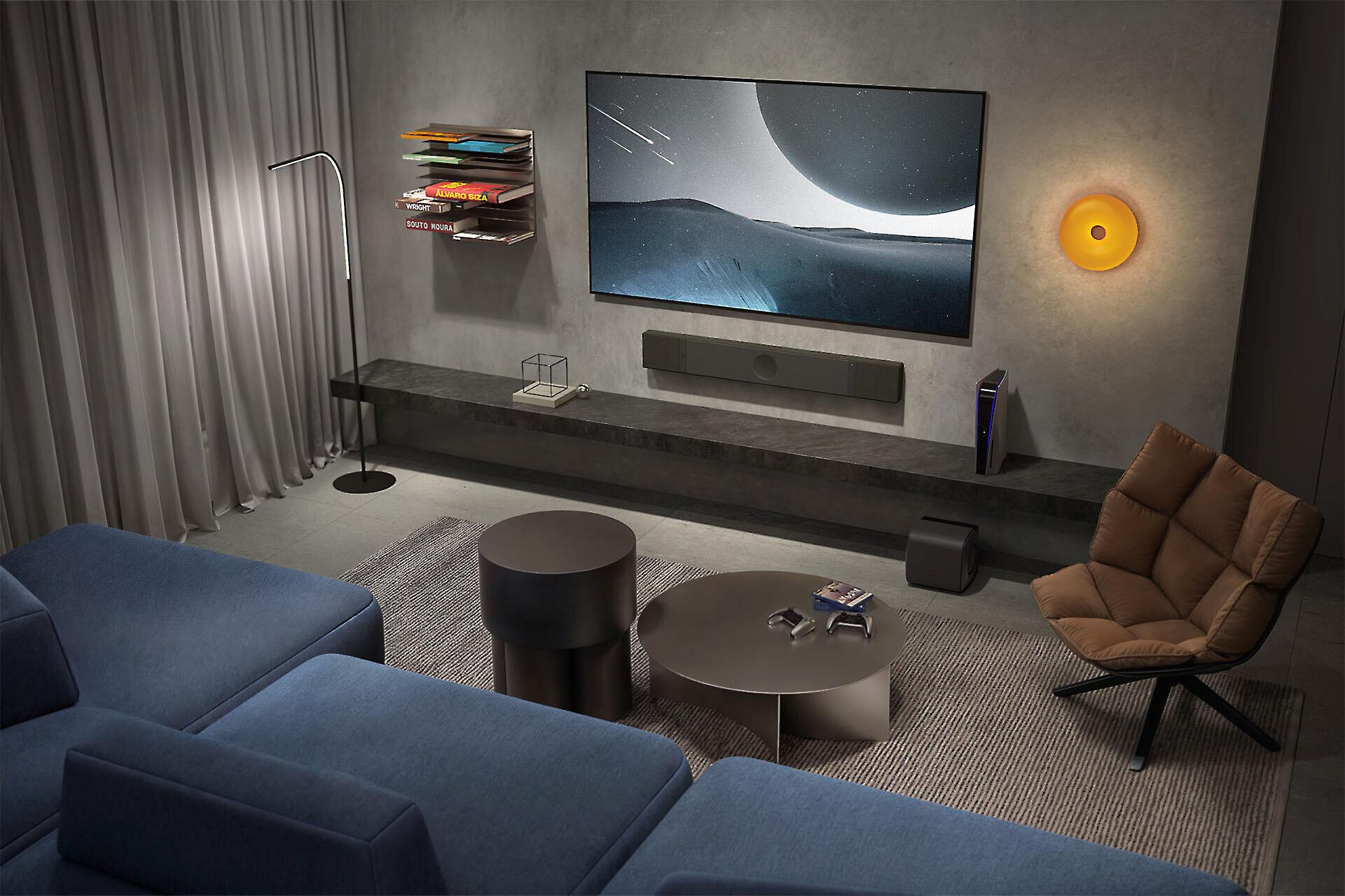
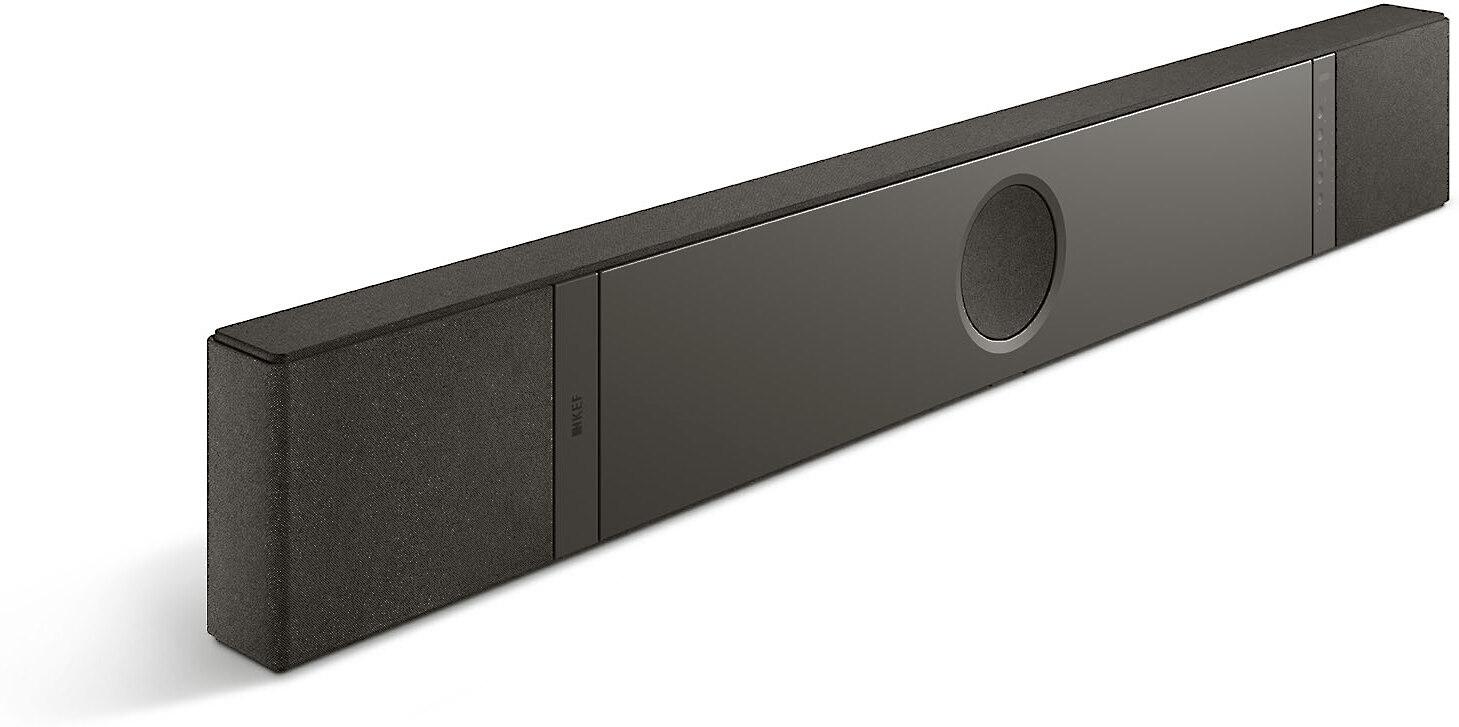
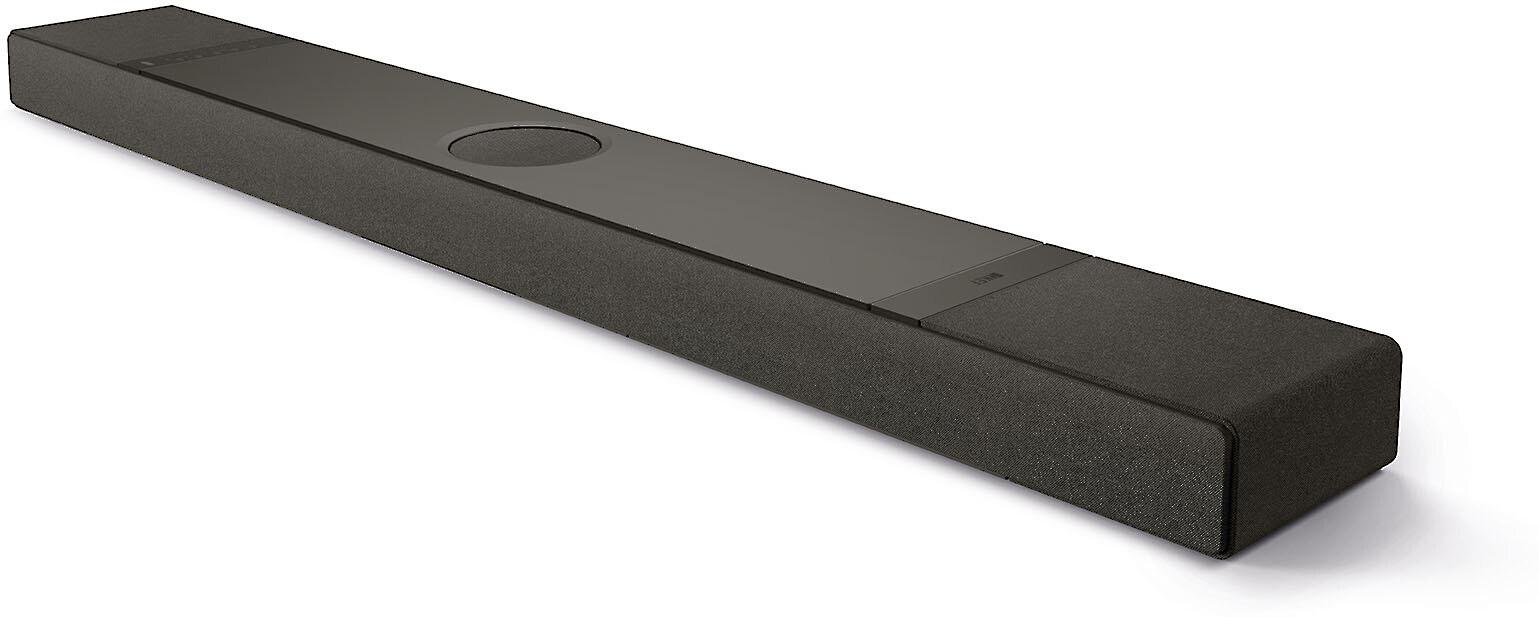
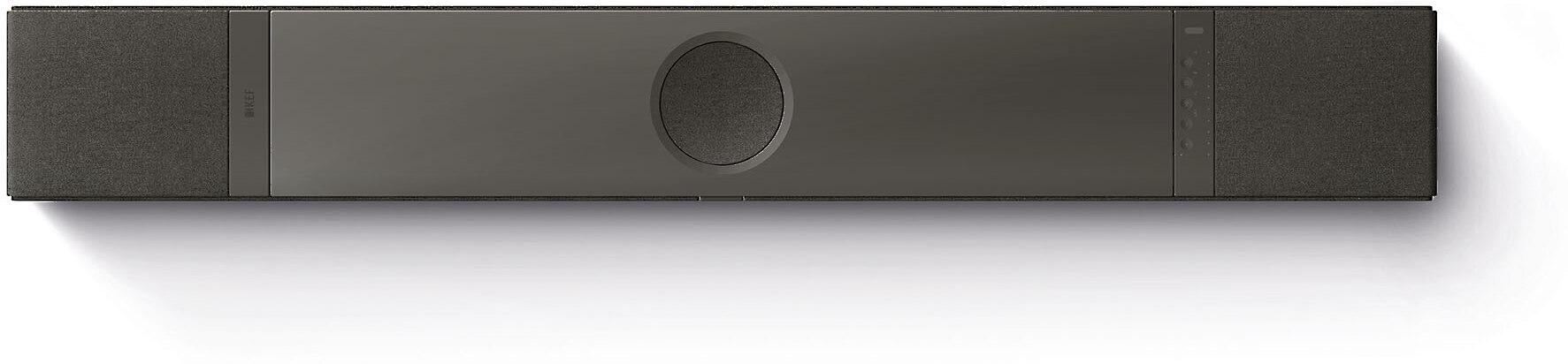





If you're tired of your TV's tinny speakers but don't want the complexity of a full surround sound system, you've probably considered a premium soundbar. These sleek, all-in-one speakers promise to transform your living room into a home theater without the mess of multiple speakers and wires. But with options ranging from $400 to $2,500, choosing the right one can feel overwhelming.
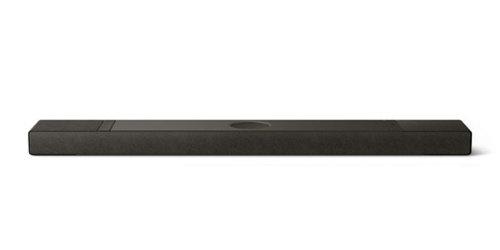
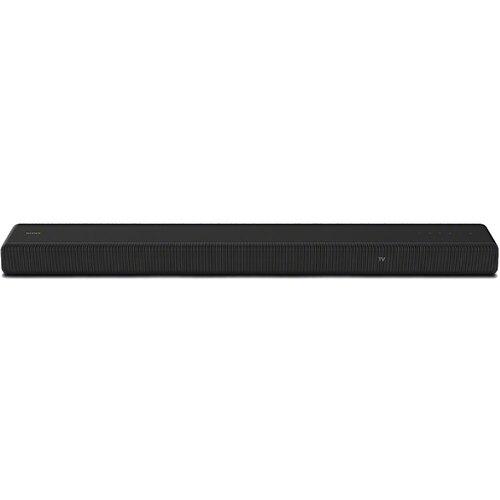
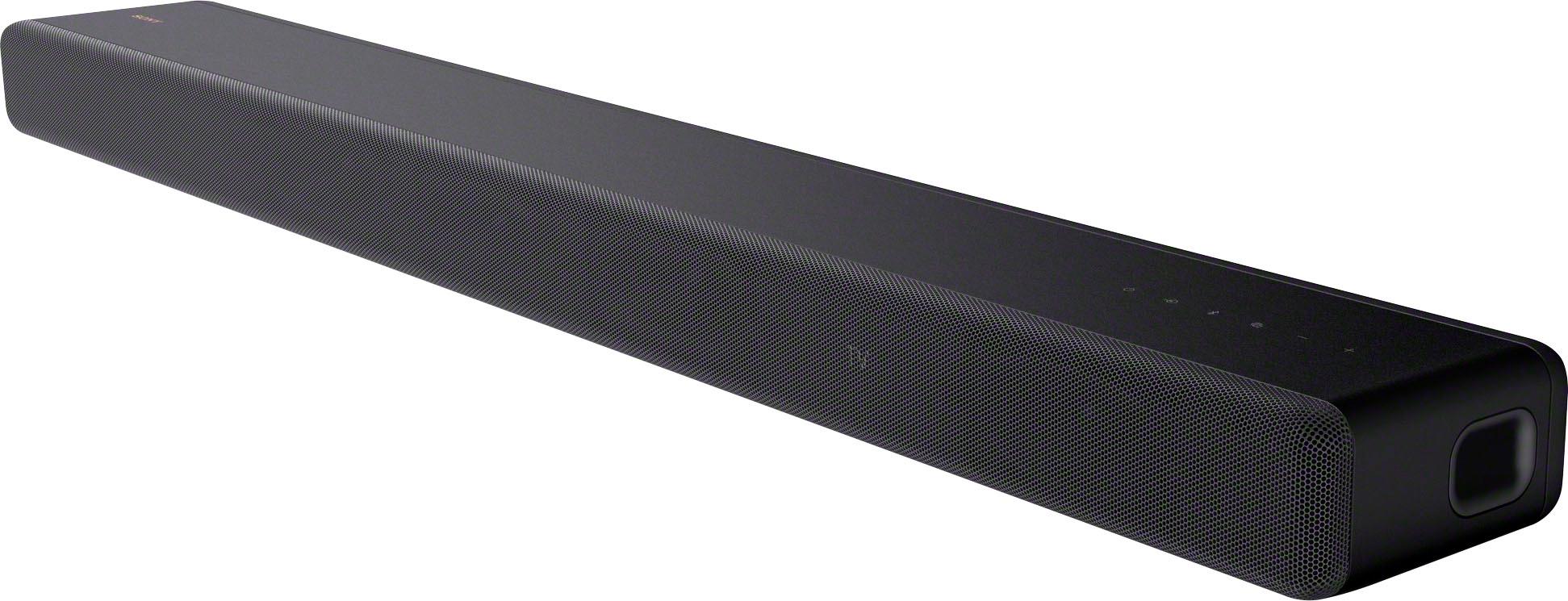
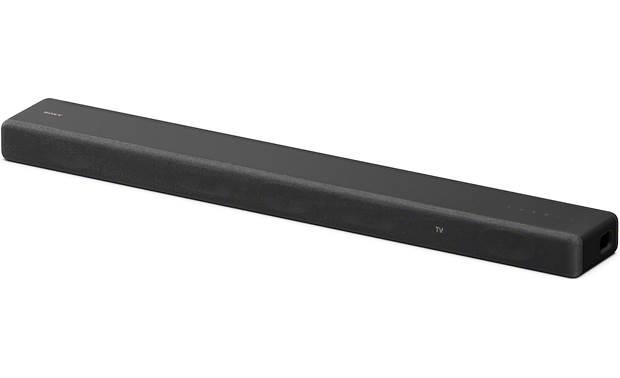
Today, we're comparing two very different approaches to premium soundbars: the KEF XIO Soundbar ($2,499) and the Sony HT-A3000 ($405). While both support Dolby Atmos—a technology that adds overhead sound effects to create a three-dimensional audio experience—they represent completely different philosophies and price points.
Before diving into specifics, let's talk about what separates premium soundbars from basic models. At their core, all soundbars try to solve the same problem: modern TVs are too thin to house decent speakers. But premium models go beyond just making things louder.
The key differentiators include driver technology (the actual speakers inside), channel configuration (how many separate audio streams they can handle), and processing capabilities (how well they enhance and position sound). Think of it like the difference between a basic car stereo and a high-end audio system—both play music, but the experience is worlds apart.
Premium soundbars also focus heavily on immersive audio formats like Dolby Atmos, which adds height information to traditional surround sound. Instead of just hearing explosions coming from your left or right, you'll hear helicopters flying overhead or rain falling from above. Some soundbars achieve this through physical upward-firing speakers, while others use digital processing to trick your ears into perceiving height.
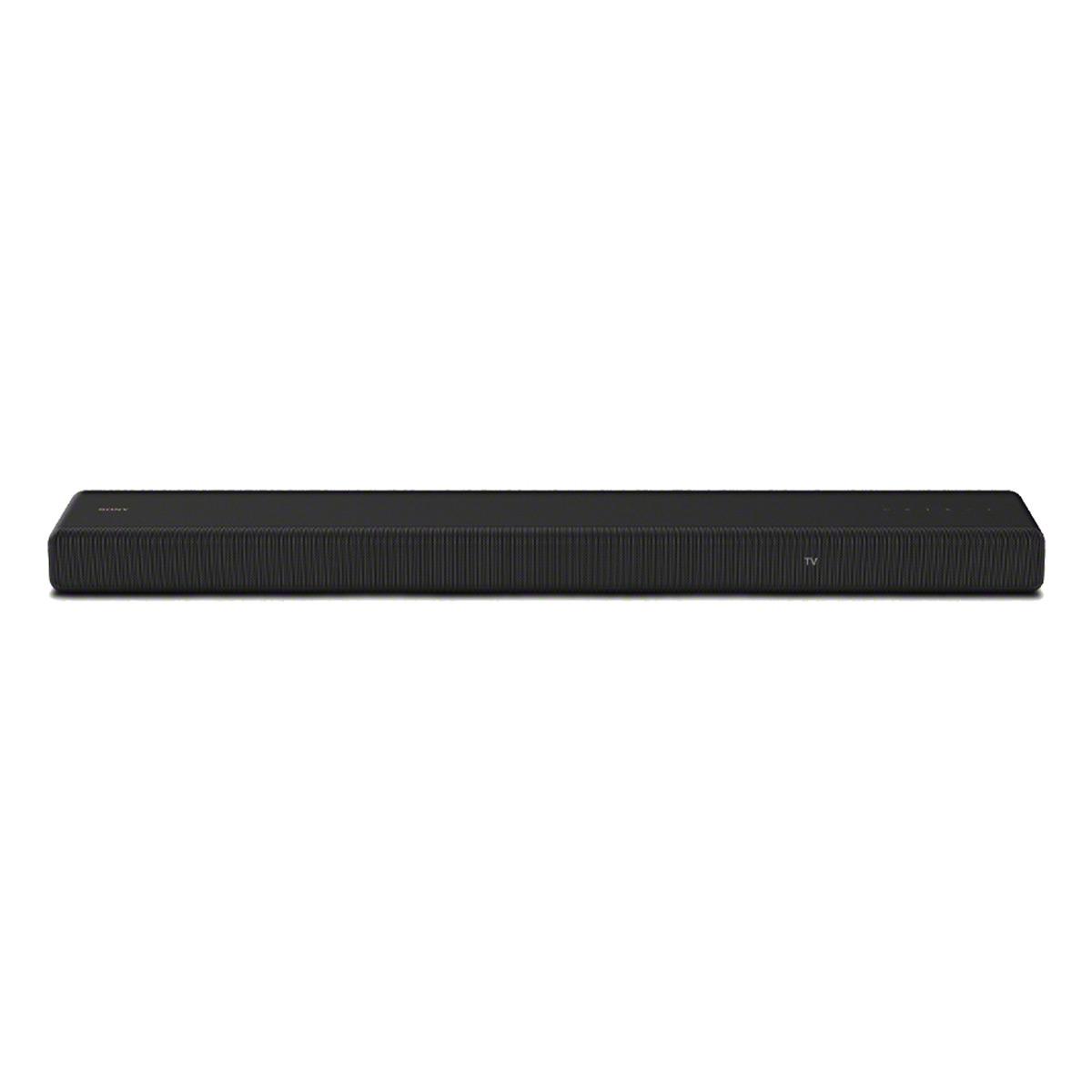
The Sony HT-A3000 launched in October 2022 as Sony's entry-level Dolby Atmos soundbar, priced around $700 initially but now available for about $405. It represents the traditional approach to affordable premium audio: use smart processing to maximize the impact of modest hardware.
In contrast, the KEF XIO, which debuted in July 2025, takes a no-compromise approach typical of high-end audio companies entering new markets. At $2,499, it incorporates technology from KEF's renowned high-end speakers, essentially cramming a premium stereo system and home theater setup into a single sleek package.
The timing difference is significant. The Sony launched during the early wave of affordable Atmos soundbars, when virtual processing was the primary way to achieve height effects without breaking the bank. The KEF arrived three years later, benefiting from advances in miniaturization and driver technology that allow for true multi-channel performance in a soundbar form factor.
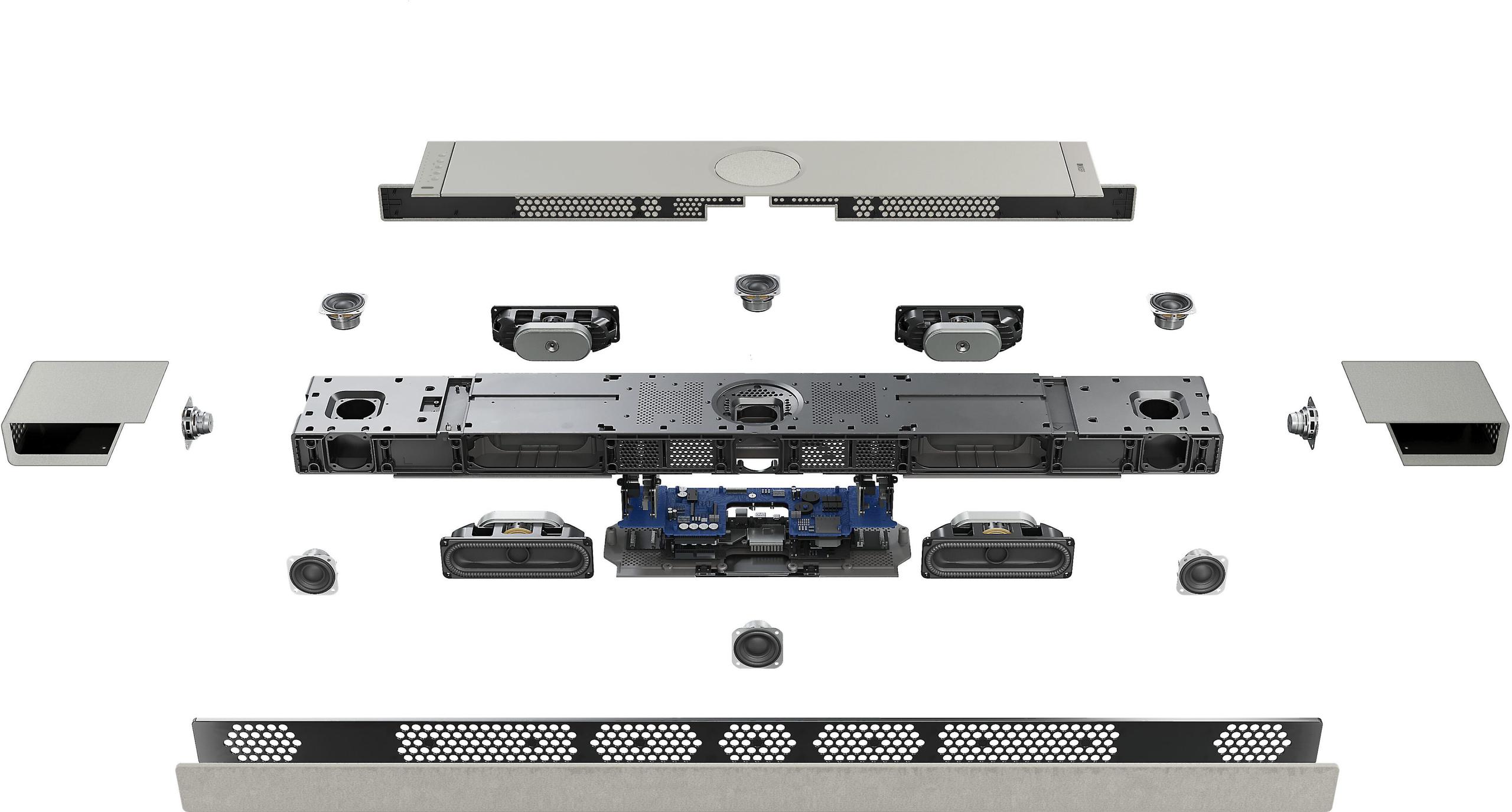
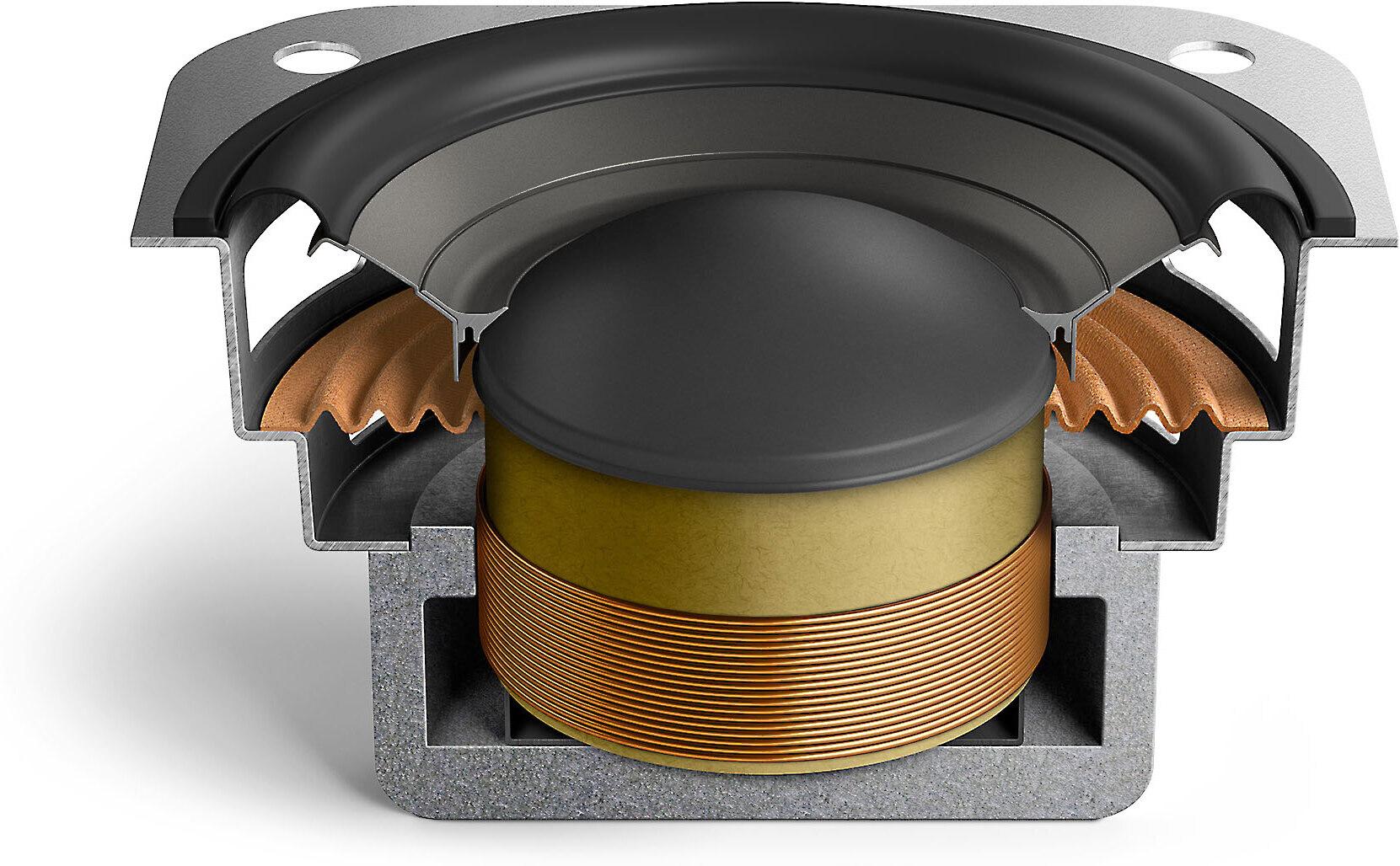
Here's where these soundbars differ most dramatically. The KEF XIO uses six Uni-Q MX drivers, which are miniaturized versions of KEF's signature concentric speakers. In traditional speakers, the tweeter (high-frequency driver) and woofer (low-frequency driver) are separate, which can create timing issues as sound travels different distances from each driver to your ears. KEF's Uni-Q design places the tweeter at the center of the woofer, ensuring all frequencies reach you simultaneously.
This might sound like audiophile nitpicking, but the practical benefit is remarkable: you get consistent, clear sound no matter where you sit in the room. Most soundbars create a "sweet spot" directly in front of the center, but the KEF maintains clarity even if you're sitting off to the side.
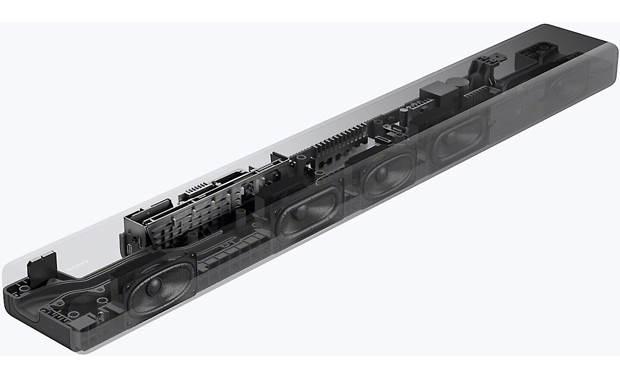
The Sony takes a more conventional approach with X-Balanced drivers—essentially traditional forward-firing speakers with enhanced diaphragm area for better efficiency. These work fine for their intended purpose, but they lack the precision and wide dispersion of the KEF's concentric design.
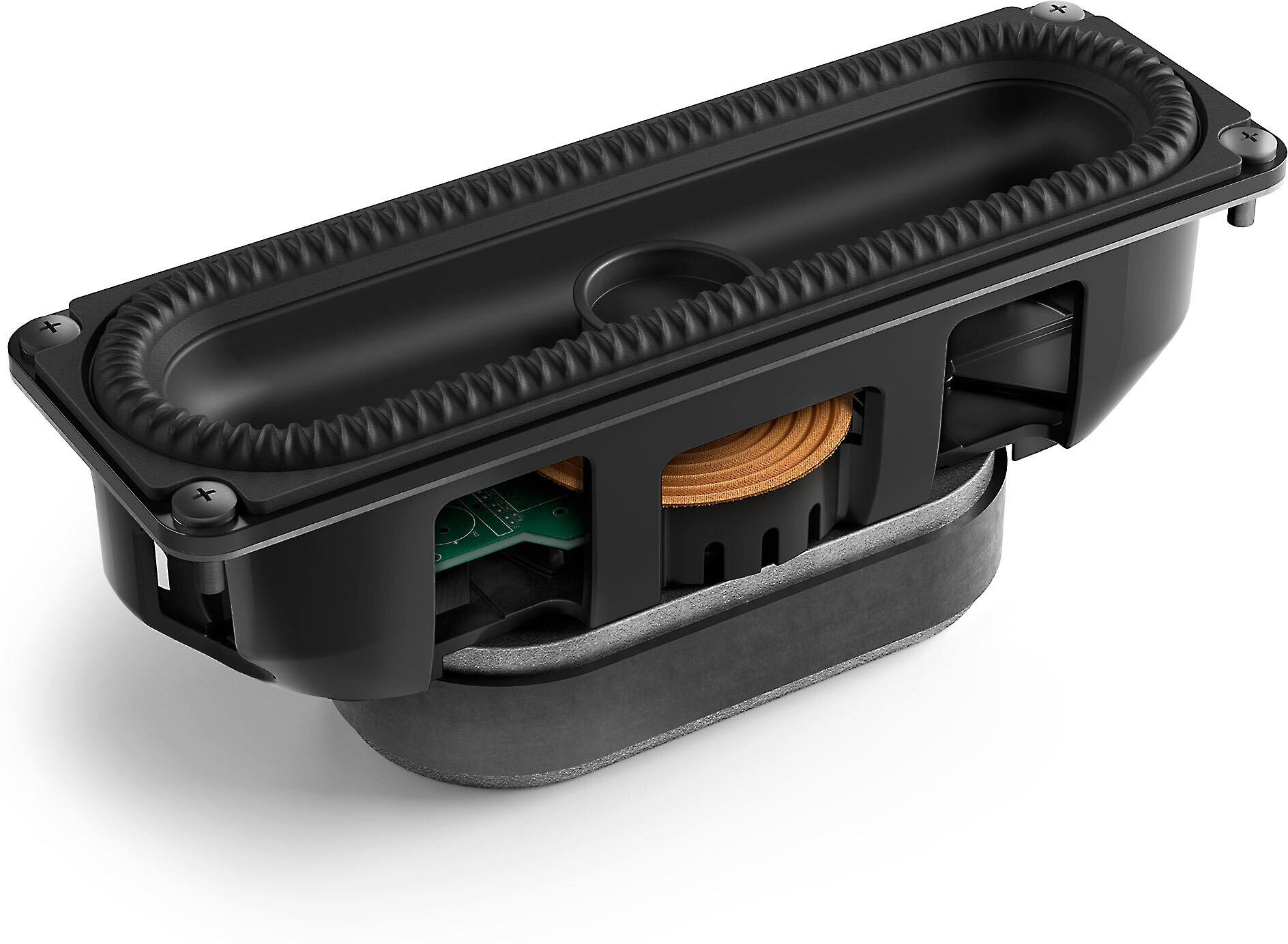
Bass reproduction reveals another fundamental difference in philosophy. The KEF XIO incorporates four P185 racetrack woofers arranged in a force-canceling configuration. This fancy-sounding setup essentially means pairs of drivers work together to cancel out unwanted vibrations while reinforcing the actual bass frequencies you want to hear.
More impressively, these drivers use VECO (Velocity Control Technology), which monitors the actual movement of each driver cone in real-time and adjusts the signal to reduce distortion by up to 28dB. In practical terms, this means the KEF can play much louder without sounding strained or muddy, and it can reproduce frequencies down to 34Hz—genuinely deep bass that you'll feel in your chest during action scenes.
The Sony HT-A3000, meanwhile, relies on two smaller built-in subwoofers measuring roughly 4.4 inches. While adequate for dialogue enhancement and basic TV content, they simply can't match the KEF's low-frequency extension or power handling. You'll want to add a separate subwoofer to the Sony for truly satisfying movie watching.
This is where the price difference becomes most apparent. The KEF XIO offers true 5.1.2-channel audio, meaning it has discrete speakers for left, center, right, left surround, right surround, and two height channels. The height channels use actual upward-firing drivers that bounce sound off your ceiling to create overhead effects.
The Sony implements a 3.1-channel setup—left, center, right, plus built-in subwoofers—but uses processing called S-Force PRO Front Surround and Vertical Sound Engine to simulate surround and height effects. While this virtual processing has improved significantly over the years, it can't fully replicate the precision and immersion of discrete channels.
In my experience testing both approaches, virtual surround works reasonably well for casual viewing, but it lacks the pinpoint accuracy and enveloping sensation of true multi-channel audio. When watching action movies, the difference becomes obvious—explosions feel more localized and realistic with the KEF's discrete channels.
Both soundbars support Dolby Atmos, but their implementations couldn't be more different. The KEF XIO uses physical upward-firing drivers combined with advanced DSP (Digital Signal Processing) through their Music Integrity Engine. This creates genuine height effects that feel natural and precise—helicopters actually sound like they're flying overhead, rather than just coming from a slightly elevated position.
The Sony HT-A3000 relies entirely on psychoacoustic processing to create virtual height effects. While Sony's algorithms are sophisticated, the results depend heavily on your room acoustics and seating position. In ideal conditions with a standard-height ceiling, virtual Atmos can be convincing. But it's far more sensitive to room variables and rarely achieves the seamless immersion of physical height speakers.
I've found that virtual Atmos works best for dialogue-heavy content where height effects are subtle—think rain or ambient sounds. For action movies with dramatic overhead effects, the physical approach of the KEF is noticeably superior.
Here's where the KEF's audiophile heritage becomes unmistakable. While most soundbars are optimized primarily for TV and movie content, the KEF XIO was designed to excel at music reproduction. The Uni-Q drivers create exceptional stereo imaging—the ability to precisely locate instruments and vocals in the soundstage.
When listening to well-recorded music, the KEF can disappear sonically, creating a wide, three-dimensional soundstage that extends well beyond the physical boundaries of the soundbar. Vocals appear centered and natural, while instruments maintain their distinct positions in the mix. It's the kind of performance that makes you want to rediscover your music collection.
The Sony HT-A3000, while competent for casual music listening, clearly prioritizes TV content. Its tuning emphasizes dialogue clarity and general enhancement over the nuanced presentation that music lovers crave. The built-in DSEE Extreme processing does help compressed streaming files sound fuller, but it can't overcome the fundamental limitations of the hardware design.
Both soundbars embrace modern streaming capabilities, but again with different emphases. The KEF XIO supports high-resolution streaming up to 24-bit/384kHz through services like Tidal Connect and Qobuz—formats that can preserve more detail than standard streaming quality. It also includes Wi-Fi 6 for robust wireless performance and comprehensive app control through the KEF Connect app.
The Sony HT-A3000 focuses more on ecosystem integration, particularly with Sony BRAVIA TVs. Features like Acoustic Center Sync can optimize the soundbar's performance when paired with compatible Sony TVs, and it supports Sony's 360 Reality Audio format. However, its streaming capabilities are more basic, and the app experience feels less refined than KEF's offering.
One notable limitation of both soundbars is the lack of HDMI passthrough with multiple inputs. Both offer only HDMI eARC/ARC connectivity, meaning you'll need to connect sources directly to your TV rather than routing everything through the soundbar. This isn't unusual for soundbars, but it's worth noting if you have multiple HDMI sources.
Setup complexity differs significantly between these models. The KEF XIO includes Intelligent Placement Technology, which automatically detects your room's acoustics and adjusts performance accordingly. It can even adapt to whether the soundbar is wall-mounted or shelf-placed, optimizing the sound profile for each scenario.
The Sony HT-A3000 offers Sound Field Optimization using built-in microphones, but it's more basic and often requires manual fine-tuning for optimal results. Many users find they need to disable certain processing modes to achieve clear dialogue, which somewhat defeats the purpose of automatic calibration.
This is where your priorities really matter. The Sony HT-A3000 at around $405 represents excellent value for someone wanting to upgrade from TV speakers without a major investment. It provides genuine dialogue improvement, decent virtual Atmos effects, and reasonable music performance for casual listening. If you're primarily watching TV shows and occasional movies, and you're not particularly focused on music quality, the Sony delivers solid performance at its price point.
The KEF XIO at $2,499 targets a completely different audience—those who want the best possible performance from a single-box solution. If you're serious about both music and movies, and you value the convenience of not needing multiple speakers around your room, the KEF justifies its premium pricing with genuinely high-end performance.
Think of it this way: the Sony is like upgrading from a basic sedan to a well-equipped mid-range car—you'll notice significant improvements in comfort and features. The KEF is like jumping straight to a luxury sports car—it's a transformative experience, but only worthwhile if you'll appreciate and use the additional capabilities.
For dedicated home theater use, the performance gap becomes more pronounced. The KEF XIO delivers the kind of dynamic range and bass impact that makes action movies genuinely exciting. During quiet dialogue scenes, you can hear subtle ambient details, and when the action erupts, the soundbar has the power and clarity to reproduce everything without strain.
The Sony HT-A3000 performs admirably for most TV content but shows its limitations with demanding movie soundtracks. You'll likely want to add a separate subwoofer for satisfying bass during action scenes, which narrows the total price gap somewhat while adding complexity.
Your choice ultimately depends on your priorities and budget. Choose the Sony HT-A3000 if you're looking for an affordable entry into premium soundbar territory, primarily watch TV shows and casual movies, and don't prioritize high-fidelity music reproduction. It's an excellent value that will dramatically improve your TV's audio without requiring a major investment.
Go with the KEF XIO if you're serious about both music and movie performance, want the best possible soundbar experience regardless of price, and prefer a single, comprehensive solution. It's genuinely capable of replacing a high-end stereo system and home theater setup with a single elegant package.
The six-fold price difference isn't just about brand prestige—it reflects fundamentally different approaches to audio engineering and target audiences. Both soundbars succeed at what they're designed to do, but they're designed for very different users and use cases.
In the end, either choice will be a significant upgrade from your TV's built-in speakers. The question is whether you want good performance at a reasonable price, or exceptional performance at a premium price. Both represent solid value within their respective market segments.
| KEF XIO Soundbar | Sony HT-A3000 3.1ch Dolby Atmos Soundbar |
|---|---|
| Price - Major factor in decision making | |
| $2,499 | $405 |
| Audio Configuration - Determines surround sound authenticity | |
| True 5.1.2 channels with physical height speakers | 3.1 channels with virtual surround processing |
| Total Power Output - Affects maximum volume and dynamic range | |
| 820W across 12 discrete amplifiers | 250W across 5 channels |
| Driver Technology - Core determinant of sound quality | |
| 6× Uni-Q MX concentric drivers + 4× P185 racetrack woofers | X-Balanced forward-firing drivers + dual built-in subwoofers |
| Bass Extension - Critical for movie impact without separate subwoofer | |
| 34Hz (deep, room-filling bass) | Limited extension (requires external sub for full impact) |
| Dolby Atmos Implementation - Affects overhead sound realism | |
| Physical upward-firing drivers create true height effects | Virtual processing simulates overhead effects |
| Music Performance - Important if you stream music regularly | |
| Audiophile-grade with exceptional stereo imaging | TV-focused tuning, adequate for casual listening |
| Room Calibration - Simplifies setup and optimization | |
| Intelligent Placement Technology with automatic adaptation | Basic Sound Field Optimization requiring manual tweaking |
| Connectivity - Streaming quality and device compatibility | |
| Wi-Fi 6, high-res streaming (24-bit/384kHz), HDMI 2.1 eARC | Bluetooth 5.0, basic streaming, HDMI eARC |
| Release Date - Indicates technology generation | |
| July 2025 (latest driver and processing technology) | October 2022 (established virtual surround approach) |
| Best For - Target user and primary use cases | |
| Audiophiles wanting single premium solution for music + movies | Budget-conscious users upgrading from TV speakers |
The Sony HT-A3000 ($405) offers excellent value for budget-conscious buyers wanting Dolby Atmos capability, while the KEF XIO Soundbar ($2,499) provides premium value for audiophiles seeking the best possible single-unit performance. The Sony costs six times less but the KEF delivers significantly superior audio quality across all categories.
The KEF XIO delivers audiophile-grade sound quality with its Uni-Q concentric drivers and true 5.1.2 channel configuration, creating precise imaging and deep bass down to 34Hz. The Sony HT-A3000 provides good sound enhancement for TV content but relies on virtual processing for surround effects and has limited bass extension without an external subwoofer.
No, they implement Dolby Atmos very differently. The KEF XIO uses physical upward-firing speakers to create genuine overhead effects, while the Sony HT-A3000 relies entirely on virtual processing to simulate height effects. The KEF provides more convincing and immersive Atmos experiences, especially for action movies.
The KEF XIO Soundbar is significantly better for music, designed with KEF's audiophile heritage to deliver exceptional stereo imaging and natural sound reproduction. The Sony HT-A3000 is optimized primarily for TV dialogue and movie content, making it adequate but not exceptional for music listening.
The KEF XIO includes four advanced P185 racetrack woofers that provide deep bass down to 34Hz, eliminating the need for a separate subwoofer for most users. The Sony HT-A3000 has built-in dual subwoofers that handle basic bass, but you'll likely want to add an external subwoofer for satisfying home theater performance.
The KEF XIO features Intelligent Placement Technology that automatically calibrates itself to your room and placement, making setup largely automatic. The Sony HT-A3000 offers basic room optimization but often requires manual adjustments and tweaking of settings for optimal dialogue clarity and performance.
The KEF XIO offers more advanced connectivity with Wi-Fi 6, high-resolution streaming support up to 24-bit/384kHz, and comprehensive app control. The Sony HT-A3000 provides standard connectivity options including Bluetooth 5.0 and basic streaming services, with special integration features for Sony BRAVIA TVs.
For dedicated home theater use, the KEF XIO Soundbar excels with its 820W of power, true multi-channel audio, and dynamic range that handles both quiet dialogue and explosive action scenes without strain. The Sony HT-A3000 works well for casual movie watching but may require additional components for a fully satisfying home theater experience.
Both soundbars lack multiple HDMI inputs, offering only HDMI eARC connectivity. The KEF XIO has no display and costs significantly more, while the Sony HT-A3000 has limited bass extension and relies heavily on virtual processing that may not work well in all room configurations.
KEF is known for premium audio products with long lifespans and the KEF XIO represents their flagship soundbar technology. Sony has a strong track record with consumer electronics and the Sony HT-A3000 benefits from regular firmware updates and broad compatibility with Sony's ecosystem.
The Sony HT-A3000 can be expanded with Sony's optional rear speakers and wireless subwoofers for enhanced surround sound. The KEF XIO Soundbar is designed as a complete standalone solution, though it does include a subwoofer output for adding an external sub if desired.
Choose the Sony HT-A3000 ($405) if you want affordable Dolby Atmos capability primarily for TV and casual movie watching. Select the KEF XIO Soundbar ($2,499) if you're serious about both music and movie performance and want the best possible soundbar experience regardless of price.
We've done our best to create useful and informative comparisons to help you decide what product to buy. Our research uses advanced automated methods to create this comparison and perfection is not possible - please contact us for corrections or questions. These are the sites we've researched in the creation of this article: blog.son-video.com - residentialsystems.com - whathifi.com - audioadvice.com - crutchfield.com - homecrux.com - techradar.com - youtube.com - us.kef.com - gramophone.com - cepro.com - audioxpress.com - musicdirect.com - gramophone.com - us.kef.com - crutchfield.com - hifipig.com - bestbuy.com - listenup.com - bestbuy.com - bestbuy.com - listenup.com - rtings.com - electronics.sony.com - crutchfield.com - store.sony.com.au - digitaltrends.com - videoandaudiocenter.com - abt.com - sony.com - merlinstv.com - crutchfield.com - youtube.com

Privacy Policy
Terms and Conditions - Affiliate Policy
Home Security
© Copyright 2008-2026.
11816 Inwood Rd #1211, Dallas, TX 75244