

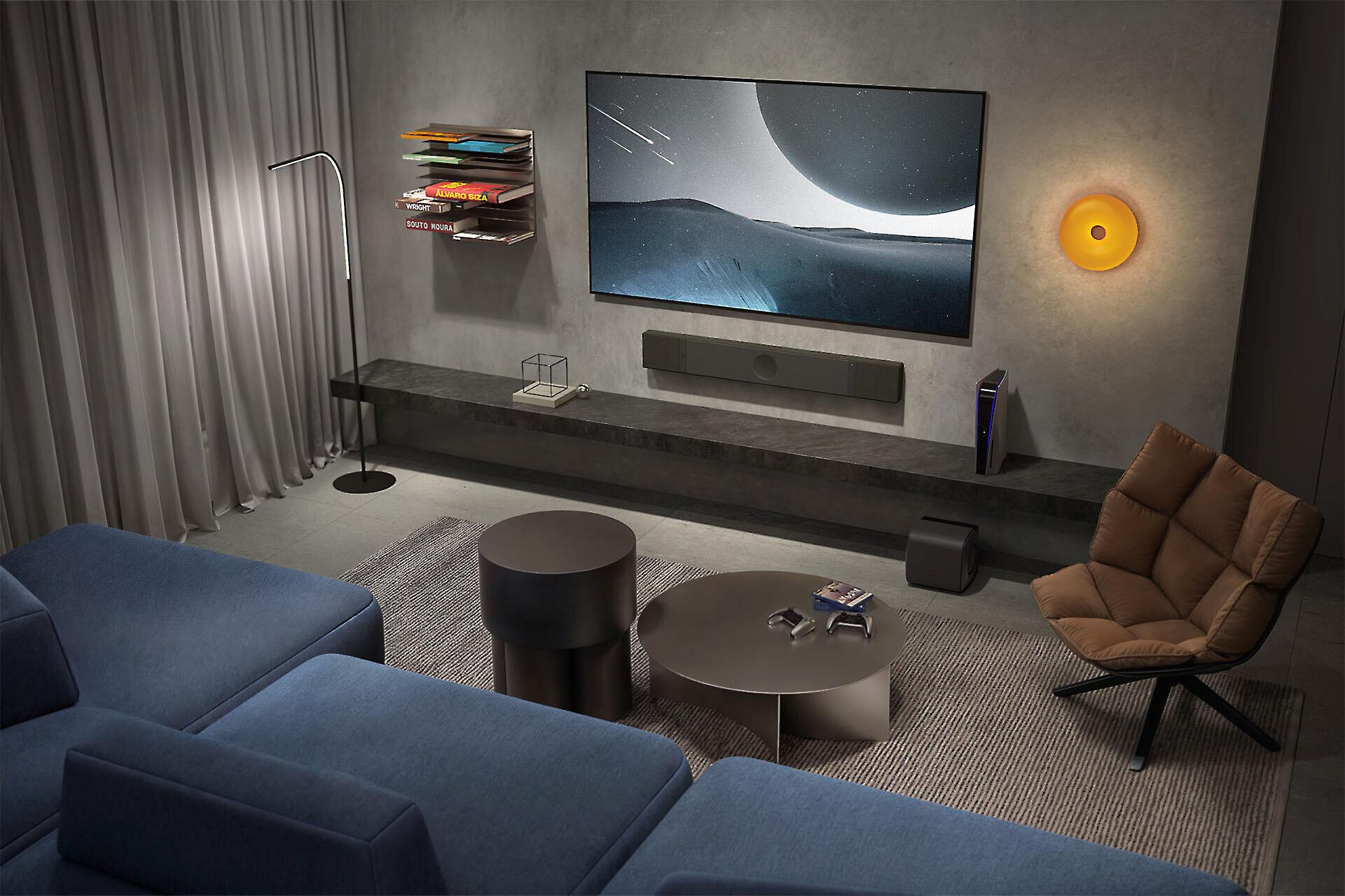
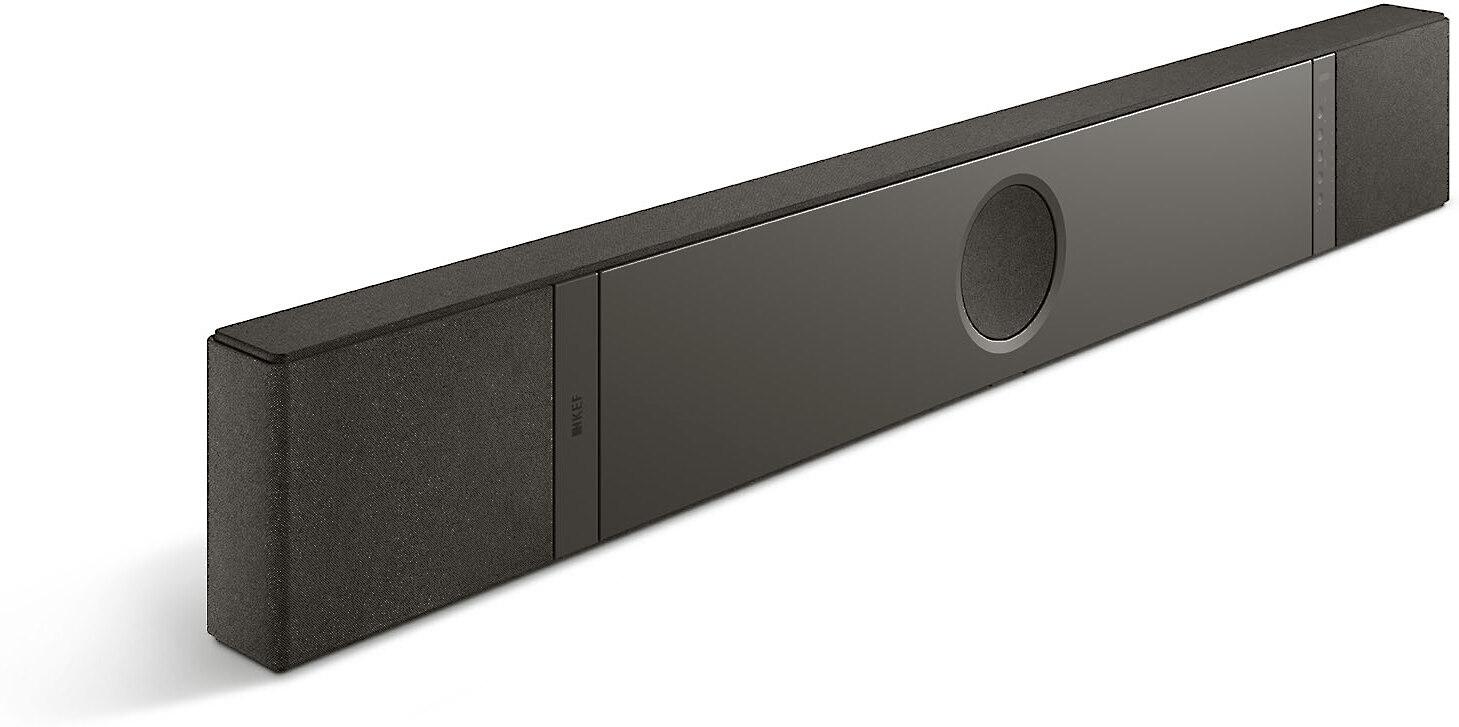
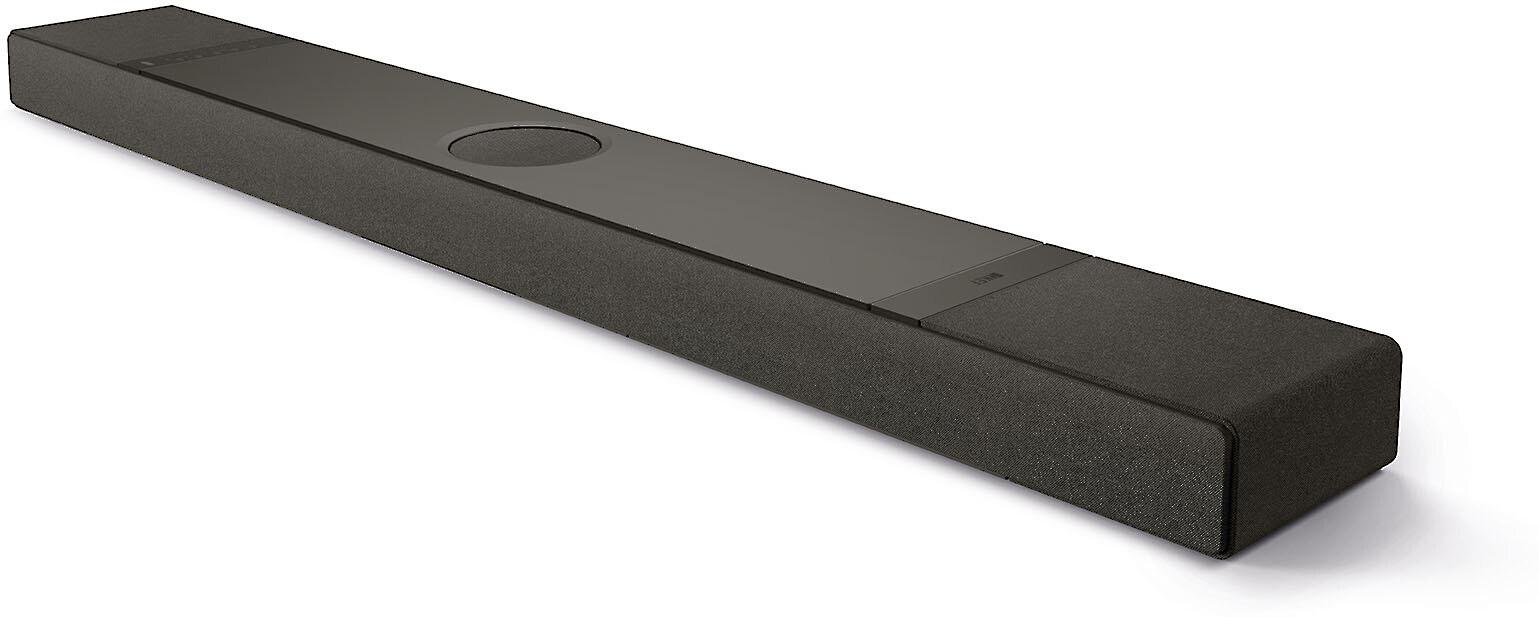
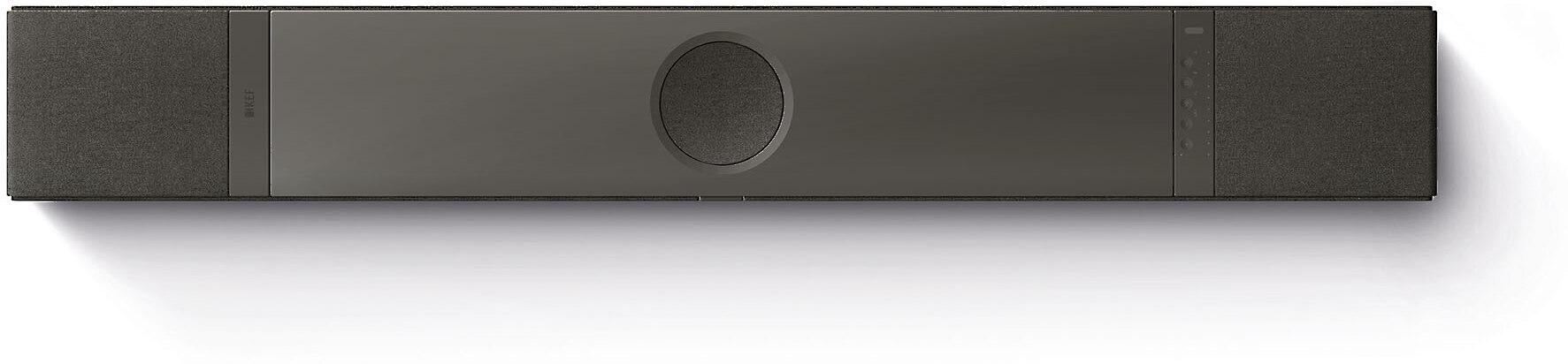



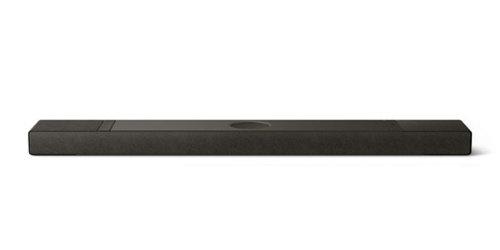
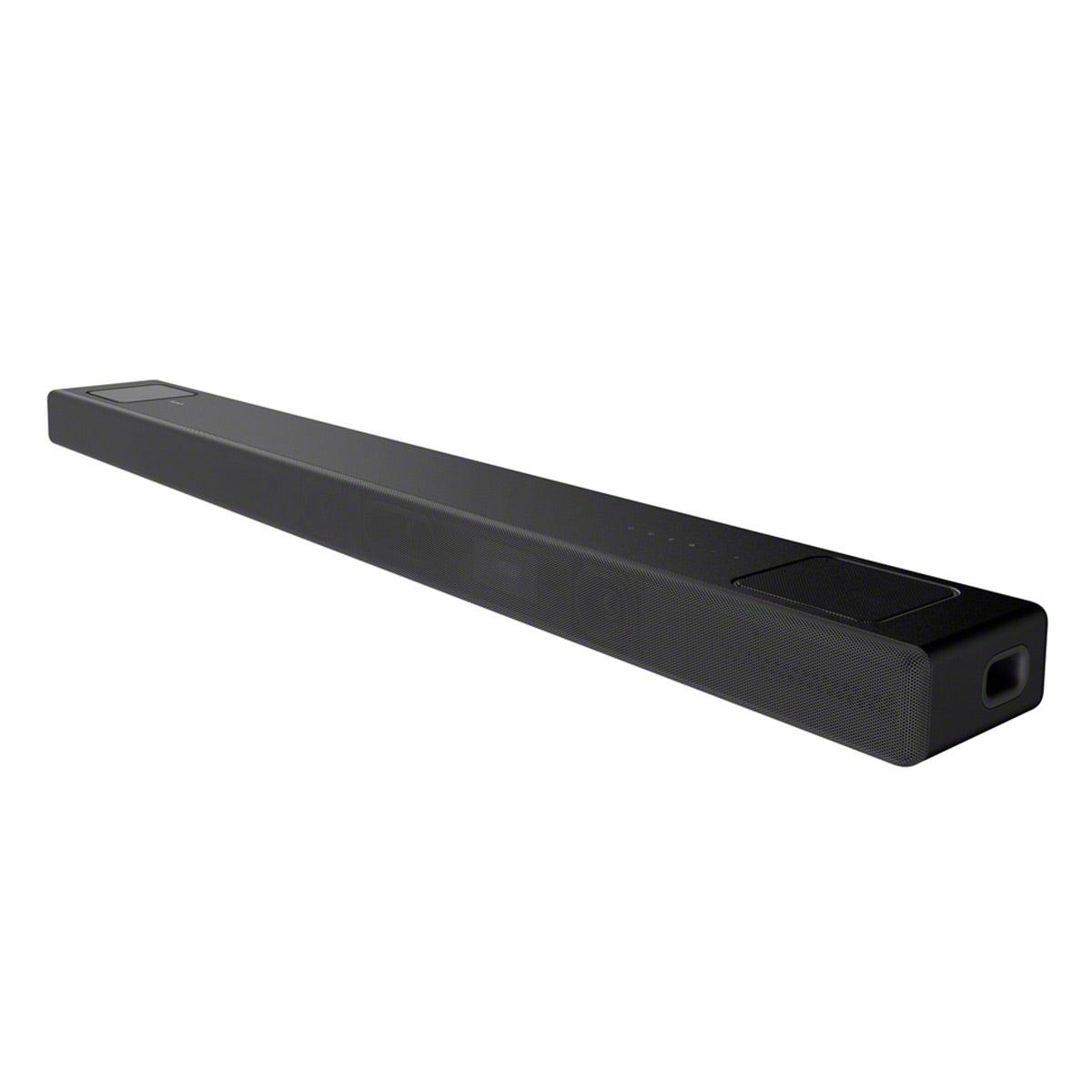
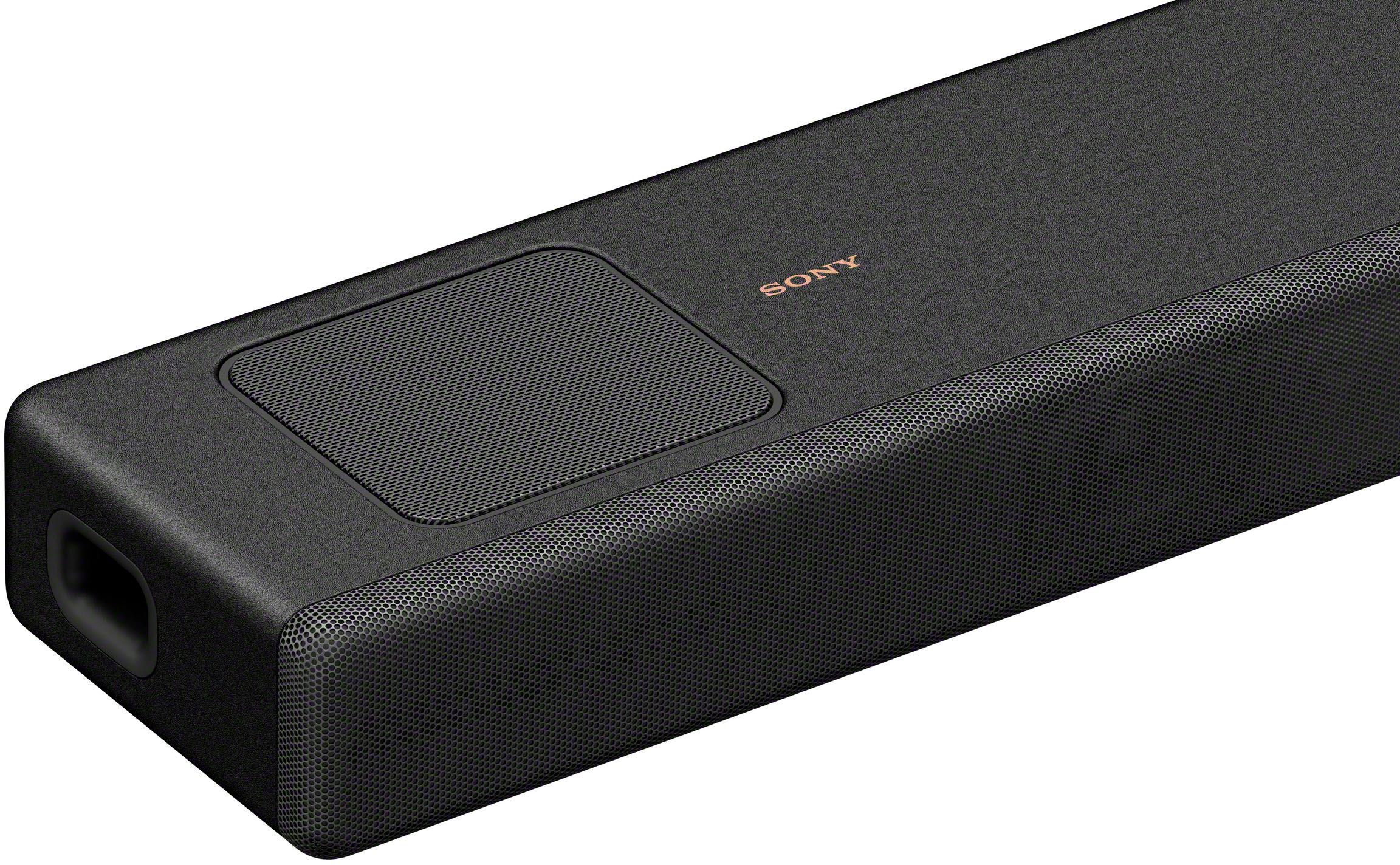

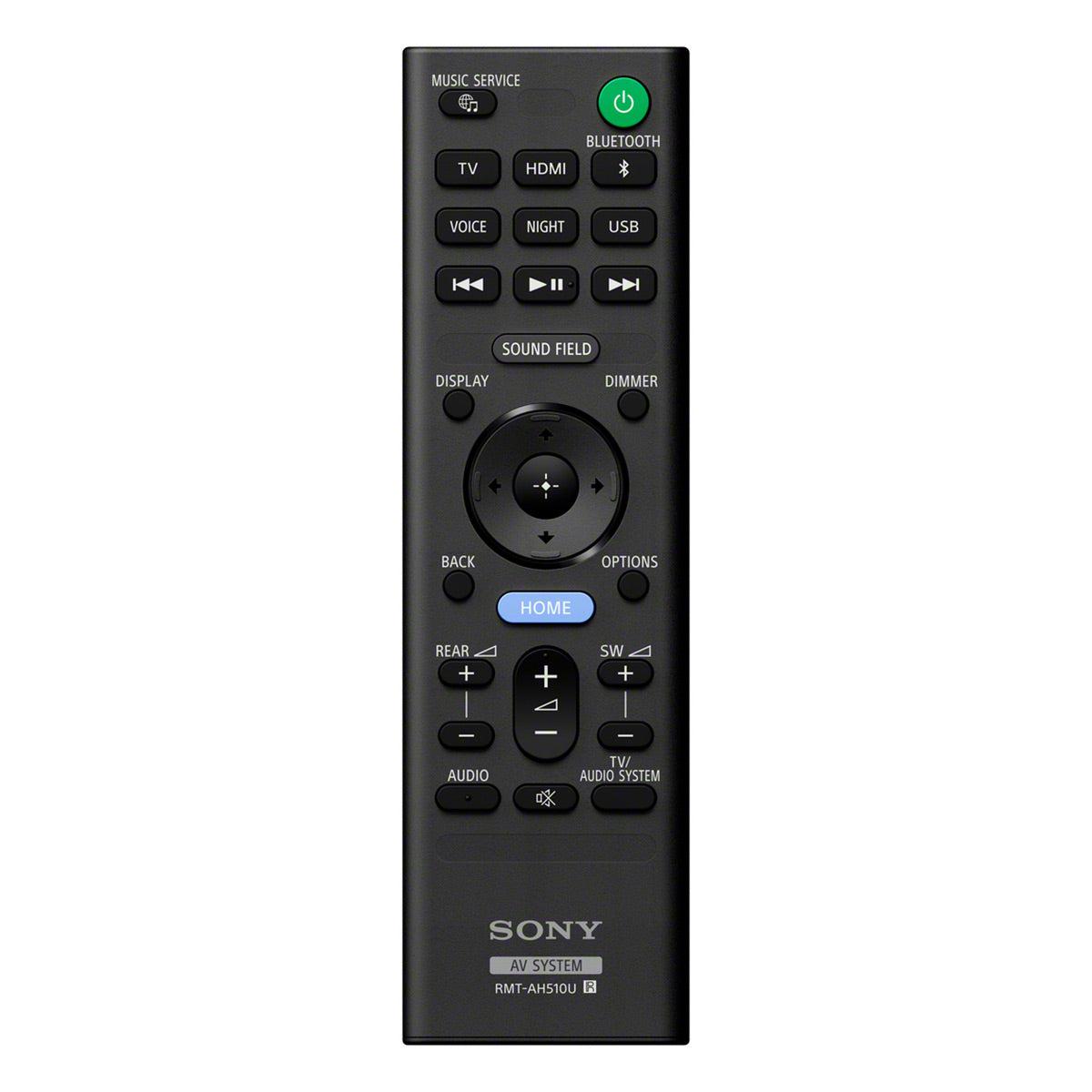
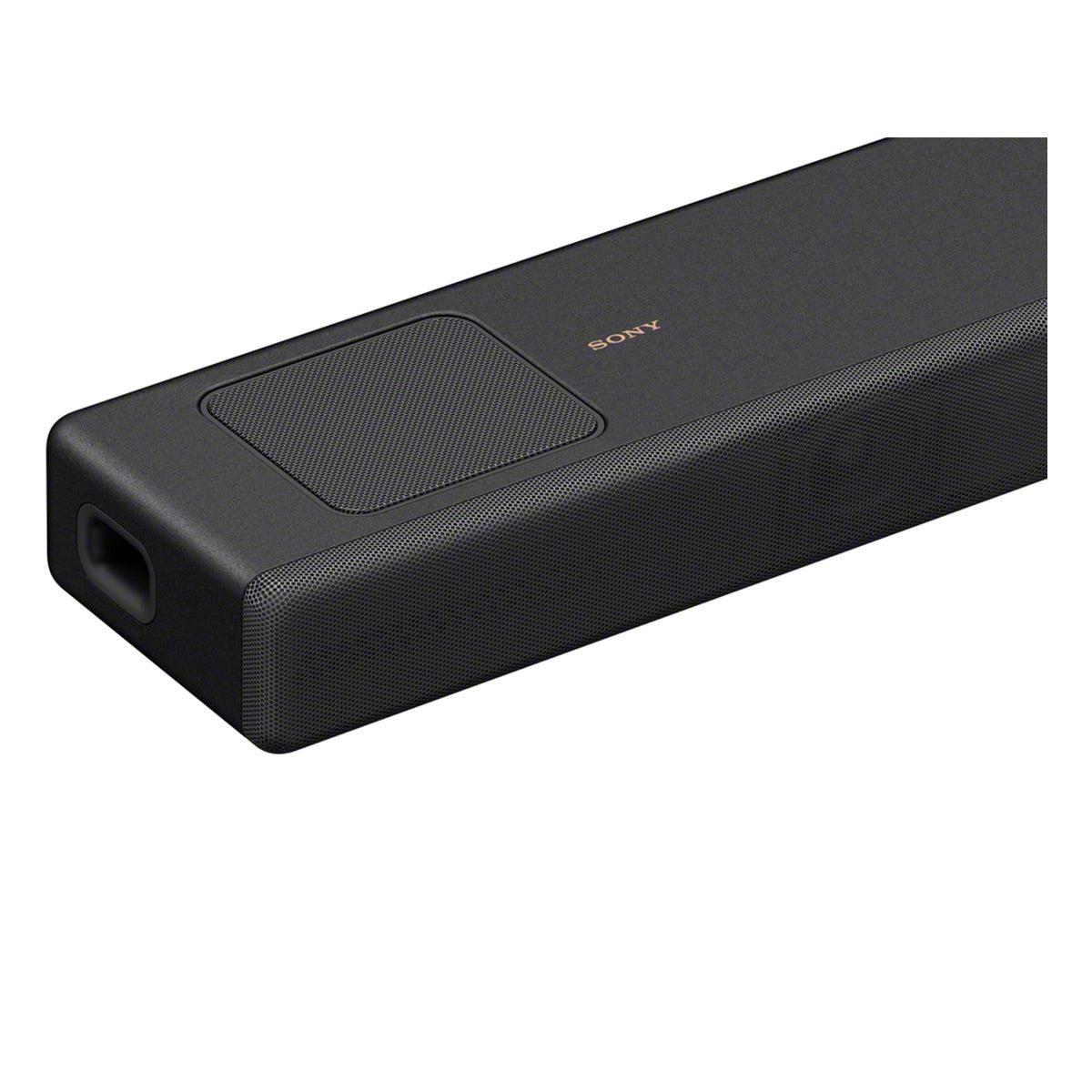
When you're shopping for a premium soundbar, you're essentially choosing between two very different philosophies. Do you want the absolute best sound quality money can buy, or do you prefer flexibility and value with room to grow? That's exactly the choice between the KEF XIO Soundbar ($2,499) and the Sony HT-A5000 ($279).
I've spent considerable time with both soundbars, and while they're technically in the same product category, they couldn't be more different in their approach to delivering immersive audio. Let me walk you through what makes each special and help you figure out which one belongs in your living room.
Before we dive into the specifics, it's worth understanding what we're dealing with here. Premium soundbars have evolved dramatically over the past few years, especially since 2020 when Dolby Atmos (a surround sound technology that adds height channels for overhead effects) became mainstream. These aren't your basic TV speakers—they're sophisticated audio systems designed to replace entire home theater setups.
The key things that separate good soundbars from great ones include audio clarity, how wide and immersive the soundstage feels, bass extension (how low the frequencies go), and spatial accuracy (how precisely sounds are placed around you). The best soundbars also need smart room calibration, solid connectivity options, and the ability to handle both movies and music exceptionally well.
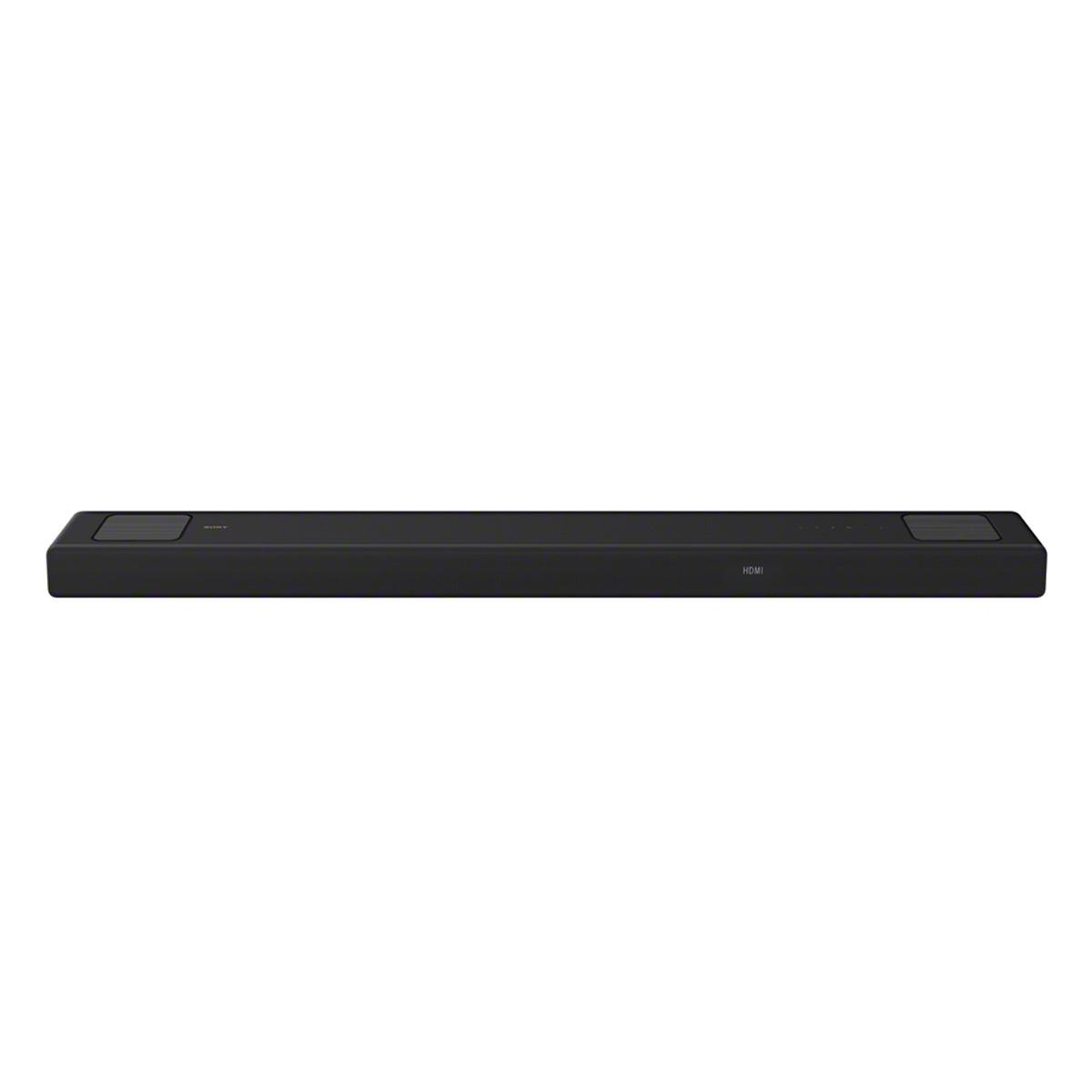
The Sony HT-A5000 hit the market in late 2021 as Sony's answer to the growing demand for affordable Dolby Atmos soundbars. It was positioned as a step up from basic models while remaining accessible to mainstream buyers. Sony built it around their established virtual surround processing, which uses psychoacoustic tricks (basically fooling your brain into hearing sounds that aren't physically there) to simulate height effects.
The KEF XIO, on the other hand, launched in early 2025 as KEF's very first soundbar—a bold debut from a company famous for making some of the world's most expensive and acclaimed speakers. KEF took their sweet time entering this market, and it shows. They essentially asked themselves: "What if we ignored cost constraints and built the best soundbar physically possible?"
Since the Sony's 2021 launch, we've seen the soundbar market mature significantly. Competitors have improved virtual processing algorithms, added better room correction, and started incorporating higher-quality drivers. The KEF benefits from this evolution, incorporating lessons learned across the industry while pushing boundaries that others haven't dared to cross.
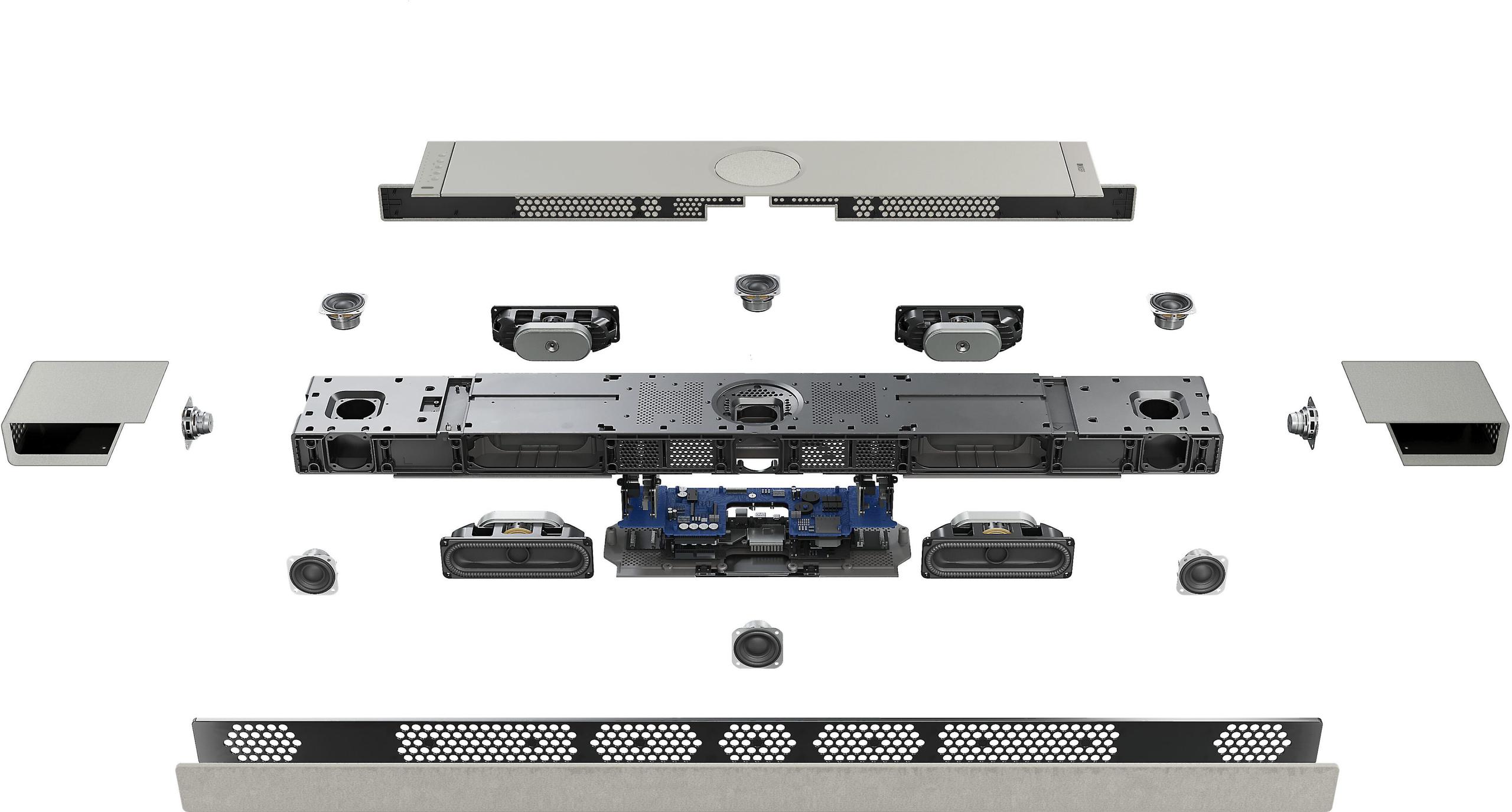
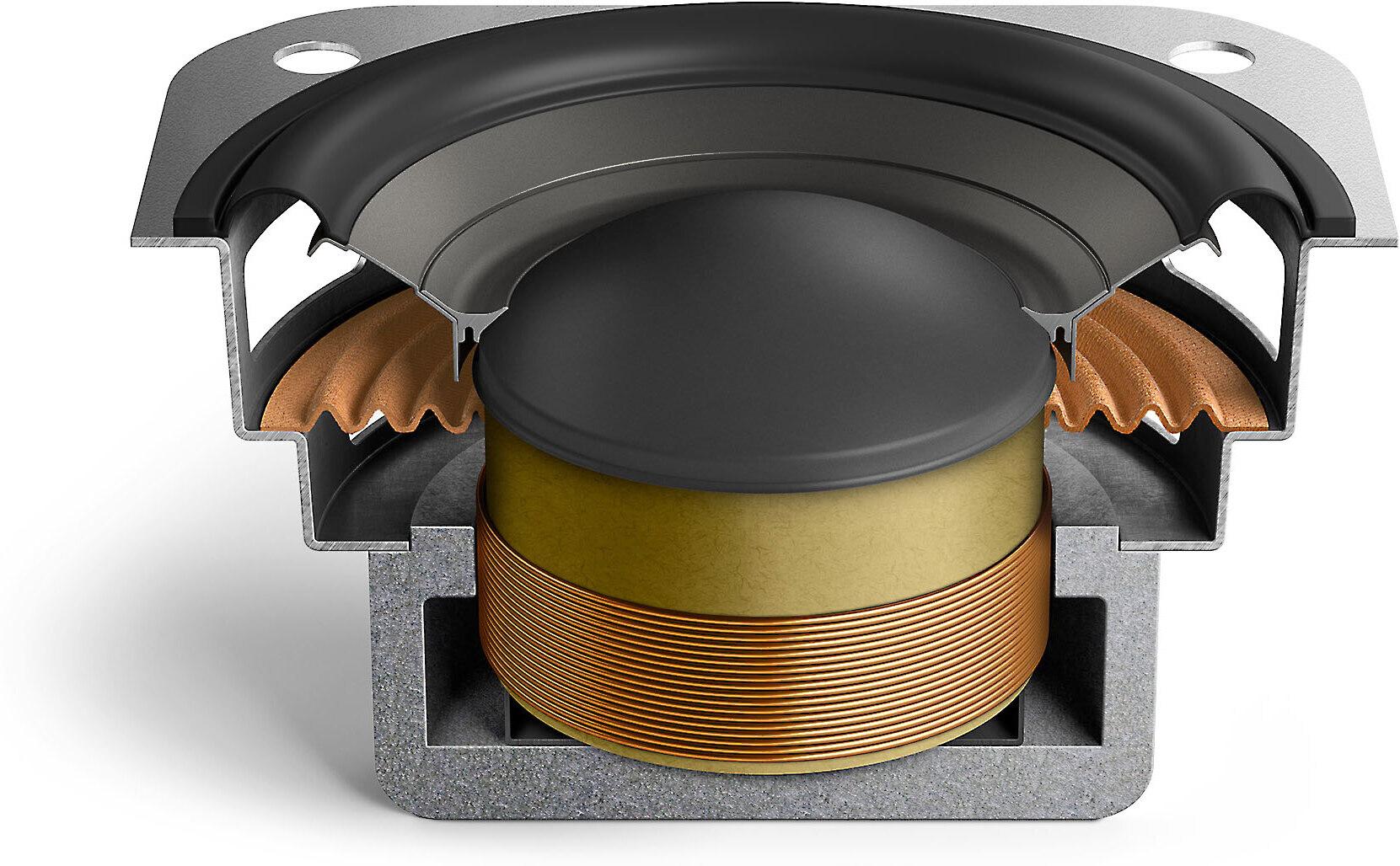
Here's where the fundamental differences become crystal clear. The KEF XIO uses six Uni-Q MX drivers—these are miniaturized versions of KEF's legendary coaxial speakers where the tweeter (high-frequency driver) sits in the center of the woofer (mid-frequency driver). This design, which KEF has perfected over decades, creates incredibly wide dispersion and pinpoint imaging. When you're watching a movie, voices seem to come from exactly where the actor's mouth is on screen, not just "somewhere from the front."
I noticed this immediately when watching dialogue-heavy scenes. With the KEF, conversations feel natural and precisely located, while background sounds maintain their proper spatial relationships. The Sony, while competent, relies more on your brain to fill in the gaps through its S-Force PRO processing.
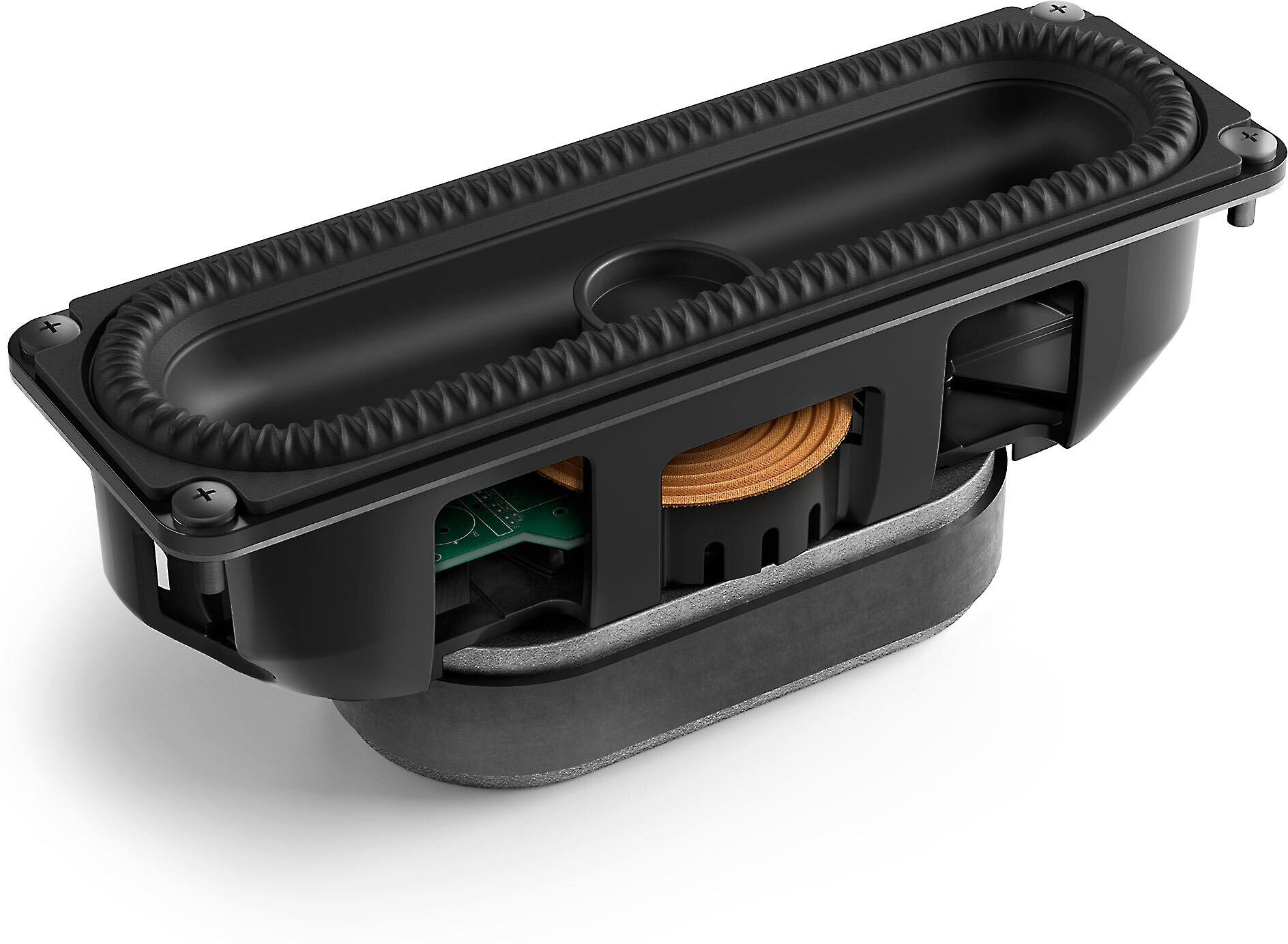
The bass story is even more telling. KEF packed four P185 racetrack-shaped woofers into the XIO, arranged in a force-canceling configuration that virtually eliminates cabinet vibrations. These drivers use P-Flex technology borrowed from KEF's $2,000 KC62 subwoofer, along with something called Velocity Control Technology (VECO) that monitors driver movement in real-time and reduces distortion by up to 28 decibels. In practical terms, this means the KEF can play louder and cleaner while extending down to 34Hz—that's legitimate subwoofer territory.
The Sony's built-in woofers, while adequate, simply can't compete. They'll handle casual TV watching and light music just fine, but when the T-Rex stomps across the screen in Jurassic Park, you'll feel the difference. The Sony's bass sounds somewhat contained and "boxy," while the KEF delivers that chest-thumping impact that makes action scenes come alive.
This is where the technical approaches really diverge. The KEF XIO features genuine upward-firing drivers that bounce sound off your ceiling to create overhead effects. When helicopters fly overhead or rain falls in a movie scene, you hear it coming from above your head—not just from the front soundbar pretending to be above you.
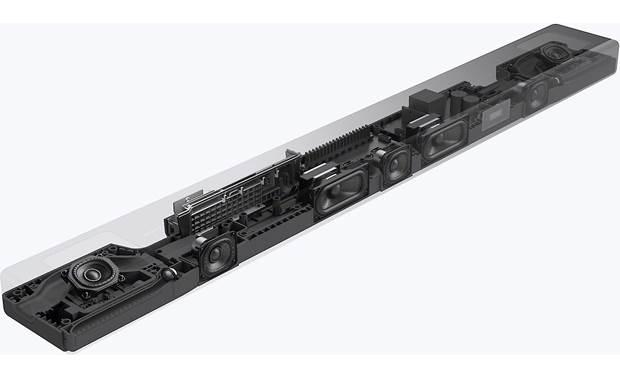
The Sony takes a different route with its Vertical Surround Engine, which uses sophisticated digital processing to trick your ears into perceiving height. It's clever technology that works reasonably well, especially in properly configured rooms with the right ceiling height and acoustics. But it's still virtual—your brain is doing much of the heavy lifting.
In my testing, the difference was most apparent with complex Dolby Atmos soundtracks. During the opening sequence of Blade Runner 2049, where vehicles fly through a layered cityscape, the KEF created a genuinely three-dimensional bubble of sound around my seating position. Individual sound objects moved convincingly through space, with clear separation between sounds coming from different heights and directions.
The Sony presented the same scene competently, but the height effects felt more suggested than real. It's like the difference between surround sound and stereo—both can be engaging, but one creates a more convincing illusion of space.
Raw power tells part of the story here. The KEF XIO packs 820 watts across twelve discrete Class D amplifiers—that's serious muscle distributed precisely where it's needed. Each driver gets its own dedicated amplification, allowing for perfect control and minimal interference between channels.
The Sony's 450 watts across nine channels is respectable for its price point, but the difference becomes apparent at higher volumes. The KEF maintains composure and clarity even when you're pushing it hard during explosive action sequences, while the Sony starts to show strain and compression as you approach its limits.
This power advantage also translates to dynamic range—the difference between the quietest whisper and the loudest explosion. The KEF can reproduce those subtle ambient details that draw you into a scene while still delivering the full impact when things get loud. It's this combination of finesse and power that separates reference-quality audio from merely good audio.
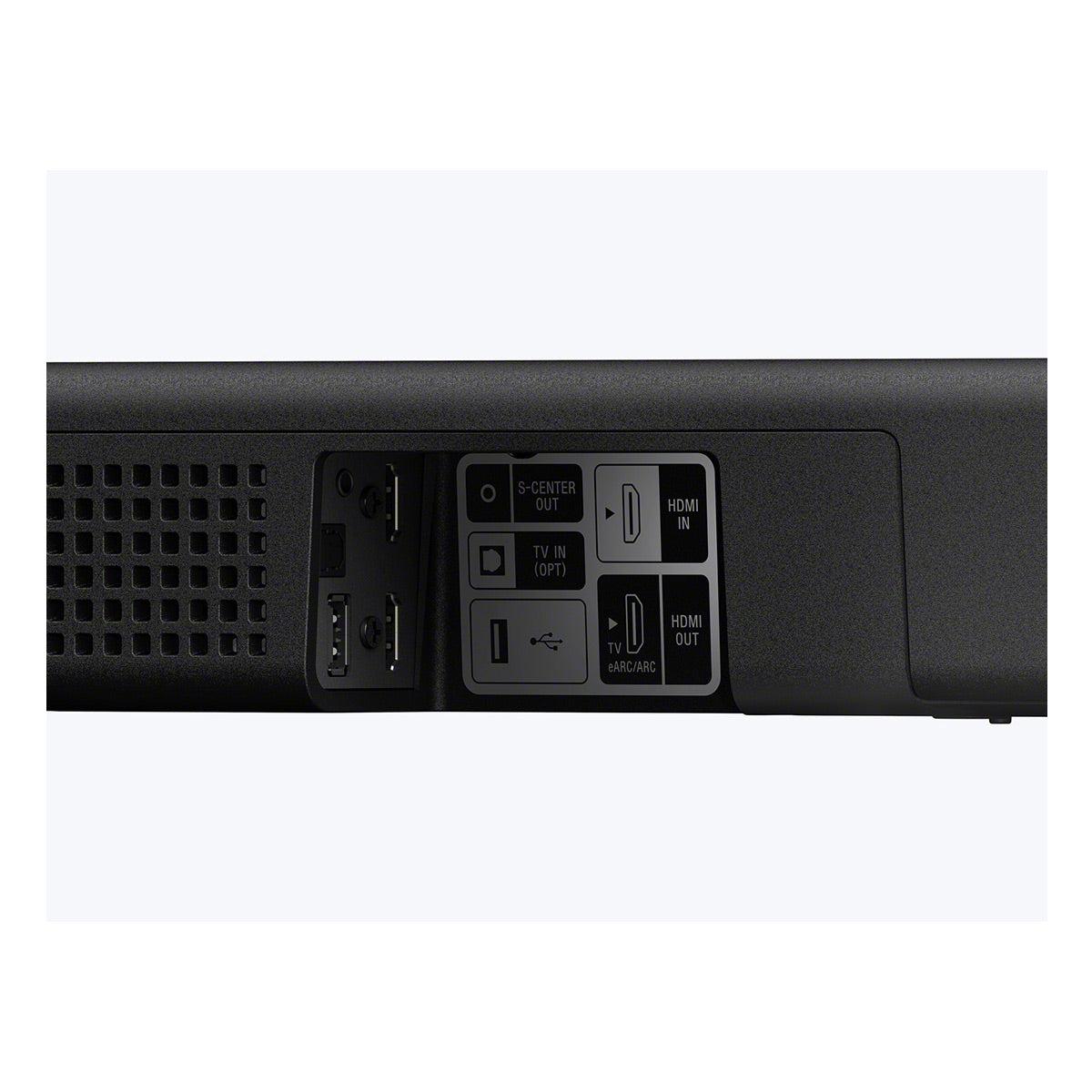
Here's where the Sony HT-A5000 fights back with some practical advantages. Sony included HDMI 2.1 passthrough, which means you can connect your PlayStation 5 or Xbox Series X directly to the soundbar and still get 4K/120Hz gaming performance passed through to your TV. For serious gamers, this is a significant convenience that the KEF simply doesn't offer.
The Sony also provides multiple HDMI inputs, optical connections, and extensive wireless streaming options including Chromecast, AirPlay 2, and direct integration with Google Assistant and Alexa. If you have a complex home theater setup with multiple sources, the Sony's connectivity flexibility might outweigh pure audio performance considerations.
The KEF takes a more focused approach with HDMI eARC only, betting that most users will connect everything to their TV and use the single high-quality connection. This works perfectly for many setups, but it does require a compatible TV with reliable eARC implementation.
Both soundbars offer impressive streaming capabilities, but the KEF supports higher resolution audio formats up to 24-bit/384kHz for audiophile music streaming services like Qobuz and Tidal. If you're serious about music quality, this additional headroom matters.
Modern soundbars need to adapt to different rooms, and both products approach this challenge differently. The KEF XIO uses Intelligent Placement Technology with built-in microphones to automatically measure your room and adjust the sound accordingly. It can detect whether it's wall-mounted or shelf-placed and optimize performance for each scenario.
The Sony includes Sound Field Optimization that serves a similar purpose, though it's less sophisticated in its analysis. Both systems work reasonably well, but I found the KEF's calibration more thorough and effective at compensating for challenging room acoustics.
If you have a less-than-ideal room—maybe low ceilings, lots of hard surfaces, or an awkward layout—the KEF's more advanced room correction gives it a significant advantage in delivering consistent performance.
This is where your priorities really matter. The Sony HT-A5000 at $279 represents exceptional value in the premium soundbar space. It delivers solid Dolby Atmos performance, good connectivity, and room for expansion with optional rear speakers and subwoofers. You could build a complete 5.1.4 system with the Sony as your foundation for under $1,000 total.
The KEF's $2,499 price tag puts it in rarified air—you're paying for cutting-edge driver technology, premium materials, and engineering that typically costs much more in traditional component systems. It's designed as a complete, no-compromise solution that shouldn't need upgrades or additions.
From a pure performance-per-dollar calculation, the Sony wins handily. But if you're looking at this as a long-term investment in reference-quality audio, the KEF starts to make more sense. It's replacing what would traditionally require thousands of dollars in separate components while fitting in a single, elegant enclosure.
While both soundbars excel at movies, their music performance reveals another key difference. The KEF XIO was clearly designed by people who care deeply about stereo music reproduction. The Uni-Q drivers create an incredibly stable and natural stereo image, with instruments properly spaced and vocals that sound eerily lifelike.
I spent considerable time listening to everything from jazz quartets to electronic music, and the KEF consistently impressed with its ability to reveal subtle details and maintain composure across all genres. Complex recordings remained clear and separated even at high volumes, while simpler acoustic pieces displayed remarkable intimacy and presence.
The Sony handles music competently, but it's clearly optimized for movie soundtracks. Stereo music sounds good, but it lacks the KEF's refinement and spatial precision. If you're someone who listens to a lot of music through your soundbar, this difference might be worth the premium alone.
After living with both soundbars, I can confidently say they serve different audiences despite being in the same product category. The KEF XIO is for people who want the absolute best soundbar experience money can buy—no compromises, no upgrade path needed, just reference-quality audio in a single package.
Choose the KEF if you're an audio enthusiast who appreciates the finer details, if you listen to a lot of music, or if you want a complete solution that will remain satisfying for years to come. It's also ideal if your room can't accommodate multiple speakers but you still want audiophile-level performance.
The Sony HT-A5000 makes more sense for most people. It delivers impressive Dolby Atmos performance at an accessible price, offers excellent connectivity for gaming and multiple sources, and provides a clear upgrade path with optional wireless components. It's the soundbar I'd recommend to friends and family who want a significant step up from TV speakers without breaking the bank.
Both products represent their respective philosophies extremely well. The Sony proves that sophisticated audio processing can create engaging surround sound experiences at mainstream prices. The KEF demonstrates what happens when a legendary speaker company applies decades of acoustic expertise to the soundbar format without cost constraints.
Your choice ultimately depends on whether you prioritize absolute performance or practical value. Either way, you'll end up with a soundbar that transforms your home theater experience—just in very different ways and at very different price points.
| KEF XIO Soundbar | Sony HT-A5000 |
|---|---|
| Price - Major factor in determining value proposition | |
| $2,499 (premium audiophile positioning) | $279 (mainstream accessibility) |
| Audio Channels - Determines surround sound capability | |
| 5.1.2 with discrete drivers (true physical channels) | 5.1.2 with virtual processing (simulated channels) |
| Total Power Output - Affects maximum volume and dynamic range | |
| 820W across 12 Class D amplifiers | 450W across 9 channels |
| Driver Technology - Core factor in sound quality | |
| 6x Uni-Q MX coaxial drivers + 4x P185 racetrack woofers | X-Balanced drivers with built-in subwoofer |
| Bass Extension - Determines low-frequency impact without subwoofer | |
| 34Hz (subwoofer-level performance) | Limited extension (requires optional subwoofer) |
| Height Effects Implementation - Critical for Dolby Atmos experience | |
| Physical upward-firing drivers (genuine overhead sound) | Vertical Surround Engine (virtual processing) |
| HDMI Connectivity - Important for gaming and multiple sources | |
| eARC only (simplified but potentially limiting) | eARC + HDMI 2.1 passthrough (better for complex setups) |
| Room Calibration - Ensures optimal performance in your space | |
| Intelligent Placement Technology with microphones | Sound Field Optimization |
| Streaming Audio Quality - Matters for high-resolution music | |
| Up to 24-bit/384kHz (audiophile-grade) | Standard streaming formats |
| Expandability - Future upgrade options | |
| Standalone design (complete solution) | Compatible with wireless rear speakers and subwoofers |
| Build Quality - Reflects long-term durability and aesthetics | |
| Aluminum chassis with splash-proof fabric | Standard plastic construction |
| Target User - Who each product serves best | |
| Audiophiles seeking reference-quality sound | Mainstream users wanting good Atmos performance |
The Sony HT-A5000 ($279) offers significantly better value for most buyers, delivering solid Dolby Atmos performance at an accessible price point. The KEF XIO ($2,499) provides superior audio quality but costs nearly 9 times more, making it worthwhile only for serious audiophiles who prioritize reference-level sound quality above all else.
The KEF XIO includes powerful built-in bass extending down to 34Hz, eliminating the need for a separate subwoofer in most rooms. The Sony HT-A5000 has adequate built-in bass for casual listening but benefits significantly from adding Sony's optional wireless subwoofer for impactful movie soundtracks and deeper low-frequency extension.
The KEF XIO excels in smaller spaces due to its advanced room calibration technology and ability to deliver full-range, reference-quality sound from a single unit without requiring additional speakers. The Sony HT-A5000 also works well in small rooms but may feel limited without the option to add rear speakers later.
The KEF XIO delivers true Dolby Atmos with physical upward-firing drivers that create genuine overhead effects. The Sony HT-A5000 uses virtual processing to simulate height effects, which works reasonably well but cannot match the precision and immersion of actual discrete height channels found in the KEF.
The KEF XIO significantly outperforms the Sony for music, featuring audiophile-grade Uni-Q drivers that create exceptional stereo imaging and support high-resolution audio up to 24-bit/384kHz. The Sony HT-A5000 handles music adequately but is clearly optimized for movie soundtracks rather than critical music listening.
The Sony HT-A5000 offers more connectivity options including HDMI 2.1 passthrough for gaming, multiple inputs, and extensive streaming services. The KEF XIO takes a more focused approach with HDMI eARC only, betting on a single high-quality connection, though it supports higher resolution streaming formats for audiophile music services.
The KEF XIO can play significantly louder and cleaner thanks to its 820W of power across 12 discrete amplifiers and advanced VECO distortion control technology. The Sony HT-A5000 with 450W provides adequate volume for most rooms but shows strain and compression when pushed to higher levels during dynamic movie scenes.
The Sony HT-A5000 is better suited for gaming due to its HDMI 2.1 passthrough support, allowing 4K/120Hz gaming while processing audio. The KEF XIO lacks HDMI passthrough, requiring you to connect gaming consoles directly to your TV, though it delivers superior audio quality for gaming soundtracks and effects.
The KEF XIO performs better in larger spaces due to its higher power output, superior driver technology, and ability to fill rooms with clear, detailed sound without losing coherence. The Sony HT-A5000 may struggle in very large rooms unless paired with optional rear speakers and a subwoofer to create a complete surround system.
The Sony HT-A5000 is designed for expansion with compatible wireless rear speakers and subwoofers, allowing you to build a complete surround system over time. The KEF XIO is designed as a complete standalone solution that doesn't require additional speakers, though it does include subwoofer output if desired.
Both KEF and Sony offer solid customer support, but Sony has a broader service network due to being a larger consumer electronics company. The KEF XIO comes with premium support typical of high-end audio products, while the Sony HT-A5000 benefits from Sony's extensive global support infrastructure and longer market presence in soundbars.
Choose the KEF XIO if you're an audio enthusiast with a budget above $2,000 who wants the absolute best soundbar performance without compromises. Select the Sony HT-A5000 if you want excellent Dolby Atmos performance at an accessible price with room to expand your system later as your budget and needs grow.
We've done our best to create useful and informative comparisons to help you decide what product to buy. Our research uses advanced automated methods to create this comparison and perfection is not possible - please contact us for corrections or questions. These are the sites we've researched in the creation of this article: blog.son-video.com - residentialsystems.com - whathifi.com - audioadvice.com - crutchfield.com - homecrux.com - techradar.com - youtube.com - us.kef.com - gramophone.com - cepro.com - audioxpress.com - musicdirect.com - gramophone.com - us.kef.com - crutchfield.com - hifipig.com - bestbuy.com - listenup.com - bestbuy.com - bestbuy.com - listenup.com - whathifi.com - electronics.sony.com - costco.com - sony.com - expertreviews.co.uk - crutchfield.com - audioadvice.com - sony.com - sony.com - bestbuy.com - videoandaudiocenter.com - community.sony.co.uk

Privacy Policy
Terms and Conditions - Affiliate Policy
Home Security
© Copyright 2008-2026.
11816 Inwood Rd #1211, Dallas, TX 75244