

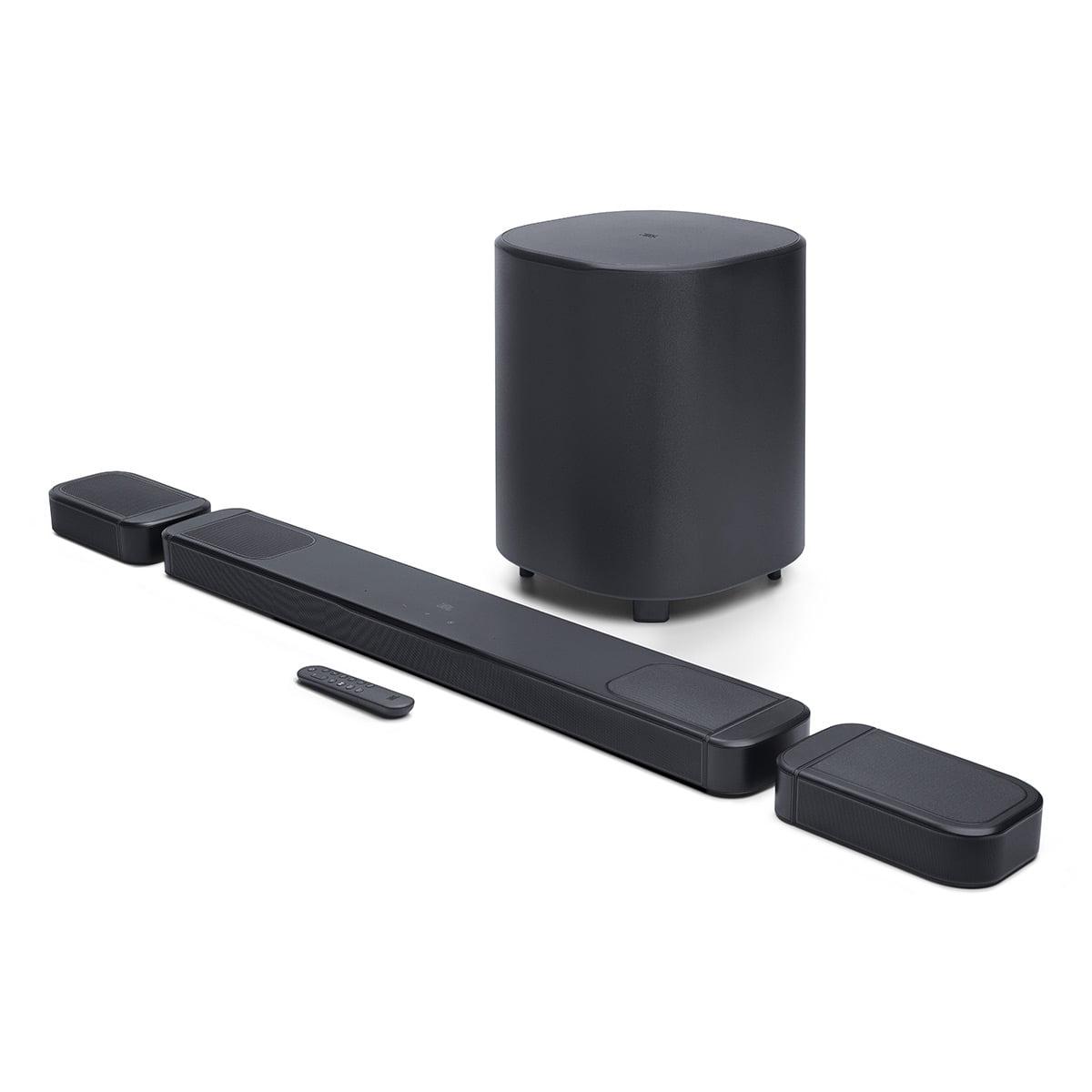
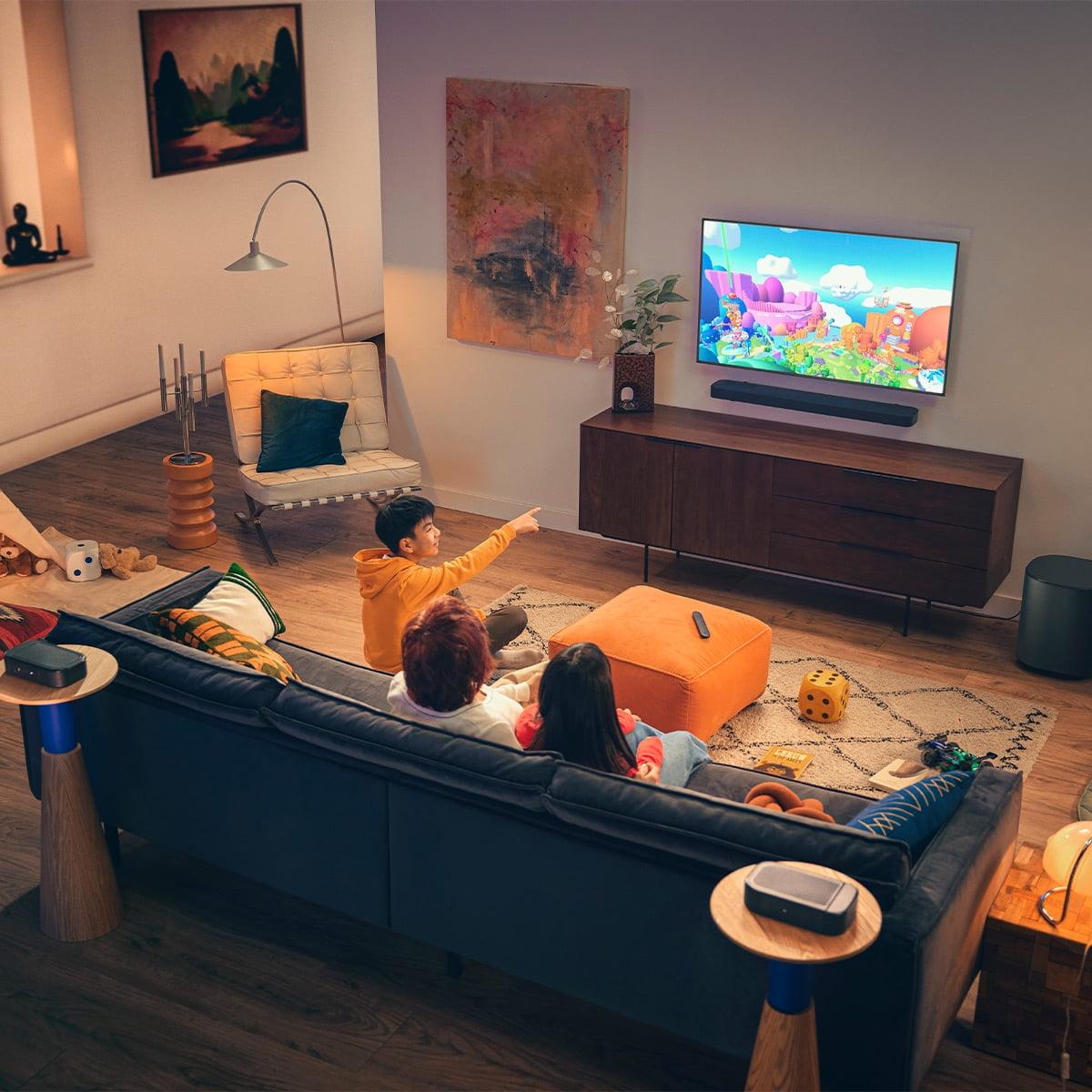
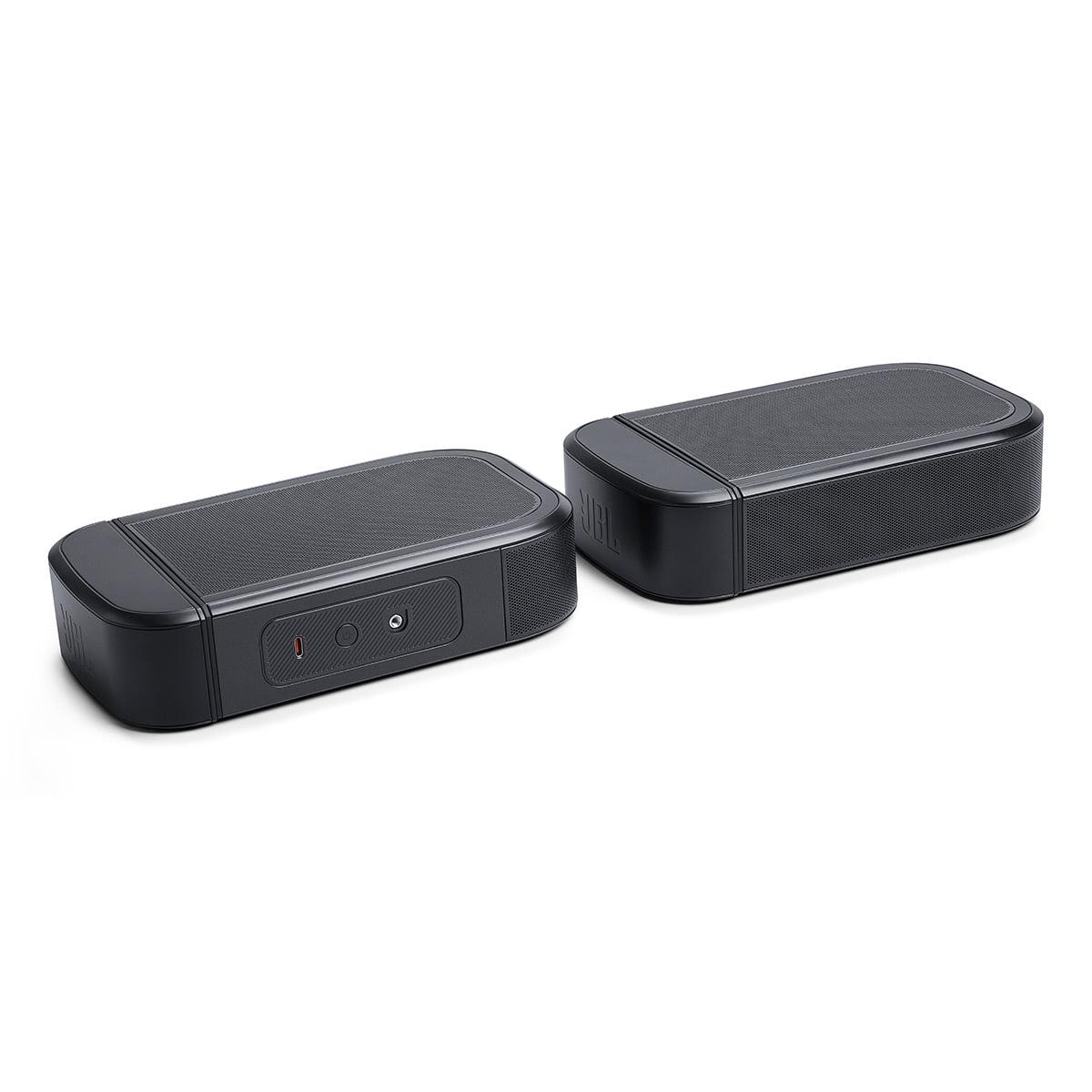
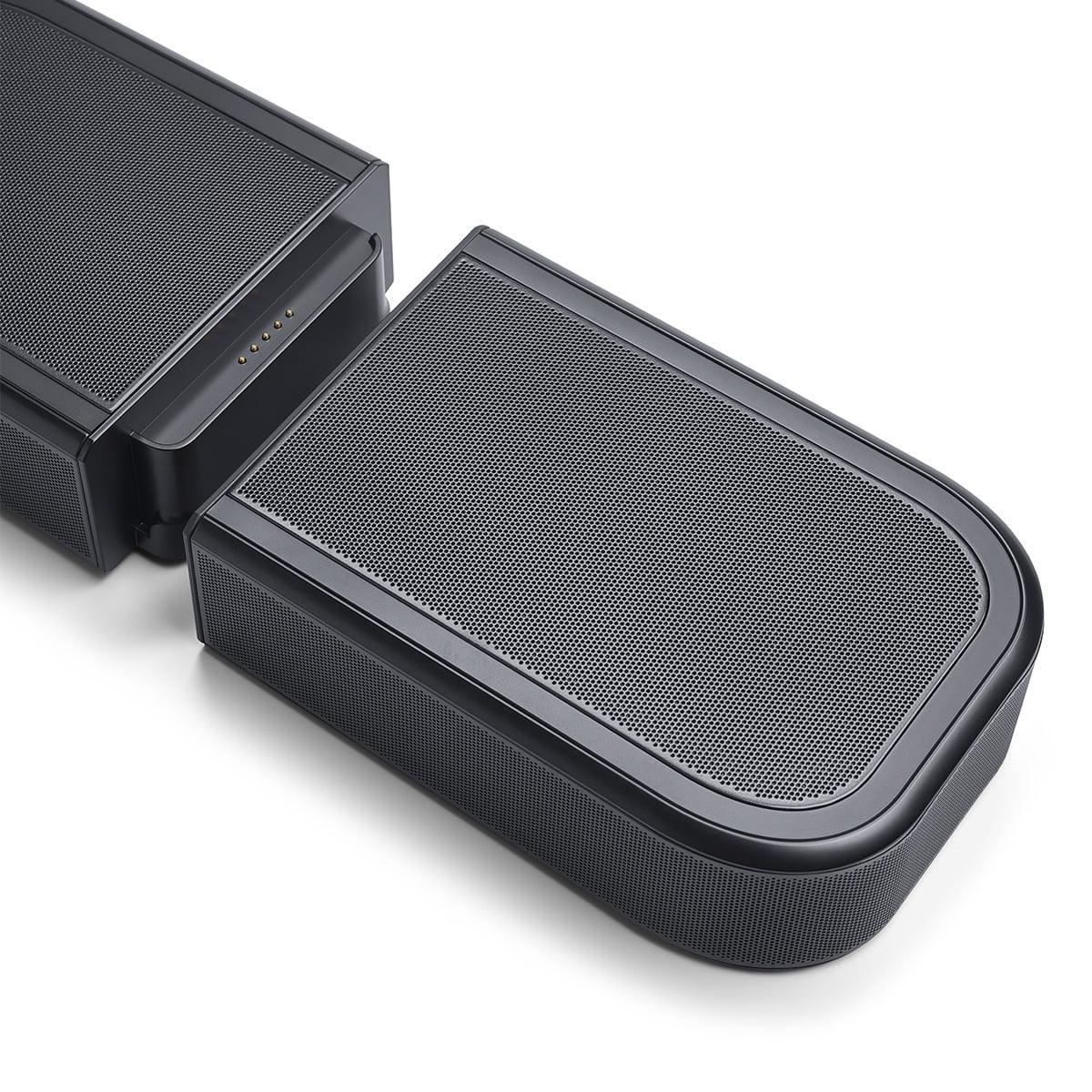


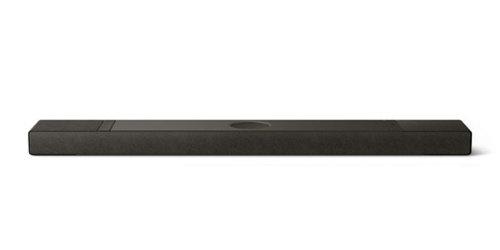
If you've been shopping for a high-end soundbar lately, you've probably noticed how crowded the premium market has become. Two standout options that caught my attention are the JBL Bar 1000 MK2 ($1,199.95) and the KEF XIO ($2,499.99). Both launched in 2025 and represent very different philosophies about what makes a great soundbar.
After spending considerable time with premium audio gear, I've learned that soundbars at this price level need to do more than just make movies louder. They need to create that "wow, how is all this sound coming from one device?" moment while fitting seamlessly into your living space. Let's dive into how these two approaches stack up.
Premium soundbars occupy a unique space in home audio. They're trying to replicate what a full surround sound system with separate speakers and receivers can do, but in a much simpler package. The challenge is physics – creating the illusion that sound is coming from behind you when all the drivers are in front of you isn't easy.
The key technologies that make this possible include Dolby Atmos (which adds height channels for overhead effects), sophisticated digital signal processing (DSP that manipulates audio to create spatial effects), and increasingly clever driver arrangements. Some manufacturers, like JBL, have started including actual rear speakers to solve the surround problem directly, while others like KEF rely on advanced acoustic engineering to create convincing effects from a single chassis.
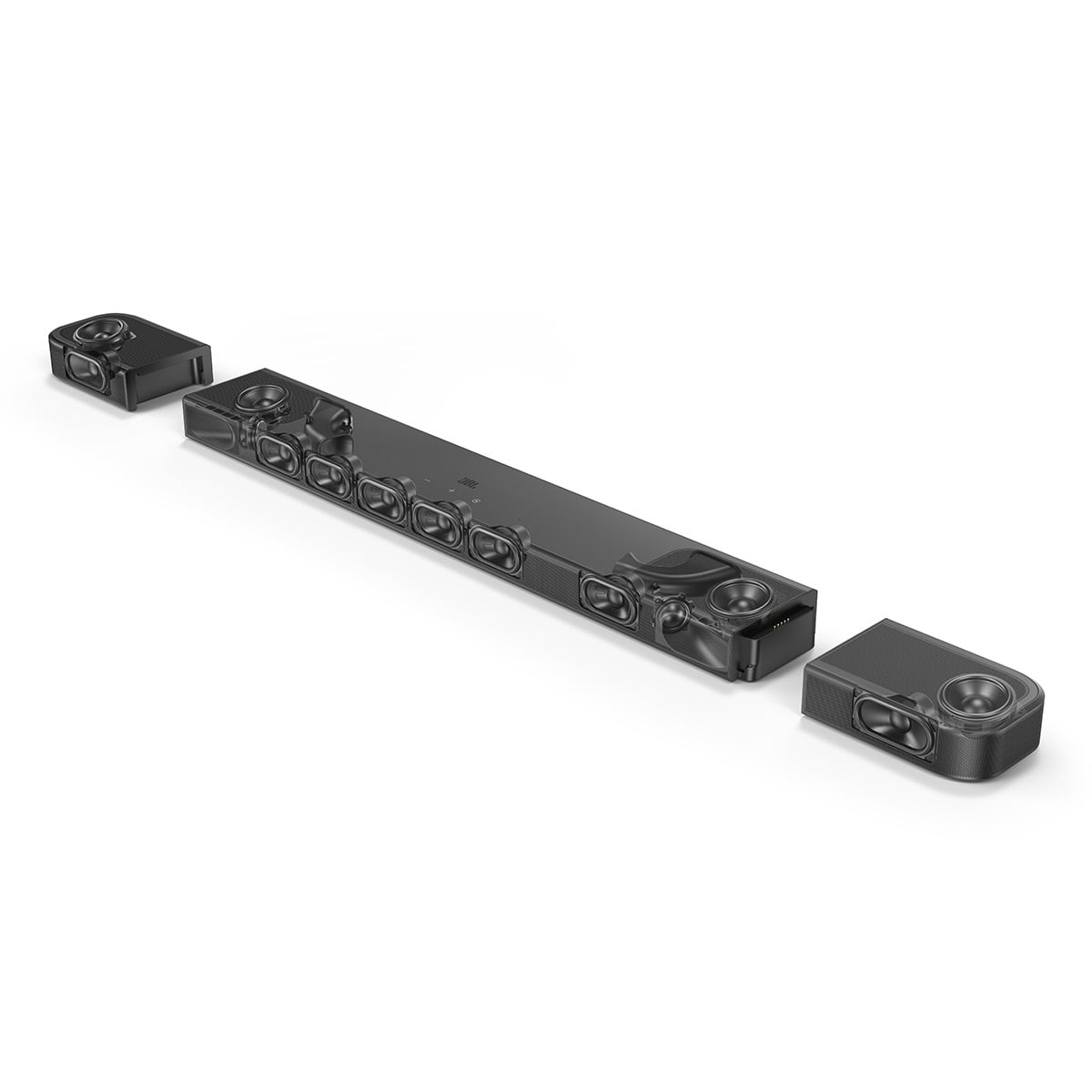
The JBL Bar 1000 MK2 launched in June 2025 as an evolution of JBL's modular soundbar concept. JBL learned from their previous Bar series that people loved the idea of detachable rear speakers but wanted better battery life and more power. The MK2 addresses these concerns with 10-hour battery life in the rear speakers (up from 6 hours) and 960W total system power.
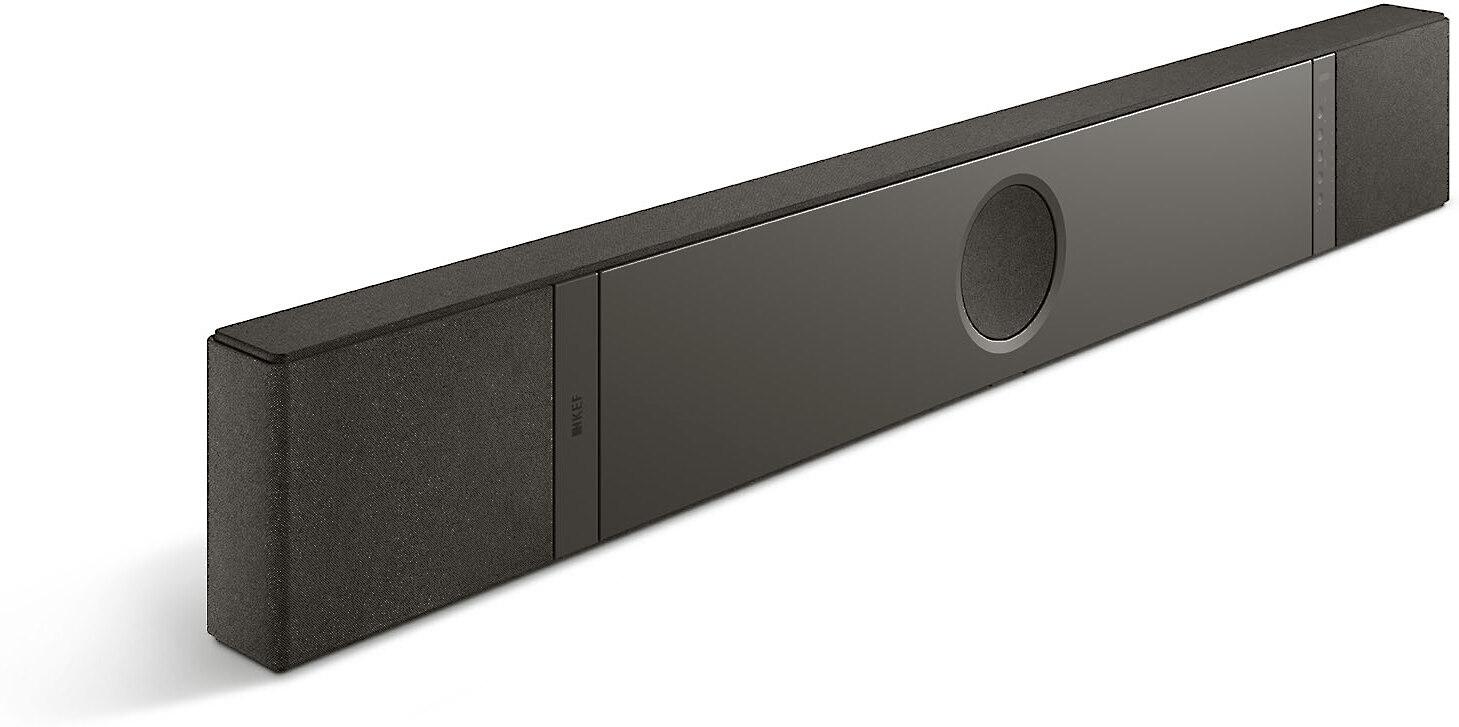
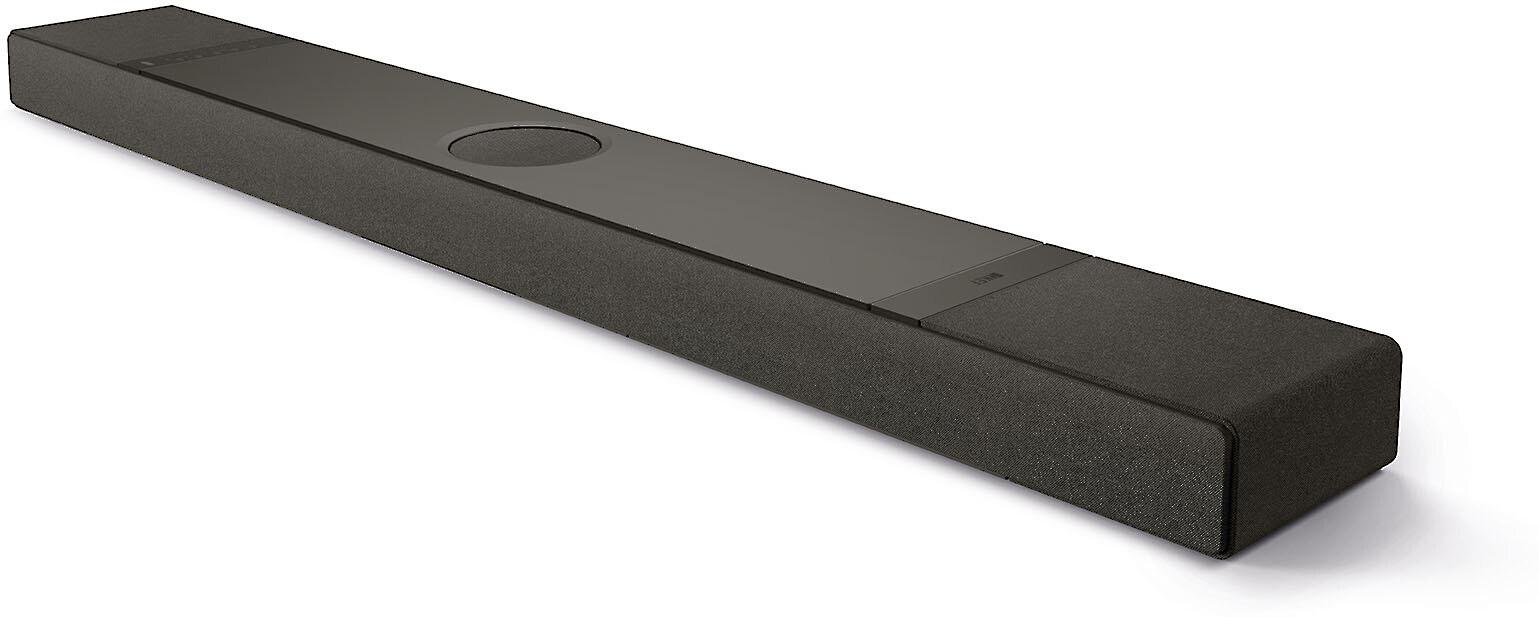
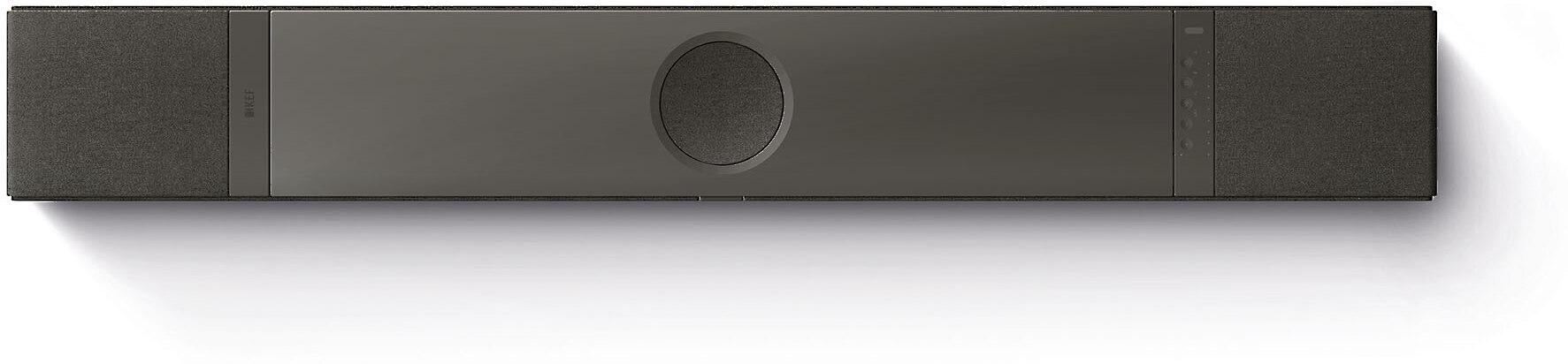
KEF took a completely different path with the KEF XIO, released in July 2025. This marked KEF's first entry into the soundbar market after decades of making high-end speakers. Rather than chase the detachable speaker trend, they focused on bringing their legendary Uni-Q driver technology down to soundbar size – no small engineering feat.
Here's where the fundamental difference between these systems becomes clear. The numbers refer to speaker channels: the first number is main speakers (left, center, right, etc.), the second is subwoofers, and the third is height channels for Atmos effects.
The JBL's 7.1.4 configuration means you get seven main channels, one subwoofer, and four height channels. Those detachable rear speakers aren't just a gimmick – they create actual left and right surround channels plus additional height effects. When I first set up the system, the difference was immediately apparent during action scenes. Explosions that would normally seem to come from the front of the room suddenly had genuine directionality, with debris sounds actually seeming to whiz past your ears.
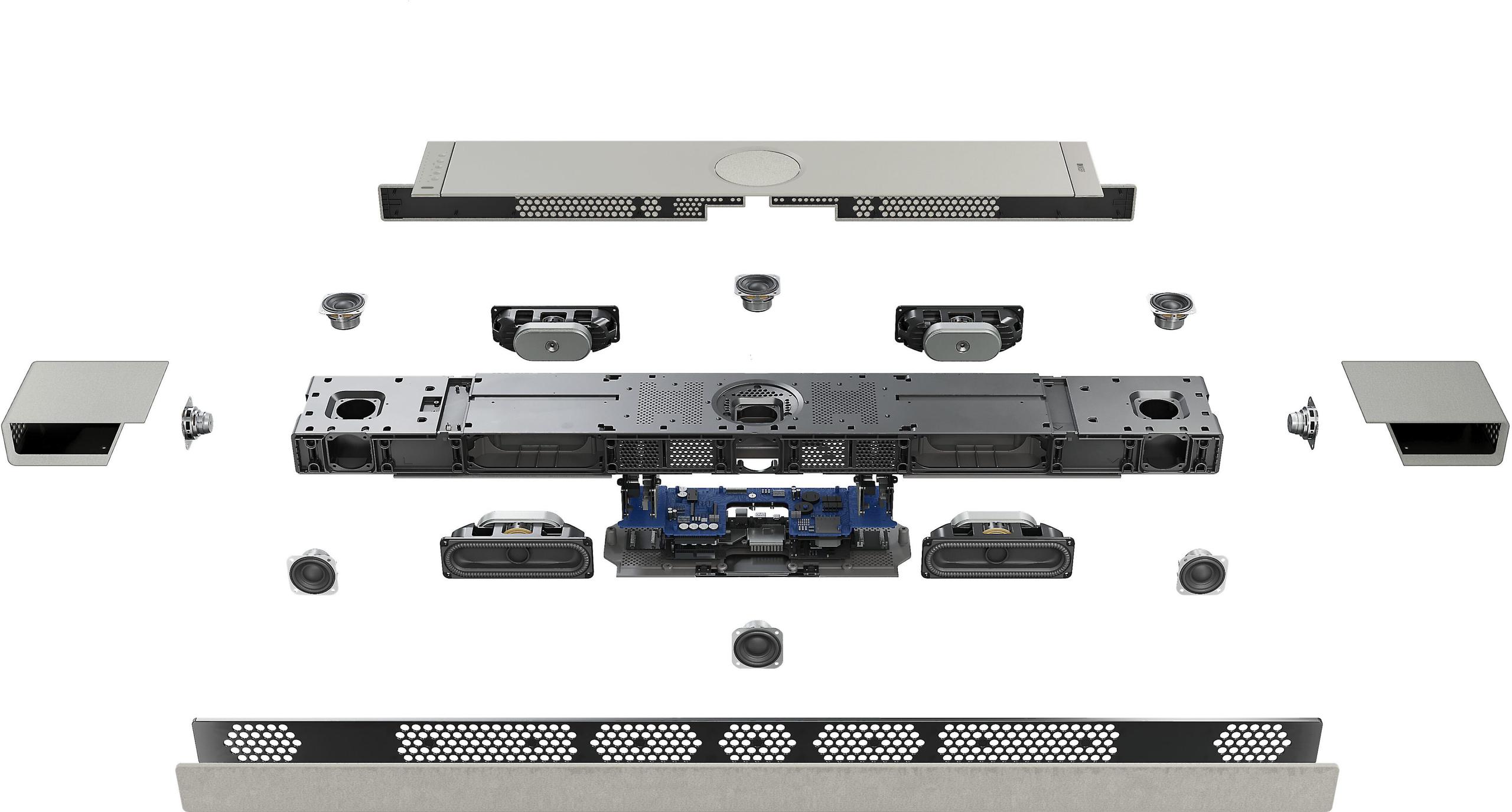
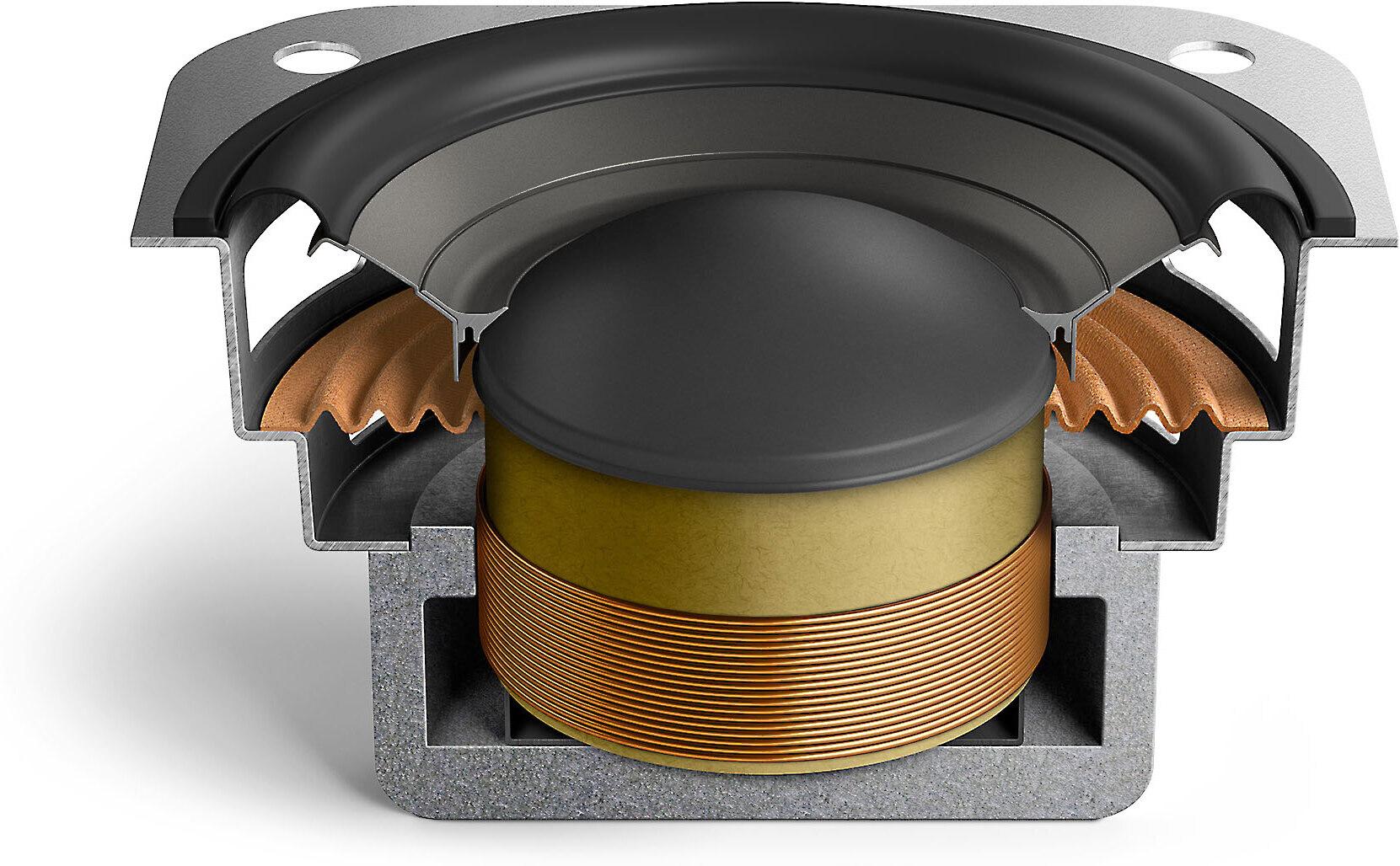
The KEF's 5.1.2 setup works differently. It uses five main channels, one integrated subwoofer section, and two height channels, but relies heavily on psychoacoustic processing (basically tricking your brain into hearing sounds where they aren't) to create surround effects. KEF's approach uses their Uni-Q drivers – a design where the tweeter (high-frequency driver) sits in the center of the midrange driver, creating a point source that disperses sound more evenly than traditional side-by-side arrangements.
In my testing, the JBL Bar 1000 MK2 simply delivers more convincing surround sound immersion. There's no substitute for having actual speakers behind your listening position. During the helicopter scene in "Blade Runner 2049," I could clearly track the aircraft's movement from front to back and overhead – something that even the best virtualization struggles to achieve.
That said, KEF's virtualization is genuinely impressive. Their MultiBeam technology uses phase manipulation and carefully timed reflections off your room's walls to create phantom surround channels. The effect works best when you're seated in the sweet spot and your room has reasonably reflective side walls. It's not as convincing as physical rear speakers, but it's far better than most soundbar attempts at surround virtualization.
The JBL's detachable speakers solve a real problem too. Most people don't want permanent rear speakers cluttering their living room, but they also don't want to run wires every time they watch a movie. JBL's solution lets you grab the speakers, place them behind your couch, and get true surround sound. When the movie's over, they dock back onto the main bar to charge. Each speaker provides up to 10 hours of playback, which is more than enough for even the longest movie marathons.
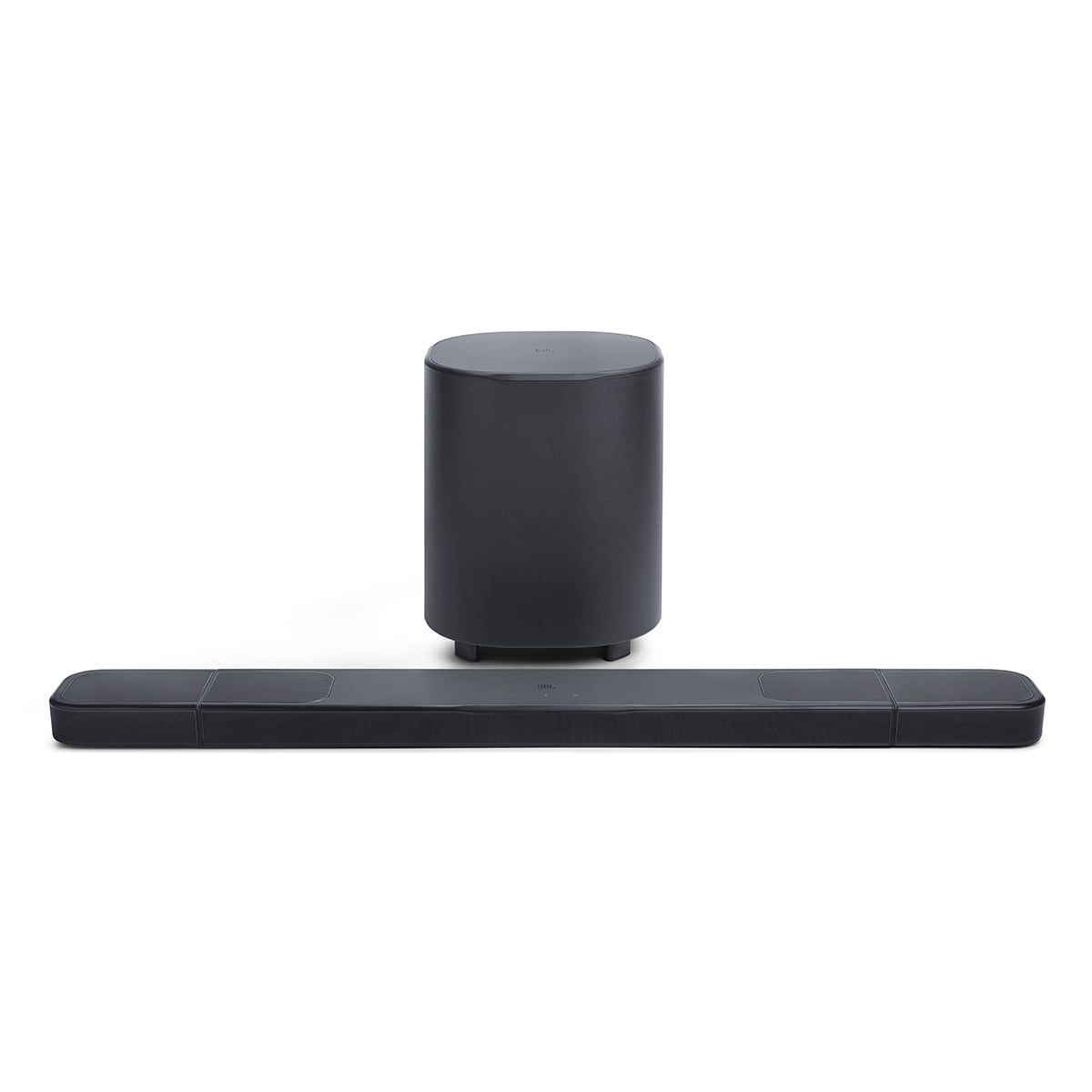
This is where the two systems showcase completely different engineering philosophies. The JBL includes a separate 10-inch wireless subwoofer that can produce those room-shaking low frequencies that make action movies feel visceral. The 300W subwoofer digs down to 33Hz, which covers most of the rumble and impact you want from explosions and music.
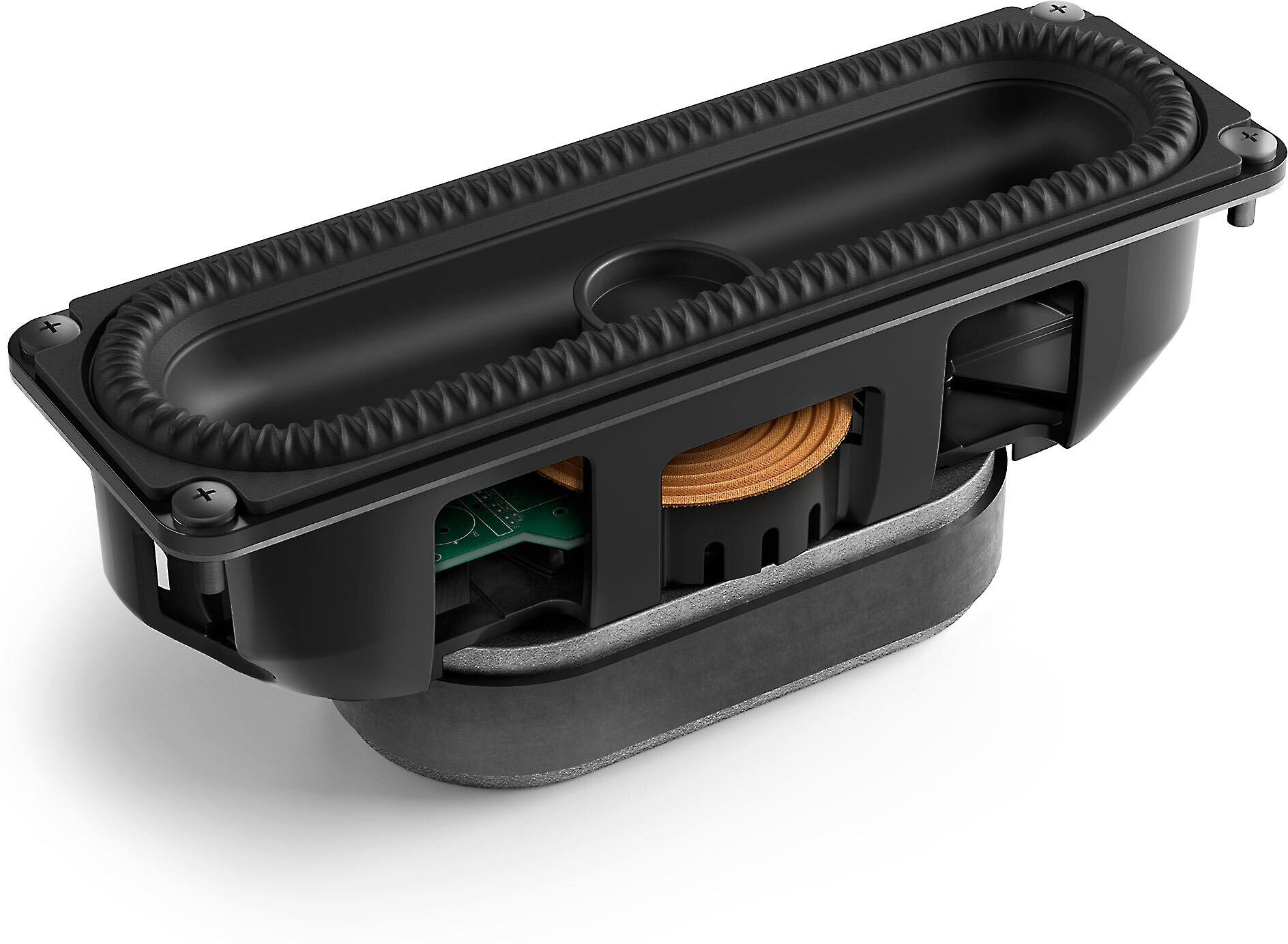
The KEF XIO takes an integrated approach with four specialized P185 racetrack woofers built into the soundbar itself. These aren't typical round drivers – they're oval-shaped to fit more cone area into the limited depth of a soundbar. More importantly, they use KEF's force-canceling configuration, where opposing drivers work to eliminate cabinet vibration.
Here's where KEF's engineering really shines: their VECO (Velocity Control) technology uses sensors to monitor the woofer cone movement in real-time and adjusts the drive signal to reduce distortion. The result is surprisingly clean, powerful bass that extends down to 34Hz without a separate subwoofer. While it can't match the JBL's dedicated sub for pure impact, it's remarkably good for an integrated design and eliminates the need to find space for another component.
This is where KEF's 60 years of speaker-making experience really shows. The KEF XIO was designed from the ground up to excel at music reproduction, not just movie soundtracks. Their Music Integrity Engine (MIE) is sophisticated DSP specifically tuned for preserving the nuances that make music engaging.
The Uni-Q drivers are the real star here. In traditional speakers, the tweeter and midrange driver are separate, creating complex interference patterns. KEF's coaxial design eliminates this by putting the tweeter in the center of the midrange cone, creating what acousticians call a "point source." The result is incredibly precise stereo imaging – you can pinpoint exactly where each instrument sits in the soundstage.
When I played Patricia Barber's "Code Cool" through the KEF, I could distinctly hear her voice positioned dead center, with the piano to the left and subtle percussion details spread across the soundstage. The JBL Bar 1000 MK2 is no slouch with music either, but it's clearly optimized more for the dynamic range and impact of movie soundtracks than the subtle details that make music reproduction special.
One of the JBL's most clever features is its Night Listening mode. When activated through the JBL One app, it mutes the main soundbar and subwoofer completely, routing all audio through just the detachable speakers. This means you can watch movies late at night without disturbing anyone else in the house, while still getting clear dialogue and effects.
I tested this during a late-night "John Wick" session, and it works surprisingly well. You lose the room-filling bass and wide soundstage, but you maintain dialogue clarity and most sound effects. It's like having a very good pair of wireless headphones, but with the freedom to move around and not feel isolated from your environment.
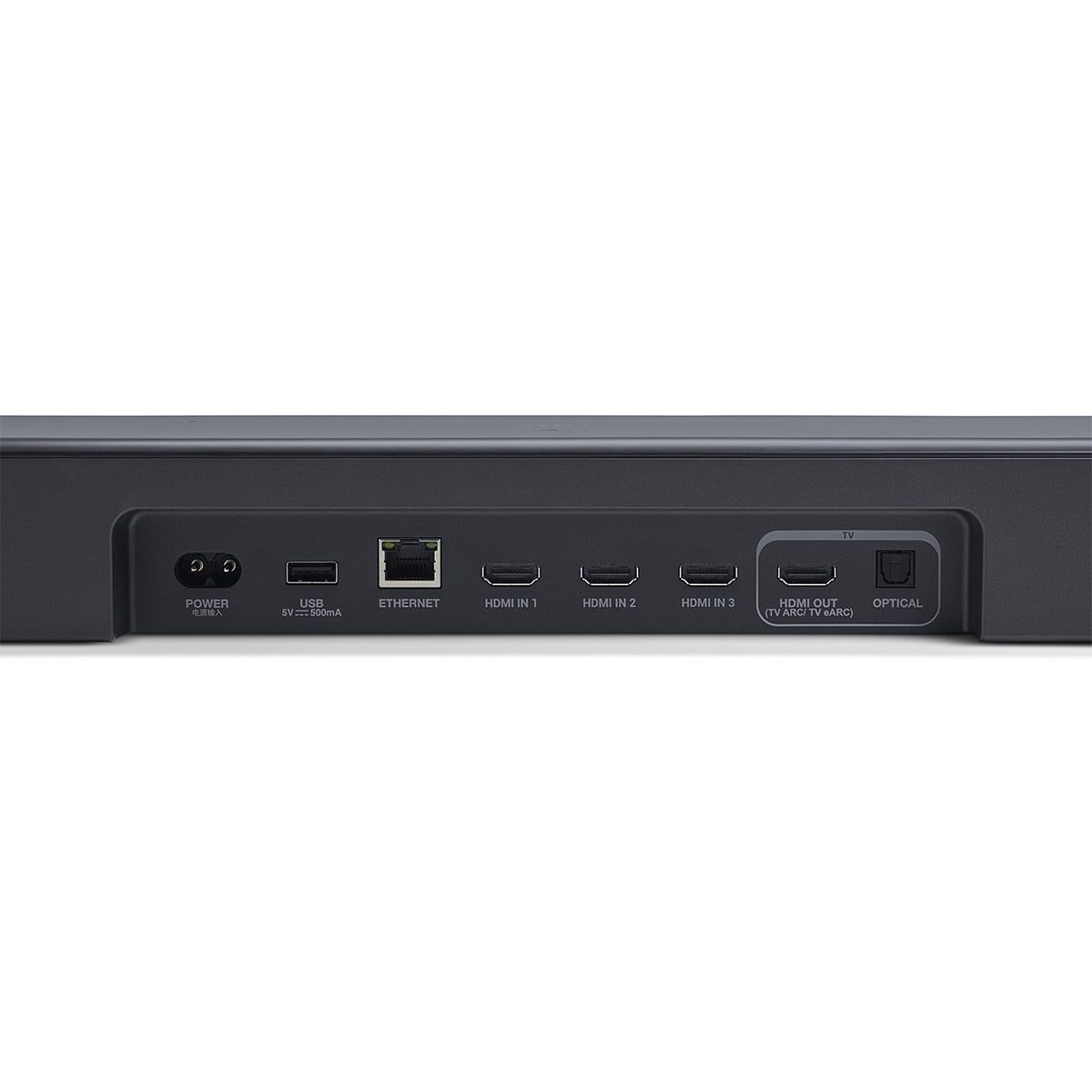
Both soundbars embrace the latest connectivity standards, but with different focuses. The JBL Bar 1000 MK2 includes three HDMI inputs plus eARC (enhanced Audio Return Channel, which allows uncompressed audio from your TV), making it a true hub for multiple devices. This is particularly valuable if you have a gaming console, streaming device, and cable box all competing for HDMI ports on your TV.
The JBL also supports 4K Dolby Vision passthrough, meaning you can connect your devices directly to the soundbar without losing any video quality. For gamers, this matters – you get the audio processing you want without adding any video lag.
The KEF XIO focuses more on high-quality audio streaming. It supports lossless formats up to 24-bit/384kHz resolution, which is far beyond what most people need but appreciated by those with high-end music collections. Native support for services like TIDAL Connect and Qobuz means you can stream directly to the soundbar without using your phone as a middleman, often resulting in better sound quality.
KEF's Intelligent Placement Technology represents a significant advance in soundbar room correction. Using built-in microphones, it analyzes your room's acoustics and adjusts the sound accordingly. More importantly, it can detect whether the soundbar is wall-mounted or sitting on a shelf and optimize the sound dispersion pattern accordingly.
The JBL takes a more manual approach but offers extensive EQ options through its app. You can adjust individual channel levels, modify bass response, and even set up different profiles for music versus movies. While it requires more user involvement, it also offers more control for those who want to fine-tune their experience.
At $1,199.95, the JBL Bar 1000 MK2 delivers remarkable value for a true 7.1.4 system. When you consider that comparable systems from Samsung or Sony often cost $1,500-2,000, JBL's pricing is aggressive. You're getting physical rear speakers, a wireless subwoofer, and genuine Dolby Atmos processing for significantly less than the competition.
The KEF XIO at $2,499.99 commands a premium, but it's targeting a different buyer. This is for someone who values acoustic engineering excellence and wants a soundbar that can serve double duty as a serious music system. The price reflects KEF's reputation and the advanced driver technology that typically costs much more in separate speakers.
In my experience, the JBL excels in larger rooms and for users who primarily watch movies and TV shows. The combination of true rear speakers and a powerful subwoofer creates an immersive experience that smaller soundbars simply can't match. The detachable speakers add flexibility that's genuinely useful – I found myself using them for outdoor movie nights and in other rooms around the house.
The KEF shines in smaller to medium rooms where you want exceptional sound quality without multiple components. It's the choice for someone whose music listening is as important as their movie watching. The build quality and materials feel premium in a way that justifies the higher price if those factors matter to you.
If your primary goal is creating the most immersive home theater experience possible, the JBL Bar 1000 MK2 is hard to beat. The combination of true rear speakers, powerful bass, and innovative features like Night Mode make it a compelling choice for movie enthusiasts. The $1,300 price difference compared to the KEF could be put toward a better TV or streaming device.
Choose the KEF XIO if you're an audio enthusiast who wants the best possible sound quality from a single component. Its superior music reproduction, premium build quality, and space-saving design make it ideal for those who value acoustic excellence over feature count.
Both represent significant advances in soundbar technology, just with different priorities. The JBL pushes the boundaries of what's possible with modular design and wireless connectivity, while KEF brings decades of acoustic expertise to solve the fundamental challenges of soundbar physics. Your choice ultimately depends on whether cinematic immersion or audiophile-grade sound reproduction is more important to your entertainment setup.
| JBL Bar 1000 MK2 ($1,199.95) | KEF XIO ($2,499.99) |
|---|---|
| Channel Configuration - Determines surround sound immersion quality | |
| 7.1.4 with physical detachable rear speakers | 5.1.2 with advanced virtualization technology |
| Total Power Output - Affects maximum volume and dynamic range | |
| 960W (250W bar, 150W sub, 80W per rear speaker) | 820W from 12 discrete Class D amplifiers |
| Subwoofer Design - Critical for bass impact and room flexibility | |
| Dedicated wireless 10" subwoofer (flexible placement) | Four integrated P185 racetrack woofers with force-canceling |
| Frequency Response - Shows how deep the bass extends | |
| 33Hz – 20kHz (excellent low-end extension) | 34Hz – 20kHz (impressive for integrated design) |
| Dolby Atmos Implementation - Determines overhead sound effects quality | |
| 4 up-firing drivers (2 main bar + 2 rear speakers) | 2 up-firing drivers with advanced room virtualization |
| Connectivity Options - Important for multiple devices and gaming | |
| HDMI eARC + 3 HDMI inputs, 4K Dolby Vision passthrough | HDMI eARC, optical, limited HDMI input options |
| Wireless Streaming - Affects music listening experience | |
| Bluetooth 5.3, Wi-Fi, AirPlay 2, Chromecast, Roon Ready | Wi-Fi 6, Bluetooth 5.3, native Spotify/TIDAL Connect |
| Unique Features - Standout capabilities that differentiate each model | |
| Detachable battery speakers (10hr life), Night Mode | Uni-Q coaxial drivers, VECO distortion reduction |
| Room Calibration - Optimizes sound for your specific space | |
| Manual EQ through JBL One App with extensive controls | Intelligent Placement Technology with automatic calibration |
| Music Performance Focus - How well each handles high-quality music | |
| Movie-optimized with good music capability | Audiophile-grade with Music Integrity Engine |
| Physical Design - Affects room aesthetics and placement options | |
| Modular system (bar + detachable speakers + wireless sub) | Single premium aluminum chassis with fabric grille |
| Best Value For - Who should choose each option | |
| Movie enthusiasts wanting true surround at lower cost | Audiophiles prioritizing sound quality and build materials |
The JBL Bar 1000 MK2 ($1,199.95) is better for movies due to its true 7.1.4-channel setup with physical detachable rear speakers. This creates more convincing surround sound effects compared to the KEF XIO ($2,499.99), which relies on virtualization. The JBL also includes a dedicated 10" wireless subwoofer for better bass impact during action scenes.
The JBL Bar 1000 MK2 costs $1,199.95, while the KEF XIO is priced at $2,499.99. That's a $1,300 difference, with the KEF commanding a premium for its audiophile-grade engineering and premium build materials.
Yes, both the JBL Bar 1000 MK2 and KEF XIO support true Dolby Atmos and DTS:X processing. However, the JBL uses four up-firing drivers (two in the main bar plus two in the detachable rear speakers) while the KEF uses two up-firing drivers with advanced room virtualization.
The KEF XIO is superior for music due to its Uni-Q coaxial drivers, Music Integrity Engine processing, and audiophile-focused tuning. It delivers more precise stereo imaging and natural sound reproduction compared to the JBL Bar 1000 MK2, which is optimized more for movie soundtracks.
The JBL Bar 1000 MK2 includes a wireless 10" subwoofer in the package. The KEF XIO has integrated bass drivers and doesn't require a separate subwoofer, though it can connect to KEF subwoofers wirelessly if you want even deeper bass extension.
The KEF XIO takes up less space since it's a single integrated unit measuring 47.6" wide. The JBL Bar 1000 MK2 requires space for the main bar, wireless subwoofer, and optionally the detachable rear speakers when in use.
Yes, the JBL Bar 1000 MK2 features detachable wireless rear speakers with 10-hour battery life. They charge when docked to the main soundbar and can be placed anywhere in your room without wires. The KEF XIO doesn't have physical rear speakers.
The JBL Bar 1000 MK2 offers more connectivity with HDMI eARC plus three additional HDMI inputs, making it better for multiple devices. The KEF XIO focuses on high-quality audio streaming with Wi-Fi 6 and native app support for services like Spotify Connect and TIDAL.
The KEF XIO features automatic Intelligent Placement Technology that calibrates sound based on room acoustics and mounting position. The JBL Bar 1000 MK2 uses manual calibration through the JBL One App, offering more user control but requiring more setup effort.
The JBL Bar 1000 MK2 is better for gaming due to its multiple HDMI inputs, 4K Dolby Vision passthrough, and true surround sound that enhances directional audio cues. The physical rear speakers provide better spatial awareness in competitive games compared to the KEF XIO's virtualized surround.
Yes, both soundbars have dedicated smartphone apps. The JBL Bar 1000 MK2 uses the JBL One App for setup, EQ adjustment, and accessing features like Night Mode. The KEF XIO uses the KEF Connect App, which focuses more on music optimization and streaming service integration.
The JBL Bar 1000 MK2 offers better value at $1,199.95, providing true 7.1.4 surround sound with physical rear speakers and a wireless subwoofer. The KEF XIO at $2,499.99 commands a premium for audiophile-grade sound quality and premium materials, making it better value only if music reproduction is equally important as movies.
We've done our best to create useful and informative comparisons to help you decide what product to buy. Our research uses advanced automated methods to create this comparison and perfection is not possible - please contact us for corrections or questions. These are the sites we've researched in the creation of this article: ecoustics.com - engadget.com - bestbuy.com - techradar.com - rtings.com - hometechnologyreview.com - youtube.com - t3.com - whathifi.com - youtube.com - bhphotovideo.com - gzhls.at - device.report - support.jbl.com - support.jbl.com - jbl.com - av.com - audioadvice.com - jbl.com - target.com - worldwidestereo.com - blog.son-video.com - residentialsystems.com - whathifi.com - audioadvice.com - crutchfield.com - homecrux.com - techradar.com - youtube.com - us.kef.com - gramophone.com - cepro.com - audioxpress.com - musicdirect.com - gramophone.com - us.kef.com - crutchfield.com - hifipig.com - bestbuy.com - listenup.com - bestbuy.com - bestbuy.com - listenup.com

Privacy Policy
Terms and Conditions - Affiliate Policy
Home Security
© Copyright 2008-2026.
11816 Inwood Rd #1211, Dallas, TX 75244