

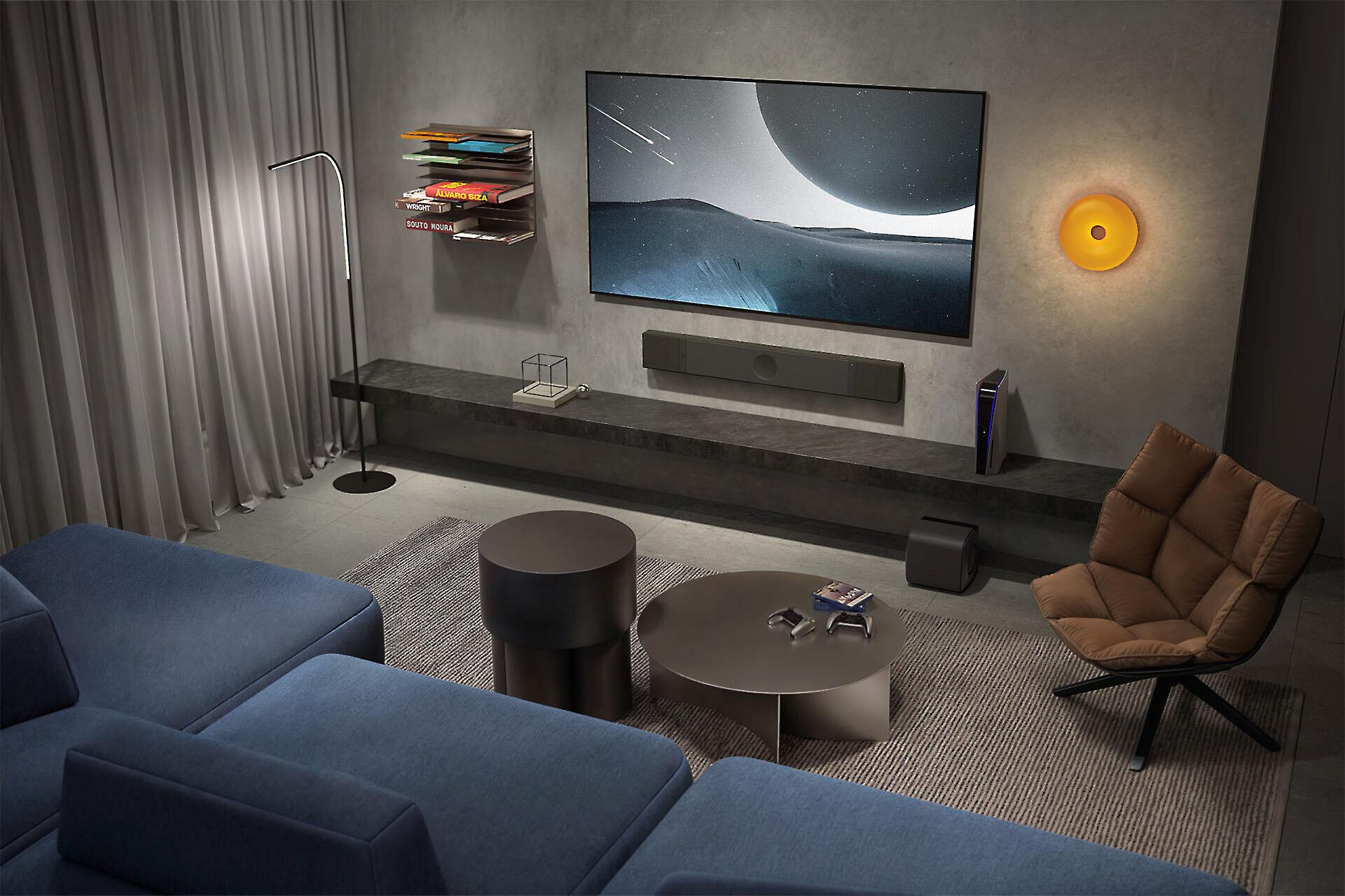
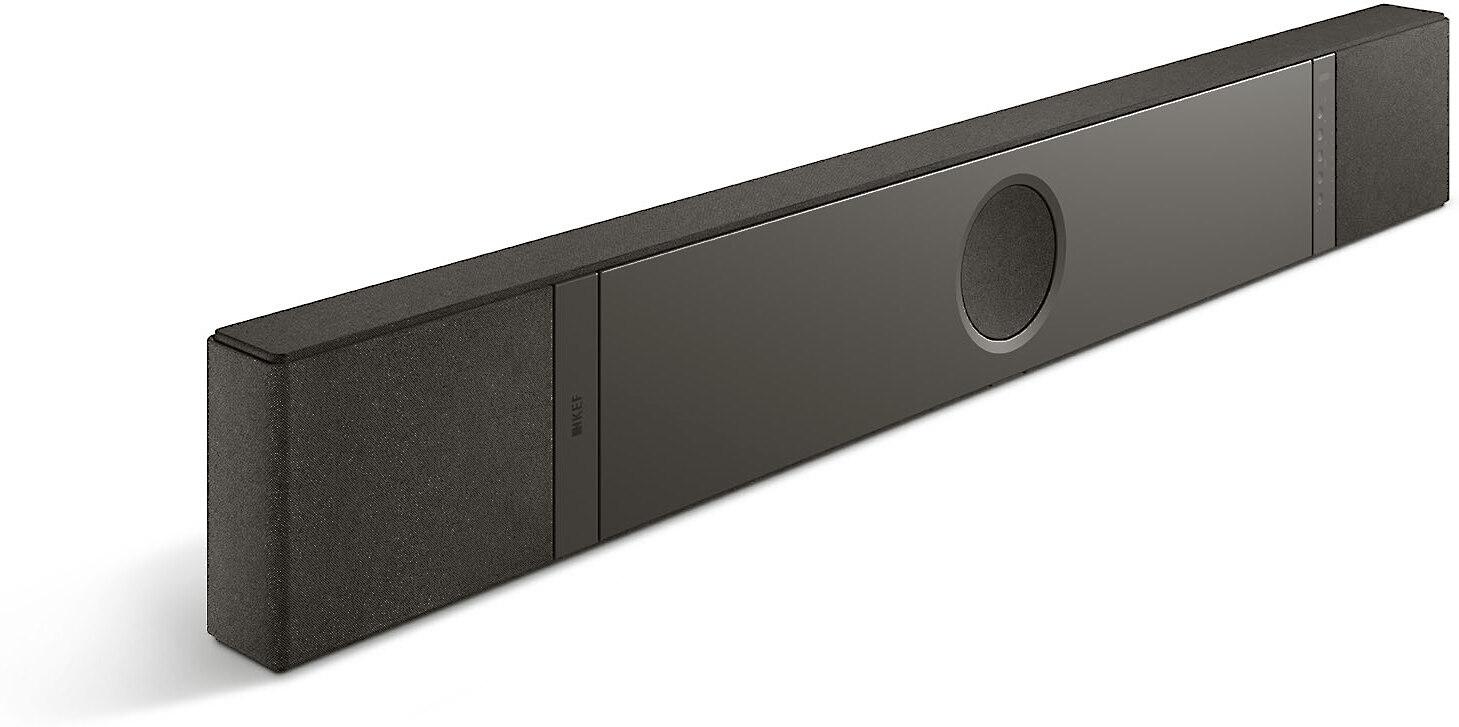
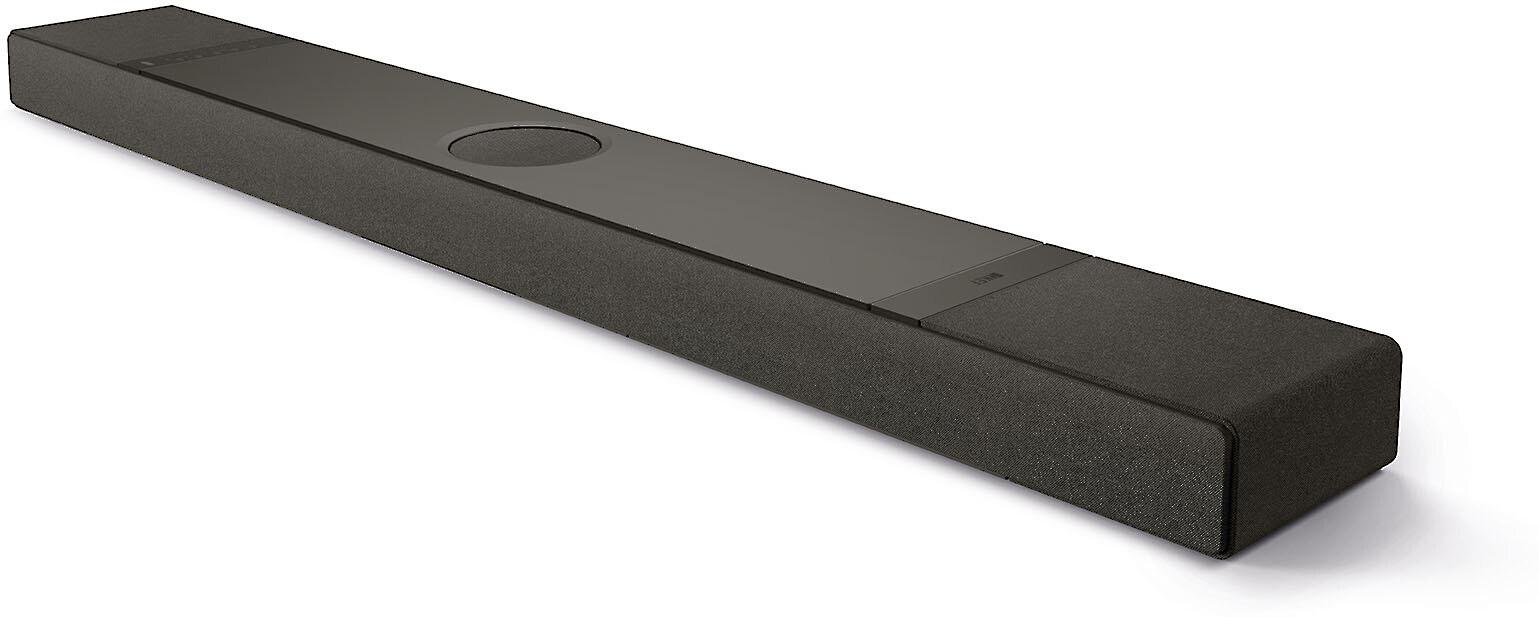
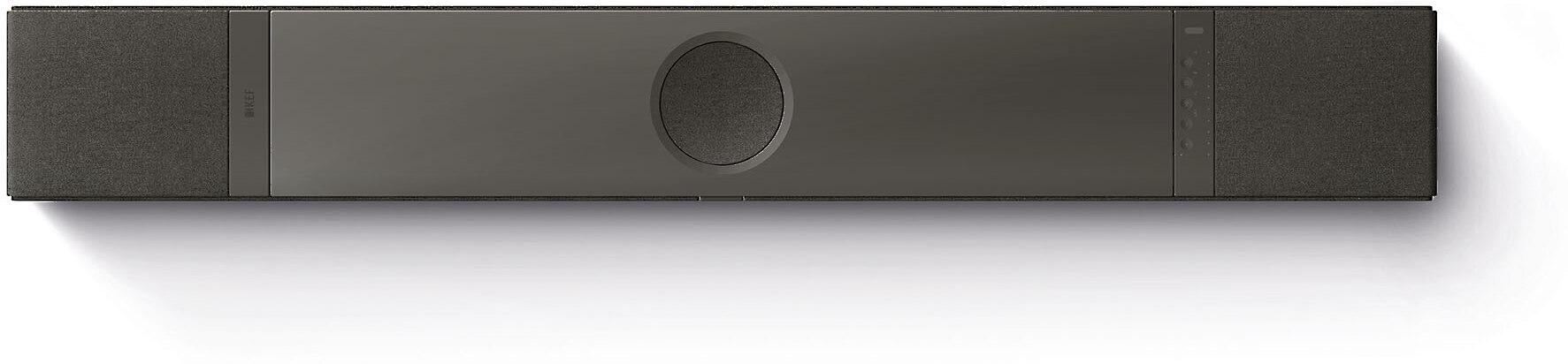


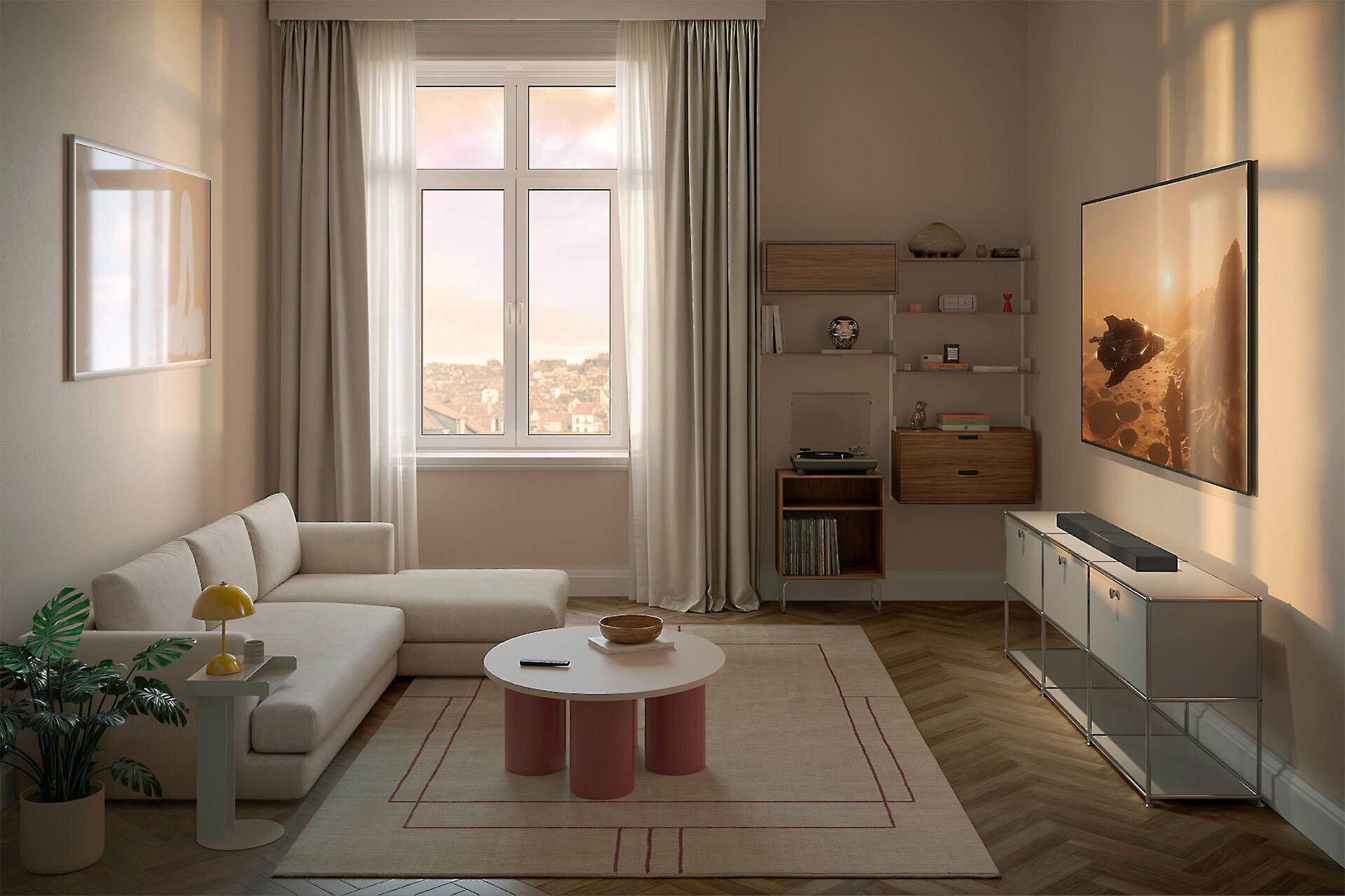
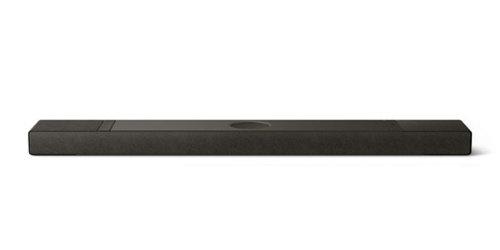


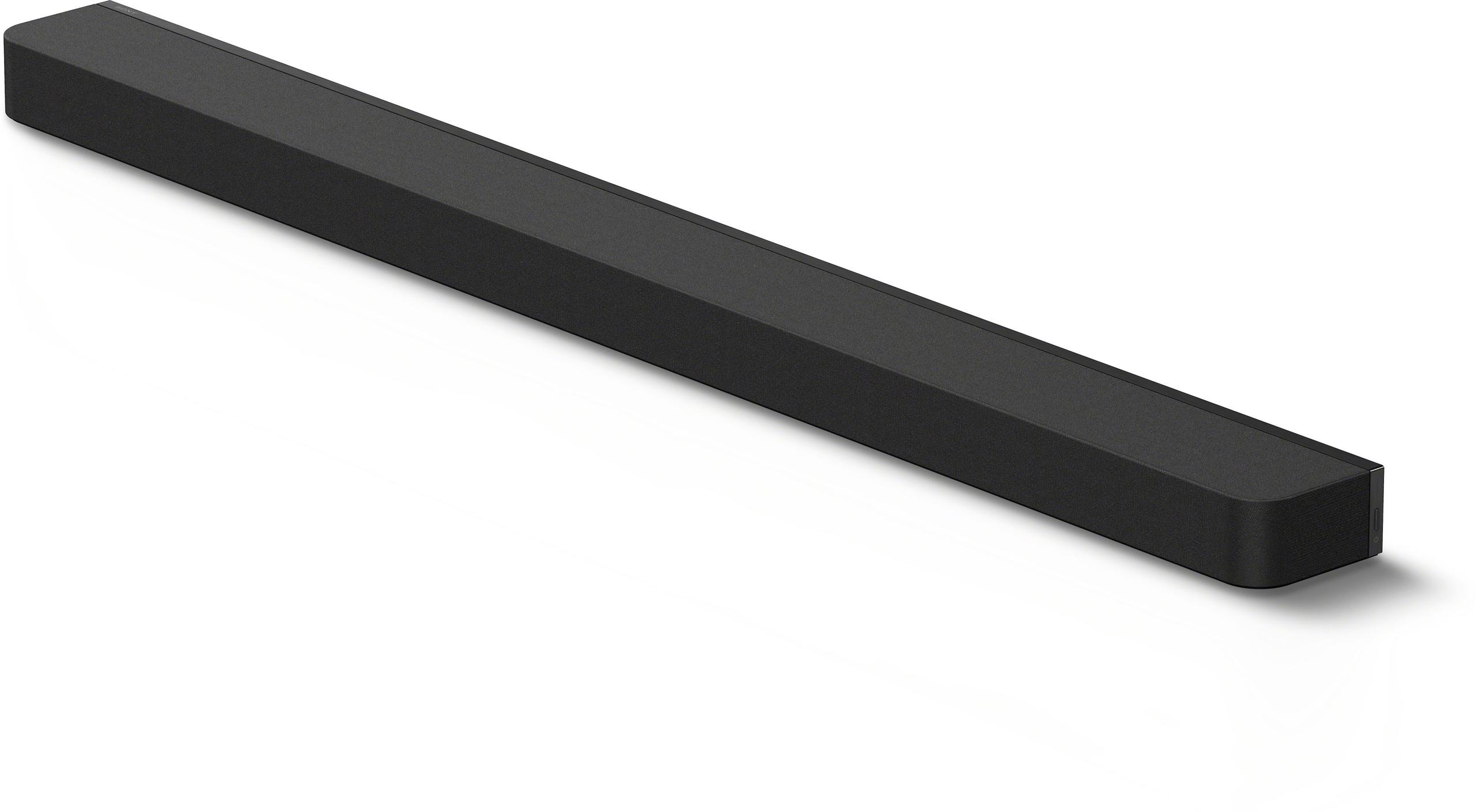


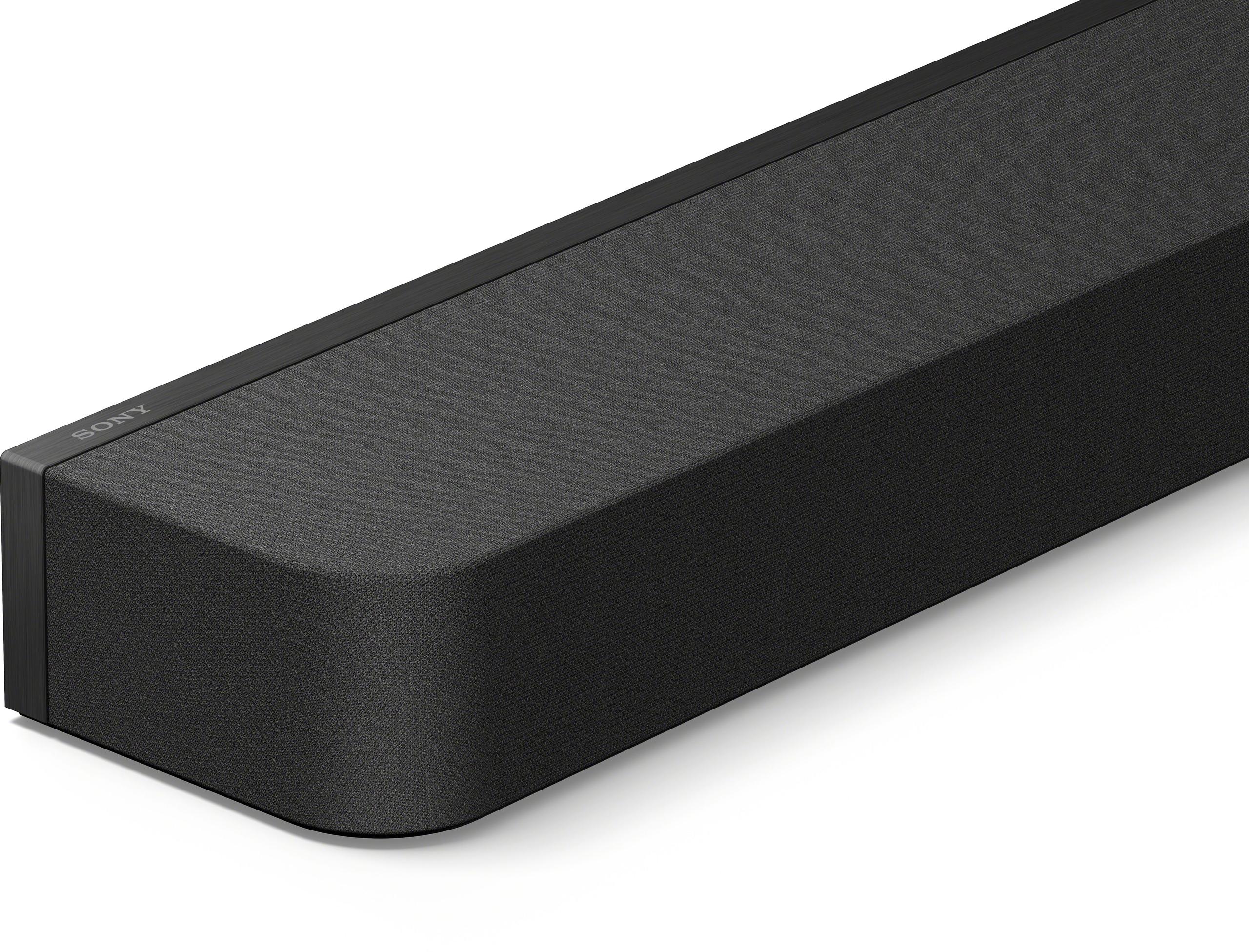


When you're shopping for a premium soundbar, you're essentially choosing between two different philosophies of audio engineering. Do you want the purest possible sound quality, or do you prefer clever technology that maximizes impact while keeping costs reasonable? That's exactly the choice you'll face when comparing the KEF XIO Soundbar ($2,499) and the Sony BRAVIA Theater Bar 9 ($539).
I've spent considerable time with both of these soundbars, and they represent fundamentally different approaches to solving the same problem: how to get impressive home theater sound without filling your living room with speakers and wires.
Before diving into the specifics, let's talk about what separates premium soundbars from the basic models you'll find at big box stores. Premium soundbars aren't just about being louder – they're about creating a believable three-dimensional soundscape that makes you forget you're listening to a single box sitting under your TV.
The key technologies that matter include driver design (the actual speakers inside the bar), amplification quality, digital signal processing (DSP – the computer brain that optimizes the sound), and spatial audio capabilities like Dolby Atmos and DTS:X. These formats encode height information in movie soundtracks, allowing sounds to appear above and around you, not just in front.
Room calibration is another crucial feature. Premium soundbars use built-in microphones to analyze your room's acoustics and adjust their output accordingly. This ensures you get optimal sound whether your soundbar sits on a TV stand, gets mounted on the wall, or lives in a room with lots of hard surfaces that reflect sound.
The KEF XIO, released in July 2025, represents KEF's first venture into soundbars after decades of building some of the world's most respected hi-fi speakers. This is significant because KEF didn't just shrink their existing speaker technology – they completely reimagined how to fit their signature Uni-Q driver technology into a soundbar format.
The Sony BRAVIA Theater Bar 9, launched in late 2024, takes a different approach entirely. Rather than relying primarily on physical drivers, Sony leans heavily on sophisticated algorithms and psychoacoustic processing (basically, tricks that fool your brain into hearing sounds where there aren't actually speakers). It's the replacement for Sony's award-winning HT-A7000, incorporating lessons learned from that model's success.
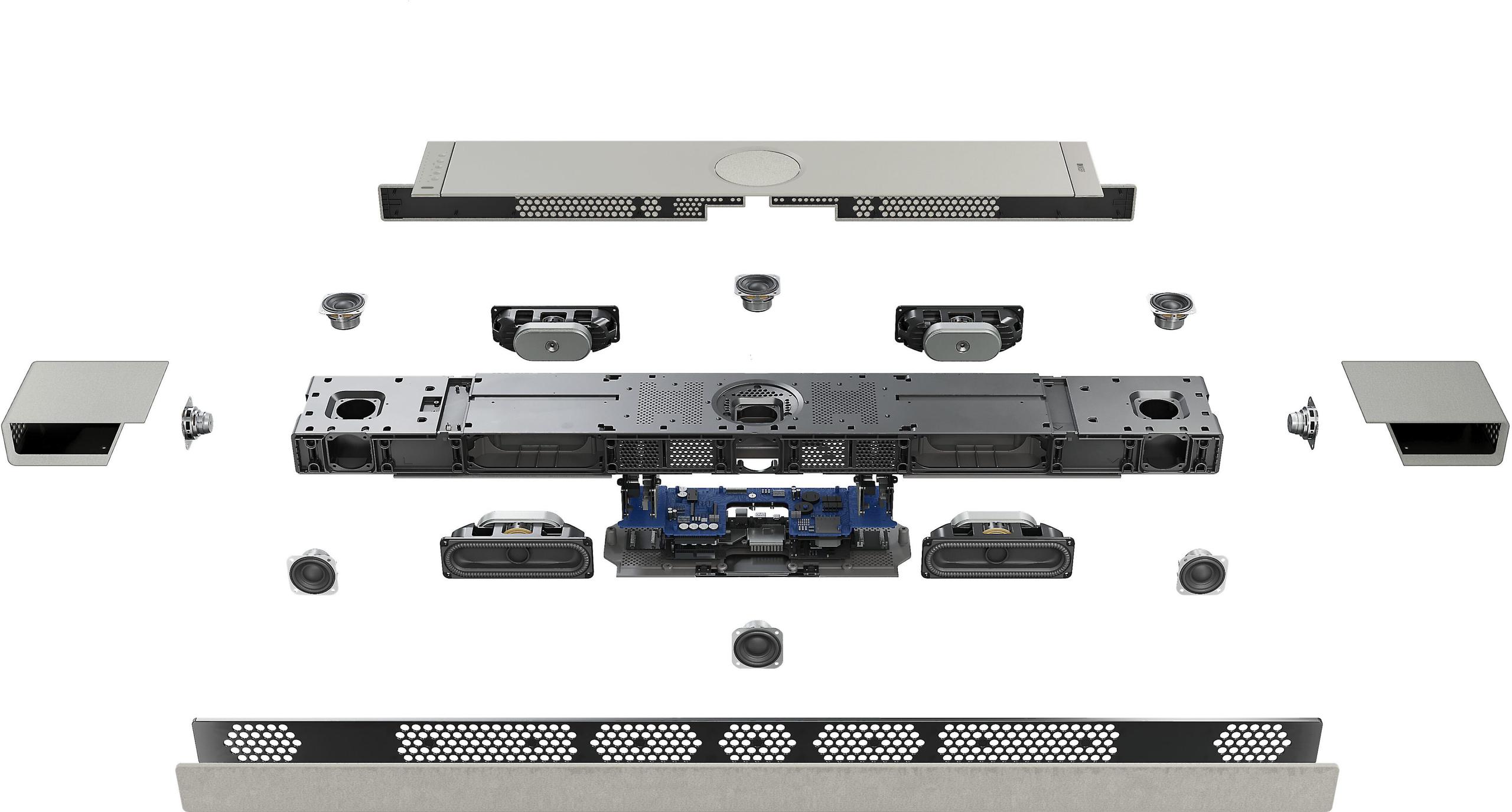
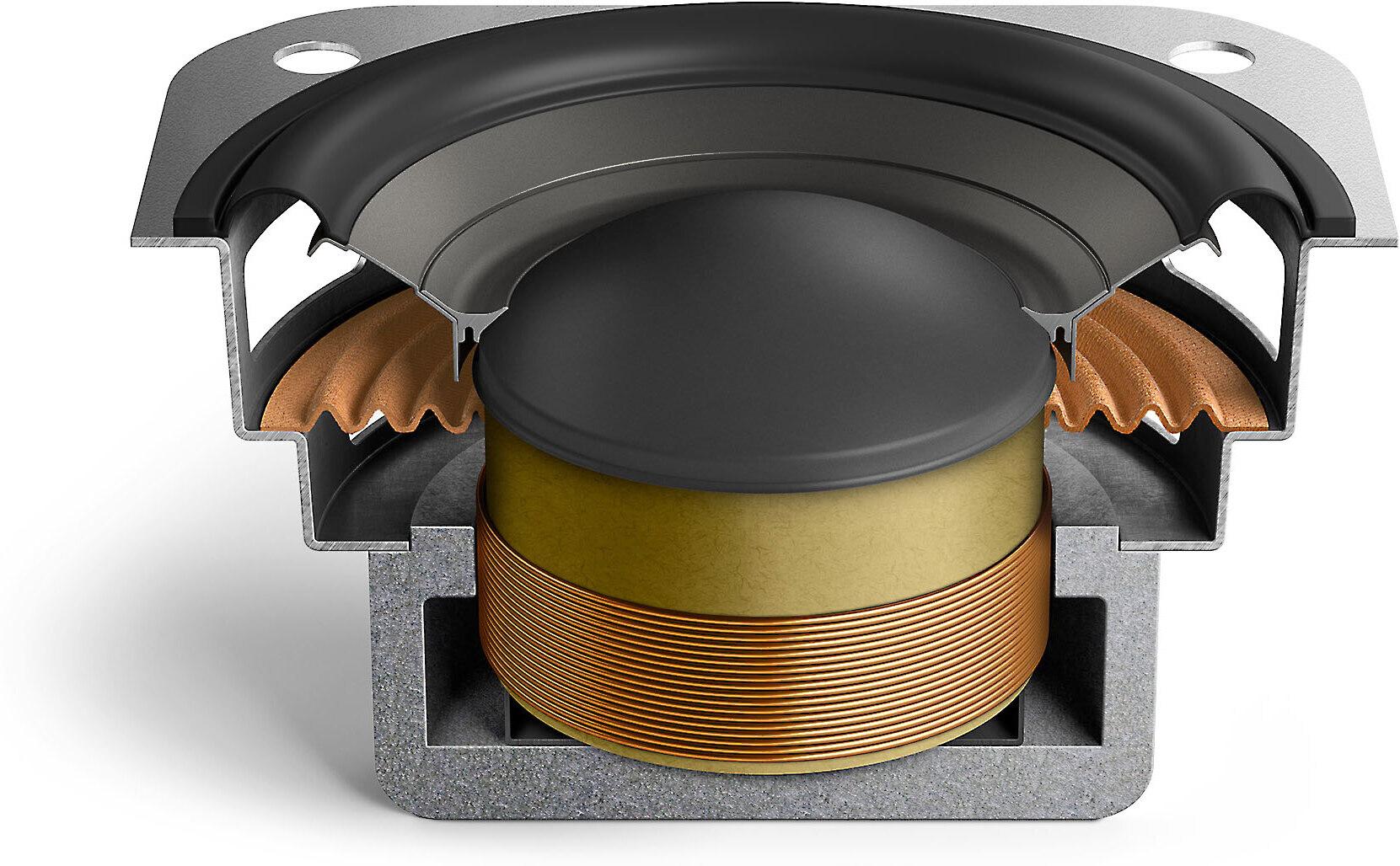
Here's where these two soundbars diverge most dramatically. The KEF XIO uses what's called Uni-Q driver technology – essentially, they place a small tweeter (for high frequencies) right in the center of each midrange driver (for voices and most music). This might sound weird, but it's genius: since both the tweeter and midrange are in the exact same spot, sound from both reaches your ears at precisely the same time, creating incredibly focused and accurate imaging.
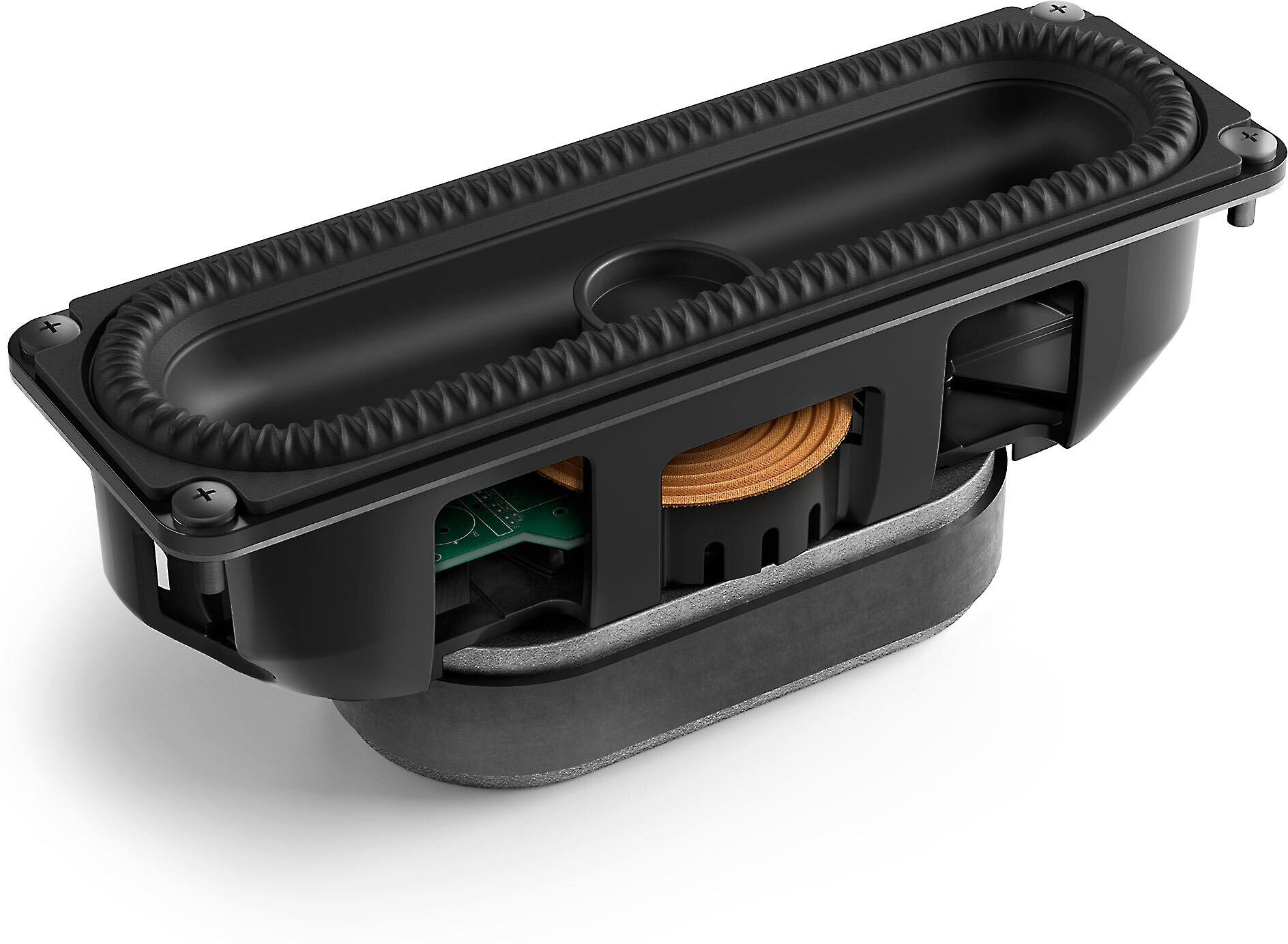
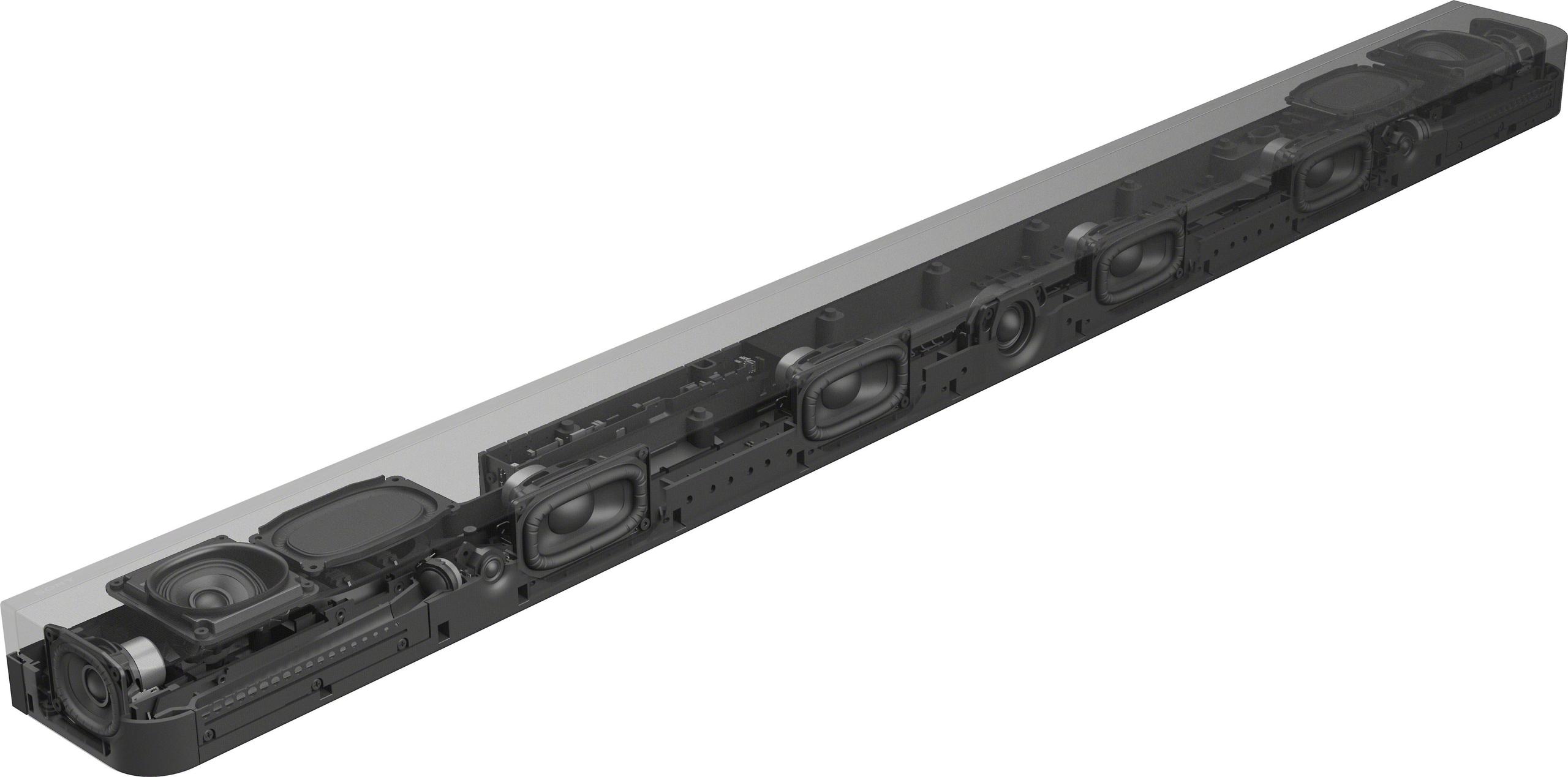
The XIO packs six of these Uni-Q MX drivers (a miniaturized version of KEF's full-size speakers), plus four specialized P185 racetrack woofers for bass. These racetrack woofers are oval-shaped rather than round, allowing KEF to pack more bass-producing surface area into the soundbar's slim profile. They're arranged in a force-canceling configuration, meaning pairs of woofers push in opposite directions to eliminate vibrations that would otherwise rattle your TV stand.
What really impressed me about the KEF's bass system is its VECO technology (Velocity Control). This system uses sensors to monitor exactly how each woofer cone is moving and makes real-time corrections to reduce distortion by up to 28 decibels. The result is bass that stays clean and articulate even at high volumes – something that's rare in soundbars.
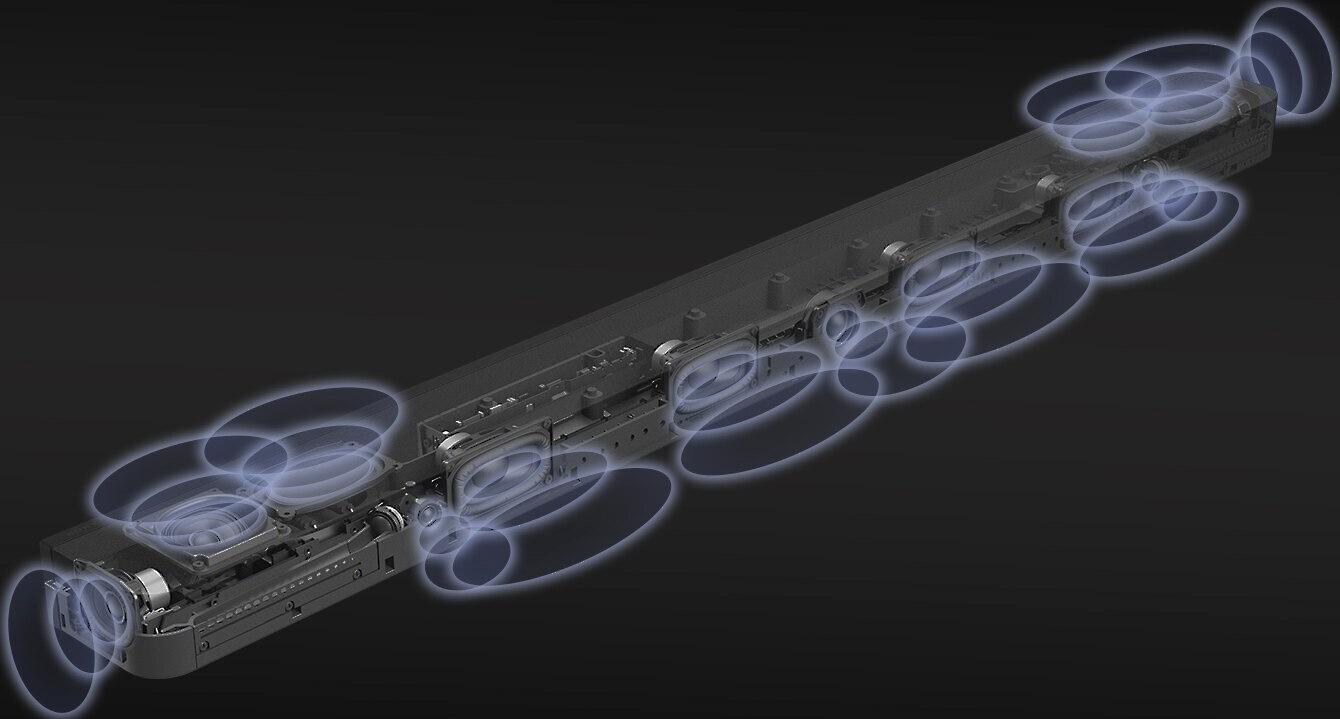
The Sony Bar 9, meanwhile, uses 13 individual drivers arranged strategically throughout its chassis. But here's where Sony gets clever: rather than relying solely on these physical speakers, the Bar 9's 360 Spatial Sound Mapping technology creates "phantom speakers" – locations where your brain perceives sound even though there's no actual speaker there.
This works through carefully timed reflections off your ceiling and walls. The soundbar fires sound at specific angles and delays, and when these reflections reach your ears, your brain interprets them as coming from speakers positioned around and above you. It's genuinely impressive when it works well, though it's more dependent on your room's layout than the KEF's approach.
Both soundbars support Dolby Atmos and DTS:X, but they achieve height effects very differently. The KEF XIO uses dedicated upward-firing drivers – actual speakers that point toward your ceiling. When a helicopter flies overhead in a movie, you'll hear that sound coming from above because there are real speakers creating it above you.
During my testing, this approach delivered consistently convincing height effects. Watching scenes with rain, aircraft, or falling debris, the sense of overhead activity was remarkably believable. The effect didn't depend on having perfect ceiling height or acoustic conditions.
The Sony Bar 9 creates height effects through psychoacoustic processing. It analyzes the incoming audio and uses its understanding of how sound behaves in typical rooms to bounce audio off surfaces in ways that fool your brain. When conditions are right – particularly with 8-10 foot ceilings and some reflective surfaces – this can create an impressively wide and tall soundstage that seems to extend well beyond the physical soundbar.
However, I found the Sony's virtual height effects more variable depending on room layout and furniture placement. In my primary testing room with a vaulted ceiling, the effects were less pronounced than in a more conventional space.
This is where the fundamental difference between these soundbars becomes most apparent. The KEF XIO approaches music reproduction with the same philosophy KEF brings to their high-end hi-fi speakers. The Uni-Q drivers create a remarkably stable stereo image – you can actually point to where individual instruments appear in the soundstage. Vocals remain centered and natural, while instruments spread across a believable left-to-right soundscape.
I spent several evenings using the XIO purely for music listening, and it genuinely functions as a high-quality stereo system. The tonal balance remains consistent at different volume levels, and there's exceptional detail retrieval in complex passages. You can follow individual instrument lines in dense orchestral pieces or pick out subtle production details in well-recorded albums.
The Sony Bar 9 handles music competently, but with a different character. It tends to emphasize impact and presence over subtle detail. This works well for pop, rock, and electronic music where you want that extra punch, but it can make the sound seem slightly clinical with more delicate acoustic material. The soundstage is wide but less precisely defined than what you get from the KEF.
Here's where the KEF XIO's advanced engineering really shines. Those racetrack woofers with force-canceling configuration and P-Flex technology (borrowed from KEF's acclaimed KC62 subwoofer) deliver bass that extends down to 34Hz – genuinely deep bass from a soundbar without a separate subwoofer. More importantly, this bass stays clean and controlled, never overwhelming dialogue or other frequencies.
The Sony Bar 9 has notably improved bass compared to its predecessor, thanks to drivers that are 1.7 times larger and quad passive radiators (basically, additional surfaces that move with the air pressure created by the active woofers, extending bass response). However, it can't match the KEF's extension or control, particularly at higher volumes where some distortion becomes audible with bass-heavy content.
The Sony Bar 9 has a significant advantage if you own compatible Sony equipment. Its Acoustic Center Sync feature is genuinely useful – it can use your Sony TV (2021 models or newer) as an additional center channel speaker. This means dialogue literally comes from the screen rather than the soundbar below it, creating a more natural presentation.
The Voice Zoom 3 feature uses AI machine learning to identify and enhance human speech, automatically adjusting dialogue levels for clearer conversations. For anyone who struggles with mumbled movie dialogue, this feature can be genuinely helpful.
The KEF XIO takes a more universal approach to connectivity. Its Wi-Fi 6 support enables high-quality streaming from virtually any service, while AirPlay 2 and Chromecast built-in ensure compatibility with both Apple and Android devices. The KEF Connect app provides detailed control over sound settings, though it lacks the TV integration features Sony offers.
Both soundbars include automatic room calibration, but with different approaches. The KEF XIO's Intelligent Placement Technology uses sensors to detect whether the soundbar is wall-mounted or shelf-placed, then automatically adjusts the sound accordingly. It also analyzes nearby objects and surfaces to optimize the audio output for your specific setup.
In my experience, this system works well across different room types and doesn't require much user intervention. The sound remains consistent whether you move the soundbar to different locations or change your room layout.
The Sony Bar 9's Sound Field Optimization is more comprehensive in some ways, creating a detailed acoustic map of your room and adjusting the 360 Spatial Sound Mapping accordingly. When it works well, it can create truly impressive surround effects. However, it's more sensitive to room conditions and may require repositioning in challenging acoustic environments.
At $2,499, the KEF XIO positions itself firmly in premium territory. You're paying for cutting-edge driver technology, extensive engineering, and build quality that rivals high-end separates systems. If you're comparing it to building a traditional surround system with comparable KEF speakers and electronics, the pricing actually becomes more reasonable.
The Sony Bar 9 at $539 represents exceptional value for the features included. You're getting sophisticated spatial processing, TV integration, and expandability options that would cost significantly more from premium brands. It delivers probably 80% of what expensive soundbars offer at roughly 20% of the price.
The Sony Bar 9 wins decisively here. You can add Sony's wireless rear speakers and subwoofers to create a full 7.1.4 system, building it gradually as budget allows. This modular approach means you're not locked into the soundbar's initial configuration.
The KEF XIO is designed more as a complete solution. While you can add compatible KEF subwoofers via wireless connection, it's primarily intended to work as a standalone unit. This reflects KEF's philosophy that they've engineered everything you need into the soundbar itself.
For movie watching, both soundbars excel but in different ways. The KEF XIO delivers more accurate spatial positioning and cleaner dialogue reproduction. Action scenes maintain clarity even during complex passages, and you can easily follow multiple audio elements simultaneously.
The Sony Bar 9 prioritizes impact and immersion. Explosions feel more dramatic, and the wide soundstage can make movies feel more enveloping. The processing tends to emphasize the "wow factor" over strict accuracy, which many people prefer for casual movie watching.
Choose the KEF XIO Soundbar ($2,499) if you're serious about both music and movie sound quality. It's the choice for listeners who won't compromise on accuracy and want a soundbar that can truly replace a high-end stereo system. The consistency of performance across different room conditions and content types makes it ideal for critical listeners.
Choose the Sony BRAVIA Theater Bar 9 ($539) if you want maximum features and expandability for the money. It's particularly compelling if you own compatible Sony TVs or plan to build a larger system over time. The processing capabilities and integration features provide excellent value for users prioritizing convenience and flexibility.
Both represent the current state of the art in their respective price categories, just with very different priorities guiding their design. Your choice should align with how you plan to use the soundbar and what aspects of performance matter most to you.
| KEF XIO Soundbar | Sony BRAVIA Theater Bar 9 Soundbar |
|---|---|
| Price - Major factor in deciding between these vastly different price points | |
| $2,499 (premium audiophile positioning) | $539 (exceptional value for features included) |
| Driver Technology - Core difference in how these soundbars create sound | |
| 6x Uni-Q MX concentric drivers + 4x P185 racetrack woofers with force-canceling | 13x conventional drivers + 4x passive radiators |
| Total Power Output - Affects maximum volume and dynamic range | |
| 820W across 12 discrete Class D amplifiers | Power output not specified (likely significantly lower) |
| Bass Extension - How deep the low frequencies go without a subwoofer | |
| 34Hz (exceptional for a soundbar, rivals dedicated subwoofers) | Limited without subwoofer (benefits from adding SW5 subwoofer) |
| Height Effects Implementation - How overhead Atmos sounds are created | |
| Physical upward-firing drivers (consistent across room types) | Virtual 360 Spatial Sound Mapping (room-dependent performance) |
| Music Listening Quality - Important if you plan to stream music frequently | |
| Audiophile-grade with precise stereo imaging and natural tonality | Good but emphasizes impact over subtlety, can sound clinical |
| Channel Configuration - Determines surround sound complexity | |
| True 5.1.2 with dedicated drivers for each channel | 7.0.2 with phantom speaker processing |
| TV Integration Features - Matters most for Sony TV owners | |
| None (universal compatibility) | Acoustic Center Sync with Sony TVs (2021+), Voice Zoom 3 |
| HDMI Connectivity - Important for multiple source devices | |
| 1x HDMI eARC only (limitation for complex setups) | 1x HDMI eARC only (reduced from predecessor) |
| Wireless Streaming - Critical for music services and mobile devices | |
| Wi-Fi 6, AirPlay 2, Chromecast, Spotify Connect, TIDAL Connect | Bluetooth 5.2, Spotify Connect, AirPlay 2 (basic wireless features) |
| Room Calibration - Ensures optimal sound in your specific space | |
| Intelligent Placement Technology (wall/shelf auto-detection) | Sound Field Optimization (comprehensive room mapping) |
| Expandability Options - Whether you can add speakers later | |
| Limited (can add KEF subwoofers wirelessly) | Extensive (rear speakers, subwoofers for full 7.1.4 system) |
| Build Quality and Design - Reflects long-term durability and aesthetics | |
| Premium aluminum chassis with splash-proof fabric | Good build quality but less premium materials |
| Best For - Who should choose each soundbar | |
| Audiophiles wanting reference-quality sound for music and movies | Budget-conscious buyers wanting maximum features, Sony TV owners |
The Sony BRAVIA Theater Bar 9 ($539) offers better value for most buyers, delivering impressive Dolby Atmos and spatial audio features at a fraction of the cost. However, the KEF XIO Soundbar ($2,499) provides superior audio quality and is worth the premium for audiophiles who prioritize music listening and reference-grade sound reproduction.
The KEF XIO uses advanced physical drivers (Uni-Q concentric technology) and dedicated upward-firing speakers for consistent, audiophile-quality sound. The Sony BRAVIA Theater Bar 9 relies more on algorithmic processing and virtual surround technology to create spatial effects at a much lower price point.
The KEF XIO Soundbar has significantly better bass performance, extending down to 34Hz thanks to its four P185 racetrack woofers with force-canceling technology. The Sony BRAVIA Theater Bar 9 has adequate bass but benefits greatly from adding Sony's optional subwoofer for deeper impact.
While the Sony BRAVIA Theater Bar 9 works with any TV, you'll get the most features with a compatible Sony BRAVIA TV (2021 or newer), including Acoustic Center Sync and enhanced dialogue processing. The KEF XIO offers universal compatibility without brand-specific features.
The KEF XIO Soundbar ($2,499) is significantly better for music, offering audiophile-grade stereo imaging, natural tonality, and detail retrieval that rivals dedicated hi-fi systems. The Sony BRAVIA Theater Bar 9 handles music adequately but prioritizes cinematic impact over musical accuracy.
The KEF XIO uses physical upward-firing drivers for genuine overhead effects that work consistently in any room. The Sony BRAVIA Theater Bar 9 creates virtual height effects through 360 Spatial Sound Mapping, which can be impressive but depends heavily on your room's ceiling height and acoustic properties.
The Sony BRAVIA Theater Bar 9 offers extensive expandability with optional wireless rear speakers and subwoofers to create a full 7.1.4 system. The KEF XIO has limited expansion options, mainly supporting the addition of compatible KEF subwoofers via wireless connection.
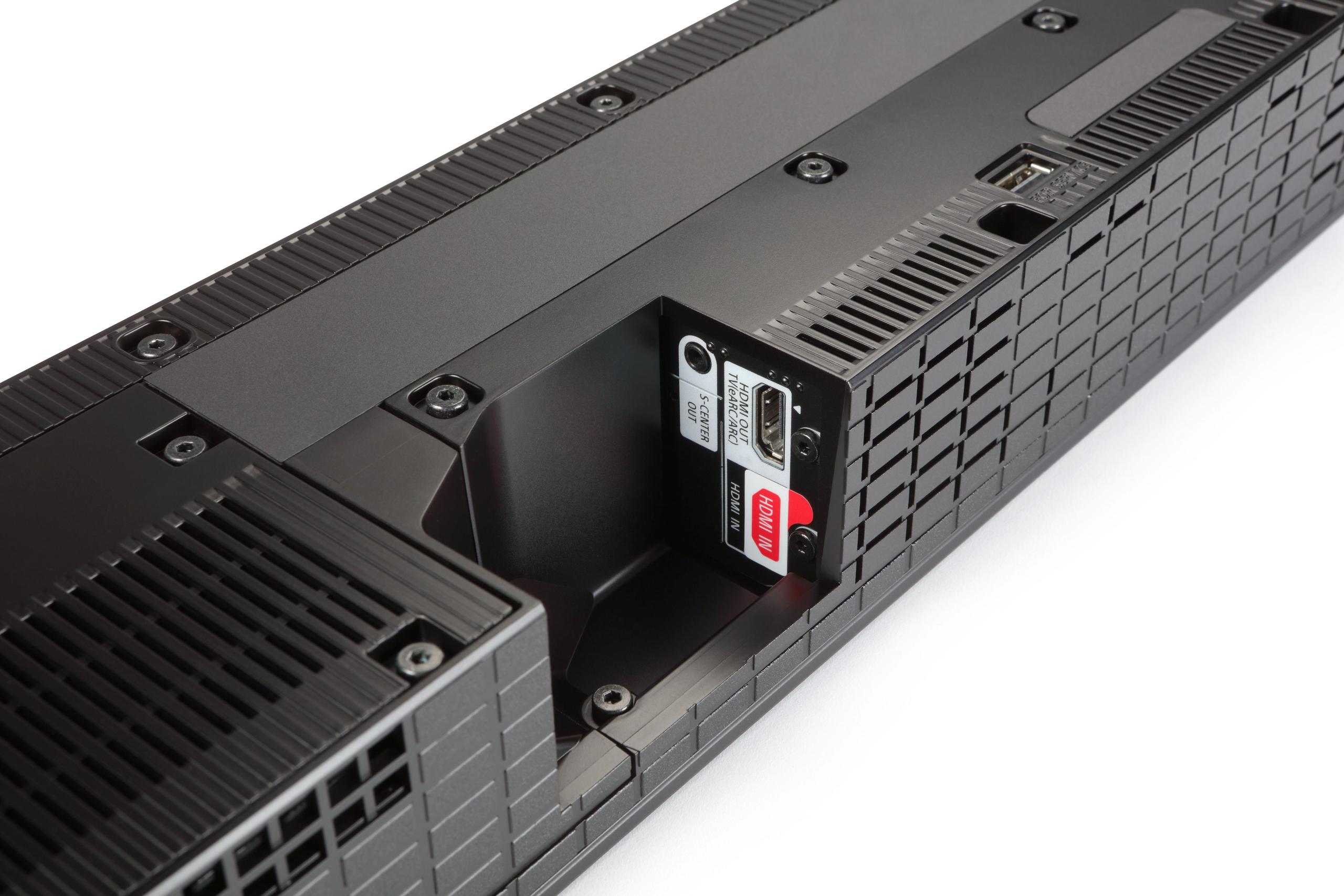
Both the KEF XIO and Sony BRAVIA Theater Bar 9 have only one HDMI eARC connection, which may be limiting if you have multiple source devices. You'll need to connect additional devices directly to your TV and rely on eARC for audio passthrough.
The KEF XIO Soundbar maintains consistent performance across various room sizes thanks to its physical drivers and Intelligent Placement Technology. The Sony BRAVIA Theater Bar 9 works best in medium-sized rooms with 8-10 foot ceilings where its virtual surround processing can effectively use wall and ceiling reflections.
The KEF XIO delivers 820 watts across 12 discrete Class D amplifiers, providing exceptional dynamic range and headroom. The Sony BRAVIA Theater Bar 9 doesn't specify total power output, but it's significantly lower than the KEF, which becomes apparent during loud, complex movie scenes.
The KEF XIO Soundbar offers superior dialogue clarity through its precise Uni-Q driver technology and clean frequency response. The Sony BRAVIA Theater Bar 9 includes helpful features like Voice Zoom 3 for AI-enhanced speech, but the KEF XIO achieves better clarity through pure audio engineering.
Choose the KEF XIO Soundbar ($2,499) if you want the absolute best sound quality for both movies and music, and budget isn't a primary concern. Choose the Sony BRAVIA Theater Bar 9 ($539) if you want excellent features and expandability at a reasonable price, especially if you own a Sony TV or plan to build a larger surround system over time.
We've done our best to create useful and informative comparisons to help you decide what product to buy. Our research uses advanced automated methods to create this comparison and perfection is not possible - please contact us for corrections or questions. These are the sites we've researched in the creation of this article: blog.son-video.com - residentialsystems.com - whathifi.com - audioadvice.com - crutchfield.com - homecrux.com - techradar.com - youtube.com - us.kef.com - gramophone.com - cepro.com - audioxpress.com - musicdirect.com - gramophone.com - us.kef.com - crutchfield.com - hifipig.com - bestbuy.com - listenup.com - bestbuy.com - bestbuy.com - listenup.com - rtings.com - residentialsystems.com - rtings.com - bestbuy.com - valueelectronics.com - sony.com - sony.co.uk - sony.co.uk - rtings.com - sony.co.in - sony.com - pocket-lint.com - sony.com - crutchfield.com

Privacy Policy
Terms and Conditions - Affiliate Policy
Home Security
© Copyright 2008-2026.
11816 Inwood Rd #1211, Dallas, TX 75244