

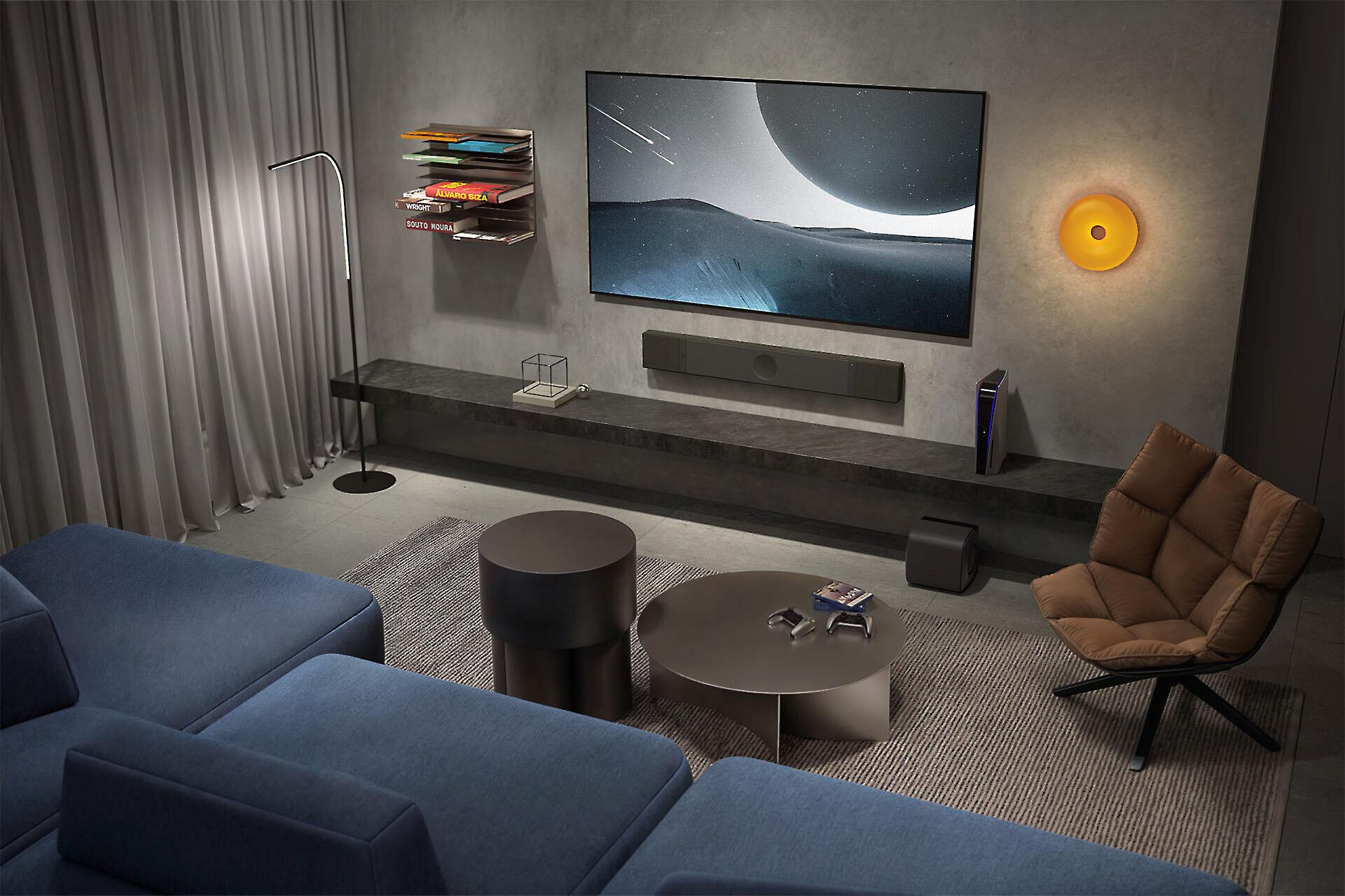



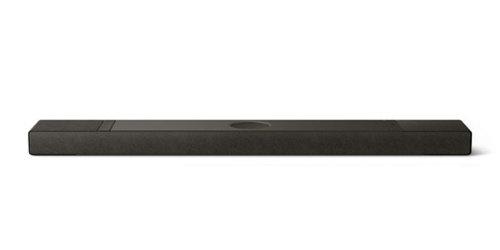
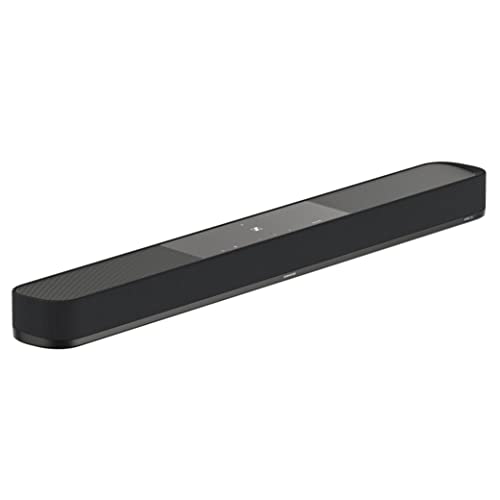

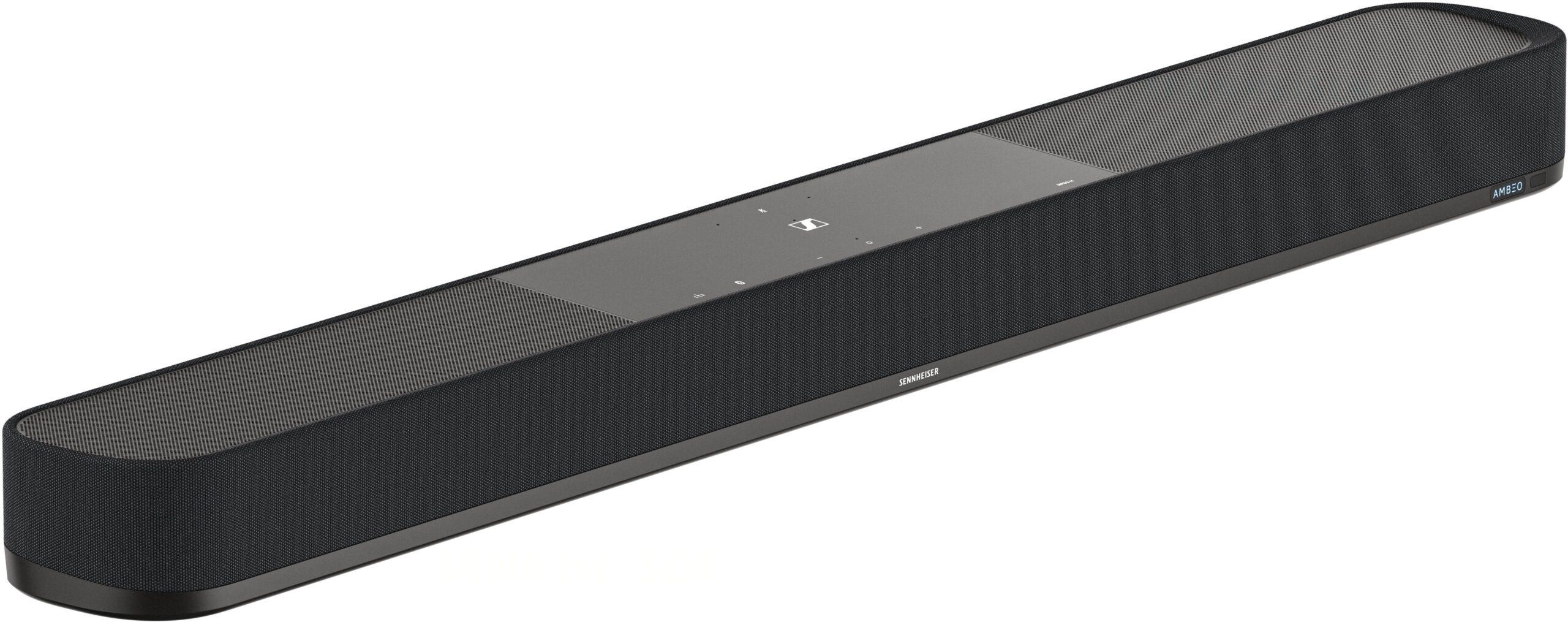

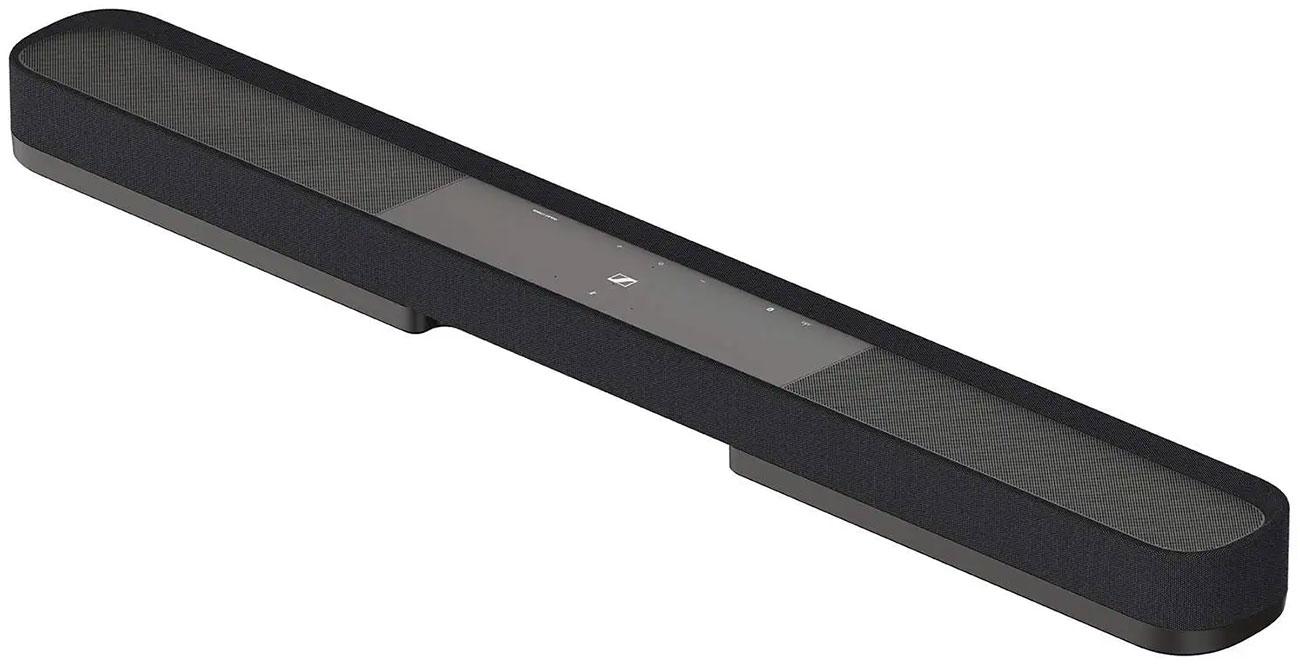
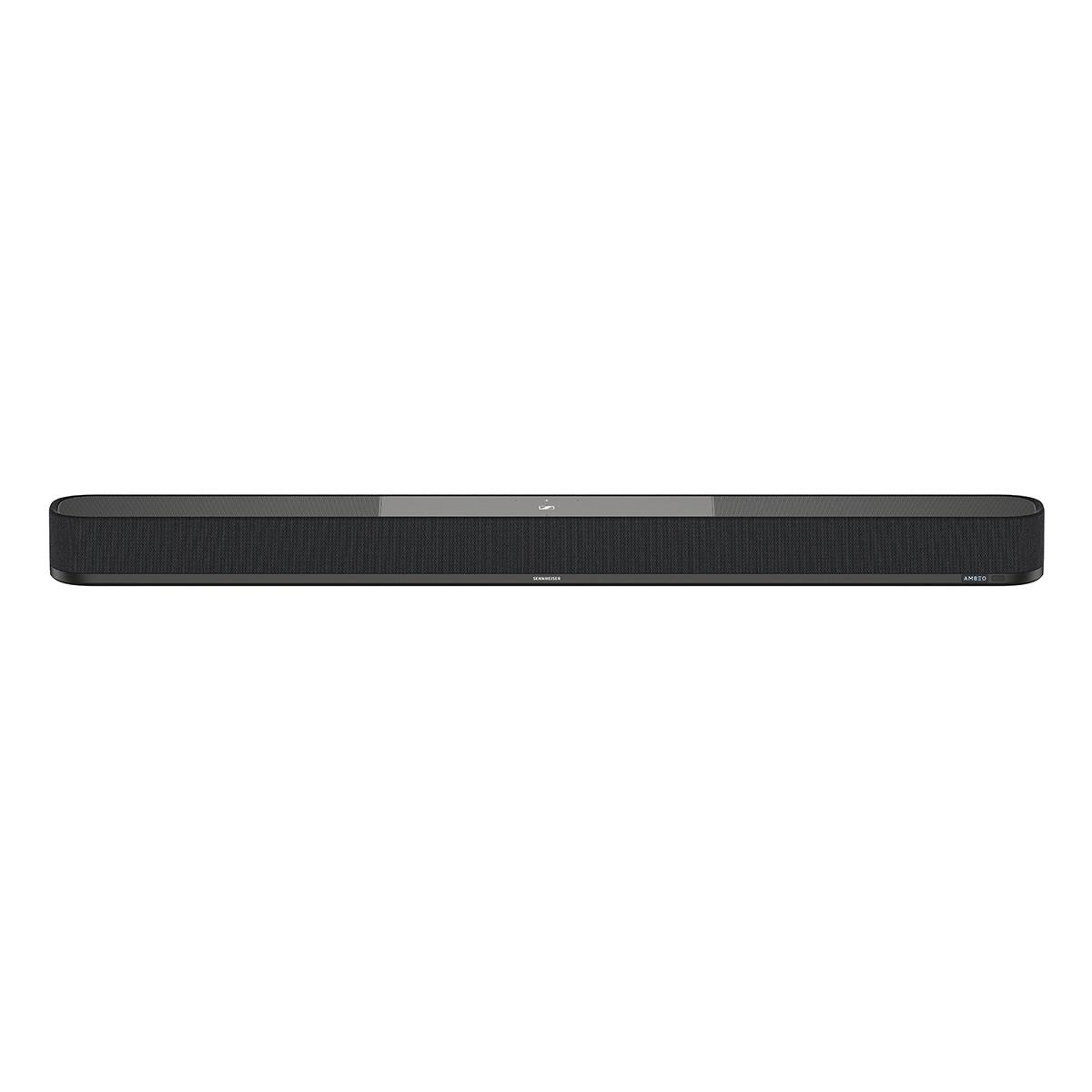
Shopping for a premium soundbar can feel overwhelming, especially when you're looking at products that cost over $1,000. You want something that'll make your movies sound incredible but also handle music well enough to replace a traditional stereo system. Today we're comparing two very different approaches to premium sound: the KEF XIO Soundbar ($2,500) and the Sennheiser AMBEO Soundbar Plus ($1,000).
I've spent considerable time with both systems, and while they're both excellent, they solve different problems in distinctly different ways. Understanding these differences will help you choose the right one for your setup and budget.
Premium soundbars aren't just regular soundbars with higher price tags. They represent a serious attempt to deliver high-fidelity audio performance while maintaining the convenience of a single-unit solution. When you're spending this kind of money, you should expect several key things: exceptional build quality, sophisticated audio processing, support for advanced surround sound formats like Dolby Atmos, and performance that rivals much more expensive component systems.
The main considerations boil down to how well the soundbar handles different types of content, how it integrates with your room, and whether it can serve multiple purposes beyond just improving your TV's audio. Some people want a soundbar that can completely replace their stereo system for music listening, while others prioritize maximum cinematic impact for movies and shows.
The Sennheiser AMBEO Soundbar Plus arrived in 2022 as a more accessible version of Sennheiser's flagship AMBEO Max. It represented the company's refined approach to virtual surround sound processing, building on years of development in their AMBEO spatial audio technology.
The KEF XIO Soundbar, released in early 2025, is KEF's first-ever soundbar. This timing is significant because KEF could incorporate their latest driver innovations, including miniaturized versions of their renowned Uni-Q concentric drivers and advanced bass technologies developed for their recent KC62 and KC92 subwoofers. Essentially, the XIO benefits from decades of high-end speaker development compressed into a soundbar form factor.
Since the AMBEO Plus launched, we've seen improvements in room calibration algorithms and streaming codec support through firmware updates. However, its core virtual processing approach remains unchanged. The XIO, being newer, incorporates the latest Wi-Fi 6 standards and Bluetooth 5.3, plus more advanced room adaptation technology.
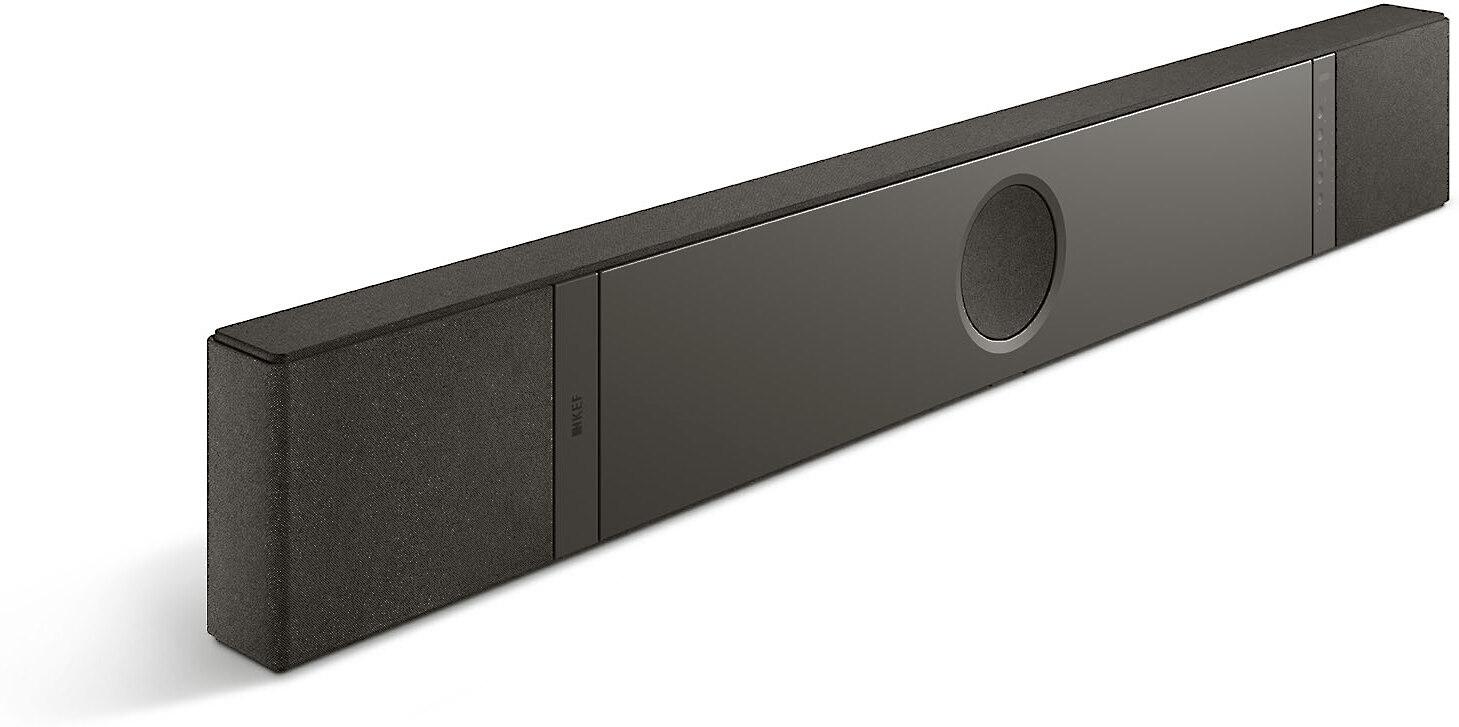
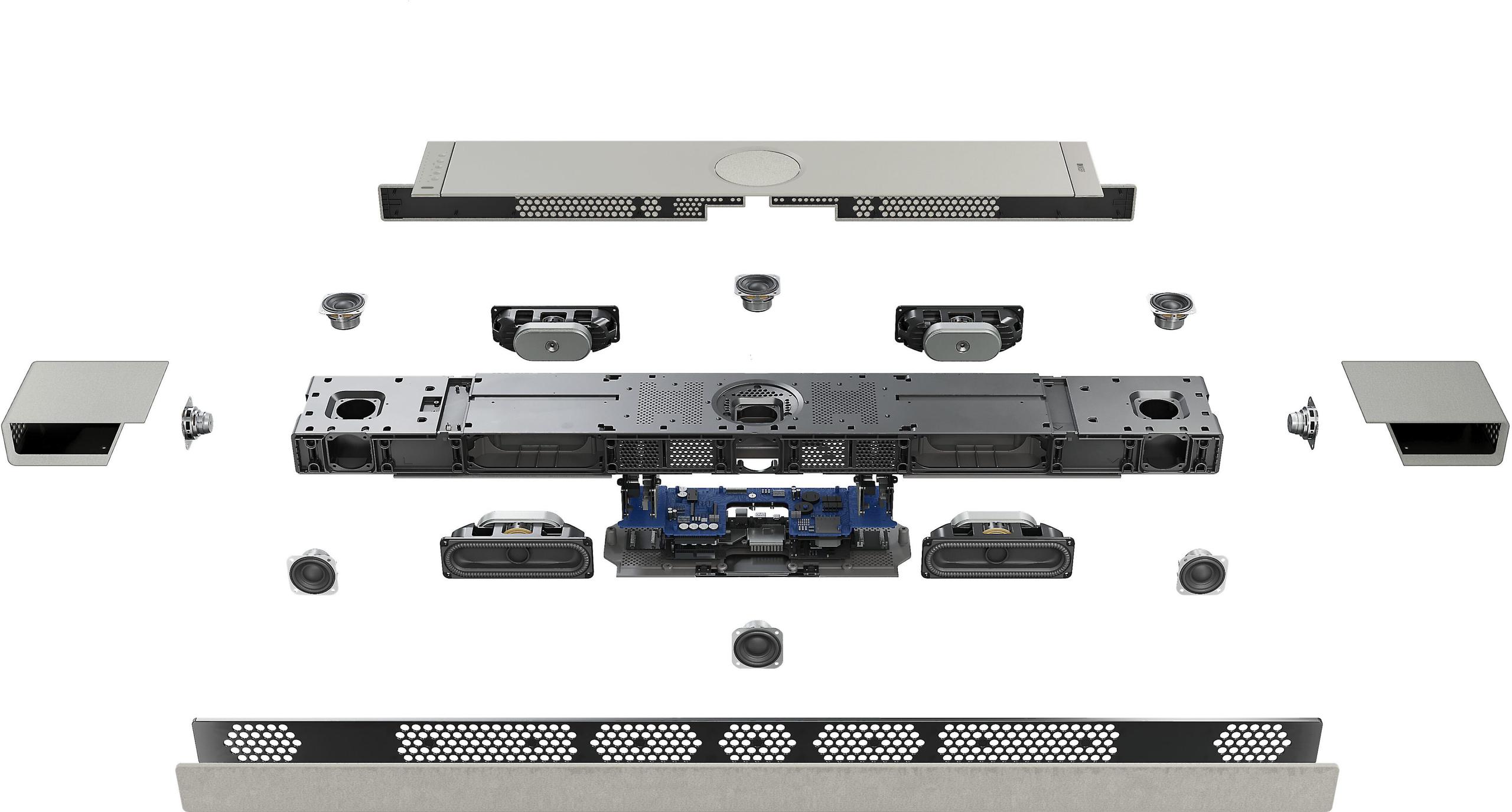
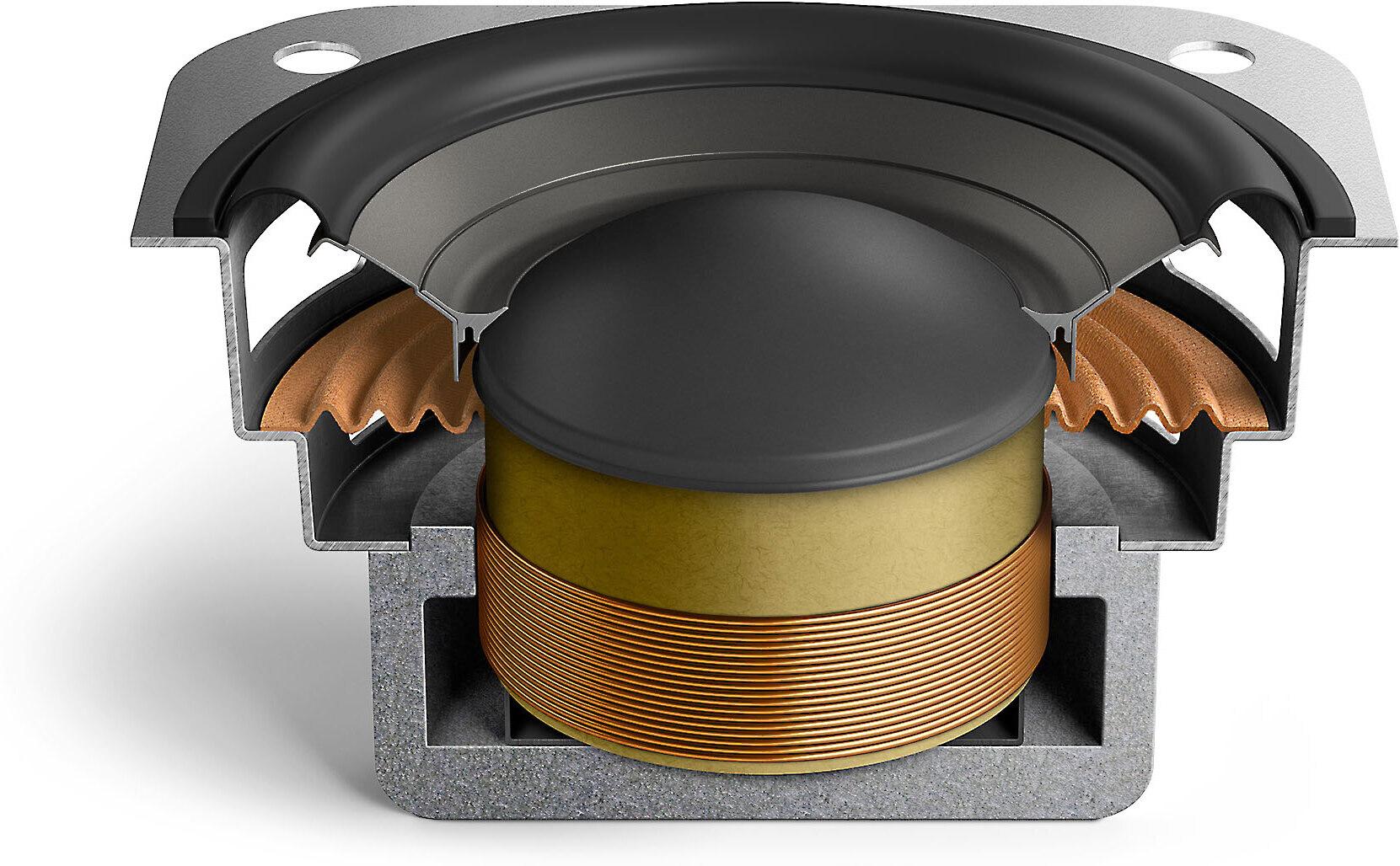
The KEF XIO takes what I'd call a "purist" approach to soundbar design. Instead of relying heavily on digital processing tricks, KEF focused on getting the fundamental driver technology right. Their signature feature is the Uni-Q MX driver array—six miniaturized versions of the concentric drivers found in their high-end speakers.
Here's why this matters: In traditional speakers, the tweeter (high-frequency driver) and midrange driver are separate units positioned at different points. This creates timing issues because high and low frequencies arrive at your ears at slightly different times, especially if you're not sitting in the perfect "sweet spot." KEF's Uni-Q design places the tweeter at the physical center of the midrange driver, so all frequencies originate from the same point in space.
The result is remarkably coherent sound that remains consistent whether you're sitting directly in front of the soundbar or off to the side. In my testing, this makes a huge difference for dialog clarity and music listening, where precise imaging matters.
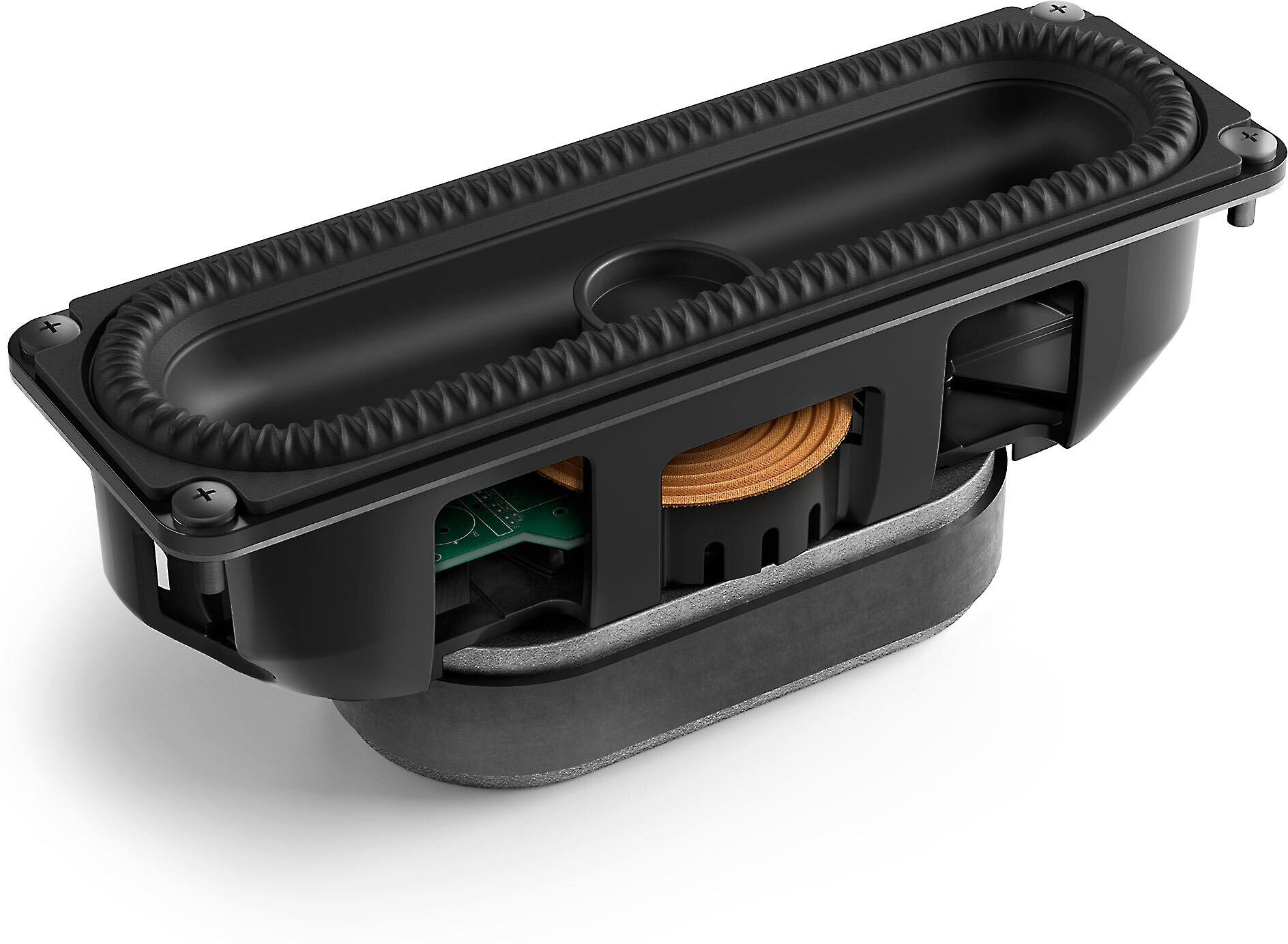
For bass, KEF developed four P185 racetrack-shaped woofers arranged in a force-canceling configuration. This means pairs of woofers work in opposition to each other, which virtually eliminates cabinet vibration and reduces distortion. They've also incorporated P-Flex technology (borrowed from their compact subwoofers) and something called VECO—Velocity Control Technology—which uses real-time feedback to reduce distortion by up to 28 decibels. The practical result is bass that stays clean and controlled even at high volumes, extending down to 34Hz without any external subwoofer.
The Sennheiser AMBEO Plus takes a completely different approach, prioritizing spatial processing over pure driver technology. Sennheiser's AMBEO 3D technology uses sophisticated psychoacoustic processing—essentially tricking your brain into perceiving sounds coming from directions where there are no actual speakers.
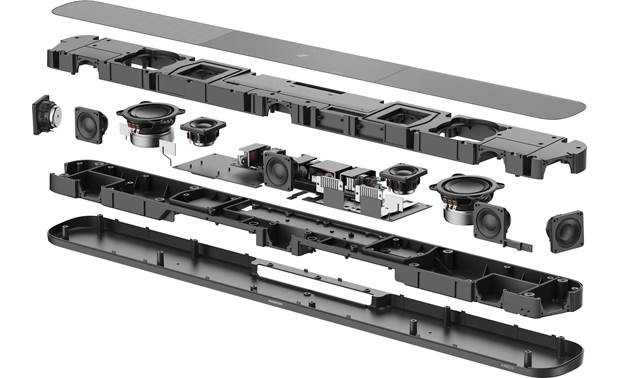
The system uses nine physical drivers but creates a virtual 7.1.4-channel surround sound experience. This means it simulates seven main channels (front left, center, right, side surrounds, and rear surrounds) plus four height channels for overhead effects. The processing analyzes incoming audio and uses precise timing, phase manipulation, and frequency filtering to create the illusion of sounds coming from behind you or above you.
What's impressive is how well this works in practice. During my testing with action movies, I consistently found myself looking over my shoulder for sounds that were actually coming from the soundbar. The effect is somewhat room-dependent—it works better in some spaces than others—but when it works, it's genuinely immersive.
This is where the fundamental differences between these systems become most apparent. The KEF XIO approaches music reproduction like a high-end stereo system that happens to be shaped like a soundbar. The Uni-Q driver technology creates an exceptionally wide and precise soundstage. When listening to well-recorded jazz or classical music, individual instruments appear to occupy specific locations in space with remarkable clarity.
I spent several weeks using the XIO as my primary music system, streaming everything from Spotify to high-resolution files from TIDAL and Qobuz. The system supports up to 24-bit/384kHz audio resolution, and you can genuinely hear the difference with high-quality recordings. Vocals have a natural, uncolored quality, and there's excellent separation between instruments even in complex orchestral pieces.
The Sennheiser AMBEO Plus, while capable with music, clearly prioritizes a different approach. Its sound signature is warmer and more forgiving, which some listeners prefer for casual music listening. The AMBEO processing can actually enhance stereo music by creating a more spacious presentation, though purists might argue this deviates from the artist's original intent.
Where Sennheiser excels is in making everything sound "bigger" than it should from a single box. The virtual processing creates an enveloping quality that works particularly well with electronic music, movie soundtracks, and other content that benefits from a wide, immersive presentation.
Both systems handle dialog well, but in different ways. The KEF's precise imaging means voices appear to come from exactly where they should on screen, with excellent clarity and natural tonality. The center channel reproduction is particularly impressive—dialog remains intelligible even during complex action sequences with lots of background noise.
The Sennheiser includes dedicated dialog enhancement modes that boost speech frequencies and reduce background elements. This is genuinely helpful for late-night viewing or if you have hearing difficulties. The system also offers Night Mode, which compresses dynamic range to prevent loud explosions from waking the neighbors while keeping dialog audible.
For movie soundtracks, the approaches diverge significantly. The KEF XIO delivers what I'd call "reference" quality sound—accurate, uncolored, and true to the mixing engineer's intent. Explosions have impact without becoming boomy, and subtle environmental sounds remain clearly defined.
The Sennheiser AMBEO Plus prioritizes spectacle and immersion. Action sequences feel more enveloping, with effects that seem to swirl around the room. The bass response is more pronounced and room-filling, though sometimes at the expense of precision.
This is perhaps the most significant technical difference between these systems. The KEF XIO implements true 5.1.2-channel Dolby Atmos using dedicated upward-firing drivers. These physically bounce sound off your ceiling to create overhead effects. The precision is remarkable—helicopters flying overhead genuinely sound like they're above you, and rain effects create a convincing three-dimensional soundscape.
The Sennheiser AMBEO Plus achieves its height effects through virtual processing, creating the impression of 7.1.4-channel surround without physical speakers in those positions. The effectiveness depends heavily on your room acoustics and seating position. In my living room, which has a standard 8-foot ceiling and typical furnishings, the virtual height effects were convincing about 70% of the time. In a friend's media room with higher ceilings and more reflective surfaces, the effect was more consistent.
Both systems deliver impressive bass for single-unit soundbars, but with different characters. The KEF XIO produces tight, controlled bass that integrates seamlessly with the rest of the frequency range. The force-canceling woofer design means you get substantial output without the cabinet buzzing or rattling that plagues many soundbars. Music sounds natural and uncolored, while movie effects have appropriate impact without overwhelming the midrange.
The Sennheiser AMBEO Plus delivers more visceral, room-shaking bass that some users will prefer for action movies. The dual 4-inch woofers create a bigger, more theatrical presentation. However, this sometimes comes at the expense of precision—bass notes can occasionally sound slightly bloated compared to the KEF's tighter control.
Importantly, the Sennheiser offers expandability with wireless subwoofers (up to four can be connected), while the KEF includes wired and wireless subwoofer outputs but is designed to be complete on its own.
This is where the Sennheiser AMBEO Plus has a clear advantage. It includes HDMI eARC plus two additional HDMI inputs, making it easy to connect multiple sources like game consoles, streaming devices, and Blu-ray players directly to the soundbar. All inputs support 4K passthrough, though not the latest HDMI 2.1 features like 4K/120Hz gaming.
The KEF XIO includes only a single HDMI 2.1 eARC connection, which means you'll need to connect sources directly to your TV and rely on eARC to send audio back to the soundbar. This works fine for most setups but limits flexibility if your TV has insufficient HDMI inputs or doesn't support eARC properly.
Both systems include optical digital inputs, but the Sennheiser adds analog RCA inputs and even a microphone input for room calibration—useful features that the KEF omits.
Both soundbars offer comprehensive wireless streaming options. You'll find Bluetooth, Wi-Fi connectivity, AirPlay 2, Chromecast built-in, and direct support for services like Spotify Connect and TIDAL Connect. The KEF XIO includes newer standards (Bluetooth 5.3 and Wi-Fi 6) for potentially better range and reliability.
One practical difference: the KEF can wirelessly connect to compatible KEF subwoofers using their KW2 adapter, while the Sennheiser's wireless subwoofer support is built-in and more flexible, supporting up to four units.
Both systems include automatic room calibration, but they work differently. The KEF XIO uses Intelligent Placement Technology that automatically detects whether the soundbar is wall-mounted or shelf-placed and adjusts accordingly. It also adapts to nearby objects and room acoustics without requiring manual calibration.
The Sennheiser AMBEO Plus uses a more traditional approach with built-in microphones that analyze your room's acoustics during a setup process. You'll need to sit in your primary listening position while the system plays test tones and measures the room response. This takes several minutes but provides more granular optimization.
In my experience, both systems do a good job of adapting to different environments, though the KEF's automatic approach is more convenient while the Sennheiser's manual process potentially offers more precise optimization.
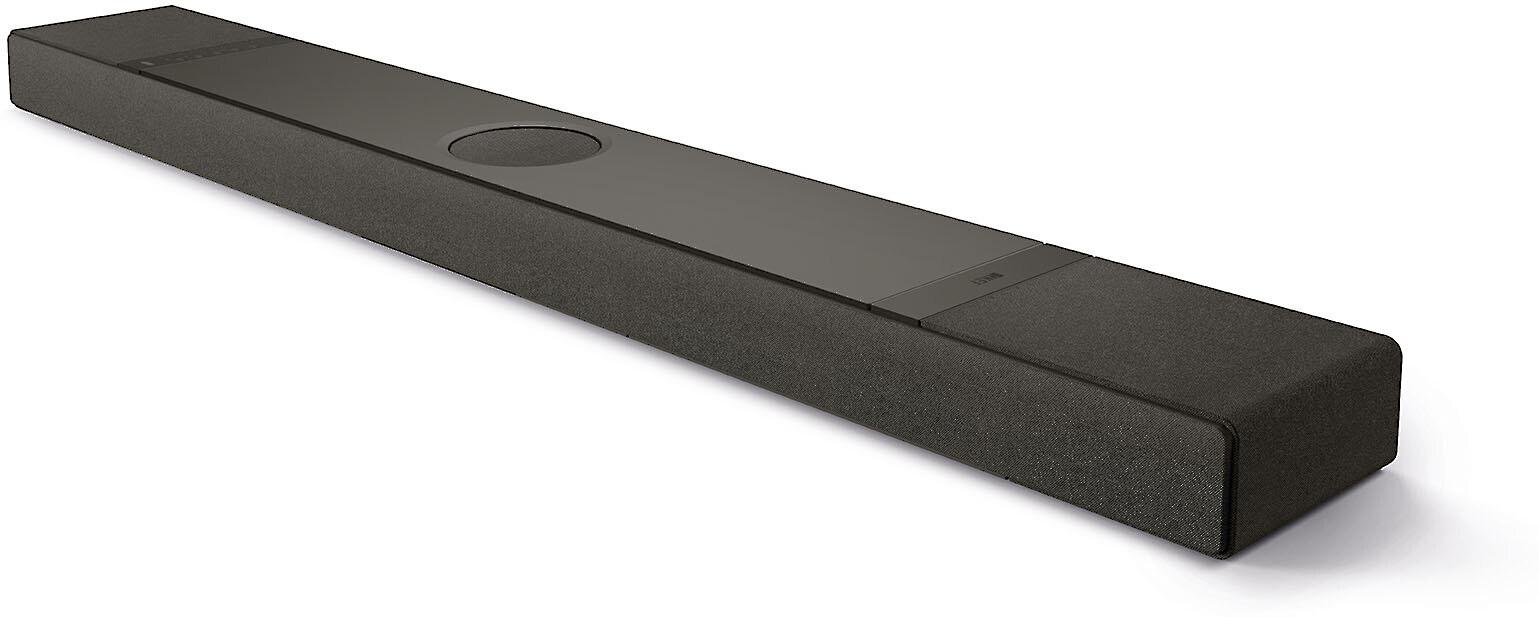
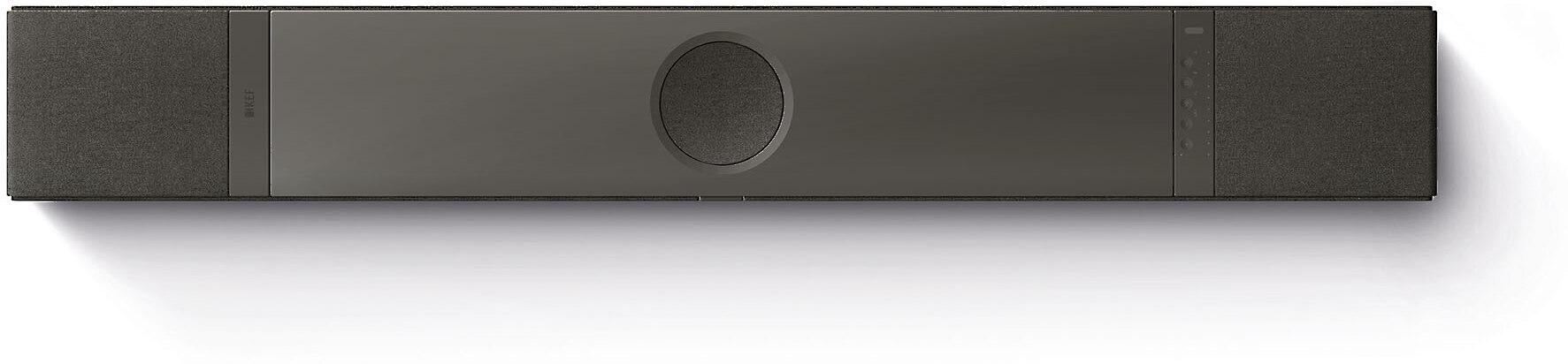
The KEF XIO embodies minimalist design principles with its aluminum top plate and splash-proof fabric covering. At 47.6 inches wide, it's appropriately sized for TVs from 55 to 75 inches. The build quality feels exceptional—solid and substantial without being ostentatious. It's available in two finishes: Silver Grey and Slate Black.
The Sennheiser AMBEO Plus takes a more traditional soundbar approach with a fabric-covered enclosure. It's similarly sized but feels slightly less premium in construction, though still well-built. The design is more understated and should blend well with most room decors.
Both soundbars can be wall-mounted or placed on furniture, though the KEF's lower profile makes it less likely to block your TV screen when shelf-mounted.
The KEF XIO's high price reflects genuinely advanced technology that you can't find elsewhere. The Uni-Q MX drivers represent years of research and development, and the implementation here is genuinely impressive. If you value audio accuracy, want a system that excels equally with music and movies, and prefer not to add a separate subwoofer, the XIO justifies its cost through pure performance.
However, that performance comes with trade-offs. You get limited connectivity options, and the system is designed to be complete on its own rather than expandable. You're paying for engineering excellence rather than feature flexibility.
The Sennheiser AMBEO Plus offers impressive technology and performance at a more accessible price point. The AMBEO 3D processing is genuinely effective, the connectivity options are comprehensive, and the system offers room to grow with wireless subwoofer additions.
While it doesn't match the KEF's pure audio fidelity, it provides excellent home theater performance with practical features that many users will appreciate. The price-to-performance ratio is compelling, especially if your primary use case is movies and TV rather than critical music listening.
You're primarily interested in audio quality and want a soundbar that can legitimately serve as your main music system. The XIO excels when you value precision, clarity, and natural sound reproduction above all else. It's ideal for listeners who appreciate the subtleties in well-recorded music and want movie dialog to sound exactly as the mixing engineers intended.
The KEF also makes sense if you prefer simple, elegant setups without multiple components. Its ability to deliver satisfying bass without a separate subwoofer means fewer cables and boxes, which appeals to minimalists who don't want their audio gear to dominate their living space.
Finally, if you have a high-quality TV with good eARC implementation and don't need multiple HDMI inputs, the KEF's connectivity limitations won't affect you.
Your primary focus is home theater performance and you want maximum immersion from movies and TV shows. The AMBEO processing creates a more enveloping experience that many people prefer for entertainment content, even if it's not as precisely accurate as the KEF.
The Sennheiser also makes more sense if you need connectivity flexibility. Multiple HDMI inputs, analog connections, and extensive wireless subwoofer support make it easier to integrate into complex setups or expand over time.
Budget considerations also matter. The $1,500 price difference is significant, and the Sennheiser delivers genuinely impressive performance that punches above its price point. If you want premium soundbar performance but can't justify the KEF's cost, the AMBEO Plus provides excellent value.
After extensive testing with both systems, I've come to appreciate how differently they approach the same fundamental challenge: delivering high-quality audio from a single, convenient package.
The KEF XIO represents the ultimate expression of traditional acoustic engineering applied to the soundbar format. It's for people who want their soundbar to disappear sonically—to get out of the way and let you hear exactly what's in your music and movies without coloration or artificial enhancement.
The Sennheiser AMBEO Plus embraces digital processing to create experiences that go beyond what its physical drivers could achieve alone. It's for people who want their soundbar to actively enhance their entertainment, creating a bigger, more immersive experience than the source material might naturally provide.
Both approaches have merit, and both systems excel at what they're designed to do. Your choice should ultimately depend on your priorities: pure audio fidelity and musical accuracy, or maximum cinematic immersion and connectivity flexibility. Either way, you'll end up with a soundbar that significantly outperforms anything in the mainstream market—just with different strengths that reflect different philosophies about what great audio should accomplish.
| KEF XIO Soundbar | Sennheiser AMBEO Soundbar Plus |
|---|---|
| Price - Major budget consideration between premium options | |
| $2,500 (audiophile-grade investment) | $1,000 (excellent value for features) |
| Release Date - Affects available technology and refinement | |
| 2025 (latest driver tech and connectivity) | 2022 (proven, mature platform) |
| Audio Configuration - Real vs virtual surround implementation | |
| True 5.1.2 with physical up-firing drivers | Virtual 7.1.4 via AMBEO 3D processing |
| Driver Technology - Core sound quality foundation | |
| 6x Uni-Q MX concentric drivers + 4x P185 racetrack woofers | 9 traditional drivers including 2x up-firing, 2x side-firing |
| Total Power - Headroom for dynamic content | |
| 820W total (12 Class D amplifiers) | 400W RMS (N9 Class D amplifiers) |
| Bass Extension - Low-end performance without subwoofer | |
| 34Hz (exceptional for standalone soundbar) | 38Hz (very good, expandable with wireless subs) |
| HDMI Connectivity - Source connection flexibility | |
| 1x HDMI 2.1 eARC only (modern but limited inputs) | 1x eARC + 2x HDMI inputs (better for multiple sources) |
| Dolby Atmos Implementation - Height effect accuracy | |
| Physical up-firing drivers (precise overhead placement) | Virtual processing (room-dependent but immersive) |
| Music Performance - Stereo listening capability | |
| Reference-grade hi-fi performance, exceptional imaging | Good music reproduction with warm character |
| Room Calibration - Setup and optimization | |
| Intelligent Placement Technology (automatic) | Microphone-based calibration (manual but precise) |
| Expandability - Future upgrade options | |
| Wireless subwoofer output via KEF KW2 adapter | Built-in support for up to 4 wireless subwoofers |
| Build Quality - Premium construction and design | |
| Aluminum chassis with splash-proof fabric | Fabric-covered traditional soundbar design |
| Wireless Connectivity - Streaming and control options | |
| Wi-Fi 6, Bluetooth 5.3, AirPlay 2, Chromecast | Wi-Fi, Bluetooth 5.0, AirPlay 2, Chromecast |
| Best Use Case - Primary recommendation | |
| Audiophiles wanting hi-fi music + cinema performance | Home theater enthusiasts prioritizing immersion and connectivity |
The Sennheiser AMBEO Plus ($1,000) offers better value for most buyers, providing excellent virtual surround sound and comprehensive connectivity at half the cost. The KEF XIO ($2,500) justifies its premium price only if you prioritize audiophile-grade sound quality and plan to use it equally for music and movies.
The KEF XIO focuses on precise audio reproduction using advanced concentric drivers, making it ideal for both music and movies. The Sennheiser AMBEO Plus emphasizes immersive virtual surround sound processing to create a more enveloping home theater experience from a single unit.
The KEF XIO delivers slightly deeper bass (34Hz vs 38Hz) with more control and precision thanks to its force-canceling woofer design. However, the Sennheiser AMBEO Plus produces more room-filling, cinematic bass that many users prefer for movies, and it can expand with wireless subwoofers.
Neither soundbar requires a separate subwoofer for most users. The KEF XIO is specifically designed to be complete on its own with excellent built-in bass. The Sennheiser AMBEO Plus also works well standalone but offers the flexibility to add up to four wireless subwoofers for larger rooms.
The KEF XIO is significantly better for music, offering reference-grade stereo imaging and natural sound reproduction that rivals high-end speakers. The Sennheiser AMBEO Plus handles music well but prioritizes movie content and uses processing that may not appeal to critical music listeners.
The Sennheiser AMBEO Plus offers better connectivity with one eARC port plus two additional HDMI inputs for connecting multiple devices. The KEF XIO only has one HDMI 2.1 eARC port, requiring you to connect sources directly to your TV.
The KEF XIO delivers more accurate Dolby Atmos with dedicated physical up-firing drivers that create precise overhead effects. The Sennheiser AMBEO Plus uses virtual processing to simulate 7.1.4 surround sound, which is more immersive but less precise and depends on your room acoustics.
The Sennheiser AMBEO Plus is better suited for larger rooms due to its room-filling virtual processing and ability to add wireless subwoofers. The KEF XIO works in large rooms but excels in medium-sized spaces where its precise imaging can be fully appreciated.
The KEF XIO is easier to set up with automatic room calibration that requires no user intervention. The Sennheiser AMBEO Plus requires a manual calibration process where you sit in your listening position while it plays test tones, but this provides more precise optimization.
The Sennheiser AMBEO Plus has built-in support for Amazon Alexa and Google Assistant voice control. The KEF XIO doesn't include built-in voice assistants but works with external devices through its wireless connectivity options.
Both soundbars work well for gaming, but the Sennheiser AMBEO Plus has advantages with multiple HDMI inputs for connecting consoles directly and immersive virtual surround that enhances gaming audio. The KEF XIO offers more precise audio positioning but requires connecting through your TV's eARC.
Choose the KEF XIO only if you're an audiophile who values precise sound reproduction and will use it extensively for music listening. Most buyers will be happier with the Sennheiser AMBEO Plus, which delivers excellent home theater performance, better connectivity, and impressive virtual surround sound at a much lower price.
We've done our best to create useful and informative comparisons to help you decide what product to buy. Our research uses advanced automated methods to create this comparison and perfection is not possible - please contact us for corrections or questions. These are the sites we've researched in the creation of this article: blog.son-video.com - residentialsystems.com - whathifi.com - audioadvice.com - crutchfield.com - homecrux.com - techradar.com - youtube.com - us.kef.com - gramophone.com - cepro.com - audioxpress.com - musicdirect.com - gramophone.com - us.kef.com - crutchfield.com - hifipig.com - bestbuy.com - listenup.com - bestbuy.com - bestbuy.com - listenup.com - techradar.com - pocket-lint.com - moon-audio.com - stereonet.com - rtings.com - abt.com - projectorscreen.com - youtube.com - videoandaudiocenter.com - crutchfield.com - sennheiser-hearing.com - newsroom.sennheiser.com

Privacy Policy
Terms and Conditions - Affiliate Policy
Home Security
© Copyright 2008-2026.
11816 Inwood Rd #1211, Dallas, TX 75244