




When I first started reviewing soundbars five years ago, the market was much simpler. You had basic TV speakers that sounded terrible, and expensive home theater systems that took up half your living room. Today, soundbars have evolved to fill every possible niche, from simple TV audio fixes to audiophile-grade systems that can replace dedicated stereo setups.
The Polk Audio Signa S2 and KEF XIO represent two completely different philosophies in this evolution. Released in 2019, the Signa S2 aimed to solve the most common problem: making TV dialogue clearer without breaking the bank. The KEF XIO, launched in 2024, represents something entirely different—a no-compromise attempt to bring flagship audio technology into soundbar form.
At the time of writing, these products sit at opposite ends of the price spectrum, with the KEF XIO costing roughly twelve times more than the Polk S2. That massive price gap isn't just marketing fluff—it reflects fundamentally different engineering approaches and target audiences.
Before diving into specifics, it's worth understanding what we're actually comparing. Soundbars exist because TV speakers are universally terrible, constrained by thin chassis and cost-cutting measures. A soundbar's job is to create a wider, more engaging soundstage while fitting seamlessly into modern living spaces.
The key technical considerations are frequency response (how low and high the speakers can reproduce sound), driver quality (the actual speakers inside), amplification power, and signal processing. More expensive soundbars typically excel in all these areas, but the question becomes whether those improvements justify the cost difference.
When evaluating any soundbar, I focus on several critical performance areas: dialogue clarity (can you understand what actors are saying?), bass response (does music and action feel impactful?), soundstage width (does sound seem to come from beyond the physical speaker?), and dynamic range (can it handle both whisper-quiet scenes and explosive action sequences?). The Polk S2 and KEF XIO take radically different approaches to solving these challenges.
The Polk Audio Signa S2 embodies the "good enough" philosophy that dominates the budget soundbar market. Released in 2019, it arrived during the peak of the streaming wars when everyone was upgrading their TV experience but didn't want to deal with complex audio setups.
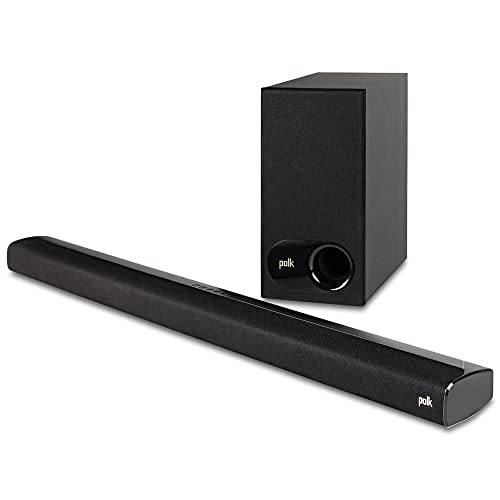
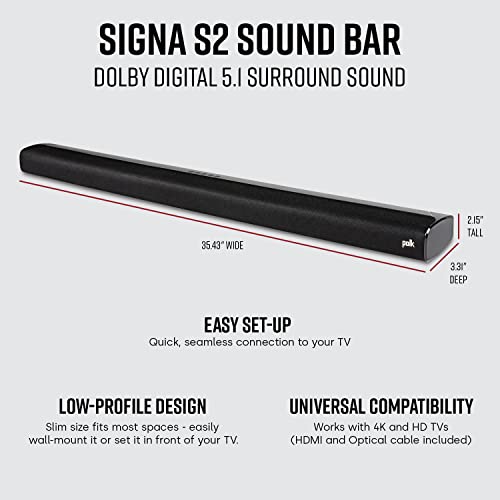
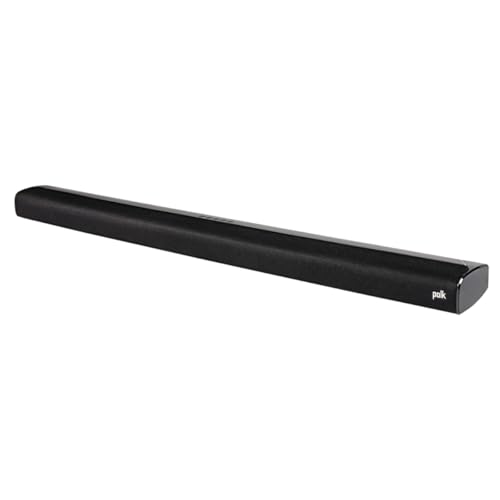
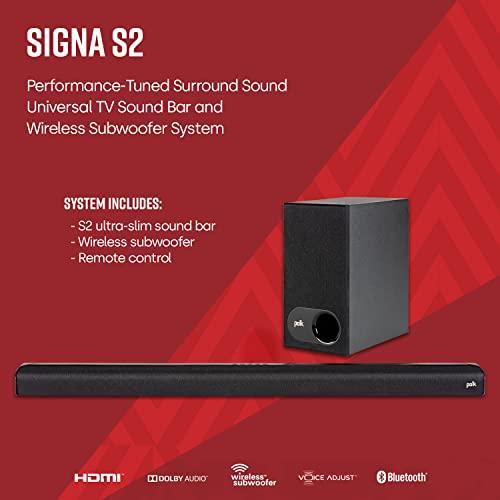
Inside the Signa S2's slim 35-inch chassis, you'll find four drivers: two 1.25-inch oval midrange drivers and two 1-inch tweeters. These aren't premium components, but they're thoughtfully arranged to create what audio engineers call a "V-shaped" sound signature. This means bass and treble are emphasized while midrange frequencies (where most dialogue lives) remain relatively neutral.
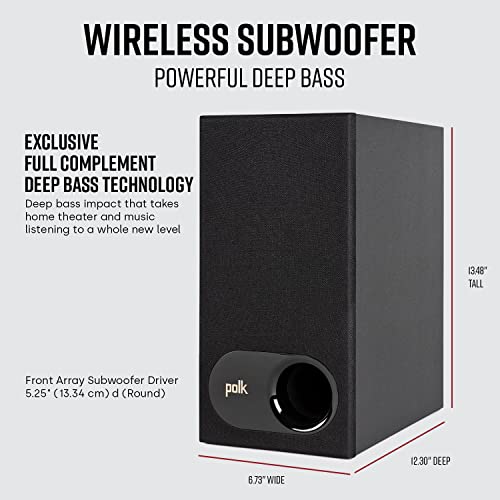
The separate wireless subwoofer uses a 5.25-inch driver in a ported enclosure, which allows it to reproduce frequencies down to 45Hz. For reference, a typical male voice fundamental frequency sits around 85-180Hz, while the rumble from movie explosions can extend well below 40Hz. The Signa S2 captures most of this range adequately, though it won't deliver the chest-thumping bass of larger systems.
What impresses me about the Polk S2 is its VoiceAdjust technology. This isn't just marketing speak—it's actual digital signal processing (DSP) that boosts vocal frequencies and applies dynamic range compression to dialogue. When watching movies with inconsistent audio mixing, this feature genuinely helps conversations cut through background music and sound effects.
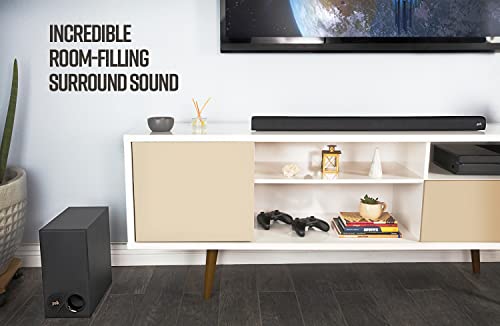
During my testing, the Signa S2 consistently delivered on its primary promise: making TV audio more engaging without complexity. Dialogue clarity is genuinely good, especially considering the lack of a dedicated center channel (a speaker specifically designed for vocal reproduction). The wireless subwoofer adds meaningful bass impact, though placement becomes crucial—too close to walls and it becomes boomy, too far from the listening position and it sounds disconnected.
Music performance reveals the system's limitations. The V-shaped signature can make genres like rock and electronic music sound exciting, but acoustic instruments and vocals often lack the natural warmth and detail you'd expect from dedicated music systems. This isn't surprising given the price point, but it's worth understanding if music listening is a priority.
The Polk S2 includes three preset modes: Movie, Music, and Night. Night mode is particularly clever, automatically reducing dynamic range so late-night viewing won't wake the neighbors while keeping dialogue intelligible. These aren't revolutionary features, but they address real-world usage scenarios effectively.
One area where the Polk S2 truly excels is simplicity. The ultra-slim 2.15-inch height means it fits in front of virtually any TV without blocking the screen or infrared remote sensor. Setup involves connecting either the included HDMI or optical cable, plugging in the subwoofer, and you're done. The wireless subwoofer pairs automatically, eliminating the setup frustrations common with some competitors.
HDMI ARC (Audio Return Channel) support means you can control volume using your TV remote, a small convenience that makes daily use feel natural. Bluetooth connectivity allows smartphone music streaming, though audio quality is noticeably compressed compared to wired connections.
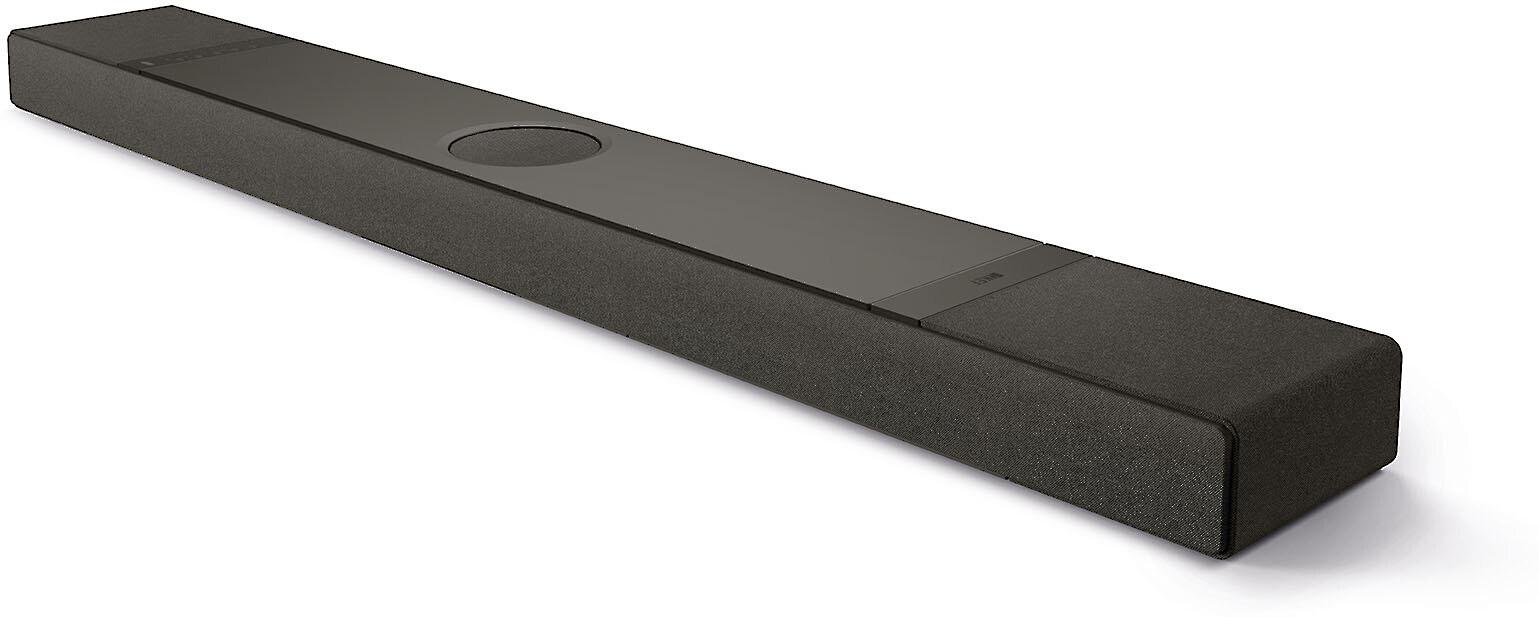
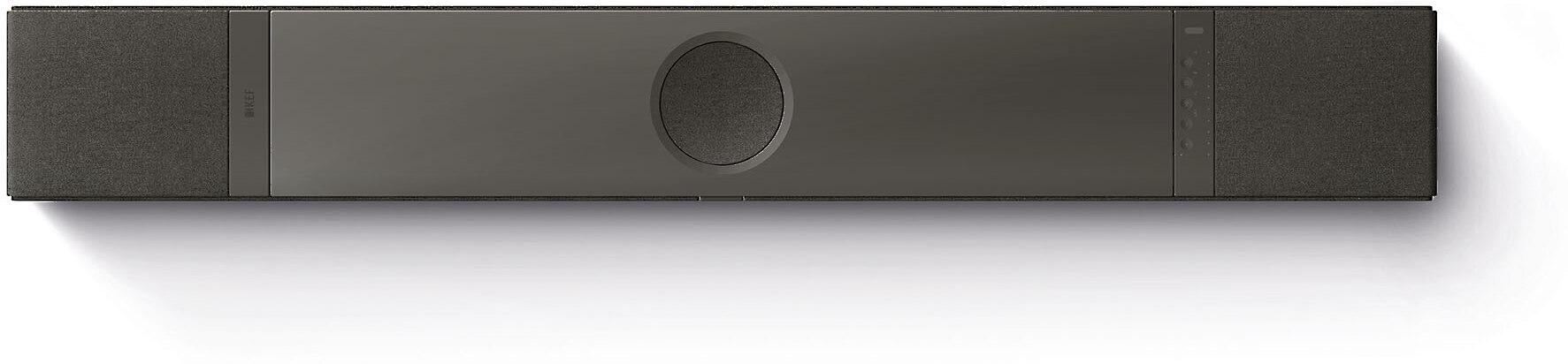
The KEF XIO, released in 2024, represents KEF's first entry into the soundbar market—and they approached it like engineers rather than cost accountants. This is KEF applying decades of high-end speaker design to the soundbar format, resulting in something that challenges the category's fundamental assumptions.
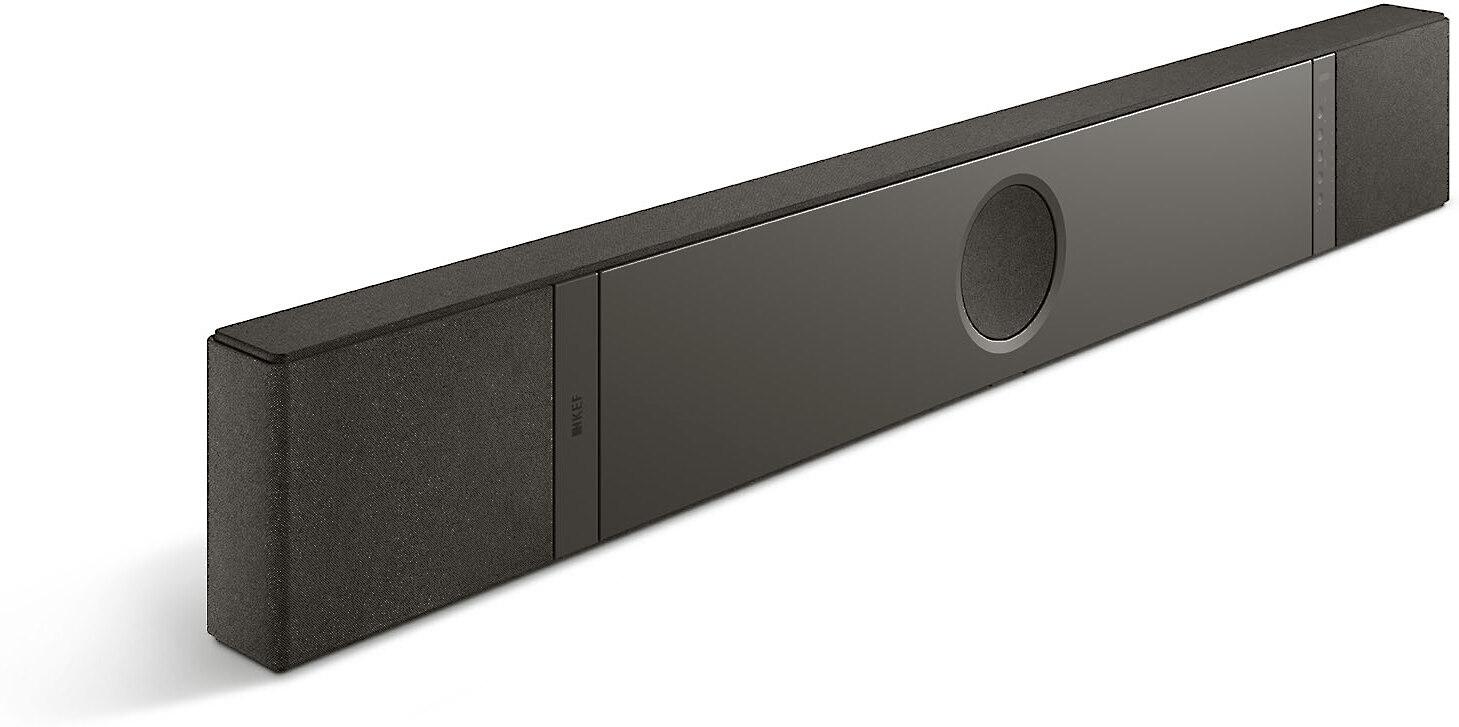
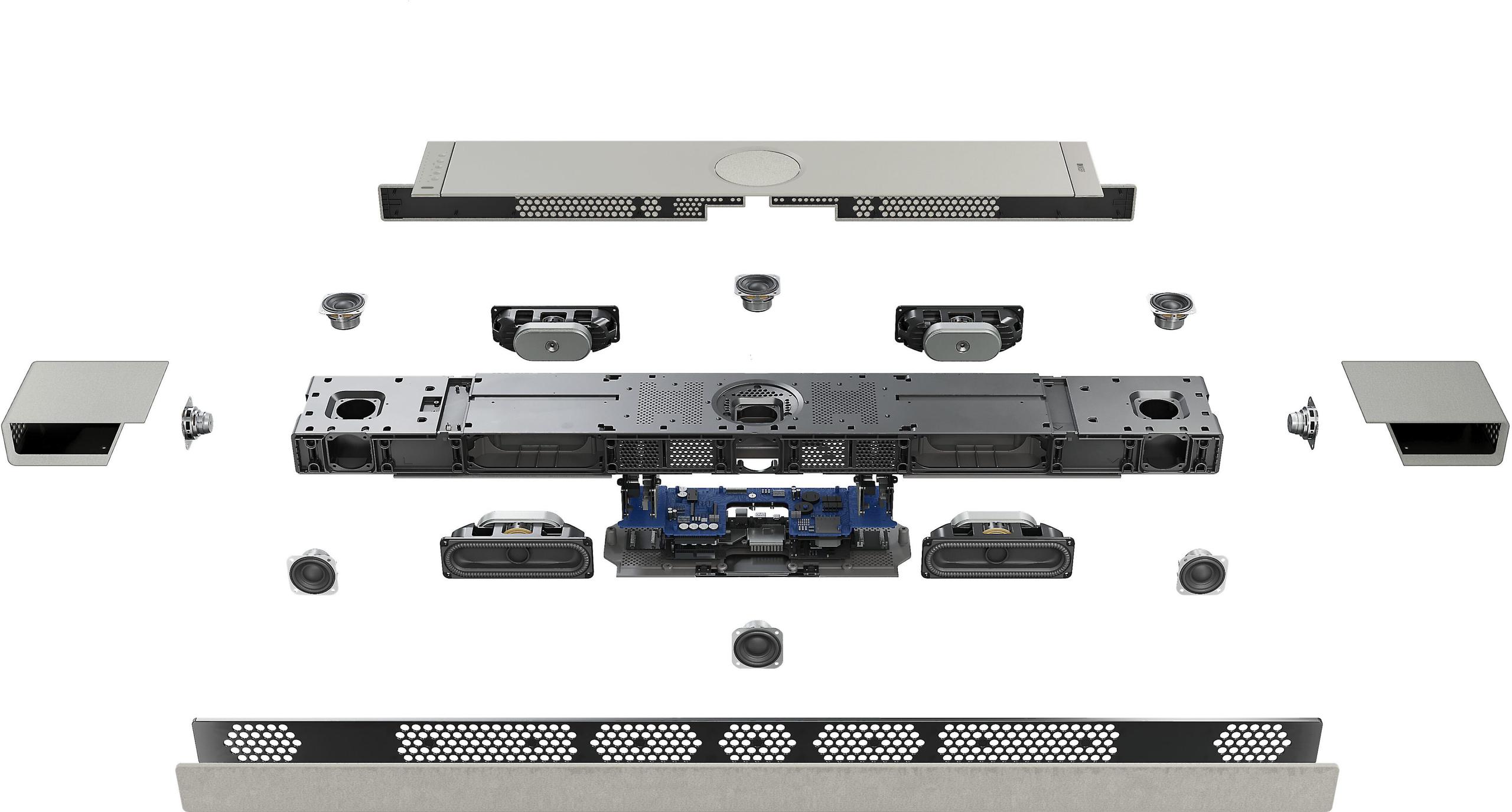
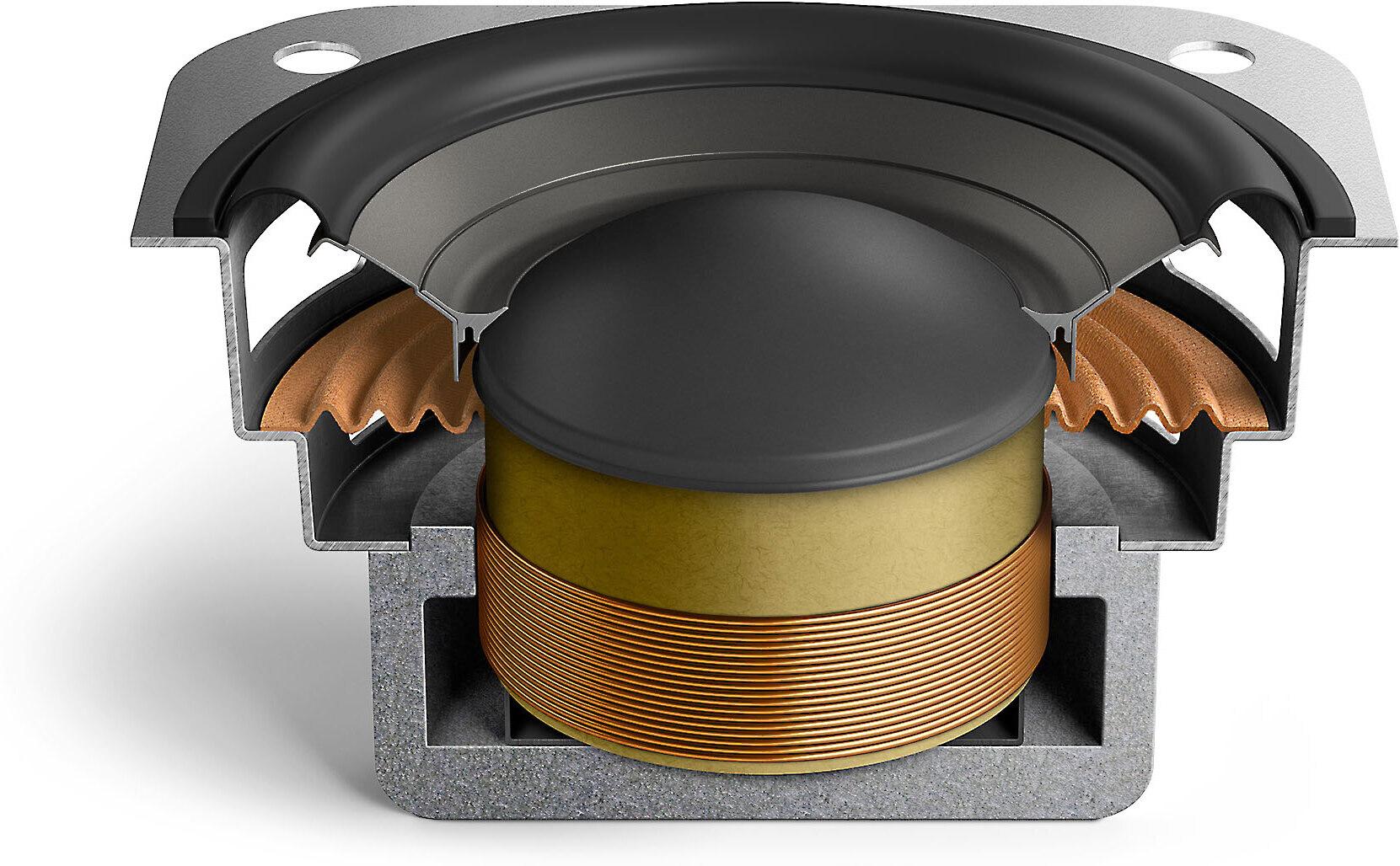
The KEF XIO's most significant innovation lies in its driver array. The six Uni-Q MX drivers represent miniaturized versions of the concentric driver technology found in KEF's $30,000 flagship speakers. In traditional speakers, tweeters (high-frequency drivers) and midrange drivers are separate components, creating timing and dispersion issues as sound waves from different sources interfere with each other.
KEF's Uni-Q design places the tweeter at the acoustic center of the midrange driver, creating what's essentially a point source of sound. This eliminates timing issues and provides remarkably consistent frequency response regardless of listening position—a crucial advantage in soundbar applications where listeners aren't always centered.
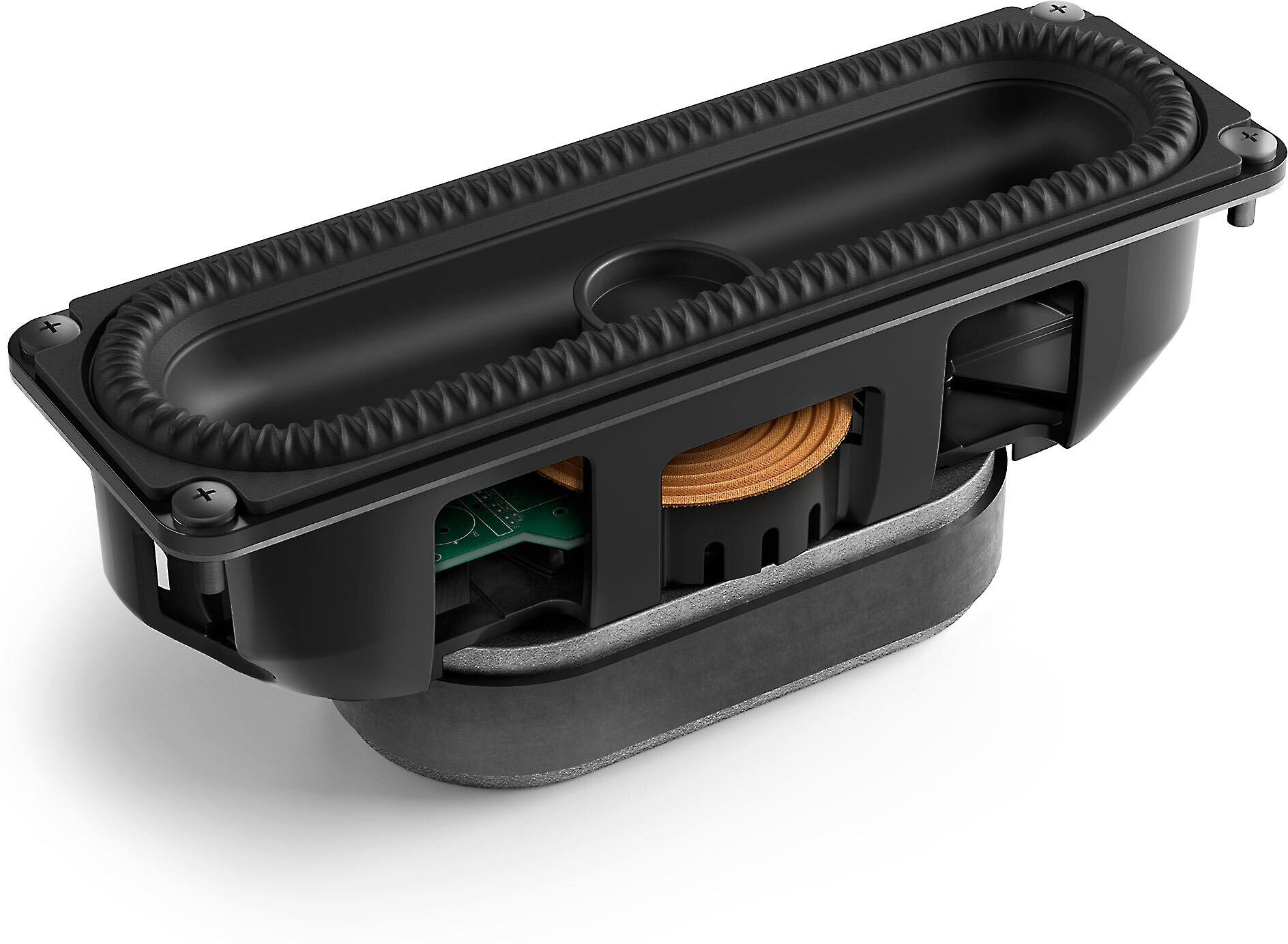
But the real engineering marvel lies in the bass system. Rather than relying on a separate subwoofer, the XIO incorporates four racetrack-shaped P185 drivers arranged in a force-canceling configuration. These aren't typical round woofers—the racetrack shape allows for greater surface area within the soundbar's slim profile, while the force-canceling arrangement means opposing drivers work together to eliminate cabinet vibrations while reinforcing actual bass frequencies.
The KEF XIO's Music Integrity Engine (MIE) for Cinema represents sophisticated digital signal processing that would have required dedicated hardware just a few years ago. MIE manages twelve separate amplifier channels in real-time, handling crossover frequencies (where different drivers take over different frequency ranges), phase alignment (ensuring all drivers work together rather than against each other), and dynamic correction based on content analysis.
This processing enables true 5.1.2 channel reproduction with Dolby Atmos support. Unlike many soundbars that simulate surround sound, the XIO has dedicated drivers for each channel, including two up-firing units for height effects. When properly calibrated, this creates genuinely three-dimensional soundscapes where helicopters seem to fly overhead and rain appears to fall from above.
Testing the KEF XIO reveals performance characteristics typically associated with high-end component systems rather than soundbars. The frequency response extends down to 34Hz—deeper than many dedicated subwoofers—while maintaining control and clarity throughout the entire range. This technical achievement becomes emotionally impactful when watching action movies, where explosions have both visceral impact and detailed texture.
The Uni-Q drivers create an exceptionally wide soundstage that extends well beyond the soundbar's physical dimensions. Stereo imaging is precise enough that you can point to specific instrument locations in orchestral recordings, while dialogue remains locked to the screen center regardless of seating position. This level of precision typically requires careful speaker placement and room treatment, yet the XIO achieves it from a single cabinet.
Music reproduction reveals the system's true character. Jazz recordings showcase individual instrument textures and spatial relationships with startling clarity. Rock music maintains its energy and impact while preserving the subtle details that often get lost in compressed soundbar reproduction. The XIO makes you rediscover familiar songs, revealing production elements and musical nuances that lesser systems simply can't resolve.
The KEF XIO's connectivity suite reflects its premium positioning. Wi-Fi 6 support enables high-bandwidth streaming, while native integration with services like Spotify Connect, TIDAL Connect, and Qobuz provides direct access to high-resolution audio streams up to 24-bit/384kHz—far beyond CD quality.
HDMI 2.1 eARC support ensures compatibility with the latest gaming consoles and streaming devices, while the Intelligent Placement Technology uses built-in sensors to automatically calibrate performance based on room acoustics and mounting position. This isn't just convenience—it's ensuring optimal performance regardless of installation variables.
Both soundbars prioritize dialogue clarity, but their approaches differ significantly. The Polk S2 relies on VoiceAdjust processing to boost vocal frequencies and compress dynamic range, making conversations more prominent in busy soundmixes. This works effectively for TV content and mainstream movies.
The KEF XIO takes a more sophisticated approach, using its Uni-Q drivers to create a virtual center channel with pinpoint accuracy. Rather than simply boosting vocal frequencies, it places dialogue precisely at screen center while maintaining natural tonal balance. The result is dialogue that sounds more natural and effortless, particularly noticeable during long viewing sessions where listening fatigue becomes a factor.
This comparison reveals the most dramatic performance difference. The Signa S2's separate 5.25-inch subwoofer provides adequate bass for its price point, extending down to 45Hz with reasonable impact. However, placement becomes critical, and the transition between the soundbar and subwoofer can sometimes sound disconnected, particularly with music.
The KEF XIO's integrated bass system is simply in a different league. The four racetrack drivers with force-canceling design provide not just deeper extension (down to 34Hz) but remarkable control and precision. Bass notes have defined attack and decay rather than just impact, allowing you to distinguish between different bass instruments and hear the harmonic content that gives low-frequency sounds their character.
During movie testing, this translates to explosions that have both visceral impact and realistic texture, while music reproduction maintains the timing and rhythm that makes bass lines engaging rather than just loud.
Soundstage width—how far beyond the physical speaker boundaries the sound appears to extend—represents another significant difference. The Polk S2 creates a modest soundstage improvement over TV speakers, with some sense of width but limited depth or height information.
The KEF XIO's soundstage capabilities approach those of properly positioned stereo speakers. Music appears to extend well beyond the soundbar's physical boundaries, with defined left-right positioning and even some depth information. Dolby Atmos content adds genuine height cues, creating the three-dimensional sound field that makes modern movie mixes so engaging.
Both systems handle typical TV and movie content adequately, but their behavior under demanding conditions reveals their fundamental differences. The Polk S2 maintains composure at moderate volume levels but shows compression and distortion when pushed hard, particularly during complex movie soundtracks with simultaneous dialogue, music, and effects.
The KEF XIO's twelve discrete amplifiers providing 820 watts total power handle dynamic peaks with authority. Quiet dialogue passages remain clear and detailed, while explosive action sequences maintain their impact without compression or distortion. This headroom translates to more relaxed, natural sound even at moderate listening levels.
At the time of writing, the KEF XIO commands a significant premium over the Polk S2, raising legitimate questions about value and diminishing returns. The Signa S2 represents excellent value for users primarily interested in improving TV audio and occasional music listening. Its combination of dialogue enhancement, adequate bass response, and simple operation addresses the core problems most people face with TV audio.
The KEF XIO's premium reflects genuine performance advantages, but whether those improvements justify the cost depends entirely on your priorities and listening habits. If audio quality is merely a checkbox on your entertainment setup list, the Signa S2 likely provides sufficient improvement at a fraction of the cost.
However, if you're someone who notices and cares about audio quality differences—if you find yourself adjusting volume frequently during movies or feeling unsatisfied with music reproduction—the XIO's performance advantages become meaningful rather than academic.
For dedicated home theater use, both soundbars face inherent limitations compared to discrete speaker systems, but they handle the challenge differently. The Polk S2 works best in smaller rooms where its power limitations aren't exposed and the separate subwoofer can be optimally positioned. It's particularly suitable for apartment living, where Night mode and modest output levels won't disturb neighbors.
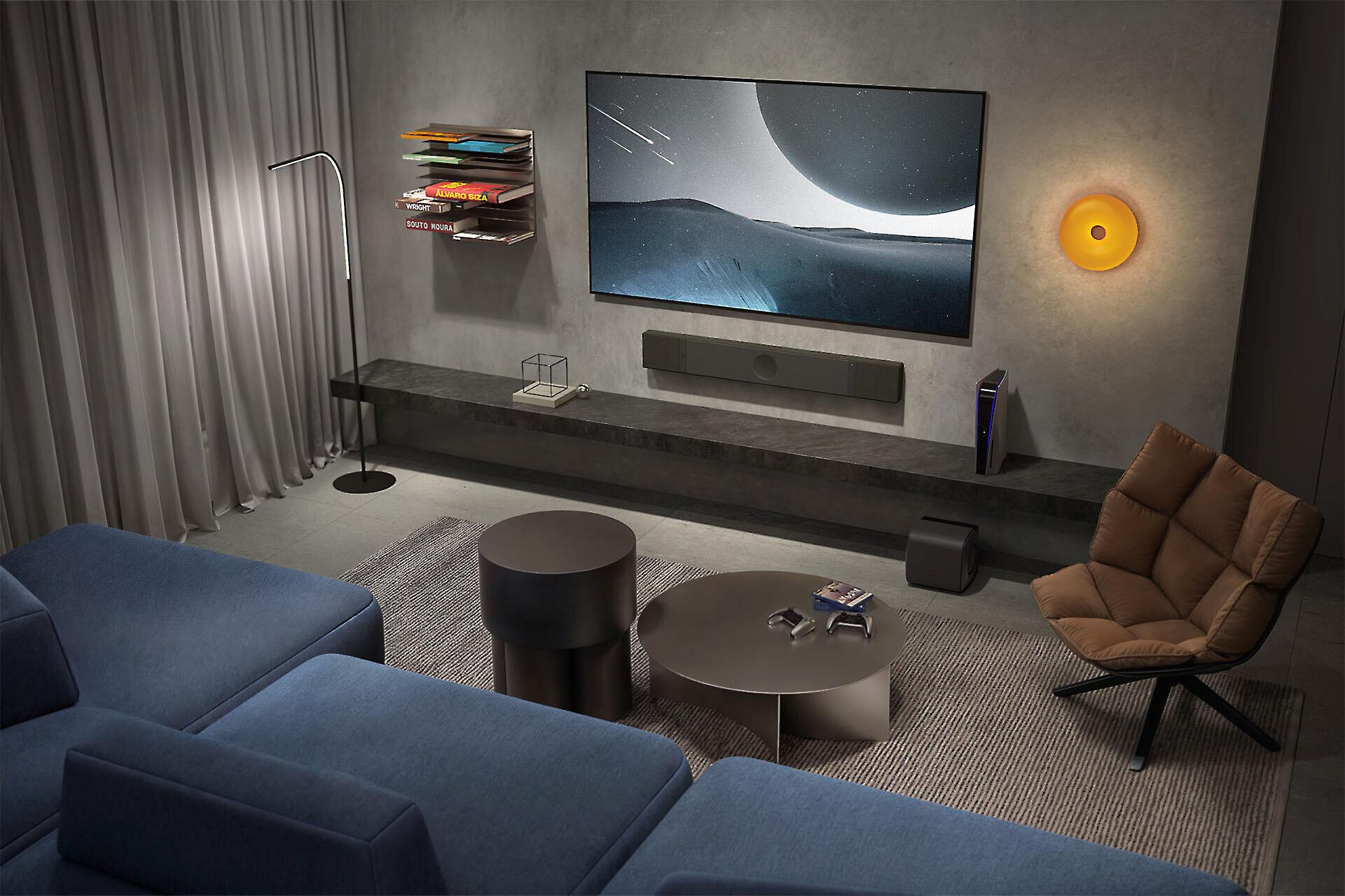
The KEF XIO can genuinely anchor a serious home theater system, with performance that rivals mid-tier component systems while maintaining the convenience and aesthetics of a single-cabinet solution. Its room calibration and adaptive processing help it perform consistently across different installation scenarios.
Both systems can be upgraded with additional subwoofers—the Polk S2 through its RCA output, the KEF XIO through wired connection or KEF's wireless KW2 system. However, the XIO's integrated bass performance may make additional subwoofers unnecessary for many users.
The five-year gap between these products' releases reflects rapid advancement in soundbar technology. When the Signa S2 launched in 2019, Dolby Atmos support was primarily found in premium models, wireless connectivity was basic, and room calibration was rare. The KEF XIO represents the current state of the art, with advanced spatial processing, high-resolution streaming, and sophisticated DSP that would have required dedicated processors just a few years ago.
This technological progression raises questions about longevity. The Polk S2's simpler design and basic feature set may actually provide longer usability, as there's less complexity to become obsolete. The KEF XIO's advanced processing and connectivity may provide longer relevance as content and streaming services continue evolving.
Choose the Polk Audio Signa S2 if you're primarily solving a TV audio problem rather than building an audio system. Its combination of dialogue clarity, adequate bass response, and simple operation makes it ideal for users who want better sound without complexity or significant investment. It's particularly suitable for smaller rooms, casual viewing habits, and situations where convenience outweighs ultimate performance.
The KEF XIO makes sense for users who view audio quality as a critical component of their entertainment experience. If you're the type of person who notices compression in streaming audio, adjusts equalizer settings, or finds yourself frequently disappointed by soundbar performance, the XIO's reference-level capabilities may justify its premium positioning.
Consider the XIO if you're replacing both TV speakers and a separate music system, as its high-resolution streaming capabilities and audiophile-grade performance can serve double duty. Its integration of advanced spatial processing, premium driver technology, and sophisticated room calibration creates an experience that transcends typical soundbar limitations.
Ultimately, both products succeed in their intended markets. The Polk S2 democratizes better TV audio, making meaningful improvements accessible at mass-market pricing. The KEF XIO proves that soundbar format doesn't have to compromise serious audio performance, offering flagship capabilities in a single, elegant package.
The choice comes down to whether you're solving a problem or pursuing an experience. Both approaches have merit—the key is honest assessment of your priorities, listening habits, and the role audio plays in your daily entertainment routine.
| Polk Audio Signa S2 | KEF XIO Soundbar |
|---|---|
| Channel Configuration - Determines surround sound capabilities and immersion | |
| 2.1 channels (stereo + subwoofer) | 5.1.2 channels (true surround + height effects) |
| Driver Technology - Core component affecting sound quality and clarity | |
| Traditional drivers: 2x 1.25" midrange, 2x 1" tweeters | Advanced Uni-Q MX concentric drivers (6x 50mm) + 4x racetrack woofers |
| Bass System - Critical for movie impact and music enjoyment | |
| Separate 5.25" wireless subwoofer (45Hz extension) | Integrated force-canceling bass system (34Hz extension, no external sub needed) |
| Total Power Output - Affects maximum volume and dynamic range | |
| 120 watts total | 820 watts across 12 discrete amplifiers |
| Spatial Audio Support - Essential for modern movie and streaming content | |
| Dolby Digital only (no Atmos support) | Dolby Atmos, DTS:X, Sony 360 Reality Audio |
| Connectivity Options - Determines compatibility with devices and streaming quality | |
| HDMI ARC, optical, 3.5mm aux, basic Bluetooth | HDMI 2.1 eARC, Wi-Fi 6, high-res streaming services, Bluetooth 5.3 |
| Physical Design - Important for TV compatibility and room aesthetics | |
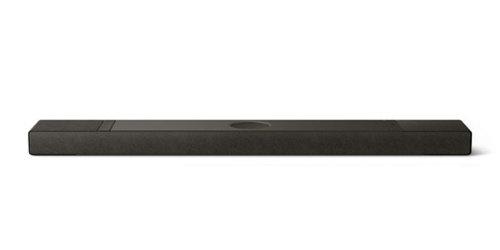
| Ultra-compact: 35.4" x 2.15" x 3.22" + separate subwoofer | Premium build: 47.6" x 2.8" x 6.5", single unit (23.1 lbs) |
| Smart Features - Affects ease of use and audio optimization | |
| VoiceAdjust dialogue enhancement, 3 sound modes | Music Integrity Engine DSP, Intelligent Placement Technology, room calibration |
| Music Performance - Key consideration for dual TV/music system use | |
| Basic stereo reproduction, V-shaped sound signature | Audiophile-grade performance, high-resolution audio up to 24-bit/384kHz |
| Setup Complexity - Important for non-technical users | |
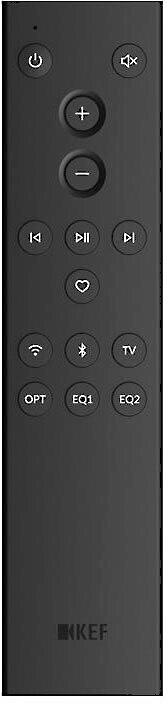
| Plug-and-play setup, IR remote, TV remote compatibility | Advanced calibration available, app control, multiple streaming integrations |
| Ideal Room Size - Matching power and features to space | |
| Small to medium rooms, apartment-friendly | Medium to large rooms, dedicated listening spaces |
The Polk Audio Signa S2 is a budget-friendly 2.1 channel soundbar focused on improving TV audio with clear dialogue and basic surround sound. The KEF XIO is a premium 5.1.2 channel system with advanced Dolby Atmos support, audiophile-grade drivers, and high-resolution music streaming capabilities. The KEF XIO offers significantly better sound quality but costs considerably more than the Polk Signa S2.
Both soundbars excel at dialogue clarity but use different approaches. The Polk Audio Signa S2 features VoiceAdjust technology that specifically boosts vocal frequencies to cut through background noise. The KEF XIO uses advanced Uni-Q drivers to create precise center channel imaging for natural, effortless dialogue reproduction. While both improve speech clarity over TV speakers, the KEF XIO provides more natural-sounding dialogue.
The Polk Audio Signa S2 includes a wireless 5.25-inch subwoofer that's essential for bass response, extending down to 45Hz. The KEF XIO has an integrated bass system with four racetrack woofers that eliminate the need for a separate subwoofer, reaching down to 34Hz. The KEF XIO saves space while delivering deeper, more controlled bass than the Polk Signa S2's external subwoofer.
Only the KEF XIO supports Dolby Atmos, DTS:X, and Sony 360 Reality Audio with dedicated height channels for true 3D sound. The Polk Audio Signa S2 is limited to Dolby Digital decoding without Atmos support. For modern home theater setups where spatial audio is important, the KEF XIO is the clear choice over the Polk Signa S2.
The Polk Audio Signa S2 provides decent music playback with a V-shaped sound signature that emphasizes bass and treble, suitable for casual listening. The KEF XIO delivers audiophile-grade music reproduction with precise imaging, natural tonal balance, and support for high-resolution streaming up to 24-bit/384kHz. Music enthusiasts will find the KEF XIO vastly superior to the Polk Signa S2 for serious listening.
The Polk Audio Signa S2 offers simpler plug-and-play setup with basic HDMI or optical connections and works with your TV remote via HDMI ARC. The KEF XIO provides more setup options including automatic room calibration and advanced app controls, but may be more complex for basic users. For straightforward operation, the Polk Signa S2 is more user-friendly than the feature-rich KEF XIO.
The Polk Audio Signa S2 includes HDMI ARC, optical, 3.5mm aux inputs, and basic Bluetooth streaming. The KEF XIO offers premium connectivity with HDMI 2.1 eARC, Wi-Fi 6, native streaming service integration (Spotify Connect, TIDAL Connect), AirPlay 2, and Bluetooth 5.3. The KEF XIO provides significantly more connection flexibility than the Polk Signa S2.
The Polk Audio Signa S2 is ideal for smaller spaces with its compact 2.15-inch height, Night Mode for volume control, and apartment-friendly power output. The KEF XIO is designed for medium to large rooms and may be overpowered for very small spaces. The Polk Signa S2 is better suited for apartments and smaller rooms than the larger KEF XIO.
The Polk Audio Signa S2 relies on its separate 5.25-inch wireless subwoofer for bass extension to 45Hz, providing adequate impact for most content. The KEF XIO features an integrated force-canceling bass system with four racetrack drivers extending to 34Hz, delivering deeper, more controlled bass without a separate subwoofer. The KEF XIO offers superior bass performance compared to the Polk Signa S2.
The Polk Audio Signa S2 provides excellent value for budget-conscious buyers seeking basic TV audio improvement with clear dialogue and adequate bass. The KEF XIO offers premium performance but at a significantly higher price point, better suited for audio enthusiasts who prioritize sound quality. Value depends on your budget and audio priorities - the Polk Signa S2 for basic needs, the KEF XIO for audiophile performance.
Both soundbars offer flexible placement options. The Polk Audio Signa S2 can be wall-mounted using built-in keyhole hangers or placed on a TV stand, with its ultra-slim profile fitting easily in front of most TVs. The KEF XIO supports wall mounting or shelf placement with automatic calibration to optimize performance for either position. Both the Polk Signa S2 and KEF XIO adapt well to different installation preferences.
For serious home theater use, the KEF XIO is superior with its 5.1.2 channel configuration, Dolby Atmos support, 820-watt amplification, and room calibration technology that rivals component systems. The Polk Audio Signa S2 works well for casual home theater use but lacks the spatial audio and power needed for immersive experiences. The KEF XIO is the better choice for dedicated home theater setups compared to the more basic Polk Signa S2.
We've done our best to create useful and informative comparisons to help you decide what product to buy. Our research uses advanced automated methods to create this comparison and perfection is not possible - please contact us for corrections or questions. These are the sites we've researched in the creation of this article: rtings.com - youtube.com - bestbuy.com - rtings.com - consumerreports.org - rtings.com - youtube.com - hometechnologyreview.com - soundbars.com - youtube.com - manuals.plus - creativeaudio.net - parts-express.com - thomsunmusic.com - polkaudio.com - manuals.plus - polkaudio.com - polkaudio.com - polkaudio.com - bestbuy.com - youtube.com - youtube.com - polkaudio.com - blog.son-video.com - residentialsystems.com - whathifi.com - audioadvice.com - crutchfield.com - homecrux.com - techradar.com - youtube.com - us.kef.com - gramophone.com - cepro.com - audioxpress.com - musicdirect.com - gramophone.com - us.kef.com - crutchfield.com - hifipig.com - bestbuy.com - listenup.com - bestbuy.com - bestbuy.com - listenup.com

Privacy Policy
Terms and Conditions - Affiliate Policy
Home Security
© Copyright 2008-2026.
11816 Inwood Rd #1211, Dallas, TX 75244